Authorities are trying to determine whether the slayings of four Muslim men in Albuquerque, including one overnight, are connected.
Three of the killings have happened in the last two weeks, and one occurred in early November, Albuquerque police said. All four victims are Muslim men from South Asia.
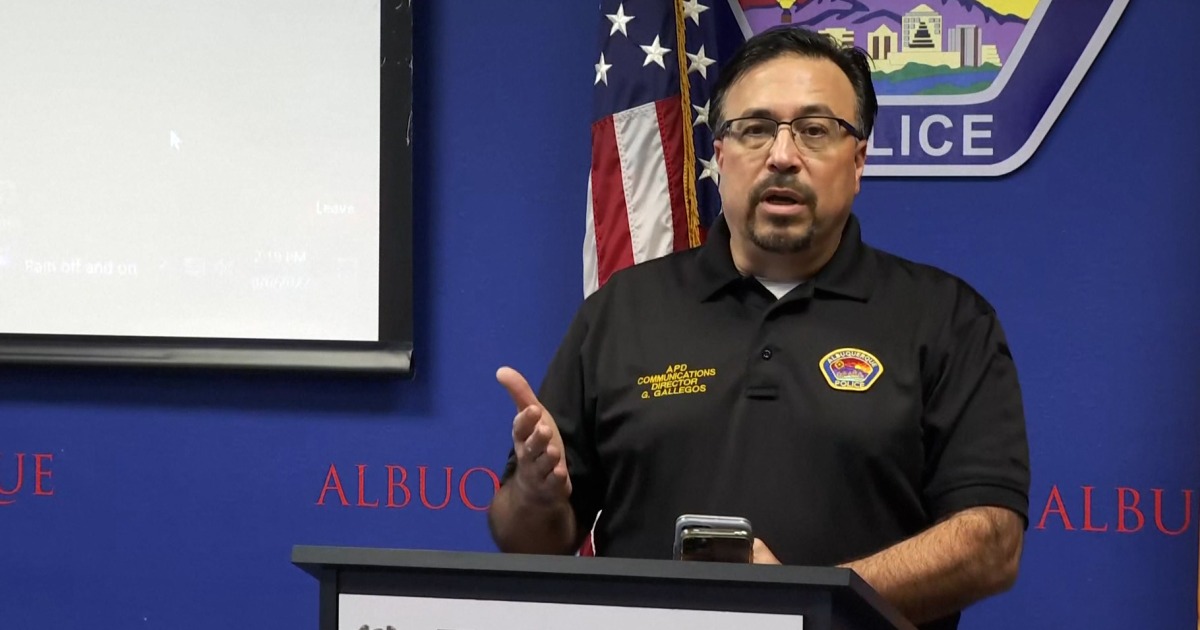
Friday’s shooting was reported just before midnight on the edge of a community known as the International District, southeast of downtown, Albuquerque police spokesperson Gilbert Gallegos said at a Saturday news conference.
The victim is a man in his mid-20s whose identity has not been confirmed, police said.
“With previous three murders we mentioned on Thursday, there is reason to believe this death is related to those shootings,” Albuquerque Police Chief Harold Medina said.
Police have refrained from saying the killings were motivated by hate. “We don’t know that at this point,” Gallegos said.
Albuquerque police spokesman Gilbert Gallegos addresses the media Saturday about the slayings of four Muslim men since November.K.O.B.
Local, county and federal officials have joined the investigation, and patrols in key areas of the city were being beefed up.
On Saturday evening, New Mexico Governor Michelle Lujan Grisham said she was sending additional state police to the city to help bring the person or people responsible to justice.
“The targeted killings of Muslim residents of Albuquerque is deeply angering and wholly intolerable,” she said in a tweet.
The two other recent attacks have included the July 26 killing of Pakistani immigrant Aftab Hussein, 41; and the Monday slaying of Muhammad Afzaal Hussain, 27, near the University of New Mexico.
Mayor John Ramon Vigil of nearby Española said Hussain, a Pakistani immigrant who had received his bachelor’s and master’s degrees from the university, was the city’s planning and land use director.
“Tuesday would have marked his first-year anniversary leading the city’s planning team,” Vigil said in a statement this week. “Our city staff has lost a member of our family, and we all have lost a brilliant public servant who wanted to serve and improve his community from him.”
In its statement Saturday, the Albuquerque Police Department clarified that it’s trying to determine if the Nov. 7 attack of a Muslim man from Afghanistan is related to the others.
In that attack, police said the body of Mohammad Ahmadi, 62, was found in a parking lot behind the halal meat market he owned with his brother.
At a news conference Thursday, police alerted the Muslim community about the slayings to-date and to ask the public for assistance tracking down the killer or killers.
“We want the public’s help in identifying this cowardly individual who in all three cases ambushed their victims with no warning, fired shots, and killed them,” Albuquerque Police Deputy Cmdr. Kyle Hartsock said Thursday.
On Saturday police noted that the latest attack thought to be connected to the spree happened after that widely covered news conference.
“Right now this is an alarming death that connects to the others as far as we can tell,” Gallegos said Saturday. “It’s surprising this happened so soon after we spoke on Thursday.”
Albuquerque Crime Stoppers offered a $15,000 reward for information leading to the arrest and conviction of anyone responsible.
The national Council on American-Islamic Relations has offered an additional $10,000. The organization called on President Joe Biden’s administration to take a “direct role” in the investigation.
“The lives of Albuquerque Muslims are in danger,” CAIR national deputy director Edward Ahmed Mitchell said in a statement Saturday. “Whoever is responsible for this horrific, hateful shooting spree must be identified and stopped — now.”
Ahmad Assed, president of the Islamic Center of New Mexico, said at the news conference Saturday, “This is not the New Mexico I grew up in, love, and cherish.”
He thanked law enforcement for his response and said, “We will defeat evil and hate together.”
While authorities stopped short of saying victims were targeted for their religion or ethnic backgrounds, Michelle Melendez, the city’s equity and inclusion director, raised the possibility at Saturday’s news conference.
“We cannot denounce strongly enough what appears to be the targeting of people because of their race and religion,” she said.
The Bernalillo County Sheriff’s Office, the FBI and the US Bureau of Alcohol, Tobacco, Firearms and Explosives are also involved in an investigation.
A group of men began shooting into a crowded Queens house party Friday night, prompting members of the NYPD who were monitoring the party for suspected gang activity to return fire.
The group of men began shooting into the party at a home in Laurelton around 11:30 pm
“They pulled out at least three firearms and they started firing into the vicinity of where the party is at,” said NYPD Chief of Patrol Jeff Maddrey at a press briefing around 2 am on Saturday.
Maddrey said there were approximately 75 to 100 people at the party.
He also said members of the NYPD’s plainclothes Violent Crime Unit had been stationed outside in an unmarked car, based on concerns that there could be conflict among rival street crews there.
When the group began shooting, Maddrey said the officers exited their vehicle and exchanged gunfire with them. Four people, ages 16, 17, 18, and 24, were taken to area hospitals. Police said the 18-year-old was in critical condition. They did not have additional details about whether there were any other injuries. Three guns were also recovered from the scene.
No police officers were struck by gunfire.
Police are asking for anyone with information about this incident to contact the Crime Stoppers Hotline at 1-800-577-TIPS (8477), or in Spanish at, 1-888-57-PISTA (74782). Tips can also be submitted online through the Crime Stoppers website or on Twitter @NYPDTips.
WASHINGTON — A divided Senate took a crucial step on Saturday toward approving Democrats’ plan to tackle climate change, bring down health care costs and raise taxes on large corporations, with a test vote that paved the way to enact a significant piece of President Biden’s domestic agenda in the coming days.
The measure advanced on a party-line vote of 51 to 50, with all Republicans opposed and Vice President Kamala Harris breaking the tie.
The action suggested that Democrats, after more than a year of internal feuding and painstaking negotiation, had finally coalesced behind legislation that would provide hundreds of billions of dollars for climate and energy programs, extend Affordable Care Act subsidies and create a new federal initiative to reduce the cost of prescription drugs, particularly for older Americans.
Much of the 755-page legislation would be paid for by tax increases, which Democrats have said are intended to make the tax code more equitable.
The vote put the bill on track to pass the Senate as early as Sunday, with the House expected to give its approval by the end of the week. That would provide a major boost to Mr. Biden at a time when his popularity is sagging, and it would hand Democrats a victory going into midterm elections in November in which their congressional majorities are at stake.
“I think this legislation is long overdue and is critically important,” Ms. Harris said after casting her vote. “It’s going to lower costs for American families.”
The hard-won agreement, which includes the most substantial investment in history to counter the warming of the planet, came after a flurry of intense negotiations with two key Democratic holdouts, Senators Joe Manchin III of West Virginia and Kyrsten Sinema of Arizona.
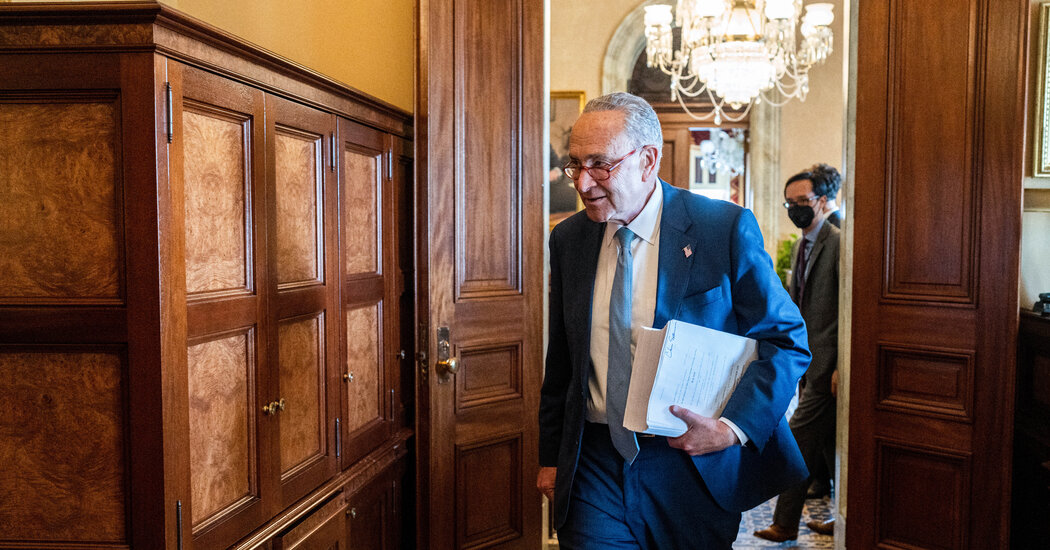
Just weeks ago, Mr. Manchin, a conservative-leaning Democrat from a red state, had said he could not agree to include climate, energy and tax measures in the domestic policy plan this summer given his concerns that doing so would exacerbate inflation. But he and Senator Chuck Schumer of New York, the majority leader, stunned lawmakers in both parties late last month with the news that they had quietly returned to the negotiating table and struck a deal that included those proposals.
And on Thursday, Ms. Sinema announced she, too, would move forward after extracting concessions, including dropping a provision that would have narrowed a tax break that allows private equity executives and hedge fund managers to pay substantially lower taxes on some income than other taxpayers do.
What’s in the Democrats’ Climate and Tax Bill
Cards 1 of 6
A new proposal. The $369 billion climate and tax package that Senate Democrats proposed in July could have far-reaching effects on the environment and the economy. Here are some of the key provisions:
Auto industry. Currently, taxpayers can get up to $7,500 in tax credits for purchasing an electric vehicle, but there is a cap on how many cars from each manufacturer are eligible. The new bill would eliminate this cap and extend the tax credit until 2032; used cars would also qualify for a credit of up to $4,000.
Energy industry. The bill would provide billions of dollars in rebates for Americans who buy energy efficient and electric appliances and tax credits for companies that build new sources of emissions-free electricity, such as wind turbines and solar panels. It would also set aside $60 billion to encourage clean energy manufacturing in the United States. It would also require businesses to pay a financial penalty per metric ton for methane emissions that exceed federal limits starting in 2024.
Low-income communities. The bill would invest over $60 billion to support low-income communities and communities of color that are disproportionately burdened by effects of climate change. This includes grants for zero-emissions technology and vehicles, as well as money to mitigate the negative effects of highways, bus depots and other transportation facilities.
Fossil fuels industry. The bill would require the federal government to auction off more public lands and waters for oil drilling and expand tax credits for coal and gas-burning plants that rely on carbon capture technology. These provisions are among those that were added to gain the support of Senator Joe Manchin III, Democrat of West Virginia.
West Virginia. The bill would also bring big benefits to Mr. Manchin’s state, the nation’s second-largest producer of coal, making permanent a federal trust fund to support miners with black lung disease and offering new incentives for companies to build wind and solar farms in areas where coal mines or coal plants have recently closed.
“The bill, when passed, will meet all of our goals: fighting climate change, lowering health care costs, closing tax loopholes abused by the wealthy and reducing the deficit,” Mr. Schumer said on the Senate floor on Saturday. “This is a major win for the American people and a sad commentary on the Republican Party as they actively fight provisions that lower costs for the American family.”
Democrats were speeding the bill through Congress under the arcane budget process known as reconciliation, which shields certain tax and spending measures from a filibuster but also strictly limits what can be included.
Republicans remain unanimously opposed to the measure and have feverishly worked to derail it, fuming at the resurgence of a plan they thought was dead. Blindsided by the deal between Mr. Schumer and Mr. Manchin, they have scrambled to attack the bill as a big-spending, tax-hiking abomination that will exacerbate inflation and damage the economy at a precarious moment.
“Democrats are misreading the American people’s outrage as a mandate for yet another — yet another — reckless taxing and spending spree,” said Senator Mitch McConnell of Kentucky, the minority leader.
He condemned a “tidal wave of Washington meddling” that he said would result from the prescription drug plan, which he said would take “a buzz saw to the research and development behind new, lifesaving medical treatments and cures.”
But Democrats have rebranded the transformative cradle-to-grave social safety net and climate plan they once called “Build Back Better” as the Inflation Reduction Act. Operating with a razor-thin Senate majority that gave their most conservative members strong influence over the measure , Democrats have jettisoned hundreds of billions of dollars in proposed spending on domestic programs, as well as many of the tax increases they had pitched to pay for it.
Outside estimates have indicated that the measure would not force a huge increase in federal spending or impose substantial tax hikes outside of large corporations, and it is projected to reduce the federal budget deficit by the end of the decade.
That did not stop Republicans from arguing that it would be disastrous for the economy and for Americans. Senator John Cornyn, Republican of Texas, branded it the “Manchin-Schumer Tax Hike of 2022.”
Republicans spent much of the past week trying to devise ways of slowing or blocking the legislation by arguing that it violated the reconciliation rules. (They did, however, refrain from forcing the Senate clerks to read the bill aloud, after a similar maneuver last year prompted an outcry.)
Elizabeth MacDonough, the Senate parliamentarian, and her staff labored into the early hours of Saturday morning to determine whether the bill’s components violated those rules, which require that each provision have a direct effect on federal spending or revenue. Early Saturday, she instructed Democrats to trim the scope of a proposal intended to keep the increase in drug prices from outpacing inflation, saying that a proposed rebate could apply only to drugs purchased by Medicare, not by private insurers.
But top Democrats announced that most of the legislation remained intact after Ms. MacDonough’s review, including a plan to allow Medicare to directly negotiate the price of prescription drugs for the first time, restrictions on new electric vehicle tax breaks and a fee intended to curtail excessive emissions of methane, a greenhouse gas that is commonly emitted from oil and gas leaks.
After Saturday’s test vote, senators girded themselves for an overnight session as Democrats edged closer to final passage of the bill. Around midnight, Republicans began forcing a rapid-fire series of votes on amendments to the legislation — an hourslong ritual known as a vote-a-rama that reconciliation measures must survive in order to be approved. In the evenly divided Senate, all 50 members of the Democratic caucus will have to remain united to ward off changes proposed by Republicans and win final passage.
“What will vote-a-rama be like? It’ll be like hell,” vowed Senator Lindsey Graham, Republican of South Carolina. Of Democrats, he said: “They deserve this.”
Democrats, too, still could change the bill. They are expected to essentially dare Republicans to strip a proposal to cap the cost of insulin for all patients, a popular measure that violates the budget rules because it would not directly affect federal spending.
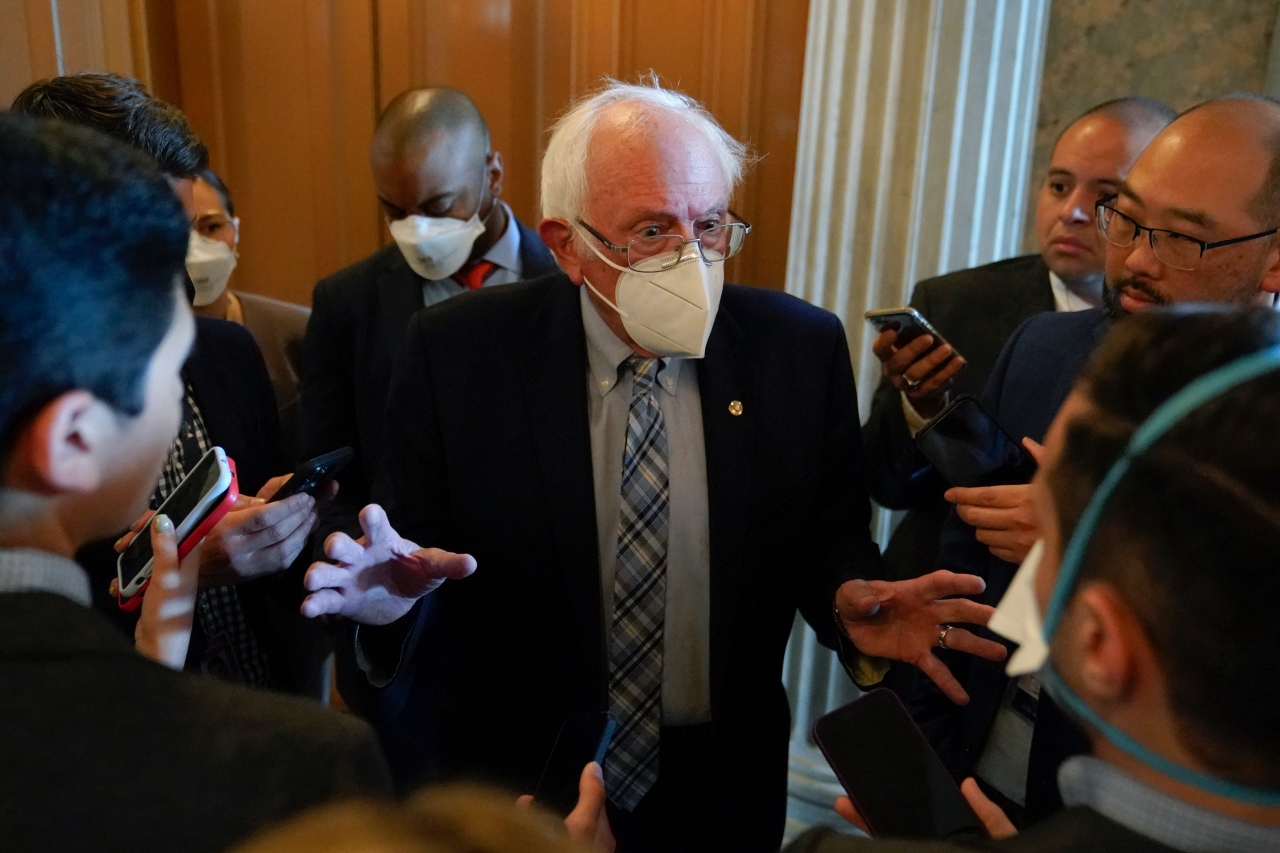
And at least one member of the Democratic caucus, Senator Bernie Sanders, independent of Vermont and the chairman of the Senate Budget Committee, hoped to win changes to the legislation. “This is a totally inadequate bill, but it does, to some degree, begin to address the existential threat facing the planet,” he said in an interview on Friday. “I’m disappointed.”
Most Democrats, however, were trying to rally their colleagues to stay united against any amendments — including those that could be offered by fellow members of their caucus — to preserve the delicate consensus around the bill and make sure it could become law.
“What I care about is that we get to 50 votes, OK, at the end, and that means we have got to keep this deal together,” Senator Elizabeth Warren, Democrat of Massachusetts, told reporters. “What matters is that we’ve cut a deal, and we need to keep that deal intact.”
Lisa Friedmann, stephanie lai and Sheryl Gay Stolberg contributed reporting.
However, the jury found the pharmacist did cause the woman emotional harm in the amount of $25,000.
According to the original complaint, Andrea Anderson, a mother and a licensed foster parent, obtained a prescription in January 2019 for Ella — otherwise known as the “morning after pill” or emergency contraception — after her regular contraception failed.
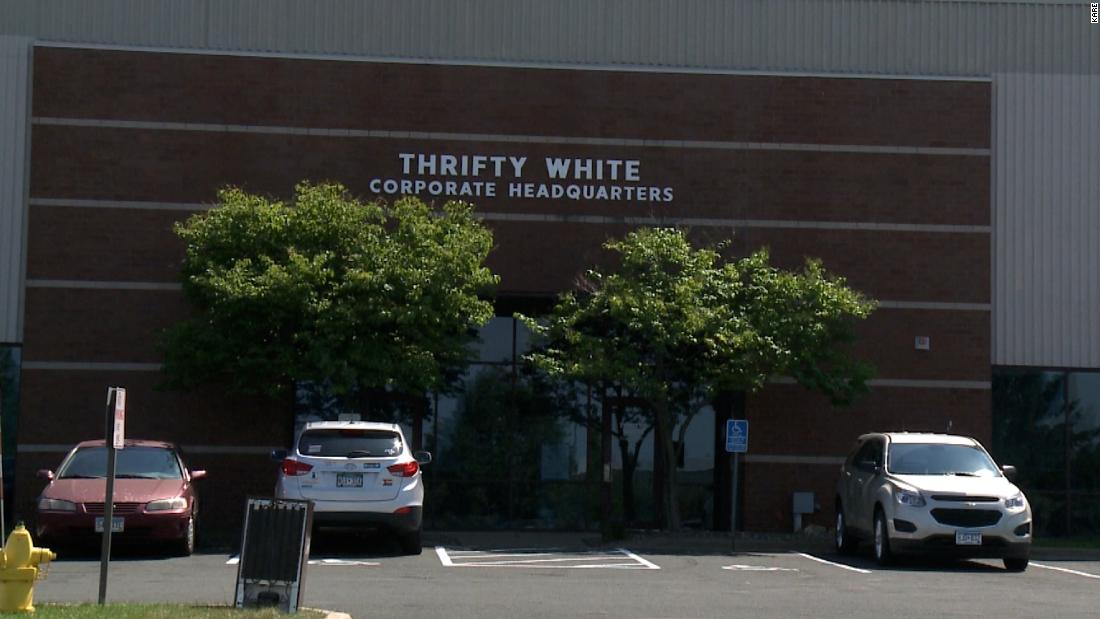
Her doctor sent the prescription to the McGregor Thrifty White pharmacy, but the pharmacist on duty, George Badeaux, told Anderson that he would be unable to fill her prescription because of his “beliefs.”
Badeaux “did not clarify what his beliefs were or why they interfered with his ability to perform his job as a medical professional,” according to the complaint.
Anderson eventually found a pharmacy that was willing to fill her prescription — after driving over 100 miles round trip in a snowstorm, the complaint stated.
Badeaux’s attorney Charles Shreffler said in a statement he and his client were “incredibly happy with the jury’s decision.”
“Medical professionals should be free to practice their profession in line with their beliefs,” the statement said. “Mr. Badeaux is unable to participate in any procedure that requires him to dispense drugs that have the potential to end innocent human life in the womb. Every American should have the freedom to operate according to their ethical and religious beliefs. Doctors, pharmacists, and other medical providers are no different.”
CNN has reached out to attorneys for Thrifty White pharmacy for comment.
Gender Justice, the advocacy group representing Anderson, had argued that denying Anderson service based on her reproductive health care needs was illegal sex discrimination and violated the Minnesota Human Rights Act.
The group said it would appeal the jury’s decision to the state’s Court of Appeals.
“To be clear, the law in Minnesota prohibits sex discrimination and that includes refusing to fill prescriptions for emergency contraception,” Gender Justice Legal Director Jess Braverman said. “The jury was not deciding what the law is, they were deciding the facts of what happened here in this particular case. We will appeal this decision and won’t stop fighting until Minnesotans can get the health care they need without the interference of providers.” putting their own personal beliefs ahead of their legal and ethical obligations to their patients.”
Since a major pharmaceutical business deal in 2017, the so-called morning after pill has become America’s most widely used over-the-counter emergency contraception.
Since the overturn of Roe v. Wade, there are fears that some types of birth control won’t be available, and demand for longer-lasting birth control and emergency contraception, including the morning-after pill, has grown.
The Senate shortly before midnight Saturday started an around-the-clock series of votes known as a vote-a-rama to wrap up work on the Inflation Reduction Act.
The vote-a-rama is a feature of the Senate budget process, which Democrats are using to pass a better climate, tax and health bill with 51 votes, bypassing a Republican filibuster.
The budget reconciliation process allows the party in control of the Senate to pass major legislation with a simple-majority vote but the trade-off is Democrats must allow Republicans to vote on an unlimited number of back-to-back amendments.
Each side has only one minute to make an argument for or against an amendment before a vote is called.
Votes on amendments that violate the Byrd Rule, which requires that legislation passed through the budget reconciliation process have a non-tangential impact on spending, revenues or the debt limit, are subject to procedural objections, which require 60 votes to be waived.
The first amendment of the vote-a-rama is one sponsored by the Senate Budget Committee Chairman Bernie Sanders (I-Vt.), which would require Medicare not to pay more than what the Department of Veterans Affairs does for prescription drugs.
The last vote-a-rama the Senate held in August of 2021 to pass the budget resolution lasted 14 hours and included consideration of more than 40 amendments.
Democratic senators say they expect this weekend’s vote-a-rama to last until 11 am or noon Sunday, judging by past experiences.
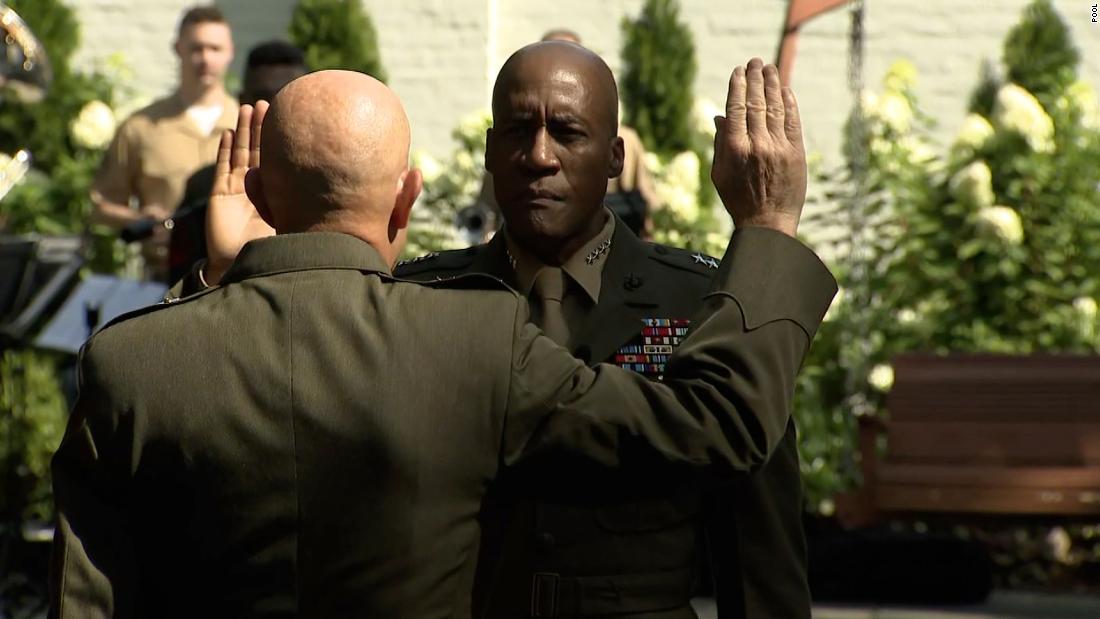
Langley will take command of the US Africa Command, which oversees the nation’s military presence in Africa, in a change of command ceremony at its Germany headquarters on Monday.
Speaking after the ceremony at Marine Barracks in Washington, DC, Langley said he was “humbled and honored for the opportunity to take on the stewardship of command of AFRICOM” as a four-star general.
“But the milestone and what it means to the Corps is quite essential. Not just because the mark in history, but what it will affect going forward, especially for those younger across society who want to aspire and look at the Marine Corps as an opportunity ,” I added.
Langley was nominated by President Joe Biden for promotion in June. The US Senate confirmed his promotion of him to four-star general by a voice vote earlier this week.
In remarks during Saturday’s ceremony, Langley paid homage to “those who have gone before,” recognizing Frederick C. Branch, the first commissioned Black Marine, and the Montford Point Marines, the first African Americans to enlist in the Marines who trained at a segregated facility in Montford Point, North Carolina.
He also spoke of the importance of diversity in the military to “maintain a decisive advantage over our strategic competitors.”
The Marine Corps had refused to recruit African Americans and other minorities until a 1941 executive order signed by President Franklin D. Roosevelt that “forced the Corps, despite objections from its leadership,” to start recruiting Black Marines the following year.
Born in Shreveport, Louisiana, Langley graduated from the University of Texas at Arlington and has served with the Marine Corps since 1985.
He has commanded at every level and served in multiple continents, being deployed to countries such as Japan and Afghanistan over the course of his career.
He most recently served as commander of the US Marine Corps Forces Command and Marine Forces Northern Command and as commanding general of Fleet Marine Force Atlantic.
CNN’s Jacquelyne Germain and Ellie Kaufman contributed to this report.
Linda Verraster cannot imagine why elected officials in San Clemente would spend time debating abortion.
The coastal Orange County city has no hospitals or clinics that perform abortions, and it has no power to stop residents from seeking the procedure elsewhere. There are other issues that need attention, Verraster says, like homelessness and affordable housing.
Still, a debate about abortion has been consuming the city and putting it in the spotlight, after Councilman Steve Knoblock proposed that it become a “sanctuary for life,” which would make it an abortion-free zone after the US Supreme Court overturned Roe vs. . Wade.
Knoblock’s proposal, which is largely symbolic, has upset residents across the political spectrum, including some of his conservative colleagues as well as abortion rights supporters like Verraster.
On Saturday, the council will consider whether to remove the proposal from its Aug. 16 meeting agenda.
“It’s so far out of their lane that it seems so ridiculous they would bring up something so divisive,” said Verraster, 68, a registered nurse and Democrat who has lived in San Clemente for nearly three decades.
The vibe of Orange County’s southernmost city, with its Spanish-style architecture and famous surf culture, is one of a laid-back beach town.
San Clemente also has an enduring reputation as a conservative bastion, even as much of Orange County has become more politically diverse.
Last year, the San Clemente council declared it a “Second Amendment Freedom City.”
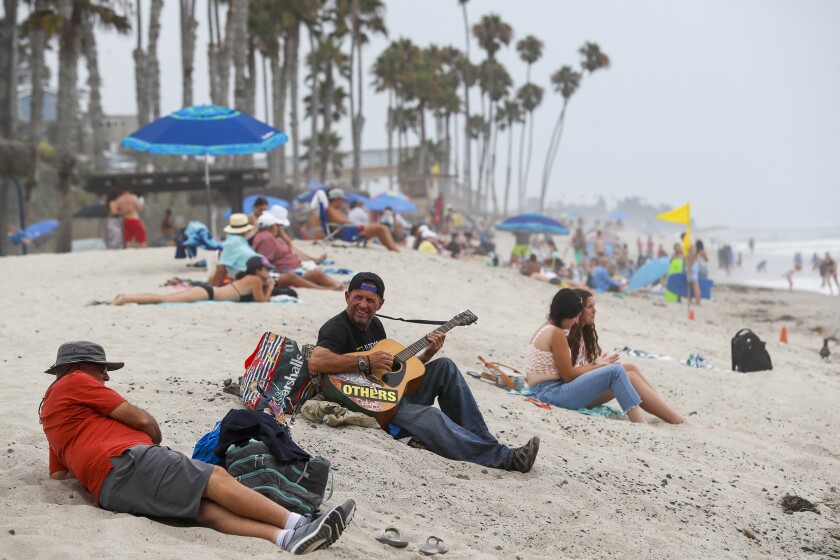
A busy summer day at the beach south of the San Clemente pier on Thursday.
(Robert Gauthier/Los Angeles Times)
But Knoblock’s proposal, a draft of which was made public last week, was a bridge too far—even for some abortion opponents. It states that life begins at conception and opposes the establishment of clinics that provide abortions.
Councilmembers have been flooded with emails from residents perplexed by the document’s religious bent and angered that their government is weighing in on what many see as a personal health issue. Some residents plan to hold a rally next week near the San Clemente pier to air their concerns.
No matter what happens in San Clemente, the right to an abortion in heavily Democratic California will continue to be protected by state officials.
“This is really an exercise in chest pounding,” Fran Sdao, 69, told a Mission Viejo resident. “We live in California. This means nothing in California. This is just a waste of paper.”
In an interview with The Times, Knoblock said that zoning and permitting could be possible tools to keep abortion clinics out of the city.
Knoblock said he wants to send a message to the rest of California that “we think life is important, and we think 60 million unborn babies that have been killed in the womb is a sad thing and shouldn’t be continued.”
Knoblock has a history of proposals that many see as outside the purview of local government.
In 2008, I suggested that the council declare support for Proposition 8, a statewide ballot measure that would have banned same-sex marriage. He failed to gain enough buy-in from his colleagues.
That same year, Knoblock successfully advocated to have the phrase “In God We Trust” placed on the city’s logo.
Knoblock’s stance on abortion is at odds with the majority of Californians — and Orange County residents — who support access to the procedure.
Among likely voters in the state, 76% said they did not want Roe vs. Wade overturned, according to a poll this year by the nonpartisan Public Policy Institute of California. Support lagged just slightly in Orange County, with 69% of likely voters opposed to overturning the nearly 50-year-old constitutional precedent.
A Planned Parenthood clinic in Mission Viejo — the closest one to San Clemente — had more than 22,000 medical visits last year. It is unclear how many of those visits were abortions, though the organization said the procedure amounts to a fraction of the services it provides.
“This resolution is an example of an extreme politician that serves on the council basically attempting to push a personal agenda not reflecting the views of their constituents,” said Robert Armenta, senior vice president of public affairs at Planned Parenthood of Orange and San Bernardino Counties .
Knoblock’s colleagues on the San Clemente City Council, which is majority Republican, described his proposal as overreach.
Councilwoman Kathy Ward called the proposal “ludicrous,” saying in an email to The Times that she does not “take up issues that are not city issues.”
Councilwoman Laura Ferguson said she believes in a woman’s right to choose, with certain limitations, and believes the council should focus on more pressing issues, like homelessness and pension liabilities.
Mayor Gene James, who is opposed to abortion, said he was initially in favor of a council resolution expressing support for the Supreme Court’s decision to overturn Roe v. Wade. But he said he was “appalled” and “embarrassed” after reading the specifics that Knoblock drafted.
Ward, Ferguson and James are all Republicans.
“The fact that he was delving into issues of medicine, where none of us are qualified to opine on that, is disturbing,” James said. “California is a state where abortion is legal, and there’s nothing the San Clemente City Council can do about that, regardless of whether we’re pro-life or pro-choice.”
Mayor Pro Tem Chris Duncan, a Democrat who is running for state Assembly, said Knoblock’s efforts to ban abortion are “extreme and completely out of step with our community’s basic values.”
Cheri Lyon, who has lived in San Clemente for 15 years, said she was horrified that Knoblock’s resolution blurred the line between church and state.
The resolution states that its intention is to “not only protect life, but also to honor God, who gives life.” It continues that “we believe that life is God-ordained and God is the author and finisher of every life.”
“I read it and was like, ‘What is happening here?’” said Lyon, 46, who favors abortion rights. “It’s not even filled with an argument that it should be a state issue. It was all about God and preserving life. why [Knoblock] thinks this is something the citizens of San Clemente want is very perplexing to me.”
Lyon said she’s thankful to live in a state whose government has affirmed the right to an abortion but is concerned about what Knoblock’s resolution signals about the future of her city.
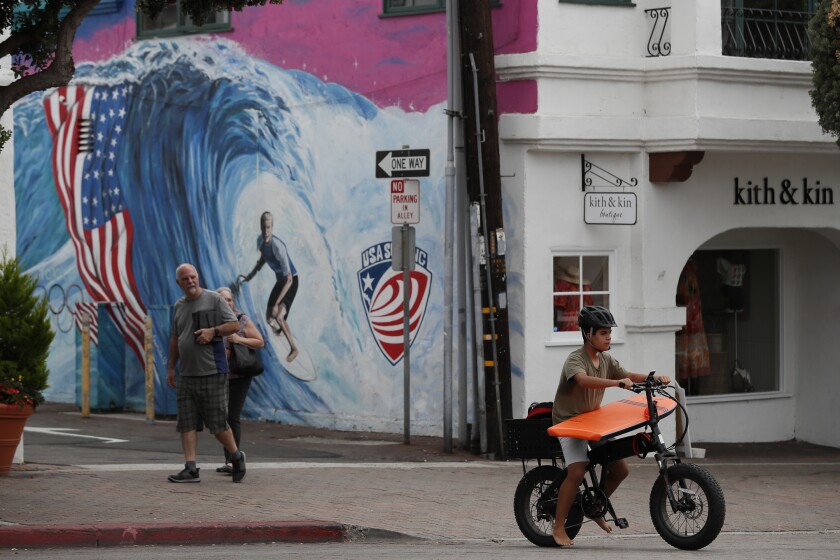
Residents and tourists walk along Avenida Del Mar on Thursday.
(Robert Gauthier/Los Angeles Times)
San Clemente’s registered voters are about 44% Republican, 28% Democratic and 21% no party.
The city’s support for conservative candidates and causes dates back decades.
In the 1970s, Richard Nixon sought post-Watergate refuge in his beachfront mansion in San Clemente, known as the “Western White House.”
In 2020, San Clemente was the setting for a public mask burning at the pier led by Alan Hostetter, a resident later criminally charged for his alleged role in the Jan. 6 insurrection. Knoblock and Hostetter shared the stage at a Donald Trump rally in the city in 2020.
American flags and banners celebrating the US Marine Corps pepper homes across San Clemente, which is roughly 20 miles north of Camp Pendleton.
These days, lawn signs for liberal candidates, as well as gay and transgender pride flags, also appear in the city with more regularity.
The White House is seeking to build momentum from a Kansas ballot measure on abortion where a surprisingly large majority voted to protect abortion rights.
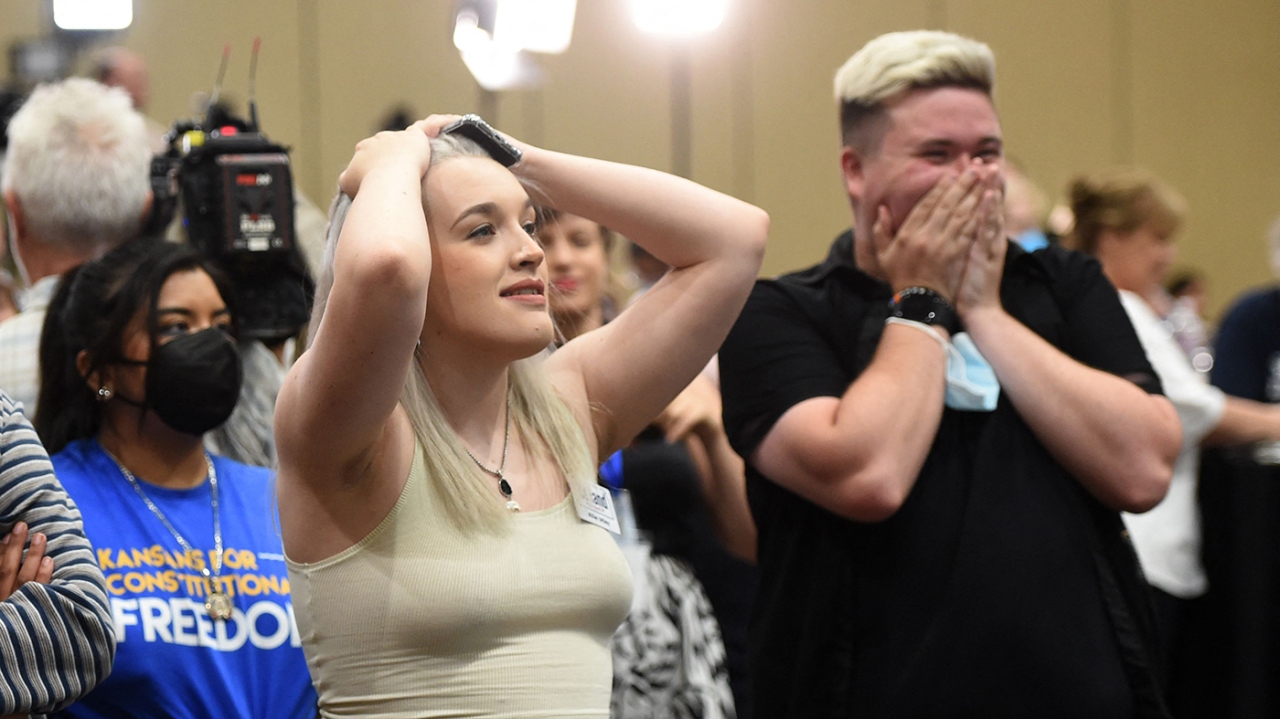
The vote has energized supporters of abortion rights, who see the decisive outcome in a red state as a sign the majority of voters oppose the Supreme Court’s decision to overturn the Roe v. wade decision.
President Biden issued his second executive order on abortion the day after the vote, while Vice President Harris met with reproductive rights advocates. The two also touted the Kansas news at fundraisers directly following the vote, which they are eying as a potential game changer in terms of how voters are feeling ahead of November.
“It’s smart for Democrats and the White House to lean in on the threat and urgency of abortion bans across the country, do everything they can to stop bans and expand access to abortion, and start communicating that directly to voters,” said Xochitl Hinojosa, former communications director at the Democratic National Committee (DNC).
Nearly 60 percent of voters in Kansas on Tuesday rejected a state constitutional amendment that would have given the state legislature more power to regulate access to abortion. That marked the first time Americans were asked to weigh in on abortion rights after the Supreme Court overturned Roe v. Wade.
Biden’s executive order signed on Wednesday directs the Department of Health and Human Services to consider working with states to use Medicaid waivers to pay expenses for women who cross state lines to receive abortions.
“Something happened and it’s worth exploring and it’s got a lot of potential. It definitely put the wind in people sails on the Democratic side,” said Ivan Zapien, a lobbyist and former DNC official. “I’m assuming that every Democratic candidate is waking up every morning at this point, reminding people that this November, a woman’s right to choose is on the ballot and that they’re on the right side of that.”
Harris, during a meeting with state legislators and local leaders on reproductive rights in Boston on Thursday, applauded the organizers in Kansas for their work to sink the ballot measure. After her meeting with her, she went to a DNC finance event in Martha’s Vineyard, Mass., to fundraise.
“Because they organized, and they spoke volumes, they said we trust the women to make decisions about their lives, and they said this is not a partisan issue,” Harris said. “The vote that occurred in Kansas also made clear what we all know: The majority of Americans agree with this principle.”
Her trip is one of several recent visits to states to meet with local leaders and reproductive rights advocates. Harris also agreed to Latina legislators at the White House on Friday to discuss protecting reproductive rights in their states. She opened the meeting by saying that “the people of Kansas made clear to support and trust women to make decisions about their own body.”
The White House has been looking ahead to November, calling on voters to elect pro-choice candidates who would codify Roe. They are now arguing that Kansas showed the messaging worked.
“Kansans turned out to challenge views that would move the country backward — with fewer rights and politicians invading our most personal decisions — and they won. In the wake of Dobbs, the president predicted people would turn out in record numbers to reclaim rights stolen from them. And they did,” Alexandra LaManna, White House assistant press secretary, told The Hill.
Sawyer Hackett, a senior communications strategist for the Progressive Change Campaign Committee, stressed that it would be a mistake for Democrats not to emphasize ahead of November that the vote in Kansas may have marked a political shift.
“I think the politics of this issue has shifted dramatically in such a way that it’s just not only an issue that motivates Democrats … but it’s also an issue that motivates independents,” he said. “I would be a huge mistake for the Democratic party, for President Biden, not to be hitting this issue every single day on the campaign trail.”
Hinojosa argued that Democrats have to message on other successes, but abortion should be at the forefront.
“This won’t stop Democrats from messaging on a strong economy and all their accomplishments, but they can and must do both,” said Hinojosa, now a managing director at Bully Pulpit Interactive.
Biden had some big political wins this week on top of the vote in Kansas.
The president announced a drone strike that killed al Qaeda’s leader Ayman al-Zawahiri, Congress passed a measure to fund research for veterans impacted by toxic substances, and Sen. Kyrsten Sinema (D-Ariz.) struck a deal with Majority Leader Charles Schumer (DN.Y.) to back a sweeping climate and tax bill.
A strong July jobs report capped off the week, defying predictions of a slowdown. It showed that the US added 528,000 jobs and the unemployment rate fell to 3.5 percent.
Biden’s recent wins come as he has faced tough approval ratings amid high inflation and fears that the US economy is heading for a recession. The White House’s initial response to the Supreme Court overturning Roe v. Wade was also criticized for being flat-footed, and progressives have argued the messaging was too slow or ineffective.
Biden announced his first executive actions to protect access to abortion medication two weeks after the Supreme Court ruling.
“A lot of Democrats were frustrated by the White House response to both the leaked opinion and then the announcement of the opinion. Both in message and in strategy, it felt like they were caught flat-footed. Now it seems like they’ve picked up the pace,” said Hackett.
He said he’d like to see Biden and Democrats travel to red states where Republicans are targeting abortion rights.
“I’d like to see them keep this on voters’ minds going into the November,” he added. “It seems like they’re taking the hint, so that’s good news.”
Zapien argued that in the aftermath of the Kansas vote, Democrats will be full steam ahead on keeping abortion access top of minds for voters.
“Right after the decision, I think everybody was in a wait and see sort of mode,” he said. “But I think after Kansas, everybody woke up and said, like, ‘we have evidence. Let’s go for it.’”
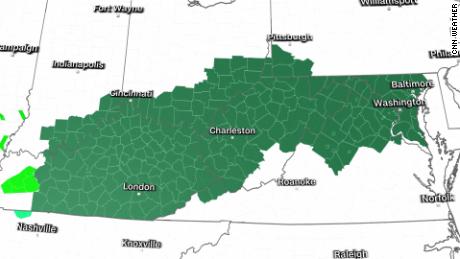
Over the past week, across the now-declared disaster area, survivors have shared harrowing stories with CNN of barely escaping the rushing waters, incredible rescue missions, and desperate attempts to save their families and themselves.
But they also have stories of barely surviving the cruel wake once the water receded — being stranded by washed out roads and bridges, struggling to get food, medicine or water in the early days, being rescued by neighbors.
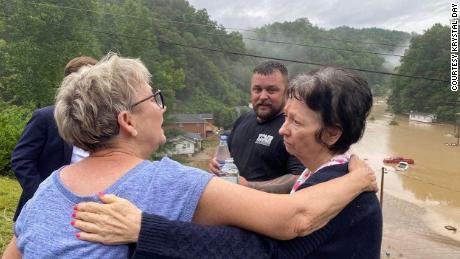
“We’re not victims here,” said Allen Bormes, police chief for the city of Fleming-Neon, where there’s little left besides debris and mud. “We’re survivors.”
More than a week after the flooding, Fleming-Neon Mayor Susan Polis still cries when recalling the devastation she saw in its aftermath.
“Well, I wasn’t prepared. But what can you do when your little town is, your little city is devastated? I mean, it was like a war zone,” she said.
City Hall is destroyed, leaving officials this week to work out of a camper and a tent over a table set up in a parking lot. The water lines on buildings lining Main Street reach well over 6 feet.
The water and debris broke windows all along the main part of downtown, in shops, the town dental office, churches — nothing was spared. Like many other communities in the region, there isn’t any clean, running water.
“Our vision is to build this back better than it was before, before the rain,” said Bormes. With a catch in his throat, he took a moment to collect his emotions from him before continuing. “Because these people deserve it. They deserve to have what they had before and more.”
Fleming-Neon was nearly impossible to reach in the first days after the flood, so help came from within the community. Polis recalled people being trapped in a holler until neighbors acted.
“They had a bridge to basically disintegrate. And for that night, for the rest of Thursday night and into Friday afternoon, there was no way in and no way out, for those people,” Polis said, “So, some citizens, before all this heavy equipment started coming in — the citizens, they fixed it.”
Quick thinking in a close call with death
Letcher Fire Chief Wallace Bolling Jr. still can’t believe he lived to tell how he survived the floods.
Bolling, who people around town call Spanky, received a call that the fire station in nearby Jeremiah was flooding. He drove his pickup to the station, in part to move vehicles to avoid damage. In hindsight, I have admitted the decision wasn’t good.
The water started to rise quickly as he pulled up to the station, trapping him inside his truck, which he said began floating with the current. His only option was to try to steer the truck into an old tanker he had left parked outside the station, he said.
Unable to open the truck’s door or window, “I reached and found my pistol in the back seat, and I shot the window out of my Chevy,” he said. Diving out the window, he made it to safety by climbing on top of the tanker, where he remained for 15 hours as flood waters, downed trees and debris rushed past him.
“I had a lot of time to think about a lot of things,” Bolling said. “I found peace. I wasn’t scared. I had a long talk with the Lord.”
While stranded, Bolling texted his mother and father: “I love you, please don’t worry… everything is fine… I love you.”
Dealing with post-traumatic stress
The Letcher Fire Department was destroyed, with all vehicles damaged. Insurance won’t be enough to cover all the damages, according to Bolling.
While Bolling plans to get the station straightened out, he also has to address his own trauma, he said. He hasn’t been able to sleep and often hears water when he closes his eyes.
“I’m having a lot of trouble. I’m not going to lie,” he said. He plans to talk to a therapist and hopes others who survived the storm can do the same.
“PTSD is real, and I kind of wondered about things, like how to go forward, but you know, I gotta fix myself first,” he said.
But along with the sorrow, there’s pride, too, in the way their Appalachian community has come together, with neighbors who lost everything helping neighbors in the same situation.
Volunteers from all over Appalachia have been sweeping and using small bulldozers to get mud out of buildings this week.
And while proud of their independent and resilient community, officials in Fleming-Neon admit the city is desperate for all the help it can get.
“Our infrastructure needs help from Washington, from Frankfort. We’re going to have a lot of help,” Fire Chief Bolling said.
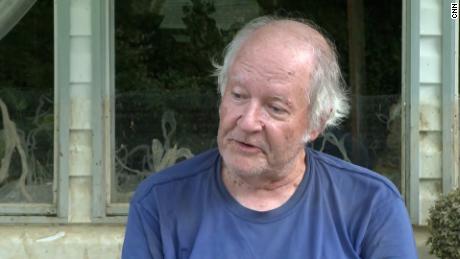
Gary Clink, who has lived just outside of Hindman for decades, was rescued, along with his wife and a neighbor, by his son-in-law, he said. Now he’s trying to save his wet furniture from mildew in the muddy interior of his home, which had more than 4 feet of water in it during the flood.
“It’s like someone turned the switch to maximum overdrive,” explained Clink as he sat on the porch looking at what was left of his belongings drying out on the lawn, “I’ve never seen water like that. It’s like a dam burst or to tsunami.
“That’s the reason you see garbage wherever you look, houses wrecked. I’ve seen three homes I knew basically lifted up off the foundation base, as they washed down the stream and it ripped them apart.”
And he worries that this catastrophe won’t be the last.
“I believe you’re seeing the effects of climate change right here,” Clink said. “Just given time, if we don’t turn it around, just given time, it’s going to get worse.”
Some are also concerned that people will leave the area because the devastation is too extreme.
“This is literally the end of this little community,” Clink sighed, “These people, you’ll see a lot of them had decent appliances, decent furniture, decent clothes, but it is no longer decent.
“If they didn’t have flood insurance or FEMA can’t step in and actually help… this is the end of the line for this community. I don’t see any way they are going to come back from it.”
Bolling agreed.
“It’s country back here. It’s slow. I mean, we love it. We stay back here,” Bolling said. “But at the same time, it’s never going to be the same. There will be a lot of people leave here. I know that. They have nothing to come back to. But we’ll make it. We’re strong.”
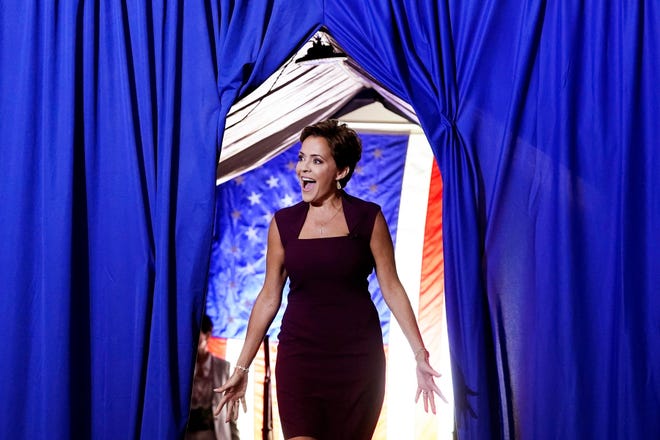
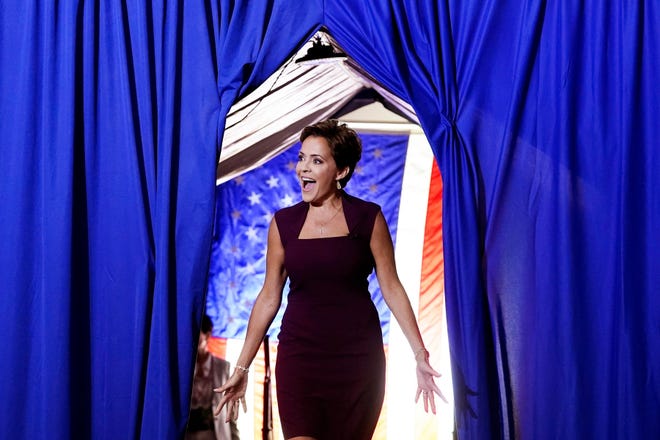
Kari Lake walked onto a stage at a conservative megaconference in Texas on Friday morning, just over 12 hours after securing the Republican nomination for Arizona governor.
Former President Donald Trump received top billing at the event, but if the audience was any indication, Lake was a fan favorite. “Kari! Kari! Kari!” people cheered, as they have at rallies back home.
At the same time, her Democratic opponent, Katie Hobbs, toured a community health center serving Arizona’s Salt River Pima–Maricopa Indian Community, the first stop on a three-day tour of central and Southern Arizona.
“I’m focused on what we need to do to win in November,” Hobbs said after the tour. “And that means continuing to talk to voters across Arizona about how we bring people together to solve our biggest challenges. I’m not sure how that happens in Texas.”
The race to become Arizona’s next governor is set after Lake and Hobbs won their party’s nominations in the Aug. 2 primary election. The GOP battle to replace Republican Gov. Doug Ducey was especially hard fought; during a Friday radio interview Lake called it a “grueling fight.”
But with the primary out of the way, the candidates begin a three-month sprint toward November’s general election that will be marked with attacks, national attention and the lingering presence of the 2020 election.
On paper, Lake and Hobbs have similarities. They are both 52, both Phoenix residents, and both mothers of two. But their many differences will take centerstage as Arizonans choose the state’s 24th governor.
Lake, a former television anchor, has no experience in elected office. Hobbs, the secretary of state, is a proven winner, having served in public office since Arizonans first sent her to the state Legislature in 2010.
Lake oozes charisma and picks fights, whether its with journalists she has called the “enemy of the people,” as Trump did, or establishment Republicans who have come out against her populist movement.
Hobbs effuses policy wonk vibes, painting herself as a steady hand and often speaking about bipartisan accomplishments in the Legislature.
“I have a track record of working across the aisle to address problems and deliver results for Arizonans,” she said Friday. “I’m going to continue doing that.”
Stan Barnes, a Republican consultant and former state lawmaker, said “the personalities, style and energy of these two candidates for governor is about as polar opposite as I’ve seen in 30 years of being involved in Arizona campaigns.”
Until November: 5 things to watch for in Arizona governor’s race between Katie Hobbs and Kari Lake
Lots of issues for AZ’s next governor
The issues the Grand Canyon State’s next governor must tackle are many.
Arizona’s next governor will confront a surge of people trying to cross the state’s southern border and drug trafficking there, too, and lead a state stricken by drought while facing a cut to the share of the Colorado River water supply next year.
She will make decisions on education policy with two looming financial cliffs as the state’s income tax rate drops and the increased pull from the land trust expires in 2025.
She will helm the state as conflicting abortion laws are sorted out, and oversee a healthy state budget even as Arizonans are paying more for gas, for skyrocketing rents and for food, or are struggling to find housing altogether.
“I think voters are craving current policy concepts,” said Stacy Pearson, a Democrat and co-founder of the firm Lumen Strategies. “They want to know what the state is going to do about the water shortage, or what they’re going to do about the cost of college. They want to know what they’re going to do about housing shortages and the cost of rent.” “We see this in focus groups right now. It’s not just who has the best 30-second commercial.”
While Arizona’s next governor will be a woman, either Hobbs or Lake, two men will likely dominate the political discourse ahead of November.
Lake, who won Trump’s endorsement last year, has pledged to reform elections, claiming “stealing” in this election cycle, without evidence, and calling for single-day voting instead of the state’s longstanding early voting process. She has tied her campaign to the former president, and the November election offers another referendum on her popularity in the state.
Meanwhile Joe Biden, whose 2020 victory in the state Hobbs has defended, could provide a liability for Hobbs — or certainly, Republicans will try to make it one. Democrats will likely try to tether Lake to Trump, who they view as unpopular, and Republicans will do the same with Hobbs and Biden, whose approval ratings have been sagged.
“They’re practically on the ballot,” Barnes said. “By the time we’re voting on Nov. 8, you might think it’s Donald Trump and Joe Biden running for governor of Arizona.”
The race for the Republican nomination was a litmus test of Trump’s power, in which Lake sailed to victory with Trump’s backing over the more traditional candidate, Karrin Taylor Robson, a real estate developer and former member of the Board of Regents who was endorsed by former Vice PresidentMike Pence.
Likewise the general election offers a second-round test the strength of the America First movement coined by Trump. In Lake’s world, it is Arizona First.
Both will try to appeal to the one in three Arizona voters who are registered independents and who can decide elections in the state. Also potentially in play are moderate Republicans who Lake may have alienated with her attacks from her. Lake won 47% of GOP primary voters, meaning 53% supported someone else and may need recruiting to join Lake’s camp.
The role that Ducey, who endorsed Lake’s opponent and attacked Lake on national television, will serve is “TBD,” or to be determined, Ducey’s spokesman CJ Karamargin said Friday.
Ducey helps lead the Republican Governors Association, which has made a commitment to spend over $10 million in advertising over the next three months and said Thursday “we look forward to working to get (Lake) elected governor this November.”
Trump hit: Kari Lake wins Republican nomination for governor, completing sweep for Trump-backed candidates in Arizona
Candidates roll out their messages
On Friday, as both candidates officially began the rush to November’s election, the themes of the campaigns to come began to emerge.
Lake attended the Conservative Political Action Conference in Dallas, where she was slated to speak multiple times. The conference opened with controversy in the form of a speech from Hungary’s prime minister, Viktor Orbán, an authoritarian leader who came under fire for saying in July that immigrants were changing European culture and “we do not want to become peoples of mixed race.”
Lake’s first appearance was part of a four-person panel to discuss border security. She sat alongside Republican Congresswoman Mayra Flores of Texas, a Mexican immigrant and another rising star in the party, whose name was also chanted by the crowd.
Lake took a hardline stance on the border, also offering criticism of Ducey’s program busing migrants from southern Arizona to Washington, DC, and elsewhere.
“It makes for a good photo op,” Lake said, adding that the buses should drive migrants “to the border and send them back the other way.”
In a signal of what’s to come, Lake Biden’s perceived failures attacked on the border.
“Our plan is to call it what it is,” she said. “We have an invasion at the border and Day One we’re going to call it that.
“We’re not going to sit here with Joe Biden rolling out the welcome mat to the whole world. We can’t accept people illegally like this.”
Hobbs, meanwhile, was back home in Arizona and fielded a reporter’s question about border security after an about hour-long tour of a 200,000 square foot health facility east of Phoenix.
The border is a federal issue, Hobbs said, calling on Lake to “be honest” about what a governor can do in terms of border enforcement.
Because immigration policy and enforcement falls to the federal government, governors are often confined to peripheral measures, like sending in the National Guard to support local law enforcement. Lake’s pledge to declare an “invasion” is an untested legal theory promoted by Trump allies that would assuredly meet a legal battle.
“Quite frankly, the Republicans are offering nothing but empty rhetoric, and lies about what they actually can do as governor,” Hobbs said.
“That being said, the Biden administration needs to do better on border security. And as governor, I’ll be 100% focused on what we need to do to keep our Arizona community safe, and providing the resources that those communities need because of decades of inaction in Washington.”
Reach reporter Stacey Barchenger at [email protected] or 480-416-5669. Follow her on Twitter @sbarchenger.
Support local journalism. Subscribe to azcentral.com today.