Categories
US

Lions Not Sheep clothing brand is fined for swapping ‘Made in USA’ labels

Comment

T-shirts and other apparel sold by Lions Not Sheep feature American flags, guns and phrases commonly associated with right-wing groups — and the company promises to ship a free copy of the US Constitution with every order.

“We are a generation of leaders. We are a generation of lions,” the website states.

“Wear this shirt as a public DECLARATION,” the Lions Not Sheep Facebook page adds.

But even though the labels on those shirts read “Made in the USA,” the company’s products are imported from other countries, according to a Federal Trade Commission complaint.

“Stop making bogus Made in USA claims, and [come] clean about foreign production,” the trade commission said in a late-July statement announcing actions against Lions Not Sheep.

Now, the Utah-based apparel brand and its owner, Sean Whalen, have been ordered to pay a $211,335 fine and to cease “Made in USA Fraud,” according to the FTC.

“Companies that slap phony Made in USA labels on imported goods are cheating their customers and undercutting honest businesses, and we will hold those companies and their executives accountable for their misconduct,” Samuel Levine, director of the FTC’s Bureau of Consumer Protection, said in May when announcing the actions.

Whalen and Lions Not Sheep didn’t immediately respond to requests for comment from The Washington Post. However, the brand addressed the FTC’s announcement in an Instagram post earlier this year, saying “Our T-Shirts are Printed in the USA! Our hats are embroidered in the USA.”

“I’m proud to have built a company from a single tee shirt on blood sweat and tears and who employ dozens of hard working Americans,” the post states. “Lots of folks who haven’t done much always have plenty to say, but we at LNS are head down working hard to continue to grow and support our first responders, military, and all patriots across the globe.”

The journey from fabric to T-shirt — such as the one depicting Donald Trump as the Terminator above the words “I’ll be back” — begins overseas, the company now discloses on its website. Manufacturers in China, Colombia or Bangladesh create blank apparel and ship the items to American facilities, where they’re “printed on, embroidered, labeled, tagged, and bagged” before being sent to Lions Not Sheep headquarters, the company’s website states.

But the FTC says that to qualify for the “Made in the USA” label, items can include only “a negligible amount of foreign content.”

According to the complaint, Lions Not Sheep not only falsely marketed its products as being “100% AMERICAN MADE” but also went a step further by swapping the garments’ original labels.

In October 2020, Whalen shared a video on social media in which he said he “could conceal the fact that his shirts are made in China by ripping out the origin tags and replacing them with tags stating that the merchandise was made in the United States, ”according to the FTC.

“This is how it works,” he said in the video.

“Whalen and Lions Not Sheep must stop claiming that products are made in the United States unless they can show that the product’s final assembly or processing — and all significant processing — takes place here and that all or virtually all ingredients or components of the product are made and sourced here.”

The rare fashion brand that’s beloved by the women of Trump world and not afraid to show it

Lions Not Sheep is a name that riffs on a popular conservative stance — one that gained prominence during the pandemic by denigrating those who adhered to strict health guidelines as followers, or “sheep.” The brand often features products with right-wing messaging. A recent Instagram advertisement for “Shall Not Be Infringed” tees was captioned with the text of the Second Amendment. Other apparel includes the phrase “Give violence a chance” and a profane expression against President Biden.

Categories
US

A grand jury declined to indict a woman whose accusations set off Emmett Till killing : NPR

GREENWOOD, Miss. — A grand jury in Mississippi has declined to indict the white woman whose accusation set off the lynching of Black teenager Emmett Till nearly 70 years ago, despite revelations about an unserved arrest warrant and a newly revealed memoir by the woman, a prosecutor said Tuesday.

A Leflore County grand jury considered evidence and testimony regarding Carolyn Bryant Donham’s involvement in the kidnapping and death of Till, Leflore County District Attorney Dewayne Richardson said in a news release.

After hearing more than seven hours of testimony from investigators and witnesses, the grand jury determined that there was not sufficient evidence to indict Donham, Richardson said. Charges of both kidnapping and manslaughter were considered.

The news that the grand jury had declined to charge Donham makes it increasingly unlikely that she will ever be prosecuted for her role in the events that led to Till’s death.

A group searching the basement of the Leflore County Courthouse in June discovered the unserved arrest warrant charging Donham, then-husband Roy Bryant and brother-in-law JW Milam in Till’s abduction in 1955. While the men were arrested and acquitted on murder charges in Till’s subsequent slaying, Donham, 21 at the time and 87 now, was never taken into custody.

In an unpublished memoir obtained last month by The Associated Press, Donham said she was unaware of what would happen to the 14-year-old Till, who lived in Chicago and was visiting relatives in Mississippi when he was abducted, killed and tossed in a river. She accused him of making lewd comments and grabbing her while she worked alone at a family store in Money, Mississippi.

Donham said in the manuscript that the men brought Till to her in the middle of the night for identification but that she tried to help the youth by denying it was him. Despite being abducted at gunpoint from a family home by Roy Bryant and Milam, the 14-year-old identified himself to the men, she claimed.

Till’s battered, disfigured body was found days later in a river, where it was weighted down with a heavy metal fan. The decision by his mother, Mamie Till Mobley, to open Till’s casket for his funeral in Chicago demonstrated the horror of what had happened and added fuel to the civil rights movement.

Categories
US

Alabama boy, 12, ‘unintentionally’ shot and killed mother, Ayobiyi Cook, police say

Comment

A 12-year-old Alabama boy “unintentionally” shot and killed his mother over the weekend in their home after initially making up a story about how she died, according to authorities.

The child, who has not been publicly identified, discharged a firearm early Saturday morning, killing his mother, 29-year-old Ayobiyi Cook, in Forestdale, Ala., authorities said. Cook’s husband, a police officer in nearby Birmingham, was at work at the time of the incident, Birmingham police confirmed to The Washington Post.

Detectives said evidence shows the incident appears to have been unintentional. The case will be handled in the family court system.

No further details were immediately available, including to whom the gun belonged and how the child got it. A spokesperson for the Jefferson County Sheriff’s Office did not immediately respond early Tuesday to a request for comment.

How often do children in the US unintentionally shoot and kill people? We don’t know.

Officials with the Jefferson County Sheriff’s Office said the boy admitted to the incident after first fabricating a story about what had happened. In an initial statement, authorities said a 911 call came in just after midnight Saturday. When police arrived, Cook was found dead, authorities said.

There “appeared to be no forced entry into the home,” but “a man was seen fleeing from the residence,” authorities said in a statement. Detectives were unable to recover evidence, according to the statement.

But the story soon changed. Detectives said in an updated statement that it was determined the boy’s account “was not possible” and that “the child eventually gave a true account of what happened.”

So far in 2022, there have been 169 unintentional shootings by children in the United States, according to Everytown for Gun Safety, a nonprofit group that advocates for gun control. Of those, 104 people were injured and 74 people were killed, data shows. One case occurred in June, when a Florida mother was arrested and charged with a manslaughter by culpable negligence after her 2-year-old son found a firearm and fatally shot her father.

At least seven such cases have occurred this year in Alabama, resulting in six injuries and three deaths, according to Everytown.

Officials with the Jefferson County Sheriff’s Office called Saturday’s shooting a “tragedy.”

“The family has been cooperative throughout the process and the child will remain with them,” according to the statement. “This offense is a tragedy for the Cook family and the entire community.”

On June 8, witnesses of gun violence, their family members and others testified to Congress on mass shootings, including those in Uvalde, Tex., and Buffalo. (Video: Blair Guild/The Washington Post)
Categories
US

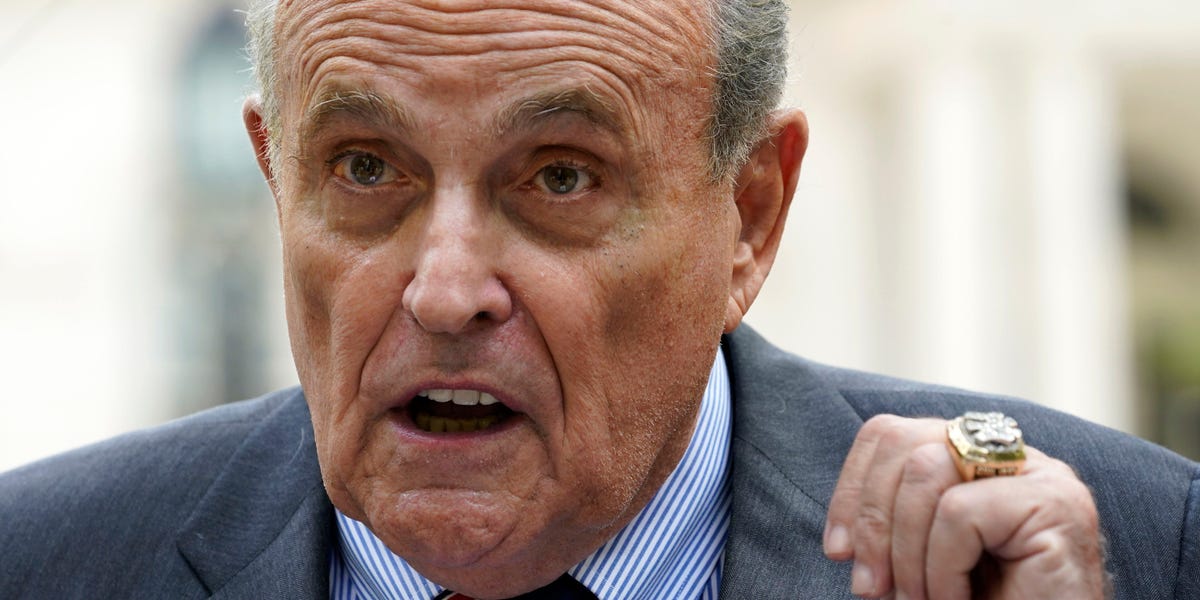
Rudy Giuliani Can Travel by Train, Uber, ‘or Whatever’ to Testify

  • Rudy Giuliani didn’t appear in front of a grand jury in Georgia on Tuesday due to medical issues.
  • A doctor wrote a note saying Giuliani wasn’t cleared for air travel after heart surgery.
  • A state judge suggested he make a road trip instead of traveling by plane to testify in Fulton County’s election probe.

A Georgia state judge had an idea for how Rudy Giuliani could testify in Georgia after the Trump ally said he couldn’t make it due to a medical condition: turn it into a road trip.

Giuliani — who had been ordered to appear before a grand jury as part of Fulton County prosecutors’ investigation into 2020 election meddling — didn’t appear in court on Tuesday after a doctor’s note said he couldn’t travel by plane.

So Fulton County Superior Court Judge Robert McBurney suggested Giuliani travel on “a train, on a bus or Uber or whatever” to arrive in court by August 17.

I’m confident he can figure out a way — short of a Greyhound — to get him to Atlanta,” McBurney said during a Tuesday hearing with Giuliani’s lawyers and state prosecutors. “Do it in 3 legs. [Do] you know folks in DC? Spend the night there.”

The grand jury is investigating whether former President Donald Trump and his allies tried to interfere in the 2020 general election results in the state.

Giuliani’s lawyer, William Thomas Jr., said the former New York mayor and Trump lawyer underwent surgery to implant heart stents at the beginning of July which is what is stopping him from getting on a plane.

His lawyers offered for Giuliani to call in via Zoom or meet with prosecutors in New York, but both options were turned down by Fulton Special Prosecutor Nathan Wade in court.

The back and forth over Giuliani’s appearance started when last week his lawyers contacted Georgia prosecutors saying a recent medical procedure would stop him from traveling to the hearing, according to court records.

McBurney excused him from the originally scheduled testimony, but called Tuesday’s hearing in its place.

Prosecutors submitted evidence they said showed that Giuliani was OK to travel to the hearing. They shared documents showing Giuliani purchased airline tickets to Rome, Italy, and Zurich, Switzerland for flights between July 22 and July 29 — after his medical procedure.

On Tuesday, his lawyers said “no such travel ever occurred,” and that he had been invited to a conference overseas so “presumably,” organizers or another party bought the tickets on his behalf.

He was scheduled to give a speech in Rome, but they canceled the appearance “based solely on his health.”

Prosecutors also included a screenshot of an August 1 tweet that shows Giuliani in New Hampshire. Thomas said he traveled to the state “by a private car in which he was the passenger.”

Giuliani was one of Trump’s allies who created so-called alternate slates of pro-Trump electors in an effort to change the results of the election in states the former president lost in 2020 — one of them being Georgia.

Categories
US

Trump taxes: House Ways and Means Committee can have records

A federal appeals court panel ruled Tuesday that House Democrats are entitled to review Donald Trump’s tax returns for 2015 to 2020, rejecting several legal arguments by the former president, who has sought for years to keep his financial records private.

The decision by a three-judge panel of the US Court of Appeals for the DC Circuit was a victory for the House Ways and Means Committee, whose chairman, Rep. Richard E. Neal (D-Mass.), first requested in 2019 that the Internal Revenue Service turns over copies of Trump’s tax returns to the committee. The Treasury Department initially declined, and the issue has been tied up in litigation ever since.

The former president has a week to appeal the panel’s ruling, including asking the full appellate court to hear the case, before the judgment takes effect. Trump’s attorney Cameron T. Norris, who is handling the appeal, did not immediately respond to a request for comment.

House Speaker Nancy Pelosi (D-Calif.) applauded the decision, calling it “an important victory for the rule of law.”

“Access to the former president’s tax returns is crucial to upholding the public interest, our national security and our Democracy,” Pelosi said in a statement. “We look forward to the IRS complying with this ruling and delivering the requested documents so that Ways and Means can begin its oversight responsibilities of the mandatory presidential audit program.”

Judges scrutinize demand for Trump tax returns

The panel’s 3-0 ruling caps another round in the legal battle between Trump — who promised as a presidential candidate to eventually release his tax returns but never did — and the committee, which argues that it is entitled by federal law to review any person’s taxes in the process of creating stronger financial-disclosure and auditing legislation.

After Trump left office, the committee in 2021 renewed its request for his tax returns, and the Biden administration’s Treasury Department agreed to provide them, which prompted a lawsuit by Trump.

In trying to keep his records private, Trump asserted that the committee had no “legitimate legislative purpose” for seeking the tax returns; that the committee was violating the separation of powers; that the law allowing the committee to review tax returns is “facially unconstitutional”; and that the Treasury Department, in agreeing to turn over the records, was violating Trump’s constitutional rights by retaliating against him.

The appellate panel rejected all four arguments.

The committee has “identified a legitimate legislative purpose that it requires information to accomplish,” the ruling says. “The mere fact that individual members of Congress may have political motivations as well as legislative ones is of no moment. Indeed, it is rare that an individual member of Congress would work for a legislative purpose without considering the political implications.”

The status of key investigations involving Donald Trump

As for the separation of powers, “this case has required much discussion of the intrusion by Congress into the Executive Branch and the personal life of [Trump] and the burden that such intrusions impose,” the decision says. While that burden “is concrete,” it is “tenuous at best,” and is “insufficient to require us to join the Chairman’s Request for the returns and return information.”

In rejecting Trump’s claim that the law that allows the committee to review tax returns is unconstitutional, the ruling says, “This statute can be properly applied in numerous circumstances, including the one before the court.”

And the panel rejected the assertion that President Biden’s Treasury Department was violating Trump’s constitutional rights by acting with an improper motive — retribution — when it agreed to the committee’s request for the tax returns.

“The improper motive must be a but-for cause of the government action, ‘meaning that the adverse action against the plaintiff would not have been taken absent the retaliatory motive,’” the ruling notes. Trump “cannot show that Treasury’s decision to comply with the 2021 Request would not have happened absent a retaliatory motive.”

Categories
US

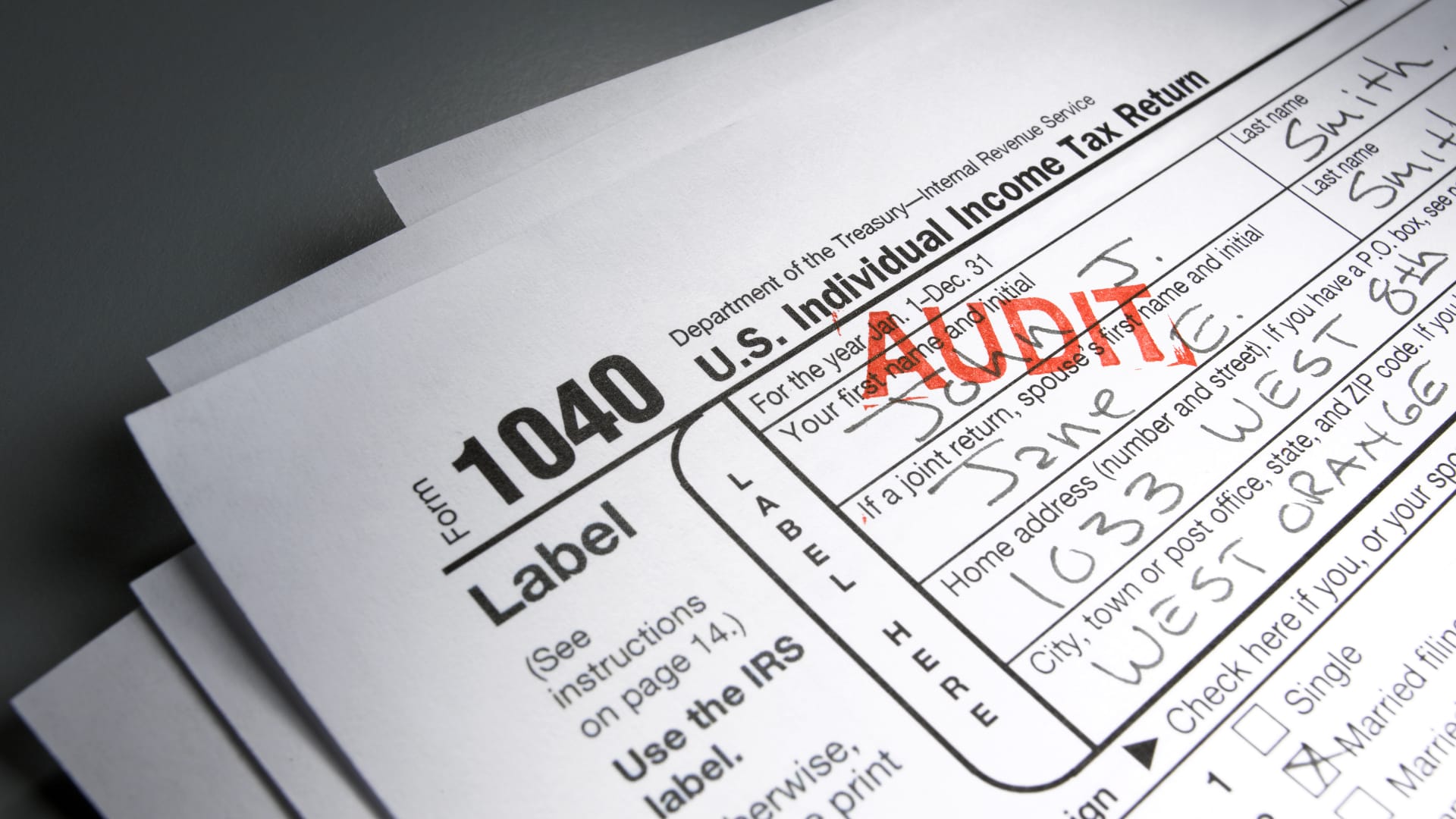
With 87,000 new agents, here’s who the IRS may target for audits

Jeffrey Coolidge | Photodisc | Getty Images

As the Democrats’ spending plan moves closer to a House vote, one of the more controversial provisions — nearly $80 billion in IRS funding, with $45.6 billion for “enforcement” — has raised questions about who the agency may target for audits.

IRS Commissioner Charles Rettig said these resources are “absolutely not about increasing audit scrutiny on small businesses or middle-income Americans,” in a recent letter to the Senate.

However, with the investment projected to bring in $203.7 billion in revenue from 2022 to 2031, according to the Congressional Budget Office, opponents say IRS enforcement may affect everyday Americans.

More from Personal Finance:
Inflation Reduction Act aims to trim insulin costs for Medicare users
Expanded health care subsidies remain intact in Inflation Reduction Act
Reconciliation bill includes nearly $80 billion for IRS including ‘enforcement’

“Our biggest worry in this is that the burden for these audits will land on Walmart shoppers,” Rep. Kevin Brady, R-Texas, said Tuesday on CNBC’s “Squawk Box.”

Overall, IRS audits plunged by 44% between fiscal years 2015 and 2019, according to a 2021 Treasury Inspector General for Tax Administration report.

While audits dropped by 75% for Americans making $1 million or more, the percentage fell by 33% for low-to-moderate income filers claiming the earned income tax credit, known as EITC, the report found.

Our biggest concern in this is that the burden for these audits will land on Walmart shoppers.

Rep. Kevin Brady, R-Texas

Ken Corbin, chief taxpayer experience officer for the IRS, said returns claiming the EITC have “historically had high rates of improper payments and therefore require greater enforcement,” during a May House Oversight Subcommittee hearing.

Since many lower-income Americans are wage earners, these audits are generally less complex and many may be automated.

How the IRS picks which tax returns to audit

Currently, the IRS uses software to rank each tax return with a numeric score, with higher scores more likely to trigger an audit. The system may flag a return when deductions or credits compared to income fall outside of acceptable ranges.

For example, let’s say you make $150,000 and claim a $50,000 charitable deduction. You’re more likely to get audited because it’s “disproportionate” to what the system expects, explained Lawrence Levy, president and CEO of tax resolution firm Levy and Associates.

Other red flags for an IRS audit may include unreported income, refundable tax credits such as the EITC, home office or auto deductions, and rounded numbers on your return, experts say.

How IRS audits may change with more funding

While the legislation still must be approved by the House and signed into law, it will take time to phase in the funding, hire and train new workers.

The IRS aims to hire roughly 87,000 new agents, according to the Treasury Department.

New auditors may have a six-month training program and receive cases worth a few hundred thousand dollars rather than tens of millions, Levy said.

“You’re not going to give a new General Motors trainee, for example,” he said. “It just isn’t going to happen.”

The chance of an audit may increase for self-employed taxpayers, Levy said, depending on their return. However, the odds may not change for traditional workers with an error-free filing, he said.

“The W-2 employee is much less likely to get audited than a self-employed person by far, in my opinion,” Levy said.

Of course, one of the best way to avoid future headaches is by keeping accurate records with detailed bookkeeping and saving all receipts, he said.

.

Categories
US

No news yet on a chip plant for NC but $40B investment coming to US

RESEARCH TRIANGLE PARK – President Joe Biden signed a $280 billion bipartisan bill to boost domestic high-tech manufacturing, part of his administration’s push to boost US competitiveness over China. And one company – Micron – immediately announced plans to invest $40 billion in new US chip facilities.

However, where the plant will be built remains unknown.

“Micron is finalizing its specific US expansion plans and will share additional details in the coming weeks,” the company said in its announcement.

Could North Carolina be on the list? Or might the state land a new plant from Durham-based Wolfspeed?

“All of this is up in the air. Everyone is looking for some money. My opinion is that New York(in spite of the fact that other locations are better suited for the industry), will continue to have momentum as will Ohio and other states that have been much more welcoming and knowledgeable of the industry,” an industry source who requested he not be identified told WRAL TechWire. “Only time will tell. ”

Interestingly, Wolfspeed CEO Gregg Lowe was at the White House for the signing ceremony.

Wolfspeed (formerly known as Cree) is reportedly considering plans to expand its chip manufacturing. And a plant worth as much as $4 billion in Chatham County has been speculated about in the media.

The North Carolina Economic Investment Committee met on Tuesday but no economic development news was announced.

Will ‘fat and happy’ NC land a new chip factory? An insider says ‘possibly’

Might Wolfspeed pick its home state?

“Possible, but New York and numerous other states are working hard to lure them as well. to grow there as are other places,” an industry source tells WRAL TechWire. “We’ll see.”

The Rose Garden signing ceremony included lawmakers, union officials, local politicians and business leaders, the White House said, as the president looks to highlight a new law that will incentivize investments in the American semiconductor industry in an effort to ease US reliance on overseas supply chains for critical, cutting-edge goods.

NC looks to lure chip maker, 1,800 jobs, to Chatham County in new budget proposal

“We are going to invest it in America,” Biden said Friday. “We’re going to make it in America. We’re going to win the economic competition of the 21st century in America.”

The CHIPS and Science Act will subsidize US-made semiconductor chips, which are used to make cars, household appliances and computers. There has been a shortage of semiconductor chips in the wake of the Covid-19 pandemic and global supply chain disruptions.

The White House said Micron is announcing a $40 billion plan to boost domestic manufacturing of memory chips, and Qualcomm and GlobalFoundries are announcing a $4.2 billion expansion of an upstate New York chip plant.

The Idaho Statesman reported on Friday that an executive for Micron was considering several locations for a new $40 billion plant.

No mention of Wolfspeed was made in The Associated Press report.

Wolfspeed also is shopping even as it opens a new plant in New York state.

According to a state budget proposal, North Carolina appears to be taking aim, again, at luring a semiconductor chip manufacturer to Chatham County.

The description does not name the manufacturer, but would allocate the “sum of one hundred twelve million five hundred thousand dollars” to secure a commitment from a company with “a qualifying project in Chatham County.”

Such a project would be one that would receive a Job Development Investment Grant, JDIG, from the state’s Economic Investment Committee that would have a minimum job creation target of 1,800 eligible positions and an investment of at least $4.8 billion in private funds.

Media reports have speculated that Durham-based Wolfspeed could pick the Chatham County site for a new factory.

Vietnam-based car manufacturer VinFast recently selected Chatham County for a new car plant.

The Associated Press and CNN contributed to this report.

Even as one semiconductor firm crosses NC off list, others may remain interested, exec says

Categories
US

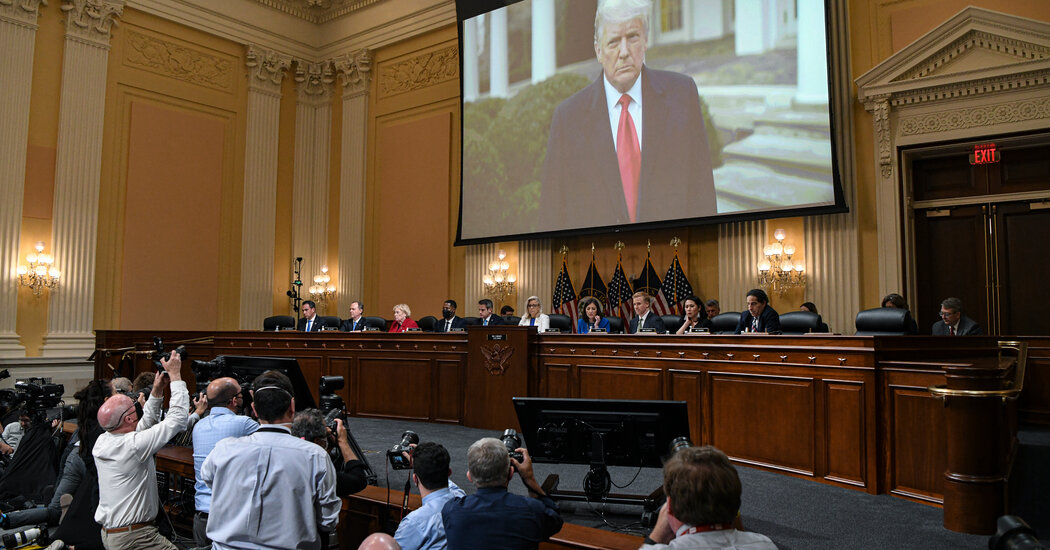
Jan. 6 Panel to Interview Mike Pompeo and Doug Mastriano

In the wake of the FBI search of former President Donald J. Trump’s property in Florida, the House committee investigating the Jan. 6 attack on the Capitol is gearing up to meet with two potentially key witnesses in its separate inquiry on Tuesday.

The committee is expected to meet with Mike Pompeo, the former secretary of state under Mr. Trump, and Douglas V. Mastriano, the Republican nominee for governor of Pennsylvania who served as a point person in the state for a plan to keep Mr. Trump in power by using slates of “alternative” or “fake” electors.

Mr. Pompeo has been in talks with the committee about his appearance for weeks, according to a person familiar with the matter, and could provide testimony about discussions within Mr. Trump’s cabinet about the possibility of invoking the 25th Amendment to remove Mr. Trump from office after the events of Jan. 6, 2021.

Mr. Pompeo’s discussion regarding the 25th Amendment was reported by Jonathan Karl of ABC News in his book “Betrayal.”

A spokesman for the Jan. 6 committee declined to comment. A spokesman for Mr. Pompeo did not respond to a request for comment.

Tuesday’s virtual interview with Mr. Mastriano is expected to be short, because he plans to object to the panel’s rules about video recording. A lawyer for Mr. Mastriano, currently a state senator, said Mr. Mastriano believed the committee would selectively edit his testimony from him, and planned to insist on making his own video recording of the interview. The committee has rejected that option for other witnesses, including Rudolph W. Giuliani, Mr. Trump’s personal lawyer.

“Senator Mastriano has nothing to hide and would be happy to answer their questions. Our only concern is to prevent the committee from releasing misleading and edited portions while keeping the proper context hidden. Either release the entirety or let me make a copy and we have no issue,” Timothy C. Parlatore, Mr. Mastriano’s lawyer, said in a text message. “Unfortunately the committee has refused to discuss any arrangements other than to demand that they be allowed to exclusively control what portions can be released.”

It is unclear what the committee’s response will be if Mr. Mastriano ends the interview abruptly.

Mr. Mastriano, a former Army officer, was on the Capitol grounds on Jan. 6, though he later explained in a statement that “he followed the directions of the Capitol Police and respected all police lines” that day. The committee has said it wants to interview Mr. Mastriano because he spoke directly with Mr. Trump about his “postelection activities of him.”

Emails reviewed by The New York Times also show that Mr. Mastriano served as a point person for the Trump campaign as it assembled groups of pro-Trump electors in states won by President Biden. The emails showed Mr. Mastriano needed assurances to go along with the plan because other Republicans had told him it was “illegal.”

Mr. Mastriano has turned over documents to the Jan. 6 committee that included information about busing people to Washington for a large rally that preceded the violence, and copies of posts he made on social media.

Categories
US

Federal appeals court says House committee can get Trump’s tax returns

Washington— A federal appeals court in Washington ruled Tuesday that the House Ways and Means Committee can obtain several years of former President Donald Trump’s tax returns, a victory for House Democrats in their yearslong battle to obtain the records.

The unanimous three-judge panel for the US Court of Appeals for the District of Columbia Circuit sided with the House Democrats, who initially sought five years of federal income tax returns from Trump and several of his business entities in 2019 while he was president.

Citing a renewed request for the tax information in 2021 from Rep. Richard Neal, chairman of the Ways and Means panel, after the change in presidential administrations, Senior Circuit Judge David Sentelle wrote in a 33-page ruling that the request “was made in furtherance of a subject upon which legislation could be had,” and rejected claims from the former president that Democrats’ request for his tax information was unconstitutional.

“While it is possible that Congress may attempt to threaten the sitting president with an invasive request after leaving office, every president takes office knowing that he will be subject to the same laws as all other citizens upon leaving office,” Sentelle wrote. “This is a feature of our democratic republic, not a bug.”

The Ways and Means Committee celebrated the decision and said on Twitter that it expects to receive the requested returns and audit files “immediately.”

“With great patience, we followed the judicial process, and yet again, our position has been affirmed by the courts,” Neal said in a statement. “I’m pleased that this long-anticipated opinion makes clear the law is on our side. When we receive the returns, we will begin our oversight of the IRS’s mandatory presidential audit program.”

House Speaker Nancy Pelosi called the decision an “important victory for the rule of law.”

“Access to the former president’s tax returns is crucial to upholding the public interest, our national security and our Democracy,” she said in a statement. “We look forward to the IRS complying with this ruling and delivering the requested documents so that Ways and Means can begin its oversight responsibilities of the mandatory presidential audit program.”

Trump’s legal team, however, will likely appeal the ruling either to the full DC Circuit or the Supreme Court.

The court fight stems from Neal’s original request to the head of the Internal Revenue Service (IRS) in 2019 for Trump’s tax records, in which the chairman said the committee was “considering legislative proposals and conducting oversight related to” federal tax laws. Neal’s request was made under a federal law that allows Congress to request the tax information of certain individuals from the IRS.

The Treasury Department declined to comply, arguing it was not supported by a legitimate legislative purpose. The committee sued the IRS and Treasury Department to force them to turn over the tax information.

But President Biden assumed the presidency while the dispute was pending, and Neal renewed his request for five years of income tax returns from Trump and his businesses beginning in 2015. In July 2021, the Justice Department’s Office of Legal Counsel said the Treasury Department must hand over the tax information, a reversal from an analysis under the Trump administration. Treasury said it intended to comply with the latest request and turn over the materials.

Again, the former president sought to block the release of his returns, arguing the requests violated the Constitution, in part because the Treasury Department was politically motivated, and Democrats lacked a valid legislative purpose.

But a federal district court in Washington granted requests from the Treasury Department and Ways and Means committee to toss out Trump’s claims, finding lawmakers’ 2021 request served a legislative purpose and did not violate the Constitution. The DC Circuit agreed.

“The chairman has identified a legitimate legislative purpose that it requires information to accomplish. At this stage, it is not our place to delve deeper than this,” Sentelle wrote. “The mere fact that individual members of Congress may have political motivations as well as legislative ones is of no moment.”

Categories
US

Trump wanted ‘loyal’ generals like Hitler’s. They tried to kill him.

Comment

Former president Donald Trump has proven time and again that he is not a student of history, despite citing the past with the regularity of a thunderstorm on a summer afternoon.

The latest example comes from the New Yorker, which has published an excerpt from Peter Baker and Susan Glasser’s upcoming book, “The Divider: Trump in the White House, 2017-2021,” focused on Trump’s troubles with the military men in his administration whom he once referred to as “my generals.”

At one point, according to the book, he complained to his chief of staff, John F. Kelly, a former Marine general, asking why he and others couldn’t be “totally loyal” to him, like the “German generals in World War II.”

Presidential Records Act scandals, from Nixon’s tapes to Trump’s ‘burn bags’

“You do know that they tried to kill Hitler three times and almost pulled it off?” Kelly allegedly responded.

So were Adolf Hitler’s generals yes men? Or did they really plot to assassinate him three times and get close once?

In total, there were at least 42 plots to assassinate Hitler, according to historian Roger Moorhouse in his book “Killing Hitler: The Plots, the Assassins, and the Dictator Who Cheated Death.” Of those, at least 10 attempts involved German generals.

One of the earliest came in 1938, before World War II even began. A handful of generals led by Hans Oster conspired with government ministers and diplomats to overthrow Hitler, and kill him if necessary, believing he was about to thrust Germany into a massive war it could not win. The plot fell apart when British Prime Minister Neville Chamberlain negotiated a peace treaty, heading off the immediate threat of war. Most of the generals involved quietly joined the German resistance; Oster was executed by the Nazis in 1945.

Hitler shot himself 75 years ago, ending an era of war, genocide and destruction

Gen. Hubert Lanz developed another plot in 1943. When Hitler arrived for a scheduled visit to the eastern front in Ukraine, Lanz and other officers planned to surround Hitler and his security with tanks and, if they resisted arrest, blow them to bits. Hitler ruined the plan by visiting a different spot than they had expected. Lanz was later convicted of war crimes at Nuremberg.

Maj. Gen. Henning von Tresckow organized a number of assassination attempts, including a bomb in a suitcase on Hitler’s plane, which failed to detonate when it froze in the cargo hold, and a bomb timed to go off during Hitler’s appearance at an armory, foiled when he raced through the building before the timer expired.

The best-known plot — probably the “almost pulled it off” to which Kelly was referring — was the 20 July Plot, sometimes erroneously called Operation Valkyrie, which was the name of the continuity-of-government plan that Tresckow and his conspirators wanted to use to take over after they killed Hitler. Col. Claus von Stauffenberg — played by Tom Cruise in the 2008 film “Valkyrie” — placed a bomb in a suitcase close to Hitler in a conference room at his Wolf’s Lair retreat. Stauffenberg was driving away when he heard the bomb go off and presumed Hitler dead.

I wasn’t. An aid had moved the briefcase before it blew up, and Hitler was protected from the blast by a table leg. Four others died, and many more were injured. If the plotters had hoped to decapitate the Nazis, the attempt had the opposite effect: Hitler’s doctor recalled him saying over and over, “I am invulnerable. I am immortal,” according to Moorhouse.

In the following days, Tresckow killed himself, Stauffenberg died by firing squad, and thousands of alleged conspirators were rounded up, tortured and executed — including a raft of generals. Even Field Marshal Erwin Rommel, a national hero and talented commander, was caught up in the dragnet and forced to kill himself.

The next year, as the Allied forces closed in, Hitler — who had survived dozens of attempts on his life — died by suicide.

Letters found in an attic reveal eerie similarities between Adolf Hitler and his father

Historians are split on to what degree, if any, the generals plotting against him were motivated by a desire to stop Nazi atrocities such as the Holocaust. Many were aware of atrocities for years before they began to plot against Hitler and did nothing. Some government may have been motivated more by the Nazis pushing aristocrats out of than by high-minded ideals like democracy or human rights. Even the generals who wanted to kill Hitler to end the war planned to claim in their surrender terms much of the territory Germany had taken during the Nazi regime.

Like Trump, Kelly has previously been criticized for his questionable takes on history. In 2017, he told Fox News host Laura Ingraham that the Civil War was caused by “the lack of an ability to compromise” and that Confederate Gen. Robert E. Lee was “an honorable man,” views popular among the now-discredited “ Lost Cause” hagiography to which many students in the 20th century were subjected.

Hitler’s generals are, by and large, not held up as principled heroes or honorable men, not even the ones who plotted to kill him. They are remembered as the men who stood by while Hitler murdered millions.