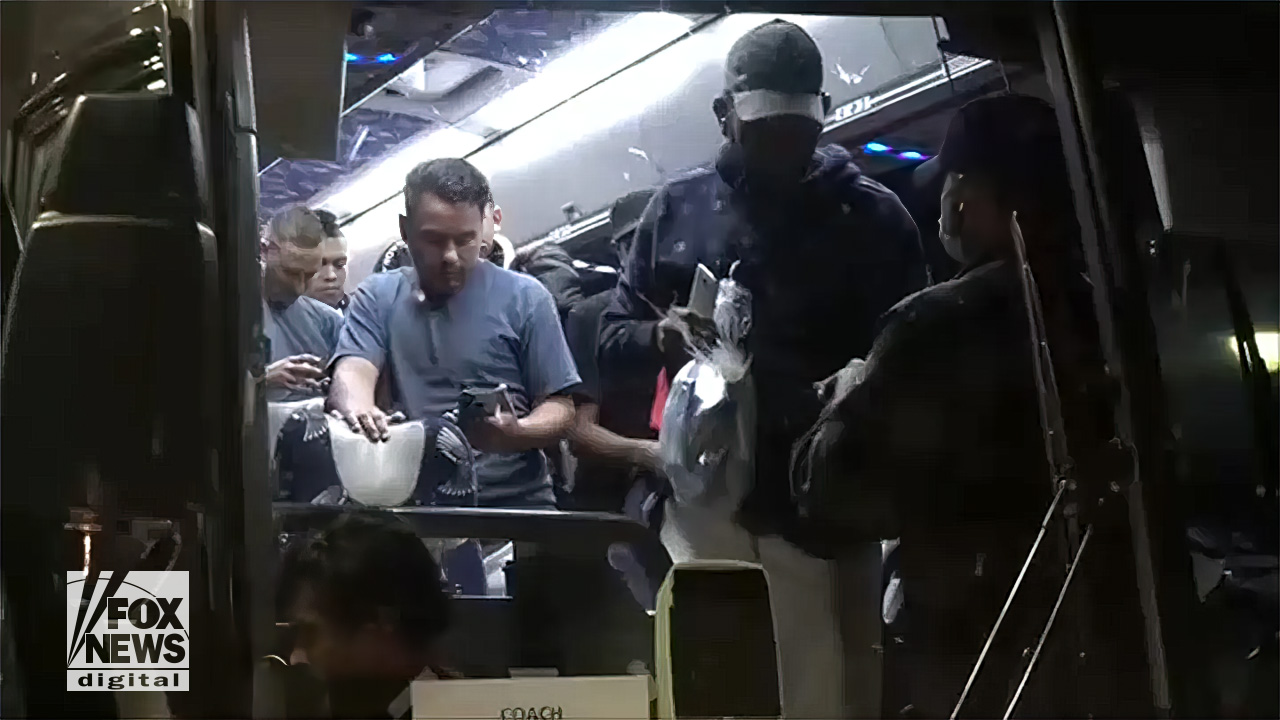
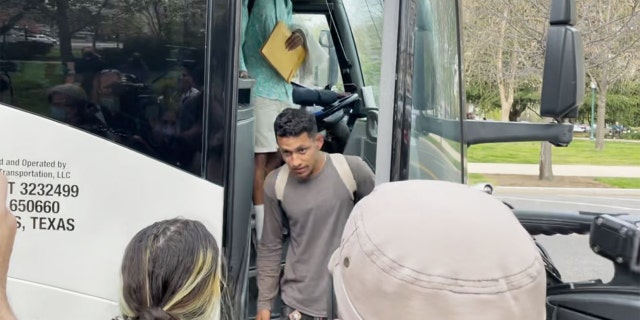
Authorities in New York City were on hand for the arrival of another group of migrants who were bussed from Texas after they crossed into the US from Mexico.
Three migrant buses arrived in NYC early morning Wednesday, following the path of the group of 50 migrants who were bussed to the same area on Friday, August 5.
The buses arrived just days after New York City Mayor Eric Adams criticized Texas Gov. Greg Abbott during a press conference on Sunday regarding the mass transit of migrant groups out of Texas and into New York.
Texas has sent thousands of migrants from the border state into Washington, DC, New York City, and other areas.
NYC MAYOR ERIC ADAMS BLASTS TEXAS GOV. GREG ABBOTT AFTER SECOND BUS OF MIGRANTS ARRIVES: ‘THIS IS HORRIFIC’
Migrants wave as they depart bus in New York City from Texas. (FoxNews)
While awaiting the arrival of the three new buses early Wednesday, NYC’s Office of Immigrant Affairs Commissioner Manuel Castro accused a “morally corrupt” Abbott of using the bussing of migrants to the Big Apple as a “political ploy” aimed to “foment anti-immigrant sentiment.”
“You cannot take the words of Governor Abbott seriously. He’s demonstrated his moral character with these actions, and they’re disgusting. We do know that people are arriving with a large amount of needs because of the treatment they’ve received in the state of Texas,” Castro said outside The New York Times building in Manhattan. “Again, this must be condemned. This must be looked into. And our federal government will… take steps to hold them accountable.”
“No one is blaming them, but we are condemning this Governor Abbott’s treatment,” he said. “If he wanted to help, he would be bussing them to the actual locations that they need to… meet, to be transported to. But he’s not. He’s transporting people to Washington, DC and to New York City without any communication with us, with the intent of forcing as much harm as possible to our cities.”
Migrants greeted Wednesday morning by volunteers in New York City as they leave bus sent by Texas. (FoxNews)
At a press conference on Tuesday, Adams threatened to take a busload of New Yorkers to Texas to door knock and help get Abbott out of office for the “good of America,” before then calling for more federal funding to address the influx of migrants to the Big Apple sanctuary city.
“This is horrific when you think about what the governor is doing,” Adams said.
“We’re finding that some of the families are on the bus that wanted to go to other locations, and they were not allowed to do so,” the New York City mayor added. “They were forced on the bus with the understanding that they were going to other locations that they wanted to go to, and when they tried to explain they were not allowed to do so.”
Fox News’ Bill Melugin reported that Adams is calling for federal help because he says 4,000 migrants have arrived in the Big Apple in the last three months.
Melugin pointed out that Texas averages 4,000 migrants crossing its border every day.
FIRST TEXAS BUS OF MIGRANTS ARRIVES IN NYC
Abbott began sending migrants out of his state into liberal cities — thousands of thousands from the US-Mexico border — as a way to bring evidence of the migrant crisis to their doorstep and to bring attention to the issue of illegal immigration in his own state.
“Because of President Biden’s continued refusal to acknowledge the crisis caused by his open border policies, the State of Texas has had to take unprecedented action to keep our communities safe,” Abbott said Friday.
Migrants get off bus Wednesday morning in New York City. (FoxNews)
“In addition to Washington, DC, New York City is the ideal destination for these migrants, who can receive the abundance of city services and housing that Mayor Eric Adams has boasted about within the sanctuary city,” the Texas governor added. “I hope he follows through on his promise of welcoming all migrants with open arms so that our overrun and overwhelmed border towns can find relief.”
Texas has sent over 5,100 migrants to Washington DC, a surge that caused Mayor Muriel Bowser to activate the District of Columbia National Guard.
TEXAS KEEPS PRESSURE ON DC AS MORE MIGRANT BUSES ARRIVE NEAR US CAPITOL
The last group of migrants was sent to the nation’s capital last week and more can be expected, Abbott suggested.
“Believe me, we have more buses headed their way as we speak right now. But this just shows the hypocrisy of these liberal leaders up in the northeast who think that border crisis created by Joe Biden, that is fine as long as it’s Texas that has to deal with it,” Abbott said.
A fourth migrant bus from Texas arrived in Washington, DC, near the US Capitol, Saturday, April 16, 2022. (Caitlin McFall/Fox News Digital)
“But as soon as they have to deal with it the real confidence of the crisis, they are up in arms calling for the national guard as you point out dealing with just a tiny fraction of what we had to deal with every single day,” I have added. “We’re going to keep sending those buses up there until they fully understand and most importantly — until the Biden administration does its job to enforce the laws concerning the border.”
CLICK HERE TO GET THE FOX NEWS APP
Abbott has invited Adams to the border to witness the immigration crisis, but Adams has declined.
Fox News’ Bradford Betz and Timothy HJ Nerozzi contributed to this report.
Danielle Wallace is a reporter for Fox News Digital covering politics, crime, police and more. Story tips can be sent to [email protected] and on Twitter: @danimwallace.
WASHINGTON — The Democratic spending bill making its way through Congress includes a series of benefits for consumers, including tax credits for clean energy household products and electric vehicles, as well as savings on prescription drugs and health insurance premiums.
The Inflation Reduction Act passed the Senate on a party-line vote Sunday and is expected to get a vote in the House on Friday, before it heads to President Joe Biden’s desk.
“Yes, I hope to pass it on Friday,” Speaker Nancy Pelosi, D-Calif., told NBC News on Tuesday. “It’s a great bill. It’s historic.”
Republicans, who unanimously oppose the bill, have blasted it as a “reckless taxing and spending spree” that wouldn’t solve inflation and could harm pharmaceutical innovation.
The legislation includes over $400 billion in spending on energy and health care programs, with more than $700 billion in revenue through drug savings and higher taxes on corporations.
Unlike with the Covid relief packages in recent years, there would be no direct payments or checks in the mail for broad swaths of people. So what’s in it for ordinary Americans? Here’s a rundown.
Medicare out-of-pocket cap, free vaccines
For the first time, Medicare beneficiaries’ yearly out-of-pocket expenses would be capped at $2,000 starting in 2025. Today, there is no cap. Medicare seniors would also have the option of spreading out the expenses over monthly payments.
The average Medicare recipient spent $5,460 on out-of-pocket costs, such as deductibles and copayments, in 2016, according to a study by the nonpartisan Kaiser Family Foundation.
In addition, the bill would grant them free recommended vaccines, including vaccines for Covid and shingles.
Clean vehicles credit
Want to buy an electric vehicle? The bill would offer a credit of up to $7,500 for qualified “clean” vehicles, including popular models from General Motors, Tesla and others.
The credit would drop for vehicles that don’t meet all the requirements for electricity power and mineral or battery components, according to details provided to NBC News by the Senate Finance Committee.
It would apply to new vehicles that cost up to $55,000 — or $80,000 in the case of SUVs and vans. And you would have to earn less than $150,000 in income (or $300,000 for joint filers) to qualify.
There’s a catch: The benefit would be cut or eliminated unless a vehicle is sold by a “qualified manufacturer” and the final assembly took place in North America to boost domestic production.
For previously owned electric vehicles that are at least two years old and selling at $25,000 or less, there would be a credit of up to $4,000 — allowable for individual incomes up to $75,000 — according to an analysis by the Bipartisan Policy Center.
Energy efficient home credits
The bill includes a grab-bag of benefits to encourage the use of clean energy items in homes over the next decade.
It would increase the credit for installing qualified goods — such as Energy Star products — at nonbusiness properties from 10% to 30%. That includes “solar electric, solar water heating, fuel cell, and small wind energy, and geothermal heat pumps,” according to the Senate Finance Committee.
The legislation would replace a lifetime cap on credits with a $1,200 annual credit ceiling, offering $600 for energy-efficient windows and $500 for doors. That would jump to $2,000 for biomass stoves and heat pumps. It would also enhance the existing credits to cover home energy audits (to $150) and upgrade electrical panels (to $600).
Medicare monthly insulin cap of $35
For Medicare beneficiaries, the legislation would impose a $35 monthly cap on the cost of covered insulin products starting in 2023.
A Health Affairs study last month found that 41% of people who use insulin were on Medicare. Overall, 14% of those using insulin said they spend “catastrophic” levels of money on insulin — more than 40% of their remaining income after paying for food and housing.
Democrats also tried to cap insulin costs on the private market at $35, but Republicans objected, and the provision was stricken under the Senate’s strict budget rules to pass the bill. Subsequent attempts to add it were unsuccessful.
Affordable Care Act funding
The bill would prevent a sharp hike in health insurance premiums for Affordable Care Act plans that were scheduled to hit next year by extending enhanced funding for the ACA that was passed under the American Rescue Plan for three more years, through the end of 2025. That means the extra aid would remain available to Americans with incomes above 400% of the federal poverty level, with premiums capped at 8.5% of family income for the “benchmark” plans.
It would mean no sticker shock this fall for millions of people who were otherwise scheduled to face premium hikes as a result of the money’s drying up, a prospect that many Democrats were nervous about heading into the Nov. 8 midterm election.
This story about college enrollment decline was produced by The Hechinger Reporta nonprofit, independent news organization focused on inequality and innovation in education.
Even as freshmen nervously arrive on campus for the fall semester, policymakers are grappling with what they say has become an “alarming” decline in the number of high school graduates willing to invest the time and money it takes to go to college.
A little-understood backlash against higher education is driving an unprecedented decline in enrollment that experts now warn is likely to diminish people’s quality of life and the nation’s economic competitiveness, especially in places where the slide is most severe.
“With the exception of wartime, the United States has never been through a period of declining educational attainment like this,” said Michael Hicks, director of the Center for Business and Economic Research at Ball State University’s Miller College of Business.
There are 4 million fewer students in college now than there were 10 years ago, a falloff many observers blame on Covid-19, a dip in the number of Americans under 18 and a strong labor market that is sucking young people straight into the workforce.
But while the pandemic certainly made things worse, the downturn took hold well before it started. Demographics alone cannot explain the scale of this drop. And statistics belie the argument that recent high school graduates are getting jobs instead of going to college: Workforce participation for 16- to 24-year-olds is lower than it was before Covid hit, the Bureau of Labor Statistics, or BLS, reports.
Focus groups and public opinion surveys point to other, less easily solved reasons for the sharp downward trend. These include widespread and fast-growing skepticism about the value of a degree, impatience with the time it takes to get one, and costs that have finally exceeded many people’s ability or willingness to pay.
There has been a significant and steady drop nationwide in the proportion of high school graduates enrolling in college in the fall after they finish school — from a high of 70% in 2016 to 63% in 2020, the most recent year for which the figure is available, according to the National Center for Education Statistics.
The decline is even worse in some states, though not all have data for the same periods of time.
The proportion of high school graduates in Tennessee who are going directly to college, for example, has fallen to 53% — down 11 percentage points since 2017. In Indiana, it dropped to 53% in 2020, down 12 percentage points from five years earlier and a pace state Commissioner for Higher Education Chris Lowery has called “alarming.”
In West Virginia, 46% of 2021 high school graduates went on to college the following fall, 10 percentage points below that state’s high of 56% in 2010. Fifty-four percent of 2021 high school grads in Michigan went straight to college, down 11 percentage points from 2016.
In Arizona, 46% of high school graduates in 2020 went to college the following fall, a drop from more than 55% in 2017. In Alabama, recent high school graduates’ college-going in 2020 fell to 54%, down 11 percentage points since 2014. And in Idaho, college-going has plunged to 39%, down 11 percentage points since 2017.
Americans are increasingly dubious about the need to go to college. Fewer than 1 in 3 adults now say a degree is worth the cost, according to a survey by the nonprofit Strada Education Network, which conducts research into and financially supports ways of expanding access to higher education.
“That conversation has come up more frequently — ‘Is it worth it?’” said Jennifer Kline, a counselor at Festus High School in Festus, Missouri, a state where the proportion of high school graduates going straight to college is down by 6 percentage points since 2017, to 61%. “I just have more and more parents who are saying, ‘Nope. You’re not going to do that. You’re not going to a four-year college.’”
Her students’ parents “just don’t value education the way they did in the past,” said Amanda DeBord, an adviser in a statewide program in Tennessee called Advise TN. “I feel like that’s been slipping for a few years.”
One Advise TN student who is headed to college, Ever Balladares, said his classmates’ parents in the Nashville suburb of La Vergne used to tell them, “If you don’t go to college, you’re a bum.” That has changed, however. “They don’t think that anymore.”
Ever Balladares plans to go to community college in the fall. His parents’ classmates of him used to believe that further education is important, he says, but “they do n’t think that anymore.”Austin Anthony for The Hechinger Report
This is being made only worse by a growing unhappiness among recent university and college graduates with the value of the education they received.
More than 4 in 10 bachelor’s degree holders under 45 don’t agree that the benefits of their educations exceeded the costs, according to a survey by the Federal Reserve. Only a quarter in another survey, by the educational publishing and technology company Cengage, said that, if they could do it again, they’d take the same educational path.
That adds up to a lot of bad reviews passed down to younger siblings and classmates, for whom family and friends are the most trustworthy sources about whether to go to college, according to a survey by the Indiana Commission for Higher Education.
Meanwhile, months of discussion about whether the Biden administration will forgive all or some student loan debt has had the unintended consequence of reminding prospective learners how many people before them had to borrow to pay for college.
So has the fact that many of their parents are still paying back their own student loans.
“There’s anti-elitism, anti-institutionalism, a perception that cost is out of control.”
Stephanie MarkeNgallup
From 2015 to 2019, Americans’ faith in higher education dropped more than their confidence in any other institution measured by the Gallup polling organization — an extraordinary erosion of trust, considering that this list includes the presidency, Congress, big business and the criminal justice system .
“There’s anti-elitism, anti-institutionalism, a perception that cost is out of control,” said Stephanie Marken, a partner in Gallup’s education division.
The problems have been evident for years, but colleges and universities in general have done little to address them.
They continue to advertise prices that few consumers actually pay but that discourage many from applying. They bury students in red tape, which is especially confounding for the increasing number of would-be applicants whose parents never went to college. And they often fail to make clear connections between academic disciplines and careers or keep up with the demands of the fast-moving labor market.
A degree does, in fact, still pay off. Workers with bachelor’s degrees earn 67% more than people with only high school diplomas, according to the BLS. More than half of “good jobs” — those with salaries of at least $35,000 for workers under age 45 and $45,000 for people 45 to 64 — call for bachelor’s degrees, the Georgetown University Center on Education and the Workforce estimates.
Yet since the start of the pandemic, the proportion of 14- to 18-year-olds who think education is necessary beyond high school has dropped from 60% to 45%, the nonprofit Educational Credit Management Corporation.
Even high school graduates who plan to go to college admit to doubts.
Dillon Phillips played basketball at La Vergne High School in Tennessee and hopes to go pro. He admits to having had doubts about whether college is for him.Austin Anthony for The Hechinger Report
“My whole life has been sports, but at the same time it’s still, ‘Is college really for me?’” said Dillon Phillips, who played basketball at La Vergne High and hopes to go pro but will start at a community college to “ give me time to prepare” for a four-year university.
The pandemic only deepened the fears of students already struggling with self-confidence and skeptical about college, said Thea Cole, who also counsels students for Advise TN. “Their GPAs have suffered. So some of them are, ‘I don’t know if I can get in,’ or, ‘It will be too hard.’ ”Her colleague of her, Portia Cook, was more blunt:“ My kids have a shorter fuse. When things start getting complicated, they’re done.”
It’s not only recent high school graduates who are turning their backs on higher education. The number of Americans over 24 who are going for the first time or returning to college has also steadily declined, by 12% in the five years from the spring of 2017 to the just-ended spring semester.
From left, Portia Cook, Amanda DeBord and Thea Cole are advisers with a state program called Advise TN that tries to get more Tennessee high school graduates to go to college. The task has gotten much harder, they say.Austin Anthony for The Hechinger Report
Trying to get at the reasons so many people have stopped going to college, some states have conducted focus groups and surveys, revealing that the complexity of getting a higher education is to blame for some of the antipathy toward following through with it.
In Indiana, 70% of residents said they found trying to understand the state’s financial aid options “overwhelming.” In Tennessee, many high school students said they didn’t think they were eligible for state financial aid, even though they probably qualified.
“They especially don’t want to be told their life isn’t good enough. — ‘How dare you tell me what I need to do to make my life better.’”
charlee beasor,Indiana commission for higher education
Among the other findings of the Indiana Commission on Higher Education survey: Some Americans these days “balk at the idea of being told what to do by out-of-touch elites who don’t know them,” such as whether they should go to college.
“They especially don’t want to be told their life isn’t good enough. — ‘How dare you tell me what I need to do to make my life better,’” said Charlee Beasor, associate commissioner for marketing and communications at the Indiana Commission for Higher Education.
The growing disparities in college-going could widen the fissures already polarizing American society, Hicks said.
“Places like Los Angeles or DC or Chicago, they’re going to continue to draw a lot of college graduates,” he said. “For places that have a smaller share of college graduates, you’re going to have a more uncertain economic climate and lower wages.”
The United States has already fallen from second to 16th since 2000 among developed nations in the proportion of 25- to 34-year-olds with bachelor’s degrees. Countries ahead of it have increased their bachelor’s degree attainment during that time by an average of 177%, an analysis by an institute at the University of Pennsylvania found.
Even before the pandemic, the nation was facing a shortage of more than 9 million college-educated workers over the next decade, affecting nearly every state and costing nearly $1.2 trillion in lost economic output, the center-right American Action Forum estimated.
Economic rivals “could wish nothing better but to see the share of [American] adults who go to college drop by 12 percentage points,” Hicks said. “It is literally cataclysmic.”
“It’s going to take 60 days to get all of these animals out, and working with our shelter and rescue partners across the country, working with them to get these dogs into eventually into ever-loving home,” said Kitty Block, president and chief executive of the US Humane Society.
Shelters from South Elgin, Illinois to Pittsburgh have begun receiving the dogs, which will get medical exams, vaccinations and other treatments before becoming available for adoption.
In May, the US Department of Justice sued Envigo RMS LLC alleging Animal Welfare Act violations at the facility in Cumberland, Virginia. In June, parent company Inotiv Inc. said it would close the facility. In July, Envigo settled with the government, without paying any ends.
Inotiv did not respond to a request for comment.
Government inspectors found beagles there were being killed instead of receiving care for easily treated conditions; nursing mother beagles were denied food; the food they received contained maggots, mold and feces; and over an eight-week period, 25 beagle puppies died from cold exposure, the Humane Society said in a statement. Some were injured when attacked by other dogs in overcrowded conditions, it was added.
The beagle rescue effort began much earlier, according to Bill Stanley, a Republican state senator for Virginia. “I tried to shut them down in 2019, but was not successful. But over the years, we never stopped fighting.”
Federal investigators searched Donald Trump’s Mar-a-Lago residence in Florida on Monday bearing a warrant that broadly sought presidential and classified records that the justice department believed the former president unlawfully retained, according to two sources familiar with the matter.
The criminal nature of the search warrant executed by FBI agents, as described by the sources, suggested the investigation surrounding Trump is firmly a criminal inquiry that comes with potentially far-reaching political and legal ramifications for the former president.
And the extraordinary search, the sources said, came after the justice department grew concerned – as a result of discussions with Trump’s lawyers in recent weeks – that presidential and classified materials were being unlawfully and improperly kept at the Mar-a-Lago resort.
Meanwhile, Republican and rightwing groups have swiftly used the FBI raid at Mar-a-Lago to raise money from their supporters by bombarding them with fundraising emails and appeals for donations.
couldthe Mar-a-Lago raid benefit Trump politically? Trump is widely believed to be pursuing a presidential run in 2024. Some suggested that it would fuel his supporters’ suspicion of federal law enforcement officials, whom Trump and his allies have long fired as corrupt and biased.
Why didn’t the FBI just use a subpoena? The fact that the FBI sought a search warrant rather than a subpoena implies it did not trust Trump to hand over or preserve official documents in his possession.
What else has the FBI done? Federal investigators seized the cellphone of the Republican congressman Scott Perry on Tuesday, his office said. Perry is a close ally of Trump.
Biden administration ends Trump-era ‘Remain in Mexico’ policy
A US border patrol looks on as people wait to have their identities checked and taken to a processing center in Yuma, Arizona, in June. Photograph: Etienne Laurent/EPA
The Department of Homeland Security (DHS) said that it had ended a Trump-era policy requiring asylum seekers to wait in Mexico for hearings in US immigration court, hours after a judge lifted an order, in effect since December, that the so-called Remain in Mexico rule will be reinstated.
The timing had been in doubt since the US supreme court ruled on June 30 that the Biden administration could end the policy.
Homeland security officials had been largely silent, saying they had to wait for the court to certify the ruling and for a Trump-appointed judge, Matthew Kacsmaryk, in Amarillo, Texas, to then lift his injunction.
The supreme court certified its ruling last week and critics of the policy had been increasingly outspoken about the Biden administration’s reticence on Remain in Mexico, calling for an immediate end to it.
What will happen now? The program now will be unwound in a “quick, and orderly manner”, DHS said in a statement. No more people are being enrolled and those who appear in court will not be returned to Mexico when they appear in the US for their next hearings.
Why did the Biden administration decide to end the policy? The policy “has endemic flaws, imposes unjustifiable human costs, and pulls resources and personnel away from other priority efforts to secure our border”, the department said.
‘This is about striking fear’: China’s Taiwan drills the new normal, analysts say
Chinese People’s Liberation Army warplanes conduct what it describes as a combat training exercise around Taiwan on Sunday. Photograph: Wang Xinchao/AP
China’s military drills targeting Taiwan have set a new normal, and are likely to “regularise” similar armed exercises off the coast or even more aggressive action much closer to the island, analysts have said.
China’s People’s Liberation Army (PLA) has been conducting live-fire exercises and other drills in the seas around Taiwan’s main island for almost a week, in a purported response to the controversial visit to Taipei by the US House speaker, Nancy Pelosi.
Beijing claims Taiwan as a province. It has not ruled out taking it by force and objects to any and all foreign shows of support for its sovereignty. Taiwan has accused Beijing of using Pelosi’s visit as an excuse to prepare for an invasion.
While some drills are continuing, the big show put on last week has ended, and observers are now trying to assess how the dynamics of the region have changed, and what the future holds for cross-strait relations.
What does Taiwan think? Taiwan’s foreign minister, Joseph Wu, said yesterday there was concern the PLA would “routinize” crossing the median line. He urged the international community to push back, saying Beijing clearly aimed to control the strait.
In other news…
In an article for Vogue, Serena Williams explained her intention to further expand her family was one of the main reasons she was retiring. Photograph: Tom Jenkins/The Guardian
Serena Williams, one of the greatest athletes of all time and a 23-time grand slam singles champion, has announced that she is retiring from professional tennis, indicating she could step away after the upcoming US Open. Here’s how Serena Williams became a rare legend.
Elon Musk has sold $6.9bn (£5.7bn) worth of shares in Tesla after admitting that he could need the funds if he is forced to buy the social media platform. The Tesla chief executive walked away from a $44bn deal to buy Twitter in July but the company has launched a lawsuit demanding that he complete the deal.
China is racing to stamp out Covid-19 outbreaks in the tourist hubs of Tibet and Hainan, with the authorities launching more rounds of mass testing and closing venues to contain the highly transmissible Omicron variant as Beijing presses ahead with its Covid zero strategy.
A former Twitter employee has been found guilty of spying on Saudi dissidents using the social media platform and passing their personal information to a close aid of Crown Prince Mohammed bin Salman. A jury found Ahmad Abouammo had acted as an unregistered agent of the Saudi government.
Don’t miss this: A rebel fighter who risked his life for love was murdered, and part of me died too
Naxalite fighters in the forests of Chhattisgarh in 2007: Korsa Joga had been a member of the revolutionary group for many years. Photograph: Mustafa Quraishi/AP
“As a journalist in a conflict zone I was used to cover deaths. But then a young insurgent who had laid down his weapons and became a friend was killed,” writes Ashutosh Bhardwaj. “I was sent photographs on WhatsApp, of his body lying on a road in a puddle of blood. In that moment a man deep inside me, who loves, who years for love, a part of that man was also murdered. A journalist often lives in bewildering haste, in a frenzied endeavor to locate news in every element around… Imperceptibly, but profoundly, reporting begins to mutate your being. You find yourself ineligible for writing on topics that don’t involve blood or sorrow.”
Climate check: Can citizen scientists turn the tide against America’s toxic algal blooms?
An aerial view of red tide off Florida’s south-west coast. Photograph: Mote Marine Laboratory’s Manatee Research Program
As climate change heats the oceans, predictions of a dangerous phenomenon known as “red tides” are on the rise. Red tides occur a type of rust-colored alga known as Karenia brevis grows, which produces toxic compounds that are harmful to humans as well as dolphins, manatees and other sea life. In an effort to address the threat, the Red Tide Respiratory Forecast was launched. It’s an online map that shows the presence and severity of red tide at select locations, which community of citizen science volunteers contribute to.
Last Thing: The transatlantic battle over a 7ft Frankenstein figure
Schoolchildren get up close with Frankenstein’s monster. Photograph: Getty
Measuring almost 7ft tall, a Frankenstein’s monster mannequin and costume is one of the largest – and strangest – costumes owned by the V&A museum in London. The only problem? The Natural History Museum of Los Angeles County (NHM) thinks it owns it too. The NHM said it was given the monster, and the costume, by Universal Studios in 1935. It in turn slowed it down to the Academy Museum of Motion Pictures, where it was reported as being destroyed in 1967. So the NHM was a bit surprised when it showed up in London.
sign up
Sign up for the US morning briefing
First Thing is delivered to thousands of inboxes every weekday. If you’re not already signed up, subscribe now.
Get-in-touch
If you have any questions or comments about any of our newsletters please email [email protected]
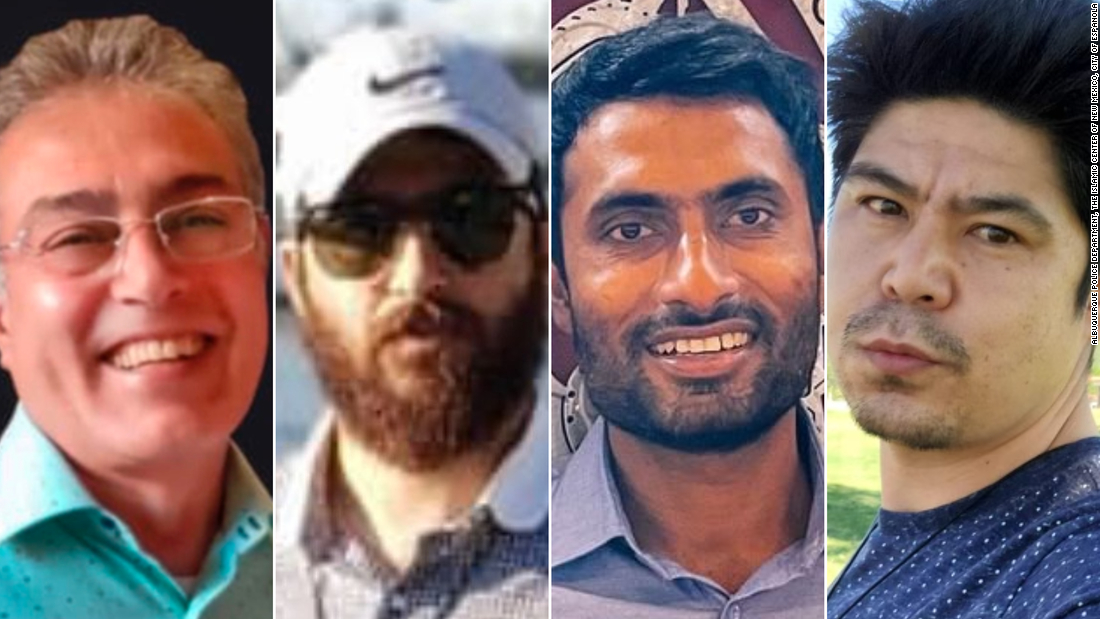
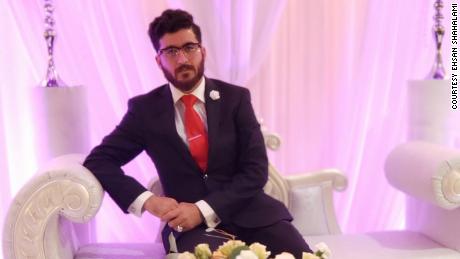
Though authorities are still searching for a motive and working to confirm whether they’re all related, police have arrested 51-year-old Muhammad Syed, describing him as the “primary suspect.”
Tips pointed investigators toward Syed, who police believe was in possession of at least two firearms that matched evidence from two of the crime scenes, according to Kyle Hartsock, deputy commander of the city police department’s criminal investigations division.
One of the firearms recovered in his home has been linked to bullet casings found at the scenes of two of the killings, while casings from a handgun found in his car were linked to one of the scenes, according to the arrest affidavit.
The killings took place between November 2021 and August of this year, with the latest three occurring within the span of two weeks.
Police said that three of the victims — Muhammad Afzaal Hussain, 27, Aftab Hussein, 41, and Mohammad Zaher Ahmadi, 62 — were “ambushed with no warning, fired on and killed.” A fourth man, 25-year-old Naeem Hussain, was shot and killed after attending a funeral for Hussain and Hussein.
A criminal complaint obtained by CNN affiliate KOAT sheds more light on two of the killings.
On July 26, police responded to Rhode Island Street, where they found Aftab Hussein with multiple gunshot wounds, lying next to a car. Detectives learned that the gunman had waited behind a bush near the driveway where the victim usually parked his vehicle and fired through the bush multiple times when Hussein got out of his vehicle, according to the complaint.
On August 1, police got a call about a drive-by shooting near the intersection of Cornell Drive and Garfield Avenue. They found Muhammad Afzaal Hussain with multiple gunshot wounds, the complaint states.
The suspect, Syed, is being charged with two of the homicides: the July 26 killing of Aftab Hussein and the August 1 killing of Muhammad Afzaal Hussain, according to the police.
As for the two other killings, police said there is evidence that Syed as the “most likely person of interest or suspect” in those as well, Hartsock said.
According to the complaint, Syed denied any involvement in the killings during an interview with police on Tuesday.
How the investigation unfolded
Police first noticed similarities between the deaths of Aftab Hussein and Muhammad Afzaal Hussain, which took place just days apart.
“We were able to relate the casings found on both the scenes that are likely fired from the same firearm,” Hartsock said. “We quickly started looking at other cases that could be similar and identify that there might be a really active public threat.”
The shootings spurred police to examine whether they were connected to a killing that happened November 7, 2021. That day, officers found an Afghan man, Mohammad Ahmadi, with a gunshot wound in the parking lot behind the business he ran with his brother.
As the investigation unfolded, another killing happened just before midnight on August 5 in the area of Truman Street and Grand Avenue where police found Naeem Hussain dead from a gunshot wound.
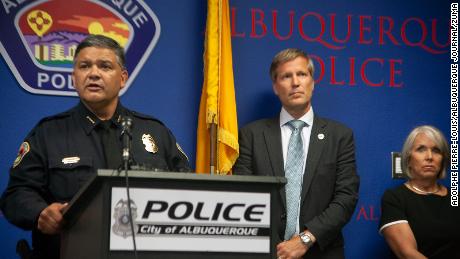
Police increased patrols near mosques and other areas and the governor sent state police to the city.
Police released images of a “vehicle of interest” that they said may be tied to the shootings. They asked for the public’s help tracking down the silver sedan.
The city’s Muslim community was on edge. Some stopped going to their local mosques or going out late at night, and some even avoided going out to shop for food.
At the same time, scores of tips began rolling in to law enforcement.
“We’ve had a total of about 230 tips,” FBI Special Agent in Charge Raul Bujanda said Tuesday.
Residents also began voluntarily uploading surveillance videos from their homes to an online portal that was set up specifically for the investigation. Police sifting through the footage ended up finding video that captured the gunshots and vehicles leaving the scene, according to Hartsock.
A tip from the community eventually came in that led investigators to identify Syed as a suspect and track down the car.
Albuquerque police and the FBI got multiple tips about Syed and his vehicle, a Volkswagen Jetta, according to the complaint.
As police were waiting to execute a search warrant at the suspect’s home, they saw him get into what they believed to be the same vehicle that had been linked to the homicides.
Officers stopped the vehicle and detained Syed near Santa Rosa, New Mexico. That’s when they saw firearms inside the vehicle, according to Hartsock.
Police executing the search warrant at Syed’s home found more weapons, according to police.
“Multiple firearms were recovered from that home that are continually being tested. But right now we believe that at least one of them inside the home and one of them inside the car that was pulled over, are matching… two crime scenes on Rhode Island and Cornell, and that is the basis of the charges that are going forward today,” Hartsock added.
According to the complaint, Syed told police “he was driving to Texas to find a new place for his family to live because the situation in Albuquerque was bad. Muhammad then referenced the shooting of Muslims on the news.”
Ahead of the suspect’s arrest, police found records of Syed and one of his sons purchasing firearms and gun accessories from different shops in Albuquerque. Those purchases included a 9mm pistol bought on January 28, 2021, a scope for an AK-47 bought on August 1, and 7.62×39 caliber pistol and rifle bought on July 15, according to the complaint.
The document also notes that both 7.62×39 and 9mm “were the two calibers of weapon used in the above-mentioned homicides.”
While searching the Jetta, police said they found a 9mm casing between the windshield and the hood of the car, and two 7.62×39 casings inside the vehicle, in addition to a 9mm handgun.
The 9mm casing found in the windshield matched with a casing found at the August 1 crime scene, according to the complaint.
CNN was at the suspect’s home
Hours before police announced Syed was a suspect, CNN was inside his home and spoke to his daughter, who offered insight on her father and what happened when they last saw each other, which was before his arrest and before authorities executed a search warrant on their family’s home.
The daughter, one of Syed’s six children, spoke to CNN Tuesday morning, while the family was still cleaning up the mess left behind by investigators who had pored over the contents of the house the night before. CNN has chosen not to name her daughter out of concern for her safety.
“My father is not a person who can kill somebody. My father has always talked about peace. That’s why we are here in the United States. We came from Afghanistan, from fighting, from shooting,” she told CNN.
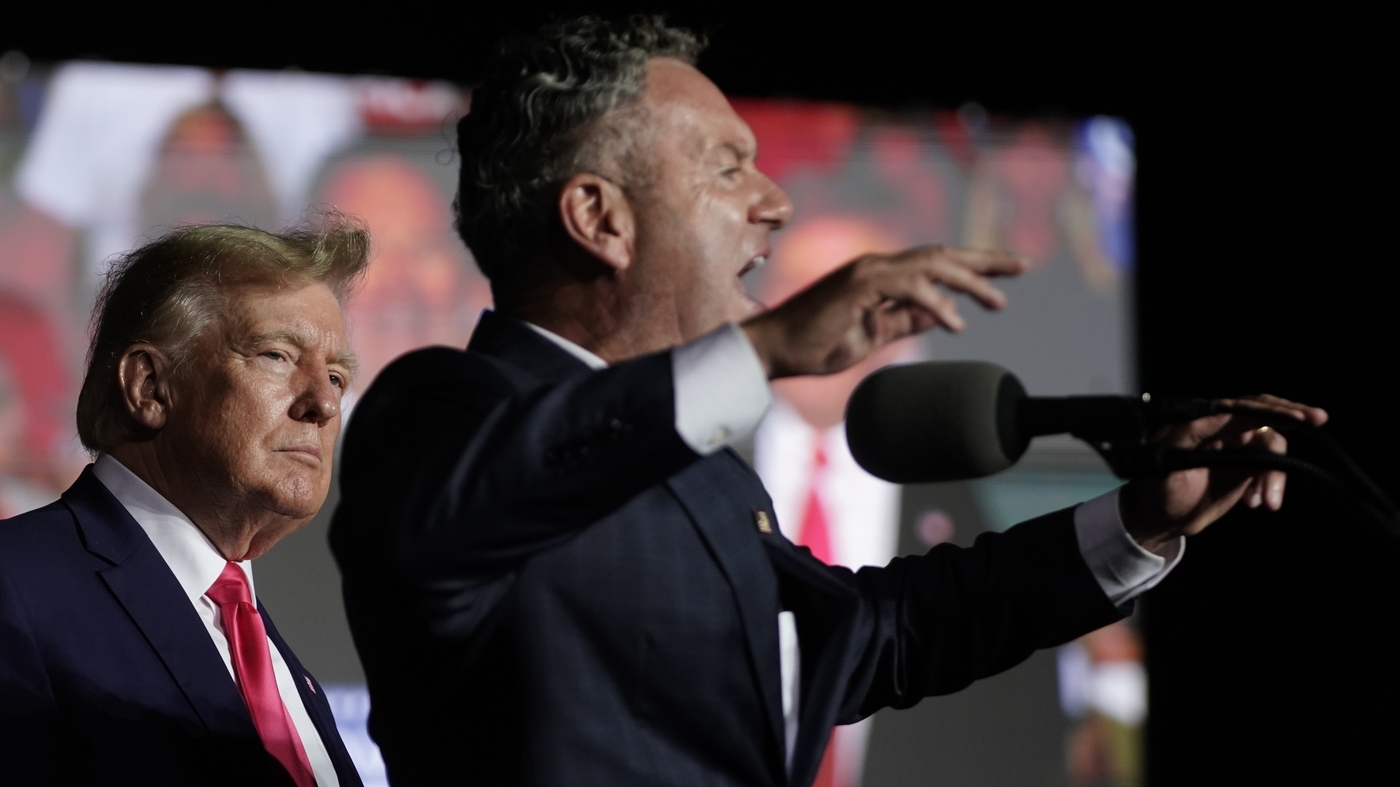
Tim Michels, Wisconsin Republican candidate for governor, right, speaks as former President Donald Trump listens at a rally Friday, Aug. 5, 2022, in Waukesha, Wisc.
Morry Gash/AP
hide caption
toggle caption
Morry Gash/AP
Tim Michels, Wisconsin Republican candidate for governor, right, speaks as former President Donald Trump listens at a rally Friday, Aug. 5, 2022, in Waukesha, Wisc.
Morry Gash/AP
About a day after the FBI raided former President Donald Trump’s Mar-a-Lago home and resort, his pick for Wisconsin governor has won the Republican primary, according to a race call by The Associated Press.
Late in the campaign, Trump endorsed construction executive and self-described political newcomer Tim Michels who spent millions of his own dollars on a TV ad blitz, painting himself as a businessman and “outsider” who wants to turn government upside down.
Michels may not earn his living in politics, but he’s not a political newcomer. He first ran for office in 1998, losing a Republican primary for state Senate to now-US Rep. Scott Fitzgerald. In 2004, Michels ran for the US Senate, winning a GOP primary but losing the general election to former Democratic US Sen. Russ Feinggold.
After the backing of the former president in this race, Michels shot up in the polls and ran a competitive campaign against Rebecca Kleefisch, who was lieutenant governor under former Republican Gov. Scott Walker for eight years. Kleefisch was also supported by former Vice President Mike Pence.
Michels hasn’t gone as far as Trump when it comes to the way he describes the 2020 presidential election, but he has cast doubt on President Biden’s victory in Wisconsin, which was affirmed by a statewide canvas, a partial recount and multiple state and federal court decisions. When asked at a recent debate whether he’d sign legislation that would “decertify” Biden’s 2020 victory in Wisconsin, Michels kept his options open.
Michels vs. Evers in November
In 2018, Democratic Gov. Tony Evers won the election for governor by a sliver and the race in 2022 between Michels and Evers could be just as close.
The governor has incumbency and a decent approval rating on his side. Evers is regularly at odds with Republicans in the state and has set veto records. In many ways, his veto of him is the only thing standing in between the large GOP majorities in the legislature and measures like making it easier to carry concealed guns and election law changes that would likely become law under Michels.
To many in Wisconsin, Michel’s policy agenda is a mystery. While he’s laid out some of what he’d prioritize if elected, big questions remain about how he would govern.
But the spotlight of the campaign has prompted Michels to take stands on some issues. In early July, his campaign did not respond when asked by the Milwaukee Journal-Sentinel whether he would ban emergency contraceptives, known as Plan B. By mid-month, he told reporters he would not.
“I am against abortion,” Michels said. “I am not against contraception.”
Michels’ stump speech lists three priorities as governor. He tells voters he’s for “election integrity,” referring to a package of changes that includes eliminating the Wisconsin Elections Commission. He said he also wants to reduce crime and reform education.
Federal investigators searched Donald Trump’s Mar-a-Lago residence in Florida on Monday bearing a warrant that broadly sought presidential and classified records that the justice department believed the former president unlawfully retained, according to two sources familiar with the matter.
The criminal nature of the search warrant executed by FBI agents, as described by the sources, suggested the investigation surrounding Trump is firmly a criminal inquiry that comes with potentially far-reaching political and legal ramifications for the former president.
And the extraordinary search, the sources said, came after the justice department grew concerned – as a result of discussions with Trump’s lawyers in recent weeks – that presidential and classified materials were being unlawfully and improperly kept at the Mar-a-Lago resort.
Meanwhile, Republican and rightwing groups have swiftly used the FBI raid at Mar-a-Lago to raise money from their supporters by bombarding them with fundraising emails and appeals for donations.
couldthe Mar-a-Lago raid benefit Trump politically? Trump is widely believed to be pursuing a presidential run in 2024. Some suggested that it would fuel his supporters’ suspicion of federal law enforcement officials, whom Trump and his allies have long fired as corrupt and biased.
Why didn’t the FBI just use a subpoena? The fact that the FBI sought a search warrant rather than a subpoena implies it did not trust Trump to hand over or preserve official documents in his possession.
What else has the FBI done? Federal investigators seized the cellphone of the Republican congressman Scott Perry on Tuesday, his office said. Perry is a close ally of Trump.
Biden administration ends Trump-era ‘Remain in Mexico’ policy
A US border patrol looks on as people wait to have their identities checked and taken to a processing center in Yuma, Arizona, in June. Photograph: Etienne Laurent/EPA
The Department of Homeland Security (DHS) said that it had ended a Trump-era policy requiring asylum seekers to wait in Mexico for hearings in US immigration court, hours after a judge lifted an order, in effect since December, that the so-called Remain in Mexico rule will be reinstated.
The timing had been in doubt since the US supreme court ruled on June 30 that the Biden administration could end the policy.
Homeland security officials had been largely silent, saying they had to wait for the court to certify the ruling and for a Trump-appointed judge, Matthew Kacsmaryk, in Amarillo, Texas, to then lift his injunction.
The supreme court certified its ruling last week and critics of the policy had been increasingly outspoken about the Biden administration’s reticence on Remain in Mexico, calling for an immediate end to it.
What will happen now? The program now will be unwound in a “quick, and orderly manner”, DHS said in a statement. No more people are being enrolled and those who appear in court will not be returned to Mexico when they appear in the US for their next hearings.
Why did the Biden administration decide to end the policy? The policy “has endemic flaws, imposes unjustifiable human costs, and pulls resources and personnel away from other priority efforts to secure our border”, the department said.
‘This is about striking fear’: China’s Taiwan drills the new normal, analysts say
Chinese People’s Liberation Army warplanes conduct what it describes as a combat training exercise around Taiwan on Sunday. Photograph: Wang Xinchao/AP
China’s military drills targeting Taiwan have set a new normal, and are likely to “regularise” similar armed exercises off the coast or even more aggressive action much closer to the island, analysts have said.
China’s People’s Liberation Army (PLA) has been conducting live-fire exercises and other drills in the seas around Taiwan’s main island for almost a week, in a purported response to the controversial visit to Taipei by the US House speaker, Nancy Pelosi.
Beijing claims Taiwan as a province. It has not ruled out taking it by force and objects to any and all foreign shows of support for its sovereignty. Taiwan has accused Beijing of using Pelosi’s visit as an excuse to prepare for an invasion.
While some drills are continuing, the big show put on last week has ended, and observers are now trying to assess how the dynamics of the region have changed, and what the future holds for cross-strait relations.
What does Taiwan think? Taiwan’s foreign minister, Joseph Wu, said yesterday there was concern the PLA would “routinize” crossing the median line. He urged the international community to push back, saying Beijing clearly aimed to control the strait.
In other news…
In an article for Vogue, Serena Williams explained her intention to further expand her family was one of the main reasons she was retiring. Photograph: Tom Jenkins/The Guardian
Serena Williams, one of the greatest athletes of all time and a 23-time grand slam singles champion, has announced that she is retiring from professional tennis, indicating she could step away after the upcoming US Open. Here’s how Serena Williams became a rare legend.
Elon Musk has sold $6.9bn (£5.7bn) worth of shares in Tesla after admitting that he could need the funds if he is forced to buy the social media platform. The Tesla chief executive walked away from a $44bn deal to buy Twitter in July but the company has launched a lawsuit demanding that he complete the deal.
China is racing to stamp out Covid-19 outbreaks in the tourist hubs of Tibet and Hainan, with the authorities launching more rounds of mass testing and closing venues to contain the highly transmissible Omicron variant as Beijing presses ahead with its Covid zero strategy.
A former Twitter employee has been found guilty of spying on Saudi dissidents using the social media platform and passing their personal information to a close aid of Crown Prince Mohammed bin Salman. A jury found Ahmad Abouammo had acted as an unregistered agent of the Saudi government.
Don’t miss this: A rebel fighter who risked his life for love was murdered, and part of me died too
Naxalite fighters in the forests of Chhattisgarh in 2007: Korsa Joga had been a member of the revolutionary group for many years. Photograph: Mustafa Quraishi/AP
“As a journalist in a conflict zone I was used to cover deaths. But then a young insurgent who had laid down his weapons and became a friend was killed,” writes Ashutosh Bhardwaj. “I was sent photographs on WhatsApp, of his body lying on a road in a puddle of blood. In that moment a man deep inside me, who loves, who years for love, a part of that man was also murdered. A journalist often lives in bewildering haste, in a frenzied endeavor to locate news in every element around… Imperceptibly, but profoundly, reporting begins to mutate your being. You find yourself ineligible for writing on topics that don’t involve blood or sorrow.”
Climate check: Can citizen scientists turn the tide against America’s toxic algal blooms?
An aerial view of red tide off Florida’s south-west coast. Photograph: Mote Marine Laboratory’s Manatee Research Program
As climate change heats the oceans, predictions of a dangerous phenomenon known as “red tides” are on the rise. Red tides occur a type of rust-colored alga known as Karenia brevis grows, which produces toxic compounds that are harmful to humans as well as dolphins, manatees and other sea life. In an effort to address the threat, the Red Tide Respiratory Forecast was launched. It’s an online map that shows the presence and severity of red tide at select locations, which community of citizen science volunteers contribute to.
Last Thing: The transatlantic battle over a 7ft Frankenstein figure
Schoolchildren get up close with Frankenstein’s monster. Photograph: Getty
Measuring almost 7ft tall, a Frankenstein’s monster mannequin and costume is one of the largest – and strangest – costumes owned by the V&A museum in London. The only problem? The Natural History Museum of Los Angeles County (NHM) thinks it owns it too. The NHM said it was given the monster, and the costume, by Universal Studios in 1935. It in turn slowed it down to the Academy Museum of Motion Pictures, where it was reported as being destroyed in 1967. So the NHM was a bit surprised when it showed up in London.
sign up
Sign up for the US morning briefing
First Thing is delivered to thousands of inboxes every weekday. If you’re not already signed up, subscribe now.
Get-in-touch
If you have any questions or comments about any of our newsletters please email [email protected]
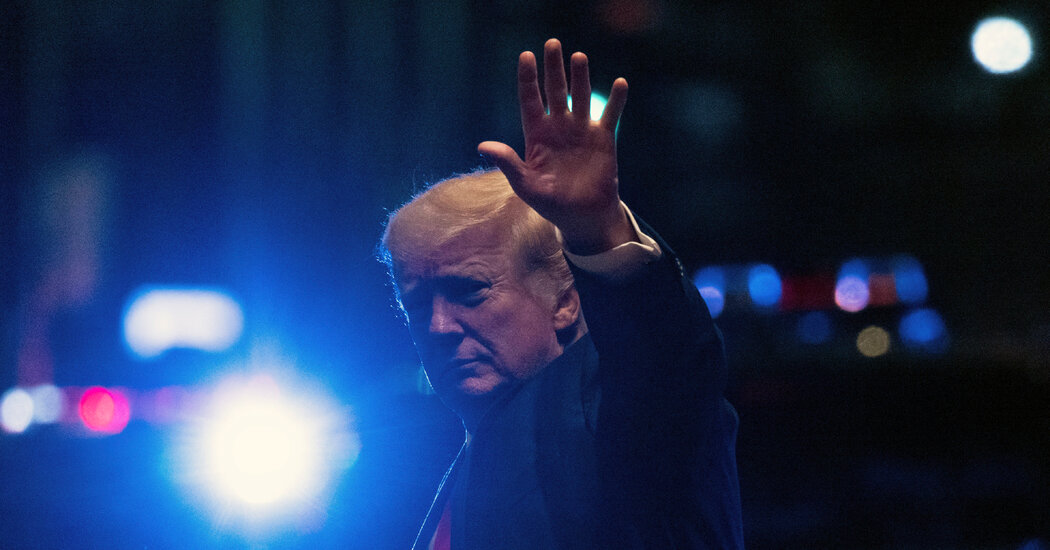
Former President Donald J. Trump’s legal jeopardy appeared to intensify significantly on Monday with the stunning revelation that federal agents armed with a warrant had searched his Mar-a-Lago club and home in Palm Beach, Fla.
It was not immediately clear what investigators might have seized, but the search took place after federal agents visited the Palm Beach estate in the spring to discuss materials Mr. Trump took with him improperly when he left the White House, including numerous pages of classified documents .
The mere fact that the federal authorities had taken the remarkable step of searching the private residence of a former US president was a reminder of just how much legal scrutiny Mr. Trump is under as he considers running for president again in 2024.
He and his family have criticized the various investigations swirling around him as partisan or vindictive, and they have denied wrongdoing.
Federal prosecutors investigating attempts to reverse Mr. Trump’s loss in the 2020 election have asked witnesses directly about his involvement in those efforts. In Georgia, a criminal inquiry is focused on his push for him to have the election results altered there.
More immediately, Mr. Trump is scheduled to be deposed on Wednesday by lawyers from the New York State attorney general’s office as part of a long-running civil inquiry into whether he and his family’s real estate business fraudulently inflated the value of his hotels, golf courses and other assets to obtain favorable loans.
The status of other investigations into the former president is harder to fathom, although one — a criminal inquiry by the Manhattan district attorney’s office — appeared to lose steam in the spring. (A matter that had receded into the background re-emerged on Tuesday, when a federal appeals court ruled that the House could gain access to Mr. Trump’s tax returns.)
Here is where the notable inquiries involving Mr. Trump stand.
New York State Civil Inquiry
Mr. Trump fought for months to avoid the high-stakes deposition he is scheduled to sit for on Wednesday, which could shape the outcome of the civil inquiry by New York’s attorney general, Letitia James, into him and his family business, the Trump Organization . (The deposition was to have been in July; it was delayed after the death of his first wife, Ivana.)
Ms. James’s investigation, which is in its final stages, is focused on whether financial statements in which Mr. Trump valued his assets reflected a pattern of fraud, or were simply examples of his penchant for exaggeration.
Ms. James said in a court filing this year that the Trump Organization’s business practices were “fraudulent or misleading,” but that her office needed to question Mr. Trump and two of his adult children, Ivanka and Donald Jr., to determine who was responsible for the conduct.
The two sat for depositions recently after the judge overseeing the case ordered them to do so. Their brother Eric was interviewed in 2020 as part of the inquiry and repeatedly invoked his Fifth Amendment right against self-incrimination, according to a court filing.
The former president’s deposition follows a protracted legal battle that resulted in a state judge ruling in April that Mr. Trump was in contempt of court. That ruling came after Ms. James filed a motion asking that Mr. Trump be compelled to produce documents sought in eight previous requests.
His lawyers said they had searched for, and could not find, any documents the attorney general did not already have. The judge nonetheless fined Mr. Trump $10,000 a day until he filed affidavits describing the search. The contempt order was lifted in May after he paid a $110,000 fine and submitted the affidavits.
The same month, a federal judge dismissed a lawsuit filed by Mr. Trump that sought to halt Ms. James’s inquiry because, the former president’s lawyers argued, she had violated his rights, and her inquiry was politically motivated.
Because Ms. James’s investigation is civil, she can sue Mr. Trump but she cannot file criminal charges. She could also opt to pursue settlement negotiations in hopes of obtaining a swifter financial payout rather than file a lawsuit that would undoubtedly take years to resolve.
If Ms. James were to sue and prevail at trial, a judge could impose steep financial penalties on Mr. Trump and restrict his business operations in New York.
Mr. Trump’s lawyers would most likely argue in any such suit that valuing real estate is a subjective process, and that his company simply estimated the value of the properties in question, without intending to artificially inflate them.
Manhattan Criminal Case
Despite its civil nature, Ms. James’s inquiry and Mr. Trump’s deposition still carry the potential for criminal charges. That’s because the Manhattan district attorney’s investigation was also focused on the valuations of Mr. Trump’s properties before it appeared to flag in the spring. It could gain new life depending on Mr. Trump’s performance of him on Wednesday.
Alvin Bragg, the district attorney, said in April that the inquiry, which began under his predecessor, Cyrus R. Vance Jr., was continuing but he did not offer a clear sense of its direction.
Mr. Bragg’s comments came after two prosecutors who had been leading the investigation left. One of them, Mark F. Pomerantz, said in a resignation letter published by The New York Times that he believed the office had enough evidence to charge Mr. Trump with “numerous” felonies. Mr. Pomerantz criticized Mr. Bragg for not pursuing an indictment in the case.
In his April remarks on the matter, Mr. Bragg said new witnesses had been questioned and additional documents had been reviewed, although he declined to provide details. Later in April, The Times reported that at least three witnesses considered central to the case had not heard from Mr. Bragg’s office for several months or had not been asked to testify.
The investigation has yielded criminal charges against the Trump Organization and its chief financial officer, Allen H. Weisselberg.
Last July, before Mr. Vance’s tenure ended, the district attorney’s office charged the company with running a 15-year scheme to help its executives evade taxes by compensating them with fringe benefits that were hidden from authorities. Mr. Weisselberg was charged with avoiding taxes on $1.7 million in perks that should have been reported as income.
The case has been tentatively scheduled to go to trial later this year.
Georgia Criminal Inquiry
Mr. Trump is also under scrutiny in Georgia, where Fani T. Willis, the Fulton County district attorney, is investigating whether the former president and others criminally interfered with the 2020 presidential election.
Mr. Trump and associates had numerous interactions with Georgia officials after the election, including a call in which he urged the secretary of state, Brad Raffensperger, to “find 11,780 votes,” the number he would have needed to overcome President Biden’s lead in the state.
It is the only known criminal inquiry that focuses directly on Mr. Trump’s efforts to overturn the election results. In January, Fulton County’s top judge approved Ms. Willis’s request for a special grand jury in the matter.
On Tuesday, a different judge in Fulton County said Rudolph W. Giuliani, a lawyer for Mr. Trump and a central figure in the Georgia inquiry, needed to travel there to appear before the grand jury. Mr. Giuliani, who had two coronary heart stents implanted last month, had prosecutors told he was not healthy enough to fly to Georgia.
But the judge, Robert CI McBurney, tentatively ordered him to show up to deliver in-person testimony on Aug. 17. (Judge McBurney said he might reconsider the date if Mr. Giuliani’s doctor produced an adequate medical excuse.)
“Mr. Giuliani is not cleared for air travel, AIR,” Judge McBurney said. “John Madden drove all over the country in his big bus, from stadium to stadium. So one thing we need to explore is whether Mr. Giuliani could get here without jeopardizing his recovery and his health. On a train, on a bus or Uber, or whatever it would be,” he said, adding, “New York is not close to Atlanta, but it’s not traveling from Fairbanks.”
Judge McBurney also said on Tuesday that prosecutors should let Mr. Giuliani, 78, know whether he is a target of the criminal investigation. Ms. Willis’s office has already told at least 17 people that they are targets.
Westchester County Criminal Investigation
In Westchester County, Miriam E. Rocah, the district attorney, appears to be focused at least in part on whether the Trump Organization misled local officials about the value of a golf course to reduce its taxes. She has subpoenaed the company for records on the matter.
Washington DC Lawsuit
In January 2020, Karl Racine, the attorney general for the District of Columbia, sued Mr. Trump’s inaugural committee, saying he had overpaid his own family business by more than $1 million or space at the Trump International Hotel during the January 2017 inaugural.
The lawsuit, which names the inaugural committee, the hotel, and the Trump Organization as defendants, is scheduled to go to trial in September, after a judge ordered that it could move forward.
Mr. Racine’s office has subpoenaed a range of parties, including Melania Trump, the former first lady, and has questioned Ivanka Trump, Eric Trump and Thomas J. Barrack Jr., who chaired the inaugural committee.
Jan. 6 Inquiry
A House committee investigating the Jan. 6 assault on the Capitol — aided by more than a dozen former federal prosecutors — is examining the role Mr. Trump and his allies may have played in his efforts to hold onto power after his electoral defeat in November 2020 .
While the committee itself does not have the power to bring criminal charges, it could refer the matter to Attorney General Merrick B. Garland, to prosecute them through the Justice Department.
Jonah E. Bromwich, Rebecca Davis O’Brien, Michael Rothfield and Ashley Wong contributed reporting.
Five people were sifting through dusty files in the basement of a Mississippi courthouse two months ago when they laid eyes on a document that hadn’t been seen for decades.
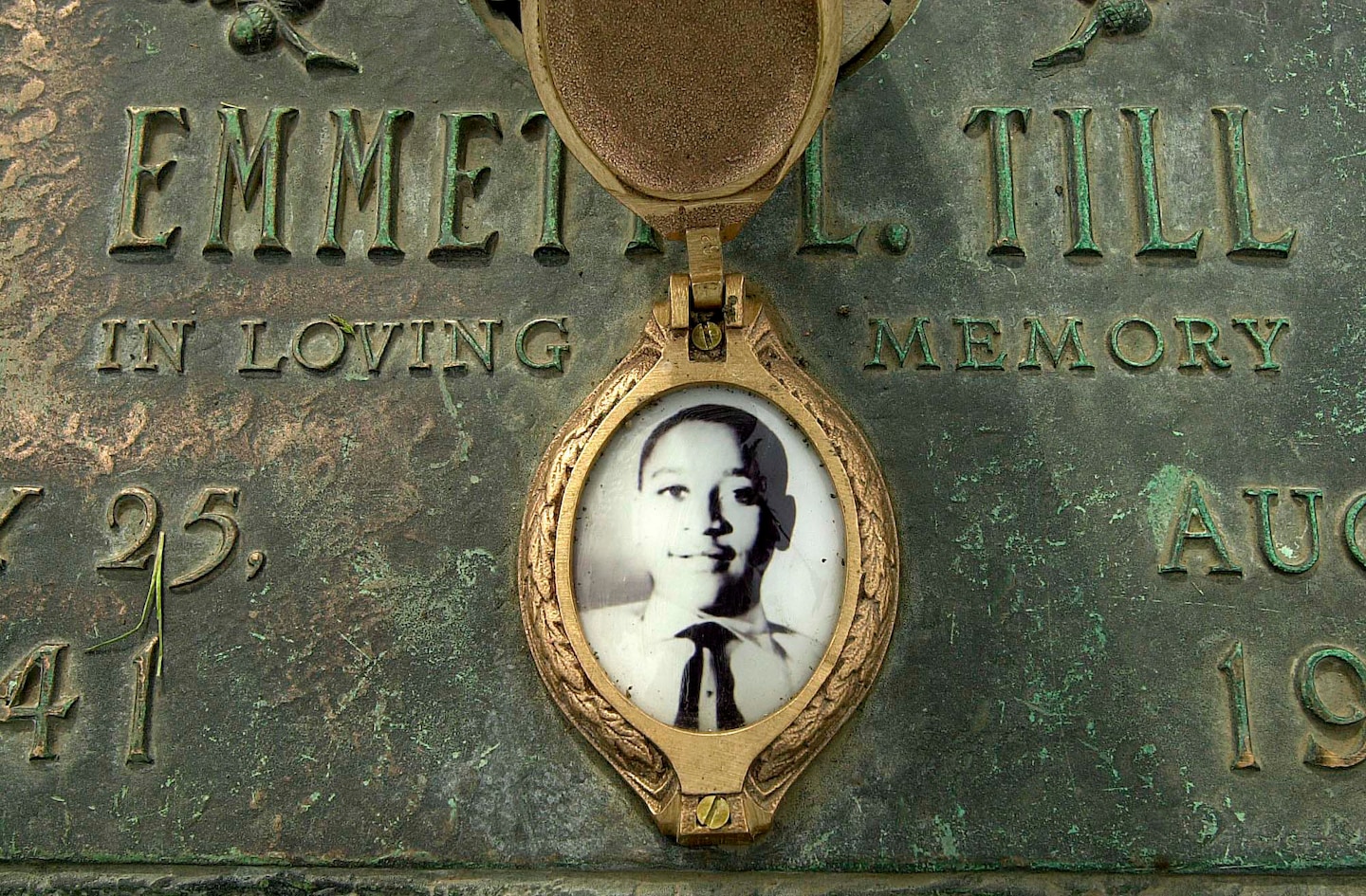
It was a warrant from August 1955 for the arrests of those involved in the kidnapping of the Black teenager Emmett Till. Two of the names on the documents had checks beside them. A third did not — “Mrs. Roy Bryant, ”now Carolyn Bryant Donham, the White woman whose accusations against Till led to his lynching of him.
But a grand jury in Leflore County — where Till was lynched and tossed into a river by Bonham’s then-husband and his brother — decided not to indict her, District Attorney Dewayne Richardson said in a news release Tuesday.
The grand jury found that there was not sufficient evidence to indict Donham on charges of kidnapping and manslaughter after hearing seven hours of testimony from investigators and witnesses last week.
In the weeks since the unserved warrant was found, Till’s family and the Emmett Till Legacy Foundation urged Richardson to serve the warrant that was never executed nearly 70 years ago.
In September 1955, Mamie Till-Mobley, Till’s mother, had an open-coffin funeral for her son, whose body was so badly beaten it was only recognizable by a ring he wore. Till-Mobley’s decision of her and fervent telling of her son’s story of her to reporters reignited the civil rights movement.
That same month, Donham’s husband, Roy Bryant, and his brother, JW Milam, were acquitted of murder by an all-White, all-male jury after deliberating for a little more than one hour.
Till’s cousin, the Rev. Wheeler Parker, Jr., who is the last living witness of the kidnapping, told the Associated Press in a statement that the decision to not indict Donham was “unfortunate, but predictable.”
“The fact remains that the people who abducted, tortured, and murdered Emmett did so in plain sight, and our American justice system was and continues to be set up in such a way that they could not be brought to justice for their heinous crimes, Parker said in the statement.
On Tuesday afternoon, the Emmett Till Legacy Foundation said on Facebook that it would “Never Give Up” trying to hold Donham accountable, to keep its promise to Till-Mobley.
“Carolyn Bryant Donham’s actions, and the unserved warrant proves her culpability,” the organization’s post said. “There was probable cause for her arrest of her.”
The discovery of the warrant also ignited a search for Donham, who is now in her late 80s and whose whereabouts have been kept secret by her family. When author Timothy Tyson interviewed her in 2008 — the only known interview Donham has given outside of investigations — she was staying in Raleigh, NC
Donham said her testimony in court that Till had made sexual advances was not true, according to Tyson’s book “The Blood of Emmett Till.” During a news conference in 2018, the author said he believed Donham’s family de ella wanted her to do the interview so that she could speak about what happened in 1955 before she died.
Donham, 21 at the time, accused the 14-year-old Till of improper advances at a family store in Money, Miss. Four days later, her husband de ella and Milam kidnapped Till from a relative’s home, lynched him and tossed him into a river. Till’s body was found attached to a 75-pound fan.
In Donham’s unpublished memoir, which was obtained by reporters last month, she said she pleaded with her husband and his brother not to hurt Till, calling herself “a victim.”
Lawyers and Till’s family have disputed the claims in her memoir, titled, “I Am More Than a Wolf Whistle: The Story of Carolyn Bryant Donham.”
When a federal case was presented in 2007, another Leflore County grand jury decided not to indict Donham on a charge of manslaughter. Last year, the state of Mississippi and the Justice Department closed a second investigation that began after information came out that Donham had recanted her statements from her from the previous case during her interview with Tyson.
The lack of indictment this month is a letdown for Till’s family and activists across the country who have advocated for Donham to be prosecuted.
“The murder of Emmett Till remains an unforgettable tragedy in this country and the thoughts and prayers of this nation continue to be with the family of Emmett Till,” Richardson said in the news release.