Categories
US

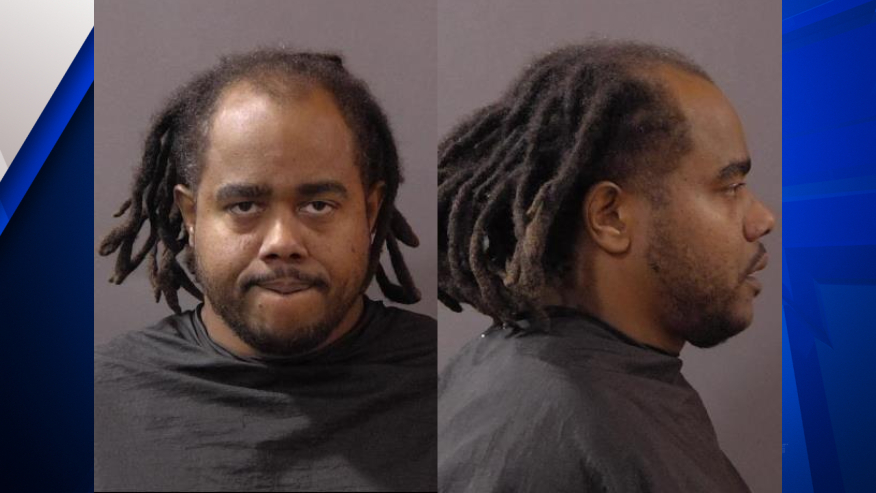
What we know about suspect in Elwood officer’s death

With formal charges expected to be filed Monday in Madison County, more details have emerged about the suspect in the deadly shooting of an Elwood police officer.

Police arrested 42-year-old Carl Roy Webb Boards II of Anderson in connection to the fatal shooting that took the life of 24-year-old Noah Shahnavaz during a traffic stop.

Boards is accused of shooting and killing Officer Shahnavaz around 2 am Sunday near the intersection of State Road 37 and County Road 1100 N. in Madison County.

Investigators say Boards fled from the scene of the shooting, and the suspect’s vehicle was seen after 2:30 am in Hamilton County near SR 37 and 142nd Street. Fishers police conducted a pit stop maneuver and were able to stop Boards’ vehicle on I-69 near SR 37.

Boards was taken into custody and is currently being held without bond in the Hamilton County Jail.

16 years earlier, Boards fired at Indianapolis police officers

A look at Boards’ lengthy criminal history shows he was sentenced to a 25-year aggravated sentence in connection to a 2006 incident in which he shot at Indianapolis police officers.

According to a response to an appeal filed on behalf of Boards, Boards pointed to a .40-caliber semi-automatic handgun at two Indianapolis police officers who had attempted to pull him over for not using a turn signal on November 30, 2006.

The court documents show Boards fired seven times, and three bullets hit one of the officer’s IPD squad cars.

Boards’ vehicle was eventually stopped by a “precision intervention technique.” His appeal from him shows two weapons were found in his Suburban from him: “a Taurus .40-caliber semi-automatic handgun on the front seat and an AK-47-style assault rifle with a loaded drum magazine on the floor of the driver’s side.”

Eight ecstasy pills were found in Boards’ pocket, and he reportedly took at least one ecstasy pill earlier.

Boards was originally charged with attempted murder, possession of a firearm by a serious violent felon, three counts of resisting law enforcement, possession of a schedule I controlled substance (ecstasy), and carrying a handgun without a license.

In August 2007, a jury found Boards guilty of criminal recklessness, two counts of resisting law enforcement, possession of ecstasy, and carrying a handgun without a license.

The jury did not convicted him of attempted murder.

A jury trial was waived on the following counts: unlawful possession of a firearm by a serious violent felon, a class C felony enhancement to the carrying a handgun without a license conviction, and the usual offender allegation.

A court did find him guilty on all three counts in September of 2007.

Boards received the following sentence:

  • 7 years for class D felony criminal recklessness
  • 18 years consecutive for class B felony unlawful possession of a firearm by a serious violent felon
  • Concurrent 3-year terms for each of the class D felony resisting convictions
  • 3-year concurrent sentence for the ecstasy possession conviction
  • 8-year concurrent sentence for the class C felony carrying a handgun without a license conviction.

The concurrent terms means they would be done simultaneously as the first two terms, so Boards were sentenced to 25 years altogether.

According to the Department of Corrections database, Boards’ sentence for criminal recklessness ended on August 21, 2011. However, he was held further in the DOC on his possession of a deadly weapon charge, which ran consecutively to his criminal recklessness charge. He was not released from custody until August 16, 2019. Marion County Judge Mark Stoner confirmed this sequence of events.

Boards appeals conviction

Boards unsuccessfully appealed his conviction three times.

In a Court of Appeals decision filed in 2008, Boards’ attorneys argued his unlawful possession of a
firearm by a serious violent felon and carrying a handgun without a license convictions violated the double jeopardy clause.

Boards also said his sentence was inappropriate because he suffered from mental illness that needed treatment.

“He claims that on the night in question he was patrolling Indianapolis for terrorists and that he shot toward the police officers only because he did not want them to interfere with his protective mission,” read the court documents.

The Court of Appeals declined to authorize the filing of Boards’ petition, citing his “failure to take prescribed medications to combat his illness” and

Boards’ charges in Elwood officer’s death

Boards is facing the following preliminary charges for Officer Noah Shahnavaz’s death: murder, possession of a firearm by a serious violent felon, resisting law enforcement.

The Madison County Prosecutor’s Office says it will talk to Shahnavaz’s family before deciding whether to seek the death penalty.
Categories
US

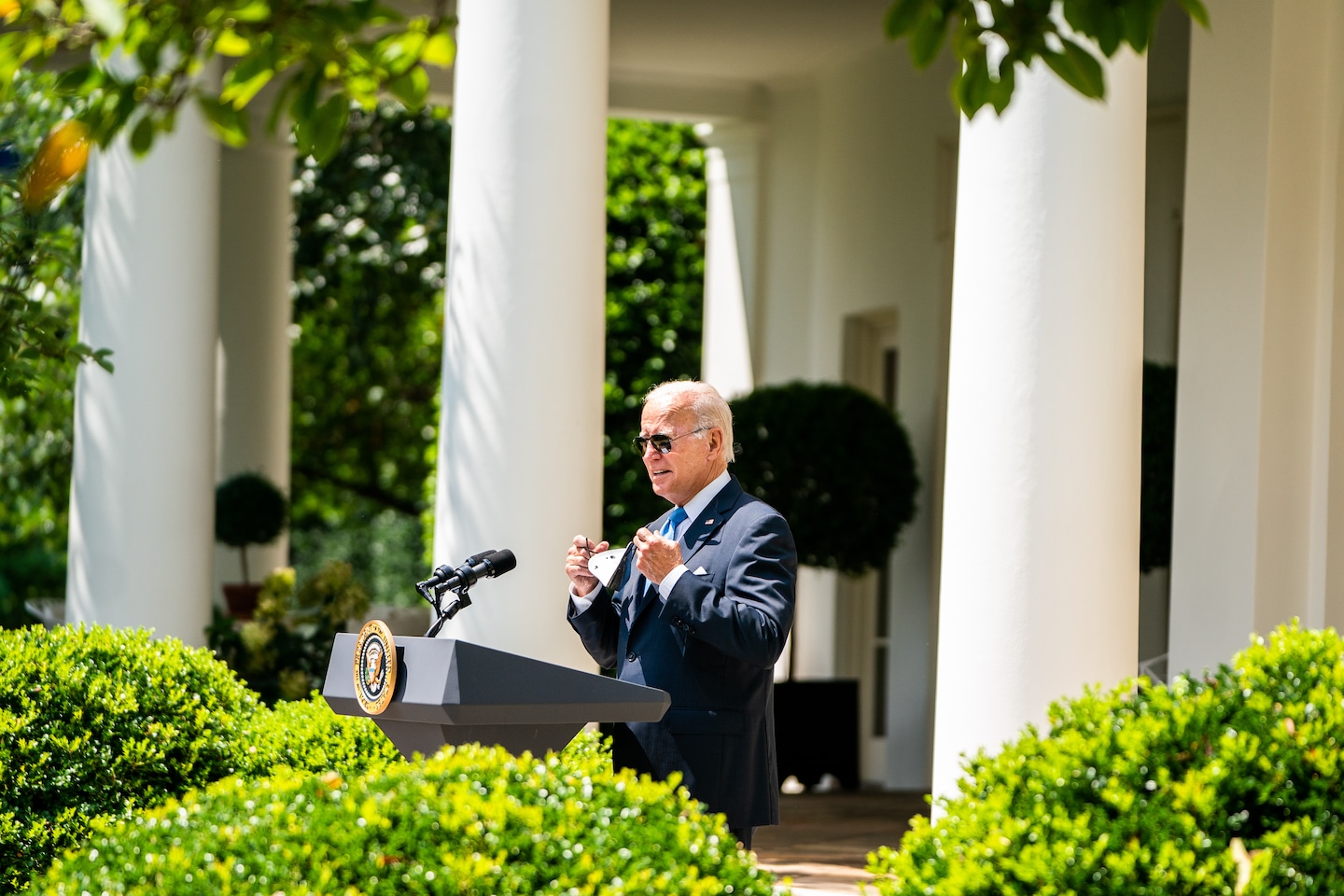
Biden’s covid case highlights confusing CDC guidance on ending isolation

Comment

Before President Biden emerged from coronavirus isolation Wednesday, he made double-sure he was no longer contagious. I have received negative tests Tuesday night and Wednesday morning. To test at all meant Biden was going above and beyond the guidance from the Centers for Disease Control and Prevention for exiting isolation.

The CDC has built that guidance around a timeline — a prescribed minimum number of days of isolation — rather than the direct, personalized evidence of virus shedding that rapid antigen tests provide. But the usefulness of these tests was highlighted anew Saturday when Biden, who had taken the antiviral during his illness from him, tested positive again and returned to isolation in the White House residence.

More than 2½ years into the pandemic, and with a highly contagious version of the virus circulating, the CDC guidelines for what to do when falling ill — and when to return to public life — continue to stoke as much confusion as clarity. That’s a reflection of the changing nature of the virus, the inherent unpredictability of an infection, and the demands and expectations of work and home life.

With new research showing that people are often infectious for more than five days, the CDC guidance has drawn criticism from some infectious-disease experts. The Biden protocol strikes many of them as the right way to go — because it’s empirical evidence that a person isn’t shedding virus.

The CDC does not explicitly recommend a negative test to patients who want to resume activities. It describes such a test, which offers a direct if imperfect measure of contagiousness, as optional. The guidance states that a patient should isolate for at least five days. (Day 1 is the day after your symptoms manifest or your test was collected.) Patients who end isolation should continue to wear a well-fitting mask around others at home or in public through Day 10.

“Given that a substantial portion of people do have a rapid positive test after 5 days, I think an updated recommendation should include people having a negative rapid test before coming out of isolation for COVID,” said Tom Inglesby, director of the Johns Hopkins Center for Health Security, who was the Biden administration’s senior adviser on testing from December until April.

Rapid tests are widely available, and “there is new science and practical experience with this virus since December when isolation guidance was issued,” Inglesby said in an email.

People who are being required to go back to their workplaces after five days of being sick with covid even if they still have a positive test result “shouldn’t do that,” Inglesby said. “It’s exposing others in the work environment to the risk of COVID spread. CDC guidance on that would be valuable.”

Biden has used his brief about the coronavirus as a sign that the administration is on top of the pandemic and has made the right moves by relying on vaccinations, testing and new antiviral drugs to lower the death rate. But across the country, hundreds of thousands of people a day are getting infected with the omicron subvariant BA.5 — the exact number is impossible to know — and they have a common, urgent need to know when they are no longer contagious.

The CDC’s guidance has been under internal review in recent months. A revamped set of recommendations is expected to be rolled out in coming weeks, according to three administration officials and advisers who spoke on the condition of anonymity to describe sensitive internal discussions. A draft of the updated guidance at the moment does not include a requirement to test negative before exiting isolation, they said.

The existing CDC guidance says patients can end isolation five days after their first day of symptoms, so long as their symptoms have improved and they have been fever-free for at least 24 hours without fever-reducing medication. The CDC encourages people who become very sick or have weakened immune systems to isolate for 10 days.

That leaves a negative test result as optional.

Robert Wachter, chair of medicine at the University of California at San Francisco, said people can easily misconstrue the CDC five-day guidance as a personal assurance of no longer being contagious.

“Unfortunately, people hear the ‘five days’ and think, ‘Oh, it must be that I’m not infectious,’ ” Wachter said. “That’s just wrong.”

A recent study in the New England Journal of Medicine looked at how long people could shed viruses that could be cultured in a laboratory — the best test of infectiousness. The result: People shed such virus for eight days, on average, before testing negative.

The CDC guidance “doesn’t make sense,” said Andrew Noymer, an epidemiologist at the University of California at Irvine. “They’re telling people to go back to work while they’re still contagious, essentially.”

Wachter suggests that people test negative before heading out in public.

“The antigen test turns out to be an awfully good ‘are you infectious’ test,” Wachter said. “If they’re still testing positive on Day 6, 7 or 8, I don’t want them hugging me in a room without a mask on.”

Officials familiar with the crafting of covid policy say the administration has to take into account human behavior — what people can, and will, do in their daily lives to limit virus transmission.

The administration’s decision not to push strongly for a negative test before ending isolation reflects an awareness that not everyone has access to tests or can extend time away from work, school, caregiving or other duties.

When CDC Director Rochelle Walensky was asked recently why the agency doesn’t recommend that all Americans use successive negative tests to exit isolation, as Biden did, she said the president was in a special category.

The president received multiple rapid tests because he was being monitored for a Paxlovid “rebound” infection, which can occur days after initially testing negative. Biden tested negative Thursday and Friday mornings before a positive result Saturday morning indicated the rebound, sending him back into isolation, White House physician Kevin C. O’Connor said in a letter. “Unsurprisingly,” Biden tested positive again Sunday, O’Connor said.

Walensky said during a Washington Post Live interview that “I think we can all agree that the president’s protocols likely go above and beyond and have the resources to go above and beyond what every American is able and has the capacity to do.”

“As we put forward our CDC guidance, we have to do so, so that they are relevant, feasible, followable by Americans,” she said, noting that some communities have fewer resources and greater work constraints.

She also noted that the guidance gives people the option to get a rapid test before ending isolation.

CDC Director Rochelle Walensky commented on President Biden’s covid protocols on July 22. (Video: Washington Post Live)

The five-day isolation period reflects an approximation of when people are most likely to be infectious. But these are averages, covering broad populations.

A positive result from a rapid antigen test, often called an at-home test, is the best indicator of how much virus is present and how likely you are to infect someone, said Michael Mina, a former Harvard University infectious-disease epidemiologist and immunologist who is an expert on rapid tests. Rapid antigen tests look for specific viral proteins to detect infection. Mina is chief science officer at a telehealth company that uses rapid testing, including for covid, to link patients to care.

“If you still have enough virus to see it on a rapid test, you know that you’re still infectious,” Mina said.

The California Department of Public Health, for example, requires a negative test on the fifth day after first testing positive, or later, to leave isolation.

Policymakers could help patients by releasing “clearer guidelines on using antigen tests” to leave isolation, like in Biden’s case, said Amy Barczak, an infectious-disease expert at Massachusetts General Hospital. Her research on her suggests that one-quarter of people infected with an omicron variant could still be infectious after eight days.

The CDC guidance dates to the wave of illness caused by the omicron variant that began in December and sickened tens of millions of people in a matter of weeks, causing daily cancellation of thousands of commercial airline flights and leading to staff shortages in all sectors of the economy. Under immense pressure to keep essential services from being hobbled, and amid signs that omicron was less likely to cause severe disease in a largely vaccinated population, the CDC shortened its recommended isolation period from 10 days to five.

Rapid tests were in short supply at that point, but then the federal government expanded its acquisition of tests, with millions now available. Since this spring, Americans have been able to go to a government website, covid.gov, order free rapid antigen tests and have them shipped to their homes. At drugstores and at online retailers, a package of two tests generally costs about $25, depending on the location. Private insurance is supposed to cover purchases of at-home tests.

Some elements of the CDC guidance may prove confusing.

The CDC says that people who choose to take a coronavirus test after Day 5 and get a positive result should extend their isolation to 10 days. But the agency does not directly recommend taking a test after Day 5. The guidance as written says, in effect, you can take a test after five days but be prepared to handle the result. People for whom isolation is a hardship may see no incentive to learn whether they are still shedding viruses.

Experts say the CDC should recommend what’s best for public health.

“That’s kind of the feeling they’re giving off right now: … ‘It’s an okay idea, but we don’t want to actually recommend it,’ ” Mina said. “It should be the other way around.”

The expected release by the CDC of revamped covid guidance in coming weeks is prompted by a desire to provide clarity, according to administration officials and others familiar with the discussions, who spoke on the condition of anonymity because the guidance is not final.

“We just know that people are hungry for guidance at this time,” one CDC adviser said.

The new guidelines are intended to help consumers determine covid risk by evaluating several factors, including whether they will be around people with frail immune systems or other underlying conditions, whether they will be outdoors or indoors, and the quality of the ventilation.

CDC has more than 600 websites related to its covid response, each with different messages on testing, ventilation and masking in different settings, the adviser said. The agency wants to share “important messages that everyone needs to hear in all settings across the country … and then make sure that all of the other guidance underneath it reflects those key messages.”

In the meantime, people testing positive at home past Day 5 are trying to figure out whether it’s safe to go back to work or resume other activities.

How quickly a rapid test turns positive can help guide behavior, Mina said.

“If you have a really dark line that shows up in five seconds before the control line even shows up… you probably really want to stay in isolation,” Mina said. “If you start to see the line in 10 seconds, and it gets really, really dark, you are teeming with viruses.”

If there is a weaker or fainter line, “it’s likely that you have less virus there, but you still do have virus. And there’s no way to define the cutoff at which you’re likely to transmit to other people,” Barczak said.

Categories
US

Man convicted in Boston kidnapping, rape case to be sentenced Monday

A man convicted of kidnapping a woman and then raping her for several days in his Charlestown apartment was sentenced Monday. Victor Pena, 42, was charged with kidnapping and 10 counts of aggravated rape for allegedly holding the 23-year-old woman against her will and sexually assaulting her for three days at his Walford Way home in January 2019. After six days of testimony and evidence, the jury needed just two hours of deliberations to return guilty verdicts on all counts. Pena was sentenced to 29 to 39 years in prison by Judge Anthony Campo. Prosecutors said the state asked for a “murder type” sentence because the kidnapping and rape “really does murder someone.””When I think about how this affected me, I think about how I never fully came back from those days. A part of me died in that apartment and I mourn for the life I could have lived-was supposed to live,” the victim wrote in an impact statement. In testifying in his own defense, Pena claimed what transpired during the three days in question was consensual, and the victim asked him for help and wanted to go to his apartment.“And we started to have nice chemistry,” Pena testified via an interpreter . “I said I have an apartment, I had housing, and then, ‘Let’s go to your apartment,’ she said.”Earlier in the trial, the accuser testified that Pena sexually assaulted her multiple times and threatened her if she tried to leave “I didn’t want to die,” the woman told the court. The accuser said she feared for her life and Pena told her that he rescued her and they would start a family. Pena forced her to drink alcohol and fed her nothing but canned pineapple. A digital forensic specialist said 322 photos and six explicit videos of the victim were found on Pena’s phone. Detectives who found the victim described to the court finding a terrified woman. Until he took the stand, Pena was not present in the courtroom during testimony and was instead watching remotely from another room following inappropriate behavior and disruptive outbursts. During proceedings to seat a jury, Pena suddenly appeared naked on a monitor in the courtroom while he performed to lewd act. After about 16 seconds, the monitor in the courtroom was turned off. That jury pool was excused.

A man convicted of kidnapping a woman and then raping her for several days in his Charlestown apartment was sentenced Monday.

Victor Pena, 42, was charged with kidnapping and 10 counts of aggravated rape for allegedly holding the 23-year-old woman against her will and sexually assaulting her for three days at his Walford Way home in January 2019.

After six days of testimony and evidence, the jury needed just two hours of deliberations to return guilty verdicts on all counts.

Pena was sentenced to 29 to 39 years in prison by Judge Anthony Campo.

Prosecutors said the state asked for a “murder type” sentence because the kidnapping and rape “really does murder someone.”

“When I think about how this affected me, I think about how I never fully came back from those days. A part of me died in that apartment and I mourn for the life I could have lived-was supposed to live,” the victim wrote in an impact statement.

This content is imported from Twitter. You may be able to find the same content in another format, or you may be able to find more information, at their web site.

In testifying in his own defense, Pena claimed what transpired during the three days in question was consensual, and the victim asked him for help and wanted to go to his apartment.

“And we started to have nice chemistry,” Pena testified via an interpreter. “I said I have an apartment, I had housing, and then, ‘Let’s go to your apartment,’ she said.”

Earlier in the trial, the accuser testified that Pena sexually assaulted her multiple times and threatened her if she tried to leave.

“I didn’t want to die,” the woman told the court.

The accuser said she feared for her life and Pena told her that he rescued her and they would start a family. Pena forced her to drink alcohol and fed her nothing but canned pineapple.

A digital forensic specialist said 322 photos and six explicit videos of the victim were found on Pena’s phone. Detectives who found the victim described to the court finding a terrified woman.

Until he took the stand, Pena was not present in the courtroom during testimony and was instead watching remotely from another room following inappropriate behavior and disruptive outbursts.

During proceedings to seat a jury, Pena suddenly appeared naked on a monitor in the courtroom while he performed a lewd act. After about 16 seconds, the monitor in the courtroom was turned off. That jury pool was excused.

.

Categories
US

Michigan abortion injunction doesn’t apply to local prosecutors

A court order that sought to bar enforcement of a dormant law criminalizing most abortions in Michigan does not apply to county prosecutors, the Michigan Court of Appeals ruled Monday.

The massively consequential ruling means the 1931 law banning all abortions except those done to protect the life of a pregnant person essentially takes effect immediately, said David Kallman, an attorney for Great Lakes Justice Center, a conservative organization representing several Michigan prosecutors who challenged the injunction .

“We’re ecstatic. It’s wonderful. That’s exactly what we’ve been saying all along,” Kallman said Monday morning in a phone interview.

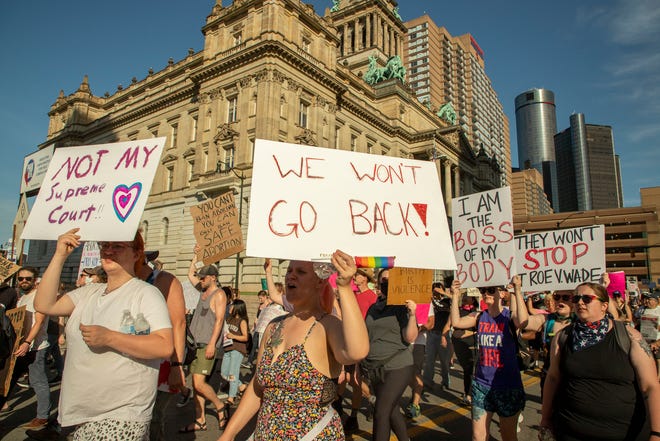
Abortion-rights protesters march through downtown Detroit following a rally at the Theodore Levin Federal Court building in Detroit to protest against the US Supreme Court decision to overturn Roe v.  Wade on June 24, 2022.

More:Michigan judge won’t step down from abortion case: Argument ‘border on frivolous’

More:Whitmer, Planned Parenthood lawsuits loom large in Michigan after high court overturns Roe

The decision could have a sweeping and drastic impact in the state, where Gov. Gretchen Whitmer, Attorney General Dana Nessel and many other pro-abortion rights advocates have fought to maintain legal access to abortion following the US Supreme Court’s reversal of Roe v. Wade in June.

Categories
US

Guy Refitt sentencing: US seeks 15-year sentence, citing terrorism

Comment

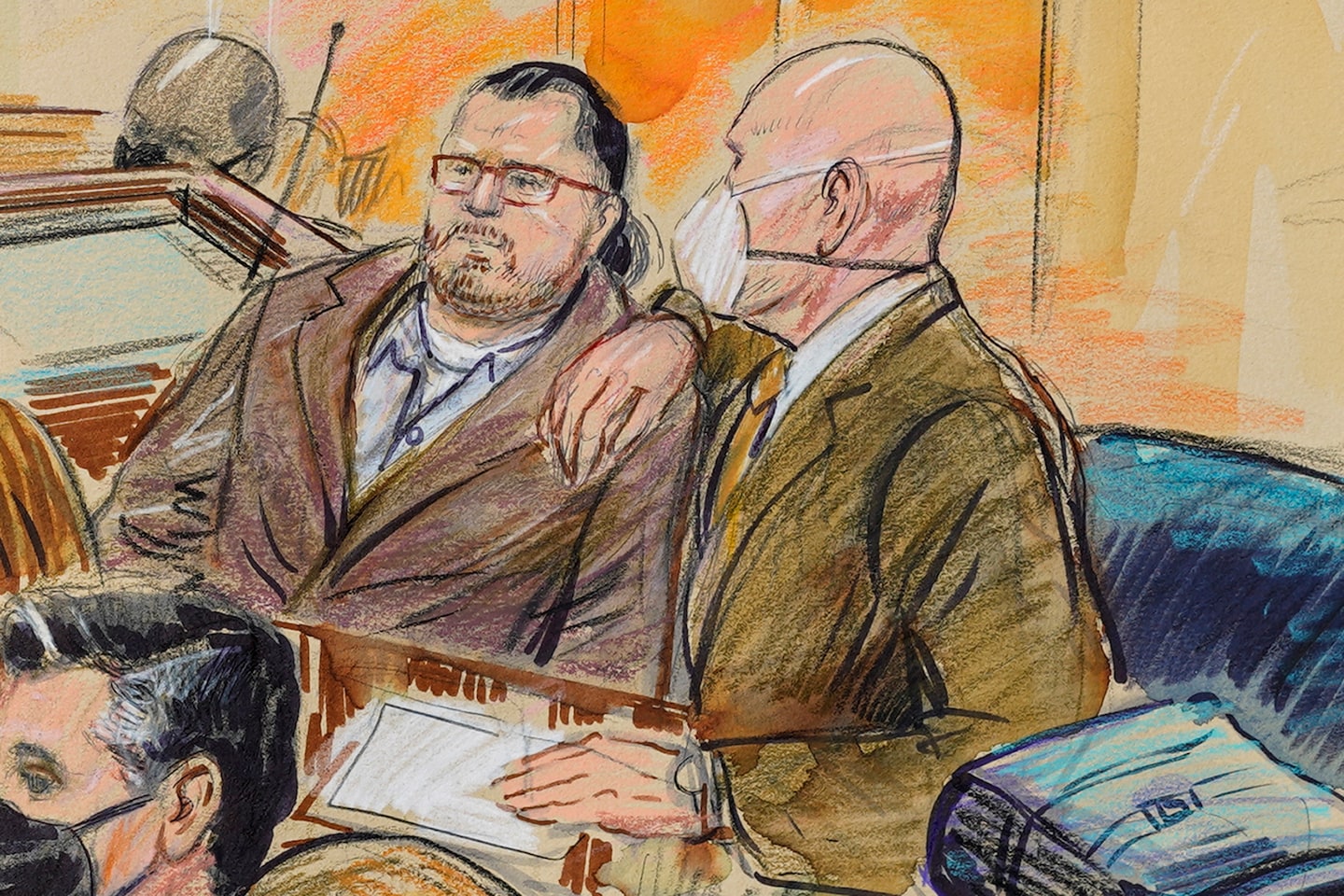
The first US Capitol riot defendant convicted at trial faces sentencing Monday with prosecutors asking a judge for a 15-year-prison term, by far the longest sentence sought to date in a case related to the Jan. 6, 2021, attack on Congress.

The request for Guy Refitt, a recruiter for the extremist Three Percenters movement who led a mob at the Capitol, is roughly one-third longer than the nine to 11 years recommended under federal advisory guidelines. Prosecutors say the stiff punishment is warranted, following up for the first time on threats to request an enhanced terrorism sentencing penalty for defendants who reject plea deals.

Reffitt was convicted March 8 of five felony offenses, including obstruction of Congress as it met to certify the 2020 election result, interfering with police and carrying a firearm to a riot, and threatening his teenage son, who turned him in to the FBI.

The defense for Reffitt, a 49-year-old former oil industry rig manager, asked for a below-guidelines sentence of two years in prison. Attorney F. Clinton Broden said in a filing that his client committed no violence and has no criminal history, yet prosecutors are seeking far more time for him than for defendants who have pleaded guilty to assault police.

Citing terrorism, US seeks 15-year prison sentence in Jan. 6 case

“It makes a mockery of the criminal justice system, the Sixth Amendment right to trial, and the victims assaulted by [others] to argue that Mr. Reffitt should be given a sentence greater than (let alone three times greater than) a defendant who assaulted police officers on at least two separate occasions, spent three hours on the Capitol grounds and who has a past history of violence, Broden wrote.

But Assistant US Attorneys Jeffrey Nestler and Risa Berkower said Reffitt’s case is exceptional.

Reffitt “played a central role” at the head of a vigilante mob that challenged and overran police at a key choke point, a stairway leading up from the Lower West Terrace, before the initial breach of windows near the Capitol’s Senate Wing Doors at 2: 1 p.m., prosecutors said. After the riot, Reffitt warned his son and 16-year-old daughter that “if you turn me in, you’re a traitor, and traitors get shot,” his son testified at the trial.

Conventional sentencing rules are of “inadequate scope” to account for the range of Reffitt’s obstruction, witness tampering and weapon offenses, prosecutors wrote in a 58-page sentencing memo.

“Reffitt sought not just to stop Congress, but also to physically attack, remove, and replace the legislators who were serving in Congress,” prosecutors wrote.

They called his conduct “a quintessential example of an attempt to both influence and retaliate against government conduct through intimidation or coercion” and said it reflected the statutory definition of terrorist violence that is subject to harsher punishment.

A jury found that Reffitt traveled to DC from his home in Wylie, Tex., with an AR-style rifle and semiautomatic .40-caliber handgun and repeatedly stated his intention to come armed with a handgun and plastic handcuffs to drag lawmakers out of the building. After returning home from Washington, he threatened his children to ensure they did not turn him in to authorities.

The request by the US attorney’s office in DC, which is overseeing prosecutions of roughly 840 Capitol siege defendants federally charged so far, is not binding on US District Judge Dabney L. Friedrich, who has gone below prosecutors’ recommendation in 22 of 24 Jan. 6 sentencings to date.

The longest sentence in a Jan. 6 case so far is 63 months, given to a Florida man who pleaded guilty to attacking police with a fire extinguisher and wooden plank and a DC man who assaulted three officers and shattered a riot shield with a pole.

By comparison, Friedrich has sentenced only three defendants who have pleaded guilty to felonies so far, the longest to 27 months in prison, also for attacking police.

Nevertheless, prosecutors may be hoping to send a clear signal to the roughly 330 defendants still awaiting trial on felony charges and who may still be considering whether to accept a plea deal or gamble before a jury. About 70 people have pleaded guilty, and nine, including Reffitt, have been convicted at trial.

Rage met by revulsion — first Jan. 6 trial shows family, nation torn by Trump

Reffitt left home at 15, moved in with his older sister and began working as a KFC dishwasher after enduring years of physical abuse from his father, Broden wrote. After becoming a father himself, Broden said, Reffitt was devoted to his children by him and to creating safe spaces for others. Reffitt, his attorney deél said, was a self-made man who took his family abroad while he worked in places including Malaysia in charge of operations worth tens of millions of dollars, but was financially and emotionally devastated after a downturn in the oil and gas industry. He lost his job in November 2019, only a few months before the pandemic swept the United States.

Reffitt’s daughters noticed that “his mental health was declining” over that period, Broden wrote. Reffitt fell “down the rabbit hole of political news and online banter,” he wrote one of his daughters, and he fell under the sway of Donald Trump “constantly feeding polarizing racial thought.”

“I could really see how my father[’]s ego and personality fell to his knees when President Trump spoke, you could tell he listened to Trump’s words as if he was really truly speaking to him,” one of Reffitt’s daughters said.

Letters from nine friends and relatives provided to the court by Reffitt’s defense “describe a depressed man who believed he was unable to adequately provide for his family (his life’s mission), and a man who felt cast aside and marginalized,” Broden wrote.

Reffitt started a security business and joined the Three Percenters in Texas. The right-wing anti-government group is named after the myth that only 3 percent of colonists fought in the American Revolution against the British.

In a letter to the judge, Reffitt outlined a string of family traumas since 2020 including medical and mental health emergencies and pleaded for leniency for the sake of his family.

“My regrets for what has happened is insurmountable. There’s not a day go by that I don’t regret how much this has affected [my wife and children],” Reffitt wrote. “Yes, what is happening to my family is all my fault, I would like to fix it, please. … I simply ask for a chance to prove myself again.”

Categories
US

Fidel Ramos, former Philippines president, dies at 94

Comment

MANILA — Fidel V. Ramos — former president of the Philippines, career military official and figure of the 1986 revolution that deposed a dictatorship — died on Sunday. He was 94.

Ramos led the military under the dictatorship of Ferdinand E. Marcos, his second cousin.

“Our family shares the Filipino people’s grief on this sad day,” Marcos’s son and the current president, Ferdinand Marcos Jr., said in a statement. “We did not only lose a good leader but also a member of the family.”

Ramos’s defection was among the highlights of the People Power movement that overthrew the Marcos regime, which was known for widespread human rights violations and plundering up to $10 billion from government coffers.

He went on to serve as army chief and defense secretary of the post-revolution administration under democracy icon Corazon Aquino. He later succeeded her as the 12th president of the republic, from 1992 to 1998.

Ramos leaves behind a mixed legacy. To his supporters of him, he is a hero of the revolution who went on to urge the Marcos family to publicly apologize for their misdeeds. As president, he was credited with helping modernize the economy and forging a peace agreement with rebel forces in the southern Philippines.

To his detractors, he has yet to be held liable for police and military abuses under his watch — and his actions were not enough to prevent an eventual Marcos comeback.

Born on March 18, 1928, Ramos was a career military official before he got into politics. I have graduated from the US Military Academy at West Point and served in both the Korean and Vietnam wars.

When Marcos declared martial law in 1972, Ramos led the Philippine Constabulary. In a 2017 interview with Maria Ressa, co-founder of the news site Rappler and a 2021 Nobel Peace Prize laureate, Ramos explained why he turned against Marcos — despite a long history that involved the future dictator hiding in his family’s sanctuary during World War II .

“You must understand that even with that close relationship and association during the war… why did I go against this guy?” he said. “It’s because of what is in the constitution. … You obey the orders of your superior, your commanding officer, if they are legal orders. But when he started to stray during the martial law years… that went against my values.”

During his term, Ramos brokered a peace agreement with the Moro National Liberation Front, then a separatist group operating in the Muslim majority south.

In 2016, Ramos threw his support behind populist candidate Rodrigo Duterte, the tough-talking strongman who would later be known for a brutal anti-drug campaign that left thousands dead.

But within the same year, the former president said Duterte’s government was “a huge disappointment and let-down,” criticizing Duterte’s constant cursing and hostility toward the United States in foreign policy in a column for the broadsheet Manila Bulletin. I have resigned as Duterte’s appointed special envoy to China that same year.

Duterte also allowed the controversial state burial of Marcos in the Cemetery of Heroes. Ramos opposed the decision, which sparked thousands to take to the streets in protest. When Ramos was president, he allowed the family to bury the late dictator in their home region of Ilocos when they returned from exile in the United States. Some Marcos critics believe Ramos should not have allowed them to return.

In this year’s national elections, the party that Ramos founded endorsed the dictator’s son, Ferdinand Marcos Jr., who won in a landslide. However, officials from Ramos’s cabinet publicly endorsed opposition candidate Maria Leonor Robredo. Ramos himself, who had been out of the public eye because of the pandemic, did not make a public endorsement.

Despite the criticism, Ramos has generally aged as a respected figure in Philippine politics. His contemporary of him Juan Ponce Enrile, a former Marcos defense minister who defected alongside him, faced corruption scandals and has since walked back criticism of the dictator. He has since returned to the fold of power, and serves as legal counsel to Marcos Jr. at 98. Ramos’s successor to the presidency, Joseph Estrada, was later ousted in a second People Power revolution amid corruption issues.

In a forum covering Ramos’s legacy last year, political columnist and veteran journalist John Nery said the former president “passed the test of time.”

“It should be clear now that, in the end, and to the end, I have retained an abiding loyalty to the primacy of the constitution. … whatever the constitution was,” Nery said. I have added that Ramos’s loyalty to him to the law explained his defection to him.

“There is no gainsaying his constitutional sense, and his fidelity to it. When I think of the possibilities open to him, during the era of the coup attempts, to choose the other side — which would have completely changed the country’s history — I appreciate all the more that he knew his limits of him. ”

Categories
US

Indiana officer killed during traffic stop; suspect arrested | News


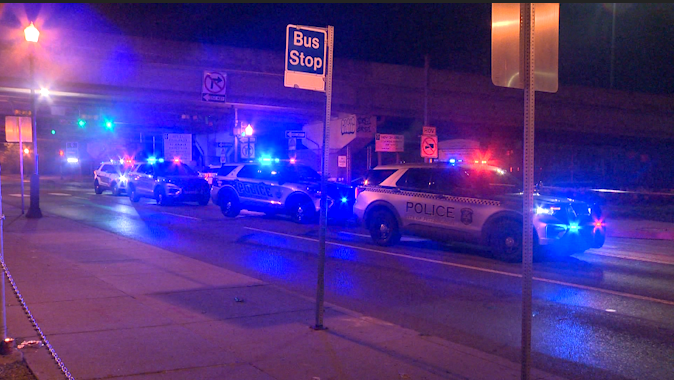
Generic Police Lights.jpg

ELWOOD, Ind. (AP) — A young Indiana police officer was killed early Sunday when a man got out of his car during a traffic stop and opened fire, authorities said.

The suspect was caught roughly 30 minutes later after a car chase, state police said.

Noah Shahnavaz, 24, was an officer at the Elwood police department, 50 miles (80 kilometers) northeast of Indianapolis. He stopped the driver of a Buick LaCrosse just after 2 am

“For an unknown reason, the suspect exited the Buick and fired multiple rounds, striking the officer at least one time,” state police said.

Shahnavaz was a US Army veteran who had been an Elwood officer for 11 months.

“A senseless act of violence robbed this young man of the life and career he deserved,” Major Todd Jones said.

People placed flowers next to a patrol car outside the police department.

“The cop didn’t deserve to die like that,” resident Donna Williams said.

The 42-year-old suspect has a criminal record, which includes a conviction in 2006 for firing a gun at Indianapolis officers, said Andrew Hanna, Madison County’s chief deputy prosecutor.

Sheriff Scott Mellinger told The Herald Bulletin that the shooting made him go “from being prayerful to being angry.”

“Prayers. Senseless act. Please join us in holding up Elwood PD’s officers and their families,” the sheriff’s office said on Facebook.

.

Categories
US

Man killed in North Shore shooting

THE GREEN. RYAN: OVERNIGHT, PITTSBURGH POLICE SAY A MAN WAS SHOT AND KILLED ON THE NORTH SHORE. OFFICERS WERE CALLED TO THE SCENE AROUND 1:30 THIS MORNING AND FOUND A MAN SHOT TWICE NEAR THE INTERSECTION OF ANDERSON AND EAST GENERAL ROBINSON STREETS. THE VICTIM DIED AFTER PARAMEDICS TOOK HIM TO THE HOSPITAL. HIS NAM

Man killed in North Shore shooting

Pittsburgh police are investigating a deadly shooting on the city’s North Shore. Officers responded to the area near Anderson Street and E. General Robinson Street for reports of a shooting around 1:30 am Monday. There, they found a man who had been shot twice. He was taken to the hospital where he died. The man’s name has not been released. The investigation is ongoing.

Pittsburgh police are investigating a deadly shooting on the city’s North Shore.

Officers responded to the area near Anderson Street and E. General Robinson Street for reports of a shooting around 1:30 am Monday. There, they found a man who had been shot twice.

He was taken to the hospital where he died. The man’s name has not been released.

The investigation is ongoing.

Categories
US

What to watch in primaries in Arizona, Michigan, elsewhere

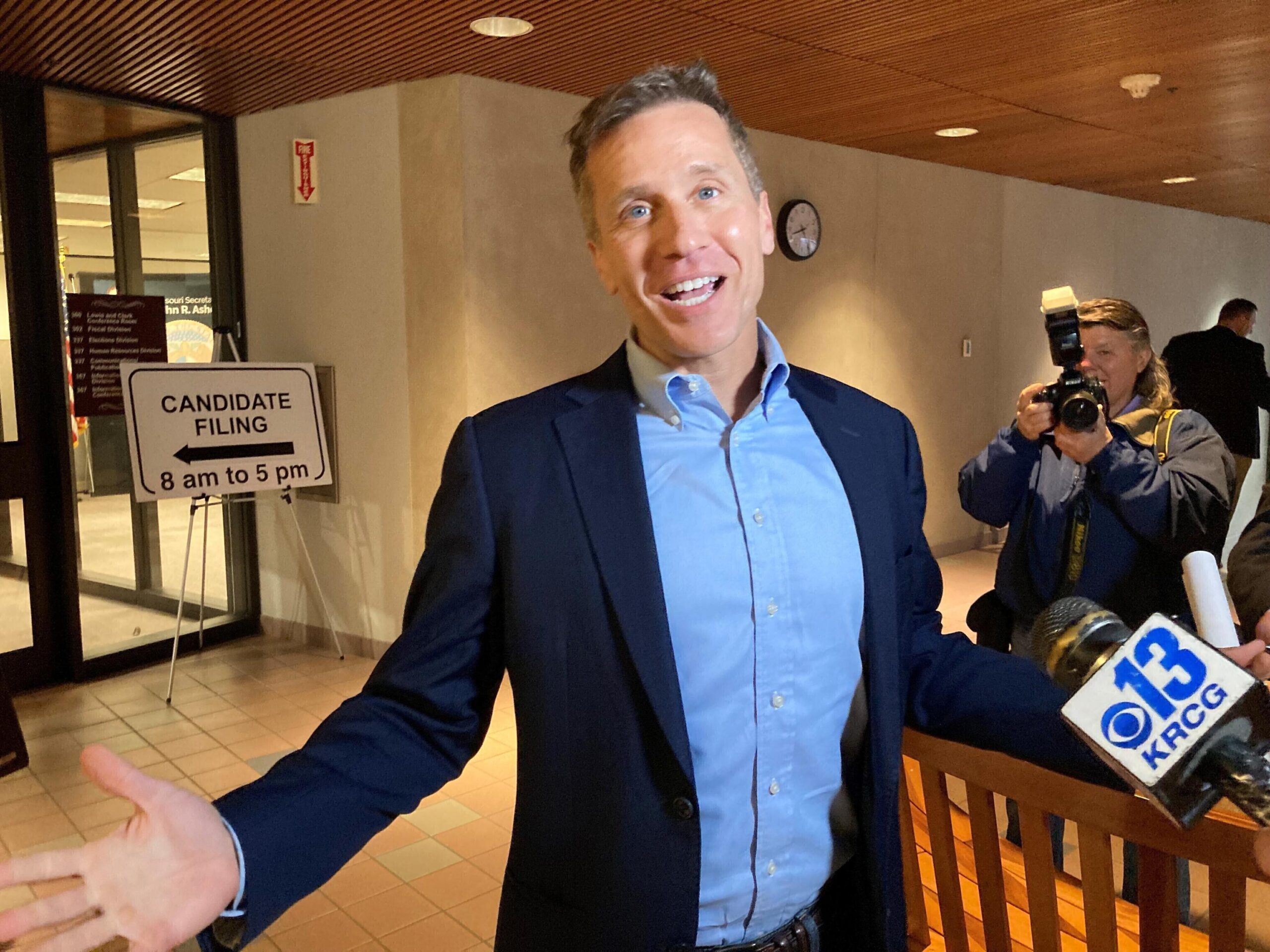
In Missouri, scandal-ridden former Gov. Eric Greitens is attempting a political comeback. In Michigan, a crowded field of Republican gubernatorial candidates includes a man charged in the Jan. 6 US Capitol attack. In Arizona, a prominent figure in the QAnon conspiracy movement is running for the US House.

Those are among some of the most notable contests in Tuesday’s primary elections being held in six states.

Arizona, which Democrat Joe Biden narrowly won in 2020, is a top target for former President Donald Trump, who tried in vain to get his defeat overturned. He has endorsed a slate of candidates up and down the ballot who have promoted his false claims of a stolen election.

Trump has also been zeroed in on the 10 House Republicans who voted to impeach him over the Jan. 6 insurrection. Three of them are on the ballot Tuesday in Washington state and Michigan, as are two members of “the Squad,” Democratic Reps. Cori Bush of Missouri and Rashida Tlaib of Michigan.

Meanwhile, Kansas voters could clear the way for the Republican-controlled Legislature to further restrict or ban abortion if they approve a proposed state constitutional change. It’s the first referendum vote on abortion policy by a state since the US Supreme Court overturned Roe v. Wade in June.

Ohio is also holding a primary for state legislative races on Tuesday, three months after its statewide and congressional contests — a split system that resulted from legal wrangling over redistricting.

What to watch:

ARIZONA

Trump’s endorsed in Arizona all have one thing in common: They have loudly candidates disseminated misinformation about the legitimacy of the 2020 election, despite election officials and Trump’s own attorney general saying there is no credible evidence the race was tainted.

In the governor’s race, Trump has backed former television news anchor Kari Lakewho has said that she would not have certified Arizona’s election results in 2020. Lake faces businesswoman Karrin Taylor Robson, who is endorsed by former Vice President Mike Pence and outgoing Gov. Doug Duey.

Secretary of State Katie Hobbs, a staunch defender of the 2020 election, is strongly favored to win the Democratic nomination for governor.

In the Republican primary for US Senate, Trump has backed tech investor Blake Masters as the candidate to go up against Democratic incumbent Mark Kelly in the fall. Masters, whose campaign has been bankrolled by billionaire Peter Thiel, has called for reducing legal immigration and espoused the baseless “great replacement” conspiracy theory, claiming Democrats are trying to “replace Americans who were born here.”

Attorney General Mark Brnovich, another Senate candidate, has been weighed down by lackluster fundraising and fierce criticism from Trump, who says Brnovich did little to advance his election fraud claims. Another top candidate, Jim Lamonthe founder of a solar energy firm, has touted his experience as a military veteran and entrepreneur.

The Republican primary for secretary of state includes Trump-backed legislator Mark Finchem, a state representative who worked to overturn Trump’s 2020 loss; state Rep. Shawnna Bolick, who introduced a bill to let legislators ignore election results and choose their own presidential electors; and state Sen. Michelle Ugenti-Rita, who has long pushed to overhaul election laws. The GOP establishment has rallied around advertising executive Beau Lane in the race.

Ron Watkins, who has ties to the QAnon conspiracy theory, is considered a long shot in his House run. Watkins, a Republican, served as the longtime administrator of the online message boards that became the home of the anonymous “Q.” The conspiracy theory is centered around the baseless belief that Trump waged a secret campaign against enemies in the “deep state” and that a group of satanic, cannibalistic child molesters secretly runs the globe.

In the state Legislature, Arizona House Speaker Rusty Bowerswho testified at a Jan. 6 hearing about Trump’s pressure to overturn the 2020 election, faces a Trump-backed candidate in his bid to run for the state Senate.

MICHIGAN

The Republican primary for governor was wild from the start, with five candidates getting kicked off the ballot for failing to file enough valid nominating signatures.

Several of the remaining candidates have baggage that could hurt in a general election against Democratic Gov. Gretchen Whitmer.

Real estate broker Ryan Kelley has pleaded not guilty to misdemeanor charges after authorities said he rallied Trump’s supporters to storm the US Capitol. Businessman Kevin Rinke was sued in the 1990s for sex harassment and racial discrimination — allegations he says were lies. Chiropractor Garrett Soldano hawked supplements he falsely claimed treated COVID-19. Businesswoman Tudor Dixonwho has been endorsed by Trump, has previously acted in low-budget horror pictures, one of which included a zombie biting off a man’s genitals.

All of the candidates falsely say there was fraud in the 2020 election, with Dixon, Kelley and Soldano saying the election was stolen from Trump.

Republican Rep. Peter Meijer is hoping to hold on to his seat after voting to impeach Trump. The former president has endorsed businessman and missionary John Gibbswho worked in the Trump administration under Housing Secretary Ben Carson.

MISSOURI

Greitens’ political career appeared over when he resigned as governor in 2018, following his admission to an extramarital affair and accusations of blackmail and campaign finance violations. On Tuesday, the former Navy SEAL officer has a chance at redemption in his Republican primary for the seat held by retiring GOP US Sen. Roy Blunt.

Greitens, Attorney General Eric Schmitt and US Rep. Vicky Hartzler are the front-runners in a crowded 21-person GOP field that includes US Rep. Billy Long and Mark McCloskey, the St. Louis lawyer who along with his wife pointed guns at racial injustice protesters who ventured onto their private street.

Trump has not made an endorsement in the race, though he’s ruled out Hartzler.

The GOP winner in Missouri, a solidly Republican state, will be favored in November. But Republican leaders have long worried that Greitens — his ex-wife has also accused him of abuseallegations Greitens has called “baseless” — could win the primary but lose the general election.

On the Democratic side, the nomination appears to be up for grabs between Lucas Kuncea Marine veteran and self-proclaimed populist, and Trudy Busch Valentinean heiress of the Busch beer fortune who has largely self-funded her campaign.

WASHINGTON

Two Republican House members from Washington state who voted to impeach Trump face primary challengers endorsed by him.

Rep. Jaime Herrera Beutler, who has been in Congress since 2011, has said she voted for impeachment because she had “an obligation to the Constitution.” Trump has endorsed Joe Kenta former Green Beret and a conservative cable show regular who echoes the former president’s grievances about the 2020 election outcome.

Rep. Dan Newhouse, a congressman since 2015, said he cast the vote to impeach Trump for inciting and refusing to immediately stop the Jan. 6 insurrection. Among his challengers he is Loren Culpa Trump-backed former small-town police chief who refused to concede the 2020 governor’s race to Democrat Jay Inslee.

In Washington, the top two vote-getters in each race, regardless of party, move forward to November.

KANSAS

Voters will decide whether to approve a change to the state constitution that could allow the Legislature to restrict or ban abortion despite a 2019 state Supreme Court ruling that abortion access is a fundamental right. It’s the first referendum on abortion by a state since Roe v. Wade’s reverse.

In statewide races, Republican Kris Kobach is running for attorney general as he attempts a political comeback following losses in races for governor and US Senate in previous years. Kobach, the state’s former secretary of state, served as vice chair of a short-lived Trump commission on election fraud after the 2016 election.

___

Associated Press writers Jonathan J. Cooper in Phoenix; Sara Burnett in Chicago; Jim Salter in O’Fallon, Missouri; Chris Grygiel in Seattle; and John Hanna in Topeka, Kansas; contributed to this report.

___

Meg Kinnard can be reached at http://twitter.com/MegKinnardAP.

___

Follow AP for full coverage of the midterms at https://apnews.com/hub/2022-midterm-elections and on Twitter at https://twitter.com/ap_politics.

.

Categories
US

2 found dead as McKinney fire grows in Northern California

In the 20 years they’ve lived in Yreka, Calif., Vina Swenson and her husband have packed up their car and prepared to flee from fire five times — twice in the last two years.

“We haven’t ever had to leave,” Swenson said Sunday, as flames burned less than five miles away. “So the reality probably hasn’t hit me” that this one could swallow up their home.

As of Sunday night, the McKinney fire — the largest yet of this year’s fire season in drought-stricken California — had ripped through 52,498 acres in Klamath National Forest near the California border with Oregon, destroying homes and threatening hundreds more. It was 0% contained.

Authorities announced Monday that two people were found dead inside a car in the fire zone.

“Sunday fire personnel located two deceased individuals inside a vehicle located in a driveway along Doggett Creek Rd, off HWY 96, W of Klamath River, CA. There will be no additional info pending positive identification & notifications to next-of-kin,” the Siskiyou County sheriff said on Twitter.

Swenson, 54, watched as firefighters cut down brush across the street from her home, which sits in a basin surrounded by heavily forested mountains in the Northridge neighborhood, squarely in the town’s evacuation zone. The sun was trying to peer through the smoke, turning her neighborhood an eerie orange.

“It’s reassuring that they’re keeping us safe, but the fact that they’re clearing brush here makes me think they expect the fire to reach here,” Swenson said. She said they’ll leave as soon as they see flames coming over the surrounding mountains.

About 650 firefighters battling the blaze were contending with triple-digit heat and possible thunderstorms that could set off dangerous conditions. A red flag warning was in effect due to searing temperatures, which averaged about 100 degrees on Sunday, officials said.

“The fire becomes more energetic, and the potential for fire spread increases,” said Jonathan Garner, a meteorologist with the National Weather Service. “It just becomes a more active fire when temperatures warm up like that.”

Thunderstorms were expected in the afternoon, which he said could cause gusty, erratic winds and lightning, which could ignite new blazes.

That all makes for unpredictable fire behavior. “And that’s dangerous for firefighters,” Garner said.

By Sunday afternoon, forest officials said, there were about 10 other smaller fires burning in Klamath National Forest.

One of the firefighters on the front lines is Tyler Johnson, 21, who checked in with his mother, Diane, on Sunday morning before heading out on a shift.

That’s their routine, she said. At the end of his rest break, he’ll call to say that he’s headed to the command center, then back into the fray.

“It’s just a quick ‘I love you, be safe,’” Diane Johnson said, a hitch in her voice.

The 49-year-old county planner had evacuated to Placerville about four and a half hours away. Her husband de ella, a sheriff’s deputy, stayed behind to help with evacuations in Yreka and ensure that homes are not looted.

Some neighborhoods on the western side of Yreka were ordered to evacuate, though officials said they saw little progression overnight on the fire’s edge closest to the city.

“Definitely Yreka is of concern as is the other populated areas like Fort Jones,” said Caroline Quintanilla, spokesperson for the US Forest Service. “So we’re focusing on protecting people, life and property.”

Officials said firefighters Sunday were prioritizing protecting Fort Jones, Yreka and other communities in the Highway 96 corridor from the blaze, which could burn for weeks. Highway 96 was shut down along the Klamath River, where crews worked overnight to keep homes and buildings from burning, forest officials said in a social media update.

Quintanilla said firefighters were tapping old bulldozer lines from past fires in the region.

“This area gets lots of fires,” Quintanilla said. “But the particular area where the fire is actually burning right now has not burned since the mid-’50s. So that’s part of the concern as well, and part of the complexity, because it hasn’t burned in a long time.”

Jonathan Dixon, 37, who lives on the western edge of Yreka, told The Times his home will probably be among the first to be scorched as the fire continues to spread.

He said he’s fled to the Bay Area, and that he expects his collection of art nouveau antiques, sculptures and other artworks to perish.

“I’m terrified that my house is going to burn down, and I’ve kind of accepted it,” Dixon said.

Dixon, a card dealer and games supervisor at the local casino, tried to put a positive spin on his losses, saying that he was “kind of a hoarder” and that he’s been intending to get rid of things.

“That’s a problem that’s solved, but not in the way I wanted,” he said.

Still, he said the casino might have to close as well, and if that happens he could lose his home and a source of income. He’s been urging other reluctant relatives to leave Yreka as soon as possible and to forgo trying to save their possessions.

“I was telling them don’t worry about packing up, your life’s more important, just get out of there,” Dixon said.

Many residents in this neighborhood around Humbug Road are elderly, Dixon said, and will probably face significant hurdles trying to leave.

Jan Williamson, 66, fled her house in the Northridge neighborhood along with her husband and 40-year-old daughter Leanne, a quadriplegic with cerebral palsy.

Williamson said the evacuation has been especially difficult on Leanne because she is severely autistic and has been agitated as her daily routines of watching TV and listening to music are disrupted. The Williamsons have had to isolate themselves in their motor home because of the heavy smoke in the air.

Trapped and with no ability to speak, Leanne tends to bite herself “hard and often” when she’s frustrated, her mother said.

Jan Williamson and her husband have had to leave behind an array of equipment used to care for their daughter, including an electric lift system that ferries her from the bed to the bathroom.

“Whenever it’s especially bad like this, we just have to take one or two minutes at a time, and just manage to get through each day,” Jan Williamson said.

The Red Cross late Saturday opened a shelter in the town of Weed after closing its location in Yreka when the area was ordered to evacuate, said Stephen Walsh, a spokesman with the organization.

Twenty-two people are staying at the shelter, where they’re being offered beds, food and spiritual care, Walsh said.

“They can stay as long as they need to, and obviously the shelters are open to everybody,” he said.

Siskiyou County officials set up a webpage to help residents find rescued dogs, cats and livestock within the evacuation area. The animals were being cared for at various shelters.

The fire started about 2:38 pm Friday near Highway 96 and McKinney Creek Road southwest of the Klamath River, according to the California Department of Forestry and Fire Protection. The cause is under investigation.