Categories
US

Pennsylvania Act 77 state Supreme Court decision is released : NPR

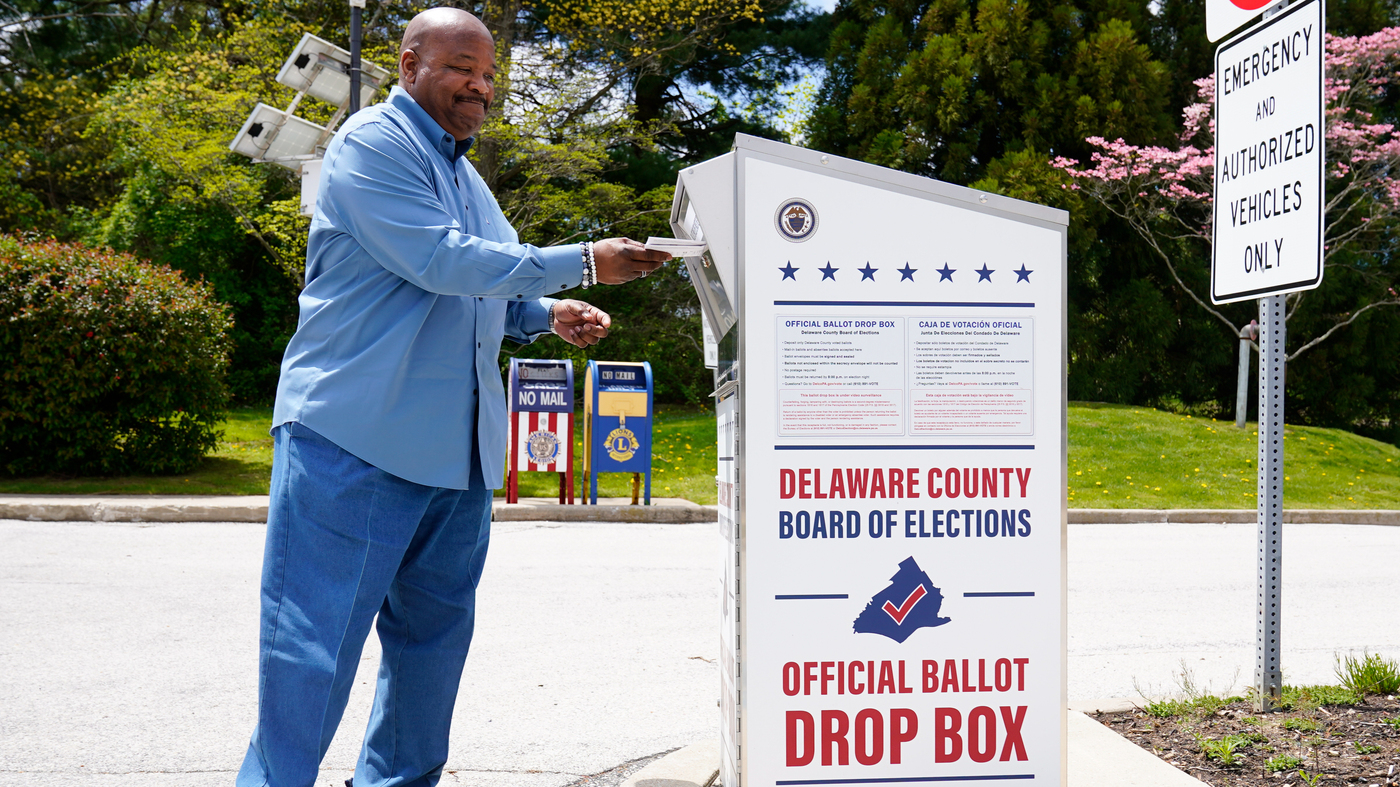
A voter drops off his mail ballot for the 2022 Pennsylvania primary elections in Newtown Square, Pa., on May 2. The state’s Supreme Court has ruled in a lawsuit challenging the constitutionality of a state law that expanded mail-in voting.

Matt Rourke/AP


hide caption

toggle caption

Matt Rourke/AP


A voter drops off his mail ballot for the 2022 Pennsylvania primary elections in Newtown Square, Pa., on May 2. The state’s Supreme Court has ruled in a lawsuit challenging the constitutionality of a state law that expanded mail-in voting.

Matt Rourke/AP

Pennsylvania’s mail-in voting law has been upheld by the state’s Supreme Court, allowing all voters in the key swing state to cast ballots by mail in November and for other future elections.

In a 5-2 decision released Tuesday, the Democratic-majority court overturned a lower court’s ruling from January that found Pennsylvania’s Act 77 to be in violation of the state’s constitution.

“We find no restriction in our Constitution on the General Assembly’s ability to create universal mail-in voting,” Justice Christine Donohue wrote in the majority opinion.

The state law, which passed with bipartisan support in 2019, has become a main focal point in a Republican-driven campaign against mail-in voting in Pennsylvania.

The integrity of what was once a largely uncontentious voting option has been subjected to baseless attacks from former President Donald Trump and his allies, leading many GOP lawmakers to make an about-face on their initial support for mail-in voting.

In fact, the lawsuit that was heard by the courts was brought in part by a group of Republicans in the Pennsylvania state House who helped pass Act 77.

The case has been closely followed by many voting rights advocates and election watchers, as it put access to the ballot box for Pennsylvania’s more than 8.7 million registered voters at stake.

Categories
US

Info on Paxlovid rebounds, eligibility, safety

President Joe Biden experienced a “rebound” Covid infection after taking the antiviral drug Paxlovid — and he’s not the only one.

Some patients who took Pfizer’s Paxlovid after contracting the coronavirus have reported the same phenomenon: Days after they finished a five-day course of the oral drug and felt better, their Covid symptoms or a positive test result returned.

Health experts say Paxlovid’s rebound effect doesn’t impact every patient or make it any less effective at its job, which is fighting severe illness from Covid. Still, like with so much about the pandemic, you might have some questions: How severe are rebound cases? Why do they happen? How common are they, and should you still feel comfortable taking the drug?

The answer to that last question is a resounding “yes,” doctors say. Here’s why, and what else you need to know about Paxlovid rebound cases:

Who can take Paxlovid?

In December 2021, the US Food and Drug Administration made Paxlovid available under an emergency use authorization to treat mild-to-moderate Covid cases in a specific group of eligible patients. You can get Paxlovid if you check all three of these boxes:

  • You tested positive for Covid
  • You’re at least 18 years old, or at least 12 years old and weigh at least 88 pounds
  • You have one or more risk factors for severe Covid

That includes patients 65 and older — such as Biden, 79 — or those with underlying conditions like cancer, diabetes or obesity. You may not be able to take Paxlovid if you take certain medications that can interact with the drug and cause serious side effects, according to the FDA.

You can obtain Paxlovid prescriptions from your healthcare provider or through the Biden administration’s “Test to Treat” program, which gives free Covid antiviral pills to patients who test positive at pharmacies across the country.

If you’re eligible, you should start taking Paxlovid as soon as possible after testing positive for Covid, and within five days of experiencing Covid symptoms. You’ll need to take three pills, twice a day, for five days.

Pfizer’s clinical trials last November suggest that Paxlovid does its job: The drug was 89% effective at preventing hospitalization among people who were at risk of developing severe illness.

Notably, that trial was conducted before Covid’s omicron variant emerged — but Pfizer said in January that Paxlovid still works against omicron, citing three laboratory-based studies. It appears to also work against omicron subvariants like BA.5, with no current data showing otherwise, according to Barbara Santevecchi, a clinical assistant professor of infectious diseases at the University of Florida’s College of Pharmacy.

How common are rebound cases, and what are they like?

Some people who take Paxlovid test negative for Covid after finishing their five-day treatment, but then test positive or experience symptoms again two to eight days later, according to the Centers for Disease Control and Prevention.

Roughly 5% of the tens of thousands of Paxlovid users have experienced rebound cases so far, White House Covid response coordinator Dr. Ashish Jha said at a news conference last month. They appear to be very mild: A June CDC study found that less than 1% of patients taking Paxlovid were admitted to the hospital or emergency department for Covid in the five to 15 days after they finished the treatment.

Patients also appear to recover from rebound cases without any additional Covid treatment, the CDC says.

A UC San Diego School of Medicine study released in June identified “insufficient drug exposure” as the most likely cause. In that scenario, Paxlovid stops the virus in its tracks for five days, but doesn’t stick around long enough to purge the infection entirely — allowing the virus to temporarily replicate again once the drug is gone.

Dr. Davey Smith, the study’s senior author and an infectious disease specialist at UCSD Health, hypothesizes that some people may metabolize Paxlovid more quickly, or that the drug might need to be taken for more than five days to fully clear the virus in every patient . But there’s no clinical data to back that up yet, he says.

“We don’t know if it’s safe or efficacious to do double the amount of time of Paxlovid, doing two courses,” Smith tells CNBC Make It. “That’s getting too far out over your skis without the clinical research to guide it.”

If you experience a rebound case, you do need to reenter quarantine until you test negative again. The CDC advises isolating for at least five more days before checking the agency’s current isolation guidelines. You should also wear a mask for 10 days after rebound symptoms begin, the CDC advises.

Should I still take Paxlovid if I’m eligible?

.

Categories
US

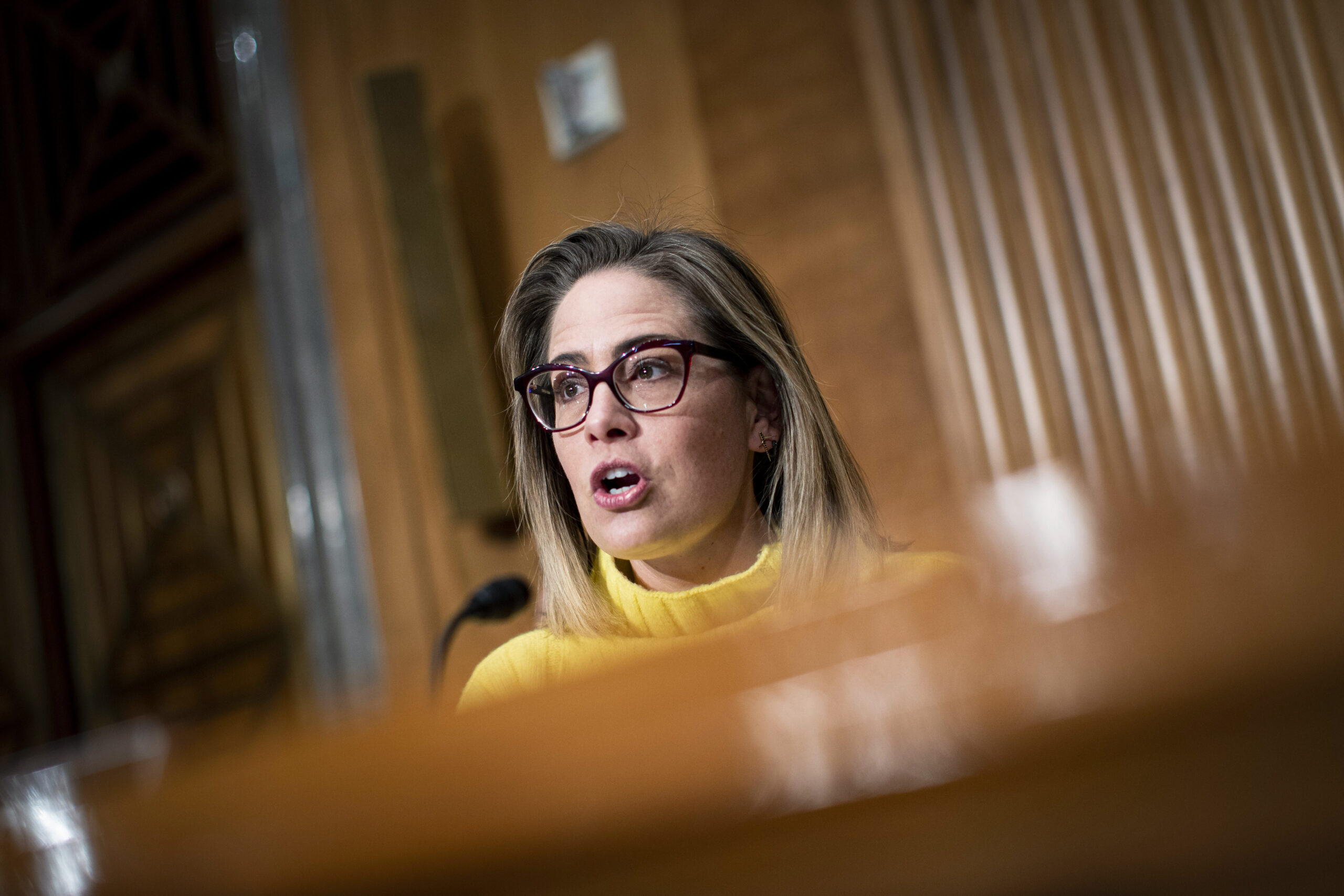
Dems ready to gamble their domestic agenda on Sinema

Still, the carried interest tax provision was not in December’s more expensive version of the Democrats-only bill that Sinema had generally signed off on. And its inclusion is a main factor in Sinema’s public neutrality about a bill 49 of her colleagues are expected to support.

Still, the party is moving forward with the expectation that the bill will pass without a single GOP vote, taking advantage of strict rules that let Democrats sidestep a filibuster, even as much of the road ahead is still under construction.

“I’m going to approach it from the positive side and just say I anticipate Sen. Sinema will be on board,” said Sen. Jon Tester (D-Mont.).

Sen. Mark Kelly (D-Ariz.) declined to address his own conversations with Sinema but touted the bill’s health care and climate provisions. He said his constituents of him are focused on the drought and wildfires in Arizona and prescription drug prices.

“We have an incredible opportunity here to fix this problem,” Kelly said. “I want to see us get something across the finish line.”

The legislation would impose a 15 percent minimum tax on large corporations, increase IRS enforcement and lower prescription drug prices to bring in an estimated $739 billion in revenue. It also spends $369 billion on energy and climate, extends Obamacare subsidies through 2024 and sends $300 billion to deficit reduction.

Overall, it’s much smaller than Democrats’ previous party-line proposals from last year, but significantly larger than the health care-focused package the party thought it was getting just last week.

Sinema is reluctant to publicly endorse the bill in part because it has not been OK’d by the chamber’s nonpartisan parliamentarian and may still change. After hearing from both Republicans and Democrats alike, the Senate’s rules referee will ultimately weigh in on whether provisions of the bill can enjoy protections from a GOP filibuster that are afforded by this year’s budget process.

And the bill is still evolving behind the scenes. Schumer indicated Democrats will try to add legislation addressing sky-high insulin costs. And in an interview, Sen. Raphael Warnock (D-Ga.) said his party will attempt to attach his legislation to cap insulin costs at $35.

“My bill to cap the cost of insulin will be in the reconciliation bill,” Warnock said.

But Republicans think they will be able to make a case that the Georgian’s plan runs afoul of the Senate’s budget rules, which would trigger a vote at a 60-vote threshold. That could still be a useful political exercise for Democrats, challenging Republicans to vote on the floor to block the insulin provision.

Warnock is up for reelection this fall, and Democrats are eager to emphasize their fight to lower drug prices on the campaign trail. Asked what he’s hearing about carried interest in Arizona, fellow incumbent Kelly responded that he’s hearing a lot about high drug prices.

The Senate is expected to move to the bill later this week; a vote to proceed to it will be the first test of support among all 50 Democratic caucus members. After that comes 20 hours of debate and then an unlimited “vote-a-rama” on amendments, all of which require just a simple majority to pass.

That chaotic free-for-all will offer Sinema, as well as every other senator, an opportunity to change the bill, though Republicans will probably offer the bulk of amendments.

Days after Manchin blindsided most colleagues by cutting his deal with Schumer, GOP senators are racking their brains behind the scenes to see if they can foul it up. Republicans are hopeful that Sinema will vote with them on a handful of amendments and then resist efforts by Democratic leaders to wipe those changes from the legislation at the end of the vote-a-rama.

Senate Minority Whip John Thune (RS.D.) said he’s been talking to Sinema about why he opposes the legislation and added that she’s “analyzing it, keeps her own counsel … and usually comes to her own decisions, pretty independent of any pressure she might get from either side .”

One possible GOP amendment would scuttle the carried interest language in the legislation, which brings in $14 billion in revenue of the $739 billion total in the package. Thune said Sinema is taking a “pretty hard stand” against that portion of the bill.

“I certainly am for that and I’m sure we will [try]. I think that’s one that’s got a good chance if we’re voting for it. Although who knows, [Democrats] may strip it out before they get it there if she objects enough,” said Sen. Kevin Cramer (RN.D.). “I never cease being amazed at how little they include her.”

Anthony Adragna contributed to this report.

Categories
US

Alex Jones on trial: Sandy Hook parents testify about the ‘hell’ he has caused


New York
CNN Business

The parents of a child who was murdered during the 2012 Sandy Hook shooting delivered emotional testimony in a Texas court on Tuesday, telling a jury that the lies pushed by right-wing conspiracy theorist Alex Jones have stained the legacy of their son and tormented them for years.

The jury hearing the case will determine how much in damages Jones will have to pay the parents, Neil Heslin and Scarlett Lewis, who won a default judgment against him earlier this year. An attorney representing Heslin and Lewis asked the jury last week to award Heslin and Lewis $150 million.

Fighting back tears at times, Heslin told the jury that Jones, through his conspiratorial media organization Infowars, “tarnished the honor and legacy” of his son. Heslin said that he couldn’t “even begin to describe the last nine-and-a-half years of hell” he has endured because of Jones.

“There’s got to be a strong deterrent that shall prevent him from peddling this propaganda,” Heslin said, adding that through his testimony he wanted “to restore my credibility, my reputation, and Jesse’s legacy that he so much deserves.”

As Heslin testified, a television screen in the court showed a photograph of his murdered son, six-year-old Jesse Lewis. Jones, who is expected to testify in his own defense later on Tuesday, was absent from the courtroom during Heslin’s testimony and the first part of Lewis’ testimony. Heslin called that absence “a cowardly act.”

“I’ve been here for a week and a half and [during] my final testimony Mr. Alex Jones does not have the courage to sit in front of me or face me,” Heslin said.

An attorney representing Heslin and Lewis told CNN the two have needed to be in isolation and under the protection of professional security during the trial.

Heslin also said on the stand that the lie pushed by Jones “resonates around the world” and that he has realized “how dangerous” it is.

Heslin described being repeatedly confronted by those who believed Jones over the last ten years, saying such interactions occur “right up to this day.”

“My life has been threatened,” Heslin said. “I fear for my life. I fear for my safety and my family’ safety and their life.”

Lewis also testified in court that she has been harassed and received death threats, including at her own home, all of which she said reopens the wounds surrounding her son’s murder.

“The fear and anxiety and unsafeness … keeps me from healing,” Lewis said. “It definitely negatively impacts the healing process.”

Lewis described the conspiracy theories about Sandy Hook as “deeply unsettling.”

“I feel compromised,” Lewis said, describing how she feels about her own personal safety.

Roy Lubit, a forensic psychiatrist who was hired to conduct an examination of Heslin and Lewis, testified to the court on Monday how terrified and worried for their personal safety the two parents are.

Neil Heslin, the parent of a Sandy Hook victim, took the stand today in the Alex Jones defamation trial taking place in Texas.

Lubit told the court that Lewis and Heslin “are very, very frightened.” When asked to specify who they are frightened of, Lubit responded, “Some follower of Jones trying to kill them.”

Lubit elaborated that Lewis sleeps with a gun, a knife, and pepper spray on her night stand. Lubit added she won’t even turn on the air conditioning during hot days for fear of not being able to hear an intruder possibly coming to hurt her.

Lewis testified Tuesday that she owns a gun to keep her other son safe, telling the jury that she failed to keep one son safe and will do everything in her power to ensure that no harm happens to her other child.

Jury selection for a similar trial involving Jones and Sandy Hook families commenced on Tuesday in Connecticut, where Jones was also found liable for damages earlier this year.

Jones has lashed out at the judicial proceedings taking place, baselessly claiming last week that he was being tried in Texas before a “kangaroo court.” Infowars has also published content attacking the judges overseeing the cases in viscous terms.

Jones’ media company, Free Speech Systems, which is the company that operates Infowars, filed for bankruptcy protection on Friday.

Attorneys representing some Sandy Hook families have accused Jones of having drained Free Speech Systems of assets in recent years as part of an effort to protect himself from potential judgments he may be ordered to pay.

One of the attorneys, Avi Moshenberg, told CNN on Tuesday that the bankruptcy filing made by Free Speech Systems indicated that $62 million in assets had been withdrawn from the company in 2021 and 2022.

“If you look at the bankruptcy filing, leading up to the declaration of bankruptcy, Alex Jones, the sole owner [of Free Speech Systems], took $62 million in draws in 2021 and 2022,” Moshenberg told CNN. “Just straight up draws. That’s why the company has few assets.”

A lawyer representing Jones did not immediately respond to a request for comment on Tuesday morning. But a hearing is scheduled on Wednesday in which W. Marc Schwartz, the chief restructuring officer for Free Speech Systems, is expected to testify.

.
Categories
US

Alina Kabaeva: US sanctions Putin’s reputed girlfriend

Alina Maratovna Kabaeva, who has been romantically linked to the Russian leader, was sanctioned “for being or having been a leader, official, senior executive officer, or member of the board of directors of the Government of the Russian Federation,” a Treasury Department statement said.

That statement describes the 39-year-old Kabaeva as having “a close relationship with Putin.” She is a former member of the State Duma “and is the current head of the National Media Group, a pro-Kremlin empire of television, radio, and print organizations.”

In April, the Wall Street Journal reported that sanctioning Kabaeva was under consideration by the US, but there was concern that such a move would inflame tensions given her close proximity to Putin.

Kabaeva was previously sanctioned by the European Union and the United Kingdom.

Grain ship departs key Ukrainian port for first time since early days of war

In addition to Kabaeva, the Treasury Department announced sanctions against a number of other oligarchs, a major steel production company and two of its subsidiaries as well as a financial institution accused of running a sanctions evasion operation and its general director.

Separately, US Secretary of State Antony Blinken announced sanctions on three oligarchs, a Russian state-owned company overseen by the Ministry of Transportation, “four individuals and one entity illegitimately operating in Ukraine’s territory in collaboration with Russia,” and 24 Russian defense and technology -related entities.

The US is also imposing visa restrictions on 893 Russian Federation officials and “31 foreign government officials who have acted to support Russia’s purported annexation of the Crimea region of Ukraine and thereby threatened or violated Ukraine’s sovereignty,” Blinken said.

Many of the designations announced by the US target oligarchs who were previously sanctioned by allies like the United Kingdom, Australia, Canada and the European Union. They come as the war in Ukraine has entered its sixth month.

‘Opulent lifestyles’

“As innocent people suffer from Russia’s illegal war of aggression, Putin’s allies have enriched themselves and funded opulent lifestyles,” Treasury Secretary Janet Yellen said in a statement. “The Treasury Department will use every tool at our disposal to make sure that Russian elites and the Kremlin’s enablers are held accountable for their complicity in a war that has cost countless lives.”

The oligarchs sanctioned by the State Department Tuesday are Andrey Igorevich Melnichenko, Alexander Anatolevich Ponomarenko, and Dmitry Aleksandrovich Pumpyanskiy. The yacht AXIOMA was identified as blocked property in which Pumpyanskiy has an interest, the State Department said in a fact sheet.

According to that fact sheet, Ponomarenko “is an oligarch with close ties to other oligarchs and the construction of Vladimir Putin’s seaside palace” who has previously been sanctioned by the UK, EU, Canada, Australia and New Zealand.

Among the oligarchs sanctioned by the Treasury Department Tuesday is Andrey Grigoryevich Guryev, the Russian billionaire founder of the chemical company “PhosAgro” and former government official described by the Treasury as “a known close associate” of Putin. He is also sanctioned by the UK, and according to the US Treasury, he “owns the Witanhurst estate, which is the second largest estate in London after Buckingham Palace.”

US House Speaker Nancy Pelosi lands in Taiwan amid threats of Chinese retaliation

The Treasury Department on Tuesday identified the yacht Alfa Nero, reportedly owned by AG Guryev, as blocked property.

AG Guryev’s son, Andrey Andreevich Guryev, was also sanctioned by the US Tuesday, after previously being sanctioned by Australia, Canada, the European Union, Switzerland, and the UK, as was his investment firm Dzhi AI Invest OOO.

Natalya Valeryevna Popova was sanctioned “for operating or having operated in the technology sector of the Russian Federation economy, and for being or having been a leader, official, senior executive officer, or member of the board of directors of LLC VEB Ventures,” which is a sanctioned entity. She was also sanctioned for being the wife of Kirill Aleksandrovich Dmitriev, the CEO of the Russian Direct Investment Fund (RDIF). Both he and the RDIF were sanctioned in the days following the start of the war.

The Joint Stock Company Promising Industrial and Infrastructure Technologies, “a financial institution owned by the Russian Federal Agency for State Property Management,” and its General Director Anton Sergeevich Urusov were sanctioned Tuesday in relation to alleged sanctions evasion.

According to the Treasury Department, “JSC PPIT attempted to facilitate the circumvention of sanctions imposed on the Russian Direct Investment Fund (RDIF).”

The Treasury Department sanctioned Publichnoe Aktsionernoe Obschestvo Magnitogorskiy Metallurgicheskiy Kombinat (MMK), described as “one of the world’s largest steel producers,” the chairman of its board of directors Viktor Filippovich Rashnikov — who has also been sanctioned by Australia, Canada, the EU , Switzerland, and the UK — and two of MMK’s subsidiaries.

“MMK is one of Russia’s largest taxpayers, providing a substantial source of revenue to the Government of the Russian Federation,” the Treasury Department said. The agency has authorized a wind-down period for transactions with MMK and one of its subsidiaries.

.

Categories
US

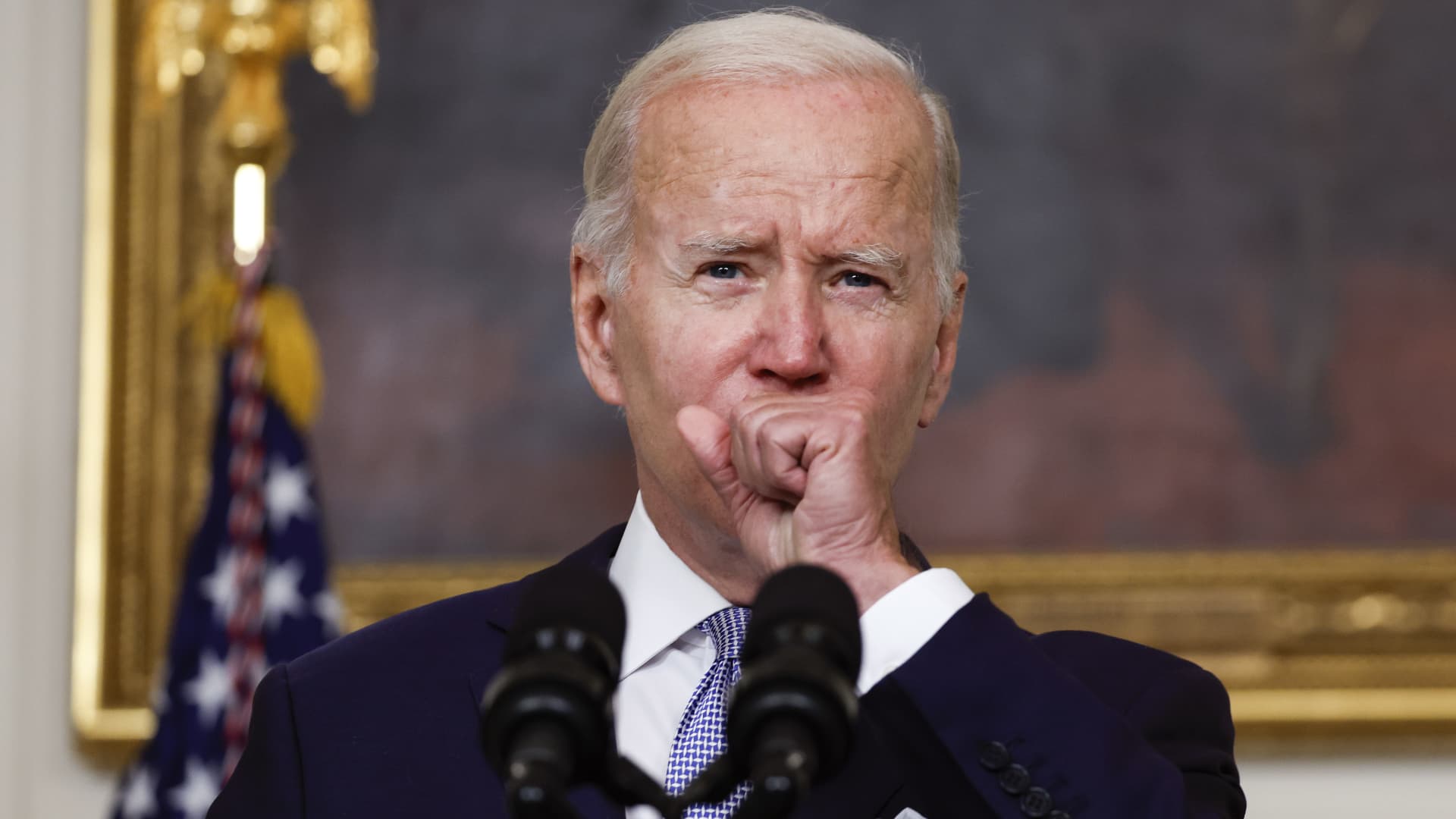
Biden continues to test positive, has ‘return of a loose cough’: Doctor

President Joe Biden continued to test positive for COVID-19 Tuesday but is feeling “well,” according to a memo from Dr. Kevin O’Connor, Biden’s physician.

“The President continues to feel well, though he is experiencing a bit of a return of a loose cough. He remains fever-free and in good spirits. His temperature, pulse, blood pressure, respiratory rate and oxygen saturation remain entirely normal. His lungs are clear,” O’Connor wrote.

O’Connor added that Biden “will continue his strict isolation measures” and “will continue to conduct the business of the American people from the Executive Residence.”

Biden initially tested positive for COVID-19 on July 21. His symptoms at the time were said to have included a runny nose, cough, sore throat, a slight fever and body aches.

He was treated with Paxlovid and tested negative last Wednesday before emerging from isolation.

However, I have tested positive again Saturday in a so-called rebound infection, which can occur when patients take Paxlovid.

High-risk patients still face drastically diminished risks of hospitalization after taking Paxlovid.

O’Connor’s memo Tuesday marked the first time he noted a reemergence of symptoms from the rebound case.

Biden had six close contacts before testing positive for COVID for a second time, though White House press secretary Karine Jean-Pierre said Monday none has tested positive.

It remains unclear for how long Biden will be able to leave the White House for a number of planned trips.

Jean-Pierre noted Monday that the Centers for Disease Control and Prevention has not yet released any guidance regarding travel after a rebound infection.

Copyright © 2022 ABC News Internet Ventures.

Categories
US

DOJ sues to block Idaho abortion law after Supreme Court tosses Roe

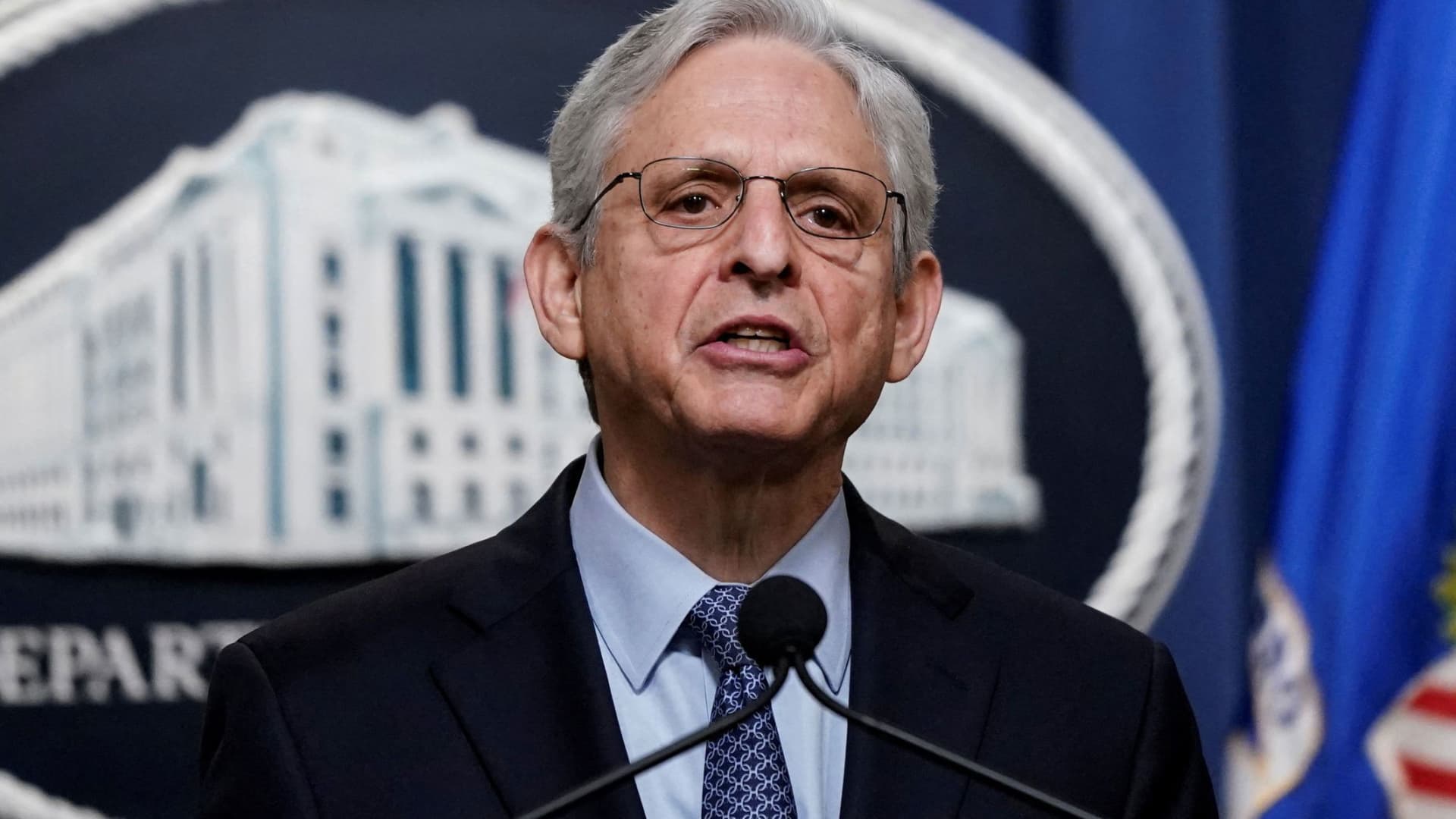
US Attorney General Merrick Garland announces enforcement actions against Russia, during a news conference at the Justice Department in Washington, US, April 6, 2022.

Elizabeth Franz | Reuters

The US Justice Department filed a lawsuit Tuesday seeking to block Idaho’s new restrictive abortion law on the grounds that it violates federal law requiring most hospitals to give medically necessary treatment to patients before discharging them.

It is the first Justice Department lawsuit to target a state’s new abortion restrictions adopted on the heels of the Supreme Court’s ruling in June, which said there is not a federal constitutional right to abortion.

That ruling reversed the Supreme Court’s 49-year-old decision in Roe v. Wade, which established the nationwide right of women to terminate their pregnancies.

Attorney General Merrick Garland held a news conference detailing the lawsuit.

The suit filed in Idaho federal court notes that the state “has passed a near-absolute ban on abortion,” which after taking effect Aug. 25 will make it a criminal offense to perform an abortion “in all but extremely narrow circumstances.”

Garland said the ban conflicts with the federal Emergency Medical Treatment and Labor Act, which requires a hospital that accepts Medicare funds to provide treatment at their emergency departments to stabilize a patient necessary to stabilize their medical condition before transferring or discharging the patient.

This is breaking news. Check back for updates.

.

Categories
US

Biden Justice Department sues Idaho over state’s abortion restrictions

Idaho’s near-total abortion ban, which will take effect later this month, would make it nearly impossible, according to the Justice Department. for patients who need an abortion in emergency medical situations, such as an ectopic pregnancy or other complications, from receiving potentially lifesaving treatment.

Where state abortion bans stand amid legal challenges

“In the days since the Dobbs decision, there have been widespread reports of delays or denials to pregnant women experiencing medical emergencies,” Attorney General Merrick Garland said in a news conference Tuesday. “We will use every tool at our disposal to ensure that pregnant women get the medical care that they are entitled to.”

The trigger law, which was passed in 2020, would make providing abortions a felony punishable by up to five years in prison. The ban has exceptions for cases of rape or incest if reported to law enforcement or to prevent the death of the pregnant person.

The Justice Department is suing under the Emergency Medical Treatment and Labor Act, which states that hospitals receiving Medicare funds “must provide medical treatment necessary to stabilize that condition before transferring or discharging the patient,” according to Tuesday’s lawsuit.

“The Idaho law would make it a criminal offense for doctors to comply with EMTALA’s requirement to provide stabilizing treatment, even where a doctor determines that abortion is the medical treatment necessary to prevent a patient from suffering severe health risks or even death,” DOJ said .

The inside story of how John Roberts failed to save abortion rights

Abortion providers in Idaho have also challenged the state’s trigger law. The state Supreme Court is set to hear the case on Wednesday.

DOJ last month created a task force aimed at protecting abortion fights following the Supreme Court decision in Dobbs that overturned Roe v. Wade and struck down the federal right to abortion.

Garland said that the lawsuit has “nothing to do with going around” the Supreme Court’s decision in Dobbs.

“The Supreme Court said that each state can make its own decisions with respect to abortion, but so too can the federal government,” he told reporters Tuesday. “Nothing that the Supreme Court said, said that the statutes passed by Congress, such as EMTALA are in any way invalid. It’s quite the opposite. The Supreme Court left it to the people’s representatives. EMTALA was a decision made by the Congress of the United States. The supremacy clause is a decision made in the Constitution of the United States. Federal law invalidates state laws that are in direct contradiction.”

This story has been updated with additional details.

.

Categories
US

Big Trouble in Little Loving County, Texas

MENTONE, Texas — In America’s least populated county, the rusting ruins of houses, oil drilling operations and an old gas station interrupt the sun-blanched landscape. A hand-painted wood sign still promises good food at “Chuck’s Wagon” to drivers along State Road 302, though the owner died months ago and the wagon is gone.

Apart from the brick courthouse, the convenience store packed with off-shift oil-field workers and the lone sit-down restaurant where you’re liable to see the sheriff at lunch, everything else that the county’s 57 recorded residents might need is a ways away. Not school. Not church. No grocery store.

But while it might seem quiet, all has not been well in Loving County. The first sign of the brewing conflict came last spring with the killing of five cows, shot to death and left in the dry dirt.

That brought a special ranger — a so-called cow cop — to town. He quickly began to see other things awry.

He opened an investigation into possible thefts of stray cattle by the top local leader, the county judge. Then it emerged that the complaints about cattle theft might have grown out of a deeper problem: a struggle for political control. People told the cow cop that some “residents” who called the county home and voted there actually lived somewhere else most of the time. Election fraud, in other words.

Soon, it would seem like everyone in the county was being arrested.

First, the judge, Skeet Jones, was charged along with three of his ranch hands with taking part in an organized crime ring aimed at stealing cattle.

Days later, four others close to the judge, including one of his sons, were arrested when they showed up for jury duty. The justice of the peace said they had improperly claimed to be eligible jurors when they did not, in fact, live in Loving County.

“It sounds very far-fetched,” said Brian Carney, a lawyer from Midland representing one of the ranch hands who has been charged. “If someone were to tell you this story, you’d be like, come on, is that some kind of novel? Is that something that really happens?”

Now, as 100-degree temperatures bake the terrain, the tiny county has been engulfed in an intensely personal political struggle, one that raises not only questions about the correct way to wrangle wayward cattle, but also weightier considerations of the definition of residence, the nature of home and who has a right to vote where in Texas.

For some in Loving County, the serial arrests provided a cautionary example of how law enforcement in a remote corner of rural America can be used to achieve political ends. For others, the arrests seemed like a necessary step to rein in county leaders who many believed had been skirting the rules.

The depth of animosity as well as the interconnectedness of almost everyone involved became apparent when the sheriff temporarily barred one of the arrested ranch hands — a former deputy who has talked of running against the sheriff — from entering the county building that houses the sheriff’s office, saying he would charge him with trespassing if he set foot inside.

The only problem: That particular ranch hand is also the county’s part-time custodian. A couple days after the warning, the sheriff sent an email to county officials complaining that nobody was taking out his trash from him.

Inside the county courthouse in Mentone, prominent figures in two competing political factions occupy offices at either end of a short hallway: the county judge, Mr. Jones, 71, on one end, and on the other, his nephew, Brandon Jones, the county constable.

At issue is control over what might seem like mundane local government matters — how many deputies the constable gets, who serves on the appraisal board — but they have become more contentious in recent years as the rise of fracking has elevated land values ​​and created a property tax windfall. The county judge and the county commissioners now oversee a budget of $27 million.

But the fight for power has been fueled more by personal rivalries and a desire for control among a younger generation than any specific political goal, said Steve Simonsen, the county attorney whose wife is a cousin in the Jones family.

“There’s no contracts or patronage, but you’re in control,” he said. “That’s why I find this to be so stupid, because the only thing that anybody is going to get out of this is, ‘I won.’”

Tensions are so high that at a recent county meeting, the sheriff’s office conducted security screenings and checked for bombs. None were found.

“Right now, the climate is the worst I’ve ever seen,” said Jacob Jones, 31, one of the county judge’s sons. “It breaks my heart. Family turning against family.”

“Voter turnout is always a hundred percent, sometimes more,” a former county justice of the peace told Texas Monthly in the 1990s.

In 2020, the US census counted 64 county residents of all ages. That same year, 66 people voted for president in the general election. The census estimate has since gone down to 57 people, though that does not include the oil field workers who stay in temporary camps that dot the landscape.

Among the contested local races in November, Brandon Jones’s wife is running against the county clerk, who is Skeet Jones’s sister. And a county commissioner, who was among those arrested after showing up for jury duty, is also facing a challenge.

“Before all this, I really thought I liked politics,” said the constable, Brandon Jones. “But now, not so much.”

It was back in March of last year that the five stray cattle were found dead. They were shot after reports of cattle crossing 302, a dangerous stretch of roadway packed with heavy trucks from the oil fields.

“There were no shell casings in the area,” a sheriff’s deputy noted in his incident report, “and no footprints or vehicle tracks.”

That brought the cow cop — a special ranger for the Texas and Southwestern Cattle Raisers Association named Marty Baker — to Loving County.

When he arrived in town, he met with the judge, Skeet Jones, who had reported the killings, and watched as Mr. Jones and the ranch hands — who had been trying to corral the stray cattle the day before they were shot — loaded the carcasses onto a trailer.

Mr. Jones, whose father had been the sheriff decades earlier, said he long had a practice of catching such cattle and selling them, and then donating the proceeds to nonprofit schools for at-risk children.

But this appeared to be a violation of the Texas Agriculture Code, Mr. Baker, the cow cop, wrote in a criminal complaint. The code requires reporting stray cattle to the local sheriff, who tries to find the owner and, if none is found, can sell the cattle.

Mr. Jones said he had an arrangement with the sheriff, Chris Busse, to handle the sales himself, according to the complaint, but the sheriff denied that.

In trying to sort it out, Mr. Baker wrote, he had help from a source close to Mr. Jones: a “confidential informant” from the “inner circle of the Jones family.”

Mr. Carney, the lawyer, said he believed the informant was Skeet Jones’s own nephew, Brandon Jones, who had been privy to text messages on a family thread. Skeet and Brandon Jones, along with Mr. Busse, the sheriff, declined to comment on the investigation.

The sheriff, who is also the county’s voter registrar, told NBC News that he “never, never, ever had a conversation about stray cattle with the judge.” A sheriff’s deputy, Noah Cole, told The Times that the office had no role in the investigation.

With what happened to the dead cattle a lingering mystery, the cow cop hatched a plan to catch any rustlers in the act.

Mr. Baker released three head of unmarked cattle, with microchips, as bait. Eventually, they were caught and brought to market by Skeet Jones and his ranch hands, Mr. Baker wrote.

In late May, a dusty column of law enforcement trucks tore down the dirt road to the Jones family ranch.

“It was just crazy,” said Jacob Jones, the county judge’s son, who was working at the ranch as a scrum of officers arrived.

The arrest of a county judge for cow theft attracted widespread attention. Brandon Jones, the constable, attacked his uncle in an interview with NBC, saying he had “free rein” as judge that gave him “a sense of power and impunity that he can do whatever he wants.”

A lawyer for Mr. Jones, Steve Hunnicutt, denied any crime had been committed, adding that the political motives for the arrests were “pretty clear.”

Skeet Jones posted bond and returned to his job. But tensions deepened a few days later with a seemingly innocuous event: the call for jury duty.

Eleven prospective jurors were summoned for a misdemeanor traffic matter.

Then, to their surprise, Amber King, the justice of the peace, had four of them arrested for contemplation. One was a son of Skeet Jones. Another was the county clerk’s son. Yet another was a county commissioner, who had been accused during a county meeting of claiming his property in Loving County as his residence while living at a ranch in Reeves County.

Residence has long been a contentious question. The argument is over whether people who may have homes elsewhere vote in Loving County because they want to tilt elections or because they consider it the home they intend to return to one day. Many of those recently arrested support the current county leadership.

Ms. King said a new election law that passed last year, Senate Bill 1111, changed things. The law was designed to stop people from registering to vote in places where they don’t live in order to sway elections, which has occasionally occurred in Texas.

She bristled at those who claimed residence but did not have to cope with actually living in a county with no schools, few amenities and dangerous truck traffic.

“We choose to live here,” she said. “We choose to put our kids on the bus. We choose to drive an hour and a half one way to HEB if we want decent groceries. They could live out here if they wanted to. But they don’t.”

Mr. Simonsen, the county attorney, conceded that some people may live elsewhere, but said that it did not necessarily disqualify them from voting.

So long as you are not voting in two places, he said, “Essentially, your residence is where you say it is.”

The most immediate result of Ms. King’s bid to clean up elections is that it’s now even harder to assemble a jury.

At least two people recently summoned for a grand jury have written to say they do not want to appear because they fear being arrested, Mr. Simonsen said, and the county has been unable to seat a grand jury.

With the flurry of law enforcement activity in recent weeks, it can seem as if everyone in the county will soon need a lawyer. Mr. Simonsen said he was trying to find the humor in it.

“Every morning, I walk over here,” he said, “and when they ask, ‘How’s it going?’ I say, ‘I haven’t been arrested yet!”

Categories
US

Fox News Anchor Harris Faulkner Loses It When Joe Manchin Questions Her Patriotism

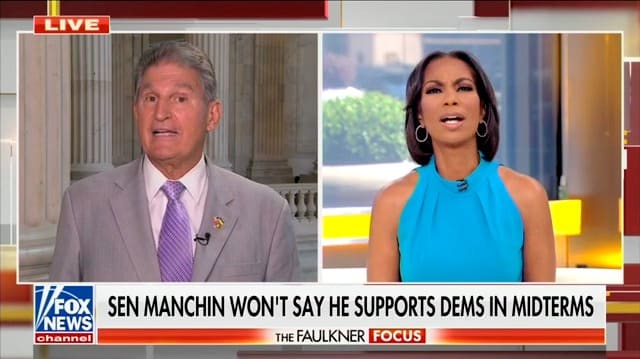
Fox News anchor Harris Faulkner briefly lost it during a contentious interview with Sen. Joe Manchin (D-WV) on Tuesday, taking a strong issue with the centrist senator asking her if she’s afraid of Democrats doing “something good” for America.

“My father served,” an incensed Faulkner fired back at Manchin at one point, demanding that the West Virginia lawmaker not make it “personal.”

With Manchin taking a media victory lap after finally striking a deal with Senate Majority Leader Chuck Schumer to pass portions of President Joe Biden’s economic agenda, Fox News has quickly turned on their favorite Democrat. After praising him for months for tanking Biden’s Build Back Better legislation, the network’s “disappointed” hosts and commentators have groused about Manchin’s “betrayal.”

Appearing on The Faulkner Focus on Tuesday to explain his support for the newly named Inflation Reduction Act, Manchin parried most of Faulkner’s pointed questions about the bill’s tax structure, spending, and energy investments. For the most part, Manchin continued his appeal to the patriotism of both the anchor and the network’s viewers.

“We need more energy today so—we also need to invest in the energy for the future,” Manchin declared early in the interview. “This is a balanced approach everyone has been talking about. Everyone is upset for whatever reason because they are afraid it is a political bill. It is not a Democratic bill. Not a Republican bill. It is not a green deal. This is a red, white, and blue deal, Harris.”

Manchin also pushed back when Faulkner parroted Republican claims that the new legislation would raise taxes on middle-class Americans, noting that it merely requires large corporations to pay a minimum tax rate of 15 percent.

“Who is paying any taxes that doesn’t have a corporation that has revenue of over a billion dollars a year? Not one person,” the West Virginia senator replied.

“I am asking you a different question than you’re answering. I’m saying Americans $400,000 and below are now going to be taxed. Their taxes will go up,” Faulkner replied.

“That’s wrong,” Manchin retort. “That’s a lie. A pure, outright lie.”

The conversation only grew more tense when Manchin taunted the Fox News host, at one point urging her to “be optimistic” and “be an American” when she said experts predict US gas prices will rise around Labor Day.

Eventually, Faulkner brought up Manchin’s non-response when recently grilled by Meet the Press moderator Chuck Todd on whether he wanted Democrats to stay in power after this year’s midterms. Insisting he didn’t dodge the question, Manchin instead said he is solely focused on getting his deal passed and is unconcerned with political races.

Faulkner, however, continued to press the issue, bringing up Biden’s low approval numbers while stating that “elections are going to need some help” for Democrats.

“Harris, are you scared that we’re going to do something good that will help our country?” Manchin shot back, prompting the Fox anchor to grow apoplectic.

“Of course not! My father served!” Faulkner shouted.

“Well, sounds like you are,” Manchin calmly interjected.

“Are you kidding? Service is in the Bible!” Faulkner continued. “That’s what we do, we serve our fellow man and woman. Of course! Don’t make this personal, because it’s not.”

After that heated moment, Faulkner again pushed Manchin on the low approval ratings Biden is “rocking right now,” remarking that the West Virginia senator doesn’t sound very supportive of his own party.

“I work with what I have here in the majority party we have as a Democratic Party. I’m working with the president, who has accepted the proposal I put forward and negotiated,” Manchin responded. Balanced energy policy. It’s wonderful for our country. I know people who don’t like the president and don’t like Democrats might be upset. It is not whether you like the president or you like Democrats. Do you like America? Do you want to fight inflation? This bill does it.”

.