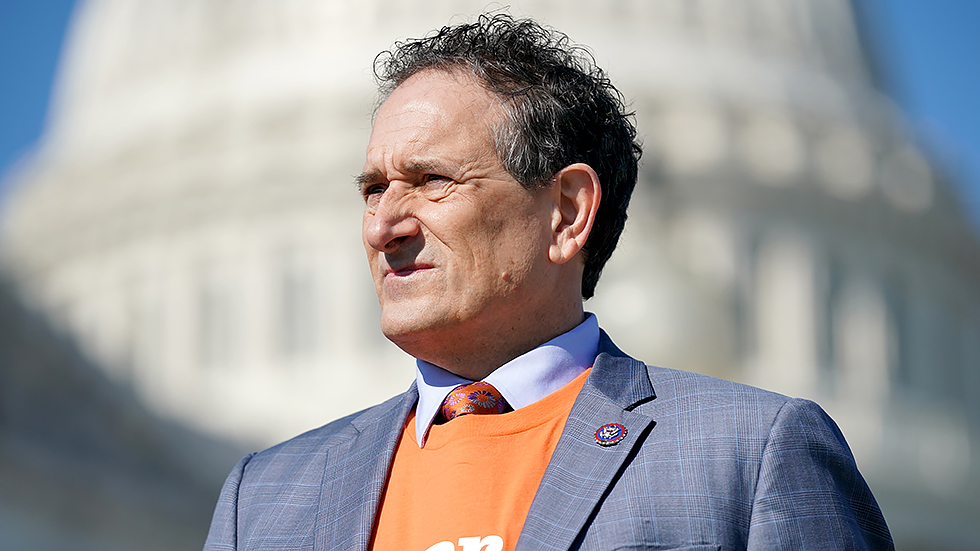
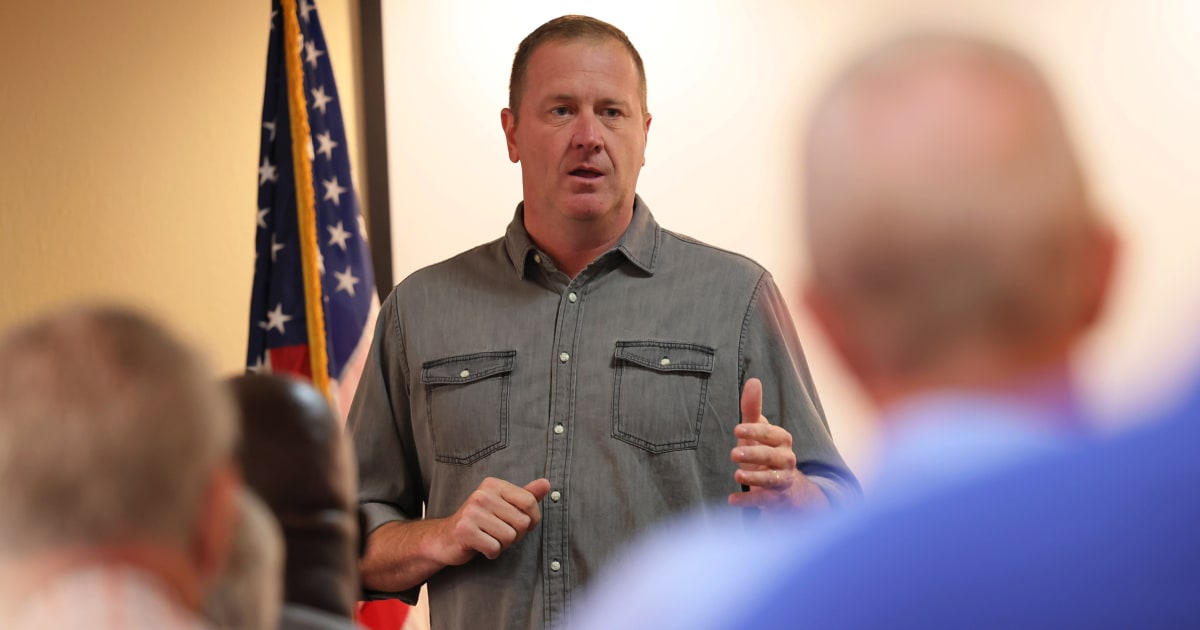
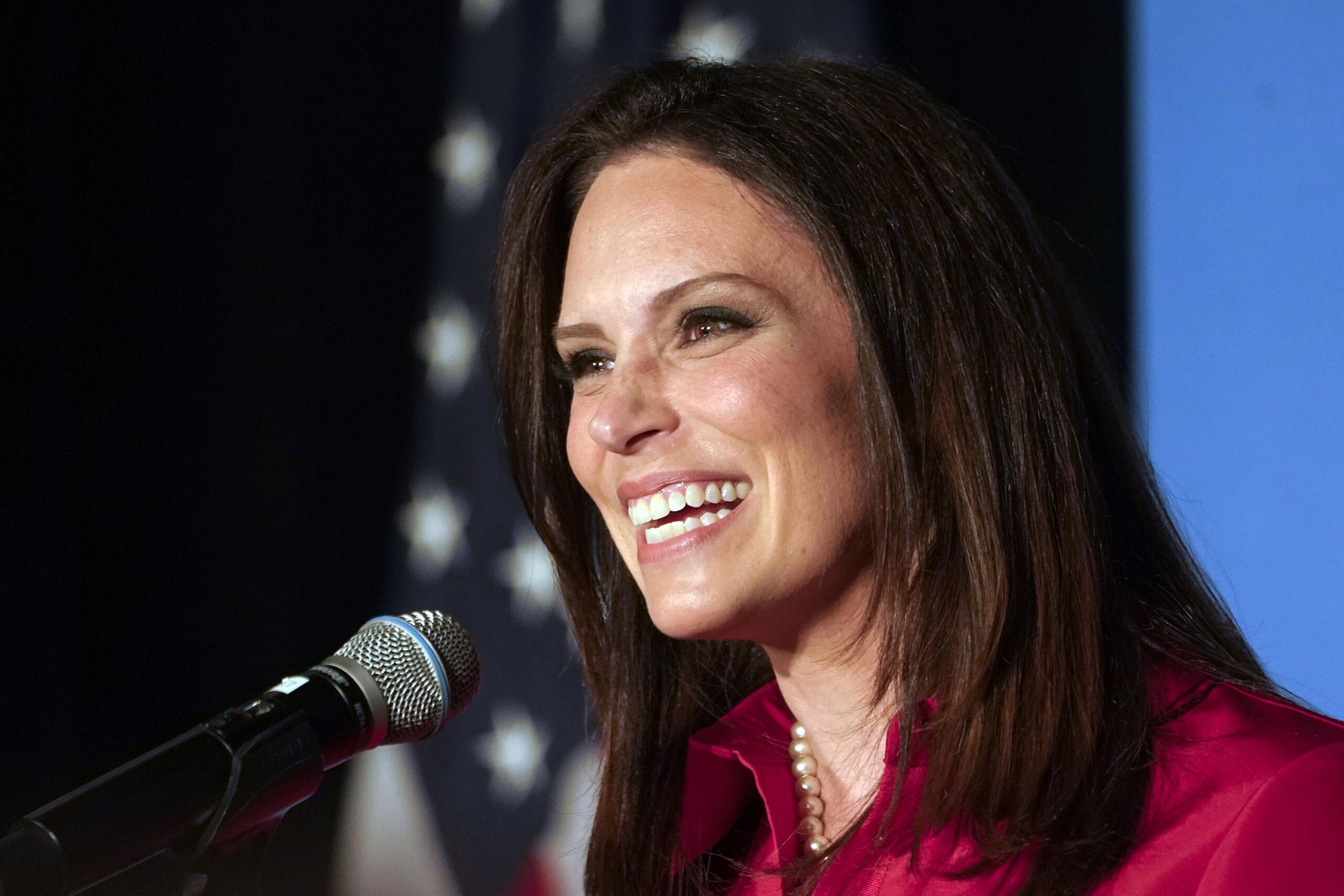
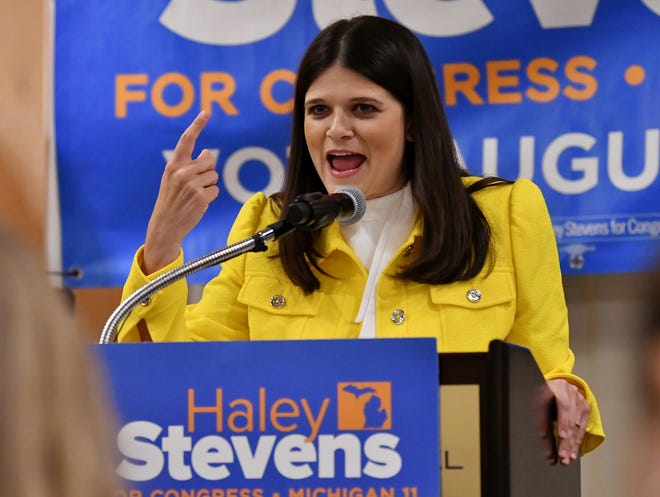
Rep. Haley Stevens (D) was projected to defeat fellow Rep. Andy Levin (D) in the Democratic primary for Michigan’s 11th District.
The Associated Press called the race for Stevens at 10:46 p.m. ET.
Stevens and Levin were both elected four years ago in the 2018 midterm elections that saw Democrats reclaim control of the House. But the redistricting process forced them into a member-on-member match-up that will ultimately determine who will go on to seek a third term in November.
Stevens and Levin occupied different lanes in the primary, with Stevens cutting a more moderate reputation and Levin casting himself as more progressive.
Stevens ultimately went into the primary with a financial advantage over Levin. Their latest federal filings show Stevens with nearly $1.5 million on hand to Levin’s $726,000.
But Levin also had the advantage of name recognition. While he was elected to the House in 2018, his father of him, former Rep. Sander Levin (D-Mich.), Represented the district for more than three and a half decades, while his uncle of him is the late Sen. Carl Levin (D-Mich.).
The race drew the attention of pro-Israel groups, with J Street’s PAC supporting the more left-leaning Levin and American Israel Public Affairs Committee’s PAC backing Stevens.
Michigan’s 11th District leans toward Democrats, giving Stevens an easier path to reelection this year after winning twice before in a more competitive district.
The ad offensive was the most public part of a year-long, behind the-scenes campaign to stop Greitens from winning the GOP nomination for retiring Sen. Roy Blunt’s (R-Mo.) seat, which was described to POLITICO by more than a dozen people involved in the race.
Party higher-ups from Republican National Committee Chairwoman Ronna McDaniel to National Republican Senatorial Committee Chairman Rick Scott to GOP megadonor Steve Wynn repeatedly pressed former President Donald Trump to not back Greitens. The lobbying effort would extend to the eve of the primary, when McDaniel advised Trump to resist giving a late, full-throated endorsement to the former governor, who had been aggressively courting him.
At the same time, a small group of Republican strategists corralled donors like Sinquefield and Anheuser-Busch scion August Busch, who shared a visceral desire to block the former governor. Senate Minority Leader Mitch McConnell’s political machine, meanwhile, weighed its options until near the end of the contest, when it quietly contributed around $6.7 million to the anti-Greitens TV blitz, a previously unreported investment that helped seal the ex-governor’s fate.
“There can be no question that Greitens’ candidacy threatened Republican control of this Senate seat. Nominating him would have put in play a seat that Republicans absolutely shouldn’t have to worry about,” said Peter Kinder, a former Missouri lieutenant governor. “There was a clear need for someone to assemble the resources to tell the truth about him that had never been told.”
holding off trump
While a number of powerful Republicans were aligned against Greitens, there was still one figure who could have given his campaign a huge GOP primary boost: Trump.
This spring, McDaniel and Scott went to Trump’s Mar-a-Lago estate to meet with the former president. The three talked about the 2022 electoral landscape — and McDaniel and Scott took the opportunity to argue that backing Greitens would be an error, according to a person familiar with the discussion.
The GOP chairwoman felt that Trump should remain neutral in the primary and believed Greitens would be a weak general election nominee. Scott had the same message, and he spoke with Trump roughly a half-dozen separate times to reinforce it, oftentimes presenting polling to make his case that Greitens would jeopardize the party’s hold on the seat.
McDaniel and Scott were part of a broader group of Republicans trying to ward off a Trump endorsement for Greitens. They were joined by Trump allies like South Carolina Sen. Lindsey Graham and Trump White House adviser Kellyanne Conway, who also relayed their concerns to Trump.
But they faced strong opposition from an array of MAGA loyalists who promoted Greitens, a roster that included conservative megadonor Bernie Marcus and Kimberly Guilfoyle, the fiancée of Donald Trump Jr., both of whom lobbied the former president on Greitens’ behalf. The former governor also became a frequent guest on “War Room,” the popular podcast hosted by former Trump chief strategist Steve Bannon.
Trump at first appeared cool to idea of an endorsement. During one meeting with advisers last year, he poked fun at Greitens, who stepped down as governor in 2018 amid accusations that he had tied up and blindfolded his hairdresser de ella before sexually assaulting her.
“You know what I call him? ‘Whips and chains,’” Trump said, according to one person familiar with the meeting, adding that the alleged incident would make it hard for Greitens to be elected.
But the ex-president never appeared to fully rule out an endorsement — and Greitens had been spotted at Mar-a-Lago, alarming Republicans. Early this year, I landed a meeting with Trump.
Schmitt, the Greitens rival who ultimately won the primary, also moved to block a Greitens endorsement. He became a visitor to Mar-a-Lago and the former president’s Bedminster, NJ golf club, where in meetings with Trump he highlighted Greitens’ past scandals and called him a “quitter,” a word Trump viewed as an insult, according to a person familiar with the discussions.
Whenever Schmitt’s team heard that Greitens was at Trump’s South Florida resort, they passed along polling information and memos to Trump’s aides aimed at undermining the ex-governor. When Schmitt’s supporters were taking trips to Mar-a-Lago, they were supplied with similar anti-Greitens materials to share.
And Schmitt became a regular guest on TV networks Trump was known to watch, like Newsmax and One America News. His campaign even booked appearances on Fox News that were timed to when they believed Trump would be returning from his regular golf outings.
The St.Louis meeting
In early May, David Polyansky, a strategist for a super PAC supporting Schmitt, flew to St. Louis to meet with Busch, the former brewing company executive. The 85-year-old had been a major contributor to Greitens’ 2016 gubernatorial campaign — but like many one-time backers, he was no longer a fan and wanted to see Greitens lose his Senate bid.
But Polyansky told Busch, a Schmitt supporter, that his super PAC was primarily focused, for the time being, on elevating Schmitt and targeting another candidate, Rep. Vicky Hartzler. The strategist argued that it made more sense for another group solely focused on attacking Greitens to take the lead.
At around that time, word began to percolate through Missouri’s tight-knit Republican donor world that DeStefano was interested in forming such a PAC.
DeStefano, a Kansas City native who spent years as a Republican political operative before serving in the Trump White House, saw that no outside group had yet emerged to take on Greitens, and believed that unless someone stepped up he would win the party’s nomination.
Whether an anti-Greitens blitz would work was unclear: DeStefano’s initialpolling, like surveys elsewhere, showed the former governor with a lead over a splintered group of rivals. But as he talked with donors, DeStefano presented a game plan and made the case there was a path.
He focused his outreach on Missouri-based contributors, believing that a home-grown effort would have more potency than a Washington-based one, and would insulate it from the inevitable charge from Greitens that he was the victim of a Beltway-orchestrated plot. DeStefano, who was one of the few operatives involved in Missouri who had n’t picked sides in the primary, stressed that the new super PAC would zero in on Greitens rather than boosting one of his rivals from him.
Before long, he got commitments from Sinquefield and Busch — signaling to other funders that it was safe to get off the sidelines.
“Missouri donors were in, and they finally had a vehicle,” said Christian Morgan, a Missouri-based GOP strategist who helped introduce DeStefano to the state’s donors.
Show Me Values would publicly launch in late June, with hard-hitting TV ads highlighting the sexual assault allegations, which Greitens has denied. The former governor responded to the barrage by declaring that he was being targeted by “Never-Trump, RINO politicians from all over the country.”
The McConnell machine engages
From his office in downtown Washington, Steven Law, who runs the McConnell-aligned super PAC Senate Leadership Fund, saw a Greitens nomination as potentially cataclysmic for the party. He recalled that in 2012 a similarly tarnished GOP nominee, Todd Akin, had lost a Missouri Senate race, and he was aware that the state had a history of ticket-splitting, meaning that Republican voters could end up ditching Greitens for another candidate, even while they supported other GOP candidates on the ballot.
Pushing Greitens over the finish line in a general election, Law believed, could cost the party as much as $40 million, funds the party needed for other races.
In June, Law caught wind that DeStefano was planning something. He liked that the Show Me Values super PAC was Missouri-based, wasn’t aligned with a candidate, and had received a large financial commitment from Sinquefield, a prominent GOP donor. And he had a preexisting relationship with DeStefano, who was wired into Missouri politics.
On June 20, Law reached out to the super PAC and said he would be making a financial commitment. Senate Leadership Fund ended up being the biggest donor to Show Me Values, contributing $6.7 million of the $8 million-plus it raised.
“Ultimately, the consideration that really made us look very long and hard about intervening was purely financial,” Law said. “That’s tens of millions of dollars that could be better spent to help another Senate race, and we concluded that it would just be much more cost-effective if it were possible to ensure that Greitens wasn’t the nominee.”
In just over a month, the super PAC became the biggest-spending outfit in the race. Greitens saw his support from him almost instantaneously collapse: The super PAC conducted a poll 10 days after it launched which showed Greitens falling to third place.
“What happened was Greitens had more of a glass jaw than a lot of people thought,” Law said.
The ‘ERICs’
In late July, Greitens connected by phone with Trump and made his final pitch.
During the conversation, according to one person briefed on the call, Trump asked him, among other things, what his poll numbers looked like and how he would respond to criticisms over his past.
The fight for Trump’s endorsement would reach a climax during the final weekend of the campaign, while Trump was hosting a golf tournament at Bedminster. The Greitens and Schmitt campaigns squared off in a lobbying blitz that both would later describe as political hand-to-hand combat.
Greitens’ most forceful advocate that weekend was Guilfoyle, who pressed Trump to get behind her candidate, according to people familiar with what transpired at the tournament. Greitens’ campaign also sent Trump aides a series of documents presenting the former governor in a favorable light, including polling data aimed at pushing back on the idea he would be a weak nominee.
The Schmitt forces responded by forwarding their own favorable polling data and news coverage. Each campaign kept close tabs on the other, getting updates from on-the-ground supporters in New Jersey about what the other side was doing.
Late Sunday evening, Trump initiated a flurry of speculation that he was leaning Greitens’ way with a social media post. Trump linked to a story from the conservative outlet Breitbart, which accused Remington Research — a polling outfit run by Schmitt operatives — of publishing a survey that understated Trump’s support for him in Missouri. Rumors of an imminent Greitens endorsement intensified Monday morning, when Trump said he would be making an announcement on whom he would support later in the day.
But what ensued over the next chaotic seven hours at Bedminster would rob Greitens’ of his long-held hope of receiving Trump’s exclusive endorsement. During a wild day of deliberations, Trump heard from Guilfoyle, who made a forceful case for Greitens. But others pushed back on the idea — including McDaniel, who was there for a previously-scheduled meeting.
Trump settled on a compromise, drafting a statement in which he declared his support for “ERIC” — delivering, in essence, a dual endorsement for Greitens and Schmitt in the form of a pun. Just after the statement went out, Trump called Greitens and congratulated him — without mentioning that he was also backing Greitens’ rival.
It was the last gasp of a fading campaign. On Tuesday — weighed down by a multimillion-dollar TV ad campaign and lacking the exclusive Trump endorsement he so coveted — Greitens’ hopes for a political comeback were extinguished.
eric schmitthas won the Republican nomination for Senate in Missouri, NBC News projects, ending a comeback bid by the state’s disgraced former governor, Eric Greitens.
Schmitt, the state’s attorney general, was leading Rep. Vicky Hartzler, with Greitens further behind in third place, according to early results. He will face the winner of Tuesday’s Democratic primary, Trudy Busch Valentine, a nurse and heir to the Anheuser-Busch beer fortune. NBC News projects that Valentine has beat out 10 other Democrats, including Lucas Kunce, a Marine veteran with national support among progressives, who earned a late endorsement from Sen. Bernie Sanders, I-Vt.
The Democratic primary was sleepy compared to the GOP contest, which commanded extraordinary attention for a primary in a reliably red state.
A Greitens victory likely would have made for a more competitive general election to succeed Sen. Roy Blunt, a Republican who is not seeking a third term this fall. John Wood, a former investigator for the House Jan. 6 committee, launched an independent bid, partially out of concern for a Greitens nomination. A longtime Republican, Wood was heavily supported by former Sen. John Danforth, R-Mo., who is bankrolling a pro-Wood super PAC.
With control of the 50-50 Senate up for grabs, national GOP groups preferred not to spend money defending a seat in Missouri.
Greitens had been hoping for a last-minute boost from former President Donald Trump, who had ruled out backing Hartzler and vowed Monday to make a last-minute endorsement in the race. Trump had in the past praised Greitens, and his eldest son’s partner, Kimberly Guilfoyle, chaired Greitens’ campaign. But Trump ultimately issued a cop-out endorsement of “Eric” — meaning Schmitt or Greitens — and said he trusted Missouri voters to “make up their own minds.”
Once a rising star in national politics, Greitens resigned as governor in 2018 amid investigations into alleged sexual misconduct and campaign finance violations. Although Greitens has admitted to an extramarital affair with a woman who accused him of taking a nude photograph of her without her consent, he denied the more serious accusations. A felony invasion-of-privacy charge was later dropped. So was the probe into his campaign finances from him.
More recent allegations by his ex-wife that Greitens abused her and their young son — allegations that Greitens has denied — were the subject of an advertising blitz by Show Me Values, an anti-Greitens super PAC that spent more than $6 million on ads in the race, according to the ad-tracking firm AdImpact. Show Me Values was the biggest spender in the primary, followed by a pro-Schmitt PAC. Greitens spent only $137,000 on ads, though an aligned super PAC provided more than $2 million in air cover.
A former Navy SEAL, Greitens also drew criticism for a campaign video that featured him in tactical gear and armed with a shotgun as he went “RINO hunting” — a play on the acronym for “Republicans in Name Only.” Facebook removed the video for violating policies against inciting violence. But in the final weeks, the race essentially was a three-way battle featuring Schmitt, Hartzler and Greitens.
Schmitt emerged from a 21-candidate field that also included Rep. Billy Long and Mark McCloskey, the St. Louis lawyer who received a speaking slot at the 2020 GOP convention after being arrested for waving a rifle at Black Lives Matter demonstrators outside his home.
The state’s attorney general since 2019, Schmitt presented himself as a staunch opponent of President Joe Biden, citing lawsuits his office filed against the administration.
“I wake up, I go to the office, I sue Joe Biden, I go home,” Schmitt is fond of saying.
Hartzler, who was endorsed by the state’s other Republican senator, Josh Hawley, often sought to distinguish herself by dismissing her leading rivals as two Erics both alike in indignity.
“This Eric puts rifles in his ads, and Eric Schmitt plays with a blow torch,” Hartzler said in one recent ad. “So I brought my chainsaw. Just kidding.”
Henry J. Gomez is a senior national political reporter for NBC News.
A federal grand jury has subpoenaed former Trump White House counsel Pat Cipollone in his investigation into the Jan. 6 assault on the US Capitol and efforts to overturn the 2020 election, sources with direct knowledge of the matter told ABC News.
The sources told ABC News that attorneys for Cipollone — like they did with the House select committee investigating the Jan. 6 attack on the Capitol — are expected to engage in negotiations around any appearance, while weighing concerns regarding potential claims of executive privilege.
The move to subpoena Cipollone signals an even more dramatic escalation in the Justice Department’s investigation of the Jan. 6 attack than previously known, following appearances by senior members of former Vice President Mike Pence’s staff before the grand jury two weeks ago.
Officials with the Justice Department declined to comment when contacted by ABC News.
A representative for Cipollone could not be reached for comment.
Last month, Cipollone spoke to the House Jan. 6 select committee for a lengthy closed-door interview, portions of which have been shown during two of the committee’s most recent public hearings.
Cipollone spoke to the committee on a number of topics, including how he wanted then-President Donald Trump to do more to quell the riot on the day of the attack, and how Cabinet secretaries contemplated convening a meeting to discuss Trump’s decision-making in the wake of the insurrection.
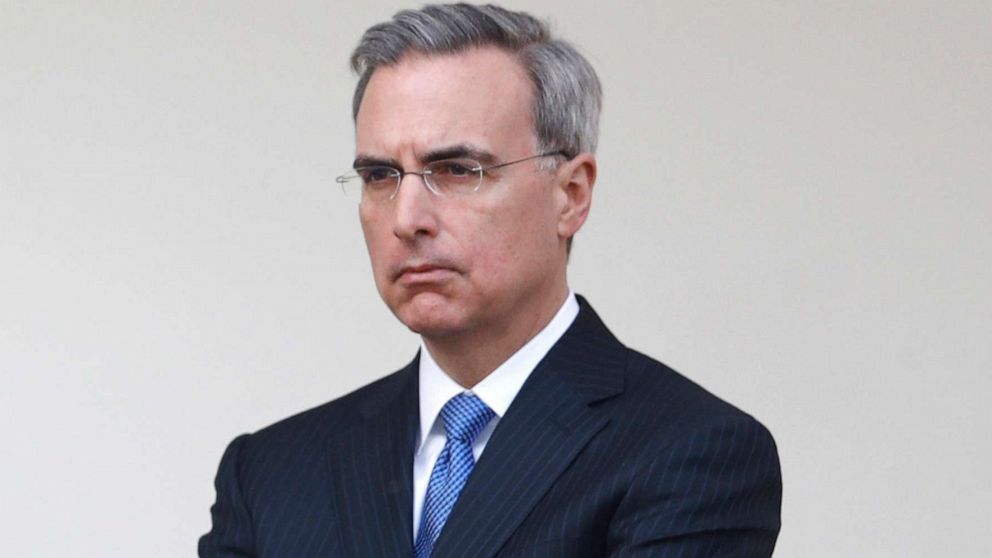
Pat Cipollone attends a briefing in the Rose Garden of the White House in Washington, March 29, 2020.
Patrick Semansky/AP, FILE
In videotaped testimony before the Jan. 6 committee, Cipollone made it clear that he wanted Trump to intervene sooner while the attack was underway.
“I was pretty clear there needed to be an immediate and forceful response, statement, public statement, that people need to leave the Capitol now,” Cipollone said.
Committee members also questioned Cipollone regarding discussions among members of Trump’s Cabinet about invoking the 25th Amendment to possibly remove Trump from office in advance of President Joe Biden’s inauguration.
Kansans secured a huge win for abortion rights in the US on Tuesday night when they voted to continue to protect abortion in the state constitution.
The race was called by a host of US groups like NBC News, the New York Times and Decision Desk HQ.
The move will be seen as a huge loss for the anti-abortion movement and a major win for abortion rights advocates across America, who will see the result as a bellwether for popular opinion.
Kansas – a deeply conservative and usually reliably Republican state – is the first US state to put abortion rights to a vote since the US supreme court ruled to overturn constitutional protections for abortion in late June.
The state will remain a safe haven for abortion in the midwest, as one of the few states in the region where it remains legal to perform the procedure. Many other states have undertaken moves to make abortion largely illegal since June.
Joe Biden issued a statement welcoming the result. “This vote makes clear what we know: the majority of Americans agree that women should have access to abortion and should have the right to make their own health care decisions,” the US president said.
The Kansas state senator Dinah Sikes, a Democrat, cried as the vote came in, and turned to her friends and colleagues, showing them goosebumps on her arm.
“It’s just amazing. It’s breathtaking that women’s voices were heard and we care about women’s health,” she told the Guardian, after admitting she had thought the vote would be close. “But we were close in a lot of rural areas and that really made the difference – I’m just so grateful,” she said.
The “No” campaign – which was protecting abortion rights – was strongly ahead in the referendum with 62% of the vote with the majorityof ballots counted. That means millions of dollars lost for the Catholic church who contributed more than $3m trying to eradicate abortion rights in Kansas, according to campaign finance records.
Kansans turned out to vote in heavy numbers on Tuesday, in a referendum brought by the Kansas Republican legislature that was criticized for being misleading, fraught with misinformation and voter suppression tactics.
After failing to get a more directly named referendum, “Kansas No State Constitutional Right to Abortion”, on the ballot in 2020, Republicans switched tactics, naming this amendment “Value Them Both”.
The vote was scheduled for August, when voter turnout is historically low, particularly among independents and Democrats, and the wording on the ballot paper was criticized for being unclear.
“The ballot mentions a state constitutional right to abortion funding in Kansas, but that funding has never really been on the table,” Mary Ziegler, a US abortion law expert from the University of California, Davis told the Guardian on Monday.
Kansans for Life, one of the main backers for a “yes” vote, told church congregants on 27 July that removing protections for abortion in Kansas would prevent late-term abortions, lack of parental consent and tax payer funding for abortion, despite none of these being the law in Kansas. Abortions in Kansas are limited to 22 weeks in cases of life threatening or severely compromised physical complications.
It was a tense and bitterly fought campaign that saw churches vandalized and yard signs stolen, in a state where abortion doctor George Tiller was murdered by anti-abortion activists in 2009.
But on Tuesday night scenes of retirement broke out at a watch party for the victorious No campaign in Kansas City. “We’re free!” shouted Mafutari Oneal, 56, who was manning the bar after the vote was called and a rush of drinks orders came in.
“I don’t want no government telling me what to do. I’m so happy,” she said.
In a speech just after victory was sealed, Rachel Sweet, the campaign manager for Kansans for Constitutional Freedom, said the win had come against all the odds.
“We knew it was stacked against us from the moment we started but we did not despair – we did it, and these numbers speak for themselves,” Sweet said.
“We knocked tens of thousands of doors and had hundreds of thousands of phone calls … We countered millions of dollars in misinformation,” she said. “We will not tolerate extreme bans on abortion in our state.”
Ashley All, the spokesperson for KCF, who led the ‘No’ campaign alongside Planned Parenthood and the ACLU told the Guardian that the key to driving voter turnout was not seeing abortion as a partisan issue in Kansas.
“We demonstrated Kansas’ free state roots,” she said. “It will be interesting for other states to watch this and see this is not a partisan issue. Everyone from Republicans, to unaffiliated voters to hardcore libertarians came out to say: ‘No, we don’t want the government involved in what we do with our bodies’,” she said.
Longshot challenger Suraj Patel came out swinging in the Democratic primary debate for the race to represent Manhattan’s Upper West and Upper East sides, saying it’s time to retire septuagenarian Reps. Jerrold Nadler and Carolyn Maloney.
The call for new blood from the 38-year-old came right after Nadler stumbled badly through his own opening statement.
“It’s 2022. It’s time to turn the page on 1992,” Patel, 38, said in a swipe at Nadler, 75, and Maloney, 76, during his introductory statement in the debate co-sponsored by NY1 and WNYC.
Nadler’s delivery was halting during his initial presentation and he missedpoke and often seemed unable to come up with the right words.
And then Nadler, the House Judiciary Committee chairman, uttered a real whopper, proclaiming, “I’ve impeached Bush twice.”
He was referring to his oversight of the politically divisive impeachments of former President Donald Trump, who he confused with either the 41st or 43rd presidents.
Nadler’s bumbling seemed to prove Patel’s point.
Nadler stumbled several times, and even said he impeached “Bush” twice.AP/Mary Altaffer, Pool
“Nineteen-nineties Democrats have lost about every major battle to Mitch McConnell and the Republicans,” said Patel, referring to the Senate Republican leader from Kentucky.
Meanwhile, Nadler sat down during the entire 90 minute session while Maloney and Patel stood at their lectures.
Nadler had many other verbal stumbles throughout the debate and at one point when the moderators offered him a chance to respond since his name had been brought up by an opponent, he seemed stunned and had nothing to say.
At one point, WNYC moderator Brigid Bergin asked Nadler about the importance of seniority and how he and Maloney differed on policies, two related but different questions.
Nadler answered that seniority is important if used effectively, but forget about the Maloney comparison.
“The second one, the second question, what was the second one?” Nadler asked.
Maloney made waves for a different reason during the debate: She predicted that President Biden, 79, would not run for re-election.
“I don’t believe he’s running for re-election,” Maloney said.
Nadler, meanwhile, would not commit to supporting Biden’s reelection and would only answer, “It’s too early to say,” when asked.
Patel, who had made a point of noting that his opponents are too old to be reelected to the House, nevertheless said “yes” to supporting the 79-year-old Biden’s re-election.
On foreign affairs, all three candidates supported House Speaker Nancy Pelosi’s trip to Taiwan and said the Biden administration should not give in to China’s bullying it.
Maloney claimed she was more effective in office than Nadler, saying she delivered the Second Avenue subway for her district while Nadler’s proposed rail freight tunnel hasn’t gotten off the ground. Nadler claimed he helped secure funding for the Second Avenue subway.
Maloney was on the defensive about her prior concerns over whether vaccines contributed to autism, a position she has since abandoned.
Maloney and Nadler each were elected and have served together in Congress for 30 years, first elected in the early 1990s.
Nadler was a former state assemblyman before his election to the House. Maloney chairs the House Oversight Committee and formerly served in the City Council.
Suraj Patel is a 38-year-old Democrat calling for Nadler and Maloney’s retirements.SpectrumNews NY
Patel, a self-described “Obama Democrat” and lawyer whose family runs a hotel business, is making his third run in the 12th congressional district.
The Democrats’ gerrymandering debacle ended up pitting Maloney and Nadler — longtime allies — against each other.
Judges knocked out the Democrat-drawn maps — which Republicans derided as the “Hochulmander” because Gov. Kathy Hochul approved them — finding them unconstitutional.
As a result, a court-ordered special master merged Maloney’s East Side turf with Nadler’s West Side base, and Nadler wasted no time, immediately declaring he’d run in Maloney’s district, guaranteeing at least one of the aged incumbents will be out of a job next year.
Nadler decided to run in the 12th CD against Maloney instead of the 10th District, which he currently represents, because the reconfigured 10th cut out his Upper West Side turf and took in communities in brownstone and southern Brooklyn, a swath of the city he has never .
The primary will be held on Aug. 23 with early voting beginning on August 13.
Kansans secured a huge win for abortion rights in the US on Tuesday night when they voted to continue to protect abortion in the state constitution.
The race was called by a host of US groups like NBC News, the New York Times and Decision Desk HQ.
The move will be seen as a huge loss for the anti-abortion movement and a major win for abortion rights advocates across America, who will see the result as a bellwether for popular opinion.
Kansas – a deeply conservative and usually reliably Republican state – is the first US state to put abortion rights to a vote since the US supreme court ruled to overturn constitutional protections for abortion in late June.
The state will remain a safe haven for abortion in the midwest, as one of the few states in the region where it remains legal to perform the procedure. Many other states have undertaken moves to make abortion largely illegal since June.
The Kansas state senator Dinah Sikes, a Democrat, cried as the vote came in, and turned to her friends and colleagues, showing them goosebumps on her arm.
“It’s just amazing. It’s breathtaking that women’s voices were heard and we care about women’s health,” she told the Guardian, after admitting she had thought the vote would be close. “But we were close in a lot of rural areas and that really made the difference – I’m just so grateful,” she said.
The “No” campaign – which was protecting abortion rights – was strongly ahead in the referendum with 62% of the vote with the majorityof ballots counted. That means millions of dollars lost for the Catholic church who contributed more than $3m trying to eradicate abortion rights in Kansas, according to campaign finance records.
Kansans turned out to vote in heavy numbers on Tuesday, in a referendum brought by the Kansas Republican legislature that was criticized for being misleading, fraught with misinformation and voter suppression tactics.
After failing to get a more directly named referendum, “Kansas No State Constitutional Right to Abortion”, on the ballot in 2020, Republicans switched tactics, naming this amendment “Value Them Both”.
The vote was scheduled for August, when voter turnout is historically low, particularly among independents and Democrats, and the wording on the ballot paper was criticized for being unclear.
“The ballot mentions a state constitutional right to abortion funding in Kansas, but that funding has never really been on the table,” Mary Ziegler, a US abortion law expert from the University of California, Davis told the Guardian on Monday.
Kansans for Life, one of the main backers for a “yes” vote, told church congregants on 27 July that removing protections for abortion in Kansas would prevent late-term abortions, lack of parental consent and tax payer funding for abortion, despite none of these being the law in Kansas. Abortions in Kansas are limited to 22 weeks in cases of life threatening or severely compromised physical complications.
It was a tense and bitterly fought campaign that saw churches vandalized and yard signs stolen, in a state where abortion doctor George Tiller was murdered by anti-abortion activists in 2009.
But on Tuesday night scenes of retirement broke out at a watch party for the victorious No campaign in Kansas City. “We’re free!” shouted Mafutari Oneal, 56, who was manning the bar after the vote was called and a rush of drinks orders came in.
“I don’t want no government telling me what to do. I’m so happy,” she said.
In a speech just after victory was sealed, Rachel Sweet, the campaign manager for Kansans for Constitutional Freedom, said the win had come against all the odds.
“We knew it was stacked against us from the moment we started but we did not despair – we did it, and these numbers speak for themselves,” Sweet said.
“We knocked tens of thousands of doors and had hundreds of thousands of phone calls … We countered millions of dollars in misinformation,” she said. “We will not tolerate extreme bans on abortion in our state.”
Ashley All, the spokesperson for KCF, who led the ‘No’ campaign alongside Planned Parenthood and the ACLU told the Guardian that the key to driving voter turnout was not seeing abortion as a partisan issue in Kansas.
“We demonstrated Kansas’ free state roots,” she said. “It will be interesting for other states to watch this and see this is not a partisan issue. Everyone from Republicans, to unaffiliated voters to hardcore libertarians came out to say: ‘No, we don’t want the government involved in what we do with our bodies’,” she said.
LEBURN, Ky. — As the floodwaters receded, tales of survival emerged Tuesday from victims who were roused from sleep by alerts and quickly found themselves trapped in their homes by floating furniture blocking the doors.
They described the experience as surreal, recalling how they had to ford through waist-deep water to reach loved ones only to be turned back by the swift current or watch as trucks and uprooted trailers were swept away.
Many said everything they owned was either taken or destroyed by the deluge.
Teresa Reynolds sits exhausted as members of her community clean the debris Saturday from their flood ravaged homes at Ogden Hollar in Hindman, Ky. Timothy D. Easley/APA Knott County emergency vehicle gathers debris Tuesday in the flooded Troublesome Creek in downtown Hindman, Ky. Michael Swensen for NBC News
“All we have are clothes we are wearing,” said John Whitaker, a retiree who lived with his wife, Susie, in their now-ruined home in Hindman for less than a year. “Everything else was in the house. Everything is covered in mud.”
Larry Miller, 62, who has lived in Hindman his entire life, said he left his house reluctantly when the floodwaters were lapping at his door.
“My mom left me this home,” said Miller. “I just remodeled it from one end to the other. It destroyed my home and everything in it.”
Miller and the Whitakers were among the hundreds of Knott County residents who took shelter this week in the Sportsplex in Leburn, a sports facility that has been transformed into a shelter for storm survivors.
Ronnie and Sue Combs who survived the flooding, pray with a member of the Billy Graham Rapid Response Team in the Knott County Sportsplex on Tuesday. Michael Swensen for NBC NewsA man organizes coats Tuesday on a donation table at the Knott County Sportsplex in Leburn, Ky.Michael Swensen for NBC news
Extraordinary rain, historic floods
The worst flooding happened Wednesday night into Thursday morning, the result of a historic storm in eastern Kentucky that occurred while most people were sleeping and that inundated the hollers so quickly it cut off most escape routes.
Dustin Jordan, the National Weather Service’s science and operations officer in Kentucky, said that before the storm his agency “issued numerous flash flood warnings and also upgraded them all the way up to catastrophic, which is pretty much the highest level you can go, which is basically like a flash flood emergency.”
Some areas saw 14 to 16 inches of rain over a five-day period last week, he said.
“You’re talking about unprecedented rainfall totals,” Jordan said. “The biggest thing that you can take from this is that flash flooding from nighttime rainfall is very dangerous. It’s very difficult for people to get to safety at night. So that’s part of it. A lot of people are sleeping, and then having to get out very, very fast.”
William Haneberg, director of the Kentucky Geological Survey, said the rains came so fast there really was no time to escape, even if they heard the Weather Service alerts.
“It’s mountainous terrain and the valleys are very narrow,” he said. “A lot of the affected areas are very remote. It may take you an hour to go through the curving mountain roads. In a lot of the remote areas, there may only be one way out. So if you wait too long, the bridges may be washed out.”
People also have a tendency to tune out storm warnings, and generational ties to the land in Appalachia make some reluctant to leave, even if they know they live in a flood-prone area, Haneberg said.
“People are tied with that land because maybe their great-grandparents built the house or something,” he said. “So it’s a huge cultural issue to say OK, just move.”
A picture of Uncle Solomon Everidge, who donated the land for the Hindman Settlement School in 1902, shows traces of mud on Tuesday. Michael Swensen for NBC News
Kentucky Gov. Andy Beshear said Tuesday that there were 37 confirmed deaths as a result of the flooding and hundreds more still unaccounted for, spread out over five counties. Seventeen of those fatalities were reported in Knott County, and four of the dead are children from the same family, he said.
A scramble to escape to higher ground
Whitaker said he and his wife thought they were goners, too, when their house suddenly started filling up with water.
“There was enough water to float everything in the room,” he said. “Everything was floating around until the water receded. The refrigerator was upside down. Two of the beds were floating so hard against the ceiling that they were tearing the ceiling up.”
Mary Arlin Gibson, who lives in Pine Top with her husband, said she was awakened by a “gurgling” sound coming from the bathroom and went to investigate.
“All of a sudden the water started coming through the vents, then the water was up to our waists,” she said. “We got trapped in the bedroom because the furniture started floating. We couldn’t open up no doors or nothing.”
Gibson said they escaped through a bedroom window and scrambled up a hill to where their neighbor was riding out the storm in his truck. She said the three of them stayed there for six hours until it was safe to come down.
The home of Mary and Arlin Gibson in Pine Top, Ky.Michael Swensen for NBC News
Cathy Jones, who lives in Stanford Branch with her wife, Jennifer Stamper, said she was on the phone with her brother-in-law, who lives nearby, around 2 am Thursday as the rain came down in sheets.
Jones said they began to panic when her brother-in-law told her he saw a truck “float by his mommy’s house and there was a trailer who just hit a tree in their yard.” Then they lost power and the phone went dead.
When dawn broke, she said their house was surrounded by swirling water but Stamper grabbed a stick and ventured out to reach her mother.
“The water was up to her waist,” said Jones, who watched her wife get to higher ground despite the swift current. “Miraculously, she got through and yelled, ‘Are you coming, too!’ I said, ‘No, I don’t want to die!'”
Jones said she could hear the sounds of trees crashing.
“About a half hour later, I could see her coming back,” Jones said of her wife. “She said, ‘I couldn’t get through.'”
Thankfully, the family was later reunited at the shelter, she said.
Cathy Jones at the Knott County Sportsplex on Tuesday. Michael Swensen for NBC News
Swift water felt like the ocean
In Carrie, a community west of Pine Top, Karen Mosley, 54, and her daughter both lost their mobile homes in the flood. They escaped with a bag packed with clothes. But the trailers crashed into each other and were swept away.
“I just heard that metal crunch like you would crunch a soda can,” Mosley said. “… I found a few pieces of my daughter’s mobile home wrapped around a tree.”
The two held on to each other as they made their way to a car parked on higher ground. The water was up to Mosley’s chest from him. They dared not lift their feet.
“You could feel the water rushing underneath. If you’ve been in the ocean when the undercurrent hits, that’s what it felt like,” Mosley said.
“Because it was dark and because it was mud, you could feel it, but you couldn’t see where you were stepping — and you couldn’t pick your feet up, because if you pick your feet up, you were gone,” she said. “So, we were just kind of scooting our feet hoping we didn’t fall.”
‘We’re standing together’
For three nights, the Knott County coroner, Corey Watson, watched over the dead in the funeral home he operated in Hindman, cut off from much of the world by the sudden flooding that swamped his county.
Without power or running water, Watson relied on generators donated by friends to keep the lights on at the Nelson-Frazier funeral home.
“It’s troubling to see so many people pass away in such a traumatic way,” Watson said. “Our county has been beaten down pretty hard by the water, but we’re recovering. We’re standing together.”
An aerial view of eastern Kentucky on Saturday.Kentucky National Guard / via AFP – Getty ImagesVolunteers from the local Mennonite community clean flood-damaged property on Saturday from a house at Ogden Hollar in Hindman, Ky.Timothy D. Easley/AP
Watson said people in the area are not strangers to flash flooding, but this was nothing like he had experienced.
“We usually have a few, one or two floods a year, maybe,” he said. “Minimum damage, nothing bad. I’m 33, and this is the most amount of rain and damage I’ve ever seen from a natural disaster.”
Watson said he wound up bunking at the funeral home after he had to be rescued from his home, which sits in a remote corner of the county. He said he lost his power and cellphone service and “had no idea” how much danger he was in from him until he got to the funeral home.
“I didn’t until it was over with,” he said. “People were running here to the funeral home.”
Minyvonne Burke reported from Kentucky, Melissa Chan from New York, and Corky Siemaszko from New Jersey.
Businesswoman and conservative commentator Tudor Dixon won the Republican primary for Michigan governor on Tuesday, setting up a tough race against Democratic Gov. Gretchen Whitmer as anger and division within the state GOP threaten the party’s efforts in the battleground state this fall.
Dixon, who was endorsed by former President Donald Trump last week, defeated four male candidates in a race between little-known political newcomers. She also had backing from the prominent Michigan Republican family of Betsy DeVos, who was education secretary in Trump’s Cabinet but was critical of him and resigned after the Jan. 6, 2021, riot, as well as the Michigan Chamber of Commerce and several anti-abortion groups.
Taking the stage at a victory party, Dixon pledged to fight for families who struggled through COVID-19 lockdowns that Whitmer imposed and who can’t afford to put gas in their vehicles and pay bills. She called the first-term governor “the queen of lockdowns” and recounted how her own grandmother died in a nursing home, alone, during the pandemic.
“Frankly Michigan, we deserve better,” Dixon said. “Now we have the opportunity to truly hold Gretchen Whitmer accountable for the pain she has inflicted on each and every one of us during the past four years.”
Whitmer, who did not have a Democratic opponent, was seen as potentially vulnerable heading into 2022 because of anger over her pandemic restrictions, rising gas and food prices, and her ties to President Joe Biden, whose approval ratings are low. But some of those hopes were dashed after top Republican candidates didn’t make the ballot because they didn’t file enough valid nominating signatures and the remaining field struggled to compete in fundraising with Whitmer and her multimillion-dollar campaign fund. None of the GOP candidates had held public office, and many had baggage that could hurt in a general election.
Dixon is a former steel industry executive who also hosted a conservative program on a streaming channel and once acted in low-budget zombie movies in what her campaign described as an “admittedly lame” hobby.
Democrats criticize her far-right positions on issues, which also could be a tough sell for independent voters who decide elections in Michigan. Dixon opposes abortion, except to save the mother’s life, and says Michigan should eliminate the requirement for permits to carry concealed weapons.
In a statement Tuesday, Michigan Democratic Party Chair Lavora Barnes said Dixon “has a dangerous agenda that would devastate Michigan working families.”
The mother of four made education a top issue of her campaign, saying she wants to keep drag queens and talk of sex and gender out of elementary schools. She said she would end “critical race theory” from being taught in Michigan public schools and wants all districts to post teaching materials and curriculum online for parents to review. Dixon also says families should be able to use per-student state funds on private schools, home schooling or other education settings of their choice.
Dixon defeated real estate broker Ryan Kelley, who pleaded not guilty to misdemeanors in the Capitol riot; chiropractor Garrett Soldano; former auto dealership owner Kevin Rinke and pastor Ralph Rebandt.
They blasted Dixon during the campaign as the “establishment” pick, criticizing her connections to DeVos and saying she hadn’t done enough to stand up to Whitmer when she imposed COVID-19 restrictions.
Contentious primaries are not new, but the hostility seems heightened in some places this year as Republicans split over whether to relitigate the 2020 election or look ahead, including to the 2024 presidential race. The divide has been particularly public and pronounced in Michigan, where Trump has pushed the lie that the 2020 election was stolen from him and has endorsed many candidates who back him — including for secretary of state and attorney general — with an eye on a possible 2024 bid.
Michigan is also among states where subpoenas have been issued to “fake electors” who submitted paperwork saying Trump, not Joe Biden, won the state’s election.
Trump lost Michigan by about 154,000 votes in 2020, and multiple audits and courts — as well as an investigation by the Republican-led state Senate — have upheld that.
Dixon has wavered on the issue. She raised her hand during a debate when candidates were asked who among them believes the election was stolen. But she has been less explicit in recent weeks, criticizing Democratic Secretary of State Jocelyn Benson and saying on Fox News Sunday, “We have to make sure our elections are secure and what happened in 2020 does n’t happen again.”
Trump’s late-stage endorsement of Dixon gives him a win to tout, though he has also experienced some high-profile defeats.
Voter Mark Orsinger of Grand Rapids said he decided to cast his ballot for Dixon after Trump’s endorsement.
“I didn’t know Tudor until Trump mentioned her,” Orsinger said. “She seems like an OK person. I only know her from her from 20 seconds of a commercial. ”
___
Associated Press writers Joey Cappelletti in Grand Rapids and Mike Householder in Delhi Township contributed to this report.
US Rep. Haley Stevens defeated US Rep. Andy Levin, a fellow Democratic member of Congress, who conceded after a bitter Democratic primary marked by inter-party scuffles and a proxy war over Israel.
Stevens, 39, of Waterford Township had 60% of the vote Tuesday evening and Levin, 61, of Bloomfield Township had 40%, with about 77% of votes counted.
“My friends, it’s not a mystery why we beat the odds. We stayed in Congress because we listened. I listened,” Stevens said in declaring victory in Birmingham shortly after 9 pm
“Let’s continue to do the work of the people, for Oakland County. Let’s show this country how we do it. Let’s continue to lead on education and say let’s continue to make a difference,” Stevens added.
“Let’s pass a national right to abortion care for the girls who are relying on us. Let’s do it for the moms who never thought they’d see this day. Let’s do it for the people.”
Levin conceded by phone shortly before 10:30 pm Tuesday and congratulated Stevens in a statement.
“I will support her and work with her and others to elect Democrats up and down the ballot in Oakland County and across Michigan and the United States on Nov. 8,” said Levin, who went on to praise his “people-powered” campaign .
“Unfortunately, I was also the target of a largely Republican-funded campaign set on defeating the movement I represent no matter where I ran. I am humbled by neighbors throughout Oakland County and friends new and old across the country who stepped up to help me fight back until the very last minute.”
Levin and Stevens, both two-term lawmakers, endeavored to take one another down in one of the most closely watched primary contests this summer, where spending outside ballooned to nearly $9 million as a pro-Israel group and others spent big to help Stevens.
The United Democracy Project, with ties to the American Israel Public Affairs Committee, has been the top spender in Democratic primaries this year, spending at least $24 million so far, according to OpenSecrets, including $4.1 million to boost Stevens, who is endorsed by AIPAC .
“Ultimately it was a triumph of geography and money, but I think also being the more moderate candidate in Democratic primaries is often where you want to be,” said Kyle Kondik of the University of Virginia Center for Politics.
“There’s also a lot of outside money that came in and more that favored Stevens,” Kondik added. “But this seemed to be kind of the trajectory of the race, so this is not a surprise tonight.”
After she declared victory, Stevens said in an interview Tuesday night that she has “so much respect and admiration for anyone who seeks to run for office or for reelection.”
“I’m going to continue to honor my colleague and his family and the legacy that they come from,” Stevens said. “And I’m also going to continue to stand up for everyday working people of Oakland County, who require a congresswoman wants to do good things for them.”
After redistricting, Stevens and Levin both decided to run in the new 11th District, which covers Oakland County communities such as Pontiac, Royal Oak, Birmingham, Farmington Hills and West Bloomfield Township.
Stevens, a moderate, has run a campaign tailored to Oakland County interests like autos, manufacturing and small businesses, sounding very similar to her first two bids for Congress running in more conservative territory.
Her ads and other outreach largely focused on her record, including her work on former President Barack Obama’s auto task force, efforts to get more women and girls in science, technology and engineering career fields and work to address the nation’s semiconductor shortage and gun violence.
She won the endorsements of the Michigan Chamber of Commerce, former Secretary of State Hillary Clinton and retiring US Rep. Brenda Lawrence of Southfield, who represents key parts of the new district.
In Auburn Hills, JoAnne Barnes, 68, said she was supporting Stevens’ reelection on Tuesday.
“She’s very passionate, personable and has done a wonderful job thus far,” Barnes said. “I haven’t heard about the Israel money controversy, but I don’t believe that will impact her much.”
Brittany Taylor, 33, of Pleasant Ridge said Tuesday she was “sad to have to choose” between Stevens and Levin, but voted for Levin because of his passion for abortion rights.
“What really felt me over the edge was when he was protesting for abortion rights” outside of the US Supreme Court after the high court overturned the Roe v. Wade decision, Taylor said. “That was really powerful for me.”
Levin’s union background swayed West Bloomfield voters Lisa and Matthew Wigent, both 54. They said it set him apart from Stevens.
“Everybody is talking about reproductive rights, and it’s very important to me, but I feel like every single Democrat that I could possibly have would be strong on that issue at this time,” Lisa Wigent said. “But labor rights are very important to me and a lot of people aren’t talking about them, and I think that’s something where I would lean more towards Levin.”
Levin, a progressive, tried to draw a sharper contrast between the pair, emphasizing his record on union organizing, the Green New Deal and abortion rights. He was notably more aggressive in his approach to him, painting his opponent to him as a flip-flopper taking donations from corporate political action committees and voting based on what’s most politically convenient.
His messaging stressed his priorities of protecting workers and voting rights. He’s also hitting areas where his positions differ from Stevens, such as shutting down Enbridge’s Line 5 oil pipeline running through the Straits of Mackinac and adopting a single-payer health care system.
Levin was endorsed by the climate-focused Sunrise Movement and progressive heavyweights US Sens. Bernie Sanders of Vermont and Elizabeth Warren of Massachusetts.
He railed against the level of spending by AIPAC against him as the Jewish candidate, claiming it won’t tolerate any criticism of Israel. That won’t change Levin’s support for a two-state solution or political and human rights for Palestinians, he said, warning about the outsized sway of one Republican-funded lobby on a Democratic primary.
“I encouraged Rep. Stevens not to take this money, and many other people did. She took it anyway. She never even said a word about it,” Levin said earlier this week.
“I don’t think it’s OK for the future of the Democratic Party to allow our Democratic primaries to be funded by right-wing interest groups.”
Stevens noted her positions on Israel are in line with the majority of the House Democratic Caucus and said she would continue to affirm her belief in a strong US-Israel relationship.
“I think it’s unusual to make an entire campaign about outside spending, when my opponent is running on so many other values and principles,” she said. “I think people would have loved to hear from him on that.”
In the Republican primary, Mark Ambrose of Bloomfield Township led Matthew DenOtter of Waterford Township 70% to 30% in unofficial returns late Tuesday.