Categories
US

The IRS wants to spend billions on “enforcement.” Here’s who is most likely to get audited.

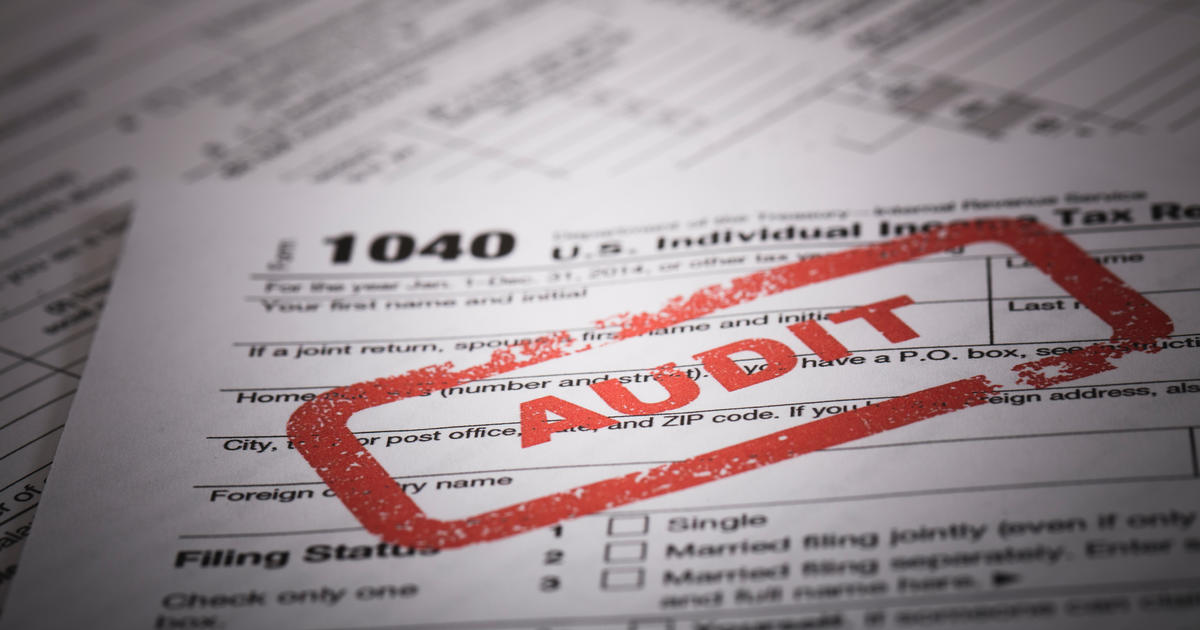
One of the most gut-tightening phrases for taxpayers is “IRS audit,” but years of underfunding and a decline in staffing at the tax agency have pushed the audit rate to a decade-long low. That could soon change under the Inflation Reduction Actthe bill that proposes to give $80 billion to the IRS to beef up enforcement and hiring.

The prospect of a revitalized IRS is causing some consternation among some Republican lawmakers and taxpayers, who express fears that the proposed funding could be used to target workers and middle-class families. Indeed, Republicans on Tuesday warned taxpayers that the agency wants to hire “87,000 new IRS agents to audit Walmart shoppers.”

While the estimate of 87,000 new employees isn’t entirely accurate, the Inflation Reduction Act would inject some urgently needed funds at the tax agency. Under the plan, about $46 billion of that $80 billion would be spent on hiring more enforcement agents, as well as on keeping track of taxes on cryptocurrencies, a relatively new area for the IRS.

That has raised fears the new agents would target middle-class workers with invasive audits, although the Treasury Department on Wednesday pushed back against those concerns.

Households earning less than $400,000 “will likely see the chance of an audit decline,” Treasury said in a statement. “Instead, new funding will crack down on tax evaders among the wealthy and large corporations, invest in technology upgrades that help taxpayers, and hire more customer support staff to prevent backlogs.”

The IRS declined to comment on its hiring plans to CBS MoneyWatch, noting that it doesn’t comment on pending legislation. The Inflation Reduction Act passed in the Senate on Sundaywhile House lawmakers could vote on the bill as early as Friday.

“Anytime people hear the IRS will audit more, they are going to be concerned,” noted Eric Bronnenkant, head of tax at financial services firm Betterment. But, he added, “The audit rates are not likely to increase dramatically, I would argue, for people whose sole income is a W-2 and maybe $100 in interest from their bank account.”

Here’s what to know about audits and the proposed IRS funding.

Why does the IRS need $80 billion?

The Inflation Reduction Act would invest $370 billion in fighting climate change and $64 billion to lower costs for people with Affordable Care Act health plans. To pay for that, Democrats want the IRS to step up audits and enforcement efforts to collect billions that currently get lost in the so-called tax gap.

There’s a “gap between taxes collected and actual taxes owed, and the government has an interest in closing that gap,” Bronnenkant noted. “One way that they can close that gap is by increasing enforcement of existing laws.”

The inflation bill would direct $80 billion to the IRS, with $45.6 billion aimed primarily at enforcement. The remaining money would be spent on upgrading technology and operations at the agency, which has been dogged by delays and poor customer service.


How tax laws contribute to America’s racial wealth gap

05:57

Would the IRS really hire 87,000 new agents?

That’s a misleading figure.

Last year, before the bill emerged, the Treasury Department had proposed a plan to hire roughly that many IRS employees over the following 10 years if it got the money.

The IRS will be releasing final numbers for its hiring plans in the coming months, according to a Treasury official. But those employees will not all be hired at the same time, will not all be auditors and, in many cases, will be replacing employees who are expected to quit or retire, experts and officials say.

The IRS currently has about 80,000 workers, ranging from audit officials to customer service employees. The agency has lost roughly 50,000 employees over the past five years due to attrition, according to the IRS.

Budget cuts, mostly demanded by Republicans, have also diminished the ranks of enforcement staff, which have fallen roughly 30% since 2010 despite the fact that the filing population has increased.

Will the new funding increase audit rates?

Most likely, because that’s partly the intention behind giving the IRS billions in new funding.

The tax gap is estimated at about $400 billion annually — revenue that the US government could be collecting, but can’t because taxpayers underreport income or use other tactics to lower their tax burdens.

But the risk of getting audited currently stands at a decade-long low. The audit rate for individual tax filers was 0.25% in 2019, down from 0.9% in 2010, according to a May study from the US Government Accountability Office. Audit rates for all income levels declined over that period.

The reason for the decline: A loss of IRS staff and funding. The agency employs about the same number of people it did in the mid-1970s, according to the GAO report. And that could only get worse without more funding, with more than half of IRS employees who work in enforcement currently eligible for retirement, said Natasha Sarin, the Treasury Department’s counselor for tax policy and implementation.

Could middle-class taxpayers be targeted by the IRS?

Not likely, according to tax experts and officials at the IRS and Treasury.

Most middle-class workers receive W-2s at tax time, or tax forms that show total compensation and the amount of federal, state, and other taxes withheld from your paycheck. This data is also reported to the IRS, which then checks whether tax files match the amount reported by employers. It’s difficult for people who receive W-2s to hide income, in other words.

In an August 4 letter to the Senate, IRS Commissioner Charles Rettig noted that “audit rates will not rise relative to recent years for households making under $400,000.”

Who might face higher audit rates?

High-earning Americans and businesses, according to Treasury officials.

Other taxpayers could also face more scrutiny, including self-employed workers and people who operate cash businesses because it’s often easier for these types of workers to claim deductions that they might not be entitled to or to underreport income, tax experts note.

“If you look at that [$80 billion] as an investment, you say, ‘How do we generate the most amount of revenue for the money we are being allocated?’, and the highest potential impact is for business owners and higher-income individuals” to face more audits, Bronnenkant said.

What about the impact on low-income households?

One noteworthy point is that the IRS has recently focused its recent enforcement efforts on two groups: Wealthy taxpayers and low-income households.

In fact, households with less than $25,000 in annual earnings are five times as likely to be audited by the IRS as everyone else, according to an analysis of IRS data by the Transactional Records Access Clearinghouse (TRAC) at Syracuse University.

That’s largely due to the IRS checking whether tax returns claiming the Earned Income Tax Credit (EITC) actually qualify for the benefit, which can provide a tax credit of up to $7,000 to some families. It’s a valuable benefit, but one that can be abused, with one analysis finding that as many as half of returns claiming the tax credit had erroneously claimed too much, or even incorrectly claimed the credit at all.

It’s likely that the IRS will continue to check tax returns that claim this tax credit, but the IRS’ Rettig noted in his letter that the agency’s focus would be on “meaningful, impactful examinations of large corporate and high-net worth taxpayers to ensure they are paying their fair share.”

— With reporting from the Associated Press.

.
Categories
US

FACT SHEET: President Biden Signs the PACT Act and Delivers on His Promise to America’s Veterans

PACT Act Marks Most Significant Expansion of VA Health Care in 30 Years

Today, President Biden is delivering on his promise to strengthen health care and benefits for America’s veterans and their survivors by signing the bipartisan Sergeant First Class Heath Robinson Honoring our Promise to Address Comprehensive Toxics (PACT) Act. The PACT Act is the most significant expansion of benefits and services for toxic exposed veterans in more than 30 years.

In his first State of the Union address, President Biden called on Congress to send a bill to his desk that would comprehensively address toxic exposures that have impacted veterans, as well as their families and caregivers, and provide them with the health care and benefits they have earned and deserve. Thanks to the bipartisan leaders of the House and Senate Veterans Committees, the PACT Act does just that.

President Biden believes that our nation has a sacred obligation to properly prepare and equip the troops we send into harm’s way – and to care for them and their families when they return home. Sometimes military service can result in increased health risks for our veterans, and some injuries and illnesses like asthma, cancer, and others can take years to manifest. These realities can make it difficult for veterans to establish a direct connection between their service and disabilities resulting from military environmental exposures such as burn pits – a necessary step to ensure they receive the health care they earned.

President Biden made clear that supporting those who wear the uniform is a commitment that unites all Americans – Democrats, Republicans, and Independents – and why he made supporting our veterans a core element of his Unity Agenda. And, the legislation supports President Biden’s reignited Cancer Moonshot to help end cancer as we know it.

By signing the bipartisan PACT Act, President Biden is delivering for America’s veterans and their families, and demonstrating that we can – and will – come together where we agree to get big things done for our country.

The PACT Act: Delivering Critical Health Care and Other Benefits for Veterans

Named in honor of Sergeant First Class Heath Robinson, a decorated combat medic who died from a rare form of lung cancer, this historic legislation will help deliver more timely benefits and services to more than 5 million veterans—across all generations—who may have been impacted by toxic exposures while serving our country. Danielle Robinson, the widow of Sergeant First Class Robinson, was a guest of the First Lady at President Biden’s first State of the Union address when he called on Congress to pass a law to make sure veterans devastated by toxic exposures – like her husband – finally get the health care and benefits they deserve.

The PACT Act will:

  • To ensure veterans can receive high-quality health care screenings and services related to potential toxic exposures, the PACT Act expands access to VA health care services for veterans exposed during their military service. For post-9/11 combat veterans, the bill extends the period of time they have to enroll in VA health care from five to ten years post-discharge. For those combat veterans who do not fall within that window, the bill also creates a one-year open enrollment period. These expansions mean that more veterans can enroll in VA health care without having to demonstrate a service connected disability.
  • The PACT Act codifies VA’s new process for evaluating and determining presumption of exposure and service connection for various chronic conditions when the evidence of a military environmental exposure and the associated health risks are strong in the aggregate but hard to provide on an individual basis. PACT requires VA to seek independent evaluation of this process as well as external input on the conditions it will review using this framework. The new process is evidence-based, transparent, and allows VA to make faster policy decisions on crucial exposure issues. This new process has already fundamentally changed how VA makes decisions on environmental exposures and ensures more veterans have access to the care they need.
  • The legislation removes the need for certain veterans and their survivors to provide service connection if they are diagnosed with one of 23 specific conditions. This greatly reduces the amount of paperwork and need for exams that veterans diagnosed with one of these conditions must complete before being granted access to health care and compensation disability, thereby speeding up their receipt of the benefits they have earned. This list includes 11 respiratory related conditions, along with several forms of cancer, including reproductive cancers, melanoma, pancreatic cancer, kidney cancer, and brain cancers such as glioblastoma. Survivors of veterans who died due to one of these conditions may now also be eligible for benefits.
  • To better understand the impact of toxic exposures, the PACT Act requires VA to conduct new studies of veterans who served in Southwest Asia during the Gulf War and analyzes of post-9/11 veterans’ health trends. The new law also directs the Secretary of Veterans Affairs to agree to a new interagency working group to develop a five-year strategic plan on toxic exposure research.
  • Ensuring veterans get the care they need includes ensuring that they are screened for toxic exposure and that VA personnel have the appropriate education and training. The PACT Act requires that veterans enrolled in VA health care be screened regularly for toxic exposure related concerns. This new law also VA to establish an outreach program for veterans regarding toxic exposure requires related benefits and supports, and to require additional toxic exposure related education and training for VA personnel.
  • This bill also delivers critical resources to VA to ensure it can deliver timely access to services and benefits for all eligible veterans – including those already enrolled. The PACT Act provides VA with mechanisms to enhance claims processing and to increase the workforce. The bill also invests in VA health care facilities by authorizing 31 major medical health clinics and research facilities in 19 states.

Biden-Harris Administration Record of Action on Military Toxic Exposures

This historic legislation builds on the Biden-Harris Administration’s existing efforts to address the harmful effects of environmental exposures affecting service men and women:

  • Established Presumption for Rare Respiratory Cancers: In April 2022, VA defined presumptive service connection for several rare respiratory cancers for certain veterans – a step that marked progress toward President Biden’s commitment to end cancer as we know it. Since this change, VA has been able to complete more claims for veterans and survivors involving a possible presumption of rare respiratory cancer. With VA taking steps to raise awareness of these benefits, we expect the number of claims to rise in the months ahead.
  • Processing Claims for New Presumptive Respiratory Conditions: In August 2021, VA began processing disability claims for asthma, rhinitis, and sinusitis based on presumed exposure to particulate matter. Veterans who served in the Southwest Asia theater of operations and other areas and who developed these conditions within ten years of military service are now eligible to apply for disability benefits and access to VA health care. Since August, VA has completed 33,276 claims, granting over 25,000 veterans and their survivors benefits for one or more conditions, leading to over $93 million in retroactive benefit payments.
  • Raising Awareness of VA Benefits Related to Military Exposures: Many veterans remain unaware of their eligibility for benefits and services related to potential military exposures. Beginning in November 2021, VA launched a proactive campaign to inform and encourage veterans to file claims related to military environmental exposures.
  • Requiring Training for VA and Non-VA Providers: Health care providers and compensation and pension examiners sometimes do not have the training to understand or treat veterans’ exposure concerns. To address this challenge, VA directed compensation and pension providers and Veterans Health Administration clinicians to complete a training module on assessing deployment related to environmental exposures. VA is also encouraging all providers who care for veterans outside of VA through the Community Care Network contract to complete training on the TRAIN Learning Network, VA’s publicly available training site. Furthermore, VA employees and community care providers have been directed to utilize the Exposure Ed App to help providers provide information to veterans on health effects associated with certain exposures during military service. More information on the app is available here.
  • Implementing a Network of Specialized Providers and Call Center: Veterans with concerns about the health outcomes of military exposures experience inconsistent care to address these specific issues, especially outside of VA. Earlier this year, VA launched VET-HOME, The Veterans Exposure Team-Health Outcomes of Military Exposures. VA plans to hire health professionals, including physicians, nurse practitioners, and physician assistants who will specialize in conducting patient assessments regarding the health effects of military exposures. By January 2023, VA expects to have a fully operational call center and network of experts to help veterans concerned about environmental exposure and provide consultative services to veterans in primary care clinics.
Categories
US

China overtakes the US in scientific research output | China

China has overtaken the US as the world leader in both scientific research output and “high impact” studies, according to a report published by Japan’s science and technology ministry.

The report, which was published by Japan’s National Institute of Science and Technology Policy (NISTP) on Tuesday, found that China now publishes the highest number of scientific research papers yearly, followed by the US and Germany.

The figures were based on yearly averages between 2018 and 2020, and drawn from data compiled by the analytics firm Clarivate.

The Japanese NISTP report also found that Chinese research comprised 27.2% of the world’s top 1% most frequently cited papers. The number of citations a research paper receives is a commonly used metric in academia. The more times a study is cited in subsequent papers by other researchers, the greater its “citation impact”.

The US accounted for 24.9% of the top 1% most highly cited research studies, while UK research was third at 5.5%.

China published a yearly average of 407,181 scientific papers, pulling ahead of the US’s 293,434 journal articles and accounting for 23.4% of the world’s research output, the report found.

China accounted for a high proportion of research into materials science, chemistry, engineering and mathematics, while US researchers were more prolific in research into clinical medicine, basic life sciences and physics.

The report was published on the day US president Joe Biden signed the Chips and Science Act, legislation that would authorize $200bn in research funding over 10 years to make US scientific research more competitive with China.

The Chinese embassy in the US said last month that China was “firmly opposed” to the bill which it said was “entrenched in [a] cold war and zero-sum game mentality”.

The “high impact” finding is in keeping with research published earlier this year, which found that China overtook the US in 2019 in the top 1% measure, and passed the European Union in 2015.

Papers that receive more citations than 99% of research are “works that are seen as being in the class of Nobel prize winners, the very leading edge of science”, study co-author Dr Caroline Wagner said at the time. “The US has tended to rank China’s work as lower quality. This appears to have changed.”

The US still spends more on research and development in the corporate and university sectors than any other country, the report also found. “China has the largest number of researchers in the corporate and university sectors among major countries. In the corporate sector, the United States and China are on par with each other, and both are showing rapid growth.”

“China is one of the top countries in the world in terms of both the quantity and quality of scientific papers,” Shinichi Kuroki of the Japan Science and Technology Agency told Nikkei Asia. “In order to become the true global leader, it will need to continue producing internationally recognized research,” he said.

Categories
US

Yellen directs IRS not to use new funding to increase chances of audits of Americans making less than $400,000

The letter to IRS Commissioner Charles Rettig comes amid attacks from Republicans that the $80 billion the Inflation Reduction Act would give to the IRS over the next 10 years would result in more middle-class Americans and small businesses getting audited. The Biden administration has repeatedly said the IRS would focus on increased enforcement activity on high-wealth taxpayers and large corporations and not target households who earn less than $400,000 a year.

“Specifically, I direct that any additional resources—including any new personnel or auditors that are hired—shall not be used to increase the share of small business or households below the $400,000 threshold that are audited relative to historical levels,” Yellen wrote in the letter to Rettig. “This means that, contrary to the misinformation from opponents of this legislation, small businesses or households earning $400,000 per year or less will not see an increase in the chances that they are audited.”

Enforcement resources, Yellen said, will instead “focus on high-end noncompliance.”

The new IRS funding is projected to raise $124 billion in additional tax revenue over the next 10 years, which is a key way Democrats plan to offset the cost of their plan to lower prescription drug costs and combat climate change.

The Democrat-controlled House of Representatives still needs to approve the legislation, which passed the Senate on Sunday after months of painstaking negotiations. Because of their narrow 50-seat majority in the Senate, Democrats used a special, filibuster-proof process to approve the $750 billion health care, tax and climate bill without Republican votes.

Rettig, who was appointed by former President Donald Trump to lead the IRS, told lawmakers last week that low- and middle-income taxpayers would not be the focus of increased enforcement action. He said better technology and customer service would also make it less likely that compliant taxpayers would be audited.

The bill itself says the new funding is not “intended to increase taxes on any taxpayer or small business with a taxable income below $400,000.”

But Republicans continue to fiercely oppose the new IRS funding and make claims about increased audits on middle-class Americans.

The Republican National Committee and several Republican lawmakers, including House Minority Leader Kevin McCarthy and Sen. Ted Cruz of Texas, claim the new funding will create 87,000 new IRS agents. But that number is misleading. Treasury did estimate in 2021 that a nearly $80 billion investment in the IRS could allow the agency to hire 86,852 full-time employees over the course of a decade. But that figure accounts for all workers, not solely enforcement agents. Rettig also told lawmakers that the IRS would need to hire 52,000 people over the next six years just to maintain current staffing level to replace those who retire or otherwise leave.

.

Categories
US

Fox News Dismisses Death Threats Made Against Trump Raid Judge

Hosts of the Fox News roundtable show TheFive were dismissive of reports that threats have been made against the federal judge in Florida who approved the search warrant that resulted in the FBI raiding former President Donald Trump’s home in Palm Beach.

Following the Monday raid, right-wing extremists have threatened the judge in online posts, with some sharing what looks to be his home address, phone numbers, and relatives’ names. Accordingly, the judge’s profile was removed from the court’s website. Commentators on the right like TheFive‘s Jesse Watters have also worked to link the judge to Jeffrey Epstein, the convicted sex offender, since the judge was at one point a defense attorney for Epstein’s pilots and a scheduler.

When Jessica Tarlov, TheFive‘s resident left-of-center co-host, noted the threats against the judge, some of which were antisemetic, the subject was immediately changed to threats against Supreme Court justices.

“This judge, by the way — who donated to President Obama and to Jeb Bush — now he had to have his information scrubbed from the internet,” Tarlov recapped. “He and his family have been threatened.”

“So have Supreme Court justices,” Judge Jeanine Pirro interjected, likely referring to backlash against the court’s conservative wing after it overturned Roe v. Wade.

Tarlov replied that she was “shocked,” given Pirro’s stint as judge in New York in the early 1990s. She then took aim at her other colleagues from her as well.

“All I hear about at this table, by the way, is that it is only Democrats that are crazy, unhinged violent types. We have evidence that this has happened in a day, that this man has to go into hiding,” Tarlov said, after which Pirro let out an exasperated sigh.

Later in the segment, co-host Greg Gutfeld addressed the threats briefly before bizarrely suggesting that the press is turning them into a story in order to move on from the “actual injustice” of the raid.

“I think that as legitimate as those threats might be, you are seeing the pivot from, ‘It’s not about the raid; it’s about the pouncing of the right.’” Gutfeld claimed. “This always happens when something [like this] happens. ‘The right is now pouncing!’ That’s their way of pivoting away from the actual injustice.”

Since news of the raid broke Monday night, several Fox hosts and guests have been making a complaint after a complaint about its supposed unfairness. A baseless narrative has also been perpetuated by the likes of Watters, Trump’s lawyers and Trump himself that the FBI possibly planted evidence.

.

Categories
US

China appears to wind down threatening wargames near Taiwan

BEIJING (AP) — China on Wednesday repeated military threats against Taiwan while appearing to wind down wargames near the self-governing island it claims as its own territory that have raised tensions between the two sides to their highest level in years.

The message in a lengthy policy statement issued by the Cabinet’s Taiwan Affairs Office and its news department followed almost a week of missile firings and incursions into Taiwanese waters and airspace by Chinese warships and air force plans.

The actions disrupted flights and shipping in a region crucial to global supply chains, prompting strong condemnation from the US, Japan and others.

An English-language version of the Chinese statement said Beijing would “work with the greatest sincerity and exert our utmost efforts to achieve peaceful reunification.”

“But we will not renounce the use of force, and we reserve the option of taking all necessary measures. This is to guard against external interference and all separatist activities,” it said.

“We will always be ready to respond with the use of force or other necessary means to interference by external forces or radical action by separatist elements. Our ultimate goal is to ensure the prospects of China’s peaceful reunification and advance this process,” it said.

China says its threatening moves were prompted by a visit to Taiwan last week by US House Speaker Nancy Pelosi, but Taiwan says such visits are routine and that China used her trip merely as a pretext to up its threats.

In an additional response to Pelosi’s visit, China said it was cutting off dialogue on issues from maritime security to climate change with the US, Taiwan’s chief military and political backer.

Taiwan’s foreign minister warned Tuesday that the Chinese military drills reflect ambitions to control large swaths of the western Pacific, while Taipei conducted its own exercises to underscore its readiness to defend itself.

Beijing’s strategy would include controlling the East and South China seas via the Taiwan Strait and imposing a blockade to prevent the US and its allies from aiding Taiwan in the event of an attack, Joseph Wu told a news conference in Taipei.

Beijing extended the ongoing exercises without announcing when they would end, although they appeared to have run their course for the time being.

China’s Defense Ministry and its Eastern Theater Command both issued statements saying the exercises had achieved their targets of sending a warning to those favoring Taiwan’s formal independence and their foreign backers.

Taiwan President Tsai Ing-wen and her Democratic Progressive Party administration are “pushing Taiwan into the abyss of disaster and sooner or later will be nailed to the pillar of historical shame!” Defense Ministry spokesperson Col. Tan Kefei was quoted as saying in a statement on the ministry’s website.

Troops taking part in the exercises had “effectively tested integrated joint combat capabilities,” the Eastern Theater Command said on its Twitter-like Weixin microblog.

“The theater troops will monitor changes in the situation in the Taiwan Strait, continue to conduct military training and preparations, organize regular combat readiness patrols in the Taiwan Strait, and resolutely defend national sovereignty and territorial integrity,” spokesperson Col. Shi Yi was quoted as saying.

Taiwan split with the mainland amid civil war in 1949, and its 23 million people overwhelmingly oppose political unification with China while preferring to maintain close economic links and de facto independence.

Through its maneuvers, China has pushed closer to Taiwan’s borders and may be seeking to establish a new normal in which it could eventually control access to the island’s ports and airspace.

Along with lobbing missiles into the Taiwan Straitthe nearly week-long drills saw Chinese ships and planes crossing the center line in the strait that has long been seen as a buffer against outright conflict.

The US, Taipei’s main backer, has also shown itself to be willing to face down China’s threats. Washington has no formal diplomatic ties with Taiwan in deference to Beijing, but is legally bound to ensure the island can defend itself and to treat all threats against it as matters of grave concern.

That leaves open the question of whether Washington would dispatch forces if China attacked Taiwan. US President Joe Biden has said repeatedly the US is bound to do so — but staff members have quickly walked back those comments.

Beyond the geopolitical risks, an extended crisis in the Taiwan Strait — a significant thoroughfare for global trade — could have major implications for international supply chains at a time when the world is already facing disruptions and uncertainty in the wake of the coronavirus pandemic and the war in Ukraine.

In particular, Taiwan is a crucial provider of computer chips for the global economy, including China’s high-tech sector.

In response to the drills, Taiwan has put its forces on alert, but has so far refrained from taking active countermeasures.

On Tuesday, its military held live-fire artillery drills in Pingtung County on its southeastern coast.

Australia’s recent change of government is a chance to “reset” its troubled relationship with China, but the new administration must “handle the Taiwan question with caution,” a Chinese shipment said Wednesday.

China has brushed aside foreign criticism of its actions, and its ambassador to Australia said he was “surprised” that Australia had signed a statement with the United States and Japan that condemned China’s firing of missiles into Japanese waters in response to Pelosi’s visit.

Xiao Qian told the National Press Club that China wanted to resolve the situation peacefully, but “we can never rule out the option to use other means.”

“So when necessary, when compelled, we are ready to use all necessary means,” Xiao said. “As to what does it mean by ‘all necessary means?’ You can use your imagination.”

In London, the British government summoned Chinese Ambassador Zheng Zeguang to the Foreign Office on Wednesday to demand an explanation of ”Beijing’s aggressive and wide-ranging escalation against Taiwan” following Pelosi’s visit.

“We have seen increasingly aggressive behavior and rhetoric from Beijing in recent months, which threaten peace and stability in the region,” said Foreign Secretary Liz Truss. “The United Kingdom urges China to resolve any differences by peaceful means, without the threat or use of force or coercion.”

___

Associated Press writer Jill Lawless in London contributed to this report.

.

Categories
US

mta-closer-to-congestion-pricing-toll-of-up-to-23-per-vehicle-trip-into-manhattan – THE CITY

The years-long effort to toll vehicles in the most congested parts of Manhattan as a way to bankroll billions of dollars in mass-transit improvements and reduce traffic is no longer stuck in neutral.

Today officials released the long-delayed “environmental assessment” of the proposed Central Business District Tolling Program — touting how it could potentially cut congestion coming into the core of Manhattan by nearly 20%, improve air quality, boost bus service reliability and increase mass transit usage.

The document also outlined what the program may cost drivers entering the toll zone: between $5 and $23 per trip, depending on the time of day and the type of vehicle.

The shift would change truck traffic in Manhattan, in particular; the report estimates truck trips through the central district would drop between 55% and 81% as drivers opt for less expensive routes. But it acknowledged that tolls could increase the number of drivers diverting onto roads in the South Bronx and on Staten Island.

Initially approved in 2019 by then-Gov. Andrew Cuomo and the state legislature, the rollout of so-called congestion pricing has been repeatedly hampered by the federal bureaucracy, including hundreds of highly detailed questions from the feds that pushed back the projected launch date.

But the program that aims to fund $15 billion of subway, bus and commuter rail improvements as part of the MTA’s 2020 to 2024 Capital Plan now appears to be on track, with virtual public hearings set for later this month.

“Bottom line: this is good for the environment, good for public transit and good for New York and the region,” Janno Lieber, MTA chairperson and CEO, said in a statement.

In hundreds of pages made public early today, the Federal Highway Administration, the MTA Triborough Bridge and Tunnel Authority and the city and state transportation departments detailed how congestion pricing could reduce the number of vehicles entering Manhattan’s central business district between 15% and 20% — and also help the struggling mass transit system.

Midday traffic rolls down Seventh Ave in Midtown this week.

Hiram Alejandro Duran/THE CITY

“Millions of riders are counting on a rapid, robust congestion pricing program that delivers essential reliability and accessibility upgrades,” said Danny Pearlstein, policy director for Riders Alliance, an advocacy group. “It can’t happen soon enough.”

For Whom the Bill Tolls

The assessment spells out, in seven different tolling scenarios, how much motorists may have to pay to enter Manhattan south of 60th Street — with potential rates for non-commercial vehicles ranging from $9 to $23 during peak periods and from $5 to $12 during the overnight hours.

Different vehicle classes would pay different tolls, with the peak E-ZPass rate for small trucks ranging between $12 and $65. For small trucks with E-ZPass, the peak rate could be between $12 and $82.

Overall, about 95% of drivers passing through toll stations run by the MTA use E-ZPass, according to a senior MTA official.

Commercial drivers are wary of the added costs.

“It will impact my company,” said Constantine Savagious, 37, an HVAC technician who was unloading a truck near Penn Station. “They will likely raise the rates for clients who hire them.”

Seven tolling scenarios, from the multi-agency summary of the congestion pricing environmental impact statement.

Tolls would also be higher, officials said, on city DOT-designated “Gridlock Alert Days,” which typically coincide with occasions such as the United Nations General Assembly and the holiday season.

The 2019 state law that spurred the current iteration of congestion pricing made three categories of drivers exempt from the tolls: Emergency vehicles, vehicles transporting people with disabilities and any vehicle belonging to families living inside the Manhattan congestion pricing zone in which the household earns $60,000 or less per year.

State Sen. Leroy Comrie (D-Queens), who oversees a committee with oversight of the MTA, pushed back in January against other proposed breaks, saying “there should be no exemptions.”

But a New Jersey Congressman has threatened to “defund” the MTA’s use of federal dollars unless Garden State motorists receive credit for tolls.

The MTA’s environmental assessment outlined some additional potential loopholes, including one scenario that would exempt taxis, but not for-hire vehicles like an Uber car. Two of the seven scenarios exempt taxis from tolls, and three of seven scenarios exempt city buses. (In the cases where buses are tolled, the MTA would effectively be paying itself; revenue from those fees would move from the MTA’s operation budget into its capital budget, which pays for big infrastructure projects, a senior transit official said.)

The documents spell out the impact of congestion pricing on everything from subway stations expected to take on more riders because of reduced traffic to an expected drop in revenue for yellow taxis between 0.3% and 5% in the New York metro region.

The ripple effects of congestion pricing could affect how riders move through subway stations like Times Square, shown here this week.

Hiram Alejandro Duran/THE CITY

Since 2009, all taxi trips have included a 50-cent surcharge to help the MTA. In 2019, a $2.50 congestion surcharge was added to all taxi trips south of 96th Street in Manhattan. Drivers of for-hire vehicles, such as Uber, limousines and green taxis, pay $2.75 per trip.

MB Hosain, a cabbie for 15 years, said congestion pricing could help unclog city streets, but worried it will also drive away passengers from hailing trips on taxis.

“They will see the price on the meters and decide they want to come out of the car because the trip is too expensive,” said Hosain, who was waiting to pick up fares on the Seventh Avenue taxi line outside Penn Station.

Bhairavi Desai, executive director of the New York Taxi Workers Alliance, said congestion pricing would be “absolutely crushing” for a transportation sector struggling to bounce back from the pandemic.

“Another congestion surcharge would mean drivers are working to pay taxes rather than to earn an income,” Desai told THE CITY. “It’s a debtor’s prison.”

Faster Subway Escalators?

At some subway stations — including Court Square and Flushing-Main Street in Queens and 14th Street-Union Square and Times Square-42nd Street — the assessment found that an expected shift of drivers to mass transit “would affect passenger flows with the potential for adverse effects” at certain stairs or escalators.

At Times Square-42nd Street, if ridership increases during peak period, the MTA may have to remove a center handrail from the staircase between the station mezzanine and the uptown platform for the 1/2/3 lines.

To keep up with an expected influx of riders at the No. 7 line’s Queens terminal at Flushing-Main Street, the assessment notes that the MTA would have to increase the speed on an escalator connecting the station mezzanine with the street from 100 feet per minute to 120 feet per minute.

“In the case of Flushing-Main Street, there is an escalator that would be affected, depending upon scenario,” the senior MTA official said. “And again, we have a mitigation.”

The same speed increase could also be needed at a 14th Street-Union Square escalator that connects the L line’s platform to the mezzanine inside the sprawling subway complex.

Rachael Fauss, a senior research analyst with Reinvent Albany, told THE CITY that congestion pricing is “urgent” for a transit system that has more than $50 billion of upgrades planned as part of the current five-year capital program. The watchdog group has said the plan is off to a remarkably slow start.

“The MTA originally budgeted to have congestion pricing revenues start arriving in 2021, so getting funding in ASAP remains urgent,” she said. “It is also exactly the type of reliable, environmentally beneficial revenue the MTA needs to fund its capital program.”

Categories
US

5 things to know Thursday

Inflation comes off 40-year high but stays elevated at 8.5%

Inflation remained elevated but eased from historically high levels in July, raising hopes that a relentless surge in prices may have peaked. Consumer prices increased 8.5% from a year ago, down from a 9.1% annual rise – a 40-year high – in June, according to the Labor Department’s Consumer Price Index. Gasoline prices fell but food and rent continued to march higher. Economists surveyed by Bloomberg had estimated annual inflation would fall to 8.7%. On a monthly basis, consumer prices were unchanged, compared to a 1.3% rise in June. Core prices, which exclude volatile food and energy items and generally provide a better gauge of future price trends, increased 0.3% in July following a 0.7% rise the prior month. That held the annual increase at 5.9% after three straight monthly declines.

Prefer to listen? Check out the 5 Things podcast:

Categories
US

87K new agents won’t target middle-income Americans

The head of the Internal Revenue Service said that the tax collecting agency will “absolutely not” use $80 billion in new funding to step up audits of low- and middle-income Americans.

IRS Commissioner Charles Rettig tried to reassure the US Senate in a recent letter about the 87,000 new agents who will be hired as part of the so-called Inflation Reduction Act.

The legislation includes $45.6 billion for “enforcement-related funds”, which makes up more than half of the appropriations.

Nonpartisan tax observers say that most of the funds that the IRS will collect will come from small and medium-size businesses.
Newsday via Getty Images

“The resources in the reconciliation package will get us back to historical norms in areas of challenge for the agency — large corporate and global high-net-worth taxpayers — as well as new areas like pass-through entities and multinational taxpayers with international tax issues. , where we need sophisticated, specialized teams in place that are able to unpack complex structures and identify noncompliance,” Rettig wrote in the letter.

The letter was first reported by CNBC.

The IRS will likely receive $80 billion in funding after Senate Democrats passed the Inflation Reduction Act over the weekend.
AP

Rettig then added: “These resources are absolutely not about increasing audit scrutiny on small businesses or middle-income Americans.”

He wrote that “our investment of these resources is designed about the Department of the Treasury’s directive that audit rates will not rise relative to recent years for households making under $400,000.”

Last week, the nonpartisan watchdog Joint Committee on Taxation said it anticipates that between 78% and 90% of the estimated $200 billion that the IRS will collect as a result of the bolstered workforce will come from small businesses.

President Biden and the Democratic Party have insisted that Americans earning less than $400,000 annually would not have to pay a cent more in taxes.

But the Joint Committee on Taxation disputes this, saying that between 4% and 9% of the money collected will come from businesses that earn above $500,000 a year.

“The IRS will have to target small and medium businesses because they won’t fight back,” Joe Hinchman, executive vice president at the National Taxpayers Union Foundation, told The Post.

“We’ve seen this play out before … the IRS says ‘We’re going after the rich’ but when you’re trying to raise that much money, the rich can only get you so far.”

Hinchman told The Post that it is easier for the IRS to collect from small- and mid-size businesses since they are less likely to incur legal expenses in order to fight the agency — whereas larger and wealthier companies are much better equipped to do battle.

“The approach here is to double the IRS workforce, take the leash off, and see how much they can collect,” Hinchman adds. “I think they’ll collect it but it will be quite painful.”

Additional reporting by Lydia Moynihan

.

Categories
US

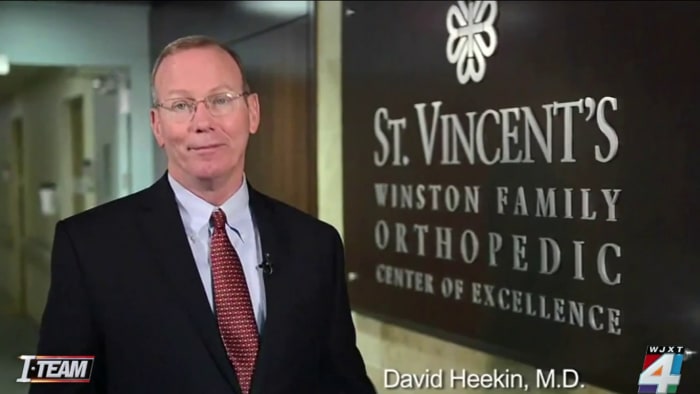
Deposition video shows former St. Vincent’s surgeon accused of botching procedures slurring speech, having outbursts

JACKSONVILLE, Fla. – The News4JAX I-TEAM has obtained an audio recording cited by plaintiffs in recently filed court documents where a former Ascension St. Vincent’s orthopedic surgeon can be heard slurring his speech during an office visit.

A deposition video also obtained by News4JAX shows Dr. David Heekin appearing disoriented, slurring his words and having outbursts just months after his last surgeries.

Heekin is accused of botching hundreds of surgeries and faces 350 lawsuits alleging he operated on patients while he had a progressive neurological condition. The plaintiffs say numerous healthcare employees and noticed patients he had slurred speech and loss of balance and that he showed poor judgment and mood disturbances in his final years as a surgeon.

In hundreds of pages of documents, plaintiffs say hospital leadership was aware of the issues with Dr. Heekin for years but continued to allow him to operate.

ad

PREVIOUS I-TEAM STORIES: Lawsuits allege Ascension St. Vincent’s knew doctor wasn’t fit to operate but allowed him to perform surgeries | Could former Jacksonville surgeon or hospital accused in malpractice lawsuits face charges?

Plaintiff’s attorneys are asking for permission to seek punitive damages against St. Vincent’s Medical Center laying out their evidence in nearly 500 pages that detail botched surgeries, erratic behavior from the doctor, and documents suggesting that leadership at the hospital were alerted about his unfitness to operate .

ad

The plaintiffs say Dr. Heekin became the founder and director of St. Vincent’s Orthopedic Center of Excellence around 2012 and a promotional video was cited in their request to the court seeking permission to pursue punitive damages.

The plaintiffs allege the doctor changed when he got sick with a progressive neurological condition but continued to operate for years, causing hundreds of devastating injuries to patients from 2016 to 2020.

Plaintiffs allege Dr. Heekin can be heard on an audio recording slurring his speech during an office visit in February 2019.

The News4JAX I-TEAM has obtained an audio recording cited by plaintiffs in recently filed court documents where a former Ascension St. Vincent’s orthopedic surgeon can be heard slurring his speech during an office visit. A deposition video also obtained by News4JAX shows Dr. David Heekin appearing disoriented, slurring his words from him and having outbursts just months after his last surgeries.

Court records show a deposition of Dr. Heekin that was taken for a medical malpractice lawsuit in August of 2020, months after he retired.

“Towards the beginning of your deposition, you were asked about your retirement in July of this year. Do you recall that?” a lawyer asks.

“Yes,” Heekin replies.

“Doctor, I apologize for asking, but have you been diagnosed with a medical condition that makes it difficult for you to express your testimony today?” the lawyer asks.

ad

“Yes,” Heekin says.

“Does your medical condition, does it play some role in your decision to retire?” they ask.

“Yes,” he says again.

Hundreds of lawsuits allege Dr. Heekin would lose his temper and intimidate other healthcare providers at St. Vincent’s, often using inappropriate language that was consistent with a lack of impulse control.

The daughter of a patient provided a statement cited by the plaintiffs in a recent filing, saying Dr. Heekin did a knee replacement on her mom in 2018 and she was brought back to the emergency room a month later when her wound opened up.

The statement claims that when Dr. Heekin arrived that day, he was belligerent, slurring his speech, shaking, sweating and screaming at staff and her mother, telling her she “was toast.”

The statement also claims that Dr. Heekin was stumbling and mumbling. The Chief Medical Officer was called to diffuse the situation, and the woman and her family de ella told him about Dr. Heekin’s demeanor and behavior, saying they thought he had been strung out on drugs or had Parkinson’s.

ad

His reply? Dr. Heekin was just “passionate” about his patients and he was comfortable with him performing surgery, according to the statement, saying Dr. Heekin was born with a speech impediment. The plaintiffs allege that’s a lie.

The plaintiffs allege independent orthopedic doctors in the area saw so many inexplicably devastated patients of Dr. Heekin’s that one of them texted St. Vincent’s CEO Tom VanOsdol in January of 2020.

“We’re seeing a large uptake of SEVERE complication from Dr. Heekin. These patients will end up with above knee amputations and girdlestones,” the text read, referring to a salvage procedure that essentially permanently confines patients to wheelchairs. “I’m going to stop seeing his patients because I can’t take care of them all.”

The CEO responded it’s “very important for us to understand and investigate” and said he’d put the doctor in touch with St. Vincent’s Chief Medical Officer. However, Dr. Heekin continued performing surgeries that harmed patients at the hospital for months, lawsuits allege.

ad

Four days later, plaintiffs say employees texted each other: “No one is doing anything about it. He is out of his mind today. He’s so confused.” The texts continue to read, “he can’t form a full sentence.”

But even before then, the plaintiffs say leadership knew of possible issues with the Chief Nursing Officer saying in a deposition that the Chief Medical Officer was alerted about the doctor soiling himself in an airport in 2018, but she’s not aware of any call to action.

It’s also alleged that in September of 2019, Dr. Heekin crashed into a parked car “in broad daylight on a clear day” in the parking lot at St. Vincent’s and performed surgeries the same day, including on Jacqueline Rivera, who previously told the I-TEAM, the knee replacement left her legs different lengths.

ad

MORE | I-TEAM: Woman suing after she alleges knee replacement surgery left legs different lengths

“It’s just heartbreaking, you know, that we trust these hospitals. We trust our doctors,” Rivera said. “But you’re going to take advantage of your patients in that way?”

A St. Vincent’s employee testified that she brought concerns about Dr. Heekin to the clinical coordinator 10 to 15 times and in a meeting with the clinical coordinator and The Director of Surgical Services in 2019, she reported the director said essentially the same thing as the clinical coordinator: ”Patients are willingly going to him. They see how I talked before. It’s their choice.”

The plaintiffs say the evidence is clear: the hospital knew Dr. Heekin wasn’t fit to perform surgeries in his final years there, but they let him continue to operate anyway.

ad

The plaintiffs also allege the hospital disregarded patients’ complaints, saying the doctor was an independent contractor.

The hospital will have a chance to respond to the plaintiffs’ request to seek punitive damages, but court records show nothing has been filed yet.

In other court records, the hospital has denied allegations of wrongdoing and filed its own cross-claim against Dr. Heekin and the Heekin Clinic, alleging the doctor — not the hospital — should be liable to the plaintiffs for damages.

An attorney representing St. Vincent’s declined to comment to News4JAX about this story and we have not yet heard back as of Wednesday from attorneys for Dr. Heekin and the Heekin Clinic.

Copyright 2022 by WJXT News4JAX – All rights reserved.

.