MCHENRY COUNTY, Ill. — A man who was in critical condition following a wrong-way fatal crash that killed his wife, four children and two others, died Wednesday.
According to the Cook County Medical Examiner’s Office, Thomas Dobosz, 32, died Wednesday morning at Loyola Medical Center from the injuries he sustained from the crash.
The crash happened around 2 am last Sunday on I-90 near mile marker 33, about 50 miles from Chicago.
Illinois State Police said that Thomas Dobosz and his 31-year-old wife, Lauren Dobosz—both from Rolling Meadows—were driving westbound on I-90 in a full-size Chevrolet van carrying five children when a wrong-way driver collided with them head-on, causing both vehicles to become engulfed in flames.
According to ISP, 22-year-old Jennifer Fernandez was driving the wrong way “for unknown reasons.”
Lauren Dobosz and the five children, ages 5 to 13, were all killed.
Fernandez—who was from Carpentersville—also died, according to authorities.
At the time, Thomas Dobosz was the lone survivor of the crash and was taken to the hospital with serious injuries.
A neighbor who lives across the street from the couple says they had four children. He believes the fifth child involved in the crash was a friend of their oldest child.
“The kids were very friendly,” David Moreno said. “They were always talkative. We would always run into them at the supermarket.”
The family was heavily involved in the local cheer community with the Oriole Falcons.
YoIn a conference room at the Sheraton in the Kansas City suburb of Overland Park, people screamed, whooped, cheered and cried as a vote to protect abortion rights in Kansas’s state constitution came down late on Tuesday night.
And it wasn’t just Democrats.
James Quigley, 72, a retired doctor and a Republican from Johnson county, sat on his own drinking a glass of white wine after hearing the news. “Abortion is a much more nuanced issue than anti-choice individuals would have you think,” he told the Guardian. “It is deeply personal, sometimes tragic, but also sometimes a liberating decision – and we should trust women, their physicians, and their God on that,” he said.
“We could feel it – we’ve been feeling it for weeks,” said Marcia Corbett, 71, a swing voter and local business owner, before the vote came in.
The result had been eagerly awaited, as Kansas was the first state in the country to put abortion rights on the ballot since Roe v Wade, which federally guaranteed them, was overturned by the supreme court. It came after weeks of uncertainty, in a race in which misinformation bounded and tactics got ugly.
The victory – and its sheer scale in a usually reliably Republican and socially conservative state like Kansas – has sent shockwaves through the United States and provided a shot in the arm for efforts to protect abortion rights under siege across America.
In Kansas, that fight had gotten dirty. On Tuesday, a former Republican congressman was linked to messages targeting voters with an anonymous, misleading text encouraging people to vote yes to protect abortion – when in fact a yes vote would have overturned a constitutional right to abortion. Vandals also spray-painted the walls of a Catholic church weeks earlier, with the phrase, “My body, my choice.”
Nor had victory seemed certain on the day of the vote.
On Tuesday, as voting began, the mood seemed amicable in Douglas county on a hot, sticky day, where temperatures consistently threatened to hit the hundreds. Polling booths in Lawrence and Eudora saw a steady drip of voters, even in the middle of the day, with dozens of voters lining up to vote at any given time. Many were unaffiliated, but turned up just to vote in the referendum.
At the Eudora community center in Douglas county, Patrick Perry, 43, a mechanic and registered Republican, said he was voting no. A veteran who had fought in Iraq, he said he was voting due to his own “personal circumstances” – his wife needed an abortion in a medical emergency during their marriage, in a pregnancy that would have otherwise taken her life. But he didn’t expect Kansas to side with him. “We’re a Republican state,” he said. “And we don’t generally vote that way.”
But on a night of huge turnout, Kansas voted to protect abortion in the state’s constitution, with the no vote securing a whopping 59% to 41% of the anti-abortion movement.
At the beginning of the night, the mood had been cautiously hopeful at the Kansas for Constitutional Freedom event in Overland Park, with the no vote ahead from the start. “We’re in the lead, and it’s not better than yes!” a young girl said to her mother de ella, from next-door Missouri. The two had been canvassing together for weeks.
The Democratic congresswoman Sharice Davids stood up to speak early in the night, telling the audience of about 100 people: “The [supreme court] decision definitely felt like a gut punch to a lot of people in our community … But we stood up and got to work.”
Following speeches, all eyes in the room were on a television projection blaring MSNBC’s election statistics guru Steve Kornacki, whose voice was barely audible over the sounds of people chattering, drinking and bursting into cheers whenever a county’s no vote was called.
“Imagine how good we are going to feel when we beat the anti-abortion movement and the Republicans, who lied at every turn,” state congresswoman Stephanie Clayton said.
“I feel really good right now,” said Leslie Butsch, who had tears in her eyes by 8.30pm. She was watching as the vote in Johnson county first showed signs of leaning heavily towards no, after weeks of spending her evenings knocking on doors there. An hour later, when the result came through, she was one of the few people without a celebratory drink in her hand – she’d just spent all her cash from her tipping the bar staff in a flurry of happiness.
“I feel overwhelmed with gratitude. Today we learned that organizers are more powerful than ever. We did the impossible,” she said.
Voters mark their ballots during the primary election and abortion referendum at a Wyandotte county polling station in Kansas City, Kansas. Photograph: Eric Cox/Reuters
State Senator Dinah Sykes burst into tears when the vote was called, covering her mouth and showing friends goosebumps on her arms. “It’s just amazing. It’s breathtaking that women’s voices were heard and [that] we care about women’s health,” she said.
She knew that the vote would be close in a state that gave Trump a 15 percentage point lead over Biden in the 2020 election. “But we were close in a lot of rural areas and that really made the difference – I’m just so grateful,” she said.
Ashley All, the spokesperson for KCF, said the success of their campaign was testament to non-partisanship – and other states should take heed. “It will be interesting for other states to watch this, and see this is not a partisan issue,” she said.
Joe Biden made a statement on the result late on Tuesday. “Voters in Kansas turned out in record numbers to reject extreme efforts to amend the state constitution to take away a woman’s right to choose and open the door for a statewide ban,” the president said.
“This vote makes clear what we know: the majority of Americans agree that women should have access to abortion and should have the right to make their own healthcare decisions.”
Meanwhile, the defeated anti-abortion group Kansans for Life sent out an email to supporters following the vote, sharing their dismay. For a movement that has been on the rise in America – since before Roe was overturned, and after – it was clear they had suffered a powerful blow.
“The mainstream media propelled the left’s false narrative, contributing to the confusion that misled Kansans about the amendment,” he said, and vowed to fight on. “Our movement and campaign have proven our resolve and commitment. We will not abandon women and babies.”
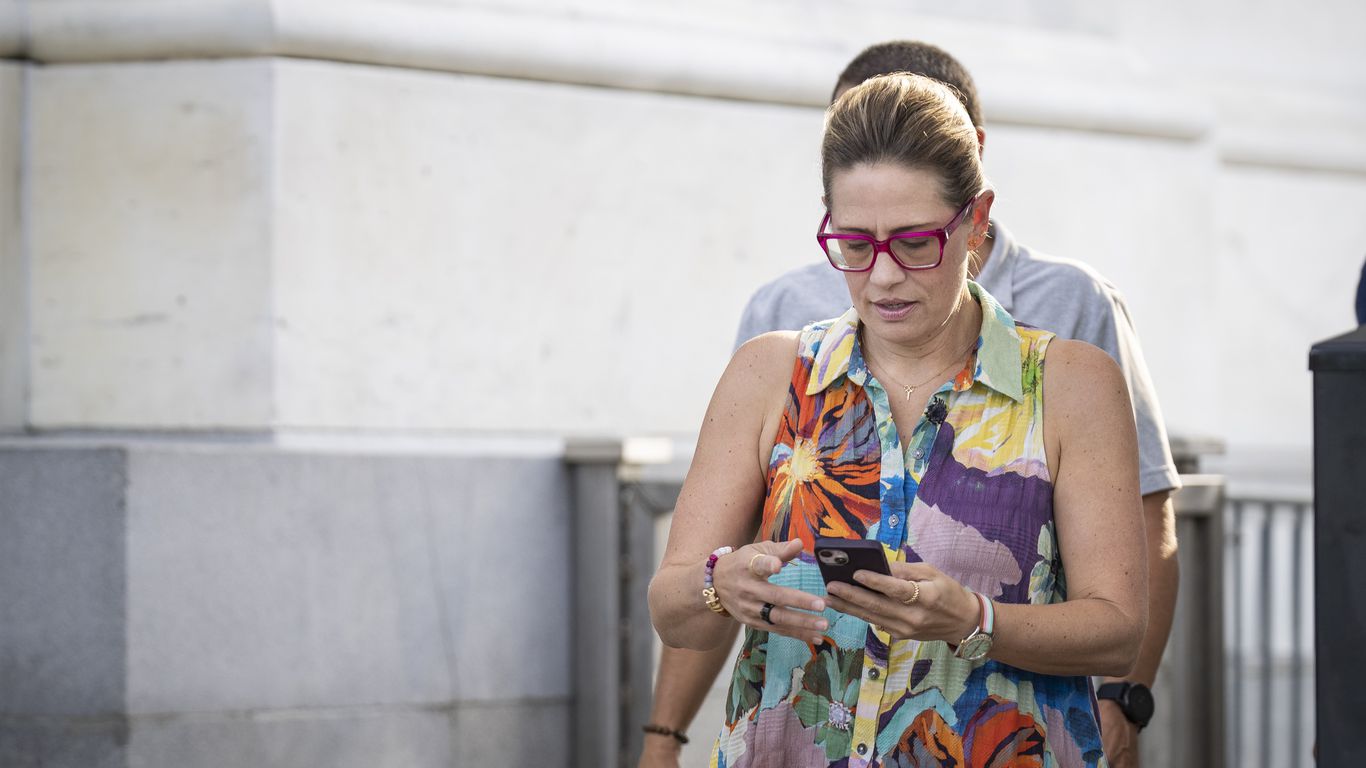
Sen. Kyrsten Sinema (D-Ariz.) is eyeing changes to Democrats’ $740 billion reconciliation bill — specifically increasing climate funding and restructuring the tax provisions — as the Senate moves rapidly toward final passage before the August recess, Axios has learned.
Why it matters: Sinema is the one senator potentially standing in the way of Democrats clinching President Biden’s longtime goal of passing an ambitious package tackling climate change, health care and taxes — renamed the “Inflation Reduction Act of 2022.”
That position gives her a huge amount of leverage as Democrats await a verdict from the Senate parliamentarian on whether the bill complies with the “Byrd Rule,” which controls what provisions can be included in the budget reconciliation process.
The fact the negotiations were conducted entirely in secret between Senate Majority Leader Chuck Schumer (DN.Y.) and Sen. Joe Manchin (DW.V.) — catching Sinema by surprise — has left her space for an 11th hour intervention.
Sinema has so far refused to weigh in on whether or not she will support the bill until the parliamentarian renders her judgment on the measure.
What we’re hearing: Sinema is looking at significantly beefing up the reconciliation bill’s funding for droughts and water security in the Southwest, sources familiar with her thought process tell Axios.
She views the current $369 billion climate and energy portion of the bill as insufficient for addressing threat resilience funding.
On taxes, Sinema has concerns with the structure of the 15% corporate minimum “book tax” and whether the burden could get passed down to employees, the sources said.
Sinema supports cracking down on tax avoidance, but has long voiced her opposition to closing the carried interest loophole.
She’s concerned that the provision, which would contribute $14 billion toward paying down the bill’s $740 billion total, could undermine economic competitiveness, the sources said.
Behind-the-scenes: Sinema has been meeting privately, both virtually and in-person, with key stakeholders in Arizona as she continues to work through her assessment of the bill.
Sinema last week visited Flagstaff, Arizona, where she met with local officials who are still reeling from recent flooding and a wildfire that ravaged the state.
Arizona is one of the fastest-warming states in the US, and the state’s largest county, Maricopa County, has already hit a record for heat-related deaths this year.
“There are some who were surprised to learn Kyrsten was enthusiastic about the climate provisions last year, because they rightly consider her a centrist. But she’s a Senator from Arizona, first and foremost,” John LaBombard, Sinema’s former communications director and SVP at ROKK Solutions tells Axios.
in to phone call tuesday with Arizona’s Chamber of Commerce, local business leaders and manufacturers discussed with Sinema what the proposed 15% corporate minimum tax and closure of the carried interest loophole would mean for Arizona.
The private equity industry, which has contributed heavily to Sinema, is lobbying her heavily on shooting down the carried interest portion.
“I remember last year, she was hearing feedback from small business owners, concerned about the potential implications of any tax policy changes, and how it might affect their capital investment streams,'” LaBombard said.
“She is somebody who errs on the side of caution when it comes to changing tax policies. … obviously, I think [their input] shaped where she is on the economic parts of this bill.”
What they’re saying: “What’s clear from our conversation is she’s taking a thoughtful and diligent approach as she considers her position on this legislation,” Danny Seiden, CEO of the Arizona Chamber, told Axios’ Hans Nichols.
“She was very interested in learning what specific impacts the tax provisions will have on Arizona manufacturers — and we believe she will consider these implications seriously as negotiations continue over the coming days.”
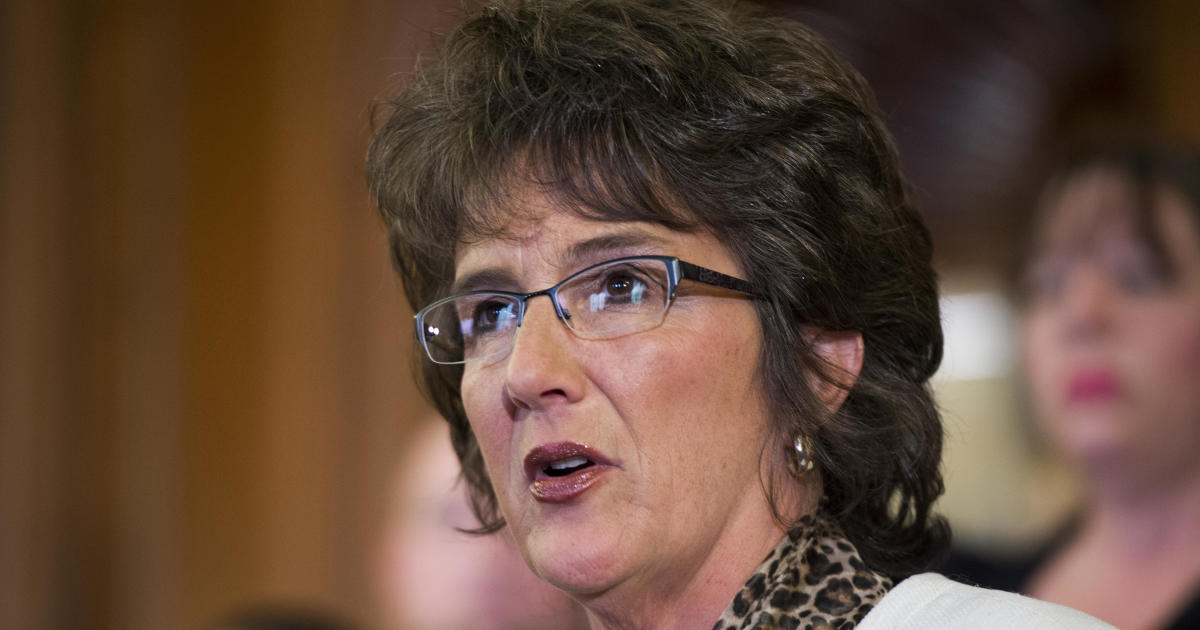
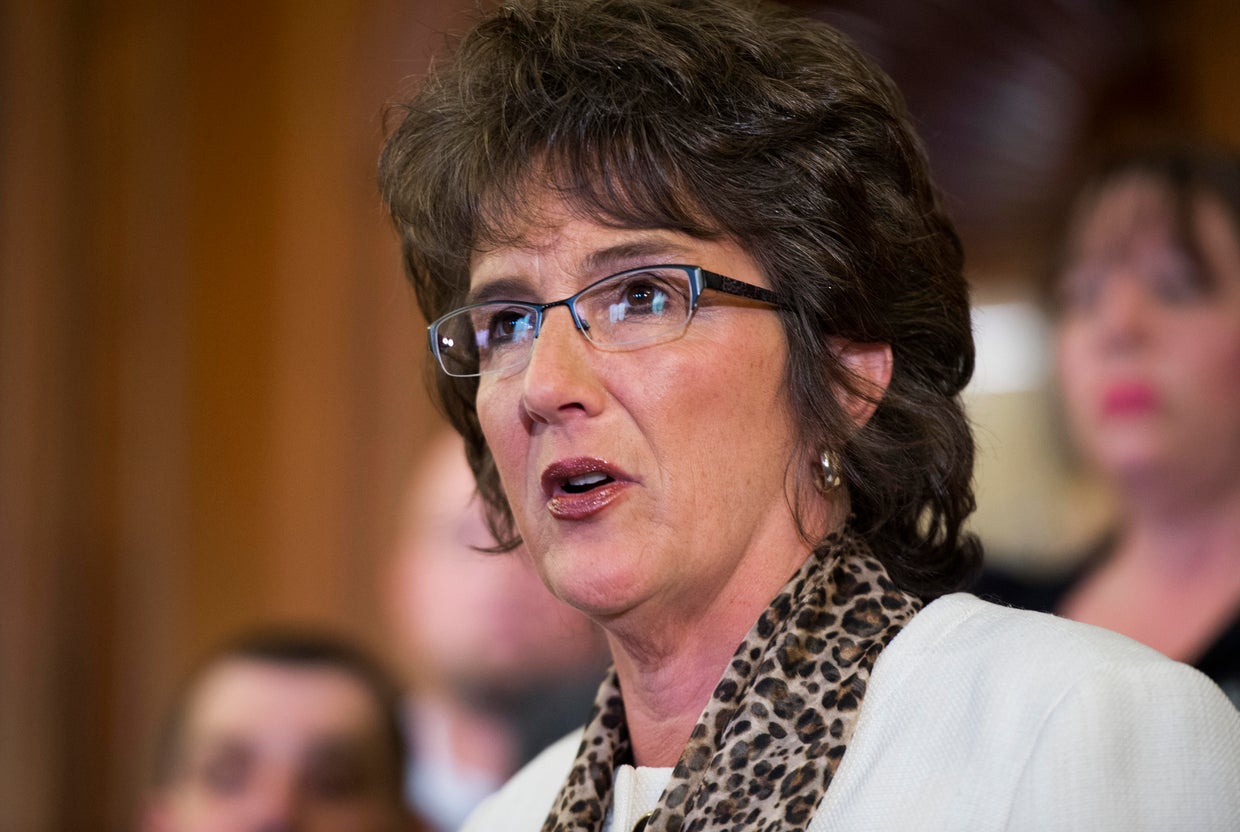
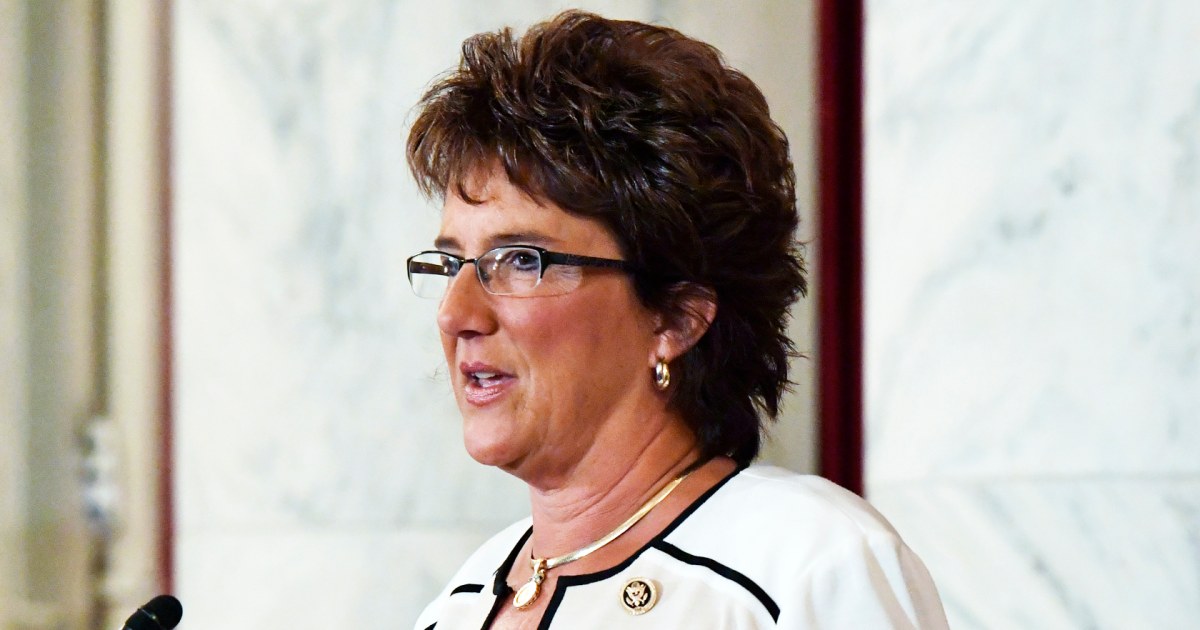
UNITED STATES – APRIL 03: Rep. Jackie Walorski, R-Ind., speaks during a news conference in the Capitol on legislation that would increase the accountability of the Veterans Affairs Department.
Photo By Tom Williams/CQ Roll Call
Washington— Republican Rep. Jackie Walorski of Indiana was killed in a car crash Wednesday, the Elkhart County Sheriff’s Office said.
Sheriff Jeff Siegel said Walorski, 58, was in an SUV traveling southbound when it was hit head-on by another car just after 12:30 pm All three occupants in one of the cars — Walorski, her district director Zachery Potts, 27, and communications director Emma Thomson, 28 — died as a result of their injuries.
The sole passenger of the other car involved in the crash, which was traveling northbound, was also pronounced dead at the scene, according to Siegel.
An investigation by the Elkhart County Coroner’s Office and sheriff’s office is underway.
Walorski was elected to represent Indiana’s 2nd Congressional District, which includes South Bend, in 2012 after serving three terms in the statehouse. She was the top Republican on the House Ethics Committee and served on the Ways and Means Committee.
House Minority Leader Kevin McCarthy confirmed Walorski’s death in a tweeted statement from her office, noting that her husband, Dean Swihart, was informed the congresswoman had been killed in the collision.
It is with a heavy heart that I am sharing this statement from the Office of Congresswoman Jackie Walorski. pic.twitter.com/UEPoKBDf5N
“She has returned home to be with her Lord and Savior, Jesus Christ,” McCarthy said. “Please keep her family in your thoughts and prayers.”
Tributes for Walorski quickly poured in from elected officials on both sides of the aisle and members of Indiana’s congressional delegation.
Rep. Kevin Brady, the top Republican on the Ways and Means panel, said the congresswoman was “the ‘happy Hoosier’ who would light up a room with her joy, passion, brilliance and love of life.”
“There is nothing [Walorski] couldn’t do,” I tweeted.
Rep. Carolyn Maloney, a Democrat from New York, said on Twitter she is “absolutely heartbroken,” and “my heart goes out to the families of each of the victims,” while fellow Indiana Rep. Jim Banks praised Walorski as a “true public servant — selfless, humble, and compassionate.”
“From my first day in Congress, Jackie showed me kindness and grace,” he said in a statement. “She had a heart of gold, and I will miss her dearly.”
Former Vice President Mike Pence, who also represented Indiana in the House before serving as governor, said he and his wife are praying for Walorski’s family, and the families of Potts and Thomson.
“She served Indiana in the statehouse and the Congress with integrity and principle for nearly two decades and will be deeply missed,” he said in a pair of tweets.
Indiana Sen. Todd Young tweeted that he is “truly devastated” by Walorski’s death and said she “loved Hoosiers and devoted her life to fighting for them. I’ll never forget her spirit from her, her positive attitude, and most importantly her friendship from her. “
Rep. Jackie Walorski, R-Ind., and two of her staffers were killed in a car accident on Wednesday, authorities said. Walorski was 58.
House Minority Leader Kevin McCarthy first confirmed Walorski’s death in a tweet earlier Wednesday.
McCarthy said that Walorski’s husband, Dean Swihart, was informed of her death by the Elkhart County Sheriff’s office on Wednesday afternoon.
Walorski District Director Zachery Potts and her Communications Director Emma Thompson also died in the accident. Their deaths were confirmed by the sheriff’s office in a Facebook post.
“Devastated to hear the horrible news of the passing of Jackie Walorski and her two staffers,” Minority Whip Steve Scalise, R-La., tweeted. “She was a dear friend who loved serving the people of Indiana in Congress.”
A former Indiana state lawmaker, Walorski was first elected to Congress in 2012 and was running for her sixth term this fall. She was well-liked by her Republican and Democratic colleagues in the House, where she was close to McCarthy and his leadership team.
McCarthy named her the top Republican on the House Ethics Committee, and she was set to be chairman of the bipartisan committee if Republicans won the majority in November.
Many of her colleagues in the Indiana delegation also tweeted their sympathies shortly after her death was announced.
“I’m truly devastated. Jackie loved Hoosiers and devoted her life to fighting for them,” tweeted Sen. Todd Young, R-Ind., who had served with Walorski in the House. “I’ll never forget her spirit from her, her positive attitude from her, and most importantly her friendship from her.”
“My heart is heavy with the news from northern Indiana. Jackie was a true friend & an incredible colleague,” tweeted Rep. Jim Baird, R-Ind. “Hoosiers have lost a champion & dedicated public servant.”
This story is breaking news. Check back for updates.
Scott Wong is a senior congressional reporter for NBC News.
Conspiracy theorist Alex Jones testified Wednesday that he now understands it was irresponsible of him to declare the Sandy Hook Elementary School massacre a hoax and that he now believes it was “100% real.”
Speaking a day after the parents of a 6-year-old boy who was killed in the 2012 attack testified about the suffering, death threats and harassment they’ve endured because of what Jones has trumpeted on his media platforms, the Infowars host told a Texas courtroom that he definitely thinks the attack happened.
“Especially since I’ve met the parents. It’s 100% real,” Jones said at his trial to determine how much he and his media company, Free Speech Systems, owe for defaming Neil Heslin and Scarlett Lewis. Their son Jesse Lewis was among the 20 students and six educators who were killed in the attack in Newtown, Connecticut, which was the deadliest school shooting in American history.
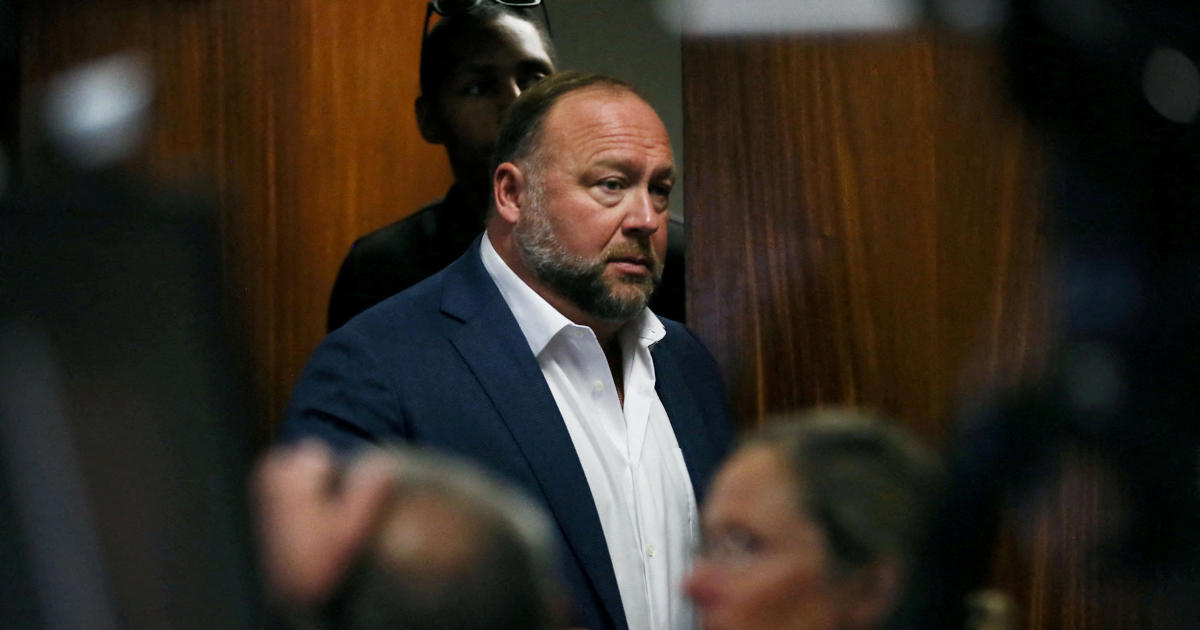
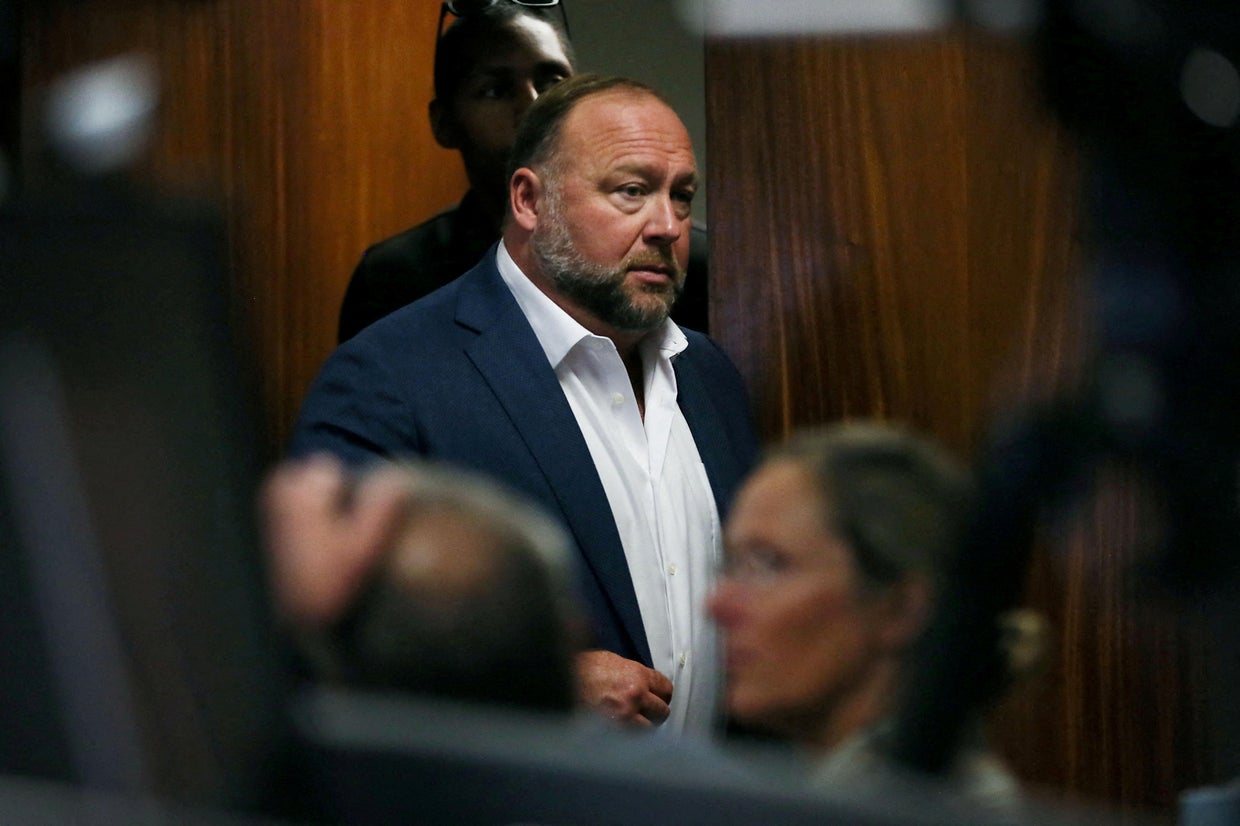
Alex Jones walks into the courtroom in front of Scarlett Lewis and Neil Heslin, the parents of 6-year-old Sand Hook shooting victim Jesse Lewis, at the Travis County Courthouse in Austin, Texas, July 28, 2022.
BRIANA SANCHEZ/POOL
But Heslin and Lewis said Tuesday that an apology wouldn’t suffice and that Jones needed to be held accountable for repeatedly spreading falsehoods about the attack. They are seeking at least $150 million.
Jones told the jury that any compensation above $2 million “will sink us,” but added: “Ï think it’s appropriate for whatever you decide what you want to do.”
Testimony concluded around midday and closing arguments are expected to begin Wednesday afternoon.
Jones is the only person testifying in his own defense. His attorney asked him if he now understands it was “absolutely irresponsible” to push the false claims that the massacre did not happen and no one died.
Jones said he does, but added, “They (the media) won’t let me take it back.”
He also complained that he’s been “typecast as someone that runs around talking about Sandy Hook, makes money off Sandy Hook, is obsessed by Sandy Hook.”
Under a withering cross-examination from attorney Mark Bankston, Jones acknowledged his history of raising conspiracy claims regarding other mass tragedies, from the Oklahoma City and Boston Marathon bombings to the mass shootings in Las Vegas and Parkland, Florida.
Bankston then went after Jones’ credibility, showing an Infowars video clip from last week when a host – not Jones – claimed the trial was rigged and featuring a photo of the judge in flames. Then came another clip of Jones asking if the jury was selected from a group of people “who don’t know what planet” they live on. Jones said he didn’t mean that part literally.
Bankston said Jones hadn’t complied with court orders to provide text message and emails for pretrial evidence gathering. Jones said, “I do n’t use email,” then he was shown one gathered from another source that came from his email address. He replied: “I must have dictated that.”
At one point, Bankston informed Jones that his attorneys had mistakenly sent Bankston the last two years’ worth of texts from Jones’ cellphone.
The attorney also showed the court an email from an Infowars business officer informing Jones that the company had earned $800,000 gross in selling its products in a single day, which would amount to nearly $300 million in a year. Jones said that it was the company’s best day in sales.
Jones’ testimony came a day after Heslin and Lewis told the courtroom in Austin, where Jones and his companies are based, that Jones and the false hoax claims he and Infowars pushed made their lives a “living hell” of death threatsonline abuse and harassment.
They led a day of charged testimony Tuesday that included the judge scolding the bombastic Jones for not being truthful with some of what he said under oath.
In a gripping exchange, Lewis spoke directly to Jones, who was sitting about 10 feet away. Earlier that day, Jones was on his broadcast program telling his audience that Heslin is “slow” and being manipulated by bad people.
“I am a mother first and foremost and I know you are a father. My son existed,” Lewis said to Jones. “I am not deep state… I know you know that… And yet you’re going to leave this courthouse and say it again on your show.”
At one point, Lewis asked Jones: “Do you think I’m an actor?”
“No, I don’t think you’re an actor,” Jones responded before the judge admonished him to be quiet until called to testify.
Heslin and Lewis are among several Sandy Hook families who have filed lawsuits alleging that the Sandy Hook hoax claims pushed by Jones have led to years of abuse by him and his followers.
“What was said about me and Sandy Hook itself resonates around the world,” Heslin said. “As time went on, I truly realized how dangerous it was.”
Jones skipped Heslin’s Tuesday morning testimony while he was on his show – a move Heslin dismissed as “cowardly” – but arrived in the courtroom for part of Scarlett Lewis’ testimony. He was accompanied by several private security guards.
“Today is very important to me and it’s been a long time coming… to face Alex Jones for what he said and did to me. To restore the honor and legacy of my son,” Heslin said when Jones wasn’t there.
Heslin told the jury about holding his son with a bullet hole through his head, even describing the extent of the damage to his son’s body. A key segment of the case is a 2017 Infowars broadcast that said Heslin did not hold his son.
In 2017, Heslin went on television, he told CBS News, to directly address the Sandy Hook deniers. “I lost my son. I buried my son. I held my son with a bullet hole through his head,” he said.
After which, the harassment only got worse, Heslin said.
“I’ve had many death threats,” Heslin told CBS News in 2018. “People say, ‘You should be the ones with a bullet hole in your head.'”
The jury was shown a school picture of a smiling Jesse taken two weeks before he was killed. The parents didn’t receive the photo until after the shooting. They described how Jesse was known for telling classmates to “run!” which likely saved lives.
Jones later took the stand Tuesday and was initially combative with the judge, who had asked him to answer his own attorney’s question. Jones testified he had long wanted to apologize to the plaintiffs.
Later, the judge sent the jury out of the room and strongly scolded Jones for telling the jury he had complied with pretrial evidence gathering even though he didn’t and that he is bankrupt, which has not been determined. The plaintiffs’ attorneys were furious about Jones mentioning he is bankrupt, which they worry will taint the jury’s decisions about damages.
“This is not your show,” Judge Maya Guerra Gamble told Jones. “Your beliefs do not make something true. You are under oath.”
Last September, the judge admonished Jones in her default judgment over his failure to turn over documents requested by the Sandy Hook families. A court in Connecticut issued a similar default judgment against Jones for the same reasons in a separate lawsuit brought by other Sandy Hook parents.
At stake in the trial is how much Jones will pay. The parents have asked the jury to award $150 million in compensation for defamation and intentional infliction of emotional distress. The jury will then consider whether Jones and his company will pay punitive damages.
Jones has already tried to protect Free Speech Systems financially. The company filed for federal bankruptcy protection last week. Sandy Hook families have separately sued Jones over his financial claims from him, arguing that the company is trying to protect millions owned by Jones and his family from him through shell entities.
PHOENIX — With Tuesday’s primary victories in Arizona and Michigan added to those in Nevada and Pennsylvania, Republicans who have disputed the legitimacy of the 2020 presidential election and who pose a threat to subvert the next one are on a path toward winning decisive control over how elections are run in several battleground states.
Running in a year in which GOP voters are energized by fierce disapproval of President Biden, these newly minted Republican nominees for secretary of state and governor present a growing risk to the nation’s traditions of nonpartisan elections administration, acceptance of election results and orderly transfers of power .
Each has spread falsehoods about fraud and illegitimate ballots, endorsing the failed effort to override the 2020 results and keep former President Donald J. Trump in power. Their history of anti-democratic impulses has prompted Democrats, democracy experts and even some fellow Republicans to question whether these officials would oversee fair elections and certify winners they didn’t support.
There is no question that victories by these candidates in November could lead to sweeping changes to how millions of Americans vote. Several have proposed eliminating mail voting, ballot drop boxes and even the use of electronic voting machines, while empowering partisan election observers and expanding their roles.
“If any one of these election deniers wins statewide office, that’s a five-alarm fire for our elections,” said Joanna Lydgate, the chief executive of the United States United Democracy Center, a bipartisan legal watchdog organization. “It could throw our elections into chaos. It could put our democracy at risk.”
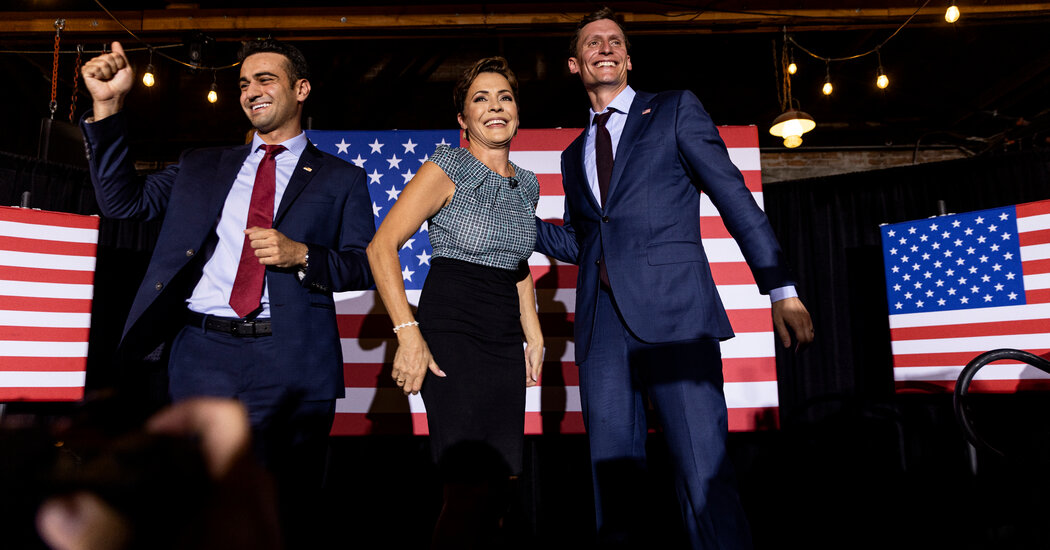
In Arizona, Republicans nominated Mark Finchem, who marched at the Capitol on Jan. 6, 2021, to protest Mr. Biden’s victory, for secretary of state, the top election official in the state. They also elevated Abraham Hamadeh, who called his opponents of him and other Republicans “weak-kneed” for supporting certification of the 2020 election, as their nominee for attorney general.
And with votes still being counted, Kari Lake, who has said she would not have certified Mr. Biden’s 10,000-vote victory in her state, held a slight lead in the GOP primary for governor.
Both Ms. Lake and Mr. Finchem have made their willingness to flout some democratic norms and their promotion of conspiracy theories central to their campaigns. Ms. Lake has said she doesn’t believe the state holds fair elections. Even before votes were cast, Mr. Finchem was preparing for a recount of his race from him “if there’s the slightest hint of impropriety.”
“Ain’t going to be no concession speech coming from this guy,” he said in June.
On Tuesday, both Ms. Lake and Mr. Finchem claimed that there was fraud in the state’s primaries.
Understand the Aug. 2 Primary Elections
While the Trump wing of the Republican Party flexed its muscle, voters in deep-red Kansas delivered a loud warning to the GOP on abortion rights.
In Michigan, Tudor Dixon, who has at times falsely argued that Mr. Trump won the state in 2020 (he lost by more than 150,000 votes), clinched the Republican nomination for governor, while Kristina Karamo, who has called the 2020 election fixed and baselessly claimed that Dominion voting machine software flipped votes to Mr. Biden, is the party’s presumptive nominee for secretary of state. Matthew DePerno, the presumptive GOP nominee for attorney general, was a central player in 2020 election challenges in Michigan and has pledged to investigate current state officials.
They join Jim Marchant, the Republican nominee for secretary of state in Nevada, who has said he would not have certified the 2020 election and wants more sheriffs at the polls, and Doug Mastriano, the Republican nominee for governor in Pennsylvania, who led the push to overturn the state’s 2020 results. If he wins, Mr. Mastriano would appoint Pennsylvania’s top elections official.
Though state legislatures write the laws governing how elections are conducted, secretaries of state have significant power over how elections are run, often determining how resources are distributed and what rules local officials must follow. During the pandemic, secretaries of state ordered absentee ballot applications to be mailed widely in an effort to make voting safer.
As top election officials, secretaries of state could also use their power to discourage voting and erode trust. In several states, they can order investigations or expansive audits, potentially legitimizing bogus election claims or pressing local election officials to conduct unnecessary recounts and hunt for nonexistent fraud.
Secretaries of state and governors also play a central role in formally certifying election winners, a largely ceremonial act but one by which allies of Mr. Trump have sought to block results. Though many legal experts say the courts would most likely disagree, the prospect of a rogue governor or secretary of state refusing to certify an election could create the atmosphere for a constitutional crisis.
In Arizona, Michigan, Pennsylvania and Nevada, Republican nominees for secretary of state (or governors who would appoint them) have indicated, or outright declared, that they would not have certified the 2020 election.
“They could tilt the counting, casting and certification of ballots, and that is really harmful,” said Benjamin Ginsberg, a prominent Republican election lawyer who has been critical of efforts to undermine the electoral process. “They have said that they’ll check registration harder, they could reduce polling places in non-Republican friendly areas, they could put up a wide variety of barriers to voting — which would be harmful to the basic principle of every legal voter gets to vote.”
Governors who reject lies about the 2020 election have halted Republican-controlled state legislatures from enacting new laws that would restrict voting or grant partisan lawmakers greater control of election administration. Over the past two years, governors in Arizona, Michigan and Pennsylvania vetoed nine bills that would have added restrictions to voting, according to the Voting Rights Lab.
Many of these proposals were part of a push for “election integrity,” responding to Republicans voters’ unfounded worries about fraud. (Despite Mr. Trump’s claims, there was no fraud in the 2020 election that would have affected the outcome, and nearly all of his allegations have been repeatedly debunked by local election officials, law enforcement and the courts.)
With an agreeable Republican governor or secretary of state, such far-reaching policies could become a reality, as could other, more drastic, right-wing goals.
Stephen K. Bannon, a former adviser to Mr. Trump, wrote on social media that when Ms. Lake, Mr. Hamadeh and Mr. Finchem took office in Arizona, “then the actual count will happen, and the Biden Electors decertified.” He was referring to the theory that the 2020 election can still be decertified, which has no legal basis in the Constitution. Mr. Bannon added that once this happened, “Arizona will be FREE.”
Both Ms. Lake and Mr. Finchem have made bold plans for overhauling elections in the state. They recently filed a lawsuit seeking to ban the use of electronic voting machines, and Mr. Finchem has previously tried to undo Arizona’s long-established and widely popular vote-by-mail system.
Should they win, they would probably find support for their election proposals in the Republican-controlled Legislature. One potential hurdle fell Tuesday, when Rusty Bowers, who as the Republican speaker of the House blocked the most extreme efforts to overturn the 2020 results, lost his primary bid for a State Senate seat.
Some Democrats are preparing to portray these candidates as dangerous extremists.
“We are going to focus on a return to stability and predictability,” said Adrian Fontes, who is leading the Democratic primary for secretary of state in Arizona, and said he would focus on the “wild-eyed fanaticism” of Republicans, including Mr. Finchem. “They have gotten themselves so far down this rabbit hole, I don’t think they can see the light of day.”
It is unclear just how much leading Democrats will try to appeal to voters on threats to democracy in the fall. Some top party officials believe that while the issue may motivate committed Democratic voters, it is unlikely to persuade swing voters who are more focused on gas prices, inflation and health care. These Democrats believe that painting Republicans as extreme on abortion, for example, may be more effective than focusing on the mechanics of elections.
Still, money has poured into some races for bureaucratic posts. Fund-raising by candidates for secretary of state in six battleground states has already topped $16 million, more than double that in the same time period of the previous cycle, according to the Brennan Center for Justice. The analysis found that the fund-raising race so far appears to slightly favor candidates running against election deniers.
The next big test comes next week in Wisconsin, where Republican candidates for governor have vowed to overhaul the state’s election system in response to unfounded claims about problems in 2020. All of the major GOP candidates in the race have pledged to eliminate the Wisconsin Elections Commission , a bipartisan agency that oversees state elections. It was created by Republicans in 2015, but the party turned on it after commissioners issued guidance that made voting easier during the pandemic.
Republicans are trying to oust Gov. Tony Evers, a Democrat who since the 2020 election has vetoed more than a dozen bills advanced by the Republican-controlled Legislature to change how Wisconsinites vote. The legislation would have, among other things, allowed legislators to withhold money for the elections commission, made it harder for voters confined to their homes to vote remotely and prohibited private organizations from donating funds to help with elections.
The biggest debate among the candidates running to take on Mr. Evers, however, is largely a symbolic one. The candidates are split on whether to pursue decertifying Mr. Biden’s 2020 victory in the state — a legal impossibility that nonetheless has become an obsession of Mr. Trump and his most devoted followers of him.
Mr. Trump’s preferred candidate, Tim Michels, a construction magnate, has said he’ll consider it. “When I’m sworn in, in January, I will look at all the evidence and everything will be on the table,” he said this week. One rival, Tim Ramthun, has said he would sign decertification legislation “in a nanosecond.”
Only Rebecca Kleefisch, who has sought to present herself as the candidate of the Wisconsin Republican establishment, has said she is more focused on establishing new voting rules than revisiting the 2020 election.
“As the governor of a state, you must be grounded in reality,” she said in an interview on Tuesday in Sheboygan. “You make decisions based on data and facts, statistics and truth.And you can’t live in a land of your own imagination.”
Jennifer Medina reported from Phoenix, Reid J. Epstein from Sheboygan, Wis., and Nick Corasaniti from New York.
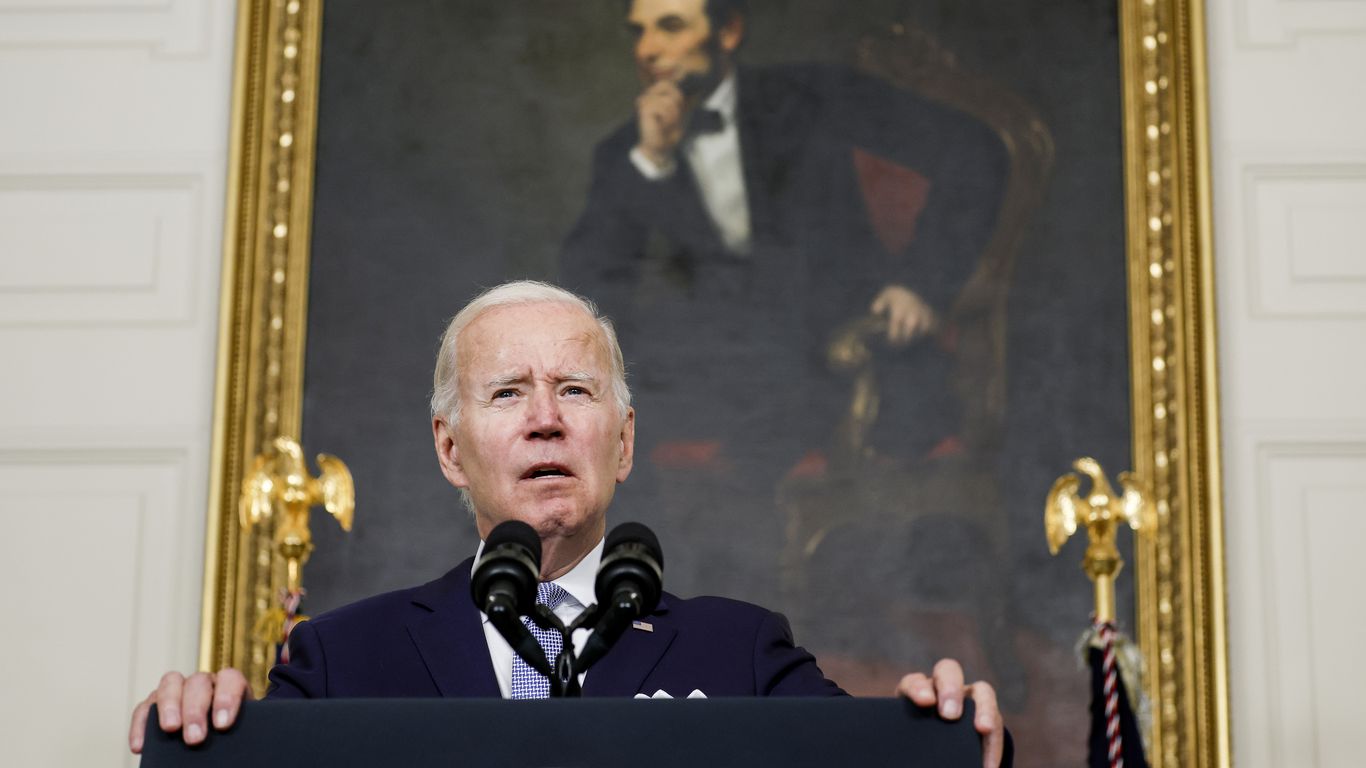
President Biden on Wednesday issued an executive order to protect people’s ability to travel out of state to access abortion.
The big pictures: This is the second executive order the president has issued to preserve abortion access after the Supreme Court’s ruling overturning Roe v. Wade.
State of play: Biden signed the executive order during the first meeting of the White House’s Task Force on Reproductive Health Care, which is focused on coordinating the federal government’s efforts on reproductive health.
Details: The executive order directs the Department of Health and Human Services to “consider action to advance access” to reproductive health services, including through Medicaid for patients who travel out of state.
Biden is also asking HHS Secretary Xavier Becerra to consider “all appropriate actions” to ensure that health providers follow federal nondiscrimination laws so that people can “receive medically necessary care without delay.”
Becerra must also “evaluate and improve research, data collection, and data analysis efforts” on maternal health.
What he’s saying: Biden said this executive order will respond to “the health care crisis that has unfolded since the Supreme Court overturned Roe and that women are facing all across America.”
The order will “help safeguard access to health care, including the right to choose and contraception. [It] promotes safety and security of clinics, patients and providers, and protect patients’ privacy and access to accurate information.”
“I believe Roe got it right. It’s been the law for close to 50 years. And I committed to the American people that we are doing everything in our power safeguard access to health care, including the right to choose that women had under Roe v Wade, which was ripped away by this extreme court.”
Zoom out: Although the Biden administration has taken several steps to respond to the Supreme Court ruling, the executive branch’s role when it comes to protecting abortion care is limited without congressional action.
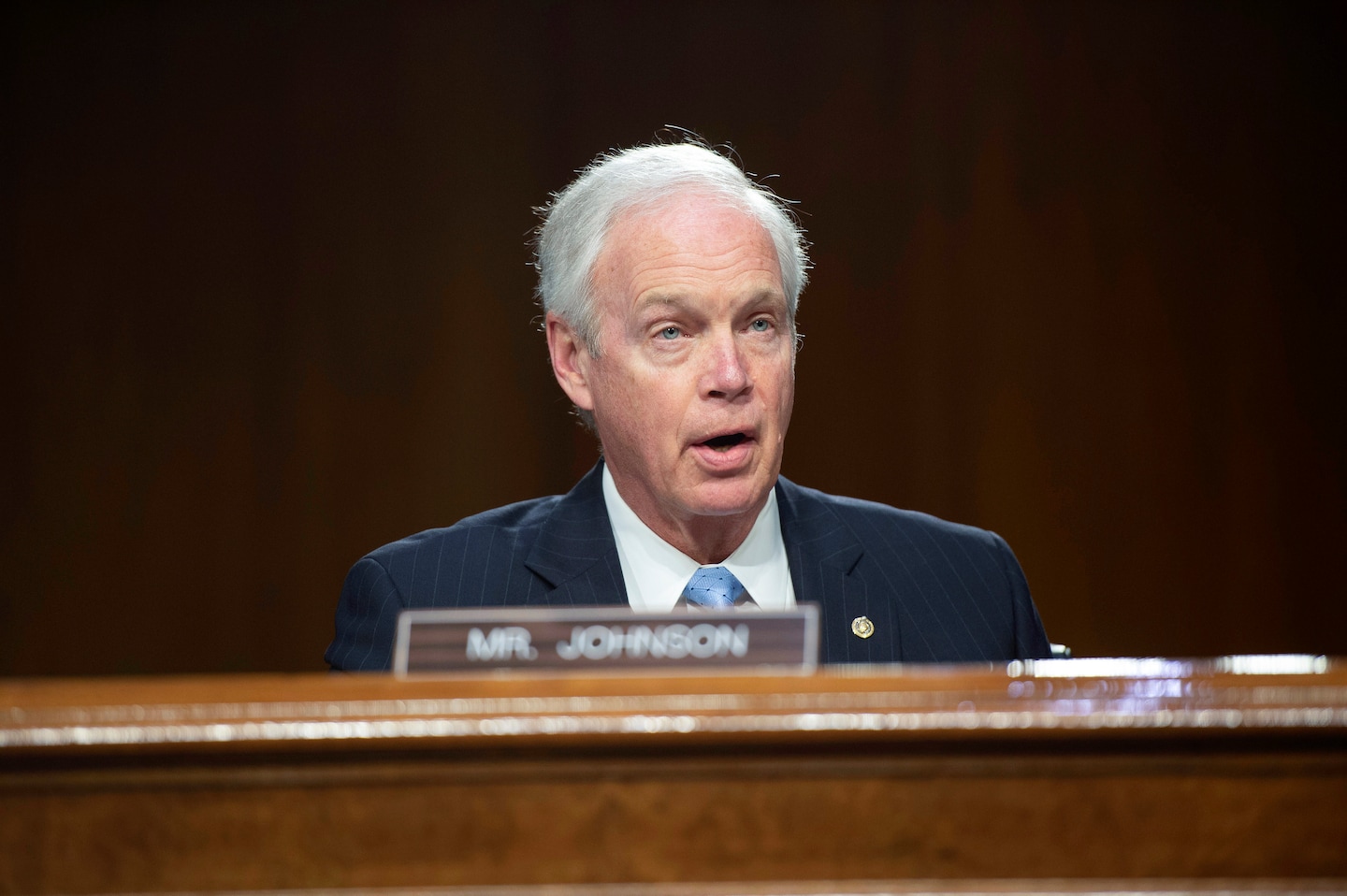
Sen. Ron Johnson (R-Wis.) has suggested that Social Security and Medicare be eliminated as federal entitlement programs, and that they should instead become programs approved by Congress on an annual basis as discretionary spending.
Those who work in the United States pay Social Security and Medicare taxes that go into federal trust funds. Upon retirement, based on a person’s lifetime earnings and other factors, a retiree is eligible to receive monthly Social Security payments. Similarly, Medicare is the federal health insurance program that kicks in for people 65 and older, or for others who have disabilities.
In an interview that aired Tuesday on “The Regular Joe Show” podcast, Johnson, who is seeking a third term in the Senate, lamented that the Social Security and Medicare programs automatically grant benefits to those who meet the qualifications — that is, to those who had been paying into the system over their working life.
“If you qualify for the entitlement, you just get it no matter what the cost,” Johnson said. “And our problem in this country is that more than 70 percent of our federal budget, of our federal spending, is all mandatory spending. It’s on automatic pilot. It never — you just don’t do proper oversight. You don’t get in there and fix the programs going bankrupt. It’s just on automatic pilot.”
NEW: On the The Regular Joe Show, Sen. Ron. Johnson (R-WI) argues for eliminating entitlements: “Social Security and Medicare, if you qualify, you just get it no matter what the cost… We ought to turn everything into discretionary spending so it’s all evaluated.” pic.twitter.com/bE1KUb6uJ5
Johnson suggested that Social Security and Medicare be transformed into programs whose budgets are appropriated by Congress on an annual basis. I have pointed out that budgets for the Defense and Veterans Affairs departments are approved as discretionary spending.
“What we ought to be doing is we ought to turn everything into discretionary spending so it’s all evaluated so that we can fix problems or fix programs that are broken, that are going to be going bankrupt,” Johnson said. “As long as things are on automatic pilot, we just continue to pile up debt.”
Johnson’s comments prompted criticism from the White House and from Senate Majority Leader Charles E. Schumer (DN.Y.), who said Democrats would fight any attempt by Republicans to “pull the rug out from under our seniors.”
“The junior senator from Wisconsin wants to put Medicare and Social Security on the chopping block,” Schumer told reporters Wednesday. “He has argued that the benefits which millions of Americans rely on every day shouldn’t be guaranteed, but should be subject to partisan infighting here in Washington. He would like to revoke the guarantee of Medicare and Social Security and make them discretionary. Well, do you know what happens when we make things discretionary around here? All too often they get cut, or even eliminated. We don’t want to do that.”
A representative for Johnson’s office pushed back on the idea that Johnson wanted to eliminate Medicare or Social Security.
“The Senator’s point was that without fiscal discipline and oversight typically found with discretionary spending, Congress has allowed the guaranteed benefits for programs like Social Security and Medicare to be threatened,” Johnson spokeswoman Alexa Henning said in an email.
“This must be addressed by Congress taking its responsibilities seriously to ensure that seniors don’t need to question whether the programs they depend on remain solvent,” she added. “As he said, we need a process to save these programs and no one is doing anything to save them long term. We just continue piling up debt, mortgaging our children’s future, and putting these programs at risk.”
Asked Wednesday whether Senate Minority Leader Mitch McConnell (R-Ky.) would support such a plan, a representative for him pointed to his previous rejection of a proposal by Sen. Rick Scott (R-Fla.) that would have similarly increased Social Security and Medicare. In March, Johnson said he supported “most” of Scott’s plan and called it “a positive thing.”
On March 1, Sen. Mitch McConnell rebuked Sen. Rick Scott’s bill that the minority leader says will raise taxes and cut Medicare aid. (Video: Washington Post)
“If we’re fortunate enough to have the majority next year, I’ll be the majority leader. I’ll decide in consultation with my members what to put on the floor,” McConnell told reporters in March. “Let me tell you what would not be a part of our agenda: We will not have as part of our agenda a bill that raises taxes on half the American people and sunsets Social Security and Medicare within five years.”
Earlier this year, Johnson announced that he would seek reelection in November, despite a previous pledge to retire after two terms. He is widely expected to win his primary election next Tuesday.
Wisconsin Lt. Gov. Mandela Barnes, who is running for the Democratic nomination for Senate, criticized his would-be opponent’s remarks on entitlement programs.
“Ron Johnson is threatening to cut Social Security and Medicare,” Barnes tweeted Tuesday. “~surprise surprise~ the self-serving, multimillionaire Senator is trying to strip working people of the Social Security and Medicare benefits they’ve earned over a lifetime of hard work.”
According to the nonprofit Population Reference Bureau, Wisconsin ranks 17th in the nation in the percentage of the population 65 and older.
This was not the first time Johnson has made news for a proposal that prompted even other Republicans to distance themselves. In March, Johnson said he wanted to see the GOP repeal the Affordable Care Act if his party won the White House and the House and Senate majorities in 2024, something Republicans failed to do the last time they had majorities in Washington.
A government watchdog group said Tuesday that the Pentagon “wiped” text messages from the cell phones of key Trump administration Defense Department officials after the Jan. 6 attack on the Capitol, and is now urging Attorney General Merrick Garland to launch a “cross-agency investigation into the possible destruction of federal records.”
American Oversight, which describes itself as a nonprofit watchdog that uses public records requests to fight corruption, filed several Freedom of Information Act requests within days of Jan. 6, 2021, seeking text messages and other communications among senior Pentagon officials including acting Defense Secretary Chris Miller, his chief of staff, Kash Patel, and Secretary of the Army Ryan McCarthy.
In March, the Pentagon filed court documents acknowledging that text messages belonging to those individuals had been deleted — but framed that action as standard operating procedure whenever an employee leaves the department.
“When an employee separates from DOD or Army he or she turns in the government-issued phone, and the phone is wiped,” the Pentagon wrote in response to American Oversight’s FOIA lawsuit. “For custodians no longer with the agency, the text messages were not preserved and therefore could not be searched.”
But in their letter to Garland on Tuesday, American Oversight accused the Pentagon of knowingly erasing records under active FOIA — and framed this deletion as another effort by these agencies to obscure the actions of administration officials.
“In short, DOD has apparently deleted messages from top DOD and Army officials responsive to pending FOIA requests that could have shed light on the actions of top Trump administration officials on the day of the failed insurrection,” American Oversight Executive Director Heather Sawyer wrote.
The deletion of DOD officials’ text messages was first reported by CNN.
In this July 3, 2022, file photo, an aerial view of the Pentagon is shown.
Bill Clark/CQ-Roll Call, Inc via Getty Images, FILE
Sawyer urged Garland to probe not only the Pentagon’s conduct, but also the US Secret Service’s apparent deletion of their agents’ text messages.
“American Oversight accordingly urges you to investigate DOD’s actions in allowing the destruction of records potentially relevant to this significant matter of national attention and historical importance,” the letter said.
Reached for comment, Army spokesperson Col. Cathy Wilkinson told ABC News, “It is our policy not to comment on ongoing litigation.”