Categories
US

As Shootings Soar in Philadelphia, City is Awash in Guns

PHILADELPHIA — The 300th killing of the year took the life of Lameer Boyd, an 18-year-old father-to-be who was gunned down one July night on a West Philadelphia sidewalk. Over the days that followed, a grandmother was shot in the neck in Mill Creek, a popular singer was killed in front of his house in South Philadelphia and a 26-year-old was shot during an argument outside a restaurant in East Tioga .

On Aug. 2, a Tuesday night, a car pulled up at a front-porch cookout in Northeast Philadelphia. Someone in the car opened fire, killing a 29-year-old woman.

With her death, the 322nd of the year, the number of homicides in Philadelphia was on track toward becoming the highest in police records, passing the bleak milestone set just last year. So far in 2022, more than 1,400 people in the city have been shot, hundreds of them fatally, a higher toll than in the much larger cities of New York or Los Angeles. Alarms have sounded about gun violence across the country over the past two years, but Philadelphia is one of the few major American cities where it truly is as bad as it has ever been.

The crisis is all the more harrowing for having been so concentrated in certain neighborhoods in North and West Philadelphia, places that were left behind decades ago by redlining and other forms of discrimination and are now among the poorest parts of what is often called the country’s poorest big city. Violence has erupted at times in other areas of Philadelphia, including a mass shooting in June on a packed street with bar and restaurant traffic. But much of the gunfire has rung out on blocks of blighted rowhouses, vacant lots and iron-caged front porches.

The city government has rolled out an array of efforts to address the crisis, including grants for community groups, violence intervention programs and earlier curfews. But on one crucial matter, there seem to be no ready answers: what to do about all the guns.

“Everybody is armed,” said Jonathan Wilson, director of the Fathership Foundation, a nonprofit organization in Southwest Philadelphia that has been helping to conduct a multicity survey of young people’s attitudes about gun culture. “Nobody’s without a gun in these ZIP codes, because they’ve always been dangerous.”

In a recent news conference, Mayor Jim Kenney lamented that the authorities “keep taking guns off the street, and they’re simultaneously replaced almost immediately.” In fact, the problem is more drastic than that, according to a city report earlier this year. For every illegal gun seized by the police in Philadelphia between 1999 and 2019, about three more guns were bought or sold legally — and that was before a recent boom in gun ownership.

In Philadelphia over the past two years, as all around the country, the pace of legal gun sales surged, roughly doubling during the pandemic years. The number of firearm licenses issued in the city jumped to more than 52,000 in 2021, from around 7,400 in 2020.

None of these figures include the apparently flourishing market in illegal guns. Over the past two years, reports of stolen guns have spiked, major gun-trafficking pipelines have been uncovered and, according to the police, many more guns have been found that were illegally converted into fully automatic weapons.

The city has sued the gun-friendly state legislature for pre-empting its authority to enact stronger local gun laws, like reporting requirements for lost or stolen guns. And officials in Philadelphia have publicly quarreled among themselves about enforcement of the laws on the books. In July, after two police officers were shot at a Fourth of July celebration, some City Council leaders even suggested returning to a police tactic that many people had come to see as the shame of an earlier era: stop-and-frisk.

“There are a lot of citizens in the streets of the city of Philadelphia that talk about, ‘When are we going to look at stop-and-frisk in a constitutional and active way?’” Darrell L. Clarke, the council president, said at a news conference. “Those are conversations that people have to have.”

Given a consent decree that requires the monitoring of police stops, as well as opposition from other city leaders and a dearth of evidence that the practice ever worked, the old days of stop-and-frisk, when the police conducted thousands of street searches that overwhelmingly targeted Black Philadelphians, are unlikely to return. But broaching the subject at all revealed the depths of official exasperation.

Some of the frustration has been directed at the district attorney, Larry Krasner, whose approach to criminal justice has drawn criticism from the mayor, ire from the police union and a threat of impeachment from Republican state lawmakers.

Mr. Krasner, one of the most prominent progressive prosecutors in the country, has long argued that putting a major focus on the arrest and incarceration of people caught carrying firearms without a permit is not only ineffectual but counterproductive, because it diverts police energy and resources from solving violent crime and alienates people whom investigators need as sources and witnesses.

“You can make massive numbers of gun arrests, and you do not see significant reductions in shooting,” he said in an interview.

There were no arrests in three quarters of last year’s fatal shootings, according to statistics provided by Mr. Krasner’s office, even as arrests for illegal guns soared to record levels.

Only a small fraction of the people who are arrested for carrying guns without permits are the ones actually driving the violence, Mr. Krasner said. He insisted that the city needed to focus instead on people who had already proven themselves to be dangerous, and to invest in advanced forensic technology to clear the hundreds of unsolved shootings.

“What is their theory — that rather than go vigorously after the people who actually shoot the gun,” Mr. Krasner asked, “that we should take 100 people and put them in jail, because one of them might shoot somebody?

Some city officials, including the police chief, see things differently.

“I think there are some philosophical differences between us,” said Police Commissioner Danielle M. Outlaw in an interview. She said she advocated “a both-andnot yet either-or”approach. Earlier this year, the police created a special unit dedicated to investigating nonfatal shootings, with four dozen detectives and other officers working on cases across the city. But the commissioner insisted that the police were just as committed to cracking down on illegal gun possession as well.

“There have to be consequences for those who are carrying and using these guns illegally,” Ms. Outlaw said. “If I go out and get this gun, knowing nothing’s going to happen to me, why would that prevent me from doing anything else illegally with a gun?”

For those who live in the crisis every day, these questions are visceral.

Marguerite Ruff is a special education classroom assistant at an elementary school in Philadelphia. On a Saturday morning seven years ago, her youngest son, Justin, 23, was shot to death in the street.

There should be stiffer penalties for carrying guns illegally, Ms Ruff said in a recent interview. But she added that it probably wouldn’t make any difference. “They think they can get away with it, because they’re young,” she said.

Some years ago, “a thinking person” would not carry a gun on the streets of Philadelphia, Ms. Ruff said, “but now you can’t even step out of your house, can’t go to your car, you can’ t drive to the corner.” She did not like that so many people carried guns, she said, but “in a way, I can understand it.”

At the North Philadelphia headquarters of NOMO, a nonprofit for at-risk youth in the city, a few dozen young people — boys and girls, 11 to 17 — had gathered on a sweltering summer afternoon. Rickey Duncan, the organization’s chief executive, asked for a show of hands: How many felt endangered on a daily basis? A large majority raised a hand. How many would feel safer with a gun? The response was about the same.

How many knew how to get a gun with a single phone call? The response was nearly unanimous.

One young man explained it this way: If you were arrested, you could still see your family in jail. Not so if you were dead.

Mr. Duncan had called this man, a 21-year-old participant in the program who did not want his name published for his own safety, and asked him to tell his story.

Several years ago, the young man said, he bought a 9 millimeter pistol from an acquaintance for several hundred dollars, only to have another friend take it, fire it at him and leave with it. That friend was later charged with shooting two people to death. This is how it is these days, he said.

“We still want to do better,” he said. “But there’s a lot of things in the way.”
Categories
US

Pro-Trump backlash to FBI search fuels concern over political violence

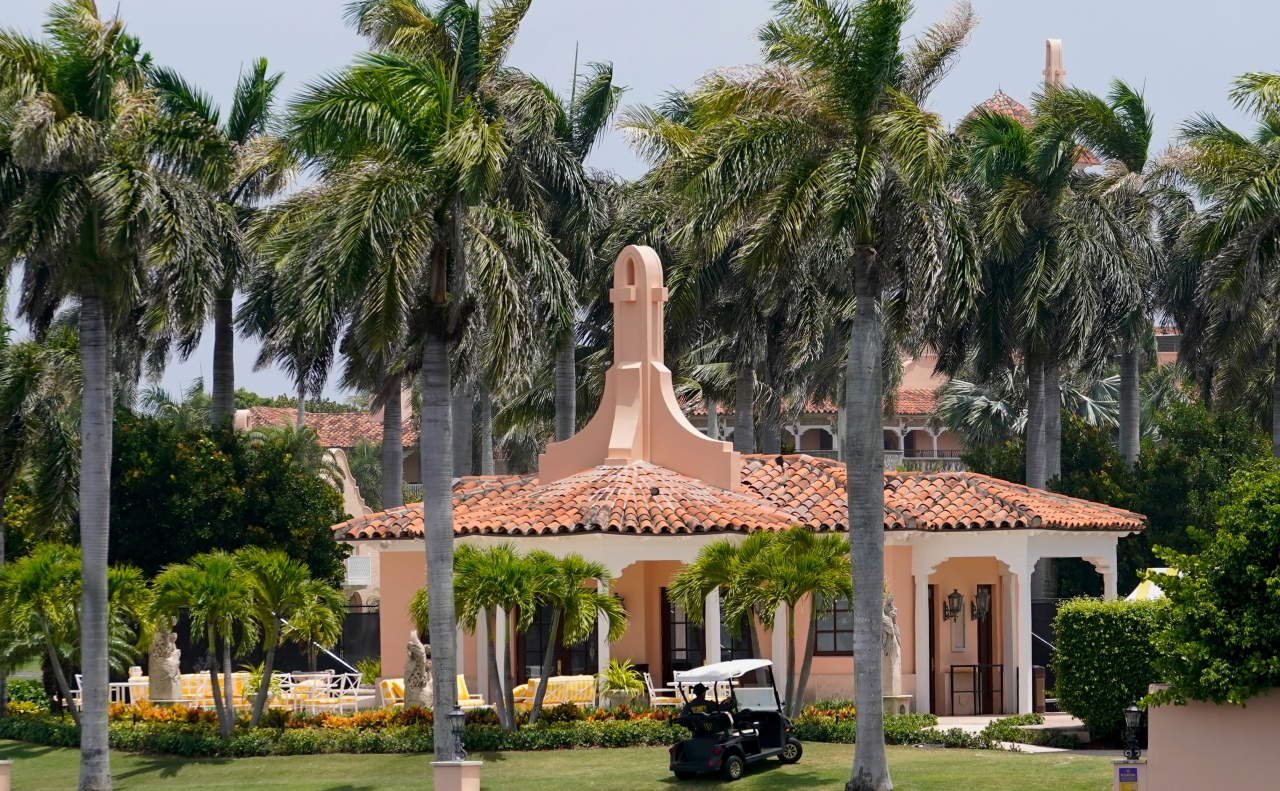
The stunning FBI search of former President Trump’s Florida residence this week has inspired a fierce backlash on the right, fueling concern among experts about the escalating risk of political violence.

The response among Trump supporters has ranged from sharp criticism over the Justice Department’s tactics to outright incendiary rhetoric, with Trump himself comparing the search of his home to the Nixon-era burglary of the Watergate complex.

Some of Trump’s most fervent backers described this week’s legal development as reflecting a country in the midst of civil war, and in isolated cases some far-right extremists called for mobilization in response to what was depicted as an act of tyranny by lawless federal agents.

Although the FBI’s search was based on a warrant approved by a federal judge, that did not stop Republicans from claiming the probe rose from a desire to harm President Biden’s main rival rather than potentially criminal conduct linked to Trump.

“The GOP’s choice to turn a probe into the mishandling of classified documents into a cause célèbre is dangerous, particularly given Trump’s history of calling on private violence, mobs, and militias for support,” said Rachel Kleinfeld, senior fellow at the Carnegie Endowment for International Peace. “A democracy cannot allow anyone to be above the law.”

It may be unsurprising that a criminal investigation linked to Trump, the de facto Republican Party leader and a possible 2024 contender, would spark an impassioned response. At the same time, even the most provocative political speech, short of an incitement to violence, enjoys broad protections under the First Amendment.

But outrage over the FBI search of Trump’s home comes at a particularly tense moment in American politics, as the share of partisans who think violence is sometimes justified to achieve political ends has grown significantly. According to researcher Nathan Kalmoe, around one in five partisans say violence by their own party is at least a little justified to advance their goals.

“More partisan violence looks likely in the future, especially in response to particularly tense moments like the one Trump has escalated here,” said Kalmoe, a professor at Louisiana State University who has tracked the rising support for political violence.

In the immediate aftermath of the FBI search at Mar-a-Lago, a swift backlash arose from a chorus of voices across the right.

Experts said that a specific, concerted plan for real world action hasn’t emerged, but warned that officials should keep a close eye on the tense online vitriol.

One prominent alt-right figure, Jack Posobiec, posted a series of inflammatory posts this week on Telegram, including one with more than 62,000 views that the “federal security state has declared war on Donald J Trump and his supporters.”

According to Alyssa Kann, a research associate at the Digital Forensic Research Lab, some of Posobiec’s messages have been posted in domestic extremist channels, where users are also talking about taking up arms, mobilizing and targeting the FBI.

The incendiary posts haven’t been contained to fringe sites. Posobiec, who has 1.8 million followers on Twitter, tweeted Wednesday that “Our government has been taken over by a Deranged Eunuch Class. It is up to us to displace them and dismantle their corrupt apparatus.”

Steven Crowder, a conservative commentator with 1.9 million Twitter followers, tweeted Monday night “Tomorrow is war. Sleep well.”

Twitter has not taken action on those posts or the accounts. A spokesperson for the company did not respond to a request for comment.

The violent rhetoric is spreading across alternative social media sites too, such as Gab, Parler, Getter, which boast little to no content moderation policies and attract right wing audiences — especially users banned from the mainstream sites.

Collectively, the posts that have emerged online, across platforms, highlight a “nice little shopping list of far-right narratives,” said Jared Holt, senior research manager at the Institute for Strategic Dialogue (ISD).

“It’s like a big firehose of incendiary content that has kind of blown back towards the news item in these spaces,” he said.

Even as the rhetoric has grown more intense, the distance from the political fringe to the political mainstream has shortened.

According to Kann, inflammatory rhetoric that once may have been confined to fringe sites and from far-right figures has been embraced even by politicians with large followings on mainstream platforms like Twitter and Facebook, a dynamic which “emboldens” far-right influencers to be “even more violent,” she said.

“It also mainstreams that sort of violent rhetoric to the everyday person, which is really scary to think about,” Kann said.

Outspoken far-right lawmaker Rep. Marjorie Taylor Greene’s (R-Ga.) tweets have added to the right-wing chorus, with the political firebrand calling to “defund” the FBI, casting the raid as “tyrannical” and likening the situation to action in a “civil war.”

Shannon Hiller, executive director of Princeton’s nonpartisan Bridging Divides Initiative, which seeks to track and mitigate political violence, said American politics was in a “sensitive moment,” one that called for leaders to tamp down tensions, not heighten them.

She pointed to Govs. Larry Hogan of Maryland and Asa Hutchinson of Arkansas as examples of Republican leaders who, though critical of DOJ’s lack of transparency, had expressed their views without further inflaming political discourse, unlike some of their GOP colleagues.

“I do think that other GOP leaders who wink and nod to extremist rhetoric are playing with fire,” she said. “We know from other research that leaders calling for calm and rejecting violence has a positive effect on reducing risk, that’s what we should be calling for from all our leaders now.”

Trump, for his part, has continued to use his megaphone to ratchet up the temperature. On Wednesday, the former president suggested, without evidence, that federal agents had planted evidence on his property, again depicting himself as the victim of a shadowy “raid.”

Legal experts refuted Trump’s depiction of the FBI operation, and underscored the stakes of the investigation — as well as the backlash.

“Even though a judge issued the search warrant for Trump’s home, which requires a finding of probable cause that a crime was committed and that evidence would be found on the premises, Trump and his supporters are going on the offensive and engaging in heated rhetoric that DOJ has somehow treated Trump improperly,” said Barbara McQuade, a law professor at the University of Michigan, who spent seven years as a federal prosecutor during Barack Obama’s presidency. “It is amazing to me how many people are willing to take the bait.”

“I think the risk of civil unrest is very real, but DOJ cannot let that fear prevent it from enforcing the law,” she added, calling the Jan. 6 attack a “sovering” reminder not to underestimate “the threat of political violence by those who support Donald Trump.”

Experts noted a key difference between online posts ahead of the Jan. 6 riot at the Capitol and fallout from the FBI’s search for Mar-a-Lago. While the run-up to the Jan. 6 attack saw the emergence of a specific plan, posts circulating online this week have lacked the same concerted tie to a specific time and place.

At least not yet, said Holt, of ISD, who added that the security situation would continue to be closely monitored.

“We’re starting to track some calls for protests, we’ve seen a couple kind of floated around, but nothing’s really centralizing at this point,” he said. “There have been at least a couple instances where this has inspired extremists to call for protests or call for mobilization. We’re going to keep an eye on that and see how that evolves.”

Categories
US

Trump took the fifth more than 440 times in deposition with New York AG’s office

Former president Donald Trump on Wednesday declined to answer over 440 questions during a deposition with investigators working for New York Attorney General Letitia James’ office, instead choosing to invoke his fifth amendment right against self-incrimination each time.

According to multiple reports citing sources familiar with what happened during the Wednesday session, Mr Trump only answered one question — he provided his name when asked after he was sworn in as a witness.

The ex-president had announced his intention to avail himself of his fifth amendment protections earlier on Wednesday at the end of a lengthy, rambling statement filled with attacks on Ms James, who has been overseeing a long-running probe into whether Mr Trump’s eponymous real estate company violated New York tax laws.

“Under the advice of my counsel and for all of the above reasons, I declined to answer the questions under the rights and privileges afforded to every citizen under the United States Constitution,” he said.

Shortly after posting on his own social media platform about having arrived at Ms James’ “very plush, beautiful, and expensive” offices, the ex-president sent out the statement through his government-funded post-presidential office.

Under an image of the Great Seal of the United States, Mr Trump accused the Empire State’s top prosecutor of “mak[ing] a career” of “attacking” him and his business and of being “a failed politician who has intentionally colluded with others” to “carry out this phony years-long crusade that has wasted countless taxpayer dollars”.

“What Letitia James has tried to do the last three years is a disgrace to the legal system, an affect to New York State taxpayers, and a violation of the solemn rights and protections afforded by the United States Constitution,” said Mr Trump, who added that he “did nothing wrong”.

Mr Trump, who once famously suggested that invoking one’s Fifth Amendment right against self-incrimination was itself evidence of criminality, said he now understands why one would “take the fifth” if innocent.

“When your family, your company, and all the people in your orbit have become the targets of an unfounded, politically motivated Witch Hunt supported by lawyers, prosecutors, and the Fake News Media, you have no choice,” he explained, adding that the FBI search of his Palm Beach, Florida residence as part of a federal investigation into whether he violated laws against theft of government documents and unlawful possession of classified information “wiped out any uncertainty” as to whether he’d refuse to answer questions on grounds that he might incriminate himself.

“I have absolutely no choice because the current Administration and many prosecutors in this Country have lost all moral and ethical bounds of decency,” he said.

Mr Trump’s refusal to answer questions could shield him from criminal liability in any cases brought as a result of Ms James’ probe (although under New York law she herself cannot bring criminal charges against him or his company).

But because the New York Attorney General’s investigation is playing out in civil court, legal experts say his decision to invoke the Fifth Amendment could be used against him if Ms James files any lawsuits against him or his company as a result of the investigation.

Categories
US

Trump took the fifth more than 440 times in deposition with New York AG’s office

Former president Donald Trump on Wednesday declined to answer over 440 questions during a deposition with investigators working for New York Attorney General Letitia James’ office, instead choosing to invoke his fifth amendment right against self-incrimination each time.

According to multiple reports citing sources familiar with what happened during the Wednesday session, Mr Trump only answered one question — he provided his name when asked after he was sworn in as a witness.

The ex-president had announced his intention to avail himself of his fifth amendment protections earlier on Wednesday at the end of a lengthy, rambling statement filled with attacks on Ms James, who has been overseeing a long-running probe into whether Mr Trump’s eponymous real estate company violated New York tax laws.

“Under the advice of my counsel and for all of the above reasons, I declined to answer the questions under the rights and privileges afforded to every citizen under the United States Constitution,” he said.

Shortly after posting on his own social media platform about having arrived at Ms James’ “very plush, beautiful, and expensive” offices, the ex-president sent out the statement through his government-funded post-presidential office.

Under an image of the Great Seal of the United States, Mr Trump accused the Empire State’s top prosecutor of “mak[ing] a career” of “attacking” him and his business and of being “a failed politician who has intentionally colluded with others” to “carry out this phony years-long crusade that has wasted countless taxpayer dollars”.

“What Letitia James has tried to do the last three years is a disgrace to the legal system, an affect to New York State taxpayers, and a violation of the solemn rights and protections afforded by the United States Constitution,” said Mr Trump, who added that he “did nothing wrong”.

Mr Trump, who once famously suggested that invoking one’s Fifth Amendment right against self-incrimination was itself evidence of criminality, said he now understands why one would “take the fifth” if innocent.

“When your family, your company, and all the people in your orbit have become the targets of an unfounded, politically motivated Witch Hunt supported by lawyers, prosecutors, and the Fake News Media, you have no choice,” he explained, adding that the FBI search of his Palm Beach, Florida residence as part of a federal investigation into whether he violated laws against theft of government documents and unlawful possession of classified information “wiped out any uncertainty” as to whether he’d refuse to answer questions on grounds that he might incriminate himself.

“I have absolutely no choice because the current Administration and many prosecutors in this Country have lost all moral and ethical bounds of decency,” he said.

Mr Trump’s refusal to answer questions could shield him from criminal liability in any cases brought as a result of Ms James’ probe (although under New York law she herself cannot bring criminal charges against him or his company).

But because the New York Attorney General’s investigation is playing out in civil court, legal experts say his decision to invoke the Fifth Amendment could be used against him if Ms James files any lawsuits against him or his company as a result of the investigation.

Categories
US

Richmond police officer, shot during traffic stop, in critical condition, suspect identified – WHIO TV 7 and WHIO Radio

Richmond police officer, shot during traffic stop, in critical condition, suspect identified

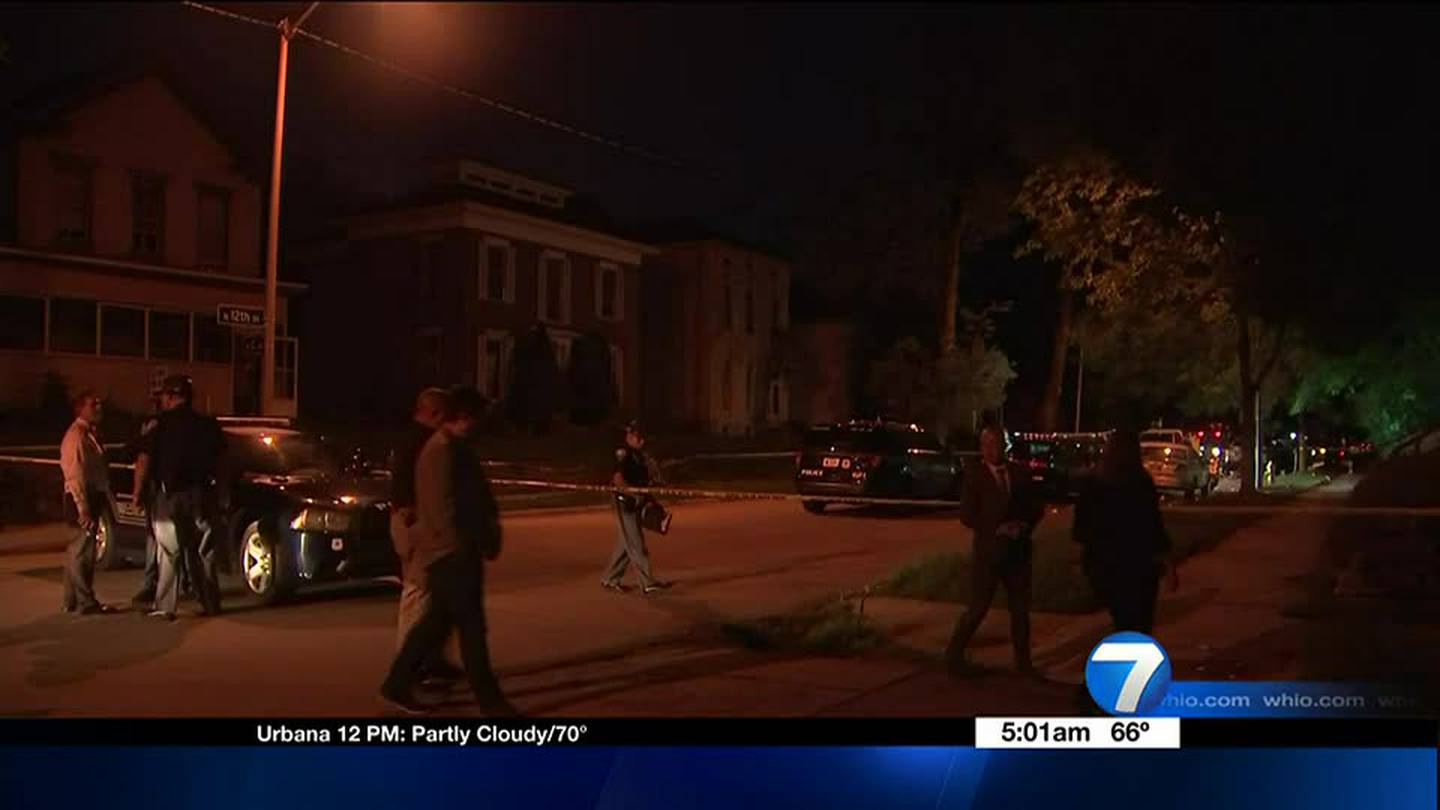
RICHMOND— UPDATE at 12:50 am: Richmond Police have identified the suspect involved in an officer-involved shooting Wednesday night as 47-year-old Phillip M. Lee of Richmond, according to a media release.

The release said, “While officers were speaking with Lee, he allegedly pulled out a firearm and shot several rounds towards officers. Officer Burton was struck by the gunfire. Other officers on the scene returned fire and Lee fled on foot. After a brief foot chase, Lee was apprehended. He was treated for gunshot wounds by the officers and later transported by ambulance to Reid Hospital in Richmond.”

Richmond Police say 28-year-old Seara Burton was transported by ambulance to Miami Valley Hospital and then airlifted to a hospital in Dayton where she was listed in very critical condition.

Burton has served with Richmond Police for four years.

The suspect is in custody and the Wayne County Prosecutor will determine charges upon review of the case, according to

We will update this story as we learn more.

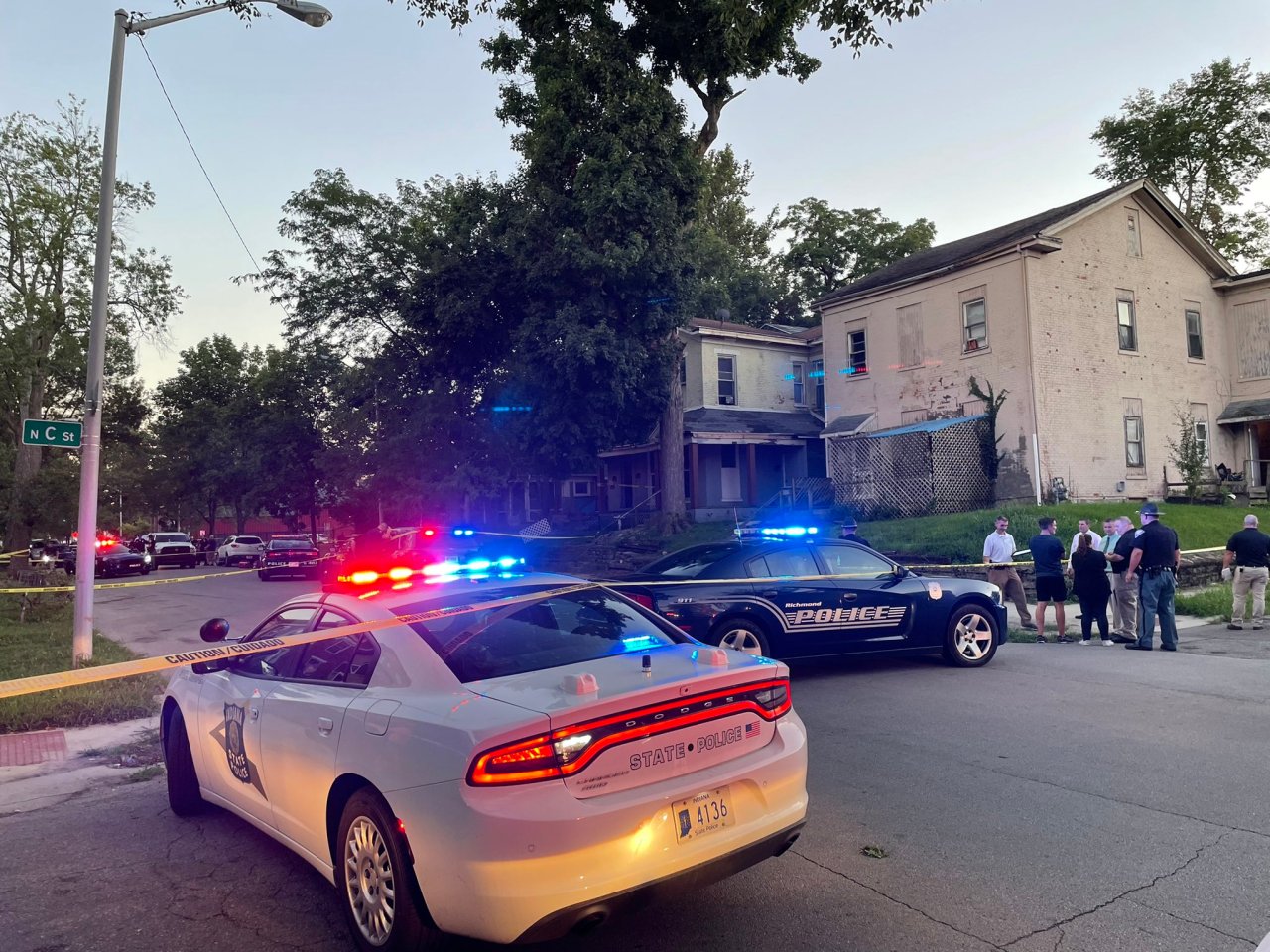
UPDATE at 9:47 pm: Richmond Police Officer Seara Burton, a four-year veteran with the department, was seriously wounded Wednesday night when a suspect fired “multiple shots” at her during a traffic stop, Chief Michael Britt said.

“We need this community to pray for her. I ask that you pray for the officer,” he said to News Center 7′s Brandon Lewis and other media gathered near the scene of the shooting, in the area of ​​12 Street and C Street in Richmond.

Indiana State Police Sgt. Scott Keegan gave this account of what investigators believe happened:

Officer Burton made a traffic stop about 7 pm The suspect, whose name has not been released, drew a weapon and fired multiple shots at the officer. The suspect got out of the vehicle and ran as a second officer returned fire and other officers who were on scene gave chase. The suspect was hit by gunfire; How many times he was uncertain.

No other officers were injured.

Both Officer Burton and the suspect were taken to Miami Valley Hospital. The suspect’s condition was not known.

ISP, which has taken over the investigation, does not know what led to the traffic stop, Sgt. Keegan said.

Chief Britt said there were a lot of facts yet to be determined, but noted, “it is not a common thing” for Richmond police officers to be shot in the line of duty.

>> Off-duty Richmond police officer shot wounded in April

He called Officer Burton, a K-9 handler, “a fine officer” who is engaged and was to be married, “I believe, next weekend.”

Major Dave Snow, who also attended the media briefing, said, “This is a heavy evening in our community. [Officer Burton] you have worked hard for this community.

“This will not be tolerated,” he said of the shooting.

>> PHOTOS: Richmond police officer seriously hurt after being shot during traffic stop

FIRST REPORT:

A Richmond, Indiana, police officer and another person described as a suspect have been injured in a shooting Wednesday evening.

According to Indiana State Police via social media, an officer and suspect were injured during the shooting and taken to a hospital.

Police said the shooting occurred near 12 street and C street in Richmond.

>> Lawyer: Butler Twp. shooting suspect intends to waive extradition to Ohio

Another Indiana law enforcement agency confirmed with News Center 7 that the injured officer is a member of the Richmond Police Department.

The Pendleton Post of Indiana State Police confirmed that the officer was being taken by a medical helicopter to Miami Valley Hospital. Our crew on scene reports seeing multiple Richmond police cruisers at the hospital.

The conditions of the officer and the suspect are not known.

We will update this story as we learn more.

Categories
US

Richmond police officer shot: Officer Seara Burton

RICHMOND, Ind. — A Richmond police officer is fighting for her life after being shot during a traffic stop, authorities said. The suspect who shot her was arrested.

Richmond Officer Seara Burton and her K9 Brev

According to the Indiana State Police, the shooting occurred near 12th Street and C Street in Richmond at approximately 6:30 pm on Wednesday. Police confirmed 28-year-old Officer Seara Burton was shot. She was flown to Miami Valley Hospital in Dayton, Ohio.

“She is in a very critical condition fighting for her life,” said Richmond Police Chief Mike Britt. “Those of you who pray I ask you to pray for her, because she can use it.”

Officer Burton is a four-year veteran and was recently elevated to the K-9 unit. Burton was also engaged and supposed to be married soon, Britt said.

According to the Indiana Fraternal Order of Police, Burton is undergoing surgery.

Police said Burton responded to a call from other officers to help with a traffic stop at North 12th Street and C Street. Officer Burton found a moped driven by a male, identified as 47-year-old Phillip M. Lee.

Indiana State Police say Officer Burton’s K9 partner Brev indicated the possible presence of narcotics sniffing around the moped.

ISP said while officers were talking with Lee, he pulled out a firearm and shot several rounds toward officers. Officer Burton was struck. At this point, police have not released how many times she was shot.

Other officers on the scene returned fire, striking Lee, but they ran off. Officers were able to get him into custody after a short foot chase. Police did not release how many times Lee was shot.

Lee was transported to Reid Hospital in Richmond. He has been arrested on probable cause. The Wayne County Prosecutor will determine what charges he will face.

FOX59 spoke to witnesses at the scene who said the officer was shot in the head. Police did not confirm this information.

Chief Britt did say the entire department suited up to come to the scene and offer help in response to the incident. Britt said the department was devastated, calling Burton a “fine officer.”

Joyce Deloney told FOX59 she witnessed part of the shooting, at first thinking she was hearing fireworks before she walked across a parking lot and saw gunfire striking a building causing Deloney to turn and run.

“I think everyone is in shock, maybe a little bit of disbelief that this was happening here,” Deloney said, adding that the neighborhood has lots of families and children.

“It’s tragic that this happened… I think this could have been prevented.”

“Tonight our deepest thoughts and deepest prayers are with Officer Burton and her family,” said Richmond Maj. Dave Snow.

Additional reporting by Courtney Spinelli

Categories
US

Trump’s bond with GOP deepens after primary wins, FBI search

NEW YORK (AP) — Donald Trump ‘s pick for governor in the swing state of Wisconsin easily defeated a favorite of the Republican establishment.

In Connecticut, the state that launched the Bush family and its brand of compassionate conservatism, a fiery Senate contender who promoted Trump’s election lies upset the state GOP’s endorsed candidate. Meanwhile in Washington, Republicans ranging from Senate Minority Leader Mitch McConnell to conspiracy theorist Rep. Marjorie Taylor Greene defended Trump against an unprecedented FBI search.

And that was just this week.

The rapid developments crystallized the former president’s singular status atop a party he has spent the past seven years breaking down and rebuilding in his image. Facing mounting legal vulnerabilities and considering another presidential run, he needs support from the party to maintain his political career. But, whether they like it or not, many in the party also need Trump, whose endorsement has proven crucial for those seeking to advance to the November ballot..

“For a pretty good stretch, it felt like the Trump movement was losing more ground than it was gaining,” said Georgia Republican Lt. Gov. Geoff Duncan, who is urging his party to move past Trump. But now, he said, Trump is benefiting from “an incredibly swift tail wind.”

The Republican response to the FBI’s search of Trump’s Florida estate this week was an especially stark example of how the party is keeping Trump nearby. Some of the Republicans considering challenges to Trump in a 2024 presidential primary, such as Florida Gov. Ron DeSantis, were among those defending him. Even long-established Trump critics like Maryland Gov. Larry Hogan questioned the search, pressing for details about its circumstances.

But even before the FBI showed up at Mar-a-Lago, Trump was gaining momentum in his post-presidential effort to shape the GOP. In all, nearly 180 Trump-endorsed candidates up and down the ballot have won their primaries since May while fewer than 20 have lost.

Only two of the 10 House Republicans who supported Trump’s impeachment after the Jan. 6 insurrection are expected back in Congress next year. Rep. Jaime Herrera-Beutler, R-Wash., who conceded defeat after her Tuesday primary, it was the latest to fall. Leading Trump antagonist Rep. Liz CheneyR-Wyo., is at risk of joining her next week.

The Trump victories include a clean sweep of statewide primary elections in Arizona last week — including an election denier in the race for the state’s official chief elections. Trump’s allies also prevailed Tuesday across Wisconsin and Connecticut, a state long known for its moderate Republican leanings.

In Wisconsin’s Republican primary for governor, wealthy Trump-backed businessman Tim Michels defeated former Lt. Gov. Rebecca Kleefisch, an establishment favourite. And in Connecticut, Leora Levy, who promoted Trump’s lie that the 2020 election was stolen, emerged to an unexpected victory over a more moderate rival after earning Trump’s official endorsement.

On Monday, just hours after the FBI search, Trump hosted a tele-town hall rally on his behalf. Levy thanked Trump in her acceptance speech, while railing against the FBI’s search for her.

“All of us can tell him how upset and offended and disgusted we were at what happened to him,” she said. “That is un-American. That is what they do in Cuba, in China, in dictatorships. And that will stop.”

Despite his recent dominance, Trump — and the Republicans close to him — face political and legal threats that could undermine their momentum as the GOP fights for control of Congress and statehouses across the nation this fall.

While Trump’s picks have notched notable victories in primaries this summer, they may struggle in the fall. That’s especially true in several governor’s races in Democratic-leaning states such as Connecticut and Maryland, where GOP candidates must track to the center to win a general election.

Meanwhile, several Republicans with White House ambitions are moving forward with a busy travel schedule that will take them to politically important states where they can back candidates on the ballot this year and build relationships heading into 2024.

DeSantis plans to boost high-profile Republican contenders across Arizona, New Mexico, Ohio and Pennsylvania. Former Vice President Mike Penceanother potential 2024 presidential contender, is scheduled to appear next week in New Hampshire.

On the legal front, the FBI search was part of an investigation into whether the former president took classified records from the White House to his Florida residence. While Republicans have rallied behind Trump, very few facts about the case have been released publicly. Trump’s attorneys have so far declined to release details from the search warrant.

Prosecutors in Washington and Georgia are also investigating Trump’s efforts to overturn the 2020 election he falsely claimed was stolen. The Jan. 6 congressional commission has exposed damning details about Trump’s behavior from Republican witnesses in recent hearings, which have prompted new concerns, at least privately, among the GOP establishment and donor class.

And on Wednesday, Trump invoked his Fifth Amendment protection against self-incrimination as he testified under oath Wednesday in the New York attorney general’s long-running civil investigation into his business dealings.

Trump’s legal entanglements represent a distraction at best for Republican candidates who’d rather focus on President Joe Biden’s leadership, sky-high inflation and immigration troubles to help court moderate voters and independents in the general election.

“Today, every Republican in every state in this country should be talking about how bad Joe Biden is, how bad inflation is, how difficult it is to run a business and run a household,” said Duncan, the Georgia lieutenant governor. “But instead, we’re talking about some investigation, we’re talking about Donald Trump pleading the Fifth, we’re talking about Donald Trump endorsing some conspiracy theorist.”

Trump critics in both parties are ready and willing to highlight Trump’s shortcomings — and his relationship with midterm candidates — as more voters begin to pay attention to politics this fall.

“This is, and always has been, Donald Trump’s Republican Party,” Democratic National Committee Chair Jaime Harrison said in an interview, condemning “MAGA Republicans” and their “extreme agenda” on abortion and other issues.

At the same time, the Republican Accountability Project and Protect Democracy launched a $3 million television and digital advertising campaign this week across seven swing states focused on Trump’s role in the Jan. 6 insurrection. The ads, which will run in Arizona, Georgia, Michigan, Nevada, North Carolina, Pennsylvania and Wisconsin, feature testimonials from Republican voters who condemn Trump’s lies about nonexistent election fraud that fueled the Capitol attack.

One ad features congressional testimony from Cheney, the Wyoming Republican who has publicly declared that Trump should never hold public office again.

Still, Cheney faces her own primary election against a Trump-backed challenger next week in Wyoming. One of Trump’s top political targets this year, she is expected to lose. Anticipating a loss, Cheney’s allies suggest she may be better positioned to run for president in 2024, either as a Republican or independent.

Trump’s allies are supremely confident about his ability to win the GOP’s presidential nomination in 2024. In fact, aides who had initially pushed him to launch his campaign after the November midterms are now encouraging him to announce sooner to help freeze out would-be Republican challengers .

“It’s going to be very difficult for anyone to take the nomination away from him in 2024,” said Stephen Moore, a former Trump economic adviser who has spoken with Trump about his 2024 intentions. “He is running. That is a certainty.”

Rep. Tom Rice, RS.C., predicted that Trump would “lose in a landslide” if he sought the presidency again, adding that the former president’s overall grasp on the party is “eroding on the edges.”

“In a normal election, you’ve got to win not just the base. You’ve got to win the middle, too, right, and maybe crossover on the other side,” said Rice, who lost his recent primary after voting in favor of Trump’s second impeachment.

Rice warned that Trump far-right candidates could lead to unnecessary losses for the party in November. “Donald Trump is pushing things so far to the right,” he said in an interview.

Meanwhile, former New Jersey Gov. Chris Christie, eyeing a 2024 bid himself, warned against making bold political predictions two years before the Republican Party selects its next presidential nominee.

“We’re sitting here in August of 2022,” Christie said in an interview. “My sense is there’s a lot of water over the dam still to come before anybody can determine anybody’s individual position in the primaries of ’24 — except to say that if Donald Trump runs, he will certainly be a factor.”

___

Associated Press writers Susan Haigh in Hartford, Connecticut, and Meg Kinnard in Columbia, South Carolina, contributed to this report.

.

Categories
US

What investigations is Trump facing? : NPR

Former President Trump arrives at a rally Friday, Aug. 5, in Wisconsin. Trump has been the subject of several ongoing investigations into his businesses and his actions while in the White House.

Morry Gash/AP


hide caption

toggle caption

Morry Gash/AP


Former President Trump arrives at a rally Friday, Aug. 5, in Wisconsin. Trump has been the subject of several ongoing investigations into his businesses and his actions while in the White House.

Morry Gash/AP

Agents from the FBI searched former President Donald Trump’s Florida home Monday in what appears to be part of an investigation looking into White House records from the White House that Trump took with him. The records were supposed to be turned into the National Archives when he left office.

The FBI is not commenting on the details of the investigation or the search, and Trump was quick to say he had previously been cooperating with authorities investigating the records, though he did not add any specifics.

This isn’t the only investigation Trump is a subject of at the moment. Authorities have several open on the former president, including investigations into his businesses, his tax returns and his actions leading up to the Jan. 6 insurrection at the Capitol.

These investigations brew as Trump weighs another presidential run. The political consequences of the probes are unclear, as are how, or whether, they would impact his decision.

Here are is a recap of some of the investigations involving Trump.

White House documents

This is the investigation that appears to be connected to the raid at Mar-a-Lago Monday, though there is no official confirmation from federal authorities as to what they were seeking.

In February, the National Archives and Records Administration said they retrieved 15 boxes of White House documents from Mar-a-Lago, a violation of the Presidential Records Act, since those records should have been at the National Archives. Attorney General Merrick Garland said at the time they included classified material.

There’s also a potential violation of a federal statute that dictates how classified material is handled. the Washington Post reported that many of the records were taped together or arrived back at the Archives still in pieces. The records contained letters from foreign leaders like Kim Jong Un and the letter former President Obama wrote to Trump when he came into office in 2017.

The Jan. 6 Capitol riot and the attempt to overturn the 2020 election

The ongoing House Select Committee investigation into the Jan. 6 Capitol riot has shown Trump’s involvement in trying to deny the results of the 2020 presidential election and turn them in his favor.

While the House committee can’t prosecute Trump, it can decide to make referrals to do so. The Department of Justice could, though, as part of its probe into what happened on Jan. 6. So far, the department has charged more than 870 people, and it’s investigating those who backed political rallies held ahead of the Capitol attack.

“We will hold accountable anyone who was criminally responsible for attempting to interfere with the transfer, legitimate, lawful transfer of power from one administration to the next,” Garland told NBC News in July.

Also revealed in the House committee’s investigation is that Trump and his campaign misled campaign donors who gave money to fight Trump’s false claims of election fraud. The committee says the former president’s campaign took in $250 million in donations for a legal defense fund that was never created. It’s possible that Trump could face charges of wire fraud.

Meanwhile, Trump is facing another investigation on the state level. In Fulton County, Ga., the District Attorney Fani Willis is looking into whether Trump violated the law in attempting to overturn the 2020 Georgia election results, specifically when he called Secretary of State Brad Raffensperger and asked him to “find” enough votes for him .

Republicans in other states, including Arizona, Nevada, Georgia, Pennsylvania and Wisconsin, also sent in fake voter results and it could be another pathway that leads the DOJ close to Trump.

Trump’s businesses in New York

Trump pleaded the Fifth Amendment on Wednesday as part of a civil investigation in the state of New York. That case looks at whether Trump inflated the value of his businesses like golf courses and skyscrapers, misleading tax authorities.

Trump said on social media that “under the advice of counsel” he “declined to answer questions under the rights and privileges afforded to every citizen under the United States Constitution.”

Donald Trump Jr. and Ivanka Trump, two of the former president’s children, also testified in recent days.

Trump Tower in Midtown Manhattan, headquarters of the Trump Organization, the former president’s family business.

Spencer Platt/Getty Images


hide caption

toggle caption

Spencer Platt/Getty Images


Trump Tower in Midtown Manhattan, headquarters of the Trump Organization, the former president’s family business.

Spencer Platt/Getty Images

New York Attorney General Letitia James is running that civil probe, and the Manhattan District Attorney’s office has also investigated Trump. The fate of the Manhattan probe has been uncertain since two lead lawyers quit earlier this year and the grand jury investigating Trump expired, though DA Alvin Bragg has insisted that he would not end the work.

Trump’s tax returns

The Manhattan District Attorney’s office, as part of that criminal investigation, was able to obtain Trump’s tax returns in 2021 after a lengthy legal battle.

Now, after years of requesting, the House Ways and Means Committee will also be able to obtain Trump’s tax returns from the IRS, according to a court opinion issued Tuesday. Trump may still appeal, but the committee says they are confident they will get the documents quickly.

It’s not so much an investigation as a legal ruling, but Trump is the only president in the last 40 years to not release his taxes, and the documents have been sought after by legislators and voters since he announced his run for the White House in 2015 .

Categories
US

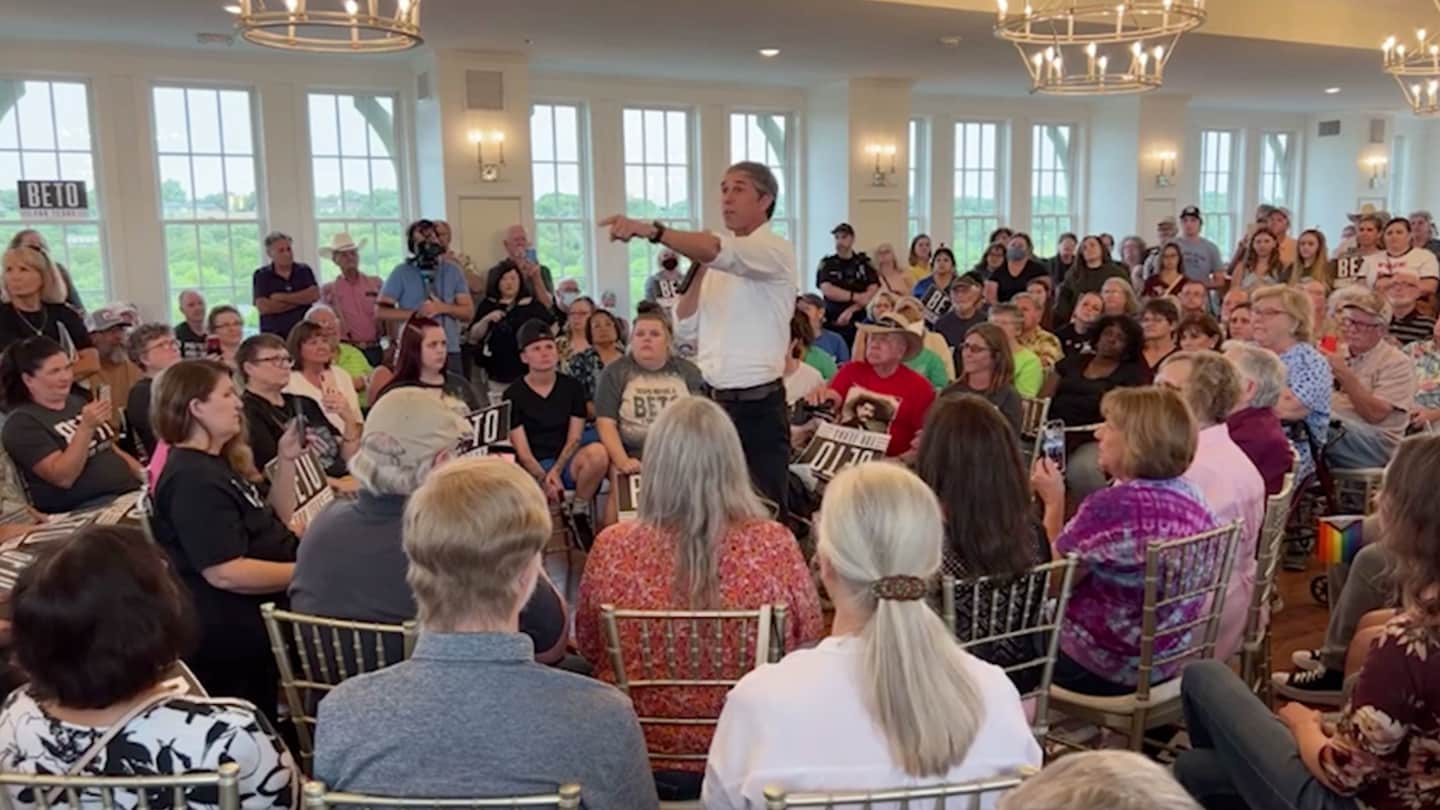
Beto O’Rourke lashes out at heckler laughing over Uvalde mass shooting

Placeholder while article actions load

Beto O’Rourke on Wednesday railed against Texans’ easy access to AR-style rifles like the one used in May to massacre 19 students and two of their teachers at a Uvalde, Tex., elementary school.

The 18-year-old gunman had legally purchased his rifle, which was “originally designed for use on the battlefields in Vietnam to penetrate an enemy soldier’s helmet at 500 feet and knock him down dead,” O’Rourke told supporters during a campaign rally , imitating a warfighter by dropping to one knee and extending his arm as if lining up a shot.

O’Rourke, the Democratic nominee running to oust Texas Gov. Greg Abbott (R) in November, initially ignored the laughter. He kept stumping, saying that the Uvalde shooter had used the rifle not to fight enemy soldiers off in the distance but “against kids” five feet away.

But then he stopped and pointed at the heckler: “It may be funny to you,” O’Rourke thundered, interjecting a swear word, “but it’s not funny to me.”

One video of the exchange went viral, racking up more than 3 million views by early Thursday, just hours after O’Rourke wrapped up the campaign stop in Mineral Wells — a town some 40 miles west of the Dallas-Fort Worth area and 260 miles north of Uvalde. O’Rourke’s campaign did not immediately respond to a request for comment about the exchange from The Washington Post late Wednesday.

Shortly after the event, O’Rourke tweeted that he considers nothing more serious “than getting justice for the families in Uvalde and stopping this from ever happening again.”

Beto O’Rourke confronts Abbott in Uvalde: ‘You are doing nothing’

The town hall was part of what’s shaping up to be the most expensive campaign in Texas history, dwarfing the $125 million O’Rourke and Sen. Ted Cruz spent in 2018 in the Democrat’s failed attempt to unseat the Republican incumbent, the Houston Chronicle reported Tuesday. O’Rourke and Abbott raised a combined $52.5 million between late February and June alone, with O’Rourke’s $27.6 million haul setting a state campaign fundraising record, the Texas Tribune reported last month.

Gun control has been a staple of O’Rourke’s platform to defeat Abbott, especially in the wake of the massacre in Uvalde. A day after the shooting, I interrupted Abbott during a news conference at Uvalde High School as the governor updated reporters, The Post reported at the time. As Abbott introduced Lt. Gov. Dan Patrick (R), O’Rourke came up to the stage to declare that the governor and other high-level state officials had dithered for far too long, failing to take action after previous mass shootings in Texas, including those at Santa Fe High School in 2018 and an El Paso Walmart in 2019.

“The time to stop the next shooting is right now, and you are doing nothing,” O’Rourke said. “You’re offering us nothing.”

Moments before O’Rourke interrupted him at the May 25 news conference, Abbott told reporters that tougher gun laws are “not a real solution” to preventing more mass shootings. Instead, a week later, he called on the state legislature to create special committees that would make recommendations about how to take “meaningful action” that might stop something like Uvalde from happening again. At the time, O’Rourke knocked the idea out, imploring the governor to “do your job” by calling a special legislative session to specifically tackle the issue.

Congress wants more red-flag laws. But GOP states, gun groups resist.

At Wednesday night’s town hall in Mineral Wells, O’Rourke promised supporters “common-sense” gun control if he’s elected governor. He mentioned raising the minimum age for buying an AR-style rifle from 18 to 21, implementing universal background checks in Texas and enacting a red-flag law, legislation that allows judges to order law enforcement to seize gun owners’ firearms if convinced that they pose a danger to themselves or others.

O’Rourke ended his pitch by saying that “Democrats and Republicans, gun owners and non-gun owners” — maybe even himself and the heckler — might still find common ground on gun restrictions.

“You either accept that we are inherently evil and violent and deadly and love to kill each other and slaughter kids where they sit,” O’Rourke said, “or that there is something that you and I can do together regardless of the differences between us.”

Categories
US

‘No more car for me’: will a $23 toll finally rid Manhattan of gridlock? | New York

Could a moonshot policy finally rid the nation’s most congested city of its incessant, noisy, polluting traffic? Soon, over a million drivers a day could be forced to cough up as much as $23 to enter midtown and lower Manhattan – a toll that planners say will raise $15bn to fund New York public transit while cutting vehicles in the area by as much as one-fifth.

Among the cars that would be leaving the streets of Manhattan is a white Honda Accord that was parked on East Broadway in the Lower East Side on Wednesday.

“If they add even more fees, then that’s it,” said Felicita Mercado as she stepped into the vehicle. “No more car for me.”

Instead, the 77-year-old lifelong New Yorker said, she will start taking the bus.

The plan is called congestion pricing, and New York City is poised to become the first city in the United States to implement it. Similar policies have long been in place in cities including Singapore, which has had congestion pricing since 1975, and London, where a congestion charge has been in place since 2003. But in New York, a city synonymous with gridlock, the policy struggled to overcome opposition for decades before it was finally signed into law in 2019.

On Wednesday, transportation authorities released a much-awaited environmental assessment for the policy, a major milestone that explains how the plan will affect the city. “Bottom line: congestion pricing is good for the environment, good for public transit and good for New York and the region,” said the Metropolitan Transit Authority’s (MTA) chair and CEO, Janno Lieber, in a statement.

Public transportation advocates are calling it a long-awaited victory. “This is a massive deal for all New Yorkers,” said Danny Harris, the head of Transportation Alternatives, a nonprofit that has fought for the policy. “There’s not a corner of the city that isn’t negatively impacted by our car-first policies. This is a big step for not being so car-centric that reduces the number of people who drive and increases the amount of people who take other sustainable modes to get around.”

people walk through station as train is at platform
New York’s Penn Station subway stop in April. Photograph: Angela Weiss/AFP/Getty Images

Manhattan is an island connected to its neighbors by a network of bridges, tunnels, train routes and ferries. An estimated 7.7 million people enter Manhattan’s central business district every weekday – twice the population of Los Angeles, according to the report. Of those people, just under a quarter – or 1.85 million – enter in a motor vehicle. All that traffic has slowed travel speeds to an agonizing crawl: from an average of 9.1 mph in 2010 to just 7.1 mph in 2019. That costs the average New York City driver 102 hours of lost time every year.

Meanwhile, the public trains and buses used by the majority of the city are in dire need of upgrades. Many of the MTA’s railroads and subway tracks are more than a century old and require billions of dollars in repairs. Studies have found that most of the city’s bus routes – which are especially important for the city’s lower-income residents – are excruciatingly slow and unreliable. And ridership numbers have worsened dramatically since the pandemic, amid fears of Covid and crime.

That dynamic has produced enthusiasm for congestion pricing among residents of lower Manhattan.

“There’s too many people driving in for no good reason,” said one Chinatown bike shop owner, who declined to be named. “They’re not coming in for work, they’re not coming in to do anything specific – they’re just driving because they’re lazy or they’re afraid of the subway. It just sucks that people are driving behaviors that are unnecessary and also destroying our infrastructure, which is causing cascades of other problems in the city.”

“I fully-throatedly support strong congestion pricing on private cars,” said Ben Eckersley, a 31-year-old lifelong Manhattan resident who lives on the Lower East Side. “We have a public transit system that is only designed to get in and out of Manhattan from every borough. The fact that people use lower Manhattan as a pass-through location to get to New Jersey is bogus. The local pollution problems it causes, the traffic problems it causes are outrageous. We just don’t have the infrastructure for it.”

The new study offers policymakers a number of tolling scenarios, with peak-hour tolls ranging from $9 to $23 per vehicle. In some scenarios, vehicles such as taxis and transit buses and would be exempt from the toll completely, while some other vehicles would be charged the toll a maximum of once per day. In another scenario, vehicles including taxis, rideshare vehicles, trucks, and buses could be hit with the congestion charge every time they enter or re-enter the zone in a given day.

Residents of the congestion area making under $60,000 a year will be eligible for a tax credit to make up for the cost of the tolls, and emergency vehicles and vehicles carrying people with disabilities will be exempt from the tolls, according to the 2019 law.

people walk on london street near double decker bus
A congestion charge sign is displayed in London in October, shortly before the city expanded its ultra-low-emission zone. Photograph: Hollie Adams/Getty Images

The reward to all residents of the area should be noticeably less traffic and cleaner air. The study projects that the number of vehicles in the area each day will decrease between 15.4 to 19.9 percent. Harmful airborne PM2.5 and PM10 particles, which have been shown to cause cancer, would be reduced by over 11 percent.

New York’s policy does not go as far as London’s, where drivers who enter a designated “ultra low emissions zone” must pay a fee if their car doesn’t meet fuel efficiency standards. As of last year, that zone covers most of the British capital.

Harris, the public transportation advocate, praised New York’s toll as a first step of recognizing driving’s true impact on society.

“The truth is, people have never had to pay the actual cost of driving because it’s been so incredibly subsidized,” he said, citing policies like the city’s millions of free street parking spots.

But the toll’s success also depends on whether the city can fast-track infrastructure for alternatives to driving, such as bikeshare docks, protected bike lanes and bus-only lanes, before the toll is formally implemented, he said. Congestion pricing shouldn’t be about “taking cars away from people”, he said, but about “providing options for you to get around”.

“If you live in a community where you’re forced into a car, forced into car payments, and forced into wasting much of your life in traffic, it means your city and the car industry have continued to fail you. This is about giving people freedom from that.”