Categories
US

After the fall of Roe, Republican pursuit of abortion bans appears to falter | Roe v. Wade

YoIn the leadup to the US supreme court overturning Roe v Wade and thus scrapping federal abortion protection, Republican lawmakers across the country maintained an uncompromising rallying cry against abortions, vowing to implement a sweeping wave of restrictions in their states.

However, since the highest court in the US overturned the ruling, many Republican leaders and officials have become more hesitant – or have even gone silent – ​​over the exact type of bans they promised to enact.

As Republicans move towards an election season rife with internal disagreements within their own party and mixed public opinions on exceptions in abortion bans such as instances of rape and incest, many rightwing lawmakers are finding it increasingly difficult to implement cohesive abortion policies.

The phenomenon has been starkly illustrated by Kansas’s referendum last week, where the usually reliably Republican state voted to keep abortion protections in its state constitution, providing an unexpected boost from red state America to the abortion rights movement.

With delays in passing abortion bills across the US and contentious questions on how far the bans will reach, Republicans are now, as Sarah Longwell, a moderate Republican strategist, said to Politico, “the dog that caught the car.”

According to a survey conducted between 27 June and 4 July by the Pew Research center, a majority of the American public disapproves of the supreme court’s decision to overturn Roe: 57% of adults disapprove of the court’s decision, including 43% who strongly disapprove, and 41% of American adults approve while 25% strongly approve of the court’s decision.

The survey also found that 62% of Americans say that abortion should be legal in all or most cases, and 36% of Americans say that abortion should be illegal in all or most cases. Only 38% of Republicans say that abortion should be legal in all or most cases, marking a 1% decrease from poll results obtained in 2007.

As Republican lawmakers grapple with mixed public opinions, many lawmakers have been divided over just how far they should go to ban abortions. With the recent case of the 10-year-old rape victim traveling across state lines from Ohio to Indiana to obtain an abortion continuing to dominate national headlines, many Republicans are realizing that the reality they are presented with vastly differs from their initial narratives surrounding abortion politics.

What kind of exceptions should be made in cases of rape and incest? Should a woman be granted an abortion if she is faced with a life-threatening ectopic pregnancy or an incomplete miscarriage? If an outright ban is put in place, should there be expansions of paid family leave benefits and increased funding for foster care and women’s health?

Some states have plowed ahead. Indiana has now passed a Republican-sponsored bill that would ban nearly all abortions in the state with limited exceptions, including cases of rape and incest, and to protect the health of the mother. That made it the first state in the US to put new restrictions in place, rather than just rely on a pre-existing “trigger law” passed before the supreme court’s decision.

But even in Indiana the move came after a series of thorny debates in the Indiana congress that reflect the growing divide Republicans are facing when it comes to fleshing out the specifics of abortion ban bills.

Before Roe v Wade was overturned, lawmakers did not spend “enough time on those issues, because you knew it was an issue you didn’t have to really get into the granular level in. But we’re in there and we’re recognizing that this is pretty hard work,” Republican Indiana state senator Rodric Bray told the New York Times.

Another Indiana Republican state senator, Kyle Walker, who voted against the ban last month, said: “I believe we must strike a balance for pregnant women to make their own health decisions in the first trimester of the pregnancy and also provide protections for an unborn baby as it progresses toward viability outside the womb.”

Even state senator Sue Glick, the sponsor of the bill, said that she was “not exactly” happy with the bill.

Meanwhile, the American Civil Liberties Union of Indiana called the bill “cruel” and “dangerous”, while Indiana Right to Life criticized it as being “weak and troubling”, saying that it “lacks any teeth to actually reduce abortions in Indiana by holding those who perform abortions or would intentionally skirt the law accountable with criminal consequences.”

South Dakota, a predominantly Republican state, is facing a similar situation.

Shortly after the bombshell leak of the supreme court draft opinion on Roe, Republican governor Kristi Noem announced that she will “immediately call for a special session to save lives and guarantee that every unborn child has a right to life in South Dakota.”

However, since the supreme court overturned Roe, Noem has yet to publicly give any indication of when or if a special session will still take place. In response to the Associated Press asking if the special legislative session is still on the table, Noem’s office said it will happen “later this year”.

Noem has largely kept her language surrounding South Dakota’s abortion bans vague, simply reaffirming that “there is more work to do” and promising to “help mothers in crisis”. In June, Noem appeared to soften her approach on abortions by saying that doctors, not their patients, should be prosecuted for offering abortion pills.

“I don’t believe women should ever be prosecuted,” she said. “I don’t believe there should be any punishment for women, ever, that are in a crisis situation or have an unplanned pregnancy,” she said. The governor also set up a website for pregnant women that aims to “help mothers and their babies before birth and after by providing resources for pregnancy, new parents, financial assistance and adoption.”

Speaking to the Associated Press, South Dakota Right to Life’s executive director, Dale Bartscher, said that Noem’s actions reflect a turning point in the anti-abortion movement.

“An entirely new pro-life movement has just begun – we stand ready to serve women, the unborn and families,” he said. The Guardian reached out to Bartscher for additional comments.

In Arkansas, the Republican governor, Asa Hutchinson, appears to have taken a softer approach on the issue after the state’s abortion trigger ban immediately went into effect when Roe was overturned. Last month, Hutchinson did not confirm that abortion will be a topic on the agenda of this month’s special session that is supposed to focus on tax cuts.

Referring to alternatives to abortion, Hutchinson said: “That’s come up in conversations … I’ve mentioned that I need. You know, what can we do more for maternity care? What can we do more for adoption services because of the increased number that’s going to be demanding that? And so that is a potential issue… so just stay tuned.”

In May, Hutchinson acknowledged that his state’s abortion trigger law would result in “heartbreaking circumstances”, adding that “whenever you see that real-life circumstances like that, the debate is going to continue and the will of the people may or may not change. ”.

The governor admitted that abortions performed in the exceptions of rape and incest are increasingly “reflecting the broad view of Americans” but acknowledged that the issue is “still a very divided [topic].”

However, whether Hutchinson will ask lawmakers to consider the exceptions during the state’s upcoming legislative special session remains to be seen.

Meanwhile, in Ohio, the Republican governor, Mike DeWine, has refused to comment on the state’s recently enacted “heartbeat bill”, which makes abortions illegal after six weeks into a pregnancy. As a result of the state’s strict abortion laws, a 10-year-old rape victim from the state had to travel to Indiana to receive an abortion.

DeWine condemned the case as a “horrible, horrible tragedy” but did not signal whether he would amend abortion restrictions in the state. Speaking to reporters last month, DeWine refused to advocate for specific abortion policies and said that he is “going to let the debate play out a little bit”, referring to the legislative debate that is expected to happen in a few months.

“We’re going to hear from medical experts, we’re going to hear from other people,” he said, adding: “then there’ll be a time when I’ll certainly weigh in.”

Since Roe got overturned, Virginia’s top Republican lawmaker has been expressing similar sentiments to DeWine’s. In June, Governor Glenn Youngkin told an anti-abortion group that he would “happily and gleefully” sign any bill that would protect life, which he believes begins at conception.

Youngkin has expressed support for a ban on abortions after 15 weeks with exceptions for rape, incest and risk to the mother’s health.

Youngkin did not specify his support for any particular policies, although he acknowledged the divisive nature of the issue and called for a legislative process to hash out nuances in abortion ban bills.

“I’m a pro-life governor and I will sign a bill that comes to my desk that protects life and I look forward to that. But as of now, what we need is the process to start and to take the next four or five or six months and to work on a bill that can be supported on a bipartisan basis,” he said.

As Republicans across the country face a widening divide over the particularities of implementing abortion bans, a leading anti-abortion group has been urging Republicans in Congress not to leave the issue to the states. Many anti-abortion activists worry that extreme measures by Republican state lawmakers may cost Republican lawmakers seats nationally, especially with midterms on the horizon.

At the same time, in the wake of the Kansas referendum result, many Democratic strategists now believe public opinion, even in many red states, will be on their side. The issue can be used to shore up under-threat Democrats and wielded as a weapon against Republican candidates who can be portrayed as out of step with most Americans.

In a memo from Susan B Anthony Pro-Life America sent out in July, Republican lawmakers were encouraged to stay away from phrases such as “nationwide ban” and were urged not to relay the issue to state lawmakers.

“It is vitally important that pro-life Members of Congress highlight the abortion extremism of Democrats, who support abortion on demand, up until the moment of birth, paid for the taxpayer,” the memo said.
Categories
US

FBI search of Trump’s Mar-a-Lago home followed tip classified records were there – report | donald trump

Federal investigators searched Donald Trump’s Mar-a-Lago home in Palm Beach after an informant told them he might be storing classified records at his private club, the Wall Street Journal has reported.

The search on Monday reportedly came two months after federal law enforcement officials came to Mar-a-Lago to talk about boxes of government documents that were being stored there.

Federal authorities searched Trump’s sprawling south Florida residence having obtained a warrant to seek classified and White House records that the US justice department thought Trump had kept unlawfully, two sources previously told the Guardian.

The warrant, executed by FBI agents, intimated that this investigation involving Trump is a strictly criminal inquiry.

The sources said justice department officials became concerned that these records were being held unlawfully at Mar-a-Lago following government attorneys’ recent discussions with Trump’s legal team. The unprecedented search of an ex-president’s residence marked the apex of a fight between Trump and his overt disdain for the Presidential Records Act of 1978 – which mandates preservation of official records – and parties tasked with upholding that law.

The search and reports about an informant for the FBI in or around Trump’s inner circle has drawn condemnation from Trump loyalists, who have framed the search in partisan terms – and used it as a call-to-action for fundraising and voter mobilization for November’s election .

Extremist far-right Republican Georgia congresswoman Marjorie Taylor Greene referred to any potential informants as “traitors”.

“We now know that there was an FBI informant at Mar-a-Lago, who is that and how many other FBI informants are around President Trump on a daily basis, working at his clubs, working at Mar-a-Lago, or maybe Bedminster, or on his staff?” Greene said on his web show, according to Newsweek.

The Journal’s report chronicled discussions between justice department officials and Trump’s lawyers over these records. On 3 June, a high-ranking justice department official and three FBI agents came to Trump’s Mar-a-Lago house “to discuss boxes with government records sitting in a basement storage room along with suits, sweaters and golf shoes”.

Trump and his team seemed unaware of the possible gravity of the situation during this meeting, the newspaper said. “The former president even popped into the June 3 meeting at Mar-a-Lago, shaking hands,” the Journal reported. A source told the Journal that Trump said: “’I appreciate the job you’re doing … anything you need, let us know.’”

The FBI sent a missive several days later asking for a more secure lock to be placed on the storage room’s door. “In the following weeks, however, someone familiar with the stored papers told investigators there may be still more classified documents at the private club,” the Journal reported.

The potential presence of these records follows the National Archives’ removal of 15 boxes earlier this year. Officials with the justice department were skeptical that Trump’s team was being forthright about the records that were still at his home, a source told the newspaper.

The warrant for this search alluded to the Presidential Records Act and a potential violation of governing statute classified records, an attorney for Trump reportedly said. Trump has neither disclosed this warrant nor discussed the records removed by federal agents.

Kevin McCarthy, the House Republican minority leader, said the justice department had come to “an intolerable state of weaponized politicization.” When Republicans win back the House, McCarthy said they will carry out oversight of the justice department – ​​warning the attorney general, Merrick Garland, to “preserve your documents and clear your calendar”.

Categories
US

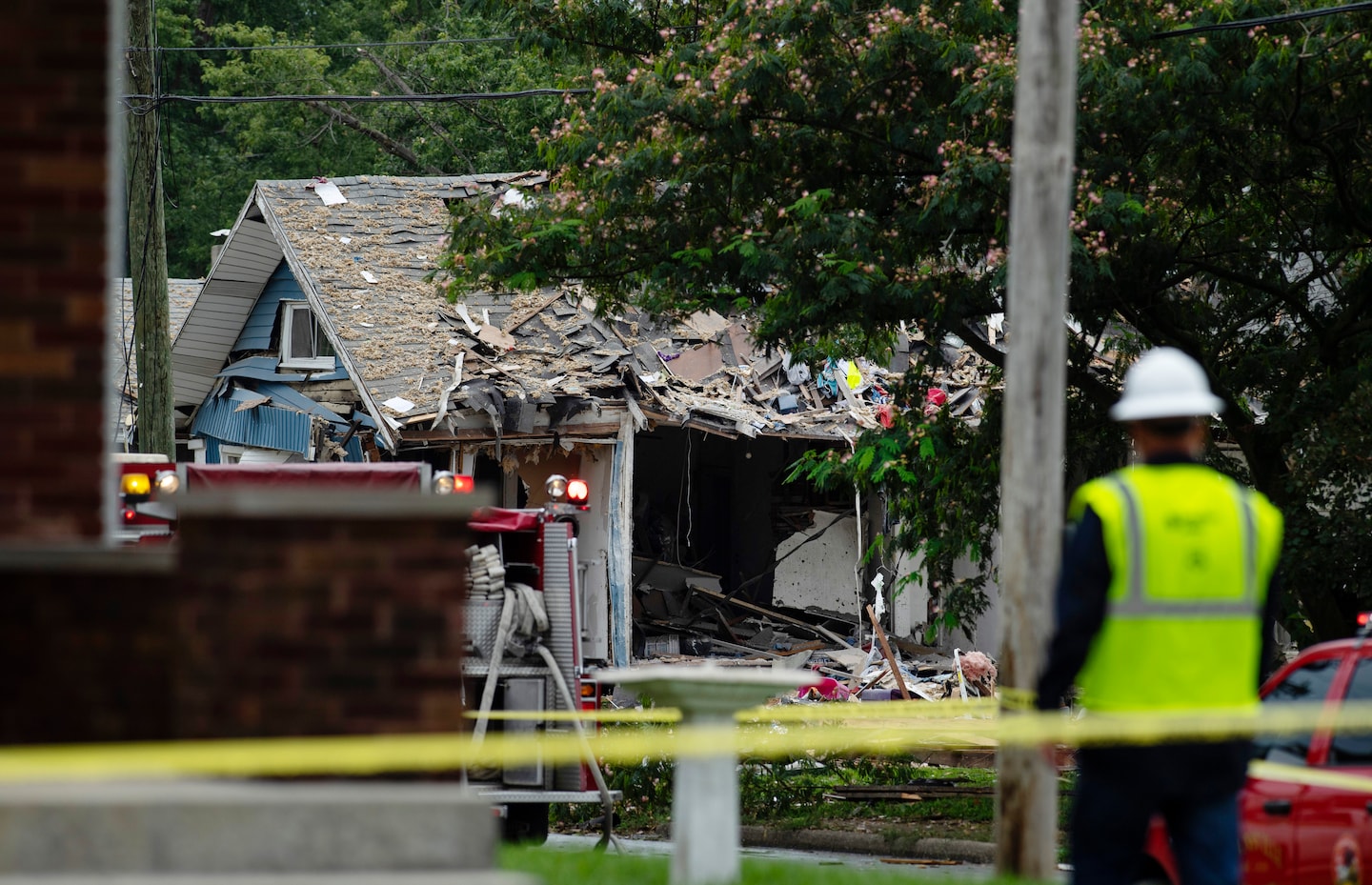
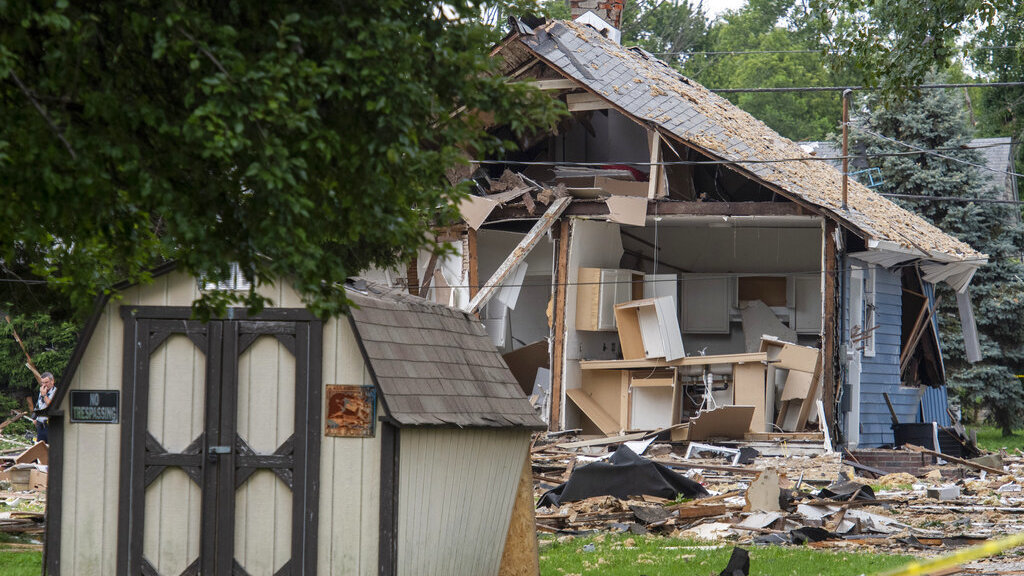
House explosion in Evansville, Indiana, kills 3 people and damages 39 homes : NPR

Emergency crews respond to a house explosion Wednesday in Evansville, Ind. (MaCabe Brown/Evansville Courier & Press via AP)

Macabe Brown/Evansville Courier & Press via AP


hide caption

toggle caption

Macabe Brown/Evansville Courier & Press via AP


Emergency crews respond to a house explosion Wednesday in Evansville, Ind. (MaCabe Brown/Evansville Courier & Press via AP)

Macabe Brown/Evansville Courier & Press via AP

EVANSVILLE, Ind. — Three people were killed Wednesday when a house exploded in the southern Indiana city of Evansville, authorities said.

David Anson, chief deputy coroner for Vanderburgh County, told The Associated Press that the identities of the people who died would not be released until the next of kin has been notified.

Evansville Police Department spokeswoman Sgt. Anna Gray said at least one other injury was reported and that the victim was taken to a local hospital for treatment.

Evansville Fire Department Chief Mike Connelly said a total of 39 houses were damaged by the explosion at around 1 pm He said the department has not confirmed how many of the houses were occupied when the explosion happened because “some were too unstable to enter.”

At least 11 of the 39 homes damaged are “uninhabitable,” Connelly told the Evansville Courier & Press.

The cause of the explosion has not been determined, but the Bureau of Alcohol, Tobacco, Firearms and Explosives was investigating. A phone message seeking comment was left at the Evansville field office of the ATF.

“Debris is strewn over a 100-foot radius,” including “typical construction materials” such as wooden boards, window glass and insulation, Connelly said.

Emergency crews respond to a house explosion Wednesday on North Weinbach Avenue in Evansville, Ind., Wednesday.

Macabe Brown/Evansville Courier & Press via AP


hide caption

toggle caption

Macabe Brown/Evansville Courier & Press via AP


Emergency crews respond to a house explosion Wednesday on North Weinbach Avenue in Evansville, Ind., Wednesday.

Macabe Brown/Evansville Courier & Press via AP

Aerial video posted on social media shows damage in a residential neighborhood with police and fire vehicles on the scene in Evansville, on the Kentucky border.

CenterPoint Energy, the local gas utility, was last called to the home in January 2018, Connelly said. CenterPoint issued a statement saying it “worked with first responders to secure the area.”

“CenterPoint Energy is working closely with the Evansville Fire Department, State Fire Marshal and other agencies as the investigation of this incident continues,” the utility said.

Jacki Baumgart, an office manager at Award World Trophies about two and a half blocks from the site of the explosion, said she and other employees in their building panicked when they heard the loud blast and saw smoke.

“We thought a tree fell on the building or a car ran into the place,” Baumgart said. “Debris from the ceiling came down.”

She continued: “Everybody here immediately ran out of the building. We thought the building was going to come down.”

It was the second house explosion in the area in just over five years. A house explosion on June 27, 2017, killed two people and injured three others.

Wednesday’s explosion also brought to mind a massive blast in 2012 that destroyed or damaged more than 80 homes on Indianapolis’ south side and killed two people. A man was convicted of tampering with a natural gas line at his then-girlfriend’s home in an attempt to commit insurance fraud, with the explosion killing two next-door neighbors. That man, his half-brother and girlfriend of him all received long prison sentences.

Categories
US

FBI search of Trump’s Mar-a-Lago home followed tip classified records were there – report | donald trump

Federal investigators searched Donald Trump’s Mar-a-Lago home in Palm Beach after an informant told them he might be storing classified records at his private club, the Wall Street Journal has reported.

The search on Monday reportedly came two months after federal law enforcement officials came to Mar-a-Lago to talk about boxes of government documents that were being stored there.

Federal authorities searched Trump’s sprawling south Florida residence having obtained a warrant to seek classified and White House records that the US justice department thought Trump had kept unlawfully, two sources previously told the Guardian.

The warrant, executed by FBI agents, intimated that this investigation involving Trump is a strictly criminal inquiry.

The sources said justice department officials became concerned that these records were being held unlawfully at Mar-a-Lago following government attorneys’ recent discussions with Trump’s legal team. The unprecedented search of an ex-president’s residence marked the apex of a fight between Trump and his overt disdain for the Presidential Records Act of 1978 – which mandates preservation of official records – and parties tasked with upholding that law.

The search and reports about an informant for the FBI in or around Trump’s inner circle has drawn condemnation from Trump loyalists, who have framed the search in partisan terms – and used it as a call-to-action for fundraising and voter mobilization for November’s election .

Extremist far-right Republican Georgia congresswoman Marjorie Taylor Greene referred to any potential informants as “traitors”.

“We now know that there was an FBI informant at Mar-a-Lago, who is that and how many other FBI informants are around President Trump on a daily basis, working at his clubs, working at Mar-a-Lago, or maybe Bedminster, or on his staff?” Greene said on his web show, according to Newsweek.

The Journal’s report chronicled discussions between justice department officials and Trump’s lawyers over these records. On 3 June, a high-ranking justice department official and three FBI agents came to Trump’s Mar-a-Lago house “to discuss boxes with government records sitting in a basement storage room along with suits, sweaters and golf shoes”.

Trump and his team seemed unaware of the possible gravity of the situation during this meeting, the newspaper said. “The former president even popped into the June 3 meeting at Mar-a-Lago, shaking hands,” the Journal reported. A source told the Journal that Trump said: “’I appreciate the job you’re doing … anything you need, let us know.’”

The FBI sent a missive several days later asking for a more secure lock to be placed on the storage room’s door. “In the following weeks, however, someone familiar with the stored papers told investigators there may be still more classified documents at the private club,” the Journal reported.

The potential presence of these records follows the National Archives’ removal of 15 boxes earlier this year. Officials with the justice department were skeptical that Trump’s team was being forthright about the records that were still at his home, a source told the newspaper.

The warrant for this search alluded to the Presidential Records Act and a potential violation of governing statute classified records, an attorney for Trump reportedly said. Trump has neither disclosed this warrant nor discussed the records removed by federal agents.

Kevin McCarthy, the House Republican minority leader, said the justice department had come to “an intolerable state of weaponized politicization.” When Republicans win back the House, McCarthy said they will carry out oversight of the justice department – ​​warning the attorney general, Merrick Garland, to “preserve your documents and clear your calendar”.

Categories
US

Courtney Clenney arrested months after boyfriend’s stabbing death

ABOVE: A look at today’s top headlinesLaw enforcement in Hawaii on Wednesday arrested social media model Courtney Clenney on a charge of second-degree murder with a deadly weapon.Hawaii County police said in a statement they assisted the US Marshals Service as they arrested the 26 -year-old in Laupahoehoe, which is on the Big Island. Officers used an arrest warrant issued by Miami-Dade County, Florida.She’s being held at the East Hawaii Detention Center while she waits for her initial court appearance in Hilo District Court on Thursday, police said.The police statement gave no details about the accusations against her, but the Miami Herald reported that Clenney is accused of fatally stabbing her boyfriend in April. Her Miami defense lawyer, Frank Prieto, told the Miami Herald that she was in Hawaii while in rehabilitation for substance abuse and post-traumatic stress disorder. “I’m completely shocked, especially since we were cooperating with the investigation and offered to voluntarily surrender her if she were charged,” Prieto said. “We look forward to clearing her name in court.” According to NBC News, the Miami Police Department has previously described Obumseli’s death as a domestic violence-related incident that involved a physical altercation and ended with a stabbing. Prieto has previously described the couple’s relationship as “clearly toxic” and said there is “clear evidence of self-defense in this matter.” “Obumseli attacked her and choked her that evening,” he said. “Courtney had no choice but to meet force with force.”A cousin of Obumseli has previously said the family has “no cause to believe that this was a case of self-defense,” adding: “Toby was raised by a very strong family , with strong morals, strong values. He does not come from that.” Clenney appeared on OnlyFans under the name Courtney Tailor and has 2 million followers on Instagram.

ABOVE: A look at today’s top headlines

Law enforcement in Hawaii on Wednesday arrested social media model Courtney Clenney on a charge of second-degree murder with a deadly weapon.

Hawaii County police said in a statement they assisted the US Marshals Service as they arrested the 26-year-old in Laupahoehoe, which is on the Big Island. Officers used an arrest warrant issued by Miami-Dade County, Florida.

She’s being held at the East Hawaii Detention Center while she waits for her initial court appearance in Hilo District Court on Thursday, police said.

The police statement gave no details about the accusations against her, but the Miami Herald reported that Clenney is accused of fatally stabbing her boyfriend in April.

Her Miami defense lawyer, Frank Prieto, told the Miami Herald that she was in Hawaii while in rehabilitation for substance abuse and post-traumatic stress disorder.

“I’m completely shocked, especially since we were cooperating with the investigation and offered to voluntarily surrender her if she were charged,” Prieto said. “We look forward to clearing her name in court.”

According to NBC News, the Miami Police Department has previously described Obumseli’s death as a domestic violence-related incident that involved a physical altercation and ended with a stabbing.

Prieto has previously described the couple’s relationship as “clearly toxic” and said there is “clear evidence of self-defense in this matter.”

“Obumseli attacked her and choked her that evening,” he said. “Courtney had no choice but to meet force with force.”

A cousin of Obumseli has previously said the family has “no cause to believe that this was a case of self-defense,” adding: “Toby was raised by a very strong family, with strong morals, strong values. He does not come from that.”

Clenney appeared on OnlyFans under the name Courtney Tailor and has 2 million followers on Instagram.

.

Categories
US

Karine Jean-Pierre roasted over ‘Orwellian’ tweet touting ‘0% inflation’

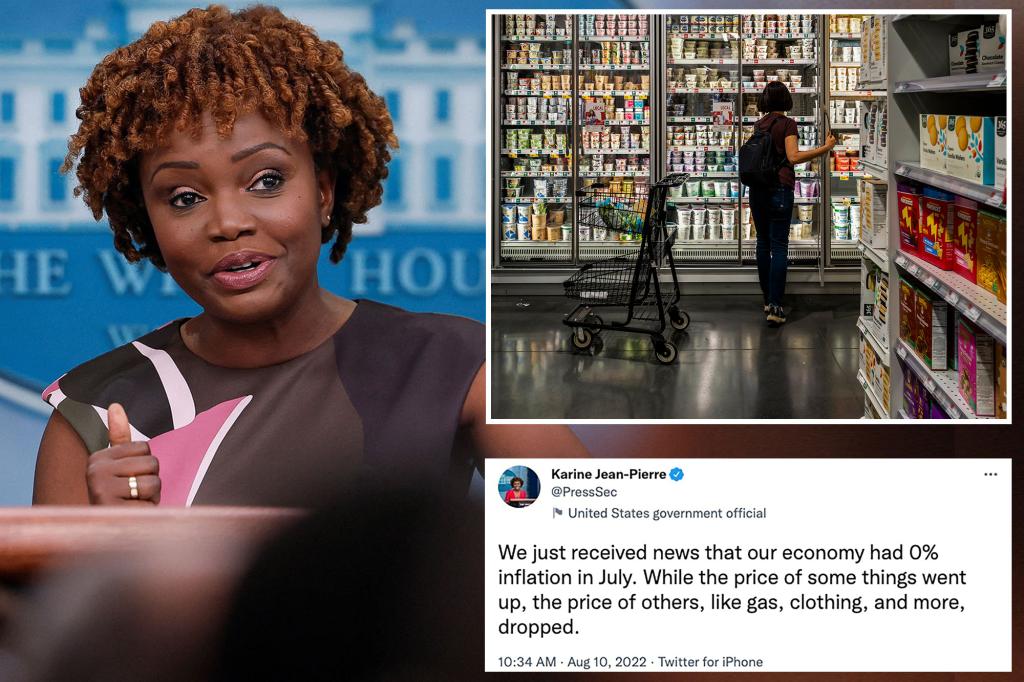
President Biden’s top spokesperson was accused of lying on Wednesday in a tweet touting “0% inflation in July” — even as federal data indicated that the consumer price index rose by 8.5% year over year.

“We just received news that our economy had 0% inflation in July,” White House press secretary Karine Jean-Pierre tweeted on Wednesday.

“While the price of some things went up, the price of others, like gas, clothing, and more, dropped.”

Jean-Pierre also hailed the dip in gasoline prices, which she called “the fastest in a decade” which was “saving American families with two cars $106 per month on average.”

In the same tweet thread, Jean-Pierre wrote that “real wages went up for the first time in almost a year.” She also urged the House to pass the Inflation Reduction Act “as soon as possible” in order to “lower health care, prescription drug, and energy costs.”

But Twitter users pushed back against Jean-Pierre’s claims.

White House press secretary Karine Jean-Pierre toed the administration line that the country saw "0% inflation in June."
White House press secretary Karine Jean-Pierre toed the administration line that the country saw “0% inflation in July.”
REUTERS
Twitter users pushed back on Jean-Pierre's tweets on Wednesday.
Twitter users pushed back on Jean-Pierre’s tweets on Wednesday.

“Great. No need for the ‘Inflation Reduction Act’ anymore…” tweeted Yossi Gestetner.

Another Twitter user, Kevin Dalton, posted a link to a news article indicating that inflation was 8.5% in July, writing: “Other than the complete lie you just told, I totally believe you…”

Joel Griffith, a research fellow at the Heritage Foundation, posted a tweet showing the increased prices of key goods.

“Inflation this past year of 8.5% is near a 40-yr high,” he noted.

One Twitter user went so far as to add a “clown face” filter to a clip of Jean-Pierre touting the strength of the economy from the White House press room podium.

The rate of inflation was 8.5% in July -- hovering around record levels not seen in four decades.
The rate of inflation was 8.5% in July — hovering around record levels not seen in four decades.

Supporters of the administration, however, tried to clarify Jean-Pierre’s tweet. One noted that the press secretary meant that “inflation over the last month has been 0%” and that it “hasn’t increased in the past month.”

But another Twitter user responded: “You don’t compare inflation month to month. It is compared year to year. But you wouldn’t know that.”

Last month, Jean-Pierre was widely mocked for claiming that “we are stronger economically than we have been in history.”

Americans continue to be saddled with higher-than-usual food prices.
Levine-Roberts/Sipa USA

She cited low unemployment as well as “more than 8.7 million new jobs created” — though critics noted that it was due to the end of pandemic-related lockdown measures and Americans returning en masse to the workforce after the vaccination drive.

The 8.5% rise in inflation last month was lower than the sharp, 9.1% increase in June, but still hovering at a high not seen since four decades ago.

Core inflation, which excludes food and gas prices, rose by 5.9% annually and by 0.3% compared to June.

Analysts said that a drop in demand has led to falling gas and energy prices, though that trend can easily reverse itself given volatile geopolitical conditions, including the ongoing Russian invasion of Ukraine, as well as possible hurricanes in the US.

.

Categories
US

After the fall of Roe, Republican pursuit of abortion bans appears to falter | Roe v. Wade

YoIn the leadup to the US supreme court overturning Roe v Wade and thus scrapping federal abortion protection, Republican lawmakers across the country maintained an uncompromising rallying cry against abortions, vowing to implement a sweeping wave of restrictions in their states.

However, since the highest court in the US overturned the ruling, many Republican leaders and officials have become more hesitant – or have even gone silent – ​​over the exact type of bans they promised to enact.

As Republicans move towards an election season rife with internal disagreements within their own party and mixed public opinions on exceptions in abortion bans such as instances of rape and incest, many rightwing lawmakers are finding it increasingly difficult to implement cohesive abortion policies.

The phenomenon has been starkly illustrated by Kansas’s referendum last week, where the usually reliably Republican state voted to keep abortion protections in its state constitution, providing an unexpected boost from red state America to the abortion rights movement.

With delays in passing abortion bills across the US and contentious questions on how far the bans will reach, Republicans are now, as Sarah Longwell, a moderate Republican strategist, said to Politico, “the dog that caught the car.”

According to a survey conducted between 27 June and 4 July by the Pew Research center, a majority of the American public disapproves of the supreme court’s decision to overturn Roe: 57% of adults disapprove of the court’s decision, including 43% who strongly disapprove, and 41% of American adults approve while 25% strongly approve of the court’s decision.

The survey also found that 62% of Americans say that abortion should be legal in all or most cases, and 36% of Americans say that abortion should be illegal in all or most cases. Only 38% of Republicans say that abortion should be legal in all or most cases, marking a 1% decrease from poll results obtained in 2007.

As Republican lawmakers grapple with mixed public opinions, many lawmakers have been divided over just how far they should go to ban abortions. With the recent case of the 10-year-old rape victim traveling across state lines from Ohio to Indiana to obtain an abortion continuing to dominate national headlines, many Republicans are realizing that the reality they are presented with vastly differs from their initial narratives surrounding abortion politics.

What kind of exceptions should be made in cases of rape and incest? Should a woman be granted an abortion if she is faced with a life-threatening ectopic pregnancy or an incomplete miscarriage? If an outright ban is put in place, should there be expansions of paid family leave benefits and increased funding for foster care and women’s health?

Some states have plowed ahead. Indiana has now passed a Republican-sponsored bill that would ban nearly all abortions in the state with limited exceptions, including cases of rape and incest, and to protect the health of the mother. That made it the first state in the US to put new restrictions in place, rather than just rely on a pre-existing “trigger law” passed before the supreme court’s decision.

But even in Indiana the move came after a series of thorny debates in the Indiana congress that reflect the growing divide Republicans are facing when it comes to fleshing out the specifics of abortion ban bills.

Before Roe v Wade was overturned, lawmakers did not spend “enough time on those issues, because you knew it was an issue you didn’t have to really get into the granular level in. But we’re in there and we’re recognizing that this is pretty hard work,” Republican Indiana state senator Rodric Bray told the New York Times.

Another Indiana Republican state senator, Kyle Walker, who voted against the ban last month, said: “I believe we must strike a balance for pregnant women to make their own health decisions in the first trimester of the pregnancy and also provide protections for an unborn baby as it progresses toward viability outside the womb.”

Even state senator Sue Glick, the sponsor of the bill, said that she was “not exactly” happy with the bill.

Meanwhile, the American Civil Liberties Union of Indiana called the bill “cruel” and “dangerous”, while Indiana Right to Life criticized it as being “weak and troubling”, saying that it “lacks any teeth to actually reduce abortions in Indiana by holding those who perform abortions or would intentionally skirt the law accountable with criminal consequences.”

South Dakota, a predominantly Republican state, is facing a similar situation.

Shortly after the bombshell leak of the supreme court draft opinion on Roe, Republican governor Kristi Noem announced that she will “immediately call for a special session to save lives and guarantee that every unborn child has a right to life in South Dakota.”

However, since the supreme court overturned Roe, Noem has yet to publicly give any indication of when or if a special session will still take place. In response to the Associated Press asking if the special legislative session is still on the table, Noem’s office said it will happen “later this year”.

Noem has largely kept her language surrounding South Dakota’s abortion bans vague, simply reaffirming that “there is more work to do” and promising to “help mothers in crisis”. In June, Noem appeared to soften her approach on abortions by saying that doctors, not their patients, should be prosecuted for offering abortion pills.

“I don’t believe women should ever be prosecuted,” she said. “I don’t believe there should be any punishment for women, ever, that are in a crisis situation or have an unplanned pregnancy,” she said. The governor also set up a website for pregnant women that aims to “help mothers and their babies before birth and after by providing resources for pregnancy, new parents, financial assistance and adoption.”

Speaking to the Associated Press, South Dakota Right to Life’s executive director, Dale Bartscher, said that Noem’s actions reflect a turning point in the anti-abortion movement.

“An entirely new pro-life movement has just begun – we stand ready to serve women, the unborn and families,” he said. The Guardian reached out to Bartscher for additional comments.

In Arkansas, the Republican governor, Asa Hutchinson, appears to have taken a softer approach on the issue after the state’s abortion trigger ban immediately went into effect when Roe was overturned. Last month, Hutchinson did not confirm that abortion will be a topic on the agenda of this month’s special session that is supposed to focus on tax cuts.

Referring to alternatives to abortion, Hutchinson said: “That’s come up in conversations … I’ve mentioned that I need. You know, what can we do more for maternity care? What can we do more for adoption services because of the increased number that’s going to be demanding that? And so that is a potential issue… so just stay tuned.”

In May, Hutchinson acknowledged that his state’s abortion trigger law would result in “heartbreaking circumstances”, adding that “whenever you see that real-life circumstances like that, the debate is going to continue and the will of the people may or may not change. ”.

The governor admitted that abortions performed in the exceptions of rape and incest are increasingly “reflecting the broad view of Americans” but acknowledged that the issue is “still a very divided [topic].”

However, whether Hutchinson will ask lawmakers to consider the exceptions during the state’s upcoming legislative special session remains to be seen.

Meanwhile, in Ohio, the Republican governor, Mike DeWine, has refused to comment on the state’s recently enacted “heartbeat bill”, which makes abortions illegal after six weeks into a pregnancy. As a result of the state’s strict abortion laws, a 10-year-old rape victim from the state had to travel to Indiana to receive an abortion.

DeWine condemned the case as a “horrible, horrible tragedy” but did not signal whether he would amend abortion restrictions in the state. Speaking to reporters last month, DeWine refused to advocate for specific abortion policies and said that he is “going to let the debate play out a little bit”, referring to the legislative debate that is expected to happen in a few months.

“We’re going to hear from medical experts, we’re going to hear from other people,” he said, adding: “then there’ll be a time when I’ll certainly weigh in.”

Since Roe got overturned, Virginia’s top Republican lawmaker has been expressing similar sentiments to DeWine’s. In June, Governor Glenn Youngkin told an anti-abortion group that he would “happily and gleefully” sign any bill that would protect life, which he believes begins at conception.

Youngkin has expressed support for a ban on abortions after 15 weeks with exceptions for rape, incest and risk to the mother’s health.

Youngkin did not specify his support for any particular policies, although he acknowledged the divisive nature of the issue and called for a legislative process to hash out nuances in abortion ban bills.

“I’m a pro-life governor and I will sign a bill that comes to my desk that protects life and I look forward to that. But as of now, what we need is the process to start and to take the next four or five or six months and to work on a bill that can be supported on a bipartisan basis,” he said.

As Republicans across the country face a widening divide over the particularities of implementing abortion bans, a leading anti-abortion group has been urging Republicans in Congress not to leave the issue to the states. Many anti-abortion activists worry that extreme measures by Republican state lawmakers may cost Republican lawmakers seats nationally, especially with midterms on the horizon.

At the same time, in the wake of the Kansas referendum result, many Democratic strategists now believe public opinion, even in many red states, will be on their side. The issue can be used to shore up under-threat Democrats and wielded as a weapon against Republican candidates who can be portrayed as out of step with most Americans.

In a memo from Susan B Anthony Pro-Life America sent out in July, Republican lawmakers were encouraged to stay away from phrases such as “nationwide ban” and were urged not to relay the issue to state lawmakers.

“It is vitally important that pro-life Members of Congress highlight the abortion extremism of Democrats, who support abortion on demand, up until the moment of birth, paid for the taxpayer,” the memo said.

Categories
US

What the bill will actually mean for inflation : NPR

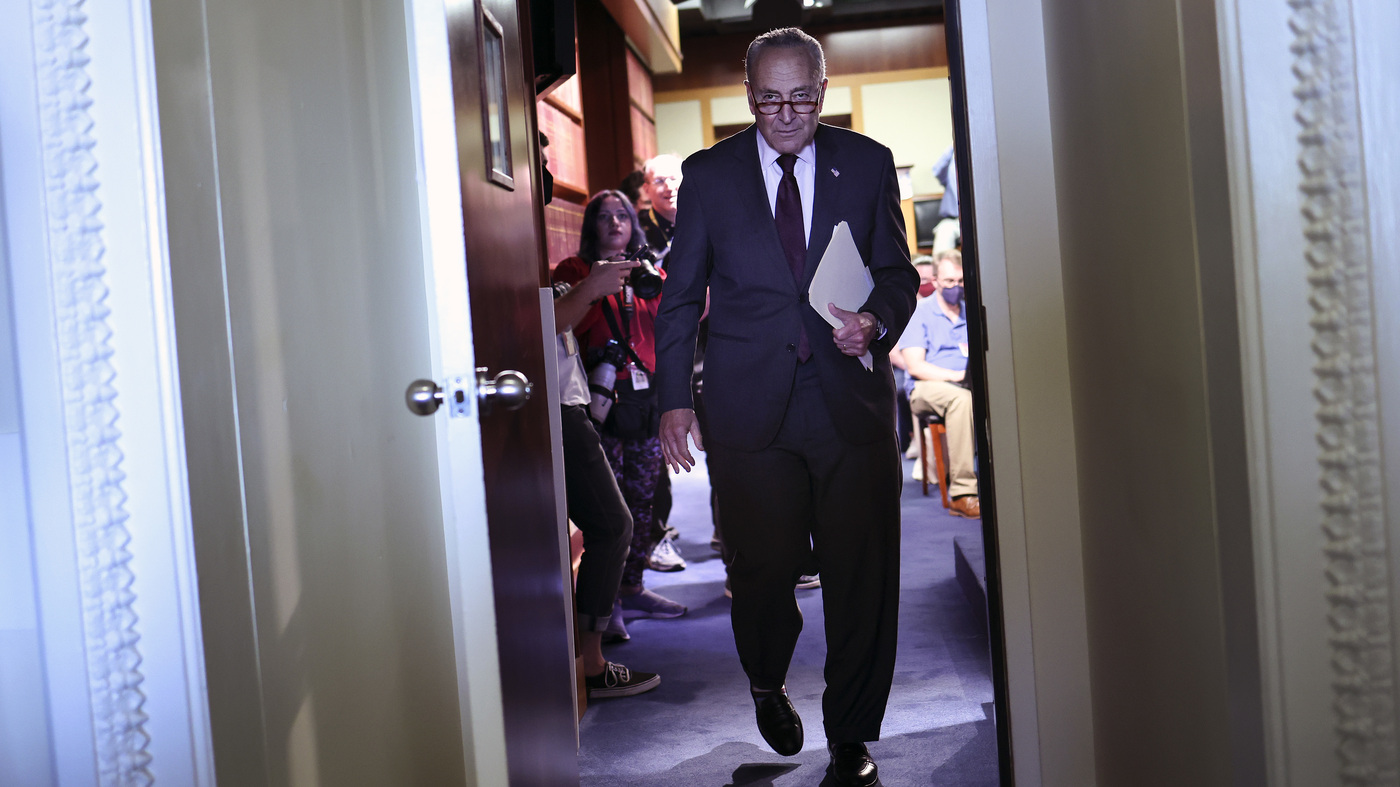
Senate Majority Leader Chuck Schumer, DN.Y., leaves a news conference at the US Capitol on Friday, where he spoke to reporters about the Inflation Reduction Act.

Kevin Dietsch/Getty Images


hide caption

toggle caption

Kevin Dietsch/Getty Images


Senate Majority Leader Chuck Schumer, DN.Y., leaves a news conference at the US Capitol on Friday, where he spoke to reporters about the Inflation Reduction Act.

Kevin Dietsch/Getty Images

The massive climate, health care and tax bill making its way toward President Biden’s desk is called the Inflation Reduction Act. But how much does it actually do to slow consumer prices that are climbing at their fastest pace in about 40 years?

After months of negotiations, a 755-page version of the bill passed the Senate on Sunday and will soon be up for vote in the House, where it is expected to pass.

The White House says the roughly $700 billion package will address inflation in two key ways: by lowering energy and health care costs for families and by helping to bring down the deficit.

“And that’s why even Democrats and Republicans, former Treasury secretaries, economists across the board have said that this bill will make a positive impact on inflation while also tackling some of the biggest and long-standing issues facing our country, like prescription drugs and like tackling climate change,” said Brian Deese, director of the National Economic Council, in an interview this week with NPR’s Morning Edition.

While experts generally agree that the legislation will modestly help slow the growth of prices, it may not do so in the ways you think, or as quickly. As the legislation nears final passage, here are some answers about what it means for inflation.

How will this bill bring down inflation?

The bill will make small steps to help bring inflation back to normal levels, said Shai Akabas, the director of economic policy at the Bipartisan Policy Center.

“It will generally work in the right direction and help the Federal Reserve, which has the primary responsibility for getting a hold of inflation,” Akabas said.

There are three main ways the bill targets rising prices, according to Akabas. First, it plans to reduce the federal deficit, which is the difference between how much the US government spends and how much it makes in taxes and revenue. When there’s less money floating in the economy, there tends to be less demand and fewer price hikes, Akabas said.

Because there are several provisions to encourage spending in the bill, the net impact on inflation is unclear.

Second, it will promote the production of certain goods, mainly in renewable energy. Having more supply than demand could help lower some costs over time, I added.

Third and more directly, one provision of the bill will help limit the price growth of certain prescription drugs by allowing Medicare to negotiate their cost with pharmaceutical companies. Still, some of the biggest drivers of inflation, including food and energy costs, are not immediately addressed.

OK — so how soon?

The proposal won’t help curb inflation dramatically nor right away, experts say.

“It’s not likely to have a major effect on inflation in the next few months,” Akabas said.

Some experts, like Kent Smetters, faculty director of the Penn Wharton Budget Model, do not expect a significant impact in the next few years.

“On one hand, it does not add to inflation, which was what the previous concern that people had about passing legislation like this right now,” Smetters said. “But at the same time it doesn’t really take away from the rise in prices either.”

The nonpartisan Congressional Budget Office, which scored the bill, also determined that the bill will have a “negligible effect” on inflation this year and next.

If the impact on inflation is limited, then what else does it do?

The package includes $430 billion in new spending to reduce greenhouse gas emissions, invest in clean energy technologies and extend subsidies for the Affordable Care Act.

The bill also plans to bring in more than $300 billion in new revenue, Democrats say, by imposing a 15% minimum tax on corporations making over $1 billion and through a new excise tax on corporate stock buybacks.

“The way to think about this is not about inflation at all, but about the tradeoffs between helping people who need more help, especially in health care and reducing carbon, versus the potential impact on future investment,” Smetters said.

What are some changes I’ll see in the near future?

While experts don’t see a rapid curb to inflation through this bill, there are a range of measures to help with high costs. Forinstance:

  • The bill offers a number of tax credits for people switching to cleaner energy sources, including electric vehicles and rooftop solar panels. Those incentives will take effect in 2023, and according to Democrats, they will mean a 40% cut in greenhouse emissions from 2005 levels by the end of the decade.
  • The Internal Revenue Service will get a boost in funding, particularly to improve its customer service and tax enforcement. Akabas said that investment could help alleviate some of the challenges with long response times or getting tax refunds processed. It could also increase collection of taxes that are currently owed but go unpaid.
  • Millions of Americans will continue to benefit from subsidies that help with rising health insurance premiums that were originally slated to expire next year.
  • The bill will put a $2,000 annual cap on out-of-pocket prescription drugs for people insured by Medicare, which will be most impactful for senior citizens with illnesses such as cancer and multiple sclerosis. But that provision won’t materialize until 2025.

“Prices are high now but we’re talking about prices that have been putting burdens on household budgets for decades,” said Rakeen Mabud, the chief economist of the Groundwork Collaborative, a progressive economics think tank.

“We’ve been struggling with skyrocketing health care costs for a really long time and this bill is an important step forward.”

Am I going to see an increase in my taxes?

It’s unlikely that a vast majority of households will see a direct impact on their taxes, said Akabas, who focuses on federal budget policy.

Instead, the tax increases will largely fall on corporations. That being said, some employees may feel that tax burden indirectly.

“If a company is less profitable and less able to spend money on labor and less able to pay higher wages, then that will be felt by individuals throughout the economy,” Akabas explained.

Chye-Ching Huang, the executive director of the Tax Law Center at New York University, doesn’t expect a significant impact on wages. Since the tax cut in 2017, economists did not see a major difference in wages, Huang said.

“Reversing some of that for the very largest corporations can be expected to have a similarly small or imperceptible effect,” she said.

Categories
US

Authorities monitoring online threats following FBI’s Mar-a-Lago raid

Law enforcement agencies around the country are actively monitoring online threats and rhetoric that have emerged in the wake of the FBI raid on former President Donald Trump’s Mar-a-Lago estate Monday, sources tell ABC News.

Agencies are also preparing for possible acts of violence they fear could occur at or near pro-Trump demonstrations that some supporters are calling for, law enforcement sources said.

Authorities on Monday morning searched Trump’s Florida estate in what sources told ABC News was part of a probe into documents that Trump improperly took to Mar-a-Lago when he departed the White House, some of which the National Archives has said were marked classified.

“Over the last several months, law enforcement officials across the nation have become increasingly concerned about calls for violence against law enforcement and other government officials by violent extremists,” said John Cohen, a former Department of Homeland Security official who is now an ABC News contributor. “The search warrant at Mar-a-Lago has only served to increase those calls, adding to law enforcement concerns.”

In the aftermath of the raid, Trump supporters called for protests at FBI offices in Riverside, California, and Washington, DC, according to online messages collected by the Institute for Strategic Dialogue, a think tank that monitors extremism and hate speech.

The ISD reported that one Trump supporter was “calling on fellow veterans and Americans of all walks to join him” in Washington “to protest the out-of-control FBI and its actions against President Trump,” while a post by another supporter implored followers to “Protest FBI tyranny.”

Cohen says authorities have grown even more concerned as public figures have echoed those kind of remarks.

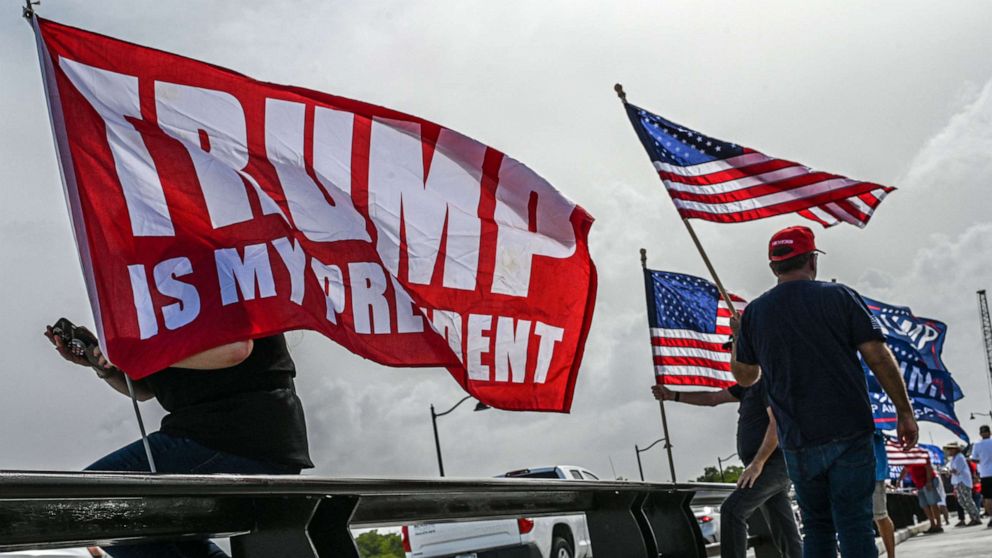
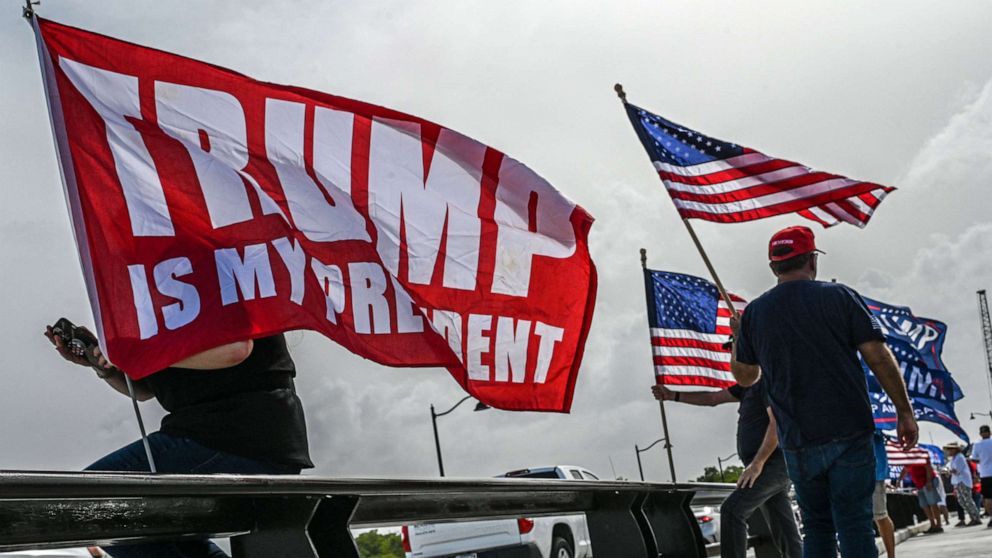
PHOTO: Supporters of former US President Donald Trump gather near his residence at Mar-A-Lago in Palm Beach, Fla., Aug. 9, 2022.

Supporters of former US President Donald Trump gather near his residence at Mar-A-Lago in Palm Beach, Fla., Aug. 9, 2022.

Giorgio Viera/AFP via Getty Images

“We now face a situation where public officials and members of the media are mimicking the language used by violent extremists, and this has served to add more volatility to the situation,” he said.

Evan worse, said Cohen, “there’s been talk about a range of conspiracy theories regarding what the FBI was doing at Mar-a-Lago. And when public figures — especially those who have previously served in law enforcement — spread wild conspiracy theories.” that they know are false, it’s not only irresponsible but dangerous.”

On the other hand, Cohen said, authorities have become better at monitoring threats and acting on them.

“Following the events at the Capitol on Jan. 6, law enforcement has improved its ability to analyze online activities by violent extremists, taking threats made online more seriously and incorporating that understanding into their security planning,” he said.

Categories
US

Explosion at Evansville, Ind., home leaves 3 dead, damages 39 houses

Placeholder while article actions load

Just before 1 pm on Wednesday, residents of a neighborhood in Evansville, Ind., heard and felt an earth-shattering rumble.

“It sounded like a sonic boom,” Dorthy Waters told WFIE. “I thought a bomb fell on us or like a tree fell through the house; it shook so hard it went through my chest, it shook my windows.”

A house in the center of the city of about 116,000 had exploded, sending debris 100 feet in each direction. At least three people were killed, and one was injured, officials said. Thirty-nine houses were damaged in the blast.

Authorities have not determined the cause of the explosion, which occurred on the 1000 block of North Weinbach Avenue, Evansville Fire Chief Mike Connelly told reporters at the scene on Wednesday afternoon. He said the federal Bureau of Alcohol, Tobacco, Firearms and Explosives was conducting a “blast analysis” at the site, temporarily halting a search for possible missing residents.

“There could be other victims,” Connelly said. “We’ve not yet completed our search.”

It’s unclear whether that search has been resumed. The Evansville fire and police departments did not immediately respond to messages from The Washington Post. A message left with ATF was not immediately returned. A representative with the Vanderburgh County coroner’s office, which had earlier confirmed the three fatalities to news outlets, told The Post no further information was available as of Wednesday night.

Officials have not publicly identified the victims.

A soundless video of the explosion, captured from down the street and published by WFIE, shows gray smoke and debris shooting high into the air over a house shrouded by trees. Surveillance footage from a nearby home, published by the Evansville Courier & Press, shows a blizzard of debris raining down on the neighborhood immediately following the blast.

“We thought a tree fell on the building or a car ran into the place,” Jacki Baumgart, who works at an office about two blocks from the explosion site, told the Associated Press. “Debris from the ceiling came down.”

“Everybody here immediately ran out of the building,” she added. “We thought the building was going to come down.”

Vincent Taylor, who was working on a roof two blocks away, described the scene as “total devastation.”

“A lot of people lost everything down here. Their houses are totally gone,” he told WFIE.

The fire department said 11 of the 39 damaged homes are uninhabitable. The fire chief told reporters Wednesday afternoon that the houses closest to the explosion were in “bad shape” and that some residents might not be able to return to their homes for the rest of the week. He said debris covered a 100-foot radius around the blast site.

The house explosion is the second to have taken place in Evansville in recent years. In 2017, a natural gas explosion destroyed a home, killing two people and severely injuring three, the Courier & Press reported. The surviving victims of the explosion sued CenterPoint Energy, alleging the utility was to blame, but lost after a judge dismissed the lawsuit because of a lack of evidence, the paper reported.

Wednesday’s explosion took place only blocks from the site of the 2017 blast. The Evansville Police Department said in a Facebook post that the area will be closed off for the “foreseeable future,” adding that its “thoughts are with those closely involved with the explosion.”

Other officials echoed their concerns.

“My heart goes out to the family and friends of those killed or injured during the devastating explosion in Evansville today,” state Rep. Ryan Hatfield (D) tweeted Wednesday. “I am in contact with local authorities and monitoring this tragic situation closely.”

Connelly said the Red Cross had responded and set up shelter for affected residents at a nearby elementary school.

Roxane Weber told WFIE she was worried about her neighbors, as well as the condition of her own home.

“It’s mostly older folks on that end,” Weber told the station. “It was like a bomb went off near us. All the left side of our house the windows blew, and I have cracks everywhere. It’s like we have an old plastered house.”