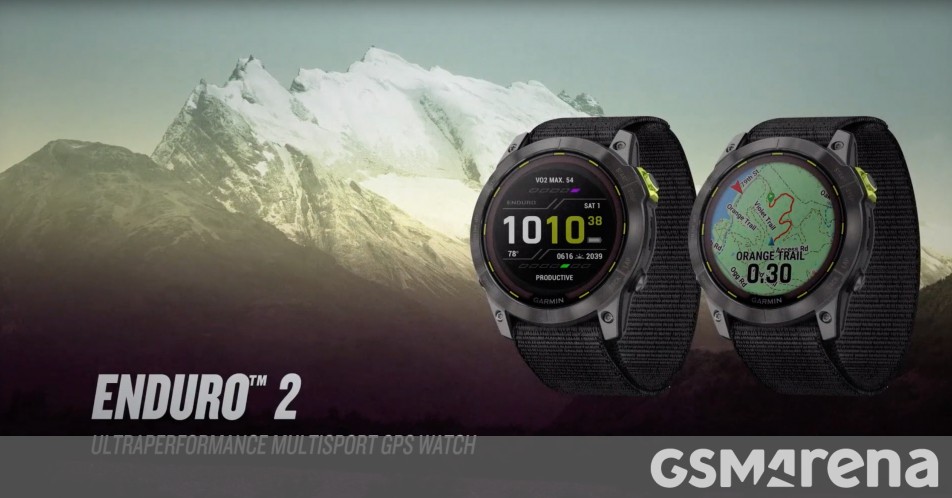
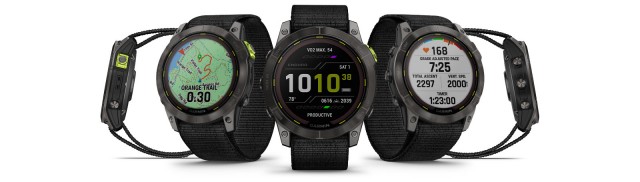
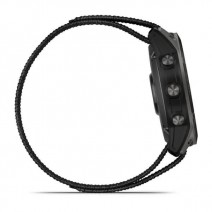
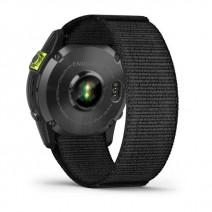
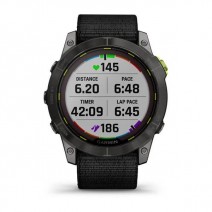
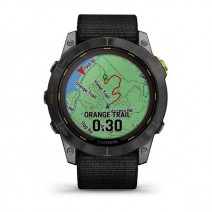
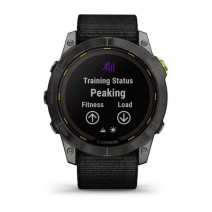
Professional runners and endurance athletes often rely on Garmin products for their training and competitions and the Garmin Enduro 2 is the latest high-end offering from the brand. The watch brings solar charging, a 150-hour rated battery life with GPS on and a $1,100 price tag.
Garmin Enduro 2 snapshot
Enduro 2 features a fiber-reinforced polymer casing with a titanium rear cover and titanium bezel. The 1.4-inch AMOLED color touch screen brings a 280 x 280 px resolution and is covered with sapphire crystal for added durability. Enduro 2 comes bundled with a nylon sport loop band though it is compatible with Garmin’s silicone bands as well. There’s onboard Wi-Fi, Bluetooth and ANT+ connectivity.
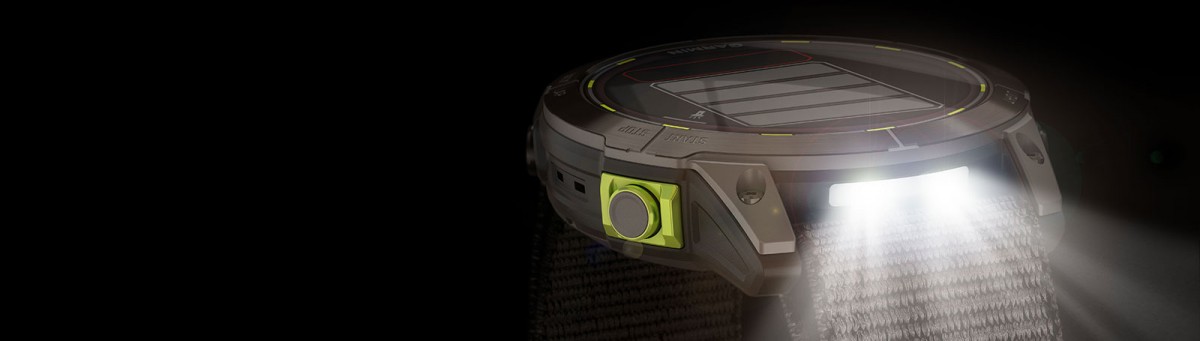
The watch is 10ATM water resistant 32GB onboard storage which can store up to 2,000 songs. There’s even a LED flashlight for nighttime training.
Enduro 2 brings heart rate (Garmin Elevate v4 heart rate sensor), SpO2, sleep and stress monitoring alongside a plethora of fitness tracking features including a visual race predictor, topographical maps, grade-adjusted pace, running dynamics and more.
Garmin Enduro 2
Garmin claims battery life in smartwatch-only mode is rated at up to 46 days which factors in the Enduro 2’s solar charging panel. The battery saver mode extends those values up to 550 days. The watch comes with multiband GNSS with SatIQ – a useful feature that only selects the most power-efficient GPS signal in a bid to extend battery life. The watch also supports Garmin Pay.
Pricing is set at $1,100 and the watch is already available on Garmin’s website.
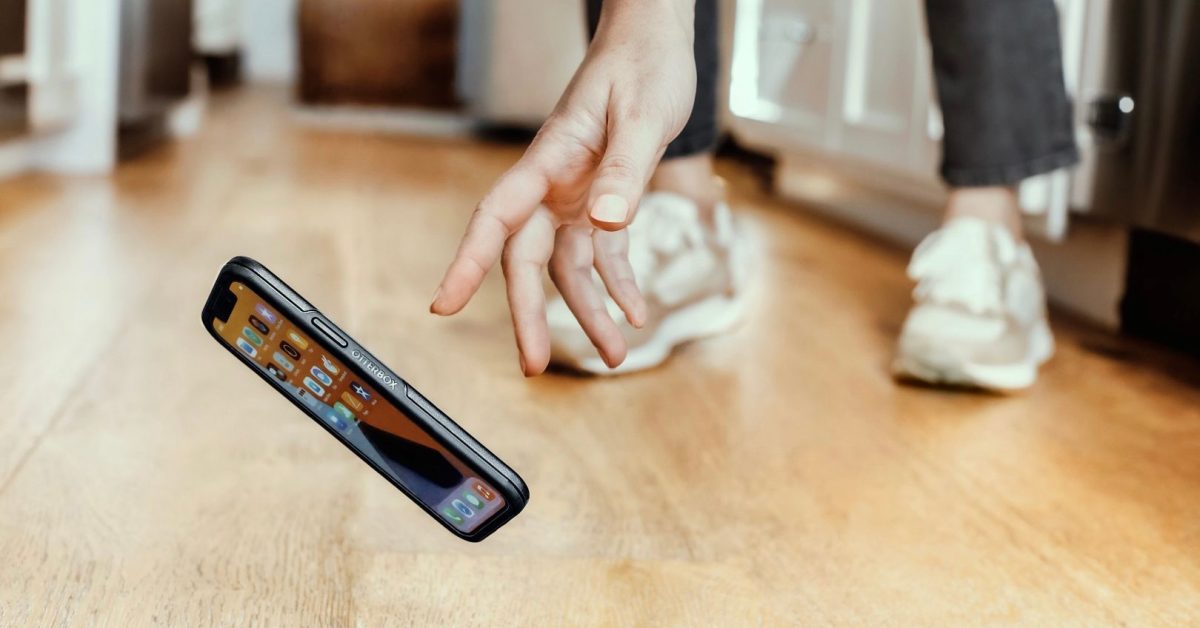
OtterBox is stepping up the benefits it offers with its screen protectors today. Going beyond the lifetime warranty of replacing broken iPhone screen protectors and cases, the company will now additionally cover up to $150 for replacing your iPhone screen if it breaks while using Amplify or Alpha OtterBox screen protectors.
The updated OtterBox Protection Program launched today with the valuable new addition being coverage for iPhone display replacements. OtterBox shared details in a press release:
“We know a cracked phone screen can be more than a small setback,” said OtterBox CEO Jim Parke. “OtterBox seeks to keep you connected to people, places and moments that matter most. Our robust limited lifetime warranty program already covers your case and screen protector, and the OtterBox Protection Program extends that protection to your device screen as well.”
The new iPhone screen replacement coverage is available for most models and comes with the Amplify and Alpha screen protectors.
OtterBox Protection Program details
Reimbursement up to $150 for screen repairs/replacements
Valid up to 12 months after purchase
Easily activate and track coverage, and file a claim through the OtterProtect app
Eligible Amplify and Alpha screen protectors with the new coverage range from $39.95-$54.95
Make sure to pick “Antimicrobial + OtterBox Protection Program” for the product option when checking out
Pricing depends on your iPhone and the screen protector features (standard, blue light, privacy, glare guard, or antimicrobial).
9to5Mac’sTake
This is a great addition to OtterBox’s screen protectors and I think it definitely makes them a more compelling choice in a crowded market of cheap accessories.
However, one thing to keep in mind, with modern iPhone screen replacements running $199-$329 at full cost, the $150 coverage from OtterBox won’t cover the whole bill. So you may not want to skip AppleCare or other insurance.
But for those who don’t mind being on the hook for a bit of the cost, the OtterBox Protection Program is definitely a more affordable option to have both physical protection and partial insurance for less than the cost of traditional insurance or AppleCare.
Related:
FTC: We use income earning auto affiliate links. More.
Google is firing back at Sonos Inc., filing two lawsuits against the audio products company that claim that its voice control technology infringes on a number of Google patents.
The lawsuits were filed in California federal court on Monday, claiming that Sonos infringed on seven Google patents related to its smart assistant technology. The two companies have been locked in a patent war for more than two years when Sonos first sued Google for allegedly stealing its smart speaker technology in January 2020. The recent escalation on Google’s part comes after Sonos’ recent victory in January of this year when the the US International Trade Commission ruled that Google was in violation of five Sonos patents.
“Rather than compete on the basis of innovation and product quality, Sonos has decided to compete in the courtroom, and started an aggressive and misleading campaign against our products, at the expense of our shared customers,” José Castañeda, Google Spokesperson, told Gizmodo in an email. “Their actions leave us no choice but to defend our technology and challenge Sonos’s clear, continued infringement of our patents.”
In the lawsuit, Google claims that Sonos infringed patents related to “enabling voice assistant technology and providing improvements to the efficiency, reliability, and durability of voice-controlled and battery-powered devices,” according to Reuters.
Google and Sonos first partnered together to integrate Google Play into the Sonos platform, but things soon took a left turn when Sonos claimed that Google had copied its connected home speaker technology to create Google Home and other devices. January’s ruling found that Google had infringed on Sonos’ intellectual property, forcing Google to adjust the features of some of its products. But Google claims that Sonos needed Google’s company resources to integrate its voice assistant with its speakers, which included hours of work from Google employees.
It’s not clear how long these two former allies will continue to exchange allegations in the courtroom, but we wish we could command the Google Assistant to make it stop.
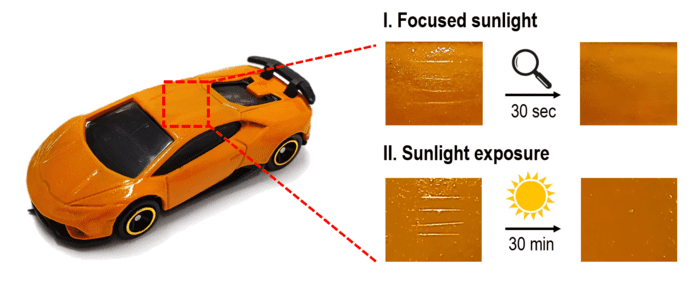
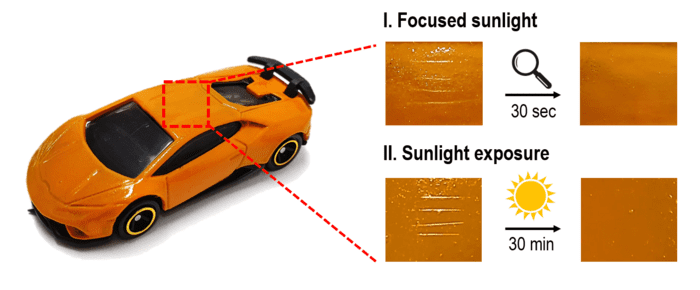
The scratched coating was like brand new after it was exposed to either 30 seconds of concentrated light or just 30 minutes to the midday sun. Credit: Korea Research Institute of Chemical Technology (KRICT).
Nothing beats the smell and look of a shiny, brand-new car. But as we all know, this pristine state doesn’t last very long and if Murphy’s Law is any indication, the more you’re excited about your new purchase, the likelier it is you’ll see the first scratches the same day you leave the dealership. It is a simple fact of life. But fret not, because researchers in South Korea have got you covered with a new chemical coating that contains a special dye that absorbs infrared light and triggers a chemical reaction that causes the coating to self-repair. Parking for just 30 minutes in the open sun could be enough to restore the paint job of your car.
just add light
New cars often come with various paint coatings. Some popular options include nano-ceramic coating, which is supposed to offer protection from weathering and give the paint a wax-like finish, as well as paint protection films that provide a more comprehensive form of protection. But while such coatings offer initial protection against scratches and minor physical impacts, once they actually become scratched, it is very difficult or impossible to repair the damage.
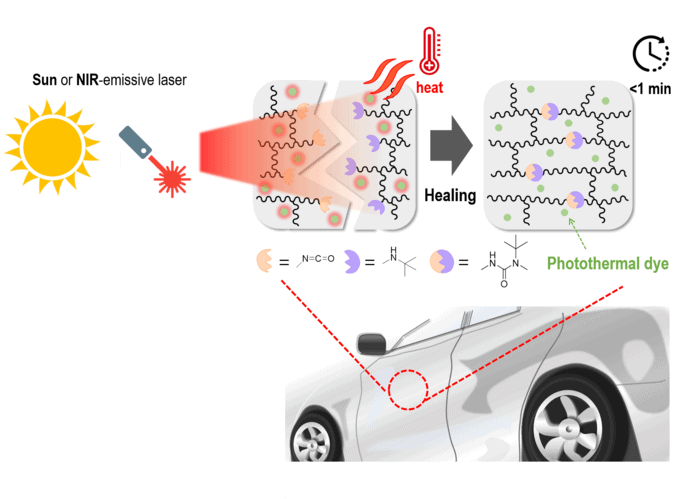
The researchers at the Korea Research Institute of Chemical Technology (KRICT) wanted to develop a new coating that offers both decent protection and self-healing properties when damaged. They started with a protective resin coating, onto which they added a polymer network material based on acryl polyol and a photothermal dye. This last ingredient is the secret sauce that makes this self-healing coating shine.
Schematic of the self-healing mechanism employed by the coating. Credit: KRICT.
When the dye absorbs infrared light from the sun, it raises the surface temperature of the entire polymer coating, whose chemical bonds then break and recombine multiple times. This process essentially reorders the damaged polymer structure and restores the paint to its original condition, thereby getting rid of scratches.
To put the coating to the test, the researchers applied the material to a small model car. After intentionally producing some superficial damage to the coating, the researchers then used a magnifying glass to concentrate light onto the damaged area, patching it up in less than 30 seconds. In another test, the scratched model car was left in the sun for 30 minutes at noon, producing the same self-repair effect.
The photothermal dye is transparent, so it does not affect the paint’s actual color. It’s not just for cars either. Boats, plans, and any number of surfaces that require paint maintenance could employ the solar-activated self-repairing coating. This may also include smartphones, though it remains to be tested whether the touchscreen still works properly after applying the coating.
“The developed technology is a platform technology that synthesizes self-healing coating materials using both inexpensive commercial polymer materials and photothermal dyes. It is expected to be widely used not only in automotive clearcoats but also in various applications,” said lead author Dr. Jin Chul Kim from KRICT.
The self-healing coating was described in a new study that appeared in the journal ACS Applied Polymer Materials.
Fitbit will soon remove the ability to sync music to devices through the Fitbit Connect app for PCs.
The Fitbit Connect app will be deactivated on October 13, 2022.
Users will still have the option to transfer music to Fitbit watches through the Pandora or Deezer apps, but both of those require paid subscriptions.
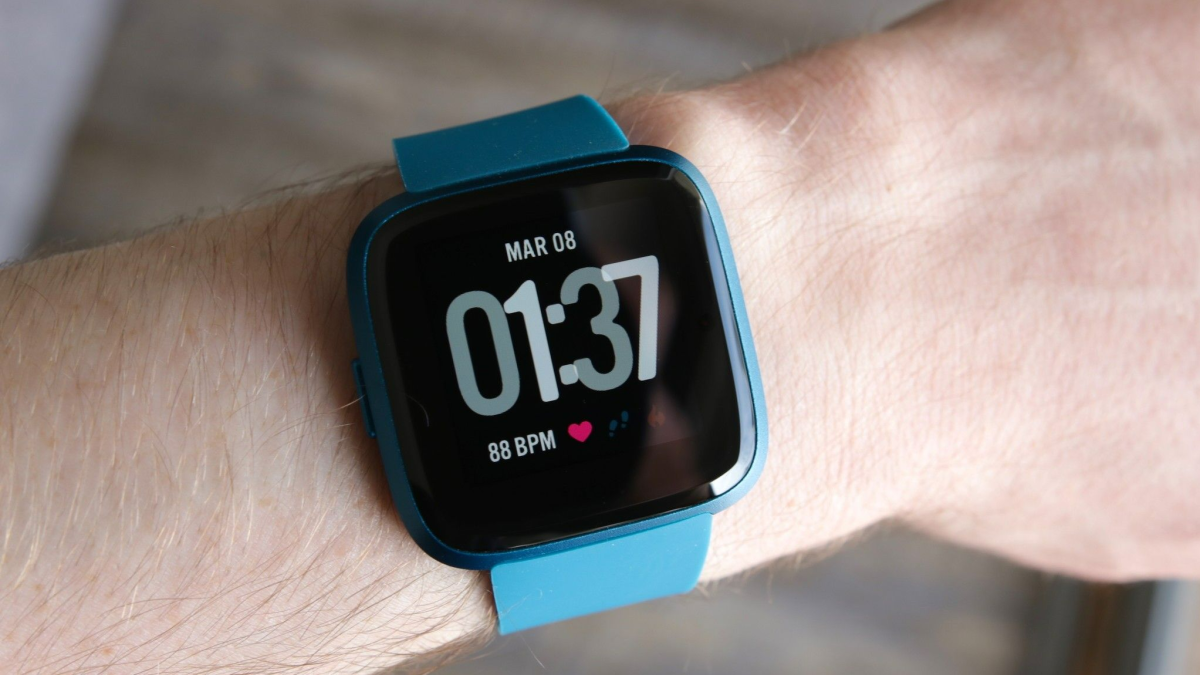
Fitbit devices will soon lose a feature. The Fitbit Connect app for Windows will be deactivated on October 13, 2022. As a result, Fitbit owners will no longer be able to sync downloaded music from their PCs onto their watches. The move pushes people toward paid services, such as Pandora or Deezer, if they want to maintain similar functionality (via 9to5Google).
“On October 13, 2022 we’re removing the option to sync your Fitbit device with the Fitbit Connect app on your computer. Download and use the Fitbit app on your phone to sync your device,” says a Fitbit support page (opens in new tab).
Up to this point, Fitbit users have been able to sync their devices through their PCs. In addition to providing an alternative to the iOS and Android Fitbit apps, the Fitbit Connect app could be used to sync downloaded music onto devices. Now, people will have to have a paid subscription to get similar functionality.
Older Fitbit devices, such as the Versa and Versa 2, will only be able to sync downloaded music through Deezer or Pandora. These services both require paid subscriptions, which start at $10 per month.
“After the Fitbit Connect app on your computer is deactivated, you can continue to transfer music to your watch through the Deezer app,” reads a separate support page (opens in new tab). “Customers in the United States can also use the Pandora app.”
While only a subset of Fitbit owners used the option to sync music from a PC to a watch, many have expressed frustration about Fitbit removing a feature. Generally speaking, people want devices to gain features over time or to maintain their functionality rather than losing options.
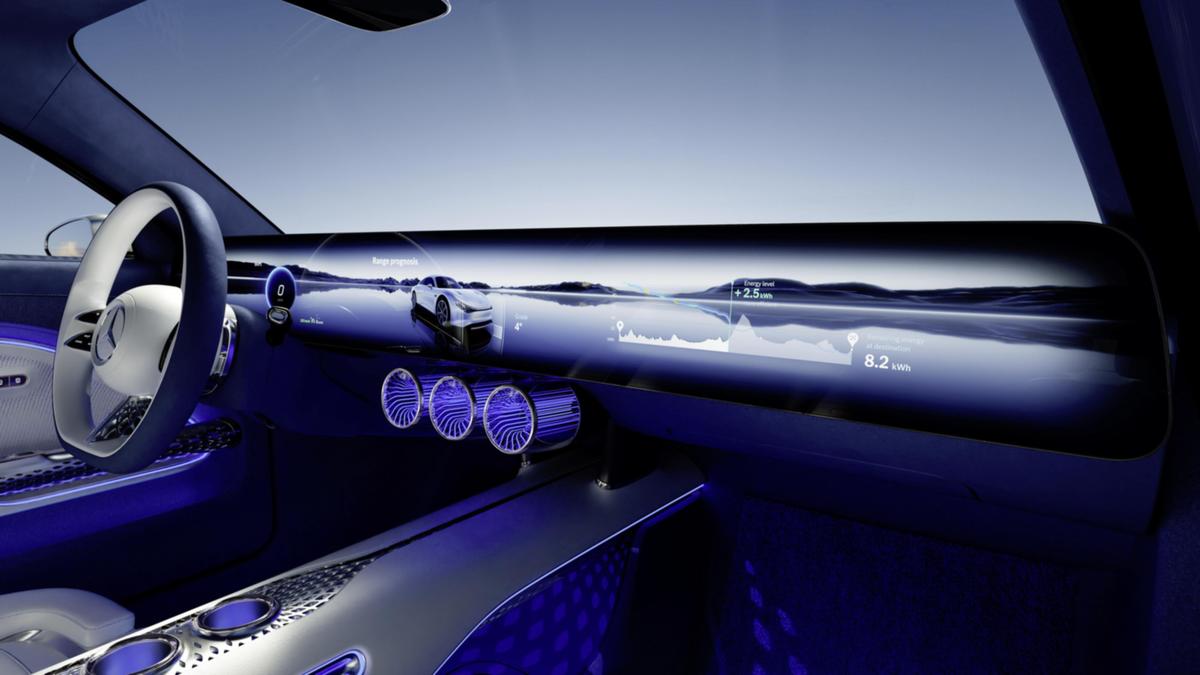
Mercedes-Benz has partnered with software company Unity Technologies to power the infotainment elements in its upcoming Mercedes-Benz Operating System (MB.OS).
Unity says its software engine will give future Mercedes-Benz vehicles infotainment displays with “stunning graphics and interactivity with speed and performance”.
Industry Technologies is best known for developing the game engine used in Pokémon Go, Monument Valley and Cuphead. The latter of these games has been ported to the Tesla infotainment system and can be played in the car.
For more Motoring related news and videos check out Motoring >>
The US-based software company also develops “real-time 3D” technology that’s used in a range of design and engineering, manufacturing, sales and marketing, and service and operations applications.
Vision EQXX Credit: CarExpert
Mercedes-Benz AG developers will use Unity Industrial Collection to create the user interface (UI) and user experience (UX) for the MB.OS Human Machine Interface (HMI), which is another term for instrument cluster and infotainment screen.
This new infotainment operating system was previewed with the Mercedes-Benz Vision EQXX electric research prototype.
Unity Technologies was chosen by Mercedes-Benz as its HMI developer platform of choice “following a rigorous, comprehensive evaluation process against competing real-time 3D and HMI development solutions”.
It’s believed one of the competitor companies Mercedes-Benz looked into was Epic Games with its Unreal Engine which is going to power future Volvo infotainment systems.
Supplied Credit: CarExpert
Unity Technologies says its “leadership in real-time 3D development” will allow Mercedes to potentially implement 3D avatars that can act as “digital butlers”, along with 3D maps, and artificial intelligence (AI) that can change vehicle settings.
The first Mercedes-Benz vehicles running MB.OS will debut in 2024. It will eventually populate throughout the rest of the Mercedes-Benz range.
The first vehicles featuring MB.OS will be built on the new MMA small car platform, which is going to underpin four new vehicles.
This new platform may be the last to be introduced with the option of internal combustion power, as from 2025 onwards Mercedes-Benz has said all new platforms will be electric-only.
Supplied Credit: CarExpert
These other electric platforms include the MB.EA architecture for medium to large vehicles, AMG.EA for performance cars, and VAN.EA for vans.
In addition, Mercedes-Benz has previously confirmed it’s going to be trimming the number of small models it offers while releasing more high-end vehicles as it targets higher margins.
The company says it anticipates “disproportionate growth” in what it calls its Top-End vehicle segment, citing a 40 per cent increase in S-Class sales last year plus “record” Mercedes-Maybach sales.
This internal segment comprises all Mercedes-AMG and Mercedes-Maybach vehicles, as well as the G-Class and essentially everything with an S: GLS, EQS, EQS SUV and S-Class.
Supplied Credit: CarExpert
Mercedes-Benz is also going to cut its range of Entry Luxury models from seven to four, though it isn’t leaving this part of the market.
The company says these changes will “reposition Mercedes-Benz in the segment, honoring in more precisely on the wishes of discerning customers”.
Mercedes-Benz also still plans to go EV-only by 2030, albeit with the “wherever market conditions allow” disclaimer, and aims to be CO2-neutral by 2039.
MORE: Mercedes-Benz debuting new small car platform in 2024MORE: Mercedes-Benz plans top-end push, Mythos sub-brand, Maybach SL
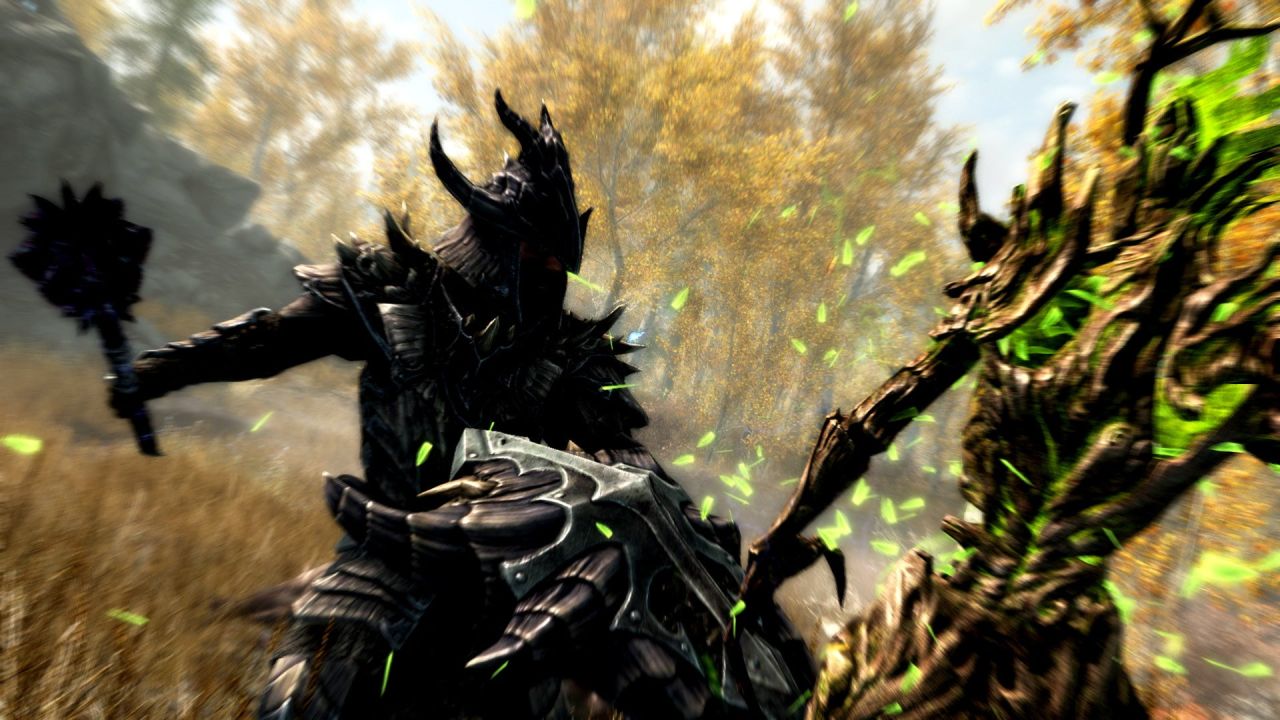
It’s come back with a vengeance. And it is, Shadow of Mordor‘s brilliant Nemesis system has languished for half a decade. But one enterprising modder recently resurrected the tech (kinda) by adding it to The Elder Scrolls V: SkyrimBethesda’s decade-old fantasy RPG.
The Nemesis system is a set of AI behavioral guidelines first introduced in Monolith’s 2014 open-world action game Middle-earth: Shadow of Mordor and its 2017 follow-up, Middle-earth: Shadow of War. Both games are set in Lord of the Rings canon, casting you as a ranger named Talion. Dwelling in Mordor, you fight against Sauron’s army of procedurally generated orcs. Any who killed you would remember you, gain enhanced abilities, and openly taunt you the next time you crossed paths.
It absolutely ruled, the sort of genius feature that should’ve been implemented into every similar game. But there’s a reason such a feature hasn’t shown up elsewhere: Last year, following years of efforts, publisher WB Games successfully secured a patent for the Nemesis system.
hindsight, Skyrim seems an obvious fit. The mod, aptly titled “Shadow of Skyrim,” is developed by Syclonix, an Elder Scrolls modder. Syclonix is quick to note that it’s a “nod” to Shadow of Mordor, however, and differs from WB’s patent in key ways. There’s no dialogue, for instance, and it doesn’t add any power levels or NPC hierarchies. But there are some notable similarities.
If an enemy kills you, they’ll get a unique name and also take your stuff. Meanwhile, you’ll get a quest giving directions as to where they’re located; defeating the enemy will give you your stuff back. That said, if you’re defeated by one of Skyrim‘s random encounters — cannon fodder who spawns out of the blue and disappears from the game after beating you — you’ll lose all of your stuff, and have no enemy to seek out and defeat to recover it. (Until the issue is addressed, Syclonix recommends deactivating the “Nemesis use and take items” aspect of the mod.) You’ll also be saddled with a random debuff, which can only be removed upon defeating the enemy who killed you. You can have up to five nemeses at a time. By default, none of them can be over level 25, to ensure you don’t have to go up against foes you can’t beat.
It’s terrific to see the Nemesis system get a second wind via modding, but it will rise again, eventually and officially. WB plans on implementing it in a forthcoming wonder-woman game.
Google is kicking off a new publicity campaign today to pressure Apple into adopting RCS, the cross-platform messaging protocol that’s meant to be a successor to the aging SMS and MMS standards.
The search giant has a new “Get The Message” website that lays out a familiar set of arguments for why Apple should support the standard, revolving around smoother messaging between iPhone and Android devices. Naturally, there’s also a #GetTheMessage hashtag to really get those viral juices flowing.
For most people, the problems Google describes are most familiar in the form of the green bubbles that signify messages to Android users in Apple’s Messages app. While the iPhone app uses Apple’s own iMessage service to send texts between iPhones (complete with modern features like encryption, support for group chats, and high-quality image and video transfers), they revert to old-fashioned SMS and MMS when texting an Android user. Not only are these messages shown in a color-clashing green bubble but also they break many of the modern messaging features people have come to rely on.
iMessage should not benefit from bullying. Texting should bring us together, and the solution exists. Let’s fix this as one industry. https://t.co/18k8RNGQw4
To fix this, Google has been dropping a series of not-so-subtle hints in recent months for Apple to support RCS, which offers most (though not all) of the features of iMessage in a protocol that’s usable across both iOS and Android. The company said it hoped “every mobile operating system… upgrades to RCS” onstage at its annual developer conference this year as well as in varioustweet over the months.
The iPhone maker has everything to gain from the current situation, which has a lock-in effect for customers. It provides seamless communication (but only between iMessage users) and turns Android’s green bubbles into subtle class markers. It’s why Apple execs admitted in internal emails that bringing iMessage to Android would “hurt [Apple] more than help us.”
Google’s arguments for RCS haven’t been helped by the standard’s sluggish and piecemeal rollout, which was initially reliant on carriers to add support. But the situation has improved since Google effectively took charge in 2019, meaning that RCS is now easily available almost everywhere worldwide. This year even saw the world’s largest Android manufacturer, Samsung, switch to using Google’s own RCS-compatible Messages app by default in its flagship Galaxy S22 range.
RCS has also slowly been gaining feature parity with iMessage’s encryption. It now supports end-to-end encryption (E2EE) in one-on-one chats, and E2EE in group chats is due later this year.
So, will Google’s new publicity campaign finally be the thing that pushes Apple to see the light and roll out RCS support on its phones? Given the huge incentives Apple has for not playing ball, I have to say the search giant’s chances don’t look good. At this point, Apple adopting RCS feels about as likely as the US collectively ditching iMessage and moving to an encrypted cross-platform messaging service like WhatsApp or Signal.
Playing games by yourself isn’t always fun, especially with a game as big as Tower of Fantasy that has a lot to explore and complete with others by your side.
That’s why it’s a good thing that there is an option to play with friends in the game, even if it might not be spelled out from the get-go. The process to play with friends is simple if you know what to do, but newcomers might find it tricky to find the right menus or things needed to access it.
As such, here is how you can play co-op with friends online in Tower of Fantasy so you can jump into each other’s world and fight the magnitude of bosses on offer.
How to play with friends online in Tower of Fantasy
First, make sure you have the player you want to co-op with added to your friends list. You can find out how to do that here.
Screengrab via Perfect World
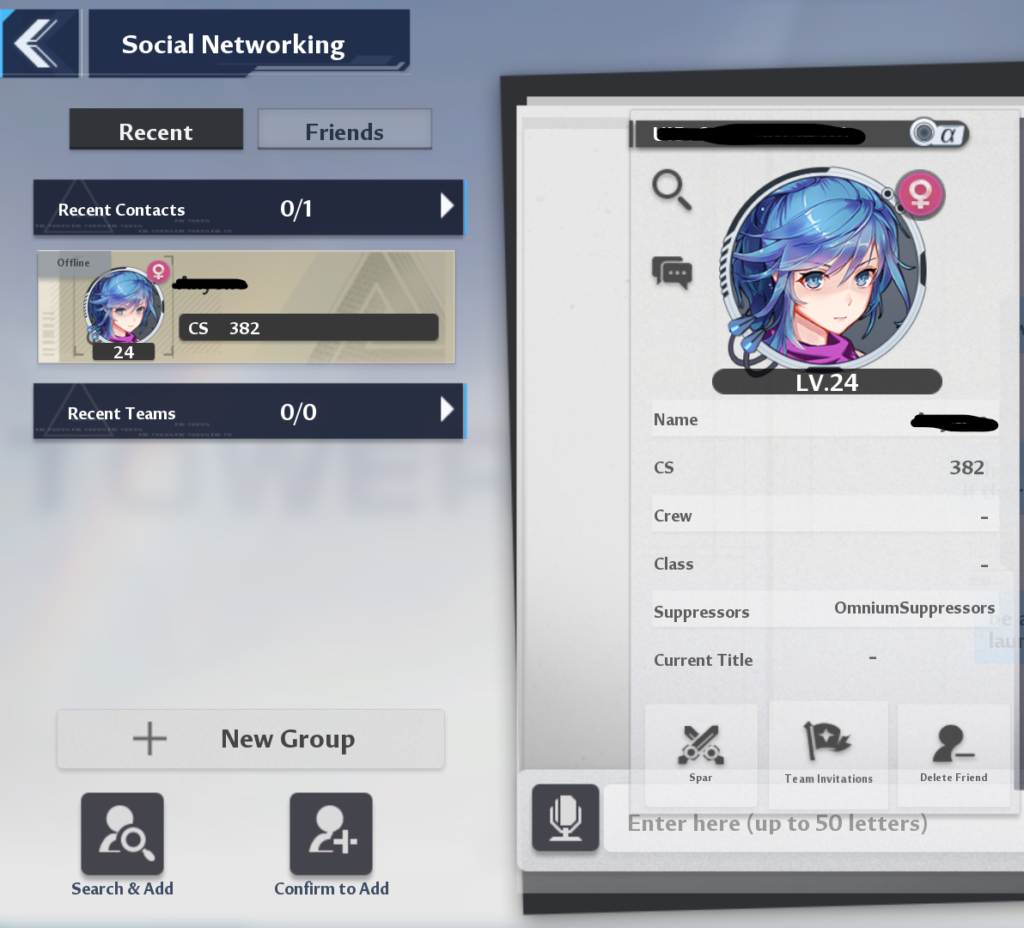
2. Bring up the friends list and find the person you want to play with. Double click on the character’s face to open up a separate menu.
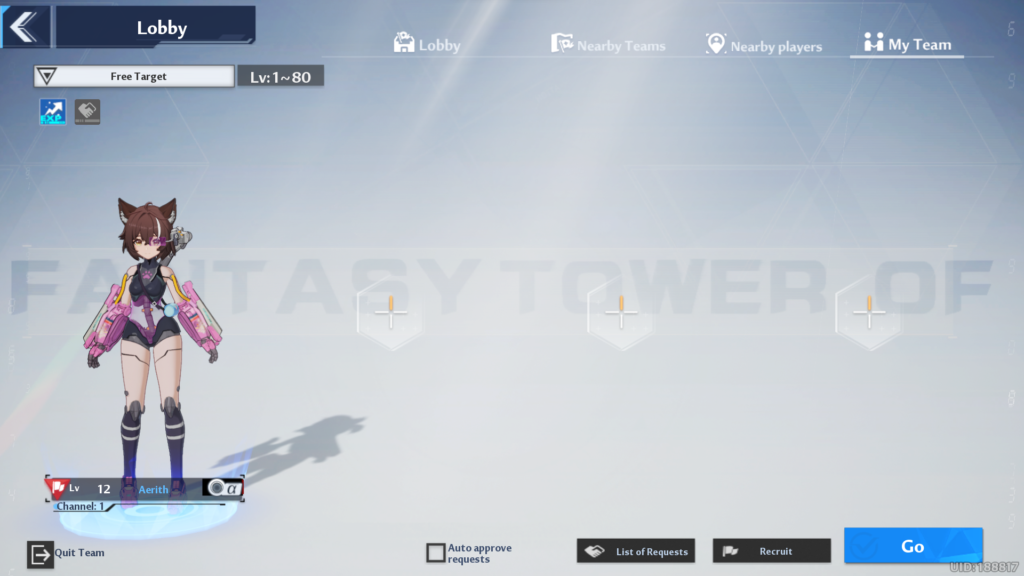
3. As long as the person is online, click on the “Team Invitations” option. This will bring up the “My Team” menu.
Screengrab via Perfect World
3b. Alternatively if you are already on a Team, you can click one of the empty plus icons and select the friend you want to join from there.
4. Once all the friends you want to play with have joined, click the “Go” button to start the session. Just be sure to set an objective, among anything else the system asks you to do, beforehand.
You can also add players to your team that you have come across in the world or add randoms without needing to have them on your friends list if you know their character name.
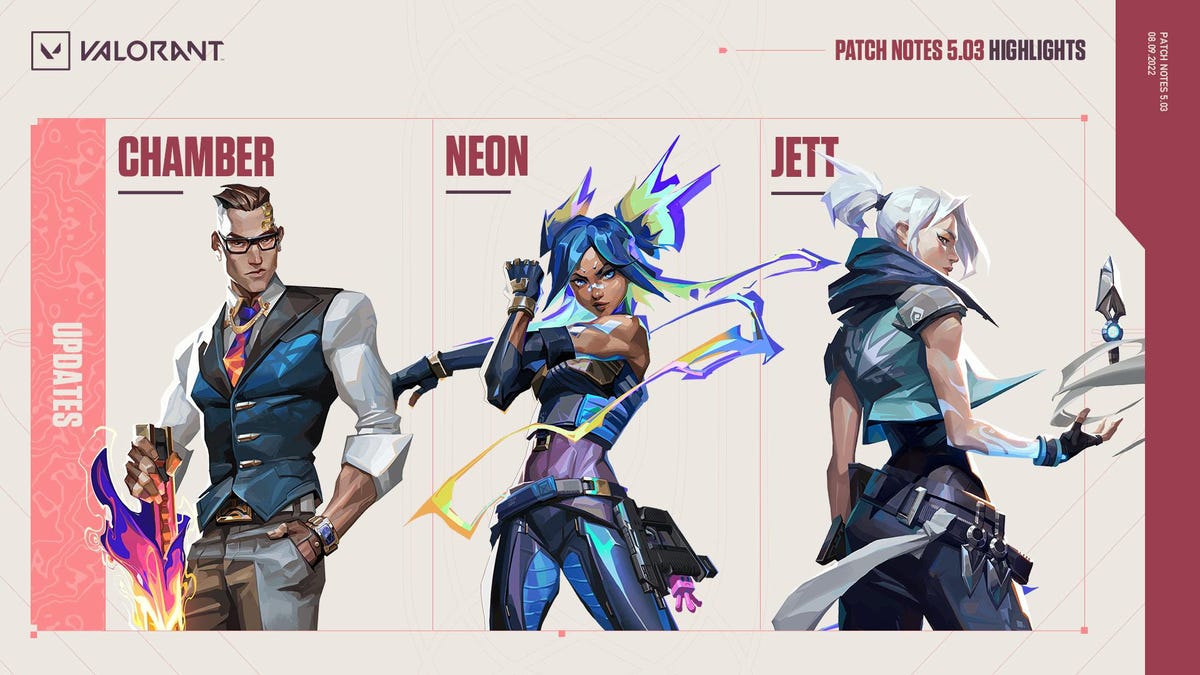
Chamber, Neon and Jett all get changes in the patch.
Credit: Riot Games
Riot Games has revealed the patch notes for Valorant update 5.03, which reveal some major nerfs to Chamber, and somewhat strangely, introduces some bugs the developers are already aware of.
Chamber has been the bane of many Valorant games in recent times, with almost everyone agreeing that his kit has been a little bit too strong for a while now. Now the time has come for some nerfs, and the Valorant development team is pretty confident they have done just that.
“As players in both ranked and pro play have mastered Chamber, his strengths have started to overshadow his weaknesses, making the counterplay to Rendezvous and his arsenal not as effective as we’d hoped,” the dev team said in the patch notes. “He’s Chamber’s overall strength has also felt outsized, and we believe that we can reduce the complete power of his kit while still keeping him competitive with the rest of the roster.”
His Rendezvous has been particularly hard hit, with an increase of 10 seconds to its cooldown and a significant decrease in the size of the ring, which should mean he has to play a little safer and less aggressive. Elsewhere the slow on both Trademark and Tour De Force has been decreased from 9.5 seconds to 6, and his ultimate from him now requires an extra point to activate. The final change increases the cost of his Headhunter bullets from 100 to 150, which combined with the increased ultimate cost, should bring down the frequency he can use his most valuable assets from him.
Other agents that are being changed in patch 5.02 include Neon and Jett who, along with Chamber, now have to deal with decreased damage to limbs when they use their ultimates, but increased damage when they hit a head. If you compare this to how pretty much every other weapon works in Valorant it makes sense to bring them in line.
There are a few bug fixes that aren’t all that important, but strangely patch 5.03 is adding more bugs that Riot already knows about. It’s all for a good cause, as the Valorant engine is being upgraded to Unreal Engine 4.26, giving the development team access to some new tools, but it does mean that there may be some UI-related bugs that pop up. The good news is that Riot is already on the case and they should be fixed pretty soon.
It may not be a massive update all things considered, but the Chamber nerfs will certainly be good news to everyone apart from Chamber mains, and the changes to certain ultimates set a good precedent going forward.