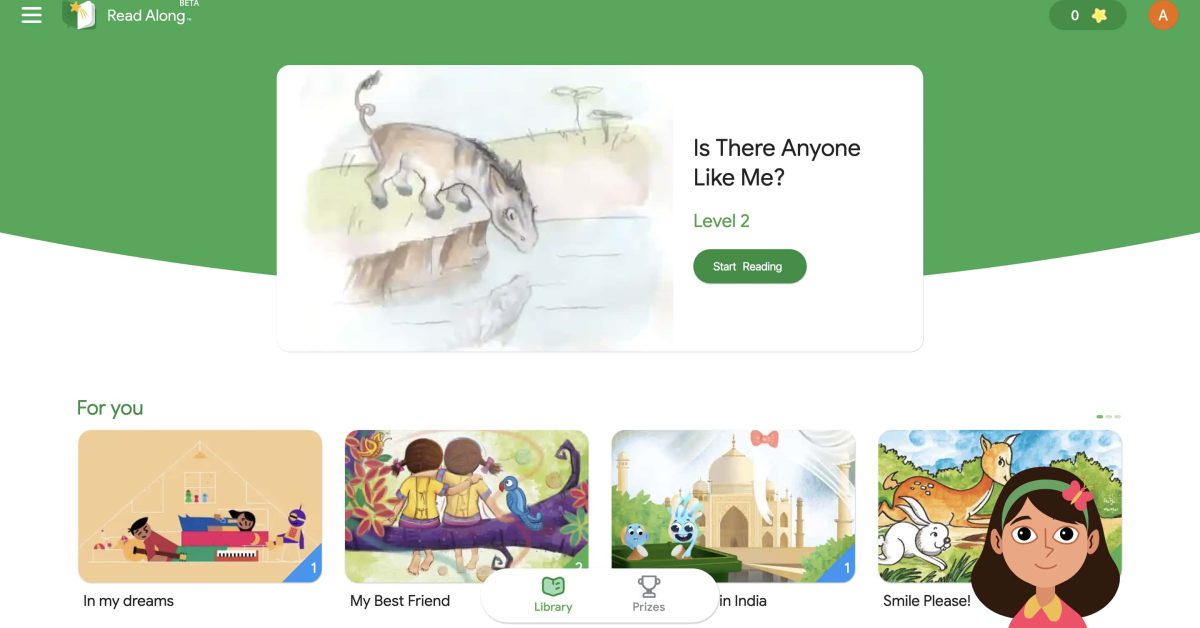
Read Along wants to help improve child literacy by using Google’s speech recognition technology to give kids reading aloud verbal and visual feedback. Originally an Android app, Google’s Read Along is now on the web to better expand availability.
Read Along first launched for India in 2019 before expanding a year later. Aimed at those 5 and up, it supports nine languages (including English, Spanish, Portuguese, and Hindi) in over 180 countries. Google says more than 30 million kids have read 120 million stories over the past three years.
Google’s text-to-speech and speech recognition tech works to detect “if a student is struggling or successfully reading the passage.” Kids receive “correctional and encouraging ” feedback from Diya, a “reading assistant.” In terms of privacy, the Android app can work offline (after stories are downloaded), while all voice processing occurs on-device and is not sent to Google servers.
Google is now bringing Read Along to the web in public beta and gearing it towards laptops and PCs. Speech recognition occurs in the browser with support for Chrome, Firefox and Edge today, while Safari is “coming soon.” Sign-in is optional and allows for multiple accounts.
Google is positioning readalong.google.com as a “new opportunit[y] for teachers and education leaders around the world, who can use Read Along as a reading practice tool for students in schools.” The company recommends using Google Workspace for Education accounts in schools and personal Google Accounts with Family Link at home.
In terms of content, there are already hundreds of illustrated stories categorized into different reading levels:
In addition to the website launch, we are also adding some brand-new stories. We have partnered with two well-known YouTube content creators, ChuChu TV and USP Studios, to adapt some of their popular videos into a storybook format. Our partnership with Kutuki continues as we adapt their excellent collection of English and Hindi alphabet books and phonics books for early readers; those titles which will be available later this year.
FTC: We use income earning auto affiliate links. More.
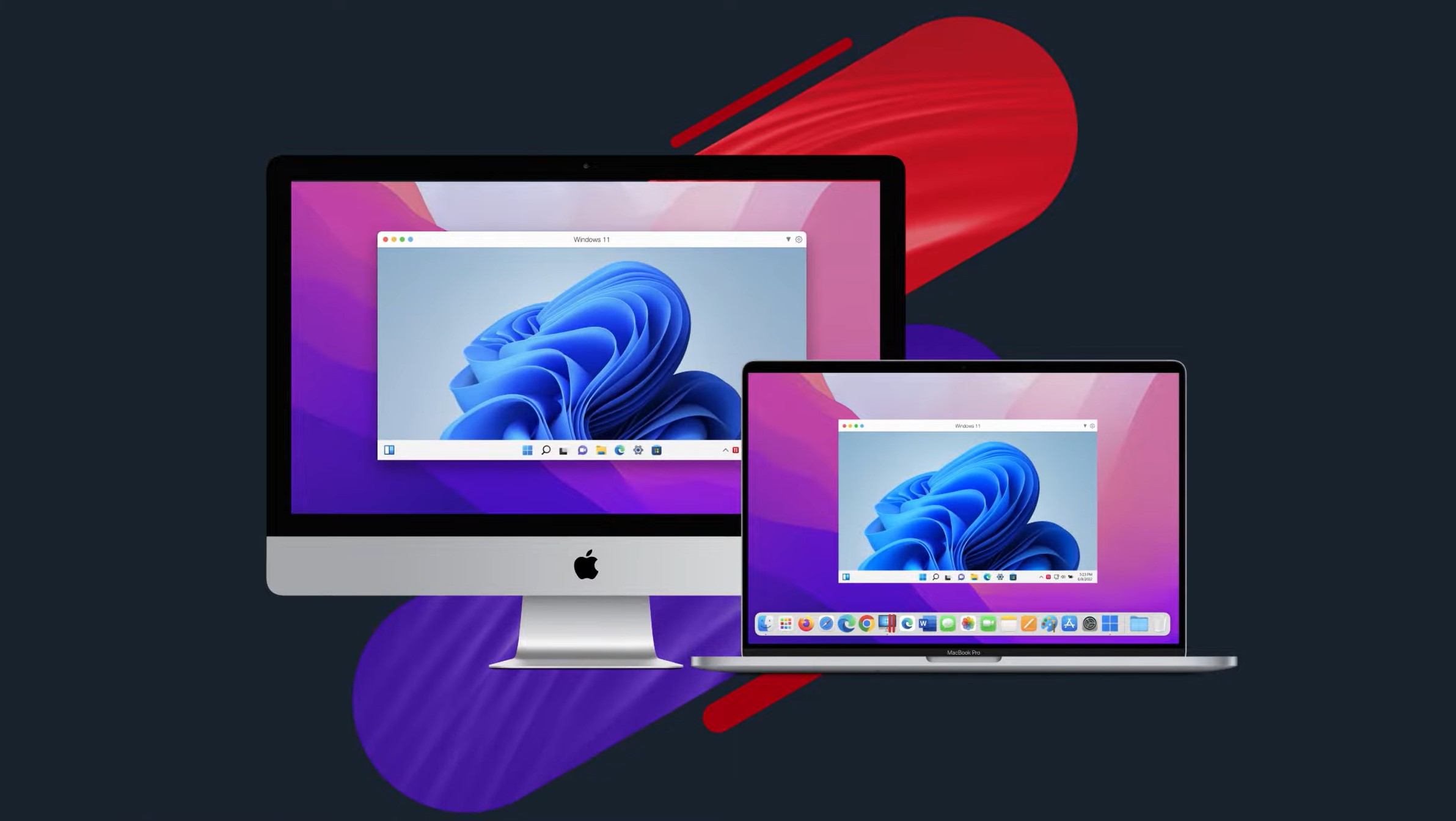
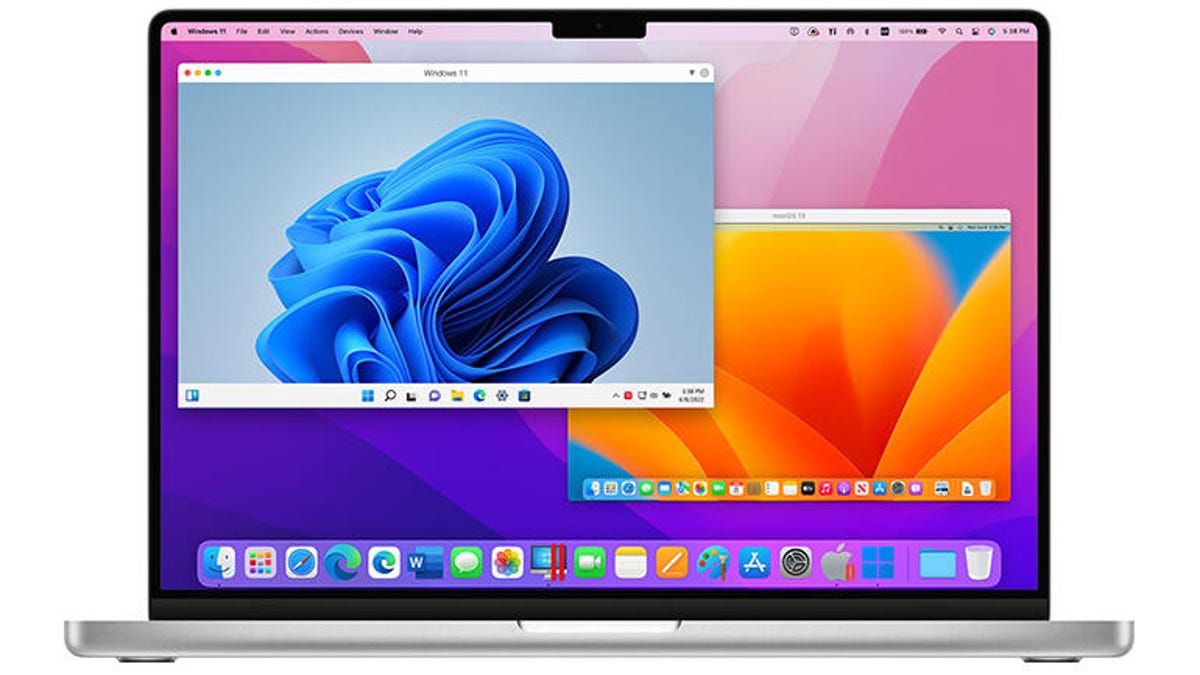
Parallels has announced the release of Parallels Desktop 18 for Mac. This new version of the popular virtualization software brings several key optimizations for running Windows 11 on Macs, including enhanced gameplay when enjoying Windows games on Macs.
In total, there are four significant changes in the Parallels Desktop 18 for Mac standard edition. The biggest one is the ability to connect a game controller to a Mac, switch to Windows, and start playing by sharing the controller between native and guest operating systems. Parallels also promises that the release should bring better video playback and higher frame rates when gaming.
Other than gaming, Parallels Desktop 18 for Mac standard edition adds full support for Apple’s ProMotion display. This means you can enjoy automatic refresh rate changes. The performance changes are so good that you can assign more RAM and CPU cores and run Windows 11 up to 96% faster on the Mac Studio with Apple’s M1 Ultra chip, according to Parallels.
Two smaller changes in the standard release include improved compatibility of Intel (x86) applications when running Windows 11 on ARM, and improved USB 3.0 to support live data streaming devices, including video capture devices. These cap out the list of new features.
Note that there’s also the Parallels Desktop 18 for Mac pro edition and Parallels Desktop 18 for Mac business edition. These two releases have their own set of features. However, pro includes all features from standard, and business includes both pro and standard features
In the pro edition, you’ll be able to set up various network conditions for a virtual machine, isolate a VM network, use network boot with Linux ARM VMs, and analyze application performance.
In Parallels Desktop 18 for Mac business edition, there are three new functionalities. There’s now convenient SSO/SAML authentication that enables employees to sign in and activate Parallels Desktop with a corporate account. IT admins can also deploy or provision a Windows 11 VM on a Mac, as well as manage Parallels Customer Experience Program participation centrally.
If you’re using Parallels Desktop 17, you can upgrade to the standard edition of Parallels Desktop 18 for $70. New standard licenses are available for $100 a year on a subscription plan, or $130 a year for a one-time purchase. A 14-day free trial is also available.
Overwatch Anniversary Remix 3 offers a sick new version of Tracer’s Graffiti skin.
Blizzard Entertainment
With Overwatch 2 on the horizon, it’s almost time to say goodbye to the original game once and for all. There’s no time to be sad just yet though, since Blizzard is throwing a farewell party with Overwatch Anniversary Remix: Vol. 3. The event is now live on all platforms and it runs until August 30.
MORE FROM FORBES‘Overwatch 2’ Won’t Have Another Beta Before LaunchBy Chris Holt
That’s an important date, because Blizzard will no longer sell loot boxes after that time. Loot boxes are going away in Overwatch 2 in favor of a battle pass. You’ll still be able to earn loot boxes in Overwatch in the meantime. Blizzard will automatically open all your remaining loot boxes for you after Overwatch 2 launches on October 4th. (Remember, all your cosmetics carry over to Overwatch 2.)
MORE FROM FORBES‘Overwatch’ Won’t Make You Manually Open All Your Loot Boxes Before ‘Overwatch 2’By Chris Holt
But I would recommend opening up your boxes ASAP, especially if you’re running low on credits, like I am. That’s because Anniversary Remix: Vol. 3 has some new twists on some classic skins and some of them are bangers.
Legendary Skins
There are six remixed Legendary skins available during this event. They each cost 3,000 credits in the Hero Gallery. Alternatively, you might get lucky and snag them from the very last Anniversary loot boxes. Of note: if you log in once during the event, you’ll get a free Anniversary loot box.
Tagged Tracer (pictured above)
Graffiti Tracer is my second-favorite Tracer skin. Or at least it was my second fave. The remixed version, Tagged Tracer, is even better. This skin is sick. I need to hurry up and finish writing this post so I can go unlock it.
Genjiman Genji
Genjiman Genji skin in Overwatch.
Blizzard Entertainment
An obvious play on Ultraman, this is a fresh spin on Genji’s Sentai skin with red and yellow replacing the green. It’s dope, and I must have it in my collection.
Proteus: 76 Soldier: 76
Proteus: 76
Blizzard Entertainment
Are you kidding me?!? This is a cleaner take on the Cyborg: 76 skin with a sharper black and gold theme. I love it very much. I don’t know that it will permanently replace Grillmaster: 76, but I will absolutely rotate this in from time to time.
Mechatron Pharah
Mechatron Pharah skin in Overwatch
Blizzard Entertainment
And it is. Very much yes. This black and purple version of Pharah’s Mechaqueen skin ticks all the boxes for me. Great job on this one as well, Blizzard.
Varsity D.Va
Varsity D Va skin
Blizzard Entertainment
This is a tweak on the fan-favorite Academy skin and I dig this one too. I don’t feel a massive sense of urgency to get this one, though. I can’t stop using the Cruiser skin anyway.
Arctic Ops Baptiste
Arctic Ops Baptiste skin in Overwatch.
Blizzard Entertainment
This is, unfortunately, the least exciting one of the bunch. It’s a mostly-white version of Bap’s Desert Ops skin, which I actually think is cooler than this one.
Challenge Skins
Along with the six Legendary remixes, you’ll have one more chance to snag a few previous weekly challenge skins. Play 27 games across each weekly period in Arcade, Quick Play and Competitive to unlock them. Wins count for double. Play nine games for a related player icon and 18 for a spray.
The skins you can unlock are:
As I’ve mentioned before, Comic Book Tracer is one of the best-ever skins in Overwatch. Yo sees it the comic book-esque sound effect that plays when you nail a melee attack. It’s the greatest.
Along with all these skins, Overwatch Anniversary Remix: Vol. 3 brings back the brawls from seasonal events: Overwatch Archives Missions (and more difficult challenge missions), Lúcioball, Junkenstein’s Revenge (plus the challenge missions), Freezethaw Elimination, Mei’s Snowball Offensive, Snowball Deathmatch, Yeti Hunter, Capture the Flag and Bounty Hunter. These will be available in the Arcade on a rotating basis.
I’m feeling a little melancholic that this will be the last-ever Overwatch 1 event, so I’ll be playing all the limited-time modes over the next few weeks. Here’s hoping they’ll pop back up from time to time in Overwatch 2, but I never want to miss a chance to dive back into Storm Rising in any case.
In March 2022, the UK Competition and Markets Authority (CMA) fined the lighting products supplier, Dar Lighting Limited (Dar), £1.5 million for engaging in resale price maintenance (RPM), in breach of the UK prohibition against anticompetitive agreements, with the text of the CMA’s 241-page decision only having been made available earlier this summer.
While the decision is one of many by the CMA in recent years to tackle illegal RPM practices (for example, see our recent alert on the surge of RPM enforcement all over Europe here), this case is different in that its focus is not on direct and explicit contractual terms imposing RPM, but rather on the perception that Dar’s sales partners got from messages conveyed to them in relation to their ability to offer product discounts.
GIVE’S CONDUCT
The CMA found that Dar, which operates a selective distribution system to sell its domestic lighting products, restricted its retailers’ freedom to set their own online prices and to offer discounts for the products they onsold.
More specifically, the CMA’s investigation focused on a number of terms and provisions contained in Dar’s selective distribution agreements with its resellers, as well as Dar’s branding guidelines, which contained strict instructions relating to the use of brand names and logos, product photography, typography, and brand colors on the resellers’ websites. Although the CMA noted that these instructions “were not explicitly or directly about the price at which the products were being sold but about product presentation” and that they did not “explicitly prevent discounting,” the UK competition watchdog nonetheless found that the manner in which these instructions were communicated and enforced by Dar created a perception amongst the brand’s authorized resellers that discounts were not permitted because they were not compatible with the goals of the selective distribution system.
The CMA relied on two key types of contemporary evidence to establish that, in the absence of written price-fixing obligations, Dar’s practices in effect prevented its resellers from offering sales discounts to customers:
Dar’s internal communications, which showed a perception within the company itself that discounts and sales campaigns were not compatible with the spirit of Dar’s selective distribution programme, with employees reporting internally those authorized resellers who would advertise discounts; and
External communications with Dar’s resellers, including via WhatsApp, which the CMA concluded gave rise to an anti-discount culture for online selling, thus creating a perception amongst authorized resellers that Dar’s selective distribution system somehow allowed the brand to prevent discounting. For example, a Dar employee sent the following WhatsApp message to a reseller explaining why the reseller was not admitted to the selective distribution network: “To be able to control the prices customers who have [Dar brand] must have a designated area with an approved [Dar brand] display” (emphasis added).
The CMA clarified that selective distribution is a legitimate way for a business to make products available only to select retailers, who meet certain criteria, and is a useful tool for brand protection. However, the authority highlighted that brands who adopt a selective distribution model must take particular care to ensure that the implementation/enforcement of the selective distribution system does not lead to any infringement of competition law. It is in this context that the CMA held that Dar’s implementation and enforcement of its selective distribution system ran afoul of the UK prohibition against anticompetitive agreements.
RPM
The CMA ultimately concluded that Dar effectively operated and enforced a pricing policy that would ensure authorized resellers would not advertise or sell Dar products online below a certain minimum price specified by Dar. In the UK and EU, such practices amount to illegal resale price maintenance and constitute a so-called “hardcore” restriction of competition that cannot benefit from the safe harbor applicable to vertical agreements.
RPM practices are amongst the most hotly enforced cases by the CMA. For example:
In 2021, the CMA fined Roland £4 million for illegal RPM with respect to electronic drum kits and components;
In 2020, GAK (Digital pianos, digital keyboards, and guitars), Fender (guitars) and Korg (synthesizers and high-tech equipment) received penalties for RPM of £0.3 million, £4.5 million, and £1.5 million respectively;
In 2019, £3.7 million was levied on Casio (digital pianos and keyboards) also for engaging in resale price maintenance; and
In 2017, the CMA fined the National Lighting Company £2.7 million for restricting its resellers’ freedom to set resale prices online.
Finally, it is worth noting that Dar’s fine was subject to a 20% discount because it admitted it had broken the law and settled the case with the CMA. This also means that the CMA decision will not be appealed further.
KEY TAKEAWAYS
There are a number of very important points that brands and manufacturers need to be aware of when structuring and enforcing their distribution strategies:
Selective distribution systems remain a great tool to ensure a high level of quality protection for brands. Dar itself moved from open to selective distribution because, as the CMA found, it became concerned about “maintaining the quality of its brands and customer service levels, as well as preventing some Resellers from free-riding on the customer support and marketing investments made by other Resellers.”
What the CMA’s decision makes clear, however, is that selective distribution cannot be misused to give authorized resellers the impression that the system is a front for restrictive practices, such as illegal resale price maintenance.
The success of any well-designed distribution system, which does not contain any direct or express terms that restrict competition, rests and falls on how the system is enforced and implemented in practice. This means that brands should take great care to adequately train their sales personnel to ensure that there is no misinterpretation in relation to the genuine and legitimate nature of their commercial strategies. In the case of Dar, it was the internal and external communications, including via WhatsApp, that ultimately proved fatal. It was not Dar’s contracts or guidelines that restricted competition but rather the way in which the distribution model was conveyed to commercial partners.
Dar’s case shows that it is not enough to comply with competition law on paper – for a competition authority, substance will be more important than form. Competition law compliance should thus be weaved into the cultural fabric of each business.
The CMA has just published its key legal instrument regulating vertical agreements – the Vertical Agreements Block Exemption Order, which came into force on 1 June 2022, and the associated CMA guidance published on 12 July 2022. These documents remain the hardcore nature of RPM practices and make it clear that such conduct is highly unlikely to be regarded as compatible with competition law. The recent nature of these legal instruments could also mean that the CMA will be looking at supply and purchase agreements, and in particular at RPM, very closely in the coming years.
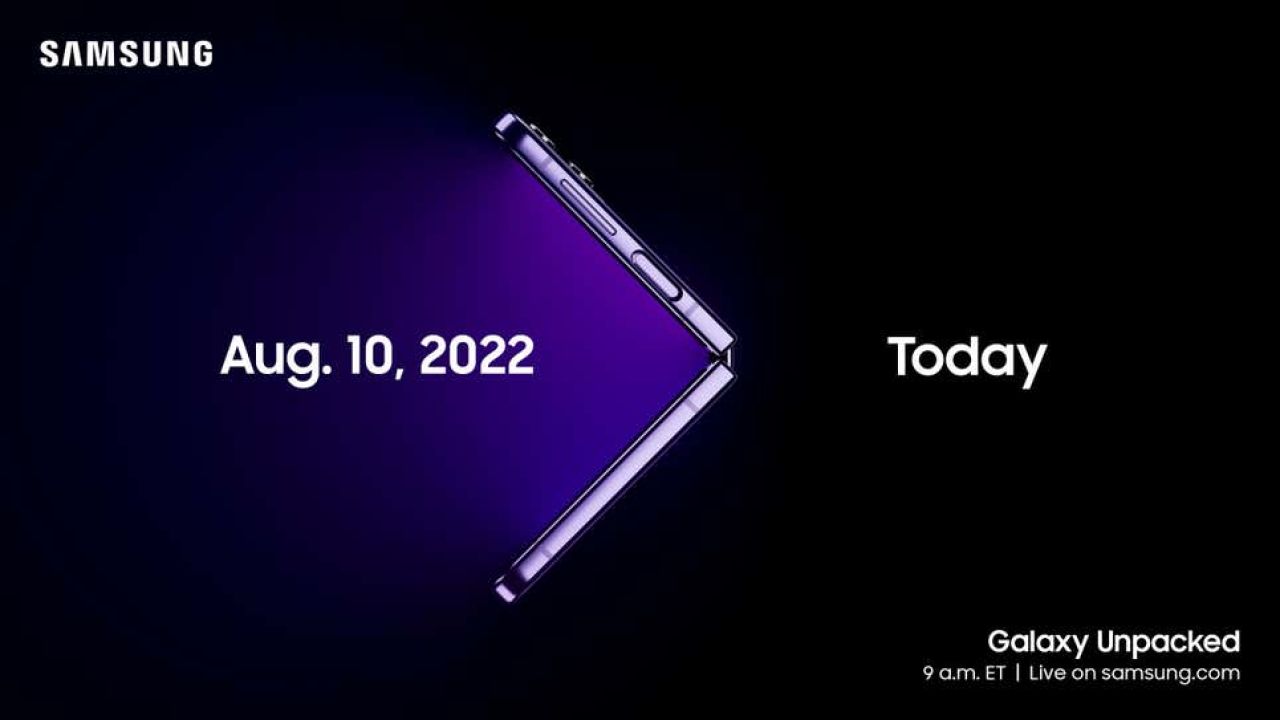
Samsung’s almost unveiled its next-generation foldables, which means the days of relying on leaks are almost over. The company’s virtual Galaxy Unpacked event will start on Aug. 10 at 9 a.m. ET / 6 a.m. PT You can watch along with us on Samsung’s website or in YouTube embed below. Samsung will also publish all the new details from the event on its newsroom landing page.
As they’ve trained us to expect over the years, Samsung’s Unpacked events are when Samsung unwraps its new kit. Everyone’s anticipating the next generation Galaxy Z Flip 4 and Galaxy Z Fold 4. The two folding smartphones will likely take the reins from the Galaxy Note with the companion S Pen — that device has been replaced outright with the Galaxy S22 Ultra, now a part of the early-year flagship lineup.
If you were reading along with the rumours, you might know this year’s foldables are billed out to be as interesting as last year’s releases. The Z Flip 4 is a foldable device that flips down into a clamshell shape, while the Galaxy Z Fold 4 will be marketed toward multitaskers. But while Samsung was figuring out the look and feel of the smartphones the last few years, we’re thinking this year’s launch will be billed as the “upgrade” for folks who are finally foldable form-factor curious.
Since Samsung’s similarly-timed Unpacked event introduced new accessories into the ecosystem last year, there are also rumblings that a new Galaxy Watch 5 will join the brood of existing Samsung wearables alongside a Galaxy Watch 5 Pro with improved health tracking sensors aimed at training athletes. The Galaxy Buds Pro may also bump up to the next generation, which would be nicely timed against Google’s recently launched Pixel Buds Pro.
We will know everything in mere hours. Samsung has already opened pre-orders for those ready to drop cash on the unknown. For everyone else, join us back here during the Unpacked event time to see what’s new.
Editor’s Note: Release dates within this article are based in the US, but will be updated with local Australian dates as soon as we know more.
ARN’s iHeartRadio has blown out nine candles, having celebrated the milestone birthday on August 5th.
Since launching in 2013, the platform has evolved to become an all-in-one radio, music streaming, podcast, and live events platform available to Australians in every state.
mediaweek spoke to iHeartRadio content director Brett Nossiter about how the brand has developed so far, and what the future looks like.
Brett “Nozz” Nossiter
Having been with iHeartRadio for seven years, Nossiter has seen the evolution of the brand up close.
“When it first began, it was largely based around streaming our ARN stations – KIIS FM, WSFM, all that jazz. Fast forward to today: because it’s an open platform, it’s now so much more. We’ve got ABC on there, we’ve got SBS, the CBAA and the community stations. We’ve brought in a whole ton of podcasts.
“In the beginning, iHeartRadio was an app just to stream our stations. Now, its purpose is very much at the center of ARN’s digital strategy.”
It’s not just content that iHeartRadio has branched out in, with the evolution in technology since 2013 giving the team new challenges to tackle as well.
“We’ve all seen a huge explosion in the digital touch points,” says Nossiter. “It’s not just an app that sits on someone’s phone anymore.
“When we first started, smart speakers weren’t a thing. As soon as Google Homes were launched, we saw an immediate spike. We also saw the huge benefits of that through Covid, when everyone was at home with those smart devices – we saw a big spike in usage there as well.”
Back in 2013, Facebook users were being introduced to the Story Bump feature, the first time Facebook had moved away from a purely chronological feed. Nine years later, the News Feed algorithm is old news and Facebook – now Meta – has tech companies focusing squarely on something new.
“iHeart has got 200 developers who are constantly working on building out new stuff in new spaces. It’s even to the point now where they’re looking at exploring how iHeart lives in the metaverse – which is ballistic, but that’s where audiences are going.
“We’ve got the benefit of tapping into all of those resources to explore all these new frontiers. But if you rewind to nine years ago, there was no such thing as the metaverse.”
According to Nossiter, one of the big success stories of iHeartRadio in Australia is the rise in brand awareness through major events, both locally and internationally.
“We had our iHeartRadio Live series locally – which went by the wayside through Covid, but that will return. We’ve also got these huge events. At the moment we’re focussing on the iHeartRadio Music Festival in Las Vegas – we’ll be running a national competition around that.”
Some of the highlights of Nossiter’s time at iHeartRadio include building a pop-up station for MTV’s 40th anniversary – that involved four new stations going to air over four weeks – designing the in-store radio experience for Woolworths, and creating the world’s first TikTok Radio station: TikTok Trending. The last one, in particular, is one of his “favorite projects” for a number of reasons.
“It was so liberating to come up with a brand new way of programming a station,” says Nossiter.
“We set out to break a lot of the radio rules. Instead of having blocks of shows that run for three hours, we now have shows that run for 30 or 15 minutes tops. It’s designed to replicate the experience of TikTok.
“I really had a lot of fun building that, and I’ve learned a lot. There’s a lot of new music, and there are a lot of crazy music trends out there. Its impact on the music landscape as a whole has been huge.”
Looking into the crystal ball of the next 12 months or so, Nossiter says that the team will be focusing on the iHeartRadio Music Festival, as well as getting ready for some annual projects.
“It’s the beginning of August, so in the next two to three weeks, I will expect to start getting my first inquiries about when Elf Radio will return – people love that station! That will be another big project, and then we’re going to do pop up stations for Valentine’s Day.
“We’ve got a few other new projects in development that I can’t share much about, but I’m really excited about them.”
As for the next nine years and beyond, Nossiter says that if the past few years have taught us anything, it’s that the future is completely unpredictable. Whatever comes their way, however, the team at iHeartRadio will be there to meet it.
“Someone will invent some crazy new app, and we’ll find ways of producing an audio experience for that new environment. They seem to come up a lot more frequently these days!”
Super Punch-Out!! has a hidden two-player mode that was just discovered nearly three decades after the game’s original 1994 release (via Kotaku). If you want to mess around with it but don’t have an SNES hooked up, you can actually give the secret mode a shot on the version of the game currently available to Nintendo Switch Online subscribers.
The new two-player mode — and a fight select screen — were revealed by the Twitter account Unlisted Cheats in a thread on Monday. To activate them, you’ll need to have two controllers hooked up to your console of choice. (On Switch, I got them to work with a Pro Controller as player one and two Joy-Cons acting as one controller as player two.)
First, on the title screenhold down Y and R with the player two controller, and on the player one controller, press A or start. (On the Switch’s Pro Controller, I got this to work by pressing the plus button.) This opens up the fight select screen, which lets you jump to a bout of your choosing.
At the title, hold Y+R, then press A or START. Following screen will appear instead or regular menus. Here you can select any character to fight a free single match. See, even fighters from SPECIAL CIRCUIT are available here. -> pic.twitter.com/Hh7AtPdTcK
Next, you can activate the two-player mode. Highlight the fighter you or a friend might want to play as and then hold down B and Y at the same time on the player two controller, followed by A or Start on the player one controller. (I again used the plus button on my Pro Controller.) At the pre-fight screen, keep holding down B and Y on the player two controller and have player one press start to get through it.
The fight will start up, and the player two controller should be able to control the fighter you selected previously. According to IGN senior editor Kat Bailey, the player two character can do special moves, tooso if you’re taking on a friend, you might want to stay on your toes.
Sorry! Completely forgot to mention! All combinations must be held on JOYPAD2! Then A or START on JOYPAD1!
I’ll admit that I’ve never played Super Punch-Out!! outside of testing it for this article, but the fact that this is an option at all is a delightful hidden gem. It’s also a fun reminder of some of the secrets that used to be accessible in games with the right combination of arcane button presses. After using this hidden mode and seeing the new secrets menu in vampire survivorsI’m hoping classic-style cheats make a comeback.
Physical sales of the controversial GTA trilogy remaster collection have bombed for the second quarter in a row, Take-Two Interactive’s reports indicate.
VIEW GALLERY – 2 IMAGES
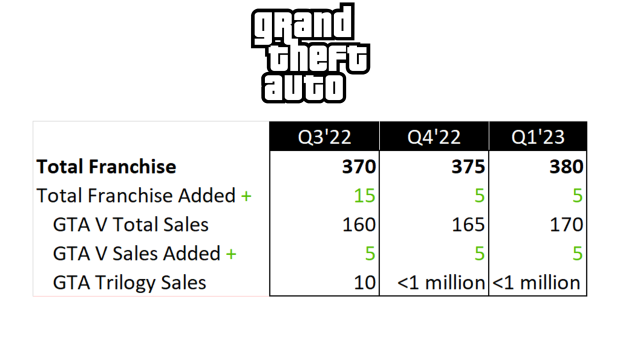
The GTA Definitive Edition remaster sold a whopping 10 million copies at launch, but our tracking shows the game has significantly fizzled out over the past two quarters. There’s a big reason for this: The game is largely regarded as a failure among Rockstar fans due to graphical issues, technical hiccups, and a disastrously controversial launch that has soured public opinion.
The sales figures reflect this sentiment. According to Take-Two Interactive’s recent investor’s presentation, the GTA franchise has sold-in 380 million copies to date. A quick bit of math offers figures for the trilogy collection. GTA franchise shipments increased by 5 million units, and total franchise shipments also increased by 5 million. This squeezes the trilogy out of the equation with sub 1 million sales.
Remember that these are sell-in numbers, or physical shipments, and do not include digital sales. It’s possible the trilogy has made a lot more sales digitally, however recent GTA franchise revenues show a slump back to pre-pandemic levels.
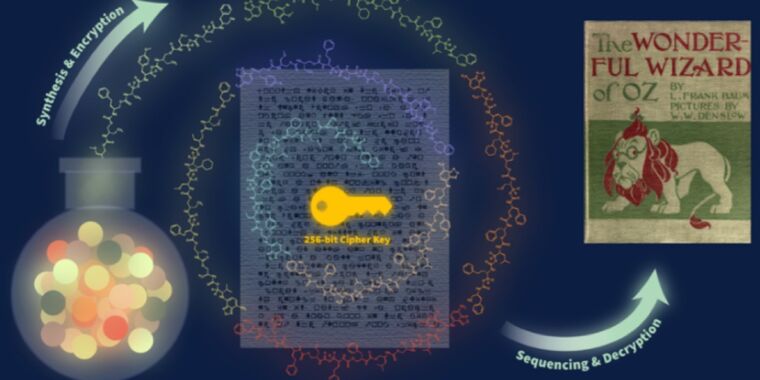
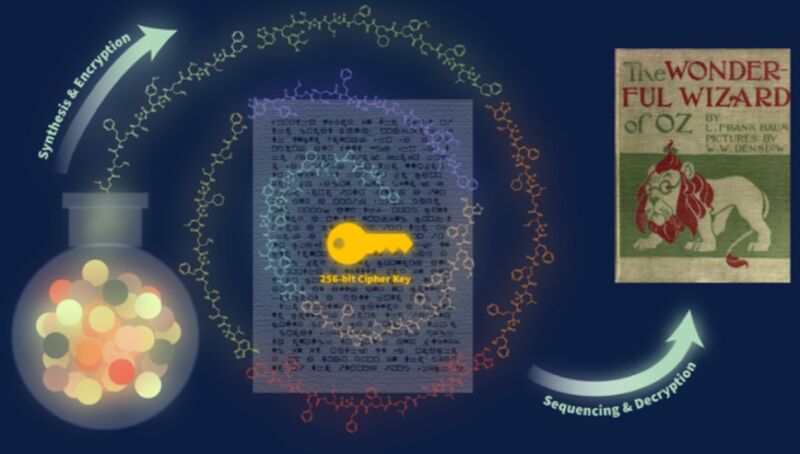
Enlarge / Scientists from the University of Texas at Austin encrypted the key to decode text of the Wizard of Oz in polymers.
SD Dahlhauser et al., 2022
Scientists from the University of Texas at Austin sent a letter to colleagues in Massachusetts with a secret message: an encryption key to unlock a text file of L. Frank Baum’s classic novel The Wonderful Wizard of Oz. The twist: The encryption key was hidden in a special ink laced with polymers, They described their work in a recent paper published in the journal ACS Central Science.
When it comes to alternative means for data storage and retrieval, the goal is to store data in the smallest amount of space in a durable and readable format. Among polymers, DNA has long been the front runner in that regard. As we’ve reported previously, DNA has four chemical building blocks—adenine (A), thymine (T), guanine (G), and cytosine (C)—which constitute a type of code. Information can be stored in DNA by converting the data from binary code to a base-4 code and assigning it one of the four letters. A single gram of DNA can represent nearly 1 billion terabytes (1 zettabyte) of data. And the stored data can be preserved for long periods—decades, or even centuries.
There have been some inventive twists on the basic method for DNA storage in recent years. For instance, in 2019, scientists successfully fabricated a 3D-printed version of the Stanford bunny—a common test model in 3D computer graphics—that stored the printing instructions to reproduce the bunny. The bunny holds about 100 kilobytes of data, thanks to the addition of DNA-containing nanobeads to the plastic used to 3D print it. And scientists at the University of Washington recently recorded K-Pop lyrics directly onto living cells using a “DNA typewriter.”
But using DNA as a storage medium also presents challenges, so there is also great interest in coming up with other alternatives. Last year, Harvard University scientists developed a data-storage approach based on mixtures of fluorescent dyes printed onto an epoxy surface in tiny spots. The mixture of dyes at each spot encodes information that is then read with a fluorescent microscope. The researchers tested their method by storing one of 19th-century physicist Michael Faraday’s seminal papers on electromagnetism and chemistry, as well as a JPEG image of Faraday.
Other scientists have explored the possibility of using nonbiological polymers for molecular data storage, decoding (or reading) the stored information by sequencing the polymers with tandem mass spectrometry. In 2019, Harvard scientists successfully demonstrated the storage of information in a mixture of commercially available oligopeptides on a metal surface, with no need for time-consuming and expensive synthesis techniques.
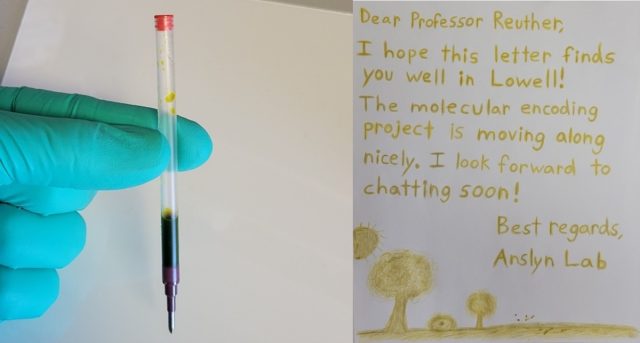
Enlarge / A molecular encryption key was embedded in ink (left image) of a letter (right image), which was mailed and analyzed to decrypt a file.
ACS Central Science 2022/CC BY-NC-ND
This latest paper focused on the use of sequence-defined polymers (SDPs) as a storage medium for encrypting a large data set. SDPs are basically long chains of monomers, each of which corresponds to one of 16 symbols. “Because they’re a polymer with a very specific sequence, the units along that sequence can carry a sequence of information, just like any sentence carries information in the sequence of letters,” co-author Eric Anslyn of UT told New Scientist.
But these macromolecules can’t store as much information as DNA, per the authors, since the process of storing more data with each additional monomer becomes increasingly inefficient, making it extremely difficult to retrieve the information with the current crop of available analytical instruments. So short SDPs must be used, limiting how much data can be stored per molecule. Anslyn and his co-authors figured out a way to improve that storage capacity and tested the viability of their method.
First, Anslyn et al. used a 256-bit encryption key to encode Baum’s novel into a polymer material made up of commercially available amino acids. The sequences were comprised of eight oligourethanes, each 10 monomers long. The middle eight monomers held the key, while the monomers on either end of a sequence served as placeholders for synthesis and decoding. The placeholders were “fingerprinted” using different isotope labels, such as halogen tags, indicating where each polymer’s encoded information fit within the order of the final digital key,
Then they jumbled all the polymers together and used depolymerization and liquid chromatography-mass spectrometry (LC/MS) to “decode” the original structure and encryption key. The final independent test: They mixed the polymers into a special ink made of isopropanol, glycerol, and soot. They used the ink to write a letter to James Reuther at the University of Massachusetts, Lowell. Reuther’s lab then extracted the ink from the paper and used the same sequential analysis to retrieve the binary encryption key, revealing the text file of The Wonderful Wizard of Oz.
In other words, Anslyn’s lab wrote a message (the letter) containing another secret message (The Wonderful Wizard of Oz) hidden in the molecular structure of the ink. There might be more pragmatic ways to accomplish the feat, but they successfully stored 256 bits in the SDPs, without using long strands. “This is the first time this much information has been stored in a polymer of this type,” Anslyn said, adding that the breakthrough represents “a revolutionary scientific advance in the area of molecular data storage and cryptography.”
Anslyn and his colleagues believe their method is robust enough for real-world encryption applications. Going forward, they hope to figure out how to robotically automate the writing and reading processes.
DOI: ACS Central Science, 2022. 10.1021/acscentsci.2c00460 (About DOIs).
Some Intel apps may not be compatible with Windows on Arm
Parallels Desktop has long been the leading virtualization tool for Apple customers who need to run Windows or Linux as a virtual machine (VM) on their Macs. However, it faced something of a challenge in 2020 when Apple announced its plan to transition the entire Mac platform to its home-grown Apple Silicon.
The Arm-based M1 and M2 chips used in the latest Mac models can no longer run the Intel x86 version of Windows, so those Macs had to rely on the Arm version of Windows — which itself has had something of a bumpy ride over the last few years. Also, along with various performance and compatibility issues faced when attempting to run existing Intel-based apps and software, Windows on Arm (WoA) is primarily licensed to OEM PC manufacturers, which meant that Parallels’ core business — running Windows on Mac – – was starting to look like something of a dead end.
However, Apple Silicon and Windows On Arm have both made strong progress in the last couple of years, and the new Parallels Desktop 18 is now looking at a much brighter future. In fact, Parallels has worked with Microsoft to allow owners of M1 or M2 Macs to download and buy the Arm version of Windows 11 directly from within Parallels Desktop 18 — “Microsoft doesn’t have any issues with that”, a Parallels spokesperson told us.
You can download and install Windows 11 directly from within Parallels Desktop 18. Several Arm versions of Linux are also available.
Images: Cliff Joseph
The company also offers “kudos to Microsoft” for achieving compatibility for what it says is ‘99.99%’ of existing Intel software when running on Windows on Arm. Of course, compatibility alone isn’t enough if your key Intel apps run too slowly to be of any practical use. However, Parallels has now had two years to fine-tune the performance of virtual machines running on Apple Silicon and, with high-end processors such as the M1 Ultra, Parallels Desktop 18 now allows you to assign up to 62GB of RAM and 18 CPU cores to your virtual machines. Parallels claims that this provides up to 96% performance increase over the previous version of Parallels Desktop. And, as always, Parallels Desktop also allows you to create virtual machines running Arm versions of Linux, such as Ubuntu, Fedora and Debian, as well as maintaining its longstanding compatibility with older Mac systems — such as my aging office iMac — that still run on Intel processors.
Top: Parallels Desktop provides a virtual TPM chip (required by Windows 11). Above: USB support is improved in version 18.
Images: Cliff Joseph
Other new features include support for the forthcoming MacOS Ventura — both as host OS and ‘guest’ virtual machine — as well as support for Apple’s 120Hz ProMotion displays, and improved USB support for Windows-based audio and video capture and streaming devices.
For developers, the Pro Edition of Parallels Desktop 18 provides improved networking controls — known as the ‘network conditioner’ — that were previously only available for Intel-based Macs. You can isolate VMs for improved security by preventing them from sharing applications or folders with the host Mac, and there’s a new command-line interface for developers who need to automate testing on their virtual machines. The Business Edition for enterprise users now provides SSO/SAML authentication to sign in using a corporate account, and improved features for deploying VMs to multiple users across the organization.
Top: The ‘network conditioner’ feature in the Pro version of Parallels Desktop allows developers to configure desired network conditions for virtual machines. Above: VMs can also be isolated from the host Mac.
Images: Cliff Joseph
Pricing for Parallels Desktop 18 is slightly higher than previous versions, starting at $99.99/£89.99 per year for the standard, single-user edition. It’s also possible to buy the standard edition as a one-time ‘perpetual license’ for $129.99/£104.99, although this version requires you to pay for future upgrades separately. There are also discounts for educational users also available. The Pro version costs $119.99/£99.99 per year, while the Business edition for enterprise users is $149.99/£119.99.
There’s also a free 14-day trial version of Parallels Desktop available, so Mac users with both Arm and Intel Macs can get an idea of how well it performs with their key apps and software.
Alternatives to consider
The main alternative to Parallels Desktop has long been Vmware Fusion, which has recently gained support for Windows 11 virtual machines on Apple Silicon as well as Intel Macs. However, this is currently only available as a (free) technical preview.
RECENT AND RELATED CONTENT
Parallels Desktop 17, hands-on: Improved performance, plus Windows 11 and MacOS Monterey compatibility
Parallels Remote Application Server 19, hands on: Flexibility, security and usability are all improved
3 ways MacOS Ventura could upgrade your worklife: hands-on impressions
‘Project Volterra’: Microsoft is building an Arm dev kit on the Snapdragon compute platform
First Windows 11 on Arm laptops arrive with Microsoft’s Pluton chip. Here’s why it matters