Categories
Technology

1080p in your pocket (well, almost)

Are traveling salespeople still a thing? If so, they can travel a little lighter: The Wemax Go is a portable 1080p laser projector that measures only an inch thick and weighs under two pounds. It’s entirely self-contained, running on battery power and built-in apps. And just because it’s a business expense doesn’t mean it can’t handle the occasional movie night. (Shhh — we won’t tell the boss if you won’t.)

I spent some time putting the projector through its peace, and let me start with the most exciting part: Although it lists for $1,000, right now the Wemax Go Advanced is on sale for just $603.

That price puts the Go Advanced in line with the Xgimi Elfin, another portable 1080p projector. But there’s one key difference: The latter requires AC power; the Wemax can run for up to 90 minutes on its battery.

Wemax Go Advanced design

Obviously, that won’t last you through most movies, but it’s more than enough for a typical PowerPoint slide deck. And if you need more juice, you can plug just about any power bank into the Go’s USB-C port (which is also where it charges via the included AC adapter).

Also at the rear: a headphone jack, USB port, HDMI port and two very small, very low-power speakers (just 2 watts apiece).

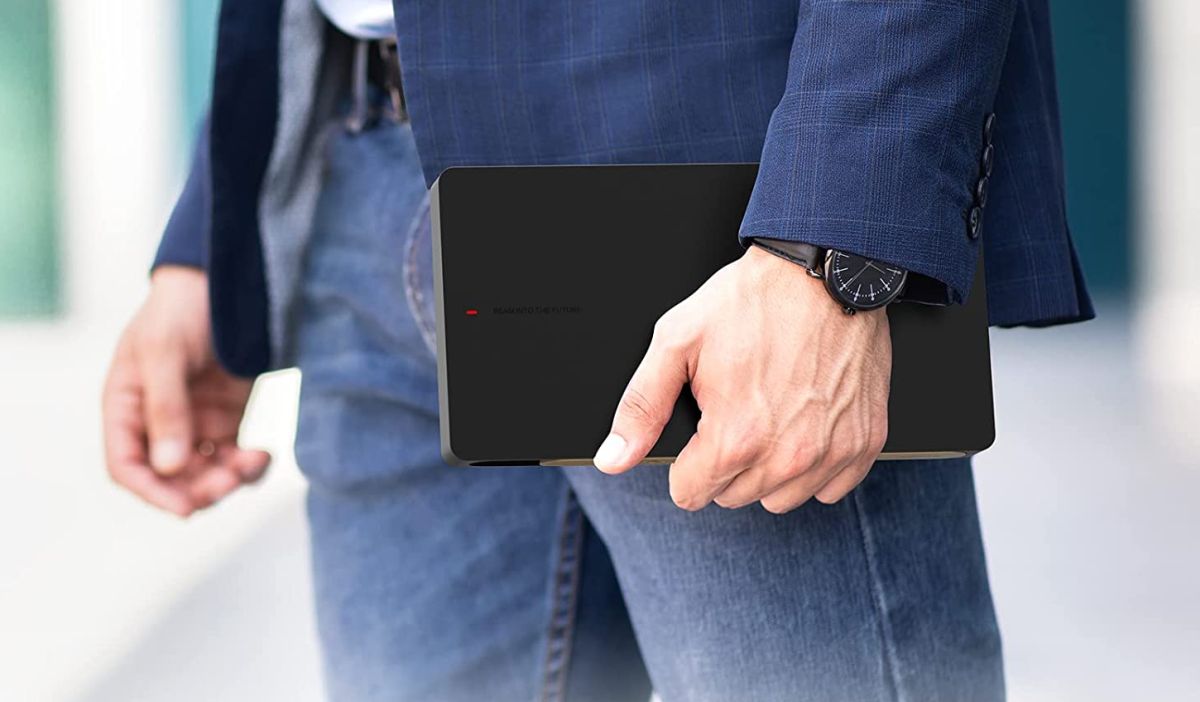
It’s hard to overstate just how compact this thing is; in your hand it feels like a slim hardcover book. Needless to say, it’s incredibly easy to bring along, whether in a backpack, briefcase or carry-on.

A typical use-case here is at the end of a conference-room table, pointed at a projector screen on the wall. To that end, the Go Advanced has a small, hinged stand embedded in its underside; it can tilt the lens up a few degrees as needed.

A particularly nice touch is the gold-colored accent bar on the front edge, which actually serves a practical purpose: It covers and protects the lens. When you slide the cover left, it turns on the projector. Slide it back to turn it off again. There are no other physical controls, however; for everything else you’ll need the included remote (which isn’t backlit, sadly).

The Wemax Go Advanced is one of the most compact 1080p projectors you can get, and it's battery-powered to boot.  (Photo: Wemax)

You don’t need to be a businessman to benefit from the compact size and battery power of the Wemax Go Advanced. (Photo: Wemax)

Wemax Go Advanced features and performance

The Go Advanced is a native 1080p projector, a more-than-adequate resolution for most business presentations and informal movie viewing. Like a lot of projector makers, Wemax touts “4K support,” but that simply means it can work with 4K sources; it doesn’t upscale or anything like that. Wemax also touts 600 ANSI lumens, a measure of the projector’s brightness. For comparison, the aforementioned Xgimi Elfin produces 800 ANSI lumens.

In the real world, this means the Go needs a relatively low-light environment to give you the best possible image, but it definitely doesn’t need total darkness. In a conference room, you could probably get away with turning off the lights and closing the blinds.

I tested the unit in my basement, where I have a 100-inch screen already in place. It’s relatively dark, the only daytime light coming from a small window. The projector managed just fine, generating bright, crisp, colorful images that I found very satisfying. Indeed, it crushes most of the portable projectors I’ve tried, which were dim and washed out. (They were also priced hundreds less.)

However, there are a few important considerations. First, the Go runs something called FengOS, which unfortunately no one will mistake for Android TV. It’s a simple but limited operating system, able to run a handful of apps (like YouTube and the Firefox web browser) natively but requiring extra steps for the likes of Hulu and Netflix. If you do install those and other streamers, you’ll sometimes have to use something called mouse mode (which turns the remote into a sort of floating cursor) to interact with them. Not fun.

Why not just mirror your phone or tablet and use that as your streaming source? The projector supports mirroring (which works quite well and can be great for presentations, product demos and such), but licensing restrictions prevent you from playing most commercial content. Rats.

My advice: If you want to stream, skip all this and plug in something like an Amazon Fire TV, Google Chromecast or Roku Streaming Stick. Those dongles may ruin the projector’s aesthetic, but they’ll give you a vastly superior, infinitely easier streaming experience.

Wemax Go Advanced problems

Although it worked well overall, the projector did present a few issues. First, it seemed stuck in Eco Mode — which forces a lower brightness setting in order to preserve battery power — unless I connected a power supply. If this is intentional, it’s bad design: I should get to choose the mode I want, regardless of battery status.

My bigger concern is with the auto-keystone feature, which promises to produce a properly sized, rectangular image even when the projector is placed above, below or to the side of the screen. There’s also an obstacle-avoidance setting that can compensate for, say, a plant or painting that’s partially blocking the image.

In my tests, none of this worked properly. In some cases the projector failed to make any discernible adjustments to the image; in others it overcompensated by shrinking it. I tried different angles, distances and so on; it never managed to properly fit the projection to my screen. I’ve tested other projectors that have auto-keystone, and I’ve never encountered this problem.

The good news is that the Go Advanced has simple manual controls, meaning you can adjust the corners as needed to achieve your desired rectangle. And the car-focus feature worked perfectly every time.

Wemax Go Advanced: Should you buy it?

This is a really good projector, and it’s a stone’s throw from greatness. Super-compact and portable, it delivers a sharper, brighter image than many a larger model. If your business could benefit in any way from having a totally wireless projector at the ready, it’s easy to recommend the Wemax Go Advanced.

It’s also decent for the occasional movie, though I recommend using a streaming stick or something similar instead of the onboard app library. Just keep in mind that battery life is around 90 minutes at best (but easily supplemented by a mobile power bank), and the built-in speakers are weak and tinny-sounding (so consider packing a Bluetooth speaker as well).

  • Wemax Go Advanced Ultra Portable Smart Laser Projector

    $603$1,198Save $595

Follow us on Instagram, Facebook, Twitter and pinterest for nonstop inspiration delivered fresh to your feed, every day.

Want daily pop culture news delivered to your inbox? Sign up here for Yahoo Entertainment & Life’s newsletter.

Originally published
Categories
Technology

Google Posts Yet Another Plea for Apple to Support RCS Messaging in iMessage

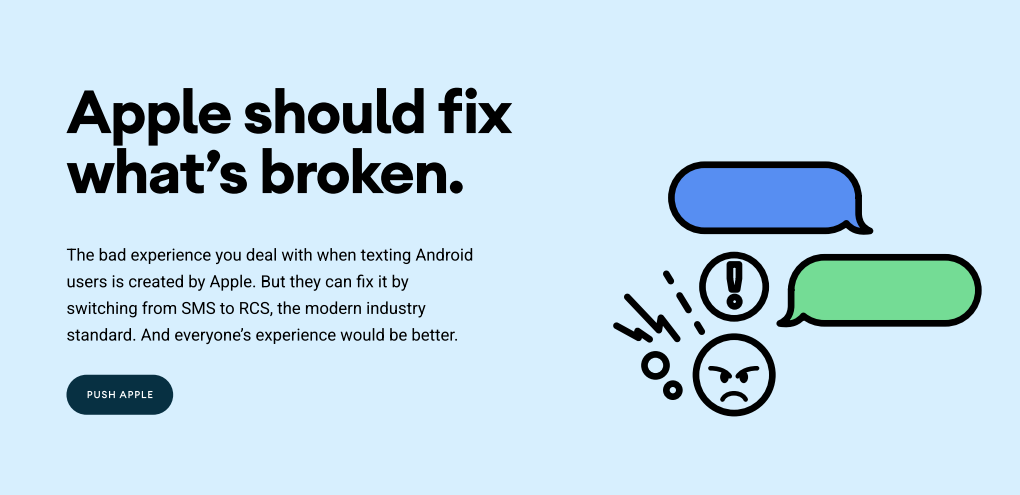
Google is making yet another attempt to persuade Apple to support the RCS phone-messaging standard in its own iMessage service, but this time it’s aiming the sales pitch at iPhone users.

At a “Get the Message” site posted Tuesday, Google calls out the least-common-denominator aspect of texts between iPhone and Android users: Everybody loses such features as encryption, typing indicators, and read receipts supported separately by Apple’s iMessage and the Google -backed Rich Communications Services (RCS), also called “chat features” in Android.

“Apple creates these problems when we text each other from iPhones and Android phones, but does nothing to fix it,” the page declares. “Apple turns texts between iPhone and Android into SMS and MMS, out-of-date technologies from the 90s and 00s.”

Subsequent paragraphs emphasize how iPhone users don’t only suffer the indignity of seeing Android-using friends’ messages in green bubbles but also miss features they enjoy in conversations with other iPhone users. For example: “Without read receipts and typing indicators, you can’t know if your Android friends got your text and are responding.”

Privacy also loses out in cross-platform conversations, the page notes: “SMS and MMS don’t support end-to-end encryption, which means those messages are not secure.”

(But while RCS supports end-to-end encryption in one-to-one Android chats, group Android chats today only get encryption in transit, with “e2e” security advertised as coming later this year. Bringing this same security to chats between different apps and different platforms would be much harder.)

Apple has never shipped an iMessage client for Android, and court documents unearthed during Fortnite’s lawsuit against Apple revealed that the Cupertino, Calif., company rejected an iMessage port because it might weaken iMessage’s customer lock-in effect.

Google has instead tried in vain to get Apple to add RCS support to iMessage–most recently, at its I/O developer conference in May. But while this latest sales pitch may win over some iPhone users, Apple has a history of ignoring requests from users that don’t square with its own product vision.

Google, meanwhile, has struggled to get RCS going in Android. It didn’t get all three major carriers lined up to ship its own Messages app until 2021, leaving an enormous installed base of Android phones running carrier- or manufacturer-specific messaging apps that don’t speak RCS. And Google still hasn’t persuaded Google to add RCS support to its own Google Voice calling and messaging service.

Finally, Google has yet to provide third-party developers with the coding framework they’d need to add RCS support to such SMS-capable apps as Signal and WhatsApp–the two services Google’s new page endorses as alternatives for iPhone users anxious to avoid today’s “broken experience” of cross-platform communication.

Developer posts in a thread on Signal’s site blame that on Google not providing the right API, and Google has yet to say when it might ship that framework.

.

Categories
Technology

Rumors, delays, and early testing suggest Intel’s Arc GPUs are on shaky ground

Arc is Intel's attempt to shake up the GPU market.
Enlarge / Arc is Intel’s attempt to shake up the GPU market.

Almost a year ago, Intel made a big announcement about its push into the dedicated graphics business. Intel Arc would be the brand name for a new batch of gaming GPUs, pushing far beyond the company’s previous efforts and competing directly with Nvidia’s GeForce and AMD’s Radeon GPUs.

Arc is the culmination of years of work, going back to at least 2017, when Intel poached AMD GPU architect Raja Koduri to run its own graphics division. And while Intel would be trying to break into an established and fiercely competitive market, it would benefit from the experience and gigantic install base that the company had cultivated with its integrated GPUs.

Intel sought to prove its commitment to Arc by showing off a years-long road map, with four separate named GPU architectures already in the pipeline. Sure, the GPUs wouldn’t compete with top-tier GeForce and Radeon cards, but they would address the crucial mainstream GPU market, and high-end cards would follow once the brand was more established.

All of that makes Arc a lot more serious than Larrabee, Intel’s last effort to break into the dedicated graphics market. Larrabee was canceled late in its development because of delays and disappointing performance, and Arc GPUs are actual things that you can buy (if only in a limited way, for now). But the challenges of entering the GPU market haven’t changed since the late 2000s. Breaking into a mature market is difficult, and experience with integrated GPUs isn’t always applicable to dedicated GPUs with more complex hardware and their own pool of memory.

Regardless of the company’s plans for future architectures, Arc’s launch has been messy. And while the company is making some efforts to own those problems, a combination of performance issues, timing, and financial pressures could threaten Arc’s future.

early turbulence

A year after its announcement, it seems that Arc is already on shaky ground. Intel has proven characteristically incapable of meeting its initial launch estimates, just barely managing to pull off a paper launch of two low-end laptop GPUs in Q1 (the original launch window) and failing to follow up with widely available desktop cards in Q2. The company has been very public about its struggles with drivers, which are hurting the cards’ performance in older but still widely played games. And the graphics division is losing money at a time when revenue is tumbling across Intel.

And that’s just what is happening in public. A report from the German-language Igor’s Lab claims that Intel’s board partners (the ones who would be putting the Arc GPU dies on boards, packaging them, and shipping them out) and the OEMs who would be putting Arc GPUs into their prebuilt computers are getting frustrated with the delays and lack of communication.

A long, conspiratorial video from YouTuber Moore’s Law is Dead goes even farther, suggesting (using a combination of “internal sources” and speculation) that people in Intel’s graphics division are “lying” to consumers and others in the company about the state of the GPUs, that the first-generation Alchemist architecture has fundamental performance-limiting flaws, and that Intel is having internal discussions about discontinuing Arc GPUs after the second-generation “Battlemage” architecture.

We’ve contacted Intel and several GPU manufacturers to see if they had anything to share on the matter; the short version is no—Intel has no news on release dates. Asus says it”[doesn’t] currently have anything in the pipeline for Intel Arc on the North America side,” and other companies haven’t responded yet. For his part, Intel graphics VP Raja Koduri have said publicly that “we are very much committed to our roadmap” and that there will be “more updates from us this quarter” and “four new product lines by the end of the year.”

Categories
Technology

Games I Just Assume I’d Be Good At Without Ever Playing Them

You know when you see somebody playing a game and think to yourself, ‘Wow, I would be so incredibly great at this,’ and you walk through life holding that opinion of yourself, just waiting for the right opportunity to provide yourself to someone who do you care? Yeah, me too.

There have been countless times where I’ve seen a trailer for a game or watched somebody stream themselves playing it, and for some unknown reason, I suddenly think that I would become the greatest gamer to live and crush the game and bring actual tears to those who watched me play it.

Have I ever actually played any of those games to prove that hypothesis? No, not at all. I just let the ego grow until it’s actually insufferable having to listen to myself think about how great I’d be at them.

I should probably preface this entire article with the fact that I am an extreme perfectionist with a crippling fear of failure (how quirky and unique of me). That basically means that I need everything I do to be flawless (unachievable) and that if I start something, I need to be immediately good at it (unattainable). Please keep this in mind while you read this list of games that I just assumed I’d be good at without ever playing them.

I also want to point out that whilst I’m poking fun at these games, I am intensely jealous of those who are actually good at them. I envy you, beautiful gamers.

5 games I’d be good at, with no proof whatsoever

The Quarry

Games I Just Assume I'd Be Good At Without Ever Playing Them
Image: 2K/Playstation

now listen, The Quarry is a game I’m reasonably confident I’d be good at. Spectacular at, even.

My reasoning for this all boils down to the same cliche that everyone always says, that I’m obsessed with horror/slasher movies and, therefore, I’d know how to survive one.

I think I just heard the collective groan from the audience but hear me out. I’m different, okay? Lo prometo. I’m not like all the other girls!

I like to believe that I make smart decisions, and I’ve watched a lot of slasher films, so I think I’d have a pretty good chance of surviving. Plus, I give off tremendous final girl energy. But, again, that assumption is based on nothing else besides my own juicy ego.

And before you shout at me, I know there are alternate endings in The Quarry. So how can you really be that great at it when there are many different ways to play and end the game? Well, my answer to that hateful question is that I just feel it deep in my soul that I would get a good storyline and make it to the end.

To put my ego to the test, I actually bought The Quarry the other day because it seems like such a Me type of game.

However, every time I went to put the disc in, I was overcome by a cacophony of voices that told me how soul-crushing it would be if I were bad at this game. It was at that point that my hands started to tremble, sweat started dripping off my brow, and I was frozen in fear. ‘What if I am bad at this?’ I thought to myself. ‘How could I possibly deal with myself? How could I continue working for a gaming journalism site if I couldn’t play a simple slasher game?’ I then dropped to the floor, disc still in hand, and curled up into the fetal position for roughly an hour.

Anyways, how was your weekend?

FIFA

Games I Just Assume I'd Be Good At Without Ever Playing Them
Image: EA/Playstation

FIFA is actually a game that I have played and have failed at.

Wow, being so vulnerable on here with all of you is hard.

Before you ask, yes, I did think that I’d be good at this game without having any prior knowledge of FIFA besides the fact it was a virtual soccer game. It also did not help that my brother was incredible at it, which made sense because soccer has been his entire life. But this didn’t seem to be the case for me.

I mostly believed I’d be good at this game because otherwise, my six years of playing soccer would be for nothing.

I originally thought my being bad at FIFA had something to do with being a flaming homosexual, and that felt okay with me because there’s nothing I can do to fix that. But then, when I started meeting more queer gamers, I realized that perhaps the issue, for once, was me and not my sexuality.

The revelation was earth-shattering. The ground beneath me started crumbling, and I questioned my very existence. How could it possibly be my fault? Those laborious six years of soccer were, in fact, for nothing. What was the point of playing the game in real life if I couldn’t excel at it?

I understand that physical capabilities don’t necessarily translate into video games, but I also feel there’s no way I could be bad at it.

It also baffles me how bad I was at it when I first played it. Like how is that even possible? You’re literally kicking a ball around on a screen. How did I manage not to be good at that?

But even though I used to play and was horrifically awful at it, I still hold the belief that if I played it again, I would be exceptional. Should I ever play FIFA again, I would be the second coming of Messi, a virtual Messi. To Vessi, if you will. (I was also workshopping Virssi, but that lowkey sounds like a disease, so I’ll keep working on that).

Maybe I’ll play FIFA 23 purely because Sam Kerr is on the cover of it.

Fortnite

Games I Just Assume I'd Be Good At Without Ever Playing Them
Image: Epic Games / PlayStation

The biggest reason I think I’d obliterate Fortnite is that there was a moment where everyone was obsessed with it, so it must be a pretty easy game. That’s how that works, right?

Honestly, it was probably because I wanted to fit in, so I told everyone I had played it and was great at it, and I got so caught up in the lie that I just started to believe it myself.

My dirty little secret, however, is that I have never played Fortnite nor attempted to. And if I did have to play it, I’d probably be terrible at it.

But really, how hard can it be? Don’t you just go around shooting people and climbing things? Sounds easy to me. Please don’t tell me it’s hard; just let me live in my fantasy world where two things are true—one that it’s easy, and two that I’d come first every time.

Also, the fact that literal children were winning further proves to me that I should, hypothetically, be fantastic at Fortnite.

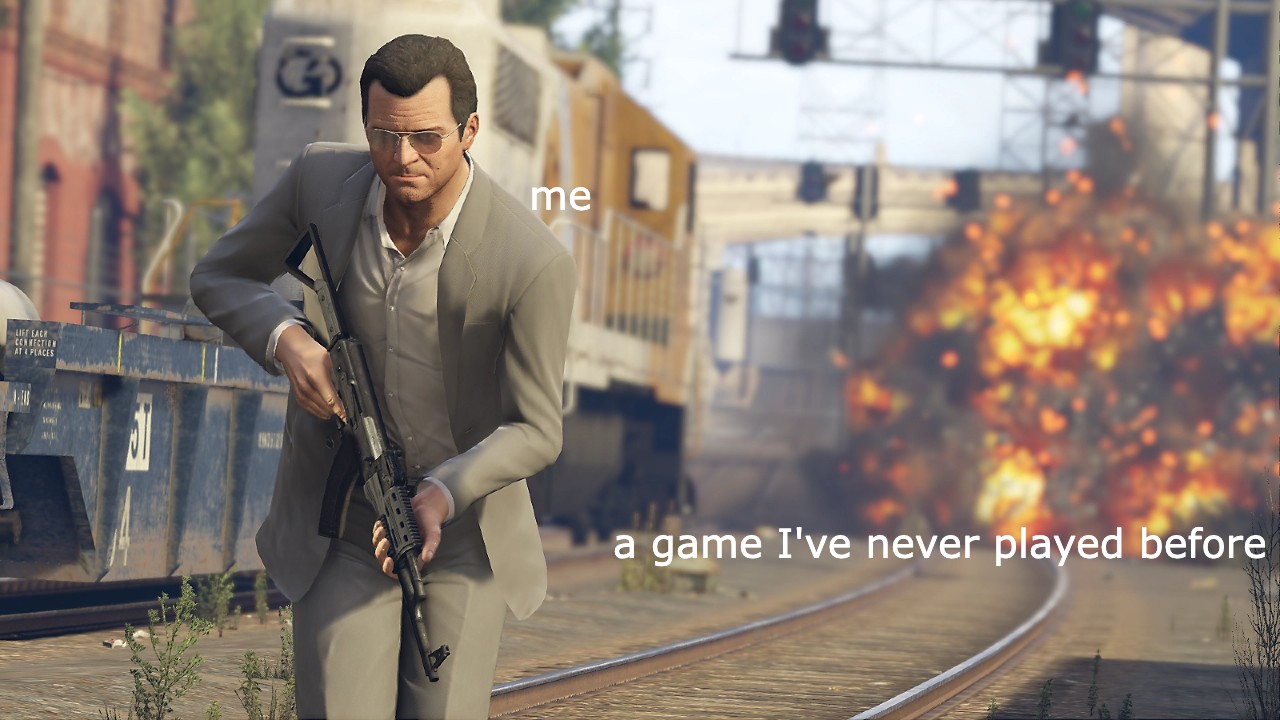
Grand Theft Auto V

Games I Just Assume I'd Be Good At Without Ever Playing Them
Image: Rockstar Games/Playstation

It must be said: I love crime.

Just kidding! Please don’t arrest me.

But there is something about simulated crime on a video game that I just feel speaks to my soul. Have I ever committed a crime in my life? No. Do I get crippling anxiety that I’ve broken every law possible when a cop walks past me? Yes, yes, I do.

Despite that, the allure of Grand Theft Auto appeals to me despite me having never played it. But from seeing others play it and clips of gameplay online, I reckon I’d have a pretty good go at it. You’re just driving around and robbing people, right? That’s basically what I do on the sims.

A big part of my reasoning for not playing Grant Theft Auto but believing I’d be good at it is because I’ve seen so much online that I feel like I already have played the game.

I also am worried that, given recent controversies, the allure of GTA is bigger than what it actually is and that if I play it, I won’t be able to live in my fantasy world anymore.

Grand Touring

Games I'd be good at
Image: Sony/Playstation

My thoughts about the Grand Touring franchise mirror those I have for FIFA. David might virtually beat me up for saying this, but how hard is it to drive a car around a track in a game? (Editor’s note: I am preparing a five-page rant as we speak — David)

I also fear that I lack a general level of understanding about racing, so my ignorance bleeds into Grand Touring because, again, is it that hard to just like, drive? (Editor’s note: I’m fine. I’m fine. – David)

Here are my reasons for thinking I’d be good at GT:

  1. I learned how to drive in Sydney, a notoriously awful place to drive
  2. My Corolla goes vroom, and I get happy
  3. I have the need, the need for speed (I’m so sorry)
  4. Again, car + track = Grand Tourism. I dropped maths in high school, but that seems like a simple equation to me

(Editor’s note: I take it all back, you’ve actually cleared the bar to be a Supercars driver by quite a way — David)

Will I ever play these games? Maybe.

Will I actually be good at them? Probably not.

Does that determine me from wanting to play them so I can keep my ego intact and live in a fantasy world where I am the greatest gamer ever to grace this broken earth? Yes, absolutely.

But I want to hear from you, the people, my fellow ego-driven gamers; what games did you just assume you’d be great at? Are you actually great at it? Let me know in the comments below!

Categories
Technology

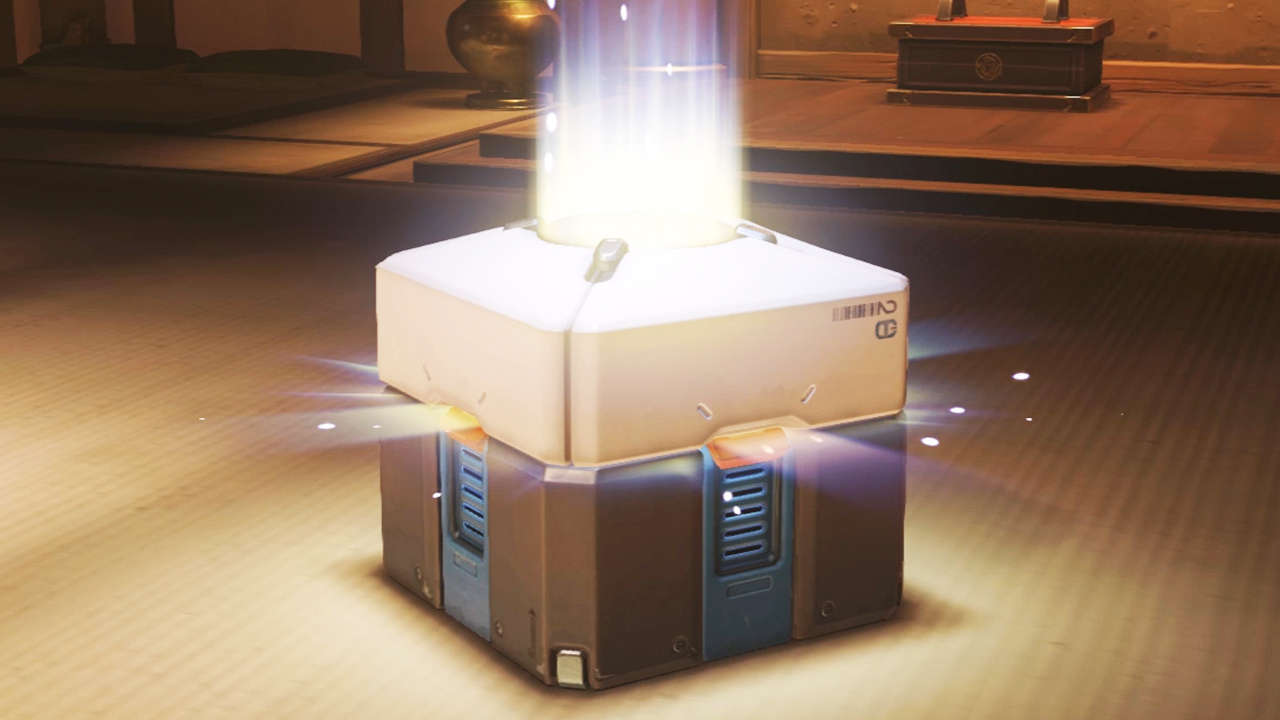
Blizzard Reveals When Overwatch 2 Loot Boxes Will End

Blizzard has announced when loot boxes will be phased out of Overwatch in anticipation of the new Battle Pass system.

The announcement was quietly mentioned in a blog post about the Overwatch Anniversary Remix Volume 3 event. The company confirmed that the loot boxes would “no longer be available for sale” come August 30th.

However, the post notes that you’ll still be able to earn standard loot boxes after the Remix event.

Overwatch 2 – Xbox and Bethesda Games Showcase 2022

This Anniversary Remix event is Blizzard’s way of “cleaning house” of sorts, allowing players to earn (or buy) cosmetics before Overwatch 2 launches on October 4, 2022. This includes skins and cosmetics from previous Overwatch Challenge events.

Players will also be able to participate in “brawls” and relive certain game types such as past story missions such as Uprising and Storm Rising and past Summer Games modes like Lucioball.

Blizzard formally announced that loot boxes were going away in June, replacing them with a battle pass and in-game store. The company said they wanted to give players “a lot more control over how they interact with the game and acquire new content.”

Loot boxes have long been a controversial subject in the gaming industry. Games such as Overwatch, Call of Duty, and EA Sports franchises have been criticized for their monetization methods. Additionally, there have been links found between loot boxes and gambling.

Fortunately, it seems Blizzard wants to get away from those tactics and stick with a more fair method of dolling out skins and cosmetics (maybe). In fact, Blizzard confirmed that all unopened loot boxes in Overwatch will automatically open before the launch of Overwatch 2.

Overwatch 2 releases this year on October 4th and will completely replace the original Overwatch. Check out the major differences between the original game and the sequel.

David Matthews is a freelance writer specializing in consumer tech and gaming. He also strongly believes that sugar does not go in grits. Follow him on Twitter @packetstealer

Categories
Technology

Fan Builds His Own Incredible Attack On Titan Video Game For PC

Yeah, there have been official Attack on Titan video games, but they’ve never really managed to fully capture the speed and scale of the show, so one indie developer figured he’d try and make his own and release it for free. Which he has done, and then some.

Swammy details the story of his little project in this videoexplaining that what started as a fun little experiment in early 2021 blew-up after his girlfriend convinced him to post a short gameplay video on TikTok. An overwhelmingly positive response inspired Swammy to continue development on the demo, building on a foundation of swinging through the city by adding first some Titans to go up against, and then—after one disastrous mix-up—a co-op multiplayer mode.

By January 2022, the game was looking pretty good!

FREE ATTACK ON TITAN FAN GAME – TRAILER (Swammys AOT Fan Game)

As you can see, the main appeal of this game vs the official releases is the swinging system, which in Swammy’s game is a lot faster and freer. If you’ve played the recent spider-man games, for example, you’ll be pretty much at home here, especially if you play this game in third-person (it’s playable from either first or third-person perspectives).

By the middle of 2022 Swammy’s project had racked up millions of views on social media and hundreds of thousands of downloads. And now it’s blowing up all over again because he’s announced that the whole thing is getting a revamp as he tries to port it over to Unreal Engine 5:

If you want to play the game as it exists today, you most definitely can, with download links available here. Note that while there are versions available for both PC and Android, the PC edition is the one getting all the work, with the Android one now at its “final build”, after “constant harassment and threats” gave Swammy “zero reason to continue working on it, for my own mental health”.

It’s super easy to download and start playing—though there’s a video here if you need some help—and having been messing around with it this morning, I can understand a lot of the hype from fans. Sure, it’s pretty rough around the edges, and stuff like the interface is as barebones as it gets, but allowing for the fact this is a one-man job, and how fun the basic act of swinging around and stabbing things is, I think it’s really cool.

.

Categories
Technology

WhatsApp extends its unsend time limit to ‘a little over two days’ – TechCrunch

To get a roundup of TechCrunch’s biggest and most important stories delivered to your inbox every day at 3 pm PDT, subscribe here.

Whazzaaaaaaa, we’re back with another round of newsy goodness on this fine Tuesday. It’s a pretty wild news day today, with a bunch of startup high-jinx. Check out the site for all of it, of course, but we’ve selected some of the stories that piqued our attention today. Let’s gooooo! — Christina and Haje

The TechCrunch Top 3

  • Say it, forget it, post it, regret it: WhatsApp was at the top of the news food chain today with two stories. The first is something users seem very excited about — more time to delete a message. In fact, users now have 60 hours to delete a message they didn’t like or didn’t mean to send. This is an extension from 1 hour, 8 minutes, and 16 seconds, Ivan reports. Excuse us while we go look at something…
  • New feature alert: Now that we got that pesky deleting thing out of the way, WhatsApp also unveiled new privacy options for users that includes screenshot blocking and stealth mode, taylor writes. The screenshot blocking option, which is a once-viewed message, reads very much like Inspector Gadget’s self-destructing message, minus the explosion.
  • gone phishing: Armenian startup EasyDMARC took in $2.3 million to tackle the billion-dollar phishing industry that has reared its ugly head since strangers have been able to get people to click on links. Mike reports that the company has bundled up the DMARC protocol, or ‘Domain-based Message Authentication, Reporting, and Conformance’ into something easier for businesses to use.

Startups and VCs

Watching startups play extreme hardball is our kind of spectator sport. In this case, only a year after going public, app growth and monetization agency AppLovin submitted an unsolicited proposal today to buy the game engine Unity in a deal worth $20 billion. But there’s a catch: Unity would have to terminate its recent deal to merge with ironSource, an AppLovin competitor, Amanda reports.

While plenty of crypto investors have scaled back their breakneck pace of startup investing as they wait for more clarity on the macro environment, Luke reports that there have never been more firms and more money dedicated to blockchain venture investing. Portal Ventures closes on $35 million debut fund to feed the beast.

RealOpen’s latest product, RealScore, is a crypto credit scoring system for buyers and sellers of luxury real estate, Anita reports. Headed up by ‘Selling Sunset’ star Christine Quinn, the brokerage primarily serves high-net-worth clients who want to purchase property using cryptocurrency.

More more more more more more more:

  • Yeah, but what do you really do: Paul reports that Truework, which helps lenders verify borrowers’ income and employment, raises $50 million.
  • Canoo is up a creek, paddling like mad: Pre-revenue EV startup Canoo shows it is burning cash like there’s no tomorrow, in a race to hit a $1 billion EV sales goal, Rebecca reports.
  • I didn’t like that one: Returning items from whence they came can be a royal PITA. ReturnLogic bags new money to make that less nightmarish, Christina writes.
  • First, India. Next, the world!: Accel led a $2.6 million investment into Produze on its mission to help agri-producers in India export globally, reports jagmeet.
  • Fifty dune buggies, coming up!: Abigail caused us to get real excited: It looks like the Meyers Manx dune buggy is coming back, this time as an EV.
  • Well that’ll cause a hangover: VC-backed low-alcohol aperitif startup Haus is up for sale after Series A falls through, writes Natasha M.

To optimize for growth, study your down-funnel metrics

Illustration showing man tweaking funnel with lever to optimize for growth;  growth marketing down funnel

Image Credits: erhui1979 (opens in a new window) /Getty Images

Early-stage startups put a lot of time and energy into marketing and acquisition: These levers direct new customers into the top of your sales funnel to drive growth. And investors love growth.

But in August 2022, they like revenue even better, which is why Jonathan Martinez says companies should turn their attention to down-funnel metrics.

“Varying messaging by user cohort is your largest lever for moving users through the funnel,” writes Martinez in his latest TC+ post. “It’s imperative to slice users into their respective buckets, because it opens the opportunity for unique targeting and messaging.”

(TechCrunch+ is our membership program, which helps founders and startup teams get ahead. You can sign up here.)

Big Tech Inc.

India game firms are not accepting the “game over” vibe they are getting from the country’s prime minister if the ban on Battlegrounds Mobile India continues. Some firms are decrying the ban as an “unfortunate event” and said such “arbitrary decisions run counter to established principles and will deny opportunities to an entire generation of youth in India,” manish reports.

We have a gaggle of Google news today, starting with a fun story from Ivan about the search engine giant launching a website to help children practice reading. That is followed by talk of the company’s new campaign aimed at pressing Apple into adopting Rich Communication Service, or RCS, which is a protocol designed to improve messaging between Android and iOS users, Aisha writes.

Brian has been following the movement of the CHIPS and Science Act of 2022 as it moved through both houses of Congress and to President Biden for his signature. He explains what this new bill, focused on US semiconductor protection, entails.

  • You can’t dance here: We were shocked to find out that TikTok’s parent, ByteDance, bought a hospital group in China, Rita writes. The company was already getting into healthcare, but going from acquiring a company that provides healthcare to owning hospitals is a big leap, or tour jeté, if you will.
  • But you can dance here: Spotify has a pair of new features, with Aisha writing about updates to the home screen that include personalized discovery feeds for both music and podcasts. Meanwhile, Ivan reports on the company’s Soundtrap app for musicians, unveiling live collaboration and autosave features.
  • Streaming while dancing: Looks like Walmart is getting into streaming services again, Lauren writes.
  • Don’t dance with that cookie: The European Union is going after some entities it says have largely ignored warnings to bring their cookie consent banners into compliance, Natasha L reports.
  • ICYMI: Here are some of yesterday’s big stories that spilled over into today: Kyle and Natasha M write about Groupon cutting over 500 staff and sarah‘s report on Snapchat’s new “Family Center” feature.

Categories
Technology

New Google site begs Apple for mercy in messaging war

Just a few of the many Google messaging logos.  Can you name them all?
Enlarge / Just a few of the many Google messaging logos. Can you name them all?

Rum Amadeo

Google has been unable to field a stable, competitive messaging platform for years and has thoroughly lost the messaging war to products with a long-term strategy. At least some divisions inside the company are waking up to how damaging this is to Google as a company, and now Google’s latest strategy is to… beg its competition for mercy? Google—which has launched 13 different messaging apps since iMessage launched in 2011—now says, “It’s time for Apple to fix texting.”

Google launched a new website called “Get the Message”—a public pressure campaign with a call to “tweet at @Apple to #GetTheMessage and fix texting.” Google hopes public pressure will get Apple to adopt RCS, a minor upgrade to the SMS standard that Apple uses for non-iMessage users. Google has been pushing this strategy since the beginning of the year, but coming from the company with the world’s most dysfunctional messaging strategy, it just comes across as a company tired of reaping what it has been sowing.

Worldwide, iMessage isn’t that popular (people tend to like Whatsapp), but in the US, iMessage is enough of a cultural phenomenon to have Billboard Top 100 songs written about how much it sucks to have a green (SMS) iMessage bubble. One of Apple’s biggest competitors—especially for online services—is Google, and Google’s inability to compete with iMessage has contributed a great deal to the current situation. Google apparently feels iMessage’s dominance is damaging to its brand, so now it’s asking Apple, nicely, to please stop beating it so badly.

Google’s site says, “It’s not about the color of the bubbles. It’s the blurry videos, broken group chats, missing read receipts and typing indicators, no texting over Wi-Fi, and more. These problems exist because Apple refuses to adopt modern texting standards when people with iPhones and Android phones text each other.”

A 14-year-old standard is “modern,” right?

Some of Google’s claims on this website don’t make much sense. Google says, “Apple turns texts between iPhones and Android phones into SMS and MMS, out-of-date technologies from the 90s and 00s. But Apple can adopt RCS—the modern industry standard—for these threads instead.” RCS isn’t a modern standard either—it’s since 2008—and, despite a few middling updates since then, hasn’t kept up with the times.

RCS has hung around so long and is still so poorly implemented because it was created by the carriers (through the GSMA) as a carrier-centric messaging standard. Carriers did this in the heyday of pay-per-message SMS, when carrier messaging was a real revenue stream. Now that carrier messaging is commoditized though, the carriers in control of RCS don’t have an incentive to care about RCS. RCS is a zombie spec.

In Google’s defense, SMS is from 1986, so RCS is more modern than that. This is probably more of a sign that you should never work with the GSMA if you don’t have to, though. If Google and Apple ever teamed up to make a duopoly messaging, they would not need the carriers or their ancient messaging standard.

Google’s proprietary fork of RCS

Being from 2008 means RCS lacks much of what you would want from a modern messaging standard. First of all, as a standard, RCS is carrier messaging, so messages are delivered to a single carrier phone number, rather than multiple devices via the Internet, like how you would expect a modern service to operate. As a standard, there’s no encryption. Google tried to glom features onto the aging RCS spec, but if you consider those part of the RCS sales pitch, which Google does, now it’s more like you selling “Google’s proprietary fork of RCS.” Google would really like it if Apple built its proprietary RCS fork into iMessage.

Google’s version of RCS—the one promoted on the website with Google-exclusive features like optional encryption—is definitely proprietary, by the way. If this is supposed to be a standard, there’s no way for a third-party to use Google’s RCS APIs right now. Some messaging apps, like Beeper, have asked Google about integrating RCS and we were told there’s no public RCS API and no plans to build one. Google has an RCS API already, but only Samsung is allowed to use it because Samsung signed some kind of partnership deal.

If you want to implement RCS, you’ll need to run the messages through some kind of service, and who provides that server? It will probably be Google. Google bought Jibe, the leading RCS server provider, in 2015. Today it has a whole sales pitch about how Google Jibe can “help carriers quickly scale RCS services, iterate in short cycles, and benefit from improvements immediately.” So the pitch for Apple to adopt RCS isn’t just this public-good nonsense about making texts with Android users better; it’s also about running Apple’s messages through Google servers. Google profits in both server fees and data acquisition.

Categories
Technology

The Original Burnout Almost Went By Some Wild Names In Japan

everyone knows about burn outCriterion Games’ beloved, long-dormant collision-centered arcade racing franchise that EA has inexplicably left to gather dust since 2009. The series hit critical mass with Burnout 3: Takedown and, many feel, reached near-perfection with the open-world Burnout Paradise several years later. They’re excellent games; the sort of high-adrenaline racers you’d recommend for newcomers to gaming or seasoned pros alike.

But of course, the series wasn’t exactly firing on all cylinders out of the gate. original burn out, launched in 2001, illustrates humble beginnings, especially compared to what would follow in the years to come. It also very nearly released with some pretty strange titles in Japan, as we’ve been reminded this week.

Lots of games undergo name changes when localized from one region to another. We’ve discussed some of the racing genre’s worst offenders in the past — for example, how TOCA World Touring Cars became Jarrett & Labonte Stock Car Racing. The case with burn out is similar, though maybe not as egregious because it wasn’t as blatantly deceitful, and it never ultimately happened. burn out was supposed to be released in Japan as Grand Heat in 2002 via Sega — not Acclaim, who was responsible for Burnout’s distribution in the rest of the world.

Grand Heat never came out, and nobody knows exactly why. the burn out series didn’t debut in Japan until the second game, which had the exact same title as it did everywhere else — Burnout 2: Point of Impact — even though Japanese gamers would’ve never seen its predecessor on store shelves.

What’s more, Grand Heat wasn’t even the first potential name under consideration. game archivist Comby Laurent — the same guy who brought us Luigi’s demonic cameo in Sega GT — has uncovered another, earlier working title for the Japanese version of Criterion’s racer: Heaven’s Drive.

There is something distinctly cursed about that name in the signature burn out font, on the original burn out title screen. As for what it meant, context gives us clues.

See, before burn out was but a glimmer in Criterion’s eye, Konami started on a series of arcade-exclusive racing games titled Thrill Drive. Like burn out, Thrill Drive required players to thread the needle in traffic to defeat their competitors. also like burn outcrashes in Thrill Drive put a hard stop to the racing action: the fidelity of the vehicular carnage was what made the game unique for its day.

If I had to sum it up, the main difference between the two games is tone. Thrill Drive haunts you with screams of agony upon every accident; red and black swirls and blankets the screen as your driver is launched from their vehicle amid flashes of the word “FATALITY” in Japanese. Thrill Drive is overwhelmingly, madly macabre. burn out isn’t, but Criterion was definitely influenced by Konami’s earlier work. Perhaps Heaven’s Drive would’ve signaled to Japanese gamers what the newer game was all about, while also paying homage to its inspiration.

For whatever reason, Heaven’s Drive was replaced with Grand Heat, which Sega never released. The fact Sega would have been on tap to release burn out in Japan, when it was published by Acclaim elsewhere, it is an interesting footnote. Sega had an odd partnership with Acclaim during this time, whereby the defunct, Long Island-based publisher was responsible for distributing a few of Sega’s arcade conversions, like F355 Challenge: Passione Rossa, crazytaxi and 18 Wheeler: American Pro Trucker, on some platforms in the West. I’m not a particularly avid game collector, but I wish Sega had gone through with this one, just so I could have a version of burn out on my shelf with weird box art and an even more cryptic name.

Categories
Technology

Fan Builds His Own Incredible Attack On Titan Video Game

Yeah, there have been official Attack on Titan video games, but they’ve never really managed to fully capture the speed and scale of the show, so one indie developer figured he’d try and make his own and release it for free. Which he has done, and then some.

Swammy details the story of his little project in this video, explaining that what started as a fun little experiment in early 2021 blew-up after his girlfriend convinced him to post a short gameplay video on TikTok. An overwhelmingly positive response inspired Swammy to continue development on the demo, building on a foundation of swinging through the city by adding first some Titans to go up against, and then — after one disastrous mix-up — a co-op multiplayer mode.

By January 2022, the game was looking pretty good!

As you can see, the main appeal of this game vs the official releases is the swinging system, which in Swammy’s game is a lot faster and freer. If you’ve played the recent spider-man games, for example, you’ll be pretty much at home here, especially if you play this game in third-person (it’s playable from either first or third-person perspectives).

By the middle of 2022 Swammy’s project had racked up millions of views on social media and hundreds of thousands of downloads. And now it’s blowing up all over again because he’s announced that the whole thing is getting a revamp as he tries to port it over to Unreal Engine 5:

If you want to play the game as it exists today, you most definitely can, with download links available here. Note that while there are versions available for both PC and Android, the PC edition is the one getting all the work, with the Android one now at its “final build”, after “constant harassment and threats” gave Swammy “zero reason to continue working on it, for my own mental health”.

It’s super easy to download and start playing — though there’s a video here if you need some help — and having been messing around with it this morning, I can understand a lot of the hype from fans. Sure, it’s pretty rough around the edges, and stuff like the interface is as barebones as it gets, but allowing for the fact this is a one-man job, and how fun the basic act of swinging around and stabbing things is, I think it’s really cool.