Are you in possession of $US8,458,650.00 ($AU12,338,523) — or, put another, more insufferable way, 5,000 Ethereum coins — and desperate to blow it all on a piece of clipart that’s both unsettling and aesthetically janky? My rich dweeb, do I have the item for you: The Car Man Logo Art NFT, available for you to buy right now on OpenSea.
Despite the fact that we’ve been talking about these things for what feels like forever, I’m still not entirely sure what an NFT is, or why someone would spend the equivalent of two Bugatti Chiron Pur Sports to acquire one. Especially one like this, which seems to portray… a guy, suffering an extreme case of Trumpet Mouth, who is also, impressionistically, a Volkswagen?
The auto industry has been trying its hand at NFTs for a bit now, with seemingly little success. Chevy offered an NFT that came with a free Corvette Z06 (the very first one built, in fact), and nobody bid on it. Nissan Canada did a similar thing with a GT-R NFT and a real GT-R, and at least someone bought that. Alfa Romeo tried what sounded like a semi-useful application, harnessing NFTs and the blockchain to keep track of the service records on the new Tonale SUV, a complexification of something dealers already do a fine job handling. As we know, NFT transactions require a ton of electricity (and thus, often generate a ton of pollution). At least one automotive NFT involved a Lamborghini … which was summarily blown to pieces and sold as digital tokens.
I came across Car Man Logo Art NFT via this article about the most expensive car-themed NFTs ever sold. And our purple-ish wheeled dude up there is set to fetch a pretty penny. He was born into this digital world on February 12, 2022, and perhaps unsurprisingly, he has found no bidders thus far.
How might you use your Car Man Logo Art NFT? Allow his current owner, Morabira Logo Designs NFT Collection, to explain:
Car Man Logo Art NFT for sale. Carmen logo. Modern, simple and unique ready made car man cartoon character logo. This symbol is suitable for car dealer, advertising, marketing, campaign, vehicles rental and personal collections. The design conveys fun, happy, joy, cheers, funny, entertaining, excitement and passion. The mark itself will look nice as social media avatar and website or mobile icon. Vector or scalable file of the logo is provided in PDF format. Every purchase is not eligible for a refund.
The listing on OpenSea says Car Man Logo Art NFT will remain for sale until September 16. Definitely don’t try to save yourself $US8.5 ($AU12.22) million by simply taking a screenshot. Doing so would mean you wouldn’t have access to the unexplained “unlockable content” you’ll get with purchase of Car Man Logo Art NFT!
Or, you could just open an ancient copy of Microsoft Word and find some vaguely automotive rights-free clipart. Your call, my rich dweeb.
According to a recent report from Take-Two, the parent company of Rockstar Games, GTA: The Trilogy The Definitive Edition is recording sales figures in the first half of the series, at least against what the standard level has been. The iOS and Android versions also have no precise release date, but they were originally planned on the first half of 2022.
According to shared data, these copies sold in the last quarter are less than one million copies of the collection which includes the remasters of GTA 3 and Vice City. If there were such a number numbers in Q4 of fiscal year 2022, and in Q3, when the Trilogy was released on PC and console, they were ten million copies.
Eventually, after a much better launch, GTA: The Trilogy The Definitive Edition was very weak in sales in the second half of 2013. Most likely the negative impressions of the international press and the community have kept their sales behind.
In fact, the collection was widely criticized at launch because of the large number of bugs and performance problems present in the remasters, and completely absent in the original titles, and several controversies. Rockstar Games released numerous corrective patches to fix the issues which, as demonstrated in Digital Foundry, managed to repay the damage.
In addition to the latest Take-Two data, we find out that the versions of GTA The Trilogy for iOS and Android have no precise date for its release. The collection was officially scheduled for the first half of 2022, while the recent financial report confirmed the suggested postponement to May, with the delivery scheduled for the end of fiscal year 2023 or until the 31st of March.
WhatsApp now allows you to delete a message for up to two days and 12 hours (60 hours in total), so you can remove an accidentally sent chat even after hours. Previously, this limit was 1 hour, 8 minutes and 16 seconds — yep, there were seconds involved.
The company’s tweet about this feature just mentioned “little over two days” but didn’t specify the 12-hour part.
WhatsApp first introduced the unsend feature back in 2017 with a time limit of just seven minutes but later increased it to one hour and eight minutes. Last year, WABetaInfo noted that the company might consider introducing a seven-day limit, but with this new update, it has chosen a rather odd time frame of two and a half days.
In comparison, rival chat app Telegram has no limit on deleting a message, so you can remove a chat years after sending it. Apple is moving in the other direction; after introducing the unsend feature for iOS 16 at its Worldwide Developer Conference (WWDC) in June, the company reduced the limit from 15 minutes to two minutes in the fourth version of the iOS 16 developer beta last month.
WhatsApp is also introducing new privacy features to its app including blocking screenshots for “view-once messages” and the ability to leave a group silently.
Grand Theft Auto publisher Take-Two has talked about how it wants Grand Theft Auto 6 (GTA 6) to be an industry-wide benchmark upon release.
Take-Two reiterated the development status of Rockstar Games’ next major title in an earnings call from yesterday (August 8), with CEO Strauss Zelnick outlining the precedent the company wants the game to set.
“With development of the next entry in the GTA series well underway, the Rockstar Games team is determined to once again set creative benchmarks for the series, our industry, and for all entertainment, just as the label has done with every one of their frontline releases,” said Zelnick (via pc gamer).
Whilst there’s no release date for Grand Theft Auto 6 as of yet, Rockstar did say back in February that the title was in “active development”, with around 200 new jobs suggesting a pivot towards the project as well.
Grand Theft Auto 5. Credit: Rockstar.
A report from last month also indicates what setting and protagonist the game will have: players will reportedly explore a fictionalized version of Miami with two main characters, one of which will be the series’ first female lead. The two leads are allegedly going to be influenced by famous bank-robbing couple Bonnie and Clyde.
Rockstar’s own efforts to tackle the crunch culture in its studio have also apparently impacted GTA 6‘s development. To make sure it releases earlier, the studio will apparently update the game with new missions and cities regularly post-launch. The title is also “at least” two years from release.
The developer has already removed transphobic content from grand theft auto 5 and GTA Onlinewhich reflects an apparent effort in the next game to not “punch down” on marginalized groups.
In other news, less than one per cent of Netflix’s 221million subscriber base is playing the games that come with the service.
At Gizmodo, we independently select and write about stuff we love and think you’ll like it too. We have affiliate and advertising partnerships, which means we may collect a share of sales or other compensation from the links on this page. BTW – prices are accurate and items in stock at the time of posting.
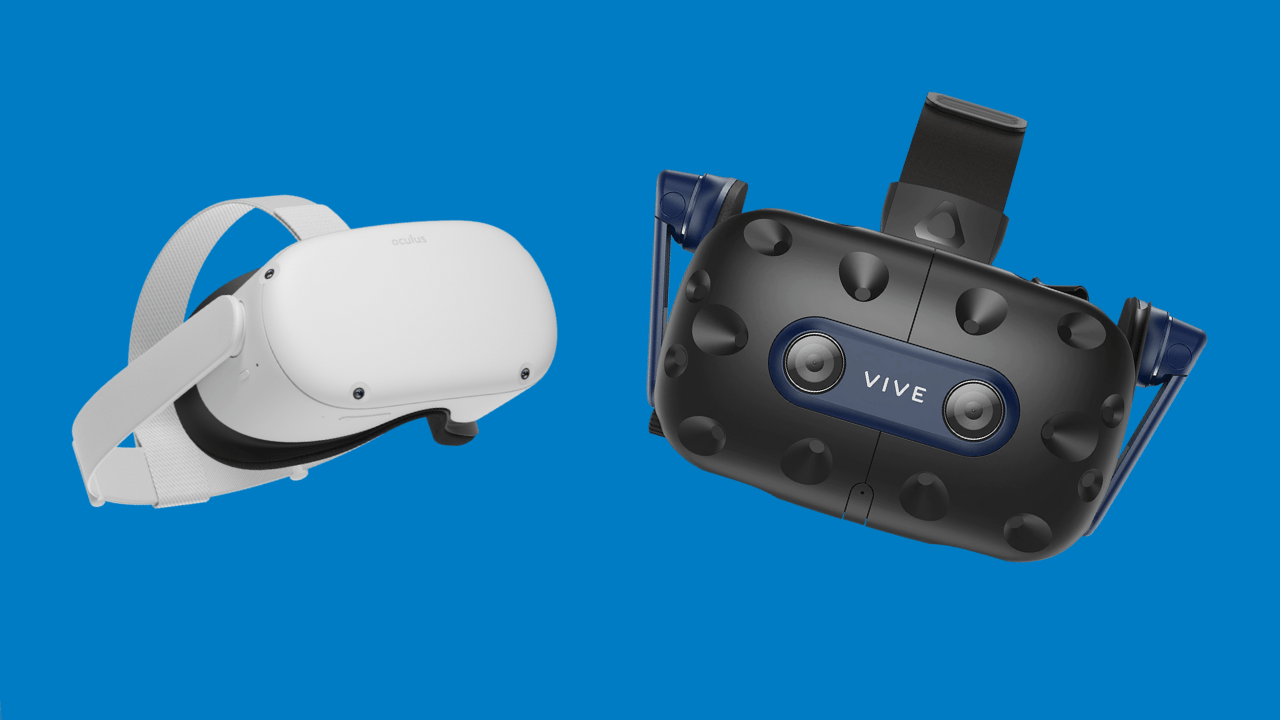
VR headsets certainly aren’t for everybody, but if you have thought about picking one up, you’ve likely thought about either the Meta Quest 2 or the HTC Vive Pro 2, two of the leading choices.
But which one is the right pick? I can assure you that they’re very different, although they achieve the same goals.
As someone who has now had the pleasure of trying both, recently reviewing the HTC Vive Pro 2 and using the Meta Quest 2 for over a year, here’s how these two leading headsets compare.
The Meta Quest 2 vs the HTC Vive Pro 2
While a basic glance at these two headsets might determine that they’re quite different in scope, I can assure you this is not the case.
VR, as it stands today, is a niche market, no matter how you look at it. In the vein of entertainment, VR exists mainly as an extension of gaming: it’s a genre of its own that has the user immersed in a virtual world that they can actively interact with and walk around in.
Outside of gaming, the applications of VR are few and far between. It’s unlikely that a business case will ever be made for conference calls using VR technology given that video calling is so easy, so right now practical business cases for VR are limited to fields like architecture, where you can have a user immersed in a project without it being physically built.
So when we think about this, we consider that the Meta Quest 2 and the HTC Vive Pro 2 (along with similar headsets) are for two specific markets: gamers after the VR experience and specialty businesses (sorry metaverse diehards).
Which one is the best for you, however? Well, let’s determine that.
Image: Zachariah Kelly/Gizmodo Australia
Is the HTC Vive Pro 2 better than the Meta Quest 2?
The HTC Vive Pro 2 has a major display advantage over the Meta Quest 2 in this field, capable of rendering at a 5K resolution on an LCD panel. The maximum resolution of the Meta Quest 2 is 1080p, however that’s on an OLED panel, capable of rendering darkness in much greater quality.
Having used both, I did notice a difference between the quality of each headset, leaning in the Vive’s favour, however, it never actually became too important for my gaming experience. As long as the framerate was high and the experience felt natural, I was satisfied, and it’s high on both headsets (90hz on the Vive and 120hz on the Quest).
Performance
Because the HTC Vive Pro 2 is more demanding specs-wise, you’ll likely need a more powerful computer to run games at their maximum specs.
In testing both headsets on F1 2022 through SteamVR, I noticed a performance difference between them, with the Meta Quest 2 providing a more consistent framerate and allowing me to use higher graphics settings than the HTC Vive Pro 2.
This is also a good moment to mention that the Meta Quest 2 can function entirely internally. Although internal games are limited to the Oculus Store (of which F1 2022 isn’t a part), owned by Meta, there is a decent assortment of games available if you don’t want to connect your headset to your PC. Just keep in mind that they’re typically less powerful games than what you’d find on Steam.
tracking
The HTC Vive Pro 2 uses tracking base stations (“lighthouses”) to translate your movements and your hands (via the controllers) through to the game. These lighthouses work best when placed above you at a slight tilt in a wide space, in opposing corners of the room.
This requires meticulous planning, needing a dedicated VR play space. As a renter I took issue with this, as I’m unable to do permanent modifications to the walls of my home, however, there are moveable stands available.
The Meta Quest 2 doesn’t need these lighthouses: tracking is all internal, which means that it’s a better solution if you’re after simplicity. This also means that there’s less to take with you if you’re bringing the headset on a trip.
The space in which I tested the HTC Vive Pro 2. It wasn’t a big space, but it was what I was able to do as a renter. You can see the two lighthouses on the left and right. Image: Zachariah Kelly/Gizmodo Australia
Computer connectivity
Both headsets connect to a PC to leverage performance power and use PC applications (unless you’re using the Meta Quest 2’s inbuilt OS).
The HTC Vive Pro 2 comes with a cable that does this, which connects to a Display Port on your graphics card (like a monitor would). The Meta Quest 2 doesn’t come with a dedicated streaming cable (though it does come with a charging cable), but Meta does sell the additional cable for $125. This connects to a USB-C 3.1 port on your PC.
Wireless connectivity isn’t necessary for VR headsets, but I would consider it important if you’re after the best immersion possible.
The Meta Quest 2 comes with inbuilt “Air Link” connectivity, allowing you to seamlessly connect to your PC over a LAN connection, provided your modem-router is up to the task.
The HTC Vive Pro 2 is also capable of this, if you spend $599 on the wireless adapter. You’ll also need an available PCIE port on your computer motherboard.
Build quality
The HTC Vive Pro 2 is a much heavier headset than the Meta Quest 2, but it also feels a lot heavier duty, with stronger plastics and a better head strap. Both headsets come with inbuilt speakers and microphones, although I didn’t notice a big difference between them.
I’d say the build quality of the Vive Pro 2 and its controllers are better than that of the Meta Quest 2. They feel stronger and harder to break.
The Vive Pro 2 controllers are also charged via USB-C, whereas the Meta Quest 2 controllers are powered by AA batteries.
Controllers
The controllers of the HTC Vive Pro 2 are ambidextrous, with each controller capable of use in each hand, whereas the Meta Quest 2 controllers are made for left and right hands on purpose.
This is a minor point, but it’s important to some, especially if you’re after a replacement.
Additionally, the Vive Pro 2 controllers use touchpads for analog movement, whereas the Meta Quest 2 controllers use joysticks. I prefer the joysticks as it provides more tactile feedback, but I didn’t have many problems with the touchpads of the Vive Pro 2 controllers.
The controllers of the HTC Vive Pro 2 (left) and the controllers of the Meta Quest 2 (right). Image: Zachariah Kelly/Gizmodo Australia
Does Vive technology work with the Quest 2?
Nope. HTC Vive Pro 2 and Meta Quest 2 each have their own walled garden, relying on different systems, hardware and software. The tracking of both headsets is different and reliant on their own proprietary technology, as are the controllers (despite having similar layouts).
The good news is that a PC that can run the HTC Vive Pro 2 will also run the Meta Quest 2, with both headsets capable of running games through SteamVR.
Price
Though the Meta Quest 2 was subject to a recent price rise, it’s still relatively cheap at $630 (plus $125 for the PC link cable), especially when compared to the HTC Vive Pro 2, which costs $2,199 for the full kit, plus the $599 wireless adapter.
Is the HTC Vive Pro 2 better than the Meta Quest 2?
It’s difficult to say that the Meta Quest 2 isn’t a better deal than the HTC Vive Pro 2.
With a price more than three times lower than that of the HTC Vive Pro 2, packed with internal tracking and access to internal gaming, the Meta Quest 2 is far more capable, far more portable, and brings to question how hardcore your needs would be were you to consider a more expensive alternative.
If you’re after better graphics, then the Vive Pro 2 might be the best solution for you, but I would encourage you to think about how important this is for what you want to do with it.
You can buy the HTC Vive Pro 2 from HTC for $2,199. You can buy the Meta Quest 2 from Amazon for $630.
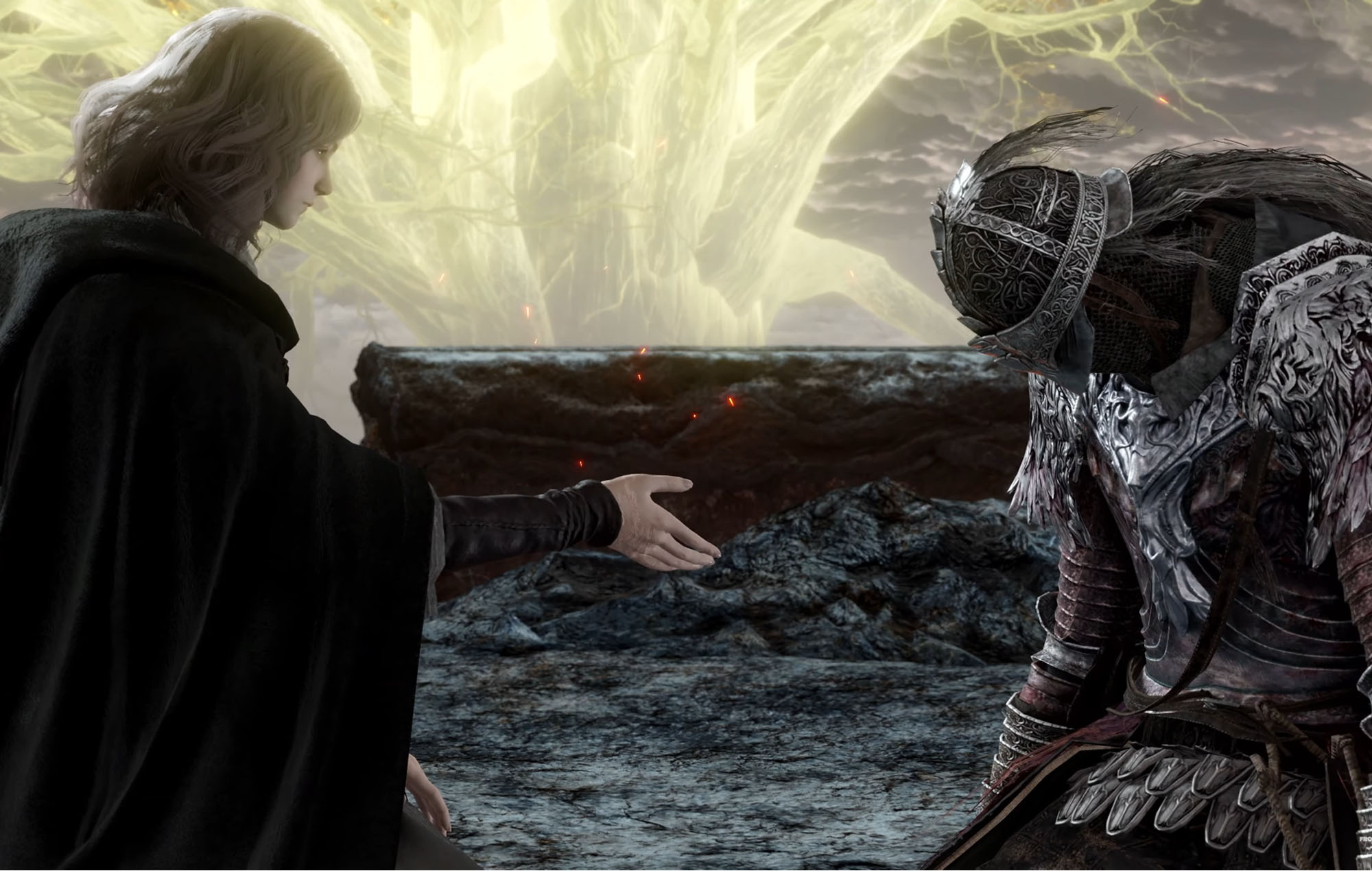
A new patch for Elden Ring has made changes to the summoning and invasion systems, making it easier to use the game’s multiplayer mechanics.
For starters, players are now able to send co-op signs to summoning pools in multiple and distant areas. This greatly increases the number of areas where your summoning sign can be seen. Similarly, invasions now cover multiple areas and can be triggered in distant areas.
Patch 1.06 is the latest to come to Elden Ring, bringing a range of adjustments to weapons, abilities and more. The key focus is on the multiplayer systems. You can read the full patch notes here, but these are the highlights:
Elden Ring. Credit: FromSoftware
Added the function to send summoning signs to summoning pools in multiple areas, including distant areas.
Added the function to invade a larger area, including distant areas
Increased the range of Ash of War “Glintstone Pebble” and “Glintstone Dart” projectile while decreasing the damage and stagger power
Decreased the travel distance and invincibility frames of Ash of War “Bloodhound Step”
Shortened the activation interval when using “Quick Step” skill in succession, increasing its ability to circle around the enemy when locked-on
Decreased the damage and bleed build-up of weapon skill “Corpse Piler” when hit with the blood attack. When hit by the blade, the damage is only decreased slightly
Decreased the target tracking ability of sorcery “Stars of Ruin”
In addition to the key changes listed above, several balancing updates have been made. These mainly focus on stability and performance. for more on Elden Ring check out our coverage on how the hardest ‘Elden Ring’ boss could have been much harder.
In other gaming news, developer EA has said that skateboarding will launch as a free-to-play game to help it cater to both Gen Z and Gen Alpha players.
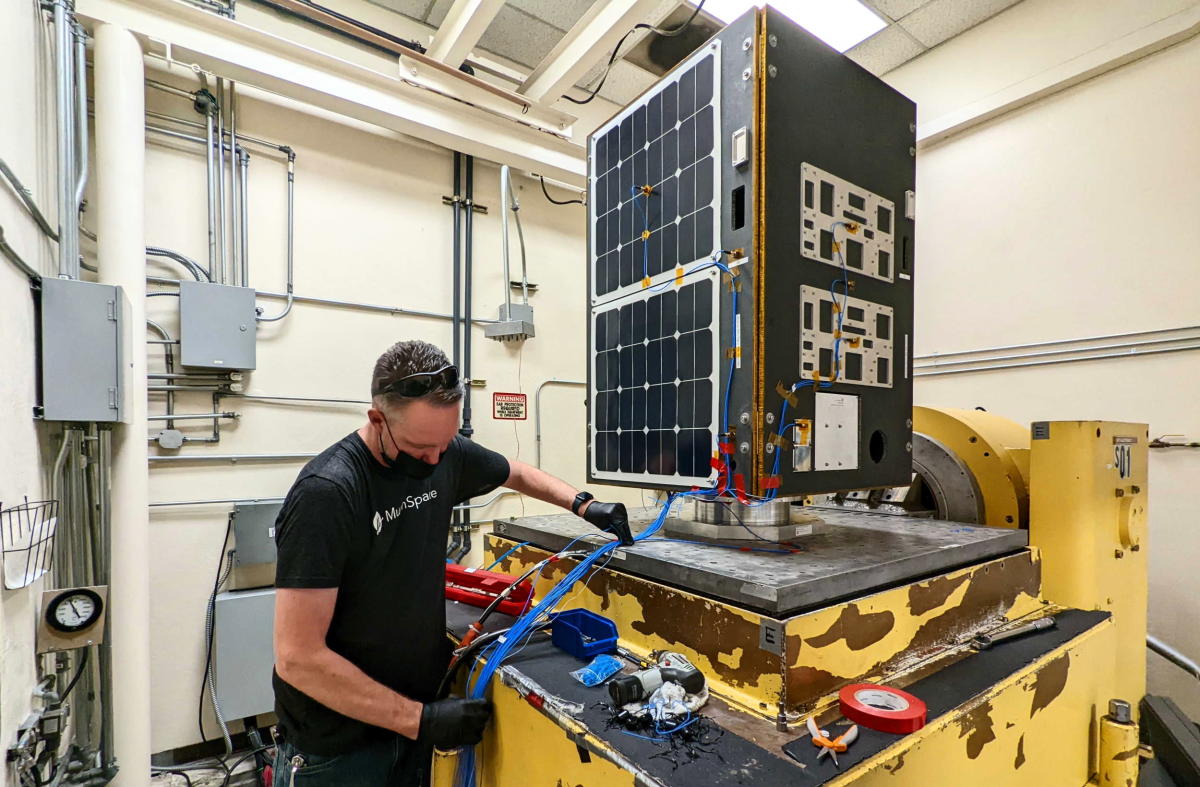
Plenty of companies want to operate in space, but few have or need the expertise to do so. They want an eye in the sky but not a satellite company. Muon Space is one of several startups looking to put others into space but with a special expertise in Earth observation and building the full stack from satellite bus to data on the ground. It has already raised $25 million to do so and locked down a few early big customers.
“People are reinventing large portions of the stack required to collect data from space,” Muon’s CEO and co-founder Jonny Dyer explained. “When we look across the spectrum of different new phenomenologies and missions, many of these companies are developing their own spacecraft, and obviously their own ground segments and data, so they can address a particular vertical market. We think that doesn’t make sense .”
To invent an example, consider a solar farm builder. They want to use satellite imagery to monitor their work and provide a data point on the resilience of their installations over time, looking for things like hot spots, broken panels and so on. They basically have two options. One is to use imagery from existing private satellites like Planet’s, which may or may not collect the type of data they want, at the frequency they want. The other is to build their own satellite and pay to put it in orbit — probably a nine-figure endeavor.
Muon is looking to provide a third option: a specialty space data partner that helps a company build an Earth observation platform from soup to nuts. That means designing the sensors, the bus, the navigation and telemetry systems, and the downlink and ground infrastructure needed to support this data-heavy industry.
Image Credits: Muon Space
Of course this won’t be cheap either, but it’s cheaper than building a satellite division yourself, and you’d be working with a crew that’s already made and several launched satellites and has made a specialty of Earth observation. Dyer was a principal engineer at Google Geo, and chief engineer at Skybox, and the rest of the crew has been built around remote sensing as well.
“Our team is somewhat unique in the depth and breadth of our expertise in these systems,” Dyer said, “but also the data utilization component — what’s needed to make these things valuable.”
Among Muon’s early customers are Google, the Environmental Defense Fund and another undisclosed partner, all of which it must be said will probably make good use of the company’s first three spacecraft, which use a different method of imaging the Earth than you might expect: microwaves .
“It’s a class of observation we call signals of opportunity,” said Dan McCleese, Muon’s chief scientist and formerly of the same role at JPL. The sensors they’ve built capture reflected radio waves in the microwave spectrum that have been emitted by other spacecraft, meaning they don’t have to send any out themselves.
“You can think of it as a form of radar. It’s a key measurement used by NOAA and NASA for weather prediction — there’s been a lot of technological development in reducing the size and cost of these sensors, but they need to get lots of them in the air to reduce the temporal resolution,” said Dyer — meaning reducing the time between observations of a given location.
In this case the microwave land monitoring method would be useful for monitoring wildfires — everyone wants to know where they are in real time, but the gear in orbit right now simply can’t provide that information. Muon provided a simulation of how its satellites (top right) would be able to visualize a spreading fire compared with what’s up there (bottom row), which you can see below:
Simulation of monitoring a wildfire. Clockwise from top left, simulated ground truth, Muon’s satellites, GOES, VIIRS. Image Credits: Muon Space
This is just one of the many remote sensing opportunities out there relating to climate change and environmental monitoring and modeling, markets Muon is hoping to target first.
Notably, the spectrum that its first satellites monitor can be adjusted via software, much the way radios can be tuned that way — it can’t suddenly become an infrared detector, though it can change its mission to support other bands of interest. But beyond the passive microwave radar, Muon is hoping to take advantage of other technologies that have been pioneered but not yet widely deployed.
“We also have longer-term interest in other parts of the spectrum,” said Dyer. “Multispectral, hyperspectral, infrared … and there are optical architectures that allow a similar approach to collecting very broad bandwidths and then selecting what you need.”
Their plans include using instruments developed by agencies like NASA that have no active mission.
“It’s interesting,” put in McCleese, “NASA is putting a lot of effort into coming up with the means and technology of doing smallsats, but they’re largely in the field of demonstrations. There is an enormously rich area of instruments demonstrated by NASA, JAXA, etc. that are not being picked up for continuing observation. The demonstration was the focus, then the project comes to an end.”
A bunch of cutting-edge Earth observation tech sitting on a shelf just waiting for a tech transfer application is certainly a good place to start. Dyer said they will combine this with the company’s own accumulated expertise in the area and advances to “start from first principles in the ecosystem.”
“We want to provide a turnkey solution to formulate a set of sensors to address their problem, and go with them to full deployment of operations and data to meet their business needs. In many ways we think of the question of deploying sensors in space inside out,” he said, designing the satellite and data handling around the use case rather than vice versa.
The $25 million A round was led by Radical Ventures, with participation from Costanoa Ventures, Congruent Ventures, Space Capital and Ubiquity Ventures. “It definitely gets us to space, easily through the first three spacecraft, and it gets us to an MVP level on the support structure for those missions,” said Dyer.
Expect Muon’s first spacecraft to go up starting in November of next year on a SpaceX Falcon 9 ride-share mission if all continues to go well for them.
Tower of Fantasy launch times have been set as the sci-fi MMO gears up for its global launch.
Tower of Fantasy’s global release date is August 10 in most regions, but exact times differ slightly. Here’s a quick breakdown of the launch timing:
US Pacific Time – August 10, 5pm
US Eastern Time – August 10, 8pm
UTC – August 11, 12am (midnight launch)
British Standard Time – August 11, 1am
Tower of Fantasy is already available to preload globally on PC as well as iPhone and Android. Check the official website (opens in new tab) for the correct download link. Note that while PC players will eventually be able to play the game through Steam (opens in new tab) or the Epic Games Store (opens in new tab)the PC preload is only available through the standalone Windows client.
Once you download and install the preload version of the game, you can go ahead and build your custom character using Tower of Fantasy’s in-depth avatar tools. You’ll still start the game’s tutorial with the default character, but by saving and then loading a custom preset, you can instantly swap to your custom avatar.
Tower of Fantasy’s launch will see a suite of giveaway events celebrating the global release. Pre-registration rewards are headlining the freebies, and you can claim them even if you didn’t register before the game’s launch. As long as you create an account and log in by February 6, 2023 and unlock the in-game rewards page by clearing the story mission ‘Ecological Station Intruders,’ you’ll be able to claim goodies including cosmetics, currencies, and black and gold nuclei to spend on the gacha banners.
Other launch rewards include the Starpath Navigation giveaway, which will be available for 21 days after character creation. This is tied to the same mission and rewards page as the pre-registration giveaway, though it seems you’ll also need to complete additional missions to earn points once you unlock this event.
the Tower of Fantasy global launch patch notes warn of “many shortcomings” such as potential bugs.
Garmin has announced the new Enduro 2 GPS smartwatch for extreme endurance sports.
The watch can last up to 150 hours in GPS mode, thanks to its solar charging capability.
It also includes touchscreen controls, improved mapping, and better positioning precision.
Many of Garmin’s wearables have become a staple for endurance athletes, and the company is back with a new multisport GPS watch to replace last year’s Garmin Enduro.
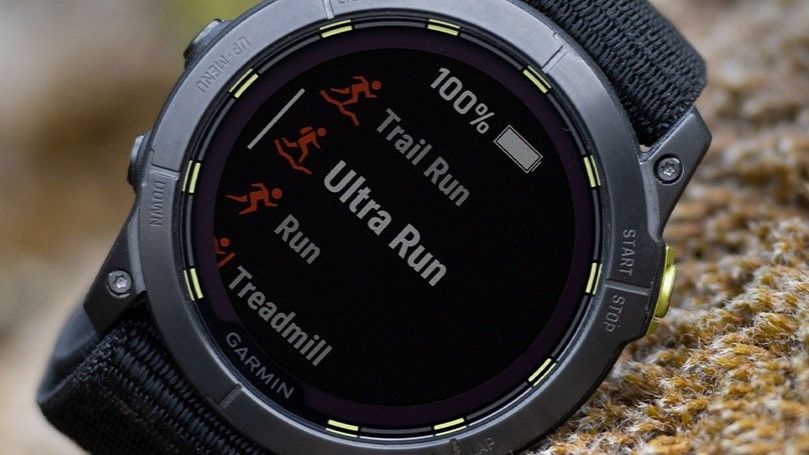
Garmin has unveiled (opens in new tab) the Enduro 2, a rugged GPS watch in a lightweight package built for ultra-performance athletes. Perhaps the watch’s main selling point is its extended battery life compared to its predecessor: it’s claimed to last up to 150 hours in GPS mode thanks to its solar charging capability. That’s an impressive 40% increase compared to last year’s model.
In smartwatch mode, the Enduro 2 is capable of running for 46 days. But beyond its longer battery life, Garmin’s latest contender for the best GPS smartwatches includes improvements to mapping and GPS accuracy. The watch comes preloaded with TopoActive maps.
It also offers multi-band GNSS for better positioning accuracy in any environment, coupled with Garmin’s SatIQ technology to optimize battery life. The sports watch comes with NextFork, which allows you to see how far you are from the next trail intersection.
The Enduro 2 also features a visual race predictor, a grade-adjusted pace feature to help athletes adapt to varying terrains, and an automatic rest timer. You’ll also get built-in indoor and GPS sports apps for mountain biking, swimming, hiking, running, golf, yoga, and surfing out of the box.
Garmin’s new GPS watch also brings back the built-in LED flashlight from the Fenix 7 series, but this time it’s twice as bright. You can even set the flashlight to a red safety light mode or switch on the strobe mode to match your cadence and keep you safe while you’re out on the road after dark.
(Image credit: Garmin)
All of these features complement the watch’s built-in health and fitness features that monitor your heart rate, SpO2, respiration, stress, and sleep. As a smartwatch, it offers Garmin Pay, incident detection, and music storage support.
The Enduro 2 has a lightweight titanium bezel and rear case, a 1.4-inch Power Sapphire lens, and a nylon band. Its touchscreen interface works in tandem with Garmin’s traditional button controls.
You can slap all of these capabilities onto your wrist for $1099.99. The Enduro 2 is available for purchase starting today.
Development for GTA 6 is now underway and so begins the years of hype and speculation surrounding the follow-up to the titan that is GTA 5 and GTA Online. It’s not going to be an easy act to follow, as GTA 5 and GTA Online have combined to break sale records across three console generations. Will GTA 6 succeed? Well, parent company Take-Two Interactive certainly thinks so.
GTA 6 hype is being built by parent company Take-Two Interactive
In a recent earnings call, Take-Two stated that GTA 6 is now fully in development and is aiming to “set creative benchmarks” for “all entertainment.”
Sales of Grand Theft Auto V also remained strong, and to date, the title has sold-in nearly 170 million units. With development of the next entry in the Grand Theft Auto series well underway, the Rockstar Games team is determined to once again set creative benchmarks for the series, our industry, and for all entertainment, just as the label has done with every one of their frontline releases.
Not only is the game going to raise the bar for the GTA series, but it will also apparently be making waves for the entire industry and entertainment as a whole.
It’s bold words from the parent company, but it’s understandable when you consider just how well GTA 5 and its online component have done over the last nine years. With almost a decade of success under its belt, it sure would be impressive to see GTA 6 emulate that level of incredible success.
With the game still in early development, it’s likely going to be a long while before we know more about how GTA 6 will be pushing the envelope in game design.
In other PlayStation news, a new Alone in the Dark game is potentially being teased. Sony’s Inzone M9 gaming monitors are available to pre-order (again). Elden Ring has received a new update which adds new co-op and invasion features.

![From the latest report by Take-Two, which is the parent company of Rockstar Games, we learn that GTA: The Trilogy The Definitive Edition is resolving subdued sales figures, at least in respect to the standards of the series. The versions Android and iOS also have not yet a precise release date, though [] the [suite] versions have no official release date.](https://michmutters.com/wp-content/uploads/2022/08/GTA-The-Trilogy-records-subdued-sales-yet-mobile-versions-have.jpeg)