Categories
Technology

AMD Ryzen 7000 “Raphael” 5nm Desktop CPUs & X670 Motherboards Launch on 15th September

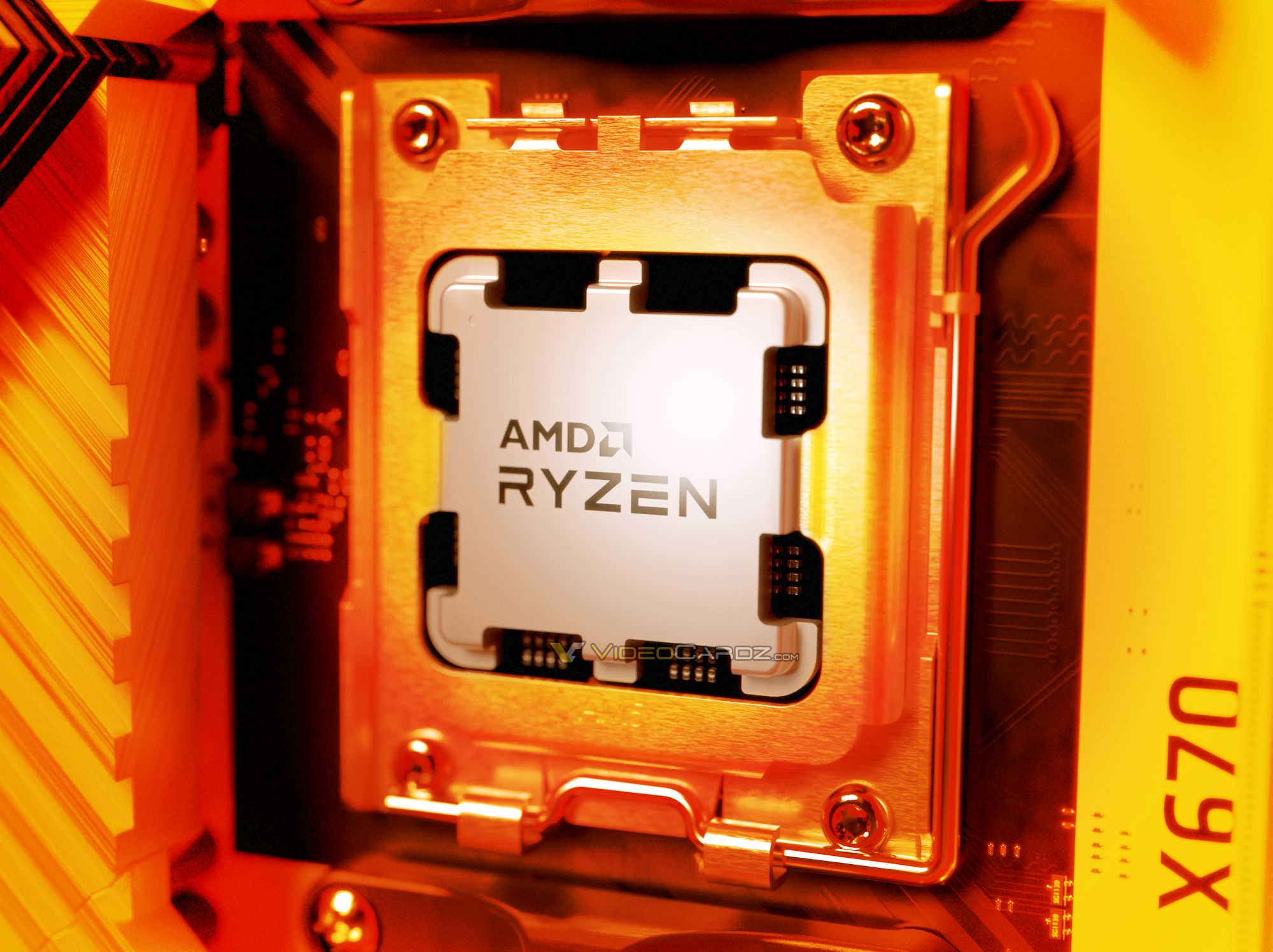
While AMD confirmed that it will be officially launching its Ryzen 7000 “Raphael” Desktop CPUs this quarter, we have managed to get the final announcement, review and launch dates from our own sources which confirm that the official retail launch for the Zen 4 CPU family & X670 motherboards will take place in September.

AMD Ryzen 7000 “Raphael” Desktop CPUs & X670 Motherboards Officially Launching On 15th September

Based on the information we have, it looks like AMD will be hosting a product announcement event later this month which will focus on the specifications and prices of its Ryzen 7000 “Raphael” lineup and will also allow motherboard manufacturers to reveal the preliminary prices of their boards. As far as this event is concerned, it will take place on 29th August but you won’t get to purchase Ryzen 7000 CPUs until two weeks later.

The embargo on the AMD Ryzen 7000 Desktop CPUs & X670 motherboards reviews will lift two weeks later on 13th September followed by a full retail launch for the said products on 15th of September. To sum up the dates:

  • Product announcement: August 29, 2022 at 8:00PM ET / August 30, 2022 at 2:00AM CET / 8:00AM TW
  • Press however: September 13, 2022 at 9AM ET / 3PM CET / 9PM TW
  • sales embargo: September 15, 2022 at 9AM ET / 3PM CET / 9PM TW

Based on a previous leak from AMD themselves, it looks like there will be four SKUs on offer at the start which would include:

  • AMD Ryzen 9 7950X
  • AMD Ryzen 9 7900X
  • AMD Ryzen 7 7700X
  • AMD Ryzen 5 7600X

AMD Ryzen 7000 ‘Raphael’ Desktop CPU ‘Preliminary’ Specs:

CPU Name Architecture Process Node Cores / Threads Core Clock (SC Max) Cache TDP Price
AMD Ryzen 9 7950X Zen 4 5nm 16/32 ~5.5GHz 80MB (64+16) 105-170W ~$700US
AMD Ryzen 9 7900X Zen 4 5nm 12/24 ~5.4GHz 76MB (64+12) 105-170W ~$600US
AMD Ryzen 7 7800X Zen 4 5nm 8/16 ~5.3GHz 40MB (32+8) 65-125W ~$400US
AMD Ryzen 7 7700X Zen 4 5nm 8/16 ~5.3GHz 40MB (32+8) 65-125W ~$300US
AMD Ryzen 5 7600X Zen 4 5nm 6/12 ~5.2GHz 38MB (32+6) 65-125W ~$200US

AMD’s first wave of 600-series motherboards would focus on the higher-end X670E & X670 designs followed by B650E & B650 products a few weeks later (around October/November). The new CPUs will feature a brand new Zen 4 core architecture which is expected to deliver up to 8% IPC, >15% ST (Single-Threaded), and >35% MT (Multi-Threaded) performance improvement over the Zen 3 cores . Additionally, AMD is going bonkers with the clock speeds on their next-gen CPUs with up to 5.8 GHz frequency limits, 170W TDPs and 230W PPT. Plus, the platform itself will be outfitted with the latest technologies such as PCIe Gen 5.0 slots, Gen 5.0 M.2 support, DDR5 memory support (EXPO), and a new SAS (Smart Access Storage) Firmware suite that runs on the DirectStorage API framework.

AMD Ryzen ‘Zen 4’ Desktop CPU Expected Features:

  • Up To 16 Zen 4 Cores and 32 Threads
  • Over 15% Performance Uplift In Single-Threaded Apps
  • Brand New Zen 4 CPU Cores (IPC / Architectural Improvements)
  • Brand New TSMC 5nm process node with 6nm IOD
  • 25% Performance Per Watt Improvement Vs Zen 3
  • >35% Overall Performance Improvement Vs Zen 3
  • 8-10% Instructions Per Clock (IPC) Improvement Vs Zen 3
  • Support on AM5 Platform With LGA1718 Socket
  • New X670E, X670, B650E, B650 Motherboards
  • Dual-Channel DDR5 Memory Support
  • Up To DDR5-5600 Native (JEDEC) Speeds
  • 28 PCIe Lanes (CPU Only)
  • 105-120W TDPs (Upper Bound Range ~170W)

You can find the full details of AMD’s next-gen Ryzen 7000 Desktop CPUs and the respective 600-series motherboards in our full roundup of the next-gen family here.

AMD Mainstream Desktop CPU Generations Comparison:

AMD CPU Family code name ProcessorProcess Processors Cores/Threads (Max) TDP’s (Max) Platform Platform Chipset memory support PCIe Support Launch
Ryzen 1000 Summit Ridge 14nm (Zen1) 8/16 95W AM4 300-Series DDR4-2677 Gene 3.0 2017
Ryzen 2000 Pinnacle Ridge 12nm (Zen+) 8/16 105W AM4 400-series DDR4-2933 Gene 3.0 2018
Ryzen 3000 Matisse 7nm (Zen2) 16/32 105W AM4 500-series DDR4-3200 Gen 4.0 2019
Ryzen 5000 Vermeer 7nm (Zen3) 16/32 105W AM4 500-series DDR4-3200 Gen 4.0 2020
Ryzen 5000 3D Warhol? 7nm (Zen 3D) 8/16 105W AM4 500-series DDR4-3200 Gen 4.0 2022
Ryzen 7000 raphael 5nm (Zen 4) 16/32 170W AM5 600-Series DDR5-5200/5600? Gen 5.0 2022
Ryzen 7000 3D raphael 5nm (Zen 4) 16/32? 105-170W AM5 600-Series DDR5-5200/5600? Gen 5.0 2023
Ryzen 8000 Granite Ridge 3nm (Zen 5)? TBA TBA AM5 700-Series? DDR5-5600+ Gen 5.0 2024-2025?

Which AMD Ryzen 7000 Desktop CPUs are you most interested in?

Categories
Technology

Elden Ring’s Most Annoying Bosses

Elden Ring fans have been blown away by the number of boss encounters in the game, but some of these bosses are annoying. Players who come across these bosses at the appropriate skill level may not have difficulty defeating them. However, there are aspects to their fights that may frustrate even the most experienced Soulsborne player.

Boss fights are a staple in every Soulsborne game. Some of these bosses may be considered optional, so defeating them rewards players with cool items or runes/souls. However, there are other bosses that players must defeat if they want to progress through the game. But in every Soulsborne game, there are boss fights that many players can agree on being annoying, even if they aren’t as difficult as some of the franchise’s more punishing fights. And out of the many bosses that Elden Ring has, several of them fall into this category.

SCREENRANT VIDEO OF THE DAY

Related: Elden Ring’s Best PvP Duel Locations

The challenging bosses in Elden Ring will require players to study their move sets or summon help. However, there is a difference between a difficult boss and an annoying boss. An annoying boss may have ridiculous attacks, or they may not be alone during the fight. No matter their character level or skill, some players will struggle with these bosses.

Elden Ring – Rennala, Queen of Being Annoying


Which Souls games player should try after Elden Ring

Rennala, Queen of the Full Moon is one of Elden Ring’s main bosses that players can encounter early in the game. She can be skipped since only two Great Runes are needed to reach the Altus Plateau. However, players who want or need to respec stats in Elden Ring may prioritize defeating Rennala. Assuming a player reaches Rennala at the appropriate level, she is not overly difficult to fight; she is weak to bleed and physical damage, which players can use to their advantage of her.


Rennala has two phases to her fight, but the first phase is the most annoying. During the first phase, players must destroy her protective barrier by killing the correct student in the room. Running around and finding the right student sounds simple, but during this phase, her students of Ella are throwing items at the player and dropping chandeliers. Meanwhile, Rennala will use a powerful beam attack to devastate unwary players. If a player is not careful during this first phase, they can begin Rennala’s second phase with not enough health or flask of crimson tears.

Elden Ring – Irritating Commander Niall


Elden Ring Commander Niall Cheese Kill

Commander Niall is another annoying boss. He can be found in Castle Sol in Elden Ring’s Mountaintops of the Giants region. Commander Niall is optional, so players can avoid him and the Castle, but defeating him is essential for players who want the Haligtree Secret Medallion (Left) to access the Consecrated Snowfield location.


Related: If You Haven’t Beaten Elden Ring, You Haven’t Seen Its Best Surprises

Commander Niall is a difficult boss, but what makes him annoying is the two ghostly Banished Knights that he summons at the beginning of the fight. Winning the fight depends on how well a player can manage the two knights along with Niall himself. The knight with the dual swords is aggressive and should be taken care of first. But if a player defeats both knights, Niall will become aggressive. It is an annoying fight that may make players decide the Consecrated Snowfield is not worth it.

Elden Ring – The Most Annoying Royal Revenant


Elden Ring Royal Revenant Boss

The Royal Revenant is an optional boss found in the Kingsrealm Ruins in the northwest section of Elden Ring‘s Liurnia of the Lakes. Players can reach the ruins early in the game and find the boss room beneath an illusionary floor in the ruins. While revenants and royal revenants are challenges that can be found in other locations of the game, fighting this Royal Revenant is annoying because of how small the boss room is. Getting pinned against the wall while being poisoned and hit by the boss is a huge possibility. And if players are not careful, they can be killed as soon as they enter the room.


Elden Ring – Most Irritating Erdtree Burial Watchdog


The Burial Watchdogs are common bosses and enemies found in many dungeons throughout Elden Ring. Beating the Erdtree Burial Watchdogs in Elden Ring is possible for all players. However, the Erdtree Burial Watchdog in the Impaler’s Catacombs may be annoying for every player, regardless of their character level. The reason this specific Erdtree Burial Watchdog is annoying is because of the imps that accompany this boss. During this fight, it is easy for the imps to surround a player and inflict bleeding, while the Burial Watchdog finishes the job. There is even a chance that the imps will kill the player before the Burial Watchdog can even reach them. To defeat the boss, players must clear out the imps while avoiding the Burial Watchdog’s attacks.


Elden Ring – Astel, Naturalborn Of The Void And Annoyance


Players can encounter the boss Astel, Naturalborn of the Void late in the game. Defeating him is not necessary for the game’s main storyline; however, if players want to complete Ranni’s storyline, they must defeat Astel. And beating Elden Ring‘s Astel, Naturalborn of the Void is not easy, even for those seasoned Soulsborne players. If players can get close enough to him, they will find he is not that hard, but reaching him is annoying.

Related: Elden Ring DLC ​​Leaks Most Likely To Be True

Astel has a lot of AoE attacks, along with several powerful grabs. He teleports around the arena and will use his mandibles from him to bite the player. Plus, when players first enter the arena, Astel does a beam attack that has a chance to one-shot the player. Getting one shot over and over before even getting close enough to him is exhausting. Astel is an annoying fight that can probably be skipped unless players are completing Ranni’s quest. Later in the game, another version of Astel called Astel, Stars of Darkness can be encountered in the Yelough Anix Tunnel.


Elden Ring – Putrid Crystalian Trio Is Not Fun


Elden Ring The Putrid Crystalian Trio Boss Location

Elden Ring‘s Putrid Crytalian Trio within Sellia Hideaway is another annoying boss encounter. Crystalians are common enemies and bosses in the game, and they can be especially problematic for players without weapons to deal blunt damage. However, the Putrid Crystalian Trio are the most annoying Crystalians in the game. There is a Staff, Spear, and Ringblade Crystalian who all deal Scarlet Rot when they attack the player. In theory, players should defeat the Staff Crystalian first, but that is a challenge when the Spear and Ringblade Crystalians are chasing the player. Spirit Ashes may help, but they should inflict blunt damage.

Next: Elden Ring: Queen Marika Might Actually Be An Eternal City Mimic

Super Smash Bros Ultimate Ganondorf Screenshot

Disturbing Zelda Artwork Imagines Anatomically-Correct Ganondorf


About The Author

Categories
Technology

Some Apple Watch models are already sold out ahead of Series 8 launch

If you’ve been planning on picking up an Apple Watch Edition model, you might have some more waiting to do.

As spotted by MacRumors, the Apple Watch Edition is currently sold out in the United States, Canada, and the United Kingdom. The availability, or lack thereof, of the high-end titanium Apple Watch Series 7 models comes as Apple is just weeks away from announcing the Apple Watch Series 8 models at an event that is expected to kick off in September.

Categories
Technology

Watch | This ‘deprinter’ sucks ink to make reusable paper, could transform carbon footprint of office printing

Scientists have created a miraculous device that removes the ink from printer paper, allowing each sheet to be reused ten times. By lowering the demand for office paper, they want to reduce the quantity of climate-changing carbon dioxide (CO2) emissions from the paper and pulp sector. Specially coated paper, which prevents ink (or powdered toner) from soaking into the sheet, is the secret to the so-called “de-printer.”

The ink is then vaporized by a strong laser. Circular printing is how Barak Yekutiely, the lead developer from REEP Technologies in Israel, explains it. Large volumes of carbon dioxide that warms the globe are produced during the production of several essential goods that sustain our life, from paper to plastic.

The REEP method totally removes all of the ink from the paper using cutting-edge laser technology. The basis of Reep’s solution is laser de-printing in conjunction with cutting-edge materials that allow paper re-use. It is the first de-printing technique to pass Ingede’s renowned deinking test with a perfect score.

Also Read: In pics: Bizarre enormous sinkholes appear in the middle of nowhere

RCP, or Reep Circular Print, is a service that provides REEP capability. The consumer receives the Reep de-print devices, reusable paper, and full support under an all-inclusive click charge. The Reep services remove the requirement for single-use printer paper procurement, storage, collection, shredding, and recycling.

Since the invention of printing, REEP empowers a circular economic model for the first time. The Reep technology drastically reduces resource use and carbon emissions associated with office printing by over 90 per cent. Maintaining trees will increase carbon sequestration, improving the climate through print operations.

(with inputs from agencies)


.

Categories
Technology

Activision Blizzard King has lost 11million monthly players since March

Activision Blizzard King has reported a loss of 11 million monthly active users (MAUs) since March of this year.

These player loss numbers come from the publisher’s quarterly financial results (published on August 1), with the Activision and King branches of the company seeing the biggest losses in monthly users.

March of this year saw 372million players, whilst June saw 361million. Within the company, Activision’s monthly playerbase dropped from 100 to 94million, while Blizzard’s went up from 22 to 27million and King fell from 250 to 240million.

This decline follows an overall decline in average player counts over the last 12 months. June 2021 saw an average of 408million players, meaning there’s been an overall decrease of 47million in one year.

Call Of Duty: Vanguard Shipment
Call Of Duty: Vanguard. Credit: Activision Blizzard

Blizzard is the only company branch to see stability and a rise in players, as despite some dips in the last 12 months there’s actually been a rise in MAUs, according to the document.

Activision Blizzard King says MAUs refers to the “number of individuals who accessed a particular game in a given month,” but a player who played two different games in that month would actually be counted as two users, and not one. For Activision and King a user who plays the same game on two different platforms is counted as two users, but Blizzard would count that player as one user instead.

While Activision Blizzard is set to be acquired by Microsoft next year, PlayStation competitor Sony has voiced its opinion on the buyout. Sony believes that due to the industry control and size of the Call Of Duty franchise – which is owned by Activision Blizzard – its ownership under Microsoft will lead users to change their console of choice.

In other news, FIFA 23 is set to be the first game in the franchise to let players choose a real-world manager in career mode.

Categories
Technology

Elden Ring Had One of the Biggest Game Launches on YouTube, Ever

In its first 60 days of release, Elden Ring became one of YouTube’s biggest ever gaming launches, seeing well over 3 billion combined video views.

In stats shared exclusively with IGN, Elden Ring saw 3.4 billion views in the two months after launch, dwarfing the next name on the list, GTA 5 on 1.9 billion. Of course, YouTube has grown since GTA’s launch in 2013, making that something of an unfair comparison – but the far more recent Red Dead Redemption 2 (2018) saw 1.4 billion, so it’s clear quite how successful Elden Ring has been.

YouTube Gaming stops short of calling it the biggest gaming launch ever, but it’s clear that FromSoftware’s open world masterpiece has set an incredibly high bar for games on YouTube in the future. In large part, that’s down to the hunger for different kinds of video about the game, from Let’s plays, to guides, to lore explainers.

Elden Ring's YouTube infographic.  (Image credit: YouTube Gaming)

Elden Ring’s YouTube infographic. (Image credit: YouTube Gaming)

YouTube Gaming also provided a list of other stats around the biggest launch videos for Elden Ring:

Most Viewed launch videos:

Channels with the most Elden Ring launch views:

Content Type Breakdown:

  • VOD – 71.3%
  • Livestreams – 25.98%
  • Shorts – 2.72%

Uploads By Bosses (descending order)

  • Margit, The Fell Omen
  • Malenia Blade of Miquella
  • Godrick the Grafted
  • Starscourge Radahn
  • Draconic Tree Sentinel

Uploads by Character Class (descending order)

  • Samurai
  • hero
  • Wretch
  • astrologer
  • Warrior

YouTube Gaming also called out some of the Elden Ring community’s best-known creators with ‘Elden Lord Awards’:

Finally, the team also acknowledged perhaps Elden Ring’s best-known hero, Let Me Solo Her – the player who took on the game’s hardest boss more than a thousand times, and earned a real-life sword for their efforts. According to YouTube Gaming, videos featuring Let Me Solo Her have accrued over 25 million views alone.

All of this is yet more proof of Elden Ring’s status as a true gaming phenomenon. It quickly became one of the fastest-selling games in recent history in both the US and Europe, one of Steam’s most played games by concurrent players, and one of the best reviewed games in modern history.

We called it a masterpiece in our 10/10 review, saying it “can easily be held amongst the best open-world games I’ve ever played. Like The Legend of Zelda: Breath of the Wild before it, Elden Ring is one that we’ll be looking back on as a game that moved a genre forward.”

Joe Skrebels is IGN’s Executive Editor of News. Follow him on Twitter. Have a tip for us? Want to discuss a possible story? Please send an email to [email protected].

Categories
Technology

AMD confirms Ryzen 7000 is launching this quarter

AMD Ryzen 7000 is launching this quarter

AMD confirms Zen4-based “Raphael” desktop CPUs are on track to launch within the next 8 weeks.

During Q2 Earnings call AMD CEO Dr. Lisa Su confirmed Ryzen 7000 series will launch this quarter. That narrows the launch date from previously communicated ‘this fall’ (so September – December) to just September. According to the rumors AMD might reveal the new series on September 15th, which would be the date of the product announcement with launch later that month.

“Looking ahead, we’re on track to launch our all-new 5nm Ryzen 7000 desktop processors and AM5 platforms later this quarter with leadership performance in gaming and content creation,”

— AMD CEO, Dr. Lisa Su

The company is set to unveil more details on X670E motherboard designs from their partners this week. AMD is hosting the Meet The Expert event for enthusiasts and professionals where representatives from all major board partners will talk about their AMD 600-series motherboards for Ryzen 7000 series.

Furthermore, Lisa Su also reaffirmed that Radeon RX 7000 series are on track to launch ‘later this year’. This means that there are no changes or updates to the previously communicated launch window.

RUMORED AMD Ryzen 7000 Specifications
VideoCardz.com Cores / Threads Base/Boost Clock TDP Launch Price
(USD)
AMD Ryzen 7000 Zen4 “Raphael”
Ryzen 9 7950X TBC
Ryzen 9 7900X TBC TBC
Ryzen 7 7700X TBC TBC TBC
Ryzen 5 7600X TBC TBC
AMD Ryzen 5000 Zen3 “Vermeer”
Ryzen 9 5950X
Ryzen 9 5900X
Ryzen 7 5800X3D
Ryzen 7 5800X
Ryzen 5 5600X

Source: Tom’s Hardware


Categories
Technology

Samsung S95B OLED 4K Smart TV: Quantum leap! -STACK

Samsung’s new S95B OLED 4K Smart TV combines QLED’s quantum dot technology and OLED’s self-lit pixels for a truly spectacular fusion of color and contrast.

OLED has long been the flagship of 4K HDR TVs in terms of picture quality, utilizing individual self-illuminating pixels that eliminate the need for a backlighting source. The result is incredible contrast, inky blacks and vivid life-like colours.

Samsung’s first quantum dot OLED 4K smart TV, the S95B, has a staggering 8.3 million of these self-lit pixels that work in conjunction with 4K AI processing to deliver virtually limitless contrast. Add the quantum dots – nanocrystals that improve brightness and color gamut – used in QLED panels and you get the best of both worlds in a hybrid display.

Along with quantum dots, the difference here to traditional OLED TVs is that each pixel has three sub-pixels – red, green and blue – to optimize brightness. As there are no white sub-pixels to compromise color reproduction, RGB creates a more vibrant image overall, particularly when viewing HDR content.

Samsung S95B OLED 4K Smart TV

High Dynamic Range is further enhanced by Quantum HDR10+, which, like Dolby Vision, renders an even more detailed picture by using dynamic metadata – scene-by-scene image optimization – to add extra pop to colors and contrast on supported content.

“…you get the best of both worlds in a hybrid display.”

OLED TVs are also renowned for their wide viewing angles, maintaining consistent contrast, color and detail regardless of where the viewer is sitting in relation to the TV. The S95B’s viewing angle is ultra-wide, so even those perched on the periphery will still enjoy a prime position.

On the audio front, the S95B features 40W 2.0. two channel sound, with in-built up-firing speakers and True Dolby Atmos support for an immersive 3D soundscape that belies the TV’s laser-slim design. It also has the capability to transmit the Dolby Atmos signal wirelessly to a compatible Samsung soundbar – a world first!

The audio is highly directional and will follow objects on screen, with voice tracking and an adaptive voice amplifier to ensure you never miss a word of dialogue, even in a noisy room.

Samsung S95B OLED 4K Smart TV

All the features and functionality of Samsung’s Neo QLED range is included here. Intelligent mode uses smart sensors to auto fine tune picture and sound in tandem with the adaptive picture mode that optimizes brightness to suit a room’s light levels. Samsung’s QLED and Neo QLED TVs have always delivered a stunning image in brightly lit rooms, and now with the boosted contrast and true blacks of OLED, the quality is even more amazing. And there’s an Eye Comfort mode that cleverly detects local sunrise and sunset times, adjusting color temperature and brightness levels for a picture that’s always easy on the peepers.

Smart connectivity includes Google Assistant, Alexa and AirPlay2 support, as well as wireless screen mirroring from compatible devices, while multiview allows you to watch what’s on your smartphone screen simultaneously – useful for checking live sports scores and stats. Bluetooth connectivity facilitates smart home ecosystem integration and voice control with compatible devices.

Available in 55” and 65” screen sizes, the S95B really is the complete package when it comes to 4K Smart TVs and represents a quantum leap forward for OLED technology. Movie buffs and gamers take note – this is the TV you need.

The Samsung S95B is coming very soon to a JB Hi-Fi near you.

ADVANCED GAME MODE
The S95B takes gaming to the next level with the Real Game Enhancer, 4K 144Hz and high bandwidth HDMI 2.1 support (with compatible consoles), keeping graphics consistently clear and fast-moving action smooth even at high velocity speeds. And in another Samsung first, AMD Premium Pro tech syncs the frame rate of the TV with the graphics-processing unit (GPU) to prevent screen tearing and stuttering.

The field of play can be expanded using Ultrawide Game View, which offers flexible aspect ratios of 32:9 and 21:9, and gamers also have convenient control with Game Bar providing quick navigation of settings like the TV’s variable refresh rate and other features designed to enhance play.

2022 TV Buying Guide – live bigger with Samsung!

Categories
Technology

SHORTS & BRIEFS: August 3

August 3, 2022

Drobo looks done…New Instax smartphone printer + app does interesting things…Doing it in the dark…

Drobo looks done

High-end storage device manufacturer drobo has filed for Chapter 11 bankruptcy in California, which may be of concern to photographers and videographers who use Drobo external drive systems.

Drobo has been around since 2005 and has attracted photographers with its proprietary technology and early examples of RAID software, multi-drive units and hot-swappable drives.
Drobo products have had some pretty punishing high-profie reviews over the years, such as this one by the influential photography writer, Scott Kelby: I’m done with Drobo. There have been no new product releases in recent years.

Chapter 11 bankruptcy allows for a business to trade out of its difficulties, but Drobo doesn’t seem to be in a position to do so – it is reportedly out of stock.

Local authorized distributor, Droboworks.com.au warns visitors that ‘Due to unprecedented delays all Drobo products are backordered indefinitely and cannot be purchased.’ A visit to Drobo’s own online store in the US marks all products as ‘SOLD OUT’.


Instax smartphone printer + app do interesting things

Fujifilm has released the Instax MiniLink 2 smartphone printer, with customizable frames and image color modes.

The accompanying Instaxair app allows the user to hold the Mini Link 2 in the air and use it to ‘draw’ in the air and apply painted effects directly onto a print. Here’s Fujifilm’s slightly confusing explanation of the apps functionality: ‘The Instaxair App feature allows users of the Mini Link 2 to add graphics to their prints, including bubbles, petals, neon, spray paint, or a glitter look by simply holding the Mini Link 2, pressing the feature button on top, and aiming the side LED to draw in the air.

‘What is drawn in the air will then appear on the print preview in-App, and once the user is happy with the look, the graphics will appear on the print itself when printed with the Mini Link 2. The app can even record a video of the drawing and share the moment as a printable QR code that appears on the print. The QR code can be scanned to view the video, download it, or share it on social media.’ Got that?

Prints can be set to be either high color or normal.

In addition to smartphone compatibility, the Mini Link 2 works with the Fujifilm X-S10 mirrorless X series camera. You can send photos from the X-S10 directly to the Mini Link 2.

A new instant film, Instax Mini Spray Art, featuring what Fujifilm describes as ‘a rainbow spray design that reflects light’ accompanies the new printer release.

The Fujifilm Instax Mini Link 2 is available in three colors: pink, white and blue. The new printer and film have been available since late June. RRP for the Mini Link 2 is $179.

https://www.fujifilm.com/au/en/consumer/instax/printers/minilink2


Doing it in the dark

Earlier this year we shared a link to a podcast taking a deep dive into photographic film manufacture.

Here’s the link to the one-hour first episode, which deals with the manufacture of film base: https://www.youtube.com/watch?v=HQKy1KJpSVc
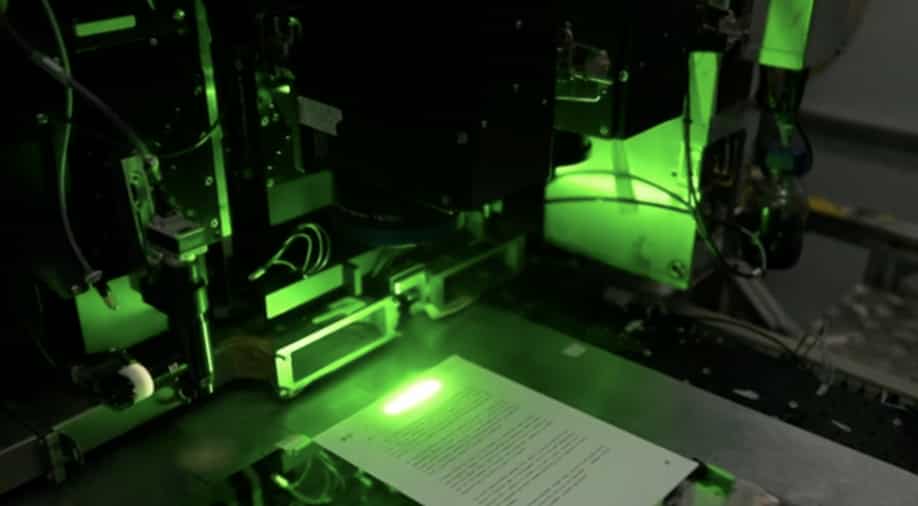
Making photographic film is an extremely sophisticated (‘elaborately transformed manufacturing’) process – with tolerances similar to those of the semi-conductor industry.

Podcaster Destin Sandlin has just released the second in the series, which looks at the coating of photo-sensitive emulsions onto the film base.

Sandlin is taken through the coating of Ektar 100 color negative film.

Here’s the link to the second podcast: https://www.youtube.com/watch?v=cAAJUHwh9F4

Categories
Technology

What’s the deal with: Meike lenses?

August 3, 2022

Hong Kong optics manufacturer, Meike, rose to prominence somewhat suspiciously in 2018 with affordable M43 cine prime lenses, and has gone on to rapidly expand its stills lens range. It’s suspicious as Meike’s break out products were ‘nearly identical’ to a line of cine M43 prime lenses by a fading competitor, Veydra, which shut up shop just a year later.

There is lots of talk about Chinese manufacturers nefariously reverse-engineering innovative products by established brands to create cheap knock-offs. An established brand will sub-contract a Chinese factory, and someone there will steal the IP and re-create the product with inferior materials. While it sounds plausible, and accusations have been thrown around, this isn’t the case with Meike. Rather, it’s speculated the Chinese optics manufacturer cut a deal with a Veydra co-founder as the company headed towards turmoil.

Meike has now built a reputation in cinematography, but remains a ‘cheap and cheerful’ option for stills photographers.

It’s unusual that Meike has been slow to develop quality stills optics, while winning over some in the cine lens market. But what it may lack in stills photography quality, it makes up for in quantity. Meike offers a range of lenses for Canon EF and Z, Nikon Z and F, Sony E, Fujifilm X and M43 cameras.

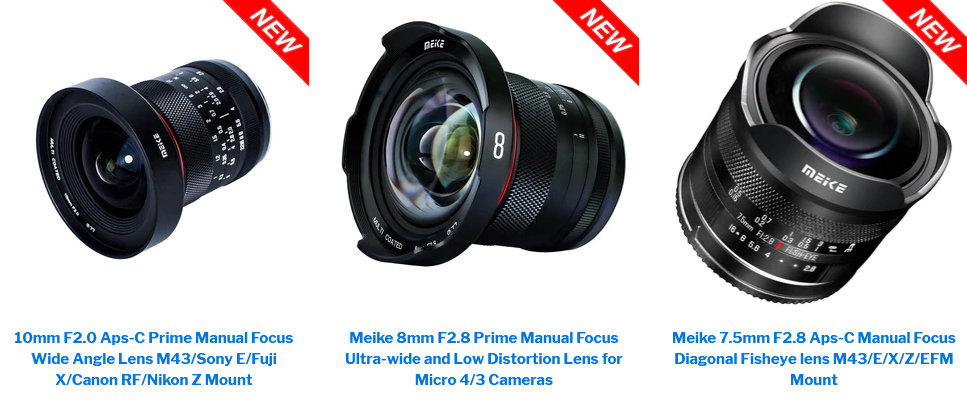
For some perspective on its rapid expansion in stills, Meike recently announced an ASP-C 10mm f2 manual focus prime lens for five mounts, including the Canon RF. Canon has only just unveiled its first line of crop-sensor RF cameras.

So the team at Meike are either preternaturally intuitive, being tipped off, easily able to adapt a design to a different mount, or all of the above.

According to Meike

Meike’s roots go back to 1997 with a plastics molding factory. Its clients mainly included ‘global well-known companies in Japan’s photographic equipment industries’, the company bio states.

At this stage the Meike brand wasn’t established. But the mold factory operators thought they could try their hand at designing products similar to what they were helping the Japanese build.

So in 2005 – or 2007, depending on where you get your information – Meike was established ‘to facilitate operating our own brand, strategically steering its main business to R&D, manufacture and sales on photographic equipment, including lens for camera’. Perhaps this may have included a few reserve-engineering experiments?

We don’t want to mimic that slightly pompous, worldly friend who corrects everyone’s pronunciation of ‘pho’ or ‘paella’ when going out for lunch, but let’s quickly clear this up. Having pronounced it ‘Meek’ for a while, research suggests it’s apparently ‘May-kuh’.

Despite launching in the mid-noughties, Meike was slow to gain much interest. Vigorous Googlin’ ​​shows few mentions of Meike until 2017. For about a decade it was a truly obscure brand, likely sold direct via eBay to bargain-hunting cheapskates who care not for red dots and brand names.

YouTube camera hardware reviewer, Christopher Frost, a softly-spoken Brit who has reviewed almost every budget contemporary lens on the planet, uploaded a review of a Meike 35mm f1.7 lens in 2017. It looks like a clunky bit of gear – completely manual , including focus and aperture control. But it produced decent results for the low price of £80 (AUD$140).

So it was essentially competing with low-cost second-hand analog lenses, which photographers could mount to a digital camera with an adapter.

Meike’s big break

Veydra was a start-up cine lens company established in 2014 through a Kickstarting crowdfunding campaign. It proved unexpectedly popular, with the two founders, Ryan Avery and Jim Zhang, raising US$272K to build prime cine lenses for M43 cameras.

According to a blog post by Matthew Duclos, who worked with the Veydra team, the fledgling company was a ‘small batch’ manufacturer, driving overheads sky high.

In March 2017, the Veydra warehouse was robbed after receiving a major shipment, crippling the company and halting production. Behind the scenes Zhang and Avery were apparently having disputes regarding the company’s direction, which according to Duclos led to nasty lawsuits.

Here’s an excerpt from his post:

‘Perhaps not so coincidentally, when Veydra stopped producing inventory after the lawsuit in 2017, a curious new lens began popping up around the web in 2018: Meike. These lenses looked nearly identical to Veydra Mini Primes but at a fraction of the price tag. Speculation began flooding the Veydra Facebook group and forums. How was this possible? Could someone have copied the Mini Primes that carefully? Was Veydra selling off old stock under a different name? Did someone sell the designs to another company to skirt around litigation?

The truth is locked up in lawsuits but it’s not hard to read between the lines. I suspect that Jim contracted the optical and mechanical designs to an outside factory during the original Veydra production. The exact relationship and manufacturing path is still unclear but what is clear is that Meike has a much larger, more sophisticated manufacturing operation than that of the original factory that Veydra lenses were produced in.

According to Duclos, Meike’s optical and mechanical design was ‘strikingly similar’, but better ‘in almost all areas’. Cheaper, too, thanks to Meike’s large-scale in-house manufacturing capabilities.

Substance to the speculation was provided when an online video showed Avery, ‘the original co-founder of Veydra’ promoting Meike lenses.

‘In 2019 Veydra went out of business. But out of that came the birth of Meike cine lenses,’ Avery says in the video. ‘The Meike cinema primes have improved coatings and performance and optical qualities, as well as mechanical quality. This enabled a very significant increase in production quantity, which also lowered the cost.’

Online pundits speculated this video was somehow linked to the outcome of lawsuits.

Meike has since gone on to design stills lenses with features like autofocus and aperture control, but unlike in the cine industry it’s yet to establish a reputation for designing high-quality products, affordable though its lenses are.

The first autofocus lens, released in 2018, was criticized by Frost – who is normally quite kind and forgiving – for having sluggish, inaccurate and extremely noisy AF. The AF noise sounds like the zoom lens on an old analog point-and-shoot. Almost nostalgic enough for hipsters to embrace!

The AF noise issue has been somewhat resolved with the inclusion of a stepping motor in a recent upgrade. But apparently the AF accuracy is still ordinary.

While Meike’s new product releases are often covered in the global photo media, the local presence in the Australian specialist retail sector is virtually non-existent. Whereas the likes of Laowa, Yongnuo, and Viltrox are available at some of the bigger retailers.

This miniseries of article by Inside Imaging has explored the story behind the lens manufacturers listed above. Each brand has gained popularity in the global market for a specific line of products, and then what follows is typically rapid expansion. Yongnuo with flash triggers; Viltrox with lens mount adapters; Laowa with quirky niche lens products; and Meike with M43 cine lenses.

But what’s remarkable is these brands all emerged in the last few years. And for all of these more ‘established’ Chinese players, there are many others still peddling cheap wares via eBay, Amazon, or Alibaba. Waiting for that big break.