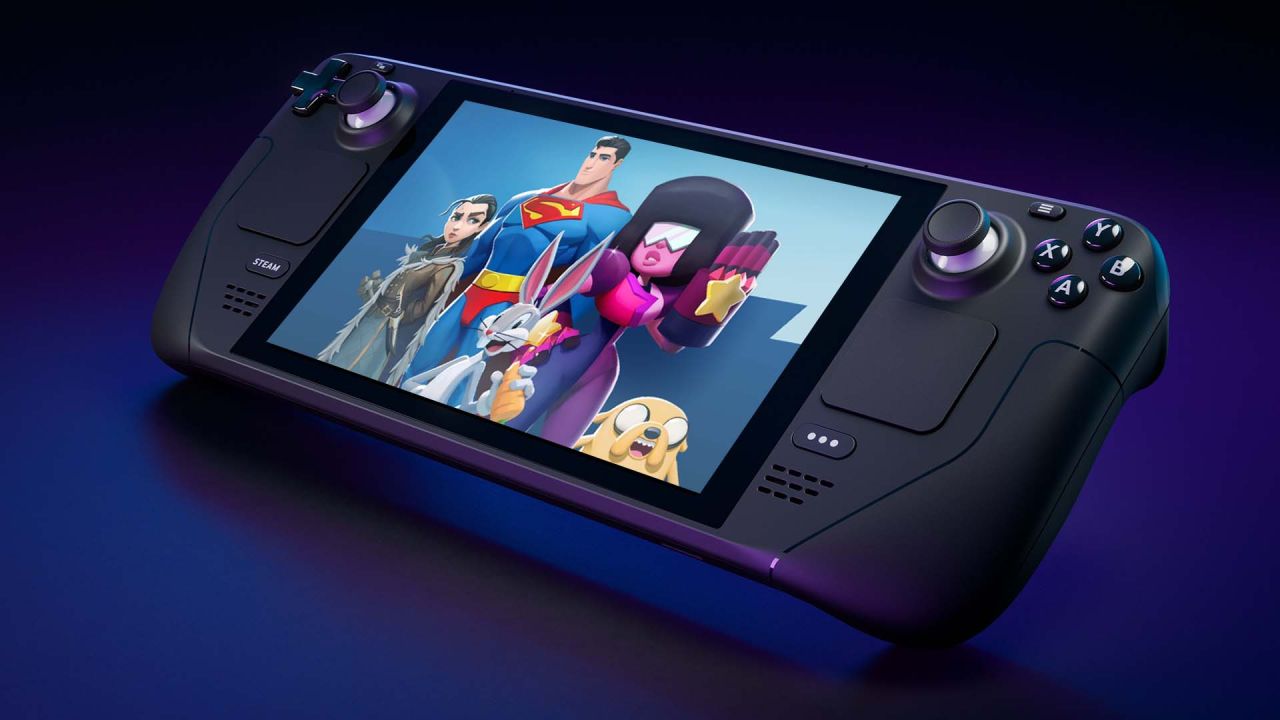
Valve is expanding Steam Deck shipments to some regions that could take the handheld PC-meets-console to new heights. The company just announced that reservations are now open in Japan, South Korea, Hong Kong, and Taiwan through Komodo, a site that also sells Valve’s Index VR headset for PC among other games and gaming merchandise. If you visit steamdeck.com in one of those regions, you should be rerouted to Komodo’s site soon, or you can click here and select your language.
Valve spokesperson Kaci Aitchison Boyle tells TheVerge that the first batch of new reservations will be fulfilled later this year; a press release adds that shipments will begin in Japan, “with additional units planned to ship to customers in Korea, Hong Kong, and Taiwan in the weeks immediately following.”
Pour one out for our friends in Australia, though, who are still waiting on news of a launch after Valve name-dropped the country during its November 2021 developer summit.
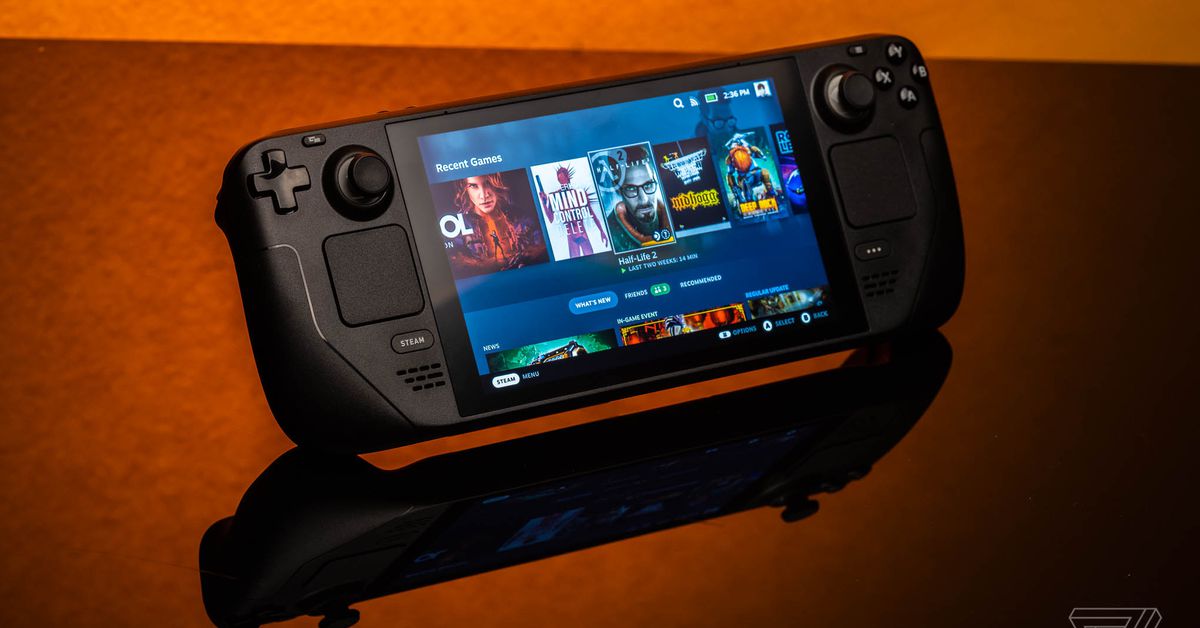
In Japan, the Steam Deck will be priced starting at 59,800 yen (roughly $447), ranging up to 99,800 yen (roughly $746) for the premium 512GB model. In the US, those models cost $400 and $650, respectively. Like before, you only have to pay a tiny refundable amount now to secure your reservation: 1,000 yen (around $7.50).
Screenshot by Sean Hollister / The Verge
Here are the starting prices elsewhere, according to Valve:
NT$13,380 in Taiwan
HK$3,288 in Hong Kong
KRW 589,000 in Korea
Each translates to around $450 USD.
Valve credits its recent upswing in production for making this big expansion possible, and it notes that serving these additional countries will not push back delivery estimates for those who have already reserved a Deck.
If you’re in Kyoto this weekend for the annual BitSummit gaming conference, Valve will apparently have some sort of presence there with Steam Deck as well as at the Tokyo Game Show in September 2022.
Handheld gaming is popular around the globe but particularly so in places like Japan in which huge swaths of the population commute in and out of major cities every day by rail. While access to Steam is nothing new in these regions, having the option to purchase a moderately powerful, well-built, and relatively compact handheld (while huge, compared to the Nintendo Switch) where they can play those PC games is a big deal.
The past couple of months have delivered a lot of good news regarding Deck availability, most prominently that you can reserve one right now and probably get it by the end of the year. Valve announced in late June that it would begin doubling shipments of the Steam Deck, which in turn could lead to many people getting their Deck hardware earlier than anticipated. And more recently, in late July, Valve shared that it was ramping up production to better meet demand after it had cleared some supply chain issues.
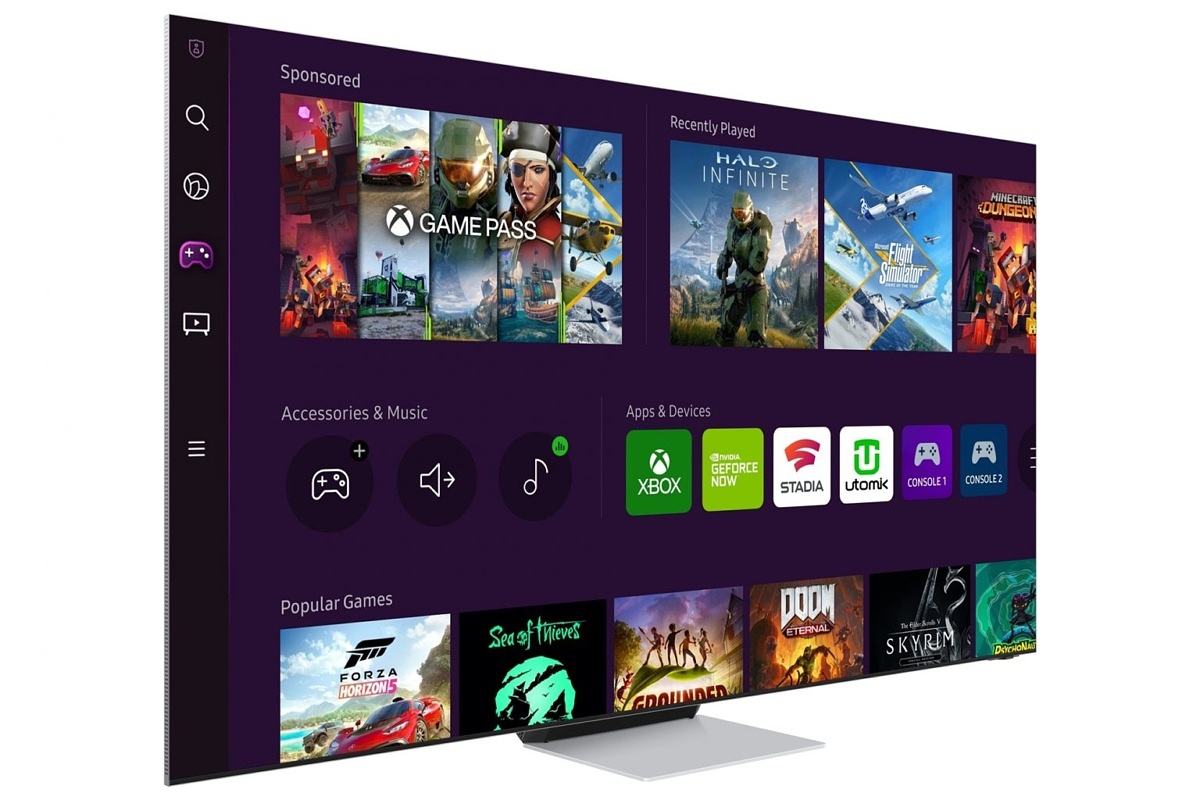
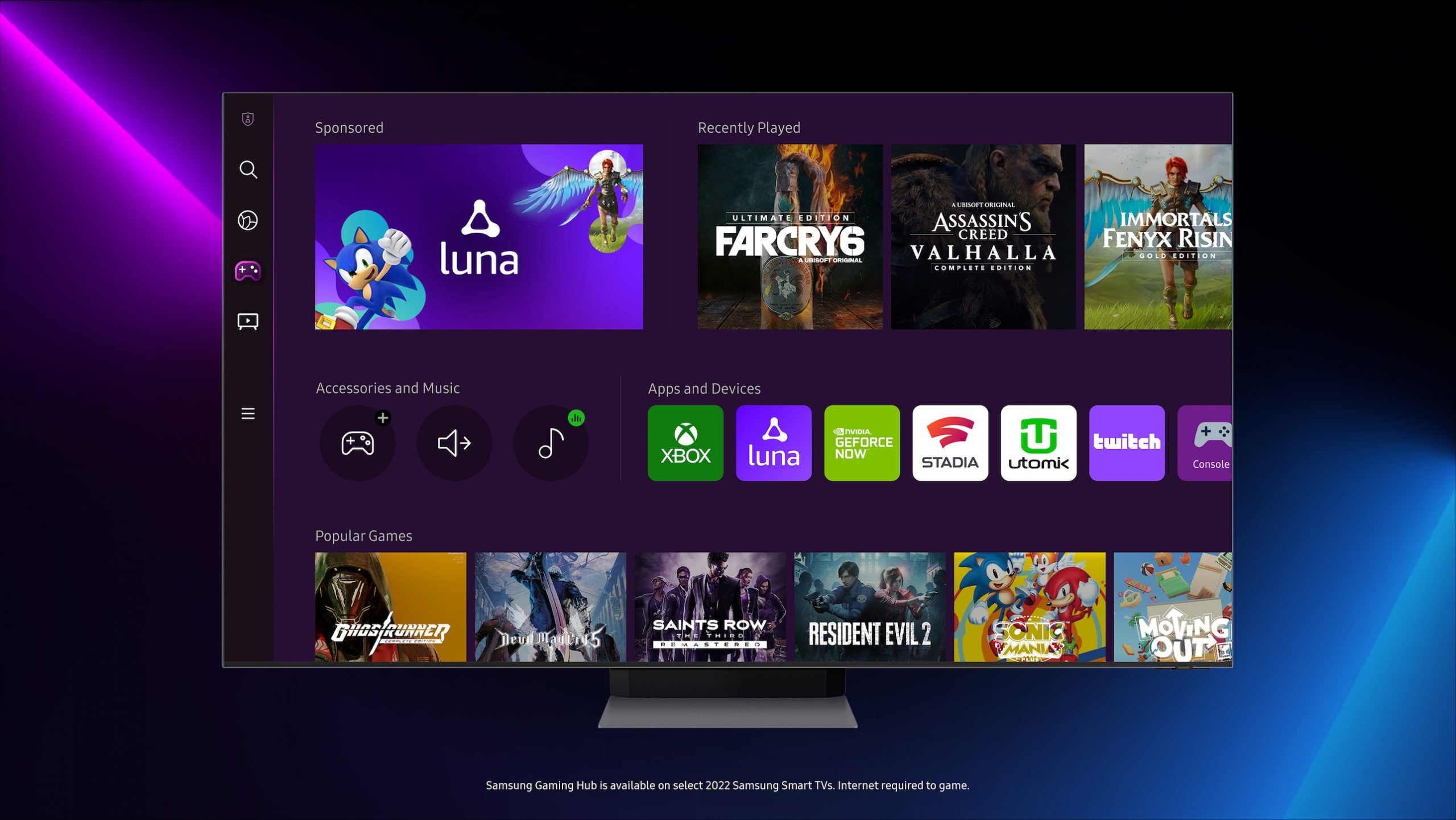
While traditional gaming via consoles or PC will continue to dominate, game streaming services are having a moment, offering an alternative way to play video games on the go or at home. Samsung Gaming Hub was released towards the end of June and allows 2022 Samsung Smart TV and Smart Monitor series owners instant access to an extensive library of streaming games from leading game streaming services. Today, Samsung announced it is adding Amazon Luna to its Gaming Hub platform, ushering in even more games into the service.
Amazon Luna was only recently made available to those in the US. Several different tiers are available, with the lowest costing $2.99 a month and the highest costing $17.99 a month. Some examples of tiers include a retro tier, a family tier, and even a tier with Ubisoft. There is also a free tier included with an Amazon Prime membership. Each offers a different assortment of games that change each month.
Previously, Samsung Gaming Hub partners included heavy hitters like Xbox, Nvidia, Google Stadia, Utomik, and others. With Amazon Luna becoming a partner, consumers will have more options, gaining access to over 250 or so additional games. While the number is impressive, Samsung Gaming Hub now has a total offering of over 1000 games. This is quite impressive.
Thanks to optimizations from Samsung’s Tizen software, Samsung Gaming Hub provides crisp graphics and solid performance. While you can play without a proper controller using your smartphone, Gaming Hub offers support for external hardware, which means you can also pair up your existing Amazon Luna controller to the service for the best experience. Gaming Hub users can seamlessly connect their Amazon Luna controller or other supported controllers without issues. Like magic, controllers automatically connect to each supported service without needing individual pairing. Gaming Hub will also support streaming media with services like Spotify and YouTube.
image: The new approach determines a user’s real-time reaction to an image or scene based on their eye movement, particularly saccades, the super-quick movements of the eye that jerk between points before fixing on an image or object. The researchers will demonstrate their new work titled, “Image Features Influence Reaction Time: A Learned Probabilistic Perceptual Model for Saccade Latency”, at SIGGRAPH 2022 held Aug. 8-11 in Vancouver, BC, Canada.
view more
Credit: ACM SIGGRAPH
What motivates or drives the human eye to fixate on a target and how, then, is that visual image perceived? What is the lag time between our visual acuity and our reaction to the observation? In the burgeoning field of immersive virtual reality (VR) and augmented reality (AR), connecting those dots, in real time, between eye movement, visual targets, and decision-making is the driving force behind a new computational model developed by a team of computer scientists at New York University, Princeton University, and NVIDIA.
The new approach determines a user’s real-time reaction to an image or scene based on their eye movement, particularly saccades, the super-quick movements of the eye that jerk between points before fixing on an image or object. Saccades allow for frequent shifts of attention to better understand one’s surroundings and to localize objects of interest. Understanding the mechanism and behavior of saccades is vital in understanding human performance in visual environments, representing an exciting area of research in computer graphics.
The researchers will demonstrate their new work titled, “Image Features Influence Reaction Time: A Learned Probabilistic Perceptual Model for Saccade Latency”, at SIGGRAPH 2022 held Aug. 8-11 in Vancouver, BC, Canada. The annual conference, which will be in-person and virtual this year, spotlights the world’s leading professionals, academics, and creative minds at the forefront of computer graphics and interactive techniques.
“There has recently been extensive research to measure the visual qualities perceived by humans, especially for VR/AR displays,” says the paper’s senior author Qi Sun, PhD, assistant professor of computer science and engineering at New York University Tandon School of Engineering.
“But we have yet to explore how the displayed content can influence our behaviors, even noticeably, and how we could possibly use those displays to push the boundaries of our performance that are otherwise not possible.”
Inspired by how the human brain transmits data and makes decisions, the researchers implement a neurologically-inspired probabilistic model that mimics the accumulation of “cognitive confidence” that leads to a human decision and action. They conducted a psychophysical experiment with parameterized stimuli to observe and measure the correlation between image characteristics, and the time it takes to process them in order to trigger a saccade, and whether/how the correlation differs from that of visual acuity.
They validate the model, using data from more than 10,000 trials of user experiments using an eye-tracked VR display, to understand and formulate the correlation between the visual content and the “speed” of decision-making based on reaction to the image. The results show that the new model prediction accurately represents real-world human behavior.
The proposed model may serve as a metric for predicting and altering eye-image response time of users in interactive computer graphics applications, and may also help to improve design of VR experiences and player performances in esports. In other sectors such as healthcare and auto, the new model could help estimate a physician’s or a driver’s ability to rapidly respond and react to emergencies. In esports, it can be applied to measure the competition fairness between players or to better understand how to maximize one’s performance where reaction times come down to milliseconds.
In future work, the team plans to explore the potential of cross-modal effects such as visual-audio cues that jointly affect our cognition in scenarios such as driving. They are also interested in expanding the work to better understand and represent the accuracy of human actions influenced by visual content.
The paper’s authors, Budmonde Duinkharjav (NYU); Praneeth Chakravarthula (Princeton); Rachel Brown (NVIDIA); Anjul Patney (NVIDIA); and Qi Sun (NYU), are set to demonstrate their new method Aug. 11 at SIGGRAPH as part of the program, Roundtable Session: Perception. The paper can be found here.
About ACM SIGGRAPH ACM SIGGRAPH is an international community of researchers, artists, developers, filmmakers, scientists and business professionals with a shared interest in computer graphics and interactive techniques. A special interest group of the Association for Computing Machinery (ACM), the world’s first and largest computing society, our mission is to nurture, champion and connect like-minded researchers and practitioners to catalyze innovation in computer graphics and interactive techniques.
Disclaimer: AAAS and EurekAlert! are not responsible for the accuracy of news releases posted to EurekAlert! by contributing institutions or for the use of any information through the EurekAlert system.
It is very exciting to get caught up in the narrative around the metaverse, Livewire co-founder Indy Khabra told this week’s Mumbrellacast, yet the reality is 17 million Australians are already gaming regularly, and his and co-founder Brad Manuel’s company is working with brands on “practical outcomes”.
“I think metaverse, and the word metaverse is so overused at the moment,” he said. “When we speak to brands, it’s very much around practical outcomes and what we can actually achieve by connecting them to the gaming community and the gaming ecosystem.”
Manuel and Khabra
“When you think of the suite of solutions that we provide brands and our clients, it actually starts right to the point of research and understanding what the consumer crossover is for that brand, and really then leaning into an objective view of what the KPIs and outcomes for a brand is.
ADVERTISEMENT
“Predominantly, that’s starting to look at things like customer lifetime value and brand affinity, brand loyalty, but also that could be into more tactical areas and gaming as a gateway to that new set of audience you can actually achieve, whether it’s building a long term strategy to be gaining user acquisition or market share or being defensive. You can actually create that within this new space.”
Despite the hype surrounding the metaverse over the last 12 months, research from Ipsos in May found that only 44% of Australians are familiar with it, and Khabra said that while it is easy to get caught up in the appeal, it is still “in the early days of what the end vision is”.
“I think keeping it practical in outcomes is going to be a better use case for campaigns, and most importantly, the outcomes of campaigns that brands are trying to activate against.”
He said it is a two-way narrative, “not only for brands and marketers but also for consumers because the user experiences have to be there also”.
“You don’t necessarily want to build something that only ten people are going to show up in, and then all of a sudden it’s staying stagnant and there’s a heap of investment that’s been put into it. So there is definitely a balance that needs to be struck.”
While staying modest about the vast amount of opportunities in the gaming space, which Livewire has seen partner with gaming giant Activision Blizzard, and most recently Uber Eats, it has also launched offices in London, Singapore, and Mumbai, already in its short existence.
Livewire recently signed a deal with Uber Eats
Manuel spoke about what can be expected in the next five to ten years for Livewire, and marketing in gaming more generally, which already has a consumer base of 3 billion globally.
“I think we’ll see more and more brands really authentically woven into games, but not just from an advertising point of view. We’ve seen some bad examples already, probably some how not to do it, but their idea and the concept is right.”
“A game like Apex Legends or a Cyberpunk or any game that’s based in a world where advertising currently exists or previously existed, the game creators actually make fake ads, fake worlds, fake shops, fake stores, and fake products, because a modern day world doesn’t actually feel accurate without products.
“So I think we’ll see more global and regional partnerships of how this will integrate into games, and also how publishers will upgrade their technology to be able to regionally cut and segment deals the same way they would for like sports LED screens where they overlay it with different graphics and pieces.”
Catch the full conversation with Manuel and Khabra on this week’s Mumbrellacast.
Samsung’s best smart TVs are shaping up as the one-stop shop for all of your cloud gaming needs now Amazon Luna has joined the Gaming Hub.
The feature launched at the end of June headed by the first Xbox app for TV sets. It also gathers Google Stadia and Nvidia GeForce Now, along with adjacent services like Twitch, YouTube, and Spotify.
Now Amazon Luna has completed the set, Samsung says there are more than 1,000 games available via the Gaming Hub without the need to download and store them on your set. You can also use a single controller for all of them.
Luna itself brings 250 games with more being added for Prime members every month. This month’s line up includes Control Ultimate Edition, Myst, Garfield Kart and Steel Assault. However, it’s possible to add more titles with Luna Plus and additional subscriptions to channels. The retro channel, for example, includes games like Street Fighter II, Pong, and The Castlevania Collection.
George Tsipolitis, director of Amazon Luna says: “By teaming up with Samsung, we’re bringing our growing collection of games, unlimited gameplay channels including the Retro Channel and Jackbox Channel, and the Prime Gaming Channel that offers Amazon Prime members a rotating selection of games to play for free. It’s a winning combination that provides even more value and options to 2022 Samsung TV owners and gamers.”
You will need a pretty high-end TV in order to jump on board though. The 2022 Neo QLED 8K, Neo QLED 4K, QLEDs and 2022 Smart Monitor Series all cost a pretty penny. It’s all possible thanks to some tech leaps within Samsung’s 2022 display line up, which introduces “faster decoding and optimized buffer control technology which reduces the input lag by more than an average of 30 percent compared to the previous models.”
In recent days, the Meet merger widely rolled out to Google Duo for Android and iOS. Google is now readying to start the next phase where the Meet icon and name replaces Duo’s following a mobile app update.
The Google Duo icon (from 2016) with a white video camera inside the blue, teardrop-shaped container is going away. It will be replaced by a boxy, four-colored camera, while the name goes from “Duo” to “Meet.”
A notification will explain the change further, with users getting access to “both video calling and meeting capabilities.” The latter requires you to sign-in with a Google Account (not just a phone number).
Video calling capabilities are still available in the updated Duo app on mobile devices at no cost. Conversation history, contacts, and messages remain.
These Duo-to-Meet icon updates on Android and iOS start today and will be completed by September, with the Google Play and App Store listings also changing. It comes as the original Google Meet app has been updated to “Meet (original)” with a green icon in recent days. This legacy client will eventually go away, though functionality will remain in the Gmail tab.
Throughout this process users can continue using Meet (original) to join and schedule meetings, but we recommend using the updated Google Meet app to get combined video meeting and calling features all in one place.
At the same time, Google Meet branding is coming to duo.google.com, but there are no changes to calling capabilities or functionality yet. In the next few months, the web app will redirect to meet.google.com/calling.
More on Google Meet:
FTC: We use income earning auto affiliate links. More.
As you likely know, the Steam Deck is very popular. Valve’s portable PC has quickly developed a large community around it and it has become the preferred way for many to play their favorite Steam games on-the-go. But which games exactly are all these new Steam Deck owners playing? You’d think they would be smaller, fast-paced games which are easy to pause, as is the case with most handheld and mobile games. Well, Valve has shared some data and it seems a lot of you really like playing multiverse and Elden Ring while on the toilet.
Not what you would have guessed, huh?
Earlier today on Twitter, Valve’s official Steam Deck Twitter account released a list of the ten most played games on the Steam Deck since the past week. Valve clarified in a follow-up tweet that the list is sorted by daily average user counts.
multiverse
vampire survivors
stray
Elden Ring
No Man’s Sky
Hades
stardew valley
Grand Theft Auto V
Opening Desk Job
monster hunter rise
As for the list, yes, the recently released free-to-play Smash Bros.-like fighting game, multiverse, is at the top. A bit odd to see a fighting game at the top of the list, but being free likely helped. It’s also possible people have figured out interesting ways to play multiverse and other games on this list thanks to the Steam Deck’s funky but versatile controls. Let’s just hope WB doesn’t kill this game alongside everything else it’s canceled recently.
What’s also funny about this is that some folks admit that playing multiverse on the Deck makes their hands cramped, but the allure of having it on the go is simply too great.
no shock to see stray at number three as the game is popular already, not very expensive, and seems like the perfect game to play on the Steam Deck. Maybe playing it on the porch at night with a soft rain in the background. Lovely. Also, not a surprise to see GTA V on the list because at this point it seems like half the globe plays that game on some platform. So why not the Steam Deck?
Also, of course, Elden Ring — one of the biggest and most popular games of 2022 — is high up on the list. Personally, I’m not sure I’d be able to enjoy it on Steam Deck, but I also don’t really enjoy any FromSoftware games on any platform.
I hope Valve releases more data on Steam Deck games moving forward, perhaps even a similar list of the 10 most played games on the portable PC for the whole year of 2022. Oh and also, maybe ship my Steam Deck soon? Thanks, Valve!
I saw this quote on self doubt that organizational psychologist Adam Grant posted recently:
“Questioning your abilities doesn’t mean you have imposter syndrome. It’s a normal response to a challenging or difficult task. The absence of doubt breeds arrogance. Feeling unsure maintains humility”
Now, he can be a polarizing guy but he does have a point here. It is perfectly normal for us to question our abilities.
Running a business is challenging every day. If it was easy everyone would be doing it, right?
It takes courage to show up day in and day out, most of the time without a clue what you are doing (What? You thought you were the only one who felt that way? You are not!)
You second guess everything, start comparing yourself to others. That negative internal dialogue takes over. The wheels spin, panic sets in and this is often when you make some not-so-great decisions that feed this cycle of overwhelm.
Those feelings of uncertainty never vanish completely, you just get better at managing it.
Focus on what is true – is what you feel your thoughts or the truth? When my clients are freaking out and telling me “Business is terrible this quarter”, we stop and take a look at the reality show. We run their numbers and see things aren’t as bad as they feel, they are doing better than the last quarter or better than this time last year. Look for the facts.
Create a Feedback file – and keep it where you can see it. This is where you store all those emails from satisfied customers or testimonials to remind you of what a great service you provide.
Lean on your cheer squad – surround yourself with good people who want the best for you and understands what it is like to be in the trenches building your business. Talking your doubts through with someone who gets it can make all the difference.
Seek predictability – stick to rituals and routines that calm you and lift you up.
success tracking – keep your eye on the key metrics that matter in your business and aim to improve on where you were yesterday, last month, last year. And celebrate your wins! This will increase your feelings of self worth, even if they are the small things – lots of small wins are what results in moving your business forward.
What do you do when you are questioning yourself?
For more insights into dealing with uncertainty, listen to Episode 68 of Your Business Boost podcast – Smashing Self Doubt
Nothing is a brand that has been around for less than two years, but has made a lot of noise in the tech world the past few months.
The company’s founder is Carl Pei, who previously headed up OnePlus – a brand famous for their tagline ‘Never Settle’. Pei left OnePlus in October 2020 to focus on a new hardware business, called Nothing.
Based in London, Nothing has quite the backing, including an iPod inventor, Twitch co-founder, Reddit CEO and a big YouTuber and the launch of its first phone has certainly caused a lot of hype.
Watch the latest News on Channel 7 or stream for free on 7plus >>
How do I get it and what will it cost?
Nothing Phone 1 is available in Australia now through the official website.
In white and black colourways, starting price is $749 for the 128GB model.
Who is it good for?
Nothing aims to provide “tech that just works,” which was the early philosophy of a certain fruity tech company.
The company has already released its own wireless earbuds called Ear 1 with a very striking see-through design language. Its smartphone follows that same direction with a transparent back, and a familiar design – more on that soon.
Phone 1 is certainly a tech enthusiast’s product. You’d be hard-pressed to find anyone who doesn’t read the latest tech news to know about this smartphone. Therefore, if you love trying out the latest gadgets and want something a little different – Phone 1 is right up your alley.
The entire phone is well-rounded and offers a sprinkling of familiarity and innovation with its Glyph lighting back. Overall, it’s a practical choice, rather than something that has top-tier specs – and that could be part of the appeal for Nothing Phone 1.
How does it work?
There was a common conversation happening between friends and work colleagues while using Phone 1. They’d never heard of the Nothing brand, let alone the Phone 1 – yet they were intrigued by this “new iPhone”.
Yes, the design is extremely familiar to an iPhone 12 or 13 and that isn’t necessarily a bad thing considering Apple make some of the best products around.
However, Nothing’s design also has some different elements that tend to improve on what Apple offers. The phone is more comfortable in the hand due to slightly smoothed edges, there is no big cutout at the top of the display, and the back is unlike anything that we’ve seen from a smartphone before, with what Nothing calls the Glyph interface.
The back is covered in Gorilla Glass 5, however it is a fingerprint magnet – especially on the black version. White may be the better option if this is something that would trouble you.
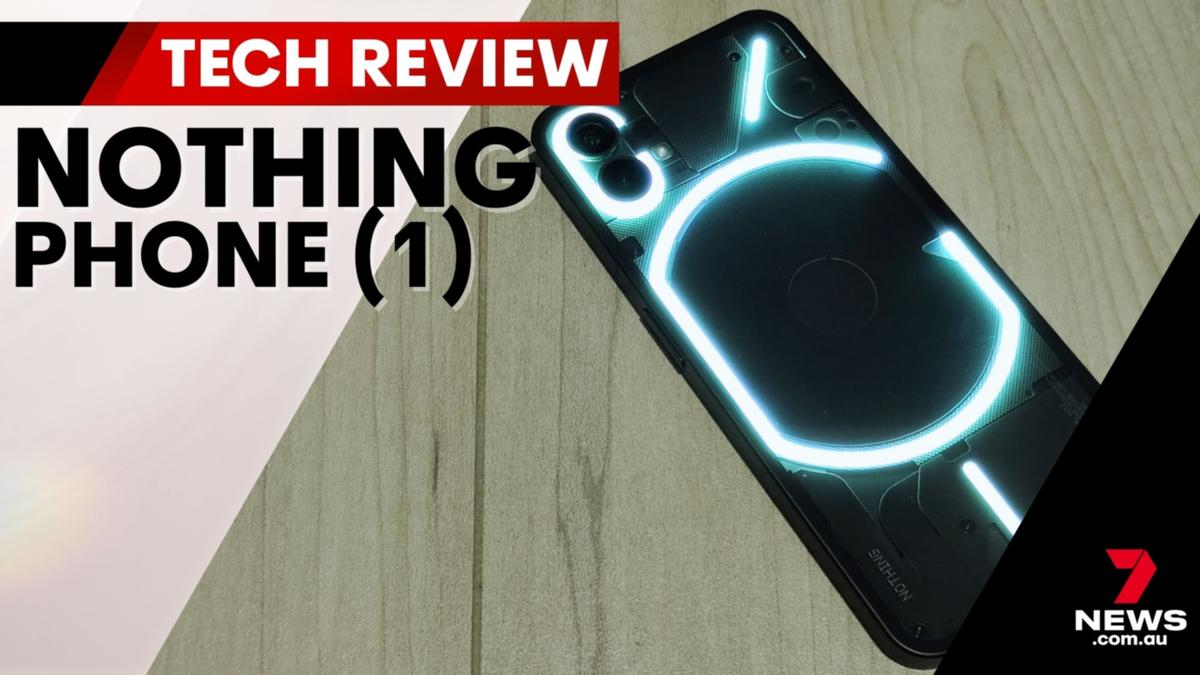
The conversation starter here is that Glyph lighting system, which is a series of 900 white LEDs that cover the back of the phone. These run around two camera lenses, the wireless charging coil and towards the USB-C charging port – which creatively doubles as a battery indicator.
There are multiple glyph patterns that can be customized according to different contacts – for phone calls – but there are currently no options to personalize these for individual app notifications. The LEDs can also be activated to provide an almost ring lighting effect for photos and video.
Nothing Phone 1 has a 6.55-inch OLED display with 120Hz high refresh rate and compatibility with HDR10+. A single hole sits to the top-left of the display to house the selfie camera.
The screen is decent and can be viewed in direct sunlight, which can be problematic with smartphones in this price bracket. There are two color profiles that can be selected to suit your tastes, and these can be further tweaked with a color temperature slider in the settings.
A dynamic high refresh and touch sampling rate makes Phone 1 look and feel very responsive, and the software – while pretty basic – keeps things close to stock Android. While on the software side, Nothing promises three years of Android update and four years of security updates, which is more than most manufacturers offer in this price segment.
There’s an under-display fingerprint reader and this works very well, which is pleasing for a device that costs under $800. But the less secure face unlock method is a mixed bag and is inconsistent at best.
Haptics on Phone 1 is also something to note. For some reason, when on silent it’s very loud. It has a mechanical whirring sound rather than a simple silent vibration, and this could be a turn-off for most people. I’ve also turned off vibration when typing because it was more an annoyance than a pleasure.
When it comes to performance, Phone 1 uses an older Snapdragon 778G+ chip. While it’s definitely a controversial decision, the chip is reliable. It handles multitasking, casual gaming and multimedia content easily. The real test will be how this chip holds up over time with feature and operating system updates, as well as security patches.
While Nothing has said they wanted to focus on including two great cameras rather than adding lenses that you won’t use, there is a bit of work that the company needs to do here.
The main 50MP sensor (Sony IMX766) offers some sharp, bright and punchy photos but can struggle when there is movement. The 50MP ultrawide (Samsung JN1) tends to be a little soft when pixel peeping. While this is good enough for social media posting, it doesn’t match the likes of Google’s latest Pixel 6a – which comes in at the same price point but offers up much better photos.
This is to be expected from the first phone from a newcomer, and hopefully some work on these cameras can be done with software updates in the future.
Phone 1 has dual stereo speakers, however they aren’t exactly balanced, with the bottom-firing speaker louder than the earpiece speaker. While the clarity is good, they don’t have a lot of bass.
In terms of battery life, while it’s very subjective on how different people use their devices, I have been impressed with how Nothing Phone 1 has been performing since almost two weeks of use. It’s definitely not class-leading, but almost six hours of screen time is acceptable to me. You won’t get through more than a single day, though. Standby time is quite good too, and you won’t lose as much juice as more expensive devices.
There is fast charging (up to 33W), wireless charging and reverse wireless charging all available on Phone 1.
Finally it’s worth noting local network connectivity which can be hit-and-miss between our three major telcos – especially on new devices from unpopular brands. However, Phone 1 works across Telstra, Optus and Vodafone networks with 5G, VoLTE (HD voice calling) and VoWiFi all working as they should.
What we think
There was a lot of hype around Nothing Phone 1, and while it won’t compete with the likes of the iPhone 13, Pixel 6 or Galaxy S22 it tends to balance most things quite well, while keeping the price relatively low.
If you’re someone who wants a powerful and feature-rich smartphone, Phone 1 won’t be for you, and you’re better off looking at Apple, Samsung, Google and OPPO. However, this will also come at a cost to you.
While the camera isn’t the strongest, it can take some good photos with the main lens, and that’s more than good enough for sharing with family and friends across social media. But if you want to start creating framed prints, you’ll start to notice what is lacking.
Nothing Phone 1 is an impressive first release, and it will be exciting to see what comes next for this new brand. But it’s in a hard spot with Google’s tried and tested Pixel 6a being priced the same in Australia, and Samsung’s A73 series only a few extra dollars.
Our reviews always remain independent of the manufacturer and the first time they will see the review is at the same time you’re reading it.
The question of whether Macs are less susceptible to viruses has long been argued.
Now macOS spyware, named CloudMensis after detailed analysis conducted by Eset researchers, has been discovered as a backdoor that lets hackers spy on users of compromised Macs.
It exclusively uses public cloud storage services to communicate back and forth with its operators, enabling them to gather information from victims’ computers by exfiltrating documents, keystrokes and screen captures.
Described as a “powerful spying tool” by the researchers, it’s not clear how the virus is initially distributed and who the targets are, although it doesn’t have any undisclosed (zero-day) vulnerabilities.
It’s created to work through popular cloud platforms DropBox as well as pCloud, Yandex Disk, and Eset’s analysis of the code suggests CloudMensis may have been around for many years.
The quality of the code and lack of obfuscation suggests the creators are not very advanced or familiar with Mac development, the researchers believe, although it is able to bypass Apple’s own security protections.
“Use of vulnerabilities to work around macOS mitigations shows that the malware operators are actively trying to maximize the success of their spying operations,” the researchers said.
Gains admin access to do its dirty work
Once the CloudMensis spyware is executed and administrative privileges are gained, it sets off a two-stage process to release and act on its payload.
It includes authentication tokens to multiple cloud service providers enabling it to interact with cloud storage providers for receiving commands from its operators and for exfiltrating files.
The first-stage malware is set to download and then retrieve the second-stage malware, the spyagent client, as a system-wide daemon.
It’s this larger, second component that contains the instructions to collect information from a compromised Mac.
Since the release of macOS Mojave (10.14) in 2018, Macs have used a Transparency, Consent, and Control (TCC) system to protect access to some sensitive inputs, such as screen captures, cameras, microphones, and keyboard events.
However, the CloudMensis spyware bypasses these in-built security protocols, which avoids prompting the user to provide permissions, potentially leaving them unaware of the presence of malware on their infected device.
Ultimately the malware can list processes running on the infected devices, start a screen capture, list emails and attachments, list files form removable storage, upload password-protected files to cloud storage, and download and run arbitrary files.
“The intention of the attackers here is clearly to exfiltrate documents, screenshots, email attachments, and other sensitive data,” said the Eset researchers.
Apple helping users shut down malware risks
Apple is responding to the threats posed by spyware with a new feature called Lockdown Mode.
To be rolled out across macOS Ventura, iOS 16 and iPadOS 16, the company described it as an extreme option for additional protection where users face serious, targeted threats to their digital security.
Apple says this feature hardens existing device defenses and strictly limits certain functionalities in a bid to severely reduce the attack surface that could potentially be exploited by attackers.
Among the restrictions, most message attachment types other than images are blocked, certain complex web technologies are disabled, incoming invitations and service requests are blocked without a previous call or request, wired connections are blocked while locked and configuration profiles cannot be installed, and the device cannot enroll into mobile device management (MDM).
The company has also taken the extra step of offering rewards to researchers who discover Lockdown Mode bypasses or improvements.
Apple has also pledged to give $14.5 million (US$10 million) and any damages awarded from the lawsuit filed against NSO Group over its spyware to the Dignity and Justice Fund which is working to expose mercenary spyware and protect potential targets.
:format(webp):no_upscale()/cdn.vox-cdn.com/uploads/chorus_asset/file/23921965/japan_steam_deck_prices.jpg)