Categories
Technology

OMG, Someone Actually Conquered Halo 2’s ‘Impossible’ $US20,000 ($27,764) Challenge

They said it was impossible and, for nearly two decades, that seemed to be the case. But last night, a streamer named Jervalin beat Halo 2‘s “LASO deathless” challenge, earning a cool $US20,000 ($27,764) in the process. Talk about finishing the fight.

Let’s rewind. Earlier this summer, the YouTuber Charles “Cr1tikal” White Jr. posted a $US5,000 ($6,941) bounty to beat Halo 2 on the highest difficulty setting, with every bonus challenge modifier turned on, without dying. In the 18 years since Halo 2‘s 2004 release on Xbox, no one had ever published evidence of completing the challenge. White’s challenge stipulates that the whole run is streamed, either on YouTube or Twitch. By July, no one had successfully stepped up to the plate, so last month, White tacked an extra $US15,000 ($20,823) onto the bounty.

Most observers keeping tabs on the challenge had their money on Jervalin — a relatively private streamer who’s picked up a modest following for setting world records on a variety of Halo challenges — being the first person to complete it. Sure enough, late last night, I’ve crossed the finish line. (Here’s the archived stream.)

Neither White nor Jervalin could be reached for comment in time for publication.

Jervalin was remarkably chill for finishing what some people, including White Jr., have called the “hardest challenge in all of gaming,” addressing viewers in the even-handed tone you’d use while moving on to the next addendum in a mostly empty community board meeting.

“All right, chat,” he said. “I think we did it. I think we fucking did it. Imagine that. Two years ago, I said, ‘I think this is impossible.’ Imagine fucking that.”

Whether or not Halo 2‘s “LASO deathless” challenge really is the “hardest… in gaming” is, of course, a subjective measure. But it’s definitely up there. You have to activate all of the game’s skulls, or gameplay modifiers that typically ramp up the difficulty. The Catch skull, for instance, makes enemies toss grenades more frequently. Famine, meanwhile, means enemies drop half the ammo they usually would. Mythic doubles the health of all enemies, while Angry increases the enemy’s fire rate. Blind removes your HUD. Assassins turns enemies invisible. (It’s not technically there skulls, however. For the challenge, Envy is left off, because that one grants you invisibility too, which does not make Halo 2 more difficult, for obvious reasons.) All together, when you turn every skull on and play on Legendary, the game’s highest difficulty setting, you more or less create a set of conditions that ensures you die instantly if you take any damage.

Jervalin had to rely on a few exploits to finish the challenge. To wit: He brought a banshee, a violet-coloured aerial vehicle with a powerful cannon, into the final boss fight against Tartarus on the “Great Journey” level. That final fight takes place on a series of circumferential platforms hovering over an abyss. With pinpoint precision, he used the banshee’s cannon to send waves of foes careening off the edge as they spawn — before they get a chance to really even fight.

I’ve been covering the Halo community for a while now, and can’t recall a time where I’ve seen players pretty unanimous in an opinion, let alone a positive one. Sure, halo-infinite, the latest game in the series, has its issues, which players are not shy about criticizing. But there remains a reverence among even the biggest names for Bungie’s original games since the mid-2000s, and the mind-bogglingly impressive feats players are able to pull off.

The run garnered praising desde Halo streamers like Remy “Mint Blitz” and Luc “HiddenXperia.” Emanuel Lovejoy, the coach for Cloud 9, arguably the best professional Halo team on the planet right now, called Jervalin to “legend.” so did Spacestation Gaming’s UberNick. the Halo pro Kyle Elam noted how yesterday’s scrims — basically, matches between pro players that don’t count toward the official seasonal record — were put on pause so players could collectively watch Jervalin get it done. “Gonna need Jervalin to make a Twitter so we can actually @ this legend [clapping hands emoji],” Halo esports analyst and caster Alexander “Shyway” Hope said. It has been a genuine delight to witness such universal acclaim from all corners of the community.

But the most heartwarming moment — the sort of moment that proves Este, not the toxicity that inhales so much oxygen out of the room, is what video games are all about — happened in the final seconds of the stream: Jervalin’s family runs into the stream, embracing him in an almost suffocatingly tight bear hug. $20,000 ($27,764) is nice. That’s nicer.

Categories
Technology

Technology could benefit lidar applications from autonomous driving to virtual reality — ScienceDaily

Researchers have developed a new chip-based beam steering technology that provides a promising route to small, cost-effective and high-performance lidar (or light detection and ranging) systems. Lidar, which uses laser pulses to acquire 3D information about a scene or object, is used in a wide range of applications such as autonomous driving, free-space optical communications, 3D holography, biomedical sensing and virtual reality.

“Optical beam steering is a key technology for lidar systems, but conventional mechanical-based beam steering systems are bulky, expensive, sensitive to vibration and limited in speed,” said research team leader Hao Hu from the Technical University of Denmark. “Although devices known as chip-based optical phased arrays (OPAs) can quickly and precisely steer light in a non-mechanical way, so far, these devices have had poor beam quality and a field of view typically below 100 degrees.”

In Optics, Optica Publishing Group’s journal for high-impact research, Hu and co-author Yong Liu describe their new chip-based OPA that solves many of the problems that have plagued OPAs. They show that the device can eliminate a key optical artifact known as aliasing, achieving beam steering over a large field of view while maintaining high beam quality, a combination that could greatly improve lidar systems.

“We believe our results are groundbreaking in the field of optical beam steering,” said Hu. “This development lays the groundwork for OPA-based lidar that is low cost and compact, which would allow lidar to be widely used for a variety of applications such as high-level advanced driver-assistance systems that can assist in driving and parking and increase safety.”

A new OPA design

OPAs perform beam steering by electronically controlling light’s phase profile to form specific light patterns. Most OPAs use an array of waveguides to emit many beams of light and then interference is applied in far field (away from the emitter) to form the pattern. However, the fact that these waveguide emitters are typically spaced far apart from each other and generate multiple beams in the far field creates an optical artifact known as aliasing. To avoid the aliasing error and achieve a 180° field of view, the emitters need to be close together, but this causes strong crosstalk between adjacent emitters and degrades the beam quality. Thus, until now, there has been a trade-off between OPA field of view and beam quality.

To overcome this trade-off, the researchers designed a new type of OPA that replaces the multiple emitters of traditional OPAs with a slab grating to create a single emitter. This setup eliminates the aliasing error because the adjacent channels in the slab grating can be very close to each other. The coupling between the adjacent channels is not detrimental in the slab grating because it enables the interference and beam formation in the near field (close to the single emitter). The light can then be emitted to the far field with the desired angle. The researchers also applied additional optical techniques to lower the background noise and reduce other optical artifacts such as side lobes.

High quality and wide field of view

To test their new device, the researchers built a special imaging system to measure the average far-field optical power along the horizontal direction over a 180° field of view. They demonstrated aliasing-free beam steering in this direction, including steering beyond ±70°, although some beam degradation was seen.

They then characterized beam steering in the vertical direction by tuning the wavelength from 1480 nm to 1580 nm, achieving a 13.5° tuning range. Finally, they showed the versatility of the OPA by using it to form 2D images of the letters “D,” “T” and “U” centered at the angles of -60°, 0° and 60° by tuning both the wavelength and the phase shifters. The experiments were performed with a beam width of 2.1°, which the researchers are now working to decrease to achieve beam steering with a higher resolution and a longer range.

“Our new chip-based OPA shows an unprecedented performance and overcomes the long-standing issues of OPAs by simultaneously achieving aliasing-free 2D beam over the entire 180° field of view and high beam quality with a low side lobe level,” said Huh.

This work is funded by VILLUM FONDEN and Innovationsfonden Denmark.

StorySource:

Materials provided by Optics. Note: Content may be edited for style and length.

.

Categories
Technology

CISA urges defenders to update after VMware patches vulnerabilities in multiple products

The Cybersecurity and Infrastructure Security Agency (CISA) warned of several vulnerabilities recently identified and patched by VMware affecting a variety of the company’s products.

VMware released security updates to address multiple vulnerabilities in VMware’s Workspace ONE Access, Access Connector, Identity Manager, Identity Manager Connector, and vRealize Automation.

“A remote attacker could exploit some of these vulnerabilities to take control of an affected system,” CISA said.

In a release from VMware, the company said the vulnerabilities had CVSS scores ranging from 4.7 to 9.8 — a CVSS score of 10 is used for the most critical vulnerabilities. The issues were discovered by researchers from VNG Security, Rapid7, Qihoo 360 Vulnerability Research Institute and Secura.

The most serious vulnerability – CVE-2022-31656 – affects VMware Workspace ONE Access, Identity Manager and vRealize Automation.

Tenable senior research engineer Claire Tills told The Record CVE-2022-31656 is particularly concerning as an attacker could use this flaw to bypass authentication and gain administrative access.

“This urgency is compounded by the fact that a proof-of-concept is forthcoming from the researcher who discovered the flaw,” Tillis said, noting that the prevalence of attacks targeting VMware vulnerabilities make patching CVE-2022-31656 a priority.

“As an authentication bypass, exploitation of this flaw opens up the possibility that attackers could create very troubling exploit chains. In this same release, VMware patched three authenticated flaws that could be paired with CVE-2022-31656 to achieve remote code execution.”

The issue is the only one in the group of vulnerabilities disclosed that VMware provided a workaround solution for. But VMware noted that the workaround is only a temporary solution and will result in loss of certain functionality, urging users to apply the patches provided.

In a blog post for Tenable, Tills noted that CISA published an advisory in May following the release of VMSA-2022-0014 warning of attack chains being leveraged against VMware targets.

VMware said it was not aware of active exploitation of any of the vulnerabilities spotlighted in the updates.

Bud Broomhead, CEO at security company Viakoo, said the issues would affect a large number of users, noting that VMware Workspace ONE users include the US Senate, Walmart, Verizon, Centene, and many other well-known organizations.

In June, CISA warned that unpatched VMware Horizon and Unified Access Gateway (UAG) servers are still being exploited through CVE-2021-44228 – known widely as Log4Shell.

Jonathan has worked across the globe as a journalist since 2014. Before moving back to New York City, he worked for news outlets in South Africa, Jordan and Cambodia. I have previously covered cybersecurity at ZDNet and TechRepublic.

Categories
Technology

Hold a Charge SMG at max for 3 seconds, then damage an opponent

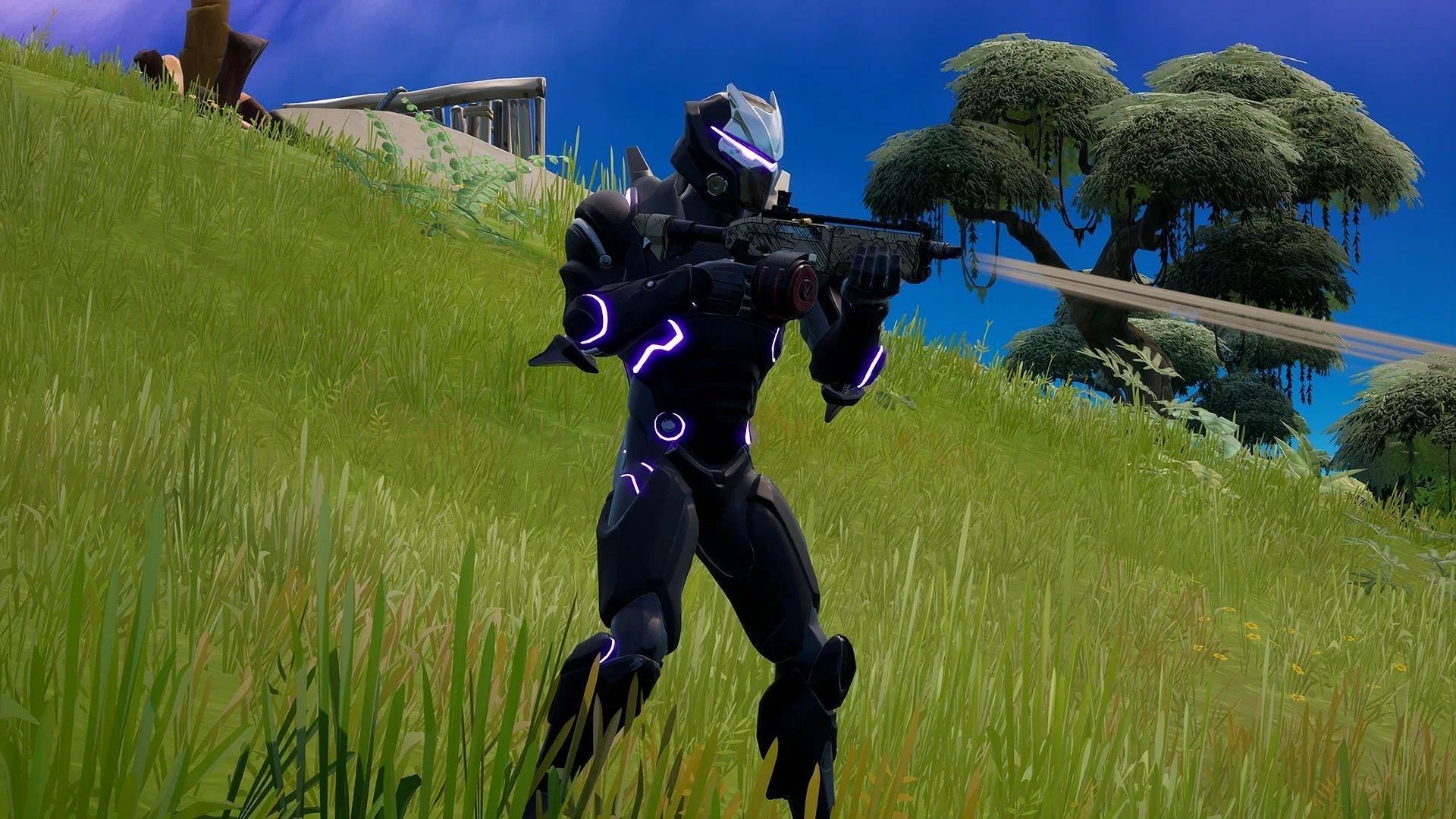
One of the newest Fortnite challenges requires players to hold a Charge SMG at max for 3 seconds and then damage an opponent. Completing this challenge can be quite difficult, especially for new players, which is why we will explain how to do it without much difficulty.

This submachine gun is one of the newest weapons in the game as it was introduced with one of the latest Chapter 3 Season 3 patches. Due to this, many players are not yet familiar with the weapon’s mechanics.

Even though it’s confusing to learn, players who master the Charge SMG can easily win Fortnite games. The truth is that the weapon is lethal in the right hands, and Epic Games has most likely released a new challenge in an attempt to get players to use it more.

If readers are unsure how to hold a Charge SMG at max for 3 seconds and later damage an opponent, this article will help them with it.


New Fortnite challenge requires players to hold a Charge SMG at max for 3 seconds, then damage an opponent

The Charge SMG was released to Fortnite as part of the v21.20 update on July 6, 2022. Although the weapon has been in the game for almost a month, many players still haven’t learned how to use it properly.

To hold a Charge SMG at max for 3 seconds and then damage an opponent, you will have to pick up the weapon first, obviously. Fortunately, it is very common and can be found in many loot sources, including chests and supply drops.

youtube-cover

Once you have the weapon in your inventory, you will have to hold down the fire button for six seconds in total before hitting an enemy with it. The submachine gun needs to be charged for three seconds to reach its maximum, but the challenge requires it to be held for an additional three seconds.

It is important to note that charging up this weapon slows you down and players cannot sprint with it, which is why it’s recommended that you charge it up while near an enemy.

The SMG is one of the deadliest weapons in Fortnite and its Mythic variant deals more than 336 damage per second, a truly incredible amount.


The easiest methods of completing the new challenge

If players are struggling to complete this challenge in regular game modes, they can also opt to play the Team Rumble mode and complete the challenge there.

Team Rumble is convenient for completing challenges as it has a lot of casual players and also features respawns, making the game significantly easier. This means that even when you die, you will get another shot at completing any required challenges.

Another useful method players can use to complete challenges is by joining Fortnite bot lobbies. To join these lobbies, you will have to create a new account and join it for a Duo match. Fortunately, completing challenges against 98 computer-controlled bots is extremely easy, but it takes a while to properly set up. However, it’s definitely worth it.

Considering that this is a new weekly challenge, you will receive 15,000 XP upon its completion.


.

Categories
Technology

Apex Legends’ new character Vantage brings a cute sidekick and a big sniper rifle

apex legends continues to hold its players’ attention even after several years on the market, and next week, the battle royale shooter will bring things back to where they started with a new season that revisits the game’s original map. This year, the game already added two new characters (plus two more in the new mobile version), brought upgrades for next-gen consoles, rotated in a well-received Control game mode, and, according to EA’s earnings call this week, notched double-digit income growth again for the last quarter. On the other hand, player complaints over glitches, ranked mode scoring, matchmaking, and practically any other small detail continue to mount.

The last season was particularly troubled, with problems that affected one of the game’s best features — its responsive controls — and enough bugginess that it even popped up during a professional apex legends tournament last month.

I can’t judge the game’s stability until we start playing it, but on a call with reporters, the team confirmed it’s listening to players of all levels about how to adjust gameplay. Design director Evan Nikolich called it ranked “a work in progress,” saying we should expect to see more changes in the full patch notes as the developers try to emphasize being a good team player. Other long-awaited features, like gifting and cross progression, are still coming, but there’s no word yet on when they will be available. When it goes live, players can expect cross progression that allows you to change platforms so PC players can grind out daily challenges on the go on a Switch, for example.

Other changes that will be noticeable to longtime players include a revamped progression system that allows you to rerun the zero to 500-level grind and earn more packs. Players can repeat the process up to four times, earning new badges and unlocking more rewards. If you’re starting from zero, the process would yield enough packs to guarantee receiving an in-game “heirloom” item at some point, but if you’re already at a maximum level, it won’t be enough by itself.

In the actual game, there are almost too many changes to note. The controversial gold knockdown shield that allowed downed players to self-revive, and occasionally win the game without even reviving, has had that feature eliminated. Many professional and high-level players had complained it was unfair, but the team says they’re making changes based on what they see in all levels of the game. Now, that same item has the features that were attached to the gold backpack, allowing players to revive teammates with extra shields and health, while the gold backpack now has a “deep pockets” perk that allows it to hold extra healing items.

Many of the game’s guns that have been present since launch are changing, as the Wingman pistol suddenly takes sniper ammo, and the Spitfire machine gun uses light ammunition instead of heavy. We’re not getting a new weapon to go with this season of apex legendsbut the radical shifts in how they work may be enough to make up for that — the only question is if everything will remain balanced or if an all-sniper / shotgun loadout will rule.

“Relic”

“Relic.”
Image: Respawn Entertainment

That brings us to the new character, Vantage, and the old map, Kings Canyon. A recent ranked season split on the OG Apex map revealed how much players have grown since the game launched — on a map that didn’t quite fit how things are played now. For the hunted season, the reforged Kings Canyon is looking a lot different. It’s bigger, many chokepoints have been widened, the iconic Skulltown section is back as a new area dubbed “Relic,” and there are other map changes intended to help fights proceed more quickly instead of the extended engagements that usually drew a third-party’s attention before one team could defeat another. The loot on the map is now positioned differently, and a new skybox is supposed to make things brighter compared to its original dinginess that could wear on you after a while.

Vantage is yet another legend with reconnaissance capabilities, armed with a sniper rifle for her ultimate. She can zoom in on enemies with her lens to see the team size, shield rarity, and Legend names, as well as get additional bullet drop calculations while using sniper sights. She can position her cute winged companion, a bat named Echo (who cannot be damaged or killed), and then launch it with a double jump to quickly reposition.

Her sniper rifle’s ultimate is the first one in the game that works without being fully charged. For her de ella, the charge builds over time, adding extra ammunition for Sniper’s Mark shots. The scope can reveal enemies and successfully highlight the enemy squad for 10 seconds with a diamond marker, with 100 damage per hit and extra damage received from Vantage’s team.

Adding yet another legend with tracking abilities feels a bit risky. Ace Overwatch ran into issues eleven too many characters could stun each other, apex legends is turning into a game where no one can hide. However, of the problems we’ve seen in Apex this year, the new legends have been fairly well-balanced, even if player stats suggest the new additions aren’t getting a lot of use. Player protests like “No Apex August” don’t appear to have caught on, and the gameplay is as addictive as ever. But for the new season, I’m just hoping everything works like it should.

Categories
Technology

Pokemon Go Fest: Sapporo will feature a Global Challenge and Ultra Unlock

While Trainers in Japan are participating in Pokemon Go Festival: Sapporo this weekend, you can join in from home by completing a Global Challenge.

Should the Global Challenges prove successful, you and other Trainers will receive upgraded bonuses during the upcoming Bug Out event happening August 10-16.

Plus, additional bonuses will be unlocked for Galarian Zigzagoon Community Day on Saturday, August 13.

The Global Challenge will kick off alongside Pokemon Go Fest: Sapporo on Friday, August 5, and completing it will also unlock 2× Stardust for catching Pokemon during the remainder of the Global Challenge period, ending on Sunday, August 7.

There will also be a special Collection Challenge. From Friday, August 5 to Sunday, August 7, a selection of Pokemon appearing at Pokemon Go Fest: Sapporo will appear in the wild.

So, keep an eye out for Paras, Bellsprout, Hoppip, Sunkern, Sunshine Form Cherrim, and Cottonee during the event. Catch them all and you will complete this Collection Challenge.

Later this month is the Pokemon Go Fest finale. Taking place on Saturday, August 27, the grand finale will feature four Legendary Beasts: Nihilego, Pheromosa, Buzzwole, and Xurkitree.

Categories
Technology

Samsung and iFixit launch repair program for flagship phones and tablets

Samsung and iFixit launch repair program for flagship phones and tablets

Samsung

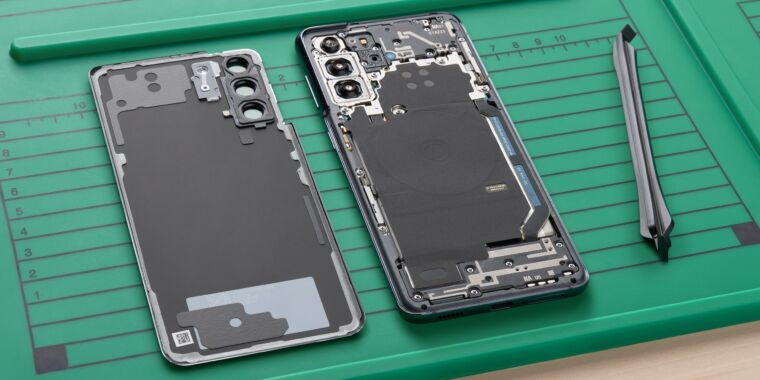
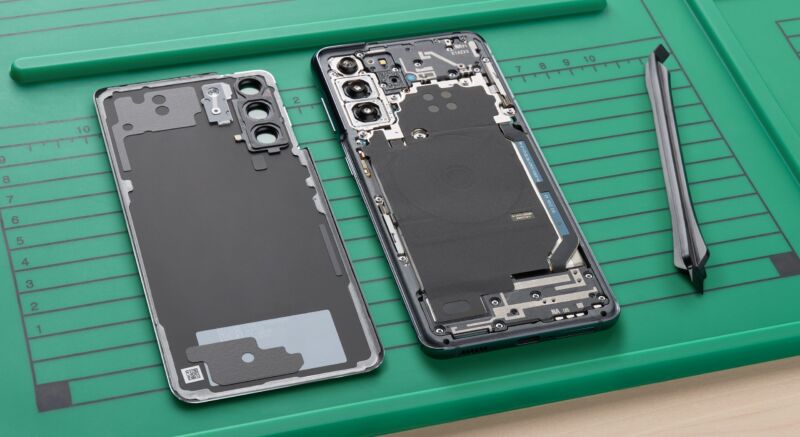
Hot on the heels of Google and iFixit launching a parts store about a month ago, Samsung and iFixit’s self-repair program is now live, too. iFixit hosts an official Samsung parts store that Samsung says sells parts “at the same pricing offered to our affiliated repair providers.” The repair site now has a series of official repair guides written in the usual excellent style, and Samsung will start selling parts and iFixit tools in its retail locations.

The official repair program is a good start, but it’s nowhere near comprehensive. Currently, the parts store ships to the US, and only the S21, S20, and Tab S7 series of devices are covered. With three sizes of each phone, that’s support for seven models total. Samsung releases around 40 devices per year, so there’s a long list of devices left unsupported. That list also doesn’t include the latest flagship models, like the currently-in-production S22 phone and the S8 tablet.

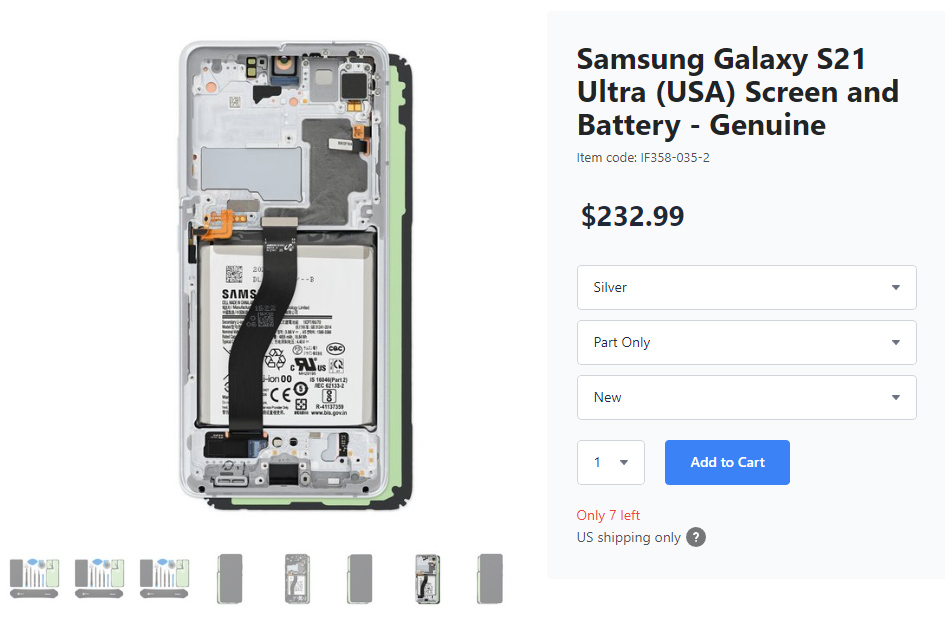
The only way to get a display is to buy this combo package of the display, phone body, and battery.  It's like half a phone!

The only way to get a display is to buy this combo package of the display, phone body, and battery. It’s like half a phone!

iFixit

The store’s official guides and parts only cover the back glass, charging port, and a combination “display assembly” that requires you to buy “the phone screen, metal frame, bezel, and battery” in one package. A comprehensive list would look like iFixit’s unofficial iPhone store, which has around 30 individual parts. iFixit has 17 guides for something like the S21, but only three of them are flagged as “official.”

Still, getting companies to care about repairability at all is a major accomplishment. Samsung and iFixit have had a rocky relationship since Samsung abandoned plans for a partnership in 2017, so it’s nice to see the company coming around on the right-to-repair movement. Apple also recently launched a repair program, but again, the details leave a lot to be desired—the system relies on a customer renting an 80-pound repair kit just to open a phone.

iFixit and Samsung both mention plans to expand the program in the future with “more devices and repair options.” Some parts, like the battery/display kit, even come with a return label to ship your old parts back to Samsung for proper recycling.

Categories
Technology

Valve launches the Steam Deck in Japan, South Korea, Taiwan and Hong Kong

A few days ago Valve announced that it has cleared up a major hurdle in the production of Steam Decks and that it will be able to fulfill demand faster than expected. Today the company announced that it is launching its handheld console in new regions.

Soon fans in Japan, South Korea, Taiwan and Hong Kong will be able to pick up a Steam Deck. This launch is in partnership with Komodo, Valve’s authorized reseller for those regions.

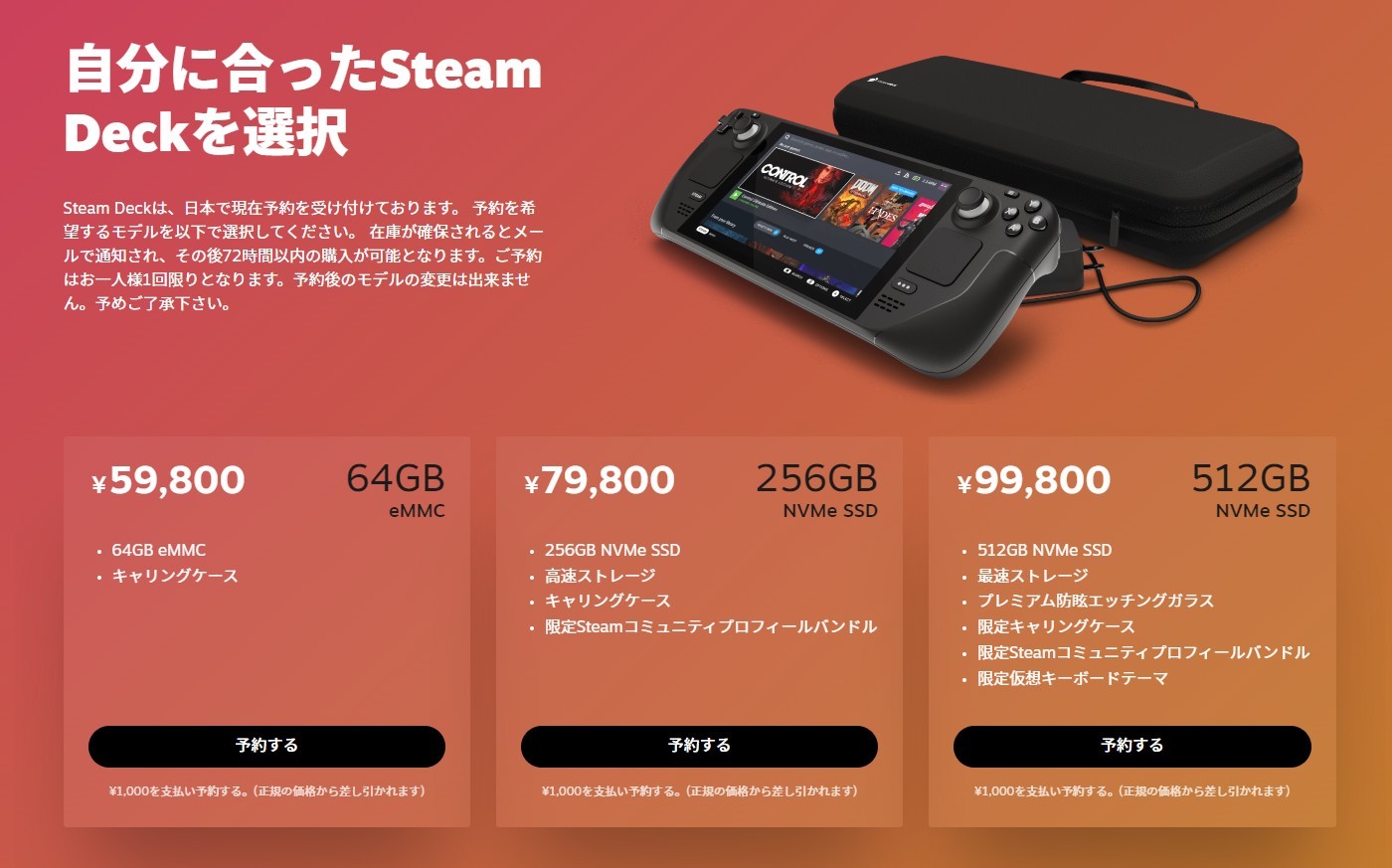
The site for Japan is already up – you can check it out here. The base 64GB eMMC model starts at JPY 59,800, the 256GB NVMe SSD model is JPY 79,800 and the top 512GB model is JPY 99,800. Here are the starting prices for the other regions: KRW 589,000 for South Korea, NT$ 13,380 for Taiwan and HK$ 3,288 for Hong Kong.

Valve launches the Steam Deck in Japan, South Korea, Taiwan and Hong Kong

Valve notes that the reservation queues in the new regions are separate from those from the current regions, so this launch does not mean the delivery of your Steam Deck will be delayed.

Valve is pretty bold to try to push into Japan, home of Nintendo and Sony, two big names in handheld consoles. Well, mostly Nintendo these days. Still, home console gaming is much more popular in the country than PC gaming, which is what the Steam Deck offers.

That is why the company will set up a large booth at the Tokyo Game Show to introduce the Steam Deck to the attending gamers.

Source | Via

Categories
Technology

Random: Rejoice! Mario Kart 8 Deluxe’s ​​Coconut Mall Has Been ‘Fixed’

Coconut Mall Mario Kart 8 Deluxe
Image: Nintendo

Wave 2 of Mario Kart 8 Deluxe’s ​​Booster Course Pass might have just dropped. But wait, stop your engines. Why not go and check out Coconut Mall before diving into the new courses?

Why would you want to do that, you ask? Well, Nintendo might have brought in Wave 2 today, but it’s also confirmed that it’s updated one of the courses that came in Wave 1.

In both the Wii version and the Mario Kart Tour version of this fan-favorite track, there are cars towards the end of the course that can drive into your character and knock you out. A bit unsporting, but it became pretty iconic. You could shove opponents into them, and it made for a little twisty, turny driving towards the end of a lap. This wasn’t present when Coconut Mall debuted in Deluxe in March, and lots of fans weren’t happy about it:

But Nintendo has taken note, and alongside these new courses, the Big N has gone back and updated the course to make those Shy Guys drive those cars! You go, Shy Guys. We believe you can hit all of our foes.

They don’t move in exactly the same pattern that they have done in previous versions, but we’re pleased that Nintendo has gone back and updated this track with this much-requested feature.

We’ll add that one back into the rotation then!

How do you feel about this fix? Are you happy that the cars in Coconut Mall move again? Let us know!

.

Categories
Technology

Valve expands Steam Deck reservations to four new countries

Valve has announced that it’s opening up Steam Deck reservations for customers in Japan, South Korea, Hong Kong, and Taiwan.

The Seattle, WA-based company is partnering with Komodo to sell and distribute its portable Steam consoles in these areas. In a statement to Game Developer, Valve said that this new expansion is possible thanks to its recent efforts to increase Steam Deck production.

It also noted that the reservation queue for the new regions “will not impact delivery estimates” for the current reservation process in North America, Europe, and the UK

New destinations for the Steam Deck

Valve’s journey from game developer to digital platform owner to console manufacturer is taking it to new destinations. It’s also showing that the company is successfully navigating the manufacturing process with greater deftness than with its previous hardware efforts.

Earlier in the decade, Valve tried its hand at Steam-based consoles with Steam Machines, and tried to reinvent the gamepad with the Steam Controller. The former product never took off, and the latter slammed headlong into a lawsuit filed by Ironburg Inventions. It would later lose that case.

Part of the promise of the Steam Machine concept was that other manufacturers would be able to make their own devices that would run Valve’s Linux-based Steam operating system. That concept seems to be back on the table, as Valve’s Steam Deck team has said it would welcome participation from other manufacturers.

That prospect might become more appealing as the Steam Deck rolls out to new countries across the world. Different countries have different habits when it comes to video game console purchases, and Valve’s thinking may be that the Steam Deck platform could be modified to meet different customer needs.

Valve’s success at ramping up Steam Deck production and entering new territories comes in the wake of a global supply chain crisis that’s already impacted its business plans for the Steam Deck. The company had to delay plans for a TV-ready charging dock that would be similar to the Nintendo Switch’s docking station.