Categories
Technology

Porsche 911 GT3 R Is The New Le Mans And Daytona Race Car

It is when all the major players are unleashing their race cars for the endurance championship. Until now, we have seen Ferrari giving hints about their new race car, and BMW has also taken the covers off their new Le Mans car. This time, the German automaker Porsche who unveiled the new race car for the IMSA endurance series. Porsche 911 GT3 R will also be eligible for the 24 hours of the Le Mans race, which will be held in 2024.

The new GT3 R has been under development since 2019. This new race car will come with a lot of upgrades. Usually, we have seen race cars getting faster and dominating, but endurance championship events limit these cars. This step is taken to prevent one team from dominating the whole tournament. It gives a chance to all the teams to play fair. Keeping these limitations and factors in mind, Porsche has made this new race car with more stability and better performance. Along with more power, the aerodynamic efficiency is also increased, making it faster. Read the full article to know more about this new race car.

Also Read: Audi And Porsche Are Venturing Into The F1 Business

What Power And Durability Do, The 911 GT3 R, Bring Along?

Porsche has built the new 911 GT3 R on the latest 911 platform. The new body of this race car is covered in carbon fiber. Earlier, it was said that this new race car would come with a 4.0-liter flat-six engine. It is confirmed that it will come with a naturally aspirated flat-six 4.2-liter engine. This engine is powerful and durable enough for the 24 hours of Le Mans. Thus, it produces 565 horsepower. It will provide stability, performance, and lasting energy needed for the endurance championship. The 4.2 flat-six engine is paired with a sequential six-speed transmission. The new GT3 R comes with a better suspension and steering wheel. Also, it will come with an extended wheel base. It has been increased from 2459mm to 2507mm. As a result, it will have superior handling and great efficiency.

GT3R
DC: Porsche

What Are The Available Features?

The main focus in this new car is on the specifications and power, but along with it, Porsche is up with some interesting and useful features in the new GT3 R. The main feature of this new car is the aerodynamic front end. The front of the car is useful for more stability and better performance at high speed. It also gets a rear swan-neck spoiler which improves the aerodynamic efficiency. The new cabin of GT3 R gets better as the dashboard gets a new 10.3-inch screen. The driver seat is shifted slightly towards the middle of the car to give more coverage and visibility.

Also Read: Porsche Thinks EV Is A Profitable Market For Them

These details about the new Porsche 911 GT3 R. This Le Mans car will be available for the 2023 IMSA endurance series. It also includes the race of the 24 Hours of Le Mans Daytona.
Categories
Technology

Will DSLRs die? – Inside Imaging

August 3, 2022

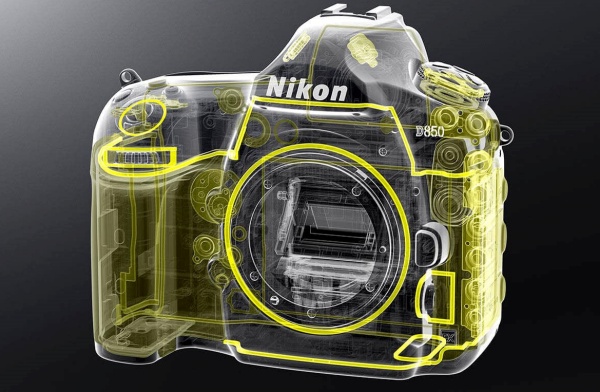
In a much-publicized but unsurprising story from NikkeiNews in Japan, Nikon is reported to be stopping development of DSLR cameras.

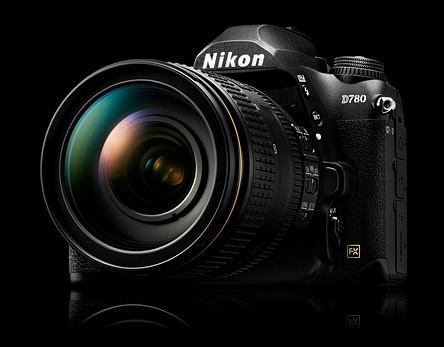
The D780 was the last DSLR from Nikon, announced in January 2020.

‘Well tell us something we don’t know,’ is probably the collective reaction to the story from photography insiders, given we haven’t seen a new Nikon DSLR release for several years.

Curiously, the Nikkei article attributes the decision to ditch DSLRs to ‘intensifying competition from smartphone cameras’ rather than the far more direct competition from mirrorless interchangeable cameras.

Nikon was quick to respond to the Nikkei story with a statement which didn’t actually contradict it, but rather denied that there had been any official announcement to that effect:

There was a media article regarding Nikon’s withdrawal of SLR development. This media article is only speculation and Nikon has made no announcement in this regard. Nikon is continuing the production, sales and service of digital SLRs. Nikon appreciate your continuous support.’

– Note that all Nikon is stepping up to is ‘continuing the production, sales and service of digital SLR’ – no development. The Nikkei article also stated, without any attribution, that Canon was planning to do the same ‘within a few years’.

Nikon’s last new DSLR, the Nikon D780, is two and a half years old. Canon’s EOS 1DX MkIII is about the same age, and was confirmed as the last of the flagship DSLR’s from the undisputed market leader in DSLRs.

Whether the original article ‘is only speculation’ or not, what are the odds of, say a Nikon D950 or Nikon D5700? Nikon officially killed off its APS-C line in early 2021 with the D3500 and D5600 the final models in the line. The last flagship DSLR, the D6, came and went without much celebration.

It would be more surprising if Nikon actually announced the development of a new, improved DSLR. Say Canon.

But it doesn’t necessarily mean that in 2022 there is zero demand for DSLR cameras. In a contracting market for cameras, the economics don’t allow for parallel development of two technology formats, and Nikon and Canon have decided to ‘fish where the fish are’.

Are mirrorless cameras so superior to DSLRs that they have made them totally redundant? Is the DSLR a buggy and the mirrorless camera an automobile? Perhaps the replacement of analog vinyl records by audio CDs is a more apt comparison. Although CDs saw off LPs in a space of about 5 years there were, and still are, people who maintain the analog alternative is superior.

Even some of the characteristics of mirrorless cameras that are presented as advantages are equivocal. Mirrorless cameras are lighter and smaller because they don’t use a pentaprism. But smaller cameras also present ergonomic challenges – especially for people wearing gloves or with larger hands. Some photographers in fact prefer the heft of a DSLR, and reason that it delivers more intrinsic stability.

And while today’s electronic viewfinders are thousands in front of the low res versions of just a few years ago, they are always attempting to simulate the reality delivered by an optical viewfinder.

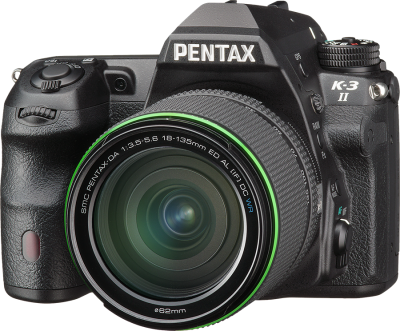
The full-frame Pentax K-1 II was nominated for Digital Camera World magazine as one of the top 3 DSLRs for 2022.

Enter Pentax, which has declared it will be the keeper of the DSLR flame. After an unsuccessful dalliance with mirrorless technology in what was a crowded marketplace with shrinking demand, Pentax has taken the opposite tack to all the other camera makers – stepping away from mirrorless cameras and making a virtue of the analogue pentaprism, from which the brand pentax is based.

‘Pentax is committed to the future of SLR photography through the continued development of camera technology, making it more fun and exciting than ever before for all Pentax users,’ the Pentax microsite explains. In 2020 Pentax stated it would ‘create the future of single-lens reflex cameras’.

While Pentax hasn’t been exactly profligate with new camera models recently (last was the K-3 III early last year), it just this week announced a new lens roadmap, indicating it’s still fully engaged with DSLRs, and last month issued a major firmware release for its current DSLRs.

The common wisdom is that pentaprisms and optical viewfinders are just so last century, and electronic viewfinders represent the future of camera technology, but there will always be those contrarian souls who beg to differ. So it’s probably a canny move – it may see the venerable brand ‘owning’ the DSLR segment by virtue of being the last man standing.

With all the other camera makers following the leader (whoever that is these days) into mirrorless cameras, there may be a critical mass of camera buyers who still hanker for a more analogue picture-taking experience.

‘When you take a picture with a single lens reflex (SLR) camera, the light passes through the lens, and in turn the optical viewfinder. You view the image directly with your eyes, and feel it with your heart,’ states Pentax.

Pentax/Ricoh only has a tiny share in the interchangeable lens camera market but it is a venerable and still respected camera brand. It’s products, such as the 36-megapixel, full-frame K1 II and the K3 III continue to be well-reviewed.

If just one new camera buyer in 10 in the market for an interchangeable lens model prefers DSLR technology, this could see Pentax increasing its market share two or three times, as the likes of Canon and Nikon withdraw from the market. And with a base of backward-compatible K-mount lenses stretching back to the 1970s, ‘Pentaxians’ also have a lot of glass from which to choose.

Categories
Technology

How to create a Facebook group

Are you interested in cultivating an online community about one of your hobbies? Do you just need a way to organize a family event or book club? If so, you may want to consider creating a Facebook group. Facebook groups can provide a central, online location for gathering and communicating with your friends and family or for meeting new people to discuss your shared interests or plan an event together. It can be a great way to cultivate a sense of community online.

Plus, creating a Facebook group is incredibly easy.

What is the difference between a page and a group on Facebook?

The main difference between a Facebook page and a group comes down to privacy and visibility.

A Facebook page is essentially designed to maximize visibility, and you can’t really make them private. That’s because they’re more for businesses and public figures. Pages are for use cases in which a person, brand, or company wants to be seen and wants to attract as many customers and fans as possible. Usually, anyone can like or follow a page to keep up with the goings on of the brand or person that page represents.

Facebook groups are different. Groups actually offer the option to be made private and/or given limited visibility because not all groups want to attract lots of attention from everyone on Facebook. Some groups are for small, specific interests and some groups may want to limit membership to select people. Groups are more about cultivating community rather than promoting a brand, and sometimes setting privacy limits can help keep those communities safe.

How do I start a Facebook group: on desktop web

Starting a Facebook group is actually a fairly easy process. Here’s how to do it on a PC via the desktop website version of Facebook.

Step 1: Open up your desktop web browser, go to Facebook.com, and log in to your account if you’re not already logged in.

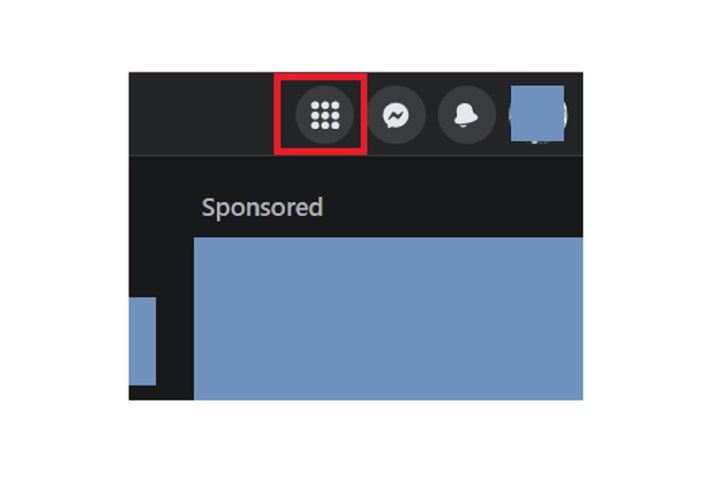
Step 2: Select the Menu icon in the top right. This icon looks like a series of nine dots arranged in a square.

The Menu icon on the Facebook desktop website.

screenshot

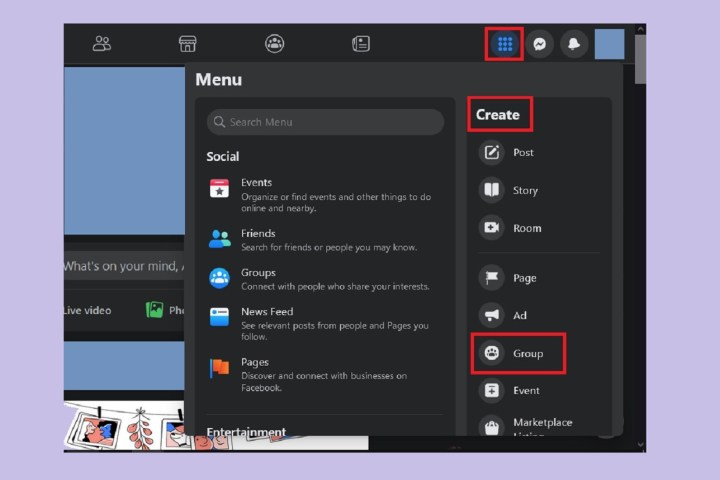
Step 3: From the menu that appears, under the Create header, choose Group.

The drop down menu for Facebook for desktop web's main Menu.

screenshot

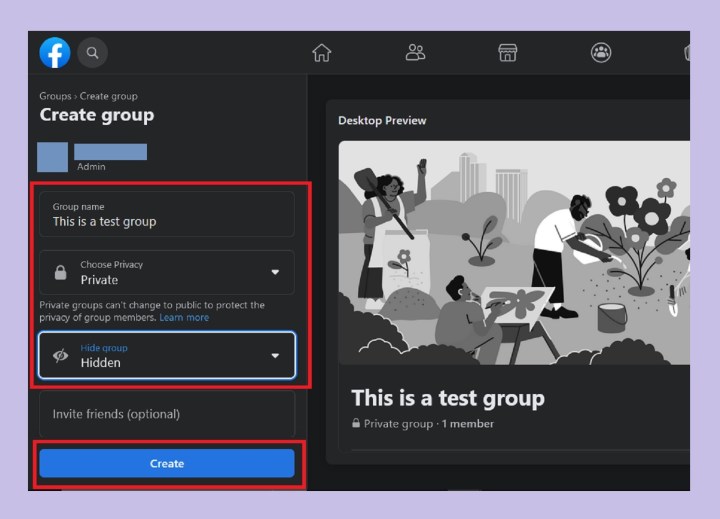
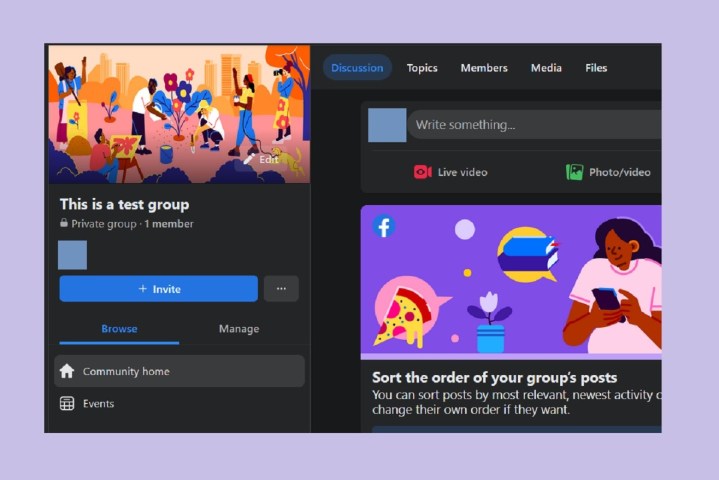
Step 4: on the Create group screen, add your group’s name, choose a privacy level, and invite your friends (if you’d like).

For privacy levels, you can choose between Public and Private. Public means anyone on Facebook can view the posts in your group and see who is in your group. Private means that only members of that group can view the posts in it and see who the other members are.

If you choose Privateyou’ll then have to select the level of visibility of the group: Visible or hidden. Visible means anyone on Facebook can find this group, and Hidden means only group members can find it.

The Create group screen on Facebook for desktop web.

screenshot

Step 5: Then choose the Create button at the bottom of the Create group screen. That’s it! You’ve now created a Facebook group!

A newly created Facebook group on Facebook for desktop web.

screenshot

How do I start a Facebook group: on the mobile app

Alternatively, if you’d rather use the Facebook mobile app to create a Facebook group, you can do that too. It’s pretty similar to the desktop web method. These instructions should work for both Android and iOS devices. Here are the basics of creating a Facebook group via the mobile app:

Open the Facebook mobile app on your device and then select the Menu icon (three lines) > groups > plus sign icon > Create group.

Then, on the Create group screen, you’ll add a group name, choose your privacy level, and choose your visibility level if needed. Select the Create group button at the bottom of the screen. At this point, your group will have been created, and you’ll be prompted to invite people to join and start setting up your group page.

Editors’ Recommendations


Categories
Technology

Google’s video chat merger begins: Now there are two “Google Meet” apps

Someday, Google's messaging lineup will look like this (assuming Google can stop launching competing products).
Enlarge / Someday, Google’s messaging lineup will look like this (assuming Google can stop launching competing products).

Rum Amadeo

Google is officially kicking off the merger of its two video chat apps, Google Meet and Google Duo. Google announced the merger in June, with the plan to keep the Google Meet brand name while merging the best of both code bases into the Google Duo app. According to Google’s PR email (no links, sorry), people will begin seeing Duo’s app and website branding swap over to Google Meet this week. Google’s various rebrandings are all on a rollout, so they’ll arrive at different times for different people, but Google says the complete rebrand should finish for everyone by September.

So Google Duo is being rebranded to Google Meet, and the existing Google Meet app is sticking around for a bit. That means there are now two apps called “Google Meet.” Google has a help article detailing this extremely confusing situation, calling the two Meet apps “Google Meet (original): The updated Meet app” and “Google Meet: The updated Duo app.” The “Google Meet (original)” app will someday be put out to pasture; it’s just sticking around while Google rebuilds the meeting functionality on top of Google Duo. Did everyone follow that?

The Meet and Duo video services were both built as reactions to Google’s far more stable communication competition. Google Meet was technically created in 2017 as a group business video chat application called “Google Hangouts Meet,” but it really became a major project after Zoom’s growth exploded in 2020 during the COVID-19 pandemic. Google Meet was still locked behind a paywall during the initial months of the work-from-home era, and while it eventually became as easy to use as Zoom, it was after Zoom became a household name.

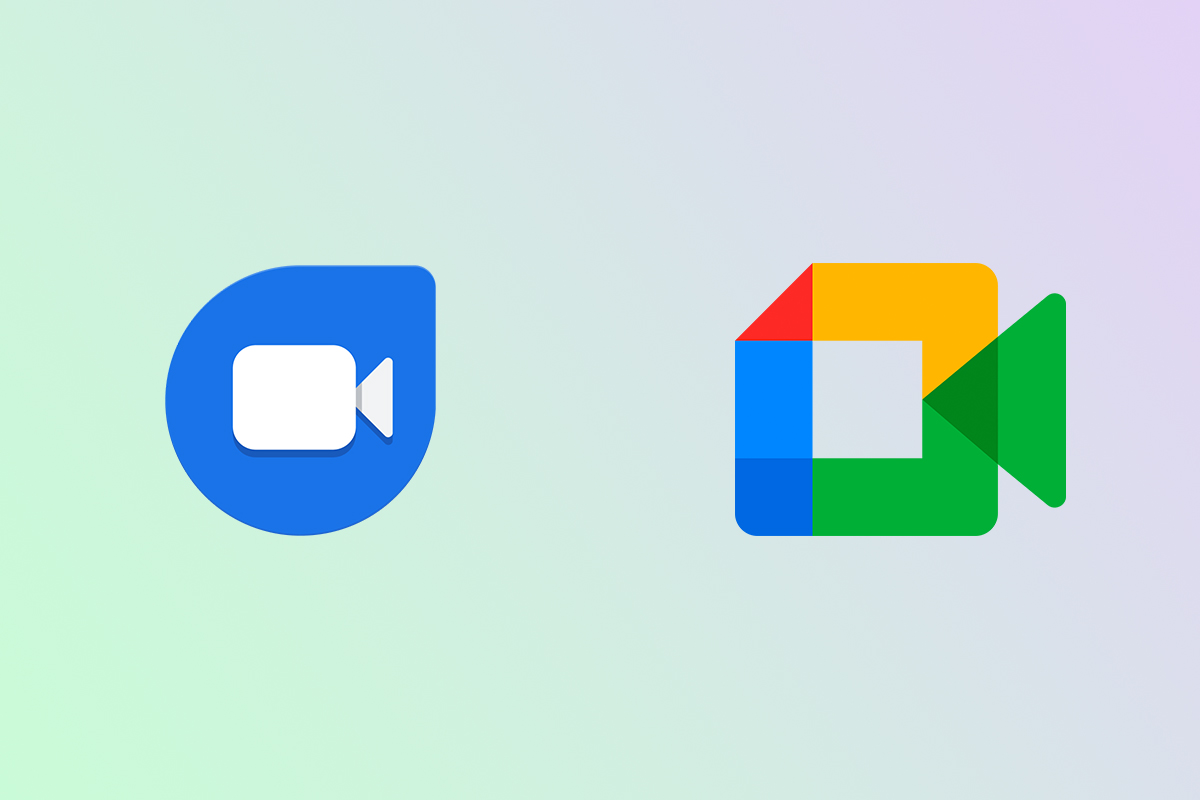
Google's two "Meet" apps.  The left one is Duo.  The right one is Meet.

Google’s two “Meet” apps. The left one is Duo. The right one is Meet.

Rum Amadeo

Google Duo came out in 2016 alongside the “companion app” Google Allo as a reaction to the growth of WhatsApp. Google and Facebook got into a $22 billion bidding war for WhatsApp two years earlier. Google lost and spent the next two years making a WhatsApp clone called Google Allo. Rather than integrate video chat into the app, Google split video functionality into a separate app called Google Duo. WhatsApp didn’t have video chat at the time, so you could use Google Duo video chat with Facebook’s WhatsApp or Google’s Allo, if you wanted.

Allo and Duo were originally focused on India, which led Duo to build a one-to-one video chat system that used little bandwidth and worked well on unstable connections. That efficient video chat system will be the basis for the new combined app, with Google building Meet’s meeting link functionality into Duo and rebranding it. The install base is probably also a factor here. As a default Android app, Google Duo has more than 5 billion downloads on the Play Store, while Meet only has 100 million. Google’s path makes for a smoother transition for those 5 billion installs, while the 100 million will have to switch manually. Google says that it will hide the old, original Google Meet app from app store searches in September. Eventually, it will need to implement a pop-up message for existing users of the old Google Meet app that tells them to upgrade.

This move is happening because Google “unified” its messaging teams in 2020, with a single person, Google Workspace VP and GM Javier Soltero, taking the reins of “all of Google’s collective communication products.” That should mean Google Hangouts, Google Meet, Google Chat, Google Messages, Google Duo, and Google Voice, and Google even threw in the Android phone app for good measure. It was announced last month that Soltero is leaving Google, though, so that’s only two years on the messaging unification job. Nobody knows who, if anyone, is taking over as the new “head of messaging.” Single’s plan is still happening, though—besides this Meet and Duo merger, Hangouts will finally shut down in a few months. This new, more cohesive lineup will leave one Google video app and three Google chat apps.

Categories
Technology

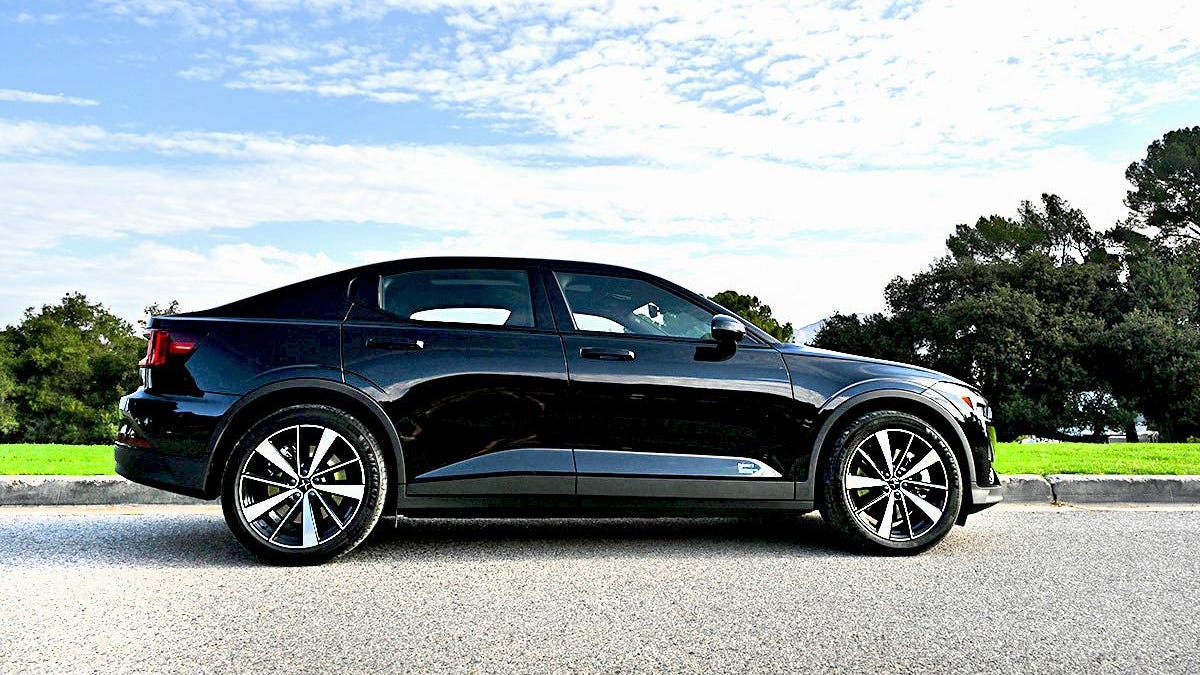
Buzzing Around LA In The Powerful, Fun Electric 2022 Polestar 2

Never heard of the Polestar? You’re not alone. Three different times during my test in Los Angeles – all of them while waiting for this zippy electric dynamo to fast-charge – passerby asked “What IS that?”

You can hardly blame them. Not only is the Polestar badge a baby when it comes to the current market, my black tester was indistinguishable from its neighboring vehicles in the lot where I picked it up around midnight. I had to click my key fob to see which set of headlights blinked to find it.

So, assuming you might not recognize the badge either, here’s a walkthrough of this fine ride with the funny name.

First, it’s a 4-door sedan with fastbackish characteristics. But it weighs a whoppin’ 4,397 pounds, which is what some SUVs weigh. It feels, however, light as a feather to drive.

The Polestar 2 starts at $49,900 and, with all options and delivery charge, it tops out at $58,400. You’ll get front-wheel drive with the single motor version with a range of about 270 miles, depending on your foot, of course. Go for the dual-motor – my tester – and your range dips, but you’ll also get all-wheel drive and a hell of a lot more punch.

As with most electrics, you take off like a silent shot, making it most enjoyable both around town and on the highway, rocketing you from a dead stop to 60 MPH in a scant 4 seconds. The dual motor trim also brings you an optional Performance package delivering forged 20-inch wheels with performance tires, adjustable dampers and upgraded Brembo brakes.

The handling is nice and sharp as well, and those brakes – sometimes a weak point of electrics – are mighty, and quick. What’s more, there are also three levels of regenerative braking – and one of them can stop the car without the driver even touching the brakes. This made buzzing around Mulholland drive a gas, er, a pleasure, sorry.

Select the Plus package and you’ll up the swank factor as well as receiving a mechanical heat pump that’ll increase your range by, it’s said, 10%. An over-the-air update will increase the dual-motor Polestar 2’s horsepower and pound-feet of torque from 408 to 476 and 487 to 502, respectively.

You roll on a “Compact Modular Architecture,” aka CMA, same as sister company Volvo’s XC40. Your battery is a 75.0-kWh lithium-ion battery pack situated under the floor, and it’s capable of fast-charging up to 150 kilowatts. Polestar says you can recharge a dead battery to 80 percent in 40 minutes, good news indeed. It took me about 90 minutes to go from 17% to 85%, not horrible. Finding a pump near where I was staying was another magilla entirely, one I will devote a future article to. But we know this about electric cars. Unless you have a charger at your residence to plug into every night, you are at the mercy of whatever is out there near you when you need the juice.

The dual-motor version achieves around 89 MPGe, and in theory you’ll get 249 miles on a full charge.

Inside:

The more I drove the Polestar 2, the more I liked its interior, which is unlike any other manufacturer’s. The lines are clean. The shift is a funny little loop-thing that you don’t even have to look at to find. The flavor is ultra-mod but muted, not obvious. You’ve got vegan fabric on the seats, although leather’s available should you want it.

Storage-wise, it’s measly in the rear cargo hold at 14 cubic feet, but open the “frunk” at the snout for extra space – one cubic foot.

technology

I absolutely loved the Polestar 2’s 12.3 inch iPad-ish instrument cluster with its huge fonts and oh-so-obvious self-explanatory icons. Are you listening, Lexus? It took no time at all to sync my phone and the sound from the Harman/Kardon system was nice and crispy and loud.

And by the way, Polestar 2 was the first car in the world to feature an infotainment system powered by Google’s Android Automotive OS, with Google built-in. With Google Assistant, Google Maps and the Google Play Store integrated, you’re getting the top in voice-recognition and nav systems. I found the display directly ahead of my steering wheel rather homely, however.

A plus, though – the air quality system included in the Polestar 2 Plus pack detects pollutants and pollen and adjusts the passenger compartment filter to help keep them out. The car also makes “blinky” sounds to alert pedestrians to one’s presence.

Safety:

Safety features include standard blind spot monitoring, standard automated emergency braking with pedestrian detection and standard adaptive cruise control.

Warranty and Maintenance Coverage

A Limited warranty covers four years or 50,000 miles, electrical components are covered for eight years or 100,000 miles and, surprisingly, no complimentary scheduled maintenance is offered.

Again, this test got better and better as time went on and by the end I loved the body of the Polestar 2, and its drive. Check your options, of course, but if you want something truly unique-looking that delivers everything anyone ever liked about electric vehicles, this is a fine choice indeed.

From the company: “From 2022, Polestar plans to launch one new electric vehicle per year, starting with Polestar 3 – the company’s first electric performance SUV which is expected to debut in October 2022. Polestar 4 is expected to follow in 2023, a smaller electric performance SUV coupe.”

.

Categories
Technology

Xbox Game Pass August 2022: Two Point Campus, Turbo Golf Racing, Ghost Recon Wildlands — Explosion Network

Microsoft has announced the games coming to Xbox Game Pass for Console, Cloud and PC, as well as what games are leaving the service this month.

The big games I would keep my eyes on this month are Two Point Campus and Turbo Golf Racingboth of which launch on Xbox Game Pass on console, cloud and PC on their respective release dates.

Week of August 2:

  • Ghost Recon Wildlands, August 2 (Cloud, Console and PC)

  • Shenzhen I/O, August 4 (PC)

  • turbogolfracing, August 4 (Cloud, PC, and Xbox Series X|S)

Week of August 8:

  • Two Point Campus, August 9 (Cloud, Console and PC)

  • Cooking Simulator, August 11 (Cloud, Console and PC)

  • Expeditions: Rome, August 11 (PC)

  • Offworld Trading Company, August 11 (PC)

Xbox Game Pass Ultimate Perks for the month of August:

Fall Guys: Coconut Milk Costume – Available now

Relax, take a sip and get ready to grace the Blunderdome with your tropical presence in the all-new Coconut Milk Costume!

skate 3: Upgrade Bundle – August 11

Upgrade your Skate 3 experience, courtesy of EA Play, with the Upgrade Bundle that includes the Skate Create Upgrade Pack, Maloof Money Cup 2010 NYC Pack and Black Box Distribution Skate Park.

The Elder Scrolls Online: Noweyr Pack – August 16

Journey across Tamriel with elegance by adding an enchanting purple mount, matching pet, and two crates containing useful rewards to your collection. This Perk content requires ESO base game to use.

The following games are also leaving Xbox Game Pass on August 15:

  • Boyfriend Dungeon (Cloud, Console, and PC)

  • Curse of the Dead Gods (Cloud, Console, and PC)

  • Library of Ruin (Cloud, Console, and PC)

  • starmancer (Game Preview)(PC)

  • Train Sim World 2 (Cloud, Console, and PC)

As always, keep your eyes open for more announcements later this month.

Categories
Technology

The Morning After: Winamp, your old MP3 software of choice, is back

Winamp is the music software that just won’t die. In the first update in four years, the producers described it as the “culmination” of years of hard work, including two teams and a pandemic-dictated hiatus. The result is a lot of under-the-hood upgrades and improvements, but it’s still the music player a lot of us remember.

Once upon a time, Winamp was the MP3 software of choice, where many of us kept our music files from fledgling digital stores and peer-to-peer apps. Parent company AOL (which was also once Engadget’s owner) shut down work in , years after the likes of Spotify took hold. But, following an acquisition by Radionomy, Winamp lives on. Still.

— Matt Smith

The biggest stories you might have missed

Speed ​​above all.

TMA

gadget

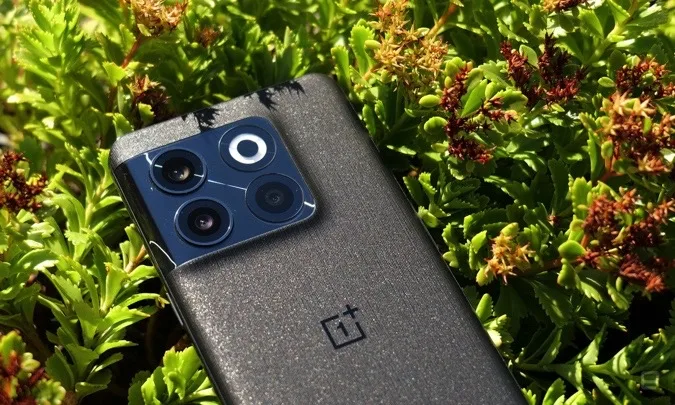
OnePlus’ mid-year phone refresh is unusual. The 10T has the fastest Snapdragon chip, but a lot of compromises. According to Engadget’s Sam Rutherford, it’s a solid device at an affordable $649, but say farewell to the Alert Slider, wireless charging and a dedicated US carrier launch partner — for now.

Continue reading.

The company is struggling with the Stage Manager multitasking feature.

Bloomberg reports Apple might delay iPadOS 16 by a month or so. The main issue is said to be with the Stage Manager multitasking tool, which will only be available on M1-powered iPads. It allows users to resize windows and have them overlap. However, those who tried the beta by and found the feature buggy large — something we noted in our . Previous reports indicated Apple has new iPads lined up for later this year, and delaying iPadOS 16 could mean it emerges closer to the new tablets as well.

Continue reading.

Game sales also fell, but first-party sales improved.

Nintendo’s Switch sales fell significantly last quarter, dropping to 3.43 million units compared to 4.45 million during the same period last year, according to its earnings report. The company chalked up the Switch sales issue to a parts shortage, the same thing Sony struggled with. “Hardware production was impacted by factors such as the global shortage of semiconductor components, resulting in a decrease of hardware shipments,” the company said.

Continue reading.

The new policy aims to increase passenger safety on commercial space flights.

NASA will soon require a retired astronaut to serve as mission commander on all private flights to the International Space Station, according to an agency notice posted today. The policy — which has yet to be finalized — is intended to both increase passenger safety and reduce any strain on existing ISS operations. According to the notice, the new changes came after “lessons learned” on last April’s Axiom Space flight, where passengers paid $55 million each to fly on the first private astronaut mission to the ISS. The hectic two-week trip took a toll on both the ISS and Axiom crews.

Continue reading.

Load up your new console with these excellent titles.

TMA

Sony

It’s Sony’s turn. As always, we looked for games that generally offer meaningful improvements over their last-gen counterparts when played on PS5 or are exclusive to the system. Our 2022 update sees two third-party titles — deathloop and Final Fantasy 7 Remake —join the overwhelmingly in-house fray.

Continue reading.

Apparently, a $300 required textbook isn’t enough of a grift.

NFT advocates often tout the technology’s ability to grant the creator a cut of second-hand sales as one of its major attributes. That’s what intrigued Pearson, a major textbook publisher. “In the analogue world, a Pearson textbook was resold up to seven times, and we would only participate in the first sale,” CEO Andy Bird told Bloomberg this week. “The move to digital helps diminish the secondary market.” Do you know why students resell textbooks? Because they’re darn.

Continue reading.

A tongue-twisting way to see tours.

TikTok has teamed up with Ticketmaster to help users discover events and buy tickets directly through the app. Music artists, comedians, sports teams and venues can search for relevant Ticketmaster events and link to them on their videos. The feature is only open to select creators at the outset. TikTok is increasingly focusing on music: Earlier this week, it emerged the company may be working on its .

Continue reading.

All products recommended by Engadget are selected by our editorial team, independent of our parent company. Some of our stories include affiliate links. If you buy something through one of these links, we may earn an affiliate commission.

Categories
Technology

The Google Duo-Google Meet merger is finally underway

Google has been working on merging Google Duo with Google Meet for the last few months. The company confirmed its plans for the merger in June this year, after which it rolled out an update for Google Duo that introduced meeting capabilities to the video calling app. Now, Google is rolling out yet another update for the Duo app on Android and iOS that finally kicks off the merger.

According to Google, the latest Duo update for Android and iOS has started rolling out in a phased manner. It replaces the app icon and logo from Duo to Meet across both platforms. In addition, the update introduces a new home screen notification explaining that “Duo has been upgraded to Meet” as Google’s one-stop solution for video calling and meetings. Furthermore, Google has updated the Duo branding on the web version, and it now shows the Meet icon and app name.

Google plans to complete the merger by September, after which the updated Google Meet app (formerly Duo) with video calling and meeting capabilities will become widely available on Android and iOS. Over the next few months, the company will also redirect duo.google.com to meet.google.com/calling. The legacy Google Meet app will remain available throughout the process and users will be able to use it for meetings. However, it won’t receive Duo’s video calling capabilities and Google will likely phase it out following the merger.

As mentioned earlier, the latest Google Duo update with the Meet rebranding is rolling out to users in a phased manner. This means that it will only be available to a small number of users initially, with a broader rollout to follow in the coming months.

What do you think of the Google Meet-Duo merger? Is Google making the right decision by offering all of the features from Meet and Duo in one single app? Let us know in the comments section below.

Categories
Technology

Meet Your Maker PlayTest Sign Up & BHVR 2023 Release Plans

Meet Your Maker is a brand new game in development at BHVR that starts beta testing later in August 2022.

And while we’re still quite far away from its final release date, it’s been confirmed that Meet Your Maker will be revealed during 2023.

Here’s what we know so far about Meet Your Maker, the latest game from BHVR coming to multiple platforms.

Dead by Daylight | Attack on Titan Collection Trailer

BridTV

10931

Dead by Daylight | Attack on Titan Collection Trailer

https://i.ytimg.com/vi/2hi_9kFmguM/hqdefault.jpg

1057670

1057670

center

13872

When Does The Meet Your Maker PlayTest Start?

The Meet Your Maker PlayTest beings on August 23, and gamers interested in joining can sign up now.

This can be done by heading to the game’s official website, where you can use your email address to have a chance at grabbing a code.

The August 2023 PlayTest will be limited to the Steam platform, but BHVR will be launching the final product on consoles.

Fans can expect to start playing Meet Your Maker next year on Xbox One, Xbox Series X, PS4, PS5 and Steam.

The Meet Your Maker PlayTest will run for several weeks and will be under NDA, with weekly invites going out during it.

A message from the BHVR team reads: “The Closed Playtest is designed to gather and analyze feedback from players just like you! It’s also an opportunity to test Meet Your Maker’s systems on a large scale. The results and feedback we will receive help our dev team better understand how the game performs, and where to focus our efforts as we finetune ahead of our launch in 2023.

“Because the game isn’t ready for the spotlight just yet, players who get access to the playtest will be prohibited to share Meet Your Maker content (no streaming, no capture).

“If you are selected, you will receive an invitation by email including a link that will redirect you to the Non-Disclosure Agreement required to participate. After signing the NDA, you will be invited to link your Steam account and the game will be automatically added to your Steam Library.”

In other news, Sea of ​​Thieves Season 7 Release Date & Update Time

Categories
Technology

Evil Geniuses doubles down on ‘Valorant’ with women’s roster

Comment

Esports organization Evil Geniuses announced its acquisition of a women’s “Valorant” team Thursday, making it the first competitive, all-women team in Evil Geniuses’ history. The new team, which was previously Dignitas’s “Valorant” squad, will formally debut as an Evil Geniuses squad on Aug. 6 at the 2022 Astral Clash Finals in Los Angeles.

“We are lucky to have an authentic position in the women’s esports space,” Evil Geniuses CEO Nicole LaPointe Jameson said in an interview with The Washington Post. “The CEO of EG is a woman, over fifty percent of our managers and above such as directors, VPs and C-levels are also women.”

The team’s roster remains unchanged after the purchase. It includes Emmalee “EMUHLEET” Garrido (who will continue to serve as team captain), Amanda “rain” Smith, Juliana “Showliana” Maransaldi, Melisa “theia” Mundorff and Stefanie “Stefanie” Jones. They are joined by Christine “potter” Chi, head coach of Evil Geniuses’ original “Valorant” team, who will now oversee both teams.

Evil Geniuses said both teams should be referred to as EG Valorant, though the new team can be exclusively referred to as EG’s Game Changers. (Game Changers is “Valorant’s” regional women’s league).

From 2019: These women are fighting back against online toxicity in games and esports

Many prominent esports organizations have been quietly leaving the “Valorant” scene in what has been described as a mass exodus, citing mounting expenses and the brutally rigorous partnership process. Dozens of esports companies have been vying for the handful of available spots in Riot Games’ overhauled “Valorant” leagues.

Evil Geniuses’ league application to Riot Games included a slide deck, booklet and an interactive presentation narrated by Evil Geniuses staffers who were illustrated to resemble “Valorant” characters. LaPointe Jameson sees “Valorant’s” strong player base and stalwart developer support as signs of a healthy competitive scene.

“Riot’s been a great partner to us on all of our titles,” LaPointe Jameson said. “They have been really great, I think for all participants actually, at transparency, evaluating the milestones, the needs. We’ve been really happy with this process as a whole.”

LaPointe Jameson is also interested in helping build the “Valorant” scene from the ground up, particularly for underrepresented groups in esports such as women. Notably, Evil Geniuses’ first Valorant team initially debuted as a mixed gender team led by Chi, who was playing as team captain at the time. Since then, the roster has been revamped; all of its current members are male.

Inside the race to compete in ‘Valorant,’ the ‘next big esport’

EG Valorant will be put in what the organization describes as an athletics program rather than a gaming one. In lieu of putting its players in a team house, Evil Geniuses will base EG Valorant out of the company’s Los Angeles facility where they’ll have access to subsidized housing, physical fitness conditioning, nutrition and data-driven training.

Evil Geniuses’ first priority with the team will be getting to know them, which LaPointe Jameson said is essential to victory. “Valorant” players in both of Evil Geniuses’ teams receive a personalized assessment to identify areas for growth. That could be anything from more in-depth training for a player’s team role, improving intrapersonal communication or confidence building programs. Once that is done, Evil Geniuses have their sights set for the top.

“We will set reasonable milestones for placement,” LaPointe Jameson said. “But we won’t be satisfied until we’re number one in the league.”