Google Search is getting a slight improvement for people who type double quotes when placing queries. The tech giant said after evaluating user feedback, it’s bolding text within Google Search with words or phrases that a person places within quotes, according to a blog post Thursday.
Specifically, snippets, the lines of text that appear under a search result, will now feature a portion of the article right into search, bolding the specific quoted word or phrase.
For example, if someone searches for “Galaxy ZFold 4” in quotes, Google will return results with that specific phrase bolded, showing where it appears in the article. This can make search faster for users, as they can see whether the relevant information they’re looking for is in the article before clicking on Item.
If your Google search includes quoted text, your result will have that text bolded.
Google
Google said it didn’t always do this in the past, as the phrase a person might be looking for could appear in the menu for a page. For some, a snippet about a menu button may not be useful.
Bolding is only available to desktop users. Google didn’t say if or when bolded quoted queries would come to mobile.
When asked for comment, Google pointed to its blog post.
Who doesn’t love a freebie? As most PC players are well aware, the Epic Games Store gives out free games each and every week. Once claimed, they’re bound to your Epic account and are yours to keep for good. Titles change each and every week, and you never know what Epic will pull out of its bag of tricks next.
This week’s game is Unrailed! It’ll be available free from today until August 12, 2022, at 1:00 am AEST.
This piece is updated weekly.
Unrailed!
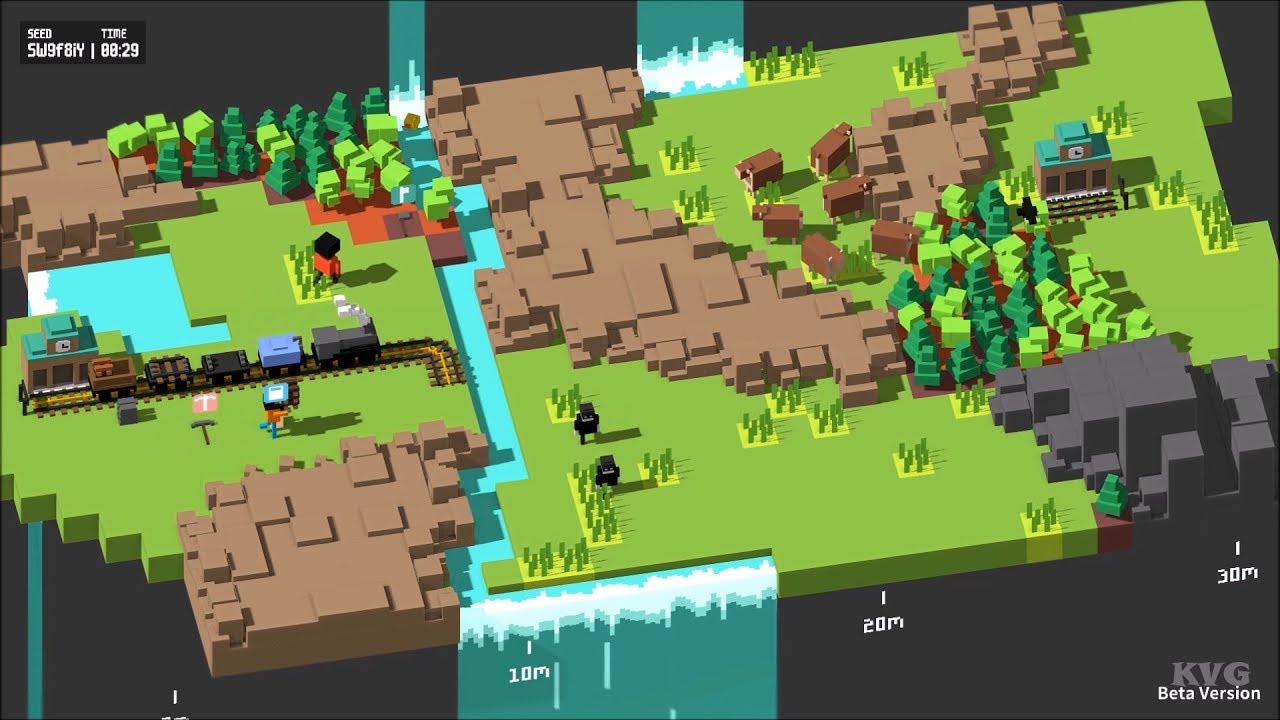
Unrailed! is a co-op multiplayer game in the vein of Overcooked! where you have to work with friends to build a train track across endless proc-gen worlds. The idea is that you are laying the tracks before the train in an effort to get it from one side of a map to another. You’ll need to deal with mountains and rivers, forests and your own compatriots to get the job done. This one looks like a cute, if anarchic, little party game. One to throw at the natural organizers in your life.
next week
A little peek into the future: next week’s title is Cook, Serve, Delicious! 3?!, a restaurant management game where you are also the head chef. We’ll talk more about that one next week.
And that’s all for this week! You can grab this week’s titles at the Epic Games Store right over here. Will you be grabbing this week’s titles? Have you played them before? Give us your thoughts in the comments below.
The second wave of Mario Kart 8 Deluxe Booster Course tracks just dropped including the very first Australian themed track in Sydney Sprint as well as some absolute banger such as Kalimari Desert and Mushroom Gorge.
These include:
Sky-High Sundae (New)
Kalimari Desert (Nintendo 64)
Mario Circuit 3 (Super Mario Kart)
Mushroom Gorge (Mario Kart Wii)
Sydney Sprint (Mario Kart Tour)
Waluigi Pinball (Mario Kart DS)
Snow Land (Mario Kart Super Circuit)
New York Minute (Mario Kart Tour)
You can watch a race through Sydney Sprint below:
You can get access to the courses by either being a Nintendo Switch Online + Expansion Pack member or purchase the pack separately. There are still 32 more courses to be released before the end of 2023.
Something that wasn’t expected at all is the fact that Coconut Mall has been updated to once again include moving cars. In the original Wii version of the track, the cars moved back and forth and provided one last roadblock for players, but everyone was disappointed to see that they were static on the Switch version.
Nintendo has not only fixed this, but also taken it to a whole new level as they now drive and spin and are almost impossible to miss as you drive through.
I already had a sick and twisted love for Cult of the Lamb just from playing the preview, but now that love has grown thanks to my new little monstrosity.
I like to think we all remember the evil little beasts that were the Fuzzy sonic the hedgehog Xbox controllers, released in celebration of the very good sonic the hedgehog 2. They were gross, horrid creatures without even the intention to be so. And I absolutely loved them for it. Let’s look at them again, as a treat.
Yeaaah. There they are. (Image: Xbox)
They were cryptid-esque, and they probably had a weird smell. Isn’t that beautiful?
Now that’s all unwell and bad, but it had me wanting more. I think there should be more truly wretched and evil controllers, because why not? Luckily, thanks to the good folks over at Massive Monster, Devolver Digital, and the galaxy-brained folks over at Adelaide-based custom controller makers We Are Robots, I now get to have this wicked little gremlin in my sad, sweaty hands.
It keeps me warm. (Image: Kotaku Australia)
I love the Lamb. I even praise the Lamb. This controller is the perfect piece of equipment to feed my faithful followers slop and slay Eldritch creatures.
Unfortunately, this controller is not available for sale, but We Are Robots are a very cool and very talented bunch of folks that make awesome custom controllers, so I highly recommend checking out their work if you’re looking for a controller that fits you perfectly .
This controller fits me perfectly for a number of reasons. First of all, I love Cult of the Lamb. Second of all, I’m terrible. Third of all, I think the most beautiful things also happen to be the truly most yucky and icky things. The customizations are smooth, and my hands are warm thanks to the evil-infused wool of the controller.
It’s not long now, my friends, that you will experience the goodness of Massive Monster’s Cult of the Lamb. If you’re not already pumped for it like I am, here’s a little yarn on how much I like it. And if you’d like to know more about what went into its creation, you can check out my interview with Julian Wilton, the creative director of Massive Monster.
Cult of theLamb releases on PC, Mac, Nintendo Switch, PlayStation 4, PlayStation 5, Xbox One, and Xbox Series X|S on August 12th, 2022.
I’ll always remember when I first started writing at Traxion.GG, one of my first tasks included looking into a few different “simulators” that didn’t really revolve around racing.
Car Mechanic Simulator and Motorcycle Mechanic Simulator were both great learning pieces for me, and I really learned to appreciate the genre. It wasn’t racing games or esports, but like Rocket League, those titles did have cars and that was enough for us to consider covering them here on Traxion.GG.
Although Gas Station Simulator and PowerWash Simulator (man, was THAT a stretch) both weren’t made by the same devs or published by the same companies, just digging in to them all was such a change of pace from the fast and furious nature of the racing game genre.
The original start date of the playtest, 13th July, was pushed back two weeks. The playtest has been extended to Monday (8th August 2022) as a result, but I was able to find some time this week to sit down and take on the early stages of the developing simulation.
LOADING IN…
I don’t think I once hit the handbrake button. Maybe useful when the game is fully completed?
While it should be clearly stated that this is an early beta version of the gamethus not yet fully functional, I was extremely impressed with the amount of available things to do in this small slice of video game.
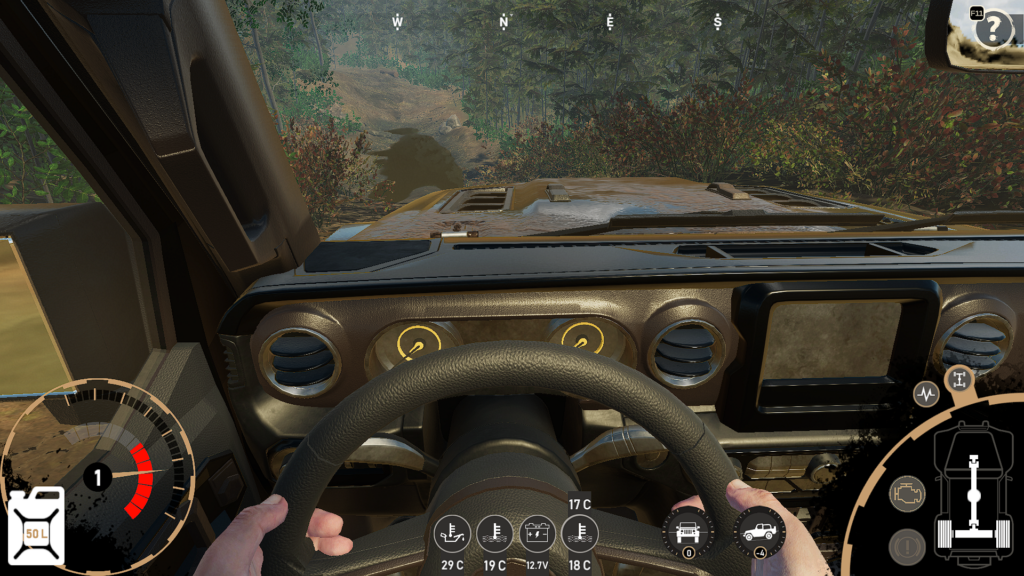
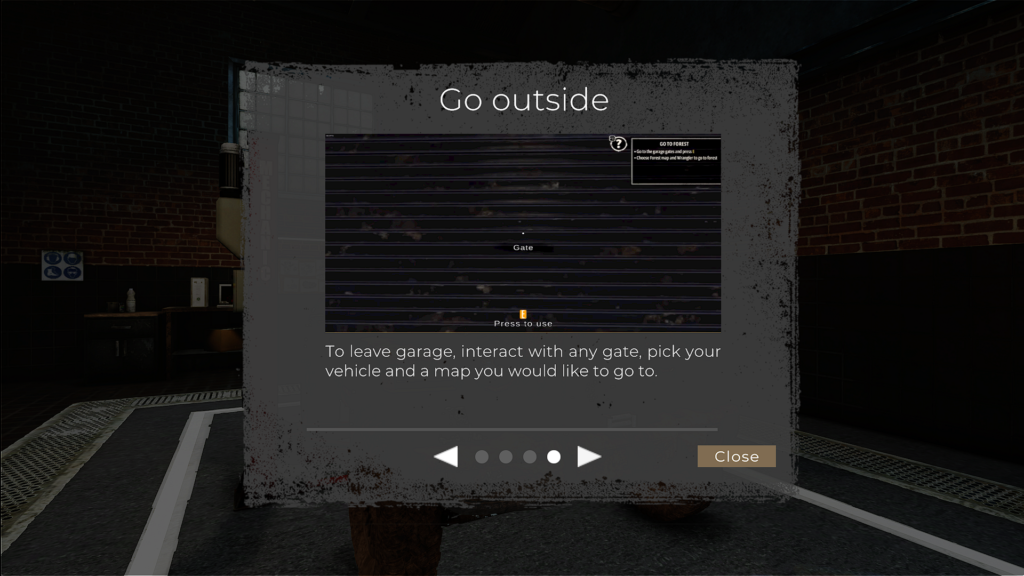
A new game file loads players into the Forest wilderness in the Jeep-esque Wrangler vehicle. While there isn’t a map just yet (hopefully there will be one), there is a compass-like bar at the top which gives direction plus where landmark-type areas are.
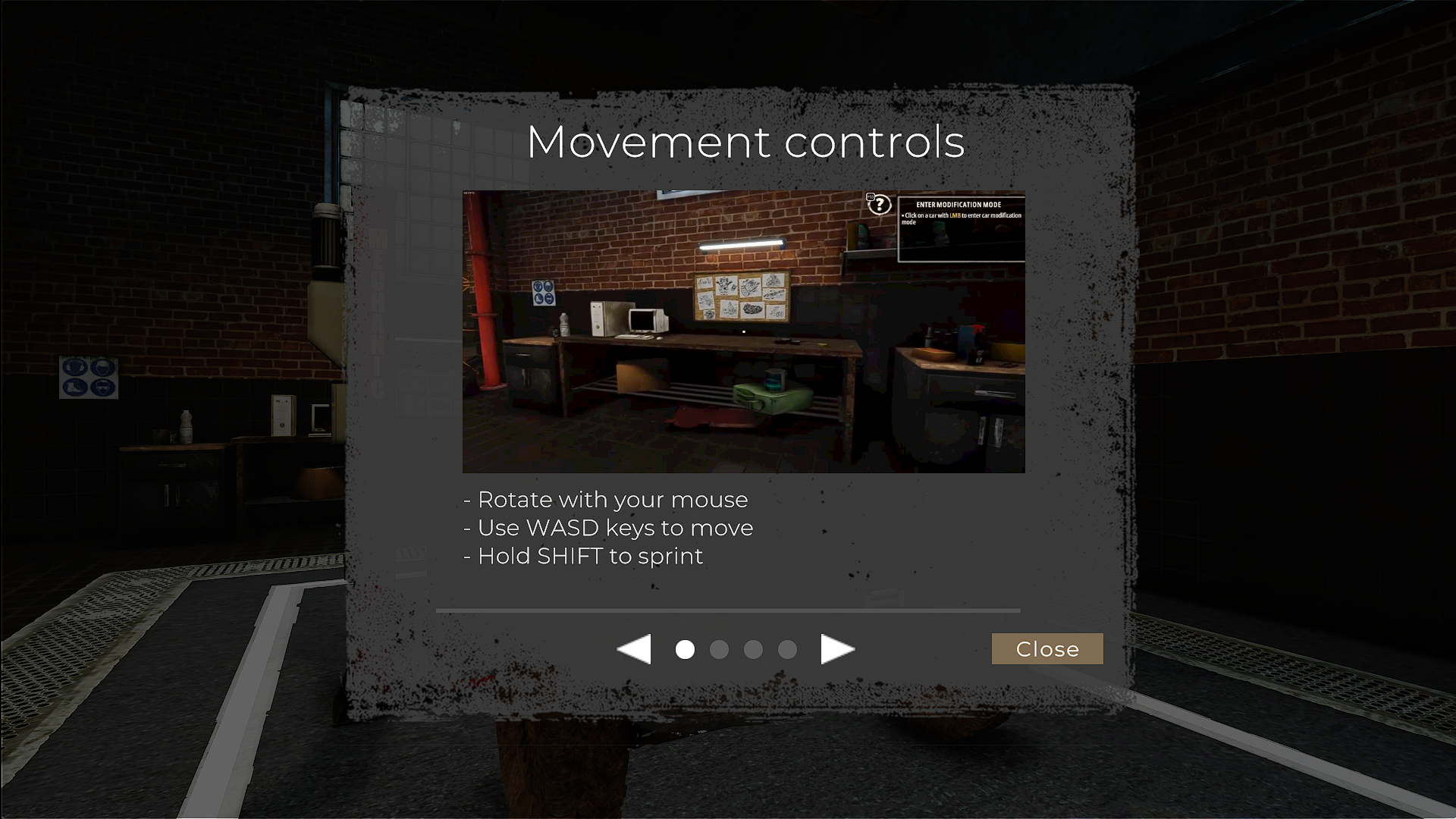
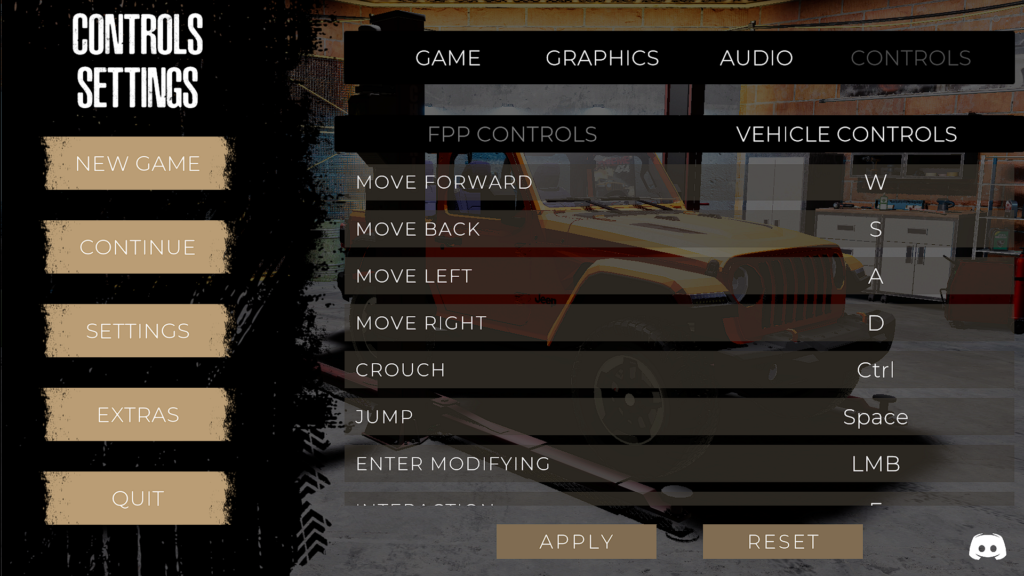
Using the provided WASD keyboard control scheme, which was not changeable at this time during the playtest, you’ll drive through a puddle and try to get up a steep hill. You can change between RWD and 4WD, plus check the status of your Wrangler.
That’s a lotta damage
After attempting to go up the hill, the engine expires and you’ll be asked to go to the Garage. The Garage is where all the mechanic magic happens.
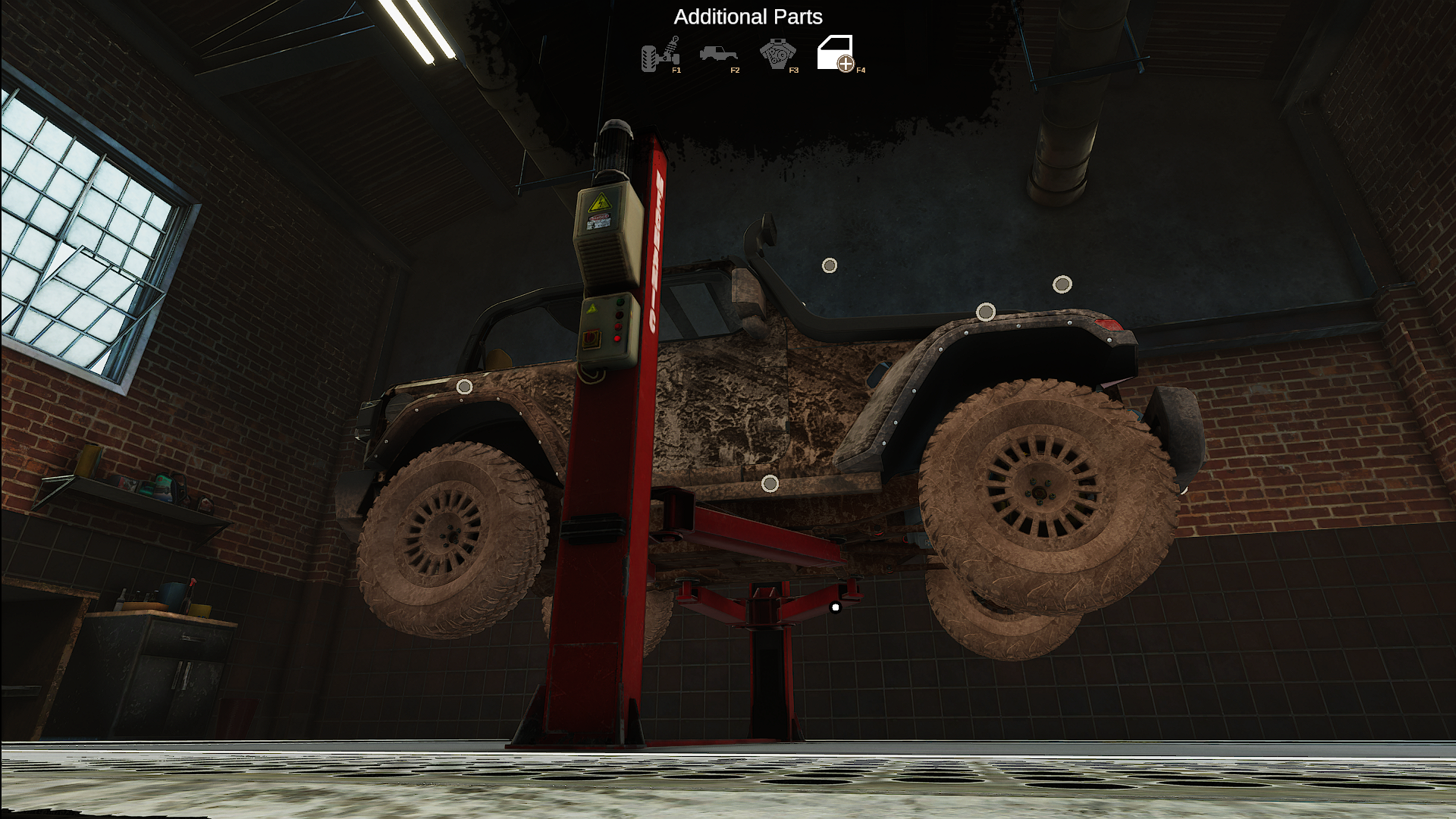
While in the Garage, players will get a glimpse into how to work on the car. For now, the amount that can be done is limited, but if you’ve played these mechanic-type simulators before, it’s nothing out of the ordinary.
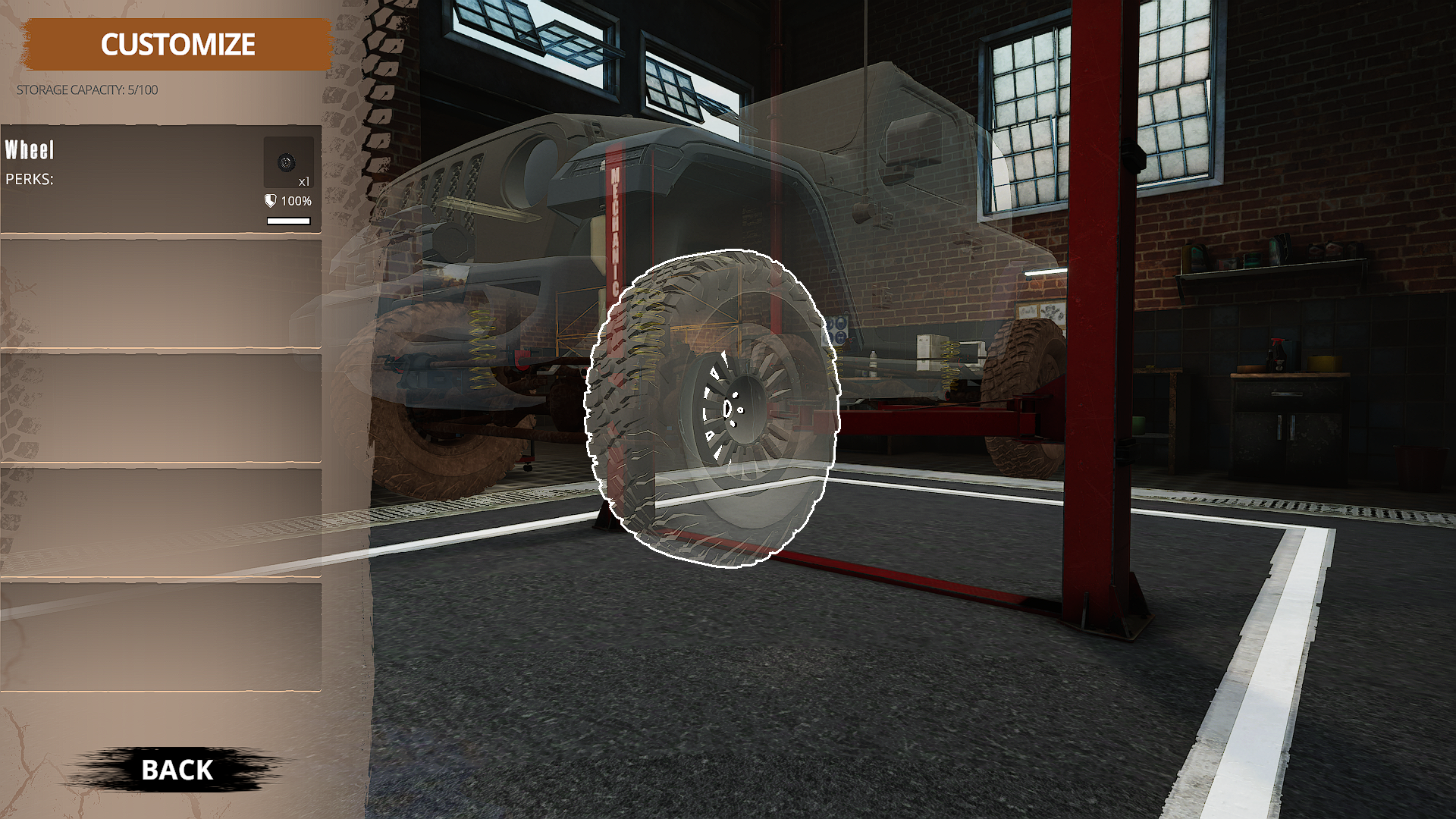
Click to do things, like unscrew things, dismount and remount parts, check the status of parts, etc. Pretty normal stuff, even non-mechanically minded folks like me can get a handle on things.
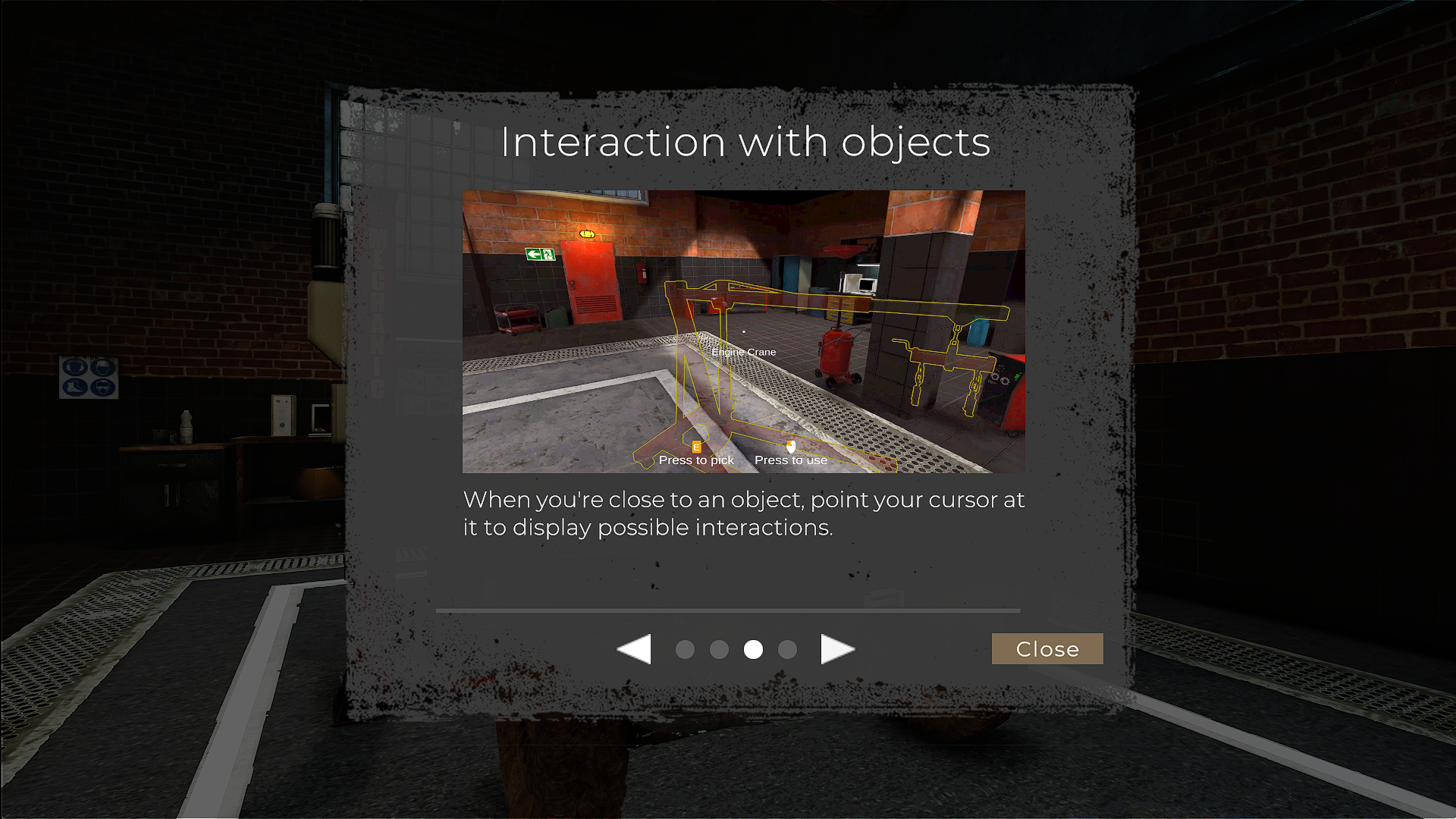
The tutorial said I could move an engine crane. I looked for about 10 minutes for it and couldn’t find it. I have been lied to.
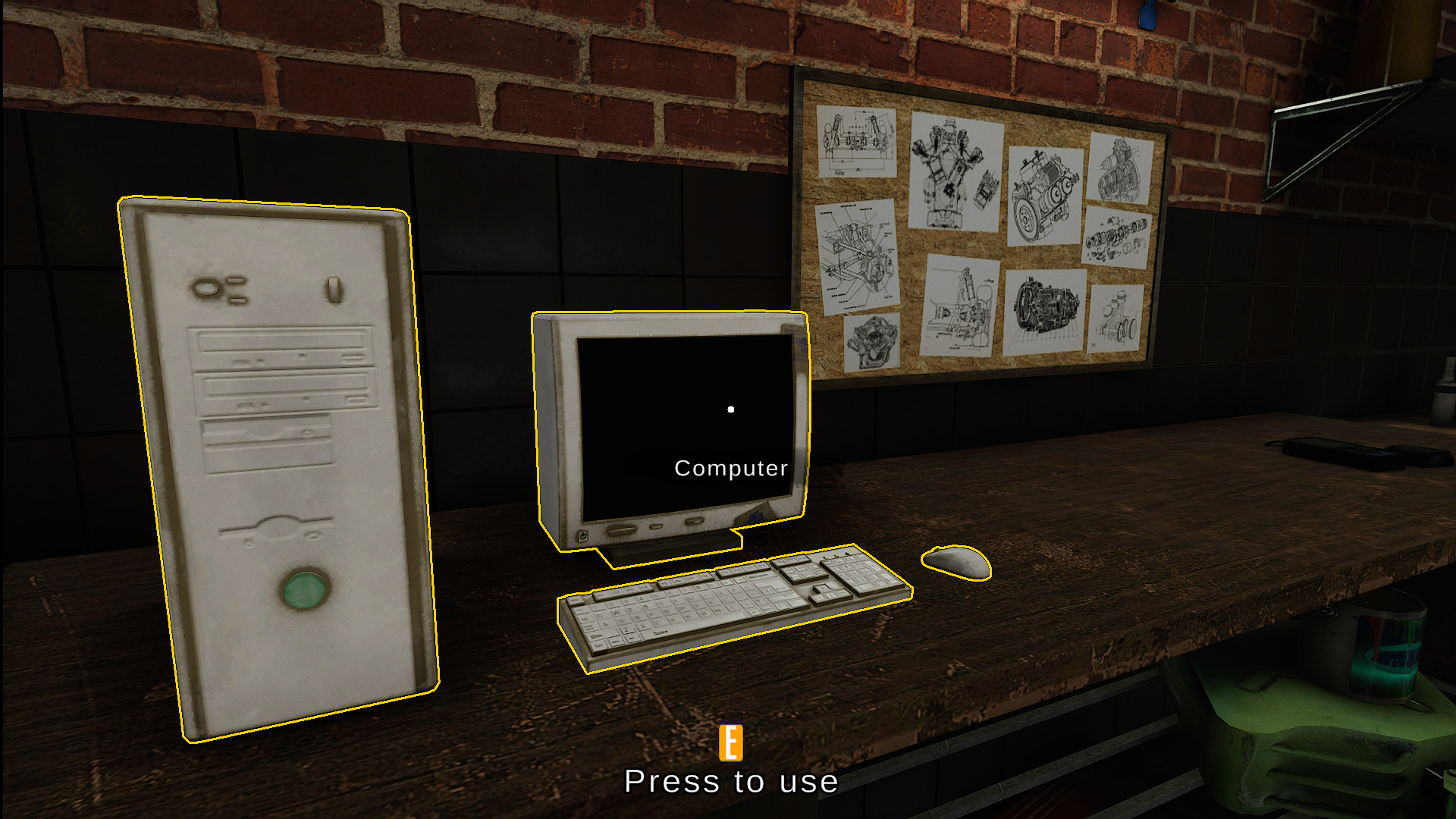
The Computer allows players to order parts – the tutorial period demands certain types of parts be ordered so that on the next part of the playthrough, they can be installed.
Money isn’t an issue for now, but it is finite. When the title releases fully, there will be a way to earn more through assignments / jobs.
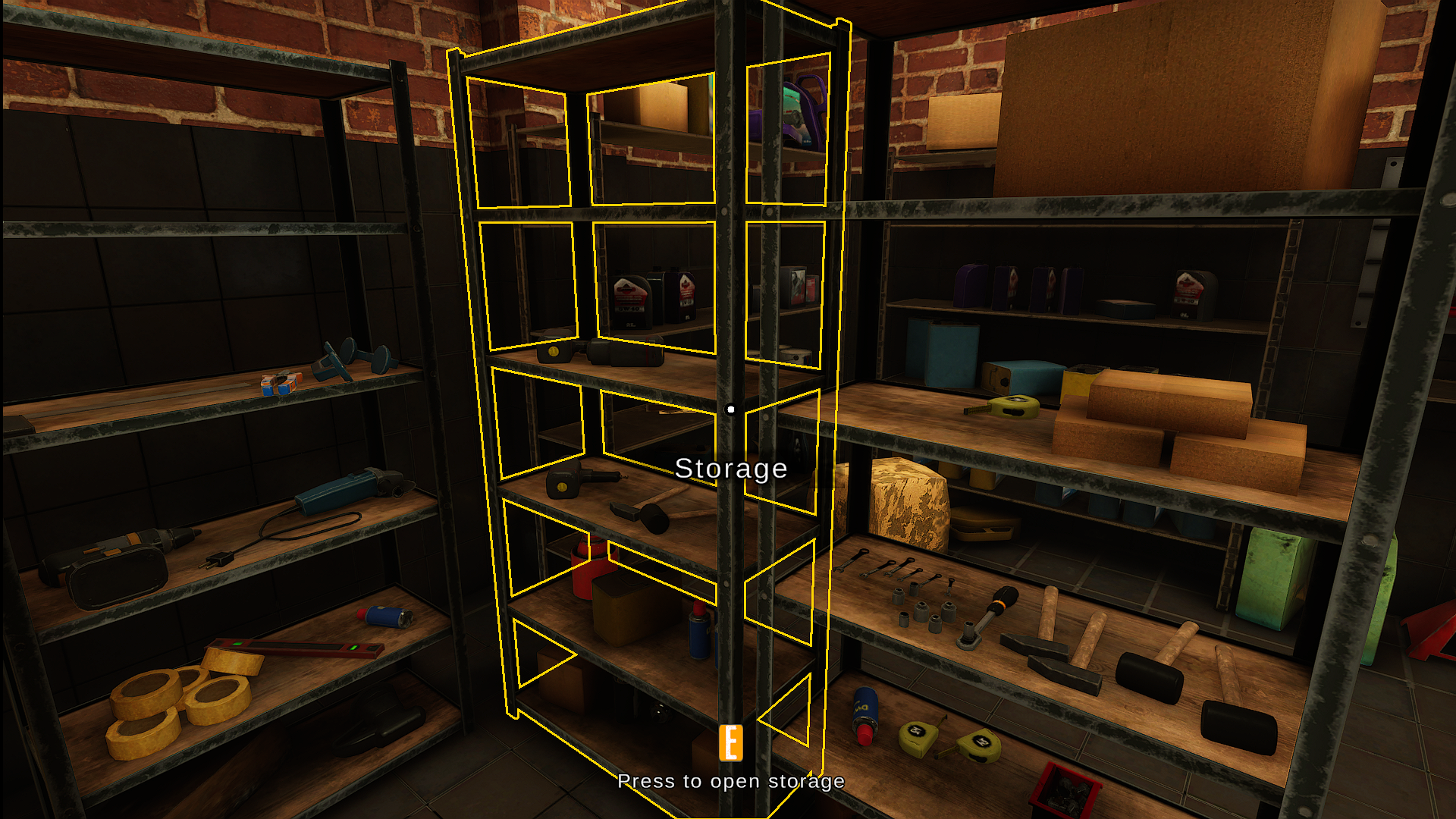
There’s also a storage area. I assume you’ll be able to store things there. For now, I couldn’t do anything in there, unless I missed something.
Going on the computer on a computer. Computer perception.
Once you’ve clicked and replaced the parts, screwed on all the bolts, and added the necessary accessories, it’s back to the Forest level. You don’t do anything but magically have the engine replaced (or upgraded) for now, but do make sure you remember to do that.
You’ll take the same path as before, but the engine will not blow up this time. You can try to put the Wrangler in 4WD, but even then, you just can’t run up that hill.
A winch was one of the required installations, hook this up to a nearby tree and pull your Wrangler up the hill, and once you’ve done this, the tutorial is over. You can keep messing around in the area, but there’s not much else to do once hitting this point.
INITIAL THOUGHTS
You’re welcome.
Like I imagined when learning of the title, it felt very much like SnowRunner, in the way the Wrangle drove over different terrain and the necessary use of the winch to pull up over the hill. What I liked more was that this simulated the process even more.
While in SnowRunner, there’s never a point where the player gets out of the vehicle, Offroad Mechanic Simulator had a moveable character that can get in and out of the vehicle when driving. In effect, it adds a ton more immersion to the program.
The character will be able to walk up to a tree, set up a Tree Strap, walk back to the Wrangler, grab the hook end of the Winch and then walk back to the tree and make the connection. Then from there, the player would get back in the car and pull up the hill as you would.
Offroad and then some
This is not SnowRunner, however, this is a Mechanic Simulator. I wouldn’t expect to have tasks like delivering steel to one end of a map.
This will be more the driving aspect, where players will be trying different parts and pieces to accomplish driving tasks around the different maps.
The mechanic portion of the simulation isn’t my personal favorite thing to do – as it is with most of those types of games, it seems like a menial task to click and click and click to remove, replace, and install parts, but there’s really no other way to simulate that so I get it.
How to mechanic 101
At least in the VR titles you can “pick up” parts and move them into the place. That’s not the case here and I wouldn’t expect it to be without VR support.
I didn’t run into too many issues during my brief playthrough either, which is good. I did notice an issue where replacing coil springs, the top bolts on the right side of the Wrangler wouldn’t properly fasten to the shocks.
I’d notice on the mount process when I moved to the left that the top screws were showing unmounted, so I had to go back, take off the tire, take off the screw and re-mount it to fix the problem.
LOOKING FORWARD
Weeeeeeeeeeeee!!!
The playtest was just a first glimpse into the coming program, and from what I’ve seen, there is definitely potential. I would argue that with the tens of other mechanic simulator-style titles, that whatever the final product of Offroad Mechanic Simulator needs to stand out to be successful.
Whatever that may be, well that’s up to the developers to decide upon. There are some listed features expected in the final release, including more cars and environments to test in.
There should be a Career mode as well, which should help to bring purpose to the title instead of the mundane repetition that these titles have the tendency to fall into.
Wow OK.
The game looks decent already for a beta, but I wouldn’t call the breathtaking scenery just yet. There’s still work to be done of course, but I was slightly disappointed that we didn’t get to try or see that canyon/mountain type of environment that was promoted in the promotional material.
I do hope there is some type of wheel support, or even controller support when it does launch. While it worked fine on the keyboard, and while this is primarily a mechanical simulation, I don’t like driving with my fingertips on a flat surface, sorry.
It seems as though this will eventually be customizable.
The team encourages you to join their Discord in the “extras” section of the menu. There’s a small discussion currently going on in there with some dev updates here and there.
Also, when you exit the game, it takes you to a Google Survey. Remember, this is a playtest, so if you are participating, leave some feedback.
We’ll be keeping our eyes on the title as the development continues. If everything goes to plan, expect it to launch early next year. There is no price listed just yet, but Steam users can wishlist it and still sign up for the playtest which runs through Monday 8th August.
Scientists have constructed the most complete and detailed single-cell map of embryo development in any animal to date, using the fruit fly as a model organism.
Published in Science, this study, co-led by Eileen Furlong at EMBL and Jay Shendure at the University of Washington, harnesses data from over one million embryonic cells spanning all stages of embryo development and represents a significant advance at multiple levels. This fundamental research also aids scientists’ ability to pursue questions like how mutations lead to different developmental defects. In addition, it provides a path to understand the vast non-coding part of our genome that contains most disease-associated mutations.
“Just capturing the entirety of embryogenesis – all stages and all cell types – to obtain a more complete view of the cell states and molecular changes that accompany development is a feat in its own right,” said Eileen Furlong, Head of EMBL’s Genome Biology unit . “But what I’m really excited about is the use of deep learning to obtain a continuous view of the molecular changes driving embryonic development – down to the minute.”
Embryonic development begins with the fertilization of an egg, followed by a series of cell divisions and decisions that give rise to a very complex multi-cellular embryo that can move, eat, sense, and interact with its environment. Researchers have been studying this process of embryonic development for over a hundred years, but only in the last decade have new technologies enabled scientists to identify molecular changes that accompany cell transitions at a single-cell level.
These single-cell studies have raised tremendous excitement as they demonstrated the complexity of cell types in tissues, even identifying new cell types, and revealed their developmental trajectories in addition to underlying molecular changes. However, attempts to profile the entirety of embryo development at single-cell resolution have been out of reach due to many technical challenges in sampling, costs, and technologies.
In this regard, the fruit fly (Drosophila melanogaster), a pre-eminent model organism in developmental biology, gene regulation, and chromatin biology, has some key advantages when it comes to developing new approaches to address this. Fruit fly embryonic development occurs extremely rapidly; within just 20 hours after fertilization, all tissues have formed, including the brain, gut, and heart, so the organism can crawl and eat. This, in combination with the many discoveries made in fruit flies that have propelled understanding of how genes and their products work, encouraged the Furlong lab and their collaborators to take on this challenge.
“Our goal was to obtain a continuous view of all stages of embryogenesis, to capture all of the dynamics and changes as an embryo develops, not just at the level of RNA but also the control elements that regulate this process,” said co-author Stefano Secchia, a PhD student in the Furlong group.
Preliminary work with ‘enhancers’
In 2018, the Furlong and Shendure groups showed the feasibility of profiling ‘open’ chromatin at single-cell resolution in embryos and how these DNA regions often represent active developmental enhancers. ‘Enhancers’ are DNA segments that act as control switches to turn genes on and off. The data showed which cell types in the embryo are using which enhancers at a given time point and how this use changes over time. Such a map is essential to understand what drives specific aspects of embryonic development.
“I got really excited when I saw those results,” Furlong said. “To go beyond RNA to look upstream at these regulatory switches in single cells was something I didn’t think would be possible for a long time.”
Going beyond ‘snapshots’
The 2018 study was state-of-the-art at the time, profiling ~20,000 cells in three different windows of embryo development (at the start, middle, and end). However, this work still only gave snapshots of the cellular diversity and regulation during specific discrete time points. The team therefore explored the potential of using samples from overlapping time windows, and as a proof-of-principle, applied the concept to one specific lineage – the muscle.
This then set the stage to scale up dramatically using new technology developed in the Shendure lab. The team’s current work profiled open chromatin from almost one million cells and RNA from half a million cells from overlapping time-points that span the entirety of fruit fly embryo development.
Using a type of machine learning, the researchers took advantage of the overlapping time-points to predict time at a much finer resolution. Co-author Diego Calderon, a postdoctoral researcher in the Shendure lab, trained a neural network to predict the precise developmental time for every cell.
“Even though the collected samples contained embryos with slightly different ages within a 2- or 4-hour time window, this method allows you to zoom in to any part of this embryogenesis timeline at a scale of minutes,” Calderon said.
Shendure added, “I was amazed how well this works. We could capture molecular changes that occur very rapidly in time, in minutes, which previous researchers had uncovered by handpicking embryos every three minutes.”
In the future, such an approach would not only be time-saving but can serve as a reference for normal embryo development to see how things might change in different embryo mutants. This could pinpoint exactly when, and in which cell type, a mutant’s phenotype arises, as the researchers showed in the muscle. In other words, this work not only helps to understand how development normally occurs but also opens the door to understanding how different mutations can mess it up.
The new predictive potential that this research portends, based on samples from much larger time-windows, could be used as a framework for other model systems. For example, mammalian embryo development, in vitro cell differentiation, or even post drug treatment in diseased cells, where gaps in sampling times can be designed to facilitate optimal time prediction at a finder resolution.
Going forward, the team plans to explore the atlas’s predictive powers.
“Combining all the new tools at our disposal in single-cell genomics, computation, and genetic engineering, I would love to see if we could predict what happens to individual cell fates in vivo following a genetic mutation,” Furlong said. “…but we’re not there yet. However, before this project, I also thought the current work wouldn’t be possible any time soon.”
/PublicRelease. This material from the originating organization/author(s) may be of a point-in-time nature, edited for clarity, style and length. The views and opinions expressed are those of the author(s).
Back in April, Samsung US and iFixit announced their Galaxy self-repair program though it did not immediately start selling the parts required for it. The floodgates are finally open and you can now order genuine spare parts and tools to repair your Samsung devices.
Devices covered by Samsung and iFixit’s self-repair program
The repair program only covers the Galaxy S20 series and S21 series phones, as well as the Galaxy Tab S7+ tablet for now. You get access to three component types – display assemblies, back covers and charging ports. Interestingly enough Samsung has still not shared any details about battery replacements.
Component prices for the older Galaxy S20 series models range from $59.99 for the charging port assembly on all three models to $224.99 for the S20 Ultra’s display assembly. The Galaxy S21’s display assembly comes in at $160.99 while the S21 Ultra’s is $232.99. A Galaxy Tab S7+ display will go for $219.99 while the charging port assembly is $59.99.
Those who want to repair their own Galaxy device can order the genuine Samsung parts and tools from Samsung Store including retail and service locations as well as from iFixit’s site. Samsung is committed to expanding the devices and repair components covered by the program in the future.
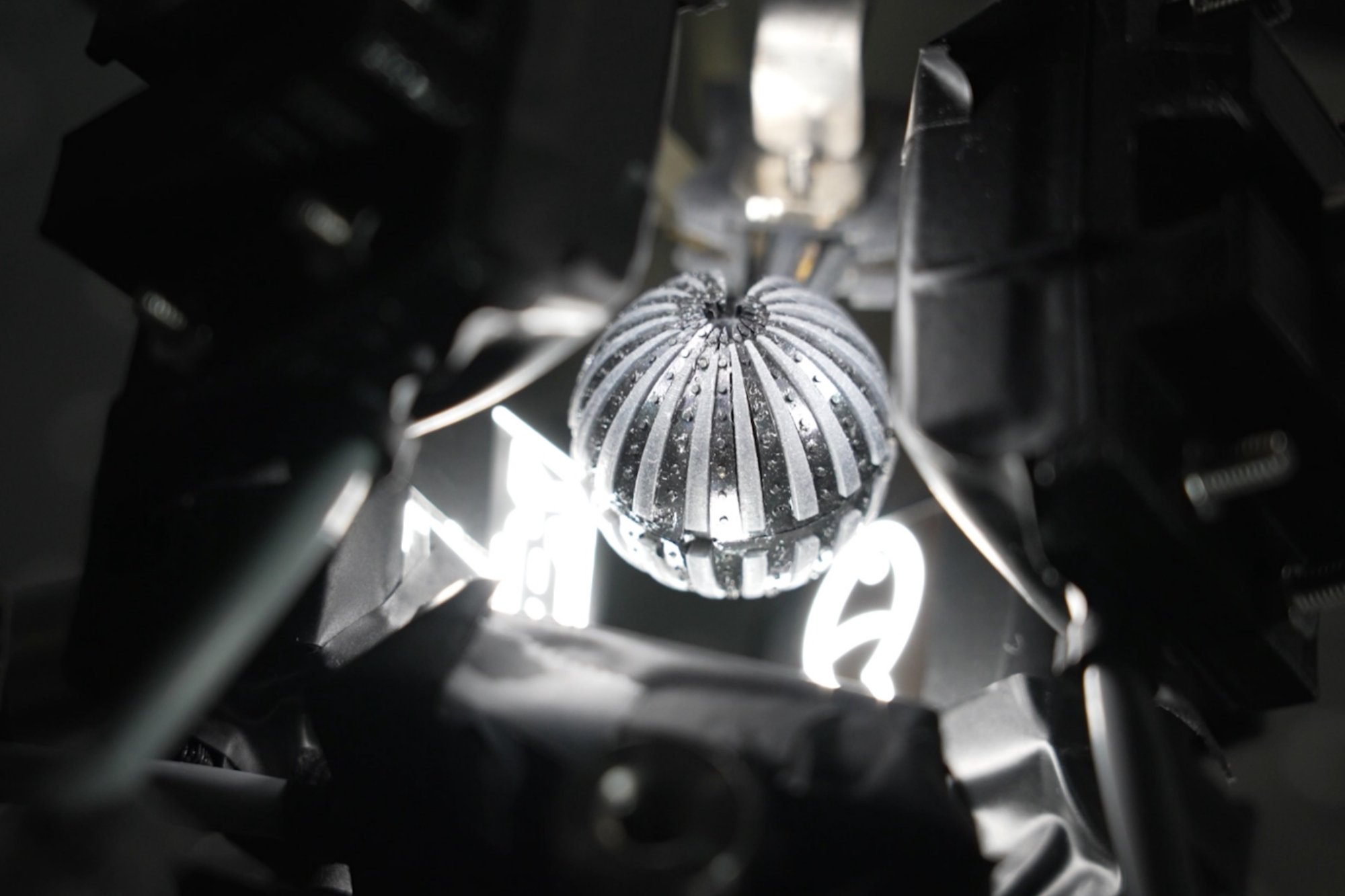
Giving our hardware sight has empowered a host of applications in self-driving cars, object detection, and crop monitoring. But unlike animals, synthetic vision systems can’t simply evolve under natural habitats. Dynamic visual systems that can navigate both land and water, therefore, have yet to power our machines — leading researchers from MIT, the Gwangju Institute of Science and Technology (GIST), and Seoul National University in Korea to develop a novel artificial vision system that closely replicates the vision of the fiddler crab and is able to tackle both terrains.
The semi-terrestrial species—known affectionately as the calling crab, as it appears to be beckoning with its huge claws—has amphibious imaging ability and an extremely wide field of view, as all current systems are limited to hemispherical. The new artificial eye, resembling a spherical, largely nondescript, small, black ball, makes meaning of its inputs through a mixture of materials that process and understand light. The scientists combined an array of flat microlenses with a graded refractive index profile, and a flexible photodiode array with comb-shaped patterns, all wrapped on the 3D spherical structure. This configuration meant that light rays from multiple sources would always converge at the same spot on the image sensor, regardless of the refractive index of its surroundings.
A paper on this system, co-authored by Frédo Durand, an MIT professor of electrical engineering and computer science and affiliate of the Computer Science and Artificial Intelligence Laboratory (CSAIL), and 15 others, appears in the July issue of the journal Nature Electronics.
Both the amphibious and panoramic imaging capabilities were tested in in-air and in-water experiments by imaging five objects with different distances and directions, and the system provided consistent image quality and an almost 360-degree field of view in both terrestrial and aquatic environments. . Meaning: It could see both underwater and on land, where previous systems have been limited to a single domain.
There’s more than meets the eye when it comes to fiddler crabs. Behind their massive claws exists a powerful, unique vision system that evolved from living both underwater and on land. The creatures’ flat corneas, combined with a graded refractive index, counter defocusing effects arising from changes in the external environment — an overwhelming limit for other compound eyes. The crabs also have a 3D omnidirectional field of view, from an ellipsoidal and stalk-eye structure. They’ve evolved to look at almost everything at once to avoid attacks on wide-open tidal flats, and to communicate and interact with mates.
To be sure, biomimetic cameras aren’t new. In 2013, a wide field of view (FoV) camera that mimicked the compound eyes of an insect was reported in Nature, and in 2020, a wide FoV camera mimicking a fish eye emerged. While these cameras can capture large areas at once, it’s structurally difficult to exceed 180 degrees, and more recently, commercial products with 360-degree FoV have come into play. These can be clunky, though, since they have to merge images taken from two or more cameras, and to enlarge the field of view, you need an optical system with a complex configuration, which causes image distortion. It’s also challenging to sustain focusing capability when the surrounding environment changes, such as in air and underwater — hence the impetus to look to the calling crab.
The crab proved a worthy muse. During tests, five cutesy objects (dolphin, airplane, submarine, fish, and ship), at different distances were projected onto the artificial vision system from different angles. The team performed multi-laser spot imaging experiments, and the artificial images matched the simulation. To go deep, they immersed the device halfway in water in a container.
A logical extension of the work includes looking at biologically inspired light-adaptation schemes in the quest for higher resolution and superior image-processing techniques.
“This is a spectacular piece of optical engineering and non-planar imaging, combining aspects of bio-inspired design and advanced flexible electronics to achieve unique capabilities unavailable in conventional cameras,” says John A. Rogers, the Louis Simpson and Kimberly Querrey Professor of Materials Science and Engineering, Biomedical Engineering, and Neurological Surgery at Northwestern University, who was not involved in the work. “Potential uses span from population surveillance to environmental monitoring.”
This research was supported by the Institute for Basic Science, the National Research Foundation of Korea, and the GIST-MIT Research Collaboration grant funded by the GIST in 2022.
Supercars’ Head of Motorsport, Adrian Burgess, predicts some teams will be testing their Gen3 cars in December.
Production of the next generation of Supercar chassis is now underway, ahead of their competitive debut in a Newcastle season-opener tentatively scheduled for March 10-12.
Gen3 has recently gone through a late redesign, potentially adding to turn-around pressures for teams, who may need to assemble cars over the Christmas break.
Walkinshaw Andretti United, Erebus Motorsport, and Triple Eight will construct their own chassis, while PACE Innovations will turn around another batch of builds for select teams to then assemble themselves.
Burgess gave an update on the timeline of Gen3’s rollout, outlining the project is on track, with an expected delivery of chassis to teams in December.
“You always want more time, that’s just life,” Burgess told Speedcafe.com.
“We’re on track; we’re certainly not saying it’s easy, there will be a lot of work between now and the end of the year.
“Hopefully the cars will run in team hands in December, but if not, it’ll be January. That’s what we’re working towards.
“Chassis are back in production now; we obviously had to halt production while we did the big ergonomic changes earlier.
“So the four manufacturers that are making the chassis are back in production there.
“Every seven or eight days there’ll be another chassis from [PACE]; I think they’re making 15 or 16 cars so they’ve got quite a good production plan in how quickly they can make them.”
It’s the finalizing and signing off of the various control components that is also a time-critical point, enabling teams to begin manufacturing parts for the in-house assembly phase.
“The fuel systems are being made now…the teams are making rear suspension, they’re making uprights, spindles,” explained Burgess.
“A lot of that information has gone out to the teams and they’re starting to manufacture.
“The further we go in the programme, we’re signing off on a lot more parts.
“We’re trying to give the teams as much information as we can, but equally, we’ve got to make sure we validate it correctly and sign it off correctly before we hand the information over.
“Otherwise, there’s going to be a million updates and they’re going to be making stuff that’s redundant.
“So we don’t want to do that, obviously. Every time we go testing, we’re finalizing or validating particular parts, and then that information gets released.”
As reported by Speedcafe.com last month, Triple Eight is in fact ahead of schedule on its eight Chevrolet Camaro builds.
It could present a situation where some teams are on track testing before others, based upon assembly timelines.
Burgess affirmed the process will run smoothly.
“It’s certainly not perfect. And it never is,” he added.
“We’re comfortable and the teams know they’ve got a good amount of work in front of them.
“But this is what they do, and this is what we will do together, and we’ll make it as painless as we can.
“Everyone’s confident we’ll be on the grid with 25 cars next March and hopefully we’ve got a number of those testing towards the end of this season.
“If it’s not December, then January then we should be out with the full field.”
Microsoft is giving Xbox Series S game developers more control over memory on the console. A new Xbox software development kit has been released to developers recently, and it frees up more memory for developers to access for Xbox Series S games and boosts performance in certain titles.
“Hundreds of additional megabytes of memory are now available to Xbox Series S developers,” says Microsoft’s Game Dev team in a video detailing the updates. “This gives developers more control over memory, which can improve graphics performance in memory-constrained conditions.”
The $299 Xbox Series S launched as a console capable of 1440p gaming at up to 120fps, but many games have only hit 1080p and without the higher frame rates of the more powerful Xbox Series X. Microsoft’s larger and more powerful Xbox Series X console ships with far more GPU power, but it also has 16GB of RAM while the smaller Xbox Series S only has 10GB. Developers have to work with around 8GB of memory on the Series S, as Microsoft reserves around 2GB for OS tasks.
Those memory constraints have been detailed by Digital Foundry, with developers reportedly feeling some pain around optimizing games for the Xbox Series S. It’s less the CPU and GPU power of the Xbox Series S, particularly as the Series S has the same CPU as the X, but more the memory situation. Microsoft’s improvements, albeit small, could help reduce some of that friction around developing games for the Xbox Series S.
Microsoft has also “addressed an issue where graphics virtual addresses were being allocated considerably slower than non-graphics virtual addresses,” which means Xbox games can now take better advantage of other recent memory enhancements that Microsoft has added to its Xbox developer tools. Fingers crossed this all means we’ll see some improvements to performance in some games running on the Xbox Series S soon.