Categories
Australia

Climate target bill passes lower house after being amended by Greens and ‘teal’ crossbenchers

A bill to write the government’s 43 per cent emissions reduction target into law has passed the lower house after the government agreed to several minor amendments from the crossbench.

The federal government did not need the votes of crossbenchers in the lower house to pass its climate target bill, but it agreed to support amendments moved by a number of independents.

The “teal” independent MPs who swept into parliament on a platform of climate action and government integrity have celebrated the federal government’s willingness to negotiate changes to its bill.

Independent MP Zali Steggall, who topped former prime minister Tony Abbott in 2019, said negotiations on the first major piece of legislation to be brought to parliament had been much more collaborative than with the previous government.

“I can only say the evidence so far is that there is a genuine desire from senior ministers in the government to work with us, they have heard the calls from our communities,” Ms Steggall said.

“We are getting numerous briefings on significant pieces of legislation, we are contributing, we are raising our concerns and amendments are being agreed to.”

The government voted to amend its bill to spell out that its approach to emissions reduction would draw on the “best available scientific knowledge”, that its 43 per cent target was a minimum standard, and that climate change policies benefit regional communities.

It will now also have to seek advice from the Climate Change Authority before setting future climate targets.

Before voting to pass the bill, Climate Change Minister Chris Bowen took a moment to thank the crossbench for their contributions, saying “today is a good day for our country.”

Crossbench lends support, but aims for higher target

The teal MPs were disappointed by a target they see as insufficient for limiting global warming to below 2 degrees Celsius, and said they would continue to push the government for more ambitious action.

The government rejected a separate Greens amendment to lift its target to reduce emissions by 75 per cent by 2030 and reach net zero by 2035.

Greens leader Adam Bandt said the government’s target would lead to the death of the Great Barrier Reef, failed crops and worsening natural disasters.

“That is the science. That is why we are doing this,” Mr Bandt said.

“We’re not doing this to try [to] stop pollution a little bit. We are doing this to try [to] stop climate change becoming a runaway chain reaction.”

Bowen stands with his arms leaning on the dispatch box on the lower house floor as he speaks.
Chris Bowen said the government would support amendments where they were in line with its policy.(ABC News: Nick Haggarty)

Ms Steggall said the next step for the government must be to phase out oil, coal and gas by ending new approvals, a key sticking point of the Greens, who agreed yesterday to give the bill the votes needed to pass the senate despite not receiving that concession.

Independent MP Kylea Tink said the government must also continue the collaborative precedent it has set.

“The planning starts from now, so whether it’s a fight or whether it’s the capacity to actually work together to move our country forward is what this parliament needs to decide,” Ms Tink said.

“We won’t just accept the minister’s word and we won’t just take it on good faith these things are going to happen.”

Wilson wears a long scarf with bands of red, yellow, white and shades of blue, with rows transitioning from blue to red.
Labor MP Josh Wilson wore a scarf to the chamber that depicted annual average temperatures over time, with each row representing the temperature that year compared to historical averages.(ABC News: Nick Haggarty)

Prime Minister Anthony Albanese said the government’s core policies on climate change were not up for negotiation, but the government would continue to work constructively where reasonable suggestions were made.

He said the climate target bill would not hasten the closure of coal and gas facilities.

Senior Liberal backs 43 per cent emissions target

The Opposition formally decided to oppose the climate target bill earlier this week, though some Liberals have broken with the party in support of an increased target, including Tasmanian MP Bridget Archer who crossed the floor to support the bill.

Shadow Foreign Minister Simon Birmingham said this morning he also supported the higher target, though he stopped short of backing the bill.

“If the 43 per cent target required legislation then I would have wanted to vote for it in a heartbeat. However, it doesn’t require legislation,” Senator Birmingham told ABC Radio.

“[Opposition Leader] Peter Dutton has been clear following the deliberations the Coalition’s had this week that we will be taking a greater level of ambition to the next election.

“The test will now be in terms of that policy, making sure that it is a genuine policy for higher levels of emission reduction.”

Sukkar and Tudge sit looking at their phones, and Joyce sits with his folded arms, on the opposition benches.
The Opposition determined it would oppose the government’s climate target bill.(ABC News: Nick Haggarty)

New MP Monique Ryan, who won Kooyong from former treasurer Josh Frydenberg at the election, said Liberals were leaving their electorates out of the conversation by refusing to engage.

“My predecessor in Kooyong never crossed the floor in his 12 years in parliament,” Dr Ryan said.

“I think that the people of Kooyong today will be very happy that they have a representative who has worked with the government to make this bill stronger, rather than refusing to engage with it and in doing so losing their own voice.

“By taking themselves out of the discussion the Liberals have disenfranchised the people they represent.”

.
Categories
Australia

How Adelaide’s ‘extinct’ Indigenous language Kaurna was brought back to life

Only a few decades ago the Kaurna language was thought to be extinct.

Adelaide’s Kaurna people say it was only ever “sleeping.”

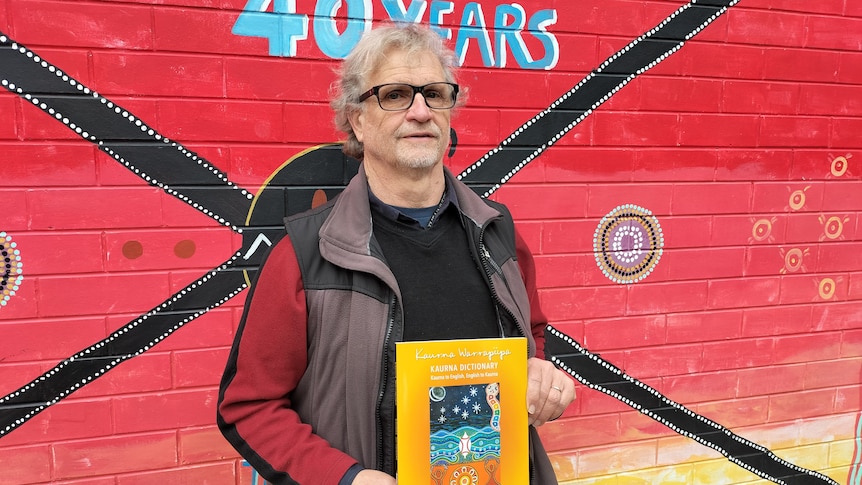
Rob Amery from the University of Adelaide has dedicated his life to reviving Kaurna.

He’s just published the first-ever English to Kaurna dictionary.

“I’m confident that if I got run over by a bus tomorrow it would still continue on,” he said.

“People know enough of the language, know enough of the grammar of Kaurna language to be able to continue the work on without me.”

The Kaurna people’s traditional lands extend from South Australia’s Mid North, through Adelaide, and as far south as the bottom of the Fleurieu Peninsula.

The closest thing to a dictionary before now was written by German missionaries in the 1830s, who documented about 2,000 Kaurna words.

Speaking the language was once forbidden by white Australians, and Kaurna all but faded from use by the 1860s.

Futureproofing First Nations languages

Dr Amery said a physical document was vital for the preservation and growth of the language through education in the community and schools.

His mission, alongside co-authors Susie Greenwood and Jasmin Morley, was to turn a 160-year-old handwritten list of words into a modern handbook for Kaurna.

“We’ve included words from other sources that those German missionaries didn’t record,” he said.

“We’ve done a lot of detailed comparative work with neighboring languages ​​so that we can best work out the optimum pronunciation of those words.”

The dictionary includes 4,000 new words created in consultation with local elders and Kaurna speakers.

For example, mukarntu (computer) comes from a combination of mukamuka (brain) and karntu (lightning).

Until now, school students have learned from a small pool of Kaurna speakers, but several of these have died in recent years.

.

Categories
Australia

Cathy Gray wins Waterhouse Natural Science Art Prize people’s choice award

South Australian artist Cathy Gray hopes highlighting the plight of disappearing native plants will empower Australians to do more to protect them.

Her piece Endangered has won The People’s Choice Dr Wendy Wickes Memoriam Prize as a part of the South Australian Museum’s Waterhouse Natural Science Art Prize.

It was also highly commended by judges for its depiction of the fragile relationship between the arts and the natural world.

Ms Gray’s illustration captured 756 of Australia’s 758 critically endangered and endangered species.

She said while she didn’t win the major prize, it was great that it resonated with people who saw the drawing up close.

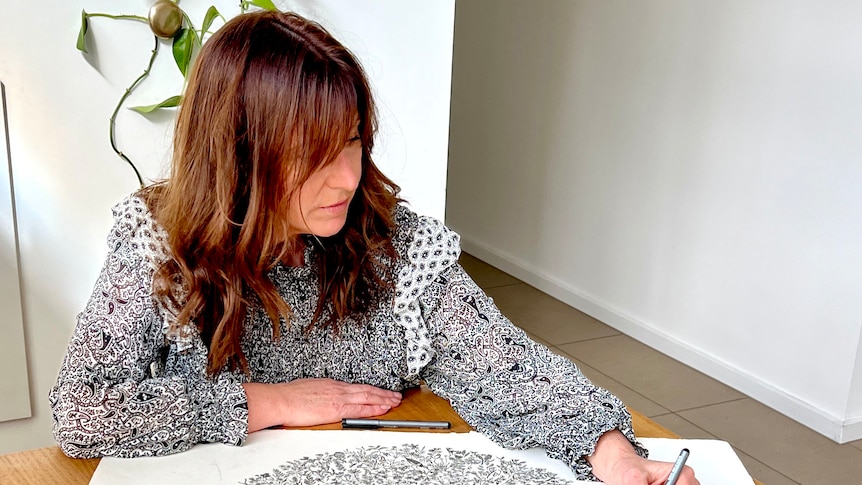
red haired woman sitting down drawing with a pen in her left hand
Ms Gray says she was humbled by the recognition.(Supplied)

“It’s a bit surreal and just such an honour,” Ms Gray said.

“I think for my work especially, it’s very hard to see online and in a photo, but when you go in and you see it in person, just to have that connection and for it to resonate with people, it’s really important.

“We actually have more foreign species now in Australia then we do native.”

close up shot of mandala with a small list of words
Ms Gray says some of the plants featured in her drawing haven’t been seen for 20 years.(Supplied)

She said the loss of Australia’s endangered species was happening right in front of people.

“It’s the plants we may have in our neighborhoods and because of that I believe unlike some environmental issues, people may be empowered to make a difference,” Ms Gray said.

She said she spent more than 400 hours researching and producing the detailed pen-inked mandala.

long list of name of endangered and critically endangered native plants species written in black
Ms Gray says two plants were missing because she couldn’t find any photos of them. (Supplied)

She said the most challenging aspect of the piece was researching all the different species and trying to find good photos of each one.

“I actually put it out there on Facebook, and people started to tag botanists they knew and people working in botanical gardens, and those botanists contacted their connections that they had around Australia,” she said.

“They all came together for me, it was a huge challenge for everybody to try and get these last 35 plants.

“Every single plant that is drawn on here might not be around if we don’t make changes, or [we] don’t do something to help these plants.”

close up of mandala with black and white drawing
The piece will be on display at the National Archives in Canberra.(Supplied)

The drawing will be on display in the National Archives in Canberra until November.

The People’s Choice Dr Wendy Wickes Memoriam Prize recognizes the significance of the public vote, a unique feature of the award, providing visitors with the opportunity to decide on the piece they think most reflects the spirit of the Waterhouse.

The competition is open to artists from around Australia.

.

Categories
Australia

Who is to blame for RAT false negatives — manufacturers or the people using them? Here’s how you should be taking a RAT

While PCR tests are still available and remain the “gold standard” for testing, many have turned to rapid antigen tests (RATs) out of convenience or as part of a requirement to return to work or school.

They can provide results within minutes, don’t require a healthcare worker or lab to process, and help to catch COVID-19 cases that otherwise would have gone undetected.

But with these benefits comes a range of limitations – the biggest one being that they can provide false negative or false positive results.

Recently, some doctors have warned people against relying on a negative RAT result.

Meanwhile, the makers of RATs have hit back, blaming false negatives on a lack of education about how and when to properly use the tests.

So is there any evidence that indicates the effectiveness of RATs has been impacted? And does it have to do with people using them incorrectly?

Australia faces ‘an education gap’ that was ‘never filled’ after RATs went on the market

Pathology Technology Australia, the peak body for test manufacturers and suppliers, defended the performance of rapid tests against new variants of Omicron, accusing critics of “fearmongering”.

“Nothing has changed, we’re yet to see any evidence that clearly indicates performance has been impacted by the subvariants,” chief executive and clinical biochemist Dean Whiting said in a statement.

“There is an education gap in Australia that was never filled after RATs became available.”

“I think a lot of the false negative results are due to incorrectly collecting the sample,” Mr Whiting said.

Here are the essentials to taking a RAT.

Store the test at 2C-30C

The Therapeutic Goods Administration (TGA) warns that tests “may not work properly” if they have been exposed to excessive light or heat, or if the packaging is damaged.

The instructions for a RAT specifically say to store it in a cool, dry place at 2 degrees Celsius up to 30C.

Do not freeze the kit and do not store it in direct sunlight.

Check the expiration date

According to the TGA, RATs can be stored for 12 months from the date of manufacture.

Do not use the test after its expiration date.

Blow your nose

David Speers, a clinical microbiologist and head of the microbiology department at PathWest, told ABC Radio Perth this will clear any excess mucous so that it won’t interfere with the results.

“What you want to do is sample the lining of the nose — you’re not sampling the secretions as such,” he said.

Only open the kit right before use

If you open the kit components, don’t suddenly delay taking the test and leave it out until you decide to.

When you open the kit, take the test straight away.

Don’t contaminate the test

Whether it’s with your fingers or your kitchen tiles after dropping it (there’s no five-second rule here), the tip of the swab should not touch anything.

So make sure it doesn’t come into contact with any other surfaces.

Swabbing at the wrong angle and depth

You’ve made it to the hardest part.

It’s easy for many to get the angle or depth wrong when it comes to swabbing.

Mr Whiting said he has seen many people wave the swab around the inside of their nostrils when taking a RAT.

“This is not the way the manufacturer intended for you to use the test,” he said.

“The manufacturer intended you to put the swab at least 1.5cm up your nose and swish it around five times, then do the other side.”

A guide published by the Public Health Laboratory Network (PHLN) and the Department of Health says to insert the swab tip 2cm to 3cm into each nostril.

The key is to insert the swab all the way up your nostril until you feel it rub against the back of your nose.

A doctor in personal protective equipment administering a SARS COVID-19 rapid antigen test on a person
Watery eyes and the urge to sneeze indicate you’re taking the test correctly. (Supplied: John Hopkins Medicine)

Rather than going directly upwards with the swab, make sure the swab passes horizontally.

Then rotate the swab gently against the walls of the nasal passage five times, for 15 seconds in each nostril.

“You will know when you’re doing this correctly because it’s slightly uncomfortable,” Mr Whiting said.

“If your eyes aren’t watering or you’re not resisting the urge to sneeze, then you’re not taking the sample correctly.”

Swirl the swab in the tube for 10 seconds

Hold the solution tube firmly with one hand.

Once you’ve inserted the swab into the tube, swirl it around in the fluid for 10 seconds.

Then pinch the swab tip through the tube to remove any remaining fluid.

For some testing kits, you will need to snap the end of the swab. The swab will indicate where to do this.

Don’t add too many drops to the device

Remove the test device from its protective package and place it on a well-lit, flat surface.

Keep the tube vertical with the cap pointed down.

Squeeze three drops of liquid from the tube into the well on the device.

Some tests say two drops, while others may say four. Make sure you follow the instructions of the manufacturer of your test.

Adding too many drops or too few will affect the timeline and the test will be inaccurate.

Follow the no earlier than 15, no later than 20 rule

Keep the test device on a flat surface.

Read the result at 15 minutes.

Do not read it earlier than this, or after 20 minutes.

After 20 minutes, the result might become inaccurate.

Misreading the result

  • Two lines mean you have tested positive for COVID
  • A line at C only means you have tested negative for COVID
  • A line at T but not C means your test is faulty
  • No means lines your test is faulty
Four COVID-19 Rapid Antigen Tests showing all possible test results
Your RAT result will look like one of these.(Supplied: Antibodies.com)

Dispose of the kit correctly

.

Categories
Australia

Walgett Community College parents demand NSW Education Minister acts on school violence

Parents have confronted the NSW Education Minister during a visit to Walgett in the state’s north-west, asking for an intervention into long-term problems at the high school.

The group, made up of parents and former students of Walgett Community College, say an independent investigation is critical to finally stop student violence and poor educational outcomes, as well as the constant turnover of principals and staff.

They held up signs with messages including “United Walgett stands, divided Walgett fails” and “Lack of knowledge, bypass this college.”

Community members also want changes to zoning rules to allow their children to attend other schools.

‘Viciously assaulted’ at school

Parent Lisa Smith became emotional as she told the ABC about her experiences at the outback school.

A group of women stand in front of a school entrance with protest signs
The parents called for an end to the Education Department’s Connected Communities program.(ABC News: Olivia Ralph)

She said her 13-year-old daughter had been “viciously assaulted in the schoolyard by another child” before a video of the incident was posted on social media.

Ms Smith said her other 14-year-old daughter’s mental health has suffered severely after attending the school, and that she was “heartbroken” after being forced to send her seven hours away to be educated elsewhere.

“We went to visit family … and my 14-year-old told me if I bring her back to this school she will hurt herself or kill herself,” she said.

“I now don’t have my daughter in my care because she cannot go to school here.”

She felt her children were not safe at the high school, and wanted urgent support for Walgett children.

“The majority of people in this town send their children to boarding school because they can’t risk their children’s safety,” Ms Smith said.

“I am over being told my daughter is resilient. I know she is.

“She shouldn’t have to be resilient to attend school and get an education. When is this going to stop?”

Blurred faces on an image of students fighting at a school
Videos of students fighting at Walgett Community College have been circulated on social media.(Supplied)

Low enrollment numbers

More than 5,000 people live in the Walgett local government area in the state’s north-west but only 119 enrolled at the high school last year.

Three women stand in a circle talking on a sidewalk
NSW Education Minister Sarah Mitchell speaks to protesters outside Walgett Community College.(ABC News: Olivia Ralph)

Only 3 per cent of those students attended school at least 90 per cent of the time, and just four students completed Year 12 in 2020.

NSW Education Minister Sarah Mitchell held a closed meeting with Department of Education staff and stakeholders Wednesday evening, which was followed by a meeting with four community members.

Ms Mitchell spoke with the small group of protesters outside the school about their concerns and planned to meet with police and the local council today.

Going to school ‘traumatic’

Former student Felicity Forbes attended the community meeting to tell the minister what it was like to live through a “lockdown” triggered by violence at Walgett Community College.

A teenage girl looks at the camera while holding a protest sign next to a group of protesters
Former Walgett student Felicity Forbes says she wants the cycle of violence she experienced to stop.(ABC News: Olivia Ralph)

The 16-year-old has been studying at home via distance education after leaving the school due to the negative impact on her mental health.

“Within the first week of Year 7, I experienced my first panic attack,” Felicity said.

“A student grabbed a stick and smashed through glass to get to another student.”

The student spoke to Ms Mitchell directly at the protest, asking her to let her travel the 150-kilometre round trip to attend high school at Lightning Ridge, after her application was rejected in May.

“Studying at home is isolating,” she told the ABC afterwards.

“I’ve definitely fallen into some kind of depression a couple of times because I’m not talking to anyone.

“I’m alone by myself. I’ve lost connection with all my friends.”

A mother and daughter stand in front of a school entrance with a protest sign
Bec Trindall says her daughter Felicity still suffers from anxiety and depression after attending Walgett.(ABC News: Olivia Ralph)

Felicity added that she and her sister could not do the work they were given when first starting distance education “because it was stuff we haven’t even learned because this school hasn’t taught us”.

The teenager said children deserved to feel safe at school.

“No kid should go through this on an almost daily basis because that’s just traumatic,” Felicity said.

“You don’t want to put any fear in a kid that they could be hurt.”

Minister gives reassurances

Minister Sarah Mitchell reassured the community that she was invested in their children’s future, and came to talk to them directly so she could understand the issues.

“I know there’s a long history at the school,” she said.

“I know there’s many views in the community about what’s working and what’s not working.”

Walgett parents demand more school options with ongoing concerns over trouble-plagued local community college
Traumatized students are leaving school to learn from home or leave town altogether.(ABC Western Plains: Lucy Thackray)

Strengthening TAFE’s partnership with the school to improve employment prospects and student engagement was among options the minister was exploring.

“I’ll be catching up with some of my colleagues about my visit next week and thinking about how we can make some of the things people are asking for come to a fruition,” Ms Mitchell said.

“I certainly gave an undertaking to everybody I caught up with yesterday that we’ll be back in touch and continue to work with them and see what we can do in terms of some of the improvement and suggestions put forward.”

A group of people stand with protest signs outside a school building
The protesters wait outside Walgett Community College as the minister meets stakeholders inside.(ABC News: Olivia Ralph)

.

Categories
Australia

Resilience NSW boss to be dumped, agency scaled down, under key recommendation of flood inquiry report

It has since faced scrutiny over its role, budget and employee-related expenses amounting to $38.5 million for 245 staff.

Fitzsimmons in April said the agency was designed to provide “a more streamlined and co-ordinated approach” to handle recovery operations.

However, the flood inquiry report will recommend a significantly smaller, more agile office.

Responsibilities like emergency accommodation in evacuation centers should be allocated to the Department of Communities and Justice, which has daily expertise in dealing with people in crisis. Increased funding will be critical to supporting this, the report will advise.

The office which replaces the agency should instead focus on the response in the first 100 days after a disaster.

loading

Other recommendations in the report will include strategies to address the future management of flood prone areas.

Perrottet is yet to release the inquiry’s findings, which were delivered by Fuller and O’Kane over the weekend.

The premier’s office did not respond to a request for comment.

Last week Deputy Premier Paul Toole said the government wanted to report back to flood-affected communities as soon as possible, committing to releasing the report in August.

“I think there are going to be things the government can do in the short term, the medium term and the longer term and this is about giving some clarity and certainty to the community.”

NSW Labor leader Chris Minns on Thursday said he had concerns about Resilience NSW, but stopped short of calling for a decision on its future before the report was released.

“I think the evidence is overwhelming at this point, that the massive bureaucracy that is Resilience NSW being placed on top of our emergency services has not worked,” Minns said.

with Natassia Chrysanthos

The Morning Edition newsletter is our guide to the day’s most important and interesting stories, analysis and insights. Sign up here.

Categories
Australia

Sydney realtor says deaths of Saudi sisters not random crime

Comment

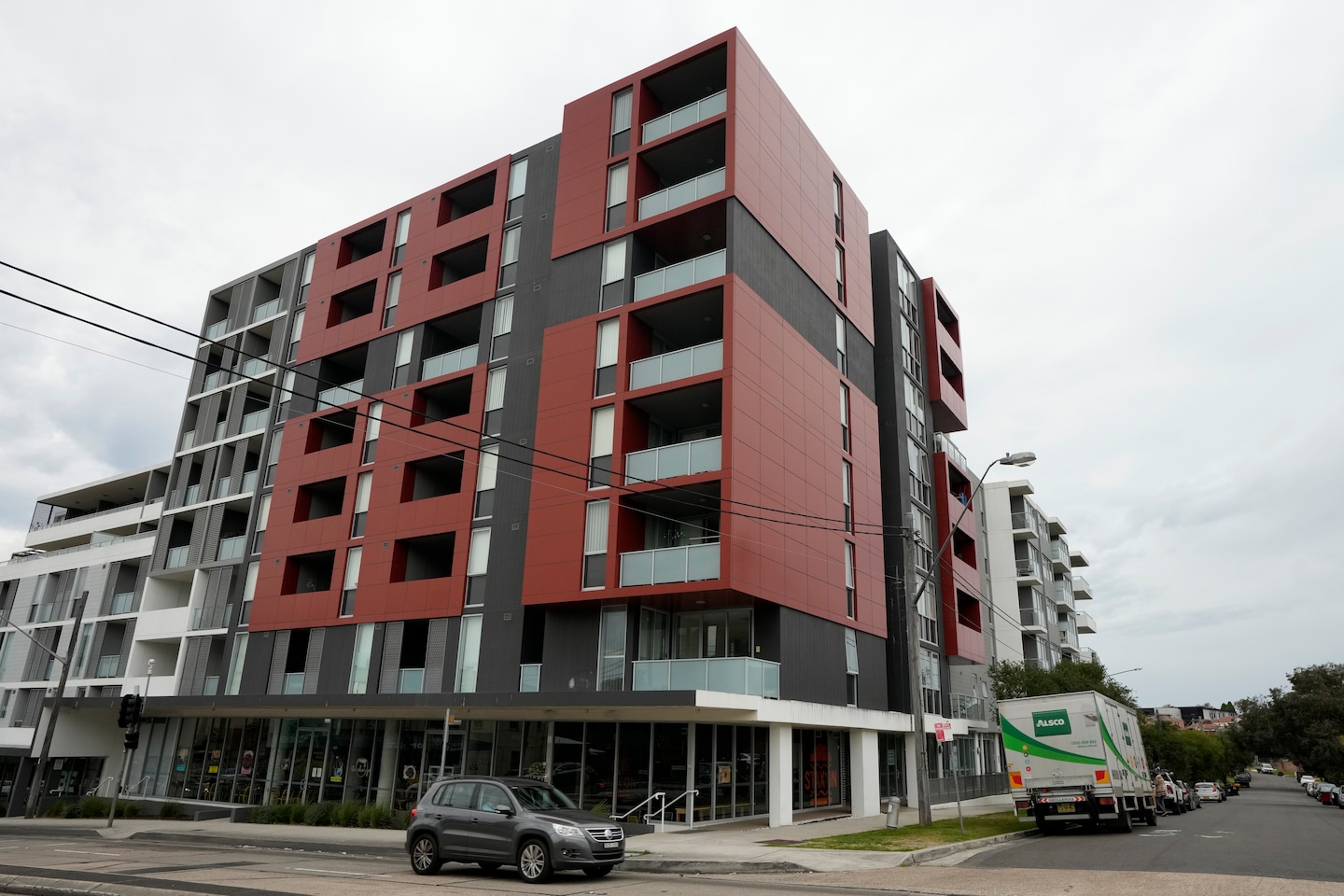
CANBERRA, Australia — The Sydney apartment where the bodies of two Saudi sisters were found in June is back on the rental market with a real estate ad advising their deaths were “not a random crime and will not be a potential risk for the community.”

Asra Abdullah Alsehli, 24, and her 23-year-old sister Amaal Abdullah Alsehli, were found dead June 7 in separate bedrooms of the apartment in the southwest suburb of Canterbury.

Police believe they died in early May. The decomposed state of their remains complicated the task of determining the causes of death.

The first-floor Canterbury Road apartment was open for inspection on Monday with rent set at 520 Australian dollars ($362) a week. That is AU$40 ($28) more than the sisters were charged.

An online ad said the apartment had been designated a crime scene and the mysterious deaths remained under police investigation.

“According to the police, this is not a random crime and will not be a potential risk for the community,” the ad said.

But police would not confirm or deny the realtor’s advice.

“As the investigation is ongoing, police continue to appeal for information in relation to the deaths of the two women,” a police statement said. “No further information is available at this stage.”

Police released the sisters’ names and photographs last week in an appeal for more public information about how they died, but investigators have remained tight-lipped about many details, including how the sisters came to Australia as teenagers in 2017, their visa status and how they earned money.

Multiple sources with knowledge of the case said the sisters had been seeking asylum in Australia, The Sydney Morning Herald reported. They had worked for a time as traffic controllers, a common job for backpackers and new immigrants. They drove a luxury BMW 5 Series coupe, the newspaper reported.

Police Detective Inspector Claudia Allcroft said their family in Saudi Arabia was cooperating with police and there was “nothing to suggest” that they were suspects.

She described the decomposition of the bodies as “problematic.” Police last week had yet to see the results of toxicology tests.

There was no evidence of forced entry to the apartment, where the sisters kept to themselves, Allcroft said.

“The deaths are suspicious in nature as we don’t know the cause of death,” Allcroft said.

“The girls were 23 and 24 years old and they had died together in their home. We don’t know the cause of death, it’s unusual because of their age and the nature of the matter,” Allcroft added.

The sisters seemed fearful and suspicious that food delivered to their apartment had been tampered with, unidentified associates told Sydney media.

An unidentified senior police source told Sydney’s The Daily Telegraph: “It really does appear to be a tragic suicide.”

The sisters were able to show “significant savings” in a bank account when they applied to lease their apartment, property manager Jay Hu told the newspaper, but they had stopped paying rent early this year.

“They had always paid on time before then. … They were good tenants,” Hu told the newspaper.

The overseas-based landlord had begun legal action to recover the unpaid rent before the sisters’ bodies were found, Hu said.

The real estate ad said the apartment’s bedrooms both had new flooring.

Categories
Australia

No new gas connections for ACT homes and businesses from 2023 under plan to phase out fossil fuels

Canberra homes and businesses will be unable to install a gas connection from next year under the ACT government’s plan to ditch fossil fuels by 2045.

Households are already leading the way, as natural gas prices convince them to switch to electricity to save money.

And Canberra’s new suburbs have already been designed without gas connections.

However, the government tabled legislation today to end all connections to new builds — including in older suburbs — as of January 1.

Chief Minister Andrew Barr said the transition — far ahead of the rest of the country’s schedule — would be “gradual and gentle.”

He said cutting off new gas connections was the only way to meet the ACT’s target of eliminating greenhouse-gas emissions.

“The days of cheap gas in Australia appear to be over,” Mr Barr said.

“Renewable electricity is now the cheapest and cleanest way to power our homes and businesses.”

An aerial view of houses with solar panels on their rooftops.
About two-thirds of Canberra homes have a gas connection, though the number has been shrinking.(Supplied: ACT government)

About two-thirds of Canberra homes use natural gas — for heating, water systems or cooking — and the fuel accounts for about 20 per cent of the ACT’s emissions.

The ACT already buys more electricity from renewable sources than it uses: it reached its 100 per cent target three years ago.

Most remaining emissions come from transport, and the government revealed plans last month to phase out petrol and diesel engines.

Mr Barr said the government would help Canberrans to turn off their gas entirely by 2045.

“We know we need to make this transition in a responsible and considered manner — a way that provides certainty to households and businesses but also supports them during the transition,” he said.

Market forces already encouraging Canberrans to switch

A tradesman in bright yellow working on a power meter.
Each year, about one in 50 ACT households year switches from gas to electricity.(Supplied: ACT government)

Even before the Ukraine war worsened the global energy crisis, prices had been driving Canberrans to disconnect from mains gas.

In the two decades to 2020, gas costs for ACT households doubled after accounting for inflation.

They are expected to rise a further 19 per cent over the coming decade — about $220 a year more for a typical home.

Meanwhile, electricity prices are predicted to fall 3 per cent.

As a result of these pressures and environmental concerns, about 2 per cent of Canberra households each year have been cutting off their gas supply.

The government now expects that to increase to 2.5 per cent a year.

Its modeling also suggests that, without any policy interventions, market forces alone would reduce Canberra’s gas use by almost 60 per cent by 2045.

Change-over costs the biggest barrier: survey

Photo from above a person's head as they pour seeds into a pan sitting on a flat, black induction cook top.
Shane Rattenbury says induction electric cooktops are preferred even by chefs.(Unsplash: Conscious Design)

The government says a range of incentives will help people and businesses change over.

These include the existing interest-free household loans of up to $15,000 to improve energy efficiency or switch to electricity.

Lower-value homes are also eligible for direct subsidies of up to $5,000.

Climate Change Minister Shane Rattenbury said disconnecting from mains gas was a longer-term goal, and there was no need to hurry, though it made sense to avoid the annual connection fees.

“As your current gas devices come to the end of their life, our advice to you is: make your next one electric,” he said.

“As you go to replace your hot water or heating system, don’t put another gas one in: choose an electric one today.

“It’s better for the environment and it’ll be better for your bank account — and we’ll help you make that transition over the coming years.”

A recent government survey found cost was the biggest barrier preventing Canberrans from switching to electricity.

At present, removing a gas meter and supply pipes costs about $800 per household.

The government said it would work with the Australian Energy Regulator to reduce or abolish that charge.

Mr Rattenbury said the ACT gas network would be switched off in 2045, but the government would not stop people from buying gas in LPG tanks if they wanted to.

“But I would say to those people: those new induction cooktops perform like gas, and the chefs we’ve talked to who’ve tried it love it.”

.

Categories
Australia

Fraudster lands in jail after stealing identity to escape South Australian authorities

The trip of a lifetime has come to a crashing halt for a criminal who stole the identity of a man in South Australia, in an attempt to escape authorities and flee to the Northern Territory.

Travis Whyte, while on bail for offenses allegedly committed in South Australia, assumed the identity of another man, after coming into possession of his wallet in Whyalla in September last year.

Over the next two weeks, Whyte made his way to Darwin using the stolen bank cards, stealing fuel and twice evading police along the way.

He was eventually arrested in Darwin, attempting to purchase a $70,000 car.

In a letter Whyte wrote to a friend from prison in January this year, released by the court, he described his crimes as “the best 20 days of [his] life”.

“Darwin, first three days and I blew through my cash!!” Whyte wrote.

“Everyone thinks I’m [this] other bloke… his bank gave me full access to his 200k!! So I’m up on $180k fraud charges and looking at 2.5 years … I had the best 20 days of my life bro!! I can die a happy man!!”

A collection of credit cards.
The man went on a trip after coming into possession of someone else’s wallet.(ABC Adelaide: Brett Williamson)

“Spending somebody else’s money, buying cars to avoid detection, visiting a number of landmark sites in the NT [such as] the Devil’s Marbles, really enjoying himself in the course of this spree,” said Crown Prosecutor Tami Grealy.

“He continued until he was caught.”

A man who will “say anything to anyone to get what he wants”, according to Ms Grealy, Whyte withdrew close to $25,000 from the man’s accounts and was able to receive checks totaling $81,848 from the man’s bank by impersonating him.

He pleaded guilty to eight offences, including five charges of obtaining benefit by deception.

A map of Australia with a path running from Whyalla hotel to Darwin.
Travis Whyte went on a two-week roadtrip and was charged with fraud after coming into possession of someone else’s wallet.

The ‘best two weeks’

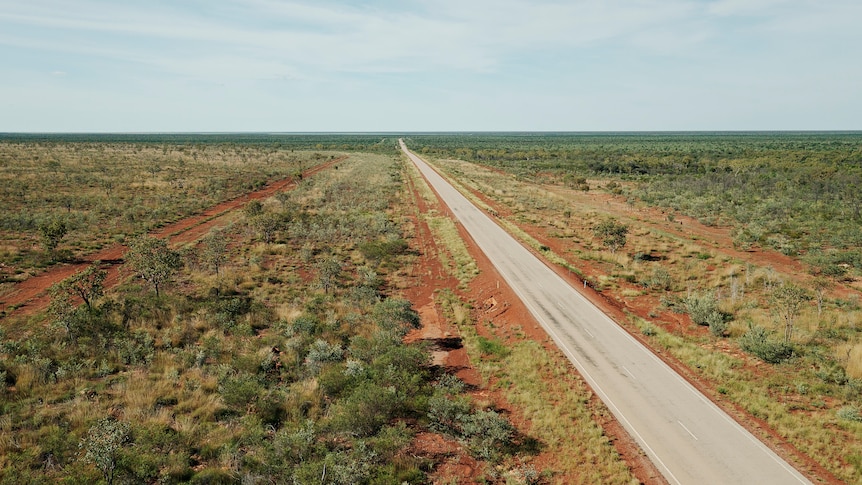
According to a statement of facts tendered to the Northern Territory Supreme Court, Whyte stopped at various roadhouses and hotels along the Stuart Highway as he made his way from Whyalla to Darwin.

.

Categories
Australia

Pest animal numbers soar after rain, as farmers see increased activity

When Neil Baker’s wife, Michelle, looked out the kitchen window at breakfast earlier this year, she spotted something unusual down towards the river flats on the family’s farm, in northern NSW.

Not quite able to make out what it was, she picked up a set of binoculars to get a closer look. What she saw was horrifying. “It was a wild dog, feasting on a ram that we had,” said Baker, a Tweed valley beef and pork farmer who also runs sheep.

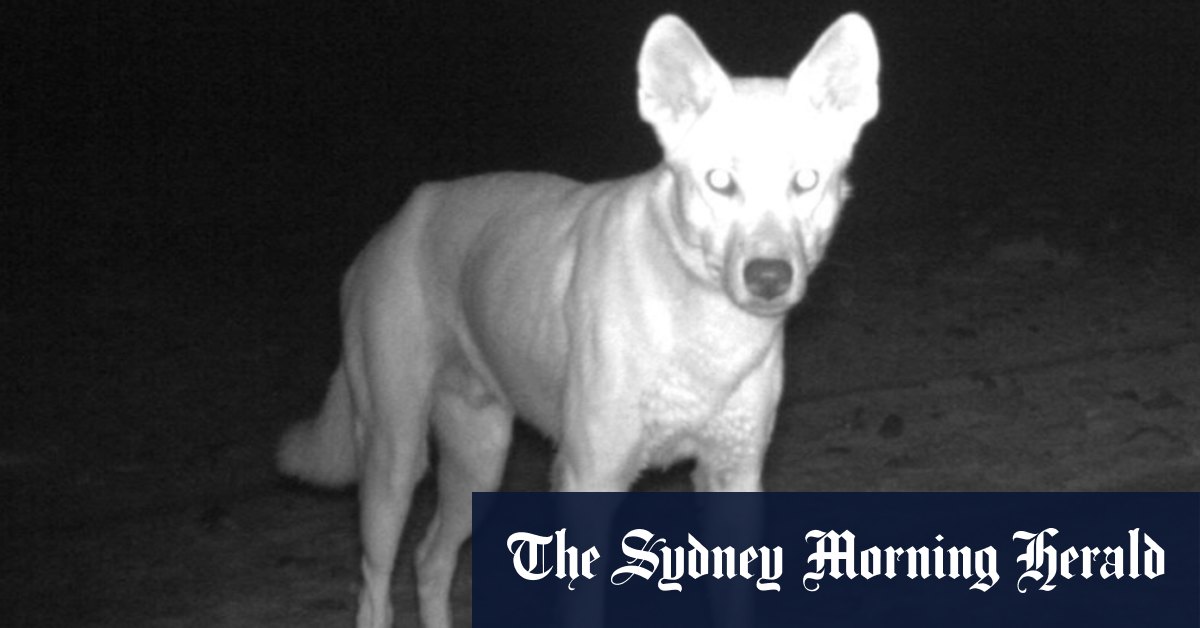
A wild dog caught on camera in March.

A wild dog caught on camera in March.

The attack was one of dozens carried out by dogs and foxes on Baker’s property and on nearby farms in the past few years.

“They’re big, wild dogs,” Baker said. “They’re savage enough to take on cattle. The fact they’re now being seen during daylight shows how brazen they have become.”

Local Land Services, a government agency that helps landowners eradicate feral animals, said this year’s wet weather had led to a large increase in pest animal numbers. So far this year, the agency has culled 22,377 animals through aerial shooting operations, including more than 19,581 pigs. Last year, it culled 33,569 animals in total.

NSW Farmers said its members were also reporting an increase in wild pigs, dogs and cats. Deer were also encroaching on new territory.

A Local Land Services trapper during a pig-trapping operation in the Megalong Valley last year.

A Local Land Services trapper during a pig-trapping operation in the Megalong Valley last year.Credit:Nick Moir

Brewarrina farmer Gerard Glover, who chairs the NSW Farmers Western Division Council, said he was braced for an increase in wild pigs and foxes on his land when the wetter weather, and they were forced further afield for food.

“The numbers are building. When it starts to dry out a little bit… the numbers are certainly there.”