It has been six months since a devastating bushfire ripped through WA’s Wheatbelt region, and impacted farmers are still counting the cost.
Key points:
A fire started after a permitted stubble burn reignited in “catastrophic conditions”
The blaze destroyed 45,000 hectares and multiple homes
Locals say a permit should never have been issued and are calling for a public inquiry
The Shire of Corrigin, 220 kilometers east of Perth, was among the regions hardest hit.
About 45,000 hectares of land was burned, four homes, and dozens of buildings destroyed, and more than 1,000 livestock perished after a prescribed stubble burn reignited in what authorities labeled “catastrophic conditions”.
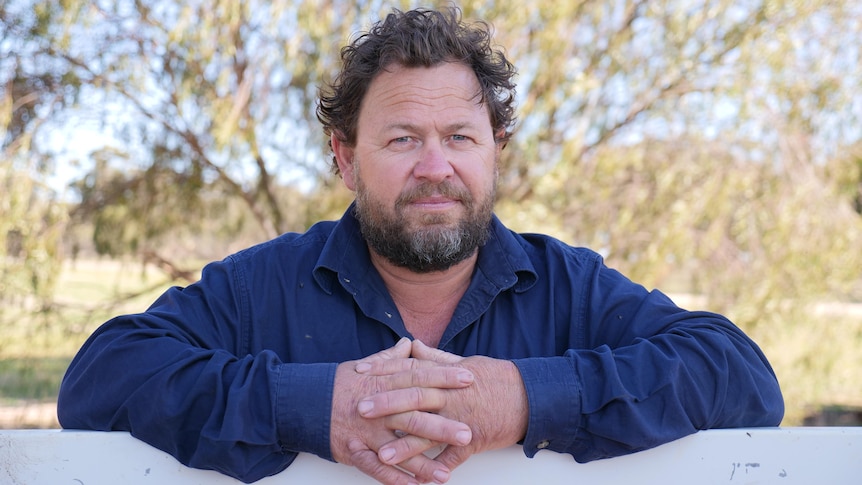
One farmer caught in the fire’s path was Steven Bolt, who estimated millions of dollars in losses from the February blaze.
Mr Bolt is deputy chief of Corrigin’s Volunteer Fire Brigade and said the fire, which engulfed his property, could have been prevented.
“We all knew the risk coming that weekend, and for a permit to be issued is absolutely staggering, and the fire should never have happened, and the permit should have never been issued,” he said.
A shed burns in Corrigin during the February bushfires.(Twitter: Ashley Jacobs)
The neighboring Shire of Bruce Rock permitted the stubble burn several days before the blaze started on February 6.
An investigation by the WA Department of Fire and Emergency Services (DFES) found the authorized burn-off was reignited in 43-degree temperatures before it spread rapidly in strong winds.
No total fire ban was in place at the time, but Mr Bolt contacted authorities with his concerns.
He said his pleas were ignored.
“I told [them] this was going to happen and now it has, and we need all the resources we can find, particularly air support, because we were never going to stop that fire,” he said.
‘We don’t like coming out here anymore’
Tim and Shannon Hardingham survey the damage on their property.(ABC Midwest & Wheatbelt: Sam McManus)
Tim and Shannon Hardingham run a farm 10km east of Corrigin.
Between paddocks of vibrant yellow canola crops now lies a metal scrap yard.
The Hardinghams said the past six months had been the hardest of their lives, and much of the recovery was still ahead of them.
“People who haven’t been through it have a lot of empathy, but there’s a daily struggle in what to do next because there’s just so much to do,” Ms Hardingham said.
“The single biggest cost that is shocking to us is the asbestos clean-up, which we’ve been quoted around $250,000 to clean up.”
More bushfire destruction on the Hardingham’s Correcting property.(ABC Midwest & Wheatbelt: Sam McManus)
The couple now avoids coming out to the farm and have chosen to keep their kids away.
“It doesn’t even resemble the same farm,” Mr Hardingham said.
Please for answers
The burning permit that led to the fire was issued by the Shire of Bruce Rock, which declined to comment on the issue.
Shire president Stephen Strange said it had been a difficult time for the region, but praised the work of local authorities, volunteers, and the state government.
“The recovery will be ongoing for years and years to come… the farmers themselves have done a good job getting the landscape back into pretty good condition,” he said.
“The communication has been very good between affected landholders, community members, and the shire.”
In a statement, DFES acting deputy commissioner Jon Broomhall said the Bruce Rock Shire was within its rights to grant the burning permit, and an “after-action review is currently underway, focusing on the four bushfires that occurred across the state that day.”
Mr Bolt with one of his sheds destroyed by bushfire.(ABC Midwest & Wheatbelt: Sam McManus)
But local farmers and firefighters said they had so far been left in the dark.
Mr Bolt was calling for a separate investigation into the Correcting fire.
“This needs to be a standalone inquiry. The issue of the permit being given is different to what occurred in the other fires,” he said.
“We haven’t even come close to being able to discuss the issues that have led to this catastrophe through this area,” he said.
Law firm Hall & Wilcox has been engaged by insurers representing impacted landholders, with inquiries still in the early stages.
Ms Hardingham said a thorough investigation could help prevent similar incidents in the future.
“We don’t find ourselves privy to much information about what went wrong,” she said.
“It would be nice to think it will never happen to anyone again and that people could learn from our loss and what we’ve gone through.”
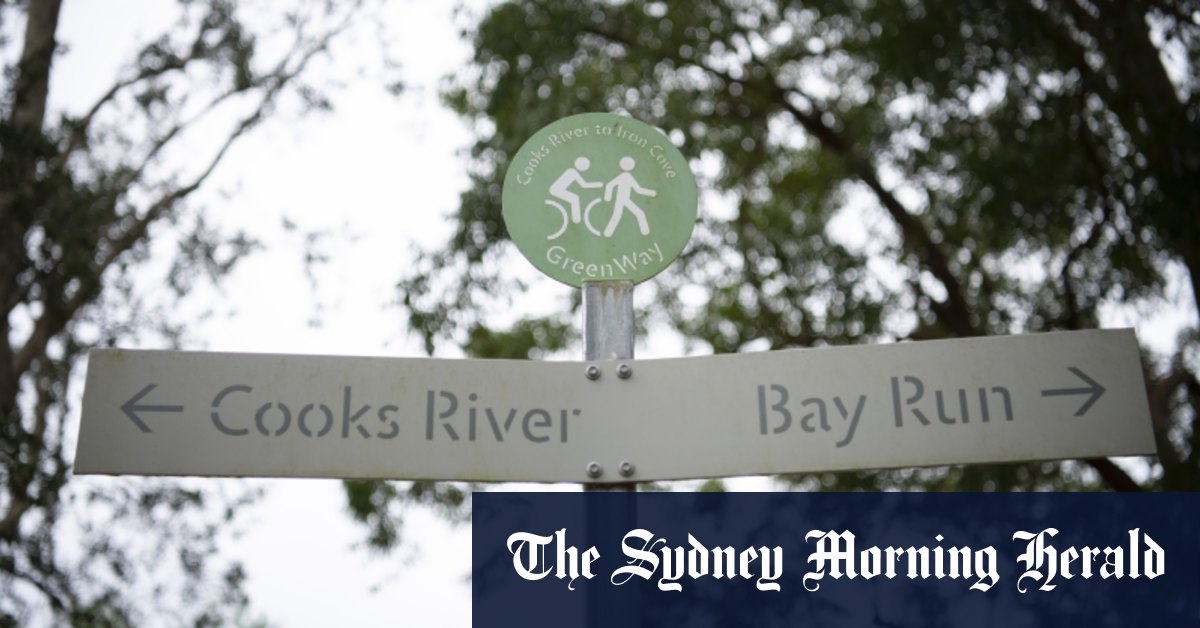
Residents of Sydney’s inner west are one step closer to being able to walk, run and cycle between the Cooks River and Iron Cove after the state government committed an additional $9.8 million towards the long-awaited greenway.
The shared path, which will follow the route of the Inner West Light Rail Line, is one of 55 projects in the greater Sydney region to receive a share of $40 million of funding that will be unveiled by the NSW government on Friday.
Active transport minister Rob Stokes said the grants would give families added opportunities for commuting and recreation, giving them the chance to leave the car at home and “leave more money in hip-pockets”.
The path to the Richard Murden Reserve in Haberfield has already been completed.Credit:Wolter-Peeters
“The evidence is clear that investing in active transport infrastructure makes local communities happier, healthier and more productive,” he said.
The shared path, or greenway, will provide a continuous link between the Cooks River cycle path and the popular Bay Run at Iron Cove, which is close to city bike corridors.
The Inner West Council approved a master plan for the greenway in 2018 and expected it to be in use by the end of 2021, but the $45 million project is now slated for completion by 2024.
Greens councilor Marghanita da Cruz said funding had been one of the major delays to the project. She said building the greenway would help keep up with development in the area, as well as increased demand for recreation after coronavirus lockdowns.
“I don’t know why it’s taken so long because that extra pathway is really important to the community,” she said.
Back in 2017, the Independent Broad-based Anti-corruption Commission (IBAC) decided against investigating Guy’s lobster dinner determining the catch-up didn’t fall within its jurisdiction.
But Guy went on to suffer a humiliating defeat at the 2018 poll which the Victorian Liberal Party’s own review linked to the enormous damage caused by that infamous meal at a Beaumaris restaurant. It found the scandal was “used repeatedly and effectively to undermine him”.
loading
“In the environment of 2018 it was not necessary to fully articulate let alone authenticate the case, it was enough to allege and thus badge it strongly in voters’ minds,″ the review found.
With 16 weeks until the election, that should sound alarm bells for the Coalition.
There is a risk that the latest untidy affair will cause voters to add it to the mountain of baggage Guy already carries. From controversial planning decisions, to rolling Michael O’Brien. It’s likely to all add up.
Labour, which has amassed an impressive portfolio of scandals since coming to office, is unlikely to benefit electorally from the opposition’s woes. Instead, political strategists believe the saga will fuel a wider perception that the major parties are both up to no good and push voters to search for another option.
If the federal election is to be any guide, such a scenario will have a bigger impact on the Liberal Party which is so far at greater risk from independent candidates who purport to be holier than you and will campaign on a pledge to clean up politics.
Guy and many of his supporters are trying to deflect from the drama by focusing on the source of the leak, and any possible reasons for it.
As a political strategy, such a diversion may boost internal morality, but there is a risk that Liberal MPs let the myth set in that this scandal has been unfairly imposed on Guy and not a mess of his own making.
Guy may be frustrated that his integrity has been called into question over a contract which he insists was never executed. Particularly when his political rivals of him have been caught using public money to pay for election campaign staff, rampant nepotism, attempts to interfere with government grants and dogged by expenses scandals.
But protesting that the leak or any subsequent probes are unfair is a political red herring and masks the abysmal judgment that led to these scandals.
loading
Five years later even Guy’s biggest fans question his decision to go to the Lobster Cave with an alleged mobster, particularly when he wanted to run a law and order campaign.
As one former Liberal MP said yesterday: “I never thought it was a problem that he went to the dinner, it was the fact that when he got there and realized what was happening, he failed to leave.”
The latest scandal again raises questions about Guy’s integrity and judgment.
If, as Guy insists, the deal didn’t go ahead, why did he accept the resignation of his chief of staff? And if, as an email seen by The Age indicates, Guy was aware of the proposed contract why did it take him 10 months to act?
At best, Guy is a victim of his own carelessness. But in both cases he let ambition or ignorance cloud his political judgment of him.
When news articles refer to amateur sleuths who’ve dedicated time and effort to investigating the Somerton Man mystery, they’re referring to people like Nick Pelling.
The 57-year-old London-based computer programmer, author and researcher has never set foot in Adelaide, let alone on Somerton beach.
But that hasn’t stopped him from pursuing the case with the tenacity that one would expect from someone with his skills.
His blog Cipher Mysteries is a testament to his capacity to trawl through undigested records like those on Trove, the National Library of Australia’s freely accessible digital archive.
“History is a funny old thing,” he said.
“The stuff in archives is the stuff that didn’t get thrown away that day — it’s the stuff that survived somehow, just randomly.
“As a historian, you have to merge different types of evidence together because you only have scraps.”
Mr Pelling, pictured in 2014, shares his research into enigmatic cases at his blog Cipher Mysteries.(YouTube: Gamification World)
The Somerton Man is not the only enigmatic case to have captured Mr Pelling’s attention — but it is the one that has most recently made headlines.
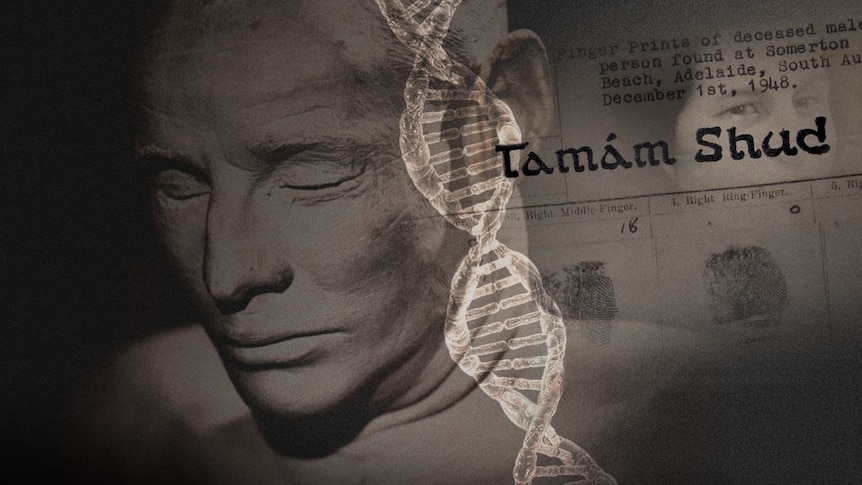
Last week, Adelaide-based academic and long-time Somerton Man devotee Derek Abbott announced that he and a US-based colleague had solved the mystery.
They identified the man as Carl “Charles” Webb, a Melbourne-born engineer.
The breakthrough has spurred Mr. Pelling to uncover more.
He believes the Webb hypothesis is a compelling one, and he wants to find evidence to corroborate it.
The beach at Somerton Park, pictured in 2018, where the Somerton Man’s body was found 70 years earlier.(ABC News: Carl Saville)
“My best-case scenario is that we find a picture of Carl Webb. He was married – people have wedding photos, it’s a big day,” he said.
“We may be able to find more records of what Carl Webb was doing in the year-and-a-half after he left his wife and before he died [in 1948].
“It’s not that long ago in the bigger scheme of things.”
Detective work and the Da Vinci Code
A suitcase and belongings found at Adelaide Railway Station are believed to have belonged to the Somerton Man.(Supplied)
For Mr Pelling, discovery is as much about pathways as epiphanies — the investigator never knows how much treasure is awaiting excavation.
“The idea of Dan Brown and his ilk is that the archivist finds … one document that explains everything — it’s never like that,” Mr Pelling explained.
“[But] if you can ask the right questions of the right people, then all kinds of things open up.
“Things like photographs and diaries and journals all persist in attics and lofts.”
Over the years Mr Pelling has corresponded with Australian-based experts, including retired detective Gerry Feltus, who praised Mr Pelling’s endeavours.
“He’s got a massive website going, and people from all over the world have been contributing to that,” Mr Feltus said.
Retired detective Gerry Feltus authored the book The Unknown Man: A Suspicious Death at Somerton Beach.(ABC Australian Story)
Methodical by nature, Mr Feltus is withholding judgment on the Somerton Man’s identity until police and Forensic Science SA complete their own investigations.
“They are both working on it at this stage,” he said.
“Because of what I know and what I believe, I’m just not prepared to sit back and say I’m satisfied that the person is Webb.
“If it comes back as being Webb, I’d have to say that’s great news, simply because it would clarify a lot of matters.”
Moving behind the veil
For Mr Pelling, coding came before codes — he started designing his own computer games while still at school.
But when the cipher bug struck, it struck hard. He became fascinated with something called the Voynich manuscript, an enigmatic text believed to date back to the 1400s.
While he can’t recall exactly when he became interested in the Somerton Man, he can recall why.
It was the sequence of letters linked to the case, which Mr Pelling doubts is a code, that captured his attention.
The sequence of letters, thought by some to be a code, was found inscribed on a book of poems linked to the case.(Supplied: Australian Police)
“Mysterious writing excites people’s imaginations,” he said.
That point is the premise of the blog — Cipher Mysteries is a site where those who share his passion for cryptography can exchange facts they’ve gleaned from archives like Trove.
“Trove is the most marvelous resource for historians,” he said.
“Every country should look long and hard at Trove and say, ‘Why don’t we do this?'”
But Trove can only take you so far, he said.
All kinds of factors, including socio-economic ones, determine how many traces a person leaves to posterity.
“Genealogy has a very middle-class bias. If you’re doing okay, you might write letters to the newspapers,” he said.
“If you’re working class, you’ve got other things on your mind. There are a lot of people whose lives don’t get decorated by Trove.”
Does Trove hold further clues about the story of the Somerton Man? Or will they only be found in those attics and lofts?
“I’m hoping that we can move from Trove-type history to family history,” Mr Pelling said.
“Reconstructing the person’s life will be a whole load more work.
“I don’t think you can ever see the Wizard of Oz, but you can see a little bit beyond the veil.”
The Somerton Man’s remains were exhumed in 2021 to allow Forensic Science SA to conduct their own investigation.(ABC News: Daniel Keane)
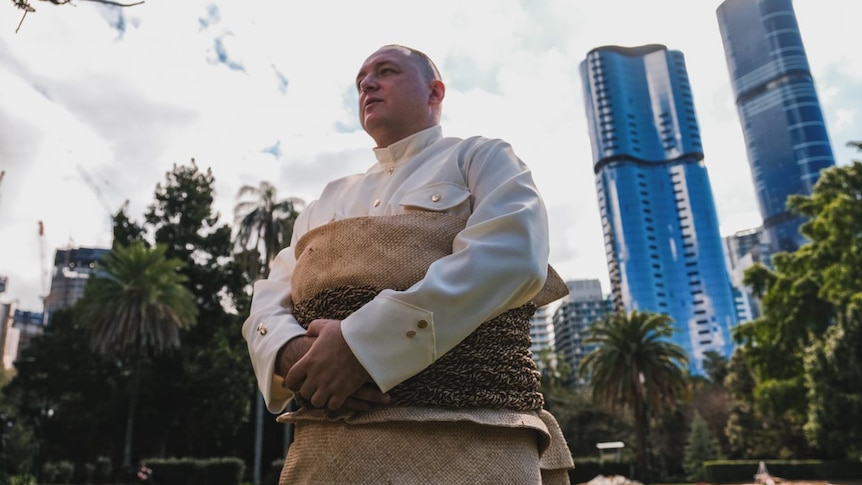
A Brisbane man has become the first-ever Australian to be installed in the Tongan royal palace in a role that will see him speak on behalf of the island nation’s king.
In an Australian-first ceremony, Brisbane broadcaster and dual citizen Sulieni Layt has been appointed to speak for King Tupou VI.
Out of respect, Tongan royalty and nobles do not speak directly with citizens and vice versa. Instead, they speak through appointed representatives.
While there are dozens of speaking chiefs in the South Pacific island nation, Mr Layt is just the third non-Indigenous person to be given a role within the palace. The other two are from the United States.
Mr Layt now has the title of His Majesty’s Chief Attendant.(ABC NewsAlice Pavlovic)
Mr Layt grew up in Queensland, where his family operated a flying school that won a contract to train pilots for Tonga’s national airline.
This is when his passion for the island nation ignited, and when he learned from the trainee pilots what would soon be his second language.
“They were always speaking in Tongan and I always wanted to know what they were saying,” Mr Layt said.
“So spending more time with them, I picked up more words and started going to the Tongan church with them.”
Tongan King Tupou VI at his lavish coronation in 2015.(Wikimedia Commons)
The 41-year-old dual Tongan and Australian citizen went on to become a key broadcaster in the region for more than 30 years, founding the Pasifika TV and Radio service.
“It hasn’t quite dawned on me yet the significance and the magnitude of today’s ceremony,” he said.
“I’ve worked so many years with our Tongan people. They’re my people and I’ve served His Majesty … for so many years and I wish to continue to do so.”
The role will require him to travel to Tonga to meet the King. He will also be required to travel with and speak for him when he visits Australia.
Historic ceremony attended by Royal Princess
Her Royal Highness the Princess Lātūfuipeka Tukuʻaho attended the ceremony.(ABC News: Alfred Beales)
His appointment has added significance as the role is usually hereditary.
Mr Layt will now enjoy the official job title of His Majesty’s Chief Attendant and will be officially known as Lave ‘Iloa Ola going forward.
The elaborate chiefly title royal kava ceremony, held at the Brisbane Botanic Gardens yesterday, was the first ever held in Australia, and the first held outside Tonga in 30 years.
COVID-19 restrictions meant the kava ceremony could not be held on palace grounds. At the Botanic Gardens it attracted an audience from across Brisbane’s Pacific Island diaspora.
Pacific Islander families gathered to watch Mr Layt be bestowed the royal honour.(ABC NewsAlice Pavlovic)
It involved the ceremonial preparation of kava—a traditional psychoactive drink made from the root of the yoqona plant.
The drink was then presented to the circle, which is usually comprised of the nobles of Tongan clans.
The ceremony was attended by Princess Lātūfuipeka Tukuʻaho in place of King Tupou VI.
A ‘rare and special’ appointment
Sione Maile Molitika is president of the Brisbane Tongan Community.(ABC NewsAlice Pavlovic)
President of Brisbane’s Tongan Community, Sione Maile Molitika, said it was an honor to be involved in the ceremony in his home city.
“For something to happen in Brisbane as part of our culture and our custom, it’s very important they can see part of who we are,” Mr Molitika said.
Pasemata Vi Taumisila, daughter of the late noble Lord Ve’ehala, described the appointment as rare and special.(ABC NewsAlice Pavlovic)
Pasemata Vi Taumisila, the daughter of late noble Lord Ve’ehala and a member of the Tonga Traditional Committee – a branch of the royal palace — said the appointment was significant.
“This special occasion is very rare,” she said.
“They only install the title for special people.”
Louise Waterhouse, who is the consulate-general of the Kingdom of Tonga, daughter of long-serving honorary diplomat with Tonga William Waterhouse and sister-in-law of Gai Waterhouse, was also in attendance.
Mr Layt’s appointment is the first time an Australian has held a Chief Attendant role with the Tongan Royal Family, and only the third time an outsider has been given a chiefly title.
Minister for the Pacific Pat Conroy said the installation was a good development for Australia’s relationship with the island nation.
“It symbolizes the deep linkage between Australia and Tonga as members of the Pacific family,” the Minister said.
“It can only deepen our relationship … which is critical to advancing the prosperity of everyone in our region at this very uncertain strategic time.”
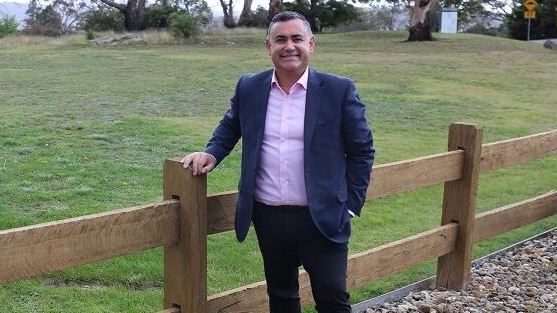
The New South Wales upper house inquiry into the appointment of former deputy premier John Barilaro to the lucrative US trade role will agree again on Friday.
An additional fourth hearing comes after the resignation of Trade Minister Stuart Ayres on Wednesday, following questions raised about his involvement in the process.
Mr Ayres denies any wrongdoing but will be investigated for a possible breach of the Ministerial Code of Conduct.
Mr Barilaro’s former chief of staff, Siobhan Hamblin, the managing director of Investment NSW, Kylie Bell, and the Public Sector Commissioner, Kathrina Lo, will give evidence from 10am.
Earlier in the week, in her second appearance before the committee, Investment NSW chief executive Amy Brown granted the appointment was not done “at arm’s length” from the state government.
Mr Barilaro — who has withdrawn from the $500,000-a-year job — is due to appear at the inquiry on Monday, August 8.
Meanwhile, the NSW opposition leader Chris Minns said it does not make sense to have highly paid Trade Commissioners based overseas when the state’s finances are under extreme pressure.
He said Labor would abolish the six Senior Trade and Investment Commissioner positions, if it wins the state election in March.
“The modern Australian economy, particularly when you’re chasing export opportunities, is so diverse and so big that a single person driving that agenda around the world just doesn’t make sense,” Mr Minns said.
COVID-19 cases in state slowdown
NSW Health says its latest surveillance data suggests that COVID-19 infections have peaked and hospital admissions have plateaued across the state.
The report — which analyzes the week ending July 30 — found the rate of COVID-19 notifications per 100,000 people had decreased, or remained stable, across all local health districts.
Infections have also decreased, or remained stable, across all age groups, except those aged between 10 and 19 years.
The seven-day, rolling average of daily hospital admissions also decreased by 14.8 per cent.
Meanwhile, the highly “sticky” BA.4 and BA.5 Omicron sub-variants are still the dominant strains, rising to 97 per cent of specimens sampled at the end of last week, compared to 94 per cent at the end of the previous week.
NSW Health says there is still no evidence of a difference in disease severity between these and previous Omicron variants.
Monkeypox doses available soon
The vaccine will be eligible for some people from Monday.(Reuters: Given Ruvic/Illustration)
Those most at risk from monkeypox in NSW can access the first doses of the smallpox vaccine from Monday 8 August, as part of a targeted rollout across the state.
NSW Health has secured the first 5,500 doses for high-risk groups, such as people with suppressed immune systems, sex workers and homeless men who have sex with men.
Chief Health Officer Dr Kerry Chant said doctors will identify people who should be vaccinated against Monkeypox and more information will be released in coming days about how to register interest.
Australia has recorded about 60 cases of Monkeypox, which is a usually mild disease similar to smallpox, and until May was endemic to Central and West Africa.
Another 30,000 doses will be delivered to the state next month.
Man charged with stalking teacher
A man has been charged with intimidating and stalking a teacher at Auburn in Sydney’s West.
Police say the 26-year-old threatened the teacher at the basketball courts of the PCYC on Wednesday.
He has been granted bail and is due to face court next week.
Natural disaster organization under fire
The future is unclear for Shane Fitzsimmons, who leads Resilience NSW.(AAP: Mick Tsikas)
New South Wales cabinet is expected to approve a recommendation to dismantle the organization created to lead the response to natural disasters.
A report into this year’s floods has recommended dismantling Resilience New South Wales.
Flood victims have criticized the organisation’s performance.
It’s thought the agency’s responsibilities will be reallocated to existing government departments.
Varroa mites spread
Varroa mite infestations have been identified at nine more properties in the Newscastle region.
The nine new detections bring the total number of infested premises to 73.
All of the new detections have been linked to other cases or to the movement of other hives and equipment, and were found within existing emergency zones.
Varroa mites spread viruses that cripple bees’ ability to fly, gather food and pollinate crops, leading hives to collapse and die off.
Australia was the last continent to be free of the parasite, with previous detections in Queensland and Victoria eradicated.
The winners of Australia’s biggest and most prestigious Indigenous art awards will be announced in Darwin tonight, with each to take home a share of what’s now the richest art prize in the country.
Key points:
The prize pool for the National Aboriginal and Torres Strait Islander Art Awards doubled this year to $190,000
The overall winner will take home $100,000, an award now equal in value to the Archibald Portrait Prize
The awards celebrate new works from across the country and visual art styles, from the highly traditional to modern and experimental
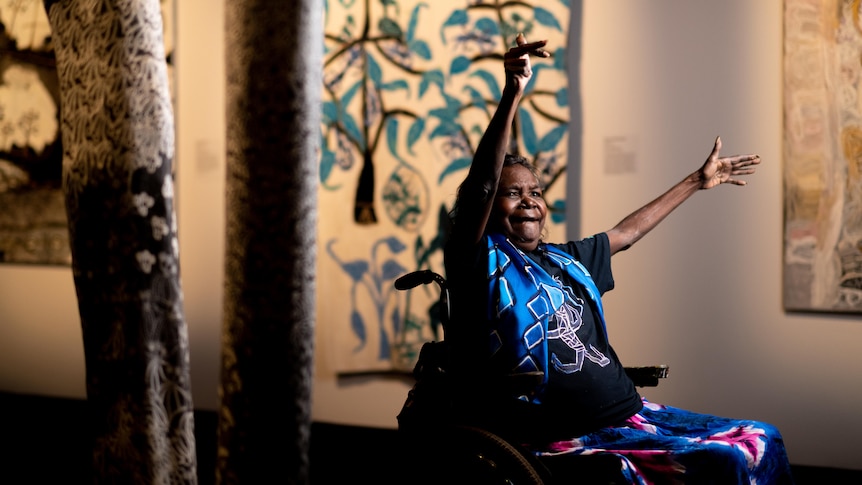
The National Aboriginal and Torres Strait Islander Art Awards takes entries from across Australia and all types of visual arts, from bark paintings and traditional weavings, to digital works and sculpture.
This year the overall winner will be awarded $100,000, bringing the top gong in line with the first prize in the annual Archibald Prize.
It’s recognition that curator and Arabana, Mualgal, and Wuthathi woman Rebekah Raymond is “overjoyed” to see paid to the artists involved.
“I think [the increased prize money] really shows a commitment to celebrating these artists,” she said.
“It shows an understanding that the vibrancy of Aboriginal and Torres Strait Islander art practice is at a global level, and the prize pool needs to respect and reflect that.”
The winners will be announced at a gala event in Darwin on Friday night.
Six other winners of individual categories will take home $15,000, an amount tripled this year by long-time awards sponsor Telstra.
The combined total of $190,000 is the biggest for any art prize in Australia.
Dozens of finalists from hundreds of entries — and seven winners
The winners will be announced at a gala event in Darwin on Friday night, which coincides with the opening of the two-week Darwin Festival.
A panel of three judges have narrowed more than 200 entries down to 63 finalists, which have been installed together for the annual — free — blockbuster exhibition at the Museum and Art Gallery of the Northern Territory (MAGNT).
Ms Raymond and two other judges have picked seven winners out of 63 finalists.(ABC News: Che Chorley)
‘Expanding practices, pushing boundaries’
A winner for the overall prize is chosen from among the finalists, as well as one for six categories including:
General Painting Award
Bark Painting Award
Works on Paper Award
Wadjuk Marika 3D Award
Multimedia Award
Emerging Artist Award
Now in its 38th year, the NATSIAA’s have celebrated some of the art world’s biggest names and most influential figures, from Djambawa Marawili and Betty Muffler to Vincent Namatjira and Kaylene Whiskey.
While the stories and techniques behind some of the bark paintings, weavings and carvings are ancient and traditional, Ms Raymond said it’s a mistake to think that only the younger artists are experimenting and innovating.
“There’s been amazing innovations within bark painting, especially by senior ladies [from north east Arnhem Land],” she said.
“These are contemporary works — they’re carrying on art that’s been around from time immemorial but they’re expanding practices, they’re pushing boundaries.
Previous bark painting winner Dhambit Munungurr is among the senior Yirrkala ladies experimenting with new color palettes.(ABC News: Che Chorley)
On display online, People’s Choice Award up for grabs
This year’s exhibition will again be accessible online, which has been the case since the first year of the pandemic.
The NATSIAA’s and other major events throughout the Darwin Festival spark an influx of visitors to the Top End each dry season.
But would-be gallery-goers who can’t travel interstate miss out — unlike other big prizes like the Archibald, the NATSIAA’s is not yet a touring exhibition.
Ms Raymond said the virtual gallery has been a success and is the next best thing available — for now.
“It’s no match, but it’s one way we can cross borders and really open up the audience, not only nationally but globally,” she said.
“For me, I think touring and sharing works is an important way to engage with more people, and for people to understand how important these works are.”
After the judges announce their picks, members of the public will also get to have a say on their favorite works.
Voting in the NATSIAA’s People’s Choice Award is open until the exhibition closes in January next year.
Richard Marles isn’t the only Labor frontbencher doing the half rounds this morning.
Health Minister Mark Butler was on the ABC’s RN Breakfast earlier where he was explaining why it took a while for Australia to officially announce it had acquired monkeypox vaccines.
Minister for Health and Aged Care Mark Butler. Credit:alex ellinghausen
Just over 20,000 monkeypox vaccines (from a total of 450,000 secured doses) will arrive in Australia in the next few days.
“These were highly difficult to get hold of as you [can] imagine,” Butler said.
“Monkeypox has only ever really been endemic in countries in Africa. And in the last 13 weeks we’ve seen it spread to 76 other countries, particularly in North America, and the UK and Europe. But we have 58 cases here in Australia as well.
loading
“So there’s been a burst of activity by governments to get their hands on the newest third-generation vaccine, which is the one we’ve got hold of. We’re now only one of a very small list of countries that has supplies coming to us in 2022.
“We’ve been talking for weeks now with state governments about how they’d roll them out.”
The health minister added that another 100,000 or so doses will arrive in Australia over the “next couple of months”.
CheckMate is a weekly newsletter from RMIT FactLab which recaps the latest in the world of fact checking and misinformation, drawing on the work of FactLab and its sister organisation, RMIT ABC Fact Check.
You can read the latest edition below, and subscribe to have the next newsletter delivered straight to your inbox.
CheckMate August 5, 2022
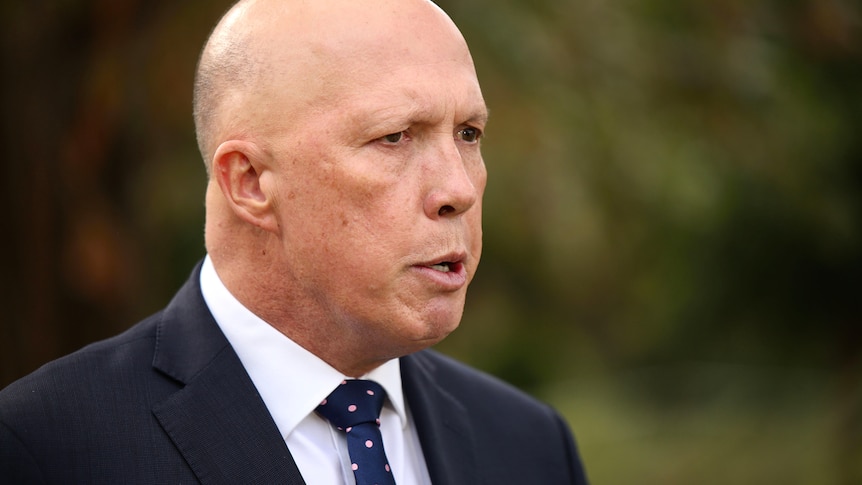
This week, we examined a claim by Opposition Leader Peter Dutton that the soon-to-be-axed cashless debit card was well received by trial participants and led to a significant drop in gambling.
We also investigate whether the global outbreak of monkeypox means the virus has become “airborne”, and debunk claims that COVID-19 vaccinations are weakening our immune systems and driving higher reinfection rates.
Peter Dutton hailed the ‘success’ of the cashless debit card. But how successful was it?
Not quite right: Peter Dutton has been talking up the results of a survey on the cashless debit card, but the majority said the program had made life “worse.”(ABC News: Matt Roberts)
As Prime Minister Anthony Albanese’s government gets to work on delivering its election promises, legislation to scrap the cashless debit card (CDC) program is set to become one of the first bills debated by the new parliament.
The Coalition, however, says it still “strongly supports” the program, which quarantines 50-80 per cent of a welfare recipient’s payments (depending on jurisdiction and circumstance) on a card that cannot be used on drugs, alcohol or gambling.
“Research from the University of Adelaide showed that the cashless debit card led to a 21 per cent decrease in gambling and 45 per cent of people believed it had improved their lives,” Opposition Leader Peter Dutton told parliament last week.
But that’s not quite what the research says.
The January 2021 report referenced by Mr Dutton was commissioned by the former Coalition government and involved a survey of CDC participants across the program’s first three trial sites.
Despite his claim that 45 per cent of participants “believed [the card] had improved their lives”, the report found just 15 per cent said it had made life “better”, while 17 per cent reported no difference.
Meanwhile, 56 per cent of those surveyed said the program had made life “worse.”
More broadly, only 21 per cent of those surveyed said the CDC had made a “positive difference” on quality of life for themselves, their family, friends and wider community.
As for gambling, the report “found some evidence of reductions … as a direct outcome of the CDC” — though it does not state gambling was reduced by 21 per cent, as Mr Dutton claimed.
According to the report, 14.4 per cent of participants gambled in the 12 months prior to the introduction to the CDC while 11 per cent were still gambling post-introduction.
The authors noted, however, that “most of the reported change since the introduction of the CDC came from the ‘once a month or less’ very low frequency gambling category, who reported that they typically shifted from ‘gambling very infrequently’ to ‘not gamble at all’.”
“We believe the numbers on reported gambling activity lack in statistical significance, probably due to under-reporting by those who gamble more regularly,” the researchers explained.
Mr Dutton’s figure of 21 per cent appears to relate to the report’s findings on the perceived impact of the cashless debit card on gambling among trial participants.
Asked whether the rollout of the CDC had helped “with reducing gambling problems” — for themselves personally, their family, their friends or where they lived — 21 per cent of survey participants said it had made a positive difference.
Of those, 35 per cent said the difference was for themselves personally, a figure that equates to 7 per cent of participants overall.
Monkeypox is spreading, but is it airborne?
As the global monkeypox outbreak gathers pace, a number of popular social media posts have variously asserted that the virus is, or is not, “airborne”.
Adding to the confusion, last week the World Health Organisation’s African office tweeted — then deleted — to video that claimed “monkeypox is not airborne.”
So, what does the evidence say?
The WHO defines airborne transmission as “the spread of an infectious agent caused by the dissemination of droplet nuclei that remain infectious when suspended in air over long distances and time”.
Such viruses may have a preference for airborne transmission but still spread through other means.
Importantly, there is a distinction — much debated during the COVID-19 pandemic — between smaller droplets (aerosols) that remain in the air and larger respiratory droplets (spray) that fall to the ground quickly.
According to the Department of Health, monkeypox spreads through close contact with lesions (rashes, blisters or sores), contaminated objects and also bodily fluids, including respiratory droplets.
“Transmission through respiratory droplets (for example, coughing or sneezing) is less common and usually only happens if there is prolonged face-to-face contact,” its website explains.
You are probably not going to get monkeypox by being in the same space as somebody who has it, one expert said.(CDC: Cynthia S.)
Notably, one preprint study being shared online has found that some air samples — taken from isolation rooms for monkeypox patients in the UK — contained low levels of “replication competent” virus able to grow in a cell culture.
That, however, is not necessarily something to worry about — or at least not outside of healthcare settings where, for example, changing the sheets may send particles into the air.
A virologist at the Australian National University who studies poxviruses, David Tscharke, told CheckMate: “Just because you can show the virus is in the air, it doesn’t magically mean that you can be infected, because every different virus requires a different amount to be in the air for you to be able to catch it.”
He added: “We actually don’t know what that amount is [for monkeypox]but the shape of the epidemic suggests that there needs to be quite a lot.”
That’s because the current epidemic had so far been largely confined to men who have sex with men, Professor Tscharke explained.
“If the virus was transmissible via aerosols in a way that SARS-CoV-2 [the virus that causes COVID-19] is transmitted, the epidemic would have to be bigger right now. And it would have to have moved out of that community,” he said.
“By walking past somebody who has this, or being in the same space, it probably means you’re not going to get it.”
Professor Tscharke noted that while some older studies certainly suggested aerosol spread was possible, it is “not considered to be a major route”, and the evidence in the latest outbreak so far suggests it is “unlikely” that this has changed.
Also, Christopher Fairley, a professor of public health with Monash University, told CheckMate there was a difference between airborne particles and airborne transmission, and that monkeypox was “not an easy virus to spread.”
He said the UK study’s finding of monkeypox DNA on surfaces was important but “not something that translates into transmission”, noting that “if” airborne transmission was occurring in the current outbreak “it must be very rare”.
“The very low rate of transmission in household contacts and virtual absence of transmission to health care workers is strong evidence of this.”
Indeed, a 16-country study during the current outbreak (April-June) found that 98 per cent of cases were gay or bisexual men, with 95 per cent of transmission suspected to have occurred through sexual activity.
This fact, coupled with news that a number of children have contracted the disease, has led to stigmatisation, exacerbated by misinformation that wrongly suggests sexual activity is the only way the virus spreads.
No, COVID-19 reinfections are not increasing due to rising vaccinations
The COVID reinfection rate has nothing to do with vaccines and is largely the result of new subvariants, experts said.(AAP: Lukas Coch)
Infectious disease experts have shot down claims spreading online that repeated COVID-19 vaccinations have led to weaker immune systems and higher rates of reinfections.
“The more covid 💉 the worse the reinfection rate seems to be. Is that what you see?” one post reads.
Another says: “The more shots, the sicker the people get because of lower immune systems. The more injections, the more infections and transmissions.”
But as RMIT FactLab recently found, those claims are false.
According to experts, there was no correlation between COVID-19 vaccinations and reinfections.
Infectious disease physician Paul Griffin, an associate professor at the University of Queensland, explained to FactLab that there was “no reduction in the immune system by being vaccinated.”
“The attempt of vaccination is to train or prime the immune system to be able to respond more quickly and more effectively against the virus without the risk of having the disease itself.
“[The reinfection rate is] largely driven by the new [Omicron] subvariants BA.4 and BA.5 that are not only more infectious, but evade protection from past infection and to a degree from vaccination,” Professor Griffin said.
Epidemiologist Catherine Bennett, of the Institute for Health Transformation at Deakin University, also dismissed the claim, saying: “[There is] no basis to this bizarre link being made.”
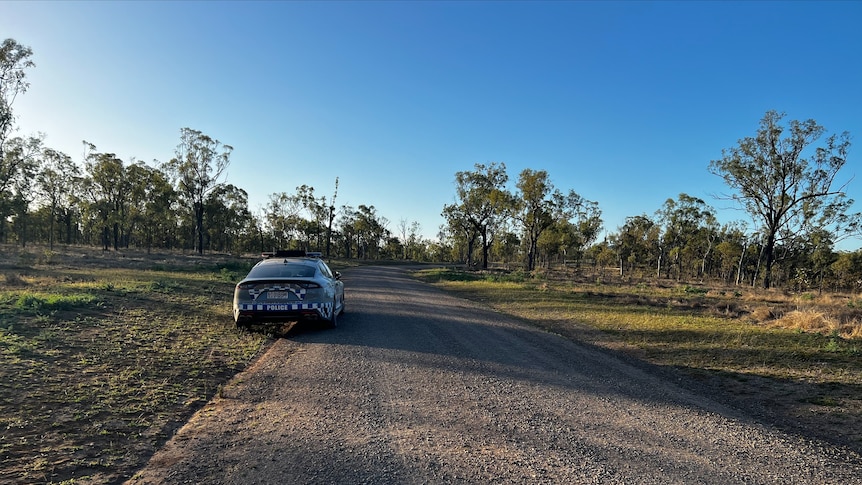
Queensland police say they are questioning three people, including the suspected shooter, over a triple fatality at a cattle property in Bogie in north Queensland.
Three people were found dead and a man was critically wounded after the shooting on the cattle property near Collinsville on Thursday morning.
The injured man, who was airlifted to Mackay Hospital with a gunshot wound to his abdomen, is in a serious but stable conditionafter undergoing surgery late yesterday.
Police said they were still working to determine a motive for the shooting but are questioning three people.
Police issued an emergency declaration yesterday under the Public Safety Preservation Act for an area at Shannonvale Road, south-east of Collinsville, which remains in place.
Nearby residents have been advised to stay away from the area and multiple crime scenes have been established.
The three people who died and the injured man are all from the same family but the police did not confirm their identities.
Mackay District Superintendent Tom Armitt said police were searching an “extensive” farming area that is “hilly and heavily forested”.
A man was flown to Mackay Hospital with critical injuries after suffering a gunshot wound to the abdomen.(ABC News: Melissa Madison)