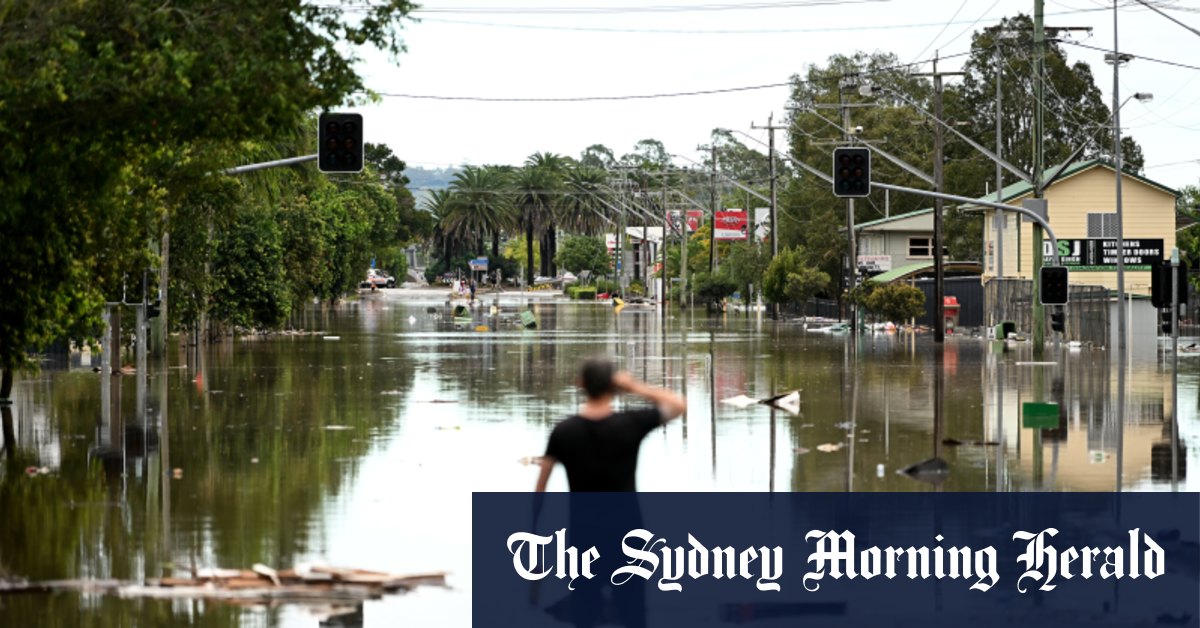
The Northern Rivers Reconstruction Corporation, the agency tasked with reviving the flood-ravaged communities in northern NSW, gave advice to the inquiry that the government faces a recovery bill of $3 billion, on top of what it has already spent.
In June, Minister for Emergency Services Steph Cooke said the NSW and federal governments had committed more than $3.5 billion for the clean-up and recovery effort.
The plan recommends offering people a voluntary buy-back of their properties to the government. Credit:elise derwin
The government is set to unveil its full response to the floods disaster – and the cost – while engaged in an ugly dispute over funding for sports stadiums with the NRL and its powerful chief Peter V’landys.
The $3 billion recovery cost in NSW will dwarf a Queensland scheme introduced after Grantham was hit with devastating flash flooding in 2011. The Grantham scheme was a joint approach by the federal and state governments and saw residents offered properties on a piece of high land in exchange for their low-lying, flood-ruined homes.
Mayors in flood-affected parts of northern NSW have been calling on the government to push ahead with voluntary land buybacks without waiting for the inquiry’s recommendations.
In response, Perrottet said in June that he would adopt recommendations from the independent inquiry, including any proposals relating to the possible relocation of homes in flood-prone areas.
“We absolutely have to,” Perrottet said at the time. “If we have another flood like that in two or three years, and we’ve just gone back and done the same thing again, I would feel personally responsible.”
Queensland announced a $350 million home buyback scheme in March, a month after floods hit the south-east part of the state. The scheme is expected to help 500 people sell back their houses to the government.
The report has also recommended that Resilience NSW boss Shane Fitzsimmons be dumped and the disaster agency dramatically scaled down after the agency was widely criticized during the floods.
loading
It will also call for the agency to be cut to a small office and its responsibilities reallocated to other government departments.
Former premier Gladys Berejiklian created the disaster management agency in response to the Black Summer bushfires, installing Fitzsimmons as its boss.
It has since faced scrutiny over its role, budget and employee-related expenses amounting to $38.5 million for 245 staff.
Former Bega MP Andrew Constance, who almost lost his south coast home in the Black Summer bushfires, was critical of the treatment of Fitzsimmons, given his work during the fires.
“For goodness’ sake, this is a bloke who saved lives, who was there for my community and our state during Black Summer,” Constance said in a video posted to Instagram on Thursday night. “I think he deserves a bit better than this.”
The flood inquiry report is a 700-page document that includes three volumes that address the preparation, response and recovery from natural disasters.
It is still under review by the government and a response to recommendations is expected in the coming weeks.
The Morning Edition newsletter is our guide to the day’s most important and interesting stories, analysis and insights. Sign up here.
“This is what Jennifer Westacott, the CEO of the Business Council of Australia, has said—that this legislation has ‘brought Australia a step closer to ending the climate wars that have put a handbrake on progress and become a serious economic barrier.’”
John Connor, chief executive of the Carbon Market Institute, an industry association of companies leading the transition to net-zero, says: “It is a historic moment, and it is exciting now to move into the reality of policy.”
That reality must include an investment boom. The National Australia Bank published research last week estimating that about half a trillion dollars in net new investment will be needed in Australia to achieve the 2050 target of net-zero emissions.
The Liberal Party, however, chose to stand outside all this – outside the unifying policy, outside the consensus, outside the business community, and outside half a trillion dollars’ worth of new investment.
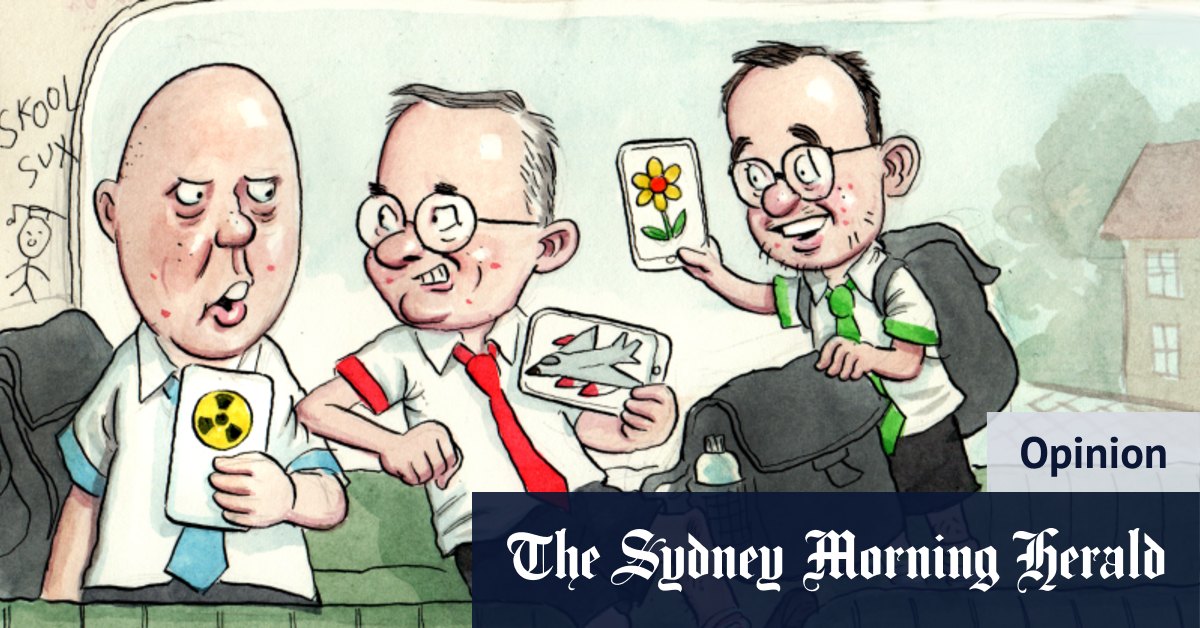
Peter Dutton made a captain’s call months ago that the Liberals would not oppose the 43 per cent and net-zero targets, but they would not vote to legislate them, either. Instead, the Liberals decided to follow their Coalition partner, the Nationals, into a fringe fetish.
The Coalition has decided to investigate nuclear power. Not that this is a fringe in the global energy system. It’s simply unrealistic in this country’s. Nuclear power has never been economic in Australia. It couldn’t compete with cheap Australian coal; it can’t compete with even cheaper Australian solar energy.
Prime Minister Anthony Albanese endorsing the government’s Climate Change Bill in the lower house on Thursday.Credit:alex ellinghausen
The Liberals’ decision opened them to Albanese’s ridicule. He not only mocked them for ignoring the power of “the biggest nuclear reactor of all” as he pointed skywards, he also brought simpsons into Question Time.
Giving the opposition’s energy spokesman Ted O’Brien carriage of an inquiry into nuclear power “bears an uncanny resemblance to Mr Burns putting Homer Simpson in charge of nuclear power safety in Springfield” Albanese jibed. “No one loves a reactor like a reactionary.”
He went on: “Remember when the Liberal Party used to have a relationship with business? Remember that? But what we saw today was them isolated and alone, stuck in the same old trench fighting a fight that has passed them by. They were by themselves with their arms crossed, saying, ‘No, no, no.’”
The May 21 election showed that Australia was ready for a more active climate policy. By standing against it, the Coalition government chose oblivion. Now that it has refused to negotiate on the climate bill, it has chosen irrelevance.
If the Liberals ever hope to win another election, “they have to have the conversation about restoring the broad church,” a church embracing moderates and not only conservatives, argues Walter. “They can’t only follow a small nutty segment” on the populist fringe.
“They have to be able to bring back the disaffected Liberals who voted for teal candidates, and still manage to persuade people in the region that they have their interest at heart.”
Even after Dutton’s captain’s call, the leaders of the moderate faction in the Liberal Party argued that they should change position and support the 43 per cent target. It would be a sign that they’d heard the voice of the electorate. But Simon Birmingham, Marise Payne and Paul Fletcher lost the argument in the shadow cabinet on Monday night.
One moderate said, “we picked the wrong fight – the fight shouldn’t be about the 43 per cent target, it should be about how we meet the target”. Because that will be the hard part.
Is Dutton missing the unmissable message from the electorate? Not at all. For him, it’s about priorities. Does he try to win the next election today, or does he try to hold the Coalition together as it regroups after a devastating loss?
Opposition leader Peter Dutton addresses his coalition colleagues in Canberra on Tuesday.Credit:James Brickwood
“Dutton’s calculus was that if we supported 43 per cent we’d have more trouble from the Nationals and from Liberals crossing the floor than we’ll have from moderate Libs by opposing it – and he was right.” Only one Liberal, Tasmania’s Bridget Archer, crossed the floor to vote with the government on the emissions target.”
“The next election will not be fought on the 2030 emissions targets,” observes the Liberal. Indeed, the government soon will need to start working on Australia’s targets for 2035, which must be lodged by 2025. “If it suddenly looks like we are struggling to meet the 2030 target, then the picture changes.”
The other major force in Parliament now are the teals. How did they conduct themselves? They, much like the Greens, campaigned for more ambitious targets but chose to support the government bill as the only available route to any progress at all.
All of which tells us what to expect from all these groups in the future. The Greens will continue to push for more, yet compromise in the service of practicality over ideology.
loading
So, for example, on Albanese’s draft proposal for an Indigenous Voice to Parliament, “we will take the same approach on the Voice that we did on climate,” says the Greens leader in the Senate, Larissa Waters. “We said we want progress on all elements of the Uluru Statement from the Heart, and we are heartened by the minister [Linda Burney] saying that’s possible.
“We will push to get improvements and push to get practical progress for Indigenous justice” including deaths in custody and the Bringing them Home Report, Waters tells me. Unsaid is that the Greens won’t veto possible gains in pursuit of impossible ones.
Albanese will continue to operate from the political centre, seeking to advance center left priorities such as climate policy and the Voice, while also working on center right areas such as a firmly defending Australian interests against Chinese Communist Party demands. Labor intends dominating the centre; the intention is to force the Coalition to either support the government or move further to the right fringe and unelectability.
And Dutton will continue to do what he can to hold together a shattered Liberal party, to survive as a leader long enough to regroup and refocus on the next election. Leading a defeated government into opposition is a high-risk task. For Dutton, survival, not relevance, is today’s imperative. Three years is a long time in politics.
The Opinion newsletter is a weekly wrap of views that will challenge, champion and inform your own. Sign up here.
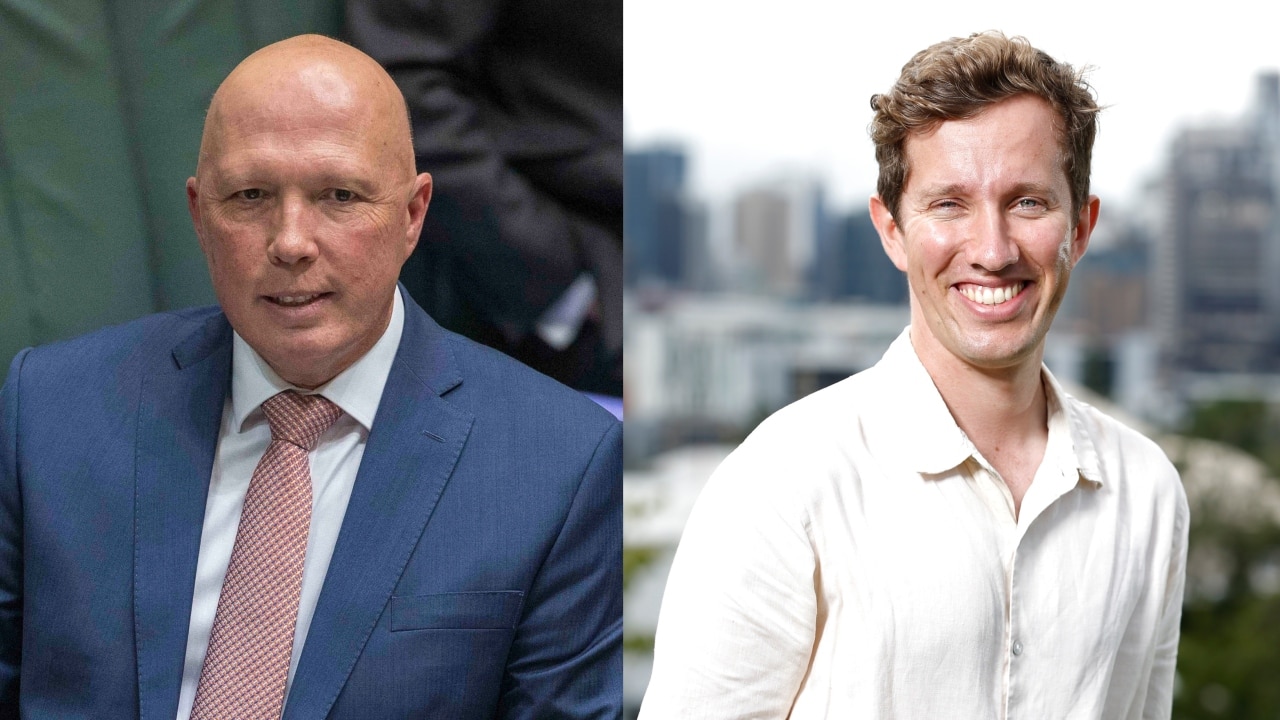
Peter Dutton has mocked new Greens MP Max Chandler-Mather after he was criticized over not wearing a tie in Parliament with the Liberal leader declaring: “I’m just happy that the Greens were wearing shoes”.
Mr Chandler-Mather, 30, was preparing to ask a question about public housing on Wednesday when he was cut off by furious Nationals MP Pat Conaghan who called for a point of order saying: “I draw your attention to the state of undress of the member”.
Mr Conaghan later mocked the new MP further in a statement and said: “This is not a barbecue”.
“This is Question Time in the Australian Parliament. What next, board shorts and thongs? Maybe a onesie in winter,” he said.
Stream more on politics with Flash. 25+ news channels in 1 place. New to Flash? Try 1 month free. Offer ends October 31, 2022
The Opposition Leader also weighed in on the tit-for-tat and poked fun at the Greens over the fashion choice.
“Well, I’m just happy that the Greens were wearing shoes,” Mr Dutton told Nine’s Today Show on Friday.
“I think that is a really very significant step forward. So, that was great.
“Sometimes we get away with shorts if we are on set, but, I mean, you guys are always well-dressed and you set the standard.
“We just want to follow the media celebrities. We are, as you know, we are in the ugly people’s show business, so, what can we do?”
But both Mr Chandler-Mather and Greens leader Adam Bandt failed to find the humor in the debate given the MP was asking the Prime Minister a question on public housing at the time.
Mr Chandler-Mather took to social media to express his concern that the “Coalition care more about ties” than vulnerable Australians waiting for social housing.
He was promptly supported by the party leader who mocked the Opposition for taking issue over a tie.
“A Nationals MP who hasn’t been wearing a mask all week just got angry that Max Chandler-Mather wasn’t wearing a tie,” he wrote on Twitter.
“Yes. That’s what the Coalition is angry about.
“The political establishment are completely out of touch with the struggles of working communities.”
Speaker Milton Dick promptly dismissed Mr Conaghan’s ire over the young MPs parliamentary attire at the time and permitted the member for Griffith to continue his question.
There is no official dress code in the House of Representatives with the rule book outlining “the ultimate discretion rests with the Speaker”.
Despite that, Ascham has been on an acquisition spree. In the six months to March records show the school paid $18.24 million to buy five of six apartments in the art deco block next door, leaving one outstanding apartment.
Of a row of three retail outlets that front the school to New South Head Road, one was purchased in 2019 and another last year for $5.25 million, leaving the third in the hands of Hong Kong’s Ho family.
Ascham now owns two of three retail outlets that front New South Head Road, with the Ho family retaining the one beside the school’s main entry gate since 1989.Credit:Janie Barrett
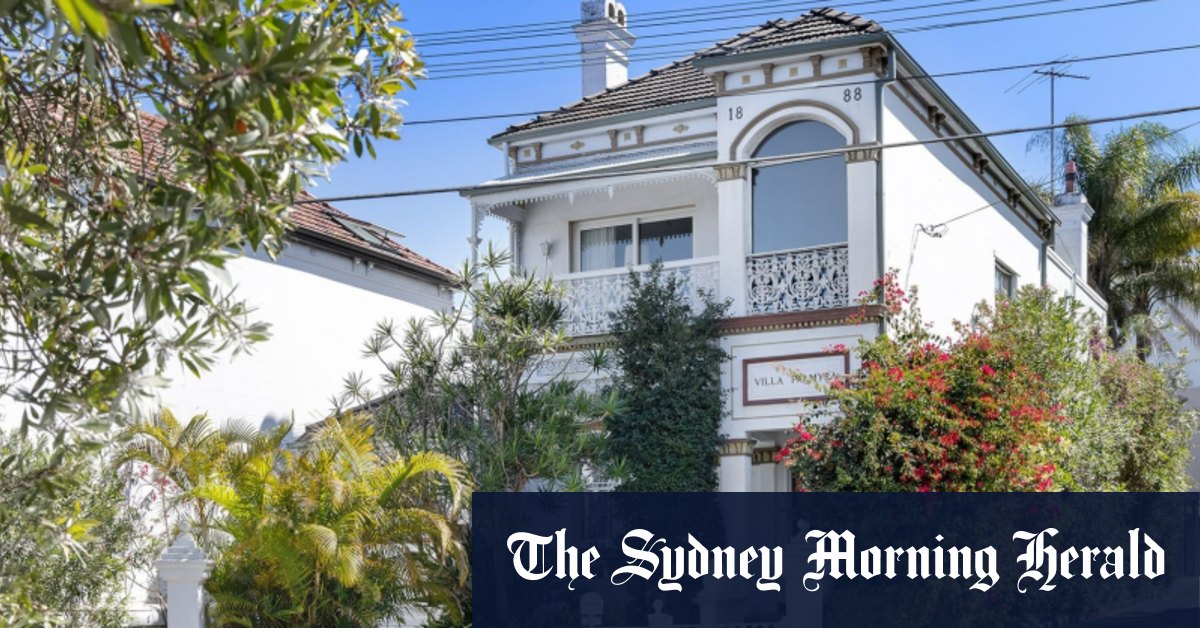
“When you list a house that’s near a school the first buyer you take it to is the school,” said Alexander Phillips, of PPD, who last year sold a Victorian Italian mansion called Villa Palmyra for $5.25 million to St Catherine’s in Waverley.
A spokeswoman for St Catherine’s said they are still considering what to do with the grand 1888-built residence, but purchased it because land is limited and buildings close by are useful for non-teaching purposes like administration and uniform shops.
Phillips said St Catherine’s paid market value for Villa Palmyra, but that schools often end up paying over.
Lewisham’s recent sale of a freestanding house on 650 square meters for $4.2 million shocked local property watchers, until settlement revealed the buyer was the Christian Brothers’ Trustees of Edmund Rice Education Australia.
Ascham has bought five of six apartments in an art deco block (left), SCEGGS Darlinghust bought a corner terrace, and St Catherine’s bought Villa Palmyra (right).Credit:
“Nothing has sold for more than $4 million in Lewisham outside the grand Victorian homes on The Boulevarde,” said Shad Hassan, director of The Agency Inner West.
“People who own next door to these sorts of schools usually know what they’ve got and are hanging out for these sorts of deals.”
A pink corner terrace in Darlinghurst was recently bought by one of the state’s most expensive schools, SCEGGS Darlinghurst, for $2.925 million for use as a wellbeing hub and to accommodate school counsellors.
Head of school Jenny Allum announced the purchase in the June school newsletter: “As a property with an entrance and driveway in St Peters Street, we have long considered this one of the most strategic properties around us.”
loading
In Mosman, Queenwood forked out $8.4 million to buy a period house next door to its Balmoral Beach grounds, and Mosman Preparatory bought a Federation house for $4.4 million, funded in part by the sale of a house two doors up for $3.21 million.
Barker College, a co-education Anglican school set on 15 hectares on the upper north shore, bought two retail spaces next door for $3.63 million and $2.5 million.
“There are no current plans to use the properties recently acquired for teaching,” said head of Barker College Phillip Heath, although one is being considered as space for staff.
Newington College’s Stanmore campus is set on 10 hectares in the inner west, a footprint that has been increasing since the mid-1990s, when the school started amassing 15 of the 19 homes that back onto it on Middleton Street, of which the most recent was a rundown bungalow in April for $2.175 million.
But it isn’t just Sydney’s most expensive schools looking to expand. Muslim co-education school Al Sadiq, where school fees start at $2400, recently bought a three-bedroom weatherboard house for $1.25 million adjoining its Greenacre campus.
loading
And the Bankstown campus of Islamic Al Amanah College has bought five of its neighboring properties in the past decade, of which the most recent was a block of land for $1.5 million.
Hopes are already high that Al Amanah will add a sixth to its parcel on August 20 when a four-bedroom house next door goes to auction with a $1.1 million guide, given Pace Property’s Luke McFadden said the school had already flagged its interest.
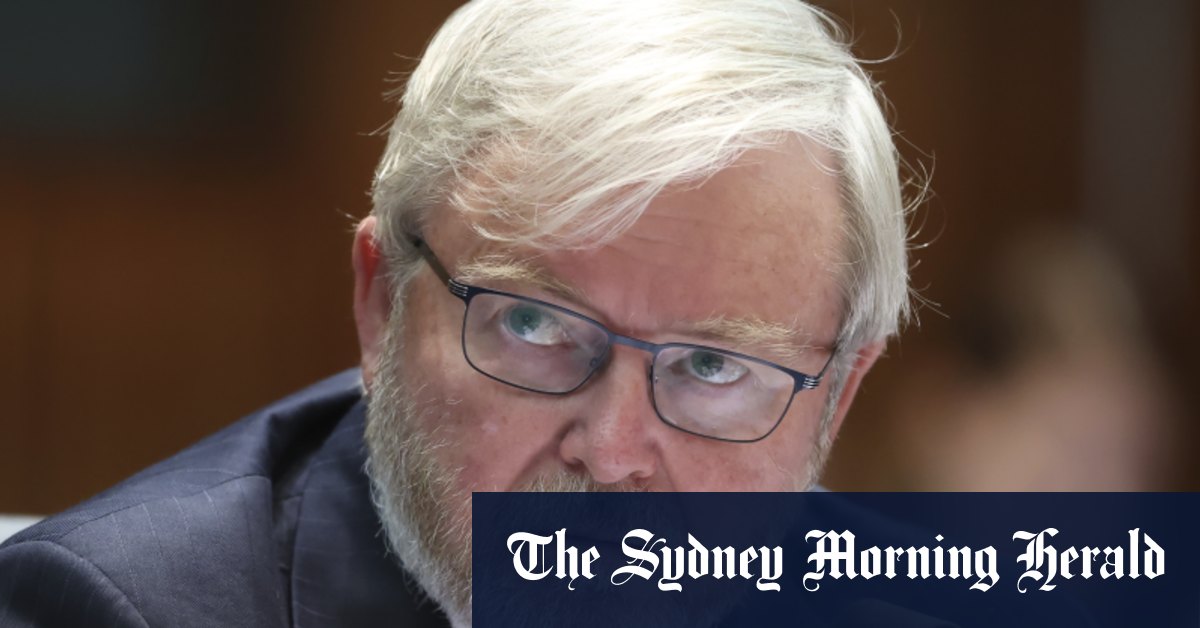
Former prime minister Kevin Rudd has launched a scathing rebuke of the emerging conservative campaign against a referendum on an Indigenous Voice to parliament, attacking his longtime rival Tony Abbott for suggesting the body would change Australia’s system of government.
In response to the former Liberal prime minister, who has claimed the Voice could undermine the function of parliament with veto-like powers, Rudd said the proposed constitutional amendments to establish the body were “modest” and ensured the body would have only an advisory role to governments.
Former prime minister Kevin Rudd has called the Voice referendum question “a modest proposal”. Credit:alex ellinghausen
“Although these are modest proposals, we still have congenital bad actors like Tony Abbott screeching that such amendments would ‘change our system of government’ by establishing the Voice as ‘part of our parliament’, and enable ‘judicial intervention’ to strike down laws ,” Rudd said in an opinion piece for The Sydney Morning Herald and TheAge.
“On both counts, Abbott is wrong. It speaks volumes that his most trusted Indigenous adviser in government, Noel Pearson of the Cape York Institute, has strongly endorsed Albanese’s proposal. Like on climate action, Abbott seems determined to stoke anxiety and fear.”
Responding to Rudd’s remarks, Abbott said he did not want to get into “a slanging match with a fellow former PM” but stood by his concerns about the way the body would function.
“What’s the point of the Voice if it’s not to change the way government works? And any constitutional change requiring the government to consider ‘representations…on matters relating’ to Indigenous affairs leaves government action more open to legal challenge,” Abbott said.
The clashing views of the two former prime ministers give a flavor of the forthcoming rival Yes and No campaigns on the Voice, as Prime Minister Anthony Albanese looks to hold a referendum this term on whether to enshrine the body in the constitution.
Writing in TheAustralian, Abbott suggested the Voice would have “something approaching a veto” over decisions of the parliament, and would change the way government works “because a particular group will have an unspecified say, over unspecified topics, with unspecified ramifications”.
When Lyell Lamborn’s new rental contract arrived, it came with an $80 weekly increase, and a notice to leave the property.
Key points:
Brisbane man Dale Billett was recovering from leg amputation surgery when he received a notice to leave his West End rental
The Real Estate Institute of Queensland says the move protects landlords from “lifelong” periodic tenancies
The tenants union says the new practice is causing undue anxiety to renters who already face a crushing housing market
The Form 12 notice explained that her landlord had the right to end her Brisbane tenancy when her lease was up.
The notice came after the peak body for Queensland’s real estate industry recommended all agents implement the “best-practice” strategy in a bid to protect landlords from “lifelong” renters who might automatically roll from fixed-term to periodic agreements, like month-to-month. -month contracts.
Ms Lamborn’s rental property is a near 100-year-old worker’s cottage in Manly with a long list of outstanding repairs.
Last year, a friend of Ms Lamborn’s fell through the worn front steps of the run-down rental.
“I felt that the [rent] increase, which amounted to $80 a week, which is actually a 23 per cent increase in my rent, that was a huge increase for what I consider to be a very dilapidated house,” Ms Lamborn said.
She said she calculated her options in the current market, and felt forced to agree to the increase and, therefore, the notice to leave.
Rental costs in Brisbane are among the highest of all capital cities in Australia.(ABC News: Liz Pickering)
“I’m being told that if I don’t sign and that, there’s no negotiating on the rent increase, then I’m out,” Ms Lamborn said.
“In this market, I can’t. I’m going to struggle to find something.
“It leaves you on a knife edge, wondering what you’re going to be doing every year… it keeps me up at night.”
Laws coming into effect in October will make it difficult for landlords to end periodic agreements.
‘Are we going to have somewhere to go?’
Dale Billett and Katie Havelberg were forced to find another property because their West End property was being sold.(ABC NewsAlice Pavlovic)
This weekend Dale Billett and Katie Havelberg are packing up their West End home of four and a half years.
It is also the first week Mr Billet has been out of hospital in four months, after an accident caused the amputation of his lower right leg.
While he was rehabilitating in hospital, the couple found out their home was being sold, and realized they would need to find a new disability-accessible home.
When they did, an unusual contract arrived.
Dale Billett was recovering from having his leg amputated when he and Katie Havelberg found out they had to leave their rental home.(ABC NewsAlice Pavlovic)
“I was going through the lease and preparing to sign it and at the end was a notice to leave attached,” Ms Havelberg said.
The couple signed the lease contract, but the process of property hunting took a toll.
“It just added an extra burden on top of the burden that was already here,” Ms Havelberg said.
“Sleepless nights, days, where you’re just constantly worrying about, ‘Are we going to have somewhere to go?'”
The couple are now navigating the move, with Mr Billett limited in what he can lift and carry.
‘Like a guillotine over tenants’ heads’
Tenants Queensland CEO Penny Carr says the notices are causing renters undue anxiety.(ABC News: Tim Swanston)
Tenants Queensland CEO Penny Carr criticized the industry body over the new practice, which she said was causing undue anxiety for renters already facing a crushing housing market.
“Every Queensland renter would be living with like a guillotine over their head the whole time they live in their home,” she said.
“And if they are good or lucky at the end of that, they might be offered a new fixed term.
“It’s extraordinary to call it best practice.”
REIQ CEO Antonia Mercorella granted the recommendation came at a very difficult time for renters.(ABC News: Lexy Hamilton-Smith)
But the peak body for Queensland’s real estate industry has stood by its recommendation.
Real Estate Institute of Queensland CEO Antonia Mercorella said the institute considered sending the forms best practice ahead of new tenancy laws coming into effect in October.
“It doesn’t evict the tenant or threaten the tenant in any way, as Tenants Queensland is suggesting,” she said.
“What it’s simply doing is confirming that that fixed-term tenancy will end on that date.
“Unfortunately, from the first of October here in Queensland, if you don’t do that, and you miss the crucial notice period, that fixed term tenancy will actually default and become a periodic agreement.
“Effectively, it will be a tenancy for life unless they can establish one of the limited prescribed grounds that will become available from the first of October.”
Ms Mercorella conceded that the recommendation came at a difficult time for renters.
“I agree that the timing of these new laws is incredibly unfortunate, and I would also say that we very reluctantly issued this best-practice recommendation because we’re acutely aware of how tight the rental market is,” she said.
A man who lit a stranger’s house on fire, smashed his windows and laughed while the building was engulfed with flames is not criminally responsible for murder, a court has found.
Cameron Johnston, 49, died from carbon monoxide toxicity on the evening of July 31, 2020 after Harley Thompson, 28, smashed out the windows of his Bomaderry home in southern NSW and threw petrol inside.
Harley Thompson is arrested in 2020 for the murder of Cameron Johnston.Credit:Nine News
Thompson, who lived nearby, had attended the home twice that evening before he set the fire, shouting abuse and smashing Johnston’s car and the front windows of the house.
Johnston, who was home with his 18-year-old son, called triple zero at 9.03pm and 9.46pm, saying in one of the calls that a “scary” person had “smashed all the windows, nearly” and was shouting “get outside c—.” Both times police arrived, the attacker had already left.
When Thompson attended the home for a third time, at 10:39pm, a panicked Johnston called triple zero again to say the stranger had “chucked petrol through the window”, describing it as a “firebomb” that had lit the entire house on fire.
Firefighters respond to the house fire in Bomaderry in 2020.Credit:Nine News
He said he was trying to hide from the man who set the blaze and didn’t want to go outside because “he’ll kill us”, urging emergency services to hurry.
As an operator urged Johnston to leave the house, he asked how far away the police were. He started to cough and was soon overcome by smoke and no longer able to speak. His son managed to escape the fire with the family dog.
A neighbor told a judge-alone trial in the NSW Supreme Court that he heard Johnston’s son shouting “dad, dad, dad” while Thompson laughed, sounded almost excited, and yelled “burn c— burn”.
Detectives say members of the public intervened and attempted to detain the perpetrator of a violent sexual assault in WA’s north this morning.
Key points:
Broome police are investigating after a jogger was sexually assaulted on her morning run on Friday
The man attacked the woman and she screamed for help, attracting the attention of members of the public
Police are calling for help to identify the man
The woman was jogging in Broome just after 5am on Friday when she was attacked by an as-yet unidentified man.
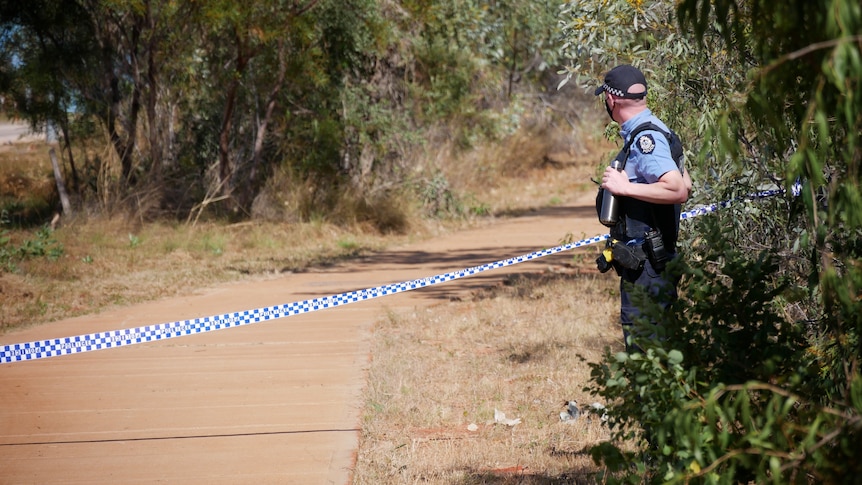
Police cordoned off the scene, a popular cycling and pedestrian track in Broome’s northern suburbs, shortly after the incident.
They spent the day canvassing houses and searching for the man.
Broome police officer Detective Senior Sergeant Brian Beck said the woman fought off the attacker, attracting the attention of nearby residents and members of the public.
“A few members of the public managed to locate the suspect, they’ve confronted him and they’ve tried to detain him, but he has managed to evade them,” he said.
“There wasn’t a physical confrontation, it was more verbal… we believe the suspect has threatened the bystanders or the people who were assisting.
“We’re working through our actions in order to try and identify whether this was a targeted approach, or something else.”
Detective Senior Sergeant Brian Beck says the random nature of this morning’s attack is deeply concerning. (ABC Kimberley: Hinako Shiraishi)
The path is protected by dense bushland and isn’t visible from the main road, which runs parallel to it.
The man was walking in the opposite direction to the woman when police say he attacked and sexually assaulted her.
Officers have been canvassing nearby streets and houses looking for any clues.(ABC Kimberley: Jessica Hayes)
The woman suffered non-life-threatening injuries, and St John Ambulance was called to take her to Broome Hospital.
“She has good family support; we’re supporting her very closely and our efforts are quite intense in terms of locating this suspect,” Senior Detective Sergeant Beck said.
The man is described as between 40 and 50 years old, 170-175cm in height with a medium to stocky build.
He has short sandy-colored hair and facial hair.
Police speak to residents as they continue their investigations.(ABC Kimberley: Jessica Hayes)
The forensic team is also at the scene, and detectives from the Sex Assault Squad have been flown to Broome to help.
Senior Detective Sergeant Beck said police would deploy extra resources from Perth to assist with the investigation and search for the offender.
“Members of the public are obviously asked to be vigilant and mindful of their surroundings,” he said.
“Obviously there’s a person out there that we’re still trying to locate.”
The path where the woman was allegedly attacked is a popular bike and pedestrian walkway that cuts through the north of town and stretches south towards Broome port.
Anyone with information or who has CCTV, dash cam or mobile phone vision of the area between 4.30am and 6am on Friday has been asked to call Crime Stoppers or report the information online.
Police say there is no indication of a link between this morning’s incident and a sexual assault at a party on Cable Beach in May, which detectives are still investigating.
Staring down the possibility of taking out a large mortgage to buy a house they could barely afford, Luke Saliba and his wife Claire Gooch decided to try something different.
Instead, the young couple moved in with Claire’s mother Sylvia and took out a much smaller mortgage to renovate her house.
“The idea of the nuclear family being disconnected in the suburbs [feels] like it’s been forced upon us over the last 100 years,” Luke said.
“I feel like us challenging that, in this small way, is almost going back to the way things should be.”
Luke says having a European background means there’s “no stigma attached to living with grandparents”.(ABC News: Rhiannon Stevens)
The living arrangement has allowed Sylvia to stay in her home which was becoming too costly for her to maintain alone.
“I get to stay in a house that I quite like, in an area where I have established friends — it meant that I wouldn’t have any issues,” she said.
Sharing the house has also benefited Luke, Claire and their two young children.
Claire said having a small mortgage of around $350,000 and living in an area with good services meant they were better able to manage financially as the cost of living rises.
“My daughter needs surgery for grommets and adenoids and tonsils,” she said.
“If we didn’t live like this, that would be a problem and we’d be having to make choices between food, rent bills and medical things that the kids have needed.”
Claire says living with her mother is a great choice but acknowledges that not everyone has the opportunity to tap into generational wealth in this way.(ABC News: Rhiannon Stevens)
Having another adult in the house also meant she and her husband could turn to her mother for advice.
“My mum is very different to how I am and that’s been really good because my kids get stuff that I wouldn’t be able to do with them [and] I get ideas that I wouldn’t have had.”
The living arrangement worked because they tried to relate like housemates, not mother-daughter, she said.
“This is a group house where we’re related, and because we have similar backgrounds … we can probably live together a little bit easier, but living with my daughter is not always easy, but that goes both ways, right?” Sylvia said.
Luke, who is the grandchild of Spanish and Macedonian immigrants, said having a European background meant there was no stigma attached to living with grandparents, and he valued the presence of an older generation in the house.
“If any of us have a bad day, we don’t have to travel to go and touch base and provide that family support. We’ve got it in-house,” he said.
Sylvia loves being involved in the daily lives of her grandchildren.(ABC News: Rhiannon Stevens)
Multi-generational households growing
Edgar Liu, a senior research fellow at the UNSW’s City Futures Research Centre, said economic circumstances were often the driving factor for people choosing to live in a multi-generational setting.
Dr Liu, who researched multi-generational living over several years and defined them as households with more than one generation of adults, said data from the UK and US showed that the economic shock of the Global Financial Crisis (GFC) increased the number of multi -generational households in those countries.
Edgar Liu says multi-generational households are increasing.(Supplied UNSW)
“From the US, in particular, there is evidence that [showed] a normal rate of growth was about 1.5 per cent, for this kind of household,” he said.
“[That] doubled to about 3 per cent as the GFC came on, and then it continued for a couple of years before it died back down to the normal rate of 1.5 per cent.”
The Australian Bureau of Statistics (ABS) provided new data to the ABC on households containing three generations.
It showed a small increase in three generational living arrangements over recent years, from 275,000 in 2016 to 335,000 in 2021.
But Dr Liu said the largest growth in Australia had occurred in households where two generations of adults lived together.
While finance, especially the cost of care for both the young and the elderly, influenced people’s decisions to form multi-generational households, Dr Liu said family connection was the benefit most often cited once people had experienced such living arrangements.
But he said in Australia this style of living was still stigmatized.
“Acceptance was very conditional, you had to have a reason to do this, you can’t just want to do it,” he said.
“[For example] your mother was in a wheelchair so that’s why she had to live with you,” was seen as an acceptable reason, Dr Liu said, but if someone simply enjoyed living with their mother it would raise questions.
A favorite family activity at Irina’s house is cards.(ABC News: Rhiannon Stevens )
The solution to isolation
Irina Kawar has always lived surrounded by generations of family, and she wouldn’t want it any other way.
Irina believes a “joint family”, as it’s called in India, can solve much of the isolation and loneliness experienced in Australia today.
“This is a very good solution for the people who feel isolated because isolation is as big a problem in old age as it is in teenagers,” she said.
“It’s a win-win for everyone, isolated teenagers, isolated grandparents — together, they are happy.”
For Irina, living with her in-laws, husband and two daughters also makes financial and emotional sense.
Irina says living with anyone — child, partner or parent — involves sacrifices, but the benefits outweigh the challenges.(ABC News: Rhiannon Stevens)
She said she never felt alone or frustrated learning to be a parent when her children were young because she always had family around to support her.
As migrants in Australia, having grandparents in the house also helped her children maintain a connection to Indian culture and language, she said.
“[The grandparents] follow daily religious practices, so I don’t have to make an additional effort to bring this into [the girls’] life, they can grow up around those practices as naturally as my husband and I did,” she said.
“If it was just the two of us raising our girls, we would need to make the conscious effort to talk to them in Hindi but living with grandparents — they just learn Hindi naturally.”
For those who have never tried living beyond the nuclear family unit, Irina understands there might be trepidation.
But she said sacrifices were made whoever you lived with, whether it was a partner, child, parents or extended family.
“A little sacrifice is all it takes, but the benefits are great.”
Nina Xarhakos has moved in with her mother Maria, and has become her primary carer.(ABC News: Rhiannon Stevens)
Caring for Maria
Decades since she last lived with her parents, Nina Xarhakos moved in with her mother Maria in 2020.
At 92, Maria suffers mobility issues and was becoming isolated after the death of her husband and several close friends, as well as the closure of her Greek social club due to COVID-19.
“I’ve worked in the community sector with Greek-speaking elderly, [so] I’m very aware of how prevalent depression and anxiety is among the elderly,” Nina said.
She said she respected her mother’s desire to stay at home as long as possible.
“It’s satisfying to me to be able to make that sort of contribution towards her quality of life and I think it strengthens our relationship as well.”
Nina said her mother would feel less comfortable receiving care from outside providers and it was becoming increasingly difficult to find carers with the language and cultural skills to care for someone like her mother whose English was limited.
“I was born in Greece and I came to Australia when I was seven, I’m the daughter of migrants, I’m bilingual and bicultural,” she said.
“I have a greater understanding than, let’s say, a 20-year-old who’s born here who has limited Greek speaking skills and understanding of the Greek culture.”
While she was enjoying this time living with her mother, Nina said carers made large sacrifices and received little financial support.
With a grown daughter and no partner, Nina said she was in a position to become her mother’s carer, and the living arrangement was benefiting them both.
“I’m learning certain skills from my mother, she’s passing on customs and traditions that I hold dear as well. So there’s a lot to learn from someone with such wisdom and such capacity.”
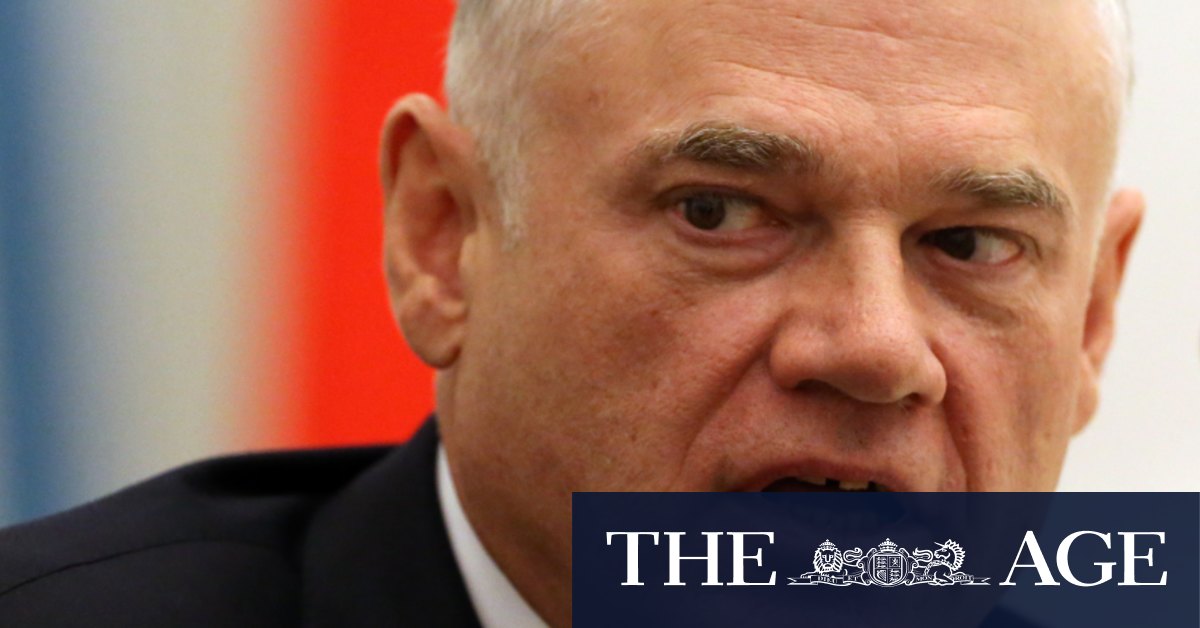
He said the case was unusual as public announcements by former foreign minister Marise Payne, explaining her decision, would form part of the suit.
In April, Payne announced the government had decided to impose “targeted financial sanctions and travel bans” on 67 individuals “for their role in Russia’s unprovoked, unjust and illegal invasion of Ukraine”.
“The Australian government is committed to imposing the highest costs on those who bear responsibility for Russia’s aggression in Ukraine or hold levers of power,” she said.
Merkel told the court that even if Payne’s successor as minister, Penny Wong, revoked the sanctions list or revoked the order against the billionaire, he would still pursue legal action.
loading
“We don’t know what will happen in the future. Whatever happens it will not deny these proceedings,” Merkel told Justice Susan Kenny during an administrative hearing.
“Our ultimate aim is to remove the sanction imposed… our real point is the approach the minister has taken is misconceived,” Merkel said.
It is not known whether Abramov has in the past done business with the Australian government or firms. The sanctions prevent him from traveling to Australia and doing business here.
His lawyers did not respond to a request for comment. The Department of Foreign Affairs and Trade also declined to comment.
Barrister Brendan Lim, acting for the Australian government, told the court he could not say whether the minister would make a new order on the sanctions.
The case is due to return to court this month.
with APA
The Morning Edition newsletter is our guide to the day’s most important and interesting stories, analysis and insights. Sign up here.