Categories
Australia

‘One of the most inhumane decisions I’ve ever seen’: Inside one refugee’s nine-year detention nightmare

When Najat Janabi arrived in Australia with her 16-year-old son Ahmed Shalikhan in 2013, she thought they’d finally made it to safety.

Their boat from Indonesia was the final leg in a decades-long journey, which included escaping persecution in Iraq under Saddam Hussein’s regime and being stateless in Iran.

In reality, it was the beginning of another nightmare.

Nine years later, Ahmed is still locked in immigration detention — and there’s no end in sight.

“I lost hope, I lost my childhood, I lost my education. I always wanted to have a better life. This government. This department took everything from me,” he told the ABC.

Ahmed’s case is complex.

a woman sitting outdoors with her head covered
Najat Janabi arrived in Australia with son Ahmed Shalikhan in 2013. He was 16-years-old.(Supplied)

He last week returned to Sydney’s Villawood detention center after spending five months in the Mid North Coast Correctional Center because he was charged with assaulting an officer in detention.

He pleaded not guilty under the Mental Health Act, and the charge against him was dismissed.

Body-worn camera footage from inside Villawood shows Ahmed being detained by several Serco officers, who pin him to the ground and then to the walls.

The video was filmed in January.

In the recordings, the 24-year-old can be heard screaming “you’re breaking my arm”, “I’m choking” and “you’re punching me”.

In another, one of the guards can be heard saying: “That’s OK. You’re all right.”

In a statement, Serco said “all staff involved in the incident acted in accordance with procedure.”

“Serco’s priority is always to treat people in our care with dignity and respect in a safe and secure environment.”

A man wearing glasses talks on his mobile phone while sitting at a desk
Omar Juweinat has been scathing of his client’s situation.(ABC News: Nabil Al-Nashar)

Ahmed’s lawyer, Omar Juweinat, described the case as the “saddest I’ve had the displeasure of appearing in”.

“I can’t think of another defendant in recent history in a case in which I have appeared, that has suffered to the extent that he has,” he said.

“How on earth a government saw it fit to effectively carve out him from being in the company of his mother and his siblings is beyond me and one of the most inhumane decisions I’ve ever seen.”

Despite his charge being dismissed, the decision did not mean freedom for Ahmed — just a transfer from jail back to detention.

Falling through the cracks

After three years being moved around detention facilities, Najat was released into community detention in August 2016 and granted a safe haven visa.

This five-year visa granted her freedom to live, work and study in Australia.

Najat claims a doctor from the Department of Immigration promised her Ahmed’s case for release was progressing too.

“They said your son will be right behind you, in three months, they said he’ll be out in three months,” she said.

Ahmed, however, had “ongoing behavioral issues” that constituted a “barrier to a community release”, according to a case review from November 2015 by the Department of Home Affairs.

As early as July 2015, Ahmed had been involved in six incidents in detention, including two in which he was described as the perpetrator.

Several of those incidents, and subsequent ones, have been altercations with SERCO guards.

A young man in a white shirt stands in a garden
Ahmed Shalikhan has been in immigration detention for nine years.(Supplied)

Ahmed also lives with an intellectual disability and mental health issues.

At least four psychological reports, commissioned by his legal team and a GP at Villawood, amongst others, agree he now has depression and post-traumatic stress disorder, among other suspected diagnoses including anxiety, paranoia and suicidal ideation.

The evaluations detail how Ahmed’s father, who died when his son was a young child, lived with Alzheimer’s disease and was “prone to domestic violence”.

Some of them mention how Ahmed was left traumatized after his uncle took him on a tour of an Iranian prison aged 11, where he witnessed torture and saw dead bodies.

They also detail how Ahmed was bullied at primary school in Iran because of his ethnicity.

Several assessments have also suggested that Ahmed’s mental health has been declining.

An assessment from May 2014 found “the psychiatrist advises that remaining in his current confined environment is exacerbating his mental health”.

In October 2020, Ahmed was jailed after pleading guilty to several charges of using a carriage service to make a threat to kill, using a carriage service to menace, harass or cause offence, using a carriage service to make a threat to cause serious harm, and using a carriage service to procure persons under 16 years old for sexual activity.

“At first blush, the matters that he pleaded guilty to in the District Court seemed distasteful,” Juweinat said.

“Although, when considered in context of the evidence surrounding his mental illness, and amongst other things, his offending was part and parcel of his desperation to want to be able to be part of the outside world.”

Ahmed told the ABC he did not absolve himself from his crimes, but said detention was the wrong environment for him.

“I came to this country to have a better life you know, not to commit any crime,” he said.

“Because of what happened to me in the past when I was a child. That makes me to do mistakes.”

In a statement, a Department of Home Affairs spokesperson said it “was committed to the health and welfare of detainees.”

“All detainees receive appropriate physical and mental health care. There is a range of health services available including psychiatry, psychology and counseling services,” they said.

‘We created the man’

Ahmed’s human rights lawyer, Alison Battisson, argues her client’s criminal record should have no bearing on his release from detention because he and his mother were already recognized by the Department of Home Affairs as refugees and they are stateless.

“We effectively created the man he is today, and that is somebody who needs significant support and has committed some crimes,” she said.

“He never displayed any of these behaviors prior to being locked up as a child with a whole lot of other random people in unsafe circumstances.”

Close up of woman with black hair
Lawyer Alison Battisson founded the not-for-profit group Human Rights for All.(Supplied)

According to the Department of Home Affairs, there were 1,512 people in immigration detention as of March 2022.

Of those, there were 129 who had been there for five years or more.

There are no children in detention, but some, like Ahmed, grew up there and now count as adults.

Ms Battison told the ABC Ahmed could be reunited with his family thanks to ministerial “God-like” powers.

“It is literally as simple as signing a piece of paper. The Minister for Home Affairs or the Minister for Immigration would sign a statutory instrument … effectively granting him the visa,” she said.

In 2018, the United Nations (UN) Human Rights Council Working Group on Arbitrary Detention called for Ahmed’s immediate release and found his deprivation of liberty in contravention of several human, civil and political rights.

A report by the same UN group on Ahmed’s case released that year contained a response from the federal government which claimed his “detention continues to be appropriate” and that his “current place of detention is suitable”.

It claimed Ahmed’s case had been reviewed 32 times.

Meanwhile, Najat is dealing with her own health conditions and relies on her older son for support.

I have arrived in Australia as a refugee in 2011, and is now a permanent resident.

Najat prays Ahmed will be allowed to rejoin the family and start his life in Australia soon.

“I want my son. I really need my son. He needs me. We talk on the phone, he cries and screams please end this,” she said.

.

Categories
Australia

It can get worse for Matthew Guy’s Liberals

Since the Liberal Party has trouble recruiting private sector talent to work for public sector wages, they presumably now understand the need for higher pay for the public servants we all depend upon every day. The more conventional approach has been to defer rewards until leaving office with, for instance, a taxpayer-funded spot on the Administrative Appeals Tribunal as the return for services selflessly rendered.

Guy already had question marks against him over the “lobster” disclosures that sank his campaign in the last state election, and now more seaweed will stick. If there was a viable alternative, there would be moves to switch leaders. But who would he want it now? Guy is the proverbial “dead man walking”, awaiting his fate after a seemingly inevitable drubbing come November.

The Liberals’ hunt for the saboteur is well under way. Unfortunately for Guy, the list of suspects is embarrassingly long. Only someone senior within the party would have the required access to internal emails, and tellingly many have sufficient motive.

Although it does not seem possible, the Liberals’ problems across the nation run deeper than a transient scandal about a now former chief of staff in one state.

In Western Australia, they are an endangered species. In South Australia, they just lost office. In NSW, the Liberal government is consumed by the ongoing investigation into why and how their leadership schemed to install ex-Nationals leader John Barilaro to a lucrative job in New York. Entitlement and privilege writ large.

Federally, Scott Morrison’s disastrous legacy is never but a Liberal Party identity crisis. Will Dutton’s diminished delegates – Liberals now hold only four seats across metropolitan Melbourne – keep to the middle of the road or veer to the verge?

loading

Some Liberals believe their once-dominant party must better reflect Christian right values, modeled by American evangelist politicians. They believe the future is to inhabit the space vacated by the collapse five years ago of the Family First experiment. Three recent preselections in Victoria are evidence they are winning the internal battle.

In the upper house South Eastern Metro seat, Ann-Marie Hermans will replace Gordon Rich-Phillips. Hermans was a Family First candidate in 2006 and hails from the Assembly of God. In Western Metro, Moira Deeming won the spot on the Liberal ticket to replace banished religious firebrand Bernie Finn, though she shares some of the same controversial views that led to Finn being expelled.

Most telling of all was the contest in the Eastern Victoria Regional seat. After a remarkably efficient recruitment drive, Gippsland chiropractor and “City Builders Church” figure Renee Heath won a tight contest against competent and sensitive sitting Liberal moderate and lawyer Cathrine Burnett-Wake by a single vote.

Senior moderate Liberals concede the religious takeover they have been resisting for 10 years is succeeding. Some speculate on abandoning their party to the insurgents and starting again. Will the Liberal Party survive, or are we watching it collapse?

Labor Premier Daniel Andrews – himself under rightful scrutiny over his own party’s branch stacking, the partisan use of electoral staff and the politicization of the public service – cannot believe his luck.

Categories
Australia

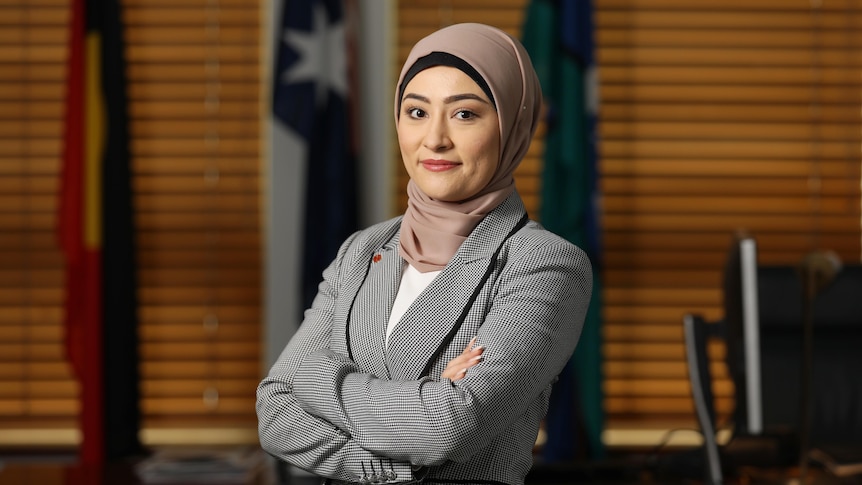
Labor’s newest senator Fatima Payman is blazing trails and she hopes others will follow

Tucked away in Parliament House office, once occupied by Tony Abbott and Clive Palmer, now sits the 47th Parliament’s youngest new member.

At age 27, Senator Fatima Payman is making history and it’s a pretty big adjustment.

“I’ve told my friends ‘please don’t call me senator’. I’m still getting used to the title,” she laughed.

Senator Payman’s small team consists of young women just as eager as her for the first sitting fortnight of the new parliament.

David Pocock and Fatima Payman walk into the Senate
David Pocock and Fatima Payman arrive in the Senate for the first sitting day of the new parliament.(ABC News: Matt Roberts)

It’s safe to say Fatima Payman is vastly different from the men who’ve sat at this very desk and in the Senate chamber she now frequents.

She came to Australia with her family as a refugee from Afghanistan in 2003 and was raised in the northern suburbs of Perth, where she became a union organiser.

Now, she’s the youngest member of the 47th Parliament and the first Afghan-born hijab-wearing senator. She says she’s a “representative of modern Australia.”

“It just feels unreal to me. It’s an absolute privilege,” Senator Payman said.

The new Labor politician is representative of an election result that demonstrated Australians wanted politics done differently, electing an array of fresh faces in what is now one of Australia’s most diverse parliaments yet.

She said she wanted to turn a tide in Australian politics, having gone to the 2022 federal election with a focus on ambitious climate action, an “anti-corruption commission with teeth”, and fee-free TAFE courses.

Space to play or pause, M to mute, left and right arrows to seek, up and down arrows for volume.

Play Video.  Duration: 6 minutes 41 seconds

‘An absolute privilege’: Senator Fatima Payman on her journey in politics so far

But with her new role comes a unique kind of pressure, one that few of her colleagues have experienced.

Senator Payman says she’s already trying to manage the expectations of the many diverse groups she’s part of – including her Afghan and Perth communities, young Australians, women, migrants, and people from culturally and linguistically diverse backgrounds.

“Having people’s hopes and dreams attached to your sort of progress and the work you do is quite a lot of pressure,” she said.

Nevertheless, she said the pressure was born out of knowing how important it is for all Australians to see themselves reflected in the nation’s most important institution — something she wished her late father could have seen her achieve.

“As ethnic households, politics is discussed at the dinner table all the time, but it never occurred to me that it was a career that I would take upon,” she said.

Anthony Albanese and Richard Marles stand alongside Fatima Payman as she signs the Labor roll
Fatima Payman officially joining federal Labor’s parliamentary caucus.(ABC News: Matt Roberts)

What’s most notable about Senator Payman is her youth. She was giddy and nervous as she watched the cameras and lights set up for her sit-down interview, repeating “I’m new to all of this” and hiding her slightly chipped nails from the camera’s view.

As the third-youngest senator in Australian history, she follows West Australian Greens senator Jordon Steele-John, who became the youngest-ever senator at age 23, and former South Australian senator Natasha Stott Despoja, who famously strode into Parliament House wearing Doc Marten boots at age 26, before going on to become the youngest elected leader of a political party.

Senator Payman looks at her youth as a strength, one that makes her, and her fellow young senators stand out in the stuffy, old building on Capital Hill.

She said she was using her age as a tool to advocate for other young Australians, who she said went into the federal election having lost faith in the political system and were continually ignored when it came to important legislation.

“I hope that my presence will be welcoming but also a beacon of hope for many out there, especially the young demographic that often see themselves slip through the cracks when it comes to massive legislation,” she said.

“It’s important that young people are brought to the table.”

New senators stand in a semi-circle inside the Senate
Fatima Payman with the class of 2022 Senate intake.(ABC News: Matt Roberts)

Senator Payman used her now-viral first address to the Senate to mark the historic moment of her election to the 47th parliament.

“Who would’ve thought that a young woman born in Afghanistan and a daughter of a refugee would be standing in this chamber today,” she told the Senate.

“One hundred years ago, let alone 10 years ago, would this parliament have been this accepting? 100 years ago, let alone 10 years ago, would this parliament accept a woman choosing a hijab to be elected?”

She used the opportunity to tell young girls who chose to wear a hijab to do so with pride.

“For those who choose to advise me about what I should wear or judge my competence based on my internal experience, know that the hijab is my choice,” Senator Payman said.

“I want young girls who choose to wear a hijab to do it with pride and knowledge they have the right.”

The historic moment comes shy of five years since One Nation’s Pauline Hanson wore a burqa in the Senate to call for the dress to be banned in Australia.

“I think it’s unfortunate that I can’t claim to be the first person who has worn Muslim attire inside those same chambers,” Senator Payman said.

“Heck, this is who I am. I want people to accept me for who I am.”

Fatima Payman sits at a desk in her Parliament House office
Fatima Payman wants more young people to enter federal politics.(ABC News: Nick Haggarty)

First speeches often allow a politician to tell their life story.

Senator Payman also used her address to thank her late father, becoming emotional as she acknowledged his sacrifices when bringing her family to Australia.

She later revealed the speech took place on what would have been her father’s 52nd birthday.

“We have all heard ‘it takes a village to raise a child’. This truly hits home for me. I’d like my first gratitude to be expressed to my late beloved, whose sacrifices will never be forgotten and who I dearly wish was here to see how far his little daughter has come,” she said.

“Knowing the sacrifices that my dad went through as a taxi driver [and] security guard to ensure he saved enough money to make ends meet to support this family and to ensure that my siblings and I had the future that he wasn’t able to secure for himself.”

.

Categories
Australia

‘Silent extinction’: myrtle rust fungus spreads to WA’s Kimberley | Environment

An invasive fungus attacking some of Australia’s most ecologically important tree species has spread to Western Australia while also flourishing in damp conditions along the country’s east, leading to “silent extinction” and prompting urgent calls for a national response.

Experts warn if the myrtle rust fungus detected in the east Kimberley reaches the state’s biodiversity-rich south-west, the consequences could be disastrous for those ecosystems.

Since being detected in a New South Wales nursery in 2010, the fungus – recognizable for its bright yellow spots and rusting on leaves – has established all along the east coast and been detected in every state except South Australia.

Sign up to receive the top stories from Guardian Australia every morning

One 2021 study predicted myrtle rust could claim at least 16 rainforest plants within a generation in an extinction event of “unprecedented magnitude”.

The fungus affects plants in the myrtaceae family – a diverse group that includes rainforest species, paperbarks, eucalypts and myrtles. The once widespread native guava has been almost wiped out by the fungus.

A team led by WA’s Department of Primary Industries detected the fungus on nine broad- and narrow-leafed paperbarks in the east Kimberley in late June. The exact species of melaleuca affected isn’t yet known.

myrtle rust
‘Myrtle rust can travel hundreds of kilometers on the wind and that’s why it’s spreading so far,’ says Dr Louise Shuey. Photographer: Louise Shuey

The department is surveying tourist hotspots and nurseries, with no new detections so far. The potential impacts were “yet to be determined”, a department spokesperson said, but the disease could cause tree death, dieback, species loss and compromise ecosystems.

Dr Louise Shuey, a forest pathologist at Queensland’s Department of Agriculture and Fisheries, traveled to the Kimberley to help with the detection effort.

“Myrtle rust can travel hundreds of kilometers on the wind and that’s why it’s spreading so far,” she said.

The location was sought after modeling pointed to isolated wetland as a likely location, spreading from affected plants in the Northern Territory to the east.

Alyssa Martino, a research scientist at the University of Sydney, has begun testing 25 WA melaleuca species for their susceptibility to the fungus, which originated in South America. The first three tested have shown high susceptibility.

Martino said the rust was sending plant species to extinction, so understanding how different plants reacted would help the conservation effort.

Shuey said keeping the rust out of Queensland’s biodiversity hotspot in the south-west would be crucial, as it was the planet’s most diverse area for myrtaceae – with almost half the world’s species.

Bob Makinson, a conservation botanist, coordinated a national action plan – developed voluntarily by concerned scientists and wild plant managers – through the Australian Network for Plant Conservation.

About 350 Australian species have been identified as fungus hosts. Makinson said the myrtaceae in the state’s south-west were intrinsic parts of the ecosystem.

“Many of them are part of the spring wildflower communities that attract tourists from all over Australia and the world,” he said.

“If it establishes there, we are likely to see a large increase in the number of host species and in the number of native species threatened with decline or extinction. That could be a biological disaster.”

The fungus especially likes humidity and fresh vegetation, and so thrives in new growth after rain or post-bushfire, meaning wet conditions in the country’s east had provided the perfect environment.

The national action plan was finalized in 2020 but hasn’t been formally adopted by governments.

“While some agencies and researchers are being heroically active on it, their efforts need to be broadened, stitched together and better resourced,” Makinson said.

James Trezise, ​​conservation director at the Invasive Species Council, said myrtle rust was leading to “silent extinction” among Australia’s diverse plant life.

QuickGuide

How to get the latest news from Guardian Australia

Show

Photograph: Tim Robberts/Stone RF

Thank you for your feedback.

“It’s clear the system for dealing with this major environmental threat isn’t working,” he said.

“Australia already has the inglorious title as a world leader on mammal extinctions. If we do not strengthen our threat abatement and biosecurity systems, we may find ourselves as a world leader in plant extinctions also.”

The federal environment minister, Tanya Plibersek, agreed that a coordinated response was needed and said the government was working to implement a national action plan.

“There’ve been targeted investments to do a national stocktake of myrtle rust-susceptible species and deliver specific myrtle rust training to Indigenous rangers and landowners in NSW and Queensland,” she said.

Categories
Australia

Dominic Perrottet proposed new trade role to minister

In response to a detailed series of questions, the premier’s office yesterday responded: ″⁣Whoever the premier considers appointing to his ministry is a matter for the premier alone.″⁣

Elliott and Perrottet have had an at-times strained relationship, while Elliott and Kean have made no secret of their mutual loathing.

Sources with knowledge of the discussion say Perrottet also spoke to Elliott about the role of agent-general in London and described Stephen Cartwright, who holds the position, as “a problem”.

Ayres, who resigned as trade minister on Tuesday after a draft excerpt of an independent probe into the Barilaro appointment raised questions about whether he breached the ministerial code of conduct, also spoke to Elliott about his political plans.

Ayres went to Elliott’s office to discuss whether the minister intended to stay in parliament and also spoke about the agent-general, two with knowledge of the conversion have confirmed.

The Sun-Herald Perrottet’s office yesterday whether he discussed the position of agent-general with Elliott, whether he raised any issues with Cartwright with Elliott, whether the premier asked Ayres to speak to Elliott about his plans for staying in parliament and whether the premier asked Ayres to speak to Elliott about the agent-general role. It declined to answer.

The London role is a statutory appointment, meaning it comes under the responsibility of the public service and not ministers.

loading

The nature of the agent-general discussions is unclear but the revelation may attract the attention of the parliamentary inquiry investigating Barilaro’s appointment. The London position has already featured in the inquiry after it emerged there had been “protracted” and “difficult” contract negotiations when Cartwright was appointed to the role. Cartwright is a former chief executive of the state’s peak business lobby group Business NSW.

The inquiry is probing the recruitment process that led to Barilaro being awarded the New York job.

He claimed the role after an earlier offer was made to bureaucrat Jenny West and then later rescinded.

Investment NSW boss Amy Brown, who employed Cartwright, told the inquiry that whenever negotiations hit a “particularly difficult” patch, Cartwright would say “Well, I’ll just escalate this to the deputy premier or the premier”. “I got the impression that I [Cartwright] felt he had some sort of elevated status,” Brown said.

loading

The Barilaro saga has been a rolling crisis for seven weeks but intensified recently when more evidence emerged about Ayres’ apparent influence on the decision-making.

On Friday, NSW public service commissioner Kathrina Lo gave a searing review of the Barilaro recruitment process, saying she would never have signed off on a final selection report if she knew then what she knows now. Lo told the inquiry she has since learned key information that was never disclosed to independent panel members.

In addition to Ayres, Perrottet was also forced to sack fair trading minister Eleni Petinos last week over workplace bullying allegations.

He initially said he was confident that an anonymous complaint made against her had been appropriately dealt with. However, new allegations emerged and Perrottet removed her from cabinet.

Perrottet yesterday used a meeting of the Liberal Party faithful to support the modernization of the organization following the federal election defeat. In his first state council address of him as premier,

Perrottet acknowledged the uphill battle ahead for a party “disillusioned” by the horror May poll but insisted the failure presented a chance to reset.

“We cannot be a party that runs on its record, but doesn’t set a vision for the future,” he said. “This may be controversial to say in this room, but I believe we failed to do that at a federal level.”

Perrottet announced candidate preselection for the March state election would open in two weeks, directly calling out the federal preselection debacle and conceding branch members were right to feel they had been stripped of their democratic right. “One of the most important rights of party members is the power to select candidates to represent your values,” he said.

With Lucy Cormack

The Morning Edition newsletter is our guide to the day’s most important and interesting stories, analysis and insights. Sign up here.

Categories
Australia

My birth mother was not allowed to name her baby. But the name she gave me in her heart de ella is real | adoption

Yot wasn’t until 2020, at the age of 52, that I was given the right to use my name. But as with all things adoption, nothing is quite as simple as it seems. Like other babies given to infertile couples under Australia’s “forced adoption” policies, my birth certificate was canceled soon after I was born; a second birth certificate created a legal fiction to make it look like I was born to the infertile couple.

With a stroke of a pen I was denied connection with all of my family – my cousins, aunts, uncles, grandmothers – and my first given name. After a few months I was handed over to the couple who took me home. I had no social history, no medical, racial or genetic history. It was all top secret.

The records of somewhere between 140,00 and 250,000 Australian babies were sealed by law, with a promise that the truth would never be revealed.

Things on that front have gradually changed, and adopted people are now allowed to use the names on either of our birth certificates. When I first read about these changes I cried – it was the first time I had seen the dual identity and divided loyalty that shadows adopted people fully acknowledged.

But on my first birth certificate, the name my mother chose for me is missing, and I am identified by the word “Unnamed” with my mother’s surname. According to that certificate, my name is Unnamed Champion. My second birth certificate states the name given to me by my adopted family.

The Integrated Birth Certificate allows me to choose either of these two names, but it seems unhelpful for adopted people to be known as “Unnamed” when the intention of Integrated Birth Certificates is to help adopted people connect with their full identities.

It has taken me many months to realize that this profound breakthrough does not achieve what it set out to do: it does not allow me to see the name my mother wanted for me.

Australia weekend

The only place my mother was ever allowed to use my name was inside her mind. While she was being told to stop crying by the “real” mothers breastfeeding their babies in the beds beside her, while she was given milk-suppression drugs without her knowledge, while she signed all the papers because she did everything she was told, the name was in her head and heart: Jona.

Like the perpetual state of longing, the name haunted her for years, though even now Jona still doesn’t exist. The state of New South Wales sent me to live with people who called me something else. They called me Eudora*, the name I’ve been called for over 50 years.

The simple facts are this: I was born and hidden where my mother couldn’t find me. She had no advocate, and she was a minor, with no legal capacity to sign me away. A girl like her was not allowed to name her baby by her.

That was part of the punishment of being shamed and blamed in the birthing ward as a girl gone bad. Above the bed was a three letter sign, “BFA”, to identify that here was a Baby For Adoption.

“Unnamed Champion”. Born in a small regional town on the outskirts of Sydney, on a midwinter morning in the late 1960s, and no mention anywhere of “Jona”. For me, the confusion and cognitive dissonance seem impossible to resolve.

I recently explained to a psychologist that I have two families with two divergent histories. I look like estos people. I sound like estos people, I think and behave like estos people, the people I was born to.

My brother, on the other hand, he is one of those people, from the other side of my life, the people I was sent to. My mum is one of those people. And my dad, well, he is one of those people too.

For an adopted person, the idea of ​​dad is complicated. The idea of ​​mum is complicated. The idea of ​​brother and sister, home and belonging – it’s all complicated. Even your name, and the names we use to identify family – none of it is easy to understand.

Think of the words – mum, dad – how can anyone experience them without a visceral response in the belly, in the heart, in the throat? When I hear those words, there is a glitch, a realigning moment, while I track who holds those roles in my life. None of it gets easier over time.

In 2021 I applied to the Department of Community and Justice for my birth records. It is now July, 2022. A few months ago, I was asked to place an extra signature on the form, and told to wait another nine months for my Integrated Birth Certificate to arrive. This document gives me the choice of using either the name from my first birth certificate, or the second one – whichever I prefer.

After a whole lifetime, I finally get to choose. But first I must wait a whole new gestation period for the documents to arrive. And then, I will not be given the choice between identifying as Jona or Eudora. I will be offered the choice between Eudora or Unnamed.

The legislation governing my separation from my birth mother erased the history written into my body as though my DNA never existed. But it does exist, it’s real. And the name she calls me in her heart is real too.

* Name has been changed

In Australia, support is available at Beyond Blue on 1300 22 4636, Lifeline on 13 11 14, and at MensLine on 1300 789 978. In the UK, the charity Mind is available on 0300 123 3393 and Childline on 0800 1111. In the US Mental Health America is available on 800-273-8255

Categories
Australia

Plastic can be an essential accessibility tool for people with disabilities. What happens when we ban it?

As a person living with a physical disability, there are a few items I require to help me live an independent life.

Pre-prepared vegetables, ready meals and drinking straws — some of which are made of plastic — are absolutely essential for people like me.

I have limited use of my hands and this has made preparing and cooking meals a nightmare. Up until the end of last year I simply avoided cooking meals myself as the kitchen tools I needed weren’t suitable.

Since then I have slowly been building my confidence in the kitchen with the help of pre-cut ingredients. But I still feel a sense of regret and guilt loading my shopping basket up with pre-packaged items due to the cost and the amount of leftover plastic waste.

The reality is that plastic can be an essential accessibility tool.

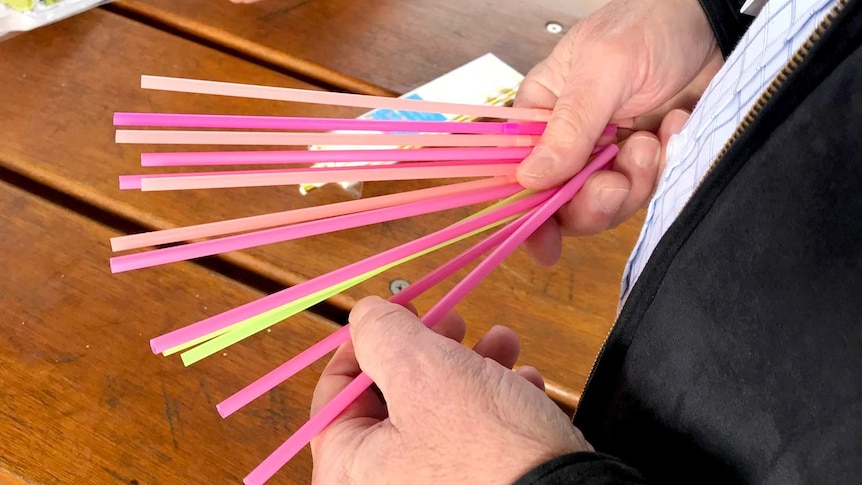
It’s not just prepackaged food. Plastic single-use plastic straws are vital for people who cannot lift a glass to their mouth or have motor control, chewing or swallowing issues — and a lack of availability can cause enormous worry.

An uncomfortable trade-off

Craig Wallace, head of policy at Advocacy for Inclusion, says the ban on plastic straws introduces another layer of complexity into the lives of people with disability by requiring them to negotiate the availability of an item that they need to remain hydrated or to carry that item with them.

And while exemptions allow plastic straws to be supplied to people with medical conditions or disability are now in place in most states and territories, there is no requirement for plastic straws to be carried — meaning no guarantee they will be available. Paper straws are often not suitable as they lack the flexibility and durability of their plastic counterparts.

A man with a bald head, maroon tie and black suit with white shirt
Craig Wallace says a ban on plastic straws adds a layer of complexity to the lives of people with disability.(Supplied)

“We don’t ask people without disabilities to carry cups and saucers and eating implements when they go out to a restaurant. We shouldn’t be asking people with disabilities who need plastic straws to consume liquids to have to supply them themselves,” Wallace says.

It’s an uncomfortable trade-off against a small but highly affected group of people. And while the ban does include provisions for cafes and restaurants to stock straws, these exemptions are meaningless as venues are under no legal obligation to include them.

“We’re weighing the ability of disabled people to have a glass of water in a cafe without choking to death against harm caused by plastic straws,” Wallace says.

accessible living room

The pre-packaged food debate was in the spotlight last month when a consumer created a thread on Reddit condemning “dumb” and “lazy” shoppers for purchasing re-cut vegetables and contributing to plastic pollution. Included in the post was a photo of the range, — trays and bags of diced onion, sliced ​​spring onion, sliced ​​potato and pumpkin cubes.

Teresa Berbury has suffered from severe chronic pain for the past seven years and recently developed monoplegia with paralysis in one leg from a failed back surgery. As she lives on her own, maintaining an independent lifestyle can be both challenging and rewarding.

A woman in a pink hoodie looks through the fridge while sitting in a wheelchair.
For Teresa Burbery, maintaining an independent lifestyle is challenging but also rewarding.(Supplied)

“When preparing the food I’m again reaching above onto the bench as it is much higher than a wheelchair,” Berbury says. “With every reach [I’m] putting strain on my back injury… By the time I’ve eaten the pain levels have really kicked in… This would be my life every night if I didn’t have pre-packaged meals.”

Knowing her weekly food has been prepared, cooked and delivered helps Berbury to relax without triggering unnecessary waves of pain.

But she says there are times she feels that the items she needs to use in order to live independently is something many fail to understand.

“People may assume that because I’m sitting down on my wheelchair I’m perfectly comfortable and it might even look easier,” Berbury says.

“But when you break down what is actually involved and how limited your movements are while steering your chair, combined with each movement triggering pain, it’s something many people are unable to relate to.”

Korey Gunnis has also relied on frozen and ready meals through the NDIS in the past, but says they have been more difficult to obtain in recent times.

“As someone with cerebral palsy and an autoimmune condition, it made life a bit more easier for me at the end of the day, when I have more fatigue and pain.”

Gunnis says to simply label the use of pre-prepared foods as lazy misses the point.

“[It] comes from a place of ignorance, and whoever made that statement does not understand what it is like to live with a chronic illness and disability,” he argues.

a man in an orange striped shirt and beret stands in front of a valley filled with clouds and a sandstone escarpment behind it.
Korey Gunnis, who lives with cerebral palsy and an autoimmune condition, has relied on frozen and ready meals through the NDIS to make life a bit easier when he is juggling fatigue and pain.(Supplied)

The cost of living independently

Aside from the plastic waste, the costs of pre-prepared items can be twice or even three times the amount of buying ingredients individually.

And with the current cost of living crisis, prices are on the rise.

Disability advocate and appearance activist Carly Findlay believes the cost of essential, pre-prepared food items must change to be more accessible for people with special needs.

“The cost must [be taken on] by the big organizations which are using more plastic and creating more waste and fossil fuels than individual disabled people,” Findlay says. “Many disabled people live on or below the poverty line and are significantly unemployed or underemployed compared to the rest of the population. “

A woman with curly hair, wearing a bright dress and polka-dot leather jacket stands smiling in front of a blue velvet curtain.
Carly Findlay believes the cost of pre-packaged food, that can be life-changing for people with disabilities, is too high.(Supplied: Sam Biddle)

In 2018, the Australian Bureau of Statistics reported that the personal income of people with disability was $505 per week, less than half that of people without disability. People with disability were also more likely to live in households with a lower gross household income compared with people without disability. Among those whose household income was known, half lived in a household in the lowest two quintiles, more than twice the frequency of people without disability.

“Pre-prepared veggies and ready meals may be unaffordable for many disabled people. The disability tax — the cost disabled people pay for accessibility — is real, and this [prepackaged food] proves it,” Findlay says.

A cohesive outlook

Jane Bremmer is the campaign coordinator for Zero Waste Australia. Having a son with cerebral palsy, she understands how necessary some of the plastic wrapped food and utensil products are for people with disabilities.

“There is always going to be a need for semi-processed food for people with disabilities that need that support. And we have a duty of care to provide that in our society, so that we create a more level playing field for everybody,” Bremmer says.

“I don’t think it necessarily has to be plastic, but there may be many uses that are essential for people with all sorts of different abilities that need lightweight, easy packaging.”

Chopped food and vegetables, or processed meals, can be important for many different kinds of people.

Chopped up vegetables and salad leaves in a pre-packaged plastic bag sold in a supermarket
Chopped food and vegetables can be useful for many kinds of people. (www.woolworths.com.au)

“So we have to find safe packaging alternatives for that, or keep them as essential uses for people who really need them,” she says.

Teresa Berbury agrees, pointing out that she is always thinking about what can make life easier on her and the planet.

“I do everything I can to minimize my impact however where humans are suffering, any product or packaging that can make our lives healthier and significantly less painful must be protected from environmental bans,” she says. “With what I live with every day I absolutely deserve this help.”

Craig Wallace says the issue isn’t a matter of just prioritizing climate change. It’s a matter of not prioritizing justice for people who are affected.

“It is really appropriate to take into account the needs and requirements of people with disabilities as we implement pollution control measures,” he says.

The future is recyclable

For Jane Bremmer, the best outcome would be that the packaging industry redesigns their products so that they’re safe and cost effective for all. “It’s completely doable,” she says. “We just need the political and corporate motivation to make it happen.”

Australian companies such as Arnott’s, We Bar None and Vegan Dairy have all commenced changes to their packaging.

“I would love to see biodegradable packaging integrated into these food services. Even cardboard would minimize a lot of the plastic component to food packaging,” Berbury says.

woman holding up six energy bars
Victorian business We Bar None uses home-compostable packaging.(ABC Ballarat: Dominic Cansdale)

Some major supermarket chains have already introduced recyclable packaging into their ranges.

In 2018, We Bar None became the first Victorian business to use 100 per cent home compostable wrappers for its energy bars, and Vegan Dairy in 2020 began using 100 per cent home compostable vacuum seal bags and labels for their entire range of plant-based cheeses .

And Arnott’s has committed to transition the soft plastic used in all biscuit packaging from multi to mono-material, so it is fully recyclable, by the end of 2023.

“If pre-prepared veggies and ready meals are making life easier for other people, and not harming you, don’t hate on them,” says Carly Findlay. “Accessibility comes in many forms – and food accessibility is a human right.”

.

Categories
Australia

More private school pain to come as luxuries the first to go in tough times

Or perhaps it’s doing a little research on the genuine benefit of tithing a handy chunk of our weekly income to a faith-based school whose faith many parents don’t even practice or really share.

Victoria’s parents are drenched in the guilt so heavily marketed at them about how they’re doing their child harm by not paying to send them to the school advertising their privilege on Eastlink. What if they discover the truth about the supposed educational gains made by paying all that money, and they don’t find a lot of return?

What if they discover that, by multiple measures, our government schools clearly outperform their fee-clawing counterparts?

I feel for our private and independent school leaders. They’ve found themselves on a fiercely competitive playing field and are forced to spend spiraling amounts of parent- and taxpayer-provided funds on marketing and facilities, not on education, every year.

It’s not why they got into teaching, but that’s not where the pain ends either.

The second whammy private schools are facing could well come from our new federal government.

Credit:Matt Golding

Despite including education policy in its own “small target” approach to the election campaign, the Albanese government won’t be able to hide from its commitments to fair and needs-based funding for long.

The current funding agreement, which Labor has chosen not to challenge, ends next year. Education unions, teachers and families invested in government schools will be watching closely.

They’ll be looking for puffed-up, statistically over-funded private schools, such as the obscenely wealthy Essendon Grammar (over-funded by $23 million), Haileybury ($22 million) and Ivanhoe Grammar ($10 million), to be brought back to the pack.

loading

Of course, as it is when petrol prices bite, the Porsche drivers aren’t the ones who’ll be hit hardest. And I expect very few of the aforementioned schools to experience an enrollment crisis.

It’ll be schools you’ve probably never heard of whose parents are working two jobs to sustain this low-return life choice that we can predict to be leaving the lower fee-charging private options.

These potential new additions to government schooling, alongside the existing public education enlistees, will be looking for their own schools to be funded – at least to the Schooling Resource Standard that the former Morrison government set, and then chose to forget, for a decade.

And if Jason Clare really does choose meaningful education reform as the hallmark of his time in this portfolio, the pain of less money for private schools to spend on billboards, orchestra pits and Olympic-sized swimming pools is coming.

loading

Reform of a transparent nature, where funds will be allocated to schools based on need and potential for improvement, rather than by the school’s glittering alumni of government ministers or their proximity to a marginal electorate is a significant threat to the private school sector.

I expect that those with the biggest stake in this fight won’t cop it quietly. But I also suspect that we haven’t yet heard the last sad Colmont School story either.

The Opinion newsletter is a weekly wrap of views that will challenge, champion and inform your own. Sign up here.

Categories
Australia

Anthony Albanese’s new Parliament House still the same in Question Time

Peter Dutton made aggressive attack his trademark style as a cabinet minister and is keeping that up as Opposition Leader in an attempt to put Labor under pressure. Albanese responds with force. He grew up in the hard world of the Labor factions and had to stick up for himself as a leader on the left who was usually outnumbered by his rivals on the right. The factional fighter is on display every day in question time.

Tactically, the Coalition is trying to find its feet after a brutal defeat while Labor is warming up. Dutton has asked repeatedly about whether the government would deliver the $275 cut to electricity bills it forecast in its energy policy. Finally, on Wednesday, Albanese responded with details of the blowout in wholesale prices under the previous government. The Labor tactics squad needed time to prepare its answers.

Peter Dutton is staying true to form.

Peter Dutton is staying true to form.Credit:SMH

Does this matter? Yes, because question time remains the dominant forum for a direct, face-to-face contest between the two parties of government. But question time is not the only forum that counts.

The first practical outcome of this parliament, at least in the sense that it matters outside the building, was the passage of the Aged Care and Other Legislation Amendment (Royal Commission Response) Bill 2022 on Tuesday. This is the first bill passed by both houses in the new parliament. It sets up a new funding instrument for aged care providers, authorizes the health department to issue “star ratings” for residential aged care homes and has a code of conduct for providers and workers. It was inherited from the previous government and is only the first step in Labor’s aged care plan: a separate bill to ensure 24/7 care and more nursing staff has gone to a Senate inquiry. The key point is that useful work is already underway.

The pivotal vote this week, however, was on climate change. A significant majority in parliament agreed, by 89 to 55 votes, to enshrine an emissions reduction target in federal law for the first time. The government’s 43 per cent target for 2030 is now law. This was not a seismic outcome, because Climate Change Minister Chris Bowen had said he could cut emissions even if the bill was blocked, but it marked an easing in hostilities on climate.

The climate debate at around noon on Thursday included practical agreements on amendments from Labor, the Greens and independents. Bowen rejected some amendments, such as a call from Greens leader Adam Bandt to cut emissions by 75 per cent, but agreed to others.

loading

The independents had their concerns heard. Monique Ryan gained an amendment on accountability and ambition on behalf of another independent, Kate Chaney, who was absent with COVID-19. Zoe Daniel gained Labor and Greens support for an amendment that left room for deeper cuts. Rebekha Sharkie moved an amendment about regional Australia on behalf of Helen Haines, also absent with COVID-19, and had it passed. Allegra Spender had an amendment passed to make sure advice from the Climate Change Authority would be taken into account on government policies such as fossil fuel subsidies. Kylea Tink had supported an amendment for the public release of climate change advice. Steggall gained support for an amendment on scientific advice.

None of the votes changed the essential feature of the bill: the target of 43 per cent. And the House overwhelmingly rejected, by 122 to 9 votes, a Greens amendment that said not one new coal, oil or gas project could commence. On this point the Greens were joined by Zoe Daniel, Sophie Scamps, Zali Steggall and Andrew Wilkie. Two other crossbenchers, Monique Ryan and Allegra Spender, voted with the majority. The independents did not vote as a bloc, let alone a quasi-party.

Labor has a majority in this new parliament and Albanese will use that majority when he wants – as he did when he cut staff numbers in the crossbench offices. He will be ruthless when the occasion demands. He will be inclusive, however, when he can afford to be. The vote on climate change was civil and practical. It offered the biggest signal so far on how this parliament will operate.

The Morning Edition newsletter is our guide to the day’s most important and interesting stories, analysis and insights. Sign up here.

Categories
Australia

Law Society of SA calls for ICAC review over concerns rushed legislation fails the pub test

South Australian lawyers say “hurried” anti-corruption laws allow public officials convicted of certain crimes to charge taxpayers for their legal fees, and parliament’s handling of the laws “fails the pub test”.

Last week, an ABC exclusive report outlined the implications of a little-understood change to the state’s Independent Commissioner Against Corruption (ICAC) Act.

The legislation was passed unanimously by South Australia’s parliament following less than 24 hours of debate last year.

It allows MPs and public servants to claim their legal costs back for offenses including deception, theft and dishonestly dealing with documents, because those crimes no longer fall within the ICAC Act’s definition of corruption.

Barrister and Center for Public Integrity director Geoffrey Watson last week said the public should be “outraged” by the provision, and he had “never heard of such a generous repayment scheme for government officials at the public’s expense”.

“In simple terms, a politician could be caught out in an act of corruption, defend it, be found guilty and be the subject of scathing observations by a magistrate, and then recover his or her costs for having unsuccessfully defended the matter,” Mr Watson said.

Geoffrey Watson SC
Center for Public Integrity director Geoffrey Watson said last week the public should be “outraged” by the provision.(abcnews)

In a written submission to Attorney-General Kyam Maher, the Law Society of SA said its Civil Litigation Council had examined the provisions to “provide some clarity”.

It found the reimbursement provisions applied at certain points in legal proceedings.

“A public officer who is the subject of ICAC investigation can only apply for legal costs that relate to the investigation itself, and NOT the costs incurred once charged, such as the costs of defending criminal proceedings,” president Justin Stewart-Rattray said.

“The Act does indicate that a person can also be reimbursed for any reviews or appeals arising out of an ICAC investigation.

“The Attorney-General has no discretion to deny reimbursement once the conditions are satisfied … [and] effectively, reimbursement is to be provided unless the person is convicted of an indictable offense that constitutes ‘corruption in public administration’.”

A man wearing a suit and colorful tie speaks to the media
The Law Society provided a written submission to Attorney-General Kyam Maher.(ABC News: Ethan Rix)

The Law Society said it had not formed a position regarding whether such reimbursement was appropriate or not.

It said strict secrecy provisions, “trifling or accidental” offending, and the financial burden placed on individuals “not wealthy enough to fund a private lawyer for prolonged periods” could be viewed as justifications for the provision.

“The Society notes that the question of whether such a policy should be adopted would be a matter for further consultation,” it wrote.

Parliament’s handling of laws ‘fails the pub test’

The Law Society again called for a full review of the legislation, following “extremely limited and inadequate consultation”.

“The Society is concerned by suggestions in recent media coverage that parliamentarians who voted for the ICAC reforms were not aware of or did not fully appreciate the effect of the provisions,” Mr Stewart-Rattray said.

“The Society believes a wider review of the ICAC Act would be appropriate, given other potential knock-on effects of the ICAC reforms that the Law Society has previously identified.

“The public should expect parliamentarians themselves to robustly discuss the merits of proposed legislation.

“When there is an actual or perceived attempt to hurry legislation through with minimal scrutiny, it tends to fail the ‘pub test’.

“But more significantly, it can lead to bad law.”

justin stewart rattray
Law Society of SA president Justin Stewart-Rattray has called for a full review of the legislation.(Supplied: Law Society of SA/Tom Roschi Photography)

Last week, both Premier Peter Malinauskas and Attorney-General Kyam Maher said they would seek further advice regarding the reimbursement provisions.

In a statement, a state government spokesman said: “The Law Society’s views on this matter will be provided to and taken into account by those advising the Attorney-General on this issue.”

Former Liberal MPs Troy Bell and Fraser Ellis are currently before the courts, charged over their use of the Country Members Accommodation Allowance (CMAA).

The scheme allowed regional MPs to be reimbursed for nights spent in Adelaide on official business.

Both are charged with deception offenses for allegedly claiming tens of thousands of dollars they were not entitled to.

Both MPs strenuously deny any wrongdoing.

Irrespective of the outcome in the court, they are eligible to claim legal costs.

.