Categories
Australia

From camels to camp kitchens, TikTok is bridging the divide between the country and the city

When Queensland farmer Yasmin Brisbane rescued a young camel that’d strayed from its farm, no one else was around.

But eight million people saw the order.

loading

From station cooks to cane farmers, social media is bringing visibility to the often isolating work of young people in the bush.

“[It] finally gives rural people and farming kids a voice and also access they never had before,” farmer and content creator Yasmin Brisbane said.

“There’s always been this big divide between country and city and it’s helping bridge that divides.”

Since starting a Tik Tok account posting videos of life on her family’s camel dairy six months ago, she has gained 280,000 followers.

Videos with the tag #farmtok have 5.7 billion views around the world.

And young people on the land hope it could help address one of agriculture’s biggest issues: finding workers.

‘It shows a new side to agriculture’

Farming has been in Grace McDonald’s family for four generations.

“For us, finding workers is a big challenge, and finding the future of farming is a difficult process,” the 23-year-old north Queensland cane grower said.

a young woman holds the steering wheel of a quad bike on a cane farm, smiling off into the distance
Fourth generation farmer Grace McDonald says the sector needs more education and promotion to encourage young workers.(triple j Hack: Angel Parsons)

She helps run the Proserpine Young Farmers group, and said soaring input costs were making it a tough time to be in agriculture.

And labor shortages were making it even tougher.

“We’re all finding it difficult, so I can imagine how hard it is to get a foot in the door.”

She said social media had huge potential to entice future generations of workers, as well as connecting and retaining people already in the industry.

“It shows a new side to agriculture which I think hasn’t been seen before, and it almost opens the door for anyone to join the club.”

“You hear of people all the time, they’re from the city and they’re now documenting their process, like ‘come along with me for the day as someone on a cattle station.'”

“It’s interesting because if they’d never seen a TikTok or come across these videos they wouldn’t have imagined they’d be where they are today.”

Being a first generation farmer

Isaac Micallef was partly inspired by farming content on social media to move from the city and try his hand at agriculture.

“Living in the city and seeing farm stuff on a day to day basis on your social media, it inspired me to really get out and pursue the dream,” he said.

The 23-year-old spent some time growing up on a small hobby farm but moved to the North Queensland city of Mackay when he was young.

I have finished his trade as an outdoor power mechanic, but the lure of the farming life was still strong.

“We came from a small hobby farm and when we got put into a town block I wasn’t impressed, I always knew I would get back into the industry.”

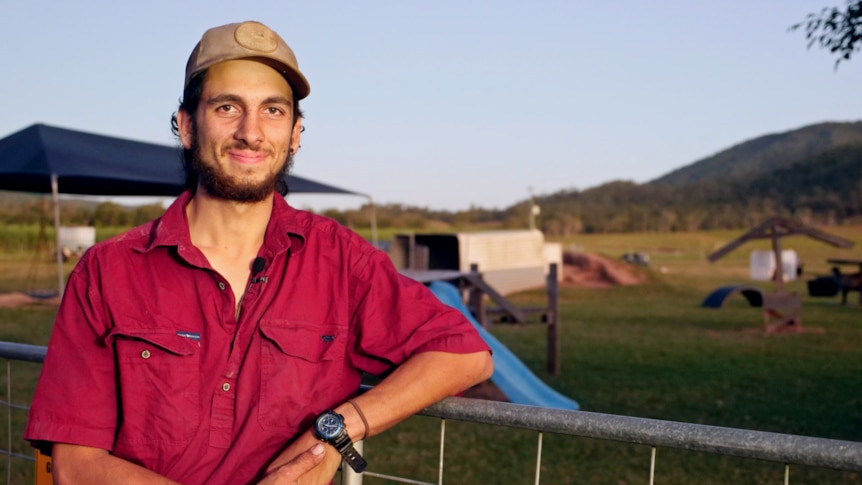
a young man in a farming shirt and cap leans against the fence of a paddock, smiling at the camera
Isaac Micallef says getting into farming has its challenges, but it’s always been his dream.(triplej Hack: Angel Parsons)

After finding work on a cane and cattle property, he met his now-wife. With her family of ella, they’ve started a miniature-goat breeding operation.

“We bottle feed them. They build a personality off that and can be really funny at times,” he said.

He shares his experiences on the farm through TikTok as well, and thinks it has a big role to play in encouraging other young people to consider a career in ag.

“My whole TikTok feed is full of farming stuff. I think it really is a way to open up the eyes for people who don’t get to see it on a day to day basis.”

loading

Kerry Latter from the Mackay branch of industry lobby group Canegrowers said in recent years labor shortages had reached “dire straits”.

“Family members have had to jump in – husbands, wives, children who are legally able to drive, were jumping in and doing the work.”

He said social media was promoting not just jobs, but awareness about the sector.

“A picture’s worth a thousand words … A video taken by a grower in his paddock, people get it completely different and are able to visualize it.”

“You’re seeing a lot of people that are actually becoming introduced into agriculture via different media, [like] social media.”

“We’ve seen a gravitation of people coming out of the cities, and wanting to get involved in some of the more newer and innovative aspects of agriculture.”

“So I think [social media] has a strong role to play going forward.”

Building a supportive community

Social media is often a highlights reel, and can romanticize the reality of making a living out of farming.

But Yasmin Brisbane said it was helping to change perceptions about the ag industry, and creating a space for young people to raise important issues about the future of farming.

These included mental health, isolation, gender equity and discussions about who would take over the family farm.

“[Traditionally]succession in Australian farming has been interesting because it’s been a patriarchal succession passed down to the sons, which isn’t very sustainable,” she said.

“I don’t think there’s a lot of support or education out there for female farmers.”

“I think female farmers could be the future of farming and the solution for farming, it doesn’t just have to be a male-dominated industry.”

loading

.

Categories
Australia

The 60 millionaires who paid no tax and the richest and poorest postcodes revealed

Sixty people earned more than $1 million yet paid no tax in 2019-20, Australia’s highest earners live in Perth, and the country’s lowest incomes have been recorded in regional New South Wales.

The Australian Taxation Office’s (ATO) latest taxation statistics are based on the tax returns of almost 15 million Australians for 2019-20.

Analysis of the data by the Australia Institute reveals there were 60 Australians who earned more than $1 million in that financial year who did not pay a cent of income tax, compared to 66 the year before.

On average these 60 individuals earned $3.5 million each.

Managing your tax affairs is an allowable tax deduction. Some of those who earned more than a million dollars but paid no tax claimed this deduction.

“Some people earning a million dollars or more paid on average $80,000 each to manage their tax affairs, which reduced their taxable income below the tax-free threshold,” Australia Institute senior economist Matt Grudnoff said.

Headshot of Matt Grundoff.
Matt Grudnoff says Australia’s tax system is full of complexity and loopholes.

Another allowable deduction is litigation costs for managing your tax affairs.

Of those earning a million dollars but paying no tax who claimed this deduction, the average amount claimed was $250,000.

“Our taxation system is full of complexity and the latest tax statistics show that some people on very large incomes are able to pay very smart people very large sums of money to take advantage of that complexity to reduce the amount of tax they have to pay, Mr Grudnoff said.

“This highlights the need in Australia for a Buffett rule, which sets a minimum rate of tax based on people’s gross income. This would prevent high-income earners from using lots of deductions to avoid paying tax.”

.

Categories
Australia

Central Queensland couple warns parents to be aware of childhood stroke symptoms

Watching five-year-old Arlo Brigg bouncing around her central Queensland home, it’s hard to believe this little girl survived a stroke.

Four months ago, the bright, energetic child was playing with her sister one Saturday morning when her mum, Ange, noticed something wasn’t right.

“[Her sister] Banks did something to make her giggle, and that’s when I noticed a really slight drop in her face,” Ms Brigg said.

“I initially said to [my husband] Clay: ‘Do you think she’s having a stroke?'”

Trusting her instincts, she called an ambulance and the emergency doctor at Rockhampton Hospital told the family it was likely to be Bell’s palsy.

Close up for Arlo's face, brown hair, brown eyes, slight smile, slight droop in right side of her face.
Ms Brigg says doctors in Rockhampton told them Arlo had Bell’s palsy.(Supplied: Ange Brigg)

Bell’s palsy is a sudden weakness or paralysis in one side of the face and is caused by inflammation or damage to nerves, according to the federal Health Direct website.

Ms Brigg, worried then-four-year-old Arlo had been misdiagnosed, pushed for scans but said that staff told her it was “very rare for children to experience a stroke.”

“[Arlo] went to say something to me and I couldn’t recognize her speech,” Ms Brigg said.

“I again said: ‘Is she having a stroke?’ And they said, ‘No, it can’t be a stroke, but we’re going to do the CT scan just to be sure’.”

Arlo’s parents said they were told the CT scan, taken about 1pm Saturday, found “no unusual signs of any sort of brain activity” and “came back as looking normal.”

Arlo, long brown hair, looking sad, holding stuffed toys, strapped onto bed with seat belt.
The Royal Flying Doctor Service flew Arlo from Rockhampton to Brisbane. (Supplied: Ange Brigg)

But the following morning at the hospital, when Mr Brigg went to dress Arlo, he found his little girl paralyzed down the right side of her body.

“The doctors came in at 8 o’clock, examined her and went back [to the CT scan from Saturday] and they saw something,” he said.

Arlo was diagnosed with an ischaemic stroke, meaning it was caused by a blood clot.

Little girl, Arlo, hooked up to cords and machines, lying in a bed, arms touching her body.
Ange and Clay Brigg say the care Arlo received in Brisbane was outstanding.(Supplied: Ange Brigg)

She spent 38 days at the Queensland Children’s Hospital in Brisbane regaining her strength and learning how to walk and talk again.

“Arlo [did] intensive-style therapy daily — one hour of speech, one hour of occupational therapy and one hour of physiotherapy a day,” Ms Brigg said.

“Some days were harder than others. The level of care that we got in Brisbane from the rehab team, the nurses, the neuro team, was just outstanding.”

Little girl, Arlo, brown hair, brown eyes, sitting in a wheelchair hugging a toy, hospital room behind.
Arlo lost all strength in the right side of her body.(Supplied: Ange Brigg)

Stroke happens in children

Lisa Murphy, acting chief executive of the Stroke Foundation, said about 600 Australian children had a stroke every year.

“Stroke can happen in children; it’s not just a thing that happens in older Australians,” Dr Murphy said.

Facial droop, one-sided paralysis, seizures, headaches, nausea and slurred speech are some of the most common symptoms.

Like Arlo, these symptoms can come and go before the person noticeably deteriorates.

“Stroke is always an emergency, so always call triple-0, don’t go to your GP, don’t go to bed and sleep it off, call an ambulance,” Dr Murphy said.

Little girl, Arlo wearing a bright outfit, smiling, holding a sign that says "Rehab Superstar".
Arlo spent 38 days at the Queensland Children’s Hospital in Brisbane.(Supplied: Ange Brigg)

amazing rehabilitation

Four months on, Arlo’s rehabilitation has moved ahead in “leaps and bounds.”

“When I first met her, she couldn’t stand on [her right] leg and balance,” physiotherapist Johanna Scully said.

“Now, she’s able to stand on that leg, balance and do an activity with the other foot. So yeah, lots of big gains.”

Arlo attends therapy at All Sorts Developmental, which provides pediatric services in Rockhampton, Yeppoon and Mackay.

“It’s always tricky for those families, especially when they’ve got a kid that’s tracking quite well and then this massive medical incident occurs,” Ms Scully said.

“It is a long-term journey for her and things will change over time.”

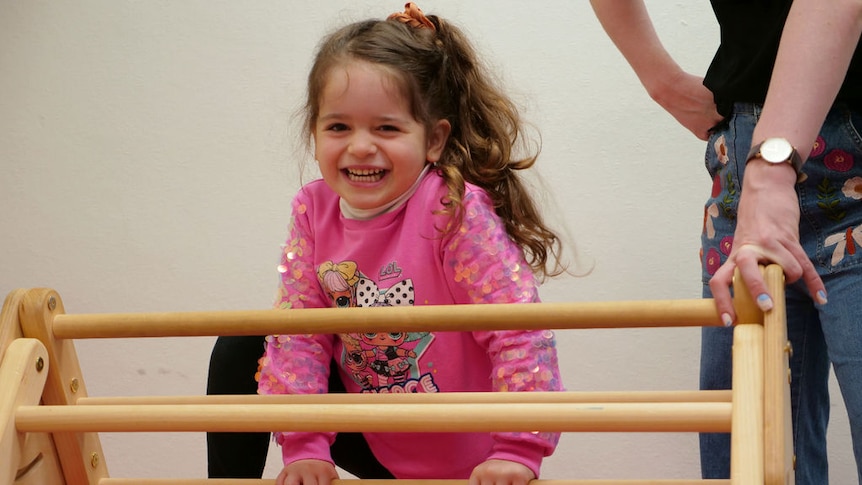
Arlo in a pink jumper, smiling, giving her Johanna a high five.
Johanna Scully is one of Arlo’s physiotherapists in central Queensland.(ABC Capricorn: Erin Semmler)

But Ms Scully said children in rural and regional areas often missed out on the level of support readily available in cities.

The Children’s Hospital supports the provider via telehealth and sends equipment.

“It is really important [regional communities] have access to that; we just have to be creative in how we go about things,” Ms Scully said.

“These families have lives here, they can’t just pick up and move to Brisbane.”

Arlo, a silhouette, jumping on a trampoline, sun shining behind her.
Arlo’s progress in rehabilitation has astounded everyone.(ABC Capricorn: Erin Semmler)

Bounding towards a full recovery

The Briggs said Arlo’s stroke was “the biggest scare” and brought new highs and lows.

“As a family, we have to work as a team more than ever… we always keep the mindset too that Arlo was able to walk out of the hospital,” Ms Brigg said.

“Life could have been a lot worse for us and a lot different.”

Clay, Ange, Arlo and Bank all sitting together in their backyard.
Ange and Clay say Arlo’s strength and resilience has amazed them.(ABC Capricorn: Erin Semmler)

They said watching Arlo improve had helped everyone cope.

“Seeing her now running and jumping, moving her arm and picking things up with her fingers on that right-hand side is really great,” Ms Brigg said.

“Her speech and comprehension is fantastic.”

Arlo has transitioned back to kindy and is excited to start prep next year.

“We’re pretty confident that Arlo’s going to make a full recovery,” Ms Brigg said.

Young girl, Arlo, smiling, walking, wearing a pink jumper and purple backpack.
Now 5, Arlo has returned to kindy a couple of days a week.(Supplied: Ange Brigg)

A message to parents

The Briggs warned other parents to know the signs of stroke.

“Go with your gut, you know your kids better than anyone else, and stroke does happen in children, unfortunately,” Ms Brigg said.

“But also, children being so young and resilient, you can see how determined they are to get back to their normal self.”

Arlo, little girl with long brown hair, kissing her little sister Banks, little girl with bright blue eyes, blonde hair.
Arlo’s little sister Banks has helped her stay positive through her recovery.(ABC Capricorn: Erin Semmler)

Thushan Malawana, Rockhampton Hospital emergency department clinical director, said she could not comment on an individual’s treatment due to patient privacy.

“I can assure community members that Rockhampton emergency department staff are trained and resourced to diagnose and treat strokes,” she said.

“Strokes in children are extremely rare and diagnosing conditions in small children can be very challenging.

“In cases such as this, our team liaises closely with pediatric neurological specialists at the Queensland Children’s Hospital to assist with highly specialized guidance.”

Stroke survivors and their families can find support via the Stroke Line on 1800 787 653, via Our Family Stroke Journey or Little Stroke Warriors.

National Stroke Week runs from August 8 to 14.

.

Categories
Australia

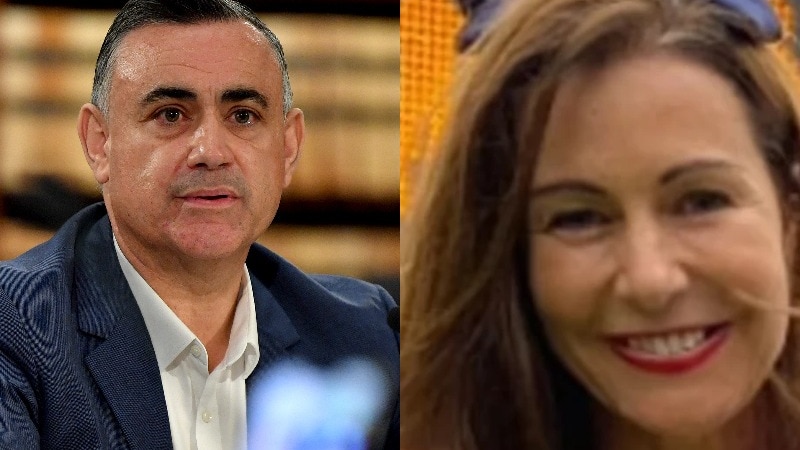
John Barilaro warned to prepare for inquiry grilling over girlfriend’s job at Investment NSW

Former deputy premier John Barilaro has been told to prepare for a grilling about his girlfriend’s job at Investment NSW later this week, as the saga into his appointment to a lucrative trade position continues.

Yesterday, Mr Barilaro faced a parliamentary inquiry into his appointment as the state’s Senior Trade and Investment Commissioner to the Americas — a prestigious job based in New York which he has since withdrawn from.

During his evidence yesterday, Mr Barilaro said he had spoken to Premier Dominic Perrottet, then-trade minister Stuart Ayres and Treasurer Matt Kean about how he wanted the $500,000-a-year role.

He also told the inquiry he recommended his former media advisor, and girlfriend, Jennifer Lugsdin, for a role at Investment NSW last year.

Investment NSW was, initially, the government body charged with hiring for the New York job, as well as several similar posts around the globe.

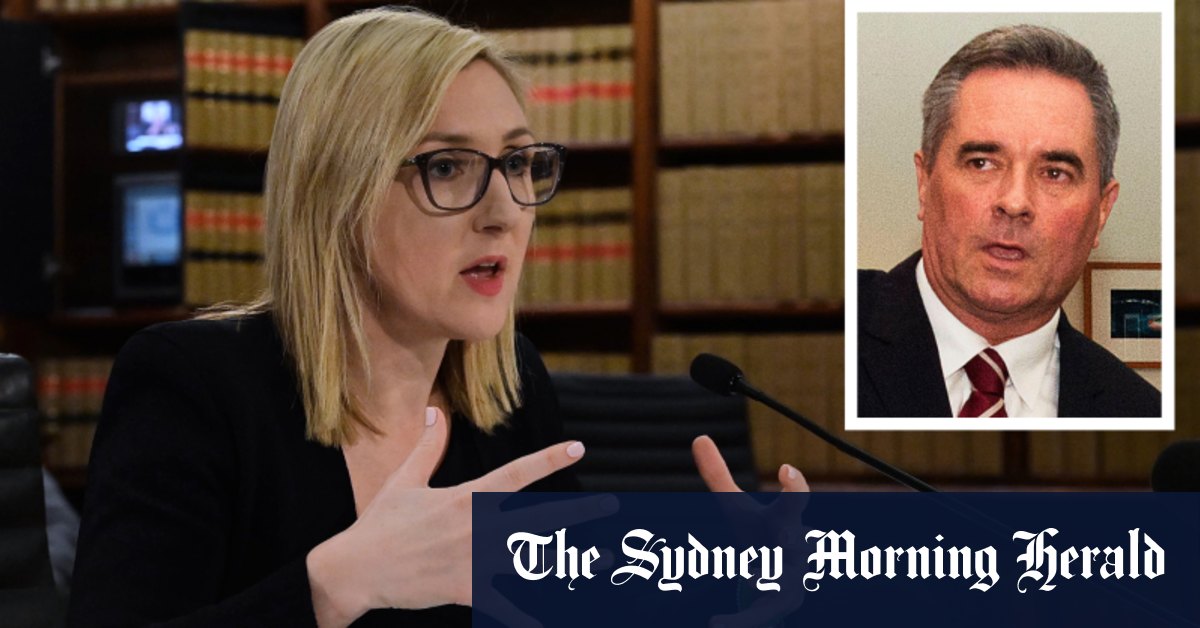
Investment NSW CEO Amy Brown, who returned to the inquiry yesterday for a third time, said she remembered a call from Mr Barilaro in which he said Ms Lugsdin was looking for new opportunities.

“He heard we were building out our media and communications … I said to him she is welcome to apply for such opportunities and my head of media and communications is making arrangements,” Ms Brown said.

She said Mr Barilaro didn’t make any comments about his relationship with Ms Lugsdin, and, she was awarded a contract with Investment NSW in August 2021.

Mr Barilaro told the inquiry he was not in a relationship with her while he was deputy premier, or in cabinet.

It was also revealed that Ms Lugsdin had advanced warning of when the New York job was going to be advertised.

She was included in an email chain sent on December 9 which stated Mr Ayres — who was a trade minister at the time — was keen for the US role to be advertised “this year”.

It was formally advertised on December 17.

Mr Barilaro was told to prepare for questioning about Ms Lugsdin’s employment when hearings resume on Friday.

“Someone you were in a relationship with… was clearly aware of the various processes associated with the advertising and the nature of [the US trade] position,” Labor’s Penny Sharpe told him at yesterday’s hearing.

Mr Barilaro said Ms Lugsdin wasn’t working at Investment NSW when he applied for the job in January 2022 as her short-term contract ended in December 2021.

Space to play or pause, M to mute, left and right arrows to seek, up and down arrows for volume.

Play Video.  Duration: 2 minutes 19 seconds

John Barilaro says trade role saga is a “personal hell”

Last week, Mr Ayres resigned from his portfolios and leadership position after a separate review into the appointment raised concerns about his potential role.

I have denies wrongdoing.

Today, Liberal MPs are set to determine who will become the party’s new deputy leader.

Transport Minister David Elliott yesterday announced he would not contest the position, after a discussion with the Premier, who “laid down his demand for unity.”

“Dominic [Perrottet] said to me that he’d prefer not to have a ballot, he certainly didn’t tell me to withdraw,” he said.

“I think it’s in Dominic [Perrottet’s] best interests for us to have some unity for the parliament over the course of the next eight months as we go to an election.

“Yes, I’m disappointed. Yes, I’ve had to eat humble pie … I’ve had to say to the Premier, you’re the boss.”

a man standing on stairs smiling
Matt Kean is the only declared candidate for the job of deputy leader of the NSW Liberals.(AAP: Dan Himbrechts)

Mr Elliott’s withdrawal leaves Treasurer Matt Kean as the only declared candidate for the deputy role after he confirmed his intentions yesterday.

“I’ll be sticking my hand up and it’s up to colleagues to determine whether or not they think I’ve got the credentials to support our leader and to support our party at this time,” Mr Kean said.

“I welcome other candidates putting themselves forward.”

Mr Kean also ruled out any leadership challenge to the Premier.

“I want to go to an election where Dom Perrottet takes forward the Liberal Party and our strong, positive plan for the future up against [Opposition Leader] Chris Minns,” he said.

.

Categories
Australia

EPA investigates cause of Lake Macquarie fish kill as hundreds wash up dead at Mannering Park

Authorities are investigating what caused hundreds of fish to wash up dead on the banks of Lake Macquarie in New South Wales last week.

Lake Macquarie is a saltwater estuary that covers about 110 square kilometers on the state’s Central Coast.

Gary Graham has been living in Mannering Park for nearly 70 years and said he had “never seen a fish kill of this magnitude.”

“We’ve had a few fish kills previously… but this is an enormous fish kill,” he said.

Resident of 56 years Shane Peters felt the same.

“It’s very smelly. We’ve never seen anything like this,” he said.

Both men believed the event could have killed most of the fish in the lake.

Man wearing fluro yellow polo shirt stands in front of a lake
Gary Graham and Shane Peters used a wheelie bin to clean up fish from in front of their homes.(ABC Newcastle: Andrew Lobb)

‘Greying around the gills’

The Environmental Protection Authority (EPA) said it collected water samples for laboratory analysis after they were alerted to the incident at Mannering Park on Friday afternoon.

Small white fish with yellow eye lays dead under floating grass
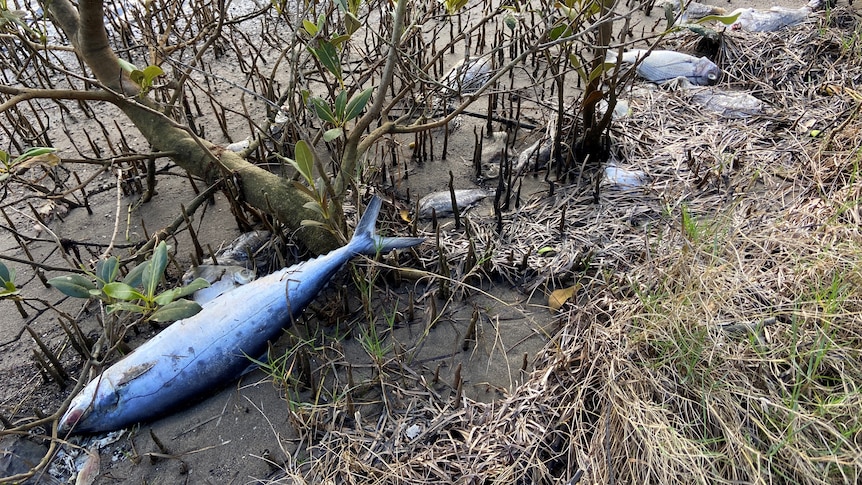
Hundreds of dead fish washed up on the shores of Lake Macquarie on Friday.(Supplied)

“Since initial inspections, the EPA has observed hundreds of dead fish of various species and sizes,” a spokesperson said.

“Field officers also noted graying around the gills, which could suggest oxygen depletion.

“A decrease in oxygen content in water is a natural event that can cause rapid fish deaths.”

Man standing in shallow water picks up a dead black ray
A NSW Fisheries officer removes a dead eagle ray from the banks of the lake.(Facebook: NSW EPA)

Residents embark on clean-up

Mr Graham estimated the number of fish that had washed up dead on the foreshore outside his home was in the order of thousands, not hundreds.

Prompted by the smell of rotting fish over the weekend, he said he and his neighbors filled an entire council wheelie bin with fish carcasses found out the front of four waterfront properties.

Black ray with white spots submerged in shallow water
An eagle ray was among the dead marine animals found by Lake Macquarie residents.(Supplied: Gary Graham)

He said these included juveniles, large flatheads and even a mature eagle ray.

“We’re probably looking at 100-plus kilograms of fish,” Mr Graham said.

“And I must say it was distressing picking up all sorts of fish. There was no discrimination.”

The EPA has instructed the local council to remove and dispose of the dead fish.

several dead, white fish on sand
Dead fish are still rotting on the shores of the coastal saltwater lake.(ABC Newcastle: Andrew Lobb)

.

Categories
Australia

Disability advocates call for better support for people in rural, regional and remote NSW

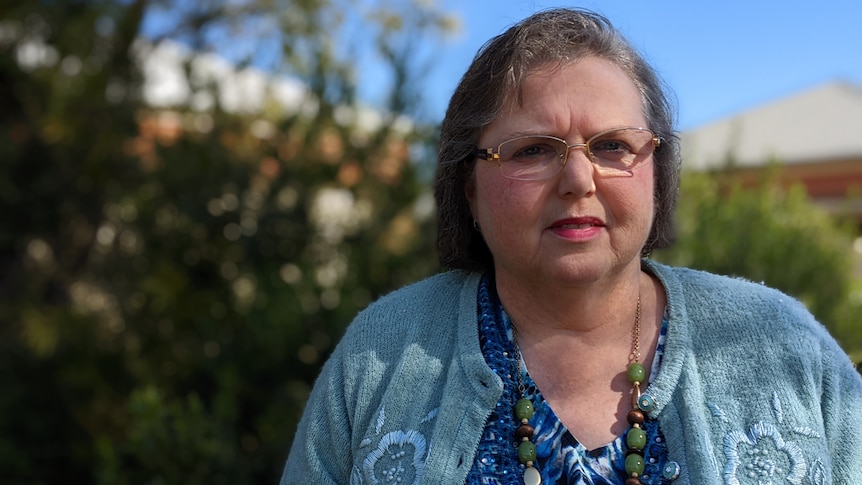
Pauline Follett has been struggling to get on the National Disability Insurance Scheme (NDIS) for three years and is “frustrated” with the health system.

The 54-year-old has been living with cerebral lupus for nearly 30 years and depends on her disability pension as her main source of income.

Lupus can damage nerves in the body through inflammation of nerves or the tissues surrounding them.

The condition affects Ms Follett’s balance, which makes it difficult for her to walk and do tasks such as cooking, cleaning and driving.

She lives by herself in Gol Gol, in far west New South Wales, and has limited support.

“It becomes very difficult when you become too unwell to stay in one’s home. You have to have support when you’re disabled,” Ms Follett said.

An older woman pouring a kettle in her kitchen with her walker in front of her.
Pauline Follett lives on the border between Victoria and New South Wales.(ABC NewsRichard Crabtree)

The first time she applied for NDIS, she said the assessors focused “on the wrong thing”, that she lives with osteoporosis rather than lupus.

The second time Ms Follett applied, she said she was told her specialists could do more for her.

The support she receives is from a local disability service provider, but only includes assistance with transportation and cleaning.

And that support is not guaranteed, as Ms Follett is reassessed for it every six weeks.

That has meant she has made nearly 30 applications over the past three years to maintain the help.

“It’s all up in the air, all the time … You’re not guaranteed, it’s very tiring,” she said.

“You have to be on the ball all the time, which is difficult when you’re ill.”

Uncertainty exacerbates condition

She likes living in her own home but without the right help, she believes she could be forced to leave and fears being unable to find stable aged care accommodation, which would put her at risk of homelessness.

An older woman standing with her walker outside her home.
Pauline Follett hopes to get NDIS support after being rejected twice.(ABC NewsRichard Crabtree)

“Item [aged care] is difficult to get here. It’s not as readily available to us, so to have something like that. It’d be very hard to access,” she said.

Ms Follett said the uncertainty of NDIS providing support had affected her mental health, which had taken a toll on her physically.

“I’m very stressed, and with my lupus, stress is something that exacerbates my condition, so it makes it worse,” she said.

Ms Follett is not alone in finding access to services difficult.

Calls on government to do more

Disability Advocacy NSW released The Aussie Battlers report to the ABC, detailing issues people living with disabilities face in rural, regional and remote (RRR) NSW.

It showed 61 per cent of cases in RRR areas had difficulties meeting evidence requirements due to limited accessibility of service providers.

In RRR NSW, 73 per cent of people reported their service accessibility as poor or very poor.

Disability Advocacy NSW policy officer Cherry Baylosis said the results were not surprising.

A close up of a woman with brown hair wearing a patterned shirt.
Cherry Baylosis contributed to The Aussie Battlers report.(ABC Broken Hill: Youssef Saudie)

“It is concerning when I confirmed these experiences persist despite some of the efforts that were made,” Dr Baylosis said.

She is calling on the government to involve people with disabilities in policymaking.

“At the very least to have consultations with people with disabilities who live in remote areas for better engagement and participation, and then developing considerations within policy based off that,” she said.

“I would like policy to take into consideration the complexities of people with disability living in regional, rural and remote areas to consider the complications — such as the cost of living with a disability.”

Delays from service providers

There are 750 NDIS recipients in far west New South Wales as of June 30, but far west NSW Disability Advocacy district manager Eveleen May said there would be a “lot more” people who were in need of assistance.

.

Categories
Australia

Barilaro inquiry hears London trade commissioner was ‘threatening’ over $800,000 pay packet

While Cartwright walked away from negotiations with a $600,000 package that included expenses – higher than any other trade commissioner – Brown said he had expected $800,000 when his appointment was transferred to her agency from NSW Treasury.

“There seemed to be unmatched expectations between the candidate and what I saw as within my delegation to be able to sign off on,” she told the inquiry during her third appearance.

“I had to deliver some hard messages to the candidate, [that] some of the conversations that had happened previously weren’t going to turn out to be the reality.”

Brown said she did not know where Cartwright’s expectations had come from, since she was not able to pay more than $487,000 under the government sector employment act.

“In my mind, it was a difference in interpretation. [But] rereading the correspondence, I can’t be certain of that,” she said.

Brown said she had conversations with then-premier Gladys Berejiklian and then-treasurer Dominic Perrottet’s offices because she thought a “salary that high for any public service role is ridiculous”.

She said Berejiklian’s office agreed that the figure – which Labor said would have made Cartwright the state’s second-highest paid public servant – was unrealistic.

However, Perrottet’s chief of staff Bran Black told her to consider paying a “private sector size salary”.

“He said, you know, we haven’t had anyone in the country for a long time and let’s make sure we choose someone of high caliber.”

“[It was a] strong opinion,” Brown said. “I got the impression that I should consider the candidate’s requests very seriously.”

In a statement after Brown’s evidence, Black said he made it clear that while the “trade commissioner roles were very important and represented an excellent opportunity for the state”, $800,000 was an excessive salary.

loading

Instead, he said he suggested a base salary of $400,000 and an incentive component of $200,000. “I did not tell Ms Brown to pay Mr Cartwright at private sector levels. I did not tell Ms Brown that she should take her remuneration requests seriously,” Black said. He also did not raise it with Perrottet, who was a treasurer at the time.

Brown said her negotiations with Cartwright felt “threatening” when they continued into October, after Perrottet had become premier.

“It was at that point he was saying that he would talk to [Department of Premier and Cabinet secretary] Michael Coutts-Trotter, or even the minister or the premier,” she said.

“It was actually the name of the premier that jumped out at me… I found it quite threatening.”

Brown told the inquiry that Cartwright sought the intervention of Ayres via WhatsApp in March this year, regarding his concerns about how his pay was structured.

She said it was “highly inappropriate” for him to go above her head as an employer, but that Ayres did not exert any pressure.

“[Ayres] contacted me and said: Look, you can do what you like because Mr Cartwright is your employee, I just want to give you a heads up [that] I’ve got this message,” she said.

“I’m not telling you what to do and I really don’t care about the outcome, basically.”

Brown said she later made “a few passing comments” about the issue to her boss, Coutts-Trotter. “It was more of a whinge,” she said.

the herald sent questions to Cartwright through his employer, Investment NSW. A spokesperson said the agency was unable to comment.

The Morning Edition newsletter is our guide to the day’s most important and interesting stories, analysis and insights. Sign up here.

Categories
Australia

Covid becomes equal leading cause of death in New Zealand for the first time | new zealand

Covid-19 became the equal leading cause of death in New Zealand for the first time in July, overtaking stroke and drawing even with ischemic heart disease as the country’s No 1 killer.

Michael Baker, an epidemiologist and public health professor, said that for a period in July-August Covid appeared to be causing at least as many deaths as heart disease.

Baker said that in mid-July, Covid deaths made up almost 15% of overall deaths, referring to data analysis by the New Zealand Herald that compared confirmed Covid deaths against overall deaths in July. Baker said those deaths were likely to be slightly undercounted, as some people would have died of Covid-19 without being tested.

Baker said that toll would place Covid as “at least six times higher, it might be 10 times higher than the road toll”. If the pandemic’s current trajectory continued, annual Covid deaths would be about five times influenza deaths – the disease once used as “benchmark” for Covid 19. Heart disease typically accounts for about 15% of New Zealand deaths, and stroke about 8%.

“Mortality in this wave has reached a new peak in New Zealand,” Baker said. “[But] at the point where we’re seeing peak mortality, we’ve seen, seemingly, public interest and concern dropping to quite a low level – and I find that paradoxical. Of course we all want the pandemic finished, but we can’t wish it away.”

On Monday, the ministry of health reported 1,638 deaths had been attributable to Covid-19 since the outbreak began. Those are deaths where Covid was either the underlying cause of death or a contributing factor to death.

The ministry reported 4,006 active cases of Covid-19 and 654 hospitalizations. Overall, Covid cases in New Zealand are trending down: the seven-day rolling average of case numbers was 5,288, compared with 6,990 last Monday. A child under the age of 10 was among the 13 daily deaths linked to Covid in the latest update.

Baker said that with Covid cases decreasing from a peak of infections in July, he would not expect it to remain the leading cause of death across the year, but it would probably be in the top two or three.

“At the moment excess mortality in New Zealand is running at about 10% above normal, so that’s consistent with something in the order of 3,000 deaths a year from Covid-19,” he said. “It’s not quite at that level [of heart disease] but it’s above strokes and all the leading cancers.”

If it continued, he said, it would “have a measurable impact on life expectancy in New Zealand”.

Categories
Australia

Jacinta Price is perhaps worth listening to

In her maiden speech, she pointed out that Indigenous Australians are not a unity ticket when it comes to supporting the Uluru Statement from the Heart.

It would be easy to dismiss Price as just a darling of right-wing commentators.

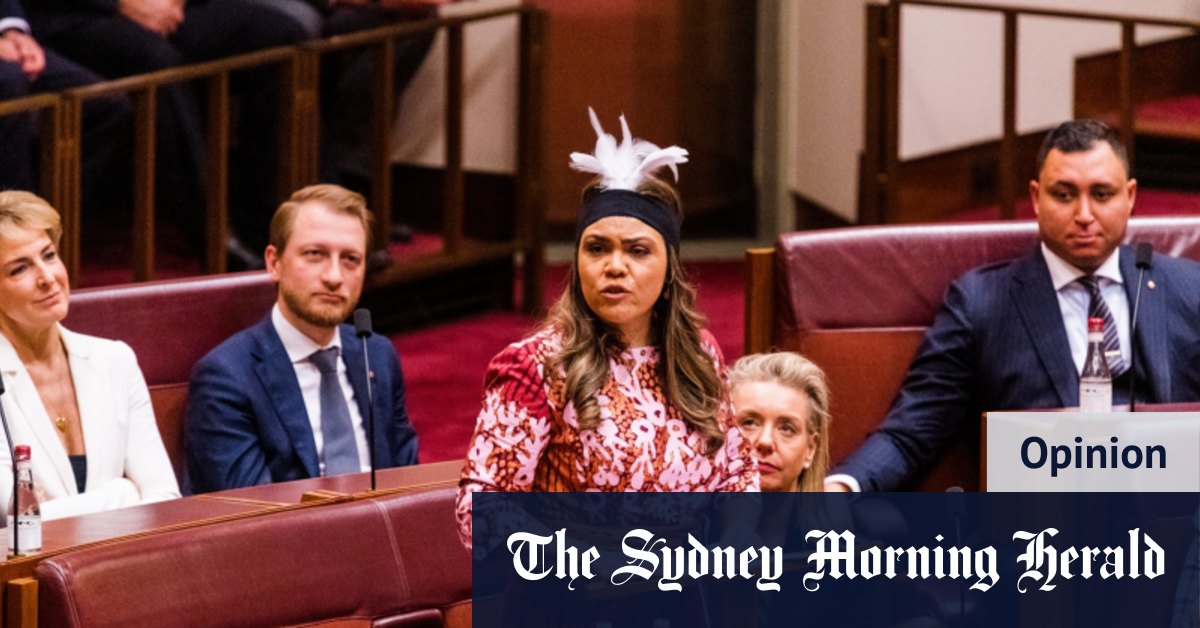
Senator Jacinta Price taking part in a traditional ceremony with her grandmother, Tess Napaljarri Ross, before delivering her first speech in the Senate.

Senator Jacinta Price taking part in a traditional ceremony with her grandmother, Tess Napaljarri Ross, before delivering her first speech in the Senate.Credit:James Brickwood

It would also be foolish.

When Price says there are more pressing issues than the Voice facing Indigenous communities, she speaks from personal experience.

Price fell pregnant with her first child at 17, completing year 12 assessments while in hospital with early contractions.

loading

As a victim of domestic violence in a subsequent relationship, Price was forced to flee her partner after he attacked her with a lamp. Soaked in blood, she ran to a neighboring property, believing if she did not get away she was going to die.

Price’s aunt and nephew were both murdered, the latter the result of a family feud.

While we talk about the hardships facing Indigenous communities, she has lived them.

In a 2016 speech to the National Press Club, Price spoke of how, in many cases of brutality, she was related to both the victim and perpetrator. She said she had been encouraged to ignore the fact they had committed acts of physical and sexual violence against someone she loved.

loading

Price came to political prominence after having the courage to expose family violence and sexual abuse in her own community and challenging the “cultural excuses” that protect perpetrators.

On her decision to speak out, she said: “I got to a point in my life where we had that many deaths in our family. We had that many women traumatized by family violence and children traumatized by family violence. And this ‘growing up yapa [Aboriginal] way’ is always like, you don’t talk about the really tough things. You pretend like they don’t exist … You’re supposed to turn a blind eye to that. And I think I got to a point where I went, ‘I’ve had enough of this’. And I became quite vocal.”

In her maiden speech, Price said the government had failed to show how a Voice would deliver practical outcomes for Indigenous people and noted in that very week that there were two clear examples of governments’ “failure to listen” to them.

The first was the recent decision in the Northern Territory to lift alcohol bans that Price says will allow “the scourge of alcoholism and the violence that accompanies it free rein, despite warnings from elders of those communities about the coming damage”.

loading

The second was the removal of the cashless debit card that, according to Price, has allowed families to “feed their children rather than seeing their money claimed by kinship demand from alcoholics, substance abusers and gamblers in their family group”.

Having run an election scare campaign on the cashless debit card nationwide, the government had little choice but to make good on its promise to abolish it.

But it was difficult listening to Price as she rose in the Senate to talk about the consequences that will flow from that decision.

Price has been speaking to income management recipients since the first trials in 2001 and her voice choked with emotion as she shared stories of how it has improved the lives of Indigenous women and children.

loading

She called on her parliamentary colleagues to “get out to some of these remote communities, where people – who are out of sight, out of mind to you – can’t clearly articulate to you because English is not their first language”.

She says she will bring to parliament their messages “over and over again” because “we’re trying to save lives here not toe the line of ideology”.

Whether it is the Voice, the movement to change the date of Australia Day or acknowledgments of country, Price says she has had more than her fill of being symbolically recognised.

She laments that “we spend days and weeks each year recognizing Aboriginal Australia in many ways, in symbolic gestures that fail to push the needle one micro-millimetre toward improving the lives of the most marginalized in any genuine way”.

Price’s arrival in Canberra makes us question which Indigenous voices the government is prepared to listen to and how it will respond to those it finds inconvenient.

The Opinion newsletter is a weekly wrap of views that will challenge, champion and inform your own. Sign up here.

Categories
Australia

The Loop: Barilaro faces trade job inquiry, banks divided on interest rate expectations, two killed in Brisbane attack and ancient finds in Pompeii

Hi there. It’s Monday, August 8 and you’re reading The Loop, a quick wrap-up of today’s news.

Let’s start here: John Barilaro fronts US trade job inquiry

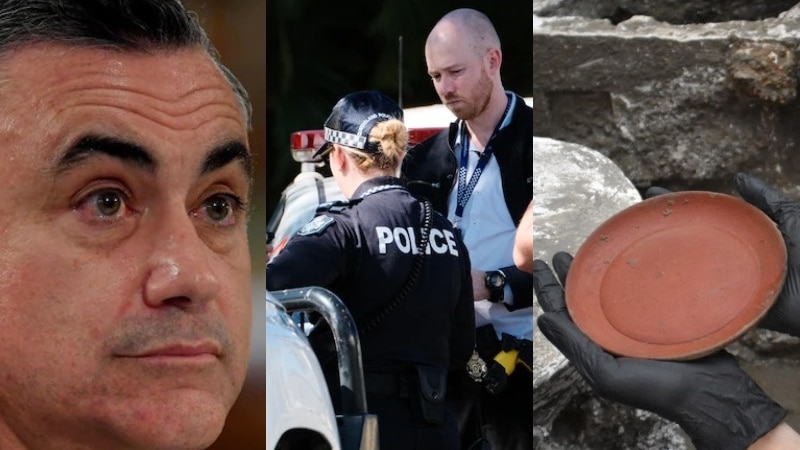
The former deputy premier of New South Wales faced questioning at the parliamentary inquiry into his appointment into the lucrative US trade role on Monday.

Here are the main takeaways:

  • He said he wished he never applied for the job, and said the “trauma I’ve gone through over the past six to seven weeks has been significant”
  • Mr Barilaro rejected suggestions that he fast-tracked cabinet submissions about the trade roles so that he could apply for one, saying “you’re making me out to be corrupt”
  • He told the inquiry that he first flagged his interest in the position with current NSW Premier Dominic Perrottet last November, after he resigned from cabinet, and said “no-one ever raised with me that this would be politically sensitive”
  • Mr Barilaro also told the inquiry that he didn’t know that Jenny West had been selected for the role in August 2021. Ms West had previously given evidence that she was told she was the successful candidate, only to have it revoked soon after, and that it was to be a “present” for someone
  • The former NSW Nationals leader said he withdrew his application from the US trade role on February 23 this year, before putting his hat back in the ring two days later.

You can look back at the day’s evidence as it happened with our blog.

Space to play or pause, M to mute, left and right arrows to seek, up and down arrows for volume.

Play Video.  Duration: 1 minute 46 seconds

John Barilaro says he regrets applying for trade position.

Economists at Australia’s major banks are split about the outlook for interest rates for the rest of the year.

In one camp, Westpac and ANZ economists are confident the cash rate target will go above 3 per cent by the year’s end, but those at NAB and Commonwealth Bank think the rate is unlikely to reach that target.

Westpac’s chief economist, Bill Evans, is predicting the rate will climb to 3.35 per cent — and argues it should if the Reserve Bank wants to combat inflation — while Gareth Aird from the Commonwealth Bank is forecasting the cash rate will reach 2.6 per cent.

So what impact could a cash rate of 2.6 per cent to 3.35 per cent have? For someone with a 30-year, $600,000 mortgage, it works out to be around $284 extra each month on their repayments.

The cash rate is currently 1.85 per cent, after it was raised by 0.5 percentage points last Tuesday by the RBA.

Westpac and CBA logos
Westpac and CBA have different expectations when it comes to interest rates.(abcnews)

News alerts you might have missed

  • Amnesty International has apologized for the “distress and anger” caused by its report that accused Ukraine of endangering civilians, but says it stands by its findings. Last week, the rights group published the report saying Ukraine stationing troops in residential areas heightened the risk to civilians.
A man with a cigarette in his mouth walks through the rubble of a bombed out building
Amnesty has stood by the report claiming Ukraine has endangered civillians. (Reuters)
  • Australia won its 1,000th gold medal at the Commonwealth Games when the Diamonds claimed victory over Jamaica in the netball final. It means Australia is the first country to reach four figures in the history of the Commonwealth Games and did it on the penultimate day of the games. It remains top of the medal tally, with 174 won so far, including 66 golds.

loading

What Australia has been searching for online

  • Stretton: Queensland police have established a crime scene in the southern Brisbane suburb after the bodies of a man and woman were found inside a home this morning in what police have described as a “frenzied attack”. A 49-year-old man has been arrested, and the victims are yet to be identified. Neighbors say they were shocked to see a crime scene established in their street.
Police in blue HAZMAT suits taking photos.
Police have recovered two “bladed weapons” that they believed were used in the attack.(ABC News: Alfred Beales)

one more thing

Archaeologists have unearthed more items from the doomed ancient Italian city of Pompeii that paint a picture of its vulnerable middle-class society.

A wooden dresser, a three-legged accent table with decorative bowls and a trunk with its lid open are among the latest discoveries inside a house that was first excavated in 2018 in Pompeii’s archaeological park.

Director Gabriel Zuchtriegel said the findings provide precious details about the ordinary citizens of the city that was destroyed in AD 79.

three bowls on a decorative table unearthed in Pompeii
The discoveries in the four new rooms include decorative bowls, an incense burner and an oil lamp.(Reuters: Archaeological Park of Pompei)

You’re up to date

We’ll be back with more tomorrow.

loading

ABC/Wires