Categories
Australia

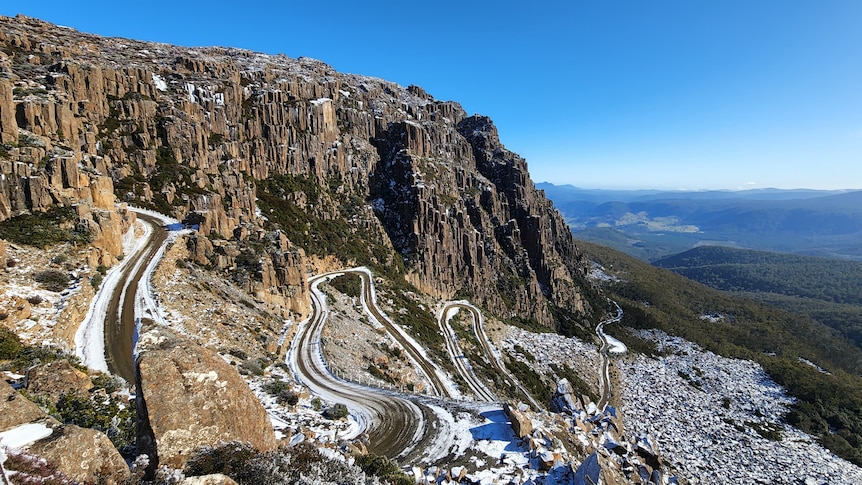
How Jacobs Ladder, one of Tasmania’s scariest — and most photographed — roads, was built

When John Richards was asked to climb into a bulldozer and clear the road for Jacobs Ladder in the early 1960s, he admits it was a daunting task.

“At the start, it was just a lot of rocks and a steep mountain,” he recalls, adding that local road builder Roy Bugg marked the course out on rocks to show where the mountain needed to be cleared.

“Roy was adamant we could get up there and he knew what he was about. I was fairly pig-headed, I wouldn’t have liked to say I couldn’t get up there.”

But the process proved to be slow going because of the large boulders on the intended path and the steep incline.

Yellow digger building road in rocky steep landscape
Construction of Jacobs Ladder was completed at the end of 1964.(Supplied: Robert Diprose)

“We had a lot of other people there blasting the rock too so that we could move it,” Mr Richards says.

“A lot of the rocks were too big to move with one machine and, if you did move them, they went right down to the bottom and wiped everything else out that you had already done, so they had to be broken up.”

Red tape and steep inclines

The road to the edge of the Ben Lomond plateau at 1,500m in the state’s north east was government-funded, and the Northern Tasmanian Alpine Club, the most established ski club at the time, was the main driver of the process.

Mr Richards recalls that authorities remained reluctant to provide all the money in one payment though.

“They just allowed a bit of funding at a time. It took us a while to get up the Ladder — probably three or four attempts,” he says.

a historic map of the Ben Lomond snow field, showing peaks and heights
An early Ben Lomond ski resort guide showing the area’s snow-capped plateau above 1,200m.(Supplied: David Harvey)

The road was eventually finished by the end of 1964 and construction teams then carved a quick path to the growing ski village at the bottom of Ben Lomond.

“There wasn’t any celebration when we got to the top,” Mr Richards says.

“The next step was to get across to where the village is now across the plain.

“Once we got on top, we were probably a kilometre-and-a-half from where the village is, so we had to put that in too.”

Four people drinking wine in the '60s.
Bill Mitchell (second from left) was one of Ben Lomond’s major power players by the 1960s.(Facebook: Friends of Ben Lomond)

controversial beginnings

Jacobs Ladder was the long-standing idea of ​​Bill Mitchell, a car wrecker by trade, who was one of the key figures in Ben Lomond’s early development.

His suggested route was controversial because there was already an alternative hiking path onto the Ben Lomond plateau that was less steep.

But Mr Mitchell was a persuasive personality and pushed for the new route, not least because it was protected from the elements and its aspect faced north, allowing any ice on the road to melt.

Black and white photo of two skiiers with skis on shoulder walking to summit of snowy mountain
Early visitors to Ben Lomond often walked 2 kilometers up to the plateau to ski.(Supplied: David Harvey)

In the decades before, most tourists would drive to Carr Villa at the bottom of the plateau and carry their skis and supplies 2 kilometers up the mountain.

David Harvey’s book The Ben Lomond Story even tells the tale of how, on one occasion, a group of men carried two heavy metal frames for a rope tow up to the summit on their backs.

But as Tasmania’s ski scene grew, it became clear that road access was imperative for the area to fulfill its tourism potential.

Black and white picture of skiier completing aerial jump
By the late 1960s skiing at Ben Lomond was popular and winter tourism was booming.(Supplied: David Harvey)

Six hairpins and minimal fencing

Launceston-based former surgeon Berni Einoder started visiting Ben Lomond in the 1960s and remembers early forays up Jacobs Ladder.

“I drove up there the first time in my Volvo; I made it approximately halfway then turned around and walked up,” he says.

“The road was fairly dangerous without fences on either side, and when it was wet and full of snow and ice in patches, it was quite treacherous.”

Skier on horseback in the snow.  Historical black and white photo.
Ben Lomond ski pioneers Fred Smithies and ET Emmett didn’t have the luxury of vehicle transport in 1929.(Supplied: Karl Stackhouse)

Geoff Foot says the Ladder still poses challenges for drivers today. The former owner of Ben Lomond Snowsports drove shuttle buses daily along the road until recently.

“We used to get people stuck quite regularly. In a lot of cases, running the buses, we didn’t have time to stop and help them.

“We just pushed them across to the side of the road so we could get past and deliver people to the top of the mountain.”

Historic yellow snow mobile in a snow field.
Before Geoff Foot, Robert Diprose drove a Bombardier snow bus on Jacobs Ladder.(Supplied: David Harvey)

still going strong

Jacobs Ladder can take scores of cars each day, although they are required to carry snow chains in the winter and four-wheel drives fare the best.

The road is still gravel, as that helps with traction, and stopping to take selfies is a no-go, even if the hairpins have been enlarged.

There’s a parking spot at the top where visitors can pull over safely and take a photo back down the mountain.

For John Richards, seeing his handiwork intact nearly 60 years on is very satisfying.

“It’s actually quite spectacular when you look at it from afar. It’s beautiful scenery up there, it’s well worth the trip up,” he says.

Windy, steep road through a snow capped mountain
Modern drivers still find Jacobs Ladder an awe-inspiring drive.(Supplied: Alex Weir Photography)

Mr Einoder says while tourists do grumble about how hard Jacobs Ladder is to drive, the road’s condition is now “very good”.

“The road has been improved a lot. It is scary if you have not been there before because it is one of the steepest zig-zags in the world,” he says.

“But the other thing worth remembering is that it is one of the only roads that goes within 500 meters of the top of a mountain.”

.
Categories
Australia

Dungowan Dam’s $1.3 billion price tag more than three times economic benefit, Greens MP says

A new dam slated for north-west NSW would cost more than three times the economic benefit it would produce, according to a NSW Greens MP.

Cate Faehrmann said she had seen a summary of the business case for the proposed Dungowan Dam near Tamworth, which the government has refused to release publicly.

Ms Faehrmann said the document showed the dam would only produce 27 cents of benefit for every dollar invested.

“The business case that the government has produced just shows it doesn’t stack up,” she said.

“They cannot show there is enough benefit to the community to justify what is going to be upwards of $1.3 billion.”

The cost of the dam has blown out from $484 million when it was first announced at the height of the last drought in 2019.

The previous federal government committed to fund half the project’s costs, but the new Labor government has not yet announced a position.

A woman with short blonde hair, wearing a blue top, is speaking.  She is surrounded by trees
Cate Faehrmann chaired an inquiry into new dam projects across NSW, and was critical of the Dungowan project.(Supplied: David Lowe)

Ms Faehrmann said the business case revealed the government considered, but decided against, other options to improve water security.

They include an increased reserve in the city’s main water storage, Chaffey Dam, for critical town needs, and a pipeline to Tamworth from the nearby Keepit Dam.

“To be honest, I feel it was very cursory. I don’t think a full options analysis has been undertaken,” Ms Faehrmann said.

government undeterred

Water Minister and Member for Tamworth Kevin Anderson disputed the claims, and said it was impossible to put a price on water security for Tamworth and the wider region.

“The summary business case clearly shows that this city would run out of water again if we would go back to a 2019-2020 drought,” he said.

A man standing in front of a shopfront in a shopping plaza.
NSW Water Minister Kevin Anderson argues the dam is the best option for town, agricultural, and industry needs.(ABC New England North West: Patrick Bell)

“They’re putting a cost on that, and I think back to 2019 when we were on level-five water restrictions.”

“I think it’s disgraceful.”

He also rebuffed claims the dam was the best option for irrigators, rather than for human needs.

“This rubbish that this dam is for irrigators only is exactly that,” he said.

“It clearly says it needs water for the city, it needs water for agriculture and it needs water for industry.”

Ms Faehrmann said she would continue to push for the release of the full business case.

Extracts are expected to be made publicly available in the project’s Environment Impact Statement, which is due for release by the end of the year.

.

Categories
Australia

A teacher surplus is hiding in plain sight

As teacher shortages hit classrooms across the country, the federal education minister, Jason Clare, is meeting his state and territory counterparts on Friday to address the problem. Their challenge is how to find more than 4000 new secondary teachers by 2025.

A solution might be hiding in plain sight, as evidenced by the experience at various schools not far from where the ministers are meeting.

But does the distribution of teachers add up?

But does the distribution of teachers add up?

Two disadvantaged high schools, just over the border in Queanbeyan, have about one teacher for every 10 students. Such a level of support is critically important in these schools. But at nearby Canberra Girls Grammar, the ratio is under 10. And there are low student/teacher ratios, too, at Canberra’s Daramalan Catholic College, Radford College and Canberra Grammar. How have Australia’s poorest and richest schools, with their very different needs, ended up being staffed at similar levels? And, in any case, do the advantaged students truly benefit from such close attention?

If Australia’s teachers were more equitably distributed, our teacher-supply problem would be significantly eased. This would be especially so in NSW, Victoria and Western Australia. Public schools and some Catholic schools are being starved of teachers while, in number terms, wealthier independent schools have a surplus.

The numbers tell the story. Independent schools in major cities had an overall student-teacher ratio of 11.72 to one in 2018 – the last year before teacher shortages began to be noticed. In the same year, government schools had an average ratio of 14.73 to one, although it could be as high as 16.

If independent schools were staffed at the same level as government schools, they would have required about 32,000 teachers. But they employed about 40,000 – 25 per cent more than would have been needed if the same staffing standards had been applied to them as applied in public schools and, for the most part, in Catholic systems. At an average salary of about $80,000, those 8000 additional teachers would have cost more than $500 million. In the light of overall needs, was it a good investment?

Some might say it pays off in better results. But it doesn’t. The evidence shows that schools with similar demographics produce similar results. Anyone can use the My School website to see the impact of socio-economic status of school enrollments on students’ results. Comparisons of apples with apples show public schools achieve much the same results as independent schools, at a lower cost and with less favorable student/teacher ratios. Imagine what most public schools could achieve with better teacher resourcing.

loading

Others might say the funding of independent schools comes from parents, and if this helps pay for more teachers in those schools, so what? But private schools also receive taxpayer funding, and the bigger question is how much should that public money prop up a system that distributes more of a scarce resource – in this case teachers – to those who need them least?

Categories
Australia

John Barilaro pulls out of parliamentary inquiry into US trade job

Former NSW deputy premier John Barilaro has pulled out of today’s parliamentary inquiry, citing mental health reasons.

The upper house inquiry has been investigating Mr Barilaro’s appointment as senior trade and investment commissioner to the Americas.

He was scheduled to give his second day of evidence today, after first facing the inquiry on Monday.

“John Barilaro has informed the committee that due to mental health reasons he is unable to attend today’s hearing,” a statement from the inquiry said.

Mr Barilaro was due to face questions about what his girlfriend, Jennifer Lugsdin, knew about the lucrative US trade job he was awarded earlier this year.

Ms Lugsdin worked for Investment NSW — the body responsible for hiring people for overseas trade roles — when the Americas job was advertised.

Last December she was copied in on discussions about a media release calling for applications for the trade envoy position.

Before taking the role with Investment NSW, Ms Lugsdin was the senior media advisor for Mr Barilaro between 2019 and 2021.

A woman smiling
Jennifer Lugsdin was awarded a short-term role with Investment NSW in August 2021. (Supplied: Linkedin)

On Monday, Mr Barilaro expressed frustration about facing questions about his personal life.

Labor’s Penny Sharpe said she did not enjoy asking “uncomfortable” questions, but said it was necessary.

“Someone you were in a relationship with… was clearly aware of the various processes associated with the advertising and the nature of [the US trade] position,” she told the hearing on Monday.

Mr Barilaro withdrew from the New York-based trade role in June, saying intense media scrutiny made his appointment “untenable”.

The controversy surrounding his selection is now the subject of two inquiries and it led to the resignation of trade minister Stuart Ayres last week.

Although Mr Ayres is adamant he did nothing wrong, an inquiry by Graeme Head raised concerns he might have breached the ministerial code of conduct.

The upper house inquiry has heard Mr Ayres was not at “arm’s length” from the selection process.

Mr Barilaro resigned as deputy premier in October 2021, saying the pressure of public life had “taken a toll”.

He took a month off for his mental health in 2020 and said he thought he would never come back to politics.

.

Categories
Australia

Police issue warning about hoax as dozens of victims are identified

Victorian Police say they’ve identified “at least” 25 victims of the “Hi Mum” mobile phone scamissuing a warning about the hoax that’s designed to “pull on the heartstrings”.

Detectives are now investigating the scam, believed to have originated from Europe.

It involves a scammer sending a text message from an unknown mobile phone number to a victim, claiming to be their son or daughter.

As the conversation develops they will say they’ve lost their phone, before making a request for emergency money – generally they’ll say they’ve been locked out of online banking.

An example of the ‘Hi Mum’ mobile phone scam that is targeting Australian parents. (Supplied)

Once one transfer has been made, the offender will frequently request another sum of money, police say.

Detectives say they’ve found “at least” 25 victims of the scam believed to be linked to a series of offending dating back to January.

Detective Sergeant John Cheyne, Cybercrime Squad said police believe the true amount of victims are underreported.

The ‘Hi mum’ scam has resulted in more than $2 million stolen from Aussies. (Getty Images/iStockphoto)

“A scam like this really pulls on the heartstrings – a child telling you they’ve lost or broken their phone and are in need of financial support is understandably a situation where parents would react without a second thought,” he says.

“Often, matters of this nature are under reported and that can be for a range of reasons, including fear or embarrassment, and sometimes feeling unsure if an offense has occurred.

“We encourage anyone who has been subjected to a scam such as this to speak to police.”

Cheyne urges anyone who receives request for money from an unknown number to ask “for some kind of verification.”

If you're browsing second-hand sites and see a deal that's too good to be true, think twice.  Scamwatch has issued a warning on social media, posting a fake ad selling a $10 'antique piano'  to illustrate.

Aussies warned about fresh scam on second-hand sites

“Give the number a call and ask them to prove who they say they are, or call the original number you have saved in your contacts for the person,” he said.

“Alternatively, you could ask them to send a voice note to verify who they are.

“If they can’t prove who they are or aren’t willing to, don’t transfer the money.

“If you’ve been a victim to this scam, call your bank immediately and let them know, before reporting the matter via ReportCyber.

People who have lost money to a scam should contact their bank or financial institution as soon as possible and report the matter to police or online forums such as ReportCyber ​​and the ESafety Commissioner.

For more advice on how to avoid scams, visit the scam watch website.

Anyone with information about cybercrimes and scams should contact Crime Stoppers: 1800 333 000.

Categories
Australia

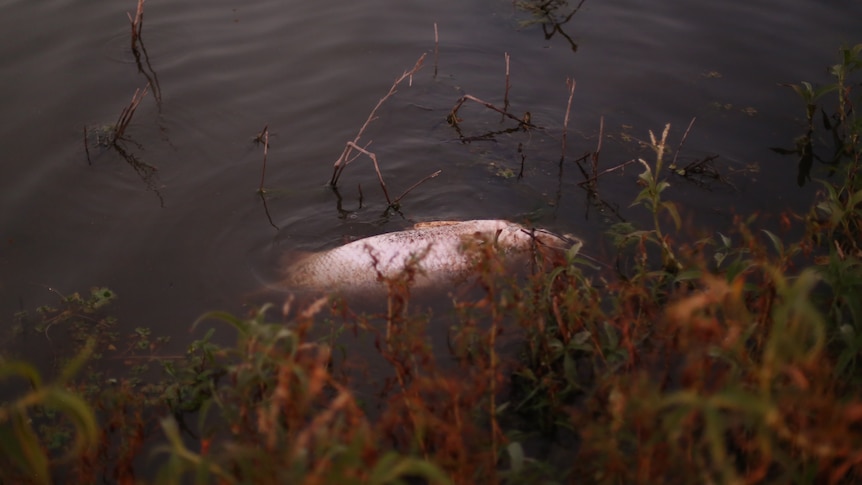
Hundreds of dead fish found on banks of waterways near Gladstone and Biloela

Hundreds of dead fish have been found on the banks of several central Queensland waterways, but authorities say there could be a simple explanation behind the deadly occurrence.

About 350 to 400 dead barramundi have been found at Callide Dam, just outside Biloela.

Colin Bendall, the executive general manager for Sunwater — the government organization that operates the dam — said the dead fish were large, about 10 kilograms and 1.2 meters in size.

“We have seen increased numbers over the past week,” he said.

“Most of those are introduced barramundi.”

About 100 dead barramundis have also been found in the past month at Lake Awoonga, near Gladstone.

Cause of fish deaths

Darren Barlow of the Gladstone Area Water Board said those fish were showing signs of a seasonal fungal infection, likely caused by adverse weather conditions.

“Conditions such as unseasonal winter rain, prolonged strong westerly winds, and limited access to warm water bays due to current lake levels can all impact fish health,” Mr Barlow said.

“While there is potential for more fish death sightings at Lake Awoonga, don’t be alarmed if you find a sick or dead fish.

“This event is rare… [but] similar events have occurred at Lake Awoonga and many other impoundments in the past.”

A fish floats on top of the water near the banks of a dam, weeds in the background.
Queensland’s Environment and Science Department says highly variable temperatures have coincided with the fish deaths.(ABC Capricorn: Tobi Loftus)

Mr Bendall said it was too early to tell whether the fish in the Callide Dam had also been impacted by a fungal infection.

But across winter, a minimum of minus 0.5 degrees Celsius and a maximum of 21.5 degrees have been recorded at Callide Dam.

The changes in temperatures are believed to have played a part in those deaths.

“Our main concern is making sure we get the fish cleaned up as soon as possible … as obviously it’s quite concerning for locals visiting the dam and also the fish stock society,” he said.

He said the incident had not impacted water quality from the dam, which provided drinking water to Biloela.

“We take regular samples of the water quality, and we’re also working closely with the local council,” Mr Bendall said.

A coal fire power station sitting just behind a large dam.
Callide Dam is located near the Callide Power Station just outside Biloela.(ABC Capricorn: Tobi Loftus)

Fishers and recreational users at both dams have been urged not to touch the dead fish due to the risk of injury or potential infection.

A spokesperson from Queensland’s Department of Environment and Science said it was aware of both incidents and was monitoring for further reports.

“Members of the public can report fish deaths to the department’s pollution hotline on 1300 130 372,” the spokesperson said.

.

Categories
Australia

‘Major barriers’ to restoring Australia’s degraded coastal ecosystems as scientists push for national plan

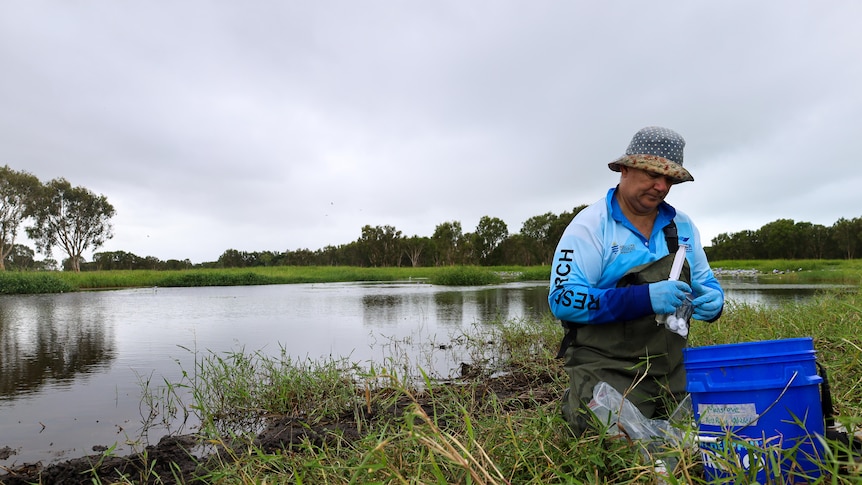
Squeezed between tropical wetlands and the Great Barrier Reef, the wetlands of Mungalla Station should be a colorful haven teeming with life.

The former pastoral property in north Queensland was, until not long ago, choked with weeds and devoid of fish.

James Cook University’s Center for Tropical Water and Aquatic Ecosystem Research associate professor Nathan Waltham describes efforts to restore it to health as the most rewarding project he has ever worked on.

It involved seven years of exchanging scientific knowledge with the Nywaigi traditional owners.

“It’s been a two-way learning street and seeing country slowly healing and seeing the Indigenous rangers become so inspired, creating jobs for Indigenous youth has just been so rewarding,” Dr Waltham said.

“Unfortunately, it’s very small scale, and we need to now be thinking about this as an example that can be taken to much larger scales.”

Harder than it needs to be

Restoration projects like the one at Mungalla have experienced success around Australia.

But new research led by Megan Saunders, a senior research scientist at the CSIRO’s oceans and atmosphere division, and Dr Waltham reveals there are major barriers to projects going ahead at the scale required to restore the nation’s degraded coasts.

An aerial image of a wetland surrounded by tropical green vegetation.
Mungalla Station is now restored to a coastal wetland.(Supplied)

They found there was insufficient funding to restore many degraded sites and that Australia lacked a consistent approach to mapping and classifying coastal and marine ecosystems.

Processes to engage with traditional owners on restoration projects are often not even executed, they found.

Mungalla’s health has also slightly declined since its restoration project concluded, highlighting the need for ongoing love and care.

Sometimes when restoration projects do receive funding, they are brought unstuck by complex approval processes.

“[It can be] anywhere from 50 per cent, 60 per cent of the allocated funding time just to get the approval and, unfortunately, that is a challenge we have to break down,” Dr Waltham said.

“That has possibly huge implications on projects even starting.”

A portrait image of a smiling woman wearing glasses and a blue top, standing in front of the sea and mountains in the background.
Dr Saunders is the lead author of the research into scaling up coastal and marine restoration work.(ABC Far North: Christopher Testa)

Climate the biggest threat

The main threat to coastal low-lying areas is, unsurprisingly, climate change and its associated threats such as more severe storms.

Scientists this month confirmed frequent El Niño events caused hundreds of kilometers of coastal mangroves in the Gulf of Carpentaria to die.

Dr Saunders, who specializes in coastal and marine restoration, said Australia needed a national plan to restore coastal ecosystems, involving state and local governments, First Nations people, philanthropic groups and the finance sector.

Examples of coastal restoration in environments that have been irreversibly altered include the retrofitting of seawalls in Sydney Harbor to make them a more suitable habitat for marine life to flourish.

Dr Saunders said adopting a road map similar to the one set out in their research paper could make Australia a “world leader” in coastal restoration.

Indigenous Rangers from the Carpentaria Land Council look at dead mangroves
Mangroves along the coast of the Gulf of Carpentaria have died in recent years due to the effects of climate change.(ABC North West Queensland: Lucy Murray)

Meanwhile, she said, across the nation, there was a lot of work to do.

“Oyster reefs in Australia have declined by 92 per cent since the arrival of Europeans and the coastal development activities that have happened,” Dr Saunders said.

“We’ve also lost 95 per cent of Tasmanian kelp beds more recently due to warming water temperatures, so our natural assets, in particular, are in decline due to climate change.”

.

Categories
Australia

Arrernte boxing academy helping troubled kids get on the right track and stay there

Jason Lord says his life hit a fork in the road when he was 14.

“I was a troubled kid, stealing cars, I was robbing people and quite violent and angry,” he says.

“I was a kid who was heading to Berrimah Prison.”

A court ordered him to put on some boxing gloves and get in the ring.

Luckily, he says, he met a good person “who wanted to give back a bit and saw something in me.”

“I robbed him a few times but continued to box; he continued to look after me, which is crazy.”

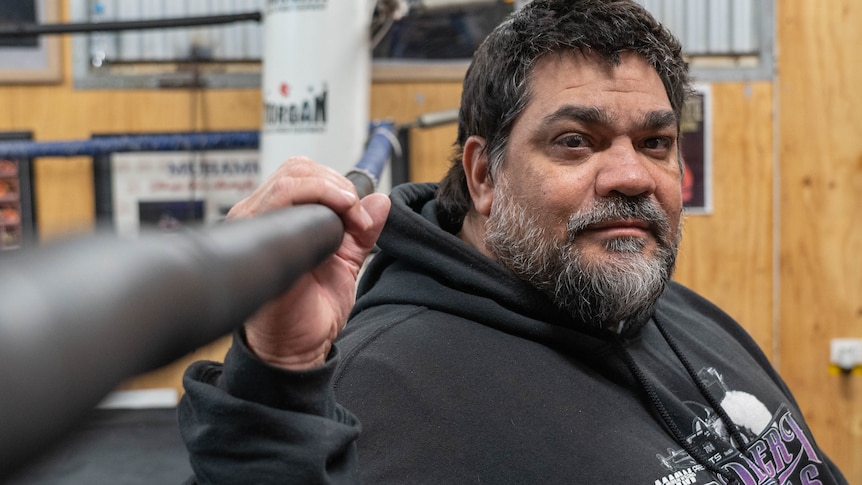
jason lord
Jason Lord says it’s his turn to give back.(ABC Alice Springs: Samantha Jonscher)

Mr Lord, an Arrernte man and traditional owner for Alice Springs, said his mentor’s compassion, alongside the sport, changed his life.

“All the trouble and all the crap that I got up to, boxing was always there; it was that little safe haven that kind of kept me together,” he says.

He believes this is part of the sport — the ring teaches people balance, structure, self-control, and ambition.

Now, it’s his turn to give back.

Arrernte boxing academy training
Jason Lord says boxing teaches balance and self-discipline.(ABC Alice Springs: Samantha Jonscher)

care comes first

On any given day you’ll find serious boxers of any gender, Indigenous and non-Indigenous, sparring inside the ropes of the Arrernte Community Boxing Academy.

But you’ll also see kids who’ve just learned to walk trying gloves on for size while they watch older kids give it a go.

“Our whole focus is on making people happy,” Mr Lord said.

“We’re a custodian club, having that name on Arrernte country.”

Arrernte Boxing Academy floor
Jason Lord says anyone is welcome at the gym.(ABC Alice Springs: Samantha Jonscher)

He says what really sets the gym apart from others is that care, culture and self-control are at the heart of its project.

“Not just Aboriginal culture but the culture that brings people here,” he says.

“We provide love and that environment for people of all ages, everyone who comes here gets the same treatment.”

A woman boxing in a ring.
The academy puts culture, care and self-control at the center of its gym.(ABC Alice Springs: Samantha Jonscher)

He hopes the gym creates the same environment that kept him out of Berrimah and gives young people the love and care they need to be “put back together again.”

The academy works with schools, “kids on the streets,” and has started branching out into remote communities.

Mr Lord has been recognized for his work with young people — he was the 2022 Alice Springs NAIDOC Week advocate of the year.

The academy in its current form opened in November last year and Mr Lord says he’s seen young people make big changes in that time.

“We go a bit deeper when we work with these guys, you know; we break them down through sweat and tears.”

Arrernte Boxing young and old
Boxers of all ages and genders are welcome at Arrernte Boxing Academy.(ABC Alice Springs: Samantha Jonscher)

Boxing as therapy

Early mornings, the gym runs kungkas (women)-only classes.

Nirosha Boaden is a regular at these classes. She has boxed for 15 years and, like Mr Lord, believes it changed her life from her.

Nirosha Boaden
Nirosha Boaden says from personal experience boxing can change lives.(ABC Alice Springs: Samantha Jonscher)

“I was living in out-of-home care — like a lot of the youth that comes here — and then I started up boxing,” she said.

Ms Boaden now works in youth mental health in Alice Springs and says she’s professionally seen what the gym can do.

“Especially here in communities where traditional Western therapies don’t really work, boxing is great.

“It teaches kids and adults how to be in everyday life, particularly around emotion regulation.”

women boxing
Kungas classes attract women of all abilities.(ABC Alice Springs: Samantha Jonscher)

anyone welcome

Ms Boaden says Arrernte Boxing Academy stands apart from other gyms because it genuinely feels inclusive.

“Everybody who comes here knows that this is a place for everyone of all cultures and levels. It’s really inclusive,” she says.

Sarah Landers, a Durri woman who also regularly attends the kungkas class, agrees.

Sarah Landers
Sarah Landers is new to boxing but says she feels right at home.(ABC Alice Springs: Samantha Jonscher)

Relatively new to the sport, Ms Landers started at the gym after her 14-year-old son started training in the evenings.

She says she’s seen her son “become a lot more confident” since he started boxing and that he’d begun to value his health and eat healthily.

“He lives and breathes boxing now, he’s really inspired,” Ms Landers says.

“This is my little social outlet; we go for coffee afterwards and just laugh the whole time, there’s a real family feeling.”

Arrernte boxing Academy external
The academy opened at its current location in late 2021.(ABC Alice Springs: Samantha Jonscher)

This is exactly what Mr Lord is aiming for.

“It’s a safe, caring environment,” he said.

“If this was my place as a kid, I’d be a whole different person and that’s what this place is about.”

.

Categories
Australia

Woman left coughing up blood after eating at popular restaurant chain

A melbourne woman has told how she was left coughing up blood and had difficulty speaking and swallowing for a week after a nightmare meal at a popular restaurant chain.

Madison, who does not want her surname published, spent 10 hours in hospital after she swallowed something sharp while eating a paella at a Nando’s restaurant, and a month later is planning to see a specialist for an ongoing throat issue.

When Madison contacted Nando’s, they offered her a $13 voucher to compensate for the inconvenience of the experience – less than the company’s $15 birthday vouchers.

Nando's inflight meal
Madison swallowed something sharp while eating Nando’s paella. (Nando’s)

The whole experience has left Madison in disbelief.

“It’s almost comical,” she said.

The 30-year-old business owner was eating paella at an inner Melbourne Nando’s restaurant after work on July 10 when she swallowed something she shouldn’t have.

Madison said she felt something sharp in her mouth, but automatically swallowed it before thinking to spit it up.

“I was so tired that I didn’t compute,” she said.

“It was super sharp. It went down the middle of my oesophagus, and it felt like it was lodged there.”

She started choking so she ran to the bathroom to try to cough the object up.

But Madison said she couldn’t seem to move the object in her throat, and was just coughing up blood.

She said she could not speak because of the pain and was terrified what had happened to her.

Last week, Nando's closed 45 of its UK restaurants due to a shortage of the chain's signature peri peri chicken.
Nando’s is an international restaurant chain. (SOPA Images/LightRocket via Getty)

“I couldn’t talk – every time I said anything it felt like a piece of glass was cutting my throat.”

Madison then texted her father – who was waiting at the restaurant table for her – and he decided to take her to hospital.

As she was leaving the restaurant, a staff member asked Madison if she was ok and apologized for what had happened.

At Melbourne’s The Alfred hospital, Madison’s injury was prioritized in the emergency department and she was seen by a doctor shortly after she arrived about 7.30pm.

Over the next 10 hours Madison was admitted and had an X-ray, a camera put down her throat, and a CT scan, as stated in hospital records seen by 9news.com.au.

She said doctors could not find the object in her throat, and suggested it had passed through her throat already.

With a large number of emergency surgeries happening at the hospital, Madison declined the doctor’s offer to put her under anesthetic for her throat to be examined in theater.

It was 5.30am the next day by the time she left the hospital.

Madison spent 10 hours at The Alfred hospital after the meal. (Getty)

Madison said her pain and discomfort then continued for more than a week.

“I couldn’t speak for a week, I could barely swallow,” she said.

“Every time I moved my tongue it felt like my throat was being pierced by something.”

A month on from the incident, Madison said she was organizing to see an ear, nose and throat specialist because she was still having discomfort in her throat.

An appointment is expected to cost upwards of $250.

Madison said she was not after financial help for what has happened, but has been shocked by Nando’s response to her experience.

She emailed Nando’s about what had happened two days after the incident.

“I am not asking for anything – I just wanted to make you aware,” she wrote in an email seen by 9news.com.au.

Weeks later, a Nando’s worker advised her the company had conducted an “internal investigation” into the issue and offered Madison a $13 voucher as compensation.

“We are deeply sorry for the incident that occurred… Just checking in, how are you going after the incident?” the response read.

“We hope that the voucher works to compensate for what has transpired.

“The restaurant is also happy to invite you over for a compensatory meal.

“Thank you for your patience and understanding.”

Emma Mitchell saved a very rare rhinoceros beetle from being squashed after it walked into a Nandos shop in Cambridge, UK.
Madison has been shocked by Nando’s response to her experience. (Twitter/@silverpebble)

Days later Madison was sent an automated $15 voucher for her birthday.

Madison has said she found the offer of $13 “rather insulting”, describing Nando’s reaction to the serious situation as “comical”.

“They’re not seeing the severity of the situation.”

Madison said Nando’s made her favorite food, but the experience had turned her away from eating it.

“I’ve gone from eating there at least twice a week to probably never going again,” she said.

Inside the new Russian Macca’s

A Nando’s spokesperson told 9news.com.au the company acknowledges its response to the issue could have been better, and that steps have been taken to improve the handling of issues in future.

“Nando’s takes food safety extremely seriously and has an internal team dedicated to reviewing, investigating, and responding to such queries,” the spokesperson said.

“We acknowledge that our initial response to this query could have been improved and did not live up to our high standards of customer care.

“For that we have apologized.

“We have provided further training to our recently hired Customer Care representative to ensure prompt and appropriate action is taken for matters such as this.

“Nando’s did undertake a full investigation at the restaurant, followed up with the customer to check in and the restaurant franchisee has extended an invitation to the customer to return for a complimentary meal so he can personally apologize for the inconvenience.”

Categories
Australia

K’gari (Fraser Island) awash with rubbish left behind from tourists

K’gari (Fraser Island) is Queensland’s small slice of paradise with a massive problem.

The heritage-listed island threatens to become a victim of its own success as millions of tourists are lured across the water each year.

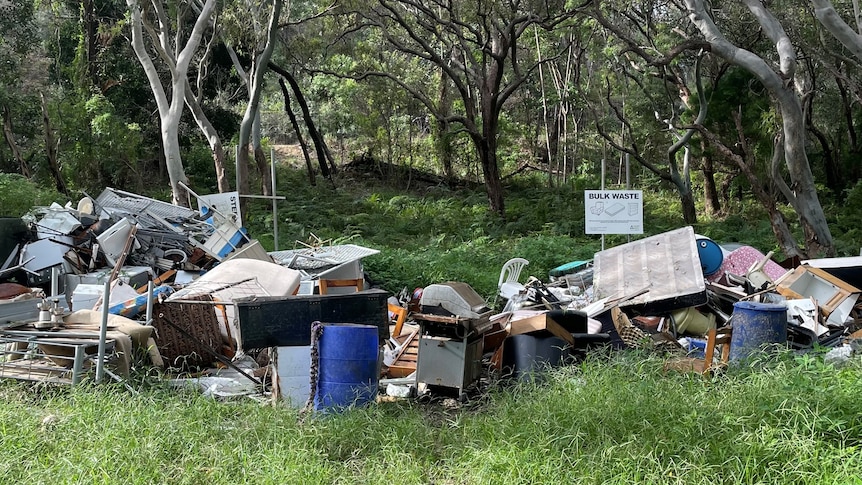
But they’re leaving piles of rubbish in their wake, and overflowing waste stations on the island need urgent upgrades.

“People go over there with cheap camping gear, and when they finish with their holiday, they just throw it in the tip,” Fraser Coast councillor Darren Everard said.

“It is a fragile location, and it needs to be respected.”

Clearing the mess does not come cheap either.

It costs more than $400,000 a year to cart rubbish from tourists and locals off the island via a barge to the mainland, prompting the Fraser Coast Regional Council to plead with the public to follow a “pack in, pack out” rule.

“If you’re taking a product onto the island, you should be taking it off with you as you go… that is best practice,” Mr Everard said.

Landfill and large tip bins surrounded by green trees and shrubs.
A Wongari or dingo fence is all that separates the dump site from the surrounding bush.(ABC Wide Bay: Lucy Loram)

Not a Happy Valley with dump nearby

In the tiny township of Happy Valley on the eastern side of K’gari, a dump site lies just a stone’s throw from the nearest home.

“It is 50 meters from a house. It’s about 20m from a recreation reserve where there’s a picnic table, so it is not ideal,” said Scott Bell, who has lived at Happy Valley for 36 years.

With just a dingo fence separating the landfill from the forest, Mr Bell said the Happy Valley station was a major concern for locals.

“Properties that are very close have got to contend with the smell coming from the tip — and the flies,” he said.

“The blowflies have become quite horrendous in town … I think everyone recognizes it’s not an ideal situation to have that rubbish tip so close to the township.”

An elderly man in a blue shirt and a broncos cap smiles.
Mr Bell says it is more than just a little township’s problem.(ABC Wide Bay: Lucy Loram)

The station is one of three landfill sites on the island, including Eurong and Orchid Beach, comprised of tip bins that collect rubbish not just from the townships but from K’gari’s mass tourist population.

“We get things like commercial kitchens being dumped there, national parks have to dump a lot of rubbish just left at camp sites, so it really is more than just a little township’s problem,” Mr Bell said.

Beautiful place facing challenges

The Happy Valley Community Association is working with the Fraser Coast Regional Council to identify alternative sites for the dump, but it could take some time before the month is addressed.

A line of tip bins in an open forest area.
The landfill is removed from the island in tip bins that are transported to the mainland via a barge.(ABC Wide Bay: Lucy Loram)

Mr Everard said waste transfer on K’gari was a work in progress that would begin with a 10-year waste management and resource recovery strategy.

“The island is a beautiful place and has a number of challenges, so we want to try to ensure that we get that waste removal more workable and less invasive on the island,” he said.

“We have got a bit of work to do, so we’re going to start with the Eurong Transfer Station, and then we’ll move to improve the facilities at Happy Valley and Orchid Beach.”

The upgraded station at Eurong will be capped to mitigate legacy waste and will feature new bays for stainless steel waste and recycling bulk bins when completed in 2024.

.