Categories
Australia

Indigenous producers needed for NSW bush food industry to meet rising demand

Bush food retailers in New South Wales say they are having to turn to other states to source local native ingredients as supply cannot keep up with increasing demand.

Retailers in the central and far north-west estimate they are sourcing anywhere from 30 to 80 per cent of their ingredients from other states due to a lack of local supply.

Wiradjuri man Herb Smith runs his native food business Dreamtime Tuka out of Wellington in the state’s west, supplying products to companies such as Qantas and BP, as well as to the NSW government.

He has seen demand for his products jump by 80 per cent over the seven years he has been in business.

While he sources the large majority of his ingredients from within the state, he has been compelled to look to Queensland and South Australia for the rest.

“If we’re supplying a multinational company, the demand is quite large for the ingredients that we need to put in our products. So if we need a large quantity of it, we may not be able to get that in NSW.”

A basket of finger lime, macadamias, native raspberries and sandalwood nuts.
A basket of finger lime, macadamias, native raspberries and sandalwood nuts.(Supplied: Trish Frail)

Although there are a growing number of suppliers of native ingredients even within NSW, part of the problem for Indigenous retailers is that few of them are Indigenous-owned.

“I’m really unhappy to say that there are not many Indigenous companies out here actually involved in that side of the industry. It’s majority non-Indigenous people supplying these products,” Mr Smith said.

Sharon Winsor is the founder and chief executive of the 100 per cent Indigenous-owned business Indigiearth in Mudgee, and has been in the industry for more than 25 years.

She said demand for her products had spiked in the past few years.

Sharon Winsor, founder of Indigiearth, smiling and holding a basket of native ingredients.
Sharon Winsor has been in the native food industry for over 25 years.(Supplied: Indigiearth)

“The interest has grown quite dramatically, in particular post-COVID,” she said.

“I think there’s been a general interest in what we have in our own backyard, the health benefits of native ingredients, and how people can support small business, regional business, Indigenous business.”

She said the problem of misrepresentation was still a huge concern.

“There are producers and retail brands misguiding consumers, by using Aboriginal art or graphics to confuse them into thinking that they’re buying an authentic Aboriginal product,” Ms Winsor said.

lack of support

Trish Frail, who owns a native cafe in Brewarrina, started her business about a year-and-a-half ago.

She said demand for her products had been quite high since then.

.

Categories
Australia

Will teal independents strike Liberals another blow in Victorian and NSW elections?

Last weekend former Indian independent Cathy McGowan ran an online post-federal election convention to promote community independents. It attracted 467 participants from more than 100 federal electorates, and the discussion groups included one on each of the two state elections.

Stuart Ayres resigned from his role as minister, and as the deputy leader of the Liberal Party.

Stuart Ayres resigned from his role as minister, and as the deputy leader of the Liberal Party.Credit:Rhett Wyman

loading

Simon Holmes à Court’s Climate 200, which provided crucial funding for the teals, will likely be a player in the state contests. In July it polled key Victorian seats. It found potential support for teal-type independents in the Liberal seats of Sandringham, Brighton, Caulfield and Kew, and the Labor seat of Hawthorn. Climate and integrity resonated. For example, “integrity in politics” was nominated as the most important issue by the second or third-largest number of voters in Caulfield, Brighton and Sandringham.

Local groups have been searching for candidates. An August 7 advertisement in The Sunday Age declared “Bayside deserves independent voices” and encouraged potential candidates to come forward.

“Our communities made history in May when we elected an independent Zoe Daniel to represent us in the federal seat of Goldstein,” the advertisement said. “Polling shows that an independent can also win the Victorian seats of Brighton, Sandringham and Caulfield.”

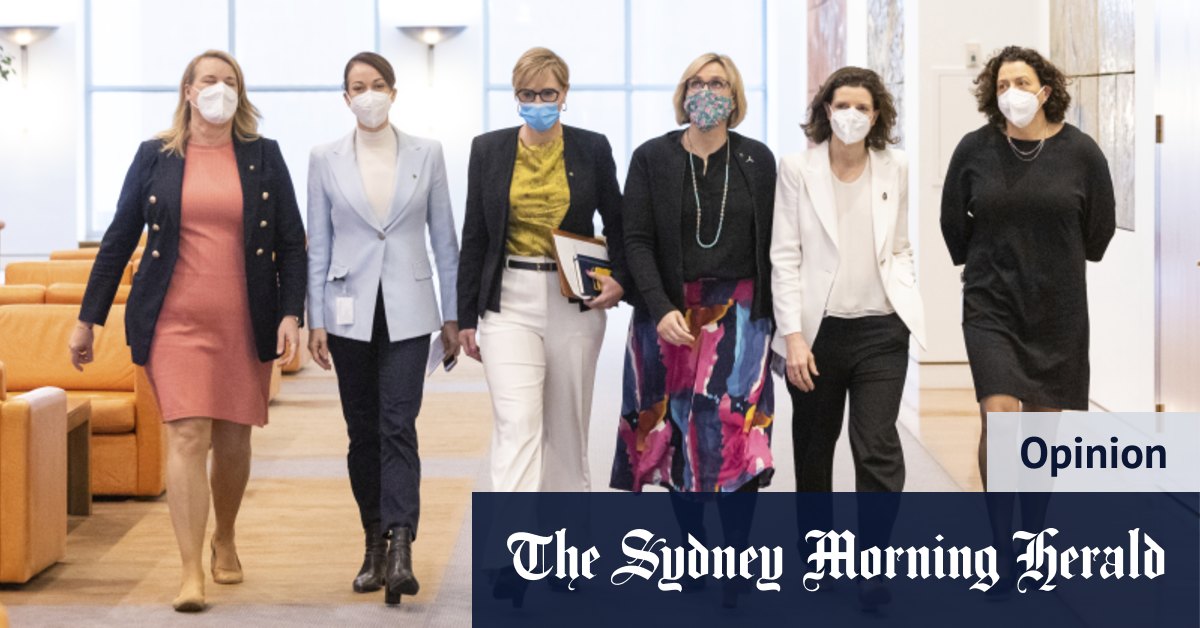
We see from this how the push for state independence is leveraging off the federal success. But it’s notable the Voices of Goldstein group that supported Daniel will not back a state candidate. Federal teals have a political interest in reinforcing the message of their personal “independence”.

Member for Goldstein Zoe Daniel.

Member for Goldstein Zoe Daniel.Credit:alex ellinghausen

Regardless, in state areas where teal-type candidates will run, there’ll likely be ready-made volunteer cohorts to support them. Many citizens, energized by the federal successes, seem anxious to take part in what they see as a new brand of politics.

In NSW, the group North Sydney Independent (NSI), which chose successful federal teal candidate for North Sydney Kylea Tink (but is now at arm’s length from her), is looking at the three Liberal seats in the area – Lane Cove, Willoughby and North Shore. NSI co-founder Denise Shrivell says the group could back community candidates in one or even all three seats. The group will have a launch on August 28.

Shrivell says the group is finding a “mismatch” between the views of the MPs – two of whom are conservatives and one a moderate – and “the views and interests of the local community”.

“People are dissatisfied,” she says. Unsurprisingly, “issues around integrity are very top of mind. People are looking at what is happening in NSW and are fed up”, although health, education, over-development and privatization are also concerning these voters. More generally, “people in North Sydney have caught the democracy bug,” she says.

One major problem for the community candidates in NSW is the state’s optional preferential voting system: this means they could not rely to the extent the federal teals did on preferences bumping them over the line.

As in the federal election, Climate 200 will wait until candidates emerge. It will then assess their individual suitability, the viability of their campaign structure, and their prospects of victory, before deciding whether to provide support. Holmes à Court says it “could support three to six candidates in Victoria and possibly more in NSW”.

It needs to choose carefully. One reason for the teal successes at federal level was that the candidates were so impressive – mediagenic professional women. It could be more difficult to find equivalent talent for state contests, which are less attractive to high-flyers.

Climate 200 has its own credibility to preserve. It doesn’t want a triumph at the federal election to be followed by state pushes that flop spectacularly.

Climate 200 founder Simon Holmes at Court.

Climate 200 founder Simon Holmes at Court.Credit:alex ellinghausen

Stricter funding rules at state level impose greater constraints on the assistance Climate 200 can give. Beyond modest donations, the organization will have to encourage donors to directly support particular candidates.

If community candidates do well at these elections, there might be potential down the track in Western Australia, where one would expect to swing in 2025 against Labor’s massive majority. The WA Liberal Party has been almost wiped out at a state level, and there is a teal federal MP, Kate Chaney, in Curtin.

Although she personally wouldn’t be involved, Chaney says some of her supporters have expressed an interest in a state effort. “By 2025 the community independent movement may have developed in a way that makes it an attractive option for communities who want to see a different type of representation,” Chaney says.

loading

Independents have long had significant presences, and often been in the balance of power, in various state parliaments. In Victoria and NSW, both sides are said to be concerned about independents generally at the coming elections.

What’s special about the teals and other “community candidates”, arising from “voices” and similar groups, is they are part of a loose web, linked by some common funding, networking and the issues on which they campaign. This doesn’t make them a “party”, as their opponents claim, but it does make them a “democracy movement” of sorts. Success in the Victorian and NSW elections would create fresh momentum for this movement, including at the federal level for the next election.

Federally, the community-candidate movement has eaten away at the Liberal Party’s progressive wing, cutting a swathe through the moderates in the parliamentary party.

The federal Liberals now face the existential question of how to juggle appeals to outer suburbia, where Peter Dutton feels most comfortable, and to the urban areas, currently lost, that used to be the party’s “blue ribbons” (including for fund-raising) , and which are vital to winning government.

We should introduce a caution. Just as many people underestimated the chances of the federal government, there is a risk of over-estimating their state prospects. But if the independent movement does erode the Liberal base in core areas at state level, it will be all the harder for the party to re-group nationally.

loading

Although part of the federal teal success was due to “strategic” voting by some Labor supporters, victories for state community candidates in Victoria and NSW would reinforce the message that Liberal supporters are migrating to a new political force.

For the Liberal Party, the implications would be alarming for the long term.

The Opinion newsletter is a weekly wrap of views that will challenge, champion and inform your own. Sign up here.

Categories
Australia

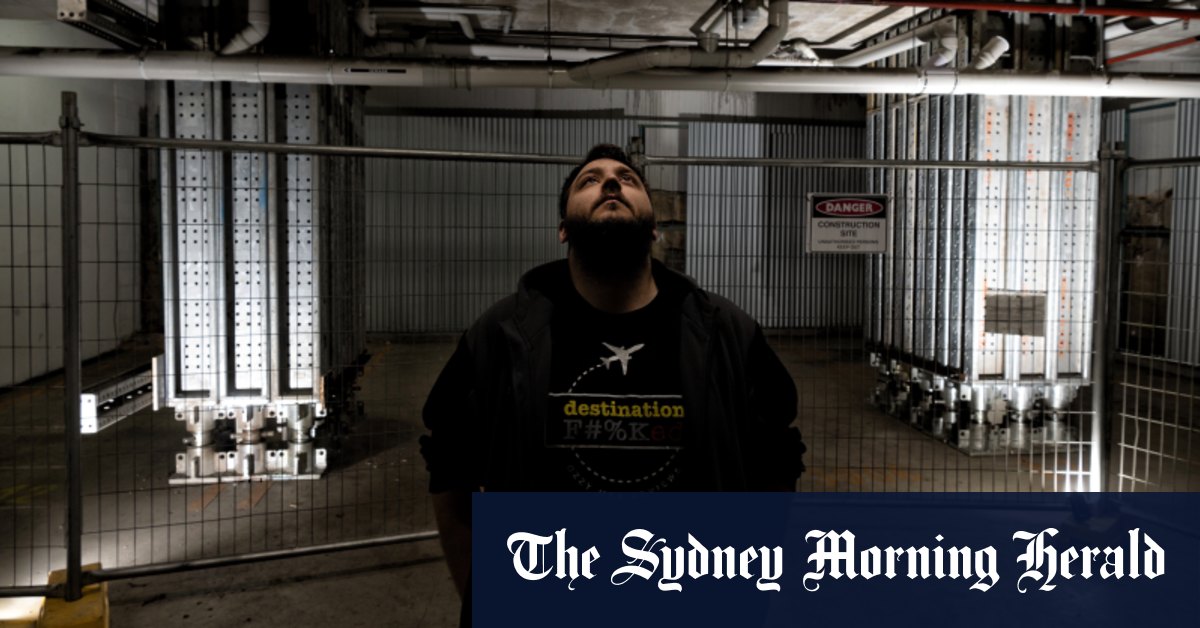
Sydney apartment tower has support columns installed to ensure safety

It sparked an emergency inspection by government engineers, including the state’s chief emergency engineer. While they found “no immediate safety risk” to residents, they recommended that monitoring focus on a so-called transfer structure, which shifts loads to other parts of the tower.

Apartment owner Corrie Ford said she was infuriated at the length of time it had taken to put the back-propping in, given the structural engineer had raised concerns about the building last year.

“In the background there seems to have been some acknowledgment that there might be a safety issue with the building and the back-propping has been put in place to ensure the safety of residents,” she said.

Bright & Duggan, which was appointed compulsory strata manager by a tribunal, said the owners’ corporation had decided to take a precautionary approach and install the temporary columns.

“We are not taking risks. We believe it is the developer’s responsibility. Toplace is ultimately the party that is responsible for the quality of the building,” managing director Chris Duggan said.

loading

“But we are not going to wait for them to do it. We will attempt to get the costs back for the temporary propping.”

The owners’ corporation will seek to recover the cost of the temporary columns as part of legal action it has under way against Toplace in the NSW Supreme Court over alleged defects in the building.

Toplace said an independent engineer, who had modeled the structural adequacy of the building, had not identified any need for immediate safety measures to be undertaken.

The developer said NSW Public Works Advisory, which inspected the building on August 1, could not identify cracks or other evidence that an engineer hired by the owners had observed.

Toplace said it had undertaken ground-penetrating radar scanning of columns a day later, and the independent engineers that it had hired concluded that allegations about the need for immediate safety works to secure the building were incorrect.

In April, the state’s building watchdog ordered To place to conduct rectification work after finding a serious defect in the construction of load-bearing walls in the building’s basement car park. At the time, it was the second order issued to place in three months to fix defects in the tower.

The Morning Edition newsletter is our guide to the day’s most important and interesting stories, analysis and insights. Sign up here.

Categories
Australia

Country Fire Service boss Mark Jones raises concerns about plan to send volunteer firefighters out to medical emergencies

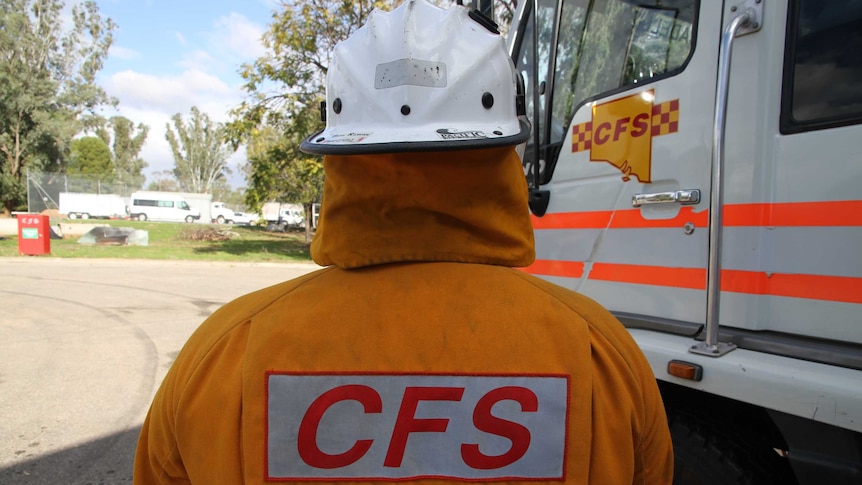
South Australia’s volunteer firefighters are already attending a growing number of medical emergencies and are not trained to deal with the trauma, according to the head of the Country Fire Service (CFS).

CFS chief officer Mark Jones has raised concerns about a state government probe into whether firefighters should attend more medical call-outs as the SA Ambulance Service (SAAS) remains under increasing pressure.

Premier Peter Malinauskas on Thursday launched a taskforce to look into the concept, after a 47-year-old father-of-two died in Plympton while waiting 40 minutes for an ambulance to arrive.

Mr Jones is not on the panel, however, Metropolitan Fire Service (MFS) chief Michael Morgan and South Australia Ambulance Service (SAAS) boss Robert Elliott will be part of the taskforce, along with Health Minister Chris Picton and union representatives.

“I lead a government that is open to ideas about what we can do to relieve pressure [in] any way we can,” Mr Malinauskas said.

“One such measure that is being proposed is drawing on the resources of the MFS to potentially respond in ways that are safe — all options are on the table.”

He said the taskforce had been established “in haste”, but other measures the government wanted to introduce — such as employing more paramedics — would take time.

Mr Malinauskas said on Friday morning that the idea was “worthy of investigation” and would be looked at “thoughtfully and safely”.

“You don’t want to fix one problem and create another, particularly with respect to the work the MFS already do,” he told ABC Radio Adelaide.

CFS attend 1,000 medical emergencies

Mr Jones said his firefighters were already doing that, attending about 1,000 medical incidents in the past year and 14 this week.

“They attend these with no specialist medical training and no additional mental health support,” he said.

“Additionally, these incidents often happen in small communities, where the volunteers are turning up to an incident where they know the casualty.”

A man wearing a Country Fire Service uniform addresses the media in front of a CFS and Government of South Australia banner.
CFS chief officer Mark Jones has raised concerns.(ABCNews)

He said the volunteers responding to medical situations were doing it “outside the scope of their standard duties, in their own time, without pay and without the same support as paramedics.”

“Our volunteers are routinely called upon to attend traumatic events beyond the scope of their firefighting duties and these jobs fall outside of most people’s expectations when they join the service,” he said.

“I have seen the number of SAAS-assist jobs that our volunteers are expected to attend grow significantly.

“This is something that has occurred without any formal agreement or additional support for our volunteers doing an already tough job.”

Mr Jones said volunteers were trained in first aid but there was a “large difference” between providing CPR and addressing the underlying clinical health issues of a patient.

Mr Malinauskas acknowledged that the CFS “have always played an extraordinarily broad role in their communities”.

“The way the CFS responds to call-outs in regional areas very much depends on the other services that are already in place in those other areas,” he told ABC Radio Adelaide on Friday morning.

“And to be clear our CFS officers attend a lot more than fires.

“In some places where we don’t have a SES, the CFS is responding to car accidents, to fires, and other emergencies on a frequent basis.

“So they already do this work and their caseload continues to grow, and that’s why we’ve got to keep an eye on the volunteer base.”

In a statement, an SAAS spokeswoman said the service already worked closely with fire services and police to support South Australians during a medical emergency.

“We are excited about the opportunity to work further with the SA Metropolitan Fire Service on a co-response model for the community here in [South Australia]and hope to grow the program over time,” she said.

“Any initiative that supports early CPR and early defibrillation is potentially life-saving.”

.

Categories
Australia

Scam or No Scam? A game for all ages

I have invented a new game. It’s called “Scam or No Scam”. The rules are simple, there are no winners and no losers (unless you count the scammers). It’s a game which turns annoyance into amusement.

At the moment, there are two regular players, plus an interchangeable cast of faceless extras, but I see potential for this to be much bigger, perhaps as an educational tool, or even a television game show.

The game consists of Player 1 sending a screenshot of an email or text message to Player 2 and asking them to declare whether it’s a “scam” or “no scam”.

Scam or No Scam?

Scam or No Scam?Credit:istock

Of course, they are always scams, and must only ever be screenshots, because we don’t want to pass on any nasty viruses. The game allows players to share their frustrations about scammers, be creative with responses, and have a laugh.

Take for example last night’s offering. I received the following WhatsApp message: “Hi, I’m Seonhee. Nice to meet you. Australia is a beautiful country and I want to find my soul mate here. I am 29 and single (don’t talk to me about sex or I will get angry). Add my WhatsApp … we can know each other better.”

I sent it to my friend and asked, “Scam or no scam?” The reply: “Not scam. I think Seonhee is the one for you. Walk away from that husband of yours and enjoy your new soulmate.”

Don’t worry husband. I’m not running off with Seonhee. Sounds like there might be some anger issues there. Smells catfishy.

It’s been seven years since my last public rant about scammers. In that time, the scams have grown, and so has my irritation. Despite being cautious about sharing my details, I get contacted by a scammer in some form (email, phone call, text), at least once a week.

While I’m occasionally impressed with their creativity, I’m more often offended at the lack of attention to detail displayed by these scammers, like the pretty young woman who sent a photo of “herself” with a message offering companionship but forgot that her WhatsApp profile picture appears at the top of the screen, showing a middle-aged man.

Categories
Australia

‘Hi Mum’: Scammers targeting parents by pretending to be children who need help

Scammers are pretending to be children in need of financial help as part of a new messaging scam targeting parents, authorities have warned.

At least 25 victims of the scam, which originated in Europe, have been detected in Victoria this year.

The victims typically receive a WhatsApp or text message from an unknown number impersonating their child.

According to police, messages often say something along the lines of “Hi mum, I’ve changed provider/lost/broken my phone – I’m temporarily using this number for now.”

The offenders eventually request money from the victim, usually using some kind of emergency as their justification for needing the funds.

Most of the offenders are based overseas and are not known to the victims.

a whatsapp message that says "Hi mum, my other phone crashed.  but this is my temporary number"
An example of the scam messages.(Twitter: Scamwatch)

Detective Sergeant John Cheyne from the Cybercrime Squad said such scams pulled on the victim’s heartstrings.

“A child telling you they’ve lost or broken their phone and are in need of financial support is understandably a situation where parents would react without a second thought,” he said in a statement.

“If ever you receive a message from an unknown number asking for money, it’s always worth asking for some kind of verification.

“If they can’t prove who they are or aren’t willing to, don’t transfer the money.”

a message reads "i have a little problem i need to pay a bill but i cannot log into my online banking."
The conversations usually progress for a while before the offender requests money.(Twitter: Scamwatch)

A recent report by the Australian Competition and Consumer Commission found scammers stole $1.8 billion from Australians in 2021 — more than double 2020’s total.

Factoring in the estimated number of unreported scams, that figure exceeds $2 billion.

“Often, matters of this nature are under-reported and that can be for a range of reasons, including fear or embarrassment, and sometimes feeling unsure if an offense has occurred,” Sergeant Cheyne said.

“We encourage anyone who has been subjected to a scam such as this to speak to police.”

Anyone who has been a victim of the scam should call their bank immediately and report the incident via ReportCyber.

.

Categories
Australia

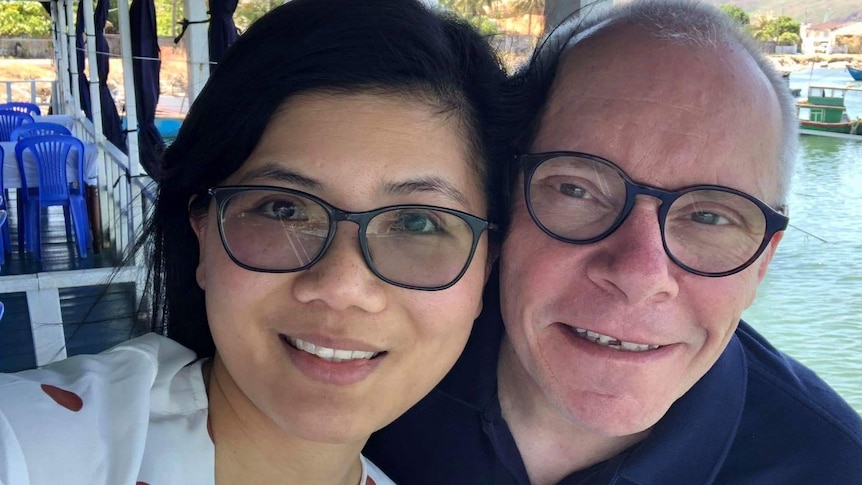
Australian academic Sean Turnell detained in Myanmar pleads not guilty in closed court

An Australian academic who is being tried with ousted Myanmar leader Aung San Suu Kyi on charges of violating the country’s official secrets law has testified in court for the first time, a legal official says.

Sean Turnell, an economist at Sydney’s Macquarie University, had served as an adviser to Ms Suu Kyi, who was arrested when her elected government was usted by the army on February 1 last year.

He was arrested five days later and faces up to five years’ imprisonment.

Professor Turnell is now being held in the main prison in Naypyitaw, the capital, as is Ms Suu Kyi.

Three of Ms Suu Kyi’s former cabinet members are being tried with them in a special court at the prison.

A legal official familiar with Thursday’s proceedings said Professor Turnell denied the allegations against him and pleaded not guilty in his first court appearance, but details of his testimony are limited.

Professor Turnell’s lawyers have been barred from talking about the case, while all trials involving Ms Suu Kyi have been closed to the media and public.

The legal official, who spoke on condition of anonymity because he is not authorized to release information, said Professor Turnell and his co-defendants appeared to be in good health.

The exact details of the alleged offense in the case have not been made public, though Myanmar state television, citing government statements, said last year that Professor Turnell had access to “secret state financial information” and had tried to flee the country.

‘Trumped-up charges’

Friend and fellow economist Tim Harcourt told the ABC the opaque legal process was concerning.

“Let’s face it, it’s trumped-up charges by an authoritarian regime that wants to use Sean to discredit Aung San Suu Kyi. That’s what it’s all about,” he said.

“He’s pleaded not guilty because he’s not guilty.

“All he did was advise the Myanmar government on things they should do with their economy … providing good advice to improve the living standards of ordinary citizens.”

He said the advice from the previous Australian government was to take a “softly, softly” approach.

“But quite clearly, it hasn’t worked. It’s been 18 months now,” he said.

“The fact you can have such an authoritarian, murderous regime doing what it’s doing, and Australia hasn’t considered sanctions, is pretty surprising.

“Particularly given how quickly people acted with respect to Vladimir Putin with Ukraine, which was correct, they’ve sort of let Myanmar drift off.”

He said Foreign Minister Penny Wong had been more vocal about Professor Turnell’s case.

Defense Minister Richard Marles said he could not comment on the details of Australia’s consular access to Professor Turnell, but said the government was concerned about his situation.

“We are concerned about the level of access available to those providing consular services to Professor Turnell,” he said.

“Our most important engagement with Myanmar right now is around seeing a safe return of Professor Turnell to this country.

“And we will not rest until we have a situation where Professor Turnell is returned safely to Australia and safely to his country.”

Senator Wong has previously said sanctions are under active consideration and Professor Turnell is Australia’s top priority in Myanmar.

“Another question is, would sanctions make it worse for him or better for him? Does applying pressure put pressure on Myanmar or does it just anger them? So that’s a question for the judgment of the government,” Professor Harcourt said.

Professor Turnell appears with Aung San Suu Kyi
Professor Turnell and Ms Suu Kyi are being held in the main prison in Naypyitaw, the capital.(LinkedIn)

Professor Turnell is also being prosecuted under immigration law, which carries a punishment of six months to five years’ imprisonment. Prosecutions under immigration law are common for foreigners being held for other offences.

The judge adjourned Thursday’s proceedings until next week, when Ms Suu Kyi is to testify.

The case is one of many faced by Ms Suu Kyi and is widely seen as an effort to discredit her to prevent her return to politics.

The charges against her include corruption and election fraud. She has already been convicted of several minor offenses.

Last year’s military takeover sparked peaceful nationwide street protests that security forces quashed with lethal force, triggering armed resistance that some UN experts have characterized as civil war.

ABC/AP

.

Categories
Australia

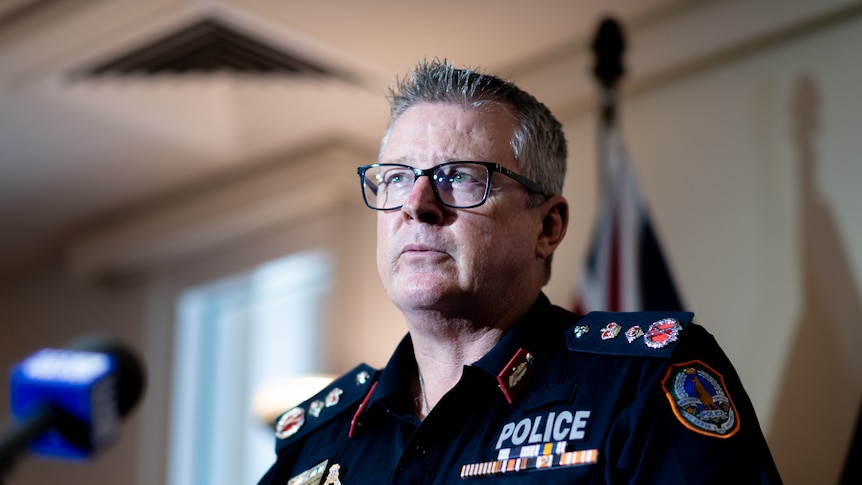
Majority of NT Police Association members have no confidence in Commissioner Jamie Chalker, according to a survey

Northern Territory Police officers “do not have confidence” in Commissioner Jamie Chalker, have low morale and are lacking resources, according to a damning union survey.

The NT Police Association (NTPA), a union which represents officers, undertook a survey of its members after calls for a vote of no confidence in Commissioner Chalker.

1,044 officers took part in the survey out of 1,608 who were eligible, which the union said was the highest number of participants ever.

79.7 per cent said they did not have confidence in the commissioner.

The survey comes as concerns grow about crime in the Northern Territory, which has become a major issue in the upcoming by-election in the seat of Fannie Bay.

There has also been another jump in domestic violence cases.

Paul McCue stands at a press conference
Paul McCue said the results would be discussed at the union’s annual conference next week. (ABC News: Mitchell Woolnough)

Police force ‘in complete crisis’, union claims

In an internal email from union president Paul McCue, seen by the ABC, the key issues identified by the survey included low morale, pay freeze concerns and a lack of resources.

.

Categories
Australia

NSW parliament’s culture of bullying and sexual harassment revealed by investigation

Allegations of sexual assault, harassment and bullying have been uncovered in a landmark investigation into the workplace culture at NSW’s parliament house.

One in three respondents said they had experienced sexual harassment or bullying in the past five years, according to the review conducted by former sex discrimination commissioner Elizabeth Broderick.

The report found 52 per cent of bullying incidents were allegedly perpetrated by members of parliament.

Two per cent of workers indicated they had experienced actual or attempted sexual assault and almost 10 per cent said they had heard about or witnessed at least one sexual assault.

“Both women and men reported experiences of actual or attempted sexual assault,” the report found.

The NSW Parliamentary Executive Group announced the engagement of Ms Broderick to lead the independent review in July last year.

Premier Dominic Perrottet said the culture in parliament had become “toxic” in many instances and the report demonstrated the need for change.

“It is sobering, confronting and unacceptable,” he said.

“Every workplace across our state should be free from harassment, sexual harassment and sexual assault but this is not the case in the NSW parliament.

Space to play or pause, M to mute, left and right arrows to seek, up and down arrows for volume.
‘Sobering and confronting’: NSW Premier vows to end workplace harassment in Parliament

“If parliamentarians cannot lead and provide an environment where the workplace is safe, what hope do we have for other workplaces across our great state?”

Almost 450 people, representing 27.7 per cent of all NSW parliamentary workers, participated in the review.

There were more than 100 one-on-one interviews, seven confidential group listening sessions, and 58 confidential written submissions.

The review found bullying was significant across parliamentary workplaces, describing it as “systemic” and “multi-directional”.

Workers have low confidence in structural or cultural protections to prevent bullying or to stop it once it occurs, the report said.

Some offices were described as “well-known hotspots” characterized by high rates of staff turnover related to harmful behaviours.

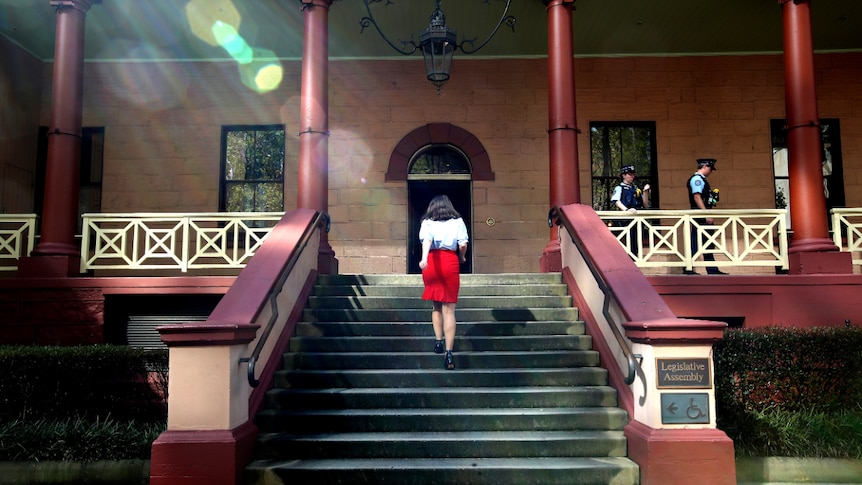
A woman with a red skirt walks up the front steps of NSW Parliament
Workers told the review they had low confidence that bullying would stop if reported.(Supplied: Parliament of NSW)

About half of the reported incidents occurred at parliament house with the remainder occurring at electorate offices, during work-related travel, at work-related social functions and online.

Alcohol was considered to be a contributing factor.

Mr Perrottet said the report only marked the beginning of cultural reform in the NSW parliament and pledged to follow through on its recommendations.

These include strengthening internal policies and codes of conduct, reducing alcohol use, increasing support services and monitoring those “well-known hotspots” for bullying.

“Today, change will happen. This report will not be the end. This report will be the beginning,” he said.

Minister for Women and Mental Health Bronnie Taylor told MPs and parliamentary staff they need to set the example for behavior in the parliament.

“For those particular people that may be reading this report today, you know who you are, and my very strong advice to you is that you do not belong in the Parliament of NSW,” she said.

“I ask you to think very long and hard about this, and I ask you to make sure that if this is you that is mentioned, get the help that you need and please leave the NSW parliament.”

A man walks in NSW Parliament
The Opposition Leader said the review paints a “dark picture” on both sides of politics.(Supplied: NSW Parliament)

Opposition Leader Chris Minns said the review “paints a really dark picture” for all sides of politics.

“We all need to do better, reach across the aisle, and make sure that we’re making every possible effort to make the NSW parliament a safe workplace.”

He said the report showed there was no real avenue for people to make complaints in the workplace and he supports calls for an independent complaint process to deal with allegations against politicians, MPs and ministerial staff.

“[Currently the] only avenue is to make a complaint to somebody, potentially from the same political party, who has an in-built apprehended bias, a perceived bias or actual bias.”

Independent MP Alex Greenwich said the report painted an unacceptable and unsafe workplace at NSW parliament.

“The experience of women and LGBTIQA+ staff is harrowing, we should set the standard, not be beyond the pale,” Mr Greenwich said.

“Workplaces that welcome and support LGBTIQA+ staff are safer workplaces for everyone, and the NSW parliament has a lot of work to do in this regard.”

The review, commissioned by former NSW premier Gladys Berejiklian, said ministerial offices were “unique workplaces”, where staff were under intense public scrutiny and employment protections for ministers were “vastly greater” than those of their staff.

.

Categories
Australia

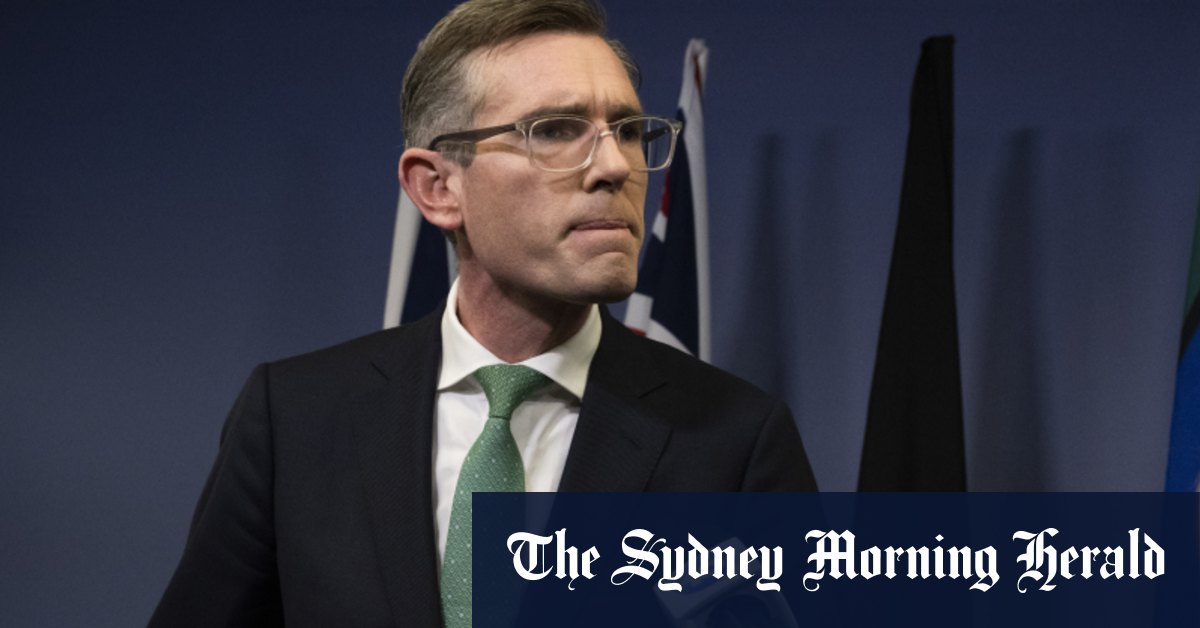
Dominic Perrottet says findings ‘toxic and wrong’

In two-thirds of sexual harassment cases (67 per cent) the perpetrator was someone more senior, and in most cases (85 per cent) the perpetrator was male.

The report found that harmful behaviors had a “profound, devastating and long-term” impact on staff and led many to leave parliamentary workplaces.

“This was often because of their lack of confidence in, or poor experience of, reporting mechanisms and a resulting lack of confidence that it was possible to protect workers against harmful behaviours, particularly when these were being perpetrated by a Member of Parliament,” it said.

The report said most participants had identified the “unequal distribution of power as a key driving factor both in problematic cultural dynamics and in the patterns of harmful behaviours”.

This was supported by the findings that identified members of Parliament as being responsible for a disproportionate number of incidents of harmful behaviour, it read.

Perrottet said the public needed to have confidence in its politicians.

loading

“It can’t have confidence in its politicians in circumstances where parliamentary environments – whether that is in the Parliament or in electorate offices – in many instances,[are] not free from bullying, harassment, sexual harassment and sexual assault,” he said.

“This must end. It ends today, and we will work very closely with all sides of politics to implement change for the betterment of workplaces in the NSW parliament.”

I thanked the victim-survivors who came forward and were part of the investigation.

Almost 500 people – 27.7 per cent of the parliamentary workforce – participated in the online review. More than 100 gave confidential one-on-one interviews and seven confidential group sessions were conducted. The review also received 58 confidential written submissions.

“That would have been incredibly difficult for many and very challenging, but today they should know that their stories will create real change and have a lasting impact on people in our parliament and hopefully right across our state,” Perrottet said.

“That change cannot occur without people having the strength through adversity to come forward and tell the story and I, particularly as [premier] of the state, want to thank every single person who has participated.”

NSW Labor leader Chris Minns said the review painted a “dark picture of what’s been happening in the NSW parliament over an extended period of time”.

“It’s my view that neither side, or any side in politics, comes to this issue with clean hands. We all need to do better, reach across the aisle, and make sure that we’re making every possible effort to make the NSW parliament a safe workplace,” he said.

Perrottet also said he would “work across party political lines to make any changes to ensure the NSW parliament is a safe place”.

“Whatever changes need to be made will be made. It is as simple as that.”

loading

The review was conducted by former sex discrimination commissioner Elizabeth Broderick and all MPs and staff employed at parliament within the past five years were invited to participate voluntarily.

The review, commissioned by former NSW premier Gladys Berejiklian, said ministerial offices were “unique workplaces”, where staff were under intense public scrutiny and “employment protections for ministers are vastly greater than those of their staff”.

Support is available from the NSW Sexual Violence Helpline on 1800 424 017National Sexual Assault, Family & Domestic Violence Counseling Line on 1800 737 732, and Lifeline on 131 114.

The Morning Edition newsletter is our guide to the day’s most important and interesting stories, analysis and insights. Sign up here.