Categories
Australia

Energy ministers from across the country meet to establish a new framework for transition away from coal

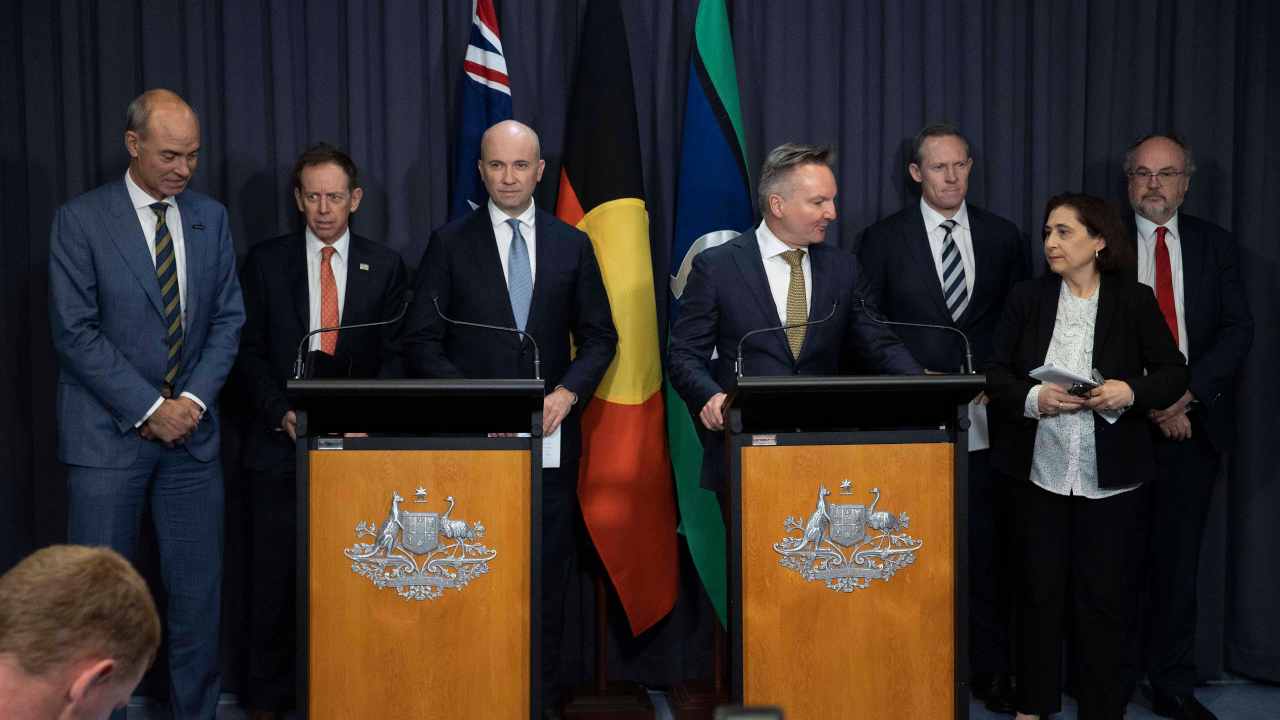
State, territory and federal energy ministers have started the process for significant reforms to Australia’s energy future.

The ministers met on Friday in Canberra where they received a briefing from energy market operators and the consumer watchdog on expected gas and electricity shortfalls in 2023 and 2024.

On top of the agenda was the establishment of a new National Energy Transformation Partnership (NETP) to better collaborate on Australia’s transition to greater reliance on renewables in the electricity grid.

Federal Climate and Energy Minister Chris Bowen announced that as part of the new NETP, emissions reduction would be included in the national energy objectives for market operators.

Stream more on politics with Flash. 25+ news channels in 1 place. New to Flash? Try 1 month free. Offer ends October 31, 2022

Mr Bowen said the decision would send a “very clear” message of certainty to investors and would ensure emissions reduction is at the forefront of every aspect of energy market operators’ functions.

“This might not sound much, this is the first change to the national energy objectives in 15 years this is important,” he said in Canberra on Friday.

“It sends a very clear direction to our energy market operators that they must include emissions reduction in the work that they do.

“And the message of certainty to investors in renewable energy and transition and storage around the world that Australia is open for business, Australia is determined to reduce emissions.

“And we welcome investment to achieve it and we will provide a stable and certain policy framework.”

The ministers also agreed to extend the powers of the Australian Energy Market Operator (AEMO) to better manage east coast supply shortfall risks.

It will also provide AEMO with the option of direct market participation ahead of winter 2023.

In its interim gas report, the Australian consumer watchdog warned of a serious shortfall in natural gas in 2023.

The Australian Competition and Consumer Commissions (ACCC) said LNG exporters needed to redirect excess supplies to the domestic market or Australia would risk its energy security heading into next year.

It comes after AEMO intervened in the Victorian gas market to redirect excess supply from Queensland producers to avoid mass shortages in the southern state – using its emergency mechanism for the second time in history.

The ministers joined the ACCC in calling for producers to redirect excess gas to the domestic consumers rather than the lucrative export market.

NSW Energy Minister Matt Kean said it was a “non-negotiable” for his state when it came to protecting households and businesses.

“What we don’t want to see is domestic gas producers prioritizing profits and exports ahead of local users, that is a non-negotiable for us in New South Wales,” he said.

“There is going to be a shortfall in gas in 2023 and 2024. That shortfall needs to be met.

“And what we need to do is prioritize Australian gas for Australian gas users ahead of companies making super profits and exporting that gas offshore.”

His Victorian counterpart Lily D’Ambrosio shared the concerns and said the country produced “more than sufficient gas” to meet domestic needs but “too much of it was sent overseas”.

“And that’s got to change and that’s really the task of all of us and we’re all up for it. And we’ve all agreed about how we can go about doing that,” she said.

On top of the gas market reforms, the ministers also discussed a future capacity mechanism to ensure firming power in the grid during the transition away from coal.

Senior federal and jurisdictional officials have now been charged to provide options for a framework which delivers “adequate capacity, ensures orderly transition, and incentivises new investment in firm renewable energy.”

“Ministers intend to take a more active role in delivering the firming capacity needed as the system transforms and consider the best means to manage the risks of a disorderly exit of coal generation,” the joint communique said.

.
Categories
Australia

Council scopes out new Brisbane underground with suburban stations

“The business case speaks about a 160km/hr train at 24 trains per hour.”

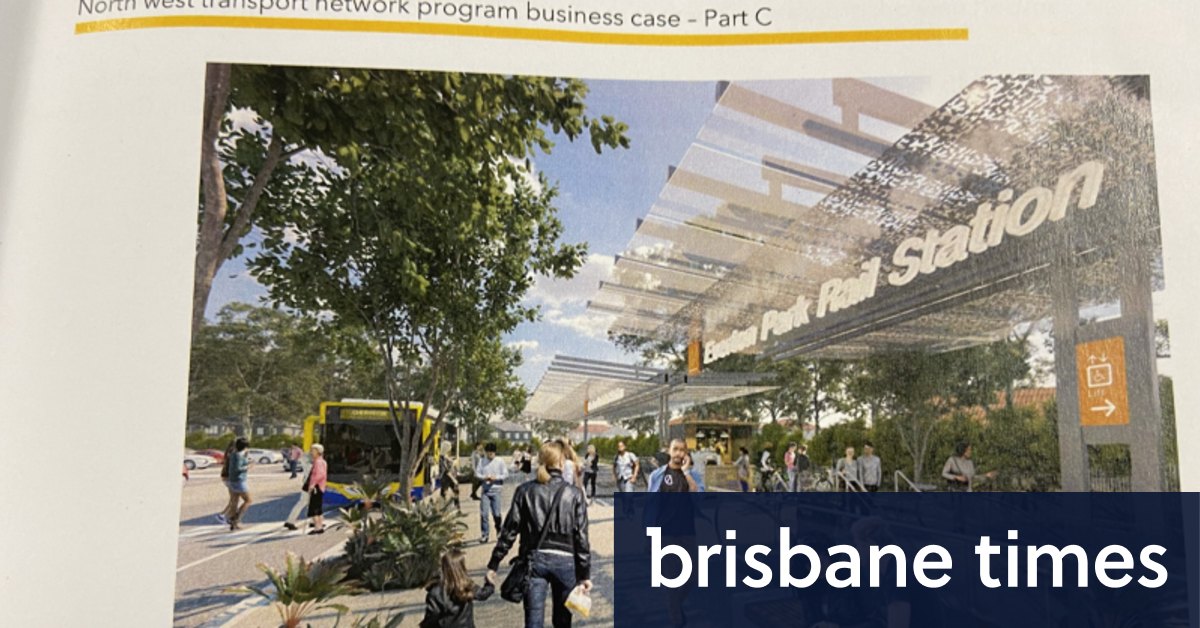
Wines said the faster trains would not allow for stops at McDowall and Stafford, however there would be a 750-space park-and-ride at Bridgeman Downs and another 175 spaces at Everton Park.

There would be an underground rail station at Chermside if a proposed 9.5km rail corridor from Exhibition line to Carseldine was approved.  The red dotted line is the proposed underground rail line.  The red full line is a new rail line on the ground from Carseldine to Strathpine.

There would be an underground rail station at Chermside if a proposed 9.5km rail corridor from Exhibition line to Carseldine was approved. The red dotted line is the proposed underground rail line. The red full line is a new rail line on the ground from Carseldine to Strathpine.Credit:North West Transportation Corridor August 2022.

Rail: Back on Track spokesman Robert Dow on Friday said the latest proposal out of the business case covered the “missing link” in the network that would also build capacity elsewhere.

“It will allow fast rail and it will allow rail services to support the new rail line from Beerwah to Maroochydore,” Dow said.

“Without it, the [rail] network doesn’t have enough capacity. It provides a way of getting trains quickly from Brisbane and up to Strathpine and on to the Sunshine Coast.”

loading

The business case outlines the potential for “eight to 12 additional trains in the peak hour, in addition to the 24 trains per hour service pattern by 2041”.

While Transport Minister Mark Bailey initially dismissed the motorway proposal as “feeble,” Wines called on him to be more open to a rail upgrade.

However, Bailey instead repeated his criticism of the council for considering issues outside of its control, with limited consultation, and without a way to pay for any of the options.

He said by not working with the government on the business case the council had “skewed its outcomes”.

“Robert Dow has made a much more considered and balanced contribution on this matter than the Brisbane City Council who have ignored public feedback in their business case which overwhelmingly wanted better public transport not new tollways and motorways,” Bailey told BrisbaneTimes.

“And Mr Dow did so free of charge and didn’t waste $10 million of taxpayer’s funds as the LNP have done with this business case.”

Bailey said the state government was focussed on delivering the Cross River Rail project, and would also look at “further enhancement of rail services between the Sunshine Coast and Brisbane” as part of planning for the 2032 Brisbane Olympics.

Member for Aspley Bart Mellish welcomed the council’s decision not to develop the corridor.

“There has been a lot of local opposition to it understandably for the reasons they identified, with its environmental values, and it is now pretty well built-up,” the Labor MP said.

loading

“People have bought these big large blocks out there and don’t want a motorway coming through their suburbs.”

Mellish agreed there should be a debate about long-term solutions to traffic congestion on Brisbane’s north-side.

Categories
Australia

Chief law officer warns coercive control ‘widespread problem’ in Australia

Attorney-General Mark Dreyfus has warned the scourge of coercive control is a widespread problem throughout the nation as he begins work with his state and territory counterparts to establish a nationally consistent response to the psychological abuse.

The nation’s chief law officers met on Friday to agree to a draft statement of principles, which will now go out for consultation, on the best way to recognize the abusive pattern of behavior which is steadily gathering more attention.

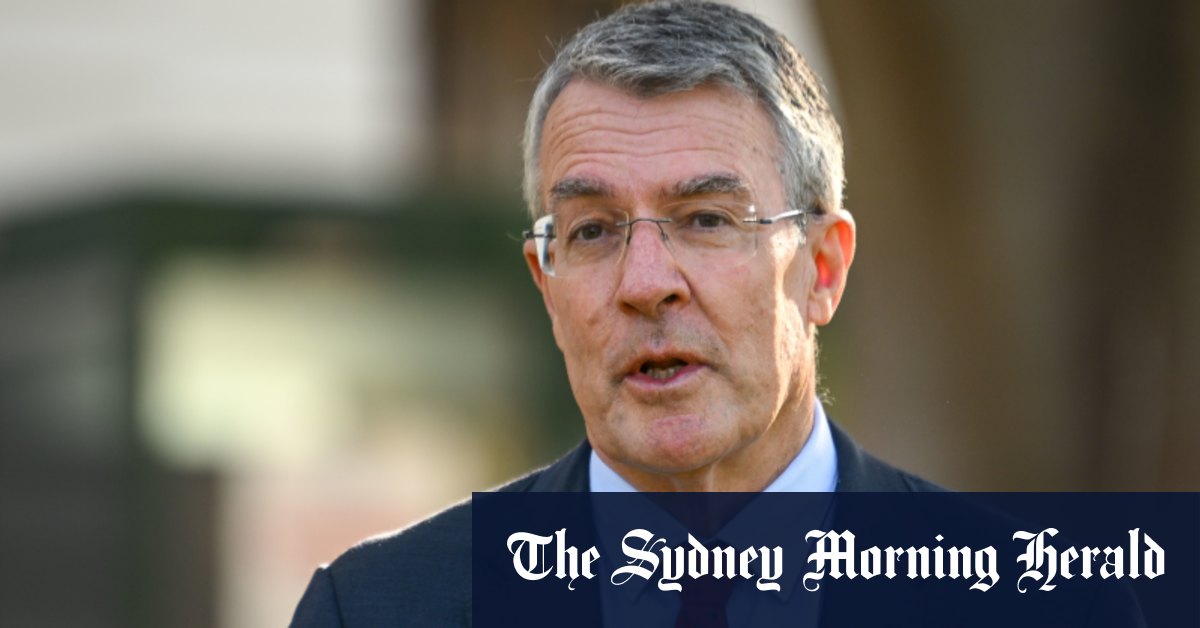
Attorney-General Mark Dreyfus has warned coercive control is a widespread problem.

Attorney-General Mark Dreyfus has warned coercive control is a widespread problem.Credit:eddie jim

They also agreed to adopt more consistent measures to allow the criminal justice system to better respond to sexual assault in response to calls by former Australian of the Year Grace Tame.

Coercive control is generally recognized as an abusive pattern of behavior which includes controlling what someone wears, limiting access to money, tracking their location, controlling whom they see, and persistent texting. It can be a precursor to physical violence.

The awareness of coercive control has grown significantly since the murder of Hannah Clarke and her three young children by her estranged husband, Rowan Baxter, in Brisbane in 2020. While Baxter had not previously been physically violent, he had subjected Clarke to escalating forms of controlling and possessive behaviour.

Clarke’s father, Lloyd, and his wife, Sue, have spearheaded a campaign to criminalize coercive control in Queensland, this week saying it was “fantastic” that the issue was being discussed at a national level because it was poorly understood.

Dreyfus said on Saturday that the tragic death of Clarke and her children was “absolutely a catalyst” for action to be taken on the development of a nationally consistent approach.

“But sadly, no one should think that the tragedy that occurred with Hannah Clarke and her children was an isolated incident and that’s, of course, why we are taking this collective action,” he said.

“It’s not, sadly, an isolated incident. We know that coercive control is a widespread problem. We know that we need to do more to recognize this problem.”

Categories
Australia

Why hundreds of people are tripping and falling near trains

Hundreds of melbourne commuters are tripping and falling near trains because they’re glued to their mobile phones.

CCTV on the rail network has captured near-misses and examples of inattention near oncoming trains.

In one shocking video, a distracted commuter stumbled over the yellow line before he fell off the platform and onto the track.

Hundreds of Melbourne commuters are tripping and falling near trains because they're glued to their mobile phones.
Hundreds of Melbourne commuters are tripping and falling near trains because they’re glued to their mobile phones. (9News)

While the train managed to stop in time, incidents such as this have prompted a warning from Metro Trains.

“Don’t take risks around the rail network, be safe,” CEO Raymond O’Flaherty said.

CCTV captured another incident at the Prahran Station level crossing where a pedestrian bypassed the boom games, waited for the train pass, and then walked to the other side.

According to new data, there were more than 380 slips, trips and falls across the city’s train network in the past year.

More than half of those resulted in injuries and trespassing was the most common safety risk.

Every mishap has the potential to cripple the entire network and potentially affect about 50,000 commuters.

Safety concerns also arise when commuters are rushing to get the train.

One woman had a misstep and fell in a rush to catch a city train.

She became wedged in the gap between the platform and the train but fortunately she was pulled to safety by safety workers

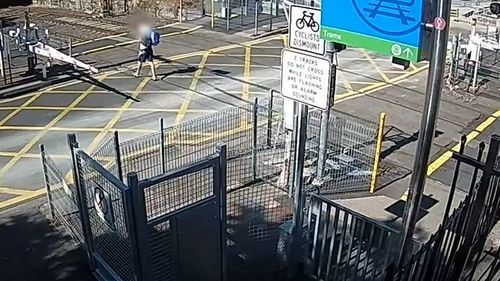
CCTV captured another incident at the Prahran Station level crossing where a pedestrian bypassed the boom games, waited for the train pass and walked to the other side.
CCTV captured another incident at the Prahran Station level crossing where a pedestrian bypassed the boom games, waited for the train pass and walked to the other side. (9News)

Station delivery manager Chloe Smith said railway workers “see a lot of injuries that are absolutely avoidable.”

“We have more services than we’ve ever had before – so if you don’t catch that train, please don’t run for it,” Smith said.

“There will be another one coming really soon.”

The vision has been released as part of Rail Safety Week, as a part of a range of measures to try and curb dangerous behaviour.

In addition to this, the government is building extra safety fencing to prevent trespassing.

Public transport, roads and road safety minister Ben Carroll urged commuters to be careful.

“Catch the trains safely, be mindful of others,” Carroll said.

Categories
Australia

Inside the Liberal Party’s debate on how to win back Chinese-Australians and teal voters

When Keith Wolahan realized something was wrong, his campaign team decided to make 2,500 phone calls to Chinese-Australians in his electorate. What came back was toxic.

Many voters of Chinese heritage in the seat of Menzies, in Melbourne’s east, detested the Morrison government’s language on the prospect of war. Some felt unsafe in the community. Others worried they would never see their family in China again.

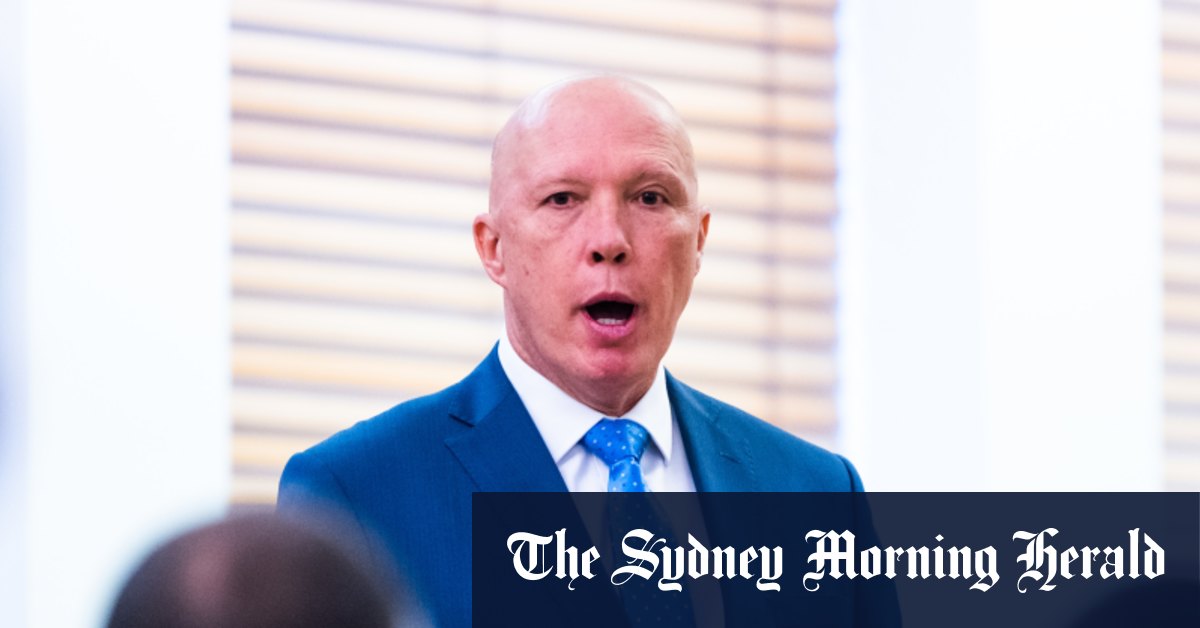
Opposition leader Peter Dutton is dealing with a dual debate within his party room on how to win back Chinese-Australians and teal voters.

Opposition leader Peter Dutton is dealing with a dual debate within his party room on how to win back Chinese-Australians and teal voters.Credit:James Brickwood

For weeks, then-prime minister Scott Morrison and defense minister Peter Dutton had been dialing up the rhetoric on China, claiming Anthony Albanese would “appease” Beijing in government.

With Menzies, which includes the suburbs of Doncaster, Box Hill North and Templestowe and has the third-highest percentage of Chinese-Australian residents in the country at 27 per cent, Wolahan knew he would be up against it. On May 21, he just held on to the seat for the Liberals, withstanding a 6.3 per cent swing.

In the seat next door, Chisholm, sitting Liberal MP Gladys Liu – the first Chinese-Australian female elected to the House of Representatives – was not so lucky, losing to Labor after a 6.9 per cent swing.

And in most other seats across the country there was a similar story. While some seats bucked the trend, there was generally an above-average swing against the Liberals in electorates with a high percentage of Chinese-Australians.

As former federal director Brian Loughnane and opposition frontbencher Jane Hume lead the review into the Liberal campaign, members are locked in a dual debate about how to win back Chinese-Australians, as well as voters who fled the party for one of the “teal” independents.

For many in the party, changing their stance on China would represent junking the Turnbull and Morrison governments’ biggest achievements: enacting landmark foreign interference laws; banning Chinese telco Huawei from the 5G network; and calling out Beijing’s human rights abuses in Hong Kong and Xinjiang.

With the Coalition largely failing to advance any major economic reforms while in government, they believe the reforms to national security laws and reorienting the China relationship to a more realistic footing are its legacy.

Despite a swing against the Liberals, Keith Wolahan was elected MP for Menzies at the May election

Despite a swing against the Liberals, Keith Wolahan was elected MP for Menzies at the May election Credit:Jason South

Wolahan, a former Army captain, doesn’t believe the Liberals should change any of their policies on China. But he does think the party needs to do a much better job of differentiating the Chinese Communist Party from Chinese-Australians.

“A lesson from the election is that language matters. Our disagreements are with the Chinese regime, not the Chinese people,” he says.

“The more Chinese Australians hear us make that distinction, the better. But it would be counter to our national interest if we were to conclude that there was something wrong with the foreign or national security policies of the Morrison or Albanese governments.”

loading

Liberal Senator James Paterson, the opposition’s spokesperson for countering foreign interference and a long-time critic of the CCP, echoed a similar line on the ABC’s Q&A show on Thursday night.

“We have to be very careful about our language,” he said. “We have to be very clear that we are saying that our dispute and our disagreement is with the Chinese Communist Party or the government of China. It is not with the Chinese people.”

But there are also questions about whether the Liberal Party’s grassroots engagement with multicultural communities is up to scratch, and whether some members are using the China angle as an excuse for their own lackluster campaigns.

When Liberal members gathered for their party room meeting in Canberra on Tuesday, August 2, opposition frontbencher Alan Tudge told his colleagues that China was a significant reason for the 7.3 per cent swing to Labor in his seat of Aston at the election.

Some of Tudge’s colleagues questioned his intervention. More than 50 per cent of voters in his Melbourne electorate are women and the former education minister spent the campaign trying to avoid journalists over questions about an affair he had with a former media advisor in 2017.

After Tudge’s comments, Opposition Leader Peter Dutton asked Liberal MP David Coleman to offer his thoughts to the party room. Coleman is one of the MPs who withstood the tide; his Sydney seat of Banks has about twice as many Chinese-Australians as Aston but he only suffered a 3 per cent swing.

loading

Coleman told the party room the main issue wasn’t the Morrison government’s tone but its policies. And given the policies were correct, he said “we can’t do anything about it” in a macro sense.

But Coleman said Labor was now in government and rightly adopting the same policies, so to an extent the situation would improve over time.

Instead of laboring on what divides them, Coleman suggested that Liberal MPs should focus on the issues that would bring back pro-business Chinese-Australians.

A similar debate is going on inside the party on how to bring back inner-city voters who left the party for independents, the Greens and Labor.

It is here where issues such as climate change, integrity and the treatment of women were a disaster for the party at the election.

While accepting that some of these issues need to be addressed, Dutton has been telling colleagues that the party should also take an ambitious package of economic reforms to the next election. According to the plan, this would focus the mind of traditional Liberal voters who saw no daylight between Morrison and Albanese on the economy.

loading

Some of the Liberals who were defeated by teal independents at the election had a phone hook-up on Tuesday night to begin discussing how to win the seats back. The call was organized by senior opposition frontbencher Paul Fletcher, who suffered a 12.3 per cent swing to an independent in his normally very safe seat of Bradfield.

It was very much a stocktake on the first steps that needed to be taken, including a realization of just how much they were outplayed in the ground game of analytics and campaigning.

They didn’t even discuss the policy changes that were needed to beat the teals.

After all, it is a long way back.

Cut through the noise of federal politics with news, views and expert analysis from Jacqueline Maley. Subscribers can sign up to our weekly Inside Politics newsletter here.

Categories
Australia

Australia’s energy ministers power up renewables transition with new deal

Australia’s national electricity is a set of goals that govern investments in and operation of electricity services across the country and has previously been limited to ensuring price, quality, safety and reliability and security of supply of electricity.

Renewables developers have insisted the lack of an environmental objective has delayed Australia’s clean energy transition and blocked the market settings needed to reward investment in green power projects.

“Australia is determined to reduce emissions, we welcome investment to achieve it and we will provide a stable and certain policy framework.”

Federal Energy Minister Chris Bowen

Bowen said adding an environmental target sent a clear message to the nation’s energy market operators that they “must include emissions reductions in the work they do”.

“Now and into the future, they will need to cater for a requirement on behalf of all the governments of Australia to reduce emissions,” he said.

The ministers also signed an agreement to co-operate on the building program for huge new power line links that are needed to connect new renewable energy projects across state borders, and to develop new rules to empower the market operator to access private company information and better forecast potential energy supply shortfalls.

loading

The Clean Energy Council said its members had been calling for the change to the market’s objectives for more than a decade and its adoption would help drive investment in green energy.

“These decisions provide clean energy investors with further confidence and certainty that have been missing through years of inaction and neglect,” chief executive Kane Thornton said.

“Today we’re seeing a clean, green light for low cost renewable energy from hydro, solar, wind and storage to become the dominant source of Australia’s energy needs.”

A coalition of major renewable energy investors agreed, saying the inclusion of the emissions objective was long-overdue.

“It will ensure that future market design, and proposed investment in new infrastructure, must take into account the emission reduction benefits,” said Simon Corbell of the Clean Energy Investor Group, which represents a group of 19 companies including Neoen, Macquarie and Tilt Renewables .

“Clean energy investors will strongly welcome the leadership shown by ministers today to take control of the energy reform agenda.”

Victorian Energy Minister Lily D’Ambrosio said the Andrews government had pushed for climate change to be included in the market’s objectives since 2016, “but were blocked by federal Liberal National governments”.

The ACT and Queensland governments have led calls for the emissions clause in recent years.

loading

Queensland’s Energy Minister Mick de Brenni said Friday’s agreement was a “step change” after years of inaction.

He took a thinly veiled swipe at the former federal energy minister, Angus Taylor, claiming that “governments of the recent past have not allowed the discussion to be had”.

NSW Energy Minister Matt Kean said the Morrison government had ignored its role in the clean energy transition.

“When there’s no action at the Commonwealth level, the heavy lifting is left to the states and territories, and that’s what’s been happening,” Kean said.

“Now we’ve seen everyone leaning into the opportunity, which is this global [energy] transition.”

Kean said cooperation between state and federal governments would create certainty for private investors, which will be needed to fund the hundreds of billions of dollars required to transition electricity grid infrastructure from a fossil fuel system to a clean energy system.

“For the first time, all of us are aligned in the direction we need to take our nation,” he said.

“The enormous opportunities of modernizing our electricity system underpins our manufacturing industry, which means investment, jobs and new era of economic prosperity for our country.”

Cut through the noise of federal politics with news, views and expert analysis from Jacqueline Maley. Subscribers can sign up to our weekly Inside Politics newsletter here.

Categories
Australia

Release of NSW Broderick report into toxic culture was dehumanizing, advocate for sexual assault survivors says

The release of the report into the workplace culture in NSW Parliament was “dehumanizing” and “frustrating”, a former Liberal staffer and advocate for sexual assault survivors says.

Dhanya Mani, who publicly aired allegations of indecent assault against a colleague in 2019, said the report had been handed down with no survivors present.

Conducted by former sex discrimination commissioner Elizabeth Broderick, the investigation lifted the lid on a “toxic” culture in state parliament.

It found one in three staff had experienced bullying or sexual harassment in the past five years.

Three men and two women reported they had been subjected to an actual or attempted sexual assault at work.

“The optics of this report being released, showed MPs controlling the conversation with survivors completely omitted from that picture,” Ms Mani said.

“It was just something that was very dehumanizing and frustrating. If anything it feeds into these troubling power dynamics that Broderick and her team spoke about in their reports.

“Where they said the power imbalance between staff and MPs was a leading driver that underpins the causes for misconduct.”

a woman walking up a set of stairs
Almost 450 people working at the NSW Parliament responded to a survey.(AAP: Bianca De Marchi)

Hearing their experiences being addressed would have been a first for many survivors, Ms Mani said, and leaders of political parties missed an opportunity to stand with them.

As the only survivor advocate representative on the parliamentary advisory group into sexual harassment, bullying and misconduct, she felt particularly aggrieved with the political leaders.

“I’m mystified that neither leader reached out to me in my capacity in that role, to consult on their statements or the way in which they wanted to approach their responses to this report being handed down,” she said.

“To feel that, even when I’m here that I’m not being seen, that my expertise isn’t really been utilized, just makes me also feel really traumatized.”

Almost 450 people working at the NSW parliament responded to a survey which found widespread bullying and everyday sexism.

The report found the human cost of the abuse was high with staff describing the impact on their mental health, their relationships and their career as “devastating”.

.

Categories
Australia

City to Surf 2022: Start time, road closures, routes

Special event clearways will be in place along the route with parked cars towed from 1am to 4pm, so make sure to check the route and any signage before leaving your car.

NSW Police reminded motorists and residents to pay close attention to road closures and parking rules in place throughout Sunday. “Vehicles left in special event clearways – even those with local parking permits – will be towed away and fees apply,” Detective Superintendent John Duncan said.

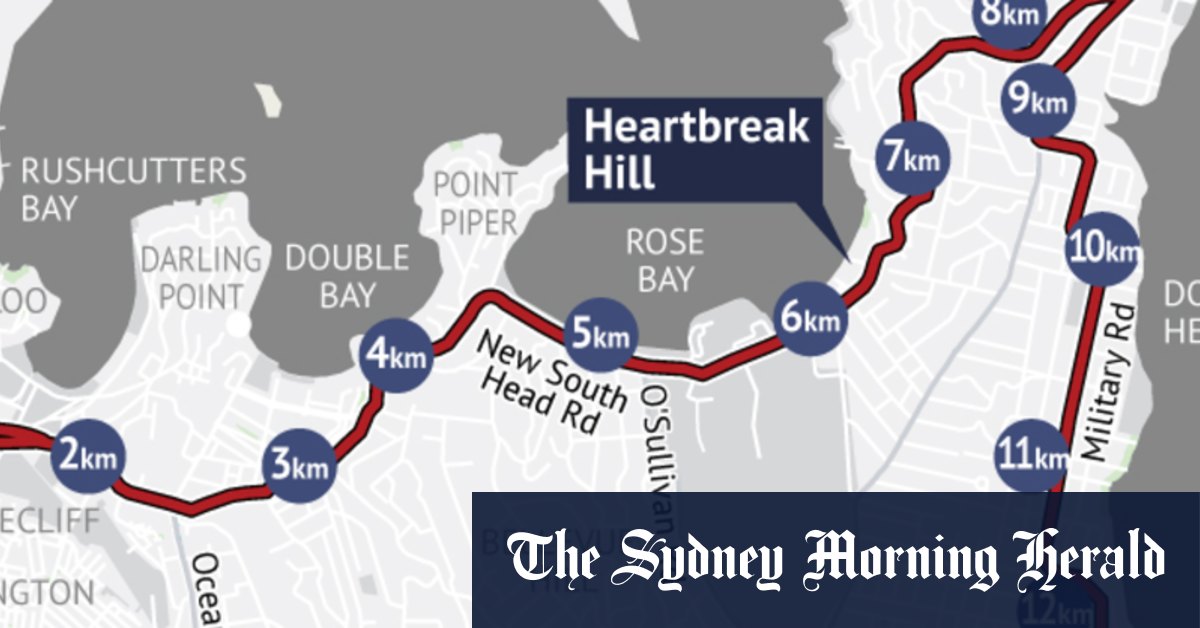
Runners will set off from Hyde Park, at the intersection of Park and College streets, before traveling down William Street, through Kings Cross Tunnel and along New South Head Road towards Rose Bay.

“Heartbreak Hill” marks the halfway point and one of the most scenic parts of the course, but you won’t spot too many runners taking in the view as they battle up the infamous slope.

loading

The second half of the course winds through Vaucluse before curling south onto Old South Head Road and then Military Road, when runners are hit with ocean views and salty air as they descend towards the finish line at the Bondi foreshore.

Starting times

Runners are staggered to allow for the different pace of participants. The first runners set off at 7.40am, with the last group leaving the CBD at 9.40am. See the full starting schedule below.

Where to cheer from

Spectators take to all vantage points as runners tackle “Heartbreak Hill” at the 2015 City to Surf.

Spectators take to all vantage points as runners tackle “Heartbreak Hill” at the 2015 City to Surf.Credit:James Alcock

Sydney has a habit of turning the good weather on for the annual City to Surf and, with a top of 19 degrees and the lightest of showers in the morning, the forecast is unlikely to detect thousands of supporters from lining the streets on Sunday.

Here are some of the best places to sit back and watch the action while still enjoying a view.

  • rosebay Near the five kilometer mark, watch as runners pass with Sydney Harbor in the background.
Categories
Australia

‘It’s mildly embarrassing to have been married [and divorced] twice’

I had a girlfriend in the US whom I met on one of my overseas trips, but that didn’t last. I also had a passionate relationship in my final year with someone who wasn’t in my class. But I didn’t blossom into a proper relationship until I was 21 or 22. After I graduated I felt more confident sexually, and had more mature relationships.

I came to Australia when I was 25 to continue my pediatrics training. In 1982, I became a health reporter for the ABC, and then, when I was the general manager of Radio National, I employed Geraldine Doogue, who is one of my closest friends. She does n’t change her desire for her when she’s on air, which is her greatest strength for her.

I met my first wife, Lee Sutton, a fellow pediatrician, over an incubator in a premature baby unit at what was then called the Royal Alexandra Hospital for Children in Sydney. She was straight and honest and we shared similar interests. I recognized she would make an incredible mother, which she has been to our children Anna, Georgia and Jonathan.

loading

It’s mildly embarrassing to have been married [and divorced] twice. I’ve heard men complain about the women in their lives as the reason they’ve been married more than once, when 50 per cent or more of the reason is us, the men.

In my latest book, So You Want to Live Younger Longer?, I write about the stigma of aging for women. I think men feel it, too. I’m not critical of plastic surgery or of people with money who want to tinker with their looks, but I do think as a community we are much less kind to women in terms of looks and how they age.

Both my grandmothers took huge care over the way they looked until the day they died. Yet when I talk to women about this, they say they actually do it for other women. It’s the same with clothes and make-up. They’ve not the slightest interest in what men think about them. It’s what other women think of them; that is whom they dress for.

So You Want to Live Younger Longer? (Hachette) by Dr Norman Swan is out now.

The Booklist is a weekly newsletter for book lovers from books editor Jason Steger. Get it delivered every Friday.

Categories
Australia

Children missing in Queensland found safe, police search for wanted man Joshua Carter

A night of fear and worry is over for a North Queensland mother after her four children were returned safely this morning.

Police allege Joshua Carter abducted the children from their home at The Leap, 20 minutes north of Mackay, at about 11:30am yesterday.

Inspector Regan Draheim said the siblings were returned to their home at 9.20am on Friday.

A four-panel composite image showing four children, whose faces have been blurred.
The four children were found this morning.(Supplied: Queensland Police Service)

He said the children were in the process of being reunited with their mother, who was at the police station when the children were found.

“They’ve been located safe and well but I’m not sure what state of mind they are in,” Inspector Draheim said.

“The fact they they were returned so early this morning would indicate they probably haven’t traveled too far.”

A police officer with short gray hair stands with his hands on his hips.
Inspector Regan Draheim says police would like to speak with Mr Carter.(ABC Tropical North: Lillian Watkins)

Police fielded calls throughout the night after an amber alert was issued yesterday for the three girls and the boy aged between three and eight.

A white four-wheel drive with the registration 063BC9.
Police are asking people to keep an eye out for this Nissan Patrol with registration 063-BC9.(Supplied: Queensland Police Service)

He said the circumstances of the incident were still being investigated and that Mr Carter was still at large.

It is believed Mr Carter is using a white Nissan Patrol with registration plates 063-BC9.

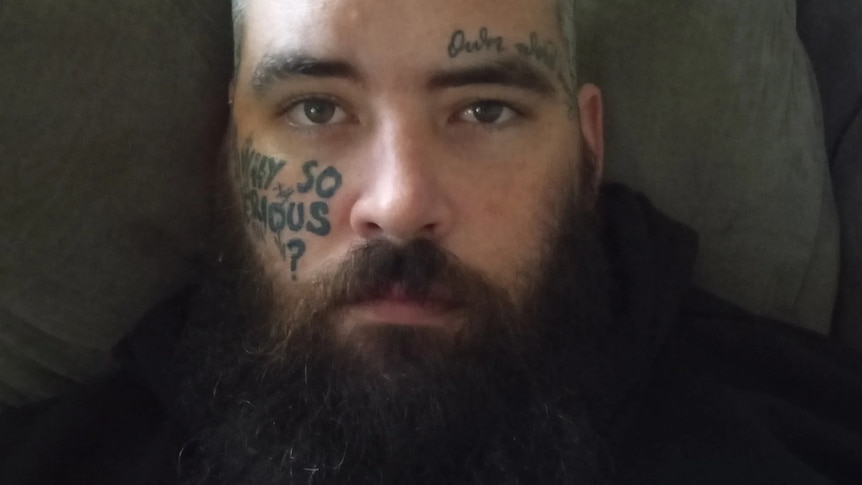
A bald, bearded white man in his late 20s with tattoos on his face.
Joshua Carter, 28, of The Leap, is being sought by police.(Queensland Police: Supplied)

Search continues

Mr Carter has been described as Caucasian in appearance with a solid build, a shaved head and a bushy beard.

He also has a number of distinctive tattoos, including on his face and neck.

A man in a bright-coloured cap, sporting facial and neck tattoos.
Joshua Carter has facial tattoos and a neck tattoo of Heath Ledger’s Joker from the Batman films.(Supplied: Queensland Police Service)

People were urged not to approach Mr Carter, but the police said they did not believe there was an “ongoing threat” to the public.

Anyone with information should contact Crime Stoppers on 1800 333 000 or phone triple-0.

.