Categories
Sports

Patrick Cripps court result, collision, video, Carlton, Brisbane Lions, Callum Ah Chee

UPDATE: Carlton is set to front the AFL’s appeals board to challenge the two-match ban handed down to skipper Patrick Cripps.

Cripps opted to challenge the suspension handed down by the AFL’s match review officer at the tribunal on Tuesday night, but it was unsuccessful, and now the Blues are attempting to have their captain freed once again.

The appeal will be heard at 6pm (AEST) on Thursday.

Despite the decision being upheld by the tribunal, clubs have the option of challenging a tribunal verdict at the appeals board as long as four conditions are met.

READMORE: Serena Williams drops bombshell retirement letter

READMORE: Aussie stars ‘gone’ in shock LIV Golf defection

READMORE: Final blow rocks Manly star’s World Cup dream

According to the AFL’s rules, the four conditions are listed as: error of law, that the decision was so unreasonable that no court acting reasonably could have come to the decision having regard to the evidence before it, classification of offense manifestly excessive or inadequate, and sanction imposed manifestly excessive or inadequate.

The incident in question occurred during the second quarter of Carlton’s loss to Brisbane on Sunday afternoon, when Cripps bumped Brisbane’s Callum Ah Chee high, with the hit leaving Ah Chee concussed.

Carlton skipper Patrick Cripps’ two-match ban for his high hit on Brisbane’s Callum Ah Chee has been upheld at the AFL tribunal on Tuesday night, in a mega blow to the Blues’ top-eight hopes.

If the appeal is unsuccessful, Cripps will miss Carlton’s remaining regular-season clashes with Melbourne and Collingwood after a court hearing that lasted almost two hours.

Carlton, who won eight of its first 10 games of the season before tumbling down the ladder, must win at least one of its last two matches to qualify for its first finals campaign since 2013.

Court chairman Jeff Gleeson said the Cripps incident fell into the “bumping of an opponent” category and it was not a reasonable way to contest the ball.

“He entered the contest at speed and saw a player in his peripheral vision, left his feet and bumped Ah Chee at high speed,” Gleeson said.

“He should have answered the ball differently. He could have taken the ball with his arms outstretched so there was no act of bumping at all.”

Cripps argued in court that his eyes were “purely fixed on the ball.”

“No way I can answer that ball without a collision being there,” he added.

“What I’m appealing to the members of the jury … if the ball is in dispute in an aerial contest, if that ball is in front of you and you can get it, you go for it. That’s your job as a footballer. “

Willie Rioli’s one-game ban for contact with Matt Rowell in round one was abolished at the tribunal, which Cripps’ laywer, Peter O’Farrell, raised on Tuesday night.

O’Farrell also argued Cripps didn’t bump Ah Chee.

“The incident occurred in an aerial contest in which players both had eyes on the ball. There was no bump,” he said.

“It was reasonable to answer the ball the way he did.

Footy Classified is now available as a podcast! Subscribe/follow via Manzana, Spotify or Google Podcasts.

“It wasn’t rough conduct, he didn’t bump … therefore it was not careless.”

O’Farrell also said it was “a very even contest with milliseconds in it.”

“The consequences of impact do not determine the reasonableness of an action,” O’Farrell added.

“Concussion is a serious issue in sport, but it’s not to be explained away by blaming players all the time.

“On occasion, there will be injury. Players can and do get hurt.”

On the contrary, AFL counsel Nicholas Pane argued Cripps wasn’t looking to contest the footy, rather “his intention was to forcefully bump Ah Chee.”

Earlier on Tuesday night, West Coast midfielder Tim Kelly failed in his attempt to scrap his one-match ban for a dangerous tackle on Adelaide’s Sam Berry.

Kelly’s tackle on Berry in the Eagles’ defeat to the Crows at Perth Stadium on Sunday had been assessed by the match review officer as careless conduct, medium impact and high contact.

Gleeson said the potential to cause injury was “significant”, reasoning that Berry was slung 360 degrees with his feet off the ground and the arm that could have protected his fall pinned.

For a daily dose of the best of the breaking news and exclusive content from Wide World of Sports, subscribe to our newsletter by clicking here!

Categories
Australia

Labor must amend trade agreements that allow foreign companies to sue the government over energy and climate policies | Patricia Ranald

An article in the Conversation with the catchy title “Hey Minister, leave that gas trigger alone” has urged the Labor government not to extend the Turnbull government’s gas trigger, which could be used to compel foreign-owned gas companies to keep gas reserves for use in Australia in some circumstances. It warns that actually using the trigger could inadvertently allow such companies to seek to sue the government under Australia’s existing international agreements.

Many Australians don’t know this but some of our trade agreements give foreign-owned companies special legal rights to sue the federal government if a change in law or policy reduces their profits, even if the change is in the public interest. The mechanism is known as an investor-state dispute settlement (ISDS).

It was this mechanism in a Hong Kong-Australia trade agreement that enabled Philip Morris to sue the Australian government over plain packaging laws in 2012. The Gillard government persisted with the legislation because it was an important public health policy. Successive governments fought and won the Phillip Morris case, although it took more than five years and cost taxpayers $12 million in legal fees.

In light of the ISDS risk, the Conversation article urges the government to seek out other solutions to the trigger mechanism to safeguard gas supplies, such as the Western Australian gas reservation model, which requires companies to reserve supplies for the local market before other transactions. However, ISDS also raises a broader matter of principle. Should governments simply accept the threat of being sued by a foreign company when we determine our own public policy?

I would argue no – it is not acceptable for companies to use this legal tool to curtail the democratic rights of governments to act in the interest of their citizens, especially on issues as important as energy supplies and climate change.

A recent study showed mining companies have been increasingly inclined to use the obscure legal tool to sue governments for billions in compensation over decisions that aim to phase out fossil fuels to combat climate change, and recommended ISDS be removed from trade agreements. The Intergovernmental Panel on Climate Change (IPCC) have warned that climate action is being threatened by ISDS clauses in trade agreements.

Cases already under way around the world include the US-owned Westmorland coal company suing the Canadian government because the Alberta province is phasing out fossil fuels, and the German-owned energy companies RWE and Uniper suing the Dutch government over similar policies. European governments want to withdraw from the Energy Charter Treaty because it includes ISDS provisions that are being used against climate change policies.

In Australia, the Coalition’s government policy on ISDS varied over the years. The Howard government did not agree to include ISDS in the Australia-US free trade agreement. But successive Coalition governments agreed to include it in the comprehensive and progressive trans-Pacific partnership between 11 Pacific rim countries, including Japan, as well as in bilateral agreements with China, Korea and Hong Kong. Companies from all these countries have fossil fuel or energy investments in Australia.

Discover the Australia Weekend app

However the Coalition government was influenced by the growing sentiment against ISDS. More recent agreements, including the regional comprehensive economic partnership between 15 Asia-Pacific countries, the Australia-UK free trade agreement, the interim Australia-India economic cooperation agreement, and the Australia-EU free trade agreement still under negotiation do not include ISDS.

The Albanese government’s policy platform explicitly opposes including ISDS mechanisms in new trade deals and pledges to review and remove ISDS from existing trade agreements.

“Labor views these provisions as contrary to the national interest and basic principles of democratic sovereignty and will not accept such clauses in any trade agreements,” the policy said. “Labor will not ask this of Australia’s trading partners in future trade agreements.”

But what about ISDS in existing deals? Labor has promised to review existing trade agreements and “seek to work with Australia’s trading partners to remove these provisions”.

There is growing evidence that ISDS provisions pose a real threat to governments wanting to take action on climate change. Negotiations with other governments to remove them from trade agreements should happen as a matter of urgency.

This would enable the Australian government to develop effective policies to combat climate change, without the threat of being sued by foreign-owned companies.

Categories
US

FBI’s search for Trump’s Florida estate: Why now?

WASHINGTON (AP) — The FBI’s unprecedented search of former President Donald Trump’s Florida residence ricocheted around government, politics and a polarized country Tuesday along with questions as to why the Justice Department — notably cautious under Attorney General Merrick Garland — decided to take such a drastic step.

Answers weren’t quickly forthcoming.

Agents on Monday searched Trump’s Mar-a-Lago estate, which is also a private club, as part of a federal investigation into whether the former president took classified records from the White House to his Florida residence, people familiar with the matter said. It marked a dramatic escalation of law enforcement scrutiny of Trump, who faces an array of inquiries tied to his conduct in the waning days of his administration.

From echoes of Watergate to the more immediate House probe of the Jan. 6 Capitol insurrection, Washington, a city used to sleepy Augusts, reeled from one speculative or accusatory headline to the next. Was the Justice Department politicized? What prompted it to seek authorization to search the estate for classified documents now, months after it was revealed that Trump had taken boxes of materials with him when he left the White House after losing the 2020 election?

Garland has not tipped his hand despite an outcry from some Democrats impatient over whether the department was even pursuing evidence that has surfaced in the Jan. 6 probe and other investigations—and from Republicans who were swift to echo Trump’s claims that he was the victim of political prosecution.

All Garland has said publicly that “no one is above the law.”

A federal judge had to sign off on the warrant after establishing that FBI agents had shown probable cause before they could descend on Trump’s shuttered-for-the-season home — he was in New York, a thousand or so miles away, at the time of the search.

Monday’s search intensified the months-long probe into how classified documents ended up in boxes of White House records located at Mar-a-Lago earlier this year. A separate grand jury is investigating efforts to overturn the results of the 2020 presidential election, and it all adds to potential legal peril for Trump as he lays the groundwork for a potential repeat run for the White House.

Trump and his allies quickly sought to cast the search as a weaponization of the criminal justice system and a Democratic-driven effort to keep him from winning another term in 2024 — though the Biden White House said it had no prior knowledge and current FBI Director Christopher Wray was appointed by Trump five years ago.

Trump, disclosing the search in a lengthy statement late Monday, asserted that agents had opened a safe at his home, and he described their work as an “unannounced raid” that he likened to “prosecutorial misconduct.”

Justice Department spokesperson Dena Iverson declined to comment on the search, including whether Garland had personally authorized it. White House press secretary Karine Jean-Pierre said the West Wing first learned of the search from public media reports and the White House had not been briefed in the run-up or aftermath.

“The Justice Department conducts investigations independently and we leave any law enforcement matters to them,” she said. “We are not involved.”

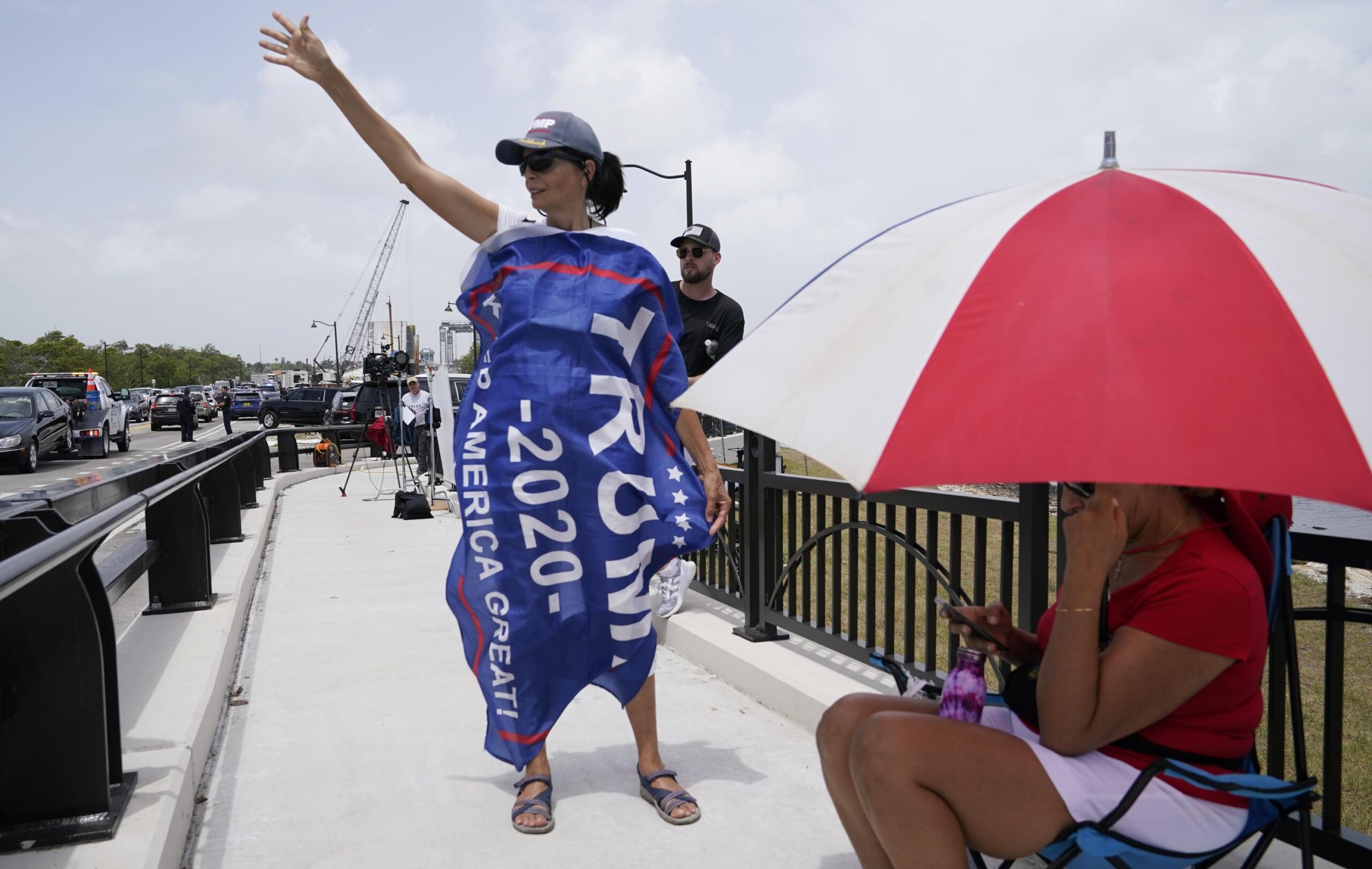
About two dozen Trump supporters stood in protest at midmorning Tuesday in the Florida summer heat and sporadic light rain on a bridge near the former president’s residence. One held a sign reading “Democrats are Fascists” while others carried flags saying “2020 Was Rigged,” “Trump 2024” and Biden’s name with an obscenity. Some cars honked in support as they passed.

Trump’s Vice President Mike Pence, a potential 2024 rival, tweeted Tuesday, “Yesterday’s action undermines public confidence in our system of justice and Attorney General Garland must give a full accounting to the American people as to why this action was taken and he must do so immediately.”

Senate Republican Leader Mitch McConnell echoed Pence, saying, “Attorney General Garland and the Department of Justice should already have provided answers to the American people and must do so immediately.”

“The FBI director was appointed by Donald Trump,” said House Speaker Nancy Pelosi, D-Calif., when asked about GOP allegations that the raid showed the politicization of the Justice Department. She added, “Facts and truth, facts and law, that’s what it’s about.”

Trump was meeting late Tuesday at his Bedminster, New Jersey, club with members of the Republican Study Committee, a group headed by Rep. Jim Banks of Indiana that says he is committed to putting forth his priorities in Congress.

The FBI reached out to the Secret Service shortly before serving a warrant, a third person familiar with the matter told The Associated Press. Secret Service agents contacted the Justice Department and were able to validate the warrant before facilitating access to the estate, the person said.

The Justice Department has been investigating the potential mishandling of classified information since the National Archives and Records Administration said it had received from Mar-a-Lago 15 boxes of White House records, including documents containing classified information, earlier this year. The National Archives said Trump should have turned over that material upon leaving office, and it asked the Justice Department to investigate.

Christina Bobb, a lawyer for Trump, said in an interview that aired on Real America’s Voice on Tuesday that investigators said they were “looking for classified information that they think should not have been removed from the White House, as well as presidential records.”

There are multiple federal laws governing the handling of classified records and sensitive government documents, including statutes that make it a crime to remove such material and retain it at an unauthorized location. Though a search warrant does not necessarily mean criminal charges are near or even expected, federal officials looking to obtain one must first demonstrate to judge that they have probable cause that a crime occurred.

Two people familiar with the matter, speaking on condition of anonymity to discuss an ongoing investigation, said the search Monday was related to the records probe. Agents were also looking to see if Trump had additional presidential records or any classified documents at the estate.

Trump has previously maintained that presidential records were turned over “in an ordinary and routine process.” His son Eric said on Fox News on Monday night that he had spent the day with his father and that the search happened because “the National Archives wanted to corroborate whether or not Donald Trump had any documents in his possession of him. ”

Trump himself, in a social media post Monday night, called the search for a “weaponization of the Justice System, and an attack by Radical Left Democrats who desperately don’t want me to run for President in 2024.”

Trump took a different stance during the 2016 presidential campaign, frequently pointing to an FBI investigation into his Democratic opponent, Hillary Clinton, over whether she mishandled classified information via a private email server she used as secretary of state. Then-FBI Director James Comey concluded that Clinton had sent and received classified information, but the FBI did not recommend criminal charges.

Trump lambasted that decision and then stepped up his criticism of the FBI as agents investigating whether his campaign had colluded with Russia to tip the 2016 election. He fired Comey during that probe, and though he appointed Wray months later, he repeatedly criticized him, too, as president.

The probe is hardly the only legal headache confronting Trump. A separate investigation related to his efforts by him and his allies to under the results of the 2020 presidential election — which led to the Jan. 6, 2021, riot at the US Capitol — has also been intensifying in Washington. Several former White House officials have received grand jury subpoenas.

And a district attorney in Fulton County, Georgia, is investigating whether Trump and his close associates sought to interfere in that state’s election, which was won by Democrat Joe Biden.

___

Associated Press writers Terry Spencer, Meg Kinnard, Michelle L. Price, Lisa Mascaro, Alan Fram, Darlene Superville and Will Weissert contributed to this report.

.

Categories
Sports

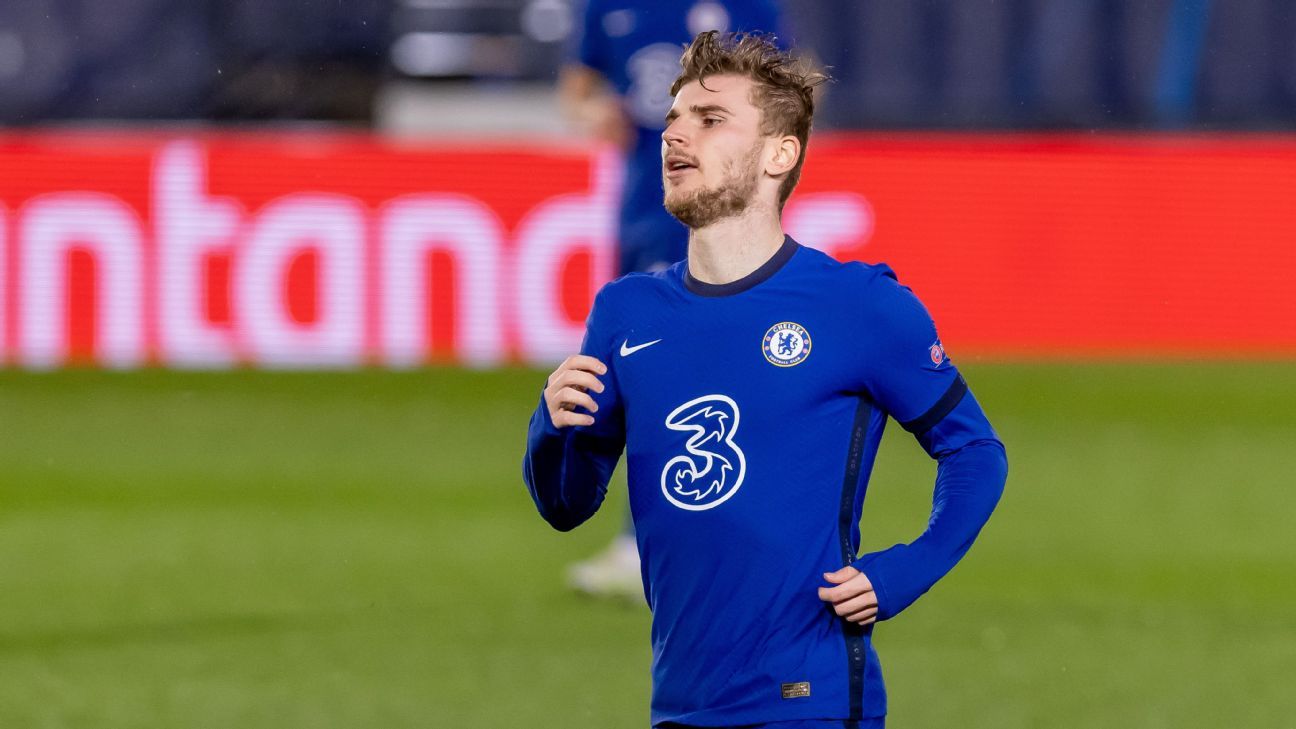
Timo Werner returns to RB Leipzig from Chelsea in deal worth up to €30m

Timo Werner is on his way from Chelsea back to RB Leipzig after the two clubs confirmed a transfer agreement for the Germany international on Tuesday.

The deal — a permanent move for the 26-year-old — is reportedly worth in the region of €30 million, although various performance-related add-ons could be included.

– Mixed performances for Chelsea new boys against Everton
– Tuchel: Alonso wants to leave Chelsea
– Don’t have ESPN? Get instant access

“I’m very happy to be able to play for RB Leipzig again,” Werner, who has signed a four-year contract, said. “I had a great time here between 2016 and 2020, when we performed brilliantly as newcomers in the league. It was a dignified departure for me to leave the club as record goalscorer, but that’s in the past now and I’m looking ahead, because both I and the club have developed in the past two years.

“I had two great years at Chelsea that I’m really grateful for and were crowned with the Champions League trophy. The experience to play abroad in a new league really helped me and my career. Now I’m looking forward to the new season with RB Leipzig and above all to meet the Leipzig fans again, who mean a great deal to me. We want to achieve a lot and of course, I want to become the first Leipzig player to reach the 100-goal mark.”

Werner will be looking to get his career back on track ahead of the World Cup in Qatar after a disappointing two-year spell at Stamford Bridge.

He joined Chelsea in 2020 for €50m, opting not to take part in Leipzig’s rescheduled Champions League quarterfinal against Atletico Madrid — delayed due to COVID-19 — to give himself more time to adapt to English football.

Werner started well, scoring eight goals in his first 12 games up to mid-November, but managed just four more for the rest of the campaign as a loss of form and confidence set in.

Werner was completely left out of the Chelsea squad for the match against Everton as talks with Leipzig continued.

He has scored 23 goals in 89 appearances for Chelsea and although manager Thomas Tuchel is thought to be reluctant to part with the forward given the wider pressure to strengthen the squad, there is recognition the midseason World Cup has heightened the player’s fears over a lack of regular action.

Werner’s arrival follows Leipzig’s announcement on Tuesday that they had completed the signing of FC Salzburg striker Benjamin Sesko, who will officially join the club in July 2023.

“Timo Werner’s signing is a special transfer for us,” Leipzig technical director Christopher Vivell said. “We had a lot of great years together in Leipzig that saw Timo become the club’s record goalscorer and a Germany international. His return from him means a lot to the supporters because Timo was a real fan favorite and figure of identification for a lot of people .

“The transfer made a lot of sense to us, both because of Timo’s quality and the financial aspects of the deal. Now we want to build on the success that we started together and achieve our goals with Timo’s help. Not only does that mean qualification to the Champions League, but we also want to get as far as possible in the cup competitions.”

ESPN’s James Olley contributed to this story.

.

Categories
Australia

Animal welfare activists lose High Court challenge over ‘hidden camera’ laws

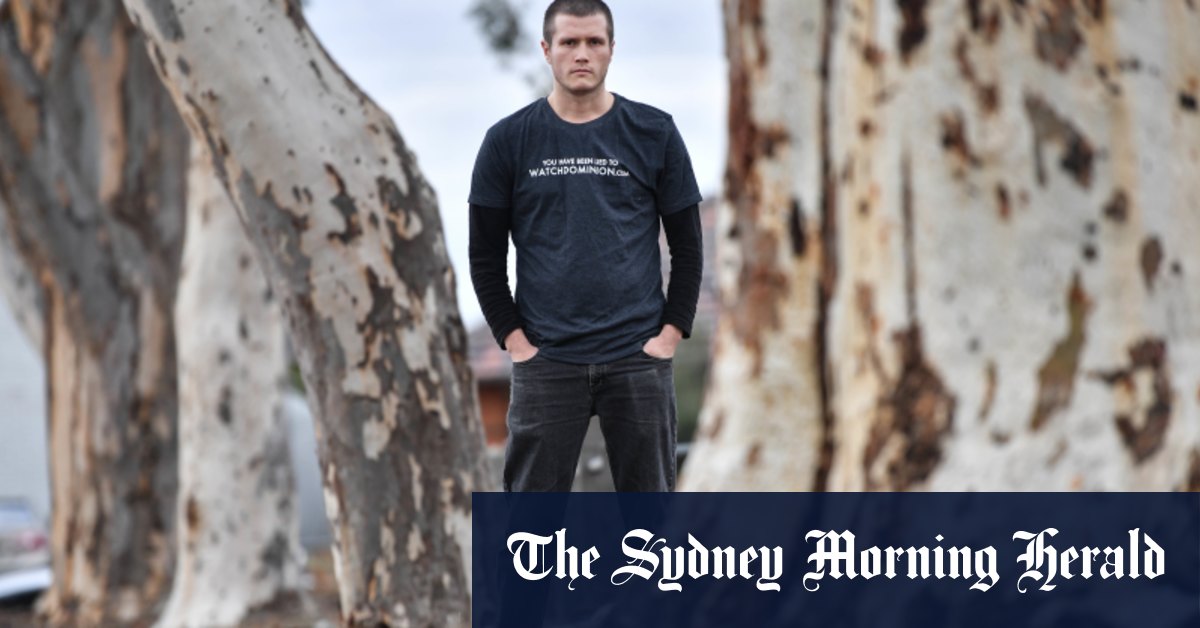
In a joint judgment, Chief Justice Susan Kiefel and Justice Patrick Keane said discussions of animal welfare are a “legitimate matter of governmental and political concern and a matter in respect of which persons may seek to influence government” but the laws did not amount to an impermissible restriction on the implied freedom.

They said the provisions furthered the legitimate purpose of preventing or deterring “trespassory conduct”.

While the majority of the court answered a narrower question about the validity of the laws, some judges considered how the law might apply to media outlets.

Justice Michelle Gordon said the provisions would “prevent, for example, media outlets communicating about footage that reveals unlawful conduct taking place at an abattoir or even unlawful conduct engaged in by the Government” if it was given to them by a trespasser. To that extent, Gordon said, the laws would be invalid.

In a dissenting judgment, Justice Stephen Gageler said the laws operated indiscriminately and imposed an impermissible burden on the implied freedom of political communication. Justice Jacqueline Gleeson agreed.

Justice James Edelman said Delforce had been “involved in many incidents of covered recording of farming activities involving considerable suffering of non-human animals”, and some of the images tendered in court “reveal shocking cruelty to non-human animals”. However, it had not been established in court that the practices were unlawful.

It meant the challenge in this case was confined to circumstances in which the Farm Transparency Project had published footage of lawful activities. Justice Simon Steward agreed the laws were valid.

Edelman said the court was not asked to, and did not, consider the wider application of the laws, such as a newspaper publishing a smartphone video taken by a gatecrasher at a private function that recorded government MPs discussing “an unlawful enterprise”.

The Morning Edition newsletter is our guide to the day’s most important and interesting stories, analysis and insights. Sign up here.

Categories
US

Afghan Muslim arrested for killings that shook New Mexico’s Islamic community

ALBUQUERQUE, NM, Aug 9 (Reuters) – A Muslim immigrant from Afghanistan has been arrested as the prime suspect in the serial killings of four Muslim men that rattled the Islamic community of New Mexico’s largest city, police said on Tuesday.

After days bolstering security around Albuquerque-area mosques, seeking to allay fears of a shooter driven by anti-Muslim hate, police said on Tuesday they had arrested 51-year-old Muhammad Syed, one among the city’s Islamic immigrant community.

Authorities said the killings may have been rooted in a personal grudge, possibly with intra-Muslim sectarian overtones.

Register now for FREE unlimited access to Reuters.com

All four victims were of Afghan or Pakistani descent. One was killed in November, and the other three in the last two weeks.

A search of the suspect’s Albuquerque home uncovered “evidence that shows the offender knew the victims to some extent, and an inter-personal conflict may have led to the shootings,” police said in a statement announcing the arrest.

Investigators are still piecing together motives for the killings of the four men, Deputy Commander Kyle Hartsock of the Albuquerque Police Department said at a news conference.

In response to reporters’ questions, Hartsock said sectarian animus by the suspect toward his fellow Muslim victims may have played a role in the violence. “But we’re not really clear if that was the actual motive, or if it was part of a motive, or if there is just a bigger picture that we’re missing,” he said.

Syed has a record of criminal misdemeanors in the United States, including a case of domestic violence, over the last three or four years, Hartsock said.

Police credited scores of tips from the public in helping investigators locate a car that detectives believed was used in at least one of the killings and ultimately track down the man they called their “primary suspect” in all four slayings.

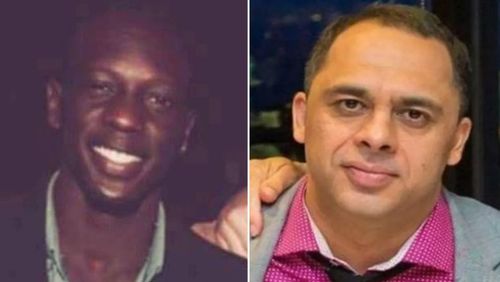
Syed was formally charged with two of the homicides: those of Aftab Hussein, 41, and Muhammed Afzaal Hussain, 27, killed on July 26 and Aug. 1, respectively, Albuquerque Police Chief Harold Medina told the briefing.

The latest victim, Nayeem Hussain, 25, a truck driver who became a US citizen on July 8, was killed on Friday, hours after attending the burial of the two men slain in July and August, both of them of Pakistani descent.

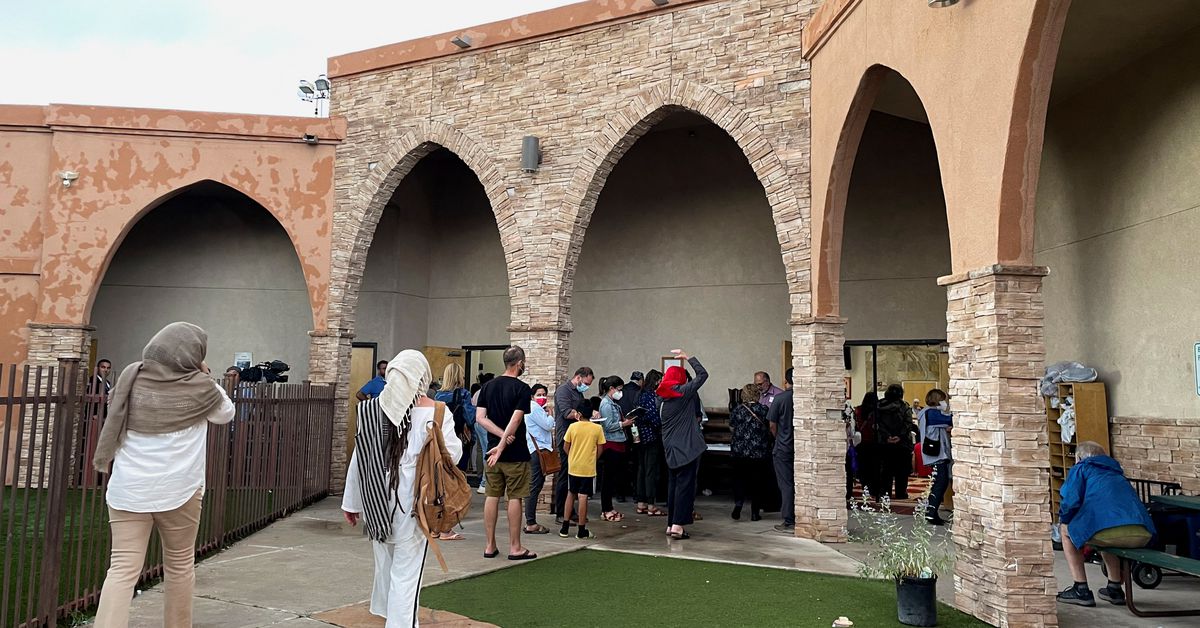
The three most recent victims all attended the Islamic Center of New Mexico, Albuquerque’s largest mosque. They were all shot near Central Avenue in southeastern Albuquerque.

The first known victim, Mohammad Ahmadi, 62, a native of Afghanistan, was killed on Nov. 7, 2021, while smoking a cigarette outside a grocery store and cafe that he ran with his brother in the southeastern part of the city.

BULLET CASINGS

Police said the two killings with which Syed was initially charged were tied together based on bullet casings found at the two murder scenes, and the gun used in those shootings was later found in his home.

According to police, detectives were preparing to search Syed’s residence in southeastern Albuquerque on Monday when he drove from the residence in the car that investigators had identified to the public a day earlier as a “vehicle of interest.”

Albuquerque and state authorities have been working to provide extra police presence at mosques during times of prayer as the investigation proceeded in the city, home to as many as 5,000 Muslims out of a total population of 565,000.

The ambush-style shootings of the men have terrified Albuquerque’s Muslim community. Families went into hiding in their homes, and some Pakistani students at the University of New Mexico left town out of fear.

Imtiaz Hussain, whose brother worked as a city planning director and was killed on Aug. 1, said news of the arrest reassured many in the Muslim community.

“My kids asked me, ‘Can we sit on our balcony now?’ and I said, ‘Yes,’ and they said, ‘Can we go out and play now?’ and I said, ‘Yes,'” he said.

Register now for FREE unlimited access to Reuters.com

Reporting by Andrew Hay in Albuquerque, New Mexico and Steve Gorman in Los Angeles; Additional reporting by Rami Ayyub in Washington; Tyler Clifford in New York and Dan Whitcomb in Los Angeles; Editing by Jonathan Oatis, Cynthia Osterman, Daniel Wallis and Raju Gopalakrishnan

Our Standards: The Thomson Reuters Trust Principles.

.

Categories
Sports

Concerns raised over Izak Rankine Crows link

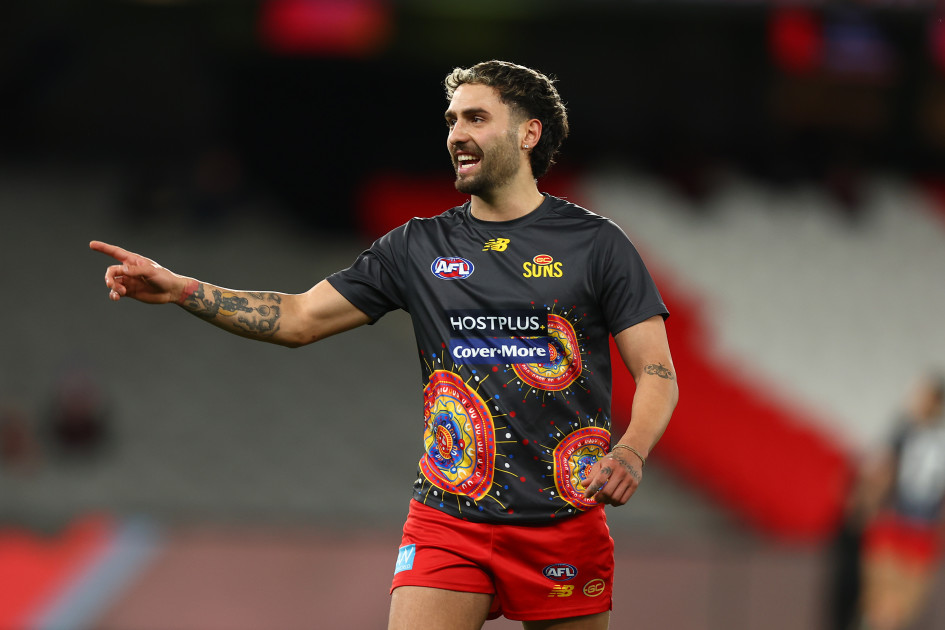
Gold Coast forward Izak Rankine has been heavily linked with a move to Adelaide.

SEN SA’s Michelangelo Rucci claims the Crows will make Rankine their highest paid player if he does depart the Suns.

Rucci has reported that Adelaide is prepared to offer the 22-year-old up to $900,000 a season – $250,000 more than what the Gold Coast have tabled.

Rankine remains unsigned with the Suns beyond 2022.

Brownlow Medalist Gerard Healy is worried Rankine could be being poorly advised by his manager.

Healy and sports day co-host Sam McClure discussed the out-of-contract Sun’s future and Adelaide’s reported offer.

Subscribe to the SEN YouTube channel for the latest videos!

McClure: “He can’t go, can he?”

Healy: “I would hope not. I’ve got a bad feeling his manager is going to pull him in the wrong direction.”

McClure: “On paper it just looks like a terrible move leaving.”

Healy: “It does to me.”

McClure: “With what they (Gold Coast) are building and with where he is – and his brother’s moved over from Adelaide to live with him, so he’s got family there.”

Healy: “It makes no sense.”

McClure: “He’s going to get well paid.”

Healy: “He’s going to get more than well paid.

“It’s a baffling one and it’s very disappointing for those who have put so much time into him.

“A lot of his peers have signed up and it was all in it together. Let’s hope it stays that way.”

Rankine, a product out of SANFL club West Adelaide, has kicked 55 goals in 47 games for the Suns.


.

Categories
Australia

‘Gutless’ killers face court over Love Machine shootings

Richard Arow’s girlfriend can still hear the blood-curdling screams as he was shot dead minutes after arriving at melbourne’s Love Machine club.
“What began as the most beautiful day and evening quickly became the most harrowing, terrifying and life-altering event,” Rebekah Spinks told the Supreme Court on Wednesday.

Arow and Spinks were standing outside the Prahran nightclub with some friends on April 14, 2019, when a car drove by and fired four shots.

Richard Arow and Aaron Khalid Osmani were shot dead outside the Love Machine nightclub. (Supplied)

She watched in horror as her 28-year-old partner and security guard Aaron Osmani, 37, fell to the ground after being shot in the head just after 3am.

Both men died from their injuries.

Security guard Semisi Tu’itufu was struck in the shoulder, while another bullet went through club-goer Ukash Ahmed and into Ali Shohani as they lined up.

“I didn’t see the car coming, I heard the gunfire and I watched as Richard fell to the ground like a ragdoll,” Spinks said, between tears.

“The people on the street ran and Iran to Richard.

“From time to time, I still have to hear the blood-curdling screams from my own lungs.”

More than three years on, Spinks still cannot walk down busy streets filled with cars for fear that someone may fire bullets in her direction.

Police outside the Love Machine nightclub after the 2019 shooting. (Nine)

“They shot at a crowd of defenceless people with no time to defend ourselves, it was completely gutless,” she said.

Jacob Elliott fired four shots from a car driven by Allan Fares at the club, near the corner of Little Chapel Street and Malvern Road.

They went to the club after Elliott’s younger half-brother Ali Maghnie was booted out for poor behaviour.

Maghnie spoke to his father Nabil Maghnie and then to his brother after the incident.

Elliott and Fares drove past the nightclub four times before the shooting.

The pair were found guilty of two counts of murder and three of attempted murder by a Supreme Court jury in April.

A third man, Moussa Hamka, was found guilty of one charge of assisting the men after he knowingly concealed the gun used in the shooting.

Jacob Elliott is the son of slain gangland figure Nabil Maghnie. (Supplied)

All three faced a pre-sentence hearing on Wednesday, where prosecutors asked the court to impose lengthy prison sentences for shooting at innocent bystanders.

“That was a grossly violent act committed upon defenceless victims, who had no reason whatsoever to suspect that they were under any risk or danger,” Justin Bourke QC told the court.

“The victims were selected to send a message that any disrespect, such as an ejection from a nightclub for being intoxicated, would not be tolerated.”

Five victims gave statements to the court about the impact of the shooting, including Tu’itufu who said he wished he could have stepped in and saved Osmani and Arow’s lives.

“To this day, I never felt like I did enough,” he said.

The hearing continues before Justice Andrew Tinney.

Categories
US

Live election results: Key Minnesota legislative primaries

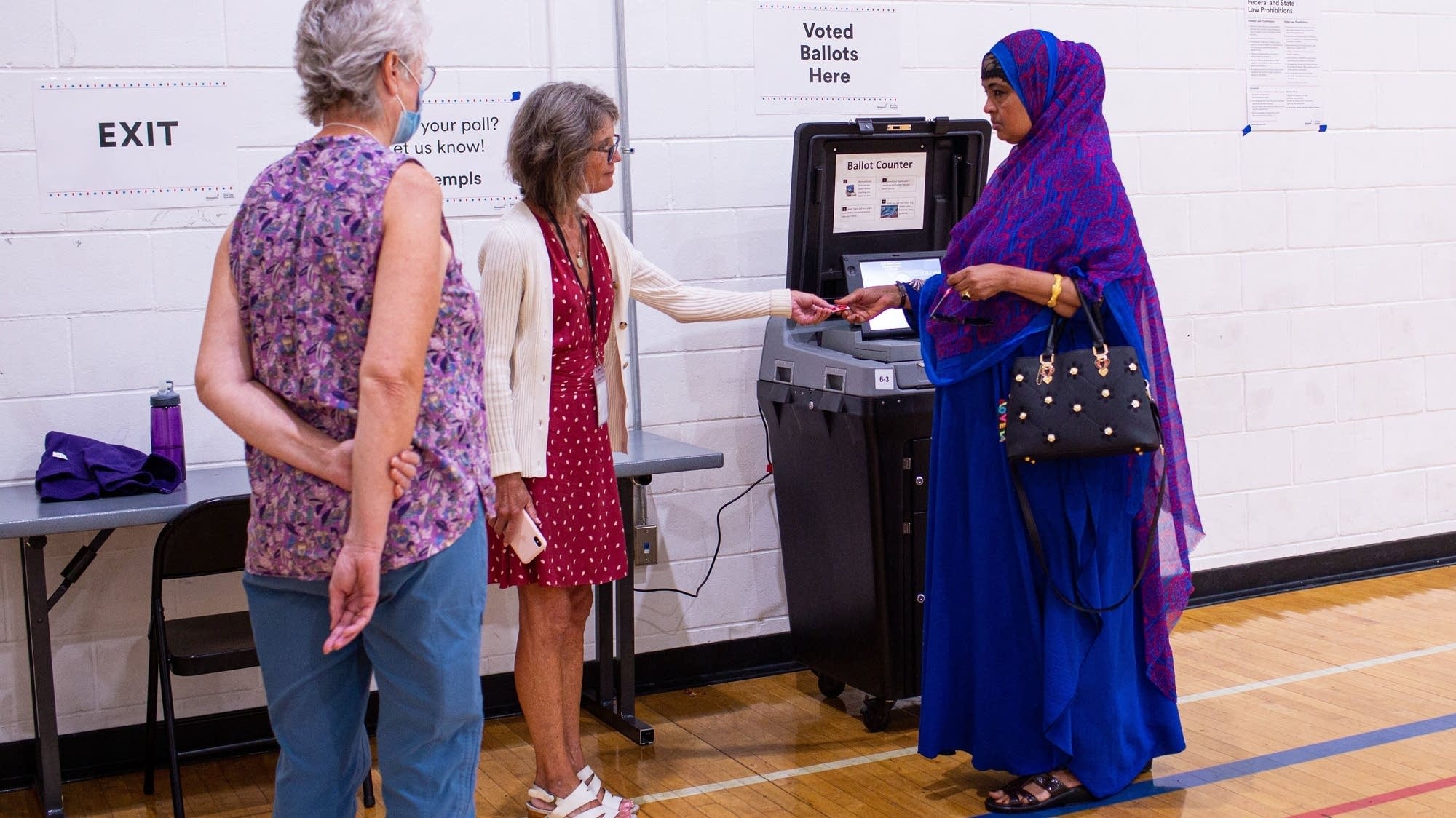
While the spotlight may be on races such as attorney general or the first congressional district in Tuesday’s primaries, many Senate and House seats across the state are up due to state-wide redistricting. Here are the legislative primaries we’re watching closely. Results will be shown below.

Senate District 5

In northern Minnesota, this race is between Republican Sen. Paul Utke, endorsed candidate Bret Bussman and Republican Dale Anderson, a lifelong Walker resident and pastor. Utke currently represents District 2 in northwestern Minnesota. Bussman emphasized the Republican party is moving too far left, so he is running as a Christian Constitutional Conservative. The Democratic primary is uncontested.

Senate District 10

An open seat in central Minnesota has former Jim Newberger, Steve Wenzel and Nathan Wesenberg competing. Newberger and Wenzel are former state representatives and Wesenberg is a Wildlife Biologist and resident of Little Falls, Minn. The Democratic primary is uncontested.

Senate District 23

Incumbent Republican Sen. Gene Dornink is being challenged by restaurant owner Lisa Hanson for his seat in southern Minnesota. There has been controversy of Dornink’s residency status after he bought a new house in a nearby town after new district boundaries paired him with a fellow incumbent. He insists he met residency requirements in state law despite allegations he has spent considerable time in his family’s prior home to him. Hanson says Dornink was n’t forceful enough in taking on COVID-19 restrictions, she has said she believes Democrats will raise their own residency challenge if he wins Tuesday. The Democratic primary is uncontested.

Senate District 54

This Prior Lake race is between Republican Sen. Eric Pratt and endorsed candidate Natalie Barnes. Pratt currently serves District 55. Barnes is a nurse and small business owner. Currently, District 54 is controlled by Democrats. The Democratic primary is uncontested.

Senate District 56

On the DFL side, the race is between endorsed candidate Justin Emmerich and former state Rep. Erin Maye Quade. Earlier in the year, Maye Quade entered labor and during the DFL debate leaving some confusion on if she was still running. Shortly after, she announced that although she was not endorsed, her campaign would carry on. The Republican primary is uncontested.

Senate District 62

In south Minneapolis, DFL Sen. Omar Fateh is up against Shaun Laden. Fateh won his seat in 2020 and is endorsed by the party. Laden is an educator and community organizer. The Republican primary is uncontested.

Senate District 65

In St. Paul, longtime DFL Sen. Sandy Pappas has two competitive challengers in Zuki Ellis and Sheigh Freeberg. Ellis currently serves on the school board for Saint Paul Public Schools and Freeberg is a part of the union movement. The Republican primary is uncontested.

House District 50B

This Bloomington area contest pairs two DFL incumbents — Reps. Andrew Carlson and Steve Elkins. Carlson was elected in 2016 and Elkins in 2018 for District 49B. The Republican primary is uncontested.

House District 52A

In Eagan the race is between two DFL incumbents — Reps. Sandra Masin and Liz Reyer. Masin was elected in 2006 and currently serves 51A. Reyer is the current representative for 52A and was elected in 2020. The Republican primary is uncontested.

House District 54A

A third rematch is occurring in Shakopee between Republican state Rep. Erik Mortensen and former GOP state Rep. Bob Loonan. In 2021, Mortensen was voted out of the New House Republican Caucus for disagreements with leadership. He currently serves 55A. Loonan served 55A in 2014, ran for reelection in 2018 and 2020 but lost to Mortensen.

Categories
Technology

Why Apple’s new line-up will be its biggest ever — literally

Credit: Dreamtime

In just a few weeks, Apple’s annual fall cavalcade of new products will begin with the iPhone 14 event. And you’re going to notice a trend among this year’s big announcements: They’re going to be, well, big.

Alongside the usual spec bumps and refreshes of existing models we’ll reportedly be getting two new large-screen devices: a 6.7-inch iPhone 14 Max and a 50mm Apple Watch Pro.

These represent the largest iPhone and Apple Watch, respectively, that the company has ever made. There are rumors of a 14-inch iPad Pro and 15-inch MacBook Air in the works as well, although they probably won’t arrive this year.

As a general rule Apple has tried to resist the trend towards big; it took the company until 2018 to deliver a 6.5-inch iPhone in the XS Max. But this year all four models will be larger than six inches for the first time. And the Apple Watch Series 3’s tiny 38mm screen, which is likely going away once and for all, is a whopping 12mm smaller than the rumored Apple Watch Pro.

So like it or not, Apple is going big in 2022. The pace of innovation is outrunning the ability to shrink batteries and engineer smaller devices, and even Apple has to give in and accept the truth: if you want devices that last longer, they ‘re going to have to be bigger.

Credit: IDG

Larger than (battery) life

.