Categories
US

Grieving father erupts at Parkland school shooter’s trial

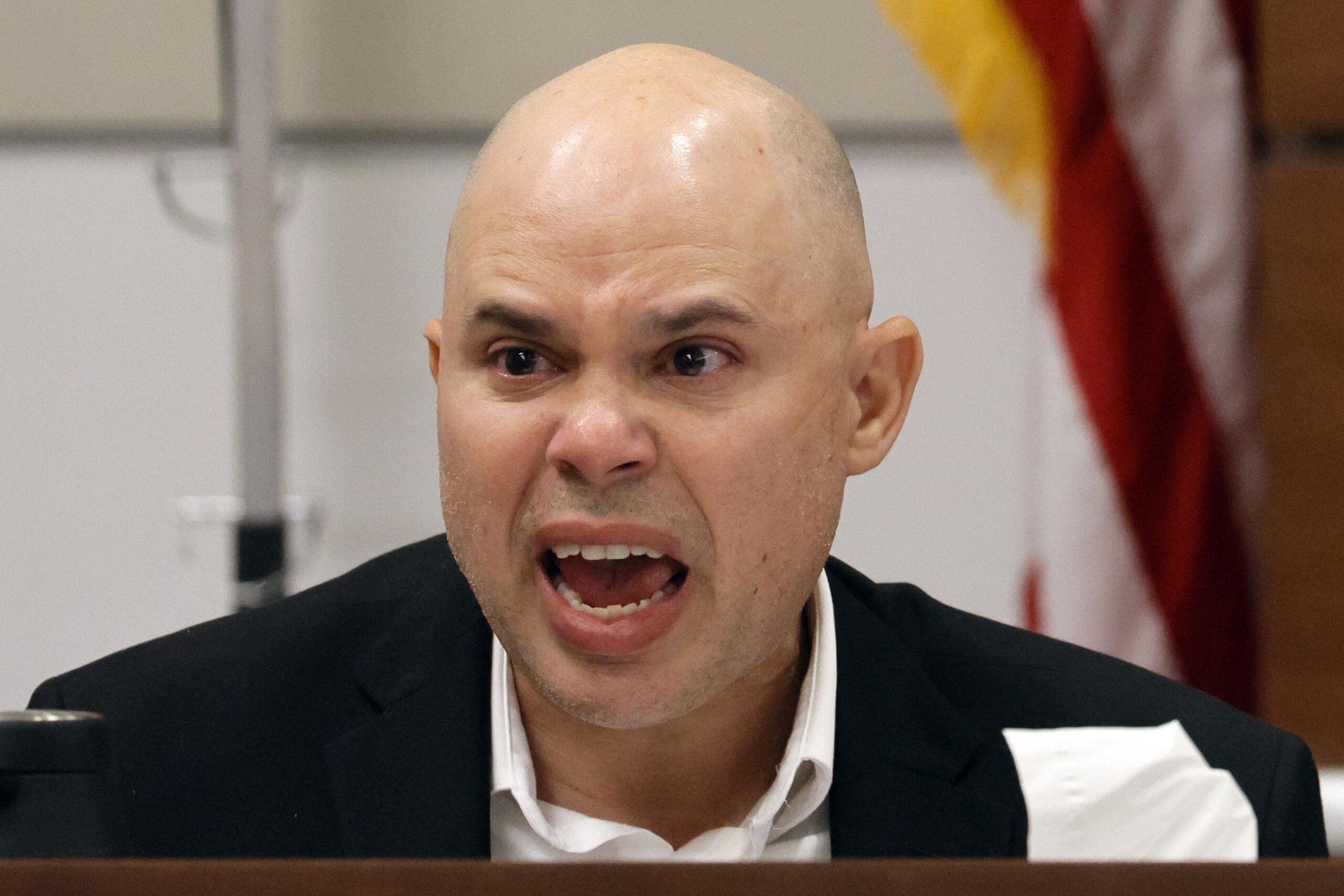
FORT LAUDERDALE, Fla. (AP) — A grieving father erupted in anger Tuesday as he told jurors about the daughter Florida school shooter Nikolas Cruz murdered along with 16 others four years ago, his voice rising as he recounted her “infectious laugh that I can only get to watch now on TikTok videos.”

Dr. Ilan Alhadeff’s emotional testimony about his 14-year-old daughter Alyssa marked a second day of tears as families, one after another, took the witness stand to give heartrending statements about their loved ones who died at Parkland’s Marjory Stoneman Douglas High School on Feb. 14, 2018.

He and his wife, Lori, described Alyssa’s role as captain of her soccer team, the friend others always turned to for advice or a shoulder to cry on, and her plans to become a business lawyer. He cried as he recounted how he will not dance with his daughter de ella at her wedding de ella or see the children she would have had.

“My first-born daughter, daddy’s girl was taken from me!” yelled Alhadeff, an internal medicine physician. “I get to watch my friends, my neighbors, colleagues spend time enjoying their daughters, enjoying all the normal milestones, taking in the normal joys and I only get to watch videos or go to the cemetery to see my daughter.”

He said one of Alyssa’s two younger brothers was too young to comprehend her death when it happened, but now “asks to go see his sister at the cemetery from time to time.”

“This is not normal!” he said angrily.

Cruz, 23, pleaded guilty to 17 counts of first-degree murder in October; the trial is only to determine whether he is sentenced to death or life without parole. Over the two days of family statements, he has shown little emotion, even as several of his attorneys wiped away tears and Circuit Judge Elizabeth Scherer’s voice broke when she gave directions. He mostly stars straight ahead or looks down at the table where he sits.

As one family testifies, others sob in the gallery while awaiting their turn. When finished, they stay to lend support. They exchange packets of tissues, shoulder rubs and, when breaks come, hugs. Some jurors wipe away tears, but most sit stoically.

Some families had statements read for them. The mother of 14-year-old Martin Duque wrote that while he was born in Mexico, he wanted to become a US Navy Seal. The wife of assistant football coach Aaron Feis wrote that he was a doting father to their young daughter and a mentor to many young people.

The mother of 16-year-old Carmen Schentrup wrote that she was a straight-A student whose letter announcing she was a semifinalist for a National Merit Scholarship arrived the day after she died. She wanted to be a doctor who researched amyotrophic lateral sclerosis, commonly known as Lou Gehrig’s disease.

Shara Kaplan sobbed as she told the jurors of her two sons’ sadness that they weren’t there to protect their little sister, 18-year-old Meadow Pollack.

Luke Hoyer’s mom, Gina, said the 15-year-old was her “miracle baby,” her “Lukey Bear.” She said he yelled down that Valentine’s Day morning to thank her for the card and Skittles she’d placed in her bathroom. The gifts stayed there for a year. His father, Tom, said he never saw his son that morning, but he yelled up “Have a good day” as he hurried to work. “That is the kind of exchange you have when you think you have tomorrow,” he said.

Fred Guttenberg, who has become a national advocate for tighter gun laws, said he regrets that the last words he said to his 14-year-old daughter Jaime weren’t “I love you” but instead, “You gotta go, you are going to be late” as he pushed her and her older brother out the door that morning. He said his son is angry with him for telling him to run when he called in a panic to say there was a gunman at the school instead of having him find his sister, even though it would have made no difference.

His wife, Jennifer Guttenberg, said that while her daughter was known for her competitive dancing, she volunteered with the Humane Society and with special needs children. She planned to be a pediatric physical therapist.

Annika Dworet, her husband Mitch sitting somberly at her side, told the jurors about their son Nick, who was 17 when he died. A star swimmer, he had accepted a scholarship to the University of Indianapolis and was training in hopes of competing for his mother’s native Sweden in the 2020 Olympics. His younger brother of him, Alex, was wounded in the shooting.

“He was always inclusive of everyone. On his last evening with us, he spent time speaking to the younger kids on the swim team, giving them some pointers,” she said.

But now, she said, “our hearts will forever be broken.”

“We will always live with excruciating pain. We have an empty bedroom in our house. There is an empty chair at our dining table. Alex will never have a brother to talk or hang out with. They will never again go for a drive, blasting very loud music. We did not get to see Nick graduate from high school or college. We will never see him getting married.

“We will always hesitate before answering the question, ‘How many kids do you have?’”

.

Categories
Business

Interest rate rises push property prices lower by up to $250,000

House prices in Melbourne’s inner east dropped $107,500, while the median in Brisbane’s west fell $50,000.

loading

Sydney’s eastern suburbs and the Baulkham Hills and Hawkesbury region led unit declines in dollar terms, down $90,000 and $55,000. Prices also dropped more than $55,000 in Hobart and the Coffs Harbor and Grafton region.

Powell said price declines would continue to spread. The full impact of rate hikes had yet to be seen, and buyer demand would be further tested by an expected increase in homes for sale in spring.

Home buyer lending pulled back in June after the second cash-rate rise. The value of new owner-occupier loans dropped 3.3 per cent, and was 9.6 per cent lower than a year ago, Australian Bureau of Statistics figures released on Tuesday show.

Lending to first home buyers fell 10 per cent and was down 29 per cent year on year, while investor lending fell 6.3 per cent in June but was up 17.3 per cent over the year.

Westpac senior economist Matthew Hassan said the impact of rising rates in an already cooling market had been rapid. Areas with higher property prices had been most sensitive to increases, but the slowdown in prices was spreading and the full impact had yet to be seen.

Home buyer lending pulled back in June after the second cash rate rise.

Home buyer lending pulled back in June after the second cash rate rise.Credit:Luis Enrique Ascuí

Hassan expects the cash rate to peak at 3.35 per cent in February, and property prices nationally to decline 16 per cent from peak to trough, with Sydney and Melbourne to see falls closer to 18 per cent. Hobart and regional areas that had unprecedented growth throughout the pandemic, partly based on temporary shifts in population, may also be in for a hard landing.

Hassan said most households had substantial savings buffers that would put them in good stead to handle higher mortgage repayments. However, it would be a delicate balance for the RBA to slow demand and inflation while not triggering widespread problems for the housing sector.

Raine & Horne Lower North Shore partner Alex Banning said prices were correcting after a period of enormous growth and markets that had higher price rises had further to fall.

“The RBA gave people false hope when they said rates weren’t going to go up until 2023, 2024, so a lot of people just out took big loans… we saw exponential growth.”

The market had swung from one extreme to the other, he said. While prices were lower, most buyers were still having to compromise due to their reduced borrowing power.

Shore Financial senior credit advisor Greg Bishop was seeing more clients put plans to purchase on hold.

“No one really knows where the market is going to end up,” he said. “Prices have backed off … which is good for a lot of buyers, but they’re also facing increasing interest rates.”

loading

Some lenders were honoring existing pre-approvals, Bishop said, as long as there was no critical credit change such as an increase in the loan to value ratio. Others were reducing borrowing capacity for pre-approved clients.

He urged those with pre-approval to check with their lender before purchasing a home as some buyers were finding out afterwards that their new borrowing power had fallen short.

Categories
Technology

The iconic Winamp media player is back from the dead

Categories
Entertainment

How they plan to spend their winnings

In their very different ways, the two winners of the first season of the hit reality show hunted – in which nine teams of two tried to evade capture for 21 days while being pursued by dozens of former cops and surveillance experts – each felt they had something to prove to the world.

“I’m the type of person who plans, then over-plans, and then plans again on top of that,” says Rob Harneiss, a 33-year-old married hairdresser from WA. “There’s a certain perception about what I do, so I felt they wouldn’t expect that from me.”

Stathi Vamvoulidis and Rob Harneiss, the winners of the first Australian season of reality series Hunted.

Stathi Vamvoulidis and Rob Harneiss, the winners of the first Australian season of reality series Hunted. Credit:Network 10

Melburnian Stathi Vamvoulidis, 35, who competed with his friend Matt Bergin, also wanted to shift perceptions. “We were gay men wanting to defy some stereotypes, but also to reinforce some others,” he says. “It’s really important to show the queer community is not just creative artists – we can excel in an operational game-play strategy environment. When we grew up in the 1980s, early ’90s, our community didn’t really have that visibility.”

As the winners of 10’s surprise hit – it has averaged more than a million viewers per episode – Vamvoulidis and Harneiss got to split a prize pool of $100,000. Each plans to use that money to start a family: Vamvoulidis, who is single, through surrogacy, Harneiss and his wife from him Prue through IVF.

“I’ve been a sperm donor for the past 17 years so IVF has always been a part of my life, and I’ve known for as long as I can remember that I wanted to be a dad,” says Vamvoulidis, who made no secret of his plans on the show.

But it wasn’t until the series began airing that Harneiss knew they had this ambition in common.

“I never heard about Stathi’s story until after the fact. I was like, ‘You’re stealing my story’,” he quips.

The pair have one more thing in common: each was determined to share the prize money with the other member of their team.

Vamvoulidis’ friend Bergin and Harneiss’ co-fugitive, policeman Jake Rozario, both made it to day 19 before being captured. But splitting the money was never in question.

Categories
Sports

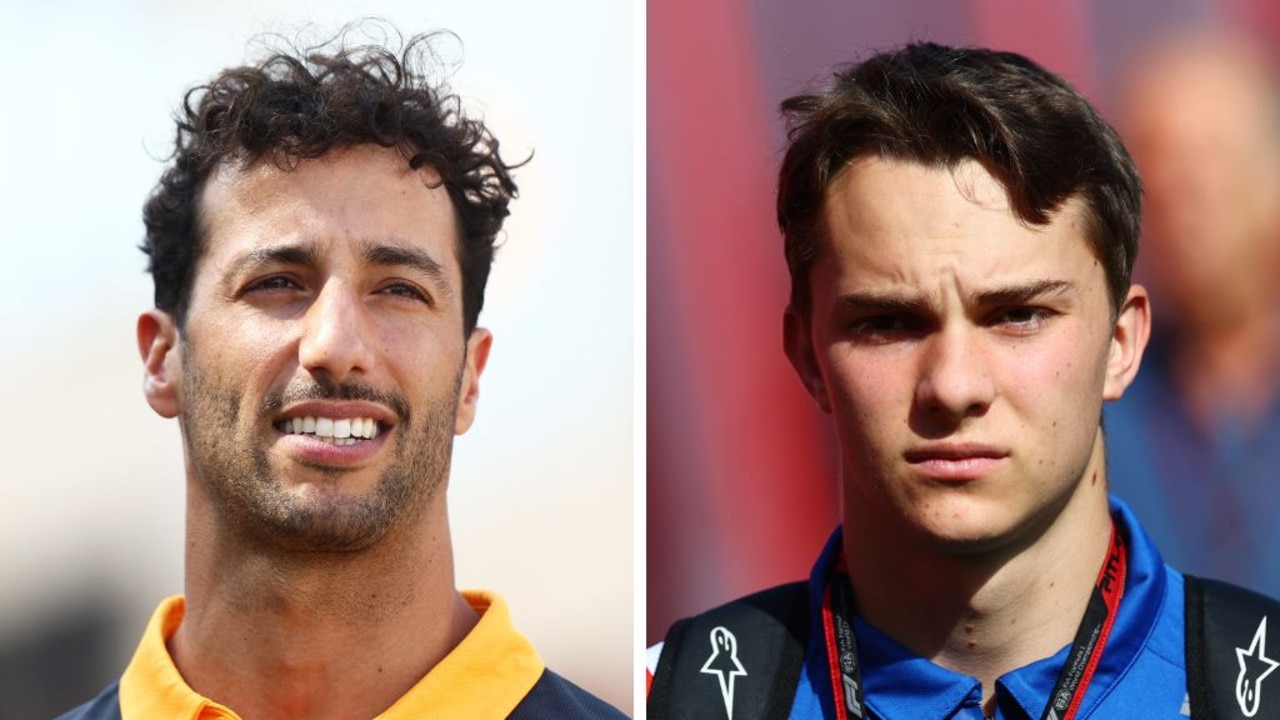
Oscar Piastri rejects Alpine F1 offer amid McLaren Daniel Ricciardo rumour, 2023 grid, news, updates

It’s called the silly season for a reason but this is just getting stupid.

A dramatic series of events played out in Formula One overnight – and at this point nothing has been resolved.

Watch Every Practice, Qualifying & Race of the 2022 FIA Formula One World Championship™ Live on Kayo. New to Kayo? Start your free trial now >

The circus began when Fernando Alonso stunned Alpine by revealing he was fleeing the team to join Aston Martin, which needed a new driver after Sebastian Vettel’s retirement.

That left Alpine with egg on its face and in an attempt to remove said egg the fourth-ranked outfit announced it was promoting Australian young gun Oscar Piastri to the vacant seat.

Piastri, who has served as Alpine’s reserve driver this season after winning back-to-back F2 and F3 championships, is destined to join the grid in 2023 and appeared to have his future decided when this release was posted just after 2am (AEST).

But less than two hours later Piastri embarrassed Alpine further by rubbishing its claim he had agreed to the promotion.

“I understand that, without my agreement, Alpine F1 have put out a press release late this afternoon that I am driving for them next year,” Piastri said. “This is wrong and I have not signed a contract with Alpine for 2023. I will not be driving for Alpine next year.”

But that’s only half the story.

The other uncomfortable development for Aussie racing fans were reports Piastri is on a collision course with his compatriot Daniel Ricciardo.

Ricciardo last week re-affirmed his commitment to McLaren but has endured the rockiest of times as Lando Norris’ partner in recent years.

It appears Piastri – and his manager Aussie F1 legend Mark Webber – read the tea leaves and were eyeing off Ricciardo’s seat before they knew Alonso was about to make room at Alpine.

There was even a report that claimed they had a deal in place with the British manufacturer, which will no doubt be tested in court if Alpine believes it breaches its agreement with the 21-year-old from Melbourne.

Oscar Piastri began racing go-carts in Victoria at age 11.Source: Herald Sun
Piastri has enjoyed a sparkling junior career.Source: Supplied

Piastri has been made to bid his time as Alpine’s reserve driver this year, despite winning three consecutive titles in a stellar junior racing career.

F1 commentator Martin Brundle had predicted last month the Aussie would find a way to the 2023 grid.

“Piastri has got to be in F1 next year whatever it is and whatever comes his way he has got to take it,” Brundle said.

“He has to outperform whatever he gets as Mark Webber did at Minardi and (Ayrton) Senna did at Toleman for example.

“It won’t be easy for Oscar but it’s not out of the question.”

There was speculation he could be loaned to Williams as a replacement for underperforming Canadian Nicholas Latifi but Alonso’s exit has created a domino effect that’s left the only three Aussies to race at the top level since the early 1990s suddenly at odds.

.

Categories
Australia

NSW is reserving 20 per cent of selective school places for disadvantaged students, and some parents aren’t happy about it

Thousands of NSW students are nervously awaiting the results of their selective school tests following a significant overhaul of the admissions process.

Last month, NSW Education Minister Sarah Mitchell announced up to 20 per cent of places at selective schools would be set aside for disadvantaged students.

North Sydney resident Bruce Fan is one of many parents now worried their children may miss out on a spot at their dream school due to the new policy.

Mr Fan started an online petition calling on the government to scrap the new policy and redo the public consultation.

“It is unfair that the policy has been retrospectively implemented on the students who have already sat the tests this year,” he said.

A man sits next to the computer
Bruce Fan says the government should increase the number of places at selective schools rather than reserving existing places for disadvantaged students.(Supplied)

Mr Fan said the online petition was not about stopping the government from helping the disadvantaged groups but urging the government to invest more funding into the public education system.

“I firmly believe that we need to support the disadvantaged communities and students, but this quota is not the right solution,” he said.

“The government should set up more selective schools in lower socio-economic areas.”

Kellyville resident Yashwant Desai, one of more than 4,000 signatories to the petition, said he too believed the change was unfair.

“It’s not giving everyone a fair go,” said Mr Desai, whose children have already been accepted into a selective school.

“What the government is doing is just for political advantage and to gain the most sympathetic votes.

“Why are only selective schools being targeted?” he asked, echoing Mr Fan’s call for the government to invest more in public schools where disadvantaged students lived.

An Indian man with glasses sits next to his computer
Yashwant Desai said students work hard for the selective school test and deserve a fair process.(Supplied)

Changes intended to make selective schools fairer

Selective high schools are designed to cater for the needs of gifted students, or those with high potential, by providing specialized teaching methods and materials.

The 49 selective schools in NSW often outperform expensive private schools and dominate HSC leaderboards.

But the only way to get into one is to compete with thousands of other students on the state-run entry tests.

.

Categories
US

DOD ‘wiped’ phones of Trump-era leaders, erasing Jan. 6 texts

The Department of Defense (DOD) failed to retain text messages from a number of its top officials relating to the Jan. 6, 2021, Capitol riot because it wiped their phones during the transition, a watchdog group that sued for the records disclosed Tuesday.

American Oversight filed a public records request for the communications of former acting Defense Secretary Chris Miller and former Army Secretary Ryan McCarthy in the days after the attack on the Capitol.

But they were informed during litigation that the records were not preserved.

“DOD and Army conveyed to Plaintiff that when an employee separates from DOD or Army he or she turns in the government-issued phone, and the phone is wiped. For those custodians no longer with the agency, the text messages were not preserved and therefore could not be searched,” the agencies wrote in a March court filing.

The disclosure follows news that numerous officials at the Department of Homeland Security (DHS) also had their messages erased during the transition, including former acting Secretary Chad Wolf and his deputy Ken Cuccinelli. Both had their phones reset following the inauguration, losing any texts from Jan. 6 in the process.

The inspector general at DHS also notified Congress last month that text messages from Jan. 5 and Jan. 6 were “erased” as part of a device replacement program.

The Secret Service contains any text messages that might be missing were lost through a software transition.

The effort to obtain Pentagon texts could have shed light on why the National Guard faced delays in getting approval to go to the Capitol as it was under siege.

The suit sought the military leaders’ communications with former President Trump, former Vice President Mike Pence and Trump’s chief of staff Mark Meadows. The request also asked for communications from Kash Patel, Miller’s chief of staff; Paul Ney, the Defense Department general counsel; and James E. McPherson, the Army’s general counsel.

Patel was also subpoenaed by the House committee investigating the Jan. 6 attack on the Capitol.

American Oversight sent a letter to Attorney General Merrick Garland to investigate, noting that each officer’s phone appears to have been wiped after their records request was filed.

“DOD has apparently deleted messages from top DOD and Army officials responsive to pending FOIA requests that could have shed light on the actions of top Trump administration officials on the day of the failed insurrection,” Heather Sawyer, the groups executive director, wrote in the letter, referring to the Freedom of Information Act.

“American Oversight accordingly urges you to investigate DOD’s actions in allowing the destruction of records potentially relevant to this significant matter of national attention and historical importance.”

The Pentagon did not immediately respond to a request for comment, while the Justice Department declined to comment.

It’s the second time in less than a week that Garland has been called upon to intervene in a Jan. 6-related matter.

Senate Judiciary Committee Chairman Dick Durbin (D-Ill.) penned a letter to the attorney general last week asking him to review what he called “the destruction of evidence” at DHS. Durbin also asked Garland to “step in and get to the bottom of what happened to these text messages and hold accountable those who are responsible.”

Categories
Business

Fresh food prices may be soaring, but how much of your cash is making it back to the farm?

Lettuces have crossed the $10 mark, milk prices are being bumped up by the major supermarkets and strawberries are $6 a punnet.

Nearly everywhere you look, the price of food and other farmed goods is on the rise.

You would be forgiven for thinking this must be a great time for Australian farmers, preferably while gazing out the window at gentle rain.

Not remove.

Prices on the rise

Understanding what’s driving the price of any commodity can be a mind-bending exercise at the best of times.

The current situation is broadly due to a number of issues, the first of which has to do with the nature of the Australian growing season.

Australian vegetables come from different parts of the country depending on season. At the moment the primary supplier is Queensland.

Earlier this year some of its growing regions were smashed by two floods in 11 weeks.

Flooding of field at Mulgowie School Road in Lockyer Valley showing brown flood water through a field
Queensland’s Lockyer Valley flooded earlier this year and destroyed large vegetable crops.(Supplied: Lockyer Valley Regional Council)

Belinda Frentz is a herb grower on the state’s Gold Coast and deputy chair of Australia’s peak body representing vegetable growers, AUSVEG.

She said the damage to crops caused already high prices to climb even further.

“When you get a loss of that magnitude, it’s not the price that’s significant, it’s the production loss that’s associated with that,” Ms Frentz said.

“Anything that increases in price is usually associated with a loss somewhere in the supply chain.

“When we’re processing less than half of the volumes that we usually would, obviously the demand for that product increases exponentially and there’s just not the availability of the products.”

Farmers with hidden costs

Like every industry, farming has costs. There are start-up costs, such as the price of crop seed for the year, the cost of land, or the price of buying livestock.

Then there are input costs, things like fertilizer, fuel, chemicals, water and labour.

In short, they are the products necessary to do business — similar to fixed costs for personal budgets, such as rent and electricity.

These costs fluctuate naturally, but recent world events have thrown a spanner into the works.

small white urea pellets spill form an augur into a large trailer as a woman watches from the side
Common fertilizer, urea, jumped from $750 a tonne in 2021 to $1,300 in 2022.(Rural ABC: Clint Jasper)

Fertilizer costs began to spike in mid-2021 when China announced restrictions on exports, but the war in Ukraine has driven that price even higher.

The price of fuel has also been abnormally high, particularly for diesel, which is not just used in tractors, but also fuels the trucks that haul produce from the farm to processors, wholesalers and supermarkets.

The ongoing global hangover from the pandemic has also slowed Australian imports of these commodities to a crawl.

Creating a perfect storm

While each of these costs may have been manageable on their own, together they have created a perfect storm.

Ms Frentz said the costs were eating into what little profits many producers were making.

“We all know what our costs of production are and we know that they’ve increased,” she said.

Woman kneels down amongst rows of green and red lettuce.  She smiles at the camera holding loose lettuce leaves in her hands.
Belinda Frentz says flood damage to crops caused already high prices to climb further.(Supplied: Belinda Frentz)

“I think the new pricing of fresh [food] will be around the input pressure costs that we’ve got, and that we can’t do anything about.

“Like everybody at the moment under household pressures about the cost of living, growers are experiencing that across the board.

“For us to be sustainable, we have to be profitable.”

A tale of two growers

But with prices so high, how much of that money is actually making it back into the pockets of growers?

Melbourne-based wholesaler Michael Piccolo believed the situation had divided growers into two distinct groups.

“You’ll get a certain grower that doesn’t have the yield, so basically whatever they’re producing is only covering the cost of production,” Mr Piccolo said.

“Then you’ll have a grower who has a full crop and they just base their sales on what’s going on around the Australian market.

A man is standing in front of a sign that says Piccolo Fresh
Melbourne vegetable wholesaler Michael Piccolo believes the market is over inflated.(Supplied: Michael Piccolo)

“Certain markets like Melbourne, Brisbane and Sydney will compete against each other, so when one sets a price, everyone else has to follow suit.”

Mr Piccolo also believes that, while input costs are a large part of current costs, it is competitive bidding from buyers that is driving up prices.

“I think it’s a contributing factor. My opinion, though, is that it’s a bit too inflated and we’re about 20-30 per cent above where we really need to be.”

When will prices come down?

The good news is that relief is on the horizon.

Mr Piccolo believes prices will fall as the season shifts away from Queensland growers and back towards those in southern Australia.

“The changeover of seasons happens around September to October, so a lot of these products that we have to purchase from Queensland start to come down during the Victorian season,” he said.

“My prediction is that we’ll start to see prices reduce more towards the mid-to-end of September, and then the Victorian growing season will kick in.

“However, I can’t see it making it’s way back down to the prices we’ve gotten used to,

“I think it will probably settle around at 10 to 20 per cent above what we are traditionally used to pay.”

.

Categories
Technology

Patches out for serious vulnerabilities in several VMware products – Security

VMware has released patches for multiple vulnerabilities, one of which is deemed to be critical with a common vulnerabilities scoring system (CVSS) version 3 rating of 9.8 out of 10.

The critical bug allows attackers with network access to the user interface to get administrative access without authentication.

Three VMware products – Workspace One Access, Identity Manager and vRealize Automation – are vulnerable, and require patching for the vulnerability found by Petrus Viet of VNG Security.

Viet also found a remote code execution vulnerability in the same products, affecting the Java database connectivity (JDBC) driver they all use.

An attacker could use the flaw, with a CVSSv3 score of 8.0 and VMware rating of ‘important’, to run code remotely.

The attacker would need administrative and network access, however.

It is also possible to remotely attack VMware One Access and Identity Manager using a structured query language injection (SQLi) vulnerability, Viet found.

Again, that flaw requires administrator and network access to exploit, and carries a CVSSv3 rating of 8.0.

A total of 10 flaws are getting patches, with the following VMware products affected:

  • Workspace ONE Access
  • Workspace ONE Access Connector
  • IdentityManager
  • Identity Manager Connector
  • vRealize Automation
  • CloudFoundation
  • vRealize Suite Lifecycle Manager

“It is extremely important that you quickly take steps to patch or mitigate these issues in on-premises deployments,” VMware said.

Categories
Entertainment

How to quickly say an onion without tears: Melbourne foodie Melanie Lionello shares her simple hack

This is the RIGHT way to chop an onion: Why this simple yet ‘life-saving’ trick for saying the veggie super fine has taken the internet by storm

  • A Melbourne nutritionist has shared a handy hack for finely saying an onion
  • Melanie Lionello demonstrated the trick in a video that amassed 11million views
  • She said the hack is ‘life-changing’ and won’t make your eyes water
  • Melanie makes slices from the root to the stem all the way around the onion
  • She then turns the onion on the side and makes a series of thin vertical cuts

A foodie has shared her simple, fuss-free hack for saying an onion in under 30 seconds.

Cookbook author and nutritionist Melanie Lionello demonstrated the ‘literally life-changing’ trick she said will ‘save so many tears’ in a now-viral clip.

The Melbourne cook, who heads From My Little Kitchen, chopped the stem off a whole onion and placed in on a chopping board with the root facing upwards.

Scroll down for video

Melbourne foodie and nutritionist Melanie Lionello has gone mega viral with her simple way to chop and onion in under 30 seconds that won't make your eyes water

Melbourne foodie and nutritionist Melanie Lionello has gone mega viral with her simple way to chop and onion in under 30 seconds that won’t make your eyes water

After taking the onion skin off, she makes multiple slices the whole way around the onion from the root to the stem with each cut meeting in the centre.

Melanie then turns the onion on its side and makes a series of thin vertical cuts starting at the stem and making her way up to the root.

She was left with finely diced pieces of onion perfect for cooking and dry eyes.

‘I was today years-old when I learned that I could say an onion like this. Please tell me that I’m not the only one,’ she said in an Instagram video.

The cookbook author chopped the stem off a whole onion, placed in on a chopping board with the root facing upwards and made multiple slices the whole way around the vegetable

The cookbook author chopped the stem off a whole onion, placed in on a chopping board with the root facing upwards and made multiple slices the whole way around the vegetable

Melanie then turns the onion on its side and makes a series of thin vertical cuts starting at the stem and making her way up to the root

Melanie then turns the onion on its side and makes a series of thin vertical cuts starting at the stem and making her way up to the root

The video has racked up more than 11.4 million views on the platform as well as hundreds of thankful comments.

‘THIS IS A GAME CHANGER,’ one viewer exclaimed.

‘Wow I’m trying this, never cut an onion like this but it looks so easy!’ wrote another.

‘I like chopping onions like this. It saves my eyes from tearing up,’ said a third.

‘Cut it in half first so you have it firmly on a flat surface will make it safer to do, you may cut yourself doing it whole,’ a fourth recommended.

Why do onions make you cry?

Onions contain a chemical compound and an enzyme that mix to release an irritating gas when the onion is cut.

This helps keep the bulb from getting eaten by animals as it grows in the ground.

Onions make your eyes burn for the same reason they make you cry: thanks to the combination of that chemical compound and the enzyme that synthesize when an onion is cut.

This creates syn-propanethial-S-oxide, a volatile gas that makes your eyes burn and fill with tears.

Here’s how the process works:

  1. The onion contains both the chemical precursor to the gas and an activating enzyme that floats in onion cells in little walled-off areas (vacuoles).
  2. An onion gets sliced, diced or bitten into.
  3. The precursor and enzyme mix, creating an unstable chemical irritant.
  4. At room temperature, this irritant quickly becomes a gas that spreads through the air.
  5. The gas triggers pain receptors in the eyes and nose designed to protect you from chemicals, smoke and other dangers.
  6. The tear glands (lacrimal glands) in the eyes then make tears to wash away the irritant.

Source: allaboutvision.com

advertisement

.