Categories
US

How Ayman al-Zawahiri’s ‘pattern of life’ allowed the US to kill al-Qaida leader | Ayman al-Zawahiri

Yon the end it was one of the oldest mistakes in the fugitive’s handbook that apparently did for Ayman al-Zawahiri, the top al-Qaida leader killed, according to US intelligence, by a drone strike on Sunday morning: he developed a habit.

The co-planner of the 9/11 attacks on New York and Washington in 2001 had acquired a taste for sitting out on the balcony of his safe house in Sherpur, a well-to-do diplomatic enclave of Kabul. He grew especially fond of stepping out on to the balcony after morning prayers, so that he could watch the sun rise over the Afghan capital.

According to a US official who briefed reporters on Monday, it was such regular behavior that allowed intelligence agents, presumably the CIA, to piece together what they called “a pattern of life” of the target. That in turn allowed them to launch what the White House called a “tailored airstrike” involving two Hellfire missiles fired from a Reaper drone that are claimed to have struck the balcony, with Zawahiri on it, at 6.18am on Sunday.

It was the culmination of a decades-long hunt for the Egyptian surgeon who by the time he was killed had a $25m bounty on his head. Zawahiri, 71, was held accountable not only for his part as Bin Laden’s second in command for 9/11, with its death toll of almost 3,000 people, but also for several other of al-Qaida’s most deadly attacks, including the suicide bombing of the USS Cole in Yemen in October 2000, which killed 17 US sailors.

The mission to go after the al-Qaida leader was triggered, US officials said, in early April when intelligence sources picked up signals that Zawahiri and his family had moved off their mountainside hideaways and relocated to Kabul. Following the Taliban’s return to power in Afghanistan last August, and with the support of the Haqqani Taliban network, Zawahiri and his wife de él, together with their daughter and grandchildren, had moved into the Sherpur house.

map

In their telling of events, US officials were at pains to stress that under Joe Biden’s instructions the mission was carried out carefully and with precision to avoid civilian casualties and US officials said no one else was killed or wounded in the attack.

Social media images of the strike suggested the use of a modified Hellfire called the R9X with six blades to damage targets, sources familiar with the weapon told Reuters. They caused surprisingly little damage beyond the target, suggesting they may be a version of the missile shrouded in secrecy and used by the US to avoid non-combatant casualties.

The US president was first apprised of Zawahiri’s whereabouts in April, and for the next two months a tightly knit group of officials delved into the intelligence and devised a plan. A scale model of the Sherpur house was built, showing the balcony where the al-Qaida leader liked to sit. As discussions about a possible strike grew more intense, the model was brought into the situation room of the White House on 1 July so that Biden could see it for himself.

The president “closely examined the model of al-Zawahiri’s house that the intelligence community had built and brought into the White House situation room for briefings on this issue”, a senior administration official told reporters.

The White House made further claims to bolster its argument that the attack was lawful, flawless and with a loss of life limited to Zawahiri alone. Officials said that engineers were brought in to analyze the safe house and assess what would happen to it structurally in the wake of a drone strike.

Lawyers were similarly consulted on whether the attack was legal. They advised that it was, given the target’s prominent role as leader of a terrorist group.

Biden, by now quarantined with Covid, received a final briefing on July 25 and gave the go-ahead. It was a decision in stark contrast to the advice he gave Barack Obama in May 2011 not to proceed with the special forces mission that killed Bin Laden in a raid on his safe house in Abbottabad, Pakistan.

On Monday evening, Biden stood on his own balcony – this one in the White House with the Washington Monument and Jefferson Memorial as his backdrop – to address the nation.

“I authorized the precision strike that would remove him from the battlefield once and for all,” Biden said. “This measure was carefully planned, rigorously, to minimize the risk of harm to other civilians.”

Biden’s insistence that no one other than the al-Qaida leader was killed in the attack was amplified repeatedly by US officials. The narrative given by the White House was that Zawahiri was taken out cleanly through the application of modern technological warfare.

Skepticism remains, despite the protests. Over the years drone strikes have frequently proved to be anything but precise.

In August last year one such US drone strike in Kabul was initially hailed by the Pentagon as a successful mission to take out a would-be terrorist bomber planning an attack on the city’s airport. It was only after the New York Times had published an exhaustive investigation showing that the strike had in fact killed 10 civilians, including an aid worker and seven children, that the US military admitted the mission had gone tragically wrong.

Perhaps mindful of the doubts that are certain to swirl around the Zawahiri killing for days to come, the White House said that the Sherpur safe house where the drone strike happened had been kept under observation for 36 hours after the attack and before Biden spoke to the nation. Officials said that Zawahiri’s relatives were seen leaving the house under Haqqani Taliban escort, establishing that they had survived the strike.

Categories
Business

Sydney train strikes: Major cancellations, fines banned, network-wide impacts

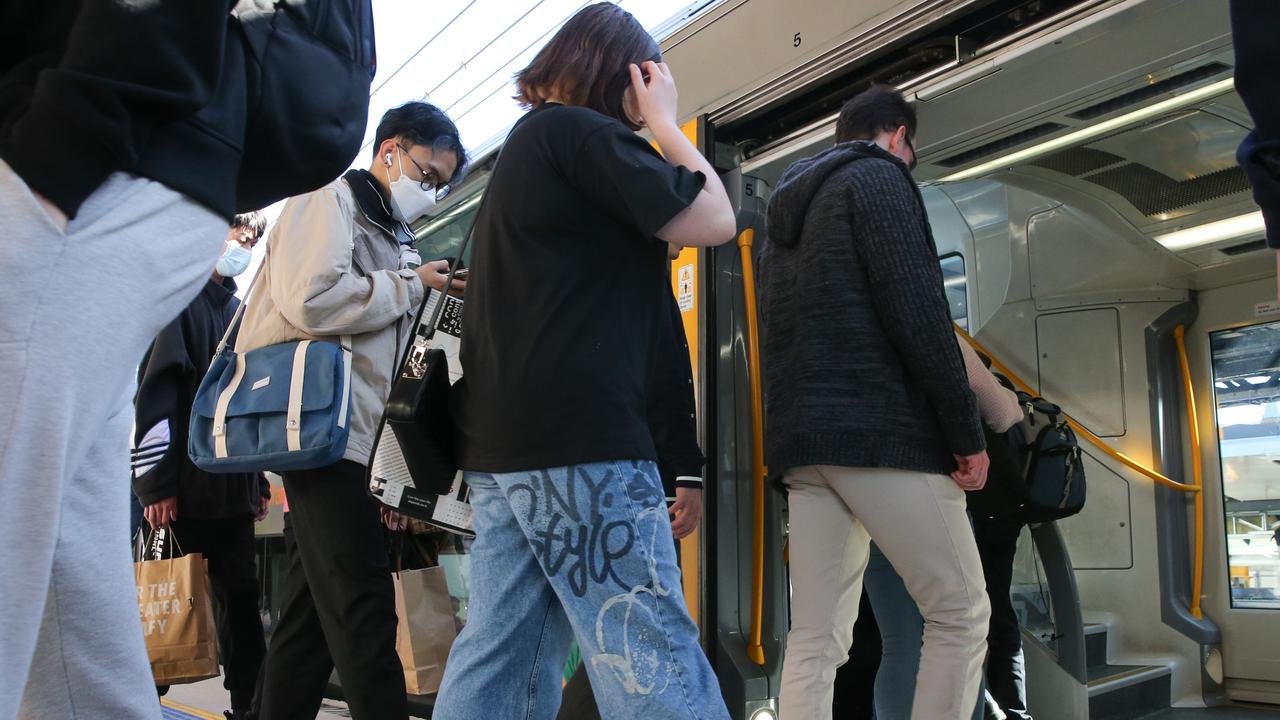
Major train disruptions are set to return this month as NSW’s rail union reveals employees will strike every week to the end of August.

It comes after more than a year of negotiations between the state government and the Rail Tram and Bus Union (RTBU) over work conditions have failed to satisfy either party.

The major sticking point is the union’s claim that recently purchased New Intercity Fleet trains do not meet their safety requirements.

“We’ve done everything by the book in order to get these vital safety changes, but the government is refusing to listen,” RTBU NSW secretary Alex Claassens said in a statement on Tuesday.

“This is our only way of making sure that the safety changes that need to be made will actually be made.”

Strike action will begin this Sunday with a small gift to Sydney public transport users in the way of a ban on issuing fines and caution notices.

The real strike action begins next Wednesday as travelers on the T4 Eastern Suburbs and Illawarra line that runs towards Cronulla and Wollongong will have to make alternative travel arrangements for six hours.

Between the hours of 10am and 4pm, trains will not run on this line.

“It is frustrating,” Sydney Trains chief executive Matt Longland told 2GB radio station on Tuesday.

“We’ve been dealing now for more than 12 months working with unions as we navigate our way to a new enterprise agreement.”

Three more six-hour strikes will take place on August 17, 23 and 25 and will pinpoint different regions of the train network.

“We’ll do our best to minimize impacts to customers. There’s a whole lot of action that we’re managing around infrastructure and cleaning and those sort of things,” Mr Longland said.

The Sydney Trains boss is encouraging customers to use existing light rail and bus services while train lines are not running.

However, there are not enough replacement buses to cover such widespread outages.

“We only have a limited number of buses to be able to replace trains and the reality is we can’t provide that many buses,” Mr Longland said.

“I do want to acknowledge the frustration of customers and thank them for their patience.”

He is confident that the union and government are “very close” to finalizing the enterprise agreement.

“We are working really hard to get this resolved and we are certainly hopeful working with Minister Elliot that we can get an outcome,” he said.

Schedule for rail strike action in August:

August 7: Ban on transport officers issuing ends and cautions begins

August 10: Strike on T4 Eastern Suburbs and Illawarra line, including Bondi Junction 10am – 4pm

August 12: Ban on cleaners using vacuum cleaners or scrubbing machines

August 13: Station staff to leave all gates open at all times

August 15: Train crew to only operate trains that meet maintenance center minimum standards

August 17: Strike in T2 Inner West and Leppington line and some regional lines, 10am – 4pm

August 23: Strike on unidentified line, 10am – 4pm

August 25: Strike on unidentified line, 10am – 4pm

August 31: Ban on operating foreign-made trains

Read related topics:sydney

.

Categories
Sports

Kyle Chalmers wins ‘bittersweet’ 100 meters freestyle gold at the Commonwealth Games, father Brett calls out media ‘bullying’

Kyle Chalmers said it took all his strength and courage to win his third gold medal at the Commonwealth Games in Birmingham in the men’s 100m freestyle.

It wasn’t his fastest swim, but he said it was “bigger than just me racing”.

“It’s very, very bittersweet. It’s been the most-challenging, probably 48 hours of my swimming career,” Chalmers said.

“And, as much as it’s nice to win, it’s probably just a big sense of relief, rather than the satisfaction that I thought I’d feel and want to feel after a performance like that.”

Chalmers has been the center of intense scrutiny over his personal life, and it came to a head at the Sandwell Aquatics Center a couple of nights ago, where he faced more questioning over unsourced rumors about rifts in the team after winning the men’s 4x100m freestyle relay .

The 24-year-old considered walking away, and admitted he barely slept ahead of the 100m freestyle heats.

But I have pushed on to send a message.

Kyle Chalmers holds a finger to his lips in the Commonwealth Games pool.
Gold medalist Kyle Chalmers sent a message to the media after weeks of intense scrutiny.(AP: Kirsty Wigglesworth)

“I’ve definitely had big battles with mental health over a long time, and it’s one of the most-challenging things that I’ve had to face and see my teammates face and family face,” he said.

“I think it’s important that people have the courage to stand up and speak about it.

“I’ve been around for a while and I need to create the conversation and try to help people going through similar things and just make it more normal.

.

Categories
Australia

Got a question about the Somerton Man breakthrough? Ask the experts in our live Q&A blog and catch up on the mysterious case

The case of the Somerton Man has baffled detectives and amateur sleuths for decades.

Now it’s your chance to ask the experts just how one of Australia’s most enduring mysteries has been solved — and why the story has attracted so much attention.

University of Adelaide professor Derek Abbottwho spent decades researching the case and helped to uncover the man’s identity, will join us from 12pm (AEST) to tackle all your curly questions.

Colleen Fitzpatricka renowned forensic genealogist who lent her expertise to the case, and ABC journalist and host of Radio National podcast The Somerton Man Mystery, Fiona Ellis Joneshave also slow their time to respond to your top questions from our audience call-out.

The live feed will begin at midday but, in the meantime, here’s what you need to know about the case:

A man is found dead on the beach — but no-one knows who he is

The Somerton Man's face mold and a digital image of the man it was taken from
Digital illustrator Daniel Voshart created an image of the Somerton Man based on the face mold created after he was found dead.(Supplied: Daniel Voshart)

On December 1, 1948, a man’s body was found slumped against a wall under the esplanade at Somerton Beach in Adelaide. But there were few clues to determine his identity.

He had a half-smoked cigarette on his lapel and a few personal items in his possession: two combs, a box of matches, a used bus ticket to the area, an unused second-class train ticket, a packet of chewing gum and cigarettes .

A post-mortem revealed the man had a “stinkingly” enlarged spleen and internal bleeding in the stomach and liver, and it was concluded the death resulted from poison.

Then the paper was found: ‘Tamam Shud’

In the months following the mystery man’s death, the case took a strange turn.

A suitcase believed to belong to him was found at Adelaide Railway Station. It contained an assortment of his belongings including a shaving brush, a knife in a sheath and boot polish.

Somerton Man
The personal items found inside a suitcase believed to belong to the mysterious Somerton Man.(Supplied)

Some of his clothes had the tags removed and others, including his tie, had T Keane printed on them.

Then, a tiny rolled-up piece of paper inscribed with the words “Tamam Shud” was found hidden deep in the fob pocket of the man’s trousers.

The scrap of paper found in the Somerton Man's fob pocket.
The scrap of paper found in the Somerton Man’s fob pocket with the Persian words “Tamam Shud”.(Supplied: Professor Derek Abbott)

The torn paper was later traced back to a book of ancient Persian poetry, the Rubaiyat of Omar Khayyam, which had been left in the back seat of a car near where the body was found.

The words roughly translate to “the end” or “the finish”, and the poems touch on themes including the need to live life to the fullest and having no regrets when it ends.

Was the Somerton Man a spy?

In July 1949, a copy of The Rubaiyat with the page containing “Tamam Shud” torn out was handed in to police.

The man who contacted the authorities said he found it in the back of his car in November 1948 — a month before the man’s body was discovered.

A black and white photo of a book with a section torn out.
A scrap of paper which read Tamam Shud was torn from the final page of copy of Rubaiyat of Omar Khayyám, authored by 12th-century poet, Omar Khayyám.(Supplied: Carolyn Billsborrow )

The book contained a sequence of letters and a couple of telephone numbers, but they didn’t lead investigators any closer to uncovering the Somerton Man’s identity.

The strange sequence and the fact labels had been removed from the man’s clothes fueled speculation he might have been a spy.

A man in white overalls walks past gravestones as excavation crews work in the background
Forensic science and excavation crews were onsite to assist with the Somerton Man’s exhumation.(ABC News: Michael Clements)

ABC Radio Adelaide’s Daniel Keane spoke to University of Adelaide professor Derek Abbott last month, prior to the Somerton Man’s identity being uncovered, about the theories.

“I don’t think there’s compelling evidence — just these scattered circumstantial things that can be explained in different ways,” Professor Abbott said.

Last week, after decades of searching for answers, Professor Abbott and forensic genealogist Colleen Fitzpatrick made a breakthrough.

The previously unidentified man was named as Melbourne electrical engineer Carl “Charles” Webb — far from the answer some were expecting.

live updates

By Bridget Judd

You’re a little early, but check back at 12:00pm (AEST)

Over the next couple of hours, we’ll put your questions to Derek Abbottwho helped uncover the Somerton Man’s identity.

You can make a submission by clicking the blue ‘leave a comment’ button above.

The live stream will begin at 12:00 p.m. (AEST)so come and join the conversation then!

posted , updated

.

Categories
US

Al-Zawahiri was on his Kabul balcony. How Hellfire missiles took him out

Two Hellfire missiles ended al Qaeda leader Ayman al-Zawahiri’s life in a safehouse balcony in a wealthy neighborhood in Kabul, the capital of Afghanistan, at 6:18 am Sunday, a senior administration official said Monday.

The missiles were launched by an unmanned aerial vehicle, or drone, killing him instantly.

The nature of the strike as described by a senior administration official signals that the US may have used the R9X Hellfire variant, also known as the “Ninja” or “Flying Ginsu” missile, nicknamed for knives famously sold on TV in the 1980s. This variant has been used in the recent past to kill other extremist leaders.

The R9X Hellfire has six blades that rotate at high speed and deploy before impact — instead of conventional warhead explosives, according to Janes, a defense intelligence provider. The missile pierces and cuts its target, rather than blowing it up. The design makes it easier to take out an intended target, while lessening the likelihood of causing additional casualties.

Ayman Al-Zawahiri
Ayman Al-Zawahiri in an undated image from video

Maher Attar/Sygma via Getty Images


The White House has not shared details about the type of Hellfire missiles used. A reporter asked a senior administration official on a call Monday about the nature of the missile, but the official did not answer.

The senior administration official who briefed reporters said the strike only killed al-Zawahiri, avoiding civilian casualties and that the strike did not completely destroy the safehouse where al-Zawahiri was hiding with his family. It is unclear whether the missiles inflicted structural damage beyond the patio. Two intelligence sources familiar with the matter said the CIA carried out the strike.

Hellfire missiles are air-to-surface missiles initially designed for anti-armor strikes, but later versions have been used for precision drone strikes. The arms manufacturer Lockheed Martin developed the missiles with the name “Heliborne, Laser, Fire, and Forget Missile,” which evolved into the Hellfire missile, as it is now known.

The R9X variant was initially deployed in secret in 2017, according to a US Army equipment guide, and was used to kill Abu Khayr al-Masri, a member of al Qaeda’s leadership.

Photos of the aftermath on social media showed the car where al-Masri was purportedly killed as having damage to the passenger compartment of the beige Kia sedan but no damage to the engine block. The roof was blown open on the right side of the vehicle.

al-masri-al-qaeda-airstrike.jpg
An image from video posted online by Syrian activists in Idlib province shows people inspecting a sedan damaged heavily by a purported US airstrike on Feb. 26, 2017. There were unconfirmed reports that al Qaeda deputy leader Abdullah Muhammad Rajab Abdulrahman, aka Abu al-Khayr al-Masri, was killed in the strike.

The Hellfire variant became public knowledge after it was used in 2019 to take out Jamal Ahmad Mohammad Al Badawi, who was behind the 2000 USS Cole Bombing.

The Wall Street Journal reported in 2019 that a weapon similar to the R9X was considered as an alternative way to kill former al Qaeda leader Osama bin Laden in 2011, but officials ultimately decided to use special forces fighters.

Categories
Business

There is no shortage of gas, or fossil fuel cartels, in Australia

If you want to understand the nature of Australia’s energy crisis right now, look beyond the headlines and the rhetoric from both sides off the fossil fuel fence, and just take a look at market prices.

Australian consumers – both big and small – are being ripped off at the petrol pump, at the power socket, and the gas pipelines by a massive industry used to setting its own rules and regulations, and having its own way with markets and governments.

Australia has no shortage of gas, that much is now clearly well established. But what should also be recognized is that it has no shortage of gas cartel like behaviour, even if the country’s impotent regulators prefer to look the other way.

On Monday, something extraordinary happened. On the same day that the Australian government finally dared to call its bluff, and threaten the imposition of the so-called “gas trigger”, prices plunged on both the electricity futures market and the gas market.

It was as if the fossil fuel industry had been caught red handed, like a trillion dollar toddler with its hand in the cookie jar, its pockets full of sugary sweets and its mouth bursting with lollies as it protested its innocence. It insists, always, that it only ever has the consumer at heart.

Gas prices plunged in Victoria – from around $30 a petajoule to just $12, and in NSW from $30 to $20, with predictions of further falls to match the Victoria price.

In the electricity market, the futures price for “baseload” contacts in multiple markets did a rapid about turn, plunging more than $15/MWh in one day. Maybe it was just a coincidence.

Try as they might, the regulators have struggled to find any evidence of gaming, just of perfectly legal “re-bidding”. The industry has even evolved its own vocabulary – opportunistic cost, for instance – to assign some sort of economic rationale, if not moral justification, for the exploitation of consumers.

As energy analyst Dylan McConnell noted this week, the spectacular price falls “belled the cat” on the fact that Australian gas producers, and many other parts of the industry, have been enjoying windfall profits at the expense of consumers, and justifying it by pointing to international prices.

It’s a story, as we have noted, of a fossil fuel industry that has lost all perspective, and has effectively thrown away its social license. But still it craves more money and regulatory indulgence.

Bruce Robertson, an energy finance analyst from the Institute for Energy Economics and Financial Analysis, says the report from the Australian Competition and Consumer Commission that attracted so much attention on Monday has confirmed there is no shortage of gas in Australia.

“This is a contrived shortfall. It doesn’t exist. There is an abundance of gas – an embarrassment of riches – on the east coast of Australia,” he told RenewEconomy.

“What’s happening is that these companies are just starving the gas market. It’s what they’ve been doing consistently since 2015.”

Robertson says the east coast gas market has all of the features of a cartel, in that just a few companies control 90% of the supply, they have been reported to be using anti-competitive practices, and they are forcing prices up above international levels .

“What the ACCC report actually outlines is that there’s a gas cartel operating… the report forensically details all of those three things, and yet it doesn’t call them a cartel.

“We have all these things happening, and yet they won’t actually call it what in economic terms it is: a cartel.”

The clean energy industry has been able to launch a few devastatingly effective raids on the gas cartels so far.

The most notable is perhaps the influence of the original Tesla big battery in South Australia that broke the cartel that had been openly rorting frequency markets by making all but 1MW of supply available at low prices, and then charging a fortune for the remaining MW that flowed through the entire market.

The oil market is another case in point. The previous federal government slashed the fuel excise in half, and is now arguing that it be extended to protect consumers. The refiners, meanwhile, are making off with huge margins and profit lifts.

Wind and solar can sometimes break the control of the fossil fuel generators when they produce enough to that they become the price setters, not coal, gas or hydro.

So can other technologies such as demand response, but the incumbent fossil fuel industry has fought such initiatives, including energy efficiency, with tooth and nail.

In the last two months, under the cover of international price spikes, the legacy industry – largely but not exclusively fossil fuels – has been able to do what it wants, except when it went too far and forced the market operator to suspend the market.

In the UK, the government and the regulator are sick of it, and are now seeking to design new markets that will ensure that the low price of wind, solar and storage is not polluted by the cartel-like practices of the fossil fuel industry.

Robertson says the Australian federal government and the regulators need to take stronger action and be smarter about the problem at hand, which means thinking of alternatives like efficiency and regulation rather than just supply.

“The idea that you can chat to these companies and ask them to play nicely is off with the pixies,” he says.

“The same applies to the idea that we can produce more gas and it will reduce prices. We’ve tried that time and time and time again over the last six years and it doesn’t work. We need to get a grip and do something that will work.

“Cartels are illegal. Price fixing is illegal… What we have is a government that is cow-towing to an illegal price fixing organization to the detriment of the Australian people.”

Robertson also suggests that the developers of the massive and duplicated LNG terminals around Gladstone in Queensland are breaking the approval conditions for their projects, which essentially was a guarantee that export activities would not impact the domestic market.

“We also have a government that is refusing to enforce the rules under which those conditions were made. They’ve had an immense effect on prices and in many cases pushed them above international prices.

“Someone has got to call it out for what it is: obscene. We’re being held for ransom by a cartel and the government refuses to prosecute.”

Many analysts suggest a windfall tax to ensure Australian consumers get some benefit from the massive profits being earned by the gas industry and the fossil fuel industry in general.

Robertson’s preferred solution is domestic gas reservation on all fields, and forcing the price down to a similar level of Western Australia.

“This has to end – we’ll see massive job losses and genuine hardship for anyone who is not well off if we don’t do something. It’s not hard to do, it’s called legislation it’s called government policy.

“We need to do it now. Like literally today, we need to start drawing up this legislation and get it happening. Get a domestic gas reservation that sets aside more than what we need.”

We need more than that.

Greens Senator Sarah Hanson-Young on Tuesday noted the energy system, as it stands, is obviously broken.

“These big gas companies have been ripping off customers, consumers, households and small businesses for far too long

“They’re making windfall profits. They’re not paying enough tax. And they’re taking Australians for a ride. There is no shortage of gas here in Australia. We’ve got plenty of it.”

But Hanson-Young says rather than green-lighting yet more gas and coal projects, “one of the things we’ve got to really do is fast track the transition… of our energy grid making sure we have it powered by renewables and storage. That would make cheaper, more reliable power and push down prices very, very quickly.”

The NSW Coalition government gets it. Industry gets it. Investors get it. Consumers get it. Why doesn’t the federal government get it?

See also: “Exciting and pivotal moment:” NSW prepares for big switch from coal to renewables

Categories
Technology

Study finds nickelate superconductors are intrinsically magnetic

Study finds nickelate superconductors are intrinsically magnetic

A muon, center, spins like a top within the atomic lattice of a thin film of superconducting nickelate. These elementary particles can sense the magnetic field created by the spins of electrons up to a billionth of a meter away. By embedding muons in four nickelate compounds at the Paul Scherrer Institute in Switzerland, researchers at SLAC and Stanford discovered that the nickelates they tested host magnetic excitations whether they’re in their superconducting states or not—another clue in the long quest to understand how unconventional superconductors can conduct electric current with no loss. Credit: Jennifer Fowlie/SLAC National Accelerator Laboratory

Electrons find each other repulsive. Nothing personal—it’s just that their negative charges repel each other. So getting them to pair up and travel together, like they do in superconducting materials, requires a little nudge.

In old-school superconductors, which were discovered in 1911 and conduct electric current with no resistance, but only at extremely cold temperatures, the nudge comes from vibrations in the material’s atomic lattice.

But in newer, “unconventional” superconductors—which are especially exciting because of their potential to operate at close to room temperature for things like zero-loss power transmission—no one knows for sure what the nudge is, although researchers think it might involve stripes of electric charge, waves of flip-flopping electron spins that create magnetic excitations, or some combination of things.

In the hope of learning more by looking at the problem from a slightly different angle, researchers at Stanford University and the Department of Energy’s SLAC National Accelerator Laboratory synthesized another unconventional superconductor family—the nickel oxides, or nickelates. Since then, they’ve spent three years investigating the nickelates’ properties and comparing them to one of the most famous unconventional superconductors, the copper oxides or cuprates.

And in a paper published in Nature Physics today, the team reported a significant difference: Unlike in the cuprates, the magnetic fields in nickelates are always on.

Magnetism: Friend or foe?

Nickelates, the scientists said, are intrinsically magnetic, as if each nickel atom were clutching a tiny magnet. This is true whether the nickelate is in its non-superconducting, or normal, state or in a superconducting state where electrons have paired up and formed a sort of quantum soup that can host intertwining phases of quantum matter. Cuprates, on the other hand, are not magnetic in their superconducting state.

“This study looked at fundamental properties of the nickelates compared to the cuprates, and what that can tell us about unconventional superconductors in general,” said Jennifer Fowlie, a postdoctoral researcher at SLAC’s Stanford Institute for Materials and Energy Sciences (SIMES) who led the experiments.

Some researchers think magnetism and superconductivity compete with each other in this type of system, she said; others think you can’t have superconductivity unless magnetism is close by.

“While our results don’t settle that question, they do highlight where more work should probably be done,” Fowlie said. “And they mark the first time that magnetism has been examined in both the superconducting and the normal state of nickelates.”

Harold Hwang, a professor at SLAC and Stanford and director of SIMES, said, “This is another important piece of the puzzle that the research community is putting together as we work to frame the properties and phenomena at the heart of these exciting materials.”

Enter the muon

Few things come easy in this field of research, and studying the nickelates has been harder than most.

While theorists predicted more than 20 years ago that their chemical similarity to the cuprates made it likely that they could host superconductivity, nickelates are so difficult to make that it took years of trying before the SLAC and Stanford team succeeded.

Even then, they could only make thin films of the material—not the thicker chunks needed to explore its properties with common techniques. A number of research groups around the world have been working on easier ways to synthesize nickelates in any form, Hwang said.

So the research team turned to a more exotic method, called low-energy muon spin rotation/relaxation, that can measure the magnetic properties of thin films and is available only at the Paul Scherrer Institute (PSI) in Switzerland.

Muons are fundamental charged particles that are similar to electrons, but 207 times more massive. They stick around for just 2.2 millionths of a second before decaying. Positively charged muons, which are often preferred for experiments like these, decay into a positron, a neutrino and an antineutrino. Like their electron cousins, they spin like tops and change the direction of their spin in response to magnetic fields. But they can “feel” those fields only in their immediate surroundings—up to about one nanometer, or a billionth of a meter, away.

At PSI, scientists use a beam of muons to embed the little particles in the material they want to study. When the muons decay, the positrons they produce fly off in the direction the muon is spinning. By tracing the positrons back to their origins, researchers can see which way the muons were pointing when they winked out of existence and thus determine the material’s overall magnetic properties.

Finding a workaround

The SLAC team applied to do experiments with the PSI system in 2020, but then the pandemic made it impossible to travel in or out of Switzerland. Fortunately, Fowlie was a postdoc at the University of Geneva at the time and already planning to come to SLAC to work in Hwang’s group. So she started the first round of experiments in Switzerland with a team led by Andreas Suter, a senior scientist at PSI and an expert in extracting information about superconductivity and magnetism from muon decay data.

After arriving at SLAC May 2021, Fowlie immediately started making various types of nickelate compounds the team wanted to test in their second round of experiments. When travel restrictions ended, the team was finally able to go back to Switzerland to finish the study.

The unique experimental setup at PSI allows scientists to embed muons at precise depths in the nickelate materials. From this, they were able to determine what was going on in each super-thin layer of various nickelate compounds with slightly different chemical compositions. They discovered that only the layers that contained nickel atoms were magnetic.

Interest in the nickelates is very high around the world, Hwang said. Half a dozen research groups have published their own ways of synthesizing nickelates and are working on improving the quality of the samples they study, and a huge number of theorists are trying to come up with insights to guide the research in productive directions.

“We are trying to do what we can with the resources we have as a research community,” he said, “but there’s still a lot more we can learn and do.”


New leap in understanding nickel oxide superconductors


More information:
Jennifer Fowlie, Intrinsic magnetism in superconducting infinite-layer nickelates, Nature Physics (2022). DOI: 10.1038/s41567-022-01684-y. www.nature.com/articles/s41567-022-01684-y

Provided by SLAC National Accelerator Laboratory

citation: Study finds nickelate superconductors are intrinsically magnetic (2022, August 1) retrieved 2 August 2022 from https://phys.org/news/2022-08-nickelate-superconductors-intrinsically-magnetic.html

This document is subject to copyright. Apart from any fair dealing for the purpose of private study or research, no part may be reproduced without the written permission. The content is provided for information purposes only.

Categories
Sports

Izak Rankine Adelaide Crows, Ollie Henry Collingwood contract

A Suns star is still off-contract—and the Crows are preparing to pounce.

Plus the intriguing contract situation surrounding a young Magpies forward.

Get the latest player movement news and updates in AFL Trade Whispers!

Watch every blockbuster AFL match this weekend Live & Ad-Break Free In-Play on Kayo. New to Kayo? Start your free trial now >

NEW FOX FOOTY PODCAST — Six polarizing finals contenders, latest trade whispers

Listen below or subscribe in Apple Podcasts or Spotify

CROWS KEEPING TABS ON SUNS STAR

Adelaide is making a major play for homegrown forward Izak Rankine in what would be one of the biggest coups of this year’s trade period.

Gold Coast officials have long been confident of retaining Rankine after already re-signing fellow South Australian Jack Lukosius, as well as Ben King, Ben Ainsworth, Elijah Hollands and Mac Andrew.

The Suns are also expected to soon ink Lachie Weller on a four-year contract.

Rankine, who was drafted from SANFL club West Adelaide with the No. 3 pick in the talent-laden 2018 class, is out of contract at season’s end but is not a free agent.

The Crows would likely need to part with their first-round draft selection, which is currently No. 4 after their weekend win over Carlton, if they convince Rankine to leave, but that may be only the start of what was required.

However, the 22-year-old’s contract status, and the possible threat of Adelaide grabbing him in the pre-season draft, could complicate any potential negotiations.

Izak Rankin of the Suns. Picture: Russell FreemanSource: Getty Images

The Blues did exactly that with ex-Gold Coast footballer Jack Martin three years ago after discussions between the clubs broke down, heavily front-ending his deal to ward off other suitors.

Essendon already made a lucrative pitch to Rankine’s management this year to try to lure him to Victoria, with the young star’s career-best season catching rivals’ attention.

His agent, Garry Winter, of W Sports and Media, was previously on Adelaide’s board, and it could be worth up to $800,000 per season for Rankine to become a Crow on a long-term deal.

Rankine’s three-goal performance against West Coast on Sunday was his seventh match with multiple majors in 2022, along with averaging 14 disposals and six score involvements.

He would be a significant upgrade on rebuilding Adelaide’s small forward corps and could form a deadly duo with last year’s first-round draftee Josh Rachele.

Rachele’s 17 goals rank fourth at the Crows – behind tall targets Taylor Walker (42) and Darcy Fogarty (22), as well as spring-heeled forward Shane McAdam (18) – while Ned McHenry and James Rowe have each kicked only 10.

They sit in the bottom four on the ladder and for scoring, so Rankine would provide an excellent boost ahead of a season where Matthew Nicks’ team hopes to take a leap.

Suns keep finals hope alive | 01:25

Adelaide’s list management team met with Melbourne goals neak Kade Chandler, another South Australian, during last year’s trade period before he decided to stay at the Demons.

The Crows were linked with Western Bulldogs midfielder Josh Dunkley for many months but it’s now believed Port Adelaide would be the South Australian club he would join if he left the Kennel.

Dunkley’s girlfriend, Tippah Dwan, plays netball for the Adelaide Thunderbirds.

Asked last week about the delay in Rankine re-signing, Gold Coast coach Stuart Dew said they were “still confident” he would be at the club in 2023.

“There’s always a process. Things happen at different rates and different speeds,” Dew said.

“A number of contracts we’ve done have actually taken longer, so as long as the conversations are happening, that’s where the confidence comes from.

“It’s when it goes quiet (that you get concerned), and it’s certainly not like that – the dialogue’s still there.”

—NCA Newswire

HENRY, PIES ‘NOT OVERLY CLOSE’ TO FRESH CONTRACT

Collingwood and young forward Ollie Henry are “not overly close” on signing a new deal, but both parties remain confident a contract will be signed soon, reports SEN’s Sam Edmund.

Henry has had a promising yet rollercoaster 2022 season with the Magpies so far, booting 21.15 from 14 games. He started as the sub against Freo in Round 10 but came on to kick 4.1, while he was the unused medical sub against the Adelaide Crows in Round 18 and has spent the past two weekends in the VFL, booting 4.2 and 3.1 respectively.

The 20-year-old is uncontracted beyond this season. In May I told AFL Media he wasn’t in a rush to sign a new contract but declared he was “loving his time at Collingwood”.

Goodwin and Fagan discuss trade rumors | 03:43

Edmund reported on SEN Breakfast on Tuesday that talks between Henry’s management and the Magpies were ongoing, adding they’d met “in the last week or two”.

“Not overly close at this stage at Collingwood, but I think this one gets worked out. Both parties expect that to be the case,” Edmund told SEN Breakfast.

“The Pies want him to stay and Henry wants to stay, but with (Dan) McStay coming in there’s some things to work out around what his future looks like on game day.”

“I think they’ll get there, no real reason to think otherwise at this stage. It just needs to be worked through with the pieces coming back the other way like Dan McStay and the like.”

.

Categories
Australia

Stuart Ayres resigns; Amy Brown to appear as New York trade role investigation continues

That’s a wrap on the premier’s press conference for this morning.

But the issue will not be going away – our live coverage of the NSW parliamentary inquiry into the appointment of former deputy premier John Barilaro to a $500,000-a-year trade post in the US is about to begin.

It is the fourth day of hearings into Barilaro’s controversial appointment since it was first announced by the government almost seven weeks ago. Yo soy Natassia Chrysanthos and I will keep you updated on the latest evidence as it comes before the public accountability committee.

The inquiry is due to hear from Amy Brown from 10.30am until about 4.30pm, with a couple of breaks in between. Brown is the chief executive of Investment NSW and head of the Department of Enterprise, Investment and Trade appointed – meaning she was the top bureaucrat overseeing the process that saw the former deputy premier.

In NSW Premier Dominic Perrotte’s comments this morning, he made it clear that stuart ayres′ engagement with Brown during the recruitment process was central to the reason the minister resigned from cabinet last night.

Brown giving evidence on the first day of hearings, on June 29.

Brown giving evidence on the first day of hearings, on June 29.Credit:Janie Barrett

Brown appeared before the committee on its first day of hearings, back on June 29.

But she has been called back for a second time due to apparent contradictions in her testimony compared to that of others who gave evidence, as well as dozens of bombshell documents that have emerged over recent weeks.

Labor’s leader in the upper house, Penny Sharpeyesterday said Brown had many questions to answer.

“We want to know about her conversations in the shortlisting process in relation to the second round. We want to understand what direction and discussions she was having with Minister [Stuart] Ayres,” Sharpe said.

“And we still haven’t got to the bottom of why she decided that Jenny West was the best candidate for the job one day, and then after the ministers had met, and decided to change the process, all of a sudden, Jenny West was unsuitable.

“She’s got many questions to answer and they’ll just be some of them.”

Categories
US

LA County Board of Supervisors proclaims local emergency for monkeypox amid rising cases

LOS ANGELES (CNS) — The Los Angeles County Board of Supervisors ratified a local emergency declaration Tuesday in response to the monkeypox outbreak.

Board Chair Holly Mitchell issued a proclamation late Monday declaring the emergency in Los Angeles County, where more than 400 monkeypox cases have been identified so far — nearly the double the amount from a week ago.

“This proclamation is critical in helping us get ahead of this virus,” Mitchell said in a statement. “By declaring a local emergency, it allows us to cut through the red tape to better dedicate resources and educate residents on how to protect themselves and help stop the spread. It will also allow the county to quickly administer vaccines as more become available and to take the necessary efforts to obtain supplies and enhance outreach and awareness.”

The Board of Supervisors ratified the declaration Tuesday on an unanimous vote.

As part of the proclamation, the Board of Supervisors will request recovery assistance be made available under the California Disaster Assistance Act, and that the state expedite access to state and federal resources and any other appropriate federal disaster relief programs.

The Board of Supervisors will also direct county departments to implement all assessment, assistance and monitoring efforts as applicable.

Gov. Gavin Newsom issued a state of emergency for California on Monday in response to the increase of monkeypox cases in the state. New York also issued an emergency declaration, as has San Francisco.

Supervisor Janice Hahn wrote on Twitter Monday she supports the emergency declaration.

“I’m hopeful this will help vaccination efforts and ultimately help slow the spread of this virus,” Hahn said in a tweet.

Supervisor Kathryn Barger said in a statement the county “needs to draw down all the support available to accelerate the distribution of vaccines and resources to those at risk and suffering from this terrible disease. I will work to ensure we’re doing so quickly and efficiently We don’t have any time to waste.”

As of Monday, a total of 824 monkeypox cases were confirmed in California — the second-highest of any state, behind New York’s 1,390 — while nationwide, the aggregate count was at 5,811, according to the latest data from the US Centers for Disease Control and Prevention. There were more than 400 cases in Los Angeles County as of Tuesday, primarily in gay men.

Monkeypox is generally spread through intimate skin-to-skin contact, resulting from infectious rashes and scabs, though respiratory secretions and bodily fluids exchanged during extended physical episodes, such as sexual intercourse, can also lead to transmission, according to the CDC. It can also be transmitted through the sharing of items such as bedding and towels.

Symptoms include fresh pimples, blisters, rashes, fever and fatigue. There is no specific treatment. People who have been infected with smallpox, or have been vaccinated for it, may have immunity to monkeypox.

According to health officials, the vaccine can prevent infection if given before or shortly after exposure to the virus.

Gay, bisexual and other men who have sex with men are at increased risk of contracting the virus, according to the CDC.

Last week, the Board of Supervisors voted to lobby federal health officials for more monkeypox vaccine supplies and boosted funding for testing and administration of the shots. The county has been slowly expanding eligibility for the JYNNEOS monkeypox vaccine, but supplies remain extremely limited.

In Los Angeles County, monkeypox vaccines are available to people confirmed by the Department of Public Health to have had high- or immediate-risk contact with a known monkeypox patient, and to people who attended an event or visited a venue where they were a high risk of exposure to a confirmed case. Those people are generally identified through county contact-tracing efforts, and they will be notified by the county.

Shots are also available for gay and bisexual men and transgender people with a diagnosis of rectal gonorrhea or early syphilis within the past year.

Also eligible for the shots are gay or bisexual men or transgender people who are on HIV pre-exposure prophylaxix, or PrEP, or who attended or worked at a commercial sex venue or other venue where they had anonymous sex or sex with multiple partners — such as at a sauna, bathhouse or sex club — in the past 21 days.

Eligibility was expanded Tuesday to include gay or bisexual men or transgender people aged 18 and older who have had multiple or anonymous sex partners in the past 14 days.

People who believe they fall into any of the criteria can contact their health care provider to see if that provider can administer the vaccine.

Qualified people who do not have a health care provider — or whose provider does not carry the vaccine — can either make an appointment at a designated vaccine clinic or visit a walk-in location. Information is available at ph.lacounty.gov/monkeypox. A list of monkeypox vaccine locations is available here.

The county has also activated a website where residents can fill out an online form to see if they may be eligible for a shot and pre-register to be added to a waiting list.

People who register at the site and are eligible for the vaccine will receive a text message when it is available, with information on where to get the shot.

The registration website is here.

The county on Wednesday will open a monkeypox vaccination site at the West Hollywood Library, 647 N. San Vicente Blvd., for people who pre-registered for the vaccine. It will be open by appointment only from 9 am to 6 pm

The vaccine is a two-shot regimen, so additional supplies will be reserved to provide second doses to those who received the initial shot.

Copyright © 2022 by City News Service, Inc. All Rights Reserved.

.