Categories
Business

when the tech boom met reality

Fast-growing fintech company Block is down 78 per cent, after $US130 billion was wiped from its market value.

Many more will have to follow Klarna’s lead before the full extent of the reset sinks in. Despite some signs that people are getting more realistic about valuations, “we don’t yet have the full puking that’s required,” says Wolfe.

“Many companies are going to be in denial about the change in valuations until they run out of capital,” says David Cowan, a partner at US venture capital company, Bessemer Venture Partners.

Venture Capital’s deferred date with reality, when it comes, will be a watershed moment for the start-up sector. Investors of all stripes have crashed the clubby world of VC in recent years in pursuit of companies promising higher growth rates than those available on the public sharemarket.

Much of that investment poured in last year, as the valuations of private start-ups were hitting a peak. Hedge funds, private equity firms, sovereign wealth funds, corporate VCs and mutual funds between them supplied two-thirds of all the money that went into venture investing globally last year, according to data provider PitchBook.

If those bets sour, it could lead to a retreat by many of the newcomers drawn to venture investing. And that, in turn, could deliver a shock to a sector that has grown used to ever-increasing amounts of capital.
The scale of the most recent venture boom has dwarfed that at the end of the 1990s, when annual investment peaked at $US100 billion in the US. By comparison, the amount of cash pumped into US tech start-ups last year reached $US330 billion. That was twice as much as the previous year, which was itself twice the level of three years earlier.

The flood of money into the private markets was matched by an equal flood into IPOs.

According to US investment manager Coatue – one of a new band of “crossover” investors that moved from the public markets into the VC world – $US1.4 trillion found its way into promising growth companies globally last year, half of it in the form of venture capital and half through IPOs. That single-year surge, it calculated, was almost $US1 trillion more than the average of $US425 billion a year raised over the previous decade.

Fear of missing out

Carried along by this immense tide of capital, many venture capitalists now admit their market was overcome by a race to invest at almost any price – though most like to claim their own funds were able to sidestep the worst of the excesses.

“If there was one word to describe it, it was FOMO,” says Eric Vishria, a partner at Benchmark Capital in California. The “fear of missing out” he points to brought a stampede at the peak of the market. It wasn’t just the high prices investors were prepared to pay not to miss the boat: periods for conducting due diligence were drastically shortened and protections that investors usually build in to protect their investments fell by the wayside.

The steady economic expansion and relaxed financial conditions that followed the financial crisis more than a decade before had led many investors to view venture capital as a one-way bet, says Vishria. “Over the last 12 years, the right answer for almost every company was just to hold, and distribute [the shares] later,” he adds.
“The incentives were lined up for keeping companies private and doing bigger and bigger rounds [of funding]adds Phil Libin, a venture investor and former CEO of Evernote in Silicon Valley.

For company founders and employees, as well as the venture firms that backed them and the limited partners that supplied the capital, it looked like a gravy train. As valuations ratcheted higher, companies set up share-trading programs for employees and executives to cash in, and investors were able to mark up their valuations with each new round of capital.

As a result, according to Vishria, the venture capital industry became bloated. Many companies stayed private far longer than was usual for a start-up, drawing on private investors rather than moving to the share market.

The size of venture funds exploded as investors put ever-larger amounts of capital to work. And investment discipline was loosened, with VCs spreading their bets widely across entire sectors rather trying to single out the small number of big winners that had traditionally provided the lion’s share of the industry’s profits.

The new investors that set the tone as venture investments ballooned included SoftBank’s Vision fund, which ploughed $US100 billion into the market. Tiger Global, which spread its bets widely, at one stage held more stakes in $US1 billion start-ups than any other investor. Both have since disclosed shattering losses: the Vision Fund registered a one-year loss of $US27 billion in May, the same month it emerged that Tiger had lost $US17 billion.

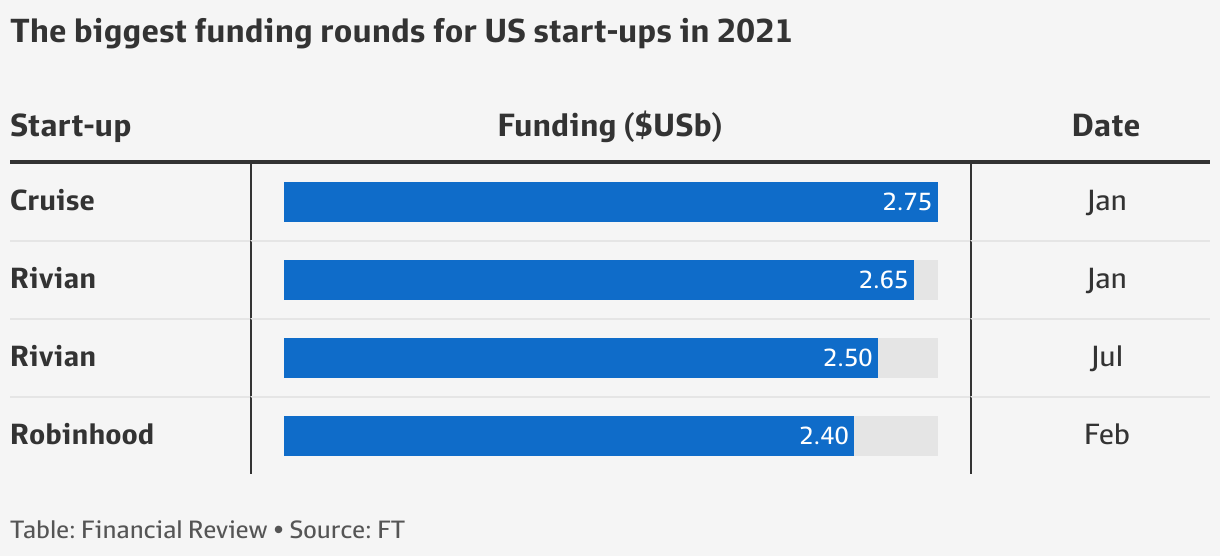
At the height of the boom, investors raced to back everything from electric vehicle companies such as Rivian, which raised more than $US5 billion last year, to fringe tech bets that gambled on significant scientific breakthroughs to generate a return, such as nuclear fusion.

“The inbound [interest] was insane,” with two or three unprompted offers of financing a week, says Jeremy Burton, a former top Oracle executive who now heads a private software company called Observe. Those approaches have stopped, he adds – a reflection of the deep chill that has failed over the venture market as entrepreneurs and investors wait for reality to sink in and a new consensus about valuation levels to take hold.

High-risk projects

The surfeit of capital pushed new fields of science forward at a faster pace. They included technologies such as quantum computing and driverless cars, “moonshot” projects that were once considered too risky or long term even for venture capital funds, which typically take a seven- to eight-year view.

Significant headway has been reported by start-ups in both fields, though the truly transformative breakthroughs that venture investors hoped for remain out of reach.
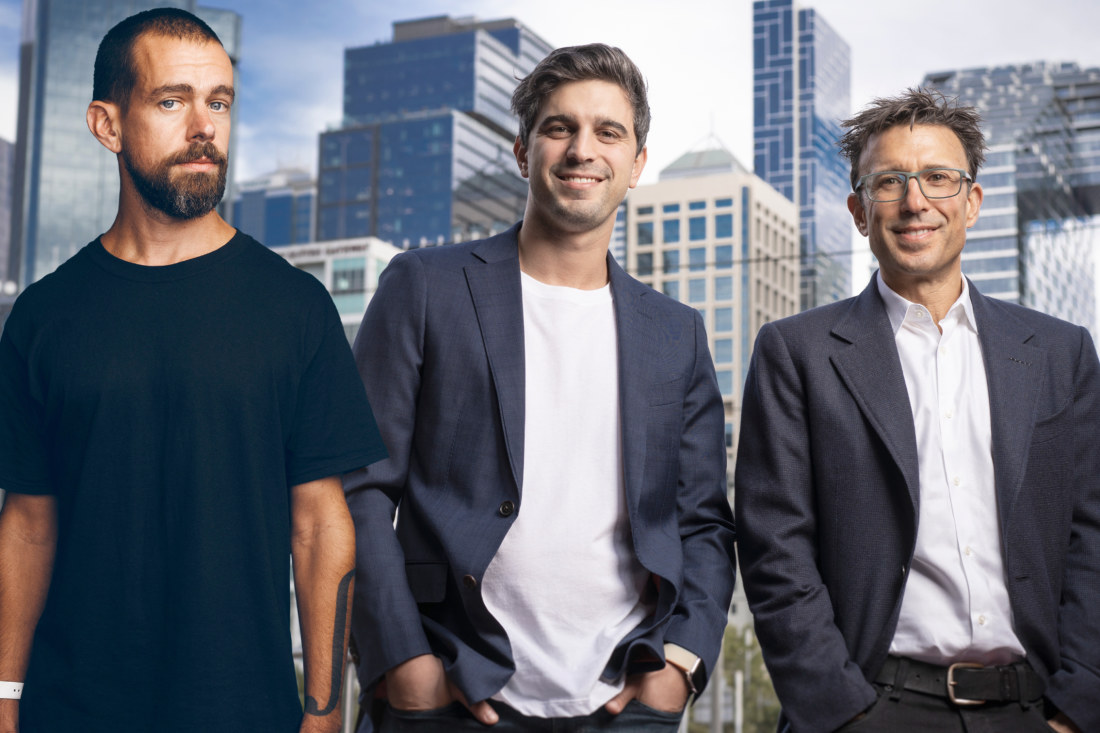
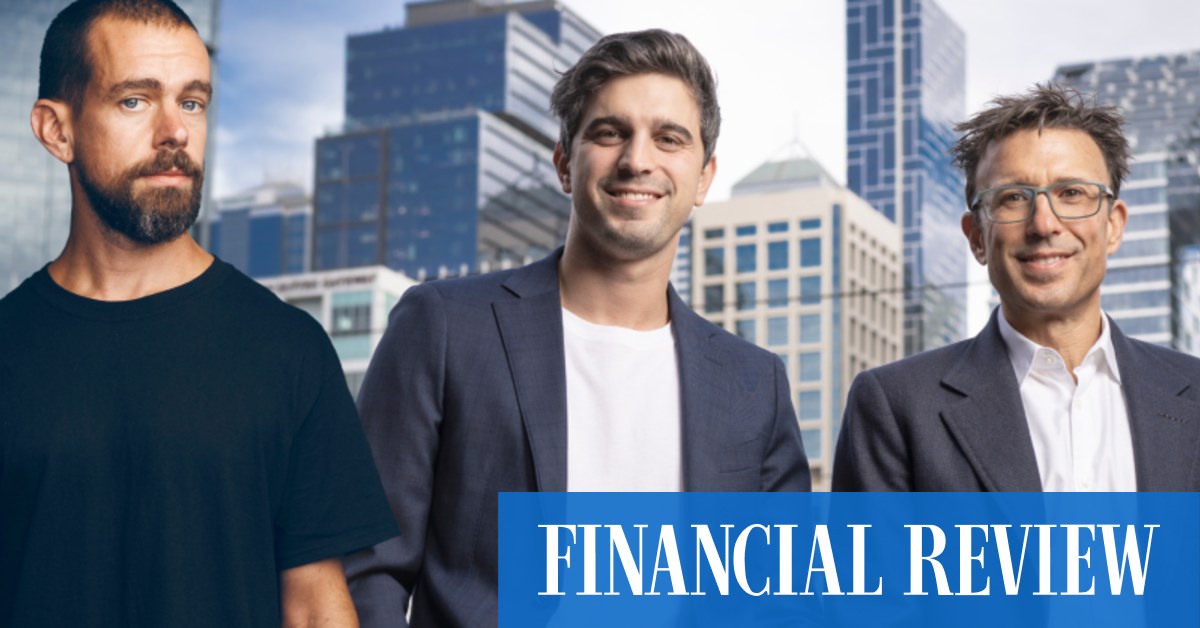
Block CEO Jack Dorsey, left, with Afterpay co-founders Nick Molnar and Anthony Eisen. Fast-growing fintech company Block is down 78 per cent, after $US130 billion was wiped from its market value.

That treasure chest also helped to open up risky new sectors of the economy to private start-ups. The amount of money flowing into commercial space start-ups, for instance, doubled last year to more than $US15 billion, according to engineering and analytics company BryceTech. In the middle of the last decade, annual investments were about $US3 billion a year.

Private investment has backed a flurry of novel rocket technologies, satellite systems and earth imaging services. But start-ups have also ventured on to the frontier of space exploration, says space analyst Laura Forczyk. With NASA planning a return to the moon, private companies hoping to ride in its wake are already plotting lunar activities that range from mining to building cloud computing centers.

“There’s a lot more commercial activity [in areas of space exploration and research that were once considered the province of governments],” says Forczyk. If the money dries up, “I don’t know if it’s going to be sustainable”.

Venture investors have been left reassessing bets in fields that were once considered among the hottest fields for start-ups.

Howard Morgan, chairman of New York venture firm B Capital, singles out the tech industry’s various attempts to revolutionize the transport sector as one cause of regret. The driverless car and electric scooter companies his firm invested in no longer look like they’re about to change the world, he says.

One company B Capital invested in, scooter company Bird, was valued at almost $US3 billion at the start of 2020. After going public late last year, and taking the total amount of outside capital it had raised to almost $900 million, Bird is now worth just $142 million. “We’ve realized maybe the world isn’t ready for as many of these things as we thought,” says Morgan.

Asked which sectors are likely to prove the biggest disappointments, most venture investors list the same handful: the ultra-fast US food delivery companies, such as Gopuff and Gorillas, that have set out to bring customers their grocery items in as little as 20 minutes ; fintechs that embarked on an expensive campaign to build large consumer businesses; and blockchain-based ventures that have been caught up in the crypto crash.

In a recent presentation to its investors, Coatue depicted the tumbling valuations it expects in the tech world as a series of dominoes that are only just starting to topple. It predicted that big losses would spread, starting with unprofitable internet companies and reaching deeper into the crypto and fintech sectors, before eating into more solid-seeming sectors such as software and semiconductors.

If predictions like these are correct, then investors who put the bulk of their funds to work at the peak of the market could be facing the sort of negative returns that have not been seen since the dotcom crash at the turn of the century.

In venture, timing is everything. The median venture fund that was raised in 1996, when the first internet boom was just gathering steam, returned 41 per cent a year over its life, according to Greenwich Associates, which tracks fund performance. But the median fund raised in 1999, at the peak of the bubble, went on to suffer a loss of 3 per cent a year.

A repeat of that performance could drive away many of the new investors who have recently been drawn to the market. Yet even if some, including SoftBank and Tiger Global, end up being less significant forces in future, several VCs predicted that the big investors who backed those firms will look for other vehicles to invest in, meaning that competition for investments will remain high.

Resetting expectations

For most tech start-ups, meanwhile, the world has just changed drastically. With a large amount of cash still sitting in existing venture funds, start-ups with proven businesses that are at no immediate risk from a weakening economy can still look forward to raising money on favorable terms.

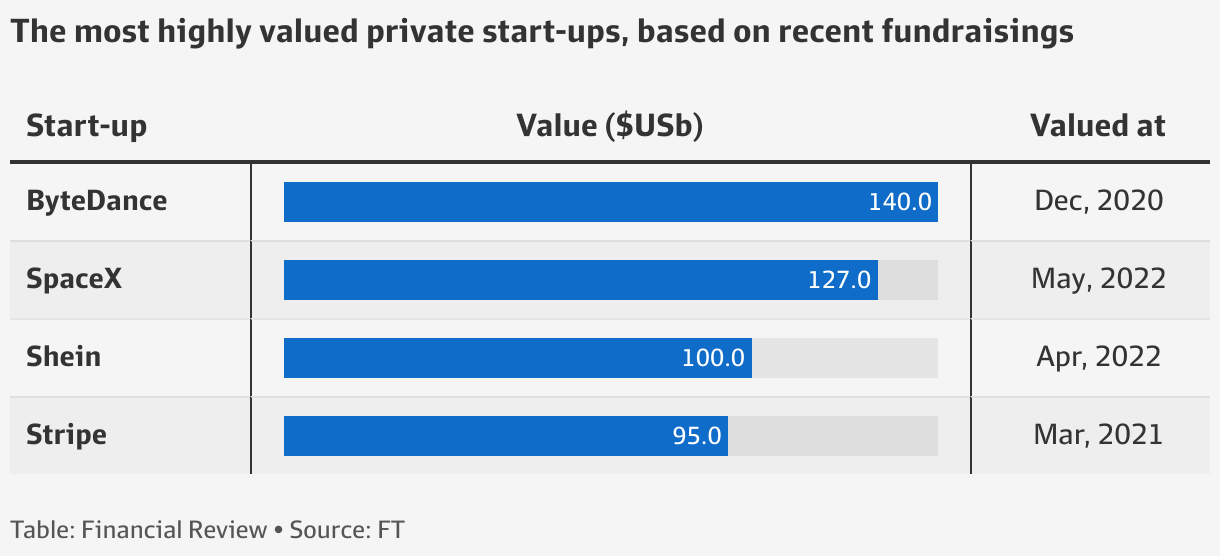
Elon Musk’s private space company, SpaceX, was valued at $US125 billion in its latest round of funding in June, up from $US74 billion in April last year.

But most others have little choice but to adjust their goals. The boom in capital raising has left many with plenty of cash in the bank to get through two or three years of a funding drought. Yet uncertainty about when capital will next be freely available, and on what terms, has fostered an inevitable caution.

Gopuff, which raised $US3.4 billion before the venture wave crested, is among the many well-capitalized start-ups that have moved to lay off staff and close facilities to conserve cash.
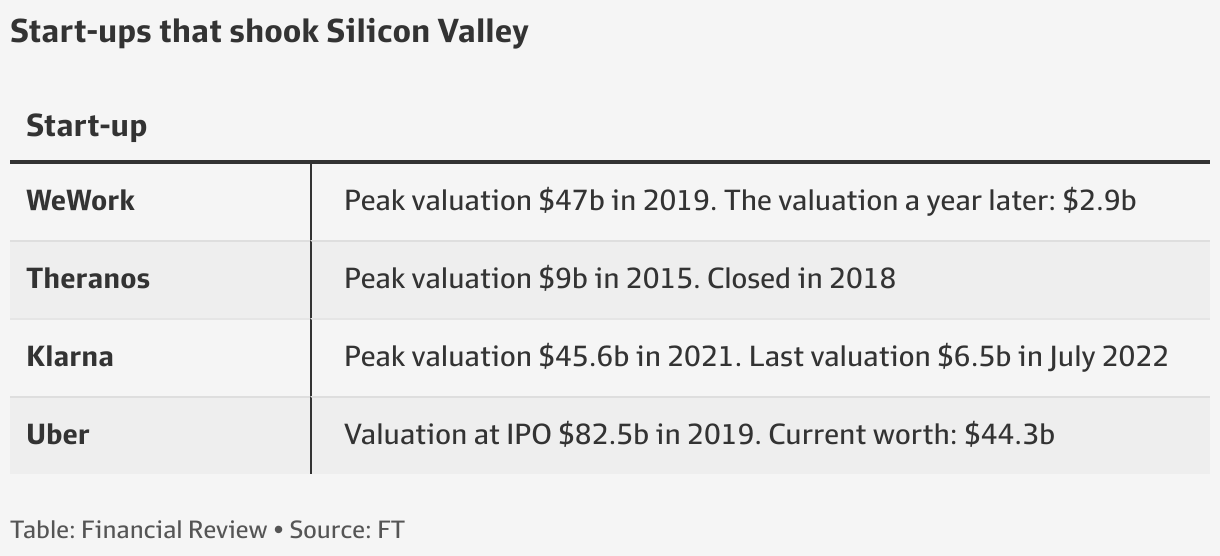
According to one Gopuff investor, the basic unit economics of its business – the amount of revenue it can generate on each order, relative to what that order costs – are sound. But the expensive race for growth that was once the goal of start-ups like this, no longer makes sense when capital becomes constrained.

A similar calculation is being made across the start-up world. Payback periods are shortening. Hyper-growth is no longer the order of the day.

Investors became accustomed to seeing successful software start-ups tripling their revenues in the early years, says Burton at Observe. With the reset in expectations, “I’m not sure that still holds.”

When his company gets past its early phase of product development and is ready to ramp up its marketing spending, he is already anticipating a less frenetic dash for growth: “It may be more measured or more economical growth, rather than growth at any cost, ” he says.

“There’s no question, growth at any price is gone for the next few years,” adds Morgan, of B Capital.

For venture investors, it may sound like a big step back after the go-go years are coming to an end. Yet, there is a reason for the equanimity many profess: a reset brings with it the chance to pay lower prices for future investments, to back start-ups that show greater financial discipline, and to face less competition from rival start-ups funded by deep-pocketed interlocutors, such as SoftBank.

Vishria at Benchmark sums up the hope: “All the pretenders and the speculators will get wiped out. We’ll have the believers and the builders.”

It’s an appealing vision that many venture investors – by definition among the professional world’s greatest optimists – subscribe to. But it is still far from clear how long it will take the venture capital market to reset, or how many of today’s investors and start-ups will still be standing when it does.

Financial Times

Categories
Technology

F45 Training: Why I left F45 Training after five years to join Airlocker Training | Opinion

Last week, co-founder of F45 Training Rob Deutsch said there are “enormous issues” plaguing the gym franchise, after the company’s share price dropped over 60 per cent.

At first thought, I could have been forgiven for feeling like I ‘just got out of there in time’.

But in truth, after officially breaking up with F45 after nearly five years as a foundation member of my local studio just last month, I feel more sadness for a brand I still massively love and support.

“Never in my wildest dreams could I have imagined this,” Deutsch wrote in a since-deleted post on Instagram in response to the apparent downfall of the fitness empire he started in 2013.

READMORE: One thing Kelsey Wells wishes she knew about fitness 10 years ago

f45 ambassador cory g and second place challenge award
I first joined F45 as a foundation member of my studio in 2017. (Nine/Supplied)

“When I exited, and sold out of F45, I left a healthy, phenomenal, beast of a business. All the way from the company culture to the heart beat of the business… The workouts. F45 was special.”

What made F45 so special

I first joined my local F45 back in 2017 shortly after the studio had opened its doors, and was very quickly hooked.

The concept is super simple. Every F45 study in the world runs the exact same 45-minute class each day and no two workouts are ever the same. By varying the exercise type and the number of exercise stations, as well as the work time and rest time, you get something different every day.

The sessions incorporate functional movements (think squatting, lifting, pulling, pushing, jumping and twisting) that are designed to target fat loss and help to build and maintain lean muscle mass.

The classes alternate between HIIT-style cardio, strength training, or a hybrid mixture of the two.

f45 training award
I was completely hooked going five to six days a week. (Nine/Supplied)

It only took a month of attending five to six classes a week and I was all-in. I signed up to my first ‘8-Week Challenge’ and was able to lose over 8kg, even placing second in my studio.

I met F45’s global ambassador Cory George when he visited studios across Sydney during a trip Down Under, and eventually bought into the studio tech, wearing a LionHeart band that monitors performance (and ranks class participants) during each workout.

When COVID hit I remained a dedicated member, joining daily live workout sessions over Zoom, and was over the moon when the doors finally reopened after each lockdown, as I had missed the comradery and motivation that comes from being at a class in person.

READMORE: Is exercising at home as good as going to the gym?

Why I left F45

Deutsch’s post was flooded with comments from F45 franchisees and other devoted members, which provided some insight into the company’s collapse.

“The decisions they made during detrimental lockdowns was crushing to franchises,” one owner wrote.

While another member said: “What would you expect when it went public. It is what it is.”

For me personally, to be honest, the answer is probably a little underwhelming, as there was absolutely nothing wrong at my studio or with the trainers. They supported me through all the ups and downs of my ongoing fitness and health journey.

It came down to the simple fact that I was getting bored, and I wanted to shift my focus to strength training. I didn’t feel like I was progressing anymore.

kristine finishes up at F45 training glenmore park
I eventually said goodbye to F45 to try something new. (Nine/Supplied)

READMORE: Aldi’s new $50 smart watch could help you sleep better

“The body loves and responds most effectively to change. Repeating the same workout can actually reduce the effectiveness,” Ali Cavill, owner of Fit Fantastic, previously told 9Honey.

Plus, more and more research is showing resistance training is the way to go for a variety of reasons.

“If you’re wanting to increase your [muscle] shape and definition, then resistance training is by far the best way to do that,” Greg Stark, owner and trainer from Better Being, also told 9Honey.

In January I did a trial at a new gym that had opened in my area, and I officially canceled my membership with F45 last month.

It was bittersweet – and not as easy as I thought it would be, as I haven’t had to do much breaking up with people in the past. And let me tell you that’s exactly what it felt like!

I’m not saying I won’t ever go back, as I definitely still miss it. But for now, it was time for something new. I only hope the brand can turn it around.

Enter Altitude training

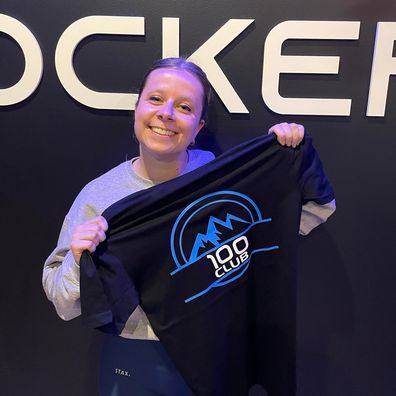
This week I officially hit 100 classes at AirLocker Training Penrith (which, full disclosure, is run by a family friend).

AirLocker provides strength and conditioning training at altitude, which it does by reducing oxygen in the room via innovative technology.

Workouts are set to about 13 to 14 per cent oxygen, as opposed to the regular 20 to 22 per cent level.

READMORE: The reason you might never reach your ‘goal’ weight

new gym air locker trainer penrith
I’ve just hit 100 classes at AirLocker Training. (Supplied)

“When training at altitude, your oxygen levels in the blood are reduced and this produces an increase in red blood cell production,” Director of Performance Sandor Earl explains.

“Through that adaptation your body becomes more efficient at utilizing oxygen.”

In my time at AirLocker I have surprised myself with how much my strength and cardio fitness has improved in such a short period of time. And I was a relatively fit person going in.

Would definitely recommend for anyone wanting to mix things up!

For a daily dose of 9Honey, subscribe to our newsletter here.

Woman exercising

Which type of exercise burns the most calories?

Categories
Sports

Supercars stakeholder selling out – Speedcafe

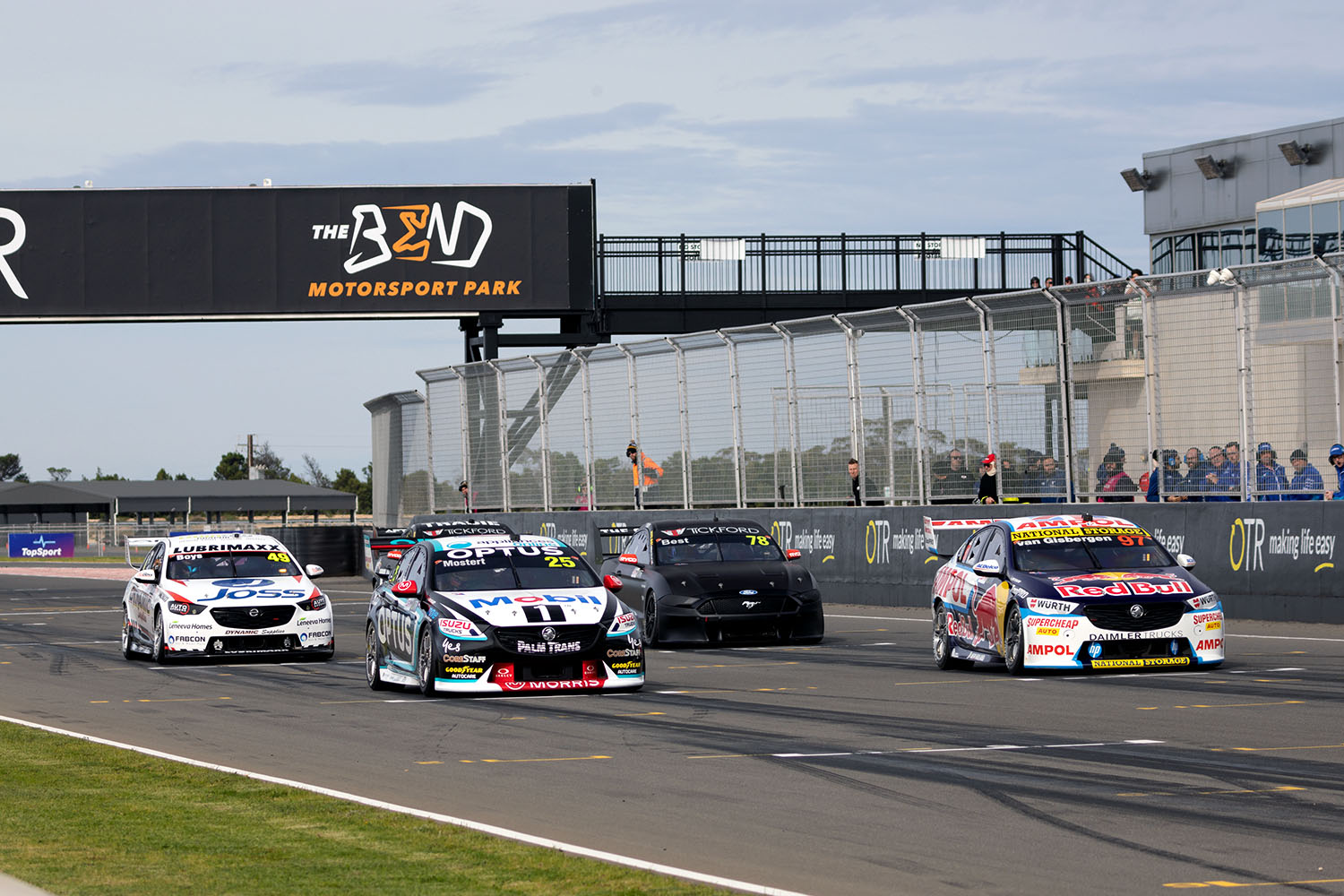
Supercars at The Bend

A shareholder in the consortium which owns Supercars is set to sell out.

Speedcafe.com understands that the stakeholder is in fact Sydney property tycoon Brian Boyd, who is also a part-owner in the Australian Racing Group (ARG).

It had been thought that ARG held a 30 percent share of Racing Australia Consolidated Enterprises (RACE), but Speedcafe.com now believes that the 30 percent in question is in fact separate holdings owned by Boyd and the Rogers’ respectively.

It is thus understood, contrary to an earlier report, it is not ARG itself which is selling a stake in RACE.

Barry Rogers has reaffirmed his commitment to Supercars amid the stakeholder sell-out and confirmed the Rogers-owned shares are not on the market.

“No, we’ve we haven’t sold any of our shares,” Barry Rogers told Speedcafe.com.

“We’re committed to the whole…we’re committed to all of motorsport, bloody oath we are.

“At this point, we’re committed to everything we do. We’re committed to a sharing holding in RACE, we’re committed our involvement with ARG and our share holding there.

“That’s sort of where we stand, but I can’t speak for others.”

On the so-called ‘ARG stake’, Rogers explained, “There’s two ARG people, being us, and a fellow called Brian Boyd, who is Payce.

“Between us, we’ve got a percentage of RACE, but they’re in our individual names.”

He elaborated, “I think, between us, we’ve probably got about just short of 30 percent stake; not remove 30 percent combined.”

The news that a shareholder is set to sell out follows a reportedly rejected takeover bid of Supercars from European company FanTech.

At the time, Barclay Nettlefold, Supercars’ chairman, acknowledged that a number of approaches have been made for the business but did not provide further detail.

Rogers penned an email to Supercars team owners in the wake of the reports, obtained by Speedcafe.com.

In that email, Rogers spoke of the fragmentation of the Australian motorsport landscape and a divide between Supercars and ARG, despite the common ownership.

RACE acquired Supercars last October, purchasing Archer Capital’s approximately 60 percent stake and the 35 percent of shares owned by the teams themselves.

Categories
Australia

Former public servant Ian Ralph Schapel jailed for abusing children from the Philippines online

A retired public servant has been sentenced to up to 16 years in jail for sexually exploiting children in the Philippines, with police saying his victims will never get back their “stolen childhoods”.

WARNING: This story contains content that readers may find upsetting.

Ian Ralph Schapel, 68, spent 13 years between 2007 and 2020 committing sexual offenses online, often while traveling in countries including America, Singapore and Vietnam.

He had pleaded guilty to 50 offences, including 41 counts of engaging in sexual activity with a child outside of Australia, using a carriage service to access child exploitation material and possessing child exploitation material.

On 74 occasions he engaged in sexual activity with at least 13 children in the Philippines over online platforms including Skype and WhatsApp.

The female victims were aged between three and nine.

Schapel also had more than 52,000 images and videos of child exploitation material in his possession.

Commonwealth prosecutor Krista Breckweg had told the court earlier that he would threaten facilitators or parents of his victims that if they did not meet his requests they would starve.

A girl has her face shielded
One of the victims is taken away by Filipino police after the facilitators were arrested.(Supplied: Australian Federal Police)

Australian Federal Police Detective Inspector Rodger Braun said five alleged abuse facilitators were arrested in the Philippines and 15 victims were rescued.

“We cannot give these children back their stolen childhoods, however we hope a conviction of this Adelaide man provides reassurance that the AFP and partner agencies will never stop our fight to bring predators to justice and protect children,” he said.

“Child sex offenders are not restricted by national or international borders, but neither are law enforcement agencies.

“We are united in our commitment to keep children safe.

“I’d also like to issue a warning to any individual who would seek to prey on children: the AFP and its partners will come for you no matter when the abuse occurred and no matter where you are in the world, there is nowhere for you to hide.”

‘Lonely man’ with mental health conditions

District Court Judge Paul Cuthbertson outlined payments for many of the sexual acts for sums of less than $40 on each occasion.

In sentencing, he took into account several factors, including his lonely life, being bullied at school and never being married or in long relationships with women.

.

Categories
US

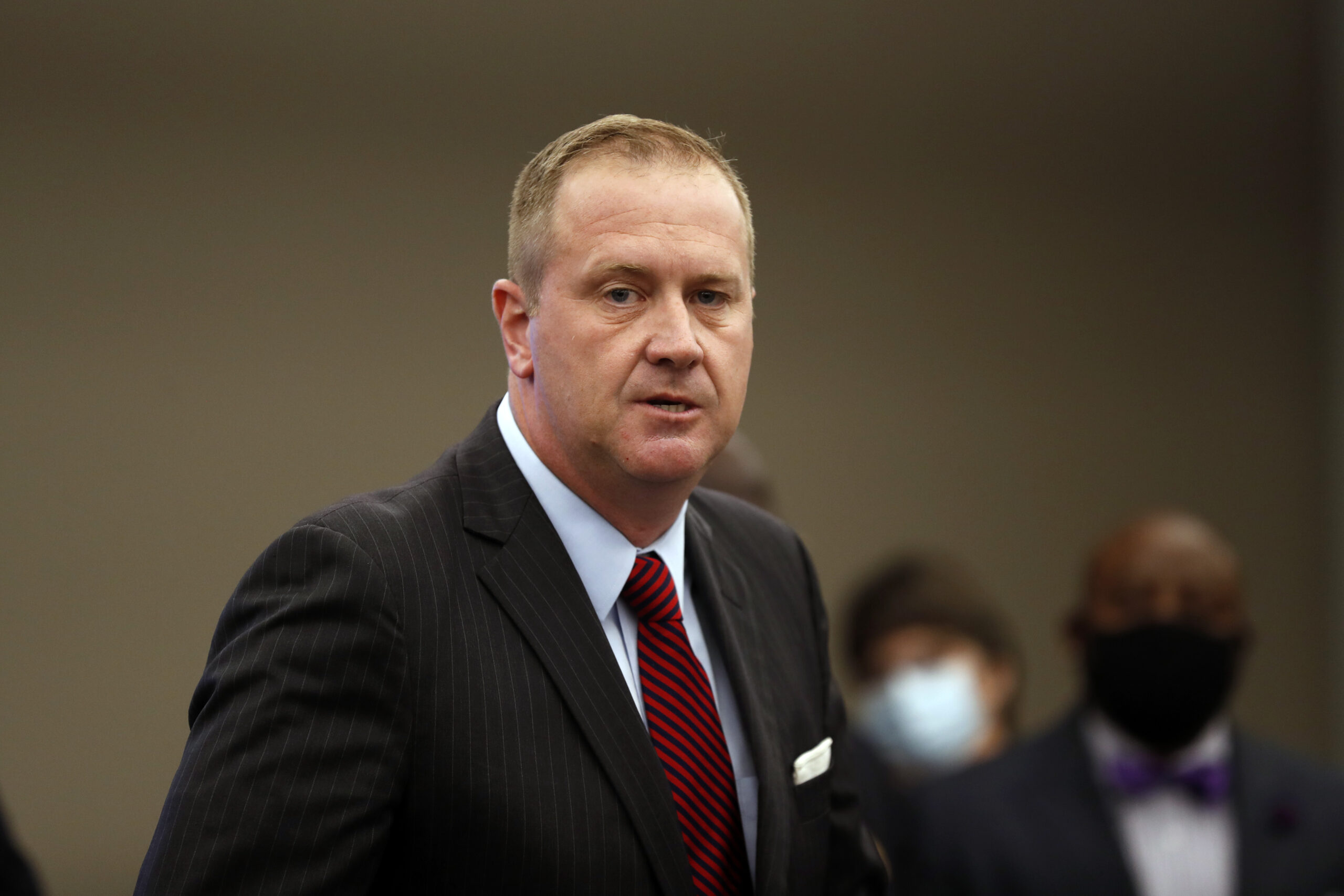
Schmitt wins Missouri GOP Senate primary

It was thought that Schmitt might secure Donald Trump’s prized endorsement, but the former president instead made the unusual choice Monday of announcing he was endorsing “ERIC” — without specifying a last name. Both Schmitt and Greitens, who had the support of Donald Trump Jr. and his fiancée Kimberly Guilfoyle jumped at the opportunity to claim Trump’s endorsement was intended for them.

There were 21 candidates in total vying for the Republican nomination. In the final days of the race, Hartzler and Schmitt zeroed in on each other, with Hartzler using her background as a rural farmer to attack her leading opponent as a lawyer from St. Louis. Schmitt used her speeches in the final days to cast Hartzler as a Washington insider.

All three leading contenders in the final leg of the race made sure to distance themselves from Senate Minority Leader Mitch McConnell. Hartzler, Schmitt and Greitens each said they wouldn’t support McConnell as Senate leader if Republicans take back Congress, a nod to Trump’s attacks and calls for new leadership.

Democrats also had a crowded field this year of 11 candidates, but now that Schmitt locked up the nomination, the race isn’t expected to be all that competitive in the deeply red state come November. Schmitt will face off with one of two Democrats: Lucas Kunce, a veteran, or Trudy Busch Valentine, a former nurse and member of the Busch brewing family. Independent John Wood, who is backed by a super PAC financed by former GOP Sen. John Danforth also turned in petition signatures to make the fall ballot.

Categories
Business

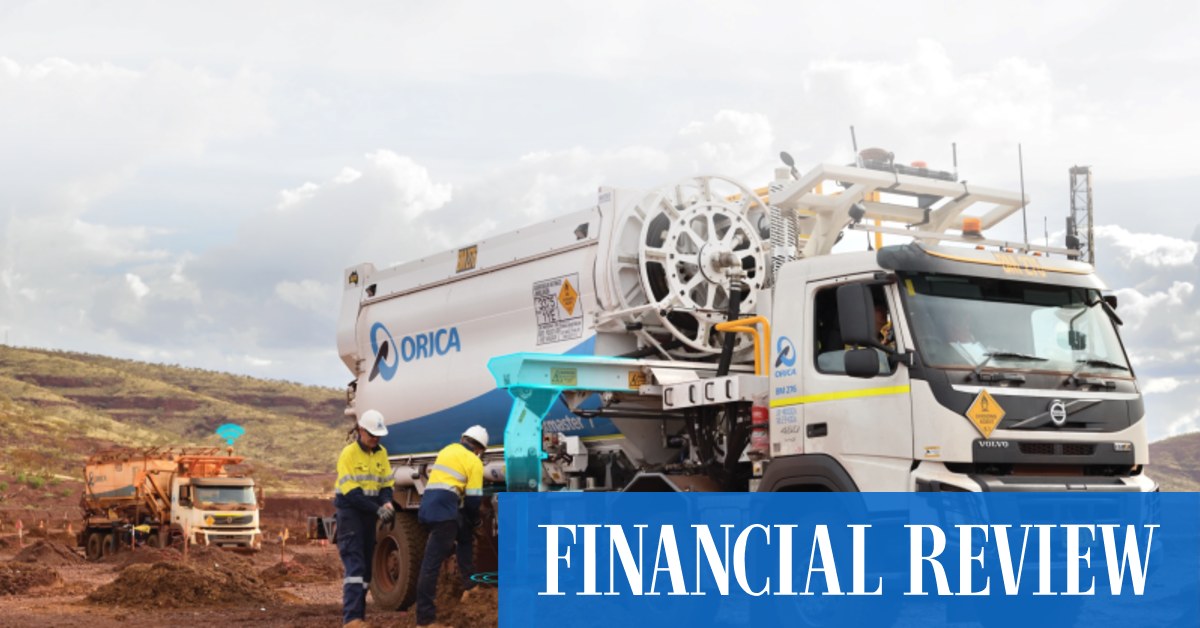
Orica buys mining tech firm for $260m

Chemicals and mining explosives company Orica has paid $260 million in cash to buy Axis mining technology, a specialized geospatial tool which will help miners explore, extract and refine material from “mine to mill.”

The deal is funded through the proceeds of a fully underwritten $650 million institutional share placement, reported earlier by Street Talk.

Orica’s shares went into a trading halt on Wednesday morning ahead of the deal.

Orica told investors Axis geospatial technology will accelerate Orica’s capabilities to support new mineral discoveries required for decarbonisation – as new mineral discoveries are increasingly located at greater depths and demand more precise geophysics.

Axis’ gold and copper exposure also accelerates Orica’s broader commodity mix objectives.

In addition to the cash payout, a deferred earn-out payment of up to $90 million is payable based on Axis’ cumulative earnings generated from 1 October, 2022 to the end of December, 2024. That is contingent on key management remaining employed by Orica during the earn-out period.

Orica Managing Director and CEO Sanjeev Gandhi said: “We are extremely pleased to welcome Axis into Orica.”

“This strategic acquisition further strengthens our existing Digital Solutions vertical and expands our Orebody Intelligence portfolio upstream.”

Categories
Technology

9 Best Soundbars 2022 | Top-Rated TV Speakers Australia

Now that TVs are getting progressively thinner, manufacturers are having a tough time building decent speakers into them. It doesn’t help either that TV speakers often face downwards, creating low audio that loses much of its detail.

By comparison, soundbars have speakers that actually face towards you, making sound clearer and speech more understandable.

In fact, you would be surprised by how much your audio can be improved even with just a budget soundbar.

RELATED: Best Australian TV deals and offers

RELATED: Sonos Ray Soundbar hands-on review

Many soundbars also have Bluetooth integrated too, so you can play your tunes and get more dynamic sound.

Ready to ditch mediocre audio for a better entertainment experience? We’ve rounded up the best soundbars available in Australia below, based on our own experience with the products and real customer ratings and reviews.

QUICK LINKS

BEST SOUNDBAR UNDER $1,500

WHAT YOU NEED TO KNOW:

This premium soundbar delivers fantastic audio with clear vocals and deep bass, while offering an immersive sound experience thanks to its side speakers.

If you do want to kick things up a notch, you can also pair the Arc with other Sonos speakers (such as the Sonos One SLs) to create a full surround sound setup. The Arc comes with plenty of great features too, including Dolby Atmos playback, a quick and easy set-up process and Alexa and the Google Assistant built-in.

It does only have one HDMI port with no passthrough, and there’s no Bluetooth streaming, but the Arc remains a top choice for those who can afford it. You can also grab it in white here.

pros

  • Dolby Atmos support
  • Alexa and Google Assistant built-in
  • Bass and treble adjustments
  • Can be wall mounted

Cons

  • Not bluetooth streaming
  • Doesn’t get very loud
  • Single HMDI eARC port limits Atmos

BEST SOUNDBAR UNDER $1,000

Samsung HW-Q700A 3.1.2ch Dolby Atmos Soundbar, $899

WHAT YOU NEED TO KNOW:

Equipped with Dolby Atmos and DTS:X support, along with Samsung’s Acoustic Beam virtual surround technology, the HW-Q700A bar produces balanced and neutral sound and clear dialogue.

It does struggle with low and mid-bass, so you won’t get the full effects of action-packed scenes or the deep immersion you get with higher-end bars. There’s plenty of great features that make it seriously decent for both TV and music though, such as a dialogue enhancement feature, Bluetooth, Wi-Fi, AirPlay 2 compatibility, graphic EQ and bass and treble adjustments.

You may get some distortion at maximum power, but it remains a top-rated option for mixed use.

pros

  • Dolby Atmos and DTS:X support
  • Graphic EQ and presets
  • Bluetooth and Wi-Fi compatibility
  • get’s loud

Cons

  • No Chromecast built-in support
  • Lacks low-bass

BEST SOUNDBAR UNDER $500

WHAT YOU NEED TO KNOW:

Despite being much more compact than its predecessors, the Ray offers a surprisingly wide soundstage, with audio that can be fine tuned through adjustable EQ in the Sonos app.

The two-channel speaker is compatible with both Dolby Digital 5.1 and DTS Digital Surround information, although it doesn’t include support for Dolby Atmos surround sound. It also packs in a Speech Enhancement function to clarify dialogue, Wi-Fi for music streaming and support for Apple Airplay 2 and Spotify Connect.

Unlike the Beam and the Arc, there is no voice assistance included with the Ray, so you won’t be able to control it with Amazon Alexa or the Google Assistant. In fact, there is no microphone array at all, but that could actually be a bonus if you’re particularly concerned about privacy. The Sonos Ray is also available here in white.

pros

  • Adjustable EQ through the Sonos app
  • Conveniently compact size
  • Can be wall mounted

Cons

  • Not HDMI
  • No Dolby Atmos surround sound support
  • No voice assistance

RELATED: Sonos Ray hands-on review

Yamaha YAS-209 Sound Bar, $495

WHAT YOU NEED TO KNOW:

Arriving with a subwoofer in tow, the YAS-209 smart combo has an impressively wide soundstage and crisp, clear audio.

The sound profile is nicely balanced and the subwoofer helps to boost low-end frequencies, making the duo great for bass-heavy music. There’s also DTS Virtual:X for simulated surround effects and built-in Alexa voice control for easy music streaming.

On the downside, there’s also only one HDMI port on the back of the YAS-209 and it doesn’t support MusicCast, so you won’t be able to connect it to other Yamaha MusicCast-enabled speakers. For the price though, it delivers powerful sound and plenty of great features.

pros

  • Amazon Alexa built-in
  • great for music
  • DTS Virtual:X

Cons

  • Only one HDMI input
  • No MusicCast
  • Additional space needed for subwoofer

BEST SOUNDBAR FOR SMALLER SPACES

WHAT YOU NEED TO KNOW:

While it doesn’t look a whole lot different from the first generation, the Beam (Gen 2) brings a range of great upgrades including HDMI eARC support, immersive Dolby Atmos interpretation, a new CPU and more audio formats.

It doesn’t have the upfiring tweeters needed for ‘true’ Dolby Atmos, but you do still get a seriously decent performance out of it. Audio is rich and detailed and can also be fine tuned to suit your space through TruePlay in the Sonos app.

The Beam is also a smart speaker, which means it pairs with both Alexa and the Google Assistant, and it can be paired with other Sonos speakers to further expand your system. It’s also versatile and straightforward to use, making it the best soundbar for most people.

pros

  • HDMI eARC support
  • 3D audio with support for Dolby Atmos
  • True Play tuning
  • Choice of Alexa or Google Assistant on-board

Cons

  • Doesn’t support DTS:X
  • No additional HDMI ports
  • Not Bluetooth

BEST SOUNDBAR WITH DOLBY ATMOS

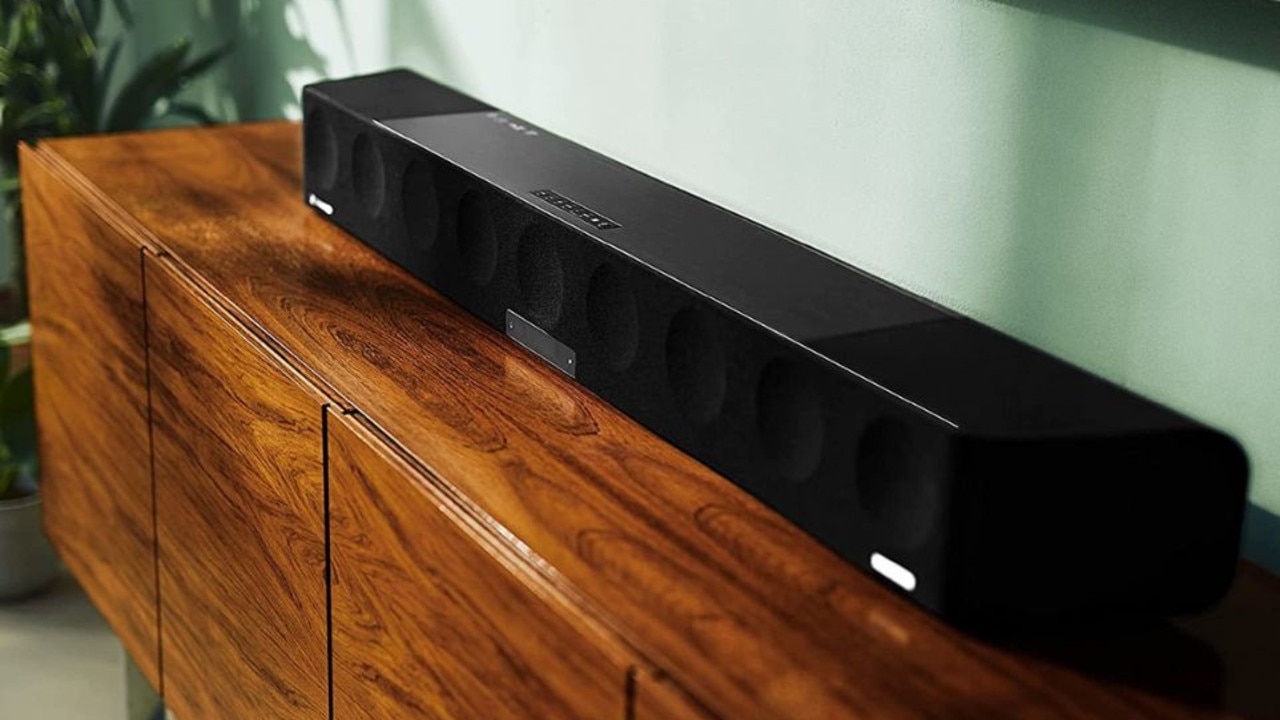
Sennheiser AMBEO Soundbar, $3,999.95

WHAT YOU NEED TO KNOW:

Even without the addition of satellite speakers or a subwoofer, the Ambeo produces rich, natural sound and delivers a convincing surround sound effect.

It can get very loud, making it ideal for movie nights and parties, and includes features like speech enhancement, DTS:X support, Google Chromecast built-in, 4K HDR pass-through and a night mode for a better listening experience. The Ambeo is also controlled entirely by remote control, making it incredibly simple to use.

It’s definitely a luxury buy and it is a huge unit that requires a lot of space, but it’s also arguably the best-sounding bar money can buy.

pros

  • Best-in-class sound
  • HDMI eARC support
  • DTS:X support
  • bluetooth support

Cons

  • Bulky
  • very expensive
  • not subwoofer

Hisense U5120G 5.1.2 Ch Dolby Atmos 510W Soundbar, $629

WHAT YOU NEED TO KNOW:

Featuring 12 speakers (including the accompanying wireless subwoofer), the U5120G delivers rich, multidimensional audio with plenty of depth and detail. HDMI eARC support also allows you to experience uncompressed Dolby Atmos and DTS:X​, though Atmos’ immersive sense of height is still better delivered on higher-end soundbar models.

There are plenty of other great features though, including 4K Ultra HD Pass Through, optimized sound through Eilex PRISM and Bluetooth connectivity for music streaming.

It may not quite stand up to its pricier rivals, but its great features and wide speaker array will make it a solid addition to your lounge room.

pros

  • Affordable Dolby Atmos sound bar
  • HDMI eARC support
  • DTS:X support
  • Bluetooth-connectivity

Cons

  • Remote control is hard to read
  • No voice assistance
  • Not Wi-Fi

BEST SOUNDBAR WITH SUBWOOFER

Samsung HW-Q950A Atmos Soundbar with Wireless Subwoofer, $2,099

WHAT YOU NEED TO KNOW:

Both the HW-Q950A soundbar and the rears are fitted with upfiring drivers which bring Atmos-enabled height to your audio, while the sizeable sub gives you plenty of bass.

There’s also 3D audio format support from both Dolby Atmos and DTS:X, two HDMI inputs and one output with support for eARC, Bluetooth, and Wi-Fi. On the music front, Spotify is the only music source incorporated in the accompanying SmartThings app, but Bluetooth, Apple AirPlay 2 support and Alexa compatibility gives you plenty of other ways to stream.

The HW-Q950A is also about as close as you can get to a true wired system too, making it great for those who hate the clutter of cables. It’s not the most nuanced soundbar out there, and you will need plenty of room for the whole system, but it’s extremely impressive for movies thanks to its room-filling sound.

pros

  • Dolby Vision and HDR10+ passthrough
  • DTS:X support
  • Bluetooth-connectivity
  • Rear speakers and sub included

Cons

  • expensive
  • Sound could be more refined
  • Requires plenty of space

BEST SOUNDBAR FOR TV

WHAT YOU NEED TO KNOW:

The TV Speaker doesn’t have a tonne of features, but it’s well-equipped for watching your favorite shows thanks to a dialogue enhancement feature and a bass adjustment feature.

There’s no Dolby Atmos support, which is what we would expect at this price point, but there are HDMI ARC and Optical ports and Bluetooth compatibility for music streaming. Audio is smooth and reasonably well balanced though it does lack low-bass, so sound isn’t as immersive as other bars on this list.

If you’re looking for a simple option with an easy setup though, this is the way to go.

pros

  • bluetooth supported
  • Dialogue enhancement feature
  • simple-setup
  • optional subwoofer

Cons

  • Doesn’t get very loud
  • No Dolby Atmos support
  • Lacks low-bass

CAN I USE A SOUNDBAR WITH ANY TV?

Generally speaking, yes you can use a soundbar with any TV, although you will need to check that they have compatible connections. To get the most out of your soundbar, it can help to match the brand of your bar to that of your TV, but this isn’t a hard and fast rule you need to follow.

WHERE DO I PLACE MY SOUNDBAR?

Most soundbars are designed to be placed in front of your TV, though it’s always worth taking measurements to ensure the bar can fit comfortably on your stand without blocking your view. Plenty of models are also able to be wall-mounted and either come with brackets included or have compatible brackets that can be purchased separately.

HOW DO I CHOOSE A SOUNDBAR?

The three main considerations when buying a soundbar are the price, the dimensions of your TV and the size of your room. Most soundbars are suited to small to medium rooms, though large, powerful bars will likely overwhelm rooms that are on the smaller side.

The best rule of thumb is to look to single-bar systems for smaller TVs and rooms and to soundbar/subwoofer combos for medium rooms and higher-end TVs. It is worth noting that combination units are more expensive, so you’ll also want to factor in your budget before committing to a purchase.

Looking to discover more great devices? Head to our Best Of electronics section to see all the latest product guides and reviews. You can also sign up to our Best Of shopping newsletter to be kept in the loop about popular products and upcoming sales or head to news.com.au Coupons to see a list of current deals and offers.

lauren chaplin

lauren chaplinBest Of Writer

Lauren is news.com.au’s Best Of consumer technology writer. She previously worked at comparison site Finder as the senior shopping writer where she reported on everything from tech gadgets to the latest home products. She has a Bachelor of Journalism from the University of South Australia and prior to cutting her teeth as a journalist, she worked as a media advisor for JB Hi-Fi where she sold the very products she now writes about.

.

Categories
Sports

Luke Keary, concussion, head knock, Sydney Roosters, Lindsay Collins, recovery time

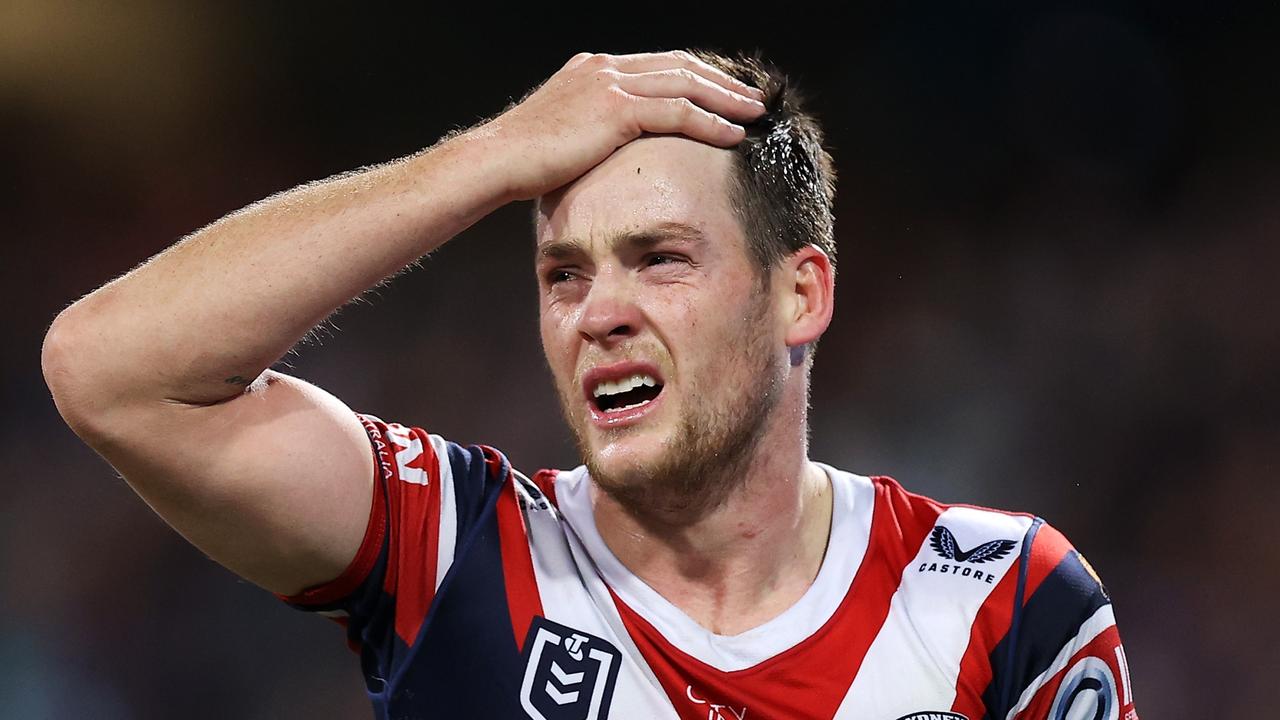
Roosters star Luke Keary has opened up on his concussion battles, how he’s dealt with the setbacks and why it can be one of the more frustrating injuries.

He has also revealed that teammate Lindsay Collins will take a break from the game after suffering a head knock against Manly — his second in as many weeks.

Keary suffered a head knock in the Roosters’ Round 14 loss to the Storm and was sidelined for four weeks before starring in his return game against the Knights.

Stream every game of every round of the 2022 NRL Telstra Premiership Season Live & Ad-Break Free During Play on Kayo. New to Kayo? Start your free trial now >

The 30-year-old has a well-documented history with concussion. He suffered four in the space of 14 months between January 2018 and May 2019 — with the last one during that period forcing him into an extended break from the game.

When he suffered his latest knock, many in the game feared for his long-term future. But Keary had the advice of those who know best to guide him through a tricky period.

Speaking for the first time since that head knock, Keary told the Fox League Podcast that he was “a little bit nervous” to return in Round 19.

But shared that “compartmentalizing” and listening to medical advice is what helped him get back onto the field.

“I think the way you deal with it initially and the big one is the medical advice you get. I found the top neurologist in the country giving you advice — they’re the ones you should listen to,” he said.

“There’s a lot of people who are going to have an opinion about it, which is fair enough, but if you can just listen to them (neurologist), they’re not going to put you at risk. They’re not going to let you get back out there if they think there’s a risk to your long-term future.

“If you can kind of compartmentalize everything and take the right people’s advice it makes you a little less nervous to come back.

“But it’s always a tough one to come back from… you don’t want to get them as a player and you don’t want to see other players get them.”

O’Brien’s time at Knights running out? | 02:43

Keary also gave a rare insight into what the recovery period actually looks like for players — and why it’s different for everyone.

“I’ve had ones where I’ve had symptoms and with those you can’t do anything, you’ve just got to rest and wait for the symptoms to go, the NRL has a return to play policy which you follow and it’s a pretty safe way to get back into contact and games,” he said.

“Then there’s others… In 2019 I had a few in a row and I had a forced six-week lay-off. I was actually fine, I didn’t have any symptoms, but the doctors thought it was the best thing to have a month off.

“I was fine the whole time, I had a couple of weeks off then I trained with the boys for three or four weeks. I think they’re all different depending on symptoms.”

MORE NRL NEWS

VERDICT: Broncos star cops four-game ban for controversial hip-drop tackle

TEAMS: Manly young gun dumped; Bellamy’s big Storm reshuffle

RUN HOME: Souths miss golden chance; Cowboys hunt unthinkable as rivals falter

DEADLINE DAY: Grading your club’s mid-season moves as frenzy shakes up title race

RESERVES WRAP: Tigers star’s big switch as beast stuns; answer to Storm’s woes

It’s those types of concussions where there’s no symptoms that Keary admitted are “definitely” frustrating because his body may have felt fine but he had to put his long-term health first.

“Obviously with other injuries you just know straight away, whatever it is there’s sort of a set time limit. Head (injuries) are very different,” he said.

“Every single player is different. Some players take an hour to recover, some take weeks, some take months.

“The neurologist will tell you too, I think it’s the brain patterns don’t go back to normal for a few weeks so I think in society and even in medical they admit don’t have all the information they need at the moment.

“But I’m pretty experienced with them so I can tell you they’re very cautious and they don’t take footy into consideration — they take into consideration your health.

“As a game we’re doing as good a job as we can to protect the players and put in the best measures and protocols we know at the moment which are going to help.

“It’s never going to be perfect because as I said even the top docs will admit they just don’t have enough information yet.”

Nofoaluma vows to honor Tigers deal | 01:16

Between Keary’s history and the early retirements of Boyd Cordner and Jake Friend last season, the Roosters are well-equipped for concussion challenges.

They’ll take their time with Collins, who suffered a head knock in Origin III and then another against Manly last Thursday.

Keary revealed Collins, who is “in good spirits,” will take a break but is hopeful of returning before the end of the season.

Get all the latest NRL news, highlights and analysis delivered straight to your inbox with Fox Sports Sportmail. Sign up now!!

“It was real unfortunate,” Keary said of Collins’ concussion.

“Obviously the Origin one and then first game back, that wasn’t a pretty sight. But he was in really good spirits.

“It’s funny, everyone’s different and some knocks you’re rattled by, they make you sick and then others you’re fine five minutes late.

“Linds was in real good spirits after the game, he’s been at training every day — he wanted to train with us yesterday but the doctors wouldn’t let him.

“He’s obviously going to have some time off, get himself right, make sure his head and neck are right, make sure everything is OK, go see some independent doctors and take the time he needs to come back, make sure he’s healthy and strong and to make sure he’s OK to play.

“Hopefully we get him back before the end of the season, but if not, we all just want Linds to get healthy again.”

.

Categories
Australia

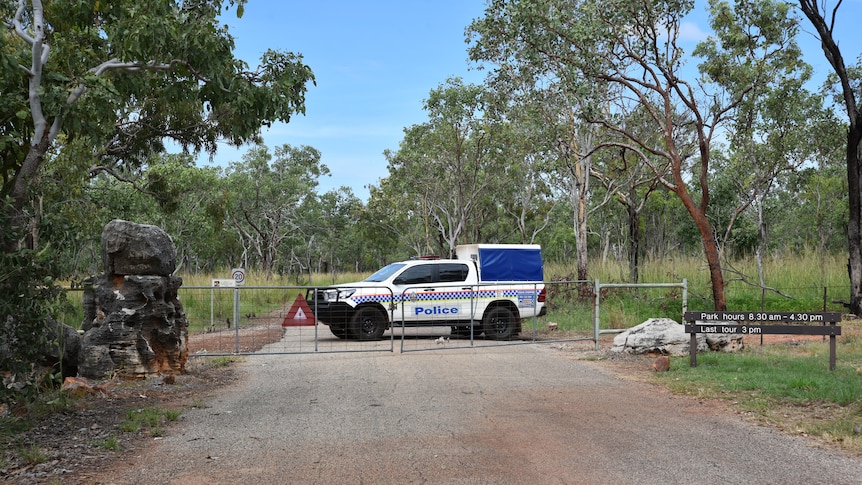
Murder charge dropped for Kim Kellett, accused of fatal shooting near Katherine’s Cutta Cutta Caves, court hears

The man accused of murdering an alleged home intruder near Katherine earlier this year, will likely plead guilty to the lesser charge of manslaughter, a court has heard.

Kim Kellett has been in prison sincely alleged shooting a 26-year-old man on his property at the Cutta Cutta Caves National Park in March.

The 38-year-old appeared in the Darwin Local Court on Wednesday via video link from the local correctional centre, dressed in a red prison-issued T-shirt which usually indicates the inmate is held under maximum security conditions.

Senior Crown Prosecutor, Marty Aust, told the court the original murder charge would be withdrawn and replaced with the lesser charge of manslaughter.

“The Crown will be relying on a reckless manslaughter charge,” he said.

“The facts that make out that charge have been reduced to writing and there is agreement between the parties as to the facts in full, for plea in the Supreme Court.”

A set of agreed facts was given to the judge, but not read in open court.

The exterior of the Darwin Local Court.
The court heard the man is likely to plead guilty. (ABC News: Hamish Harty)

Mr Kellett’s lawyer, Peter Maley, told the court his client would likely plead guilty when the matter reached the Supreme Court next month.

“It will be ultimately a plea of ​​guilty to an amended count two, for recklessly causing the death,” he said.

Despite indicating a guilty plea, the charge Mr Kellett faces is too serious to be dealt with by the Local Court.

“I am satisfied the evidence is sufficient to put the defendant on his trial in respect of count two [manslaughter],” Judge John Neill said.

“I direct he be tried at the Supreme Court in Darwin.”

Manslaughter carries a maximum penalty of life in prison.

Mr Kellett’s case will be mentioned in the Northern Territory Supreme Court on September 1.

.

Categories
US

A Sandy Hook Mother Confronts Alex Jones During Trial

AUSTIN, Texas — For 90 searing minutes in a courtroom on Tuesday, a Sandy Hook mother brought the conspiracy broadcaster Alex Jones face-to-face with the havoc she said his lies about the mass shooting that killed her son had wrought on her family and on the national discourse.

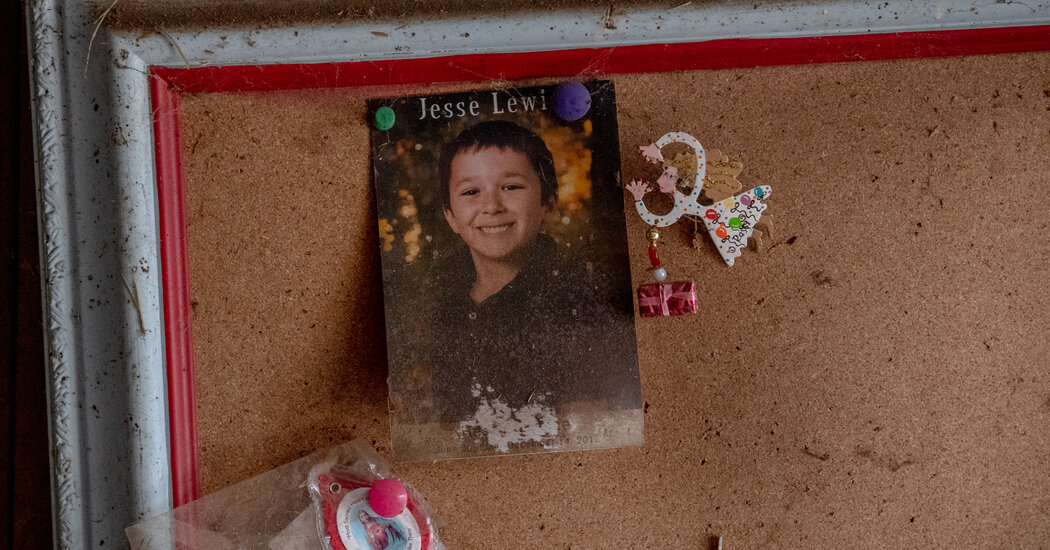
“Truth — truth is so vital to our world. Truth is what we base our reality on, and we have to agree on that to have a civil society,” Scarlett Lewis, whose son Jesse, 6, was among the 20 first graders and six educators killed in 2012 at Sandy Hook Elementary School in Newtown, Conn., told Mr. Jones from the witness stand.

Mr. Jones has questioned the events at Sandy Hook, but “you know that’s not true,” she said, staring at him while he fidgeted at the defense table. “When you say those things, there’s a fringe of society that believe you that are actually dangerous.”

It was a remarkable moment in the long-running legal battles between the Sandy Hook families and the Infowars fabulist, who for years broadcast lies that the shooting was a government hoax and that the families were “actors” in the plot. Mr. Jones, who has regularly berated the families on the air, has rarely appeared in the same room as them, even as he has been found liable in a series of defamation suits brought by the families of 10 victims.

The trial involving Ms. Lewis and Neil Heslin, Jesse’s father, is the first of three in which juries will decide how much Mr. Jones must pay for defaming the families. Mr. Jones has mostly avoided showing up in court. But through an accident of scheduling as he prepared to testify in his defense of him, he wound up face-to-face with Ms. Lewis, who addressed him personally throughout her testimony of her.

“Alex, I want you to hear this,” Ms. Lewis said, fixing him in her gaze. “We’re more polarized than ever as a country. Some of that is because of you.” Mr. Jones nervously shook his head.

The Sandy Hook families have suffered years of torment and threats after Mr. Jones, beginning hours after the shooting, deemed Sandy Hook a “false flag” operation planned by the government as a pretext for confiscating Americans’ firearms.

Business records released during the proceedings indicate Mr. Jones has reaped more than $50 million annually selling diet supplements, gun paraphernalia, body armor and doomsday prepper gear by hawking conspiracy theories to millions listening to his radio and online show. Jesse Lewis’s parents are requesting $150 million in compensatory damages. More important than money, Ms. Lewis said on Tuesday, “I hope to accomplish an era of truth.”

At the heart of the trial, which is set to conclude this week, is a June 2017 episode of NBC’s “Sunday Night With Megyn Kelly,” in which Ms. Kelly profiled Mr. Jones. In the broadcast, Mr. Heslin protested Mr. Jones’s denial of the shooting. He recalled his last moments of him with Jesse, saying, “I held my son with a bullet hole through his head of him.” Afterward, Mr. Jones and a sidekick, Owen Shroyer, implied on Infowars that Mr. Heslin was lying.

Mr. Heslin testified first on Tuesday. In a low voice and pausing frequently to weep, he described his son de él as an energetic boy with a booming voice, who liked to team up with his father to collect scrap metal and recyclables that he returned for spending money. When the gunman entered Jesse’s classroom, he shouted “Run!” during a pause in the shooting. Nine children ran, and survived.

Mr. Heslin said conspiracy theorists had tried to contact him by phone, confronted and shoved him on the street. Someone fired a gun into his house and car from him. This spring, he said, someone drove past his house and shouted “Alex Jones!” and he heard the sound of gunfire.

Glancing at Mr. Jones’s empty seat at the defense table, Mr. Heslin called his absence “a cowardly act.”

“The statements and the remarks made by both Infowars and Alex Jones have tarnished Jesse’s legacy,” he added.

While Mr. Heslin was testifying, Mr. Jones was across town broadcasting his show. After watching Mr. Heslin’s testimony on a courtroom YouTube feed, he called the grieving father “slow,” and “manipulated by some very bad people.”

An hour later, Mr. Jones turned up in court flanked by his spouse and a cadre of bodyguards. Ms. Lewis, who had seen the broadcast maligning Mr. Heslin during a break in her testimony from her, was waiting for him.

“I’ve had a hard time finding words today. It makes me feel astounded, in a bad way,” she told Mr. Jones. “Horrible. Horrific. Horrifying.”

Mr. Jones testified after Ms. Lewis, saying that he had repeatedly tried to apologize.

Judge Maya Guerra Gamble of Travis County District Court admonished him later for lying under oath in parts of his testimony. Mr. Jones had told the jury he is “bankrupt,” even though his bankruptcy filing has yet to be adjudicated and the families’ lawyers say it is a tactic to avoid upcoming trials. He also claimed that he had complied with court orders in the defamation suits, when in fact his years long failure to submit documents and testimony was the reason he lost all of them.

“You’re under oath. That means things must actually be true when you say them,” Judge Guerra Gamble told Mr. Jones. He tried to interject, but she stopped him: “Don’t talk.”

After the judge left the courtroom, Mr. Jones approached Mr. Heslin and Ms. Lewis and shook their hands. Their lawyers hustled them away, and Mr. Jones exploded in anger, claiming the parents were being “controlled.”