Categories
Australia

How football-sized bunya nuts could be the next big thing in bush food business

An ancient native nut once eaten by dinosaurs has huge potential to be part of the booming Indigenous bush food industry, according to new research led by the University of Queensland.

Brazilian-born scientist Jacqueline Moura Nadolny was aware of walking a sensitive line between examining new uses for bunya nuts without exploiting First Nations’ knowledge and food sovereignty.

A number of green cones on the ground, some are broken, showing the encased nuts inside.
Each heavy Bunya cone contains dozens of edible nuts.(Supplied: Jacqueline Moura Nadolny)

The PhD candidate said the bunya nut was not only nutritious and tasty, rich in protein, a healthy resistant starch, amino acids, minerals, omega-3 and omega-6 fatty acids but undervalued by non-Indigenous Australians.

Ms Moura Nadolny studied seeds from the bunya nut’s football-sized spiky cones, struck by similarities to the Pinhao pine nut in southern Brazil.

Beware of falling nuts as bunya trees in Queensland drop record amount of knobs. February 6, 2015.(Rural ABC: Marty McCarthy)

South Americans eat the smaller, red-skinned pine nut boiled, roasted and salted as a snack, ground into gluten-free flour and brewed into beer.

“I found out that they were actually from the same family, just a different species,” Ms Moura Nadolny said.

“The name of the family is Araucariaceae and there are 21 species around the world but only three of them are edible by humans.”

culture and cuisine

loading

For thousands of years Aboriginal nation groups journeyed to Queensland’s Bunya Mountains and Blackall Range, gathering when the large cones weighing up to 10 kilograms, dropped from an ancient species of pine tree towering up to 50 meters high.

Each cone can contain up to 100 nuts. the Araucaria bidwillii tree dates back to the Jurassic period, at least 145 million years ago.

Pre-COVID, modern bunya nut festivals held on the Sunshine Coast revived ancient traditions that were severely disrupted by European settlement.

Space to play or pause, M to mute, left and right arrows to seek, up and down arrows for volume.

Play Video.  Duration: 5 minutes 3 seconds

Aboriginal festival celebrates harvest of bunyas(ABC Sunshine Coast: Megan Kinning)

“[Traditionally] there were very big festivals that used to get held every couple of years when there was a bumper crop of bunya nuts,” Indigenous academic Odette Best said.

“They were festivals that went for sometimes weeks at a time, marriages were struck, ceremony would be done, feasts would be prepared and a lot of cultural business would occur.”

The professor in nursing at the University of Southern Queensland, who has a keen interest in food sovereignty and researches First Nations history, provided guidance to Ms Moura Nadolny about her people’s ancient food.

Two women standing next to a sign pointing to the Bunya Mountains.
Odette Best with Jacqueline Moura Nadolny on a visit to the Bunya Mountains.(Supplied: Jacqueline Moura Nadolny)

“For her and for me there was a real interest around how I could be on one continent and her people are on another continent and yet there’s an incredible similarity between the nuts [and the traditions around them].”

Professor Best’s favorite way of eating bunya nuts is cooked in coals until the tough husk pops. She also makes a “really beautiful” emu and bunya nut stir fry.

“Odette helped me to collect the bunya nuts and told me about the way they prepared it, the history, which was amazing,” Ms Moura Nadolny said.

“And she has been helping me to write as well because I don’t want to just put my results in a paper and publish.”

“I want to have this Indigenous knowledge on the paper and show how important they are to Indigenous communities.”

Young Aboriginal dancers performing to a crowd
Traditional Indigenous dances are performed at the Bunya Dreaming gathering in 2019.(ABC Sunshine Coast: Megan Kinning)

Her PhD project with UQ’s School of Chemical Engineering and the Queensland Alliance for Agriculture and Food Innovation’s Center for Nutrition and Food Sciences, compared roasted bunya nuts to boiled bunya nuts — benchmarking them against the sweeter chestnut.

A team of panelists investigated their aroma, flavor and texture.

“Chestnuts are much more sweet, bunya nuts are more savory and a little more bland,” Ms Moura Nadolny said.

two cakes on a table with bunya nut decorations
Cakes made with Bunya flour on display at the Bunya Dreaming gathering.(ABC Sunshine Coast: Megan Kinning)

Boiling bunya nuts made them softer and more moist while roasting made them drier. Flour, beer, cakes, bread, curries, snacks and stir fries are all potential uses. Frozen, they last at least two years.

Ms Moura Nadolny’s goal is to make bunya nuts more accessible by working with Aboriginal communities.

“If you could find in the supermarket, as we find chestnuts, it would be amazing,” Ms Moura Nadolny said.

Two women in lab coats testing bunya nuts in a lab.
Scientist Jacqueline Moura Nadolny at the Queensland Alliance for Agriculture and Food Innovation.(Submitted: Jacqueline Moura Nadolny)

While praising the research, Professor Best was cautious about the next step.

“We just don’t want non-Indigenous people exploiting Indigenous foods and making an industry out of it because you can’t walk into a supermarket these days without Indigenous food flavorings being utilized in absolutely everything, and the reality is very little of that kickback goes to Indigenous communities,” she said.

“There’s a sense of hesitancy amongst a lot of Indigenous people about ‘Oh this is just the next wave of colonization and taking of knowledge and being utilized by non-Indigenous people and being made into products that can be sold and a lot of money made from them’.

“Jacqueline’s not exploitative, she wants and she understands that hopefully we can get Indigenous involvement into this … that actually sees stuff being done or created that’s Indigenous owned and run.”

.

Categories
Business

How to get the best deal on your car insurance

Beyond this, all drivers must consider what level of optional insurance they want to cover the damage bill for any vehicles or property involved.

Given the regularity of road accidents, it is definitely worth having at least some level of coverage to protect against the nightmare scenario that you collide with a Porsche. If you don’t have insurance, you’ll be responsible for paying the entire Porsche damage bill out of your own pocket. ouch!

There are three main choices for optional car insurance coverage.

The most minimal is called a third-party property damage (TPPD) policy, which pays the damage bill of the Porche (or any other car you hit), but not any damage to your own vehicle, either by theft, fire, or an accident that you cause (remember, if you’re not at-fault, the other driver will be responsible for paying your damage bill).

One step up from this is a third-party fire and theft (TPFT) policy, which covers you for the Porche you hit, plus damage or loss to your car from theft or fire.

The top-level coverage is called comprehensive insurance and covers you for the Porsche plus all damage to your car, including damage you cause (although exclusions apply, so you have to read the fine print). This type of insurance can also help you avoid the hassle of chasing payments if you are hit by an uninsured driver (your insurer will chase them for you).

Comprehensive is the most expensive. Indeed, I ran a quote this week and downgrading my coverage to TPFT would reduce my annual premium to $351 a year, and reducing it to TPPD would shave it to $272.

For cheaper and older cars, you may want to consider one of the lower levels of coverage, particularly if you felt confident you’d have the savings needed to repair or replace your car if it is damaged. Entirely up to you.

Agreed or market value?

If you opt for comprehensive cover, you can consider an agreed-value policy or a market-value policy.

loading

Agreeing to accept a pre-determined dollar amount to be paid if your car is totaled – rather than having your payout calculated at the prevailing second-hand market rate of your car – can substantially reduce your premiums.

I have my coverage set to the lowest agreed value allowable for my car, at $11,250. It wouldn’t be enough to buy my car back, but I figure it’s enough to buy a set of wheels, should the worst occur.

Up your excess

I also have my policy set to the highest allowable excess – that’s the dollar amount you agree to pay out of pocket if a claim is made. This reduces your upfront premiums. My excess is set to $2000.

shop around

Former competition tzar Allan Fels conducted an inquiry which found insurers, despite their claims, charge a so-called “loyalty penalty” to longstanding customers.

Premiums are set low in the first year or two, and then inflate to higher rates than those offered to new customers. Sneaky.

So, shop around on websites such as Finder, Canstar, Compare The Market and RateCity. And if you do call your existing insurer and ask for a better deal, make sure they provide a quote to you as a new customer, not as a modification to your existing policy.

Calculate your kilometers

Premiums are generally lower the less you drive your car. Some insurers even charge a low annual base premium plus a per-kilometer rate throughout the year, which could work out well for infrequent drivers or second cars. Check comparison sites to find these deals.

Restrict driver ages

Some insurers also offer cheaper premium policies if you agree to only let people of a certain age, such as 40-plus, drive your car. Sorry, kids.

Beware add-ons

Consider your own individual needs, but I dropped my windscreen cover when I found out I could get it cheaper by opting for a slightly higher tier of roadside assist membership.

Categories
Technology

Gboard readying more Material You: Shortcuts bar

Last August, Google rolled out a handful of Material You flourishes to Gboard for Android, and a few more are now coming to the keyboard, including the shortcuts bar.

About APKInsight: In this “APK Insight” post, we’ve decompiled the latest version of an application that Google uploaded to the Play Store. When we decompile these files (called APKs, in the case of Android apps), we’re able to see various lines of code within that hint at possible future features. Keep in mind that Google may or may not ever ship these features, and our interpretation of what they are may be imperfect. We’ll try to enable those that are closer to being finished, however, to show you how they’ll look in case that they do ship. With that in mind, read on.

At the moment, tapping the chevron icon in the top-left corner slides out various tools, layout, and shortcuts. The list includes today: Settings, Theme, Text Editing, Clipboard, GIF, Floating, One-handed, Translate, Share, and Sticker. There’s also the split keyboard on foldables (but not tablets).

Gboard 12.1 is rolling out to the beta channel today and reveals work on a Material You redesign of that bar that a friend of the site RKBDI has successfully enabled. The corner button is still a circle but now uses a 3×3 grid icon.

Meanwhile, the shortcuts (or “access point” items as they’re referred to) are now housed in rounded rectangles that are very reminiscent of Material You (MD3) chips. It’s not too different from the Assistant voice typing UI on Pixel phones (as seen in the cover image above). The background of each item is lighter than the keyboard, which is more pronounced on colorful themes.

You can now have one more shortcut for a total of five in the bar, though Gboard is working on the ability to let users customize how many appear if they really only need one or two. However, the new maximum is due to Gboard removing the three-dot/overflow at the right and using the existing corner button for entry.

Google has redesigned this view with a more compact grid that’s no longer centered. It allows more functions to be easily added in the future, while the Text Editing layout is getting a Material You modernization of its own with rounded corners for each button.

Another Material You update is to settings. The main list is getting larger, while MD3 toggles are now used throughout.

It’s not clear when Gboard will widely roll out the Material You bar and other design changes.

FTC: We use income earning auto affiliate links. More.


Check out 9to5Google on YouTube for more news:

Categories
Entertainment

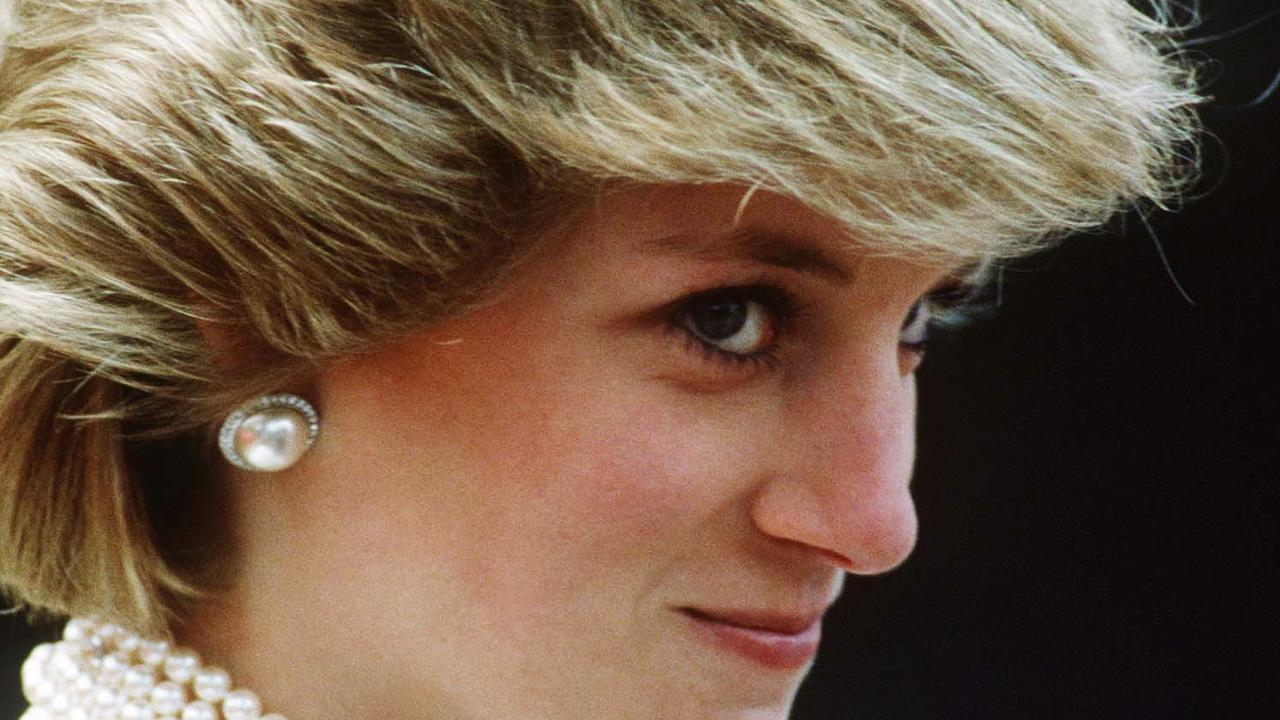
Princess Diana’s bodyguard Lee Sansum claims she would still be alive if he had been on duty

He is the bodyguard who Princess Diana nicknamed “Rambo” and with whom she had several heart-to-hearts revealing her biggest fears and future plans.

And 25 years on from her death, Lee Sansum says he is adamant she would be alive today if he had been with her on the night she died alongside Dodi Fayed in a Paris car crash on August 31, 1997.

In an exclusive interview with The SunSansum has told how security guards drew straws to accompany bodyguard Trevor Rees-Jones in the car, and he lost.

He also reveals the fun bets he had with a young Prince and how he treasures a letter from Diana thanking him for making her final sunshine holiday in St Tropez “magical” — and her fears she may be assassinated.

“It could have been me in that car,” said Sansum, now 60.

“We drew straws to see who would be accompanying Trevor that weekend. I pulled a match and it was a long one.

“When I learned they were not wearing seatbelts in the crash I understood why they didn’t survive. That shouldn’t have happened.

“It was standard practice for the family to wear seatbelts. It was an order sent down from the boss, Dodi’s dad Mohamed Fayed. Dodi, in particular, hated wearing seatbelts and I always insisted on it.”

Through his work with Mohamed Al-Fayed — the owner of Hôtel Ritz Paris and formerly Harrods department store and Fulham FC — Sansum also protected Tom Cruise, Nicole Kidman, Sylvester Stallone and footballer Pele.

Burnley-born Sansum, who has covered his incredible career in personal protection in a new book, The Bodyguard: Real Stories of Close Protection from Tom Cruise to Princess Dianawas assigned to look after Dodi and Diana, then 36, when they stayed at his boss’s 30-bedroom villa in St Tropez, in the South of France, during July 1997.

Every day Diana would wake up at 7am and chat to the bodyguard.

“She had been happy on that holiday,” he said.

“But I had seen her in tears too, when she learned of the murder of her friend, the fashion designer Gianni Versace. She confided in me her own fears that she might one day be assassinated.

“She asked if I thought his murder outside his home was a professional killing.

“I thought it was. Then she said something that always stayed with me — ‘Do you think they’ll do that to me?’ She was shaking and it was clear from her tone that she really thought that they might, whoever ‘they’ might be.

“I spent some time reassuring her that no one was going to try to kill her and she was safe with us, but she definitely thought there was a risk that one day she might be assassinated.”

Diana also told Sansum she wanted to live with Dodi in the States.

“I actually signed up to join Diana and Dodi in America,” he added.

“She was definitely going, and that was that. She told me she was going there.

“She didn’t want to, but that was the only place she felt people weren’t having a go at her. It was probably her way of keeping sane, to get some respite.”

Sansum took an instant shine to young princes William and Harry, who he says were down to earth and friendly, like their mother. William was 15 when Diana died and Harry 12.

Sansum believes Diana’s plan to move to the US influenced Harry’s move there with Meghan.

“This trauma happened when the building blocks for life were being formulated,” he said.

“His mother saw America as a place of sanctuary. He will be drawing on his experiences of her from then. ”

Sansum, a martial arts expert, tried to teach William and Harry how to kickbox, but they were too apprehensive.

“I rigged up a punch bag in the garage,” he said.

“One day I told the princes, ‘Come on, I’ll teach you a bit of kickboxing.’

“When I showed William and Harry how to do it though, they seemed a little bit in awe from watching me kick that bag so hard and weren’t too keen to try it themselves in front of me.”

But Harry did challenge him to jump off the top deck of Al-Fayed’s yacht for money.

When Sansum said he would do it for £200, Diana joined in the encouragement and told Sansum they had his money.

“It was a bloody big yacht and a fair drop from its highest point into the water,” he said.

“A bet’s a bet, after all, and this one was by royal command, from an actual princess.

“So I jumped off the boat, hit the water with a big splash and they were all delighted, especially Harry.”

Sansum — who has also served in the Military Police, worked undercover for the Forces in Northern Ireland at the height of the Troubles and in Somalia and Libya — does not believe Diana was murdered.

But he reveals the presence of intelligence services following her just weeks before the crash might have been a factor.

On a counter-surveillance drive near the Al-Fayed home in Surrey just before they all went to St Tropez, one of Sansum’s colleagues saw someone from the Special Reconnaissance Unit, working on a building site. He knew him as they had both been in the SAS.

“We were generally followed by MI5 but this was the first time we had seen a Special Forces guy,” he said.

“We thought, ‘They’ve upped their game.’

“A witness driving a car traveling in front of the Mercedes in Paris on the night of the crash told the inquest that he saw a high-powered motorbike overtake the car just seconds before the crash.

“Another witness traveling in the opposite direction saw a second motorbike swerve to avoid smoke and wreckage then carry on out of the tunnel without stopping. The riders of those bikes were never found — and that is no coincidence.

“I believe that security officers following Diana, possibly British or a combined British – French team, may have either inadvertently caused the crash or were in proximity to the car when it happened.

“If it was known that MI6 operatives were right by the Mercedes at the critical moment, a lot of people would have blamed them for it, and that would have been a huge scandal.”

Sansum will never know the truth. But he will always treasure the letter he received from the princess 25 years ago.

“I received a lovely letter from Diana that was signed by her and both of the young princes,” he said.

“She told me she wanted to thank me for taking such good care of them all in St Tropez. I was blown away by that. She assured me that she and her boys de ella had a ‘magical’ time there and that this would not have been possible without my help.

“I couldn’t believe that a woman as famous and in-demand as Diana had taken the time to write to me in that way.

“It showed the empathy she was rightly famous for.

“Diana was almost always able to put herself in someone else’s shoes, it is one of the reasons why she was so highly regarded.

“She signed off with her warmest possible thanks. I still have that letter and will always treasure it.”

This article originally appeared on The Sun and was reproduced with permission

.

Categories
Sports

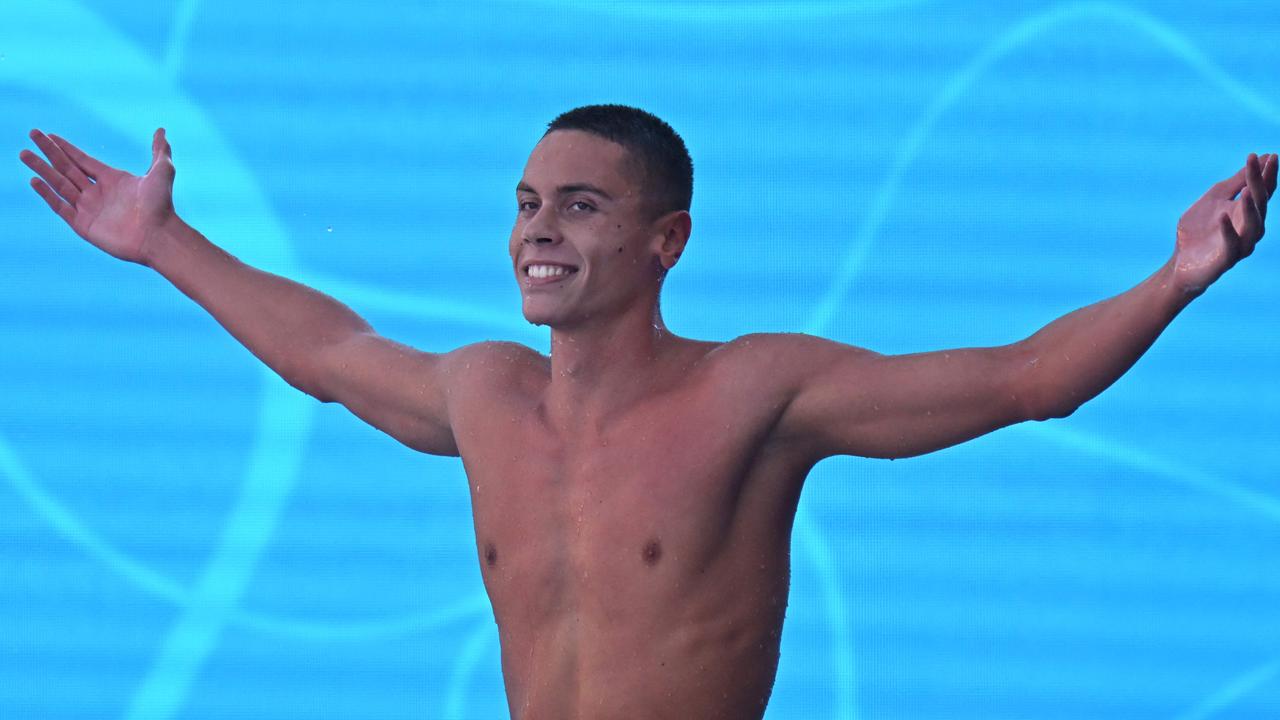
David Popovici breaks 100m freestyle world record, age, who is he, European Championships, latest, updates

As David Popovici has accelerated past his older rivals in the pool this summer, it seemed inevitable that the skinny 17-year-old would threaten world records, the only surprise when he broke the 100m freestyle mark in Rome on Saturday was that he got so quick so fast

On Friday, the Romanian had become only the fourth man in history to swim under 47sec as he set a European record to win his semi-final at the European Championships in Rome.

Stream Over 50 Sports Live & On-Demand with Kayo. New to Kayo? Start your free trial now >

That was more than half a second faster than his gold-medal time at the World Championships in June.

On Saturday, he was even quicker, swimming 46.86sec to slice 0.05sec off the record set by Brazilian Cesar Cielo in the 2009 World Championships, also in Rome, in the era of buoyant body suits.

“Yesterday I said that the European record was just one step in the right direction – and I was right. There was no rush and I had to be extremely patient about the world record, ”he said after his victory about him.

In the World Championships in Budapest, Popovici outpaced Caeleb Dressel, who had swum the fastest 100m in a textile suit, in the heats.

The Olympic champion withdrew from the competition before the semis.

Romania’s David Popovici set a new world record in the men’s 100m freestyle. (Photo by Alberto PIZZOLI / AFP)Source: AFP

“It’s nice being able to say that I am the fastest to ever do it and it’s a good thing to know I clashed with all of the titans of this race.”

His coach, Adrian Radulescu said that he was too surprised by the speed of Popovici’s progress.

“It’s amazing that it is happening so early,” said Radulescu, just 32.

Asked on Thursday what makes him successful, Popovici acknowledged that success comes at a price.

“When Erling Haaland, a football player, was asked the same question, he replied ‘hard work’ So, it’s just really a lot of hard work and a lot of sacrifice and it all comes down to the question of how badly do you want Item; and I really do want it, badly!”

“What are you willing to do that others aren’t? This includes living a completely different lifestyle.”

This summer, Popovici has dominated the World Championships and the European Junior Championships in his home town, Bucharest.

After Rome he plans to head to the world junior championships in Lima

“Really, all I want to get out of this meet and out of world juniors in Peru is simply having fun. The medals, the records, everything, the good times are simply a bonus. If we manage to have fun, that’s very satisfying,” he said.

Not everyone might share his idea of ​​fun.

“Everything in sports is fun. Getting extremely tired and then wanting to vomit,” he said.

“Having all sorts of lactate problems… that’s fine. It’s not fun at the time but after half an hour you don’t want to kill yourself anymore and you feel as if its all worth it.”

Popovici was nine when he joined the swimming club where Radulescu coaches.

Popovici is just 17 years of age. (Photo by Alberto PIZZOLI / AFP)Source: AFP

“He wasn’t the easiest to train, he was mostly looking for fun, to skip his turn… But there was something special about him, he was very competitive.”

“He must have been ten years old, we were organizing a competition for swimmers of the same age,” recalled the coach.

“A 25-meter swim and the last one was eliminated… Each time, David finished second last. Ahead of him, they wanted to prove that they were good, they got tired. In the final race, the other survivor was so tired, David won.”

Popovici is unusually thin for a top swimmer.

“David has a keen sense of water,” said Radulescu.

“It’s not about how much force you can generate, but how you can put it into the speed you develop. So, yes, he is very thin, but he has enough strength to swim at higher speeds.”

But, added, the coach, Popovici’s physique will change.

“He’ll be 18 in September, his body will grow, evolve to a man’s size. It’s a challenge… to get the right balance between strength and efficiency.”

Popovici already has a nickname: ‘The Magician’.

“I was passionate about magic when I was younger, the card tricks and illusions and stuff but not anymore. It was a little hobby before swimming,” I explained.

“But yes, some people have called me The Magician because of what I do in the pool but again, I don’t think it represents me. I like to think of myself as a simple guy who just swims fast.”

.

Categories
Australia

Sharon and Deidre had never met — the institution that brought about their father’s abuse connected them

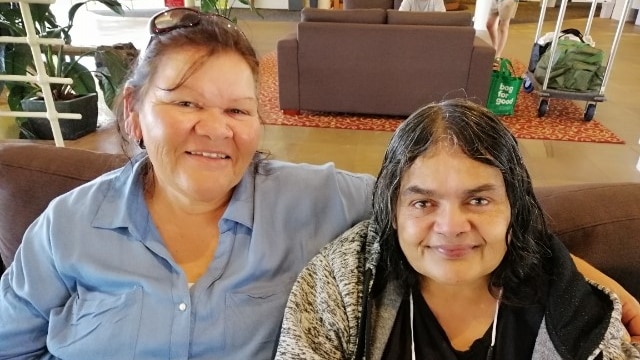
Sharon Shillingsworth and Deidre Bolt are sisters in their 50s but have only just met for the first time.

WARNING: This story contains details of an Aboriginal person who has died and has been used with the permission of family.

Their separation was influenced by intergenerational trauma which stemmed from their father’s experiences as a child of the Stolen Generations.

It took the women years to track each other down, and while they had been connecting over the phone, a face-to-face meeting had eluded them until now.

It was a pivotal moment for both women; Ms Shillingsworth said she held her sister de ella for what she felt like “the longest time”.

Their father, John Carroll, was one of up to 600 Aboriginal boys who lived in the notorious Kinchela Boys Home in Kempsey on the NSW Mid North Coast.

The institution operated under the authority of the state’s Aborigines Protection Board and forcefully removed Indigenous children from their families and communities from 1924 to 1970.

young boys standing in a line outdoors
The Kinchela Boys Home in Kempsey opened in 1924 and operated up to 1970.(Supplied: Kinchela Boys Home Aboriginal Corporation)

Like many of the boys in the home, Mr Carroll’s life was plagued with psychological and physical trauma from the abuse he endured in the institution.

Ms Shillingsworth said the trauma her father suffered at the home affected his adult life.

“He was in a lot of turmoil, he basically drank to numb the pain; it was just heartbreaking learning what he went through,” she said.

Her father left her mother and later had three other children with another partner, one of whom was Ms Bolt.

‘They were lost’

While the siblings knew of each other’s existence, they had never had the opportunity to meet or contact each other until after Mr Carroll’s death in 2016.

“Our brother Neil hired a solicitor to find us; we had known about them [John, Neil and Deidre] and they had known about us, but they were lost,” Ms Shillingsworth said.

A list of young boys names that attended the boys home
A list of boys who were in the Kinchela Boys Home is displayed at the healing forum, including Deidre and Sharon’s father.(ABC News: Arianna Levy)

The solicitor managed to track down the siblings and connected them through Facebook.

“We’ve been talking over the phone for a few years now but had never seen each other face to face,” Ms Bolt said.

Ms Shillingsworth said with her sister living in Forster-Tuncurry and herself living “in the scrubs of Trundle” in central west NSW, linking up while also working six days a week was difficult.

“We were getting old too, I’m 57 and Deidre’s 53, we knew something had to happen soon,” Ms Shillingsworth said.

The meeting was facilitated by a charity set up to help the survivors of the Kinchela Boys Home and their families.

Operating with a collective goal of healing the trauma and intergenerational trauma suffered in the home, Kinchela Boys Home Aboriginal Corporation (KBHAC) holds annual healing forums to help survivors and their descendants connect.

A metal gate with the words 'boys home' welded to the top.
Boys were stripped of their names and given numbers at Kinchela Boys Home.(Supplied: National Museum of Australia/Katie Shanahan)

.

Categories
Business

Why is the Reserve Bank of Australia exploring digital currency options? | australian economy

Last week the Reserve Bank of Australia announced a year-long research project with the Digital Finance Cooperative Research Center to explore “use cases” for a central bank digital currency (CBDC). Here is what’s going on.

What is a CBDC and how is it different from cryptocurrency?

Banknotes are a physical form of money we exchange for goods and services. And we’re increasingly making digital transactions, whether tapping credit cards or smartphones. ATM use is down about a third in three years, the RBA says.

Now, the RBA and counterparts around the world are studying new digital forms of money that central banks themselves might issue. Research will examine uses of CBDC for commercial banks – the wholesale market – and a retail version the public may one day use.

Cryptocurrencies, by contrast, are decentralized, unlike “fiat currencies” produced and regulated by governments. Bitcoin and ethereum are among prominent digital currencies relying on cryptography to secure transactions.

To curb price volatility of cryptos, stablecoins have been created to mimic “fiat currencies” by anchoring value to assets such as the US dollar. The failure of TerraUSD and other stablecoins reflects the sector’s infancy. CBDCs might fill the gap.

“A fully realized central bank digital currency has the promise to bring the regulatory certainty and power of digital assets to a place that’s coupled with the trust and faith that we have in money that’s issued by the Reserve Bank today,” said Michael Bacina, a partner at Piper Alderman and a fintech specialist.

Why is the RBA getting involved?

Partly exploratory. “I don’t think it’s inevitable” that the bank will issue CBDCs, says the RBA deputy governor, Michele Bullock.

“In terms of day-to-day payments that touch you and [me] and our friends and family, it’s not clear to us what the case for it is,” she says. “We have banknotes. We have lots and lots of digital money alternatives [including] fast payment now.

“I think we just need to keep our toes in it, and not be at the bleeding forefront.”

Australia weekend signup

The focus will be less on the technology itself but rather settling on design principles of how decentralized such currencies might be, while maintaining standards of protecting privacy that the public can accept.

“Do you put limits on the amount of money people can have in this? Does the central bank issue it directly, or [as] we do with banknotes issue CBDCs via existing banks,” Bullock says. “I don’t think anyone’s come to a complete consensus.”

Is there an appetite?

If an Australian Securities and Investments Commission report on investor behavior released on Thursday is any guide, the market for digital currencies is growing rapidly.

Its survey of 1,053 investors found that cryptocurrencies were second only to Australian shares in terms of most common asset held, at 73% and 44%.

In terms of the value of the holdings, cryptos were also on a par with residential investment properties.

An ASIC survey of 1053 retail investors found their holdings of cryptocurrencies were on a par with resident housing investments, with only their holdings of Australian shares larger. pic.twitter.com/uF7e4iJtgk

— Peter Hannam (@p_hannam) August 11, 2022

What do researchers say?

Andreas Furche, the chief executive of the Digital Finance Cooperative Research Centre, notes the RBA’s ongoing caution.

“It’s not something that’s a done deal,” Furche says. “It’s not clear yet whether from the RBA perspective this is going to fit or be useful or not.”

The trial will be “ring-fenced” with only registered parties taking part. It will, though, be open in another sense: “We don’t have a preconceived outcome.

“Those of us who build or discuss or provide infrastructure aren’t necessarily the innovators that build new kinds of market infrastructure, business models or whatever on that infrastructure,” Furche says. “If we just make that assessment based on what we can think of ourselves, we’re not going to get anywhere.”

QuickGuide

How to get the latest news from Guardian Australia

Show

Photograph: Tim Robberts/Stone RF

Thank you for your feedback.

He says the rise of stablecoins indicates there’s an opportunity to meet people’s interest in digital currencies without the exposure to as much volatility.

“Despite the name, [stablecoins] are often still fraught with risk because they’re not necessarily backed 100%,” he says. CBDCs, based on a national currency, are an “ultimate stablecoin”.

What do market participants say?

Chloe White, an independent consultant and formerly Treasury’s representative on the Council of Financial Regulators examining cryptos, says blockchain and the ecosystems that are building around it will continue to function and grow whether governments issue CBDCs or not.

“What we see happening in cryptocurrency markets at the moment very much mirrors what we see in the traditional system,” White says. “You have a so-called real economy where people are transacting goods … and then you have a financial layer wrapped around” with derivatives, insurance and so on.

There may even be national security reasons for having CBDCs and not missing out on emerging technologies and new ways of doing business.

“China, in particular, seems quite determined to want to leverage this technology in some way,” she says. “And there’s barely a corner of the world that you can point at that has influence and economic power that’s not looking at these issues in some way.”

Bacina says the fintech world is evolving faster than the internet at its genesis. “It’s the same as we could not predict Netflix and we could not predict Amazon’s next-day delivery when the internet was being invented and rolled out.

“There are no wires to be put down, and that physical infrastructure to be connected – it’s already there.

“We’re talking about the ability to automate things like bank guarantees, and other slow, manual processes which currently drive up compliance costs.”

As for who might benefit from the RBA and Digital Finance Cooperative Research Center study, Bacina says participants may learn as much as the institutions.

“It’s a six- or seven-way street,” he says. Interest will focus on “deep analysis of systems contracts, regulatory interfaces – that kind of analysis doesn’t occur very often”.

Categories
Technology

Apex Legends “Hunted” Season Starts Today, New Battle Pass Detailed

The latest Apex Legends season, entitled Hunted, launches today. In addition to the new Legend Vantage, a King’s Canyon health-focused revamp, and a major level-cap increase, the season will, as always, offer up a new battle pass. The Hunted Battle Pass will offer a variety of hunting-themed skins and cosmetics for Wraith, Caustic, Bangalore, Horizon, and Vantage. These include new reactive weapon skins and some flashy skydiving emotes. You can check out what Respawn/Respawn Vancouver have cooked up for the new battle pass, below.

As usual, the Hunted Battle Pass comes in two variants, including a free one, that will net you a variety of older skins, Apex Packs and more. If you want the new Hunted goodies, you’ll need to spend 950 Apex Coins for the Premium Pass. You can also spend 2800 Apex Coins to get the Premium Battle Pass Bundle, which allows you to skip ahead 25 levels.

Haven’t been keeping up with Apex Legends’ Hunted season? Here’s the rundown on the new Legend…

“Vantage has learned everything the hard way. Born to a wrongfully-convicted criminal who gave birth to her alone on the barren ice planet Págos, Vantage can weather any storm. Accompanied only by her small winged companion Echo and forced to live off a hostile land, she became the ultimate survivalist and an expert sharp shooter. Meet the youngest person to join the Apex Games, Vantage.”

  • Passive: Spotter’s Lens — read tactical information on enemy squads at a distance, Vantage always has the upper hand with critical intel like Legend name, Shield rarity, team size and range.
  • Tactical: Echo Relocation — Echo is at the ready to help her reposition herself in a fight. Using her modified jetpack and targeting system, Vantage can launch herself towards Echo’s position and take the high ground.
  • Ultimate: Sniper’s Mark – There’s nowhere to hide from Vantage’s custom sniper rifle, which reveals enemies with its scope and with its ammunition: a successful hit highlights opposing squads for 10 seconds accompanied by a diamond marker, and damage scales up with each hit.

Apex Legends can be played on PC, Xbox One, Xbox Series X/S, PS4, PS5, and Switch. The Hunted season kicks off today.

Products mentioned in this post

Categories
Entertainment

Twilight of the A-list: has the 21st century killed off the movie star? | film industry

These are dark days for movie stars. The new Brad Pitt action-comedy Bullet Train took $30.1m (£24.6m) on its opening weekend in the US – a solid enough figure to top the domestic box office chart, but unspectacular given the film’s $90m budget and Pitt’s star power. One of the few actors who can still “open” a film, Pitt represents an increasingly endangered breed: the movie star who refuses to do TV.

Another TV holdout, Tom Cruise, continued his hot streak with Top Gun: Maverick, which recently surpassed Titanic at the US box office, although the film’s very success is being heralded as the end of an era, with Cruise lionized variously as “the last movie star” and “the last movie star standing in a changing Hollywood”. Meanwhile, obituaries declare the “death of the movie star” and “RIP to the movie star”.

If the movie star is not exactly dead, they are certainly enjoying the hammiest of death scenes, like Marlon Brando’s virtuoso farewell in The Young Lions: stumbling after being shot and rolling headlong down a hill, before being stopped by a branch, looking stunned and blinking incredulously, then toppling into a watery ditch.

Brad Pitt in Bullet Train
Brad Pitt in Bullet Train. He is one of the few stars to have resisted TV in recent years. Photograph: Sony/Scott Garfield/Allstar

The A-list is a shrinking paddock of aging thoroughbreds. All five films in the top 100 this year that might be called “star vehicles” – Cruise in Top Gun: Maverick, Pitt in Bullet Train‚ Sandra Bullock in The Lost City, Mark Wahlberg in Father Stu and Jennifer Lopez in Marry Me – feature leads who found fame in the 90s, with an average age of 56. The 2010s seem to have produced fewer certifiable movie stars than any previous decade. Chris Pratt, Benedict Cumberbatch, Adam Driver and Jennifer Lawrence have had substantial careers out of superhero spandex, with Lawrence speeding through her ingenue phase to win an Oscar at 22 and now enjoying the twilit semi-retirement from the grind that an Academy Award buys you . Even so, after a trio of failures from 2016 to 2018 – Red Sparrow, Mother! and Passengers – the Hollywood Reporter published a piece titled: “If Jennifer Lawrence Ca n’t Open a Movie, Who Can Ella?”

“There are no movie stars any more,” said the Avengers actor Anthony Mackie in a clip that did the rounds on Twitter. “Anthony Mackie isn’t a movie star; The Falcon is a movie star. And that’s what’s weird. It used to be, with Tom Cruise and Will Smith and Stallone and Schwarzenegger, when you went to the movies, you went to go see the Stallone movie; you went to go see the Schwarzenegger movie. Now you go see X-Men. So, the evolution of the superhero has meant the death of the movie star.” Chris Evans has enjoyed playing against type in Knives Out and The Gray Man, but almost every Avengers cast member who came to fame through the series has struggled to make it outside the Marvel bubble.

Of course, reports of the death of the movie star are to be taken with a pinch of salt. Part of it is the natural process of “aging out” that occurs periodically in Hollywood, as one generation hands over to another. “Glamor is on life support and is not expected to live,” declared Joan Collins at the end of the 60s, as the star system – by which studios signed actors to exclusive seven-year contracts, giving them lessons in manners, diction, acting, riding, walking, dancing, singing and fencing – finally crumbled. It made way for the young Turks who followed – Jack Nicholson, Robert Redford, Steve McQueen, Dustin Hoffman, Robert De Niro, Al Pacino – who in turn paved the route for the stars of the 80s and 90s.

But who can deny that a subtle sapping of movie-star power is at work when the producers of the 2022 Oscars invited sports stars including Tony Hawk, Shaun White, Kelly Slater and the Williams sisters on to the podium to present awards, banishing Samuel L Jackson, Elaine May, Liv Ullmann and Danny Glover to the untelevised Governors awards to pick up honorary Oscars?

Throughout most of the 90s, the big question hanging over George Clooney’s career was whether he could break out from TV and make it in the movies. Today, Keanu Reeves has just signed up for a TV show (executive-produced by Leonardo DiCaprio), joining Harrison Ford, Dakota Fanning, Jude Law, Emma Stone, Amy Adams, Meryl Streep, Jonah Hill, Julia Roberts, Sean Penn and Matthew McConaughey in completing the reverse exodus, from the ever-more convulsive movie business to the relative sanctuary of TV. Clooney topped the list of highest-paid movie stars in 2017 – not for any role, but for selling the tequila brand he co-founded for $1bn.

“The business has changed entirely,” Roberts told the New York Times in April, upon the release of the mini-series Gaslit (which also stars Penn). “When I started, I felt like you did a movie and if it did well then you might get offered a couple of other movies and might have more choice and you’d get paid a little bit more on the next one. There were incremental shifts in opportunity and it made more sense. Now, it’s made more of air; maybe it doesn’t feel as sturdy when you’re going along. I felt pretty sure-footed about the choices I was making. You don’t have those incremental markers any more, it doesn’t seem like.”

Jennifer Lawrence opposite Bradley Cooper in 2012's Silver Linings Playbook
Jennifer Lawrence, who won an Oscar for her performance opposite Bradley Cooper in 2012’s Silver Linings Playbook, was one of only a handful of actors to skirt with movie-star status in the 2010s. Photograph: Snap Stills/Rex Features

The causes of this volatility are multifarious and far-reaching. These days, studios rely almost exclusively on superhero movies and other branded franchises – for which they can just as easily cast newcomers as stars – to draw crowds into cinemas. Amazon paid $465m for its production of The Lord of the Rings, a spin-off with no stars attached, while subscriptions to streaming services have changed how everyone in Hollywood gets paid.

Most workers are better off – it is a seller’s market – but the power of the megastars is dimming. Last year, Scarlett Johansson got into a fight with Disney after the studio decided to stream Black Widow on Disney+ on the day of its cinema release, so retaining up to $50m it might have owed the actor, depending on the film’s box-office performance . This spat is but the most public of a series of tussles between studios and stars as actors try to determine their worth in the branded-franchise era. Henry Cavill has ended his run as Warner Bros’ Superman, while Chris Pine and Chris Hemsworth have walked away from Star Trek 4, after contract talks actors broke down over their pay.

So, how much is a star worth? This has always been a dark science. “As far as the film-making process is concerned, stars are essentially worthless and absolutely essential,” said the screenwriter William Goldman after the collapse of the star system. Freed from the studios for the first time, actors were able to negotiate multimillion-dollar deals. For 1989’s Batman, Jack Nicholson took a $6m paycheck and a cut of the box office and merchandise sales, ultimately netting about $60m. The nearest recent equivalent is Robert Downey’s Jr’s $10m fee for Iron Man 2, but that was negotiated only after the success of the first film, for which he took home $500,000. Even actors as established as Downey Jr are only as valuable as the superheroes they play. In another role, his price would plummet.

Jack Nicholson as the Joker in Batman
Jack Nicholson as the Joker in Batman. I have made about $60m from the film. Photograph: Snap/Rex Features

Streaming has only further muddied the waters. Before the pandemic, everyone in Hollywood engaged in the weekly anxious ritual of poring over the weekend’s box office, to determine the week’s winners and losers. Now, the streamers pore over viewership data, keeping score of streaming-app sign-ups and retention rates and measuring unconventional metrics such as mentions on social media as they try to determine the quicksilver quality that is a star’s worth.

But the connection between star and quarterly subscription rate is even more nebulous than that between star and weekly box office returns. When big movies hit HBO Max, downloads of its app spike, a recent study found. One agent recently confided that some of their more famous clients prefer the streamers’ secrecy around ratings because it avoids the bright glare of flopping at the box office.

From the stars’ point of view, the connection between their work and their worth has been muffled. They might not be paid as exorbitantly for their successes, but nor are they blamed so harshly for their failures. Indeed, they are buffeted by the same economic forces as the rest of us. “When we were content to gaze up at movie stars on a screen that seemed bigger than life, the exchange was fairly simple,” wrote the critic Ty Burr in Gods Like Us, his 2012 history of movie stardom. “We paid money to watch our daily dilemmas acted out on a dreamlike stage, with ourselves recast as people who were prettier, smarter, tougher, or just not as scared.”

James Dean in Rebel Without a Cause
Studio-era stars such as James Dean longed for their work to be valued artistically – as is increasingly the case with celebrity actors. Photograph: Snap/Rex Features

Today, celebrities attuned to social media are much closer to their audiences. The internet has brought a “marked devaluation of the traditional movie star”, Argued Burr, conspiring to strip movie stars of their mystique and marking what he calls “the triumph of celebrity socialism. The means of the production of stardom are at last in the hands of the people.”

The gods have become mortal. One benefit is that it has returned a level of artistry to discussion of their work. Spend much time on the fan sites and you will find – in place of the advice columns, beauty tips, fashion features and recipes that used to fill the fan magazines in the studio era – earnest discussion of a star’s acting chops: their “dedication” , “commitment” and “transformation” for a given role. Buzzwords, to be sure, but Brando, James Dean and Montgomery Clift would have killed for such treatment, longing to be seen as Laurence Olivier, not Clark Gable.

“Today, actors and actresses float across and around stardom,” wrote the film historian Janine Basinger in The Star Machine, her 2007 history of the star system. She identified the rise of something she called “the neo-star”: the actor who threads the needle between typecasting and character acting. The description fits Driver, Lawrence and Cumberbatch, all of whom have moved between big branded franchises and Oscar-bound film projects.

The old-school, Klieg-lit movie star may soon die, but behold, by the light of a million smartphones the neo-star is born.

Do you have an opinion on the issues raised in this article? If you would like to submit a letter of up to 300 words to be considered for publication, email it to us at [email protected]

Categories
Sports

Selwyn Cobbo scores hat trick as Brisbane Broncos see off Newcastle Knights

Brisbane took a gigantic step towards locking in a top eight berth after a Selwyn Cobbo hat trick helped seal a 28-10 win over the Newcastle Knights.

Adam Reynolds was full of praise for his young winger afterwards – one of his tries coming off a pinpoint chip kick from the halfback.

“I just thought I’d throw one over the top for him there and he was good enough to finish it off,” Reynolds said post-match.

READMORE: Veteran NRL referee’s shock grand final confession

READMORE: Roosters star in hot water over dangerous hit

READMORE: Hynes makes passionate plea after big win

Reynolds and Cobbo have formed a charmed connection, as the former Rabbitohs star has done with plenty of his new teammates.

“He makes me look good,” Cobbo said about his captain.

Reynolds’ addition to the team has done so much, both on the field and off – and now, with this win, they’re all-but-assured of finals football for the first time since 2019 – an eternity in Broncos years.

They were below their best for large parts of tonight’s win at Suncorp Stadium, especially after the break, where they’d walked into the sheds with an 18-0 lead.

“We don’t want to go through those flat patches, we’ve got some big games coming up that will be a better test for us,” Reynolds said afterwards.

“Tonight was a step in the right direction.”

Despite a clear gulf in class, some awful errors and bad decision-making prevented Brisbane from extending their lead, before the Knights pulled two tries back in quick succession to make it an eight point game with 15 minutes left.

Stream the NRL premiership 2022 live and free on 9Now

Instead, Cobbo scored his second and third tries of the evening, putting the full time margin back to the same as it was after 40 minutes.

“We just need to be better – there’s periods there where we go error, error, seven tackle set, those sorts of things. We don’t mean to do it, but obviously it’s going to hurt us in the big games,” Reynolds said.

Brisbane still have a bit of work to do to ensure they get a home final this year – and a win next week against the Storm will go a long way to locking that in.

With both the Eels and Roosters only narrowly below them in seventh and eighth, there’s a world where the Broncos need to win all of their games to nab a top six finish, let alone top four.

But with Reynolds’ kicking on song, Wally Lewis Medal winner Patrick Carrigan soon to return and with a backline full of confidence, they’ll be feeling good.

Corey Oates was at his barnstorming best, while returning fullback Te Maire Martin gave them some much-needed stability at the back.

For the Knights, there’s no real danger of getting the wooden spoon, but not much else to play for either – as their performance showed.

For a daily dose of the best of the breaking news and exclusive content from Wide World of Sports, subscribe to our newsletter by clicking here!