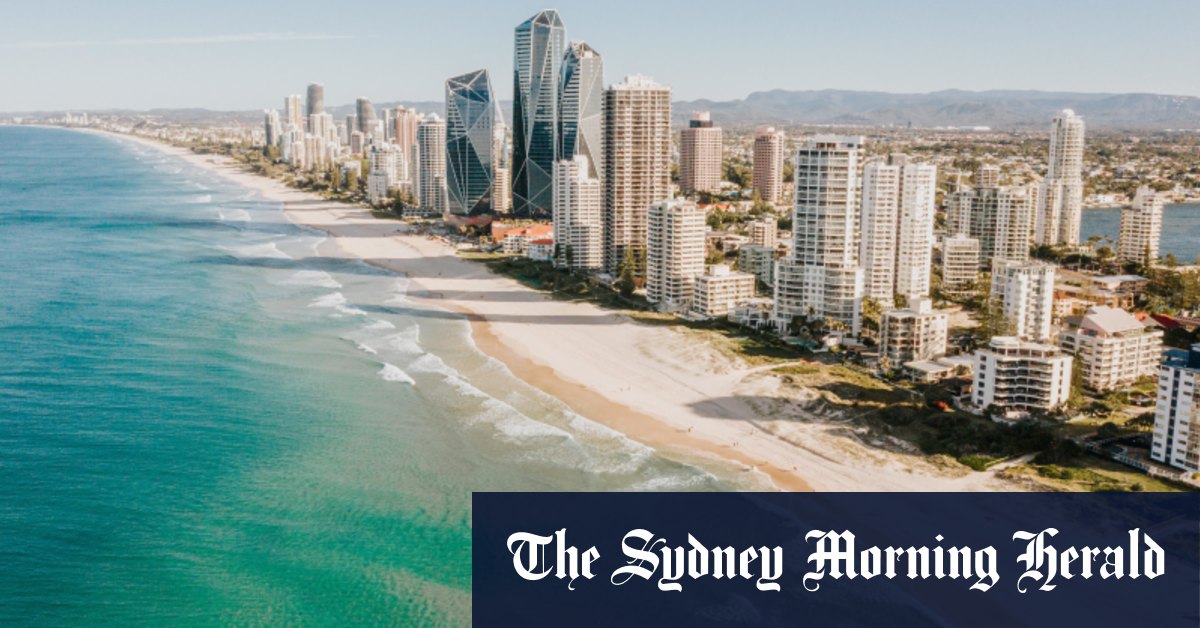
“The north is still very closed. In China, borders are still 100 per cent closed, Japan probably 90 per cent closed, Taiwan the same. So we’ve increasingly seen this disparity in the region and therefore the rest of the globe. The Asia Pacific is falling behind the US and Europe in terms of recovery.”
Booking.com’s recent Travel Confidence Index polled 11,000 travelers across 11 countries in the Asia Pacific about how enthusiastic they felt about traveling internationally and accepting inbound visitors.
India ranked first on the confidence index. Many of India’s keen travelers are coming to Australia, making it now the second most common country of origin for arrivals into Australia behind New Zealand. Before the pandemic, India ranked seventh.
Japan seemed content with staying locked down, ranking last on the Travel Confidence Index, and Australia ranked fifth.
Houldsworth said that alternative accommodation such as “homestays and tree houses” had become a key market for Booking.com, which has traditionally focused on hotels.
“People are looking for something unique, something different. Globally, we have about 29 million listings, of which over 6 million are now alternative accommodations versus our core traditional hotel properties.”
Cost and flexibility were the main concern for pandemic-fatigued travelers, said Houldsworth.
“Flexibility is the key. We’ve seen that globally as a trend. We had our biggest bookings for the upcoming European summer peak but a lot of those bookings were flexible bookings. People are wanting clarity and refund policies. They want to make sure that money is secure.”
Despite an enduring preference for domestic travel, about 40 per cent of Australians expected to travel overseas within the next six months. Five out of the top 10 international destinations for Australian travelers using Booking.com were in Bali.
“Beyond that, we see Singapore, London, Paris and Italy,” said Houldsworth.
loading
Booking Holdings, the site’s parent company, posted a US$857 million net income for the quarter ending June 30, up 99 per cent from the same time last year. Gross travel bookings for the second quarter hit US$34.5 billion, surpassing Wall Street analysts’ expectations of US$32.96 billion.
The Business Briefing newsletter delivers major stories, exclusive coverage and expert opinion.Sign up to get it every weekday morning.
FromSoftware’s Elden Ring seemed set to win Game of the Year, until the recent release of the small indie game about a cat called Stray.
Elden Ring took the world by storm bringing in old and new Soulsborne players, and yet the game’s biggest competition for the game of the year is stray, a small game featuring a cat. Both games have been immensely popular for different reasons since their release. However, it is fascinating that these two games are the most popular this year.
Elden Ring is an RPG giant focused on boss fights and exploration; it is the Soulsborne game many fans have been dying for. Meanwhile, stray is a short game about a cat in an underground world made by a small indie game company. And straywith the cute cat exploring a cyberpunk city, has captured the hearts of many players in a way that Elden Ring was unable to. Both are good games, but good in different ways, which explains their popularity.
SCREENRANT VIDEO OF THE DAY
Related: Stray’s Cyberpunk City Compared To The Real Walled City Of Kowloon
Many players have a love for games developed by small indie companies, and stray is one such game. There is a love and artistry in these smaller games that are often absent in AAA games developed by larger companies. Elden Ring is a masterpiece that has rewritten what it means for open-world games. strayhowever, is a reminder to large companies that a small game about a cat may be enough to take the game of the year.
Stray’s Heartfelt Story And Adorable Protagonist
Elden Ring and stray both have gorgeous visuals and engaging gameplay, but for a reason so many players love stray is because of the heartfelt story. Elden Ring has a story with lots of spoilers, but in the usual Soulsborne fashion, the story is often difficult to understand and may require players to search for items. stray‘s story, however, is linear; it has a beginning and end that plays can follow. While there are dark moments in Stray, there is an underlying message of hope that many payers have latched onto.
Another reason for stray‘s incredible popularity is the feline protagonist. Players control a cute cat and indulge in various feline activities in the game, such as meowing and scratching various objects. Despite the occasional moments of chaos that the cat brings, the creature is a driving force of good, eager to help his robot allies escape the underground city.
Despite stray‘s current popularity, it does seem unlikely that it will stay popular since the game is shorter than Elden Ring. And the moment there are believable leaks for an Elden Ring DLC, stray will likely be pushed to the side. But stray may win the game of the year, and players who support smaller game companies may be hoping this will happen.
Next: Every Cute Cat Thing You Can Do In Stray
SaveMinecraft Trends Following Controversial New Update
About The Author
Czarina Gallardo (32 Articles Published)
Czarina Gallardo is a Game Features writer for Screen Rant. She loves both writing and playing video games, along with reading up on future game releases. When not writing for Screen Rant, Czarina spends her free time writing for herself or playing video games.
In a seemingly real life fairytale, one adopted woman has grown up only to find out she is actually an African princess.
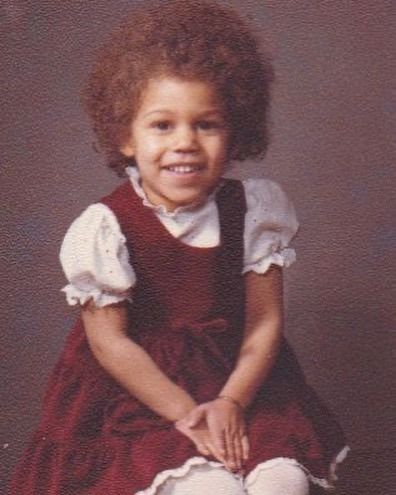
Sarah Culberson was adopted at birth by a family in West Virginia and had a relatively normal upbringing.
Throughout her childhood, the now-46-year-old revealed that she had always thought about her birth family and felt curious about her familial background.
READMORE:Prince Harry having ‘second thoughts’ about his family
Sarah Culberson was adopted at birth by a family in West Virginia. (Instagram/@iamprincesssc)
In an interview with UNILAD, Culberson told reporters, “As I got older, I started to notice, ‘OK, I look different than everybody else.’ I knew I was adopted and then I started to wonder about my birth family.” Watch the clip above.
And while Culberson knew she was different, she had no idea she actually came from royalty.
In an effort to reach her birth parents, Culberson investigated the whereabouts of her biological mother. However, she was left heartbroken after finding out her mother de ella – a white American woman – had passed away years earlier.
As more years went by, Culberson’s curiosity persisted and at 28 years old, she decided to hire a private investigator to find her biological father.
Investigations suggested that Culberson’s father was based in Maryland, so she decided to pen a letter to him and mail it.
Days later, Culberson received a call from her uncle – who was actually the one residing in Maryland – expressing his gratitude that she had been “found.”
“Oh Sarah! We are so happy you have been found. Do you know who you are?” I exclaimed on the phone.
She continued: “He says, ‘You are part of a royal family. Your great-grandfather was a paramount chief, your grandfather was knighted Justice of the Peace by the Queen of England.”
“You can be chief someday. You are a princess in this country.”
Culberson was left in disbelief: “I was literally thinking, ‘What in the world is he talking about?’ This is a little bit overwhelming.”
Her uncle went on to explain her royal lineage, revealing that her father was Joseph Konia Kposowa, a chief in Sierra Leone. He promptly told Culberson that he would contact her father so that they could be reunited.
Just two weeks later, Culberson spoke to her father on the phone and he asked for her forgiveness saying he had tried to find her but struggled as her name had changed.
Culberson assured her father that he did not need to be sorry as she had enjoyed a beautiful upbringing in America.
Months later, Culberson traveled to Sierra Leone where she received a truly royal welcome and was reunited with her family.
“It was beautiful to be welcomed and loved,” she said. “It was so spectacular.”
READMORE:Chrissy Teigen announces pregnancy after devastating loss
Princess Sarah Jane Culberson has now found her “purpose” adding, “It’s given me a whole ‘nother level in my life.”
The royal is now dedicating her life to improving education levels in Africa and has written a book, ‘A Princess Found: An American Family, an African Chiefdom, and the Daughter Who Connected Them All,’ detailing her truly remarkable life story.
For a daily dose of 9Honey,subscribe to our newsletter here.
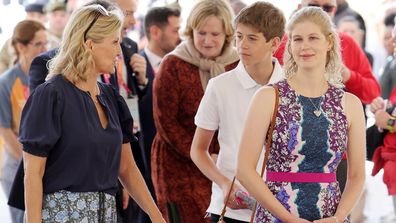
Lady Louise wears mum floral dress to Commonwealth Games
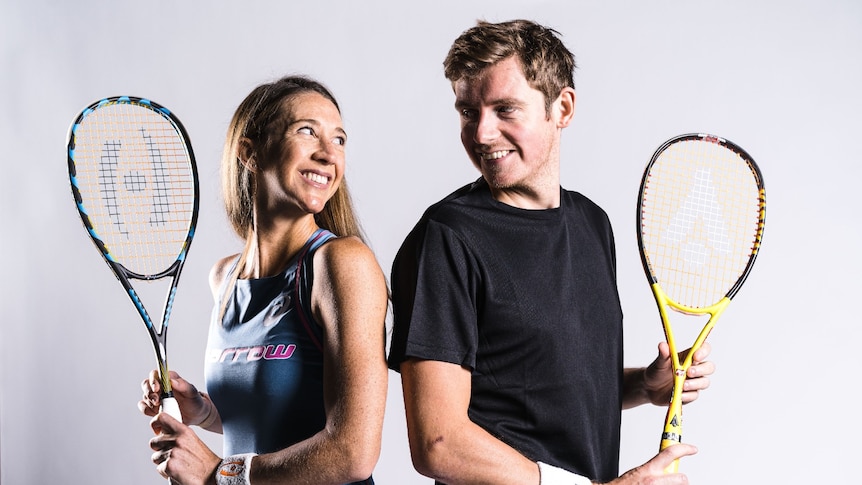
Australian squash player Donna Lobban says she has already started a campaign of “mental warfare” against her Scottish husband, who will meet in the mixed doubles quarter-final at the Birmingham Commonwealth Games.
Key points:
Donna Lobban, who competes for Australia with her cousin Cameron Pilley, will face husband Greg and his partner Lisa Aitken in the quarter-final of the mixed doubles
Australia’s flag-bearer Rachael Grinham and her mixed doubles parter Zac Alexander also qualified for the quarters after defeating England
In the women’s doubles, Lobban and Grinham defeated India to win through to the next round
Lobban, playing with her cousin Cameron Pilley, will face off against her husband Greg Lobban and his partner Lisa Aitken tonight.
“I have already started the mental warfare,” Lobban said.
“I’ve started to wind him up already. I was telling him we were fist-pumping when we got that draw.”
Donna Lobban and Pilley are defending Commonwealth mixed doubles champions.
The pair downed India’s Joshana Chinappa and Harinder Pal Singh Sandhu in straight sets, 11-8 11-9, in the round of 16 on Thursday.
Hours later, Greg Lobban and Aitken won their clash for Scotland.
Pilley said other pairs would be increasingly wary of the Australians on the road to the medals.
“Every single team is a potential speed bump,” Pilley said.
“We’re not even seeded in the top four so probably the seeds … if they see us along their road, they are probably more worried about us, being defending champs.
“When you go to the Comm Games… you’re not going in hoping for a medal, you’re going for gold.
“Having done that once, for us it was the best thing ever. So we’re going after it again.”
Donna and Greg will compete against each other in the quarter-final of the squash mixed doubles.(Getty Images: Luke Walker/Alex Pantling)
Australia’s flag-bearer Rachael Grinham and her mixed doubles partner Zac Alexander also won their round-of-16 encounter on Thursday, defeating England’s Georgina Kennedy and Patrick Rooney 11-8 11-6.
Alexander and his men’s doubles partner Ryan Cuskelly breezed past Cayman Islands duo Jake Kelly and Jace Jervis, winning 11-2 11-1.
In the women’s doubles, Australia’s Alex Haydon and Jess Turnbull lost their round-of-16 match with England’s Georgina Kennedy and Lucy Turmel, who triumphed 11-4 11-7.
But the Aussie women’s doubles team of Lobban and Grinham march on after defeating India’s Sunayna Sara Kuruvilla and Anahat Singh 11-4 11-4.
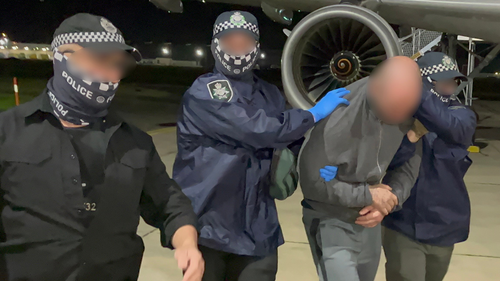
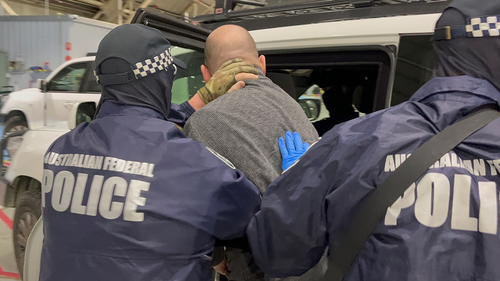
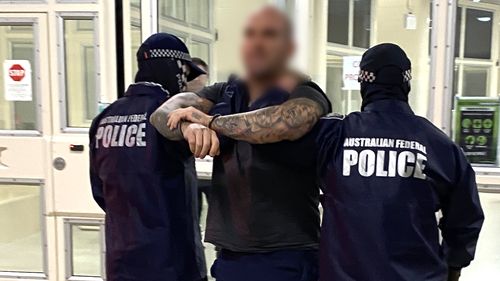
Fugitive Comanchero boss Mark Buddle has been extradited from Darwin to Melbourne over allegations he imported $40 million worth of drugs.
Australian Federal Police (AFP) confirmed the 37-year-old touched down in the Victorian capital this morning.
“AFP officers have escorted a man, 37, on a chartered flight from Darwin to Melbourne this morning to face two charges for allegedly importing cocaine worth about $40 million,” a statement said.
AFP officers escorted Mark Buddle on a chartered flight from Darwin to Melbourne this morning. (AFP)
Buddle is expected to appear in Melbourne Magistrates’ Court today where he will be charged with two offences.
Each carry a maximum sentence of life imprisonment.
Mark Buddle is expected to appear in Melbourne Magistrates’ Court today. (AFP)
Buddle’s extradition to Melbourne was originally delayed amid “security concerns”.
The Comanchero’s leader was arrested by Australian Federal Police at Darwin airport on Wednesday, six years after fleeing the country.
The arrest came a day after his deportation from Turkey.
AFP revealed Buddle had been a target of a top-secret, three-year investigation, which was set up to bring home Australia’s most wanted criminals.
Buddle was a user of the AN0M mobile phone system, which the AFP and FBI had been operating in secret before making 500-plus arrests in a worldwide takedown.
Mark Buddle was arrested at Darwin Airport on Wednesday, six years after fleeing the country. (AFP)
AFP Assistant Commissioner Nigel Ryan said Operation Ironside had tracked encrypted communications showing cocaine would be shipped from Hong Kong to Melbourne and Sydney.
“This investigation has been going for a significant amount of time,” Ryan said.
Buddle’s “complex” arrest, Ryan said, would deal a serious blow to drug syndicates operating in Australia and offshore.
More than 250 people have been charged in Australia under Operation Ironside.
No charges have been brought into the US, where privacy laws prevented arrests.
Kennedy grilled Wray on Thibault’s alleged partisan actions on social media over the past few years, such as “liking” a Washington Post article titled “William Barr has gone rogue” and tweeting to Rep. liz cheney (R-Wyo.) that her father — former Vice President Dick Cheney — was a “disgrace.” Kennedy also mentioned Thibault’s retweet of a Lincoln Project post saying that “Donald Trump is a psychologically broken, embittered, and deeply unhappy man.”
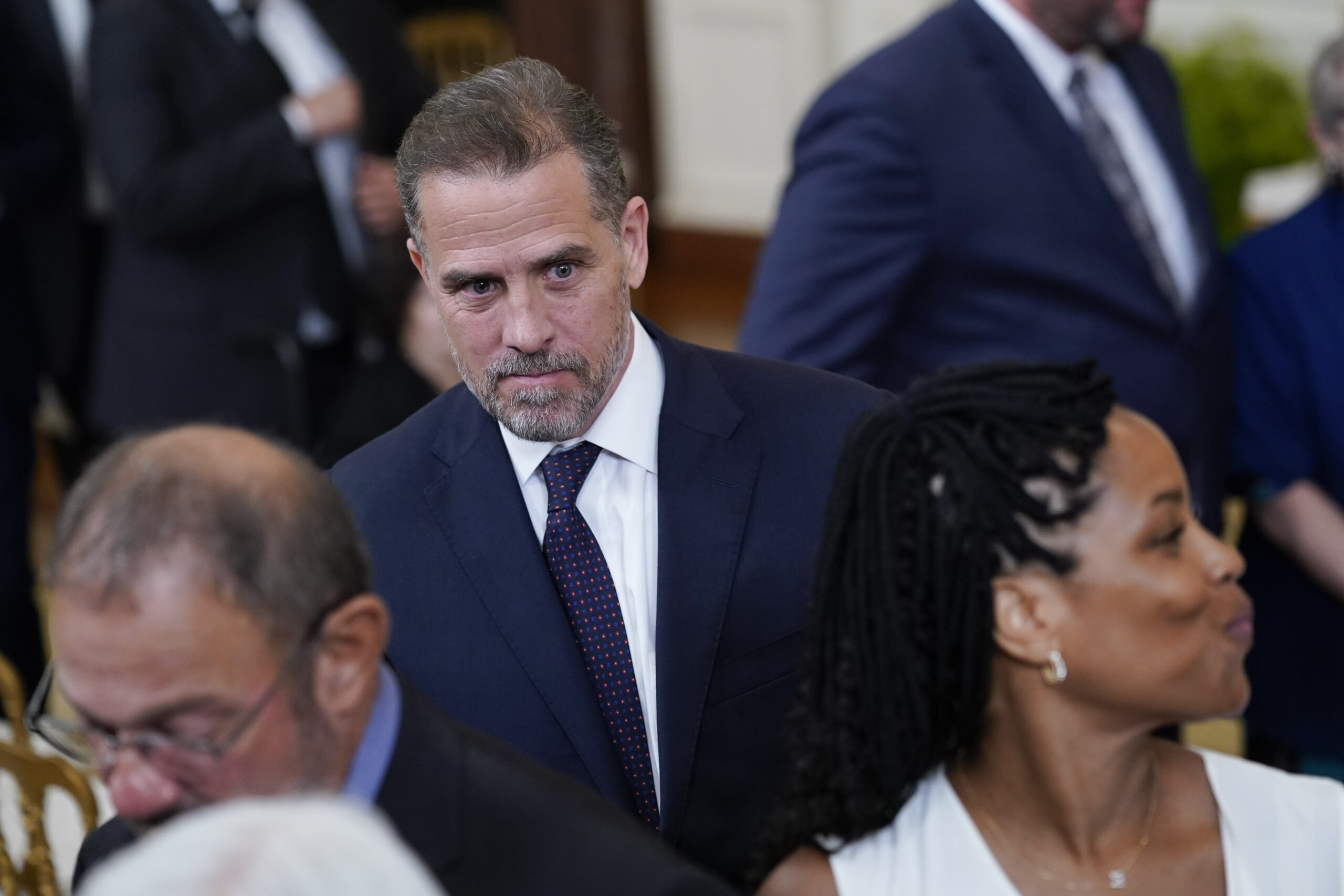
Kennedy then pressed Wray on allegations that Thibault — who Kennedy said worked on both the investigation of links between Trump and Russia and the ongoing Hunter Biden probe — had “covered up derogatory info about Mr. Biden while working at the FBI.”
Wray gave similar answers to Kennedy’s questioning on both the social media posts and covering up of information, saying that he’d seen “descriptions to that effect” but wanted to be “careful” of not interfering with any ongoing personnel matters. But he did concede to finding the allegations about the social media posts “troubling.”
“I should say that when I read the letter that describes the kinds of things that you’re talking about, I found it deeply troubling,” Kennedy told.
Senate Judiciary Chair Chuck Grassley (R-Iowa) first raised alarms about Thibault’s alleged partisan actions in May, demanding that the Justice Department and the FBI investigate whether the agent violated department guidelines with his social media posts. Grassley sent a second letter to the Justice Department and the FBI in late July saying that he had received “highly credible” whistleblower accounts alleging that Thibault had downplayed or discredited negative information obtained about Joe Biden’s son during the 2020 election.
Wray on Thursday didn’t definitively confirm or deny the allegations against Thibault and seemed to be trying to preserve his ability to act as an impartial decision-maker on potential discipline against the agent. However, the FBI director stressed that the actions Kennedy was describing were “not representative of the FBI.”
“I feel very strongly, and I have communicated consistently since I started as director, that our folks need to make sure that they’re not just doing the right thing, that they’re doing it in the right way and that they avoid even the appearance of bias or lack of objectivity,” Wray said.
Kennedy said he agreed with Wray’s statement that the majority of FBI employees have “tremendous integrity and objectivity,” but stressed that the situation with Thibault is only hurting the FBI’s image and needs to be addressed with the public.
“You’re killing yourselves with this stuff,” Kennedy said. “And this investigation needs to be completed on this gentleman and the results need to be reported to the American people.”
Wray seemed to raise doubts that Thibault was working at any recent time on issues related to Hunter Biden. The FBI chief said that investigation, reportedly focused on tax issues and potential foreign influence related to Hunter Biden’s business ties, is being run by the Bureau’s Baltimore Field Office, which handles matters related to Delaware.
The Biden administration has permitted Trump’s appointee as US attorney for Delaware, David Weiss, to stay on to complete the probe of the president’s son.
Hunter Biden in a December 2020 statement denied any wrongdoing in his tax affairs. Biden’s lawyer did not immediately respond to a request for comment on the allegations.
“I take this matter very seriously but I am confident that a professional and objective review of these matters will demonstrate that I handled my affairs legally and appropriately, including with the benefit of professional tax advisors,” he said.
Earlier in the hearing, Wray seemed to indirectly address the claims that during the 2020 election season the FBI helped downplay or suppress information about Hunter Biden’s business ties by categorizing that as Russian disinformation.
The FBI director suggested it wasn’t his agency’s job in such situations to try to validate or verify the claims, only to alert US officials, businesses or individuals that foreign powers are trying to exploit the situation.
“Sometimes this gets lost in a lot of public commentary. We are not investigating whether or not information we see is true or false,” Wray said. “Our focus on the malign foreign influence space is whether or not there is a foreign adversary pushing the information.”
Despite a $20 billion fall in its evaluation, a tumultuous economic landscape and a sudden string of tech companies announcing staff cuts and sharp declines, Australia’s start up golden child is not worried.
speaking to the Sydney Morning Herald, Canva’s co-founder Cliff Obrecht believed the bearish market would provide the company with lots of opportunities.
“These times of market uncertainty provide a lot of opportunity and other than the external valuation noise, it’s a huge opportunity for us to grow our business,” he said.
This comes as Australia’s largest venture capital firm Blackbird announced they had reduced the holding value of Canva by 36 per cent. Listed as Canva’s largest investor, with around a 14 per cent stake in Canva, this indicated a drop of about US$14 billion or A$20 billion, in the tech company’s estimated value.
“This holding value of Canva is the result of an independent valuation process that was completed by a big four accounting firm and adopted by Blackbird’s valuation committee, in consultation with our auditors,” the company shared in a statement to news.com.au.
Before this, Canva managed to more than double its worth in 2021. After acquiring a valuation of $19 billion in April 2021, the company skyrocketed to $54.5 billion just five months later.
In internal emails reported by Nine newspapers, chief executive Melanie Perkins said the company was set to mark its sixth year of being profitable. She also assured staff and said the company was still hiring, unlike some other technology companies.
“We had planned to dip out of profitability this year to invest in further accelerating growth,” she wrote.
“However, we changed course as soon as we noticed the macroeconomic environment changing and are now back to being profitable again this year, for the sixth year in a row.”
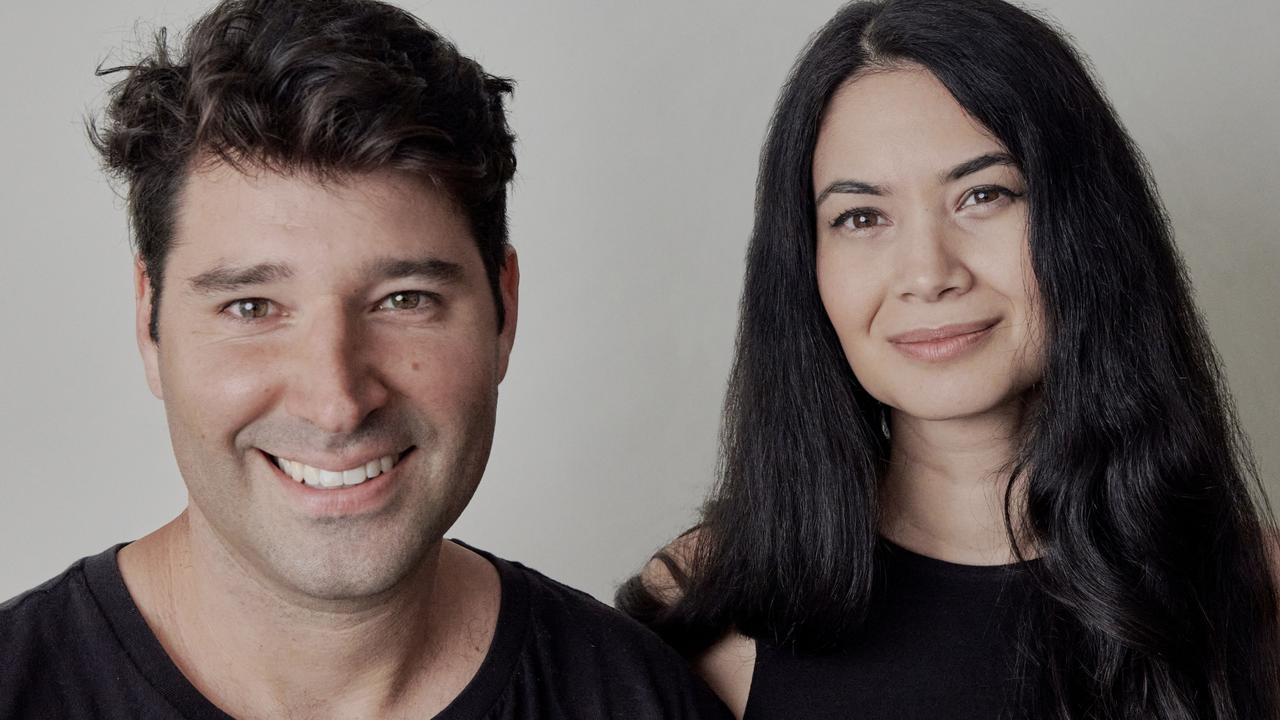
Founded in 2013, by Perth couple Ms Perkins and Mr Obrecht, and Tasmanian developer Cameron Adams, Canva is a free-to-use design tool that allows users to create social media posts, graphics, videos and presentations.
Since then, it’s become Australia’s most successful start-up – a title it continues to hold. For scale, Australia’s second largest start-up, online payments company Airwallex was valued at $5.5 billion in November 2021.
It’s believed Ms Perkins and Mr Obrecht hold a 30 per cent stake in the company, which given the most recent evaluation is close to $6 billion.
According to its website, Canva has more than 2000 employees and operates in 100 languages and across 190 countries.
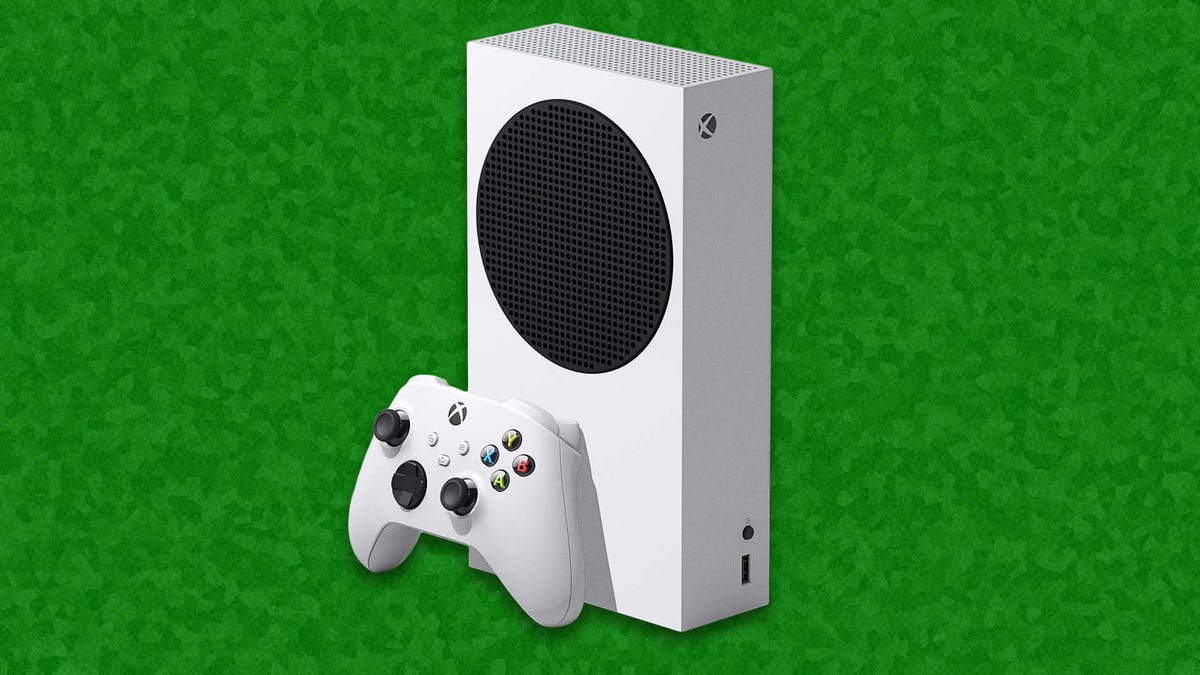
While it’s not the most powerful console out there, the smaller and more affordable Xbox Series S has been a big hit for Xbox. But reportedly, some devs have felt the strain of getting bigger, more advanced games to work on the console and in response, Microsoft is freeing up some memory to help improve the tiny console’s performance.
As spotted by TheVergeMicrosoft is hoping to make the Xbox Series S a bit more powerful by freeing up some memory and letting developers access that extra memory if needed. In a video explaining this new developer-focused update, Microsoft says that it is unlocking “hundreds of additional megabytes of memory” and that this will, in theory, give studies more control over how to use the console’s limited memory. Microsoft says this “can improve graphics performance in memory-constrained conditions.”
The June Game Development Kit (GDK) is Available Now
To be clear, this isn’t like Microsoft quadrupling the power of the Series S. Nor is this Microsoft flipping some secret switch to let the console start running games at 8K and 240hz or anything wild like that. Instead, the amount of memory dedicated to non-gaming functions in the $300 Series S is being tweaked.
While the more powerful xbox series x console has 16GB of RAM the cheaper Xbox Series S has only 10GB. But before this update, devs only had access to 8GB of that memory as Microsoft reserved around 2GB for the console’s OS. Now devs will have a few hundred extra megabytes of memory, which could help some games run a bit better moving forward.
The Xbox Series S has always been positioned by Microsoft as a cheaper, less-powerful, but still capable next-gen console option. and it’s proven to be a very popular piece of hardware since releasing alongside the beefier Xbox Series X in 2020. Hell, I already had an xbox series x and I ended up buying one. It’s become the main way we play games in our living room, perfect for Fall Guys and Fortnite. But for more intense games it can struggle, requiring cutting down on framerate or resolution. This has reportedly led to some issues and frustration from devs trying to get certain games running on the lesser machine.
G/O Media may get a commission
20% Off
Logitech G502 Lightspeed Wireless Gaming Mouse
Gaming! Uses exclusive ultra-fast wireless tech to make sure your mouse is faster than you are, can be sued alongside special software for highly-customizable performance, and has 11 buttons to mess around with, a hyper-fast scroll wheel, and RGB lighting too .
A recent example of a game performing differently on Series S is the Evil Dead game, which launched without a 60fps performance mode on the cheaper machine. Resident Evil Village also limits the game to only 45fps at 1440p and 30fps if you turn ray tracing on.
Hopefully, a few extra bits and bobs of memory can help devs working on Xbox ports not feel as hamstrung by the weaker Xbox Series S.
EITHERne day I was running early for an appointment, and with 15 minutes to spare I spontaneously walked into a house that was open for inspection. It looked unassuming from the street but inside it was spectacular. Each room was generously portioned and flooded with light. Just being in the house seemed to elevate my mood, and make me feel clear and calm. But the most amazing thing was the outlook. It was on the harbour, with views that went right out to Manly. And not only that – it had two swimming pools, one that sat invitingly just outside the patio, decked with expensive furniture, while the second was at the garden’s edge – a harbor pool.
A real estate agent materialized by my side as I marveled at an en suite bigger than my flat. His name was Tom and his hushed tone was that of a confidant, a consigliere: “Is n’t it incredible?”
I felt trapped and self-conscious, like an intruder – a class intruder – and I did something dumb. I pretended that the house was of no interest to me because it was too small. Affecting my best Melbourne private school accent (that is, I spoke entirely through my nose, without opening my mouth at all) I replied: “I was after something bigger, but well done, yes, well done on the interiors.”
I sounded like a whale in distress. My cheeks were getting red from trying to direct the words out my nose. wow!! I had to get out!! I turned on my heels and left with what I hoped was a convincing hauteur. On the street I burst out laughing. Rich people are absurd, I thought. Two swimming pools!
I assumed that would be the end of it, but having given my phone number for contact tracing purposes, the agent called me regularly over the next two weeks.
Sometimes it took a while for the penny to drop and I’d be speaking normally, through my mouth, my mind whirling – Tom? Tom? That is until he started talking about other properties I might like – ones with six bedrooms, a boathouse, a private jetty, a tennis court, two tennis courts! Homes bigger than the tiny box I had seen at the open for inspection. Homes that were $10m, $11m, $12m. My heart would sink as I honked through my nose, “Oh Tom, sounds fabulous but …” I was travelling, my husband was away, I was indisposed, and then there was Covid, Covid, Covid, Covid. All the while Tom was lovely, just wanting me to be happy, to find a truly enormous, gigantic luxury house to call my own. I sat there feeling miserable. I wanted to correct him, but it just felt so awkward. I had left it too late! I was trapped in a lie.
Part of my reluctance to expose my true self stemmed from a humiliating encounter on the 35th floor of a big Melbourne bank, about a decade ago.
I was a broke freelancer doing a story for a financial services magazine about private bankers. Who were they? And who were their clients? I was ushered into an inner sanctum where everything was not just marginally better than the public banking spaces – but phenomenally better, like a boutique five-star hotel. There were even butlers!
After the interview concluded, the banker indicated that I should see myself out. On the way to the lift I saw about a dozen people milling around. Cake! A seminar or talk had just finished and people were standing around in pairs or alone eating petit fours.
I was hungry. I seized my chance. I took a cake. A butler asked me if I wanted coffee. This was living!
My reverie was interrupted by an older gentleman, impeccably dressed – a light gray suit with a faint pinstripe, tie in a Windsor knot. We engaged in small talk, but the feeling coming from him was absolute attention, a sort of rapt engagement in my observations on the weather, the paintings, the cake. I was loving it! We skated lightly from one topic to the next, as he maneuvered me towards a comfortable chair. Seated, I have leaned even closer and gazed at me as if I was the most fascinating person on Earth. I drunk it in. At one point, seeing that my plate was empty, he motioned for the butler to bring me another coffee, another plate of cakes.
Maybe 20 minutes passed this way until I asked him what he was doing here. I have worked here. He was one of the private bankers. Then something slipped, his impeccable benevolent mask of him. What was Yo doing here? I have asked. Relaxed in his company I told him I was a freelance journalist, doing a story on private banking and… I stopped. We both stopped. A mutual moment of cognitive reorganization. A sort of horror passed quickly across his face, an expression strong enough to curdle the coffee in my stomach.
“A journalist?”
He didn’t have to say it but I knew. He had thought I was a high net worth individual. A client of the bank. Rich. He said journalist the way other people said murderer.
With a different voice now, he told me I should leave – that this was for clients only. My cheeks burned as I walked to the elevator.
Remember that famous scene in Pretty Woman where the shop assistant thought Julia Roberts was poor and treated her dismissively?
Well here, the banker and the real estate agent thought I was rich and were treating me like a princess. I was a reverse Pretty Woman. I was Ugly Woman! (or in a true reverse, Ugly Man… ??)
Now every time the phone rang I started feeling ill. I tensed up whenever I saw a real estate sandwich board on the street, advertising an open house.
Then the calls stopped for almost a year. But just last week Tom rang again. And again it took me a while to place him. He asked if I’d found anywhere suitable to live. “I like where I am,” I said, looking around my rented two-and-a-half room apartment, before realizing it was him, Tom. He wanted to sell me another harborside mansion. This one I would love. He could show me through tomorrow, a private viewing. I could get first dibs.
I closed my eyes for a moment and felt the tug of fate. Surely it would be the easiest thing just to drift along into the natural conclusion of this misunderstanding – go to the house, say through my nose, “Oh Tom, it’s perfect, it’s just darling” and then agree to buy the house (a steal at $15m!) and somehow end up in an even more absurd situation than the one I was already in. I would buy the mansion in order not to make us feel awkward, in order to be polite.
And that of course, ironically, was my class giveaway. Only a middle-class person would go to such lengths to avoid embarrassment.
The Sunday Project host Hamish Macdonald has a fiery run-in with the rumored founder of bitcoin during this weekend’s episode – and things get heated as his interviewee repeatedly labels Macdonald a “w***er.”
In this exclusive preview of Sunday’s episode, Macdonald sits down for an interview with Australian computer scientist Dr Craig Wright, who has in the past claimed to be the man behind the pseudonym used by bitcoin founder Satoshi Nakamoto.
The two sit down to discuss how the future of the internet will dethrone Silicon Valley, but the interview goes south when Macdonald questions his guest’s integrity, pushing him to provide proof that he is indeed the inventor of bitcoin – and Dr Wright bites back.
“Look up a law book, and look what proof is, and do a course,” Dr Wright sarcastically tells his interviewer.
“And when you come back, and you actually know what the f**k you’re talking about, then we can have a discussion. Otherwise you’re just being aw***er.”
“Why get irritated and start swearing?” asks Macdonald.
“I’m Australian – and if you’re going to be aw***er, I’ll call you aw***er,” says Dr Wright.
The full, fiery interview will air at 6.30pm this Sunday on The Sunday Project.
Dr Wright previously made headlines in December last year when he was ordered to pay $142 million in damages in a bitter legal battle – something he publicly claimed as a victory.
In a landmark case, Dr Wright was being sued by the family of deceased computer scientist David Kleiman, who they contended created the cryptocurrency along with Dr Wright under the pseudonym Satoshi Nakamoto.
Mr Kleiman died in 2013 but his family was seeking half of a bitcoin stash worth nearly $70 billion that is held by Satoshi Nakamoto, according to a Wall Street Journal report.
Dr Wright claimed he created bitcoin on his own, a contention that has drawn widespread skepticism in the crypto community.
And he claimed victory when a federal court jury in Miami last December ruled he was only liable for conversion (the illegal taking of property).
The court awarded W&K Info Defense Research, a joint venture between the two men, $US100 million ($A142 million), which was significantly less than the amount Mr Kleiman’s family was seeking.
“I have never been so relieved in my life,” Dr Wright said after the verdict.