David King and Kane Cornes have gone through a few candidates on SEN Breakfast.
See their thoughts below:
Subscribe to the SEN YouTube channel for the latest videos!
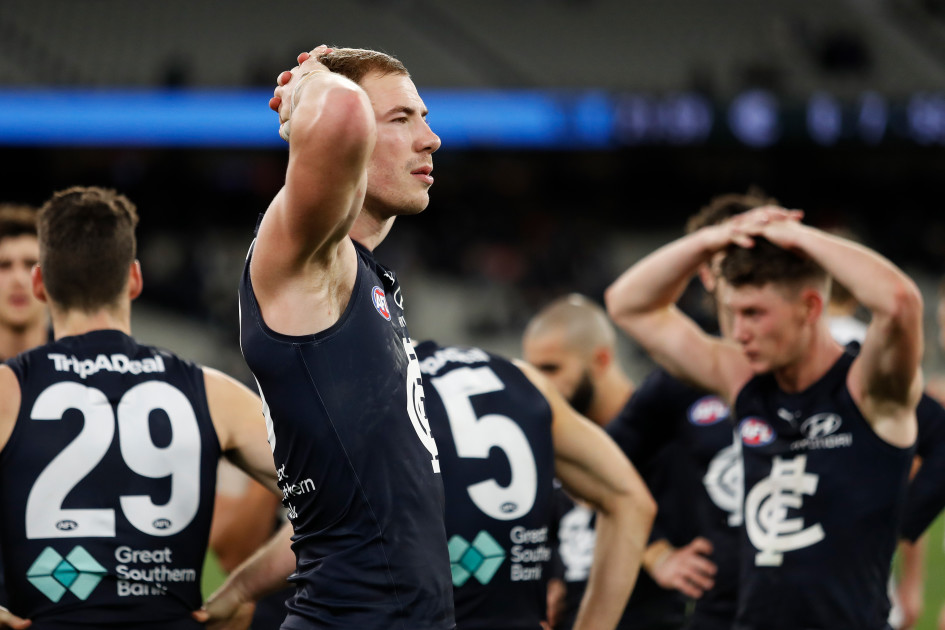
Harry McKay (Carlton)
King: “I’m going with Harry McKay. He hasn’t been the same presence in that forward line the last few weeks.”
“His form against top eight teams – four games, five goals. 12 games against bottom teams, 34 goals.
“Do it against the best. They’ve got an opportunity to go up to Queensland and shake up the season.
“I looked at Harris Andrews last week, I think he’s really gettable, I know he intercept marks a lot, but he’s gettable. So Harry, get it done.”
Jordan DeGoey (Collingwood)
Cornes: “I thought he was excellent against Port Adelaide, he got seven coaches votes.”
“But it is often easier to play well in your first game back, a lot of players returning from injury play well, the challenge for them is that second game back.
“They’re against a very good side, big stage, 14 goals this year, I just feel like it’s a big weekend for Jordan De Goey.”
Ken Hinkley (Port Adelaide)
King: “It’s a big night for Ken Hinkley on Saturday night. Get the matchup right against Shai Bolton or pay a price.”
Cornes: “Is he the hardest matchup in the game?”
King: “No, Jeremy Cameron is the hardest matchup in the game.”
King: “I just think this matchup and the way they use him – it’s the Dustin Martin role – be ready for it, be aware of it, plan for it, and find the right matchup.
Cornes: “I’m trying to go through Port Adelaide’s line-up and work out who are they going to play on him? Martin has got them in big games and they haven’t been ready for that. Darcy Byrne-Jones is there, Dan Houston is in the mix – or do you say to Jase Burgoyne, he’s yours young fella. Finals are off the agenda, it’s about development for Port Adelaide now, I’d like to see him experience what it’s like to play on a player like Shai Bolton.”
Matt TabernerFremantle
Cornes: “He just needs a big weekend. His last five games from him: St Kilda nothing, two goals against Sydney, one goal against Richmond and nothing last week. ”
“Fremantle’s lack of scoring recently in the last three weeks, nine goals against Sydney, seven against Richmond and just five last week against Melbourne.
“It’s a massive issue for them. Can Rory Lobb and Taberner be the combination that is going to put Freo in top four contention once again, I’m not sure.”
alastair clarkson
King: “I think we’ll find out sooner rather than later. You would want this tidied up before the end of the home-and-away season – I don’t think we’d be too far away.”
Cornes: “I get the feeling you’re confident (he’ll coach North).”
King: “Absolutely I’m confident. Why wouldn’t you be confident?
Ed Langdon (Melbourne)
“It’s a big night for Ed, isn’t it?”
“When you make strong statements like that, the focus does come to you and the club and whilst we enjoy the openness of the commentary, no doubt it has brought an extra element of pressure to Melbourne tonight.”
There’s no doubt having a baby is a life-changing event and while it’s well known many mothers struggle with depression or anxiety, so can fathers.
Perinatal anxiety and depression, from pregnancy through to a child turning one, affect up to one in five new mums and up to one in 10 new dads, according to Perinatal Anxiety & Depression Australia (PANDA).
A world-first online treatment program called Dadbooster aims to help fathers after their baby is born by reducing moderate to severe symptoms of postnatal depression.
A silent struggle
For Luke Rigby, the birth of his daughter Olive in 2018 marked the start of a mental health battle that left him struggling for almost a year until he was diagnosed.
Returning to work three weeks after Olive’s birth, the 27-year-old said he ignored early warning signs that something wasn’t right.
“I think I averaged a day off a week … I’d give myself a kick up the butt, but it would only last for probably a week or two and then it becomes like a self-replicating cycle,” he said.
His turning point came when he finally decided to visit his GP.
“I booked him for a 15-minute appointment, but I reckoned that lasted about 45 minutes,” he said.
“It was just me in his room sobbing and just the things that I was holding inside of me that I’ve never really said, even to myself, before they just came out … like a word vomit.”
Mr Rigby says he tries to spend as much quality time as he can with his four-year-old daughter.(Supplied: Luke Rigby)
Luke Rigby isn’t alone when it comes to dealing with peri- and postnatal depression and anxiety.
An increasing number of fathers report similar experiences.
Dadbooster to help fathers
Jeannette Milgrom, executive director of Melbourne’s Parent-Infant Research Institute (PIRI), said, through her research and development of treatment programs for women, it became apparent there was an obvious gap in treatment options for men.
“What we found is that this has not been addressed in the literature,” Professor Milgrom said.
“There have been some involvement of men and trials of providing education, but there hasn’t been any targeted treatment for depression in men.”
That’s about to change.
Jeannette Milgrom developed Dadbooster to help fill the void in treatment options for fathers with postnatal depression.(Supplied: Jeannette Milgrom)
Professor Milgrom and her team are working on a world-first specialized web-based treatment program for depressed or anxious fathers.
Dadbooster involves six sessions along with SMS messages, regular contact, advice and encouragement to keep motivated participants.
Changes in symptoms are also closely monitored.
Professor Milgrom said the treatment was comparable to face-to-face therapy and was modified to appeal to men.
“There’s similarities in the sense that the core treatment for depression is cognitive behavioral therapy… we’ve made it very easily accessible for men… it’s a very mobile, responsive program and it’s shorter and sharper,” she said.
‘Even rocks crumble’
Julie Borninkhof says more than one in 10 dads may experience perinatal depression.(Supplied: PANDA)
Australia’s mental health system to date has not been great at picking up on vulnerability in men, according to PANDA CEO Julie Borninkhof.
“Organizations like ours are really trying to break down the barriers and remind people that even rocks crumble,” Dr Borninkhof said.
“We don’t screen as readily and ask as many questions as we do of women… so the one in 10 is probably under-reported, because we also know that screening dads in the perinatal period is not as great as it is when we screen our mums.”
Dr Borninkhof said data collected through PANDA’s annual mental health checklist for expectant fathers had revealed some alarming data.
“There’s about 60 per cent of those that really do fear that they’re not going to be great dads,” she said.
Professor Milgrom said her research had identified the importance of giving a voice to the issue.
“Once men start hearing other men talking about it, it becomes very enabling to be able to share the experience and feel that it’s so common,” she said.
hanging out together
It’s a sentiment shared by Tom Docking, founder of Dads Group, an organization promoting positive parenting for men by combining dads, their kids, a cup of coffee and a playground.
Since establishing the Toowoomba chapter a few years ago, Mr Docking said getting fathers together with their children created a supportive environment.
Dads Group offers support to fathers around Australia.(Supplied: Tom Docking)
“From our research, it’s the presence of the child which helps to keep the focus on being better as a father, a partner, a community leader, and a benefit to himself and his own identity,” he said.
Mr Docking said the group was letting fathers know about Dadbooster and other services available.
“It’s important to realize that we can only do this together collaboratively to really address the needs of our community,” Mr Docking said.
For Mr Rigby, help from his GP and connecting with a local dads’ group gave him the support he needed.
Now, he shares his experience with others to raise awareness of perinatal and postnatal depression.
“My biggest bit of advice is to be radically honest with yourself … and ask the question about why you don’t feel 100 per cent and then go from there,” he said.
Georgia’s abortion ban counts a fetus as a person. And now, so does its tax code.
The state’s Department of Revenue announced this week that “any unborn child with a detectable human heartbeat” can be claimed as dependent, providing a $3,000 tax exemption for each pregnancy within a household, months before the child is born. Georgia’s law bans most abortions after six weeks, which is usually around when doctors can begin to detect fetal cardiac activity.
The announcement marks a new frontier of anti-abortion policymaking in a post-Roe America, where conservative lawmakers have moved beyond banning abortion, and are now trying to expand the legal rights and protections afforded to a fetus under “fetal personhood” laws. Georgia, Alabama and Arizona have passed abortion bans that include language broadly defining a fetus as a person.
Separately, nearly 40 states, including Texas and California, define a fetus as a person in cases involving homicide. For example, Scott Peterson in 2004 was convicted in California of murdering his wife and unborn child. His wife, Laci Peterson, was eight months pregnant when she was killed.
Georgia’s abortion law goes further than any other fetal personhood provision. Called the Living Infants Fairness and Equality, or LIFE, Act, it prohibits abortion after six weeks and explicitly recognizes the fetus as a person.
A federal judge struck down the legislation last summer, finding that it violated a woman’s constitutional right to an abortion. The appeals court delayed a final decision, pending a ruling from the US Supreme Court.
More Coverage of the Kansas Abortion Vote
After the Supreme Court overturned Roe v. Wade on June 24, a three-judge panel from the US Court of Appeals for the 11th Circuit handed Georgia conservatives their long-anticipated victory, allowing the abortion restrictions to take effect.
In the appeals court’s July 20 ruling, Chief Judge William H. Pryor Jr. wrote that “a person of reasonable intelligence is capable of understanding that the ‘core meaning’ [of]’ the provision is to expand the definition of person to include unborn humans who are carried in the womb of their mother at any stage of development.”
Gov. Brian Kemp, who signed the law in 2019, celebrated the court’s decision.
“Georgia is a state that values and supports life at all stages — and the Georgia LIFE Act and this provision both reflect that commitment,” said a spokesman for Mr. Kemp.
State Representative Ed Setzler, a Republican sponsor of the law, said in a leaked 2019 video that the ultimate goal of the law is to have the Supreme Court acknowledge the personhood of a fetus.
“It is about establishing personhood of the unborn child, in the tax code, for child support for mothers, in our census counts, across our code, so that we can lay the foundation that no other state in the nation in the last 46 years has ever done, which is to establish the personhood of this child, and we’re going to take this to the highest court in the land,” Mr. Setzler said in the video.
Mr. Setzler did not respond to requests for comment.
Georgia’s push to recognize a fetus as a person could lay the blueprint for other conservative states, which have not yet clarified the meaning and effects of such an approach, legal experts said.
“The anti-abortion movement has always been a personhood movement, there was just no consensus on what that actually meant,” said Mary Ziegler, a law professor at the University of California, Davis, who has written several books on abortion and the law .
Before the demise of Roe, conservatives were united around the singular goal of restricting abortion access. But Ms. Ziegler says the anti-abortion movement is struggling to find consensus on what fetal personhood means in a post-Roe legal landscape.
“Nobody has really worked out, how do you enforce personhood beyond just ‘you can’t have an abortion,’” she said. “Georgia is starting to work that out, but they’ve really only looked at a handful of situations. How do you enforce this in HOV lanes? Do you give a fetus its own attorney? There are so many questions left open.”
Last month, a pregnant Texas woman ticketed for riding in the HOV lane alone argued that her fetus counted as a person under the state’s abortion ban. Texas’ abortion ban does not include fetal personhood, but its penal code does.
Georgia’s abortion law also allows the mother to collect child support to cover the cost of “direct medical and pregnancy related expenses” before the child is born.
Democrats said the law might also expose women who experience miscarriages to unknown consequences.
“So what happens when you claim your fetus as a dependent and then miscarry later in the pregnancy, you get investigated both for tax fraud and an illegal abortion?” tweeted Lauren Groh-Wargo, the campaign manager of the Democratic candidate for governor of Georgia, Stacey Abrams.
Monday’s announcement says taxpayers who claim the new deduction may be asked to provide medical records or documentation of the pregnancy. The Revenue Department has not clarified if and how families who lose a pregnancy might protect themselves from allegations of fraud.
Specific instructions on how to claim a fetus on a tax return are expected later this year.
I am getting married soon to my partner of six years and all of a sudden I feel really nervous and unsure about it. I do love him but we started dating when we were very young and, although our thoughts and ideas align well as we have grown together, I still wonder if I could be better matched to someone else. I feel terrible for having these thoughts as I know he doesn’t. I know he will be an amazing husband and we can have a nice life together but I miss the passion of the early stages of a relationship.
A new co-worker has started at my workplace and we have had some flirtatious moments. It felt good to be seen in that way by someone else, however I wouldn’t dare take that further. But I get on really well with him and find myself wanting to talk to him all the time. I wonder if having conflicting thoughts like these is a bad sign. Shouldn’t I be completely content with my engagement and excited to marry someone I love?
Eleanor says: While “I do love him, but” isn’t ever quite what you want to say about your fiance, I think your question houses a subtle distinction. Does this discontent lie within the relationship itself, or in what the commitment represents? Is there anything wrong with your actuality – or are you simply grieving the loss of possibility?
That second kind of dissatisfaction, the loss of possibility, often envelops us in the lead-up to big commitments. Once we’ve settled on the big move, the career decision, the relationship milestone, a deflating sense of anticlimax can creep in. I think it’s because these moments mean our vision of how things might be starts to come into sharper resolution – we start to see how things really will be, and therefore, at the same time, what they won’t be. For every big choice we make we decline an alternative future. We say to ourselves that those doors are closed, and the versions of life that lie behind them will stay hushed and inanimate.
That can be hard to stomach. Especially for the choices that take us from youthful things to grown-up things, from freedom to responsibility; they can make us feel as though we’re running out of possibilities. Sometimes that’s why flirtations have such kerosene power in moments of life transition – before a marriage, in midlife. It’s not so much that we’re transfixed by that particular other person but that we’re transfixed by getting to see ourselves, briefly, the way they do – as an unknown, as someone who crackles with possibility.
It would be peculiar if you felt nothing like this as you approach your wedding. The whole point of getting married is that your life changes as a result. You promise to take another person’s wellbeing as seriously as your own. That’s a big decision about how your future looks (and how it doesn’t).
But, if you really love someone, what on the surface looks like a “loss of possibility” should in fact feel like the exact opposite. True, monogamous marriage means you turn down the possibility of a new relationship, or the thrill of chemistry with a stranger, but what you get instead is the vast breadth of future that opens up between people who want to make a life together.
When you really love each other, that seems expansive, not constraining. It makes you feel that there is more of you, and more of the world – more future; more possibility; more freedom – not less. This is one of the great mysteries of love and commitment – how we could, by taking on responsibilities to each other, come to feel more like ourselves.
Sign up for the fun stuff with our rundown of must-reads, pop culture and tips for the weekend, every Saturday morning
If the alterations that marriage asks of you already seem unwelcome and constricting, that’s when I would want to pause. Your partner will not want a spouse who sees your union as a sacrifice – as something that robs you of the openness you long for.
You asked whether you should feel completely content and, while the answer to that is almost always no, it is important to distinguish between kinds of discontent. Losing any kind of possibility can leave a trail of melancholy. But if you can’t see the glow of different, exciting possibilities within your new commitment – that’s when it might be time to wonder.
Ask us a question
Do you have a conflict, crossroads or dilemma you need help with? Eleanor Gordon-Smith will help you think through life’s questions and puzzles, big and small. Questions can be anonymous.
Australian race walker and reigning Commonwealth Games champion Jemima Montag says she’s embracing the pressure of defending her crown just days away from competing at the Birmingham Games.
The Gold Coast 2018 Commonwealth Games gold medalist is shaping to be the walker to beat at the event, aiming to become the first woman since Jane Saville in 2006 to successfully defend a gold medal in walking.
The event distance has been shortened from a 20km road race and will now be contested as a 10km track race inside Alexander Stadium.
“I’m keen for it to be half the distance,” Montag said.
Jemima Montag is aiming to defend her 2018 Commonwealth Games gold medal at this years’s 10km Race Walk Final in Birmingham.(Getty Images: Michael Dodge)
“I really feed off the crowd’s energy and excitement. I remember back to 2018 Commonwealth Games on the Gold Coast and there were so many Australians … just giving us their energy for that entire hour and a half.”
In February, Montag broke Saville’s long-standing 18-year 20km Australian and Oceania record by 13 seconds. It’s a moment in which she reflects on, after her ‘turning point’ when pulling on the green and gold four years ago at Gold Coast.
“Representing Australia means embodying the Australian values of mateship and a fair go and giving our all to something. I think that’s what the Australian audience really want to see us doing,” she said.
“Crossing the line and hitting the tape at the 2018 Commonwealth Games was the first moment I believed in myself as capable of competing on the world stage and representing my country well.
“I tried to enjoy the final couple of laps and interact with the crowd and grab the flag, and crossing that line, hitting the tape, and then having Nathan Deakes pop the medal around my neck.
“It felt like a real rite of passage and a sense of belonging after years of struggling with self-belief.
“I feel pressure and expectation to bring some medals home (at Birmingham), but I remind myself that all the Aussies and my family just want to see us going out and being leaders, setting a good example for the younger generation and embodying those values .”
In February, Montag broke Jane Saville’s 18-year record for the Australian 20km race walk event.(Athletics Australia / Steve Christo)
Change in mentality for national record
Montag said the Australian and Oceania record — at a time of 1:27:27 — came about from a motivational shift in mental techniques. The change lifted the weight of her off her shoulders, going on to reset goals for the remainder of the year.
“We got to the finish line about 30 seconds quicker than the national record,” Montag said.
“I’ve done a lot of reflecting since then about the power of values-based motivation as opposed to fear-based motivation.
“It was a very special day, I think that it was bigger than winning the Commonwealth Games or making it to the Olympic Games or anything.
“Being the fastest woman in the country to cover that distance is pretty cool.”
It was only a matter of minutes after the race that an exhausted Montag received a call from her idol, Saville, who celebrated the achievement with her.
“It was amazing. I was in the tent half-dead on the physio table, and she was there on the phone, so supportive,” she said.
“I think that’s a true sign of an excellent sportswoman when they just want to see their sport moving forward … and she had the record for a couple of decades or whatever it was and she was she was so happy.”
The importance of role models
Despite the accolades on the track, winning doesn’t appear to be everything for Montag. The near misses are cause for just as much celebration, after coming fourth at the World Athletics Championships by just 19 seconds in July.
“Humans have just decided that 1-2-3 get medals and fourth is one spot away from that. I think that fourth rocks, it doesn’t suck,” Montag said after the meet in Eugene, Oregon.
Being successful off the track and showing there’s a human behind every athlete is just as important as Montag inspires the next generation of athletes.
Space to play or pause, M to mute, left and right arrows to seek, up and down arrows for volume.
Australian racewalker Jemima Montag talks about the impact her Nana has had on her
A medicine student who loves to cook and spend time with family, the 24-year-old also talks about superstitions; like the lucky number three, her her lucky pajamas, and a lucky golden bracelet she wears from her late grandmother.
“I lost my nana about a year ago, just before the Olympic Games, and it’s only in the months that have followed that we’ve really been able to unpack her story as a Holocaust survivor,” Montag said.
“It’s something that understandably she didn’t want to talk about much, and there was a lot of pain and trauma there.”
A golden necklace became a keepsake for Montag and her two sisters, who split it into three bracelets to continue her nana’s legacy.
“I wear my nana’s bracelet as a lucky charm now. And it reminds me of that strength and resilience,” she said.
“It’s just a really tangible reminder of what she sacrificed for dad and then me to even be alive. Sometimes, you know, sport is hard and it comes with its challenges.
“(But) it’s a reminder that I choose to be out there day in, day out at these competitions doing what I do. And it’s hard, but it should be fun.”
Jemima Montag became the first Australian track and field athlete to be nominated for the Commonwealth Games for the UK campaign.(Athletics Australia / Steve Christo)
Walking is ‘much bigger’ than just a sport
Montag is using walking as the ‘vehicle’ to create positive messages as a role model.
loading
“Race walking to me is much bigger than the physical sport. It’s somewhere I belong and it’s a vehicle through which I can explore my values of the pursuit of mastery, of challenging myself, of inspiring the next generation of boys and girls, and just exploring my mental and physical limits,” Montag said.
The Australian champion was chosen as one just 25 athletes across the globe — the sole representative from Oceania — in the International Olympic Committee (IOC) Young Leaders Program from 2021-2024.
“We’re choosing a pressing local issue that we’re passionate about that connects to the sustainable development goals, and we’re building a sport-based solution,” Montag said.
“I’ve chosen to focus on the decline of young women and girls in sport and physical activity, which is something I’m passionate about because I’ve seen how much sport and physical activity has brought to me.
“I’ve also seen friends that I’ve made through sport gradually face barriers and drop out and how challenging it’s been for them and how I was almost driven out of the sport.
“I was able to get to the bottom of: what are the unique barriers to women and girls in sport, what’s driving them out at twice the rate of boys?
“Then the tricky part was what do we do about it? Because if we had all the answers, then I’m sure they’d be being enacted already.”
Through Montag’s program ‘Play On’, a vision of creating enabling environments through education and training for young women is changing perceptions.
Space to play or pause, M to mute, left and right arrows to seek, up and down arrows for volume.
Racewalker Jemima Montag on navigating adolescence and puberty as a female athlete
“So often I found that girls and women are blamed for being lazy or just not committed enough for choosing to drop out of sport,” she said.
“And we’re not really questioning whether the environments are made for them or welcoming them or attuned to their needs.
loading
“I built a team of 14 women experts who are very diverse — some Paralympians and Olympians, some are community leaders, some are doctors, some in the political space.”
With four topics to address positivity — female athlete health, mental health, nutrition, and inclusivity — Montag is aiming for a stronger connection between schools and parents, who often rely on one another to address responsibility gap issues of retaining women in sport.
“We challenge the idea that there has to be a cookie cutter image of what a female athlete looks like that’s tall, blonde, thin, able-bodied, neurotypical of a certain race,” Montag said.
“I’m hoping that by listening to the experts in those four areas, 15-year-old girls have what I wish I had at their age, and that they’re armed with the tools to navigate any challenge that might come up for them and to help themselves.
“Having the opportunity to be a role model for the younger girls and women coming through has added a whole new layer of meaning and enjoyment to my sport.
“No longer is it a lonely individual pursuit, it’s something that I can really leverage and use to make a difference to other people’s lives, which feels amazing.”
That pursuit this weekend at the Birmingham Commonwealth Games is something Montag is hoping to use as inspiration for future walkers who will be watching her race.
“It’s something that’s a really important biological marker of health that we should celebrate and just learn how to navigate on the track and in life,” she said.
“I’m really careful with the legacy that I’m leaving to the next generation and the words I choose and what I say to them.
“It really doesn’t matter what any of us do, it’s really about ‘why’ behind it.
“And so that ‘why’ is belonging to a community and being a good leader and inspiring younger women and girls to take up whatever physical activity it is that feels good for them to look after their physical and mental health.”
Montag will compete in the women’s 10,000m Race Walk Final on Saturday at 7:30pm AEST.
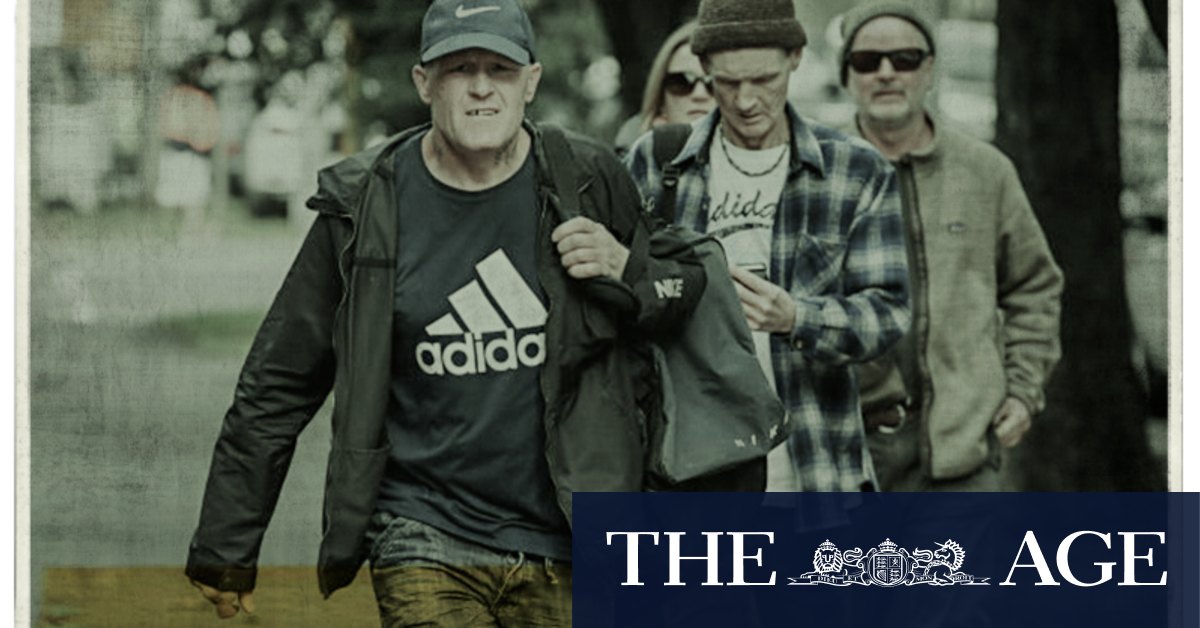
Knowles threatened Cashmore with a knife and launched a campaign of terror against a local woman. This was Knowles’ way of el-to take a dislike to someone and make their lives miserable with a dogged determination he failed to replicate in any lawful activity.
Jailed for a short time for threatening her – “I’m going to kill you and your kids, your days are numbered”, he said – once released he began again.
With no local police, Knowles could make his threats and disappear before patrols from the 24-hour Warrnambool station could drive the 25 kilometers to Kirkstall.
Cashmore went to police complaining that on July 20, Knowles breached an intervention order (yet again) against the woman. There was no immediate response, perhaps because Knowles was due at Warrnambool Court on Monday, July 25, to answer similar charges.
On Friday, July 22, less than 48 hours after reporting Knowles’ latest breach, Cashmore took a chainsaw to the neighbours’ trees in Chamberlain Street, hopped in his white van and drove until he found Knowles, 49, and his sidekick Ben Ray, 48, walking about six kilometers to Koroit.
Cashmore blasted Knowles in the back of the head with a shotgun before reversing over what remained of the dead man’s skull.
He ran over Ray before shooting him twice. Cashmore drove home, walked into his backyard and ended his life with the same gun.
The scene of the crime.Credit:Nine News
In many ways Knowles’ death freed his small community. “We have lived in fear for 10 years. People talked about selling up and moving,” says one resident.
A resident holding a small party heard Knowles yelling “I hope you die” from the street. Locals drove and walked different streets to avoid him. Garage sales stopped and functions were planned to avoid the local powderkeg.
In 1991, career detective Col Ryan transferred to Warrnambool and made it his home – serving 12 years as a shire councilor and two stints as mayor.
As a policeman in Richmond he had confronted drug dealer and killer Dennis Allen, at the armed robbery squad it was bandits with guns, and he was part of the task force that investigated the 1988 Walsh Street murders of police officers Steven Tynan and Damian Eyre.
Senior Detective Colin Ryan, who moved to Warrnambool and became a major of Moyne Shire.Credit:Damian White
When he first arrived Kirkstall was not much more than a pub and a bus stop, he says, but “in the early 2000s sea and tree-changers began to discover the quaint little location, five kilometers from Koroit and 14 from Port Fairy”.
The 2016 census showed Kirkstall had become a family community, with a population of 366 that included 69 children under 10 years old.
“The sense of community was strong, with the local progress association developing a park with tennis courts, playgrounds and barbecues,” says Ryan. “They also renovated the local hall, which was the venue for community functions. Over the road is the local pub, fondly known by locals as the ‘Kirky’.”
But Kirkstall “had a shadow cast over it when evil arrived, in the form of Kevin Knowles, who purchased a house in town… Knowles, a criminal, bully and thug, whose many victims were usually female, soon became well known and almost immediately was banned from the pub.”
Knowles, who had over 40 pages of priors, arrived in Warrnambool in the early ’90s, after a quick exit from Melbourne following the death of his then partner.
Ryan said when a local magistrate refused Knowles bail he “stacked on a turn in the court, which took five coppers to forcibly remove him but not before capsicum spray was used like fly spray”.
On the night of Knowles’ death a local band played at the “Kirky” and they served around 150 meals – three times more than usual.
As a criminal Knowles was an abject failure because he was invariably caught. His police record of him listed 300 offenses.
These are the offenders police hate. Their convictions don’t justify long jail terms, but they are vicious enough to damage a community.
There are three reasons most of us obey the law: We don’t want to hurt people; we don’t want to be arrested; and we don’t want to go to jail.
Knowles wasn’t concerned with those consequences, which made him impossible to control.
Which may be why that quiet Friday morning Cashmore (known in Kirkstall as “Trav”) snapped.
Benjamin Ray was killed in the attack at Kirkstall.
Cashmore murdered two people, yet many locals see him as a victim, pushed beyond his limits by Knowles. “As far as I am concerned, he is a hero,” one says.
Ray, who returned to the district a few days earlier, was with Knowles when he threatened Cashmore’s female friend. Intellectually disabled, Ray was caught in a dispute beyond his comprehension of him.
Knowles subjected women to unrelenting family violence. One relationship resulted in 35 police reports, with his partner finally stabbing him in the face with a wooden stool leg. In another, a woman smashed him in the face with a kettle.
He threatened people with knives, turned up for a court appearance in a stolen car, trashed cells, stole someone’s beloved dog, and sped from police at 150 km/h.
When locals saw flashing blue lights they knew police were heading to Knowles’ house. On the police computer his name he raised flags for assaulting police, weapons, family violence and drug use.
He was also a killer, who was not charged with homicide as the only potential witness died in circumstances that still have some wondering.
On December 7, 2016, Knowles and partner Amanda Bourke had a giant drinking session with Stephen Johnston in his backyard in Suzanne Crescent, Warrnambool.
Johnston was later found dying with 101 wounds, including a fractured skull.
The couple took Johnston’s credit card to buy cigarettes and Bourke destroyed the CCTV hard drive that probably showed Knowles beating the drunk and defenseless Johnston.
CrimeStoppers received a tip the fatal injury was inflicted by Bourke, who hit Johnston on the head with a vase. Police believe Knowles organized the call-which came from the home of one of his best friends of him-throwing his girlfriend under the bus to save himself.
On February 12, 2020, Coroner Simon McGregor found Knowles responsible for Johnston’s death, asking the Director of Public Prosecutions to consider charging him.
The only way to build a case against Knowles was for Bourke to give evidence. That option disappeared when Bourke and Knowles went swimming at a poorly signed local beach on January 18, 2018.
Even though the temperature was bumping 40 degrees, there were no swimmers because the beach was notorious for rips and shifting sands.
The evidence was that the couple were about 30 meters from shore, with Bourke affectionately climbing on Knowles’ back. Two weeks earlier she told police he had punched her, leaving her with a black and swollen eye.
They stepped out of their depth and were caught in a rip. Knowles said he tried to grab Bourke’s hand from her but she slipped free from her. A man walking on the beach jumped in and battled strong currents to reach her, and it took him 10 minutes to swim the 50 meters to bring her back to shore. She could not be revived.
Coroner Caitlin English said: “While I am satisfied that there was a history of violence committed by Mr Knowles against Mrs Bourke, there is no evidence to suggest he took any action to bring about Mrs Bourke’s death.”
There are some, including local police, who hold a different view.
Ray was an innocent victim and Cashmore is greatly missed in the tiny community he tried to protect. Knowles will never hurt anyone again.
If you or anyone you know needs support, call Lifeline 13 11 14, Mensline 1300 789 978, or the National Sexual Assault, Domestic and Family Violence Counseling Service on 1800 RESPECT (1800 737 732).
Sen. Kyrsten Sinema (D-Ariz.) said Thursday that she would “move forward” with Senate Democrats’ spending bill to tackle climate change, health care and tax reforms.
J. Scott Applewhite/AP
hide caption
toggle caption
J. Scott Applewhite/AP
Sen. Kyrsten Sinema (D-Ariz.) said Thursday that she would “move forward” with Senate Democrats’ spending bill to tackle climate change, health care and tax reforms.
J. Scott Applewhite/AP
Arizona Sen. Kyrsten Sinema announced late Thursday she will “move forward” with Democrats’ massive climate, prescription drug and spending bill, after Democrats appeared to reach an agreement about Sinema’s concerns with the legislation.
Sinema’s announcement all but locks in the bill for Democrats, who need all 50 Democratic votes on board in order for the bill to pass, with a tie-breaker vote from Vice President Kamala Harris. The legislation solidifies key portions of President Biden’s domestic agenda.
In a statement, Sinema said, “We have agreed to remove the carried interest tax provision, protect advanced manufacturing, and boost our clean energy economy in the Senate’s budget reconciliation legislation. Subject to the Parliamentarian’s review, I’ll move forward.”
In recent days, Sinema had expressed concern over the portion of the bill about narrowing the carried interest tax loophole. Democrats say the measure would have added about $14 billion in funding.
Majority Leader Chuck Schumer said in a statement that the agreement reached among Democratic senators maintains major components of the bill.
“I am pleased to report that we have reached an agreement on the Inflation Reduction Act that I believe will receive the support of the entire Senate Democratic conference,” Schumer said.
“I have had many productive discussions with members of our conference over the past three days and we have addressed a number of important issues they have raised.”
Schumer added that the final bill will be introduced Saturday, when the Senate is back in session.
President Biden, in a statement late Thursday, said “we’ve taken another critical step toward reducing inflation and the cost of living for America’s families.”
“I look forward to the Senate taking up this legislation and passing it as soon as possible,” Biden said in a statement from the White House.
The legislation is getting passed through a budget reconciliation process, which circumvents the 60 votes usually needed to pass a bill. The Senate Parliamentarian is still combing through the text to make sure the legislation can be voted on through the reconciliation process.
Once the bill gets introduced on the floor — which Schumer says will happen Saturday afternoon – up to 20 hours of debate, split evenly between Democrats and Republicans, will begin.
After debate over the bill ends, the process known as vote-a-rama starts, and senators can introduce as many amendments as they want, a process that typically goes late into the night.
The Duchess of York is the new owner of a £5 million ($8.7 million) terrace in one of London’s best suburbs.
Sarah Ferguson – now a busy author – has purchased the property in Mayfair after a change of fortune.
The address is in the Grosvenor Estate and was owned by the Duke of Westminster, who is a close friend of the Royal Family and godfather to the future King, Prince George, according to The Sun.
The British newspaper confirmed the property, which was formerly apartments and is now a single luxury dwelling, has been transferred into Fergie’s name.
Her representatives confirmed the purchase to The Sun, which broke the story. No photos are available as it was not a publicly advertised listing.
READMORE: Miranda Kerr and Evan Spiegel finally close the deal on their new LA home
The Duchess of York and her daughter Princess Eugenie. (Getty)Historic mansions line the streets of Mayfair, London.
A spokeswoman for the Duke of York, Fergie’s former husband, told The Sun he was not a party in the transaction.
Fergie and Prince Andrew, both 62, still live together in a house in Windsor – when she is based in the UK – which is owned by the Queen and on a long-term lease to Andrew.
Their 1996 divorce – they share daughters Eugenie and Beatrice – has been regarded as amicable. Given the house they occupy has 30 bedrooms, there is a comfortable amount of space.
Mayfair is the most upscale area of London, with fine restaurants and swish real estate, and the border nudges Buckingham Palace.
Fergie told US media in 2010 that she was “continually on the verge of financial bankruptcy.”
READMORE: Mirror image mansions built for identical twins for sale
Mayfair is known for its high-end restaurant scene as much as its swish real estate. Prince Andrew and Sarah Ferguson attending the races. (UK Press via Getty Images)
However, she has signed major book deals in the last couple of years, including a contract for 22 titles with Australian publisher Serenity Press, and agreements with romance publisher Mills and Boon.
Prince Andrew is facing monumental legal costs after reaching a settlement over assault allegations brought in a civil suit by Virginia Giuffre.
It has produced stars such as James Tedesco and Jack Wighton. Former captains include Nathan Cleary and Campbell Graham.
But not every player gets their fairytale ending.
“I wasn’t ready to deal with it until I was probably in my late 20s or early 30s. I didn’t deal with it properly,” said Auremi. “I’ve never been able to replace the feeling of playing rugby league.”
Even though he regained feeling in his arms and legs, and was able to walk, his neurosurgeon ruled out ever playing again.
“I have [the neurosurgeon] broke the news to Tim,” said Kerry Auremi, Tim’s mother.
“Speaking from his heart he said ‘you cannot play a contact sport again. It’s too risky’.”
“That road back to health was terrible.”
Tim Auremi (left) with Albert Kelly and Paul Sironen at the ASRL team announcement in 2008.Credit:Helen Nezdropa
It’s something Kerry still thinks about because, although Auremi’s injury was an exception, the reality is that most young players will never make it professionally. When that time comes, she says, they aren’t prepared for what they will do after a life in rugby league.
“It was like a death in his life. And you have to grieve,” she said.
“I have [a sports psychologist] said to Tim, ‘on the 24th of April [day of the injury] your life was going in one direction, and on the 25th of April your life has gone in another direction. And until you can come to terms with that, you’re not going to move on’.”
Brendan Barlow, principal of MacGregor High School and coach of the 2008 Schoolboys side, said that Tim was an intelligent player and empathetic leader.
“He was always a dream [to coach],” Barlow said.
“He was the sort of player that you always wanted to coach. He extremely well-disciplined, he had great values, and he was a really good leader of the side. His actions from him were his words from him, and he brought the best out of other players… He was a pleasure to coach.
Adjusting to life after league was difficult for Auremi, and taking up an apprenticeship in a trade job was also out of the picture because of the physical nature of the work.
However, he was thrown a lifeline. That came in the way of a traineeship with NSW Rugby League, after family friend and former Bulldogs player, Tas Baitieri, contacted the Men of League Foundation and was able to organize funding for the position.
Since then, Auremi has worked across the NSWRL in development positions, and is currently working for NRL Victoria as a pathways and coaching manager.
Ash Nisbet decided to chase his entrepreneurial dreams instead of his NRL ones.
For other players who make their way to the NRL through the Schoolboys system, it’s a dream come true. But other dreams start to take over and, suddenly, rugby league isn’t the be all and end all.
Ashleigh Nisbet captained the 2014 Australian Schoolboys side when they toured England and France, and went on to play under-20s and reserves football for Cronulla, Wests Tigers and St George Illawarra.
But when Nisbet tore a pectoral muscle, he was left wondering what he would do if he couldn’t play rugby league.
“When I did that [the injury] I was like, ‘OK, I have to have something else going for me’,” Nisbet said.
“So I just started doing a little bit of personal training work for someone … and then my girlfriend and I started our own business, a little PT business, and then we ended opening up a gym.”
For a while, Nisbet balanced playing and running the gym with his partner Alanna, but his entrepreneurial ambition took over. When the gym started to take off, he picked the business over the NRL. It’s a decision he doesn’t regret.
“The business got pretty full on, and it got to the point where I was juggling them both, and it was getting pretty hard,” said Nisbet.
“I’m pretty happy with what we’re doing. We live a pretty awesome lifestyle… I’m glad how it all worked out.”
As for Auremi, he is working with the NRL to expand the game in Victoria, and is helping young players achieve their dreams of making the grade.
“I’m probably at peace now, but for a long time I wasn’t,” Tim said.
“I get a kick out of helping and seeing young fellas enjoying themselves playing league.”
loading
For Barlow, making the schoolboys team “is an achievement within itself” and “something that they [people] can never take away from you.”
And he said that he wouldn’t be surprised to see Tim’s name alongside a schoolboys team again, but this time, as the coach.
Stream the NRL Premiership 2022 live and free on 9Now.
Sports news, results and expert commentary. Sign up for our Sport newsletter.
For more than two-and-a-half years the charred remnants of Sawyers Hill hut have served as a reminder of the harsh 2019-2020 bushfires that swept through the NSW Snowy Mountains.
Built as a travellers’ rest house in the 1900s, it was one of the most renowned historic structures in Kosciuszko National Park.
It is back in business and is the first of the 11 historic huts that burnt down during the Black Summer bushfires to be rebuilt.
NSW National Parks and Wildlife Service ranger Megan Bowden said it was the only hut in Kosciuszko that was built as a travellers’ rest hut.
She said it was significant because of its association with important historic transport routes through the mountains.
“From people who used it in the early days right through to people who used to use it until it was burned,” Ms Bowden said.
“They’re quite significant as being living museums, as markers of the past and for present use.”
She said it “really hurt” to see them destroyed by fire.
“Especially Sawyer’s Hut, which was actually burned down in 2003 and we rebuilt it,” she said.
“So, to see it go again was certainly pretty hard.”
Sawyers Hill hut was destroyed by fire in 2020.(ABC News: Matt Roberts)
Rebuilt by NSW National Parks and Wildlife Service staff and volunteers, the timber was sourced from burnt trees that were felled during a roadside fire risk reduction program.
“We’ve used local millers to cut them to specific dimensions and shapes like splayed boards, which are actually hard to get now,” Ms Bowden said.
“So it’s nice to be able to use the timber that was burnt in the 2020 fires and then to see it being used in the huts today.”
It was estimated that hundreds of thousands of hectares of Kosciuszko National Park burned during the 2019-2020 bushfires.
Ms Bowden said the new huts had been built with “fire resistant strategies” to help protect them during future fires.
“We’ve used things like fire retardant in the timber,” she said.
“And we’ve wrapped the windowsills with iron and actually installed sprinklers as well.”
The huts — constructed by cattlemen, prospectors, and Snowy Mountains Scheme workers in the 1800s and 1900s — help paint a picture of survival in the region during that time.
Kosciuszko Huts Association president Simon Buckpitt said their origins were many and varied.
“Some were [for] stockmen, some were for soil conservation work, some were for hydrology, and some of them were for early survey works,” Mr Buckpitt said.
The huts have long been used by cross-country skiers and for shelter.(Supplied: Klaus Huenke)
In more recent times, the huts have been used by those seeking refuge from the harsh cold climate.
Two men sought shelter in Seaman’s Hut after becoming disoriented during a hike on Mount Kosciuszko in June.
“When people do get stuck in bad weather these huts have provided really important emergency shelter,” Ms Bowden said.
Much of Kosciuszko National Park was badly burned during the 2019-2020 bushfires.(ABC South East NSW: Keira Proust)
Timber skills kept alive
Vickery’s Hut in Tumut is next in line for a rebuild and will require traditional timber practices in construction.
Ms Bowden said the project would run training courses throughout the rebuild process to help keep the historic timber skills alive, using broad axes and other traditional methods.
“A lot of these timbers you need the skills to know how to prepare them and install them in these places,” she said.
“We’re actually trying to run some training courses as well through this program.”
NSW National Parks and Wildlife Service staff and volunteers are working on the rebuild project.(ABC South East: Keira Proust)
The entire rebuild project is expected to be finished by 2025, pending weather conditions.