Categories
Australia

Federal Minister Linda Burney says National Center of Indigenous Excellence must stay open

The Minister for Indigenous Australians has told the decision-makers who are closing an Indigenous hub in inner Sydney they have “a week to get their acts together” to keep its doors open.

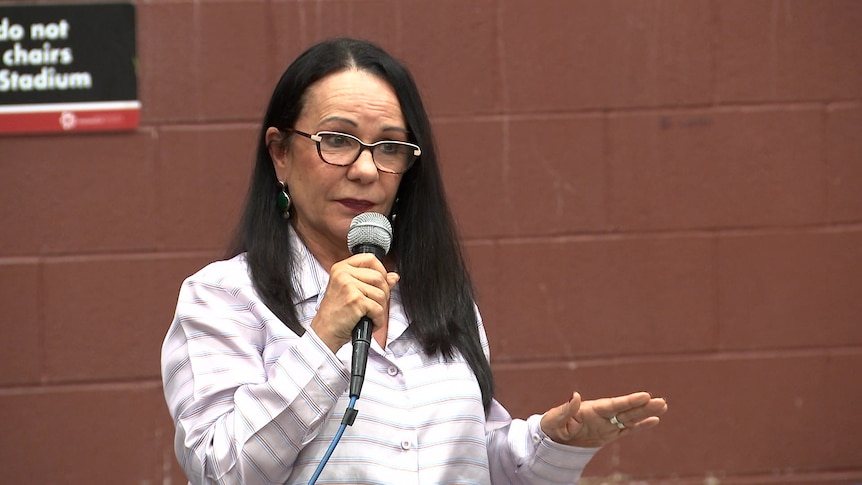
Linda Burney addressed hundreds of community members at the National Center of Indigenous Excellence (NCIE) in Redfern on Friday after learning it would close within a week.

The social enterprise, which provides community services and programs, is set to be shut down on Monday following failed negotiations between its new and old owners.

“To the people making decisions about this place, you’ve got a week to sort it out,” she said.

“I am convinced we can find a resolution to this, we have to, get your acts together and sort this out, I believe it can be sorted out.”

Ms Burney said she “expressed very clearly and very forthrightly” to the Indigenous Land and Sea Corporation (ISLC) that the site must stay open, that people keep their jobs and tenants are given permanency.

Negotiations broke down between the ILSC and new owners the New South Wales Aboriginal Land Council (NSWALC) who failed to reach agreement over the centre’s financial future.

Up to 50 staff, mostly young Indigenous people, are set to lose their jobs.

a number of young students sitting on the floor holding signs
The social enterprise is due to be shut down on Monday.(ABC News: Nakari Thorpe)

Ms Burney — who attended with the Member for Sydney Tanya Plibersek and Sydney Lord Mayor Clover Moore — said future negotiations about the center needed to “have local people sitting at the table”, saying it wasn’t appropriate discussions only involved the two parties.

“Because this joint is important … and what I’d like to see going forward is to hear directly from you,” she told locals.

“Voices need to be heard and that fact you have so many people here is a very loud voice.”

Co-founder and CEO of non-for-profit Redfern Youth Connect Margaret Haumono, who runs a high-school program at the centre, said Ms Burney’s support was “reassuring” but requested something in writing.

“There is no announcement but at least someone is hearing us … at least the dialogue has opened,” she said.

“For too long we’ve sat here and not been included, this belongs to the community and this is how it’s staying.”

On Wednesday, the ILSC said it was working with NSWALC to ensure the community “will still have access to the facility for community purposes and programs under the ownership of NSWALC.”

three women sitting on chairs at a public meeting
Mayor of Sydney, Clover Moore, left, joined Linda Burney, centre, and the Member for Sydney Tanya Plibersek at the community meeting.(ABC News: Nakari Thorpe)

It acknowledged its announcement to shut down the center was “particularly distressing for staff” and is offering separation payments.

It also confirmed tenancies will continue under the new ownership.

Ms Plibersek told the community: “It can’t be beyond us to get it sorted.”

“This place has to stay here for the community … jobs need to stay, programs need to stay, community access needs to stay,” she said.

The center opened in 2006 and offers sports, fitness, conferences and community classes including tutoring and educational support.

Locals have been gathering at the center each day to protest its closure.

Ms Burney said she would be meeting with the ILSC and NSWALC later today.

a group of people sitting on chairs at a community meeting
Hundreds of community members attended the meeting ahead of the centre’s closure.(ABC News: Nakari Thorpe)

.

Categories
US

Laurel, Nebraska: Foul play suspected after 4 people found dead in fires at 2 homes in a small farming town

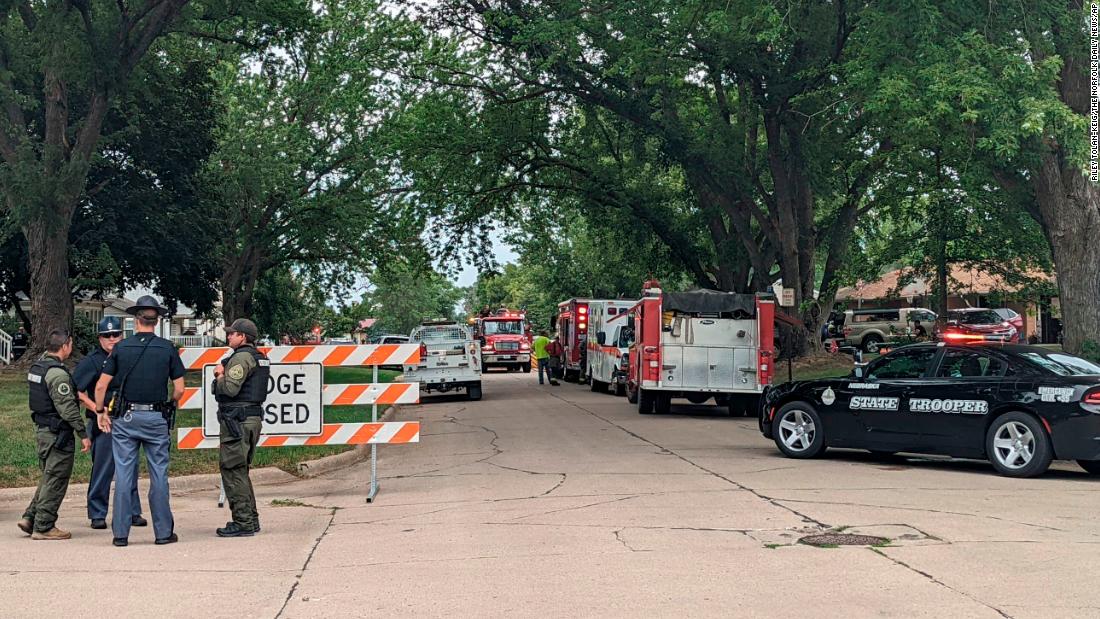
Just after 3 am, Cedar County 911 received a phone call about an explosion at a home, Nebraska State Patrol’s John Bolduc said during a news conference. When fire crews arrived, they discovered a body inside.

While investigators were on the scene, a second fire was reported a few blocks away, where authorities found “three individuals deceased inside of that residence,” Bolduc said.

“Fire crews have worked diligently to put out the fire but also to preserve evidence that may be located inside the home,” Bolduc said. “Our investigators are processing that second scene at this time.”

The deaths were suspicious, according to Bolduc.

“Shortly after the second fire was reported, law enforcement received a report that a silver sedan had been seen leaving the town of Laurel,” he said. “This vehicle was reported westbound on Highway 20,” said Bolduc. It was reportedly driven by a male. The report also said the vehicle may have picked up a passenger before leaving town.

Fire investigators believe accelerants may have been used in both fires, and anyone who was inside the home may have been burned.

“Therefore, it is possible that our suspect or suspects received burn injuries during these incidents,” Bolduc said.

Authorities are asking anyone with information or video to contact them.

No cause or reason has been established at this time, Bolduc said. No information was provided about the victims.

James Roberts, who has owned Laurel’s Hometown Market for more than a year, said that news of the deaths had shocked the small town.

“Stuff like this doesn’t happen in this town,” Roberts said. “Everybody here knows everybody.”

He said the grocery store has delivered food to the state troopers and firefighters who responded to the scene and are stationed at a nearby church. Staff packed up hamburgers and sandwiches including sloppy joes in addition to some water to show their support.

Roberts predicted the town would recover from the tragedy. “It’s a tight-knit town. Everybody here is family.”

Laurel has a population of around 1,000 people and is located in Cedar County in the northeast of the state.

.

Categories
Entertainment

Sir Cameron Mackintosh, billionaire impressario, on how he turned Mary Poppins and Phantom of the Opera into megahits

As one West End producer summed up: “In the world of musical theatre, Cameron Mackintosh is god.”

It’s time to order and we both choose scallops with Aleppo pepper and a main course of roasted fish (bass groper for him, John Dory for me), with seasonal vegetables.

The sommelier takes us around the country in search of an unwooded chardonnay. We somehow settle on the Adelaide Hills, via another Mackintosh story (about “Janet” [Holmes a Court], owner of the Vasse Felix winery and one-time owner of a bunch of London theaters that, in the dark days after her husband’s unexpected death in the early ’90s, kept the bankers at bay thanks to Mackintosh’s successful musicals). I’m struggling to keep up.

version of Phantom about to open in Sydney is quite different to the one that has been wowing audiences for years, and I’m keen to know why Mackintosh chose to change a winning formula.

“Actually, with every single one of my shows, and I think I’m the only producer in history that’s ever done this, I’ve redone them after 25 years,” he says. “The only show of mine that sort of hasn’t been redone is cats“That could be on the agenda, though.

Mackintosh says that as they get older, all shows need to be refreshed to stay relevant. But many originators can’t bring themselves to do it. He is, it seems, more hard-headed when it comes to getting bums on seats.

Mackintosh says that from the time he saw his first musical – Salad Days – at age 8, he wanted to be a producer. “I like to know how things work,” he says. “It was the gift God gave me.”

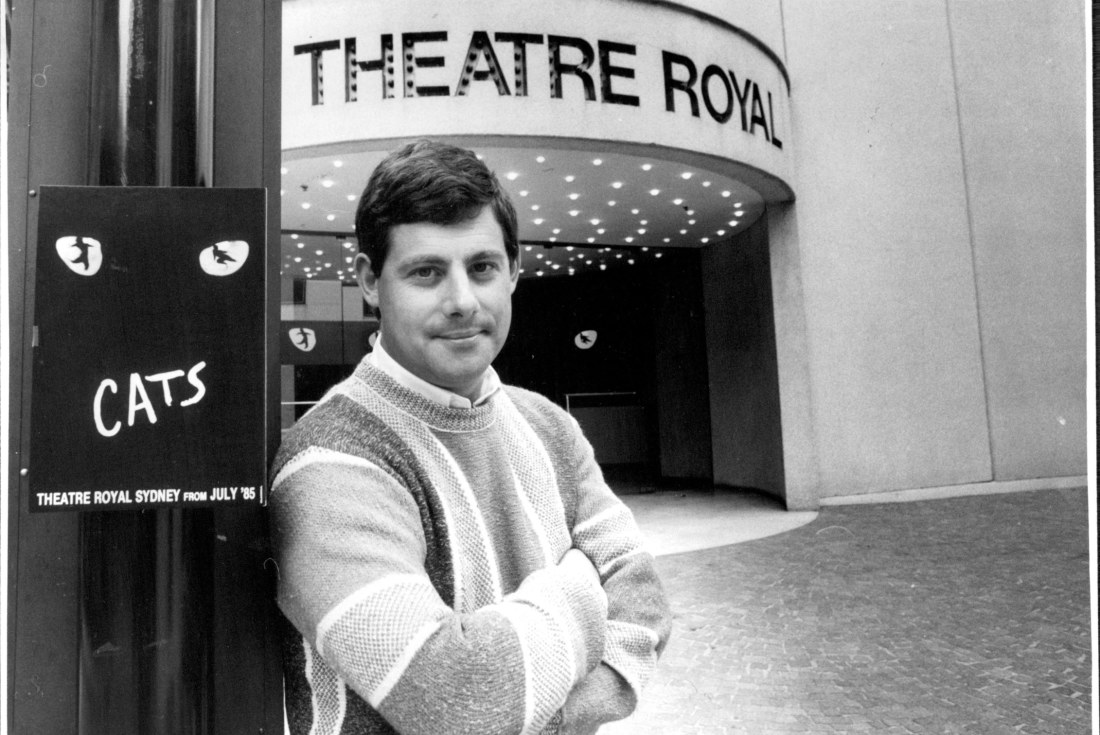
Cats opened at the Theater Royal in Sydney in 1985. Mackintosh’s shows ran consecutively in the theater for more than a decade in the 1980s and ’90s. Bruce Milton Miller

“I get involved in absolutely every element of the theatre, from the writing to the composing, to the orchestrating, to the lighting,” he says, before acknowledging his details guy reputation by adding “to how you’re going to lay out the copy for this piece …

“You know, it’s not that I come up with the new idea of ​​the next show or anything like that. But I’m very good at spotting something that’s special, and then seeing if I’m the one who’s best for actually nurturing it and making it as good as it can be. and that [approach] covers everything I do.”

But, I ask, how do you get the balance right between being across all the detail and being an actual control freak and a nightmare to work for? Mackintosh seems surprised by the question.

“I don’t really know,” he begins, before considering it more carefully. “I just want to get the show right. So, my greatest pleasure is finding something that I think sounds original and then working with others to develop it.” (Later he will speak at length on how all his successes de él have been original ideas based on excellent writing, and why he is always wary of the formulaic.) He backs up the claim with the story of his decade-long effort to bring Mary Poppins to the stage, which involved persuading the two rights holders – author Pamela Travers for the story and Disney for the songs – to get over their many differences.

“Look, I’m sure it can be very irritating that I never stop. But the fact is most of the key people in the theater have continued to work with me over the years.” He says his staff know what he wants and typically do n’t call him in until a production is on his feet and at the fine-tuning stage.

“I couldn’t possibly run my huge empire and keep it personal if I didn’t have 95 per cent of the work done by other people.”

The Australian season of Mary Poppins is a case in point. When Cassel’s casting team made Stefanie Jones her first choice for her to play Mary, Mackintosh could n’t make it to Sydney and was n’t prepared to see the final audition of such a key character over Zoom. Instead, he flew her from her and Jack Chambers, who plays Bert, to London for her final approval. That is, I suppose, staying across the detail.

Stefanie Jones as Mary Poppins in this year’s Australian production. Kate Geraghty

We tuck into the scallops and the Aleppo pepper makes an impact. When the waiter clears the plates Mackintosh politely offers some feedback. “I would just say to the chef that it could do with a little less of the chilli because the poor scallop is fighting for its identity.” I imagine that’s the sort of feedback he’d offer when the lighting or staging or choreography isn’t quite right. Polite, but insistent.

Mackintosh professes three times over lunch that he doesn’t care about money. “To be honest, I never did anything for the money even when I had none,” he says. I have no reason to disbelieve him, but it does get us onto the subject of his businesses from him.

Since the early ’90s, Mackintosh has diversified across the three main lines of musical theatre. After helping create the shows, he can stage them in the eight theaters he owns in London’s West End. “As well as buying them I’ve spent a quarter of a billion pounds doing them up, so they’ll be there for another 100 years,” he says, illustrated with colorful anecdotes about the recently rebuilt Sondheim Theatre. Architecture, he says, is one of his two passions outside theatre, alongside cooking – both pursuits well suited to his eye for detail.

“If you have good ingredients you can always knock something up. I mean, I don’t let any leftovers leave the fridge unless they do so on their own accord. I like to reuse everything.”

The third act in Mackintosh’s empire is Musical Theater International, the world’s largest licensor of musicals. Been to a school musical recently? Chances are the scripts, scores, programs, logos, staging guide, sound effects, right down to recordings of the individual instruments missing from your school orchestra have been licensed from MTI.

Mackintosh says he’s “not really” in the game of creating new shows any more, but he is able to nurture young talent by supporting them through MTI. “We go to all the workshops and treat the newcomer who’s written a new show with the same passion as we do Stephen Sondheim. We want them to feel that MTI is their hope.”

Each part of the business is equally important, he says, and revenue-wise they are worth about a third each. And unlike most other entertainment companies, he has no investors.

“They are wholly owned, I own everything. So when the shit hits the fan, there’s a lot of shit, and it’s all on me.”

Our fish mains come and go, and the restaurant is clearing out. As we opt for double espressos over more wine, Mackintosh turns to the fallout from the pandemic.

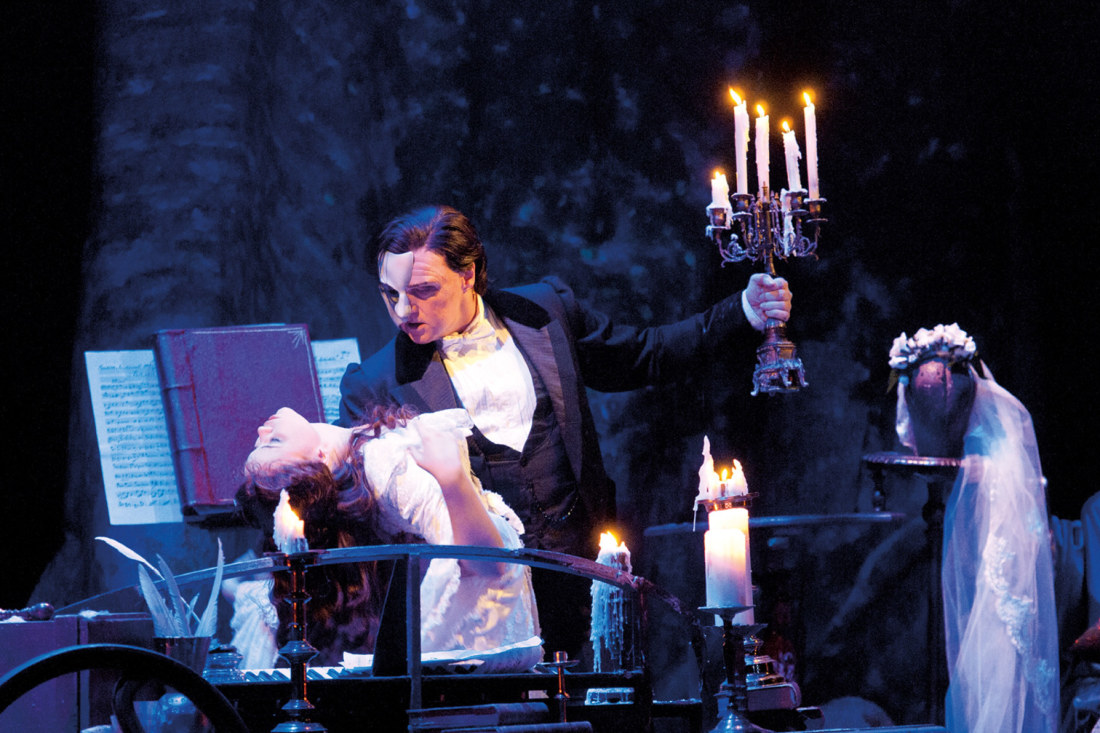
Phantom of the Opera is finally coming to the Sydney Opera House. Opera Australia

While the initial rush back to live shows in theaters has settled, the reluctance to commit has not.

“There is no doubt that people are now looking for shows much later,” Mackintosh says. “They don’t book until two to three weeks out. There’s a sense of ‘All right, that show’s on. I feel like doing something so let’s do it.’ But they won’t book four or five months out like before.”

He says the prolonged pandemic theater shutdown and the corresponding boom in streamed television prompted a lot of theater professionals to leave the industry, something that is showing no sign of being resolved.

But Mackintosh thinks there are bigger, more serious problems that will take longer to sort out.

“I think people are losing sight of the benefits of work, and of going to work.” He says that will hurt companies of all descriptions because the “magic spark that makes a particular company have its outlook happens out of that conversation” you have at work.

“All these people who are thinking ‘I’ve got the best of both worlds. I can live at home and only have to go to work two or three days a week’, what are you going to do with the rest of that time? If half the world is not actually working properly, you can’t get up to the cafe, you can’t go to your Italian favorite because they can’t afford to open.

“In most restaurants, you’re lucky if you get the things you ordered [for dinner] before breakfast the next day. I’m in one of Sydney’s top hotels and I can’t get a f—ing drink after 9.30 unless I sit in my room.”

Eventually, he says, cafes, bars and restaurants will get sick of waiting for staff to show up and turn to robots and AI to do the work.

“I think over the next three to four years all of that is going to come home to roost as the economic pincer does its work.”

When I ask how he manages his money, Mackintosh genuinely seems not to know. “I’m not the right person to ask,” he says, before explaining that he does not like debt so he always has a large amount of money available in the bank. “When I say I’m not interested, I just, I’ve never been driven by money. I just want good people to look after it and do something sensible. But I certainly don’t have a lot of money in the stock market. On the whole I’m fairly risk averse when it comes to investment.”

“I take a salary out every five years, to live through the next five years. I take a lump sum. I put some into my foundation. And all the rest of my money I loan back to my company. So I keep it in there and just draw it down, pay the tax.

“Because also, it’s my wish – I don’t have any children – but I will leave everything I’ve got to my foundation, so I’m going to be worth a lot more dead than alive.”

Not that he’s expecting to shuffle off any time soon. He shows me a picture of his 104-year-old mother, a snappily dressed woman with a sparkle in her eye who looks like she could easily pass as a spritely 80-year-old.

He intends to keep on bringing shows to Australia, but those hoping for another run of Les Miserables will have to wait “til after my 80th birthday”. He is, however, expecting to bring the concert version “home to Sydney”, where it debuted in The Domain during the Bicentennial celebrations of 1988. “That would be special.”

Mackintosh and his partner of 40 years, Australian theater photographer Michael Le Poer Trench, spend most of their time on their working dairy farm in Somerset. He also has an apartment in New York, a house in Malta, where his mother is from and where he keeps his 67-year-old Benetti motor yacht, and an estate in Scotland he inherited from his aunt. All have been painfully restored.

“Now most of the key people in my life are in their mid-30s to mid-40s,” he says, describing it as a conscious effort. “So I’ve recalibrated, and that should see me out. And they’ll think ‘well, I think Cameron would have done this’ when I’m no longer here to do it.”

However long he lives, it looks like Cameron Mackintosh will be across the detail to the end – and beyond.

Rockpool Bar and Grill
66 Hunter St, Sydney
2 sparkling water $18
2 scallops with Aleppo pepper and orange $68
1 roast John Dory $52
1 roasted Bass Groper with Corn, Chorizo ​​and Oregano $49
1 wintergreen $16
1 baby carrot $18
1 Shaw & Smith Lenswood Vineyard $220
3 espressos $15
Total $456

Categories
Sports

Fringe Blues midfielder “needs a role if he’s going to survive”

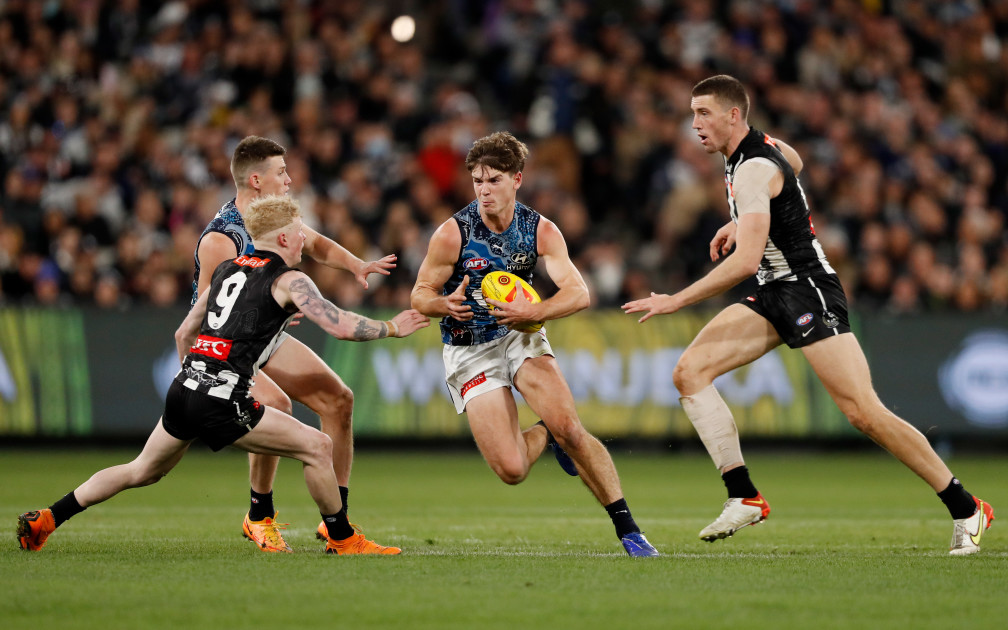
Brownlow Medalist Gerard Healy has designated a role for fringe Carlton midfielder Paddy Dow.

Dow was one of six inclusions for the Blues’ crucial clash against Brisbane at the Gabba on Sunday.

The 22-year-old was named on an extended bench alongside Tom De Koning, Corey Durdin, Lachie Fogarty, Brodie Kemp, Jack Martin, Jack Newnes and Will Setterfield.

The Blues will be without Matthew Kennedy (concussion/jaw) and Nic Newman (knee), while Lachie Plowman was omitted.

If selected for Carlton’s upcoming meeting with the Lions, Healy would like to see Dow play a negating role on Brownlow Medalist Lachie Neale.

The Swans Hall of Famer thinks Dow needs a role to “survive” in the AFL.

Subscribe to the SEN YouTube channel for the latest videos!

“Dow comes straight in to tag Lachie Neale,” Healy told sports day.

“Can I do that role? They need someone to do that role.”

sport day co-host McClure replied: “He hasn’t tagged before.”

Healy said further: “I know that – give him a role.

“He definitely needs a role if he’s going to survive in footy.”

Dow, who is contracted for 2023, hasn’t played at senior level since Carlton’s Round 11 loss to Collingwood.

The former No.3 pick has been prolific at VFL level averaging 27 disposals per game.


.

Categories
Australia

Ex-WA police officer Michael Richard Tyler used social media to discuss sexually abusing children

A former West Australian police officer is behind bars after pleading guilty to accessing and possessing child sex abuse material, which he then discussed and forwarded to users in online chat rooms.

WARNING: This story contains content that some readers may find upsetting.

Michael Richard Tyler, 38, was a senior constable stationed in the Mid West city of Geraldton last year, when he used social media apps such as Discord and WhatsApp to discuss sexually abusing children.

The District Court was told a search of his electronic devices discovered thousands of messages that included discussions about drugging and raping children.

During some of those discussions, Tyler also forwarded images and videos of children as young as two months being abused.

In one exchange, Tyler and a woman talked about abusing an eight-year-old girl while they were babysitting her.

In a different conversation with another woman, the discussion centered around about being abusive parents.

Crimes followed ‘tumultuous few years’

Tyler’s lawyer Clint Hampson told the court the offenses took place after his relationship broke down and his former partner took their children overseas.

Dr Hampson said that he had a “profound effect” on Tyler’s mental health and triggered what he called “a tumultuous few years” that included drug addiction.

The court heard Tyler then met a woman on Tinder, who talked about abusing a child.

“He accepts that once he was introduced to this, he’s gone and offended,” Dr Hampson submitted.

It was revealed during the hearing that a female co-offender had been sentenced earlier this year over her “online chats” with Tyler.

She claimed she had been coerced by him into taking part, despite having no interest in child abuse material.

Judge dismisses ‘fantasy’ claims

Tyler’s sentencing was adjourned until November after Judge Charlotte Dawson said a psychological report was needed to determine the extent of his sexual interest in children.

Judge Dawson said in some of the material before her, Tyler had referred to his crimes being “fantasy”, which she highlighted was not the case.

“This isn’t fantasy, these are real children, real victims,” ​​she said.

“To see the word fantasy, that is offensive… it is clearly erroneous.”

Tyler did not seek bail and was remanded in custody.

.

Categories
US

Kari Lake wins GOP nomination for Arizona governor

Kari Lake defeated Karrin Taylor Robson in Arizona’s Republican gubernatorial primary, AP reports, propelling the Trump-endorsed candidate into a general election where she’s favored to become the state’s 24th governor.

Driving the news: The former Fox 10 anchor took the race by storm last year, becoming the immediate frontrunner with a style and message that closely emulated former President Trump.

  • Lake’s campaign has been characterized by his combative style, anti-establishment rhetoric and unflinching support for Trump’s false claims that the 2020 election was rigged against him.

Flash back: Lake declared victory on Wednesday with about 186,000 votes left to count in the primary.

the battle between Lake and Robson became a proxy war between Trump and the establishment wing of the GOP.

Between the lines: Despite spending more than $20 million on her campaign, most of it self-funding, Robson was never able to overcome Lake’s advantage.

  • The developer and former regent gained momentum late in the race with a massive, sustained TV advertising blitz.
  • Robson also waged an unrelenting attack ad campaign against Lake, hitting her for contributing to Barack Obama in 2008, questioning her conservative credentials and dubbing her “Fake Lake.”
  • Nearly every poll of the race that was ever publicly released showed Lake leading, and despite her financial advantage she was never able to overcome that lead.

The intrigue: Lake and Ducey will now have to bury the hatchet as they pivot to the general election.

  • Ducey is the chairman of the Republican Governors Association, which has already reserved about $10.6 million worth of airtime for the general election.
  • Lake has been harshly critical of Ducey on his response to COVID-19 and other issues.
  • Still, Ducey’s job as RGA chair is to win gubernatorial races for the GOP, and it would reflect badly on him if the Democrats won the race in his own state.

What’s next: Lake will likely face Secretary of State Katie Hobbs in the general election. Many Democrats viewed Lake as the easiest opponent for Hobbs.

Yes but: This is still Arizona, which, despite Democratic gains during the past few elections, is still a predominantly red state, and this is still expected to be a Republican wave year.

Note: Hobbs, who’s served as Arizona’s top election official since 2019, gained national prominence after the 2020 election fighting the same bogus election fraud allegations that Lake has spent the past year spreading.

.

Categories
Business

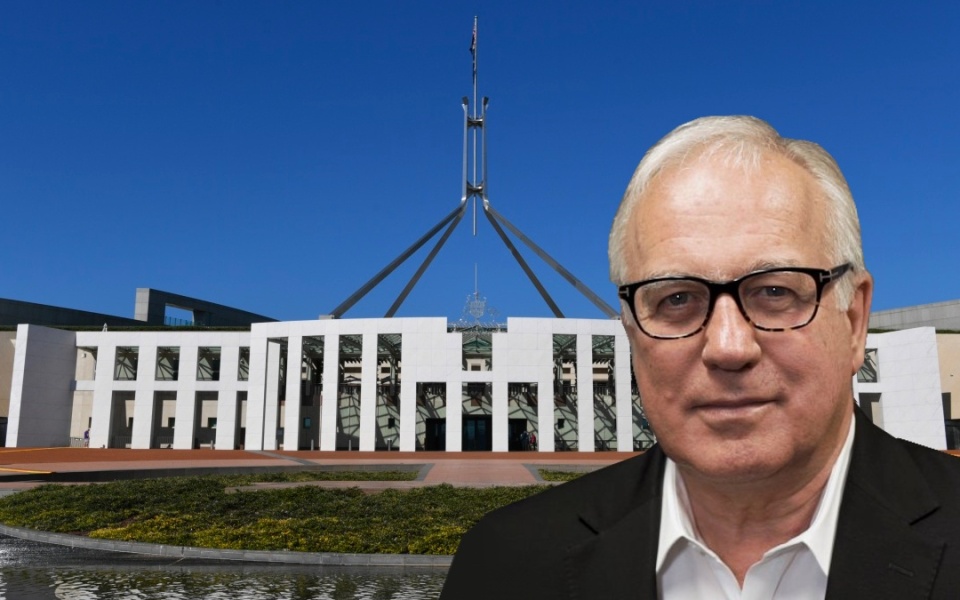
Big government is already here. But how will we fund it?

The anger in Australia over the behavior of the natural gas cartel, described in infuriating detail this week by the ACCC, is another symptom of the growing global disillusionment with free markets.

The global energy crisis caused by the Russian invasion of Ukraine on top of the growing evidence of the impact of global warming is leading to more and more calls for much greater government intervention.

In Europe, where gas prices have already increased 52 per cent with more certain rises, politicians are under pressure to find solutions that the market is unable to provide.

This week I spoke to Kevin Bailey, Australian chairman of a small locally listed company called Po Valley Energy, which own gas fields in the north of Italy and the Adriatic Sea. After years of fighting environmentalists and the Italian bureaucracy to start producing gas, suddenly the government in Italy, egged on by Germany, is falling over itself to help Bailey get production going.

In Australia, the ACCC’s gas inquiry interim report is a devastating critique of what happens when a private cartel gets control of an essential product, any product for that matter.

ACCC chair Gina Cass-Gottlieb is calling on the federal government to trigger what’s called the Australian Domestic Gas Security Mechanism (ADGSM), having found that the five LNG exporters that control 90 per cent of Australia’s gas will leave Australians 56 petajoules short next year, while at the same time enjoying a huge lift in profit margins as a result of a crippling rise in gas prices.

The context for Australia’s struggle with the gas cartel is global, and wider than energy: The war in Ukraine has once again exposed frailties in the global economy caused by the rolling back of government regulation over the past 40 years.

The dangers of weak regulation

The first demonstration of this was the GFC, when the world’s private banks came unglued and would have brought down the global economy entirely if it hadn’t been for massive state intervention and fiscal support.

That led to some extra regulation of banks, but no broader reordering of priorities or fundamental change in the philosophy of governing, and now the world’s private energy firms are at it.

One thing that did happen as a result of the GFC was that central banks became completely unconstrained.

They had been given independence a decade or more before that, but after 2008 they started generating “free money” through quantitative easing.

Governments that were weighed down by huge deficits as a result of the banks’ self-destruction in 2008 were only too happy to let their own central banks take the running and print trillions of dollars to keep economic growth going in the absence of either fiscal support or productivity growth.

The result is that most economies now require $US3-$US5 of debt for every incremental dollar of GDP, versus $US1.50 in the 1950s, ’60s and ’70s. Overall global debt has grown to 350 per cent of GDP, from 152 per cent in 1990.

Today’s total freedom of central banks to adjust interest rates and print money is actually another expression of the distrust of politicians that began with Friedrich Hayek and Milton Friedman, and led to 40 years of trust in free markets and private ownership, along with lower taxation.

In a way, central bank freedom to create money has replaced the spending of tax-cutting, deficit-burdened governments, except that rather than support the welfare state and better government services, it has pushed up asset prices and benefitted the already rich.

As discussed in this column a couple of weeks ago, it’s hard to work out whether tax cuts have been ideologically designed to curtail the size of the state, or are simply the greed of plutocrats wanting to cut their own taxes, but lower taxes is definitely what happened, especially at the highest-income tax brackets:

AUSTRALIAN TOP MARGINAL INCOME TAX RATE

Source: Australian Treasury

eroding social cohesion

Australia’s top marginal rate is now 45 per cent (plus a Medicare levy of 2 per cent), and while that is set to remain when the Stage 3 tax cuts are implemented in 2024, the income at which it cuts in will be increased to $200,000 , and the 37 per cent tax rate is to be removed entirely so that most people will pay a flat income tax of 30 per cent, making the tax system much more regressive.

Taxes have become steadily less progressive, more regressive around the world over the past 40 years, dramatically worsening inequality.

Research by Thomas Piketty for his book A Brief History of Equality shows that in the US, the top 1 per cent have gone from 9 per cent of total income in 1970 to 22 per cent today, while the share of the bottom 50 per cent has gone from 21.2 per cent to 13.2 per cent. No wonder they’re not happy.

All governments now face two great challenges, one easier than the other: First, how to re-engage in the regulation of private firms and even nationalisation, and second, how to pay for the expansion of the state that is now demanded.

Continuing to rely on central banks to support growth by printing money, while constraining taxes and government spending, is clearly not viable because of what that does to inequality and social cohesion.

Viktor Shvets of Macquarie Research in New York believes that central bank independence will not survive: “…rather central banks will be probably rolled back into departments of finance and treasury, where most of them belonged back in the 1950s-’60s”.

He wrote recently: “It is a question of choosing between two evils: Pursuing hyper-aggressive monetary policies coupled with regressive taxes, [which] will likely cause even greater polarisation, social, political, and geopolitical dislocations, [or] altering today’s policies, [which] is not only hard but also risks “throwing [out] the baby with [the] bathwater.”

Shvets may be right, but in the meantime the simpler solution in this country at least is to abandon the Stage 3 tax cuts and to prepare Australians for higher taxes and a larger, more hands-on government.

Climate change and the prospect of a long, drawn-out conflict in Ukraine will mean there is no alternative: The private sector cannot sort those things out.

Catastrophe and war are matters for government.

Alan Kohler writes twice a week for TheNewDaily. He is also editor in chief of Eureka Report and finance presenter on ABC news

Categories
Entertainment

Abbie Chatfield stuns fans with new look

Media personality Abbie Chatfield has debuted a new look, stunning fans.

The Masked Singer panellist has been known for her blonde locks since stepping into the spotlight on TheBachelor.

But, on Friday, Abbie unveiled a new look and shared her hair was now brunette.

“Surprise!!!!! My hair has been barely holding on for a few months because of daily heat styling and way more regular bleaching so @danewakefieldhair at @tomhairstudios took me back to (an elevated version of) my natural color. We love,” she captioned an Instagram image.

Fans rushed to compliment Abbie, who in the past has contemplated going back to brunette on social media.

“Brunette Abbie is too powerful,” one person commented on the post.

Another added: “Wow how is it possible I can crush even harder.”

A third said: “With your blue eyes!!! ICONIC.”

It comes just days after Abbie gave fans a glimpse at the new range from her fashion line Verbose The Label.

the Hot Nights with Abbie Chatfield star announced her clothing line Verbose the Label in May this year with five pieces, such as a wrap dress, in bold colours.

Now, she has given fans a behind-the-scenes look at the new collection after she listened to customer feedback on what direction they would like the brand to head to next.

“We’re here at the Verbose shoot, Walter is here as well,” Abbie said during an Instagram story.

“We have our new range – reveal vibes – we are finally doing an all black range.

“Everyone was like ‘all we want is black, it’s all we want and all we need’.

“So, we decided to do it, it’s a real basics vibe.”

She gave people the opportunity to ask questions, with facts such as the trousers in this range are the same fit as the initial drop, being revealed.

The range features a skirt, a pair of trousers, a dress and at least three different shirt designs.

Prices range from $89.95 to $129.95 with sizes between a 6 and a 26 available to shoppers.

.

Categories
Sports

Josh Jenkins’ full statement on the Adelaide Crows’ 2018 pre-season camp

What I am about to say – and what Eddie Betts has stated in his book – has been four years in the making.

I’m not overly proud or pleased to be here, but here we are.

I’m here largely because no one has taken responsibility for what went on and the acceptance that what went on was completely unacceptable.

This is my collection of the camp. I wrote a lot of what I am about to read years ago because I knew this day would come.

PRE-CAMP

In mid-to-late 2017, prior to the Grand Final and – obviously – the camp, we began role-playing activities, none of which really had any substance. Most was just stuff you could laugh at post-sessions. And often we did. The thrusting and screaming was dumb and mind-numbing, but we are resilient young men, we can easily swipe that away as nonsensical and pointless.

But, you’re desperate to atone for a lost Grand Final, so you buy in because you’re asked to and you want to believe it’s the last hurdle you need to achieve premiership glory.

After the Grand Final, during the following pre-season, maybe December 2017, we were told we’d be going on an intense camp to the Gold Coast.

Before our Christmas break, some of the core group were asked to stay back after a meeting to decide who were going to be the 10 players and two coaches joining in on the most intensive version of the camp.

The sales pitch was a red flag:

“This will be the scariest thing you’ve ever done but the safest thing you’ve ever done.”

Immediately, we all thought of physical activities, sleep deprivation, starvation etc.

How I wish that was the case.

I resisted big time…

I recall us going around the circle and accepting the challenge whilst a couple of players needed to be withdrawn due to injury issues as well as one player being removed because of some personal trauma he’d recently experienced.

Hearing he was removed because his personal trauma may be too much on top of what we were about to endure had ALARM BELLS ringing inside my head.

I consider myself as a matter of fact person, a realist, I’ll call it as I see it… to a fault – some may accuse me of being too cold and calculating (my wife would even accuse me of that on occasion and I thank her for her support the whole way through.She remains devastated and furious at the way our time in Adelaide ended).

BUT I had to be true to myself and true to my mates.

This all smelt terribly and in my heart I knew we were going down a bad path.

But off the back of a Grand Final loss, when I personally had played so poorly, I only had so much leverage.

After around 40 minutes of resistance, I agreed to be a part of Group 1 – in part because I knew it was a month or so away and I had time to work back channels to get removed.

not joy I could not get out. Group 1 was for me.

As Eddie stated in his book… I also took a phone call with the supposed counselor and – again, expressed my desire that my unusual upbringing was of no significance to me as an athlete or teammate.

I – in a naive bid to allow these people to improve me – explained to this person how I was raised by my non-biological grandmother and have had no meaningful relationship with my parents.

My childhood is a source of shame, pain and pride.

I am proud I am where I am today despite any potential hurdles thrown my way as a young person, but I will always have the pain of not having a family to lean on in tough times or to celebrate with on celebratory occasions.

Even as an adult, small things can stay with you. I recall the awkwardness I felt when I didn’t have anyone to invite into the rooms for my debut jumper presentation. No matter how far you go, some things can always nibble away at you.

I explained my upbringing had probably led me to being more skeptical and isolated – with a determination to do things my way.

I also stated I was proud of the person I was and that in no way was my childhood of any relevance to anything I was doing as a professional athlete.

I stated more than once I wanted none of my upbringing to be used or even spoken of during or after the camp. Something which was promised to me – but in my view, a promise that was broken.

From there, we went to the Gold Coast.

THE CAMP

Two words which vary from annoying for fans of the Crows right through to damaging for individuals.

We arrived on the Gold Coast knowing something big was in store.

The secrecy and lack of information was astounding.

Our welfare manager – who was receiving 90%+ approval ratings in the AFLPA surveys – was iced out of discussions and planning as well as everything afterward.

She fought the good fight for us players and I will always be grateful for that.

She no longer works at the Crows or in the AFL.

You know all the detail about fake guns, macho men, people dressed in costumes asking to be called Richmond.

None of that phased me.

I was thinking… you guys know that I know those AK47s are not real, right.

But as we began to do camp activities things went from dumb to disgraceful.

We sat under a tree and witnessed an unknown man to us go through the harness ritual.

The reasons why he was on the harness are up for conjecture, but I heard comments thrown his way – including some from him – about sexual misbehaviour and womanising.

Following that person’s harness ritual I got up from under the tree we were all sitting under – fronted Don Pyke and Heath Younie and said, “we lost a game of footy, we are all good people, this is rubbish and I think we should all leave”.

After a heated conversation between me and camp coordinators, and mostly to honor the greater good, they convinced me to stay and watch a few of my teammates go through the ritual first.

The youngest member in Group 1 went first.

Each player was scolded with abuse and physicality so they’d be physically and emotionally worn out.

This is where I’m happy to try and explain why some rituals were confronting and some were ‘nothing to see here’ and easily moved on from for others.

In my view… the boys who had had a more ‘normal’ or traditional upbringing without any real trauma or tragedy in their lives had very little to be poked and prodded about apart from the general back and forth about being a better team mate and person .

Those – like me, Eddie and perhaps others – had experienced different things that were more raw when focused on – especially when we’d been assured, essentially promised, nothing like this would be raised.

I specifically asked for assurance pre-camp that nothing regarding my childhood would be raised or used on the camp to spur me on or ‘break me down’.

It’s my belief this promise was broken. And I’m not certain I’ll ever forgive those involved for that.

Nor am I sure anyone has even truly taken responsibility for what went on and why it was allowed to happen.

When my turn on the harness arrived, I was fighting against three or four teammates who would then let go of the rope so I would fall to the ground – all of this was at the request of a camp facilitator – I guess he was some type of bush-psychologist and during the harness rituals, his word was gospel.

Looking back, the ‘rite of passage’ as it was labeled was strange.

There was also a man on a set of drums who said he was drumming in time with the beat of his heart.

At different stages, comments were thrown at me whilst on the harness in regards to the way I was raised and why I act like I do at the club and on the field.

Some were from teammates being prompted to verbally jab me and some were from camp facilitators who had obviously shared intel on me as a person.

I’m choosing not to reveal some of those comments because I know people who care about me are reading… but I can say for sure those comments were fed to the facilitators and I believe some of the info was passed along from people within our club .

I recall some of the barbs thrown at Eddie – and others – and recall glaring at one of our coaches who quickly picked up my emotions.

Everyone went through the ritual and on the last morning, we had a relaxed discussion with the facilitators – which is also when we were told how to discuss what we’d done with our teammates and family members.

I distinctly recall the role playing on what to say to partners and teammates.

I got into a chat with one of the facilitators who told me he occasionally gets voices in his head… I asked how do you get them to stop… he said he sits under a tree until the voices stop.

He said they took two days to stop so he sat beneath a tree for two days.

I only include that info to explain how misguided this whole situation was… how could you possibly allow someone of that nature to be in control of high-performing professional athletes?

That’s why I was so strong on the doctor and welfare manager being involved. They would’ve put a stop to this and I think the club knew it… hence their lack of engagement.

POST CAMP

The club completely fell apart.

We were sworn to secrecy even from teammates on different versions of the group.

Myself and a coach stood up one session and demanded we tell each other what happened and the CEO or Football Manager (I cannot recall who exactly who) stood up and said we were unable to because the club had signed confidentiality agreements on everyone’s behalf.

I said, “I did not sign a damn thing.”

We continued to undertake activities like beating our captain for failing us on the biggest stage. Something that made me feel uncomfortable at the time and still does.

Some things you cannot say.

As fractures were beginning to become gigantic, portions of the playing group were beginning to say they were no longer willing to participate in the leadership program.

On one occasion when we met as a large group (some staff included) the outcome was to exclude the indigenous players from the program.

I stood up and said, and I recall vividly, because I knew it was the beginning of the end for me as an Adelaide Crow…

“You cannot be seriously considering isolating a fifth of our playing list in favor of this program.”

Countless occasions, players told me of their discomfort and unwillingness to be involved anymore and much of that messaging was left to me.

Which of course caused friction between me and the club.

In the end, when I knew where my future was headed, I looked forward to these conversations – which I regret because my time as a Crow has been significantly soured.

In the end, I was moved on from the Crows as a problem child, an argument starter and even in one piece of literature I saw labeling me as ‘cancerous’.

The only cancer at the club was the idea that taking us on a psychologically unsafe camp that was supposedly going to make us better parents, siblings and teammates.

I suppose overcoming the loss of your senior coach to a senseless murder and making the Finals two months later and making a Grand Final two years later was not enough.

It’s made us better because we’ve finally been able to reveal the truth about the nonsense we were forced into.

I hold my head high today.

Crows fans, consider this, my words are not an attack on the logo or the club. I love the Crows and what it provided my family and I am so proud my name will be on the No.4 locker forever!

But you cannot do things like this to people and not be held accountable.

The last thing I’ll say is this…

There is a report from our club doctor Marc Cesana, whom I sat with on countless occasions where he assessed my welfare and did the same with others…

He wrote a lengthy report off the back of his dealings with us as players and people.

No one has ever acted on that report – which I know is damning.

The report must see the light of day. It’s the only example of a medical professional who had day-to-day dealings with the people and players who were involved.

He was concerned about us.

He expressed his disappointment to me about what happened to us, but never disclosed the details of what he’d discussed with other players.

Hence why the report needs to see the light of day.

I recall, during one meeting, our doctor expressed in front of the entire playing group and most of the staff that what occurred on the camp was totally unacceptable – and I know the report captures that!

Today is a good day and a really sad day.

Listen to Jenkins read the full statement below.


.
Categories
Australia

Harley Thompson found not criminally responsible for fatal Bomaderry house fire

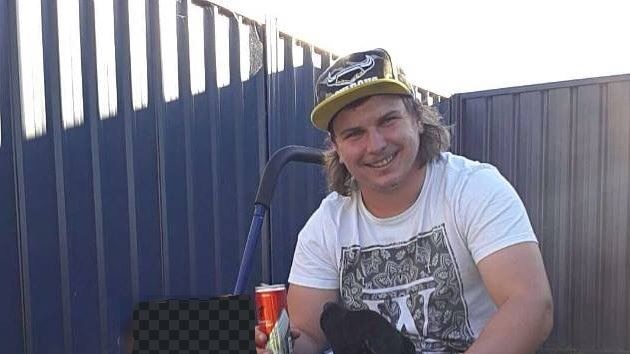
New South Wales South Coast man Harley Thompson, accused of murdering his neighbor in a house fire, has been found not criminally responsible for the death.

The 27-year-old sat in the Mid North Coast Correction Center in Kempsey watching the verdict via a video link today as it was read in the Nowra Supreme Court.

Wearing prison greens with a shaven head and mullet, he was quiet and still through the proceedings.

Mr Thompson initially lied to police about starting the fire on July 31, 2020, but later acknowledged that he did.

Cameron Johnston, 49, was killed in the fire.

Mr Thompson had repeatedly threatened Mr Johnson at his Bomaderry house on the night of the fire, smashed windows and yelled profanity-laden abuse at the man he did not know.

Phone records show Mr Johnson had called police and his housing provider on the night to report what was happening and that he and his son were “scared with just about every window smashed.”

Mr Thompson then “chucked” petrol through the windows of the house and set fire to the curtains.

Neighbors gave evidence that they heard Mr Johnston’s son scream “Dad, dad, dad” and a short time later heard Mr Thompson yell “Burn ****, burn”.

They said he later laughed while almost sounding excited.

An autopsy found Mr Johnston died from carbon monoxide toxicity and had suffered burns to multiple areas of his body.

Mr Thompson’s lawyers said during a trial over the past couple of weeks that he was not responsible for the crime because he had a mental health impairment.

Prosecutors argued he had feigned his symptoms.

the exterior of a brick court building with an arched entrance
The Supreme Court verdict was delivered in the Nowra Courthouse.(ABC Illawarra: Ainslie Druitt-Smith)

‘Satisfied’ with defense of mental health

In his verdict, Justice Michael Walton said he accepted the evidence provided by two expert psychiatrists as well as clinical assessments.

They diagnosed Mr Thompson with schizophrenia or schizoaffective disorder or depression with psychotic features.

It created severe delusions and auditory hallucinations.

One expert suggested the symptoms had presented when Mr Thompson was admitted to hospital in Victoria in November 2019.

Dr Andrew Ellis gave evidence that Mr Thompson’s symptom of echo des Pensée, which he described as “a very technical psychiatric term of hearing your own thoughts spoken out loud”, was not identified at the time.

Justice Walton told the court having considered all the evidence he was “satisfied that the defense of mental health impairment is established”.

“I have experienced temporary or ongoing disturbances of thought, perception, mood and mostly likely memory,” Justice Walton told the court.

“The disturbances were regarded by the experts as significant for clinical diagnostic purposes and the disturbances significantly impact judgement.”

He said while Mr Thompson also had a substance abuse problem, his impairment was his underlying mental health condition.

“I am satisfied that the accused knew of the nature and the quality of his act but did no reason with a moderate degree of sense and composure about whether the act, as perceived by a reasonable person, was wrong,” Justice Walton said.

“The verdict that will be entered on the indictment is ‘act proven but not criminally responsible’.”

A victim impact statement from Mr Johnston’s son, who was watching the verdict via the video link, was presented but not read aloud in the court.

“I express the condolence of the court and the community to the family and friends of Mr Johnston and in particular Mr Johnston’s father, brother and son,” Justice Walton said.

The Justice ordered Mr Thompson be detained and held under the supervision of the Mental Health Review Tribunal because of his history of escalating mental illness.

.