The Blues raised the case involving West Coast’s Willie Rioli when he was cleared after the Eagles successfully argued he was making a legitimate attempt to mark the ball when he crashed into the Suns’ Matt Rowell in round two.
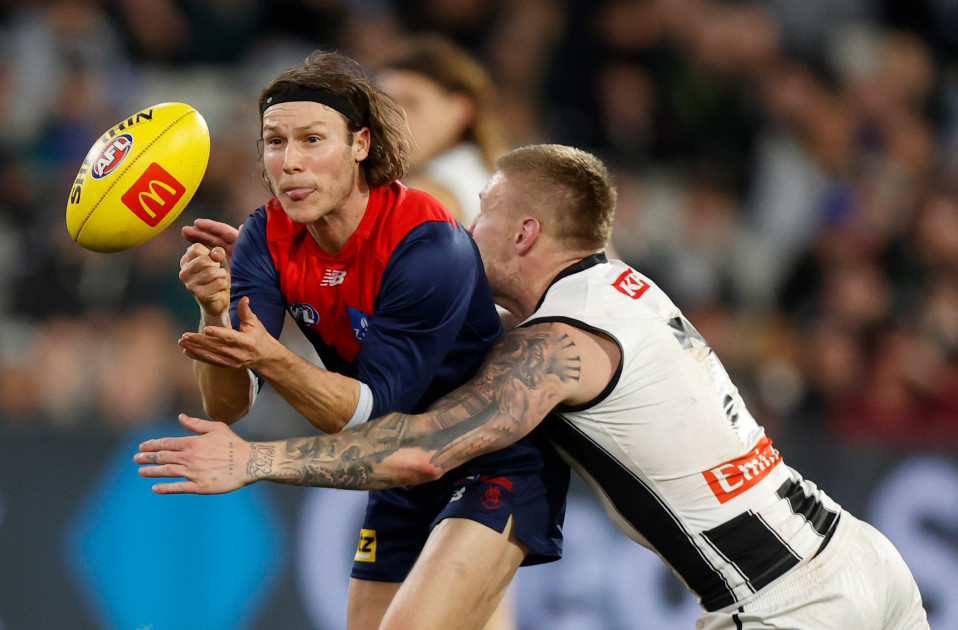
Carlton’s Patrick Cripps appeared before the court after colliding with the Lions’ Callum Ah CheeCredit:The Age
His counsel Peter O’Farrell said there was a range of reasonable responses to the situation both players found themselves in when a spoil from the Lions’ Daniel Rich bounced above eye level and it was critical in determining the extent of Cripps’ liability to accept that neither player had possession of the ball when they both entered the contest.
Although not disputing that the Blues’ midfielder had his eyes on the ball, AFL counsel Nicholas Pane QC argued that Cripps had other options and could have entered the contest with arms outstretched or tapped the ball on.
Pane said it was not reasonable for Cripps to contest the ball in the way he did given he would have been aware he was likely to collide with Ah Chee.
He said the case rested on whether contact was “part and parcel of contesting the ball” and in his view it was not. Pane said contact with Ah Chee was late and Cripps should have recognized that his opponent was vulnerable and therefore entered the contest differently.
Footage showed that Cripps entered the contest before Ah Chee had taken possession of the ball with both players leaping simultaneously to win the ball.
O’Farrell said the collision occurred with both players acting reasonably and therefore there was no need to argue whether it was careless. O’Farrell said Cripps had taken a straight line to the ball as Ah-Chee drifted back across him to also contest the possession.
He said it was not a bump therefore Cripps could not be found guilty of rough conduct.
“It was a collision in an aerial contest and the charge cannot be sustained,” O’Farrell said.
“There was no bump. Cripps was contesting the ball at all times.”
In an earlier appeal West Coast midfielder Tim Kelly had his charge of rough conduct for a dangerous tackle on Adelaide’s Jarrod Berry upheld meaning he will miss Sunday’s derby against Fremantle.
The federal Liberals have rejected an invitation to attend a national jobs summit next month, labeling it a stunt.
Key points:
The opposition has ruled out any of its MPs attending next month’s jobs summit
The federal government is agreeing to a summit with the hopes it will prompt wages and productivity growth
Peter Dutton says the summit is a “stunt” with the unions
The federal government is preparing to agree to a summit for the first week of September that it hopes will be a keystone for its economic policy in the term ahead that will unify business, government and unions.
Government ministers had expressed hesitation over inviting the opposition, saying it would only be invited if it was prepared to be constructive.
On Tuesday Treasurer Jim Chalmers wrote to Opposition Leader Peter Dutton, extending an invitation for him or another Coalition MP to attend.
But Mr Dutton has rejected the invitation.
“It’s a stunt with the unions,” Mr Dutton said.
“We’ll support all sorts of good policies from the government … but we’re not going to support stunts.
“The fact that Jim Chalmers wrote to me and then within a couple of hours dropped it to The Australian newspaper demonstrates it is nothing more than a stunt.”
Unions lay down reform agenda ahead of summit
Overnight, the peak union body outlined its goals for the upcoming jobs summit, with “full and secure” employment being its first priority.
The Australian Council of Trade Unions said despite unemployment being at a historic low, real wages were declining and insecure work was “rife”.
The ACTU said the federal government should implement an excess-profits levy on companies “enjoying windfall profits as a result of current inflation”, cancel planned tax cuts for high-income earners and regulate labor markets to ensure wages rose in line with productivity.
The unions have already flagged they want enterprise bargaining rules overhauled, something the government has indicated it will pursue despite resistance from business groups.
ACTU secretary Sally McManus said for workers to benefit, the government must do more than fiddle around the edges on workplace reforms.
“It requires new ways of thinking about how our system is managed, who benefits from it, and how to change it for the better,” Ms McManus said.
Shadow Finance Minister Jane Hume said despite her party’s refusal to attend, the jobs summit would be an important chance to set the policy agenda for the coming term of government.
“The jobs summit that’s coming up will be a very important event in which a lot of these demands get aired,” Senator Hume told Sky News.
“The real test, of course, will be when Labor starts ruling out some of these demands from their union masters.
“I think this is an important opportunity for the Australian public to really hear what it was they voted on.”
We asked NPR readers from hot countries (including the US!) to share their tips on how to cope with the heat. It’s a follow-up to a story we published last week by heat wave researcher Dr. Gulrez Shah Azhar about how he dealt with super high temps while growing up in India, where his home was one of many with no A/C unit .
Nearly 900 people who grew up without an air conditioner from Vietnam to Minnesota shared their heat hacks via Facebook, Instagram, Twitter and email. They offered all kinds of advice on how to deal with the heat. Here’s a selection of reader responses. These have been edited for length and clarity.
1. Sleep in a wet sheet (really)
To sleep in the St. Louis, Mo., summer heat, I would wrap a sheet around me, get in the shower (yes, with the sheet on) then lay on my bed with a fan blowing on me. I was cool and slept well. In the morning, the sheet and mattress were dry. — Sally Kuhlenschmidt, Bowling Green, Ky.
2. Use frozen water bottles
I grew up without A/C in Tennessee and I would freeze bottles of water and go to sleep with a few of them in my bed. I’d wake up a few hours later and switch the bottles out for others in the freezer. — Lauren VanNostrand
3. Deflect the sun
Deflect sun rays from your house by taping aluminum foil or pop-in reflective screens designed for automobiles to windowpanes. — Patty Besom
4. Go on a cold food diet
I grew up in Minnesota in the ’60s when air conditioning was only just beginning to be a household staple. My mother would do any cooking needed for the day during early morning hours. Sometimes she would make a cold pasta salad for dinner. She also had a recipe for no-bake cookies that would only come out during the hot days of summer. We drink lemonade and iced tea. At the time, popsicles came with two joined together, each with its own stick, and most of the time we [kids] only got half. But during days of extreme heat, we were allowed the entire thing! –Jeanne Pumper
5. Spray yourself with water
Fill a pump sprayer with distilled or purified water (so it won’t leave deposits on you) and liberally spray yourself, especially your face and head. When outside, spray your hat and your shirt with this water until damp. I call it “artificial sweat” and I find it amazingly refreshing. — John Fuhring, Santa Maria, Calif.
6. Lay on a tile floor
Something I learned living in Singapore was to lay on the cold tile floors for a little while. Put a pillow under your head, turn on a good show, lay on the floor and zone out. –Kathryn Lee
7. Cool off with cologne
I live in Valencia, Spain, and the heat is almost unbearable. I don’t have an A/C. I use baby cologne to cool off. I douse it over my neck and shoulders and because it’s mostly made of alcohol, it immediately [evaporates and] refreshes. I keep it in the fridge to stay extra cool! — Lily Adamson
8. Catch a movie
When I lived in Puerto Rico, we also lived without A/C. The most effective way I found to keep cool on very hot days was to go the movies. PR’s movie theaters are notorious for being cold — they really blast the air conditioner! Sometimes it’s so cold that people have to bring in blankets and coats. — Jennifer Gandasegui
9. Pull in the morning air
I have a complex process to cool down my house. Essentially, you pull in cool night and morning air into the house by using box fans, and then close down the house as things heat up outside.
As soon as I get up at 6 or 7 am, I open the windows in every room and prop box fans in the chair. Around 9 or 10 am, I take the fans out, close all the windows, and let the fans run on the floor of each room. Right now, it’s 90-plus degrees outdoors. Inside, my fan is blowing lightly on my back as I sit at my desk, and I feel chilly enough to move my location. — Meenakshi Ponnuswami, Lewisburg, Pa.
10. Laundry = coolness
I grew up in Vietnam in the ’70s and ’80s. We used to wash clothes manually [to cool down with the water] — then we hung our laundry [on clothing lines] outside the house, which provided extra shade to residents during the heat of the day. — Diem Tu, Vancouver, Canada
11. Sleep outdoors
I spent my childhood summers living in Egypt. We lived on the 11th floor of an apartment building and I slept in the top bunk in the kids’ room — with no A/C. And as you know—heat rises! At night, I’d tiptoe to the balcony of our flat with my pillow, lay out a blanket and sleep outdoors in the coolness of the night. —Malaka Gharib, Nashville, Tenn.
Thank you to all who told us your personal stories. For more callouts like these, stay in touch with NPR Goats and Soda by subscribing to our weekly newsletter.
Google is making yet another attempt to persuade Apple to support the RCS phone-messaging standard in its own iMessage service, but this time it’s aiming the sales pitch at iPhone users.
At a “Get the Message” site posted Tuesday, Google calls out the least-common-denominator aspect of texts between iPhone and Android users: Everybody loses such features as encryption, typing indicators, and read receipts supported separately by Apple’s iMessage and the Google -backed Rich Communications Services (RCS), also called “chat features” in Android.
“Apple creates these problems when we text each other from iPhones and Android phones, but does nothing to fix it,” the page declares. “Apple turns texts between iPhone and Android into SMS and MMS, out-of-date technologies from the 90s and 00s.”
Subsequent paragraphs emphasize how iPhone users don’t only suffer the indignity of seeing Android-using friends’ messages in green bubbles but also miss features they enjoy in conversations with other iPhone users. For example: “Without read receipts and typing indicators, you can’t know if your Android friends got your text and are responding.”
Privacy also loses out in cross-platform conversations, the page notes: “SMS and MMS don’t support end-to-end encryption, which means those messages are not secure.”
(But while RCS supports end-to-end encryption in one-to-one Android chats, group Android chats today only get encryption in transit, with “e2e” security advertised as coming later this year. Bringing this same security to chats between different apps and different platforms would be much harder.)
Apple has never shipped an iMessage client for Android, and court documents unearthed during Fortnite’s lawsuit against Apple revealed that the Cupertino, Calif., company rejected an iMessage port because it might weaken iMessage’s customer lock-in effect.
Google has instead tried in vain to get Apple to add RCS support to iMessage–most recently, at its I/O developer conference in May. But while this latest sales pitch may win over some iPhone users, Apple has a history of ignoring requests from users that don’t square with its own product vision.
Google, meanwhile, has struggled to get RCS going in Android. It didn’t get all three major carriers lined up to ship its own Messages app until 2021, leaving an enormous installed base of Android phones running carrier- or manufacturer-specific messaging apps that don’t speak RCS. And Google still hasn’t persuaded Google to add RCS support to its own Google Voice calling and messaging service.
Finally, Google has yet to provide third-party developers with the coding framework they’d need to add RCS support to such SMS-capable apps as Signal and WhatsApp–the two services Google’s new page endorses as alternatives for iPhone users anxious to avoid today’s “broken experience” of cross-platform communication.
Developer posts in a thread on Signal’s site blame that on Google not providing the right API, and Google has yet to say when it might ship that framework.
This isn’t necessarily Sam Cane’s fault, but Groundhog Day in the All Blacks has a depressing familiarity. It’s Tuesday training, the skipper’s turn to speak, and out come the same upbeat phrases, same empty promises, same hollow assurances.
“We’re not far off,” says Cane. “We’re working hard. We’re desperate to improve. The effort is going in. We know what we have to do.” Yada, yada, yada. The All Blacks captain is saying what he has to, and is genuine in his tone of him.
But the problem is all these repeated pledges are foreshadowing the same bleak results as Cane proves unable to steer his team out of one of the worst form slumps in their proud history.
Since last November’s visit to Dublin, the All Blacks have been, not just beaten, but played off the park in five of their six test matches. It hasn’t even been close – and that’s what really irks New Zealanders who care about this national sporting team.
Cane bristled when stuff suggested that the All Blacks had lost the intensity and pressure battle against a quality Boks side in Mbombela last weekend.
“I don’t know about the intensity battle – I thought we had good intensity,” he shot back. “But I agree with the pressure. In key moments they were able to flip momentum, or when we were trying to get it they would nullify it.
“Some of those were controllable from our point of view… and trying to eliminate those will help. But that’s test match rugby – creating pressure, intensity and momentum. It’s all very well having one good moment, but it’s about following up with another, then another, then another.”
Ella Bates-Hermans/Stuff
All Blacks captain Sam Cane continues to remain upbeat despite a depressing run of results.
Cane is kidding himself if he thinks his All Blacks matched the South African intensity in Mbombela. From the opening skirmishes it was clear one team had come to take this match by the scruff of the neck, and the other was hanging on for dear life.
He was also irked when stuff suggested they had a free swing this week, nothing to lose almost. Their own country has lost faith in them, and even the TAB has them at $2.70 outsiders – unheard of in the modern era.
“We’re not seeing it that way at all,” he replied. “There is a trophy on the line, we’re playing at Ellis Park, we’re desperate to put out better performances. There is as much on the line as there’s ever been.”
He’s right. There’s even more on the line than that. All Blacks credibility, for starters. Legacy. Standing. The brand, the marketers might mutter. But that doesn’t change the fact that not many people who follow this game expect them to prevail early Sunday (NZT) at Fortress Ellis.
Themba Hadebe/AP
Sam Cane: “It’s all very well having one good moment, but it’s about following up with another, then another.”
What Cane did agree with is that the weight of a nation rests heavily on his weary shoulders.
For all their inward focus, their blinkers, their circling of the wagons, these young men are well aware that their country is in despair over their dramatic fall from grace.
“You certainly feel it. It’s impossible not to and I’d be lying if I said I wasn’t,” he said. “It’s always been part of being an All Black, the pressure, but without a doubt it’s extra pressure. You can look at it as a burden, or embrace it as an extra challenge. You can only try to use it as a positive – as funny as that sounds.”
This is not a dig at Cane, even if his form is not exactly inspiring. He had 10 tackles, with two misses, in Nelspruit, but carried for just a single meter on four runs. He is a quality person, and as a spokesman for the team he is honest and engaging, for the most part.
But he’s All Blacks captain, and his team is patently down on collective organization and inspiration. They look at times like they’re going through the motions, and he must shoulder some of that responsibility.
Ella Bates-Hermans/Stuff
Sam Cane believes his team matched the Boks for intensity, but lost the pressure test in Mbombela.
He says he does. “My job as captain is to lead on the field and training park and make sure we’re tight as a group and living and training the way we want to be. I can hand on heart say that’s the case at the moment.”
But he also says he’s “stoked” with the leadership in the group. “I couldn’t ask for anything more in terms of attitude. The frustrating part is that it’s not quite translating to the field yet. I know we’ll get there.”
Cane’s message to his team after the game was as much as it hurt, there nowhere else they would rather be. “If we were on the way home and had that to dwell on, it would have been pretty tough. To be able to get back on the horse straight away for another crack, it’s hugely exciting.
“I don’t think we’re far off. A few people have said it wasn’t an improved performance. In-house we’ve looked and there were some definite steps in the right direction. The whole focus is to keep taking those steps.”
Federal police have seized two homes, a Mercedes-Benz and six bank accounts, worth an estimated $4.4 million in total, from a sydney man accused of importing cocaine.
The 41-year-old man allegedly brought 2.1kg of cocaine into Australia via the post in February 2021, and was arrested and charged with the unlawful importation of a border controlled drug in June of that year.
Police have now seized his assets, including a house in Sydney’s Connells Point and a second property in Queensland, after court orders were made last Thursday.
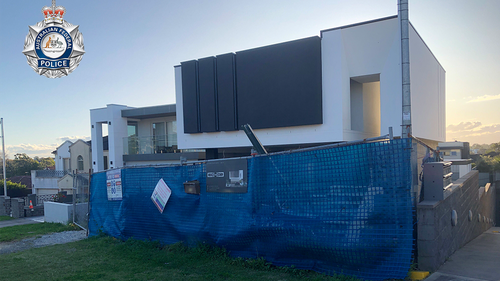
The AFP has seized a house in Connells Point from a man accused of importing cocaine. (AFP)
Australian Federal Police (AFP) Commander Criminal Assets Confiscation Stephen Fry said police were determined to ensure criminals did not enjoy benefits of their crimes.
“The AFP is relentless in pursuing every legal avenue to deprive criminals of their ill-gotten wealth, taking the profit out of their crimes and disrupting future criminal operations,” he said.
Fry has warned criminals his team will track down and seize their profits of crime.
“No person or criminal group is beyond the reach of the taskforce,” he said.
“The lavish criminal lifestyle is short-lived.
“We will take away the proceeds of your crimes, including your million-dollar properties, luxury vehicles and funds in any bank accounts.”
The man was arrested under Operation Ironside, a covered operation using an encrypted app distributed to organized crime networks and monitored by law enforcement.
The money obtained from the sale of assets confiscated by police is managed by the Australian Financial Security Authority (AFSA) on behalf of the Commonwealth.
It can then be distributed by the attorney-general to be used for crime prevention, intervention or diversion programs, or other police programs.
Child’s grisly death sparks dad’s decades-long TV crusade
“SMSFs may be appealing to younger people because they provide greater control over investments,” he says.
Ease of access to trade shares – both local and overseas – is also driving the trend.
‘When people are more engaged with their investments, and they have that level of control, it feels less risky to them.’
Bell Direct head of distribution Tim Sparks
Thanks to technology and a wealth of complex financial information and advice now available online, this new breed of investors is making decisions about sharemarkets traditionally reserved for institutional investors.
Some took more control of their super after being spooked by temporary market losses when COVID-19 first landed on our shores. Others did so for other reasons, including knowing that their retirement savings were being invested ethically in specific companies for the good of the planet.
The average age of someone running their own SMSF has dropped from 58 to 45 in just three years, according to Bell Direct head of distribution Tim Sparks.
“More so than ever, people want to take control because they simply don’t know where their super is invested when they’re with a major super fund. Or they don’t agree with where the fund is investing.
“And when people are more engaged with their investments, and they have that level of control, it feels less risky to them,” he says.
The establishment and running costs of SMSFs are also considerably lower than where they were a decade ago, which makes running your own SMSF far more viable for more people, Sparks says.
A number of share trading websites now offer relatively cheap SMSF administration services.
SMSFs are a popular vehicle to not only invest in shares, but also property and commodities such as gold, which provides portfolio diversification. During periods of market uncertainty, investors take comfort in the diversification benefits those assets provide, Sparks says.
However, taking responsibility for your retirement savings is not for everyone. It takes a good portion of time and is recommended only for those with a genuine interest in sharemarkets – and are prepared to do their own research.
loading
It’s also not for the faint-hearted, Sparks says. Block out the noise in the market and stay aligned to your long-term financial goals, he says.
“A diversified portfolio of Australian shares, international shares and bonds across a broad base of asset classes over the long term is the best way to build wealth,” he says.
Advice given in this article is general in nature and is not intended to influence readers’ decisions about investing or financial products. They should always seek their own professional advice that takes into account their own personal circumstances before making any financial decisions.
Enlarge / Arc is Intel’s attempt to shake up the GPU market.
Almost a year ago, Intel made a big announcement about its push into the dedicated graphics business. Intel Arc would be the brand name for a new batch of gaming GPUs, pushing far beyond the company’s previous efforts and competing directly with Nvidia’s GeForce and AMD’s Radeon GPUs.
Arc is the culmination of years of work, going back to at least 2017, when Intel poached AMD GPU architect Raja Koduri to run its own graphics division. And while Intel would be trying to break into an established and fiercely competitive market, it would benefit from the experience and gigantic install base that the company had cultivated with its integrated GPUs.
Intel sought to prove its commitment to Arc by showing off a years-long road map, with four separate named GPU architectures already in the pipeline. Sure, the GPUs wouldn’t compete with top-tier GeForce and Radeon cards, but they would address the crucial mainstream GPU market, and high-end cards would follow once the brand was more established.
All of that makes Arc a lot more serious than Larrabee, Intel’s last effort to break into the dedicated graphics market. Larrabee was canceled late in its development because of delays and disappointing performance, and Arc GPUs are actual things that you can buy (if only in a limited way, for now). But the challenges of entering the GPU market haven’t changed since the late 2000s. Breaking into a mature market is difficult, and experience with integrated GPUs isn’t always applicable to dedicated GPUs with more complex hardware and their own pool of memory.
Regardless of the company’s plans for future architectures, Arc’s launch has been messy. And while the company is making some efforts to own those problems, a combination of performance issues, timing, and financial pressures could threaten Arc’s future.
early turbulence
A year after its announcement, it seems that Arc is already on shaky ground. Intel has proven characteristically incapable of meeting its initial launch estimates, just barely managing to pull off a paper launch of two low-end laptop GPUs in Q1 (the original launch window) and failing to follow up with widely available desktop cards in Q2. The company has been very public about its struggles with drivers, which are hurting the cards’ performance in older but still widely played games. And the graphics division is losing money at a time when revenue is tumbling across Intel.
And that’s just what is happening in public. A report from the German-language Igor’s Lab claims that Intel’s board partners (the ones who would be putting the Arc GPU dies on boards, packaging them, and shipping them out) and the OEMs who would be putting Arc GPUs into their prebuilt computers are getting frustrated with the delays and lack of communication.
A long, conspiratorial video from YouTuber Moore’s Law is Dead goes even farther, suggesting (using a combination of “internal sources” and speculation) that people in Intel’s graphics division are “lying” to consumers and others in the company about the state of the GPUs, that the first-generation Alchemist architecture has fundamental performance-limiting flaws, and that Intel is having internal discussions about discontinuing Arc GPUs after the second-generation “Battlemage” architecture.
We’ve contacted Intel and several GPU manufacturers to see if they had anything to share on the matter; the short version is no—Intel has no news on release dates. Asus says it”[doesn’t] currently have anything in the pipeline for Intel Arc on the North America side,” and other companies haven’t responded yet. For his part, Intel graphics VP Raja Koduri have said publicly that “we are very much committed to our roadmap” and that there will be “more updates from us this quarter” and “four new product lines by the end of the year.”
Leigh Matthews believes Melbourne would have been wishing for a different result following Ed Langdon’s comments last week.
The Demons wingman suggested that Collingwood were “all duck, no dinner” in the way they play and “a bit of a one-trick pony”.
It ended badly for the reigning premiers who were beaten by seven points, with Langdon copping some rough treatment throughout.
The comments also seemingly gave the Pies fans something extra to be loud about.
VFL/AFL great Matthews suggests his words came back to haunt the Dees even if they were “insignificant”.
“I heard his comments, they’re fairly insignificant really,” he said on sports day.
“But if you say anything negative about the opposition, it usually will come back to haunt you.
“Even if it just fires them up a little bit, it gives the team a focus point.
“Collingwood had a focus point that we’ll get into Ed Langdon every time we get a chance to, and the Collingwood crowd was booing Ed Langdon every time he went near the ball.
“From a club point of view, you don’t want players saying anything that is going to embarrass us. You can be nice and build up the opposition as much as you want, but never say anything negative.
“Negative stuff, it comes back to haunt you. Don’t do it.
“Everyone loves it, the media does, the external people do, but everyone around Melbourne says, ‘I wish he kept his mouth shut’, because it did not help their cause one iota.
“So external and internal are very different.”
It would be fair to say that Langdon will be keeping quiet this week ahead of Saturday night’s crunch clash with Carlton at the MCG.
The Demons need a win to cement their spot in the top four while the Blues are fighting to keep their spot in the eight.
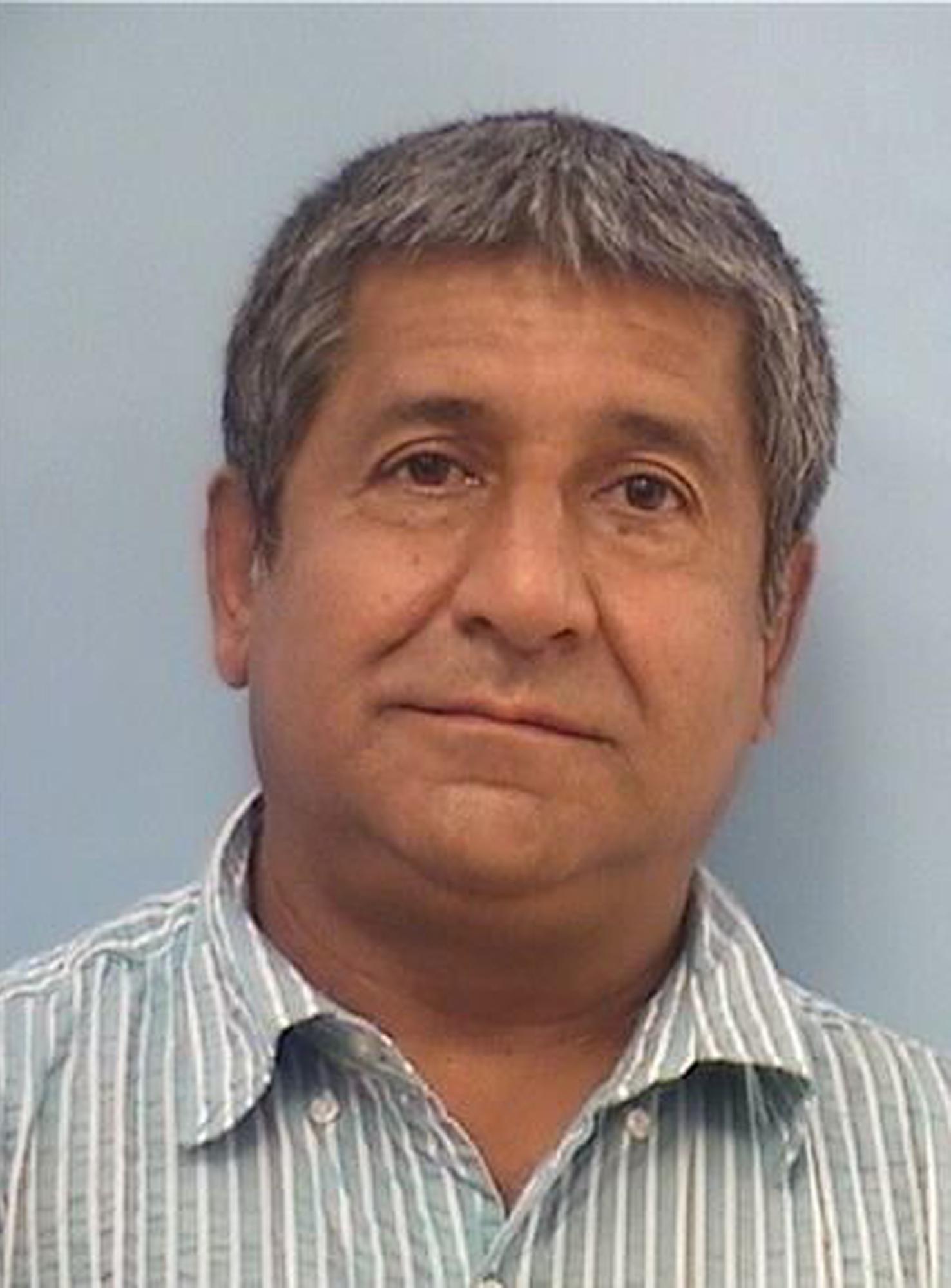
This photo released Tuesday, Aug. 9, 2022, by the Albuquerque Police Department shows Muhammad Syed. Syed, 51, was taken into custody Monday, Aug. 8, 2022, in connection with the killings of four Muslim men in Albuquerque, New Mexico, over the last nine months. He faces charges in two of the deaths and may be charged in the others. (Albuquerque Police Department via AP)
1 of 13
This photo released Tuesday, Aug. 9, 2022, by the Albuquerque Police Department shows Muhammad Syed. Syed, 51, was taken into custody Monday, Aug. 8, 2022, in connection with the killings of four Muslim men in Albuquerque, New Mexico, over the last nine months. He faces charges in two of the deaths and may be charged in the others. (Albuquerque Police Department via AP)
Police announced a breakthrough Tuesday in the killings of four Muslim men in Albuquerque, New Mexico, charging a man from Afghanistan — himself a Muslim — with two of the slayings and identifying him as a prime suspect in the other killings that put the entire community on edge.
Muhammad Syed, 51, was taken into custody a day earlier after a traffic stop more than 100 miles away, authorities said.
Police Chief Harold Medina said it was not clear yet whether the deaths should be classified as hate crimes or serial killings.
Investigators received a tip from the city’s Muslim community that pointed toward Syed, who has lived in the US for about five years, police said.
Police were looking into possible motives, including an unspecified “interpersonal conflict.”
When asked specifically if Syed, a Sunni Muslim, was angry that his daughter married a Shiite Muslim, Deputy Police Cmdr. Kyle Hartsock did not respond directly. He said “motives are still being explored fully to understand what they are.”
Ahmad Assed, president of the Islamic Center of New Mexico, cautioned against coming to any conclusions about the motivation of the suspect, who he said attended the center’s mosque “from time to time.”
“Knowing where we were, you know, a few days ago to where we are today is an incredible sigh of relief that we’re breathing,” he said. “Lives have been turned upside down.”
The exact nature of the relationships between Syed and the victims – and the victims to one another – remained unclear. But police said they continue to investigate how they crossed paths before the shootings.
The slayings drew the attention of President Joe Biden, who said such attacks “have no place in America.” They also sent a shudder through Muslim communities across the US Some people questioned their safety and limited their movements.
When told about the announcement, Muhammad Imtiaz Hussain, brother of one of the victims, Muhammad Afzaal Hussain, said he felt relieved but needed to know more about the suspect and the motive.
“This gives us hope that we will have (the) truth come out,” he said. “We need to know why.”
It was not immediately clear whether Syed had an attorney who could speak on his behalf.
Naeem Hussain was killed Friday night, and the three other men died in ambush shootings. Three of the four slayings happened in the last two weeks.
Hussain, 25, was from Pakistan. His death from him came just days after those of Muhammad Afzaal Hussain, 27, and Aftab Hussein, 41, who were also from Pakistan and members of the same mosque.
The earliest case involves the November killing of Mohammad Ahmadi, 62, from Afghanistan.
For now, Syed is charged in the killings of Aftab Hussein and Muhammad Afzaal Hussain because bullet casings found at the crime scenes were linked to a gun found at his home, authorities said.
Investigators consider Syed to be the primary suspect in the deaths of Naeem Hussain and Mohammad Zaher Ahmadi but have not yet filed charges in those cases.
Police said they were about to search Syed’s Albuquerque home on Monday when they saw him drive away in a Volkswagen Jetta that investigators believe was used in at least one of the slayings.
Officers followed him to Santa Rosa, about 110 miles east of Albuquerque, where they pulled him over. Multiple firearms were recovered from his home and car, police said.
Syed’s sons were questioned and released, according to authorities.
Prosecutors expect to file murder charges in state court and are considering adding a federal case, authorities said.
Aneela Abad, general secretary at the Islamic center, said the two Muslim communities in New Mexico enjoy warm ties.
“Our Shiite community has always been there for us and we, Sunnis, have always been there for them,” she said.
Muhammad Afzaal Hussain had worked as a field organizer for Democratic Rep. Melanie Stansbury’s campaign.
“Muhammad was kind, hopeful, optimistic,” she said, describing him as a city planner “who believed in democracy and social change, and who believed that we could, in fact, build a brighter future for our communities and for our world. ”
___
Dazio reported from Los Angeles and Fam from Winter Park, Florida.