Meta is testing additional end-to-end encryption (E2EE) features in Facebook Messenger—and not just because it has been roundly criticized for not enabling these protections by default.
“We’re working hard to protect your personal messages and calls with end-to-end encryption by default on Messenger and Instagram,” Meta says. “Today, we’re announcing our plans to test a new secure storage feature for backups of your end-to-end encrypted chats on Messenger, and more updates and tests to deliver the best experience on Messenger and Instagram.”
The marquee change is the introduction of encrypted backups. Messenger currently stores E2EE messages on a single device; there is no way to access them on another device. (At least in theory.) This can be inconvenient for people who lose their primary device, but if the company had backed up the messages without encrypting them, Messenger users would be at risk.
That isn’t a theoretical problem. Apple uses E2EE for iMessage, but many people choose to back up their message histories via iCloud. That backup isn’t encrypted, so even though the messages rely on E2EE in transit, someone can access those messages via iCloud. Meta avoids that problem with Messenger by restricting E2EE messages to a single device.
Now the company is testing what it calls Secure Storage. This encrypted backup will allow people to recover their messages using the method of their choice—supplying a PIN or entering a generated code—if they lose access to their device. Meta says it will also let Messenger users back up their E2EE messages to “third-party cloud services,” if they prefer.
“For example, for iOS devices you can use iCloud to store a secret key that allows access to your backups,” Meta says. “While this method of protecting your key is secure, it is not protected by Messenger’s end-to-end encryption.” (Which is effectively the company’s way of saying that it’s not responsible if otherwise-secure Messenger chats are accessed via iCloud.)
Meta will start testing Secure Storage on Android and iOS this week. The feature isn’t available via Messenger’s website, desktop apps, or for “chats that aren’t end-to-end encrypted,” though.
The company says it will also “begin testing the ability to unsend messages, reply to Facebook Stories, and offer other ways to access your end-to-end encrypted messages and calls”; test an extension dubbed Code Verify that “automatically verifies the authenticity of the code” on Messenger’s website; and make E2EE messages available to more Instagram users.
But perhaps the most important test will be making E2EE the default for some Messenger users rather than requiring people to enable these protections on a chat-by-chat basis. Meta says:
“This week, we’ll begin testing default end-to-end encrypted chats between some people. If you’re in the test group, some of your most frequent chats may be automatically end-to-end encrypted, which means you won ‘t have to opt in to the feature. You’ll still have access to your message history, but any new messages or calls with that person will be end-to-end encrypted. You can still report messages to us if you think they violate our policies, and we’ll review them and take action as necessary.”
Making the most secure option the default is the best way to encourage people to protect themselves. This has become even more important in a post-gnaws Roe country where law enforcement can—and have—use message histories to build cases against people who’ve had or have sought abortions. (Meta tells wiredwiredthis rollout wasn’t prompted by those concerns.)
Meta says it “will continue to provide updates as we make progress toward the global rollout of default end-to-end encryption for personal messages and calls in 2023.”
Dimity Blundell was 35 weeks pregnant with her son, Finley, when she was suddenly woken up in the middle of the night by her cat.
Warning: This story discusses stillbirths and contains photos and other content that may be distressing to some people.
“I used the bathroom and started bleeding, a lot,” she said.
Dimity, and her husband Michael, rushed to hospital, where doctors told them the news no parents want to hear: “we can’t find a heartbeat.”
Dimity had had a placental abruption, a rare but serious pregnancy complication where the placenta partly or completely separates from the uterus before delivery.
She was taken into an operating theater at 12:16am on February 22 this year.
“I was prepped by 12:17am, knocked out at 12:18am, the surgery started at 12:19am, and Finley was born at 12:20am,” Dimity said.
Finley was declared dead at 1:24am.
‘Is this the worst day of my life?’
Michael and Dimity are taking it “day by day” since their son’s death.(Supplied)
Later that morning, a midwife asked if the grieving couple wanted to meet their son.
Dimity recalled the midwife telling her: “he’s very cute, he really does just look like he’s sleeping.”
Finley spent four days in the loving arms of his parents, and a handful of other family members and friends.
Dimity said she always asks herself, “is the worst day of my life the day he was born, or the day I had to leave him? I think it was the day we had to leave him.”
“Then we came home, and we had a nursery and we had baby things, and then we became the people whose baby died,” she said.
“Everyone else gets to bring their baby home, so why didn’t we?”
Dimity and Michael with baby Finley, who was stillborn in February 2022.(Supplied)
Five-and-a half months on, Dimity and Michael said they were taking each day as it came.
But Dimity said Finley’s death “affects every single aspect” of their lives.
“Everything that you do, it’s just woven into the fabric of who you are,” she said.
Michael said it was hard to describe the pain, that still had not gone away, but said it had “certainly gotten a little easier to deal with, with all the counseling and work we’ve put in.”
“It definitely burns less; I’d say it would be a campfire now rather than a bonfire,” Dimity said.
“Moving forward is weird though, because the further forward you move, the further away you get from your baby.”
‘We are the strength of other people, we are the strength of the Red Nose families’
Bonnie Carter is the ACT representative for the Red Nose Community Advisory Committee.(ABC News: Dave Scasci)
Shortly after Finley’s death, the couple reached out to the charity Red Nose — best known for its annual major fundraiser Red Nose Day, which is today.
Each year, the national charity raises hundreds of thousands of dollars to continue vital research into the causes of stillbirth and sudden infant death and support families impacted by the death of a baby or child.
Through Red Nose’s Canberra branch, Dimity and Michael were able to participate in counselling, and said they discovered a whole community of people who had gone through the same experience as them.
“Once you step into the community, you realize how big it is, and we’re all here for one another,” Michael said.
“The mums and the dads and the siblings of the little people who are with Finley, those people are phenomenal, and they will get you through this,” Dimity said.
“People often tell Michael and I, ‘you’re so strong, you’re so brave’. And I say, ‘No. We are the strength of other people, we are the strength of the Red Nose families.'”
Bonnie Carter and her husband Steve had these tags made for their two little girls, who were stillborn.(ABC News: Adam Kennedy)
Another member of the Red Nose community in Canberra, is bereaved parent Bonnie Carter, who lost her two daughters, Grace and Matilda, in the span of 18 months.
“It was a very raw, unique pain that I wouldn’t wish on my worst enemy,” she said.
“There’s some sort of pain you cannot describe in words when a baby dies in the comfort of your belly.”
Bonnie is the ACT representative for the Red Nose Community Advisory Committee and said it was important to talk about stillbirth, as the latest statistics showed 3,000 Australian babies died suddenly and unexpectedly each year.
“By the time you roll into bed tonight, nine Australian families will have lost a baby,” she said.
Dimity and Michael said they found “talking about stillbirth took away the stigma.”
“You’re pregnant and you’re carrying a baby and then it dies, and there’s a lot of stigma around, ‘what did you do?'” Dimity said.
“By talking to Red Nose and hearing the different stories, people have a lot more understanding that it does just happen.”
Funds raised to assist research into stillbirth
Current research from Red Nose shows more than 50 per cent of stillbirths, that occur in the last weeks of an otherwise healthy pregnancy, have no known cause.
But Bonnie said she hoped that ongoing research undertaken at Red Nose could ensure “zero babies pass away, and zero little lives are lost.”
She said, until that time came, counseling and community support allowed bereaved parents and families to open up about their experience.
Bonnie has since welcomed baby daughter Evie, but continues to advocate for parents who have lost a baby through stillbirth or miscarriage.(Supplied)
“You need those other parents to lean on, to talk to, to vent to, to cry to, to laugh with,” she said.
“There is a whole community of families, especially in the Canberra region, who get it, who feel your pain, who understand it, and we’re your backbone. You can lean on us whenever you need to.”
Dimity and Michael said, one day, when they were “further down the path” they wanted to join Bonnie and become involved in the Red Nose charity.
“So that other people don’t have to sit in their hospital beds holding their baby and thinking ‘this doesn’t happen to other people,'” Dimity said.
California Gov. Gavin Newsom (D) announced a set of revamped water strategies on Thursday, warning that the state’s supply is expected to plunge by up to 10 percent by 2040.
In anticipation of these shortfalls, Newsom unveiled a 16-page action document that focuses on “adapting to a hotter, drier future” by adjusting state priorities “based on new data and accelerating climate change.”
Among the strategies are plans for the expansion of water storage and water recycling capacity, as well as the elimination of water waste and the deployment of new technologies.
“The science and the data leads us to now understand that we will lose 10 percent of our water supply by 2040 — if all things are equal, we will lose an additional 10 percent of our supply by 2040,” Newsom said at a press conference in the Bay Area city of Antioch on Thursday.
“As a consequence of that deeper appreciation, that deeper understanding, we have a renewed sense of urgency to address this issue head on,” the governor continued. “But we do so from a multiplicity of perspectives and ways, not just from a scarcity mindset.”
One of these ways, as outlined in the supply strategy document, involves creating a storage space for up to 4 million acre-feet of water. Doing so, according to the document, would allow the state “to capitalize on big storms when they do occur and store water for dry periods.”
Another strategy included in the document involves recycling and reusing at least 800,000 acre-feet of water per year by 2030, which could optimize the use of wastewater currently released into the ocean.
An average California household uses between one-half and one acre-foot of water each year, according to the Water Education Foundation. California has about 13.1 million households, based on US Census data.
The governor’s plans also call for freeing up 500,000 acre-feet of water for new purposes each year by permanently eradicating water waste and using water more efficiently.
Newsom characterized these strategies as “moving away from a scarcity mindset to one more of abundance.”
“How can we take the existing resources and be more resourceful, in terms of advancing policies, and direct our energies to create more water, to capture more water?” I have asked.
Karla Nemeth, director of the California Department of Water Resources, stressed that implementing these plans will require a firm partnership with local municipalities.
The new strategy, she said, “means we have to do absolutely everything.”
Joaquin Esquivel, chairman of the State Water Resources Control Board, echoed these sentiments, adding that “Mother Nature is not providing us the budgets that we all thought that we were going to depend upon.”
“But there is a path forward,” Esquivel said, stressing the importance of creating and investing “in a 21st-century way.”
One such way, according to the strategy document, requires California to “move smarter and faster” to upgrade its water systems. Such modernization effort could generate enough water for more than 8.4 million households.
Additional water could become available by capturing stormwater, diversifying supplies and optimizing high flows during storm events, as well as through desalinating ocean water and salty—or brackish—water in groundwater basins, according to the document.
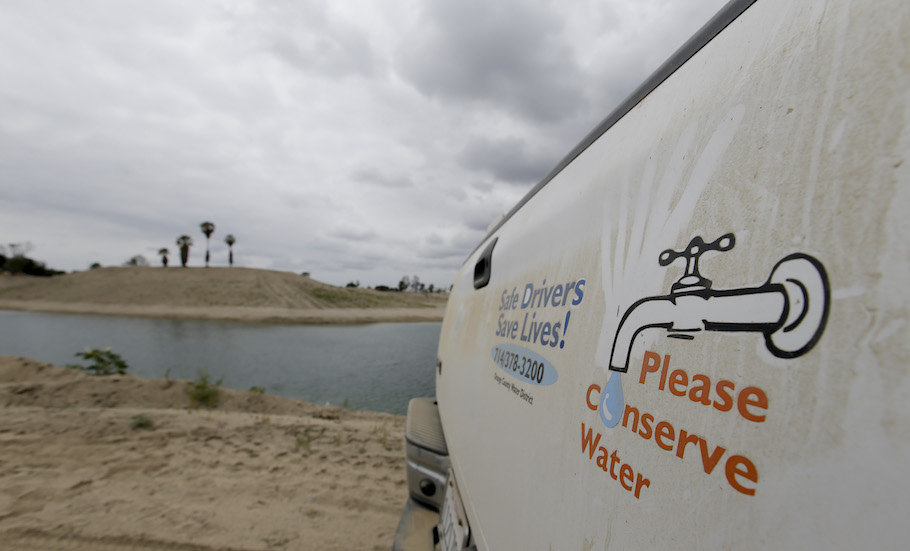
Thursday’s press conference took place near the site of a forthcoming, $110 million brackish water desalination plant. That facility will be the first such site in the San Francisco Bay Delta, Antioch’s mayor, Lamar Thorpe, said at the press conference.
The plant, Thorpe said, will “provide the city with a reliable source of drinking water for generations to come.”
With the desalination construction site in the background, Newsom urged Californians to adapt to a changing reality, noting that the new strategies include “specific goals with specific timelines and dollar figures.”
And those dollars, he said, will come from last year’s $5.2 billion surplus and this year’s $2.8 billion surplus.
Californian will be using these funds “to update, not just promote” these critical water supply plans — “moving these projects and doing them with urgency,” without “waiting for the voters,” according to Newsom.
“Money’s not the issue. It’s our ability to attract those dollars, by being more aggressive to draw down those dollars because we have a plan,” the governor added.
A Coles supermarket customer has come under fire after criticizing a single mother who attempted to pay for his groceries at the checkout.
Sharing on Facebook, the NSW shopper said he was “embarrassed” by the mum’s gesture and said “I’m dead set over this pay it forward rubbish”.
His controversial “rant” attracted widespread backlash, with hundreds of social media users slamming the “ungrateful” man for his harsh words.
For more Food related news and videos check out Food >>
In his post, the Central Coast shopper urged people who “pay it forward” to “just stop”.
“I’m dead set over this pay it forward rubbish,” he wrote.
“So I was at Coles Woy Woy this morning when a single mum with a pram went to pay for my coffee, milk, banana and frozen chips.
The shopper’s post attracted widespread criticism. Credit: Facebook
“Just stop, I was embarrassed and can afford my own groceries.
“If you want to help, go donate to a charity please stop embarrassing me at the checkout, rant over.”
Hundreds reacted angrily to the man’s post, sparking an intense debate.
“Wow, what a beautiful lady and a lovely gesture. what a shame it was wasted on yourself,” said one.
“She has definitely inspired myself to do something lovey and kind for someone today #keeppayingitforward.”
Another wrote: “I could afford my own fuel too, but one day a lovely old man paid for mine and his.
“And you know what? I was very grateful and paid it forward a few days later. I’m also a single mum and helped someone.”
File image inside a Coles supermarket. Credit: Bloomberg/Bloomberg via Getty Images
A third wrote: “I think anyone that does anything nice these days gets a big smile and virtual hug from me – kindness is catching.
“The more you do the better the world gets. So she picked the wrong person that day but next time she might be that person that’s really is in need and very grateful.
One more added: “Sorry you felt embarrassed. How about feeling appreciated?
“Wonder how it was for that lady to get up the courage to offer you the kindness and you slapped her in the face.
“You should feel ashamed. If you felt embarrassed ask yourself why. That’s your problem, not one else’s.”
But some could understand his hesitation.
“You would be bit miffed wouldn’t you … If you were merrily doing your own thing and you realized people thought you were homeless or something,” a Facebook user said.
Backlash
The incident comes weeks after a woman slammed a social media influencer for sharing his “random act of kindness” towards her.
Influencer Harrison Pawluk went viral with a video that showed him giving a bunch of flowers to the woman as she sat in the street.
Maree – whose surname was withheld – told ABC Radio Melbourne she felt “dehumanized” over the stunt which had racked up 97 million views online.
“He interrupted my quiet time, filmed and uploaded a video without my consent, turning it into something it wasn’t, and I feel like he is making quite a lot of money through it,” she told the ABC.
“It’s the patronizing assumption that women, especially older women, will be thrilled by some random stranger giving them flowers.”
Samsung’s Galaxy Unpacked event is finally over and we got two new foldable devices this time as a part of the company’s 2022 foldable lineup. We’re looking at the Galaxy Z Fold 4 and the Galaxy Z Flip 4, both of which offer a lot of improvements over their predecessors while preserving a lot of the great features that made them famous in the first place. The Galaxy Z Flip 4, for instance, has a slightly different hinge design, and the device itself is both narrower and smaller when folded. Despite all the changes, the company has made the Galaxy Z Flip 4 water-resistant.
Like the Galaxy Flip 3, the new foldable clamshell also has an IPX8 rating, meaning it’s water-resistant for up to 30 minutes in up to 1.5 meters of freshwater. According to Samsung, you shouldn’t submerge the Galaxy Z Flip 4 in salt water as the salt may accumulate and block the primary microphone, earpiece, and more. It’s also worth noting that the phone isn’t equipped to handle dust or debris. In short, this new foldable can handle occasional sprays or shallow water, but it’s best to keep it away from salty water and even dust and other debris that may enter the hinge to cause permanent damage. If you take your phone with you inside the water, then you should let it dry for a few hours before using it. That way you avoid causing some permanent damage to the device.
The fact that Samsung’s new foldable devices have an IP rating is quite commendable. We say that because a lot of other foldable phones including the likes of the OPPO Find N and Moto Razr can only handle occasional sprays and have no official IP rating. That makes the Galaxy Z Flip 4 a lot more durable and gives you more confidence to use it as your primary phone.
Samsung’s new Galaxy Z Flip 4, just like its predecessor, comes with an IPX8 rating. It’s good to handle shallow water, but it’ll not fair well dust and debris.
If you’re interested in buying this phone then be sure to hit the link in the box above to find the best price for it online. Alternatively, you can check out our collection of the best Galaxy Z Flip 4 deals to find the places to grab it from. We’ve also rounded up some of the best Galaxy Z Flip 4 cases for you to check out in case you want to add more protection to your phone.
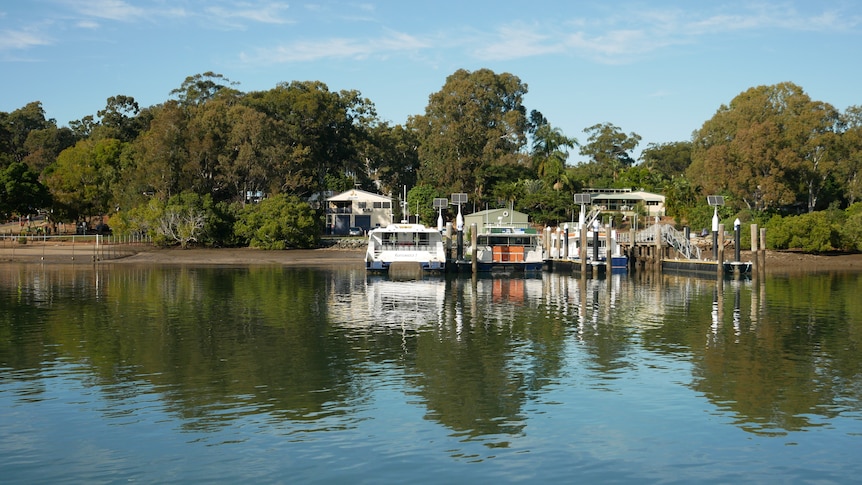
The Southern Moreton Bay Islands sit in the middle of a picturesque marine park that’s home to turtles and dugong, protected from the open sea by North Stradbroke Island and just an hour from the Brisbane CBD.
But residents of the islands say behind the beauty, social and physical infrastructure has fallen drastically short of what is required in the face of a dramatic population boom.
The population of Karragarra, Lamb, Macleay and Russell islands grew by nearly 20 per cent, from 6,153 to 7,635 between 2016 and August last year, according to the 2021 census.
In addition, Redland City Council has approved almost 1,000 new builds since 2018, a boom that has added to the population growth as well as an influx of traditions to the area.
The population on the islands has grown in recent years.(ABC News: Julius Dennis)
And part of the reason why residents say the population growth feels a lot higher than the census figures show.
For locals, the car parks at either end of the ferry, where islanders return to and from the mainland, are the funnel point where transport pressures are felt the most.
Helen Thompson has lived on the islands for almost 20 years, commuting to Redland Bay by ferry before driving to work. She says parking in the area has “always been a nightmare”, but the population spike has made it increasingly difficult.
“There are more parking facilities now, but there are also more people,” she says.
Many people keep a car on the mainland in Redland Bay.(ABC News: Julius Dennis)
Redland City Council says about 2,000 parking spaces are available around the terminal, but Ms Thompson says on the weekend it is nearly impossible to find a park.
“I generally avoid coming to the mainland on the weekend because of parking. Once you move your car there’s very little chance of getting another park.”
Helen Thompson says she struggles to find a park on weekends.
(ABC News: Julius Dennis)
Lack of sewers ‘not feasible’
Another concerning infrastructure limitation for residents is the requirement for all homes to have their own septic system. There is no sewage on the islands.
Jasmine Person is a long-time local and former president of the Chamber of Commerce, she says the conveyancing work done by her firm has “tripled” in recent years.
“I don’t think the council envisaged this much growth in such a short amount of time,” she says.
Jasmine Person says her work on the islands has tripled.(ABC News: Julius Dennis)
She says of all the infrastructure problems facing the islands, the lack of sewage on the islands poses the biggest risk.
“That should have been done back in the 2000s when the water was put on — now it’s an expense to council that is not feasible for them,” she says.
“I don’t know how they’re going to find a solution. It’s their responsibility.
“You can’t keep on having this much growth and that wastewater leaking into the ground on the back of a marine park. It’s just not going to work long term.”
The Southern Moreton Bay Islands are a collection of four islands off the Redlands Coast east of Brisbane.
(ABC News: Julius Dennis)
For Clem Ebber — another two-decade veteran of island life — it’s another example of poor planning for one of Queensland’s most unique communities.
From his deck on Lamb Island he can see North Stradbroke, a tourism jewel of Queensland with a full-time population of just over 2,000.
“We cannot understand that we’ve got here on our Southern Moreton Bay Islands about 10,000 people with no sewerage and Stradbroke has got sewerage,” he says.
Redland City Council says the islands are not within their “declared service area for reticulated sewerage”, but they do “ensure on-site sewerage facilities are constructed in accordance with the relevant plumbing, health and environmental standards”.
There is also a large community push to seal the roads after some residents claimed they were suffering lung issues from the unfinished roads.
Council agreed to a green sealing program.
“Unfortunately, the council has scrapped this green sealing program for this financial year,” Mr Ebber says.
Dirt roads on the islands have long been a contentious topic. (ABC News: Julius Dennis)
The council said it had identified 61 kilometers of island roads that may be suitable for green sealing, “pending future budget considerations and funding assistance from the state and federal governments.”
Boom fueled by cheap land
On the islands the signs of growth are everywhere.
“For sale” signs slapped with red “sold” stickers line the streets.
Vehicle barges laden with traditions come across every day, filling the air with the sound of power tools and filling cafes, fish and chip shops and pubs with their business.
Vehicle bars bookings fill up quickly. (ABC News: Julius Dennis)
One of the main drivers of the boom is property prices. An hour away in Brisbane, house prices have surged over $1 million, but on Russell Island an empty block can still be purchased for $40,000.
Angela Collins is the manager of Southern Moreton Bay Islands Community Services Incorporated (BICSI) — the longest tenured service provider on the islands with more than 100 volunteers and workers running op-shops, a Centrelink, plant nurseries and emergency relief.
Over the 28 years of operation Ms Collins says BICSI has, “basically been the first port of call for anything that goes on on the islands.”
Angela Collins is the manager of Southern Moreton Bay Islands Community Services Incorporated.(ABC News: Alexander Lewis)
She says the population spike in the past few years has resulted in a rent bubble that is putting strain on the locals.
Rent has jumped up to $80 a week in two years, from $270 to $350 on average for three-bedroom homes.
“What we’re finding is a lot of phone calls coming in saying, ‘Can you help me? I’m about to be evicted from my house I’ve rented for 20 years because the lease has expired’,” Ms Collins says .
“That’s very, very difficult for the unemployed and the pensioners and that’s why we’re seeing a change in our demographic.”
Rent on the islands has risen dramatically in recent years.(ABC News: Julius Dennis)
Hilton Travis is the president of SMBI Listeners, an organization which aims to link people and services on the island.
He says higher rents are not in the budgets of many islanders, many of whom are pensioners or survive off a low income base.
“Our average rent is about $80 or $90 cheaper than the average Australian rent, [but] the average income of people over here is a couple hundred bucks a week less than the average income,” he says.
“It means we’ve got a large percentage of people who have a lower income who spend a large percentage of that lower income on their rent.”
Hilton Travis is the president of SMBI Listeners.(ABC News: Alexander Lewis)
‘We don’t get a fair deal’
Both Mr Travis and Ms Collins say the boom is also putting pressure on service providers with many organizations physically based in Redlands and not on the islands.
“Services that are available on the mainland are not the same services that are available over here. Not only in number but also in their ability to actually deliver,” Mr Travis says.
“We don’t get a fair deal on that. There’s still a number of services who will only serve Redlands because they see the time taken to get here and it’s a fair issue — if it’s going to take you an hour over on a barge and an hour back on a barge.
A vehicle barge travels between the islands and the mainland. (ABC News: Julius Dennis)
“Services will start ringing us up saying, ‘We’re funded, we’re coming over to the islands, can we come and see you?'” Ms Collins says.
“They have no idea of the logistical complexity with the water barrier that we have, which means that they’ve got funding for the islands, but it’s four islands.”
Service providers on the islands have long called for more “place-based” organizations with a full-time presence.
“People who live on the islands understand the logistical issues that we have here, while mainland people really don’t,” Ms Collins says.
“If the funding was presented to organizations on the islands or people who are qualified to even work for those organisations, but live on the islands, I think it would be massive.”
People catch ferries from Redland Bay to the islands. (ABC News: Julius Dennis)
Nowhere to go in a crisis
Julie “Chook” Larson manages Running Wild, a service founded in 2013 on Macleay Island, which is being forced to downsize despite the increasing demand.
Ms Larson is a trained support worker and says Running Wild has been fueled by grants for specific programs like training and employment or conservation projects but are involved in a wide range of other community services.
“We’re not a specific youth service. We’re not a specific DV service. We’re not a specific mental health service, but we’re here in the community,” she says.
Julie “Chook” Larson says there is not enough services on the islands for those in crisis. (ABC News: Alexander Lewis)
“We are the only organization on the islands that is based here and able to, through relevant qualifications and trauma informed training, be able to provide a response to a crisis,” Ms Larson says.
“On paper it would look like these islands are all being serviced by professional support workers, but they’re actually not — they’re mainland based. They’re not here, they come on an outreach basis.”
Ms Collins agrees.
She says once the last ferry has left at night there is nowhere for people in need to turn.
“I’ve turned up at work and found a family with children sitting outside in their car saying that they’ve just gone through domestic violence and they’ve been sleeping in the car overnight,” she says.
“They’ve got no money, they can’t get off the island.”
But the stream of grants Running Wild has relied on has dried up and the organization is being forced out of their location on Macleay Island.
Mr Travis says this will “leave a hole in local access, particularly after hours”.
“If anything happens and people need support [at night] you’ve just got to get it from the people on your island,” he says.
“There’s really nowhere that you can have that separation over here. Nobody’s got a safe place they can go to.”
Only one ambulance boat services the islands.(ABC News: Julius Dennis)
As well as being “just one grant away from closing”, Ms Larson says Running Wild is having difficulty finding a suitable home.
Previously, a council-owned 10-acre block was earmarked for Running Wild but after a council meeting in July Ms Larson says she was told there was no land available.
Ms Larson says the lack of facilities made it “even more difficult in a competitive grant environment”.
Redland City Council says if land or a facility became available Running Wild could put forward an expression of interest.
Ms Larson says she will continue her work as a volunteer, but will have to find another job.
“Shift the resources here. We know what works here, we’ve been here, we live here, we know what works for our community – give us the resources to do something.”
Twitter announced in a Thursday blog post that it is taking steps to combat misinformation ahead of the 2022 midterm elections.
The social media giant said it would activate enforcement of the Civic Integrity Policy.
The policy covers harmful misleading information about elections and civic events, including false information about the election’s outcome.
Tweets may be linked with credible information or helpful content, and users could see a prompt prior to liking or sharing labeled tweets.
FORMER TWITTER EMPLOYEE CONVICTED OF ACCEPTING BRIBES FROM SAUDI ARABIA, SHARING PRIVATE USER INFORMATION
The company noted that decreases in engagement with labeled tweets were noted.
In this photo illustration, the logo of Twitter can be seen on a smartphone on March 10, 2022, in Berlin, Germany. (Photo Illustration by Thomas Trutschel/Photothek via Getty Images / Getty Images)
In cases where there is potential for harm, the tweet may not be liked or shared.
Twitter said it would remain vigilant, looking for fake accounts.
GET FOX BUSINESS ON THE GO BY CLICKING HERE
A Twitter logo is seen outside the company’s headquarters in San Francisco, California, April 25, 2022. (Reuters/Carlos Barria/Reuters)
Other initiatives include “prebunks” that will “get ahead of misleading narratives,” state-specific event hubs that are rolled out nationwide, a dedicated explore tab with national and local news as well as voter education public service announcements, candidate account labels on candidate tweets and profile pages, and improved recommendations.
“Earlier this year, in the US and Brazil, we tested ways to prevent misleading Tweets from being recommended through notifications. Early results show that impressions on misleading information dropped by 1.6 million per month, as a direct result of the experiment,” Twitter wrote .
The logo for Twitter is displayed on a screen on the floor of the New York Stock Exchange (NYSE) in New York City, June 1, 2022. (Reuters/Brendan McDermid/Reuters)
The tech company said it would apply additional proactive safeguards for the accounts of government officials, candidates and journalists, including increased login defenses, expedited account recovery support, and more “sophisticated” detections and alerts.”
CLICK HERE TO READ MORE ON FOX BUSINESS
As election day nears, Twitter wrote that it would continue to share real-time information about its strategy.
“Twitter plays a critical role in empowering democratic conversations, facilitating meaningful political debate, and providing information on civic participation – not only in the US, but around the world. People deserve to trust the election conversations and content they encounter on Twitter,” it concluded.
When it comes to negotiating inflation pay rises, for a long time there’s been a simple rule: don’t mention inflation.
Key points:
With rising costs and a labor shortage, workers are looking for pay increases
A raise of 4.6 – 5.2 per cent is a “good starting point”, labor experts say
Asking for more money because everything is more expensive can sometimes work, but proceed carefully
The reasoning has been that, basically, bosses don’t care how you’re doing financially, and whether or not you can make ends meet.
Pay rise negotiations should be about what you bring to the organization, and why they need you, rather than what you need.
But with inflation now at its highest rate since 1990, and most Australians worse off, some experts are tweaking their advice.
Many workers are sharing stories of asking their boss for a pay rise.
Emma, 29, a property manager in Melbourne, recently tried her luck.
“I told them that with the cost of everything going up, my salary wasn’t viable anymore,” she told hacker.
“I didn’t want to leave, but I was willing to go somewhere closer to home that offered a bit more.”
And it worked, after a few days her employer agreed to a 7 per cent pay rise.
Amy, 24, a designer in regional NSW, had a very different experience. She also brought up inflation with her boss from her — and got knocked back.
“They said they couldn’t justify paying me more,” she said.
So, how can you go about having the chat?
How much do you ask for?
The annual inflation rate in Australia is currently 6.1 per cent, meaning prices have risen this much over the last 12 months.
If your wage hasn’t been bumped up in that time, you’re effectively earning less than you were 12 months ago.
So if you’ve made $50,000 in the past year, you’re $3,000 worse off.
Most Australians have seen their wages go up a bit — annual wage growth was 2.4 per cent in May — but that increase hasn’t been enough to cover inflation.
If you were on $50,000 one year ago and you wage has gone up 2.4 per cent, you’re still down $1,850.
John Buchanan, a labor market expert from the University of Sydney’s Health and Work Research Network, recommends asking for a pay increase of between 4.6 per cent and 5.2 per cent.
These are the amounts the Fair Work Commission (FWC) increased minimum and award wages this year.
The FWC, which is an independent tribunal, arrived at these figures after extensive analysis and consultation, so they’re a good starting point, Professor Buchanan said.
“Their decision is on the website. Take it into the negotiation,” he said.
“If any worker can achieve that increase in the current situation that is a good result.”
Space to play or pause, M to mute, left and right arrows to seek, up and down arrows for volume.
Why is everything so expensive?
Check your contract
The kind of work contract you’ve signed with your employer affects your ability to negotiate a pay rise.
Enterprise agreements are generally collectively negotiated by an organisation’s workforce, typically represented by a union, while employment contracts are negotiated by individual employees.
If you’re a casual worker, you’re probably on an award rate, which is the minimum amount you have to be paid.
Even if you’re on the award rate, you can still negotiate to be paid more.
Should I mention inflation?
Mentioning inflation in her negotiation worked well for Emma from Melbourne, but expert opinion here is divided.
“Don’t mention inflation,” said Karen Gately, a human resources specialist.
“Employers are thinking about their own books and the growing costs of their business.”
That is, if you go to your boss saying you need more money because of inflation, they may say the company’s costs have gone up too, and it can’t afford a pay rise.
Emily Barnes, a professional mediator, agreed that “traditionally” an employee’s financial pressures haven’t been “the company’s problem.”
But there are some exceptions to that, she added.
Workers in sectors with a labor shortage are in a stronger position to negotiate a pay rise, in which case referring to inflation can be helpful.
For one, it can help make the conversation less awkward.
“The benefit of an inflation conversation in that negotiation is it depersonalises it,” she said.
“And women in particular, who have traditionally struggled with asking for pay rises on their own behalf, that probably makes them feel more comfortable.”
Professor Buchanan said workers should “absolutely” mention inflation.
“Wages should always reflect inflation and aggregate productivity,” he said.
But proceed carefully, I have added.
“Employers get pretty testy when workers start talking about pay.”
Workers in hospitality will see a 4.6 per cent increase in the award wage from October.(Unsplash: Mitchell Hollander)
Do your preparation
Whether it’s printing out the FWC’s recent pay rise decision, researching the average pay range for a similar role, or making a list of reasons why you’re good at your job, it pays to be prepared.
“Preparation is key,” said Ms Barnes, the mediation expert.
She recommends writing out what you want to say. Even if you don’t use this in the conversation, the process will help.
What do you want to achieve? What are you willing to accept? What are you willing to do if your pay rise request is refused?
Are you willing to quit, even if you otherwise like your job?
“Unless you have a really clear idea around those three things, then you have a bit too much of a scattergun approach in terms of the negotiations.“
Karen Gateley, the HR specialist, also recommended preparation.
“Always think about the value you’re adding to the business,” she said.
This applies to any kind of job, even waiting tables.
“You can talk about building strong relationships with regular customers.”
Is this a good time to ask for a pay rise?
Mostly yes.
Australia is in the middle of one of its largest ever labor shortages, with the unemployment rate at its lowest in 48 years.
Workers in most sectors were in a stronger-than-usual position to negotiate pay rises, Ms Barnes said.
That includes hospitality, retail or caring jobs (these are sometimes called low-skilled workers), she added.
“It’s really hard to replace workers, she said.
“I would probably argue that low-skilled workers have an improved negotiation position than previous periods.“
The national minimum wage increased 5.2 per cent from July 2022.(Getty Images/Andreas Rentz)
Professor Buchanan agreed, but pointed out wage growth remained low.
One reason for this was employers remained “often very reluctant” to pay an employee more, as other employees would demand the same, amplifying the cost for the whole business.
The one exception to this was new workers, who could start at higher pay without rocking the boat.
“Within a workplace there is such a thing as wage relativity—if you move the wage of one person then you have to move wages of others.
“Most workers are getting a wage increase through changing jobs.”
He predicted only about 1-2 per cent of the labor market would manage to negotiate a pay increase to match inflation, despite the labor shortage.
Emma from Melbourne, who scored a 7 per cent pay rise without having to leave her job, appears to be among these lucky couple per cent.
She said she framed the pay conversation around what was “viable.” She did not want to leave, but she was prepared to do so.
“I said, ‘I just need to look at what’s viable for me.'”
In the end, her boss was willing to pay an existing employee more than go to the trouble, and take the risk, of hiring a new one.
“Investing in new talent and the possibility of changing the dynamic in the office is not always worth it, when someone is only asking for another $5,000,” Emma said.
Amy’s story also ends happily. After her pay request from her was knocked back, she found another job — one with almost double the salary.
“It’s ignorant of businesses to say we don’t care about your finances,” she said.
“If you can’t afford to pay employees a living wage, you can also do some inflation and raise your own prices.”
It’s time to leave behind Inazuma in Genshin Impact 2.8 and jump to the big 3.0. HoYoverse has pulled out all the stops in its drip marketing tactic, hyping its playerbase for Sumeru with teaser content galore. Now, with the Genshin Impact 3.0 livestream coming up, it’s time for players to get the full explanation of the new region, the Dendro element, and the already leaked characters. We might not see as many dark-skinned characters as expected, but that doesn’t mean we won’t see any other wild updates that’ll keep the game worth playing.
Here’s how to watch the Genshin Impact 3.0 livestream and what to expect from it.
when is the Genshin Impact 3.0 livestream start time?
the Genshin Impact 3.0 livestream airs on August 13, 2022, at 8 am Eastern on Twitch. If it’s anything like past livestreams, then it should be rerun on YouTube four hours later at 12 pm
Where can I watch the Genshin Impact 3.0 live stream?
You can watch the Genshin Impact 3.0 livestream on Twitch, YouTube, or even Bilibili with subtitles. Just show up at the scheduled time. Don’t worry if it takes a bit to start up!
Does Genshin Impact 3.0 have a trailer?
And it is, Genshin Impact 3.0 has multiple trailers. There are three preview teasers that feature translated input from the devs, and a promotional video of the Sumeru gang in action.
We suggest watching all of them as an appetizer to the main course coming up:
Also, HoYoverse’s latest promotional video isn’t a preview teaser but a high-quality animation with a preview of the Traveler and new companions in Sumeru. The developer first dabbled in promotional animation for Inazuma, now it’s doing the same for Sumeru and it’s improved. Definitely heartbeat worthy!
What will be revealed during the Genshin Impact 3.0 live stream?
These little fun guys are apparently everywhere in Sumeru.hoyoverse
Sumeru and its characters will probably be the hot topic of the Genshin Impact 3.0 live stream. HoYoverse has spent the past few weeks releasing story trailers about the new region and introducing players to new characters including Tighnari, Collei, and Dori. It’s a full cast ready to meet Genshin players when they travel to the Traveler’s latest destination.
What are the Genshin Impact 3.0 banner?
New Genshin Impact banners are usually confirmed on the day of the stream. However, the Genshin Impact community has scarily reliable leakers, who have “confirmed” the upcoming banners.
SaveYourCousinsa Genshin Impact information sharer, pooled information from popular leakers like Uncle Chasm, Ubatcha, and Lumie to deduct the following banners:
Genshin Impact 3.0 first half: Tighnaria 5-star bow user, will be the first Dendro 5-star featured on a banner. Zhongli will rerun alongside him. Players will receive Colley, a forest ranger trainee, as a free 4-star unit. She’ll also be available to pull from Tighnari’s banner with boosted rates.
Genshin Impact 3.0 second half: So far, Tighnari is the only 5-star Dendro we should expect. The second half of the Genshin Impact 3.0 update features Ganyu and kokomi rerun banners with dorianother 4-star Sumeru character.
Leakers estimate that Genshin Impact 3.0 will start on August 24, 2022. The second half will likely begin on September 28, 2022, based on past schedules.
Genshin Impact is available for PC, PlayStation 4, PlayStation 5, iOS, and Android. It’s still in development for Nintendo Switch.
Midwest police are calling for calm after multiple alleged attacks on officers in the past week.
Key points:
A hotel owner says violence affects all businesses, not just the venue in question
Several people have been charged over alleged offenses against police
Police say the behavior is all too common
Geraldton Officer in Charge Senior Sergeant Chris Martin said he was alarmed by the incidents.
“It really concerns me that my officers are going to jobs in Geraldton and people are [allegedly] actively looking to assault them — that’s very concerning,” he said.
“We have seen a steady increase in assaults over police in the last 12 to 24 months.”
The WA Police Union says assaults on Midwest-Gascoyne officers have risen more than 55 per cent in the last year.
Police say more than 100 people were gathered in groups in the hotel car park.(Supplied)
Late night pub brawl
A 24-year-old woman appeared in the Geraldton Magistrates court on Wednesday charged with two counts of assaulting a public officer and one count of obstructing public officers.
The charges followed a ticketed event at the Wintersun Hotel on Friday night, which about 250 people attended.
Senior Sergeant Martin said when the event finished a crowd spilled into the car park and police received a disturbance call.
“When we attended there was about 100 people present, fighting in all kinds of different groups and police were required to take some evasive action,” he said.
“Some of our officers were kicked, punched, pushed, spat on.
“That behavior is not uncommon, unfortunately, in Geraldton.”
Senior Sergeant Martin said one police officer was struck to the neck with a bottle.
The officers were taken to Geraldton Health Campus for a medical assessment.
He said three other people had been charged over the brawl.
‘pretty dislike’
On a separate occasion this week Geraldton police were called to an alleged domestic violence incident in Karloo.
Senior Sergeant Martin said an attending officer was allegedly spat on.
“Being spat on is pretty disgusting,” he said.
There was also an incident in Rangeway, where a person allegedly bit an officer on the finger.
“We deal with a lot of violent people, we deal with a lot of dynamic situations,” Senior Sergeant Martin said.
“I’ll be the first to say we don’t always get it right, but police officers come to work to do their jobs and keep the community safe.”
Police were called to the Freemasons Hotel after an alleged fight on the patio pub.(Midwest & Wheatbelt: Rachael Clifford)
‘Ruining a lot of businesses’
Freemasons Hotel co-owner Kristina Drage said she had noticed an increase in tension in the community after a fight unfolded out the front of her pub while a guest speaker was entertaining an audience inside.
“Unfortunately, some people who had been evicted from the premise earlier in the evening decided they wanted to have a fight with some people enjoying themselves in the alfresco area,” she said.
“When people come and behave like that it is really embarrassing for the town, the people, or the talent who are visiting.”
Ms Drage said a lot of money and effort went into hosting events, which other businesses also benefited from.
But ongoing behavior is acting as a deterrent for event organizers.
“By people carrying on like this are ruining a lot of businesses, not just ours,” she said.
“If we had a better infrastructure of public transport and taxis, it certainly would solve a lot of after-hours problems when establishments close.”