After it leaked last night, THQ Nordic has officially announced Alone in the Dark, which is a reimagining of the classic 90s franchise for PS5, Xbox Series X|S and PC.
The premise of the game is a little bit different in the sense that it is a brand new game with a new story that is written by the minds behind SOMA and Amnesia, but it’s said that it will incorporate characters, places and themes from the original trilogy. It’s said to be a story/game that brand new fans can enjoy, but those who have played the other games will be able to recognize a lot of things in the game.
The game takes place in the Deep South in the 1920s where Emily Hardwood is searching for her uncle alongside private investigator Edward Carnby. You can expect to see strange residents, nightmarish realms and dangerous monsters.
It was also revealed that there will be a prologue chapter where you play as Grace from Alone in the Dark 2 that is playable at Gamescom, We’ll be there, so we’ll hopefully be able to bring you hands-on directly from the Show.
Alone in the Dark looks quite a decent way along, so hopefully we’ll be able to bring you more information in the very near future. In the meantime, you can read a lot more about the game and check out more screenshots over on the PlayStation Blog.
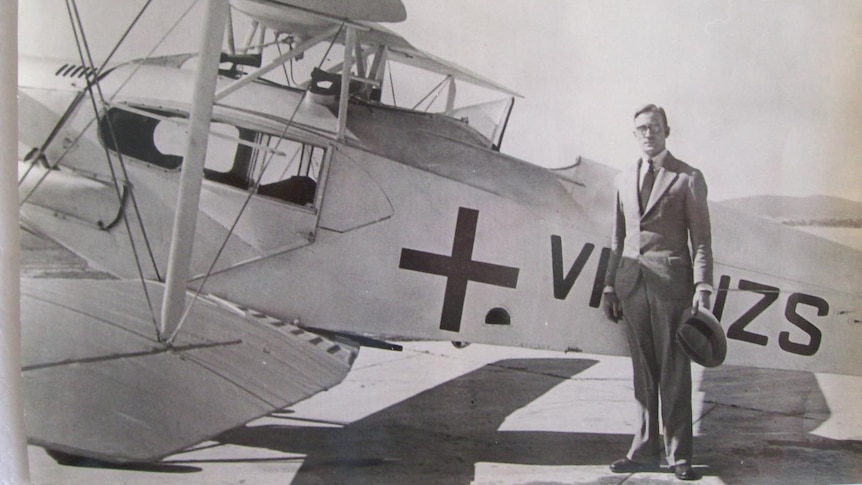
He flew in his single-engine Gipsy Moth on moonless nights or in torrential rain, often unlicensed, and at least once in his pajamas, with only a magnetic compass for navigation.
His name was Clyde Fenton – the tall, bespectacled doctor who, in the 1930s, clocked up 3000 hours and a quarter of a million miles, tending to the sick and injured across the Northern Territory.
This year marks 40 years since Dr Fenton’s death, and his legacy as one of Australia’s “original” flying doctors continues to live on.
Dr Fenton working on his plane from the open cockpit at the hangar near Katherine in about 1937. (Supplied: Library & Archives NT)
Every flight an adventure for larrikin of the sky
It was 1934 when Dr Fenton arrived in Katherine to establish an aerial medical service and it wasn’t long before his services became relied upon.
Whether it was a drover with an infected tooth, a woman having difficulty in childbirth or a child with a burst appendix, he would be in the air as soon as the call for help came through.
“In that vast, mysterious, and lonely land, every flight was an adventure,” he wrote in his 1947 autobiography.
But the harsh and remote lands of the Northern Territory ask more of people than most places.
Dr Fenton once went to the rescue of a toddler at Dunmarra who had been charged by a wild buffalo.
Not only did he tend to the child, he also went out and shot the buffalo which had been holding the homestead hostage all morning. He was gifted the horns as a thank you gift.
Another time, in 1940, Dr Fenton was at 2000 feet when a four-foot brown snake slithered along the cockpit floor toward the rudder pedals.
Dr Fenton with former NT administrator Reg Leydin’s wife in Darwin, launching his new plane “Robin” in 1937. (Supplied: Library & Archives NT)
“Not daring to keep his feet on the controls, Dr Fenton almost stood on the pilot’s seat and flew the plane by the joystick alone,” the Argus reported.
He made a rudderless landing near Maranboy and leapt from the plane before it fully came to a stop, swiftly dispatching the snake with a hammer.
Dr Fenton was the kind of person who took risks to save lives. And with bush aviation in the 1930s, the risks were substantial.
A crash course in flying
Bad weather, a spluttering engine, a fuel gauge pushing its limits: these things happened a lot to Dr Fenton, who survived an extraordinary number of plane crashes in his time as a flying doctor.
The first was in 1934 near Victoria River Downs – Dr Fenton was trapped upside down in the plane and his passenger described his eventual exit from the wreckage as “like toothpaste coming out of a tube that had been trodden on”.
Walking from the crash site to the station, the pair encountered a hostile buffalo and waded through croc-filled rivers.
Dr Fenton at the site of a crashed airplane.(Supplied: Library & Archives NT)
Dr Fenton had many close calls during his time out bush, including one in September 1937 that had the whole of the Northern Territory on edge.
While flying to a person in strife in the Gulf, somewhere near Tanumbirini Station, strong winds shook his little Moth and forced him to land in the scrub.
Several days later, Dr Fenton was still sitting beside an almost-dry waterhole feeding on the raw meat of a half-starved cow he had found bogged, hoping the bandages he used to form an SOS sign would catch someone’s attention.
Search parties frantically looked for the beloved doctor, and eight days later he was found, unharmed apart from a little sunburn.
A picture captured of Dr Fenton’s flying doctor biplane flying through a wet season storm.(Supplied: Library & Archives NT)
Grounded in Hong Kong and a hero’s welcome home
Dr Fenton had a reputation as being a bit of a maverick.
When he wasn’t on the job, he was known to land his plane outside the pub in Katherine’s main street for a beer, or sometimes for a laugh he would take the plane up over the town and flour bomb people.
On May 14, 1935, newspapers reported the flying doctor was fined £20 for “endangering public safety” by swooping low over Darwin’s Star open-air picture theater several times, including once between “the front of the circle and the screen”.
And then there was the time in 1936 he flew his tiny single-engine plane to China upon receiving news of his sister’s death in childbirth there.
Dr Fenton’s mother was stranded, so he constructed an extra fuel tank and took off in a monsoon, teaching himself to fly with his knees while he executed a daring mid-air refueling over the water.
The first Government aerial ambulance used by Dr Fenton, who previously flew his own plans as part of his Top End aerial medical service. (Supplied: CDU Nursing Museum)
He had no official permits or papers but managed to talk his way through Koepang and Bangkok, the latter by handing over an aircraft manual in English when asked for an airworthiness certificate.
Eventually, an official in Hong Kong grounded him.
Dr Fenton somehow took off anyway, only to be arrested in Swatow, China, then released because of his “filial piety”.
On the way back he was grounded again by the same Hong Kong official, who not having learned his lesson, gave the doctor permission to test his plane. And Dr Fenton was off again, arriving back in Darwin to a hero’s welcome.
CareFlight ball dedicated to Dr Fenton this year
Upon the outbreak of war, Dr Fenton served as a pilot in the RAAF, responsible for delivering food, mail and personnel from the Batchelor Airstrip to isolated bases and signal units across Arnhem Land and beyond.
He stayed on for a short time as a quarantine officer in the Northern Territory after the war, and in 1949 he married and moved to Melbourne, where he died in 1982.
His legacy lives on across the Top End, with a primary school and an airstrip named after him, and a dedicated wing at the Katherine Museum.
Katherine Museum chief executive, Lauren Reed, said the local community rallied to have one of the flying doctor’s original Gipsy Moth plans returned home and put on display.
“He was quite an iconic person and provided such a vital service, not just to Katherine but to all the regions and communities,” Ms Reed said.
Dr Fenton’s aerial ambulance eventually grew into the Northern Territory Aerial Medical Service.
The service has been succeeded by CareFlight NT, and the organization’s Hangar Ball is being dedicated to Dr Fenton this year.
CareFlight Fundraising Manager Jo Rutherford, who has been researching the territory’s “original” flying doctor for the event, said Dr Fenton paved the way for remote medical care in the north.
“He showed that aeromedical service was essential in the Top End and he was courageous in showing it could be delivered everywhere,” she said.
“He was a pioneer who worked to provide access to medical care wherever people lived.”
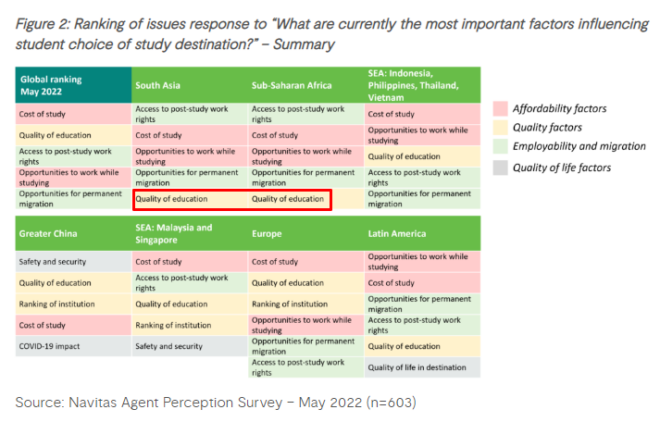
A new survey of education agents by education company Navitas found that the top five factors influencing student choice of study destination globally are: cost of study, quality of education, access to post-study work rights, opportunities to work while studying, and opportunities for permanent migration.
However, for students from South Asia and Sub-Saharan Africa, they are most concerned with gaining post-study work rights, and are the least concerned about the quality of education:
Students from South Asia and Sub-Saharan Africa care more about work rights than quality of education.
These results should be no surprise. A recent study by IDP Connect revealed how the prime motivation for Indian students to study in Australia is to gain permanent residency and work rights:
IDP Connect’s New Horizons research shows international students consider migration incentives and employment opportunities when choosing where, what and how to study. “We’ve seen a significant decrease in interest from Indian students looking to study in Australia,” said Wharton, who said a key motivation for Indian students’ decision to study abroad include migration and face-to-face learning opportunities…
Wharton said if Australia can communicate a roadmap towards a large-scale return of international students, with clear pathways towards employment and migration outcomes, Australia could be in a good position to retain its status as a leading study abroad destination…
The former vice-chancellor of Macquarie University, Professor Steven Schwartz, also admitted that many international students only study in Australia to gain working rights and permanent residence:
[Professor Schwartz] said foreign students flock to courses likely to lead to jobs and permanent residence…
“Permanent residence is one of the main motivations to study in Australia’…
“If suddenly permanent residence was given to people who study poetry, it’s likely they’d all be doing poetry.”
New Delhi-based education consultant Gauravdeep Bumra noted similar:
“Most Indian students choose to study abroad, often at the cost of thousands of dollars, because they have a long-term goal of getting permanent residence, be it in Australia, Canada or the UK”.
“The day they open their borders, the student intake numbers will uptick…”
so you have The Australian’s international education correspondent, Tim Dodd:
“Too many of the expanding numbers of students from India and the subcontinent were in low quality, generic business courses, and hoping for permanent residency without having in-demand skills.”
Thus, any move to lift international student numbers will necessarily require Australia to reach further down the quality barrel and erode entry standards even further. Doing so would be detrimental to the long-run productivity and prosperity of Australia, which relies upon quality education and skills.
Instead of lowering the quality bar even further to increase numbers, Australia’s international education system should instead target a smaller intake of high quality students via:
Lifting financial requirements needed to enter Australia; and
Removing the link between studying, work rights and permanent residence.
These reforms would raise student quality, would lift genuine export revenues per student, would lift wage growth by removing competition in the jobs market, and would lower enrollment numbers to sensible and sustainable levels, in turn improving the experience for local students.
Sadly, we all know these reforms would never happen. If work rights and permanent residence were scaled back, the numbers of arriving students would collapse.
Our policy makers will instead crater standards even further to entice as many warm bodies into Australia as possible. Because the edu-migration industry rent-seekers demand it.
Leith van Onselen is Chief Economist at the MB Fund and MB Super. He is also Chief Economist and co-founder of MacroBusiness. Leith has previously worked at the Australian Treasury, Victorian Treasury and Goldman Sachs.
Latest posts by Unconventional Economist (see all)
All ears? A rare Ferrari F50 once owned by boxing champion Mike Tyson is heading to auction, and it could eclipse current records.
0
A low-mileage 1996 Ferrari F50 previously owned by former heavyweight boxing champion Mike Tyson is tipped to set new auction records for the V12 supercar.
Listed by auction house Gooding & Company, the Rosso Corsa red Ferrari F50 is estimated to sell for a hammer price between $US4.5 million to $US5.5 million (between $6 million and $7.8 million in Australian currency) at next weekend’s Pebble Beach auctions in California.
Built by Ferrari’s Maranello factory in February 1996, this chassis is the 73rd of 349 examples of the F50 to roll off the production line, and one of 55 built for the US market.
According to the listing, this particular Ferrari F50 was first delivered to Beverly Hills Sports Cars in Los Angeles, where it was purchased by car broker Nadir Amirv before it was sold to Mike Tyson.
It is not clear whether Tyson had purchased the Ferrari F50 before or after his infamous fight with Evander Holyfield, in which ‘Iron Mike’ bit a portion of his opponent’s ear off.
Tyson owned the supercar for a number of years before it was sold in 2001 to Kevin Marcus, the co-founder of the early search engine website InfoSpace.
Numerous collectors have owned the Ferrari F50 since Marcus sold it a handful of years later, however the odometer currently reads 6193 miles (9966 km).
The listing states the Ferrari F50 was given a comprehensive service within the past six months, consisting of a new clutch, tires, air-conditioning system and refurbished Alcantara door cards – all of which set the current owner back roughly $US75,000 ($ AU105,000).
While the Ferrari F50 may not have received the praise of its F40 predecessor when it was launched in 1995, it is now appreciated as a modern classic.
The F50 was one of the first road-going production cars to use a carbon-fibre monocoque, tipping the scales at just 1223kg fully laden.
Its 4.7-liter V12 engine was based on the 3.5-liter unit which Ferrari used to power its 1990 and 1991 Formula One cars, although in the F50 it only produced 382kW and 471Nm – all of which was sent to the 355mm-wide rear tires via a six-speed manual gearbox.
Values of the F1-derived V12 supercar have been increasing in recent years, as the F50’s auction record was reset earlier this year.
If this particular example sells at the lower end of Gooding & Company’s estimates, it could set a new Ferrari F50 auction record.
Jordan Mulach is Canberra/Ngunnawal born, currently residing in Brisbane/Turrbal. Joining the Drive team in 2022, Jordan has previously worked for Auto Action, MotorsportM8, The Supercars Collective and TouringCarTimes, WhichCar, Wheels, Motor and Street Machine. Jordan is a self-described iRacing addict and can be found on weekends either behind the wheel of his Octavia RS or swearing at his ZH Fairlane.
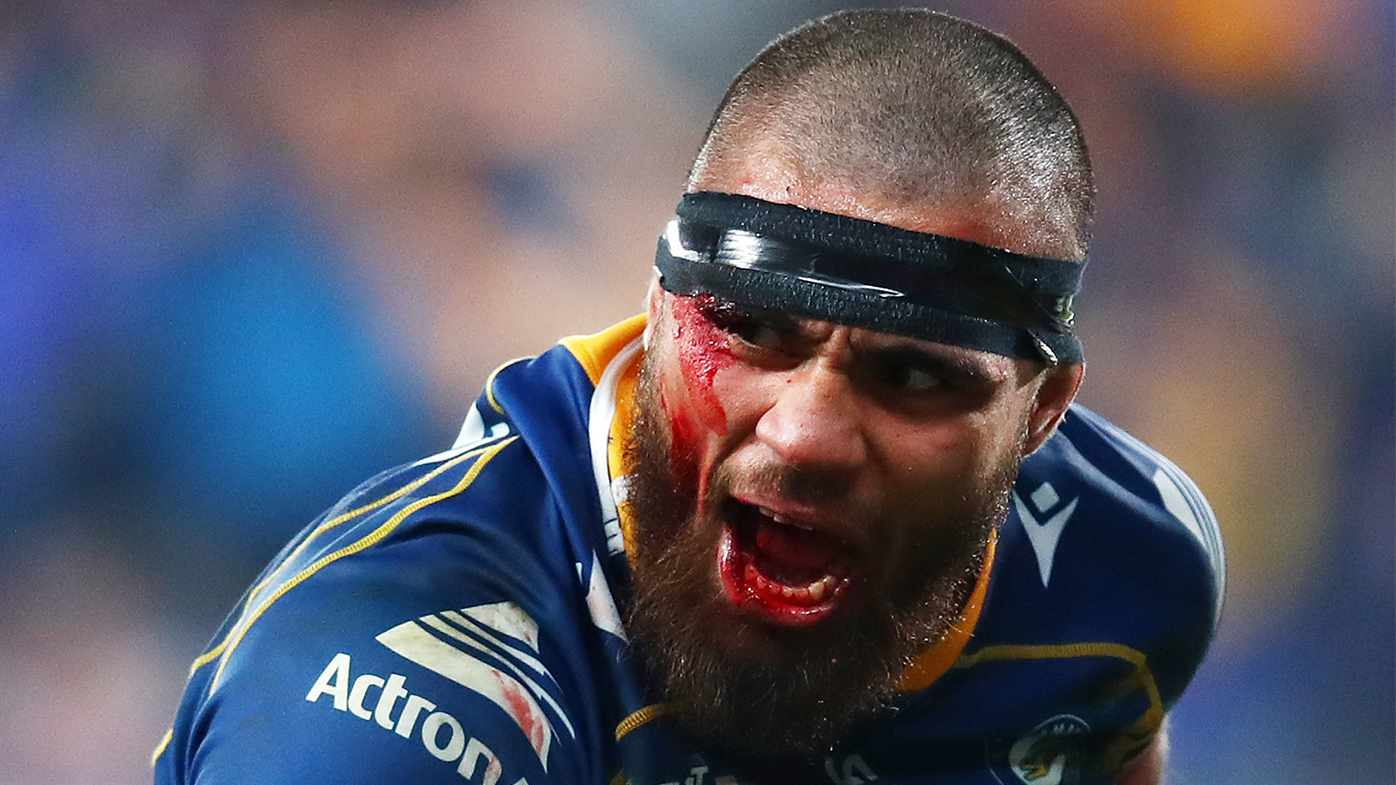
Isaiah Papali’i has drawn a considerable dose of empathy amid his contract shambles because of Michael Maguire’s axing.
The hesitant thoughts of the Parramatta back-rower are reasonable, many believe, because he signed a deal with Wests Tigers thinking Maguire would be his coach.
Billy Slater doesn’t buy that argument.
READMORE: Latrell’s frightening warning to Bunnies’ rivals
READMORE: Wests Tigers facing fight to retain on-loan star
READMORE: ‘Hardcore’ move that could redefine Ricciardo
Billy Slater has delivered Isaiah Papali’i an unapologetic message as the back-rower considers a contract backflip. (Getty Images)
“If you sign with a club, go to the club,” Slater said on Nine’s post-match coverage of the Rabbitohs’ defeat of the Eels.
“You’re signing with a club. You’re not signing with a coach, you’re not signing with a player — you’re signing with a club. Go to the club.
“You’re not allowed to walk away from a contract. It’s just pressure, public pressure if you want out.
“If you sign with a club, you want to take that money and you sign the deal, go to the club.”
Stream the NRL premiership 2022 live and free on9Now.
Star considers backflip on Tigers
Papali’i penned a three-year deal with Wests Tigers in November 2021, tying him to the joint-venture club from the 2023 season.
But the New Zealand international’s commitment to the contract has waned, with the 23-year-old revealing this week he’ll decide on his future at the end of the season.
A common belief is Papali’i’s second thoughts were triggered by Maguire copping the boot in June.
“You sign with the jersey, the club,” Brad Fittler said.
“I can’t believe (in these) contracts they’re able to walk away.”
For a daily dose of the best of the breaking news and exclusive content from Wide World of Sports, subscribe to our newsletter byclicking here!
Paul Green’s life in pictures: From Sharks prodigy to premiership-winning coach
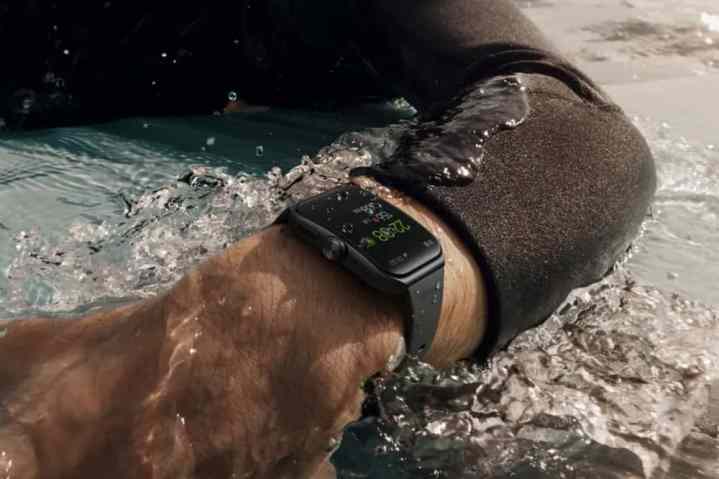
Oppo has just announced its promised duo of smartwatches featuring Qualcomm’s latest Snapdragon W5 Gen 1 chip — the first wearables to adopt the new platform since Qualcomm announced it last month.
The new Oppo Watch models build on last year’s Oppo Watch 2. However, neither is a direct successor to that earlier model. Instead, it looks like Oppo has split the difference, with the Oppo Watch 3 moving the specs down a notch to make room for a new Oppo Watch 3 Pro on the higher end.
Oppo
The Snapdragon W5 Gen 1 is here
Oppo has notably gone for the lesser of Qualcomm’s new Snapdragon wearable chips, the W5, rather than the W5+. Interestingly, this is the chip that Qualcomm has targeted at “segment-specific wearables” rather than “mainstream smartwatches,” but Oppo likely considers that good enough for its target market. It’s also worth noting that Qualcomm defines “segment-specific” to include China, as well as kids, seniors, health-focused devices, and enterprise solutions.
Qualcomm
The new chip follows the Snapdragon Wear 4100 used in last year’s Oppo Watch 2, but it’s interesting that Oppo hasn’t chosen to distinguish the Oppo Watch 3 Pro by packing in the more powerful flagship W5+ chip. However, the boost over last year’s model should be pretty significant, as Qualcomm promises 50% better power efficiency and double the performance of the Wear 4100 chip.
Qualcomm
The Snapdragon W5 Gen 1 platform also supports better health and fitness experiences thanks to the ability to keep the sensors active at all times. It’s unclear how this will play out on the Oppo Watch 3 since Oppo has its own co-processor in the mix for lower-power tasks, but Oppo promises faster app launching and assessment of vascular elasticity in under 30 seconds.
A familiar design with a twist
If you’re thinking the Oppo Watch 3 looks strangely familiar, you’re not alone. Oppo has been mirroring the iconic design of Apple’s wearables since it first arrived on the scene two years ago, and this latest release is no exception.
However, it seems Oppo is willing to take a few more risks than Apple. The higher-end Oppo Watch 3 Pro is the first wearable to feature a 3D AMOLED LTPO display, and with that comes a flexible curved face that follows the contour of your wrist.
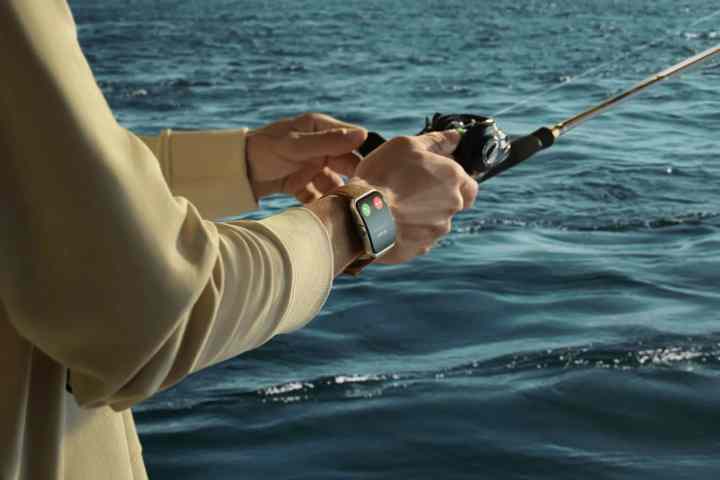
Oppo calls this the “third form of smartwatches,” and with the striking similarity to Apple’s design, it offers a fascinating glimpse into what a curved Apple Watch might look like. Even Oppo’s marketing photos strongly resemble Apple’s.
Oppo
Interestingly, Oppo has also brought a digital crown-like control to the Oppo Watch 3 Pro with mechanical haptic feedback during rotation. Unlike the Apple Watch, the crown is placed centrally on the side, with a single button below. The non-Pro model lacks the dial and loses one of the two buttons found on the prior model.
In terms of screen size, it’s the Oppo Watch 3 Pro that comes closest to its predecessor, with the same 1.91-inch display presented in a 378 x 496 resolution due to the taller aspect ratio. The Oppo Watch 3 has a smaller 1.75-inch 372×430 AMOLED screen.
Battery life, storage capacity, and more
The smaller model only features a 400mAh battery, a significant drop from last year’s 510mAh cell. However, thanks to the power efficiency of Qualcomm’s Snapdragon W5 combined with Oppo’s own Apollo 4 Plus co-processor, it still delivers up to four days of battery life with normal usage. The Oppo Watch 3 Pro features a larger 550mAh battery that can deliver up to five days of battery life under the same conditions.
Much of the magic here comes from Oppo’s in-house chip that handles routine tasks like timekeeping to let the more power-hungry Snapdragon W5 take a nap whenever it’s not needed to handle more powerful tasks. A lower-power mode can give you up to 10 days on a single charge for the Oppo Watch 3 or 15 days for the Oppo Watch 3 Pro.
Oppo
In addition to the new Snapdragon W5 chip and screen changes, both models also get a healthy storage increase to 32GB. However, the other specs remain largely the same as before, including 1GB of RAM, Bluetooth 5.0, eSIM, NFC, 5 ATM water resistance, and GPS capabilities.
The Oppo Watch 3 models also offer the same 100 workout modes, 150 watch faces, and other built-in sensors, including an optical heart rate monitor, blood oxygen sensor, and ECG sensor.
China only, for now
So far, the Oppo Watch 3 and Oppo Watch 3 Pro are only being released in China and are expected to go on sale August 19 for around $220 and $280 respectively at current exchange rates. Both models will be available in Platinum Black, while the Oppo Watch 3 adds Feather Gold and the Pro comes in Desert Brown.
It’s unclear when or if there will be an international release. The versions announced today use a proprietary operating system for China. However, Oppo adopted Wear OS for the international releases of the Oppo Watch 2 last year, so presumably, the same will happen if the Oppo Watch 3 models launch outside of China.
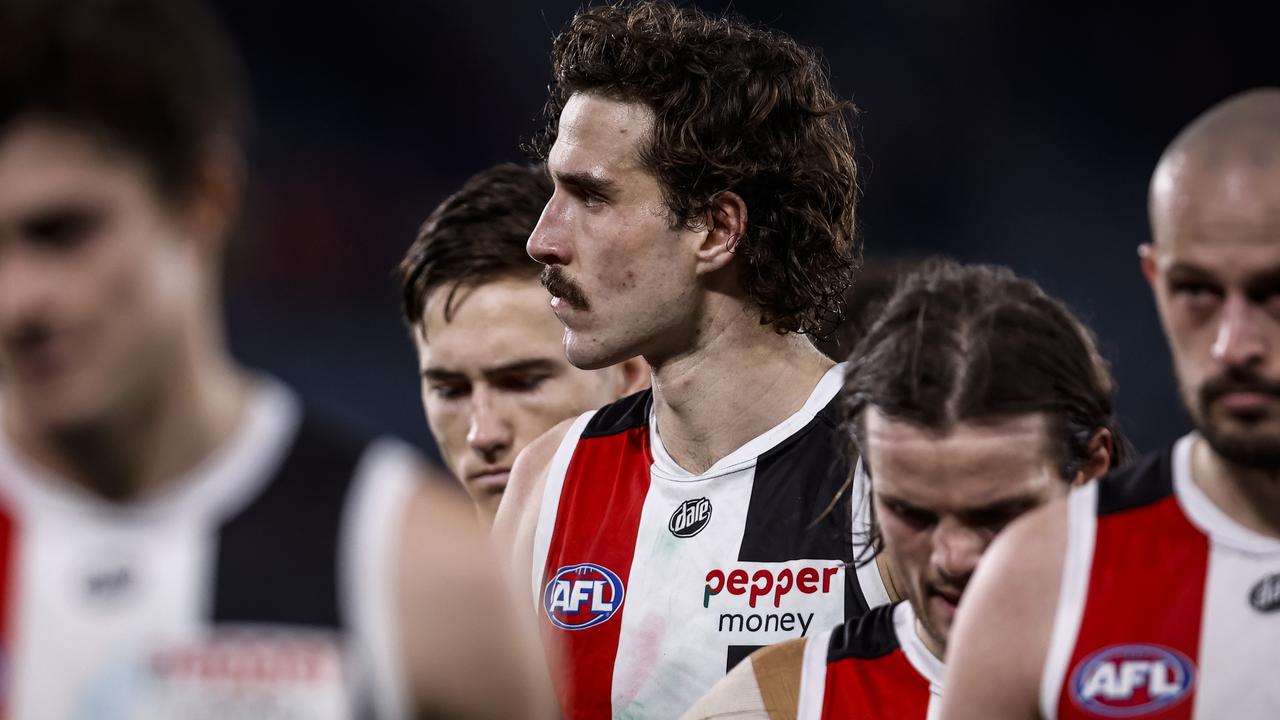
St Kilda coach Brett Ratten has said star forward Max King “won’t be seeing anybody outside the club” to help improve his set-shot routine, instead backing in those at the club to help steady the 22-year-old’s game.
King imposed himself in the air during Friday night’s loss to Brisbane at Marvel Stadium, but kicked five behinds and ended up goalless as the Saints’ final hopes were all-but dashed.
Speaking post-game, Ratten was staunch in his defense of King.
Watch every blockbuster AFL match this weekend Live & Ad-Break Free In-Play on Kayo. New to Kayo? Start your free trial now >
Cripps free to play, ban overturned! | 00:35
“It’s part of the game and you look through great forwards to have played the game, they’ve had a night where they haven’t scored like they wanted to,” he said.
“The pleasing part we know about Max is that Tuesday was a day off for the players and he was at Marvel Stadium for an hour-and-a-half having goal-kicking practice. Every day we’re at the footy club or not at the footy club he’s there having extra goal-kicking and really rehearsing and fine-tuning his game to make sure he gets the opportunity to score on game-day. He’s doing a power of work.
“What I do know is I want Max King in my corner. He’ll be at our footy club for 10 years and when we look back we’ll be saying what a great player he is and what he’s done. Tonight he had a night where it didn’t work for him.
“He did everything right but finish, for great forwards that’s happened in the game. He’s 21 years of age, we love what he brings to the footy club, he’s developing and we know that he’s doing the work. Sometimes you don’t get the reward all the time but he’ll keep doing that and you watch, he’ll turn it around.”
King has enjoyed a relatively impressive season in front of goal, booting 47 goals from his 21 games.
There have been occasions, however, where inaccuracy has plagued him, most notably his return of one goal and seven behinds in round six and two goals and five behinds in round 20 before tonight’s five behinds.
Ratten said a myriad of factors were at play for King.
King kicked five behinds on Friday night (Photo by Daniel Pockett/AFL Photos/via Getty Images).Source: Getty Images
“I wouldn’t say high pressure, I think sometimes the goal-kicking, it’s got so many elements to it,” he said.
“It’s the technical aspect, the mental aspect, the fatigue, what part of the ground, people score from different parts and score easier when the ball is on the right side versus the left.
“I want to go to war with Max because he delivers and he will deliver.”
The Saints in 2021 knocked back Max King’s request for help from Essendon champion Matthew Lloyd – who also coached King at Haileybury College – instead opting to leave King’s goal-kicking practice to those internally.
Asked on Friday night if there had been a change since then, Ratten’s response was firm.
“He won’t be seeing anybody outside the club, he doesn’t need to. We’ve got people with the skillset to keep working there,” he said.
“As I said to you, it’s not just all about the technical aspect, there’s a mental aspect to it as well. With goal-kicking, it’s a closed skill and there’s different elements to it.
“It’s not just we bring somebody in and they fix up the hand drop or anything like that. He hasn’t got many flaws, but sometimes it can go against you.”
In the movies, a hero can always tell he’s being followed because the goons tasked with following him never blend in. In real life, figuring out if someone is tailing you is much trickier, and can be a matter of life and death. At the Black Hat security conference, a speaker demonstrated a low-cost device that looks for the tell-tale wireless signature of bad guys on your tail.
Watch Your Back
Matt Edmondson, who works with the US Department of Homeland Security, was approached by a friend from a government agency and declined to name onstage at Black Hat. This friend worked with confidential sources, and one in particular had links to a terrorist organization. Edmondson’s friend was concerned that if they were followed after meeting with the confidential source, his friend’s government connections could be discovered and the source put in danger.
The traditional spycraft method of surveillance detection, Edmondson explained, is to change your route and see who does the same—such as exiting the highway and then getting back on again. “It’s really obvious the [Washington, D.C.] Beltway was designed as a surveillance-detection route,” quipped Edmondson, perhaps joking, perhaps not.
Edmondson said his friend asked if he could revisit an idea he had discussed years ago: Using network-detection technology to scan for devices that were following you.
Even if you’re being tailed by a nation-state-backed surveillance team, “isn’t there still a really good chance they have a phone in their pocket?” asked Edmondson.
Tattletale Devices
This works because so many of our devices are constantly trying to communicate with other devices and various wireless networks. Many mobile devices, for example, are constantly seeking familiar wireless networks to connect to. Other devices, such as AirPods, Bluetooth speakers, laptops, and so on, can be similarly chatty.
All those wireless conversations can be easily detected. If the same devices are in your vicinity repeatedly, Edmondson reasoned, it’s likely you’re being followed.
At PCMag, we’ve looked at similar devices before. The PwnPro was a multi-thousand-dollar device with sophisticated backend software that could monitor devices within 1,000 feet. It, too, could identify specific devices and usage patterns, but was far from affordable or portable.
SimpleComponents
To build a device that could scan for wireless communications and alert you when such a device stayed in your vicinity, Edmondson set out to use low-cost materials, and settled on the Raspberry Pi single-board computer. “How many of us have multiple Raspberry Pis sitting in your closet doing absolutely nothing?” Edmondson joked.
Add to that a low-cost touch screen purchased off Amazon, a portable power bank, and a USB wireless adapter (Alfa AWUS036ACM), and Edmondson was off and running.
A view of the ‘minimum viable product’ version of Edmondson’s detection device.
Scanning duties on the device would be handled by Kismet, a free and open-source wireless monitoring tool. Kismet scans the airwaves and records its findings in an SQLite database. “Everything else is shoddy python code,” said Edmondson.
Users interact with Edmondson’s device via the touch screen and a custom interface Edmondson described as “literally the worst user interface you’ve ever seen.” It consists of several large, gray buttons, which are intended to be easily pressed while driving. For this task, Edmondson explained, “you don’t want a nice interface designed by Apple, you want something designed by Fisher-Price.”
Once activated, Edmondson’s device compiled data on the surrounding devices into lists broken down by time. If the device detects something that already appears in the list from 5-10 minutes ago, or 15-20 minutes ago, that’s a sign someone might be on your tail.
A Few Challenges
There were still some challenges with the device, however. First, Edmondson needed to build in a mechanism where detected devices could be added to an ignore list. That way, trusted devices wouldn’t trigger an alert.
Edmondson’s presentation showed a better, more neatly arranged version of his device.
During a field test in the Arizona desert, Edmondson discovered another problem: MAC address randomization. This is a security feature of many modern devices, where wireless requests are sent with a random, spoofed MAC address.
Edmondson’s solution was to also look at what Wi-Fi networks devices were asking for. If the same Wi-Fi network request appears again and again, that probably means a single device is nearby. Edmondson said that this could possibly be expanded upon, since tracing the location of the requested Wi-Fi networks could tell you where the device had been previously. Even the requested Wi-Fi network name could contain clues. Edmondson said he also wanted to add a GPS component, so it was possible to see where a potential follower first appeared.
In his talk, Edmondson didn’t reveal whether the device was ever practically put to the test, or what became of his friend’s informant. He did, however, bemoan the lack of similar detection technology. “There’s so much technology out there to stalk on people and invade their privacy and very little to protect yourself,” he said.
Keep reading PCMag for the latest from BlackHatBlackHat.
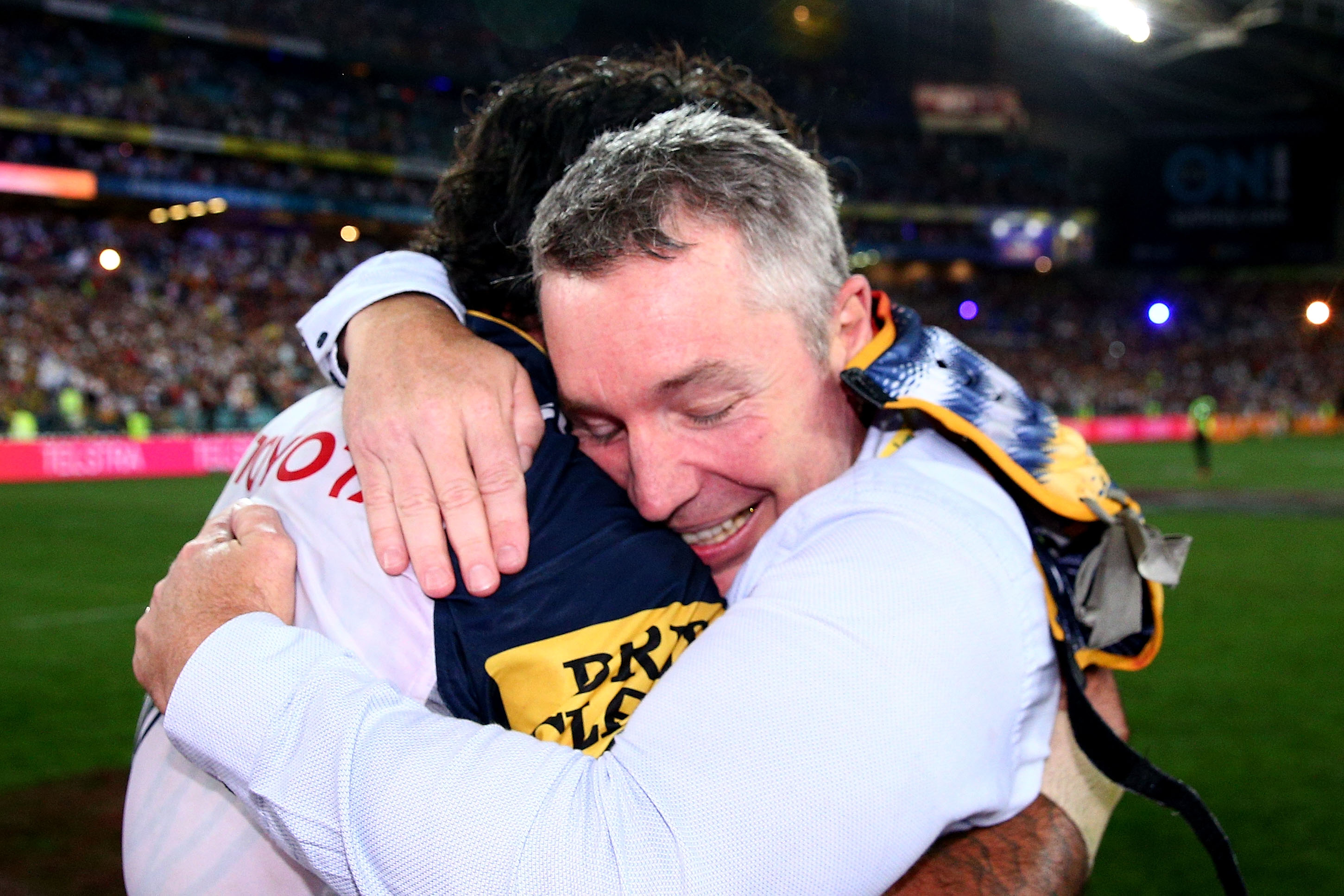
Junior Paulo has handed the Kangaroos a major blow as the Parramatta prop confirmed he will play for Samoa at the World Cup.
The 28-year-old male is yet to represent Australia at international level but has nine State of Origin games for New South Wales under his belt.
Stream every game of every round of the 2022 NRL Telstra Premiership Season Live & Ad-Break Free During Play on Kayo. New to Kayo? Start your free trial now >
Paulo also has nine caps for Samoa to his name and although he was “torn” between the blue shirt of the nation or the green and gold of Australia, it was a quote from Phil Gould that ultimately swayed his decision.
“Gus Gould really hit the nail on the head when he said, ‘What nation do you cry for when you sing the anthem,’” Paulo told 9News.
Johnson double dummy MELTS Dogs | 01:05
MORE COVERAGE
3 Big Hits: Latrell on fire as Walker stars to keep Souths’ top four hopes alive, clunky Eels blow it
‘Got bashed up’: Frustrated Arthur at a loss as Eels get ‘steamrolled’ to continue worrying trend
3 Big Hits: Warriors veteran ‘winds back the clock’ as Walsh delivers ‘classy’ display
“That plays a big part for me, and for me that’s being proud of my home, and that’s Samoa.”
Paulo joins Canberra forward Josh Papalii as well as Panthers duo Brian To’o and Jarome Luai as NRL stars who have confirmed they will represent Samoa instead of Australia at the World Cup.
The Parramatta star also hopes that by not choosing to play for the Kangaroos, it could inspire several youngsters to be proud of their home nation when it comes to representative footy.
“I want to be able to inspire the next kid who is coming through the ranks and will be at home, or whether they’re in the islands watching that World Cup thinking they want to be able to represent their country,” Paulo said.
The Blues star is also hoping that by playing for Samoa, he can make his family proud as punch.
“I’ve got my two grandmothers, who are both overseas and while they’re still alive I want to make them proud,” Paulo said.
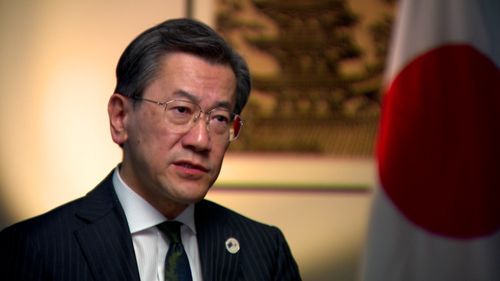
Japan’s Ambassador to AustraliaShingo Yamagami, has branded China’s use of ballistic missiles in its live fire exercises around Taiwan as “shocking” and a “dangerous act”, that matched the rogue behavior of North Korea.
Some of the missiles had failed in Japan’s exclusive economic zone, a response to the visit by US House Speaker, Nancy Pelosi, that was “disproportionate” and “beyond our understanding”.
“Is this a dangerous act? Of course,” Yamagami said.
Japan’s Ambassador to Australia, Shingo Yamagami. (Nine)
“We are talking about busy maritime routes. So without any prior notification missiles are being shot into those waters.”
‘We are living in an increasingly severe security environment’
The Chinese envoy said his nation was a responsible stakeholder in the international order and spoke of the “opportunity to reset the China-Australia relationship” before laying the blame for all the recent trouble at Australia’s door.
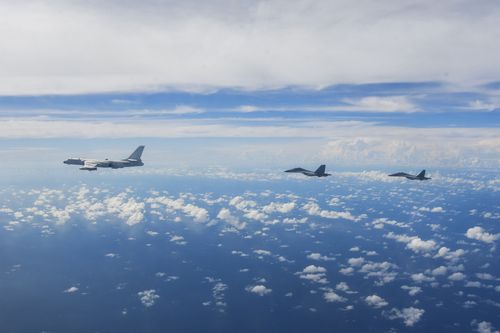
In this photo released by Xinhua News Agency, aircraft of the Eastern Theater Command of the Chinese People’s Liberation Army (PLA) conduct a joint combat training exercises around Taiwan on Sunday. (AP)
Xiao stressed that Beijing reserves the right to take Taiwan by force, would not apologize for a dangerous intercept of a RAAF plane by a PLA jet fighter in international airspace, and assured the audience that the “basic rights” of two Australians who had been tried in secret were “well protected”.
“Don’t worry about that,” Xiao said.
Yamagami said he found the tone of the address jarring and that China would be judged by its actions.
“This behavior does not match their words,” Yamagami said.
“So we would like to see their deeds and actions matching their words.”
The Japanese envoy said he was deeply troubled by the strategic competition in the region.
“We are living in an increasingly severe security environment,” he said.
You can watch the full interview at the top of the page.